


Brewers Video
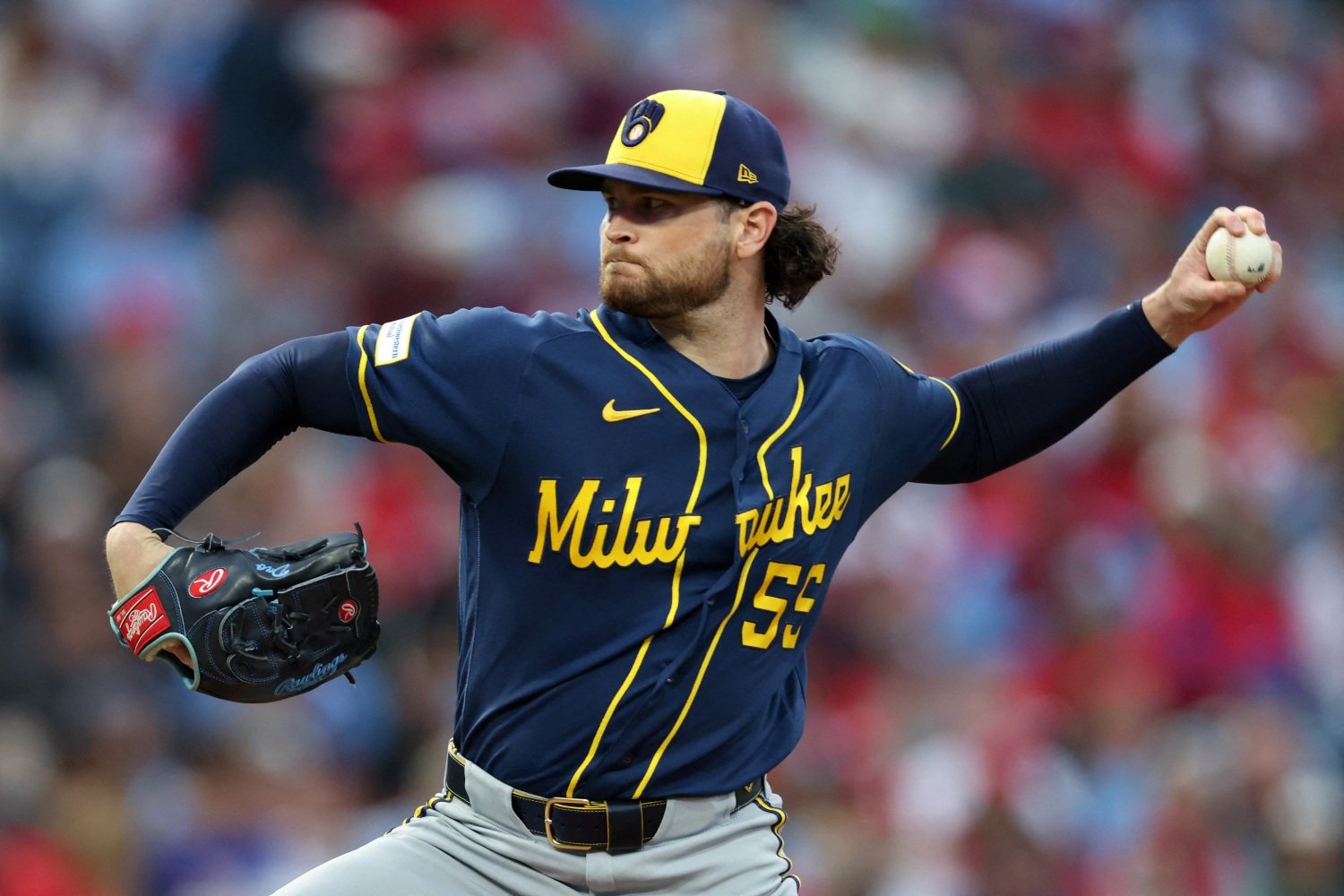
Shane Drohan ended his season where he found the most success as a rookie: the bullpen. The 27-year-old was a full-time starter from June through the second week of September, but he excelled as a long reliever in May, and three of his last four outings came out of the bullpen. He posted a 1.47 ERA, 2.44 xERA, 2.19 FIP, and 19.8% strikeout-minus-walk percentage in 14 relief appearances, and he projects as a multi-inning bullpen weapon for the Brewers in the postseason.
A starter for most of his baseball life, Drohan now feels just as comfortable in the bullpen. Middle relievers never know when they might be called into a game and must be ready at a moment's notice. That experience taught the meticulous Drohan that he can succeed without a strict, delicately timed pregame routine.
"I learned that I don't need as much pregame or a neurotic routine to succeed," he said. "I felt like being in the bullpen really taught me that. I throw three to four hours before the game, and then you're just sitting in there, and then the phone rings, and you get to go in. It's eight to 12 pitches, and you're in the game. If you would have asked me that a couple years ago, because I'd been starting my whole life, I would have been like, 'No way.'"
Converted starters often benefit from emphasizing their two best pitches in shorter relief outings. For Drohan, those pitches have been his riding four-seam fastball and his tight, gyro-spin slider, which posted the highest run values in his arsenal this year. Opponents managed just a .278 wOBA against his four-seamer and a .218 wOBA against his slider.
The Brewers took the opposite approach, though: throwing Drohan's worst pitch more. Early in the year, they added a sinker as a secondary fastball to help him pitch to both sides of the plate. It didn't work. The sinker's -6 run value made it Drohan's least effective pitch, and opponents slugged a whopping .762 against it in August. Yet, the Brewers doubled down, making the sinker his new primary fastball in September instead of the dominant four-seamer.

More accurately, the Brewers didn't double down on a bad pitch, but on a bad pitch that was improving. Throughout the year, Drohan has steadily slashed the induced vertical break of his sinker (for fastballs, a higher number indicates more carry, and a lower number means more sink) and added more arm-side run. That made the sinker an effective fastball in September, the first month since May in which it posted a positive run value.
| Month | IVB | HB | SLG | Run Value |
|---|---|---|---|---|
| April | 9.9 | 16.2 | .667 | 0 |
| May | 8.9 | 15.8 | .385 | 1 |
| June | 8.1 | 14.5 | .633 | -2 |
| July | 7.8 | 16.7 | .571 | -2 |
| Aug | 7.3 | 17.3 | .762 | -5 |
| Sept | 6.6 | 18.2 | .350 | 2 |
"I feel like now it's like a true sinker, with a good amount of run," Drohan said. "I feel like the last couple weeks, it's been running a lot."
In a five-out save in Sunday's regular-season finale, all 13 of Drohan's fastballs were sinkers. A few were among his heaviest sinkers of the season, including this first-pitch sinker to Nolan Gorman with 5.5 inches of induced vertical break and 19.4 inches of arm-side run:
There are a few ways to throw an effective sinker, each utilizing a different combination of spin rate and spin direction. Most pitchers run their fingers parallel to the baseball's two narrow seams and cut the ball enough to create seam-shifted wake, an imbalance of air pressure on each side of the ball that pushes it down and to the arm side. Others who keep their hand behind the ball through release rotate it to a one-seam grip to create that imbalance. The rarest option is pronating with a standard two-seam grip to produce screwball-like spin, which doesn't need seam-shifted wake to create a sinker shape.
Drohan's hand doesn't work in any of those ways. He can't pronate. He naturally cuts his fastball ever so slightly, but not enough to create significant seam-shifted wake. That meant finding the right grip took time. Drohan originally used a one-seam grip, which didn't create much movement and made him overthink how he was releasing the ball. He unlocked the extra sink after switching to a traditional two-seam orientation during the second half—which coincided with a dropping of his arm slot.

That's changed the spin direction on the sinker out of his hand, in concert with the grip adjustment.

"I felt like when I was doing [the one-seam] grip, I was trying to find the right wrist position for it, and then when I went to the traditional two-seam, it just went," he said.
There's just one change from a standard two-seamer: Drohan isn't touching any seams. That's because he has long fingers, which let him snap off the seams to generate high spin rates on all of his pitches. That spin creates carry on his four-seamer and sharp downward bite on his breaking balls, but Drohan wants his sinker to spin less so that it sinks more. He runs his pointer and middle fingers between the two seams so they touch only the white of the ball.
"I feel like it just lines up with my long-ass fingers better like that," Drohan said. "The pitches that you want to kill vert, for me at least, I've always felt more comfortable the less seams I feel."
The early version of Drohan's sinker was effectively a worse version of his four-seamer. It had slightly more run, allowing him to pitch lefties inside, but its induced vertical break was just a couple of inches off his main fastball. Its movement sat between the carry of the four-seamer and the depth of a true sinker, making it a very flat fastball that played right into hitters' swing paths. Now, the sinker has more separation as a distinct fastball that can miss barrels. Below, note the greater space between the red and orange clusters on the righthand graph.

It's also become the pitch he commands best, which is the biggest reason he's throwing it more. Drohan's four-seam command and shape deteriorated throughout the summer, culminating in a .754 wOBA and 3 home runs against it in September. Its induced vertical break averaged a season-low 13.5 inches. Meanwhile, he threw his improved sinker in the strike zone 64% of the time, the highest rate in his arsenal.

Even though his sinker became more consistent down the stretch, Drohan's four-seamer still flashed more upside, and he'll need it to be his best self in the postseason. Opponents still hit his sinker at an average exit velocity of 92.9 mph in September. According to Statcast bat tracking, they made more perfect contact (swings that were on time with the barrel aligned with the ball) against it than the four-seamer, which is still a swing-and-miss pitch at the top of the zone. FanGraphs's Stuff+ model also rates the four-seamer as the slightly superior fastball.
| Pitch Type | Perfect Contact% | Perfect Contact% (MLB Avg) | Whiff% | Stuff+ |
|---|---|---|---|---|
| Sinker | 39% | 29% | 18% | 108 |
| Four-Seamer | 20% | 24% | 25% | 109 |
Drohan began the regular season as a four-seam guy. He ended it as a sinker guy. In October, he needs to be both.
"We'll see what happens," Drohan said, regarding his pitch usage in the postseason. "I've always been a four-seam guy, but it's kind of a cool surprise to see that I can throw both, which is tougher for the hitter."
Do you approve of the job the Brewers' front office is doing?

Follow Brewer Fanatic For Milwaukee Brewers News & Analysis



-
 1
1


Recommended Comments
There are no comments to display.
Create an account or sign in to comment
You need to be a member in order to leave a comment
Create an account
Sign up for a new account in our community. It's easy!
Register a new accountSign in
Already have an account? Sign in here.
Sign In Now