



Jack Stern
-
Posts
747 -
Joined
-
Last visited
-
Days Won
2
3 Followers


Jack Stern's Achievements






-
 Image courtesy of David Frerker-Imagn Images Last week, Jake Bauers reflected candidly on last year's Brewers team, which was swept by the Los Angeles Dodgers in the NLCS. After the best regular season in franchise history and an emotional win over the Chicago Cubs in the NLDS, they looked like shells of themselves in a largely non-competitive series. Once the Dodgers punched first with a Game 1 win, the Brewers looked exhausted and defeated. "When I think back to last year, I think there was an element of maybe a little bit of lack of belief that we could do it, maybe a little too much doubt," Bauers said. "I think going into this postseason, there's a different feeling around the team." The Brewers' offense got away from its strengths in last year's NLCS. Against tough Los Angeles pitching, their hitters stopped responding to adversity and started expanding the strike zone. Bauers felt that would be different this year. "I think we've built a really good team, a really good culture, and I think we believe in each other," he said. "I think we all know that whether one person doesn't get it done, there's someone right behind them that's going to be ready to pick them up. And that's something that we've done all year, and I think that's only added to the confidence." Unlike in last year's NLCS, the Brewers weren't fazed by adversity. Yes, they caught a break on Ty France's redirected flyout off American Family Field's roof in Game 1, but a lot went wrong in a tense NLDS against the San Diego Padres. Jacob Misiorowski and Logan Henderson were not their sharpest. The infield defense was shaky. They made more hard contact (45%) than the Padres (30%), but well-struck outs kept them from building more comfortable leads. Through it all, the Brewers stayed consistent in two ways that ultimately won them the series in four games: they pitched exceptionally, and they stuck to their disciplined approach. Milwaukee pitchers posted a 1.80 ERA and 3.47 FIP in the series to outlast San Diego's vaunted bullpen. Its offense chased just 26% of pitches outside the strike zone and swung at 63% of pitches in the zone, slightly better than their regular-season swing decisions. That consistency amid adversity came to a head in Game 4, where the Brewers held off the Padres to advance to the NLCS. San Diego repeatedly threatened to send the series back to Milwaukee for an elimination game, but while the Brewers bent in multiple key moments, they did not break. Robert Gasser was tested immediately in his first career postseason start. One out into the bottom of the first inning, Jackson Merrill blooped a single and Manny Machado bunted for a hit. Instead of turning an inning-ending double play on a ground ball to third, Joey Ortiz strolled to the base and held onto the ball after retiring the lead runner. His unnecessary caution nearly created a big inning, as Gasser walked Austin Hays to load the bases. Gasser bore down, though, getting ahead to Xander Bogaerts and inducing an inning-ending pop-up with a 0-2 sweeper. He went on to work four innings of one-run ball, keeping the Brewers in the game and allowing them to avoid using their higher-variance relievers in the middle innings. Offensively, the Brewers made some loud contact early against Walker Buehler, without much to show for it. Jackson Chourio and Christian Yelich hit hard groundouts in a scoreless first inning. They scored with nobody out in the third on consecutive singles by Sal Frelick and Garrett Mitchell, but hopes of a big inning were dashed when Ortiz drilled a 108-MPH ground ball right at Bogaerts for a double play. After the Padres tied it on a Fernando Tatis Jr. homer a few minutes later, Frelick smoked a 100-MPH grounder up the middle to a shaded Bogaerts in another unsuccessful scoring situation. The Brewers didn't change their approach, though, staying selective and striking at the right pitches. After Mitchell led off the fifth with a triple, Jackson Chourio muscled a Bradgley Rodriguez sinker into center to score the go-ahead run. They added another on Frelick's sac fly in the sixth. By then, the defense locked back in. Pratt, who committed his third error of the series an inning earlier, robbed Tatis of a single with a diving stop in the fifth to help Aaron Ashby through his first of three scoreless innings. In the eighth, a shaky Abner Uribe nearly allowed a game-tying home run to Manny Machado, but Garrett Mitchell reached over the short wall in center to bring it back for the second out. Brice Turang then called off Jake Bauers to snag an inning-ending pop-up on the run in foul territory. Trevor Megill slammed the door with a perfect ninth. The Brewers weren't their best. The Padres made them work for nearly every out and nearly every run. They hardly seemed fazed, which should serve them well in an NLCS rematch with the Dodgers. By winning the series in four games, they'll get three days off to recharge for the series instead of last year's one-day break after the Cubs series. After Megill struck out Gavin Sheets to end the series, the Brewers lined up and shook hands in a subdued celebration similar to a regular-season win. It was another reflection of how their standards and expectations have grown. They still face real challenges and concerns in reaching their first World Series since 1982, but this team is showing signs of being different than those that fell short before it. View full article
 -
Bend, Don't Break: Brewers Held the Line in San Diego to Advance to NLCS
Jack Stern posted an article in Brewers
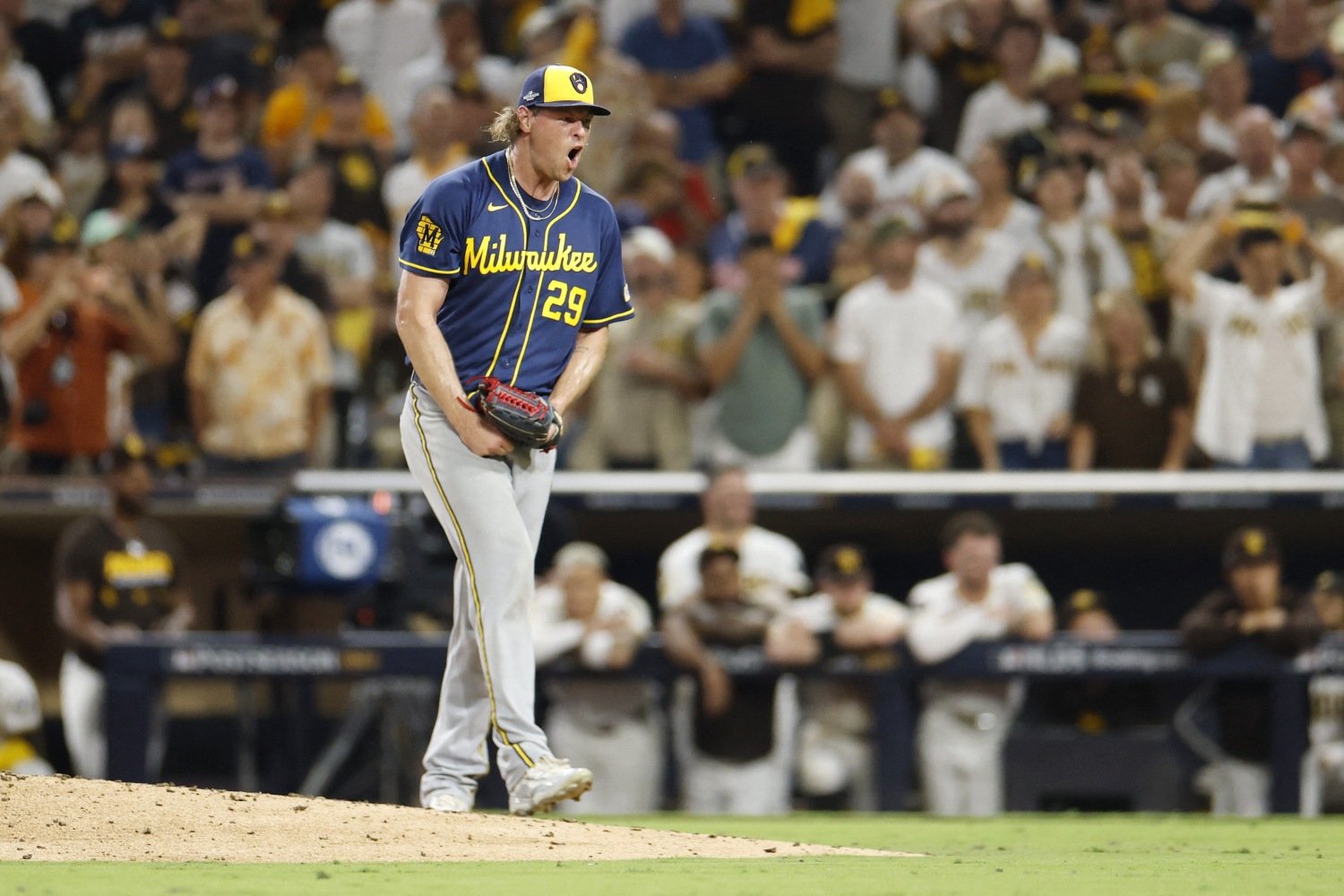 Last week, Jake Bauers reflected candidly on last year's Brewers team, which was swept by the Los Angeles Dodgers in the NLCS. After the best regular season in franchise history and an emotional win over the Chicago Cubs in the NLDS, they looked like shells of themselves in a largely non-competitive series. Once the Dodgers punched first with a Game 1 win, the Brewers looked exhausted and defeated. "When I think back to last year, I think there was an element of maybe a little bit of lack of belief that we could do it, maybe a little too much doubt," Bauers said. "I think going into this postseason, there's a different feeling around the team." The Brewers' offense got away from its strengths in last year's NLCS. Against tough Los Angeles pitching, their hitters stopped responding to adversity and started expanding the strike zone. Bauers felt that would be different this year. "I think we've built a really good team, a really good culture, and I think we believe in each other," he said. "I think we all know that whether one person doesn't get it done, there's someone right behind them that's going to be ready to pick them up. And that's something that we've done all year, and I think that's only added to the confidence." Unlike in last year's NLCS, the Brewers weren't fazed by adversity. Yes, they caught a break on Ty France's redirected flyout off American Family Field's roof in Game 1, but a lot went wrong in a tense NLDS against the San Diego Padres. Jacob Misiorowski and Logan Henderson were not their sharpest. The infield defense was shaky. They made more hard contact (45%) than the Padres (30%), but well-struck outs kept them from building more comfortable leads. Through it all, the Brewers stayed consistent in two ways that ultimately won them the series in four games: they pitched exceptionally, and they stuck to their disciplined approach. Milwaukee pitchers posted a 1.80 ERA and 3.47 FIP in the series to outlast San Diego's vaunted bullpen. Its offense chased just 26% of pitches outside the strike zone and swung at 63% of pitches in the zone, slightly better than their regular-season swing decisions. That consistency amid adversity came to a head in Game 4, where the Brewers held off the Padres to advance to the NLCS. San Diego repeatedly threatened to send the series back to Milwaukee for an elimination game, but while the Brewers bent in multiple key moments, they did not break. Robert Gasser was tested immediately in his first career postseason start. One out into the bottom of the first inning, Jackson Merrill blooped a single and Manny Machado bunted for a hit. Instead of turning an inning-ending double play on a ground ball to third, Joey Ortiz strolled to the base and held onto the ball after retiring the lead runner. His unnecessary caution nearly created a big inning, as Gasser walked Austin Hays to load the bases. Gasser bore down, though, getting ahead to Xander Bogaerts and inducing an inning-ending pop-up with a 0-2 sweeper. He went on to work four innings of one-run ball, keeping the Brewers in the game and allowing them to avoid using their higher-variance relievers in the middle innings. Offensively, the Brewers made some loud contact early against Walker Buehler, without much to show for it. Jackson Chourio and Christian Yelich hit hard groundouts in a scoreless first inning. They scored with nobody out in the third on consecutive singles by Sal Frelick and Garrett Mitchell, but hopes of a big inning were dashed when Ortiz drilled a 108-MPH ground ball right at Bogaerts for a double play. After the Padres tied it on a Fernando Tatis Jr. homer a few minutes later, Frelick smoked a 100-MPH grounder up the middle to a shaded Bogaerts in another unsuccessful scoring situation. The Brewers didn't change their approach, though, staying selective and striking at the right pitches. After Mitchell led off the fifth with a triple, Jackson Chourio muscled a Bradgley Rodriguez sinker into center to score the go-ahead run. They added another on Frelick's sac fly in the sixth. By then, the defense locked back in. Pratt, who committed his third error of the series an inning earlier, robbed Tatis of a single with a diving stop in the fifth to help Aaron Ashby through his first of three scoreless innings. In the eighth, a shaky Abner Uribe nearly allowed a game-tying home run to Manny Machado, but Garrett Mitchell reached over the short wall in center to bring it back for the second out. Brice Turang then called off Jake Bauers to snag an inning-ending pop-up on the run in foul territory. Trevor Megill slammed the door with a perfect ninth. The Brewers weren't their best. The Padres made them work for nearly every out and nearly every run. They hardly seemed fazed, which should serve them well in an NLCS rematch with the Dodgers. By winning the series in four games, they'll get three days off to recharge for the series instead of last year's one-day break after the Cubs series. After Megill struck out Gavin Sheets to end the series, the Brewers lined up and shook hands in a subdued celebration similar to a regular-season win. It was another reflection of how their standards and expectations have grown. They still face real challenges and concerns in reaching their first World Series since 1982, but this team is showing signs of being different than those that fell short before it.
 -
Image courtesy of Charles LeClaire-Imagn Images Teams rarely roster 13 pitchers in the Division Series. In a five-game series with two travel days, that extra pitcher probably won't be needed, especially if a team gets enough innings from its starters. Carrying an extra catcher, defensive specialist, or speedy runner is a better use of that final spot. The Brewers don't have that luxury. They have a deep pitching staff, but they entered the NLDS without a reliable traditional starter behind Jacob Misiorowski and Logan Henderson. That meant it would be all hands on deck for Games 3 and 4, so the Brewers loaded up on arms. Dustin May got the ball for Game 3 for a (planned) short start. He pitched fine in three-plus innings, but he failed to control the running game and lost control after a pair of run-scoring ground balls. The Brewers could never fully catch up against the Padres' bullpen, forcing a Game 4 wherein that extra depth will come into play. Because they carried 13 pitchers, Milwaukee has more fresh arms than San Diego. Pat Murphy still hasn't used four of them in the series: Robert Gasser, Chad Patrick, Shane Drohan, and Kyle Harrison. That's partly because they were always on the roster to pitch in a potential Game 4 more than anything else, but also because Murphy preferred more trustworthy relievers in three very close games so far. Patrick and Drohan battled wildness in September. Harrison's excellent fastball disappeared for most of the second half before returning in his last couple of outings. Gasser's peripherals didn't fully support his strong stretch run. All four had pronounced platoon splits in the regular season, so the Brewers must use them carefully in short playoff series, where individual matchups matter more. Pitcher wOBA vs. LHB wOBA vs. RHB Robert Gasser .252 .335 Shane Drohan .276 .344 Kyle Harrison .271 .363 Chad Patrick .342 .262 Murphy declined to name a Game 4 starter on Tuesday night, but he mentioned Gasser, Patrick, and Drohan as candidates. Starting Patrick as an opener might make the most sense. In all five of their playoff games, the Padres have started right-handed hitters Fernando Tatis Jr., Manny Machado, and Ty France in three of the top four lineup spots. Opening with a righty reliever would also force Craig Stammen to choose which platoon bats to start in the bottom half of the order. From there, it's a matter of lining up matchups through the middle innings. If Stammen starts his lefties, it could create a pocket for Harrison near the bottom of the lineup. Machado has struggled against lefty sinker-slider pairings like Drohan's. Gasser could get the most runway as a true bulk guy: he has the lowest opposite-hand opponent wOBA, and his four-seamer and cutter have neutralized righties at times. The Brewers should still be fine in the late innings. DL Hall and JoJo Romero may be down after multi-inning outings, but Aaron Ashby and Trevor Megill have had two days off, and Abner Uribe threw just seven pitches in Game 3. Before that, though, expect plenty of mixing and matching with the guys who haven't pitched yet. To prevent the series from returning to Milwaukee for an elimination Game 5, the Brewers need their wild card pitchers to step up. View full article
-
The Wild Cards: Brewers Will Lean on Bullpen Chaos to End NLDS in San Diego
Jack Stern posted an article in Brewers
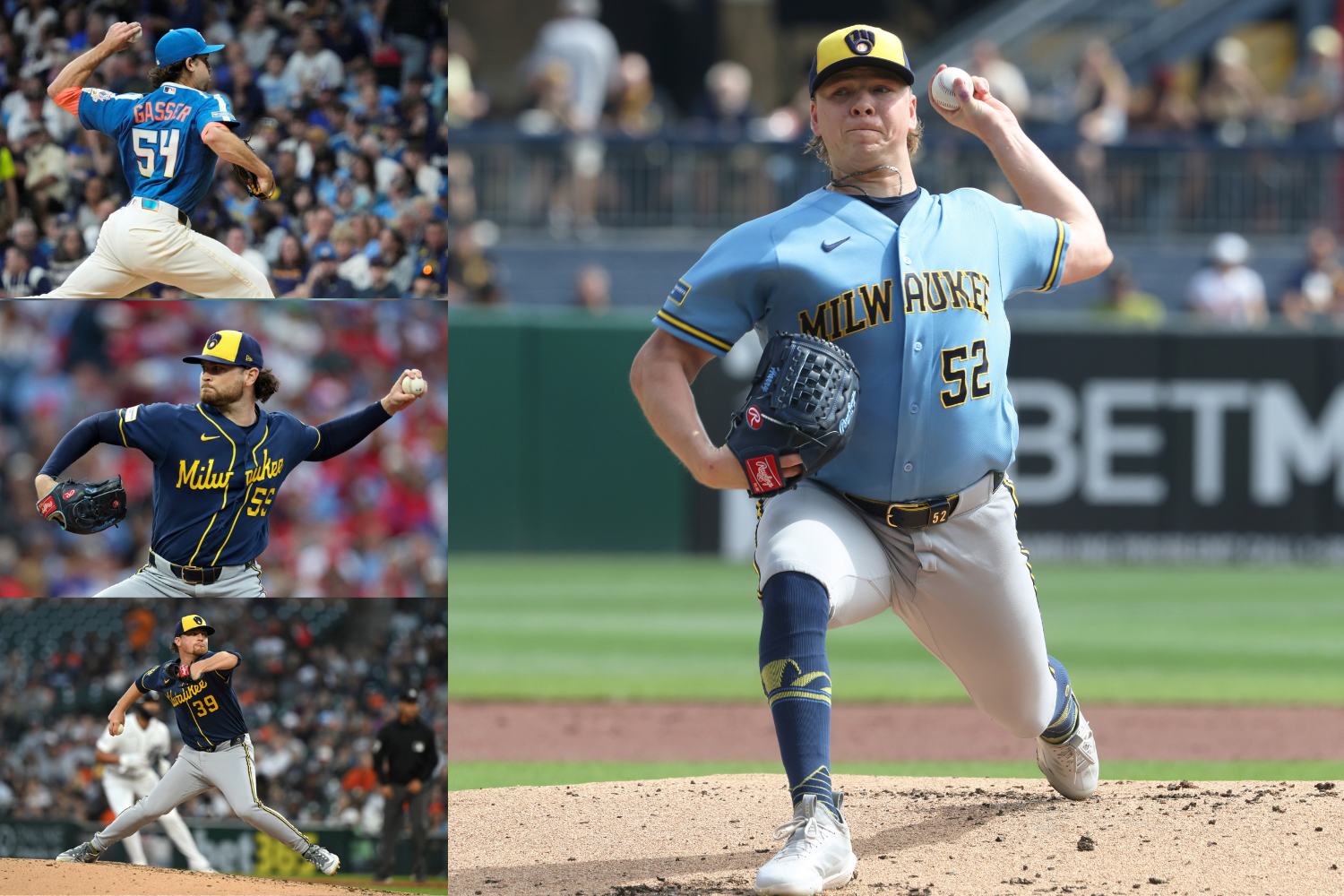 Teams rarely roster 13 pitchers in the Division Series. In a five-game series with two travel days, that extra pitcher probably won't be needed, especially if a team gets enough innings from its starters. Carrying an extra catcher, defensive specialist, or speedy runner is a better use of that final spot. The Brewers don't have that luxury. They have a deep pitching staff, but they entered the NLDS without a reliable traditional starter behind Jacob Misiorowski and Logan Henderson. That meant it would be all hands on deck for Games 3 and 4, so the Brewers loaded up on arms. Dustin May got the ball for Game 3 for a (planned) short start. He pitched fine in three-plus innings, but he failed to control the running game and lost control after a pair of run-scoring ground balls. The Brewers could never fully catch up against the Padres' bullpen, forcing a Game 4 wherein that extra depth will come into play. Because they carried 13 pitchers, Milwaukee has more fresh arms than San Diego. Pat Murphy still hasn't used four of them in the series: Robert Gasser, Chad Patrick, Shane Drohan, and Kyle Harrison. That's partly because they were always on the roster to pitch in a potential Game 4 more than anything else, but also because Murphy preferred more trustworthy relievers in three very close games so far. Patrick and Drohan battled wildness in September. Harrison's excellent fastball disappeared for most of the second half before returning in his last couple of outings. Gasser's peripherals didn't fully support his strong stretch run. All four had pronounced platoon splits in the regular season, so the Brewers must use them carefully in short playoff series, where individual matchups matter more. Pitcher wOBA vs. LHB wOBA vs. RHB Robert Gasser .252 .335 Shane Drohan .276 .344 Kyle Harrison .271 .363 Chad Patrick .342 .262 Murphy declined to name a Game 4 starter on Tuesday night, but he mentioned Gasser, Patrick, and Drohan as candidates. Starting Patrick as an opener might make the most sense. In all five of their playoff games, the Padres have started right-handed hitters Fernando Tatis Jr., Manny Machado, and Ty France in three of the top four lineup spots. Opening with a righty reliever would also force Craig Stammen to choose which platoon bats to start in the bottom half of the order. From there, it's a matter of lining up matchups through the middle innings. If Stammen starts his lefties, it could create a pocket for Harrison near the bottom of the lineup. Machado has struggled against lefty sinker-slider pairings like Drohan's. Gasser could get the most runway as a true bulk guy: he has the lowest opposite-hand opponent wOBA, and his four-seamer and cutter have neutralized righties at times. The Brewers should still be fine in the late innings. DL Hall and JoJo Romero may be down after multi-inning outings, but Aaron Ashby and Trevor Megill have had two days off, and Abner Uribe threw just seven pitches in Game 3. Before that, though, expect plenty of mixing and matching with the guys who haven't pitched yet. To prevent the series from returning to Milwaukee for an elimination Game 5, the Brewers need their wild card pitchers to step up.
- 2 comments
-
- 3
-

-
- chad patrick
- robert gasser
- (and 2 more)
-
Image courtesy of Michael McLoone-Imagn Images Despite being a mostly productive constant on and off the field through the Brewers’ last eight playoff berths, Christian Yelich has largely been a non-factor in the postseason. Entering this October, Yelich was a career .218/.347/.317 playoff hitter (84 OPS+). Despite usually hitting somewhere in the middle of the order, he has gone 74 at-bats without a playoff RBI, last driving in a run with his home run in Game 7 of the 2018 NLCS. That was still a small sample of just 121 postseason plate appearances, though. The real concern, entering the NLDS, was Yelich coming off his worst regular season. He was a below-average hitter for the first time in his career, hitting .235/.315/.378 (91 wRC+). At times, his swing looked stiffer and less adaptable. Even if Yelich is more limited as he enters his mid-30s, that doesn’t mean all of his skills have disappeared. His bat speed is nearly identical to last year, and he still makes sound swing decisions, running the third-lowest chase rate among Milwaukee hitters with at least 400 plate appearances. Pitches over the inner third of the plate became problematic this year, but when Yelich gets one over the middle or the outer third, there’s still enough juice in his bat to drive it. Those tools have helped Yelich start strong this October. He’s reached base three times in the first two games of the NLDS, but more importantly, he’s looked dialed-in from pitch to pitch. Here are all 30 pitches Yelich has seen in the series so far: Those are outstanding swing decisions. Yelich hasn’t offered at much outside the zone, including several near-misses just off the outside corner. Some of his best takes came in his ninth-inning walk on Sunday, the first of three walks against Mason Miller in the Brewers’ walk-off rally against one of baseball’s best closers. Yelich isn’t just getting away with being passive, either. He’s swung at nearly every pitch in the zone that hasn’t been on the corner, and those swings have looked solid. Yelich has put five balls in play so far, and three were well struck. Jackson Chourio and William Contreras have gotten attention for the biggest swings of the series, but Yelich has quietly had some of the best plate appearances. He broke up Michael King’s perfect game with a fifth-inning double in Game 2, then scored Milwaukee’s first run on Sal Frelick’s single. Yelich started turning the gears against Miller a few innings later. He may have sparked an earlier seventh-inning rally, had Jackson Merrill not made a leaping catch near the center-field wall. It’s a microscopic sample, so those positive plate appearances are hardly guaranteed to continue, but they’re worth highlighting. After his regular season, there was a valid argument that Yelich was not one of the nine best hitters worth starting in the Brewers’ playoff lineup. Now, process-wise, he looks like the best version of what he can be at this stage in his career. The Brewers named Yelich the first captain in franchise history during the final weekend of the regular season, but the expectation of driving the offense is now on Chourio, Contreras, Brice Turang, and other younger, more dynamic hitters. That might afford Yelich the freedom he needed this fall. He can still lengthen the lineup as a supporting contributor in the bottom half of the order. The first two games of the NLDS have hinted that this October could be different for the Brewers, and it could be different for him, too. View full article
-
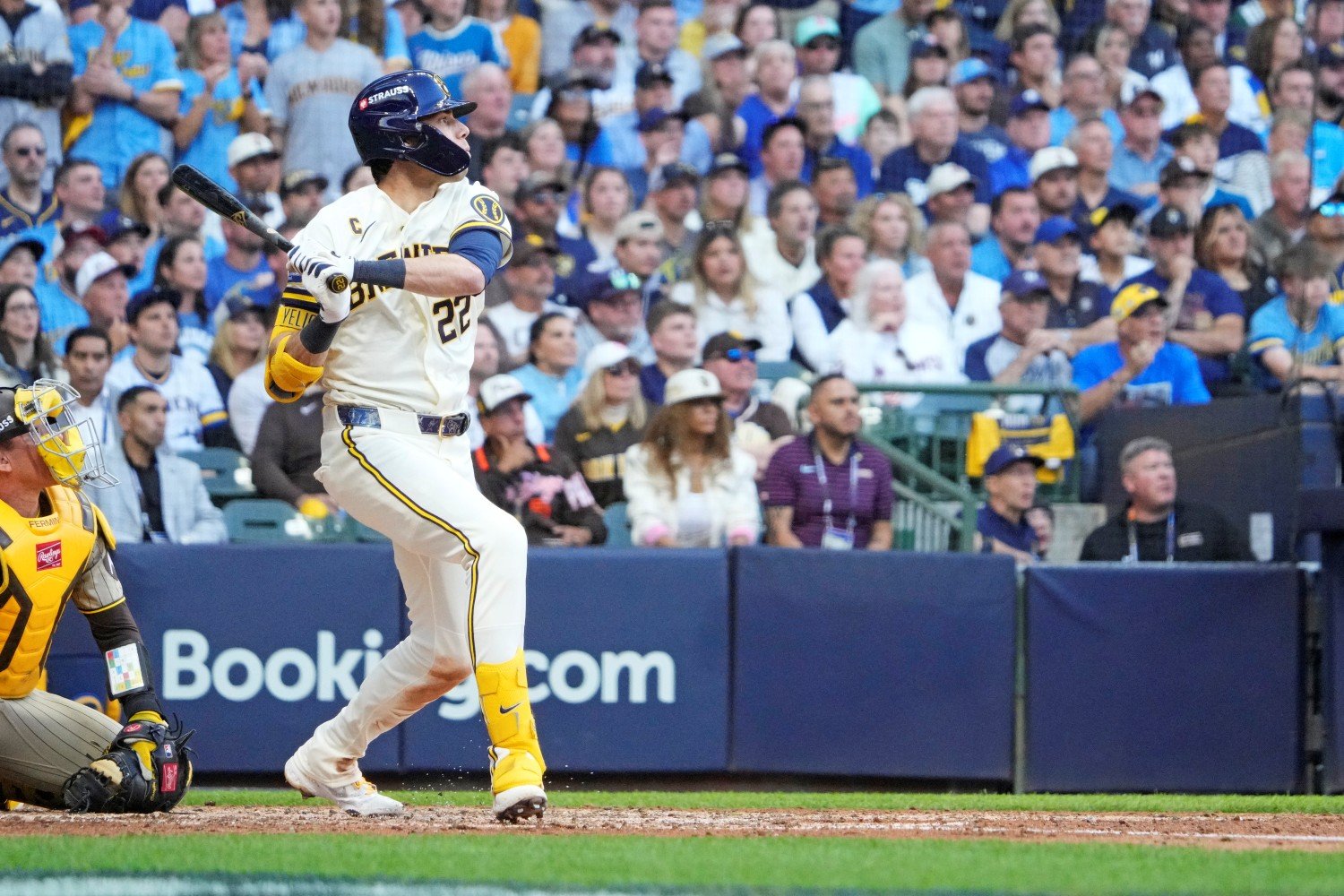 Despite being a mostly productive constant on and off the field through the Brewers’ last eight playoff berths, Christian Yelich has largely been a non-factor in the postseason. Entering this October, Yelich was a career .218/.347/.317 playoff hitter (84 OPS+). Despite usually hitting somewhere in the middle of the order, he has gone 74 at-bats without a playoff RBI, last driving in a run with his home run in Game 7 of the 2018 NLCS. That was still a small sample of just 121 postseason plate appearances, though. The real concern, entering the NLDS, was Yelich coming off his worst regular season. He was a below-average hitter for the first time in his career, hitting .235/.315/.378 (91 wRC+). At times, his swing looked stiffer and less adaptable. Even if Yelich is more limited as he enters his mid-30s, that doesn’t mean all of his skills have disappeared. His bat speed is nearly identical to last year, and he still makes sound swing decisions, running the third-lowest chase rate among Milwaukee hitters with at least 400 plate appearances. Pitches over the inner third of the plate became problematic this year, but when Yelich gets one over the middle or the outer third, there’s still enough juice in his bat to drive it. Those tools have helped Yelich start strong this October. He’s reached base three times in the first two games of the NLDS, but more importantly, he’s looked dialed-in from pitch to pitch. Here are all 30 pitches Yelich has seen in the series so far: Those are outstanding swing decisions. Yelich hasn’t offered at much outside the zone, including several near-misses just off the outside corner. Some of his best takes came in his ninth-inning walk on Sunday, the first of three walks against Mason Miller in the Brewers’ walk-off rally against one of baseball’s best closers. Yelich isn’t just getting away with being passive, either. He’s swung at nearly every pitch in the zone that hasn’t been on the corner, and those swings have looked solid. Yelich has put five balls in play so far, and three were well struck. Jackson Chourio and William Contreras have gotten attention for the biggest swings of the series, but Yelich has quietly had some of the best plate appearances. He broke up Michael King’s perfect game with a fifth-inning double in Game 2, then scored Milwaukee’s first run on Sal Frelick’s single. Yelich started turning the gears against Miller a few innings later. He may have sparked an earlier seventh-inning rally, had Jackson Merrill not made a leaping catch near the center-field wall. It’s a microscopic sample, so those positive plate appearances are hardly guaranteed to continue, but they’re worth highlighting. After his regular season, there was a valid argument that Yelich was not one of the nine best hitters worth starting in the Brewers’ playoff lineup. Now, process-wise, he looks like the best version of what he can be at this stage in his career. The Brewers named Yelich the first captain in franchise history during the final weekend of the regular season, but the expectation of driving the offense is now on Chourio, Contreras, Brice Turang, and other younger, more dynamic hitters. That might afford Yelich the freedom he needed this fall. He can still lengthen the lineup as a supporting contributor in the bottom half of the order. The first two games of the NLDS have hinted that this October could be different for the Brewers, and it could be different for him, too.
 -
Image courtesy of Michael McLoone-Imagn Images The question posed to Pat Murphy before the Brewers' workout on Friday afternoon: to win playoff games, do you have to play in a way that forces the other team away from its strengths, or is excelling at what you do best good enough? "That's the age-old question, right?" Murphy replied. "You got to do what you do well, and you got to understand what the other team can do well and how they're going to attack you, knowing how you play and what you do well. So it's that cat-and-mouse all the time, and you can only try to put yourself in the right positions." The Brewers took a valiant crack at it in Game 1 of the NLDS, making excellent swing decisions against a Padres bullpen known for making hitters chase outside the strike zone. It ultimately took home runs from Jackson Chourio and William Contreras to score just enough in a tense series opener. For most of Game 2, the Padres forced the Brewers away from their strengths and made them look like an entirely different team. Michael King's sequencing was masterful, and his changeup and breaking balls flummoxed a usually disciplined lineup. The Brewers chased 34% of King's pitches outside the zone and took too many fastballs for strikes. Meanwhile, the Padres did what the Brewers usually do, forcing a starter to work for each out for a second straight game. They chased just 18% of the time against Logan Henderson, who settled in after a shaky first two innings to toss five competitive innings in his postseason debut. They also put more balls in play than Milwaukee, who committed three errors and botched a bunt coverage to allow two unearned runs. The Padres looked more like the Brewers than the Brewers—a fundamentally sound team having one of their sloppiest games of the year at the wrong time. "We didn't play special," Murphy said. "When do you see us make four defensive miscues in a game in the infield?" "We feel like we probably didn't play our best, cleanest game," Christian Yelich said. "It happens, though, and you just got to flush it." That ties back to Murphy's answer on Friday. There's value in trying to combat the other team's strengths, but he came back to the same message he preaches daily in the clubhouse: control what you can control, respond to what the game gives you in the moment, and worry about nothing else. "It comes down to being ready pitch-to-pitch and winning more pitches than not. And there's some parts of the game you can't control," Murphy said. "You can't control some parts of the game. And the ones you can control, you try to control, and you stay after it. Don't give up." The Brewers took it pitch by pitch in the late innings. When the Padres unleashed flamethrowing closer Mason Miller in the eighth inning for a six-out save, they knew the assignment. "Just grind, man," Yelich said. "Just find a way to get on [base] there." "Guys like that don't give up multiple hits in innings very often," Sal Frelick said. "He was tasked with six outs today, so we wanted to kind of put the pressure on him." Miller didn't give them opportunities to do that in the eighth, breezing through the heart of the order while throwing six of 12 pitches in the zone. In the ninth, those strikes turned into near misses, and the Brewers refused to bite. With one out, Yelich laid off multiple back-door sliders and drew a five-pitch walk. Frelick never swung as Miller danced around the edges of the zone for another walk. Then Murphy went to the bench, hitting veterans Andrew Vaughn and Gary Sánchez for Cooper Pratt and David Hamilton. Vaughn flied out, but like Frelick, Sánchez didn't swing, working back from a 2-2 count for a third walk. "Honestly, it started with Gary," Frelick said. "When you see a guy like that do that and then pass the bat to Jackson, you kind of start to feel that momentum." Having watched the inning unfold, Chourio stepped into a bases-loaded situation with a game plan: make Miller throw him a fastball for a strike, and be ready when he got it. "Watching those at-bats, I knew he was a little bit erratic," Chourio said through interpreter Daniel de Mondesert. "I knew he was going to come at me with the fastball at some point, so mentally I was just making sure that I was prepared for that." He got it on the first pitch and swung through it. He whiffed on another fastball right down the middle to fall into a 1-2 count. After fighting off a painted heater on the outside corner and laying off a low slider ("An unbelievable take," Yelich said), Chourio timed the next fastball perfectly, drilling a 110-MPH liner up the middle to walk it off. "I think it's probably in the top three of the special moments I've had in my career," Chourio said. "He loves those moments, and he knows how talented he is and what he can do on a baseball field," Yelich said. "He can do anything." Chourio delivered the final punch, but Murphy emphasized that Frelick was the engine of the comeback, from his six-pitch walk to his tight rounding of third base to score the winning run on a hard line drive. "That ball's smashed that Chourio hit," Murphy said, "and cutting that turn the way he did makes a difference in the game." "This is the stuff we take pride in," Frelick said. "This is the stuff that we practice every day in spring training, is cutting the corner at third base and not getting too wide and how much time you lose. It's that attention to detail that is instilled in our culture." To win the series, the Brewers were going to have to get to the Padres' bullpen at least once. They waited out Miller in one of their most disciplined innings of the season. It was an impressive response from a team that has struggled to recover from tough moments in past playoff games, a sign that this year's group is different from the others that fell short in October. Now, Milwaukee heads to San Diego in the driver's seat, one win away from a second straight trip to the NLCS. "They have a belief," Murphy said. "That's what it is. They have a belief." View full article
-
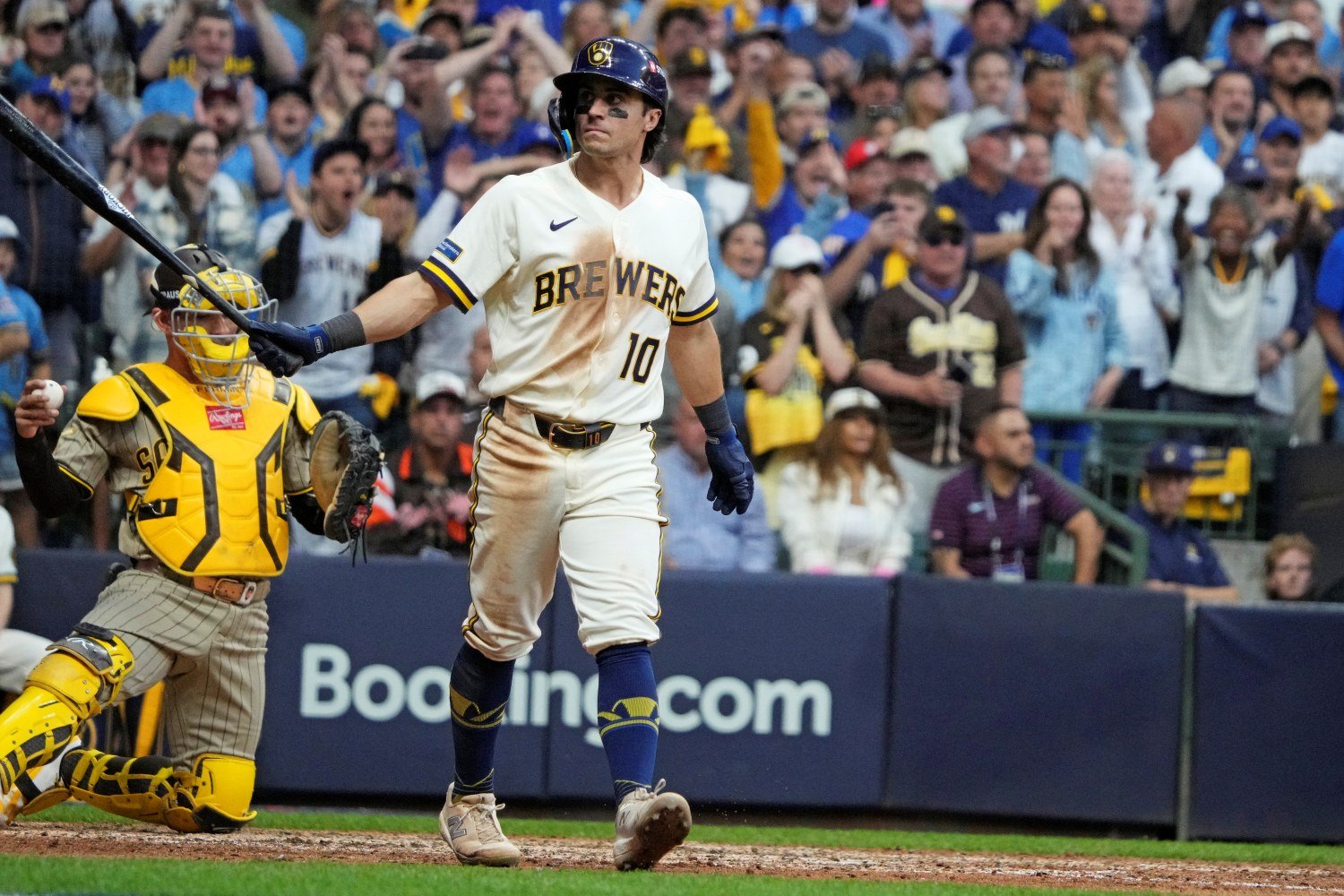 The question posed to Pat Murphy before the Brewers' workout on Friday afternoon: to win playoff games, do you have to play in a way that forces the other team away from its strengths, or is excelling at what you do best good enough? "That's the age-old question, right?" Murphy replied. "You got to do what you do well, and you got to understand what the other team can do well and how they're going to attack you, knowing how you play and what you do well. So it's that cat-and-mouse all the time, and you can only try to put yourself in the right positions." The Brewers took a valiant crack at it in Game 1 of the NLDS, making excellent swing decisions against a Padres bullpen known for making hitters chase outside the strike zone. It ultimately took home runs from Jackson Chourio and William Contreras to score just enough in a tense series opener. For most of Game 2, the Padres forced the Brewers away from their strengths and made them look like an entirely different team. Michael King's sequencing was masterful, and his changeup and breaking balls flummoxed a usually disciplined lineup. The Brewers chased 34% of King's pitches outside the zone and took too many fastballs for strikes. Meanwhile, the Padres did what the Brewers usually do, forcing a starter to work for each out for a second straight game. They chased just 18% of the time against Logan Henderson, who settled in after a shaky first two innings to toss five competitive innings in his postseason debut. They also put more balls in play than Milwaukee, who committed three errors and botched a bunt coverage to allow two unearned runs. The Padres looked more like the Brewers than the Brewers—a fundamentally sound team having one of their sloppiest games of the year at the wrong time. "We didn't play special," Murphy said. "When do you see us make four defensive miscues in a game in the infield?" "We feel like we probably didn't play our best, cleanest game," Christian Yelich said. "It happens, though, and you just got to flush it." That ties back to Murphy's answer on Friday. There's value in trying to combat the other team's strengths, but he came back to the same message he preaches daily in the clubhouse: control what you can control, respond to what the game gives you in the moment, and worry about nothing else. "It comes down to being ready pitch-to-pitch and winning more pitches than not. And there's some parts of the game you can't control," Murphy said. "You can't control some parts of the game. And the ones you can control, you try to control, and you stay after it. Don't give up." The Brewers took it pitch by pitch in the late innings. When the Padres unleashed flamethrowing closer Mason Miller in the eighth inning for a six-out save, they knew the assignment. "Just grind, man," Yelich said. "Just find a way to get on [base] there." "Guys like that don't give up multiple hits in innings very often," Sal Frelick said. "He was tasked with six outs today, so we wanted to kind of put the pressure on him." Miller didn't give them opportunities to do that in the eighth, breezing through the heart of the order while throwing six of 12 pitches in the zone. In the ninth, those strikes turned into near misses, and the Brewers refused to bite. With one out, Yelich laid off multiple back-door sliders and drew a five-pitch walk. Frelick never swung as Miller danced around the edges of the zone for another walk. Then Murphy went to the bench, hitting veterans Andrew Vaughn and Gary Sánchez for Cooper Pratt and David Hamilton. Vaughn flied out, but like Frelick, Sánchez didn't swing, working back from a 2-2 count for a third walk. "Honestly, it started with Gary," Frelick said. "When you see a guy like that do that and then pass the bat to Jackson, you kind of start to feel that momentum." Having watched the inning unfold, Chourio stepped into a bases-loaded situation with a game plan: make Miller throw him a fastball for a strike, and be ready when he got it. "Watching those at-bats, I knew he was a little bit erratic," Chourio said through interpreter Daniel de Mondesert. "I knew he was going to come at me with the fastball at some point, so mentally I was just making sure that I was prepared for that." He got it on the first pitch and swung through it. He whiffed on another fastball right down the middle to fall into a 1-2 count. After fighting off a painted heater on the outside corner and laying off a low slider ("An unbelievable take," Yelich said), Chourio timed the next fastball perfectly, drilling a 110-MPH liner up the middle to walk it off. "I think it's probably in the top three of the special moments I've had in my career," Chourio said. "He loves those moments, and he knows how talented he is and what he can do on a baseball field," Yelich said. "He can do anything." Chourio delivered the final punch, but Murphy emphasized that Frelick was the engine of the comeback, from his six-pitch walk to his tight rounding of third base to score the winning run on a hard line drive. "That ball's smashed that Chourio hit," Murphy said, "and cutting that turn the way he did makes a difference in the game." "This is the stuff we take pride in," Frelick said. "This is the stuff that we practice every day in spring training, is cutting the corner at third base and not getting too wide and how much time you lose. It's that attention to detail that is instilled in our culture." To win the series, the Brewers were going to have to get to the Padres' bullpen at least once. They waited out Miller in one of their most disciplined innings of the season. It was an impressive response from a team that has struggled to recover from tough moments in past playoff games, a sign that this year's group is different from the others that fell short in October. Now, Milwaukee heads to San Diego in the driver's seat, one win away from a second straight trip to the NLCS. "They have a belief," Murphy said. "That's what it is. They have a belief."
- 2 comments
-
- 2
-
-
- jackson chourio
- christian yelich
- (and 1 more)
-
It Wasn't Pretty, But Brewers Did What They Needed to Do in NLDS Game 1 Win
Jack Stern posted an article in Brewers
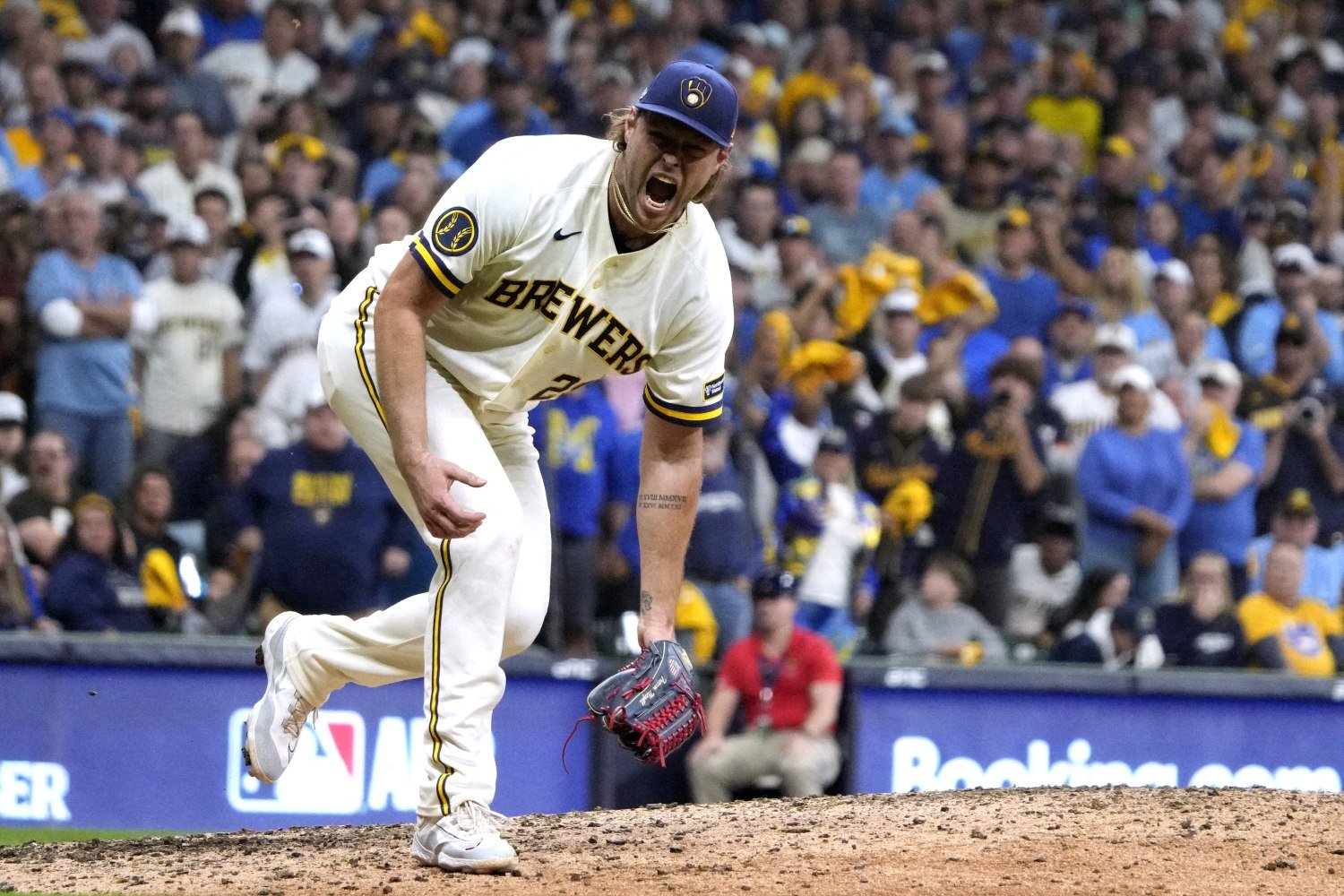 It sounds dramatic to call a non-elimination game a must-win, but for the Brewers, a Game 1 win in the NLDS was as close as you can get. Generally speaking, the first game sets leverage for the rest of the series; under MLB's current playoff format, the team that wins Game 1 of the Division Series has won the series more than 70% of the time. In this matchup, even more leverage was at stake. Milwaukee will face Michael King and Nick Pivetta, the Padres' two best starting pitchers, in Games 2 and 3. The latter will be at a rowdy Petco Park, where the Brewers must piece together two bullpen games with some combination of Robert Gasser, Dustin May, Shane Drohan, and Kyle Harrison. Gasser finished his season strong, but with middling peripherals. May, Drohan, and Harrison all struggled in September and lost full-time rotation spots. The Game 1 matchup, meanwhile, firmly favored the Brewers: soon-to-be NL Cy Young Award winner Jacob Misiorowski against back-of-the-rotation veteran Robbie Ray. It was their opportunity to set the tone and give themselves room for error in those San Diego games. Instead, things went haywire from the get-go. Misiorowski couldn't control his fastball, and the Padres worked him for 25 pitches in a scoreless first inning. Ray retired the side in order on seven pitches, sending Misiorowski right back to the mound. With Misiorowski's fastball command faltering, William Contreras faced the challenging job of calling the right pitches to rein him back in. When his fastball sails up and arm-side, as it was on Saturday, the cutter becomes his most consistent in-zone pitch, because it forces him to work through the ball to his glove side. But there's a fine line between the cutter being a valuable fallback fastball and the worst pitch to throw in a given sequence. When hitters are late on triple digits, they're right on time for 95- to 97-MPH cutters. Misiorowski's fastball wasn't overpowering the Padres—they whiffed just four times on 28 swings against it—but they weren't timing it up, either. Most of their foul balls were late swings. Timing-wise, cutters were not the right call during a three-batter sequence in the second inning. With one out, Xander Bogaerts reached on a hard ground ball in the hole that Cooper Pratt knocked down for an infield single. After Ethan Salas whiffed late on a first-pitch fastball down the middle, Contreras called a cutter on the next pitch. Even though it was below the zone, Salas drilled it up the middle for another hit. After Luis Campusano took a fastball for strike one, Contreras called another cutter, and Campusano singled down the right-field line. The Padres had an early lead, in a game where the Brewers were positioned to strike first. "In the second inning, his heater wasn't a strike very often. He was missing his spots, and they felt they had to go to offspeed," Pat Murphy said. "After you see the [hit], 'Why didn't you just throw a fastball at 103?' But they weren't feeling good—[Contreras] and Miz himself—they weren't feeling good about the heater command after the first inning." After a mound visit from Chris Hook, Contreras and Misiorowski committed to the fastball, throwing it 77% of the time in the third and fourth innings. He threw one more cutter, but the rest of his secondary pitches were curveballs. Misiorowski faced the minimum over those final two innings before the Brewers went to the bullpen. "We're trying to battle them, and they were fouling **** off," Misiorowski said. "You've kind of got to make an adjustment and try to go soft, and they're fouling soft off. You kind of just do something until it sticks, and that was the curveball and heater." Meanwhile, Jackson Chourio resumed his postseason heroics with a game-tying home run off Ray in the bottom of the third. The Brewers loaded the bases with two walks and a bloop single after that, but Christian Yelich and Cooper Pratt failed to drive those runners in. That kicked off a three-inning stretch where Milwaukee had traffic but couldn't score. It wasn't a lack of effort or poor process. The Brewers had the same strong at-bats they usually do, making sound swing decisions and forcing the Padres to make plays. Murphy said a few hitters were "a little jittery," but the offense chased just 24% of pitches outside the zone and swung at 72% of pitches in the zone, both even better than its season averages. That approach scored the second-most runs in baseball during the regular season. On Saturday night, it wasn't working. The Brewers just ran into a buzzsaw Padres bullpen and a few loud outs, including six outs with exit velocities of at least 100 MPH. "You've got to understand who we faced," Murphy said. "That bullpen is recognized as the best in the game, if not one of them." Like last year, this is the concern shrouding the Brewers' brand of offense in October: does waiting out pitchers and stringing together hits work against the game's best arms in a short series? If not, Milwaukee, who ranked 29th in home runs, must hit for enough power to change games with a couple of swings. Their very first postseason game played out that way. The Brewers needed another home run, and they got it in the seventh. William Contreras worked Morejon into a 3-1 count, then launched a 3-2 sinker over the outer third of the plate to right-center to give the Brewers a 3-2 lead. "[The home runs] were helpful," Murphy said. "We'll take them." "There's a lot of people in the public opinion that think that we're not able to connect with the big hits, with the homers," Contreras said. "I like that today that's how the game shook out, and we were able to win like that. We were able to show that we were able to play that game, as well." Some of that tough batted-ball luck swung back the Brewers' way in the ninth. With the tying run on first base against Trevor Megill, Ty France's loud fly ball hit one of the cables hanging from American Family Field's roof and deflected down to Chourio, who caught it for the second out. Jackson Merrill then ripped a 109-MPH lineout to Luis Lara to end it. France's fly ball almost certainly wasn't clearing the fence in fair territory without the deflection. In the Statcast era (since 2015), just one batted ball with a launch angle of at least 49° and exit velocity between 105 and 106 MPH—how France hit his ball—has been a home run. He hit it too high. Both Murphy and Chourio believe it was tailing foul, meaning the cable denied France another swing against Megill. "A hitter that talented, they would have liked to have that hitter back up there with another strike," Murphy said. The Brewers' path to their first World Series becomes clearer if they win Misiorowski's starts and hit with timely power. They did both on Saturday night. The Padres took a bite out of Milwaukee in the process, forcing them to use five relievers behind Misiorowski, but that's inconsequential compared to the importance of a Game 1 Brewers win. It wasn't easy, but they gained the series leverage they needed.
- 3 comments
-
- 1
-
-
- jackson chourio
- 2026 postseason
- (and 4 more)
-
Image courtesy of Michael McLoone-Imagn Images It sounds dramatic to call a non-elimination game a must-win, but for the Brewers, a Game 1 win in the NLDS was as close as you can get. Generally speaking, the first game sets leverage for the rest of the series; under MLB's current playoff format, the team that wins Game 1 of the Division Series has won the series more than 70% of the time. In this matchup, even more leverage was at stake. Milwaukee will face Michael King and Nick Pivetta, the Padres' two best starting pitchers, in Games 2 and 3. The latter will be at a rowdy Petco Park, where the Brewers must piece together two bullpen games with some combination of Robert Gasser, Dustin May, Shane Drohan, and Kyle Harrison. Gasser finished his season strong, but with middling peripherals. May, Drohan, and Harrison all struggled in September and lost full-time rotation spots. The Game 1 matchup, meanwhile, firmly favored the Brewers: soon-to-be NL Cy Young Award winner Jacob Misiorowski against back-of-the-rotation veteran Robbie Ray. It was their opportunity to set the tone and give themselves room for error in those San Diego games. Instead, things went haywire from the get-go. Misiorowski couldn't control his fastball, and the Padres worked him for 25 pitches in a scoreless first inning. Ray retired the side in order on seven pitches, sending Misiorowski right back to the mound. With Misiorowski's fastball command faltering, William Contreras faced the challenging job of calling the right pitches to rein him back in. When his fastball sails up and arm-side, as it was on Saturday, the cutter becomes his most consistent in-zone pitch, because it forces him to work through the ball to his glove side. But there's a fine line between the cutter being a valuable fallback fastball and the worst pitch to throw in a given sequence. When hitters are late on triple digits, they're right on time for 95- to 97-MPH cutters. Misiorowski's fastball wasn't overpowering the Padres—they whiffed just four times on 28 swings against it—but they weren't timing it up, either. Most of their foul balls were late swings. Timing-wise, cutters were not the right call during a three-batter sequence in the second inning. With one out, Xander Bogaerts reached on a hard ground ball in the hole that Cooper Pratt knocked down for an infield single. After Ethan Salas whiffed late on a first-pitch fastball down the middle, Contreras called a cutter on the next pitch. Even though it was below the zone, Salas drilled it up the middle for another hit. After Luis Campusano took a fastball for strike one, Contreras called another cutter, and Campusano singled down the right-field line. The Padres had an early lead, in a game where the Brewers were positioned to strike first. "In the second inning, his heater wasn't a strike very often. He was missing his spots, and they felt they had to go to offspeed," Pat Murphy said. "After you see the [hit], 'Why didn't you just throw a fastball at 103?' But they weren't feeling good—[Contreras] and Miz himself—they weren't feeling good about the heater command after the first inning." After a mound visit from Chris Hook, Contreras and Misiorowski committed to the fastball, throwing it 77% of the time in the third and fourth innings. He threw one more cutter, but the rest of his secondary pitches were curveballs. Misiorowski faced the minimum over those final two innings before the Brewers went to the bullpen. "We're trying to battle them, and they were fouling **** off," Misiorowski said. "You've kind of got to make an adjustment and try to go soft, and they're fouling soft off. You kind of just do something until it sticks, and that was the curveball and heater." Meanwhile, Jackson Chourio resumed his postseason heroics with a game-tying home run off Ray in the bottom of the third. The Brewers loaded the bases with two walks and a bloop single after that, but Christian Yelich and Cooper Pratt failed to drive those runners in. That kicked off a three-inning stretch where Milwaukee had traffic but couldn't score. It wasn't a lack of effort or poor process. The Brewers had the same strong at-bats they usually do, making sound swing decisions and forcing the Padres to make plays. Murphy said a few hitters were "a little jittery," but the offense chased just 24% of pitches outside the zone and swung at 72% of pitches in the zone, both even better than its season averages. That approach scored the second-most runs in baseball during the regular season. On Saturday night, it wasn't working. The Brewers just ran into a buzzsaw Padres bullpen and a few loud outs, including six outs with exit velocities of at least 100 MPH. "You've got to understand who we faced," Murphy said. "That bullpen is recognized as the best in the game, if not one of them." Like last year, this is the concern shrouding the Brewers' brand of offense in October: does waiting out pitchers and stringing together hits work against the game's best arms in a short series? If not, Milwaukee, who ranked 29th in home runs, must hit for enough power to change games with a couple of swings. Their very first postseason game played out that way. The Brewers needed another home run, and they got it in the seventh. William Contreras worked Morejon into a 3-1 count, then launched a 3-2 sinker over the outer third of the plate to right-center to give the Brewers a 3-2 lead. "[The home runs] were helpful," Murphy said. "We'll take them." "There's a lot of people in the public opinion that think that we're not able to connect with the big hits, with the homers," Contreras said. "I like that today that's how the game shook out, and we were able to win like that. We were able to show that we were able to play that game, as well." Some of that tough batted-ball luck swung back the Brewers' way in the ninth. With the tying run on first base against Trevor Megill, Ty France's loud fly ball hit one of the cables hanging from American Family Field's roof and deflected down to Chourio, who caught it for the second out. Jackson Merrill then ripped a 109-MPH lineout to Luis Lara to end it. France's fly ball almost certainly wasn't clearing the fence in fair territory without the deflection. In the Statcast era (since 2015), just one batted ball with a launch angle of at least 49° and exit velocity between 105 and 106 MPH—how France hit his ball—has been a home run. He hit it too high. Both Murphy and Chourio believe it was tailing foul, meaning the cable denied France another swing against Megill. "A hitter that talented, they would have liked to have that hitter back up there with another strike," Murphy said. The Brewers' path to their first World Series becomes clearer if they win Misiorowski's starts and hit with timely power. They did both on Saturday night. The Padres took a bite out of Milwaukee in the process, forcing them to use five relievers behind Misiorowski, but that's inconsequential compared to the importance of a Game 1 Brewers win. It wasn't easy, but they gained the series leverage they needed. View full article
-
Image courtesy of Denis Poroy-Imagn Images With their slumping offense and weak pitching staff, the Chicago Cubs would have been a better NLDS matchup for the Brewers. Instead, they'll face the red-hot San Diego Padres, who disposed of the floundering Cubs with ease in the NL Wild Card Series. The Padres swept the then-injury-riddled Brewers in San Diego when the teams last met in August, but on paper, Milwaukee is the better team. Their offense is better (107 wRC+ vs. 102 wRC+). Their pitching staff is deeper. By Defensive Runs Saved, they've been better in the field. Even San Diego's bullpen might not be much better than Milwaukee's, but it's their undisputed strength and what makes them a greater threat than the Cubs. Padres relievers led all teams in fWAR during the regular season, thanks to their three-headed monster in the late innings. Closer Mason Miller led all relievers in fWAR; left-hander Adrian Morejon ranked fourth; and rookie Bradgley Rodriguez ranked 26th. The trio threw 4 ⅔ scoreless innings in the Wild Card Series and combined for 9 shutout frames against the Brewers this year. Grabbing early leads will be paramount in the five-game series, but at some point, the Brewers will probably have to make a dent in that bullpen. That's a daunting task, but Milwaukee's offense may be as equipped as any to wear down San Diego relievers. Many of the Padres' key relievers succeed by forcing opponents to expand the strike zone. Their bullpen ranked just 26th in zone rate, throwing 46.5% of pitches over the plate, but led baseball with a 32.4% chase rate. The arms the Brewers will see most in the next week—Miller, Morejon, Rodriguez, Jason Adam, and Yuki Matsui—are all chase merchants. {C}%3C!%2D%2Dtd%20%7Bborder%3A%201px%20solid%20%23cccccc%3B%7Dbr%20%7Bmso-data-placement%3Asame-cell%3B%7D%2D%2D%3E--> Reliever Zone% Chase% K% BB% Mason Miller 45.1% 36.1% 47.4% 9.6% Adrian Morejon 48.7% 38.3% 30.4% 8.0% Bradgley Rodriguez 48.9% 34.4% 26.9% 6.6% Yuki Matsui 42.6% 31.5% 26.2% 13.8% Jason Adam 46.1% 34.1% 15.5% 7.0% The Brewers, meanwhile, have been baseball's most patient offense for the second straight year. Their 26.6% chase rate this year was the lowest in baseball. That's because they emphasize swing decisions (and, specifically, the value of swinging only at hittable strikes) above all else. Swinging at the right pitches will be even more important in the postseason, where the Brewers will face some of the game's best pitching. "If you try to force something in this setting, it doesn't work, I don't think," Pat Murphy said earlier this week. "I think it is magnified, and I think we've got to double down even more on that ball-strike. You're facing the best pitchers, so the run expectancy is going to be down, right? So it becomes magnified." That's easier said than done, though. The Brewers chased 29.3% of pitches outside the zone against the Padres' bullpen this year, including a combined 30.5% chase rate against Miller, Morejon, and Rodriguez. All three rely heavily on their secondary stuff. Miller threw more sliders than fastballs this year; Morejon threw his changeup 36% of the time to right-handed batters; and Rodriguez threw his changeup 43% of the time. The Brewers are actually more selective against secondary pitches than most of the league, but like all teams, they chase those pitches more than they chase heaters, because they have more movement than fastballs. Furthermore, when pitchers attack the Brewers with non-fastballs, they go from one of baseball's best offenses to an average one. On a rate basis, their run value against fastballs was near the top, but they were middle-of-the-pack against breaking balls and changeups. {C}%3C!%2D%2Dtd%20%7Bborder%3A%201px%20solid%20%23cccccc%3B%7Dbr%20%7Bmso-data-placement%3Asame-cell%3B%7D%2D%2D%3E--> Pitch Group Run Value/100p Rank Fastballs 0.196 3rd Breaking 0.162 11th Offspeed 0.169 12th The Padres could also adjust their approach against a passive Milwaukee lineup. Facing the similarly patient Cubs on Wednesday night, Miller threw his fastball 63% of the time and tried to attack the zone more aggressively. The Brewers should be able to play the waiting game with Adam and Matsui, but Miller, Morejon, and Rodriguez all have good enough fastballs to live over the heart of the plate when they choose. {C}%3C!%2D%2Dtd%20%7Bborder%3A%201px%20solid%20%23cccccc%3B%7Dbr%20%7Bmso-data-placement%3Asame-cell%3B%7D%2D%2D%3E--> Reliever 4-Seam Stuff+ Sinker Stuff+ Mason Miller 105 Adrian Morejon 127 129 Bradgley Rodriguez 108 101 Yuki Matsui 96 94 Jason Adam 90 If the Brewers influence the Padres' best arms to throw more fastballs for strikes, they must be ready to attack. That wasn't always the case in the regular season; their 69% swing rate on fastballs in the heart of the zone was the second-lowest in baseball. When they did swing at those pitches, though, their 0.855 run value per 100 pitches ranked second. With better starting pitchers and a better overall lineup, the Brewers should be able to gain an upper hand on the Padres. Once San Diego goes to the bullpen, it will be strength against strength. The series may hinge on the Brewers forcing Padres relievers to change their approach and taking advantage of more in-zone fastballs than most teams get. View full article
-
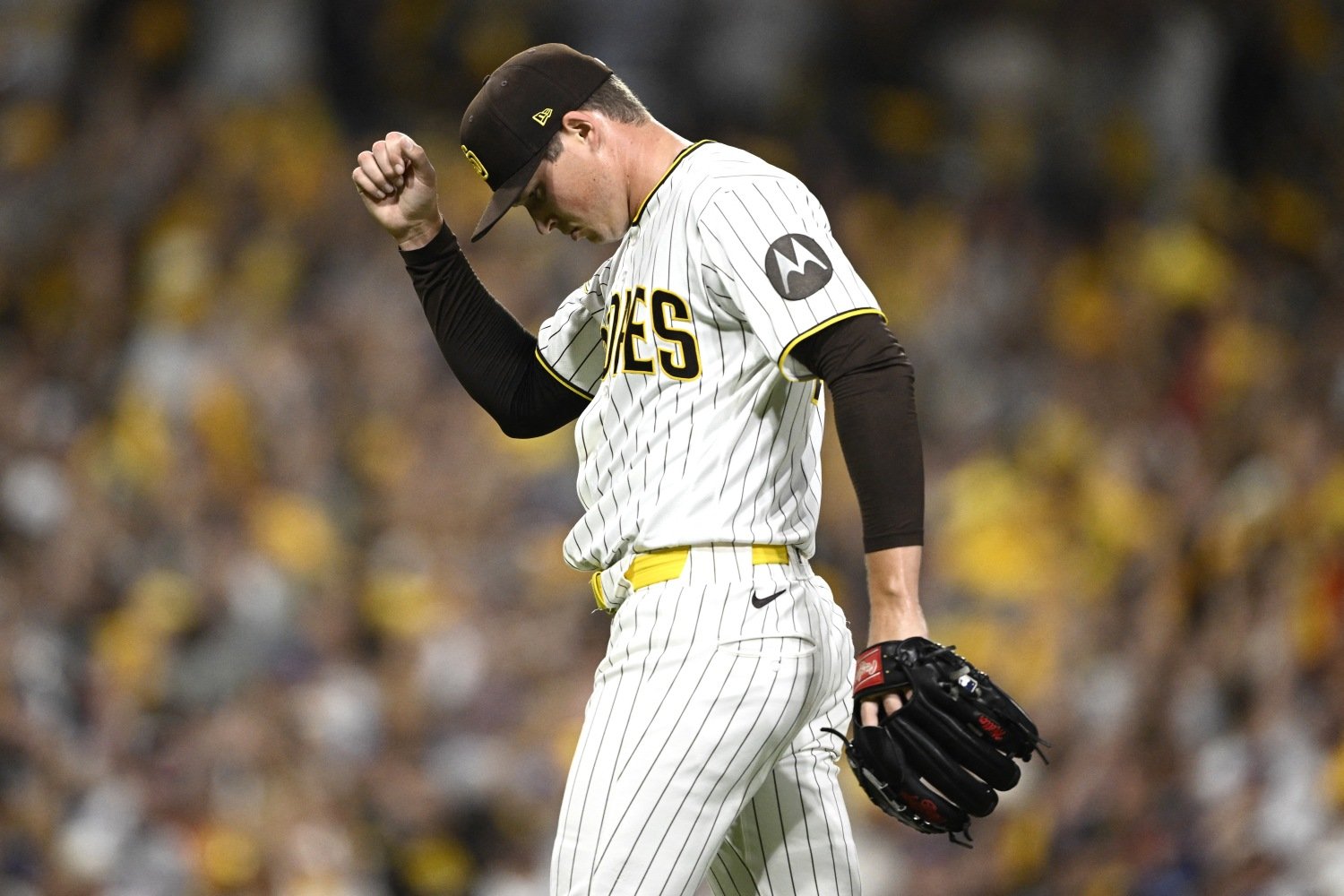 With their slumping offense and weak pitching staff, the Chicago Cubs would have been a better NLDS matchup for the Brewers. Instead, they'll face the red-hot San Diego Padres, who disposed of the floundering Cubs with ease in the NL Wild Card Series. The Padres swept the then-injury-riddled Brewers in San Diego when the teams last met in August, but on paper, Milwaukee is the better team. Their offense is better (107 wRC+ vs. 102 wRC+). Their pitching staff is deeper. By Defensive Runs Saved, they've been better in the field. Even San Diego's bullpen might not be much better than Milwaukee's, but it's their undisputed strength and what makes them a greater threat than the Cubs. Padres relievers led all teams in fWAR during the regular season, thanks to their three-headed monster in the late innings. Closer Mason Miller led all relievers in fWAR; left-hander Adrian Morejon ranked fourth; and rookie Bradgley Rodriguez ranked 26th. The trio threw 4 ⅔ scoreless innings in the Wild Card Series and combined for 9 shutout frames against the Brewers this year. Grabbing early leads will be paramount in the five-game series, but at some point, the Brewers will probably have to make a dent in that bullpen. That's a daunting task, but Milwaukee's offense may be as equipped as any to wear down San Diego relievers. Many of the Padres' key relievers succeed by forcing opponents to expand the strike zone. Their bullpen ranked just 26th in zone rate, throwing 46.5% of pitches over the plate, but led baseball with a 32.4% chase rate. The arms the Brewers will see most in the next week—Miller, Morejon, Rodriguez, Jason Adam, and Yuki Matsui—are all chase merchants. {C}%3C!%2D%2Dtd%20%7Bborder%3A%201px%20solid%20%23cccccc%3B%7Dbr%20%7Bmso-data-placement%3Asame-cell%3B%7D%2D%2D%3E--> Reliever Zone% Chase% K% BB% Mason Miller 45.1% 36.1% 47.4% 9.6% Adrian Morejon 48.7% 38.3% 30.4% 8.0% Bradgley Rodriguez 48.9% 34.4% 26.9% 6.6% Yuki Matsui 42.6% 31.5% 26.2% 13.8% Jason Adam 46.1% 34.1% 15.5% 7.0% The Brewers, meanwhile, have been baseball's most patient offense for the second straight year. Their 26.6% chase rate this year was the lowest in baseball. That's because they emphasize swing decisions (and, specifically, the value of swinging only at hittable strikes) above all else. Swinging at the right pitches will be even more important in the postseason, where the Brewers will face some of the game's best pitching. "If you try to force something in this setting, it doesn't work, I don't think," Pat Murphy said earlier this week. "I think it is magnified, and I think we've got to double down even more on that ball-strike. You're facing the best pitchers, so the run expectancy is going to be down, right? So it becomes magnified." That's easier said than done, though. The Brewers chased 29.3% of pitches outside the zone against the Padres' bullpen this year, including a combined 30.5% chase rate against Miller, Morejon, and Rodriguez. All three rely heavily on their secondary stuff. Miller threw more sliders than fastballs this year; Morejon threw his changeup 36% of the time to right-handed batters; and Rodriguez threw his changeup 43% of the time. The Brewers are actually more selective against secondary pitches than most of the league, but like all teams, they chase those pitches more than they chase heaters, because they have more movement than fastballs. Furthermore, when pitchers attack the Brewers with non-fastballs, they go from one of baseball's best offenses to an average one. On a rate basis, their run value against fastballs was near the top, but they were middle-of-the-pack against breaking balls and changeups. {C}%3C!%2D%2Dtd%20%7Bborder%3A%201px%20solid%20%23cccccc%3B%7Dbr%20%7Bmso-data-placement%3Asame-cell%3B%7D%2D%2D%3E--> Pitch Group Run Value/100p Rank Fastballs 0.196 3rd Breaking 0.162 11th Offspeed 0.169 12th The Padres could also adjust their approach against a passive Milwaukee lineup. Facing the similarly patient Cubs on Wednesday night, Miller threw his fastball 63% of the time and tried to attack the zone more aggressively. The Brewers should be able to play the waiting game with Adam and Matsui, but Miller, Morejon, and Rodriguez all have good enough fastballs to live over the heart of the plate when they choose. {C}%3C!%2D%2Dtd%20%7Bborder%3A%201px%20solid%20%23cccccc%3B%7Dbr%20%7Bmso-data-placement%3Asame-cell%3B%7D%2D%2D%3E--> Reliever 4-Seam Stuff+ Sinker Stuff+ Mason Miller 105 Adrian Morejon 127 129 Bradgley Rodriguez 108 101 Yuki Matsui 96 94 Jason Adam 90 If the Brewers influence the Padres' best arms to throw more fastballs for strikes, they must be ready to attack. That wasn't always the case in the regular season; their 69% swing rate on fastballs in the heart of the zone was the second-lowest in baseball. When they did swing at those pitches, though, their 0.855 run value per 100 pitches ranked second. With better starting pitchers and a better overall lineup, the Brewers should be able to gain an upper hand on the Padres. Once San Diego goes to the bullpen, it will be strength against strength. The series may hinge on the Brewers forcing Padres relievers to change their approach and taking advantage of more in-zone fastballs than most teams get.
 -
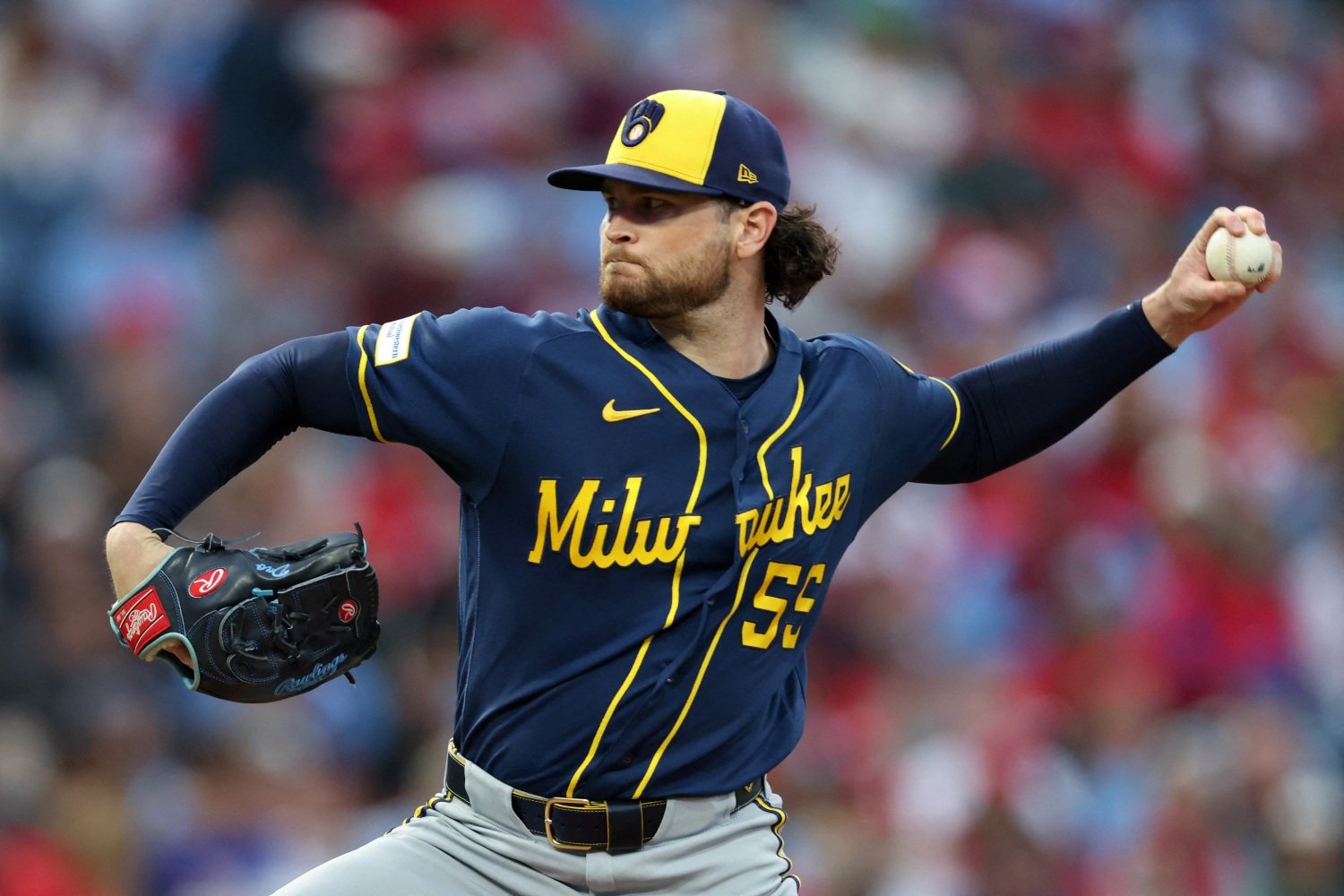 Shane Drohan ended his season where he found the most success as a rookie: the bullpen. The 27-year-old was a full-time starter from June through the second week of September, but he excelled as a long reliever in May, and three of his last four outings came out of the bullpen. He posted a 1.47 ERA, 2.44 xERA, 2.19 FIP, and 19.8% strikeout-minus-walk percentage in 14 relief appearances, and he projects as a multi-inning bullpen weapon for the Brewers in the postseason. A starter for most of his baseball life, Drohan now feels just as comfortable in the bullpen. Middle relievers never know when they might be called into a game and must be ready at a moment's notice. That experience taught the meticulous Drohan that he can succeed without a strict, delicately timed pregame routine. "I learned that I don't need as much pregame or a neurotic routine to succeed," he said. "I felt like being in the bullpen really taught me that. I throw three to four hours before the game, and then you're just sitting in there, and then the phone rings, and you get to go in. It's eight to 12 pitches, and you're in the game. If you would have asked me that a couple years ago, because I'd been starting my whole life, I would have been like, 'No way.'" Converted starters often benefit from emphasizing their two best pitches in shorter relief outings. For Drohan, those pitches have been his riding four-seam fastball and his tight, gyro-spin slider, which posted the highest run values in his arsenal this year. Opponents managed just a .278 wOBA against his four-seamer and a .218 wOBA against his slider. The Brewers took the opposite approach, though: throwing Drohan's worst pitch more. Early in the year, they added a sinker as a secondary fastball to help him pitch to both sides of the plate. It didn't work. The sinker's -6 run value made it Drohan's least effective pitch, and opponents slugged a whopping .762 against it in August. Yet, the Brewers doubled down, making the sinker his new primary fastball in September instead of the dominant four-seamer. More accurately, the Brewers didn't double down on a bad pitch, but on a bad pitch that was improving. Throughout the year, Drohan has steadily slashed the induced vertical break of his sinker (for fastballs, a higher number indicates more carry, and a lower number means more sink) and added more arm-side run. That made the sinker an effective fastball in September, the first month since May in which it posted a positive run value. Month IVB HB SLG Run Value April 9.9 16.2 .667 0 May 8.9 15.8 .385 1 June 8.1 14.5 .633 -2 July 7.8 16.7 .571 -2 Aug 7.3 17.3 .762 -5 Sept 6.6 18.2 .350 2 "I feel like now it's like a true sinker, with a good amount of run," Drohan said. "I feel like the last couple weeks, it's been running a lot." In a five-out save in Sunday's regular-season finale, all 13 of Drohan's fastballs were sinkers. A few were among his heaviest sinkers of the season, including this first-pitch sinker to Nolan Gorman with 5.5 inches of induced vertical break and 19.4 inches of arm-side run: QXc3ZU9fWGw0TUFRPT1fVlFBSEJsRU5WUVFBQ2xJSFZnQUhDUUJmQUZsUVZRSUFWbFVOQ0ZGVUNRY0VWZ0pl.mp4 There are a few ways to throw an effective sinker, each utilizing a different combination of spin rate and spin direction. Most pitchers run their fingers parallel to the baseball's two narrow seams and cut the ball enough to create seam-shifted wake, an imbalance of air pressure on each side of the ball that pushes it down and to the arm side. Others who keep their hand behind the ball through release rotate it to a one-seam grip to create that imbalance. The rarest option is pronating with a standard two-seam grip to produce screwball-like spin, which doesn't need seam-shifted wake to create a sinker shape. Drohan's hand doesn't work in any of those ways. He can't pronate. He naturally cuts his fastball ever so slightly, but not enough to create significant seam-shifted wake. That meant finding the right grip took time. Drohan originally used a one-seam grip, which didn't create much movement and made him overthink how he was releasing the ball. He unlocked the extra sink after switching to a traditional two-seam orientation during the second half—which coincided with a dropping of his arm slot. That's changed the spin direction on the sinker out of his hand, in concert with the grip adjustment. "I felt like when I was doing [the one-seam] grip, I was trying to find the right wrist position for it, and then when I went to the traditional two-seam, it just went," he said. There's just one change from a standard two-seamer: Drohan isn't touching any seams. That's because he has long fingers, which let him snap off the seams to generate high spin rates on all of his pitches. That spin creates carry on his four-seamer and sharp downward bite on his breaking balls, but Drohan wants his sinker to spin less so that it sinks more. He runs his pointer and middle fingers between the two seams so they touch only the white of the ball. "I feel like it just lines up with my long-ass fingers better like that," Drohan said. "The pitches that you want to kill vert, for me at least, I've always felt more comfortable the less seams I feel." The early version of Drohan's sinker was effectively a worse version of his four-seamer. It had slightly more run, allowing him to pitch lefties inside, but its induced vertical break was just a couple of inches off his main fastball. Its movement sat between the carry of the four-seamer and the depth of a true sinker, making it a very flat fastball that played right into hitters' swing paths. Now, the sinker has more separation as a distinct fastball that can miss barrels. Below, note the greater space between the red and orange clusters on the righthand graph. It's also become the pitch he commands best, which is the biggest reason he's throwing it more. Drohan's four-seam command and shape deteriorated throughout the summer, culminating in a .754 wOBA and 3 home runs against it in September. Its induced vertical break averaged a season-low 13.5 inches. Meanwhile, he threw his improved sinker in the strike zone 64% of the time, the highest rate in his arsenal. Even though his sinker became more consistent down the stretch, Drohan's four-seamer still flashed more upside, and he'll need it to be his best self in the postseason. Opponents still hit his sinker at an average exit velocity of 92.9 mph in September. According to Statcast bat tracking, they made more perfect contact (swings that were on time with the barrel aligned with the ball) against it than the four-seamer, which is still a swing-and-miss pitch at the top of the zone. FanGraphs's Stuff+ model also rates the four-seamer as the slightly superior fastball. Pitch Type Perfect Contact% Perfect Contact% (MLB Avg) Whiff% Stuff+ Sinker 39% 29% 18% 108 Four-Seamer 20% 24% 25% 109 Drohan began the regular season as a four-seam guy. He ended it as a sinker guy. In October, he needs to be both. "We'll see what happens," Drohan said, regarding his pitch usage in the postseason. "I've always been a four-seam guy, but it's kind of a cool surprise to see that I can throw both, which is tougher for the hitter."
 -
Image courtesy of Bill Streicher-Imagn Images Shane Drohan ended his season where he found the most success as a rookie: the bullpen. The 27-year-old was a full-time starter from June through the second week of September, but he excelled as a long reliever in May, and three of his last four outings came out of the bullpen. He posted a 1.47 ERA, 2.44 xERA, 2.19 FIP, and 19.8% strikeout-minus-walk percentage in 14 relief appearances, and he projects as a multi-inning bullpen weapon for the Brewers in the postseason. A starter for most of his baseball life, Drohan now feels just as comfortable in the bullpen. Middle relievers never know when they might be called into a game and must be ready at a moment's notice. That experience taught the meticulous Drohan that he can succeed without a strict, delicately timed pregame routine. "I learned that I don't need as much pregame or a neurotic routine to succeed," he said. "I felt like being in the bullpen really taught me that. I throw three to four hours before the game, and then you're just sitting in there, and then the phone rings, and you get to go in. It's eight to 12 pitches, and you're in the game. If you would have asked me that a couple years ago, because I'd been starting my whole life, I would have been like, 'No way.'" Converted starters often benefit from emphasizing their two best pitches in shorter relief outings. For Drohan, those pitches have been his riding four-seam fastball and his tight, gyro-spin slider, which posted the highest run values in his arsenal this year. Opponents managed just a .278 wOBA against his four-seamer and a .218 wOBA against his slider. The Brewers took the opposite approach, though: throwing Drohan's worst pitch more. Early in the year, they added a sinker as a secondary fastball to help him pitch to both sides of the plate. It didn't work. The sinker's -6 run value made it Drohan's least effective pitch, and opponents slugged a whopping .762 against it in August. Yet, the Brewers doubled down, making the sinker his new primary fastball in September instead of the dominant four-seamer. More accurately, the Brewers didn't double down on a bad pitch, but on a bad pitch that was improving. Throughout the year, Drohan has steadily slashed the induced vertical break of his sinker (for fastballs, a higher number indicates more carry, and a lower number means more sink) and added more arm-side run. That made the sinker an effective fastball in September, the first month since May in which it posted a positive run value. Month IVB HB SLG Run Value April 9.9 16.2 .667 0 May 8.9 15.8 .385 1 June 8.1 14.5 .633 -2 July 7.8 16.7 .571 -2 Aug 7.3 17.3 .762 -5 Sept 6.6 18.2 .350 2 "I feel like now it's like a true sinker, with a good amount of run," Drohan said. "I feel like the last couple weeks, it's been running a lot." In a five-out save in Sunday's regular-season finale, all 13 of Drohan's fastballs were sinkers. A few were among his heaviest sinkers of the season, including this first-pitch sinker to Nolan Gorman with 5.5 inches of induced vertical break and 19.4 inches of arm-side run: QXc3ZU9fWGw0TUFRPT1fVlFBSEJsRU5WUVFBQ2xJSFZnQUhDUUJmQUZsUVZRSUFWbFVOQ0ZGVUNRY0VWZ0pl.mp4 There are a few ways to throw an effective sinker, each utilizing a different combination of spin rate and spin direction. Most pitchers run their fingers parallel to the baseball's two narrow seams and cut the ball enough to create seam-shifted wake, an imbalance of air pressure on each side of the ball that pushes it down and to the arm side. Others who keep their hand behind the ball through release rotate it to a one-seam grip to create that imbalance. The rarest option is pronating with a standard two-seam grip to produce screwball-like spin, which doesn't need seam-shifted wake to create a sinker shape. Drohan's hand doesn't work in any of those ways. He can't pronate. He naturally cuts his fastball ever so slightly, but not enough to create significant seam-shifted wake. That meant finding the right grip took time. Drohan originally used a one-seam grip, which didn't create much movement and made him overthink how he was releasing the ball. He unlocked the extra sink after switching to a traditional two-seam orientation during the second half—which coincided with a dropping of his arm slot. That's changed the spin direction on the sinker out of his hand, in concert with the grip adjustment. "I felt like when I was doing [the one-seam] grip, I was trying to find the right wrist position for it, and then when I went to the traditional two-seam, it just went," he said. There's just one change from a standard two-seamer: Drohan isn't touching any seams. That's because he has long fingers, which let him snap off the seams to generate high spin rates on all of his pitches. That spin creates carry on his four-seamer and sharp downward bite on his breaking balls, but Drohan wants his sinker to spin less so that it sinks more. He runs his pointer and middle fingers between the two seams so they touch only the white of the ball. "I feel like it just lines up with my long-ass fingers better like that," Drohan said. "The pitches that you want to kill vert, for me at least, I've always felt more comfortable the less seams I feel." The early version of Drohan's sinker was effectively a worse version of his four-seamer. It had slightly more run, allowing him to pitch lefties inside, but its induced vertical break was just a couple of inches off his main fastball. Its movement sat between the carry of the four-seamer and the depth of a true sinker, making it a very flat fastball that played right into hitters' swing paths. Now, the sinker has more separation as a distinct fastball that can miss barrels. Below, note the greater space between the red and orange clusters on the righthand graph. It's also become the pitch he commands best, which is the biggest reason he's throwing it more. Drohan's four-seam command and shape deteriorated throughout the summer, culminating in a .754 wOBA and 3 home runs against it in September. Its induced vertical break averaged a season-low 13.5 inches. Meanwhile, he threw his improved sinker in the strike zone 64% of the time, the highest rate in his arsenal. Even though his sinker became more consistent down the stretch, Drohan's four-seamer still flashed more upside, and he'll need it to be his best self in the postseason. Opponents still hit his sinker at an average exit velocity of 92.9 mph in September. According to Statcast bat tracking, they made more perfect contact (swings that were on time with the barrel aligned with the ball) against it than the four-seamer, which is still a swing-and-miss pitch at the top of the zone. FanGraphs's Stuff+ model also rates the four-seamer as the slightly superior fastball. Pitch Type Perfect Contact% Perfect Contact% (MLB Avg) Whiff% Stuff+ Sinker 39% 29% 18% 108 Four-Seamer 20% 24% 25% 109 Drohan began the regular season as a four-seam guy. He ended it as a sinker guy. In October, he needs to be both. "We'll see what happens," Drohan said, regarding his pitch usage in the postseason. "I've always been a four-seam guy, but it's kind of a cool surprise to see that I can throw both, which is tougher for the hitter." View full article
-
Image courtesy of USA TODAY Network via Reuters Connect On the first workout day of their weeklong bye before the NLDS, the Brewers didn't play a game-like scrimmage. That was by design. "Don't try to contrive or recreate real at-bats, because you're not going to get those," Pat Murphy said on Tuesday afternoon. Instead of replicating a game, the Brewers held a specialty workout, deliberately dialing down the intensity to work on some of the basics. Even though September was the club's winningest month of the regular season, Murphy felt his players were slipping on executing fundamentals. Outclassing opponents at the little things has been integral to their regular-season success. "Let's work on some fundamental things," Murphy said. "Let's work on some specific things, and we'll go from there." And so, while Grant Anderson and Logan Henderson threw live at-bats to select hitters with no defenders, a rotation of baserunners worked with Spencer Allen on leads and jumps at first base, an area where Murphy said he wanted improvement. The workout lasted about one hour. The other reason for starting slowly was that the Brewers needed a break. Like most teams, they're banged up after six months of baseball. Jake Bauers has been playing through shin splints and a fractured toe; Joey Ortiz is dealing with an abdominal strain and a knee contusion; and Cooper Pratt and Andrew Vaughn are recovering from illness. Jacob Misiorowski, Henderson, and Shane Drohan are among the pitchers who set career highs in innings pitched. A few days to get guys off their feet is a luxury the Brewers earned by winning a franchise-record 103 games. "I didn't feel like we limped to the finish line, but, you know, it's 162 games," Drohan said. "Everybody's going through something, so I feel like these couple days off are going to be huge for us, so we can just come out of the gate firing." Taking greater advantage of the time off could be key for the Brewers, who ran out of steam in last year's NLCS sweep against the Dodgers. To make a deeper postseason run, they'll need to have enough left in the tank through October. "We're planning on being the team that no one expected that's going to continue to win, but learning from what we did last year -- the emotional series that we had in the division series, knowing that we got to recover and be ready," Murphy said. "Then we lose a game, Game 1 against the Dodgers, and just didn't recover the way I'd like to." The challenge is striking the balance that makes the bye week an asset, not a detriment. Statistically, there's no evidence that the bye disrupts a team's momentum and leaves them rusty for the start of the NLDS. Last year's Brewers roared out of the gates with a 9-3 victory in Game 1 over the Cubs and eventually won the series. Still, baseball is a mental game, and there's a perceived danger in letting off the gas pedal too far. The Brewers will progress to more intense workouts by the end of the week. "For years, I've heard managers and players say, 'That layoff killed us. We just got out of our rhythm.' That's real. That could happen," Murphy said. "But it really comes down to the ballplayers, and it comes down to their understanding, their awareness, and their willingness to say, 'Look, I've got to stay on.' Today, maybe not, but probably starting [Wednesday]." "We kind of experienced this a little bit last year, so we know what we might need to get better at," Brice Turang said. "Just having full trust in what Murph wants to do, and then mentally just being prepared to go." For Misiorowski, the week off won't look much different. By starting him in the regular-season finale on Sunday, the Brewers lined him up to pitch Game 1 on Saturday on the five days of rest he received for most of the year. "For myself, it's going to be pretty normal," Misiorowski said. "I'm going to be doing my normal stuff [the days] between, so it's going to be normal rest." The downtime also gives the Brewers a few more days to evaluate roster candidates. That includes Kyle Harrison, whose stuff bounced back over his final few outings but with mixed results. Given his upside, the Brewers seem likely to take that decision all the way up to the buzzer, and how he looks in his side work during the bye could influence whether he makes the cut as a reliever. "That last outing meant something," Murphy said. "It was leverage. So yeah, I'm looking forward to seeing what this week brings. It's not a tryout, but we're looking for consistency, the secondary stuff to be consistent. I think he could definitely grab a spot here." The Brewers' most important games lie ahead. This week is about best positioning themselves to succeed when the lights turn back on. "I think the vibes in here are great," Drohan said. "I think everybody's appreciating these couple days off." View full article
