


Brewers Video
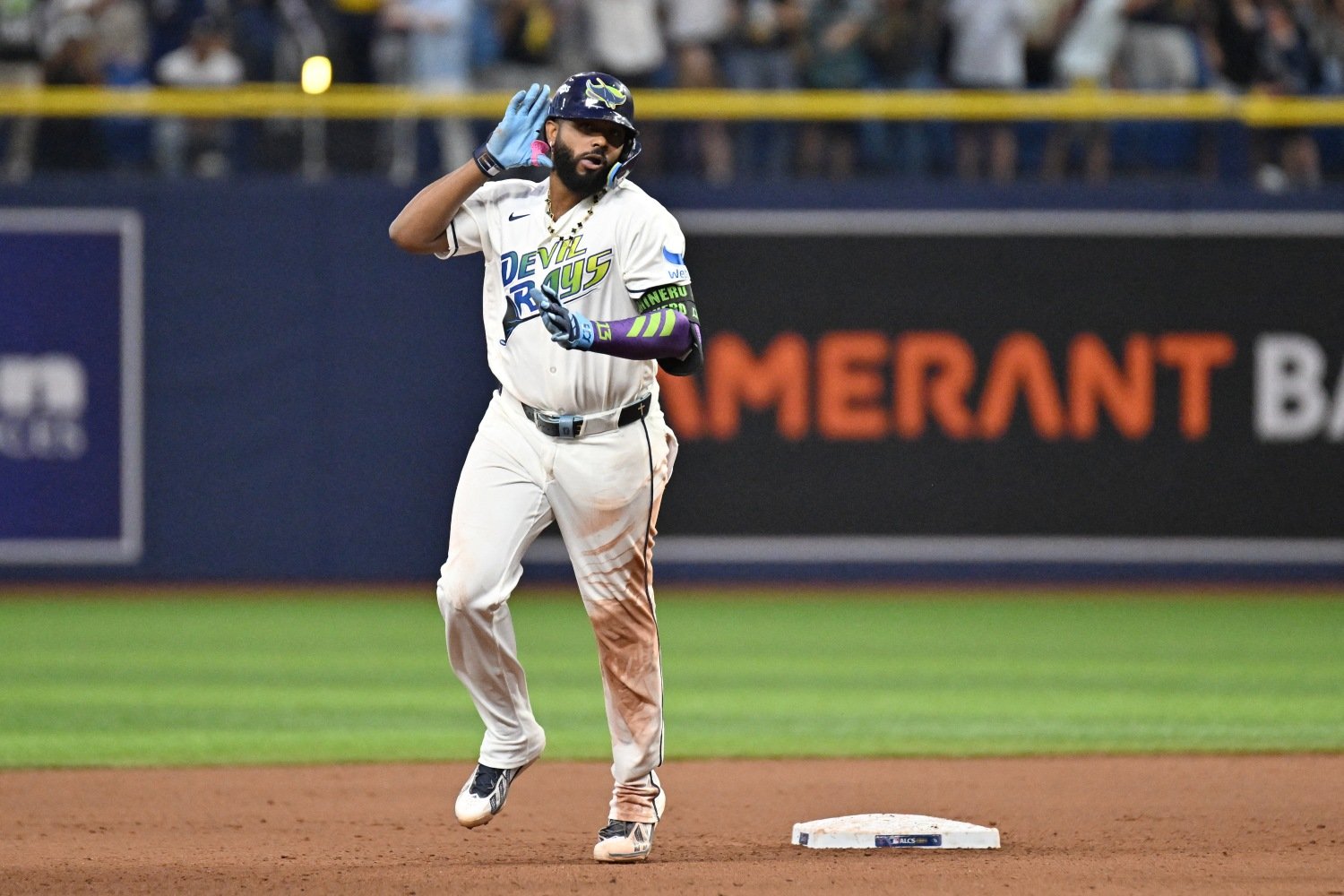
The Rays’ offense is everything the general public thinks the Brewers are, and more. They have perhaps the fastest player in baseball in Chandler Simpson; one of the quickest bats in the league in Yandy Díaz; and Junior Caminero, a young power hitter who crushes fastballs with extreme prejudice and launched 41 home runs in the regular season. There’s also Jonathan Aranda, an underappreciated left-handed hitter who excels at putting the ball in the air, and Victor Mesa Jr., who posted a 155 wRC+ after the trade deadline. There are names in this lineup you might not know well, but don’t mistake obscurity for a lack of firepower. There’s sneaky power beyond Caminero, and an offensive approach that (as Sal Frelick puts it) is happy to “drag you to hell.”
The Rays’ run prevention is just as electric. Sublime defense complements a rotation built around Drew Rasmussen, Freddy Peralta and Nick Martinez, creating a unit that will make life difficult for the Brewers if they can’t keep the offense in check. So how, exactly, can Milwaukee silence the most dangerous threats in the Rays’ lineup?
Junior Caminero: Can They Keep the Ball Down and Capitalize On His Youth?
Caminero’s power has been a defining feature of the Rays’ offense; he averaged roughly one home run every four games during the regular season. It’s difficult to imagine him going through this series without making a few loud connections, but the Brewers may have an opportunity to limit his impact. Caminero was red-hot in the first half of the season, but his 121 wRC+ since the trade deadline suggests he has become a more manageable threat. More importantly, his postseason chase rates have climbed considerably above their regular-season levels. For a hitter who can change a game with one swing, that aggressiveness presents an opportunity for Milwaukee: make him chase, get him into unfavorable counts, and use his eagerness to hunt fastballs against him.
The first priority is understanding where Caminero’s power is most dangerous. His relationship with the four-seam fastball is particularly striking: he has posted a 68% hard-hit rate and a 19% barrel rate against the pitch, consistently elevating four-seamers with authority. His 32% ground-ball rate against them explains why they have been such a problem for opposing pitchers. Challenging him with a conventional four-seamer is asking for trouble. However, Caminero has also shown a tendency to chase four-seamers above the strike zone. He can still punish mistakes up there, but pitchers with the kind of fastball characteristics possessed by Jacob Misiorowski and Logan Henderson have a better chance of beating him at the top of the zone.
Varying the fastball shape offers another route to limiting his power. Although Caminero hits the ball hard against most pitch types, certain fastball variants can encourage weaker contact and keep the ball on the ground. His 60% ground-ball rate against sinkers is particularly encouraging, although that approach may be more useful for right-handed pitchers than left-handers. By changing his eye level and preventing him from sitting on one fastball shape, Milwaukee can make it harder for Caminero to generate the elevated contact that makes him so dangerous.
That's where the Brewers’ left-handed relief options become particularly interesting. Caminero has shown some vulnerability against non-fastballs from left-handed pitchers; the chart below illustrates how opposing pitchers have approached him this season.

For Milwaukee’s left-handed relievers, the game plan should be straightforward: minimize hittable fastballs and use secondary pitches to disrupt his timing. Caminero’s weighted on-base average (wOBA) against sinkers and four-seamers is monstrous, but opposing pitchers have found success with cutters that break in on his hands, alongside sliders, curveballs and changeups that catch him out in front. With Caminero showing an increased willingness to chase this postseason, those pitches become even more important. Aaron Ashby and DL Hall have the weapons to attack him away from his preferred fastball locations and force him to prove he can lay off pitches outside the zone.
Trevor Megill could also have a role to play. Caminero has struggled against right-handed curveballs this season, posting a .231 wOBA against them, which makes Megill’s knuckle-curve an intriguing weapon. But the same principle applies: the secondary pitch has be tantalizing enough to induce a swing from a guy who's locked in on the fastball. In a high-leverage situation, a misplaced heater could be exactly what the Rays slugger is waiting for.
The postseason numbers reinforce the case for this approach. Caminero did begin making better contact toward the end of the ALCS, but his chase rates have climbed sharply compared with the regular season. He's still capable of punishing pitches in the strike zone, and his ability to barrel up a fastball has not disappeared. The concern is what happens when his aggressiveness takes him outside the zone. The Brewers have to force him to do so.

A World Series offers the biggest stage of Caminero’s career, and the heightened anticipation could encourage him to force the issue in search of a defining moment. We've seen how postseason pressure can affect even the most talented young hitters. Changeups have generated a 36% put-away rate this postseason, offering a compelling reason for Milwaukee to lean on them either to get ahead or to finish off an overeager bat.
Yandy Díaz: One Of The Most Complete Hitters In Baseball
As modern leadoff hitters go, you could hardly ask for more than Yandy Díaz. He rarely swings and misses, has one of the flattest swing paths in baseball, and hits the ball as hard as just about anyone. The one notable limitation is his lack of swing-plane tilt, which makes it difficult for him to consistently elevate the ball. Almost everything else in his batted-ball profile is exactly what you would want from a hitter at the top of the lineup. And when Díaz does get the ball in the air, it leaves in a hurry.
How do the Brewers attack a hitter who combines elite contact ability with such consistent hard contact? The first avenue is velocity. While Mesa and Caminero have had relatively little trouble turning around fastballs at 97 MPH and above, Díaz has been noticeably less effective against that level of velocity. He's managed just a .233 expected batting average and a -2.9 run value per 100 pitches against these fastballs. He can still hit them hard, but the extra velocity appears to hurry his swing and leave him late on the ball, producing more ground-ball contact. For Milwaukee, that creates an opportunity to use premium velocity not necessarily to generate whiffs, but to limit the quality of Díaz’s contact.

Trying to stop Díaz from hitting the ball hard is unlikely to work. He handles a wide range of pitch types effectively and can drive the ball to all fields. He also rarely strikes out, although his desire to put the ball in play can make him susceptible to chasing pitches outside the zone. The Brewers’ best approach may therefore be to lean into their familiar fastball-heavy strategy and focus on the shape and location of their pitches, rather than trying to overpower him outright.
Four-seamers and cutters are particularly interesting options. Díaz’s relatively flat swing can make it difficult for him to consistently lift these pitches, creating opportunities for ground balls that Milwaukee’s infield can turn into outs. His results against both left- and right-handed pitching support that approach, with the curveball, four-seamer and cutter producing his lowest wOBA figures among the pitch types shown below.
There is, however, an intriguing wrinkle in Díaz’s platoon splits. Despite his effectiveness against pitchers from either side, he has reverse platoon splits, and his batted-ball profile against left-handed pitching is particularly interesting. He barrels the ball less often against southpaws, even though he walks more frequently and hits the ball harder overall against them. That combination makes the matchup a little more complicated than the surface numbers suggest: less frequent barrelled contact does not necessarily mean weaker contact overall. Diaz has also unleashed on left-handed breaking balls this year, and it's one category of pitches that he's been able to lift with regularity.

For the Brewers, those splits could influence how they deploy their bullpen when Díaz and Jonathan Aranda come to the plate in close succession. A left-handed reliever may offer an appealing matchup against both hitters, particularly given that Caminero has been effective against pitchers from either side. The goal, though, should remain the same, regardless of who takes the mound: limit Díaz’s ability to elevate the ball, use velocity and fastball movement to encourage ground-ball contact, and trust the defense to turn those opportunities into outs.
His post-season performance has mirrored Caminero's thus far. More chase, more swing-and-miss (especially on the four-seam fastball, which pitchers have kept up above the strike zone) and some prodigious chase on breaking pitches as well. The results have been there, but the raw stuff in the Brewers rotation and bullpen may be able to exploit this in a similar way that Gavin Williams and the Guardians staff managed.

Jonathan Aranda - The Unheralded Weapon
Often sandwiched between Díaz and Caminero in the Rays’ lineup, Aranda can be overshadowed by the bigger names around him. That would be a mistake. He's been one of Tampa Bay’s most productive hitters this postseason, leading the team with a .447 expected wOBA, almost 50% higher than his actual wOBA. Aranda’s strength lies in his ability to elevate at optimal launch angles, generally between 10° and 30°, producing consistent outfield contact despite relatively modest bat speed and some swing-and-miss concerns.
Those concerns are real. Aranda struck out more than 24% of the time during the regular season, and that rate has climbed to 27% in the postseason. But when he makes contact, the quality is often excellent. He combines good barrel control with strong exit velocities, while showing a particular aptitude for punishing breaking balls. For opposing pitchers, the challenge is finding a way to exploit his tendency to miss without allowing him to turn a mistake into damaging contact.

His regular-season pitch splits explain where that opportunity lies. As the chart above shows, Aranda was particularly effective against sliders, curveballs and sweepers, while his approach suggests a willingness to attack pitches in the strike zone. His swing path is almost the opposite of Díaz’s: where Díaz struggles to consistently elevate the ball, Aranda’s steeper bat path allows him to get underneath pitches in the lower part of the zone, particularly breaking balls. That makes it difficult to beat him simply by working down. However, there is a more exploitable weakness at the top of the strike zone.

That's where the Brewers should look to attack. Four-seam fastballs with strong velocity and movement characteristics can challenge Aranda in a part of the zone where his swing is less effective, offering Milwaukee a way to limit his ability to generate the elevated contact that makes him dangerous. When turning to breaking pitches, right-handed pitchers should look to work down and in, changing his eye level after establishing the fastball above the zone. The objective is to prevent Aranda from settling into the lower part of the strike zone, where his swing path allows him to do considerable damage.
The difficulty is that the Rays’ lineup rarely allows pitchers to focus on one hitter in isolation. A four-seam-heavy approach might be effective against Aranda, only to leave a pitcher in an uncomfortable matchup against Caminero, whose power against fastballs makes him particularly dangerous if those pitches drift into the heart of the zone. With the three-batter minimum also limiting the Brewers’ ability to make immediate pitching changes, the top of Tampa Bay’s lineup presents a difficult sequence of contrasting strengths and weaknesses. Where one hitter struggles, the next may thrive, forcing Milwaukee to weigh the best matchup across several plate appearances rather than simply attacking each batter individually.
There is one particularly interesting option in a high-leverage situation. Aranda posted a .198 wOBA against left-handed four-seam fastballs during the regular season, making that combination an appealing way to attack him with the game on the line. The problem is that Milwaukee does not have an abundance of left-handed relievers who rely primarily on that pitch. Ashby, JoJo Romero and DL Hall, for example, feature sinkers as their primary fastballs, playing into Aranda’s strengths rather than exploiting his weakness. If the Brewers find themselves facing Aranda with the game in the balance, identifying a left-handed pitcher capable of challenging him with an effective four-seamer could be crucial, especially for a team who typically prefers sinkers and cutters from their pitching staff.
The Margin for Error is Slim
The Rays’ lineup presents a difficult puzzle for the Brewers, because there is no single approach that neatly solves it. A fastball-heavy approach that works against Aranda can leave a pitcher exposed to Caminero, while a strategy designed to induce ground balls from Díaz may not translate as neatly to the hitters around him. The Brewers will need to think beyond individual matchups and consider how each plate appearance shapes the next.
Fortunately for Milwaukee, the underlying numbers suggest there are opportunities to exploit. The key will be executing those plans without leaving pitches in locations where these hitters can do their most damaging work.
It's a very different challenge than that posed by the Dodgers. The Los Angeles lineup adored four-seam fastballs, whereas the Rays (aside from Caminero) typically feast more on sinkers, which isn't as strong a matchup for this Brewers bullpen—although it may lend itself to their starting pitchers if they can find their best form for the World Series.
Covering all of the bases in this match-up is going to be difficult. Against a lineup with such differing profiles from its biggest hitters, the margin for error is slim. But if Milwaukee can consistently attack the right weaknesses while avoiding the strengths that make this offense dangerous, it has a path to keeping the Rays in check when the stakes are highest.





Recommended Comments
Create an account or sign in to comment
You need to be a member in order to leave a comment
Create an account
Sign up for a new account in our community. It's easy!
Register a new accountSign in
Already have an account? Sign in here.
Sign In Now