Jake McKibbin
-
Posts
2,418 -
Joined
-
Last visited
-
Days Won
6
2 Followers


Recent Profile Visitors
28,952 profile views





Jake McKibbin's Achievements




-
Thanks for all the hard work this year Ben! These reports are a highlight for many and the effort that goes into them never goes unnoticed, or unappreciated
- 5 replies
-
- 6
-

-

-
- bishop letson
- andrew fischer
- (and 2 more)
-
It definitely helps to be a lefty with his speed, and to be putting a lot of balls in play on low line drives/ground balls. Especially with the EV's he records, it's a perfect storm in some ways for a high BABIP
-
Image courtesy of Aaron Doster-Imagn Images Garrett Mitchell's biggest weakness is no secret. In his first three years in the big leagues, as scattered as those appearances were, he struggled badly against the high fastball. Prior to May 2026, Mitchell had only one month of baseball (April 2025) in which he recorded an expected batting average above .100 on high heaters, and he'd never recorded a monthly xBA above .135. There were occasional glimpses that he could foul off a high fastball, but the best pitchers in the game could go there repeatedly if they wanted to. Eventually, they knew, a swing and miss would come. Mitchell's approach in the years prior to 2026 was to crush everything that wasn't a high fastball. He punished breaking balls in the strike zone, patiently waiting for pitchers to drop the ball down in the zone and attempting to do damage when they did. After 2024, Mitchell spent time at Tread Baseball, working on flattening his swing to better handle pitches at the top of the zone. He knew that, eventually, pitchers wouldn't throw him anything else until he proved he could close that hole. Unfortunately for Mitchell, he didn't have enough game time to develop and adapt those adjustments. A shoulder subluxation ruled him out early in 2025 and ultimately kept him out for the entire season. As much as he could work on the changes in a controlled environment, it's different in a game, where location, movement and the depth of a pitcher's arsenal combine to make the job much tougher. Mitchell even began to struggle with the breaking pitches that had been his bread and butter for so long. Fast-forward to 2026, and a familiar pattern emerged. Mitchell was struggling again with the high fastball in April and May, and by May, pitchers were beginning to expose the weakness frequently. So Mitchell adjusted—in a big way. Some of those adjustments are still being worked on, as you'll see below, but Mitchell appears to be getting closer to his Goldilocks spot. The Stance Change The first, and perhaps easiest, change to see is Mitchell's setup. He's opened his stance significantly, while also shortening the gap between his feet compared with April and May. The degree of that change has varied throughout the season: he moved from roughly 32 inches between his feet in April and May, down to 28 inches in June, then 24 inches in June/July, before moving back to 28 inches in September. Here's a swing from September on a pitch up and over the middle of the plate that Mitchell crushed: ZFh2cTZfWGw0TUFRPT1fQUFKVFZGUldYZ1VBRGxjRlVnQUhCd1ZXQUFBR0IxSUFVRlpUQXdVR1VnRUhBbEJl.mp4 Contrast that with Mitchell's setup in April. He looks more coiled and tense than he does in September and, although the camera angle isn't ideal, the closed stance is still obvious to the naked eye: WU9WWWVfWGw0TUFRPT1fVkZWWlZ3QU5CMWNBQUZJR0J3QUhCZzVTQUZrQ0IxTUFCd0ZSQndJTlVBTmNBd0lG.mp4 The change in stance brings a couple of advantages. An open setup can help a hitter clear the shoulders and hands more quickly, making it easier to get the bat on plane for pitches higher in the strike zone. Mitchell's shoulders and hips are more open, not just in his initial setup, but also when he gets his foot down. That creates a shorter path to the ball and is helping Mitchell get on time for high fastballs in a way he physically struggled to do in prior years. Flatter Bat Path I mentioned earlier that in the 2024-25 offseason, Mitchell was working on flattening his bat path to help him handle the high fastball. By taking less of an uppercut swing, Mitchell can get the barrel to the ball more directly, creating a more compact swing and reducing the likelihood of missing underneath the pitch. His attack angle tells us a lot about his development in this area, and you can see a fairly dramatic shift in June, followed by another adjustment in July: Mitchell's open stance and flatter path are allowing him to get on time against the fastball and square it up even when it's well-located. Although his swing-and-miss rate against high fastballs fell sharply in July, he's still whiffing fairly often in August and September. It's still a hole in his swing. But it's no longer an easy one for pitchers to exploit. Mitchell is now capable of doing enough damage against the high fastball to make pitchers think twice about repeatedly going there. The changes in his quality of contact are now measurable, thanks to Statcast's developments this year. If we contrast 2024 Mitchell with April 2026 and September, his flatter bat path is having a clear impact on how consistently he's finding the barrel. Mitchell has almost always been "centered," meaning that he tends to get the barrel of the bat to the ball (rather than the end of it, or a narrower part nearer the handle), but the changes in how often he's perfectly on time and in line with the ball bear out the eye test. His swing is now capable of barreling up fastballs. If we split his career results against high fastballs in the strike zone up to the end of this May and the time since, a startling turnaround in performance emerges: 2023-May 2026 s. June 1, 2026 Expected Batting Average 0.120 0.328 Expected Slugging 0.214 0.443 That's allowed Mitchell to approach the plate differently from how he did during the earlier parts of the season. Pitchers are no longer able to pepper him at the top of the strike zone to the point of total predictability without a vicious response, Mitchell can take a more relaxed, all-encompassing approach to his hitting plan. Pitchers now have to show him more than just a high fastball to get him out, and in doing so, Mitchell has been able to access the damage against breaking balls that eluded him earlier this season. Mitchell no longer has to go to the plate thinking primarily about protecting against the high fastball. Earlier in the year, he was selling out for it, and his damage against breaking pitches suffered as a result. Now that he's comfortable covering the fastball at the top of the zone (or at least making pitchers think twice about getting predictable up there), he's able to take a more balanced approach. That's allowed him to get back to hammering breaking balls. The sample sizes for the graphic above are small, but you can see Mitchell catching a lot of balls off the end of his bat in March and April, while also being early. That's a reflection of how much he was selling out for the high fastball and getting caught out in front. Now that he's more comfortable handling his Kryptonite, the timing and barreling of those breaking balls are coming back with a vengeance. Those are the balls you'll see Mitchell pull in the air that go a long, long way. There is still a trade-off. While the flatter swing has been great for helping Mitchell time up fastballs, much of his contact (very hard contact, to be clear) has been on low line drives to the opposite field. If Mitchell is going to tap into his home-run power, it's more likely to come against breaking balls. Now that he's settling into his groove, we're beginning to see that upside with more regularity in September as his expected slugging by month against each pitch group shows (remember the expected slugging against fastballs here covers the whole strike zone, not just high fastballs): It's easy to forget just how little time Mitchell has had to iron out his mechanical kinks in the heat of battle. After losing almost the entirety of 2025, this year has given him the opportunity to make these adjustments, test them against major-league pitching and then adjust again. He's still figuring out exactly where his Goldilocks spot is. But for the first time, Mitchell has made pitchers pay for going to the place that used to be the obvious one to get him out. View full article
-
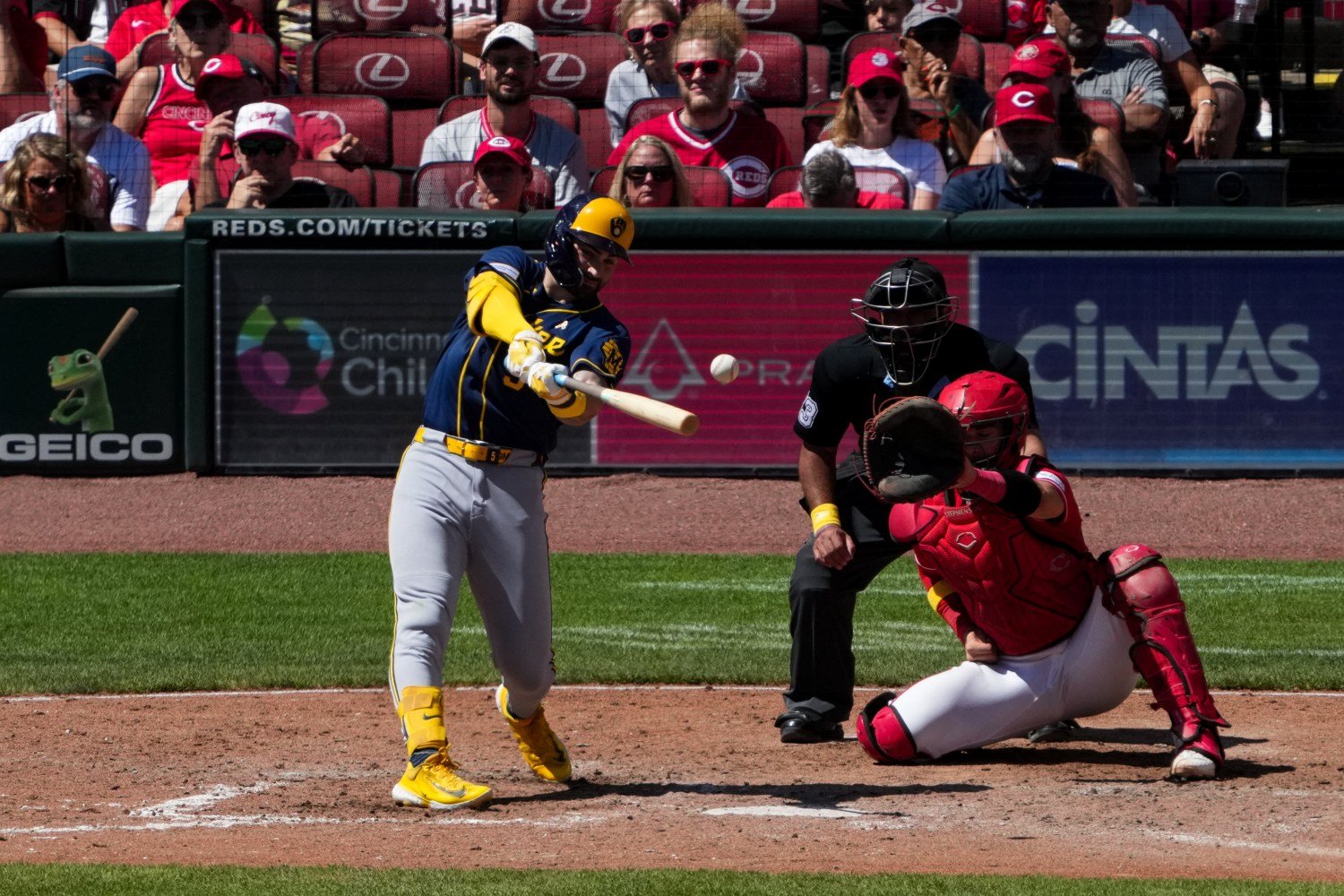 Garrett Mitchell's biggest weakness is no secret. In his first three years in the big leagues, as scattered as those appearances were, he struggled badly against the high fastball. Prior to May 2026, Mitchell had only one month of baseball (April 2025) in which he recorded an expected batting average above .100 on high heaters, and he'd never recorded a monthly xBA above .135. There were occasional glimpses that he could foul off a high fastball, but the best pitchers in the game could go there repeatedly if they wanted to. Eventually, they knew, a swing and miss would come. Mitchell's approach in the years prior to 2026 was to crush everything that wasn't a high fastball. He punished breaking balls in the strike zone, patiently waiting for pitchers to drop the ball down in the zone and attempting to do damage when they did. After 2024, Mitchell spent time at Tread Baseball, working on flattening his swing to better handle pitches at the top of the zone. He knew that, eventually, pitchers wouldn't throw him anything else until he proved he could close that hole. Unfortunately for Mitchell, he didn't have enough game time to develop and adapt those adjustments. A shoulder subluxation ruled him out early in 2025 and ultimately kept him out for the entire season. As much as he could work on the changes in a controlled environment, it's different in a game, where location, movement and the depth of a pitcher's arsenal combine to make the job much tougher. Mitchell even began to struggle with the breaking pitches that had been his bread and butter for so long. Fast-forward to 2026, and a familiar pattern emerged. Mitchell was struggling again with the high fastball in April and May, and by May, pitchers were beginning to expose the weakness frequently. So Mitchell adjusted—in a big way. Some of those adjustments are still being worked on, as you'll see below, but Mitchell appears to be getting closer to his Goldilocks spot. The Stance Change The first, and perhaps easiest, change to see is Mitchell's setup. He's opened his stance significantly, while also shortening the gap between his feet compared with April and May. The degree of that change has varied throughout the season: he moved from roughly 32 inches between his feet in April and May, down to 28 inches in June, then 24 inches in June/July, before moving back to 28 inches in September. Here's a swing from September on a pitch up and over the middle of the plate that Mitchell crushed: ZFh2cTZfWGw0TUFRPT1fQUFKVFZGUldYZ1VBRGxjRlVnQUhCd1ZXQUFBR0IxSUFVRlpUQXdVR1VnRUhBbEJl.mp4 Contrast that with Mitchell's setup in April. He looks more coiled and tense than he does in September and, although the camera angle isn't ideal, the closed stance is still obvious to the naked eye: WU9WWWVfWGw0TUFRPT1fVkZWWlZ3QU5CMWNBQUZJR0J3QUhCZzVTQUZrQ0IxTUFCd0ZSQndJTlVBTmNBd0lG.mp4 The change in stance brings a couple of advantages. An open setup can help a hitter clear the shoulders and hands more quickly, making it easier to get the bat on plane for pitches higher in the strike zone. Mitchell's shoulders and hips are more open, not just in his initial setup, but also when he gets his foot down. That creates a shorter path to the ball and is helping Mitchell get on time for high fastballs in a way he physically struggled to do in prior years. Flatter Bat Path I mentioned earlier that in the 2024-25 offseason, Mitchell was working on flattening his bat path to help him handle the high fastball. By taking less of an uppercut swing, Mitchell can get the barrel to the ball more directly, creating a more compact swing and reducing the likelihood of missing underneath the pitch. His attack angle tells us a lot about his development in this area, and you can see a fairly dramatic shift in June, followed by another adjustment in July: Mitchell's open stance and flatter path are allowing him to get on time against the fastball and square it up even when it's well-located. Although his swing-and-miss rate against high fastballs fell sharply in July, he's still whiffing fairly often in August and September. It's still a hole in his swing. But it's no longer an easy one for pitchers to exploit. Mitchell is now capable of doing enough damage against the high fastball to make pitchers think twice about repeatedly going there. The changes in his quality of contact are now measurable, thanks to Statcast's developments this year. If we contrast 2024 Mitchell with April 2026 and September, his flatter bat path is having a clear impact on how consistently he's finding the barrel. Mitchell has almost always been "centered," meaning that he tends to get the barrel of the bat to the ball (rather than the end of it, or a narrower part nearer the handle), but the changes in how often he's perfectly on time and in line with the ball bear out the eye test. His swing is now capable of barreling up fastballs. If we split his career results against high fastballs in the strike zone up to the end of this May and the time since, a startling turnaround in performance emerges: 2023-May 2026 s. June 1, 2026 Expected Batting Average 0.120 0.328 Expected Slugging 0.214 0.443 That's allowed Mitchell to approach the plate differently from how he did during the earlier parts of the season. Pitchers are no longer able to pepper him at the top of the strike zone to the point of total predictability without a vicious response, Mitchell can take a more relaxed, all-encompassing approach to his hitting plan. Pitchers now have to show him more than just a high fastball to get him out, and in doing so, Mitchell has been able to access the damage against breaking balls that eluded him earlier this season. Mitchell no longer has to go to the plate thinking primarily about protecting against the high fastball. Earlier in the year, he was selling out for it, and his damage against breaking pitches suffered as a result. Now that he's comfortable covering the fastball at the top of the zone (or at least making pitchers think twice about getting predictable up there), he's able to take a more balanced approach. That's allowed him to get back to hammering breaking balls. The sample sizes for the graphic above are small, but you can see Mitchell catching a lot of balls off the end of his bat in March and April, while also being early. That's a reflection of how much he was selling out for the high fastball and getting caught out in front. Now that he's more comfortable handling his Kryptonite, the timing and barreling of those breaking balls are coming back with a vengeance. Those are the balls you'll see Mitchell pull in the air that go a long, long way. There is still a trade-off. While the flatter swing has been great for helping Mitchell time up fastballs, much of his contact (very hard contact, to be clear) has been on low line drives to the opposite field. If Mitchell is going to tap into his home-run power, it's more likely to come against breaking balls. Now that he's settling into his groove, we're beginning to see that upside with more regularity in September as his expected slugging by month against each pitch group shows (remember the expected slugging against fastballs here covers the whole strike zone, not just high fastballs): It's easy to forget just how little time Mitchell has had to iron out his mechanical kinks in the heat of battle. After losing almost the entirety of 2025, this year has given him the opportunity to make these adjustments, test them against major-league pitching and then adjust again. He's still figuring out exactly where his Goldilocks spot is. But for the first time, Mitchell has made pitchers pay for going to the place that used to be the obvious one to get him out.
 -
The only other situation he might have been useful is in the situation of a second pinch hit ina game for an OF. Again, unlikely scenario but PH Lara and Frelick could come in. If you want to go again, that's the only time. So yeah I don't think it'll be the direction the Brewers go
-
I think that's it. In a nutshell, Lockridges speed gives you more use and he's more likely to appear in game for that alone That being said, Naylor's value comes from a freedom to use Sanchez as a PH whenever you like, there's always that fear if a catcher goes down what happens. Then again william Contreras is:
-
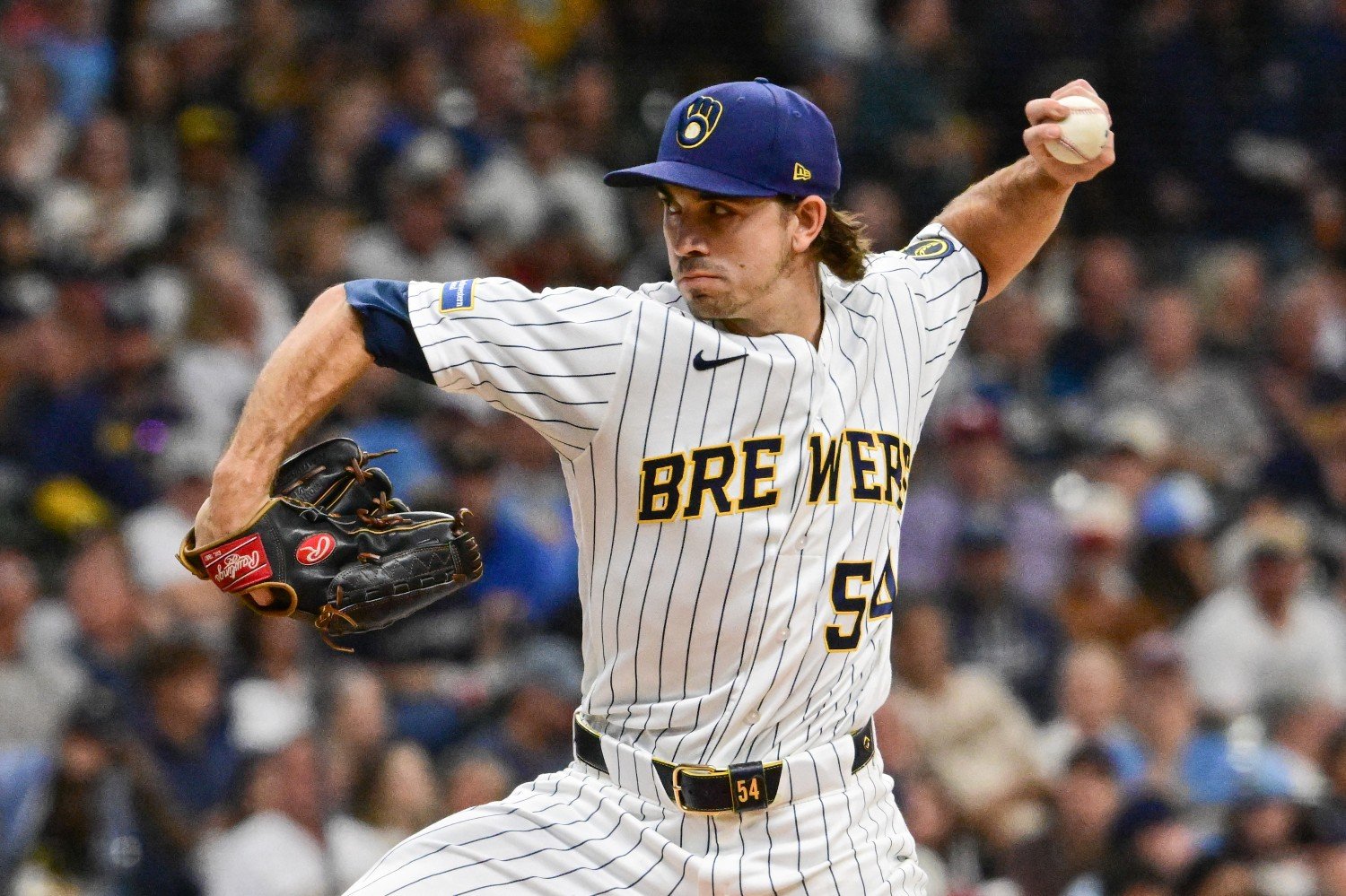 The Brewers have qualified for the playoffs in eight of the last nine seasons, and are once again sailing through September with one of baseball's best records. But the next two weeks aren't really about winning as many games as possible. They're about making sure the right 26 players are available (and properly positioned) when October begins. Milwaukee can carry 26 players to the NLDS (or the Wild Card series, should they lose their grip on a bye through that round, but let's stay optimistic). Against the Cubs in 2025, the Brewers carried 12 pitchers and 14 position players, but there is a wrinkle in there. The schedule afforded an extra day of rest (between Games 1 and 2) during last year's series, meaning the Brewers only needed three traditional starters, and they used that opportunity to bring an extra positional player for versatility in match-ups and defensive coverage, This season, the Brewers will need four starting pitchers, unless they pitch on shorter rest (which is unlikely), so we should anticipate an even split of 13 position players and 13 pitchers. Position Players (13) This appears to be one of the easier position player groups to predict going into October in recent memory. Last season, we wondered if Garrett Mitchell would return on time. There was also the Jesse Winker curveball in 2023. No such dilemmas loom right now. Barring injury, the players should look something like: Catcher: William Contreras, Gary Sánchez First Base: Jake Bauers, Andrew Vaughn Second Base: Brice Turang Shortstop: Cooper Pratt Third Base: Joey Ortiz, David Hamilton Outfield: Jackson Chourio, Garrett Mitchell, Luis Lara, Sal Frelick Designated Hitter: Christian Yelich Any deviation from that would be a major surprise. Hamilton is unlikely to be starting games unless a particularly strong match-up presents itself, but his pinch-running and defensive versatility would be assets off the bench. Against a left-handed starter, Bauers's ability to play the outfield gives Pat Murphy another way to get Contreras, Vaughn and potentially Sánchez into the same lineup without sacrificing defensive flexibility. Alternatively, they might lean toward Luis Lara and the premium defensive outfield corps they now have with Mitchell and Chourio—more so with the volume of fly ball pitchers they have lined up to start games. With this group, the Brewers have versatility, pinch-hitting thump and defensive quality that will allow them to adapt to any game situation as and when required. Pitchers (12) Now, we come to something a little less concrete, but the Brewers made a move this week to suggest an answer to at least one question. They now have Jacob Misiorowski, Logan Henderson and Dustin May lined up as the first three pieces of their potential NLDS rotation. The Brewers' decision to move May to Friday is particularly interesting, because it lines him up behind Misiorowski and Henderson. That looks like an attempt to establish the order they want to use in a potential NLDS. It isn't definitive evidence of the playoff rotation, but it is the clearest clue we've been given. They did not do this for Robert Gasser, which leads me to think the starting pitching plan is to go for the above as starters (with a shorter leash for May) and a bullpen game in Game 4 that features a long relief arm, similar to how Misiorowski was used in 2025. Gasser's performance of late, especially the first time through an order, deserves this spot, but it could be matchup dependant: he has an .800 opponents' OPS this season when facing right-handed hitters, compared to a .577 against lefties. That split makes Gasser particularly interesting as a bulk option, rather than an automatic Game 4 starter. If Milwaukee can deploy him against a lineup pocket that leans left-handed, his recent form becomes much more attractive. Either way, he should pitch multiple innings in that game. In short, the Brewers' biggest postseason roster decision may not be who makes the team, but how they distribute innings. It should look something like this: Game 1: Jacob Misiorowski Game 2: Logan Henderson Game 3: Dustin May Game 4: Robert Gasser Then: Right-Handed Matchup Relief: Antonio Senzatela Right-Handed Matchup Relief: Chad Patrick Left-Handed Matchup Relief: JoJo Romero Left-Handed Matchup Relief: DL Hall Left-Handed Matchup Relief: Shane Drohan Jack of All Trades: Aaron Ashby Set-up: Abner Uribe Closer: Trevor Megill Senzatela has given up a lot of hard contact since joining the Brewers, but he and Patrick are strong middle-relief arms to go to against a right-handed pocket of hitters the likes of which the Chicago Cubs field regularly. Ashby is probably the most uncomfortable name on this list, but he's also one of the hardest to leave off. The stuff plays in October, and Murphy has already demonstrated that he isn't afraid to use Ashby outside of traditional bullpen roles or inning assignments. The upside still outweighs the downside, but Milwaukee has to avoid giving hitters too many looks at him throughout the series. It has to be quality, not quantity, for Ashby in 2026. As for Uribe and Megill, there's no question how the game looks if the Brewers have a lead through seven innings. The 26th man You'll notice that I've only mentioned 12 pitchers. The last spot is most likely to go to Grant Anderson, an uncomfortable at-bat for right-handers, but he's faced some problems with left-handed hitters this year and would be a great place for a manager to bring left-handed bats off the bench. Anderson would be a strong weapon for a trio such as Seiya Suzuki, Alex Bregman and Tyrone Taylor, for instance—but pinch-hit specialist Michael Conforto could thwart even a well-made plan if Anderson is trapped in the game by the three-batter minimum rule. Alternatively, they could bring a third catcher in Bo Naylor. This allows for more liberal, aggressive use of Sánchez as a bench bat or even a starting option against left-handers, filling the DH spot. That would allow the Brewers to put Vaughn, Contreras, Bauers and Sánchez into the same line-up against a southpaw starter—something that will be tempting against teams like the Phillies, who have Jesús Luzardo and Cristopher Sánchez leading their rotation. One of their wild card arms is more likely, of course. It's unlikely that Brandon Woodruff is ready to go in the playoffs, especially the NLDS, but who knows. Then you have a unique arm like Coleman Crow, who could expose hitters with susceptibility to spin or breaking pitches. Perhaps Kyle Harrison rediscovers his confidence and command out of the bullpen, to the point where the Brewers trust him in the postseason. The only spot I'm genuinely undecided on is the 26th man, but Anderson gets the nod because his ability to attack right-handed pockets gives Murphy another matchup weapon without forcing a major change to the pitching plan. All in all, the postseason roster should look like this: Would you agree? Or would you go in a different direction? let us know your thoughts in the comments below!
- 10 comments
-
- 2
-
-
- 2026 postseason
- robert gasser
- (and 3 more)
-
Image courtesy of Benny Sieu-Imagn Images The Brewers have qualified for the playoffs in eight of the last nine seasons, and are once again sailing through September with one of baseball's best records. But the next two weeks aren't really about winning as many games as possible. They're about making sure the right 26 players are available (and properly positioned) when October begins. Milwaukee can carry 26 players to the NLDS (or the Wild Card series, should they lose their grip on a bye through that round, but let's stay optimistic). Against the Cubs in 2025, the Brewers carried 12 pitchers and 14 position players, but there is a wrinkle in there. The schedule afforded an extra day of rest (between Games 1 and 2) during last year's series, meaning the Brewers only needed three traditional starters, and they used that opportunity to bring an extra positional player for versatility in match-ups and defensive coverage, This season, the Brewers will need four starting pitchers, unless they pitch on shorter rest (which is unlikely), so we should anticipate an even split of 13 position players and 13 pitchers. Position Players (13) This appears to be one of the easier position player groups to predict going into October in recent memory. Last season, we wondered if Garrett Mitchell would return on time. There was also the Jesse Winker curveball in 2023. No such dilemmas loom right now. Barring injury, the players should look something like: Catcher: William Contreras, Gary Sánchez First Base: Jake Bauers, Andrew Vaughn Second Base: Brice Turang Shortstop: Cooper Pratt Third Base: Joey Ortiz, David Hamilton Outfield: Jackson Chourio, Garrett Mitchell, Luis Lara, Sal Frelick Designated Hitter: Christian Yelich Any deviation from that would be a major surprise. Hamilton is unlikely to be starting games unless a particularly strong match-up presents itself, but his pinch-running and defensive versatility would be assets off the bench. Against a left-handed starter, Bauers's ability to play the outfield gives Pat Murphy another way to get Contreras, Vaughn and potentially Sánchez into the same lineup without sacrificing defensive flexibility. Alternatively, they might lean toward Luis Lara and the premium defensive outfield corps they now have with Mitchell and Chourio—more so with the volume of fly ball pitchers they have lined up to start games. With this group, the Brewers have versatility, pinch-hitting thump and defensive quality that will allow them to adapt to any game situation as and when required. Pitchers (12) Now, we come to something a little less concrete, but the Brewers made a move this week to suggest an answer to at least one question. They now have Jacob Misiorowski, Logan Henderson and Dustin May lined up as the first three pieces of their potential NLDS rotation. The Brewers' decision to move May to Friday is particularly interesting, because it lines him up behind Misiorowski and Henderson. That looks like an attempt to establish the order they want to use in a potential NLDS. It isn't definitive evidence of the playoff rotation, but it is the clearest clue we've been given. They did not do this for Robert Gasser, which leads me to think the starting pitching plan is to go for the above as starters (with a shorter leash for May) and a bullpen game in Game 4 that features a long relief arm, similar to how Misiorowski was used in 2025. Gasser's performance of late, especially the first time through an order, deserves this spot, but it could be matchup dependant: he has an .800 opponents' OPS this season when facing right-handed hitters, compared to a .577 against lefties. That split makes Gasser particularly interesting as a bulk option, rather than an automatic Game 4 starter. If Milwaukee can deploy him against a lineup pocket that leans left-handed, his recent form becomes much more attractive. Either way, he should pitch multiple innings in that game. In short, the Brewers' biggest postseason roster decision may not be who makes the team, but how they distribute innings. It should look something like this: Game 1: Jacob Misiorowski Game 2: Logan Henderson Game 3: Dustin May Game 4: Robert Gasser Then: Right-Handed Matchup Relief: Antonio Senzatela Right-Handed Matchup Relief: Chad Patrick Left-Handed Matchup Relief: JoJo Romero Left-Handed Matchup Relief: DL Hall Left-Handed Matchup Relief: Shane Drohan Jack of All Trades: Aaron Ashby Set-up: Abner Uribe Closer: Trevor Megill Senzatela has given up a lot of hard contact since joining the Brewers, but he and Patrick are strong middle-relief arms to go to against a right-handed pocket of hitters the likes of which the Chicago Cubs field regularly. Ashby is probably the most uncomfortable name on this list, but he's also one of the hardest to leave off. The stuff plays in October, and Murphy has already demonstrated that he isn't afraid to use Ashby outside of traditional bullpen roles or inning assignments. The upside still outweighs the downside, but Milwaukee has to avoid giving hitters too many looks at him throughout the series. It has to be quality, not quantity, for Ashby in 2026. As for Uribe and Megill, there's no question how the game looks if the Brewers have a lead through seven innings. The 26th man You'll notice that I've only mentioned 12 pitchers. The last spot is most likely to go to Grant Anderson, an uncomfortable at-bat for right-handers, but he's faced some problems with left-handed hitters this year and would be a great place for a manager to bring left-handed bats off the bench. Anderson would be a strong weapon for a trio such as Seiya Suzuki, Alex Bregman and Tyrone Taylor, for instance—but pinch-hit specialist Michael Conforto could thwart even a well-made plan if Anderson is trapped in the game by the three-batter minimum rule. Alternatively, they could bring a third catcher in Bo Naylor. This allows for more liberal, aggressive use of Sánchez as a bench bat or even a starting option against left-handers, filling the DH spot. That would allow the Brewers to put Vaughn, Contreras, Bauers and Sánchez into the same line-up against a southpaw starter—something that will be tempting against teams like the Phillies, who have Jesús Luzardo and Cristopher Sánchez leading their rotation. One of their wild card arms is more likely, of course. It's unlikely that Brandon Woodruff is ready to go in the playoffs, especially the NLDS, but who knows. Then you have a unique arm like Coleman Crow, who could expose hitters with susceptibility to spin or breaking pitches. Perhaps Kyle Harrison rediscovers his confidence and command out of the bullpen, to the point where the Brewers trust him in the postseason. The only spot I'm genuinely undecided on is the 26th man, but Anderson gets the nod because his ability to attack right-handed pockets gives Murphy another matchup weapon without forcing a major change to the pitching plan. All in all, the postseason roster should look like this: Would you agree? Or would you go in a different direction? let us know your thoughts in the comments below! View full article
- 10 replies
-
- 1
-
-
- 2026 postseason
- robert gasser
- (and 3 more)
-
I think from a deception point of view, 100%. The cutter to right handers is interesting as it does provide a bridge linking the East/West pitches, but that arm angle does make it easier to pick up, so I think location is absolutely critical for him with the cutter. To be fair I think it's worked against left handers too, May has typically struggled vs left handers but since joining the Brewers he's actually looked really good against them, it's the right handed side of the platoon where he's seen a lot more damage than is typical for him. the use of the cutter against right handers seems to be getting picked up as he's given up an expected slugging of .609 vs right handers on the cutter in August. At least if it's the four-seamer, the extra rise up in the zone can play up better and survive in isolation, so perhaps that's a better pitch mix if he wants more than two offerings vs right-handers.

-
Image courtesy of Tanner Pearson-Imagn Images Dustin May has enough weapons to attack hitters in almost any way imaginable. He isn't just mixing six pitches; he's essentially operating with two different arsenals. Unfortunately, the arm slot he uses to deliver them gives hitters an important clue about what's coming. This weakness actually stems from one of his strengths—one of the reasons the Brewers targeted him at the trade deadline. He's comfortable pronating as he releases the ball, despite a supination bias. He has three distinct fastballs to show for it, to go with two wicked, high-spin breaking pitches and a deadly changeup. He should have the pitches to adapt to any hitter. He has room to adjust his game plan depending on the pitches with which he's feeling comfortable on any given day. The interesting part is that May doesn't really operate with one six-pitch arsenal. A closer look at his pitch usage reveals two distinct groups of pitches that he deploys depending on the handedness of the hitter—and, perhaps more importantly, two noticeably different arm slots. Looking at the PitchProfiler graphic in the top right, we can see how dramatically his pitch selection changes against right- and left-handed hitters. Against right-handers, May's primary fastball is his sinker, with some cutter and the occasional four-seamer mixed in. His primary breaking ball is the sweeper. That sinker/sweeper combination is particularly interesting because of how closely May can match their release characteristics. The lower arm angle enhances the east/west movement by letting May get more around the side of the ball, and can be further enhanced from his extreme position on the first-base side of the rubber. The bigger story is what happens when he moves between those pitches and his other offerings. May has two quite distinct release points for what are essentially two separate arsenals. He lowers his arm slot for his sinker, sweeper and changeup (ish), while averaging almost 10° higher for his four-seam fastball, cutter and curveball. That's a significant difference, and it gives hitters a visual clue about what's coming. If a hitter can identify May's arm slot early in the delivery, they may already have narrowed down the possibilities before the ball has even reached the plate. For example, a right-handed hitter who sees May come through the higher arm slot can reasonably expect either a cutter or four-seam fastball, particularly because May rarely uses his curveball against righties. Those two pitches also occupy a relatively similar velocity band, meaning there isn't a huge change in speed to disrupt timing. That doesn't make either pitch ineffective on its own, but it does reduce one of the biggest advantages of a diverse arsenal: making the hitter account for dramatically different speeds and movements from the same delivery. That could be one reason we've seen May get hit hard when he does leave pitches in the strike zone since joining the Brewers. The Baseball Savant graphic below does a great job of highlighting just how different those arm angles are: May's arm angles for his two pitch groups have been growing more disparate with each month of the season. His four-seam fastballs and cutters are averaging a higher arm angle than at any point in his professional career, while the sinker/sweeper are similar to where they started the year. Against left-handed hitters, the changes are also quite interesting. May's best start for the Brewers from a swing-and-miss standpoint came in his last appearance against the Reds, when he went heavily to his curveball against an aggressive lineup and scrapped the sweeper. He also went more to the four-seamer than the cutter, but that's just one game. In August, the Brewers tried to use his cutter as a primary offering to left-handers in order to help May with his traditional platoon splits, which have been noticeable throughout his career. Unsurprisingly (it's part of their M.O., really), they don't seem to be fans of his changeup. While the four-seamer and cutter are good pitches, being able to mix speeds more regularly would help May get more of that swing-and-miss. He's struggled to put away hitters in two-strike counts since joining the Brewers. It'll be fascinating to see how the curveball's usage continues throughout September. Sweepers traditionally don't play well to opposite-handed hitters, because they move toward the hitter's wheelhouse on the inner third of the plate. Ultimately, May's path to an October rotation spot may come down to how well he can make these two arsenals work together. He needs to rediscover the form he showed in May and June, but the Brewers have already demonstrated that they don't need every starter to work deep into games. They were comfortable using bullpen games and mixing and matching last year, so May doesn't need to become a traditional workhorse to have value in October. What he does need is a reliable way to get swings and misses. His lack of whiffs was concerning throughout August, but his most recent outing against a hot Cincinnati offense provided an encouraging glimpse of what makes May so intriguing. After giving up a homer on a mistake to Elly De La Cruz, he showed the adaptability that comes with having this many weapons, and when he commands those weapons, the results can be devastating. May has two distinct sets of weapons. Now, the Brewers and May have to figure out exactly how to deploy them without making him predictable. They don't have much time left to find the answer, but his last outing offered some reason for optimism. His next few starts could go a long way toward determining whether one of baseball's most interesting arsenals has a place in Milwaukee's October armory. View full article
-
 Dustin May has enough weapons to attack hitters in almost any way imaginable. He isn't just mixing six pitches; he's essentially operating with two different arsenals. Unfortunately, the arm slot he uses to deliver them gives hitters an important clue about what's coming. This weakness actually stems from one of his strengths—one of the reasons the Brewers targeted him at the trade deadline. He's comfortable pronating as he releases the ball, despite a supination bias. He has three distinct fastballs to show for it, to go with two wicked, high-spin breaking pitches and a deadly changeup. He should have the pitches to adapt to any hitter. He has room to adjust his game plan depending on the pitches with which he's feeling comfortable on any given day. The interesting part is that May doesn't really operate with one six-pitch arsenal. A closer look at his pitch usage reveals two distinct groups of pitches that he deploys depending on the handedness of the hitter—and, perhaps more importantly, two noticeably different arm slots. Looking at the PitchProfiler graphic in the top right, we can see how dramatically his pitch selection changes against right- and left-handed hitters. Against right-handers, May's primary fastball is his sinker, with some cutter and the occasional four-seamer mixed in. His primary breaking ball is the sweeper. That sinker/sweeper combination is particularly interesting because of how closely May can match their release characteristics. The lower arm angle enhances the east/west movement by letting May get more around the side of the ball, and can be further enhanced from his extreme position on the first-base side of the rubber. The bigger story is what happens when he moves between those pitches and his other offerings. May has two quite distinct release points for what are essentially two separate arsenals. He lowers his arm slot for his sinker, sweeper and changeup (ish), while averaging almost 10° higher for his four-seam fastball, cutter and curveball. That's a significant difference, and it gives hitters a visual clue about what's coming. If a hitter can identify May's arm slot early in the delivery, they may already have narrowed down the possibilities before the ball has even reached the plate. For example, a right-handed hitter who sees May come through the higher arm slot can reasonably expect either a cutter or four-seam fastball, particularly because May rarely uses his curveball against righties. Those two pitches also occupy a relatively similar velocity band, meaning there isn't a huge change in speed to disrupt timing. That doesn't make either pitch ineffective on its own, but it does reduce one of the biggest advantages of a diverse arsenal: making the hitter account for dramatically different speeds and movements from the same delivery. That could be one reason we've seen May get hit hard when he does leave pitches in the strike zone since joining the Brewers. The Baseball Savant graphic below does a great job of highlighting just how different those arm angles are: May's arm angles for his two pitch groups have been growing more disparate with each month of the season. His four-seam fastballs and cutters are averaging a higher arm angle than at any point in his professional career, while the sinker/sweeper are similar to where they started the year. Against left-handed hitters, the changes are also quite interesting. May's best start for the Brewers from a swing-and-miss standpoint came in his last appearance against the Reds, when he went heavily to his curveball against an aggressive lineup and scrapped the sweeper. He also went more to the four-seamer than the cutter, but that's just one game. In August, the Brewers tried to use his cutter as a primary offering to left-handers in order to help May with his traditional platoon splits, which have been noticeable throughout his career. Unsurprisingly (it's part of their M.O., really), they don't seem to be fans of his changeup. While the four-seamer and cutter are good pitches, being able to mix speeds more regularly would help May get more of that swing-and-miss. He's struggled to put away hitters in two-strike counts since joining the Brewers. It'll be fascinating to see how the curveball's usage continues throughout September. Sweepers traditionally don't play well to opposite-handed hitters, because they move toward the hitter's wheelhouse on the inner third of the plate. Ultimately, May's path to an October rotation spot may come down to how well he can make these two arsenals work together. He needs to rediscover the form he showed in May and June, but the Brewers have already demonstrated that they don't need every starter to work deep into games. They were comfortable using bullpen games and mixing and matching last year, so May doesn't need to become a traditional workhorse to have value in October. What he does need is a reliable way to get swings and misses. His lack of whiffs was concerning throughout August, but his most recent outing against a hot Cincinnati offense provided an encouraging glimpse of what makes May so intriguing. After giving up a homer on a mistake to Elly De La Cruz, he showed the adaptability that comes with having this many weapons, and when he commands those weapons, the results can be devastating. May has two distinct sets of weapons. Now, the Brewers and May have to figure out exactly how to deploy them without making him predictable. They don't have much time left to find the answer, but his last outing offered some reason for optimism. His next few starts could go a long way toward determining whether one of baseball's most interesting arsenals has a place in Milwaukee's October armory.
 -
Catch Probability - TJStats A great resource for this, it suggests Lara has made every possible catch since July 28th, and the only one he failed was a 5% catch probability effort. He hasn't had a lot of 2-4* opportunities but he's made every one that's come his way
-
The Wilson memo is beautiful tbf, Jim is so damn creative man
-
Baseball is baseball, facing the best offense with a wind blowing out against a ground ball pitcher like Peterson, there's always a chance. One could argue it's these exact conditions that the Brewers rotation is most prone to struggling against Anyway hopefully the right handers can get a hold of Peterson in ways they didn't last time out, but it's definitely advantage Brewers with their best performing starters on the mound over the next two games
-
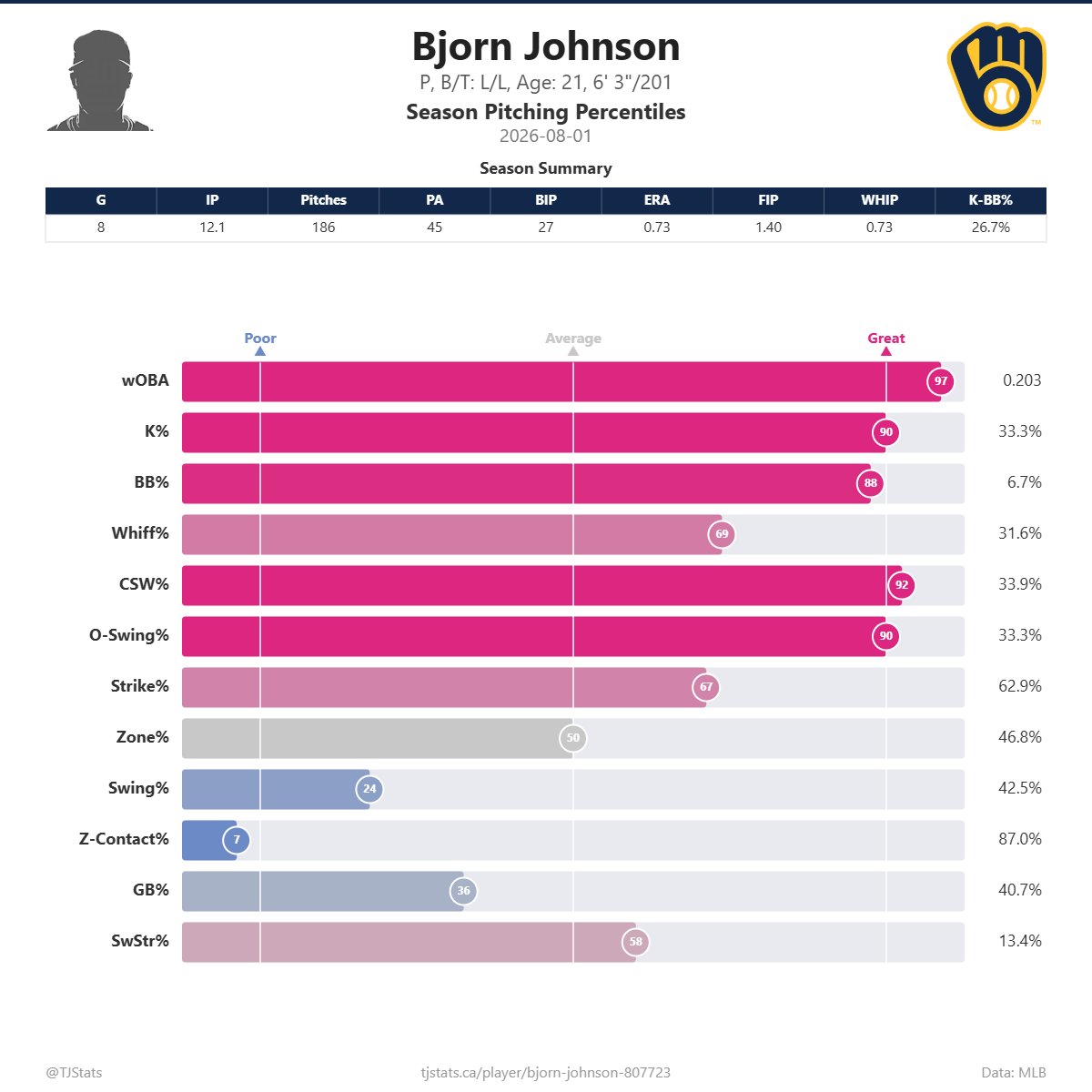
Bjorn Johnson has been so dialled since the start of August (maybe further, but I only went that far back) I think he's been really difficult to pick up, getting a lot of called strikes, getting ahead a ton by the looks of things and then inducing some deadly chase. I believe he was a 23 or 24 11th round pick out of high school, and the recent results bear monitoring