


Brewers Video
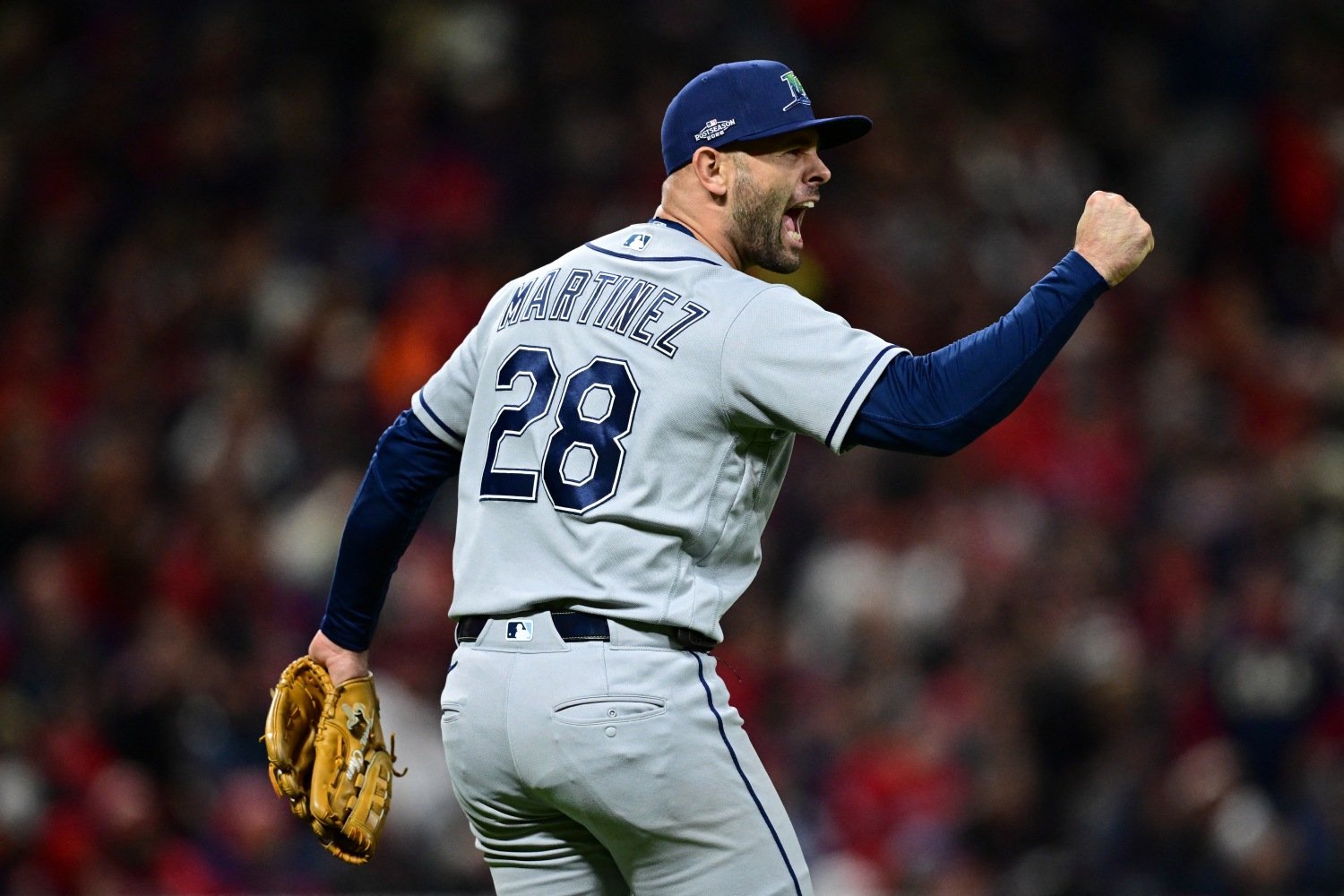
The Tampa Bay Rays should feel confident handing the ball to Nick Martinez in Game 1. They’ve won 24 of the 33 games he’s started across the regular season and postseason, and his road numbers have been particularly impressive, with a 2.38 ERA in 16 starts away from Tropicana Field. However, there’s some nuance to the decision, particularly when considering how the ball moves at the Trop compared to other major-league parks. Those conditions could favor Freddy Peralta and his fastball-heavy arsenal more than Martinez’s approach, with the additional induced vertical break that's typical in the Rays' home environment. With Tampa, there really are layers to every decision.
Martinez finished the regular season with a 3.10 ERA and a 3.95 FIP, relying on a kitchen-sink arsenal to keep hitters off balance despite a fastball that typically sits at 92–93 mph. His changeup is his preferred secondary offering, and its effectiveness is closely tied to how he establishes his fastball. By attacking the zone and encouraging hitters to commit early, Martinez can use the changeup to disrupt their timing and generate weaker contact. He’s not going to give away many free bases, either, so hitters will need to be aggressive in the zone without becoming overly predictable, a similar challenge to facing Drew Rasmussen.
The underlying numbers reflect that approach. Martinez posted a stingy 3.6% walk rate during the regular season, while generating very little swing-and-miss with most of his pitches.

That contact-oriented approach comes with a trade-off. Martinez is a line-drive and fly-ball pitcher who relies on avoiding the barrel, rather than consistently generating ground balls. Just 35.5% of balls in play against him were hit on the ground during the regular season, leaving him dependent on keeping airborne contact in the park and allowing the Rays’ athletic outfield to clean up what they can.
That could create an opportunity for Milwaukee. The Brewers have an offense capable of hitting the ball hard, even if they don’t always get the launch angle needed to turn that contact into damage. If they can square up Martinez’s offerings and elevate the ball consistently, they could put pressure on a pitcher whose margin for error is smaller when hitters make authoritative contact in the air, rather than the weak contact he typically generates from his kitchen-sink approach.
The matchup becomes even more interesting when looking at Martinez’s platoon splits. He's shown reverse splits this season, and the early postseason results have followed a similar pattern. Right-handed hitters have had success squaring up the sinker-cutter combination he typically uses against them, creating a potential weakness Milwaukee could look to exploit.

His approach against left-handed hitters is different. Martinez has attacked the zone with his changeup, using it to establish the bottom of the strike zone and set up chase above it with his fastball. The problem is that his fastball has been vulnerable when he leaves it over the plate, giving left-handed hitters an opportunity to punish mistakes if they recognize the pitch and avoid chasing, but doing so with a well tunnelling changeup is no easy feat. On top of that, when hitters chase, they'll find less swing and miss and more weak contact against Martinez, meaning they won't have a second chance in that at bat.
That’s an important detail against a Brewers lineup whose left-handed power played a major role in its success against the Dodgers. Home runs from Brice Turang, Jake Bauers and Garrett Mitchell were all pivotal, and Milwaukee will need that same ability to capitalize on mistakes if it wants to make Martinez uncomfortable in Game 1.

So how important is Martinez's command to his success? Well, as you can see from the chart above, Martinez has done a stand-up job against the top seven offenses in the National League this season when he's lived on the corners, but when he's dropped down and over the middle of the plate, those exit velocities have surged. Patience is going to be key for this Brewers line-up, in that while most of Martinez's offerings will look meaty and hittable, being able to wait on a pitch that is truly damageable and down in the zone could be the difference between a weak-contact filled five scoreless innings, and hitting him out of the game after four innings with runs on the board.
Ultimately, Martinez’s command and ability to disrupt timing make him a credible option for the opener. But his reliance on contact, his limited ground-ball production and his reverse splits give the Brewers several avenues to attack him. The key will be whether Milwaukee can turn its hard contact into damage, and retaining conviction in the pitches they swing at. If Martinez can spin his web and alter the hitters timing, he will induce a lot of weak contact that the Rays outfield can eat up. On the converse, Martinez will be allowing a lot of balls to enter the field of play, and the Brewers sluggers have hit the ball consistently hard enough to expect they can continue to do so if Martinez isn't absolutely perfect with his command and sequencing.






Recommended Comments
There are no comments to display.
Create an account or sign in to comment
You need to be a member in order to leave a comment
Create an account
Sign up for a new account in our community. It's easy!
Register a new accountSign in
Already have an account? Sign in here.
Sign In Now