


Brewers Video
Garrett Mitchell has been working all season to get his high fastball problem under control, but it's cost him in some other areas previously considered strong points. He was making some real strides with this goal, as you can see in the graph below, with a rolling swing-and-miss rate that reached league average on May 19. The problem was, he was still hitting too many ground balls and just not tapping into the benefits that limiting his whiffs should have brought about for a player of his capabilities.
.png.599296ca69a5300954bc6771d57bfffc.png)
Through that May 19 date, Mitchell had a 101 RC+, so he was just about a league-average hitter, but his overall slash line was propped up with walks as he hit .224/.347/.352. Since that date, despite his whiff rate climbing, Mitchell has slashed .308/.366/.569 for a 159 wRC+, and a strikeout rate that's actually lower than his first month and a half. How is that happening?
The theory was always that if Mitchell could survive against the high fastball, the results could be remarkable. Mitchell knew this. Opponents knew this. It's been a real focus for him this year, and he was really beginning to get on top of it in May. If we break down his whiff rates by month against each pitch type, we can see some real progress, in May against hard pitches:

That's bounced back up in June, but not entirely in the way you might think. Throughout the first two months of the season, Mitchell was demonstrating a lot of patience at the plate. He had an 11.4% walk rate, with a league average swing rate at pitches inside the strike zone and exceptional command of the zone, in the form of a very low chase rate. It prevented his whiff rate (and his strikeouts) from ballooning to genuinely untenable proportions.
In June however, he's flipped a switch and is taking off. Mitchell has eschewed plate discipline for earlier swings and more aggressive intent, and the results have been excellent. TJstats has a model that can showcase the two in percentile form, side by side:

By taking fewer early strikes in the count and swinging more aggressively, Mitchell is actually striking out a lot less at only 25% of the time this month. The one caveat to this is the reduced movement on pitches in both Colorado and Las Vegas. That will have helped Mitchell square up the ball a little more often, and perhaps the offensive environment fed into his desire to swing a little more. That being said, this is a noticeable change, and it seems intentional when we see how exactly he's doing it.
Mitchell's bread and butter is that he crushes breaking balls in the zone. Murders them. He's never swung at fewer than 43% of breaking balls in his career, but that changed in the first few months of 2026. He was swinging less, and he wasn't making the type of contact on those mistake pitches that he's known for in Milwaukee—that is, of course, until June came around:
.png.6333c193925327ce199c8370703b2e29.png)
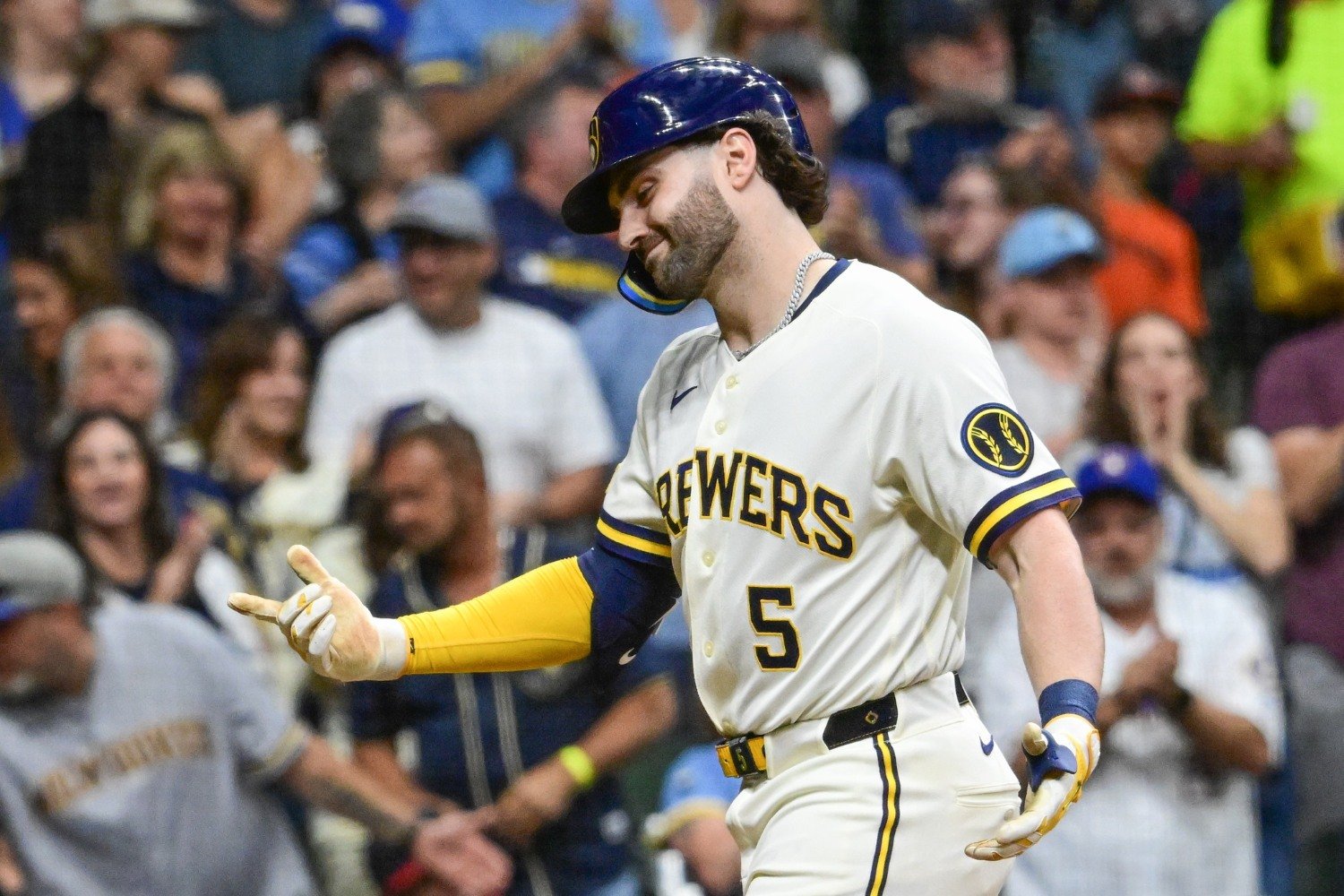
Mitchell was swinging at less than 35% of breaking balls this season through May, but has been firing off at almost 70% of them so far in June. That's bringing about more chase, but also allowing him to square up those pitches that are inside the strike zone. He's been unlucky in spots, but the process has looked strong. Then, Tuesday night, he left nothing to chance. On a hanging slider from Guardians reliever Hunter Gaddis, he crushed a line-drive home run to right field, restoring the Brewers' lead just one half-inning after they'd lost it. He's gone through an adjustment period during which he gave away some of his authoritative contact on breaking stuff, but boy, is it ever back.
More important, however, is how Mitchell has handled fastballs. Yes, he's still swinging and missing more than you would like, but when pitchers are missing that high fastball, he's punishing them for it. Mitchell's expected weighted on-base average (xwOBA) of .422 against fastballs would mark the highest of his career in any month in which he faced over 50 pitches, and he's doing it by crushing line drives on anything on the middle or inner thirds. He still struggles up and away from him, but it marks a big transformation in that he's reduced the size of the hole in his swing from the entire top of the strike zone to just one area. Here are his whiff zones against fastballs so far in June:

There's still room for improvement, as Mitchell is really struggling against a fastball up and away. What he's also doing, however, is crushing anything if you drop slightly lower down in the zone, especially against right-handed pitchers. His average exit velocity against fastballs by zone is impressive against opposite-handed pitchers in June:
.gif.82fa8e5f241088be0639ed6470311744.gif)
There could be an argument to platoon Mitchell occasionally on this basis, especially against left-handers with strong fastballs. He's not doing the same level of damage against southpaws, and that bears noting.
We can see it in his swing timing, as well. So far in June (the orange line below), Mitchell is more on time, perhaps even occasionally early for the first time, on fastballs, while being more lined up with the middle of the bat.

Overall, Mitchell appears to be slowly shedding some of the concerns he brought into the season. He seems less concerned with how his body holds up in the outfield defensively. He might be beginning to worry less about his strikeout rate, and being more aggressive early in counts. Relaxation and comfort are massive in any sport, and it's something Mitchell seems to be taking full advantage of right now.
He still has adjustments to make. He'd probably like to be chasing a little bit less than he is at present, and there's still a lot of swing-and-miss to suggest the strikeout rates are a bit of a mirage for now. Most adjustments come from finding an extreme change and dialling that back, and Mitchell has definitely ventured outside of his early-season comfort zone to test the boundaries of what he's capable of.
He's beginning to find who he is at the plate, and it might result in some cat-and-mouse with his swing rates as pitchers adjust throughout a season with where and how they pitch him. The good news is, Mitchell seems equally capable of adjusting with them. With a manageable strikeout rate, and actually elevating his hard contact, this version of Garrett Mitchell looks like a force to be reckoned with.
Do you approve of the job the Brewers' front office is doing?

Follow Brewer Fanatic For Milwaukee Brewers News & Analysis



-
 3
3
-
 2
2


Recommended Comments
Create an account or sign in to comment
You need to be a member in order to leave a comment
Create an account
Sign up for a new account in our community. It's easy!
Register a new accountSign in
Already have an account? Sign in here.
Sign In Now