


Brewers Video
Baseball experts keep looking for reasons why the Milwaukee Brewers’ success can’t last—or, at least, a solid explanation for how it is happening. The team doesn’t care, and neither should fans. Stats and projections are valuable and have their place, but baseball is constantly evolving, and this year’s Brewers might have found a new formula that is difficult to quantify.
Evaluating baseball talent is extremely challenging, but the sabersphere has spent the last two decades making it both easier and better-organized. That makes us all smarter fans, in theory, but it also oversimplifies things. As a result, rather than just assuming they were wrong, many of those who previously doubted the Brewers are trying to fit them for labels like "lucky," "fluky" and "streaky". Such descriptions don’t hold up, though, over 100-plus games of quality baseball. At 74-44 (a 102-win pace), Milwaukee owns the best record in the league, five games ahead of the next-best team. They have a very real chance to win 100 games for the first time in franchise history.
Maybe they aren’t built to win like most modern teams, but their performance is undeniable and evident of true success:
- Best run differential in baseball (+138)
- Best record vs. winning teams (37-21)
- Most innings scoring four or more runs (40)
- Third in OBP (.330)
- Top five in ERA and opponents’ batting average, slugging and OPS
There are three key areas where the Brewers prove their worth, and quotes from three legendary baseball men encapsulate them all.
Manager Casey Stengel: “Most ball games are lost, not won.”
The Brewers win by avoiding mistakes and forcing them from opponents. Brilliant pitching, airtight defense and situational offense keep them steady, while aggressive play rattles rivals into errors. In a race to keep pace, the Crew’s enemies bobble grounders and rush throws on defense, while freezing up on pitches in the zone and making poor baserunning decisions on offense. And when the opposition makes a mistake, the Brewers take full advantage of it.
There were multiple examples of how the Brewers create wins in Milwaukee’s series sweep over the New York Mets, especially in game two. The Brewers trailed 2-0 in the fifth inning when Kodai Senga bobbled a grounder and allowed a runner to reach on his error. On the next pitch, Brice Turang blasted a two-run home run. After a pop out, the Brewers would take the lead by working two walks, earning a catcher’s interference call and taking a hit-by-pitch on an 0-2 sweeper.
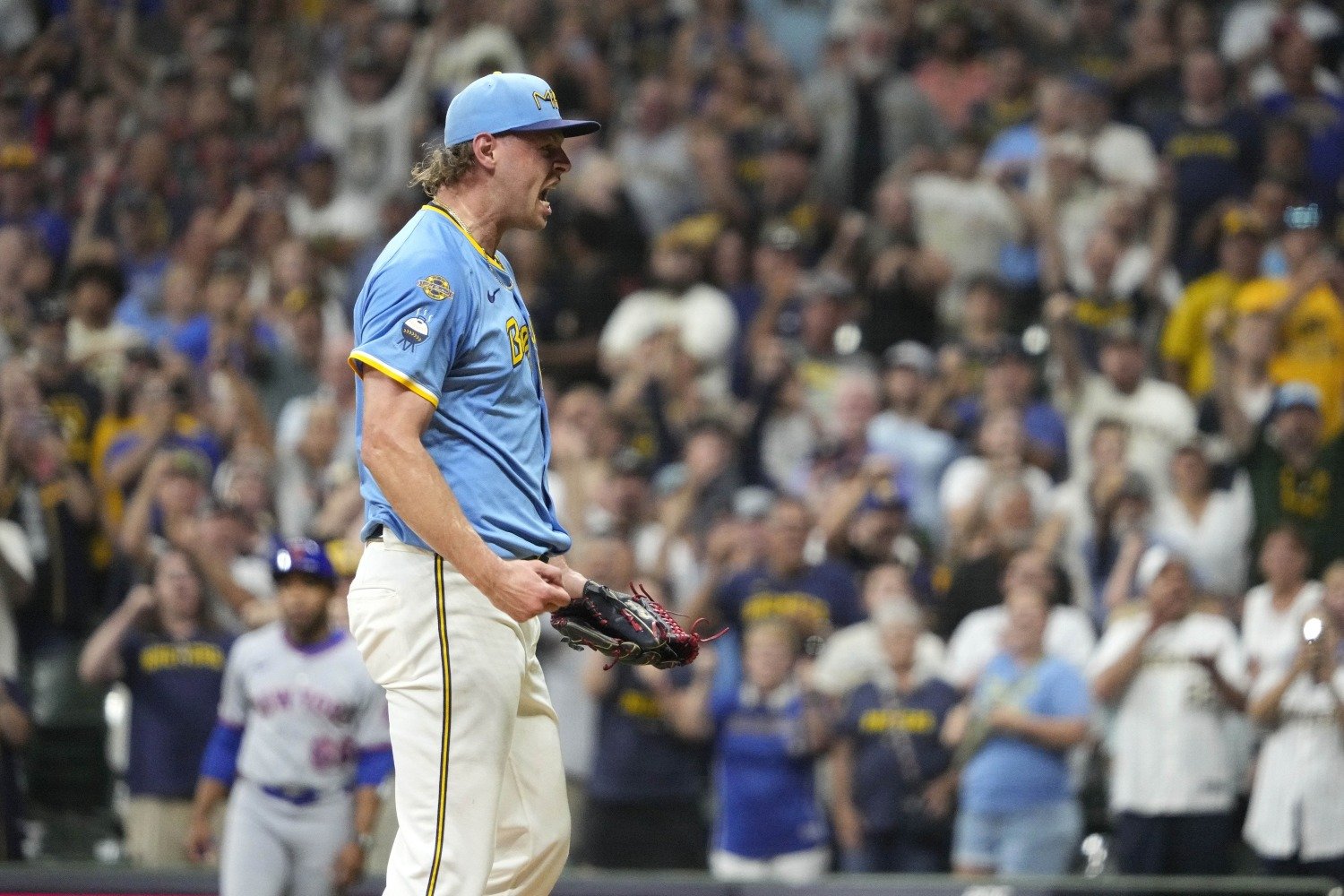
The previous night, in the ninth inning, the Brewers led 3-2 with two outs and Starling Marte on second base when Jeff McNeil singled to center field. Two mistakes would allow the Brewers to hang onto the win: The Mets did not pinch run for Marte (though he's a proud veteran whose speed used to be excellent, he's no longer that fleet), and Marte rounded third base too wide, lengthening his path to the plate. Thus, Blake Perkins had just enough time to fire a strike to William Contreras, who slapped on the tag for a walk-off win.
The Brewers beat the Mets 3-2 with the final out coming at home plate. Blake Perkins to William Contreas wins it. Sweet sassy molassy.
— Adam McCalvy (@AdamMcCalvy) August 9, 2025
Hopefully Ueck was up there watching this ninth inning. pic.twitter.com/juvuOFYlvD
The Brewers play clean ball, pounce on slip-ups and turn small openings into wins. Some luck is required, in that every team tries to pounce on those mistakes but the game doesn't always cooperate. Milwaukee is also just better at forcing the issue than most teams, though.
Socrates: “To know thyself is the beginning of wisdom.”
All right, maybe Socrates wasn’t a baseball guy, but no doubt he would have been a big fan if he was born 2,400 years later. Regardless, his quote plays a significant role in how the Brewers win when many don’t understand. They know who they are (and who they aren’t) and lean into that which makes them great.
Milwaukee acknowledges it only has a few household names and true All-Stars. But the style of play and strategies of baseball can change for better or worse. You just have to know thyself. The Brewers recognize they are not a power-hitting team, so they don’t chase it. Home runs are happy accidents. They focus on quality swing decisions, knowing a pitcher’s weaknesses, competing in every at-bat, putting the ball in play and running the bases with intelligent aggression.
That entails zeroing in on a job at the plate and on the bases, and doing the dirty work:
- First in batting average with RISP, infield hits and FanGraphs base running (BsR)
- Second in stolen bases
- Third in sacrifice flies
- Fifth in walk-to-strikeout ratio (eighth-best BB% and sixth-lowest K%)
These play an enormous role in the Brewers scoring 5.03 runs per game (fourth in MLB), despite being 20th in home runs.
For the run prevention side, it’s more about Milwaukee’s front office and coaching staff knowing who fits into their system and who can be taught to utilize their best skills, while the club is not being afraid to favor defense over offense.
On defense, they stick with players even if the bat lags. Gold Glove-caliber Blake Perkins and slick-fielding Joey Ortiz bring value to the field while finding ways to contribute offensively. For pitching, late-blooming arms like closer Trevor Megill, starter Quinn Priester and many others thrive because the Brewers maximize strengths and hide weaknesses.
Milwaukee simply knows itself, and that continually gives the club an edge over much of its competition.
Hall of Famer Babe Ruth: “It’s hard to beat a person who never gives up.”
Relentless. Tenacious. Pesky. Woodpeckers. They simply don’t give in and don’t give up. The Brewers battle on offense, grinding down pitchers with long at-bats, not chasing bad pitches and pounding the opposition like waves wearing down the shoreline.
Their pitching staff brings nasty stuff to the mound, one after another, with tons of high-octane gas from start to finish. Opposing lineups get no rest, so even when the Brewers throw their “B bullpen,” teams struggle to score, allowing the offense to claw back (sound like a recent Brewers’ walk-off win?).
There isn’t a great way to measure heart, competitiveness or other intangibles that make a difference between wins and losses. But maybe a few areas illustrate these traits offensively:
Brewers hitters through 0-2 counts:
- Fourth-lowest K%
- Eighth-highest batting average and OBP
- Tenth-best BB%
Batting with two strikes:
- Second-highest OBP
- Third-most RBIs
- Fifth-best batting average
If you need a visual of what the Brewers offense does to teams, look no further than Monday night, in their 7-1 win over the Pittsburgh Pirates. Christian Yelich opened the frame with a home run. Then, after the first out was made, the Brewers’ inning went as follows:
Salvatore and B Lock tack on two more ‼️ pic.twitter.com/To21wcvgfi
— Milwaukee Brewers (@Brewers) August 12, 2025
- Infield single
- Sacrifice bunt (second out)
- RBI single to right field – batter advances to second on the throw
- RBI single to right field on 0-2 pitch
- Single to right field on 1-2 pitch – runners on first and third
- Runner steals second and runner from third scores on Pirates’ throwing error
That is how to take a 1-1 game and turn it into a 5-1 lead, with a bunch of quality at-bats and aggressive base running—plus a bit of help from the defense. It’s what the Brewers have done all season, and there doesn’t appear to be any sign of slowing down.
Milwaukee’s 2025 run might not fit many current models, but it’s no accident. Whether it carries them deep into October remains to be seen, but for now, fans should enjoy the ride, and doubters should retire the “luck” and “fluke” narratives. The Brewers are for real.
Which team do you dislike the most in the NL Central?

Follow Brewer Fanatic For Milwaukee Brewers News & Analysis



-
 4
4
-
 1
1


Recommended Comments
There are no comments to display.
Create an account or sign in to comment
You need to be a member in order to leave a comment
Create an account
Sign up for a new account in our community. It's easy!
Register a new accountSign in
Already have an account? Sign in here.
Sign In Now