



BrewCrewBBQ
-
Posts
62 -
Joined
-
Last visited
-
Days Won
1
Content Type
Profiles
Forums
Blogs
Events
News
2026 Milwaukee Brewers Top Prospects Ranking
Milwaukee Brewers Videos
2022 Milwaukee Brewers Draft Picks
Milwaukee Brewers Free Agent & Trade Rumors, Notes, & Tidbits
Guides & Resources
2023 Milwaukee Brewers Draft Picks
2024 Milwaukee Brewers Draft Picks
The Milwaukee Brewers Players Project
2025 Milwaukee Brewers Draft Pick Tracker
2026 Milwaukee Brewers Draft Tracker: Picks & Bonuses
Store
Downloads
Gallery
Everything posted by BrewCrewBBQ
-
 I think one of two things happens: he rotated through the bullpen for some length of time or he gets called up to start in place of somebody else and gets DFA following his stint. I have to agree it would be really bad if he gets a lot of innings.
 -
I think one of two things happens: he rotated through the bullpen for some length of time or he gets called up to start in place of somebody else and gets DFA following his stint. I have to agree it would be really bad if he gets a lot of innings.
-
I think one of two things happens: he rotated through the bullpen for some length of time or he gets called up to start in place of somebody else and gets DFA following his stint. I have to agree it would be really bad if he gets a lot of innings.
-
I think one of two things happens: he rotated through the bullpen for some length of time or he gets called up to start in place of somebody else and gets DFA following his stint. I have to agree it would be really bad if he gets a lot of innings.
-
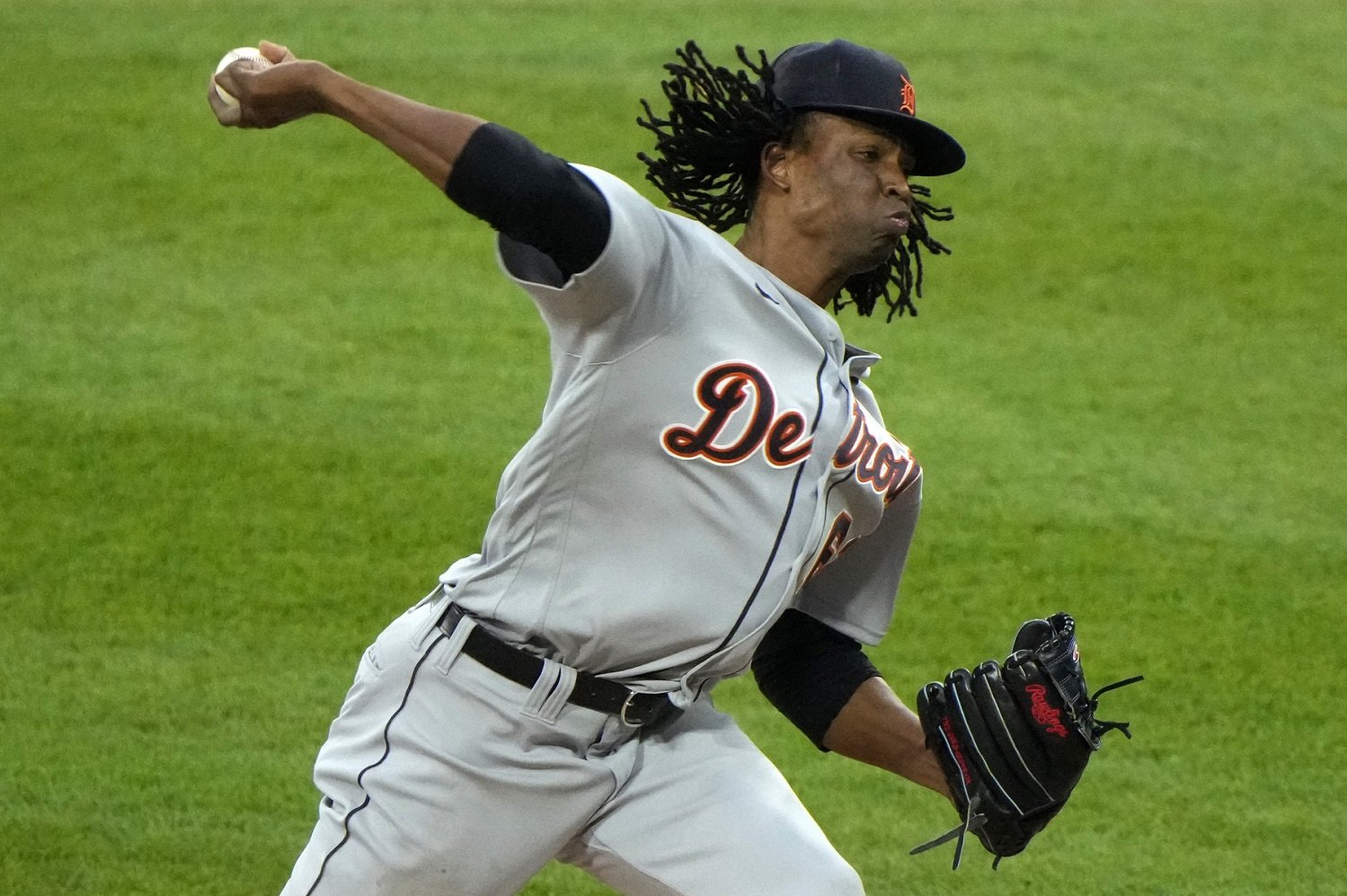 Jose Ureña is a 30-year-old who made his big-league debut way back in 2015 with the Miami Marlins. In 2017, he went 14-7 with a 3.82 ERA in 169 2/3 innings. He had a 3.98 ERA in 31 starts and 174 innings. Following the 2020 season, he became a free agent. Last year, he signed with the Tigers. In 26 games (18 starts), he went 4-8 with a 5.81 ERA and a 1.60 WHIP in 100 2/3 innings. Ureña doesn’t blow the ball past hitters, instead posting an incredible 52% ground ball rate to go with the well below-average strikeout rate of 14.7%. Craig Counsell and the David Stearns front office have had a lot of success with ground ball pitchers, most recently Adrian Houser, Alex Claudio, Junior Guerra, Wade Miley, and Jeremy Jeffress. This is a good strategy with an infield that consists of Kolten Wong, Willy Adames, and Luis Urias - all three with above-average range. It will be interesting to see if the Brewers look to use Ureña as a ground ball-inducing bullpen piece or if they try to stash him in Triple-A, let him stretch out, and call him up as rotation depth when needed. What do you think of this signing? What do you think Urena's role will be for the 2022 Brewers? Leave your thoughts in the COMMENTS below.
 -
Last night, we learned that the Brewers signed veteran right-hander José Ureña to a minor league deal with an invite to the final week of big-league camp. Jose Ureña is a 30-year-old who made his big-league debut way back in 2015 with the Miami Marlins. In 2017, he went 14-7 with a 3.82 ERA in 169 2/3 innings. He had a 3.98 ERA in 31 starts and 174 innings. Following the 2020 season, he became a free agent. Last year, he signed with the Tigers. In 26 games (18 starts), he went 4-8 with a 5.81 ERA and a 1.60 WHIP in 100 2/3 innings. Ureña doesn’t blow the ball past hitters, instead posting an incredible 52% ground ball rate to go with the well below-average strikeout rate of 14.7%. Craig Counsell and the David Stearns front office have had a lot of success with ground ball pitchers, most recently Adrian Houser, Alex Claudio, Junior Guerra, Wade Miley, and Jeremy Jeffress. This is a good strategy with an infield that consists of Kolten Wong, Willy Adames, and Luis Urias - all three with above-average range. It will be interesting to see if the Brewers look to use Ureña as a ground ball-inducing bullpen piece or if they try to stash him in Triple-A, let him stretch out, and call him up as rotation depth when needed. What do you think of this signing? What do you think Urena's role will be for the 2022 Brewers? Leave your thoughts in the COMMENTS below. View full article
-
I may be in the minority, but I like it. I hated it on first impression, but once I got to thinking about it I came around. The players all like it, managers like it, and I don't think rosters need to be bigger. Actually, with universal DH, I think rosters could shrink, although I wouldn't limit the number of pitchers. MLBPA will never agree to reducing roster size, but I always liked the idea of NL getting an extra roster spot or two for not having DH. Half of the in-game managerial duties straight out the window. At the end of the day, I don't like ties. I don't think rosters need to be bigger. I do think there was an issue with the roster machinations that were subject to anything longer than a 12 inning game. I live for the "why didn't they bunt him over and in" arguments. At least they don't have the NFL issue where OT is decided by a coin toss (maybe coming to an end with the recent news). It is not a hill I will die on, but the Manfred Man (and this is by far the best name for the runner) is okay in my book.
-
I may be in the minority, but I like it. I hated it on first impression, but once I got to thinking about it I came around. The players all like it, managers like it, and I don't think rosters need to be bigger. Actually, with universal DH, I think rosters could shrink, although I wouldn't limit the number of pitchers. MLBPA will never agree to reducing roster size, but I always liked the idea of NL getting an extra roster spot or two for not having DH. Half of the in-game managerial duties straight out the window. At the end of the day, I don't like ties. I don't think rosters need to be bigger. I do think there was an issue with the roster machinations that were subject to anything longer than a 12 inning game. I live for the "why didn't they bunt him over and in" arguments. At least they don't have the NFL issue where OT is decided by a coin toss (maybe coming to an end with the recent news). It is not a hill I will die on, but the Manfred Man (and this is by far the best name for the runner) is okay in my book.
-
I may be in the minority, but I like it. I hated it on first impression, but once I got to thinking about it I came around. The players all like it, managers like it, and I don't think rosters need to be bigger. Actually, with universal DH, I think rosters could shrink, although I wouldn't limit the number of pitchers. MLBPA will never agree to reducing roster size, but I always liked the idea of NL getting an extra roster spot or two for not having DH. Half of the in-game managerial duties straight out the window. At the end of the day, I don't like ties. I don't think rosters need to be bigger. I do think there was an issue with the roster machinations that were subject to anything longer than a 12 inning game. I live for the "why didn't they bunt him over and in" arguments. At least they don't have the NFL issue where OT is decided by a coin toss (maybe coming to an end with the recent news). It is not a hill I will die on, but the Manfred Man (and this is by far the best name for the runner) is okay in my book.
-
I may be in the minority, but I like it. I hated it on first impression, but once I got to thinking about it I came around. The players all like it, managers like it, and I don't think rosters need to be bigger. Actually, with universal DH, I think rosters could shrink, although I wouldn't limit the number of pitchers. MLBPA will never agree to reducing roster size, but I always liked the idea of NL getting an extra roster spot or two for not having DH. Half of the in-game managerial duties straight out the window. At the end of the day, I don't like ties. I don't think rosters need to be bigger. I do think there was an issue with the roster machinations that were subject to anything longer than a 12 inning game. I live for the "why didn't they bunt him over and in" arguments. At least they don't have the NFL issue where OT is decided by a coin toss (maybe coming to an end with the recent news). It is not a hill I will die on, but the Manfred Man (and this is by far the best name for the runner) is okay in my book.
-
He does look quite majestic out there, and his first to home is a thing of beauty. I like him batting leadoff as well, and he could do a lot worse than to be protected by Adames.
-
He does look quite majestic out there, and his first to home is a thing of beauty. I like him batting leadoff as well, and he could do a lot worse than to be protected by Adames.
-
He does look quite majestic out there, and his first to home is a thing of beauty. I like him batting leadoff as well, and he could do a lot worse than to be protected by Adames.
-
He does look quite majestic out there, and his first to home is a thing of beauty. I like him batting leadoff as well, and he could do a lot worse than to be protected by Adames.
-
That's where I think having a good manager can really help. Get the guys to buy in to the process. Sure, you might give up a single that "should be" and easy out, but you're gaining another four outs per game that would have been seeing eye singles through a hole. There are a lot of hard line drives that end up as easy outs, pitchers should be smart enough to know what they're gaining.
-
That's where I think having a good manager can really help. Get the guys to buy in to the process. Sure, you might give up a single that "should be" and easy out, but you're gaining another four outs per game that would have been seeing eye singles through a hole. There are a lot of hard line drives that end up as easy outs, pitchers should be smart enough to know what they're gaining.
-
That's where I think having a good manager can really help. Get the guys to buy in to the process. Sure, you might give up a single that "should be" and easy out, but you're gaining another four outs per game that would have been seeing eye singles through a hole. There are a lot of hard line drives that end up as easy outs, pitchers should be smart enough to know what they're gaining.
-
That's where I think having a good manager can really help. Get the guys to buy in to the process. Sure, you might give up a single that "should be" and easy out, but you're gaining another four outs per game that would have been seeing eye singles through a hole. There are a lot of hard line drives that end up as easy outs, pitchers should be smart enough to know what they're gaining.
-
I don’t really like it but it was looking inevitable for a while now. Players wanted it because they’re sick of hitting into outs. Owners wanted it for TV product. Should make a lot of hitters a lot more valuable.
-
I don’t really like it but it was looking inevitable for a while now. Players wanted it because they’re sick of hitting into outs. Owners wanted it for TV product. Should make a lot of hitters a lot more valuable.
-
I don’t really like it but it was looking inevitable for a while now. Players wanted it because they’re sick of hitting into outs. Owners wanted it for TV product. Should make a lot of hitters a lot more valuable.
-
Tides of Change in 2023: The Pitch Clock & Banning of the Shift
BrewCrewBBQ posted an article in Brewers
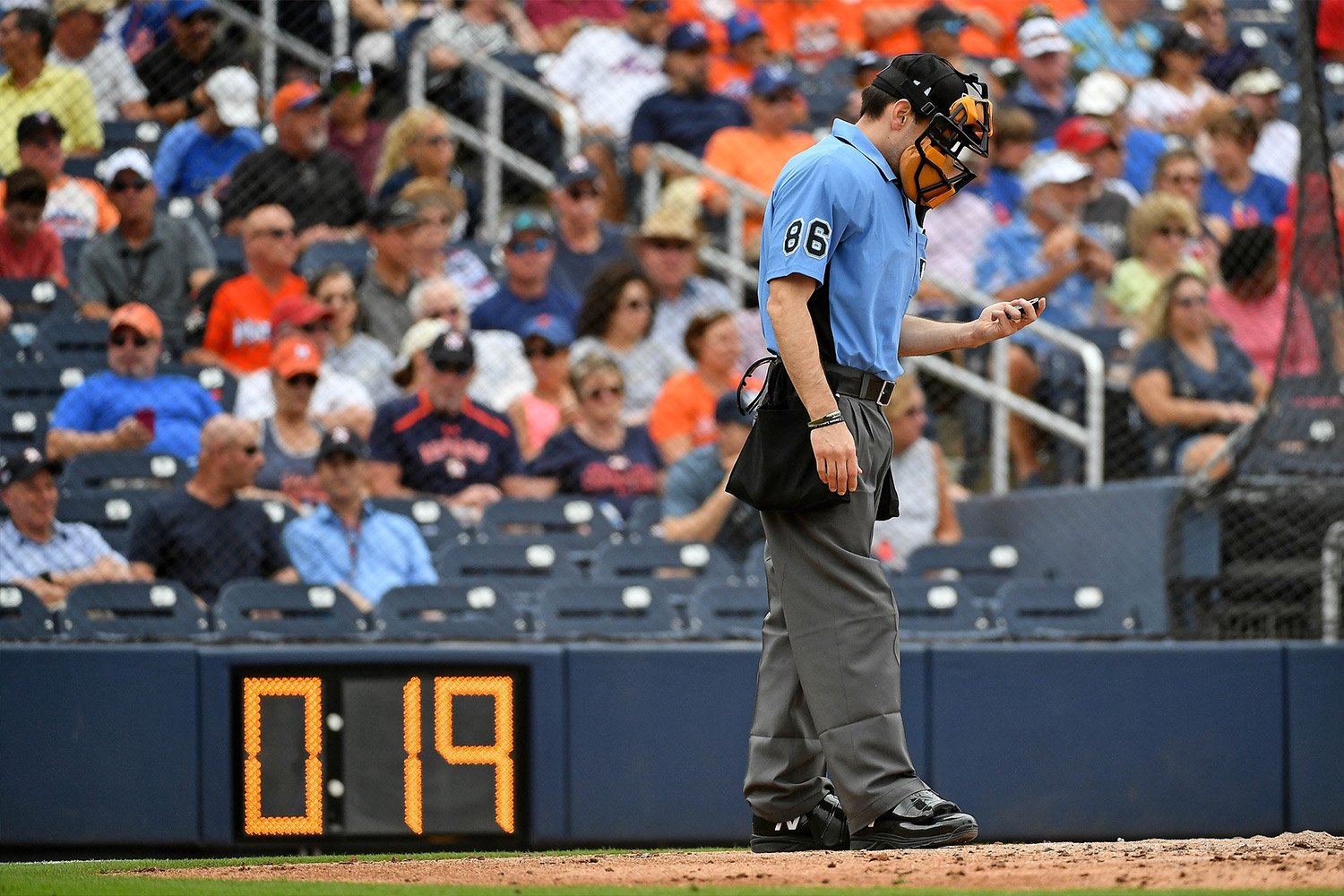 The Players Association recently granted the league the ability to implement future rule changes with just a 45-day notice. Previously, rule changes required a full-year timeline before they could be implemented. Most of the changes coming in 2023, at least at this point, are going to impact the product on TV. MLB has long sought to improve the television-viewing experience for the fans, including changes to the pace of play and the action on the field. Let's discuss those rules below, and share thoughts on each in the Comments section. Pitch clock MLB has dreamed of a pitch clock, dating back (at least) to 2015 when it started experimenting with the rule in the minor leagues. Initial results did not change game lengths drastically, but players found a way around the rules. Stepping off the rubber would reset the clock, there were no limits on this strategy. In the latest iteration, tried in the Low-A West League in 2021, they tried again with a new approach. The pitchers had 15 seconds with nobody on base and 17 seconds with runners on. Along with the pitch clock, they limited the number of times a pickoff attempt can be made. The pitcher received two "free" throws over per batter, and the third attempt, if unsuccessful, counted as a balk. If the pitcher stepped off the rubber, it counted as one of the pickoff attempts. A really nice breakdown can be found at Baseball America. The combination of the pitch clock and the limit on pickoff attempts proved to be successful. The average game was 21 minutes shorter and, possibly more importantly in the eyes of the league, the offense was significantly up. Runs per game increased by over half a run, average batting average went up about 25 points, walks went down and so did strikeouts. Games were faster and the ball was put in play more often - exactly what Manfred wants in a TV product. The Brewers don’t have many pitchers that take an excessive amount of time to throw home, and Brent Suter is a poster boy for the movement. Whether it makes Suter more or less effective will remain to be seen. It would likely affect the offense if the same trends follow to the highest level of the game. The Brewers strike out a lot, and if pitchers are forced to pitch faster it could help. Forcing the pitcher to speed up his process leaves less time for lengthy pitch selections and max effort pitches. The good news is that it is less likely to affect Brewers' pitching than a lot of other pitchers around the league. Say goodbye to the shift This has been a long time coming, as Manfred has desired more action on the base paths and less “easy” outs for the defense. The current proposal will require two infielders on either side of second base in addition to requiring those players to be on the infield dirt. A surface-level glance at the data would indicate a massive difference in the on-field product. Kyle Glaser wrote a great piece on the attempt in the minor leagues. He found that the banning of the shift provided no statistical difference in the league average on Batting Average on Balls in Play (BABIP). In my opinion, it will matter more at the major-league level than it did in the minors. First, and foremost, you won’t have four right fielders facing up against Joey Gallo, and six total defenders on the right side of the field. Players like him have faced similar situations, although not to the extreme that the Astros went in the tweet below. The second difference is that major league batters have more track record on balls in play, and teams can effectively predict, with far greater certainty, the outcome of various at-bats. Lastly, the pitchers at the highest level are simply better than those that aren’t - naturally. Teams are able to pitch into the shift. If facing Christian Yelich, teams would find that pitching in on the plate is more likely to cause a ground ball into the shift. At the lower levels, pitchers are much less effective at hitting their spots. How does this affect the product in Milwaukee? As mentioned in part one of the rule changes, the Brewers staff is really savvy. They are at the cutting edge of shifting, and do it with much more success than much of the competition. This is a big advantage for the Brewers' defense and pitching numbers, so the on-field product is likely to drop - at least a small amount. If Milwaukee picks up Kolten Wong’s option year, they will have a defensive infield with incredible range. Wong covers a lot of ground, being a Gold Glove second baseman, and on the other side of the infield, they essentially have two shortstops in Willy Adames and Luis Urias. In essence, it will hurt their defense minimally, relative to many other things, because their defense is very good. This would have been a completely different scenario when they used Mike Moustakas, Travis Shaw, and Jesus Aguilar in the same infield configuration. The offense is likely to benefit from this, notably the power left-handed bats. Only time will tell the degree to which they will benefit. Oversized Bases The league is looking to make the bases larger, exactly three inches larger. The primary reason for increasing base sizes to 18-inches is it will reduce collisions and injuries near the bases, especially at first base. More base means more space for sliding around a defender, or so they say. I’m more skeptical on this, as runners often slide into defenders in an attempt to break up a play, something they will continue to be able to do. The extra size may also lead to more action on the base paths, which was actually seen in Triple-A in 2021 when experimenting with this rule. This would have greatly helped the 2018 and 2019 Brewers, who ranked near the top of the league in stolen base attempts. They were near the bottom in 2020 and the middle in 2021. So much of this depends on which players are on the field in any given situation. With the shift going away, we can expect a few more hit and run attempts as players are less likely to line or fly out during a steal attempt. New schedule - MLB stars coming to a city near you! The league looks to expand fanbases and increase the visibility of its stars with a reworking of the traditional schedule. Gone will be the days of seeing divisional opponents for almost 50% of the schedule. Teams currently face each divisional opponent 19 times in a given season, which will become 14 times each - seven home and seven away - in 2023. With the additional 20 games on the schedule, teams play their geographic rival four times and three games against the other 14 teams in the opposite league. Home and away series will alternate each year. Not only does this even out the home and away games for divisional opponents, it means fans will have the opportunity to see more players. Shohei Ohtani will be playing in every stadium across the league starting in 2023 - this is great for baseball. It will be a short-term boon for the Brewers, who are set to fatten up on divisional opponents in 2022. Roster changes make this hard to predict out annually, but the increased games against more opponents will present Milwaukee a new opportunity: the more players that come to American Family Field and enjoy the city, the better chances the front office will have in signing free agents. Milwaukee has recently started to be a destination signing, due to the competitive nature of the team and the culture instituted by Craig Counsell and his team. See the rule changes for 2022 here.
 -
Last week, I wrote about MLB rule changes that may (or may not) affect the Brewers in 2022. Today, we'll dive into other rule changes that will be coming, but not until 2023. Which do you like or dislike? The Players Association recently granted the league the ability to implement future rule changes with just a 45-day notice. Previously, rule changes required a full-year timeline before they could be implemented. Most of the changes coming in 2023, at least at this point, are going to impact the product on TV. MLB has long sought to improve the television-viewing experience for the fans, including changes to the pace of play and the action on the field. Let's discuss those rules below, and share thoughts on each in the Comments section. Pitch clock MLB has dreamed of a pitch clock, dating back (at least) to 2015 when it started experimenting with the rule in the minor leagues. Initial results did not change game lengths drastically, but players found a way around the rules. Stepping off the rubber would reset the clock, there were no limits on this strategy. In the latest iteration, tried in the Low-A West League in 2021, they tried again with a new approach. The pitchers had 15 seconds with nobody on base and 17 seconds with runners on. Along with the pitch clock, they limited the number of times a pickoff attempt can be made. The pitcher received two "free" throws over per batter, and the third attempt, if unsuccessful, counted as a balk. If the pitcher stepped off the rubber, it counted as one of the pickoff attempts. A really nice breakdown can be found at Baseball America. The combination of the pitch clock and the limit on pickoff attempts proved to be successful. The average game was 21 minutes shorter and, possibly more importantly in the eyes of the league, the offense was significantly up. Runs per game increased by over half a run, average batting average went up about 25 points, walks went down and so did strikeouts. Games were faster and the ball was put in play more often - exactly what Manfred wants in a TV product. The Brewers don’t have many pitchers that take an excessive amount of time to throw home, and Brent Suter is a poster boy for the movement. Whether it makes Suter more or less effective will remain to be seen. It would likely affect the offense if the same trends follow to the highest level of the game. The Brewers strike out a lot, and if pitchers are forced to pitch faster it could help. Forcing the pitcher to speed up his process leaves less time for lengthy pitch selections and max effort pitches. The good news is that it is less likely to affect Brewers' pitching than a lot of other pitchers around the league. Say goodbye to the shift This has been a long time coming, as Manfred has desired more action on the base paths and less “easy” outs for the defense. The current proposal will require two infielders on either side of second base in addition to requiring those players to be on the infield dirt. A surface-level glance at the data would indicate a massive difference in the on-field product. Kyle Glaser wrote a great piece on the attempt in the minor leagues. He found that the banning of the shift provided no statistical difference in the league average on Batting Average on Balls in Play (BABIP). In my opinion, it will matter more at the major-league level than it did in the minors. First, and foremost, you won’t have four right fielders facing up against Joey Gallo, and six total defenders on the right side of the field. Players like him have faced similar situations, although not to the extreme that the Astros went in the tweet below. The second difference is that major league batters have more track record on balls in play, and teams can effectively predict, with far greater certainty, the outcome of various at-bats. Lastly, the pitchers at the highest level are simply better than those that aren’t - naturally. Teams are able to pitch into the shift. If facing Christian Yelich, teams would find that pitching in on the plate is more likely to cause a ground ball into the shift. At the lower levels, pitchers are much less effective at hitting their spots. How does this affect the product in Milwaukee? As mentioned in part one of the rule changes, the Brewers staff is really savvy. They are at the cutting edge of shifting, and do it with much more success than much of the competition. This is a big advantage for the Brewers' defense and pitching numbers, so the on-field product is likely to drop - at least a small amount. If Milwaukee picks up Kolten Wong’s option year, they will have a defensive infield with incredible range. Wong covers a lot of ground, being a Gold Glove second baseman, and on the other side of the infield, they essentially have two shortstops in Willy Adames and Luis Urias. In essence, it will hurt their defense minimally, relative to many other things, because their defense is very good. This would have been a completely different scenario when they used Mike Moustakas, Travis Shaw, and Jesus Aguilar in the same infield configuration. The offense is likely to benefit from this, notably the power left-handed bats. Only time will tell the degree to which they will benefit. Oversized Bases The league is looking to make the bases larger, exactly three inches larger. The primary reason for increasing base sizes to 18-inches is it will reduce collisions and injuries near the bases, especially at first base. More base means more space for sliding around a defender, or so they say. I’m more skeptical on this, as runners often slide into defenders in an attempt to break up a play, something they will continue to be able to do. The extra size may also lead to more action on the base paths, which was actually seen in Triple-A in 2021 when experimenting with this rule. This would have greatly helped the 2018 and 2019 Brewers, who ranked near the top of the league in stolen base attempts. They were near the bottom in 2020 and the middle in 2021. So much of this depends on which players are on the field in any given situation. With the shift going away, we can expect a few more hit and run attempts as players are less likely to line or fly out during a steal attempt. New schedule - MLB stars coming to a city near you! The league looks to expand fanbases and increase the visibility of its stars with a reworking of the traditional schedule. Gone will be the days of seeing divisional opponents for almost 50% of the schedule. Teams currently face each divisional opponent 19 times in a given season, which will become 14 times each - seven home and seven away - in 2023. With the additional 20 games on the schedule, teams play their geographic rival four times and three games against the other 14 teams in the opposite league. Home and away series will alternate each year. Not only does this even out the home and away games for divisional opponents, it means fans will have the opportunity to see more players. Shohei Ohtani will be playing in every stadium across the league starting in 2023 - this is great for baseball. It will be a short-term boon for the Brewers, who are set to fatten up on divisional opponents in 2022. Roster changes make this hard to predict out annually, but the increased games against more opponents will present Milwaukee a new opportunity: the more players that come to American Family Field and enjoy the city, the better chances the front office will have in signing free agents. Milwaukee has recently started to be a destination signing, due to the competitive nature of the team and the culture instituted by Craig Counsell and his team. See the rule changes for 2022 here. View full article
-
Who likes to hit? That's still what I'm still trying to figure out.
BrewCrewBBQ commented on CheezWizHed's blog entry in Cheese Wiz Curds
Ben Sheets said, "Who likes to hit?" Ryan Braun always came across as, "Who likes to field?" He wasn't bad, but he definitely viewed playing the field as a means of getting in the lineup. -
MLB and the MLBPA have agreed on a number of new rule changes. Some were part of the new Collective Bargaining Agreement (CBA). Others have been tacked on in recent weeks. To varying degrees, the rule changes will impact the game on the field. Many of the rules being passed lately feel as if they are targeting smart mid-market teams, such as the Brewers. How will these rule changes actually affect the team? Universal DH (including the “Ohtani Rule”) Probably the most visible change to baseball since the discovery of Launch Angle, the Designated Hitter will be utilized in both leagues. The differences between the NL and AL are nonexistent at this point, with this final pillar of the NL falling in the new CBA. This is something that both the owners and players have long wanted. The second part of this new rule, dubbed the “Ohtani Rule," says that a player who starts a game at both DH and pitcher can remain in the game as the DH, even after being removed as a pitcher. While Brandon Woodruff swings a nice bat, for a pitcher, this really does not affect any player currently in the league whose first name is not Shohei. In my opinion, the DH hurts the Brewers more than it helps them, and no, it is not because Woodruff’s bat will be missing from the lineup. Craig Counsell is one of the best managers in baseball, arguably THE best manager in baseball. One of the areas Counsell excels is in bullpen management when coupled with a double switch. He does draw flak for pulling pitchers too soon, but rarely does he leave a pitcher in the game too long. Counsell seems to prefer players with ample versatility, allowing him to mix and match his pinch hitters. Other baseball managers are not as good at doing this. In the 2021 Wild Card game, Cardinals' manager Mike Shildt let Adam Wainwright hit for himself in the top of the sixth inning. The game was tied 1-1. Harrison Bader was on first base with two outs. Wainwright had thrown 83 pitches through five innings. Counsell would never let a pitcher bat in this situation, but good ol’ Mike Shildt did. Wainwright grounded out to the pitcher on the first pitch he saw. In the next half-inning, he threw four pitches to Corey Seager and gave up a single to Trea Turner on a ground ball to third base. That was the end of Wainwright’s season. One base runner, on weak contact. If that was the plan all along, Shildt would have been much better-served pinch-hitting with Paul DeJong, or any other person on the bench that swings a bat as a part of their job. Decisions like this will no longer have to be made, removing difficult decisions from the plate of managers. The DH will, however, allow the manager to rest players, rotating through the team and keeping the bats in the lineup while partially resting a player. This DH strategy is going to help the team over the course of 162 games more than it will in any, singular game. Option Limits on Players and IL Timeframe The new season will feature a rule that limits the ability of a club to option a player at will throughout the season. Starting in 2022, a player can only be optioned five times in a season before that player will need to be designated for assignment. An optioned player must remain in the minor leagues for a minimum of 15 days before that player can be recalled to the big league roster. The new 15-day minimum will also apply to pitchers on the Injured List, position players will remain at 10 days. The limit on the number of times a player can be optioned will absolutely affect the way in which The Brewers will manage their roster. Less so for the rotation, but Milwaukee is one of the teams notorious for frequently shuffling the bullpen via player options. This is one of the rules that seems to target the Brewers. All teams do this to an extent (and they’re not actually targeting the Brewers... probably). Ghost runner on second in extra innings (featuring the return of nine-inning double headers) After agreeing to get rid of the ghost runner during the CBA, the league and players association went back to the table after looking at how many doubleheaders would be featured in 2022 (and that’s before any games are missed to weather). With the return of nine-inning double features and the limit on player options, both sides agreed to re-implement the ghost runner. Milwaukee played to a 10-9 record in extra innings in 2021, but they were also 21-15 in one-run games. I wouldn’t expect this to matter to the Brewers over the course of a full season, but Counsell does like the rule. He told The Milwaukee Journal Sentinel, “I do like it because it shortens games. It also saves players’ jobs and needless roster maneuvering, oftentimes with players who perform well in the game, which I think is really unfair.” The “Jacob Nottingham” Rule If a team has claimed a player on waivers already, that same team can no longer claim the player again until every other team has had the opportunity to claim this same player. This one would have directly impacted the Brewers last year. This was introduced at least partly as a result of David Stearns' DFA of Jacob Nottingham in 2021. After the Brewers DFAd him, he was claimed by Seattle. Soon after, Omar Narvaez and Manny Pina were injured and the club needed a short-term replacement. That led to Stearns re-acquiring Nottingham from the Mariners. When the catchers returned, Nottingham was again DFAd and claimed by Seattle. The likelihood of something like this happening again is low, even without this newly-minted rule. Service time manipulation One of the biggest concerns players have had is service-time manipulation. The current solution, agreed to in the new CBA, is two-pronged. When a player is on the Opening Day roster and is voted into the top three players for Rookie of the Year (ROY), MVP, or Cy Young, the team will receive draft pick compensation. More importantly, any rookie player that finishes in the top two for ROY voting will receive a full year of service time, regardless of when he was promoted to the big leagues. This is unlikely to affect the Brewers, at least this year. Aaron Ashby retains his rookie status. He is currently in the mix for a spot on the Opening Day roster. Will any other minor leaguers come up during the season with a shot at Rookie of the Year consideration? Expanded Playoffs and Game 163 The postseason is set to take on a new format, with expansion to 12 teams. Three division winners and three wild card teams will make up the field for each league. The top two division winners (seeds #1 and #2) will receive byes, with the third division winner (#3) playing the third wild card team (#6) and the top two wild card teams (#4 and #5) playing each other in round one. There will be no reseeds after the first round, the #1 seed will host the winner of #4 v #5 and #2 will host the winner of #3 v #6. With the expanded playoffs, no game #163 will be played. The league has instead opted for a system of tiebreakers (still to be outlined). This is unlikely to affect the Brewers in 2022, as they are expected to handily clinch the NL Central. They should be well within the division or top three wild card spots. In future years, this could help a lower payroll team like Milwaukee sneak into the playoffs on a “down” year. Draft Lottery - The Anti-Tanking Rule The 18 teams that do not make the playoffs will be entered into a weighted draft for the top six picks. Like the NBA Draft Lottery, more weight and a higher likelihood for a top pick will go to the teams with the worst records. The players really wanted something to be done about tanking. This is what both sides agreed to. It may slightly factor into teams that are considering a rebuild, and how far they tear the team down, but since the lottery is weighted, I am still of the opinion that certain teams will race to the bottom in search of lower payroll coupled with higher picks. This shouldn’t affect the Brewers for some time, as even their last “rebuild” was kickstarted very quickly and they have not looked back. International Draft/Compensation Pick for signing a free agent Owners have long wanted an international draft, players have long wanted to do away with the draft pick compensation associated with signing a player that received a qualifying offer. Owners threw this wrench at the players at the last minute, but that’s a different article for a different time. For now, the two sides have agreed to do away with the "comp" pick if they can come to an agreement on the international draft before July 25. If they don't reach an agreement, the qualifying offer penalty will remain in place for the remainder of this CBA. If they do come to terms with each other, it will be for the 2024 international draft moving forward. This may affect the Brewers, as they have used the lack of interest in players tied to a qualifying offer penalty to their advantage in the past - most notably by signing Yasmani Grandal. The international draft may be more of an impact, but that has yet to be seen. The Brewers are very active in certain international markets, but a draft may give them access to elite prospects they are otherwise less likely to sign. Summary There are several new rules. Some may help a team like the Brewers. Others may hurt the organization. Milwaukee is incredibly good at finding advantages on the fringes. Stearns, Arnold, Counsell, and the entire organization's staff should get a lot of credit for finding advantages. Any new rule changes will not alter the fact that they are really good at this. They'll just need to find a different edge to poke because a group that smart will find more ways to excel. The organization is top-notch and always finding ways to separate from the pack and Counsell is smart enough to use that information in a practical manner. See the proposed rules for 2023 and how they may affect Milwaukee, including a ban on the shift and a pitch clock. View full article
