


Matthew Trueblood
-
Posts
2,074 -
Joined
-
Last visited
-
Days Won
10
Content Type
Profiles
Forums
Blogs
Events
Milwaukee Brewers News, Rumors & Analysis
2026 Milwaukee Brewers Top Prospect Rankings
Milwaukee Brewers Videos
2022 Milwaukee Brewers Draft Picks & Signing Bonuses
Milwaukee Brewers Trade & Free Agent Rumors
Milwaukee Brewers Fan Guides & Resources
2023 Milwaukee Brewers Draft Picks & Signing Bonuses
2024 Milwaukee Brewers Draft Picks & Signing Bonuses
2025 Milwaukee Brewers Draft Picks & Signing Bonuses
2026 Milwaukee Brewers Draft Picks & Signing Bonuses
Store
Downloads
Gallery
Everything posted by Matthew Trueblood
-
The guidelines for a fourth option are less murky than they seem. Quero qualifies. He didn't meet the criteria for a full professional season in either 2021 or 2024, so he's only played four years that do meet those standards. If you have fewer than five such years, you get a fourth option.
-
If he was forced to give a clear and urgent answer, this is the one I would have expected. But he's pretty cagey when he wants to be, and I left the path open for him to do that this time, too. He voluntarily pushed this. As I said in the piece, could be smokescreening, but I don't think that's it. Or at least, it's not all of it. Very interesting answer.
-
"Yeah, absolutely," Matt Arnold said. The words bit the air with a crackle; his usual caution has fled for a moment. "Yeah, he's still a catcher." That answer came in response to a very fair question, posed Tuesday during the National League general managers' media availability at the annual GM Meetings in Las Vegas. As the reporter who asked it pointed out, Quero caught only three times in the minors after June 26, all in a short span in mid-August. Though he stayed in the lineup for the Triple-A Nashville Sounds in the second half, he was relegated to designated hitter duties. Between that and the team's acquisition of Guardians catcher Bo Naylor at the trade deadline, many began to wonder if Quero's future was at another position—or even if his future was growing dim, overall. The shoulder injury he suffered in April 2024 has lingered and shadowed multiple seasons, delaying what looked like it would be a rapid matriculation to the majors. On the contrary, Arnold said, the team still sees Quero as an elite backstop. "Yeah, just trying to work through, you know, what he's doing, but again, he's a really talented guy," he said, when asked why Quero caught so little this year. "Obviously, suffered an injury in the past, but, you know, again, one of the guys that just, when he gets back to that form that we've seen in the past, he's one of the best behind the plate, in my opinion, in the sport." That's high praise for a player who was once a top prospect, but has become an afterthought for many outside Milwaukee. It matches other intimations from people within the organization in recent months, though, and becomes the latest endorsement of Quero as a potential replacement if the team either trades William Contreras this winter (wildly unlikely, though Arnold declined to comment on the possibility) or allows him to walk via free agency next year. Quero's bat speed did rebound this season, after it had dropped sharply in the wake of his injury and stayed down for a worryingly long time. His approach grew a bit more refined, and part of the thinking in keeping his catching workload so light was to give him more room to lock in those approach improvements. If his arm strength (and, thus, his ability to control the running game) continues to trend in the right direction, he could again profile as a plus-plus defender. It's not unreasonable to buy into Arnold's optimism about the 24-year-old Venezuelan's future. On the other hand, it's worth noting that pumping up Quero's stock this way bolsters his prospective trade value, should the team look to move Quero instead of Contreras this offseason. Arnold said Quero will have a normal offseason, but after he played in the Venezuelan Winter League last fall, he's sitting out that season this year. Given that he's fully healthy and that he got so few reps at a position that will determine his value in the long run, one might have expected that he and the Brewers would be eager to get him more chances behind the plate. In any discussion of the future of the position for the Brewers, Quero is the X-factor. He could be the push factor that leads them to trade Contreras. He could become a useful trade chip, either because the team veers from its usual paradigm and extends Contreras or because they don't believe in him quite as much as they want people to believe. Without a good idea of what his career might look like, it's impossible to confidently forecast how the team will handle the catcher spot for the next half-decade. Arnold is enthusiastic in his encomiums. Looking toward 2027, though, those words mean less than Quero's uninspiring stats and his odd usage in 2026. UPDATE 1:02 PM CT: In follow-up reporting, I have confirmed that Quero is eligible for a fourth option year in 2027. The team won't have to carry him on the Opening Day roster to keep him in the organization, so the backstop can continue developing at Triple-A Nashville if they see fit. Image courtesy of USA TODAY Network via Reuters Connect View full article
-
Brewers' Confidence in Catcher Jeferson Quero Remains Extremely High
Matthew Trueblood posted an article in Brewers
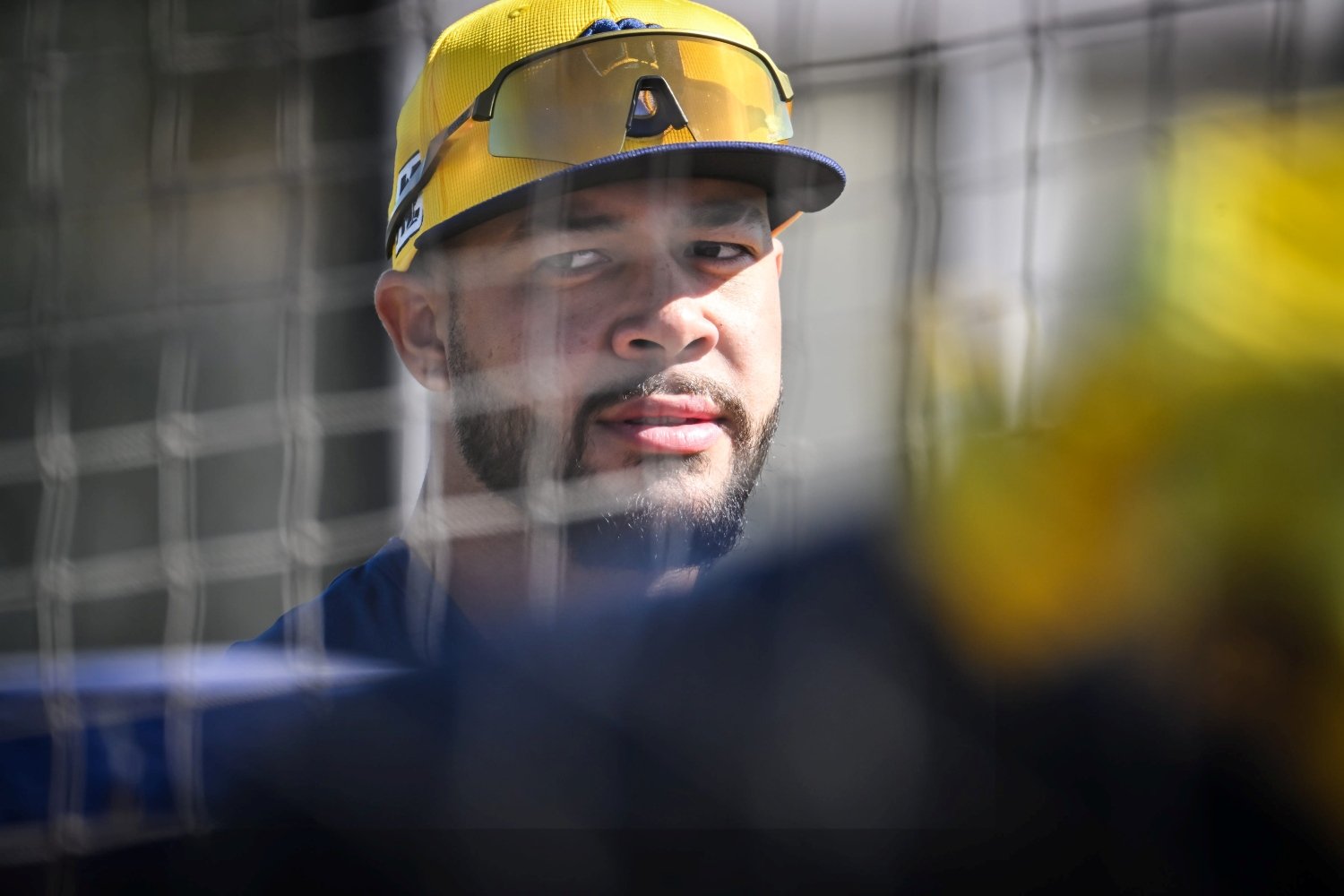 "Yeah, absolutely," Matt Arnold said. The words bit the air with a crackle; his usual caution has fled for a moment. "Yeah, he's still a catcher." That answer came in response to a very fair question, posed Tuesday during the National League general managers' media availability at the annual GM Meetings in Las Vegas. As the reporter who asked it pointed out, Quero caught only three times in the minors after June 26, all in a short span in mid-August. Though he stayed in the lineup for the Triple-A Nashville Sounds in the second half, he was relegated to designated hitter duties. Between that and the team's acquisition of Guardians catcher Bo Naylor at the trade deadline, many began to wonder if Quero's future was at another position—or even if his future was growing dim, overall. The shoulder injury he suffered in April 2024 has lingered and shadowed multiple seasons, delaying what looked like it would be a rapid matriculation to the majors. On the contrary, Arnold said, the team still sees Quero as an elite backstop. "Yeah, just trying to work through, you know, what he's doing, but again, he's a really talented guy," he said, when asked why Quero caught so little this year. "Obviously, suffered an injury in the past, but, you know, again, one of the guys that just, when he gets back to that form that we've seen in the past, he's one of the best behind the plate, in my opinion, in the sport." That's high praise for a player who was once a top prospect, but has become an afterthought for many outside Milwaukee. It matches other intimations from people within the organization in recent months, though, and becomes the latest endorsement of Quero as a potential replacement if the team either trades William Contreras this winter (wildly unlikely, though Arnold declined to comment on the possibility) or allows him to walk via free agency next year. Quero's bat speed did rebound this season, after it had dropped sharply in the wake of his injury and stayed down for a worryingly long time. His approach grew a bit more refined, and part of the thinking in keeping his catching workload so light was to give him more room to lock in those approach improvements. If his arm strength (and, thus, his ability to control the running game) continues to trend in the right direction, he could again profile as a plus-plus defender. It's not unreasonable to buy into Arnold's optimism about the 24-year-old Venezuelan's future. On the other hand, it's worth noting that pumping up Quero's stock this way bolsters his prospective trade value, should the team look to move Quero instead of Contreras this offseason. Arnold said Quero will have a normal offseason, but after he played in the Venezuelan Winter League last fall, he's sitting out that season this year. Given that he's fully healthy and that he got so few reps at a position that will determine his value in the long run, one might have expected that he and the Brewers would be eager to get him more chances behind the plate. In any discussion of the future of the position for the Brewers, Quero is the X-factor. He could be the push factor that leads them to trade Contreras. He could become a useful trade chip, either because the team veers from its usual paradigm and extends Contreras or because they don't believe in him quite as much as they want people to believe. Without a good idea of what his career might look like, it's impossible to confidently forecast how the team will handle the catcher spot for the next half-decade. Arnold is enthusiastic in his encomiums. Looking toward 2027, though, those words mean less than Quero's uninspiring stats and his odd usage in 2026. UPDATE 1:02 PM CT: In follow-up reporting, I have confirmed that Quero is eligible for a fourth option year in 2027. The team won't have to carry him on the Opening Day roster to keep him in the organization, so the backstop can continue developing at Triple-A Nashville if they see fit.
-
Before we had hard-and-fast measurements of velocity or movement (let alone spin rate, extension or vertical approach angle), when a pitcher was really, really on, they would say he had an extra yard on his fastball. Lindsey Nelson, Ralph Kiner and Bob Murphy used to talk about it while calling Tom Seaver's best games. Vin Scully referred to it when describing Sandy Koufax. It wasn't just a hard fastball. These were the heaters that would jump over the bat, leaving the batter wondering either why they had swung or by what magic they might ever hit it, even if it was right down the middle—but especially when it was chest-high, which it always seemed to be. We know better now. Jacob Misiorowski's fastball doesn't have an extra yard on it; it has two. That makes it, literally, unfathomable—and until he started doing what he started doing this spring, that's exactly what his campaign of high heat was, even to those who had seen the best of Aroldis Chapman and Randy Johnson. Misiorowski isn't The Unicorn—that's Shohei Ohtani, even if Misiorowski helped the Brewers slay the beast with a sweep of the Dodgers in the NLCS. He might just be baseball's centaur, though: a myth cantering right into reality, on legs that look like they belong to some creature other than itself. He'll have to wait for any official recognition of folktale status, but on Wednesday, he received affirmation of what everyone already knew: he was the best pitcher in the world in 2026. The only two pitchers in the pitch-tracking era who have induced whiffs on a higher percentage of their four-seam fastballs than Misiorowski (40.2%) did in 2026 were relievers: Aroldis Chapman in 2014 and 2015, and Chad Green in 2017. Counting the postseason, he reared back and flung that fastball 1,904 times, and only surrendered eight home runs. If that had been all he did well, it might have been enough. They say big-league hitters can time a speeding bullet, if they know it's coming, but they hardly ever caught up to Misiorowski's heat. For good measure, he got more comfortable differentiating his slider and cutter from one another. When his mechanics got out of sync and he faced the threat of a lapse in control, the cutter allowed him to get back on track. When hitters were sitting on the fastball but he had them in swing mode, his curveball got the whiffs he needed. He was slightly less dominant in October, but no less effective. The league didn't figure him out or catch up to him; that was the most terrifying and exhilarating thing. Misiorowski's campaign will go down in history, as much for the sensation of watching him—of seeing a pitcher dominate more thoroughly and more simply over a full workload than anyone in recent memory—as for the stats he put up, but the stats were excellent, too. Under the pre-arbitration bonus pool, Misiorowski receives a $2.5-million bonus to go with the award. More importantly, this is the final validation of his brilliance for this year. The Brewers will simply hope he can return to this level in 2027. Surely, there's no level left to which he could climb from here. Right? Image courtesy of Michael McLoone-Imagn Images View full article
-
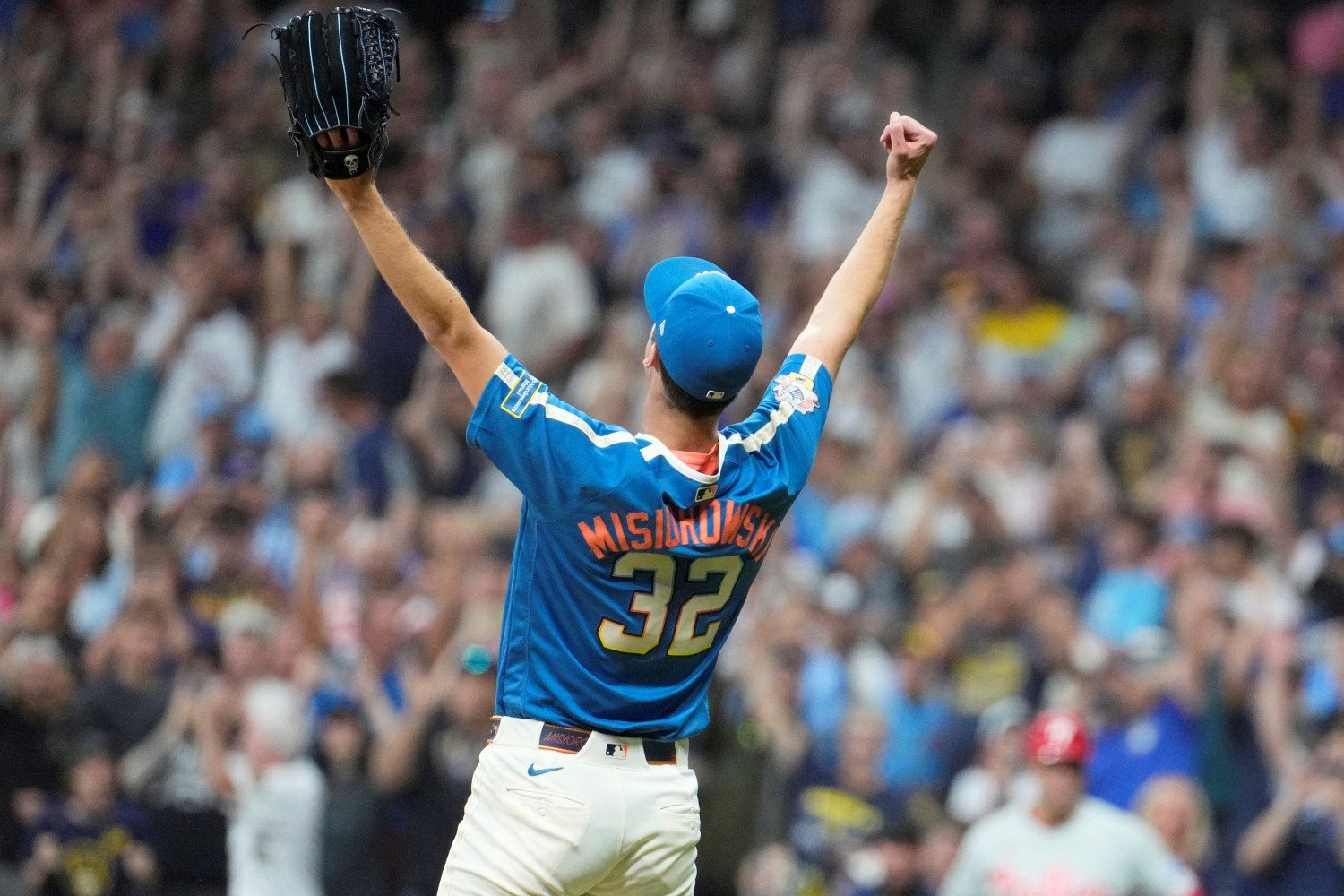 Before we had hard-and-fast measurements of velocity or movement (let alone spin rate, extension or vertical approach angle), when a pitcher was really, really on, they would say he had an extra yard on his fastball. Lindsey Nelson, Ralph Kiner and Bob Murphy used to talk about it while calling Tom Seaver's best games. Vin Scully referred to it when describing Sandy Koufax. It wasn't just a hard fastball. These were the heaters that would jump over the bat, leaving the batter wondering either why they had swung or by what magic they might ever hit it, even if it was right down the middle—but especially when it was chest-high, which it always seemed to be. We know better now. Jacob Misiorowski's fastball doesn't have an extra yard on it; it has two. That makes it, literally, unfathomable—and until he started doing what he started doing this spring, that's exactly what his campaign of high heat was, even to those who had seen the best of Aroldis Chapman and Randy Johnson. Misiorowski isn't The Unicorn—that's Shohei Ohtani, even if Misiorowski helped the Brewers slay the beast with a sweep of the Dodgers in the NLCS. He might just be baseball's centaur, though: a myth cantering right into reality, on legs that look like they belong to some creature other than itself. He'll have to wait for any official recognition of folktale status, but on Wednesday, he received affirmation of what everyone already knew: he was the best pitcher in the world in 2026. The only two pitchers in the pitch-tracking era who have induced whiffs on a higher percentage of their four-seam fastballs than Misiorowski (40.2%) did in 2026 were relievers: Aroldis Chapman in 2014 and 2015, and Chad Green in 2017. Counting the postseason, he reared back and flung that fastball 1,904 times, and only surrendered eight home runs. If that had been all he did well, it might have been enough. They say big-league hitters can time a speeding bullet, if they know it's coming, but they hardly ever caught up to Misiorowski's heat. For good measure, he got more comfortable differentiating his slider and cutter from one another. When his mechanics got out of sync and he faced the threat of a lapse in control, the cutter allowed him to get back on track. When hitters were sitting on the fastball but he had them in swing mode, his curveball got the whiffs he needed. He was slightly less dominant in October, but no less effective. The league didn't figure him out or catch up to him; that was the most terrifying and exhilarating thing. Misiorowski's campaign will go down in history, as much for the sensation of watching him—of seeing a pitcher dominate more thoroughly and more simply over a full workload than anyone in recent memory—as for the stats he put up, but the stats were excellent, too. Under the pre-arbitration bonus pool, Misiorowski receives a $2.5-million bonus to go with the award. More importantly, this is the final validation of his brilliance for this year. The Brewers will simply hope he can return to this level in 2027. Surely, there's no level left to which he could climb from here. Right?
-
People observe this all the time, but no question, ages just mean totally different things across eras. Murphy looks like what 45-year-old men often looked like, 50 years ago, even as he hurtles toward 70.
-
Brewers manager Pat Murphy won his third straight National League Manager of the Year Award, Major League Baseball announced on Tuesday night. Murphy's three seasons in Milwaukee are the only full campaigns he's spent at the top step of a big-league dugout, but already, he's made history. In October, he guided the team to its first-ever World Series triumph. Now, he's the first skipper ever to win this award three times in a row. Traditionally, the balloting for Manager of the Year responds to expectations, so once a team is established as a favorite, the person running that club becomes less likely to win. Even winning twice in a row has been vanishingly rare. Yet, this outcome is unsurprising. In a shockingly short time, Murphy has built a case not only as the best manager in baseball right now—there's very little doubt that he's that, by now—but as one of the best managers in recent memory, and perhaps a future Hall of Famer. After not getting a major-league managerial gig until his mid-60s, he's checked all the major boxes on a Cooperstown résumé, save the longevity. It will be very hard for him to check that final box, of course, but he might be able to sneak into the Hall without doing so. That's the degree of dominance he's shown in his short time in charge of baseball's Little Engine That Could. Beyond outperforming expectations, two major factors guide voters for this award in most years: Clear instances of overcoming adversity; and Personality Murphy excels in both aspects, which is how he's done the previously impossible. The Brewers' expectations remained modest even coming off a trip to the NLCS and a third straight NL Central title in 2025, largely because they traded ace starter Freddy Peralta over the winter and were running a lower-than-average payroll (as always). Murphy then had to navigate a last-second trade of Caleb Durbin (one of his personal favorites) on the eve of spring training and the loss of Quinn Priester for the whole season before it even began. Not long into the campaign, it was clear he'd also be without prized offseason bullpen addition Angel Zerpa (Tommy John surgery) and the very expensive Brandon Woodruff (repeated losses of velocity amid a recurrence of his major shoulder trouble, after he accepted a qualifying offer and a $22-million salary over the winter) most of the time. Early hand injuries to Jackson Chourio and Andrew Vaughn forced Murphy to mix and match with his lineup for the first six weeks of the season. Disappointing first halves for Sal Frelick and Joey Ortiz prompted the team to call up rookies Cooper Pratt and Luis Lara, but Murphy had to keep both of hsi slightly more veteran players engaged as he integrated the fresh blood. For most of the season, he had only two truly reliable starting pitchers. One was Jacob Misiorowski. The other was Kyle Harrison in the first half, but Logan Henderson in the second. Otherwise, again, he was left doing ample mixing and matching. Meanwhile, in addition to being a media darling famous both for his lengthy discussions of the finer points of the game and for his barbs directed at various reporters, Murphy proved a deft manager of the often-volatile personalities within a big-league clubhouse. His approach doesn't work for everyone, but he's shown more flexibility and a greater ability to extract the best from players than many expected when he got the job. After his first year on the job, the team lost Willy Adames and Devin Williams. After his second, they lost Peralta, Durbin and Isaac Collins. They've had to rewire and restructure the team each year, and the fact that they've remained so consistently excellent over that span is evidence that Murphy plays a greater role in their success than most managers do in that of their own clubs. It was enough to convince the voters, who gave him the edge over NL East skippers Don Mattingly and Walt Weiss. Image courtesy of Matt Marton-Imagn Images View full article
-
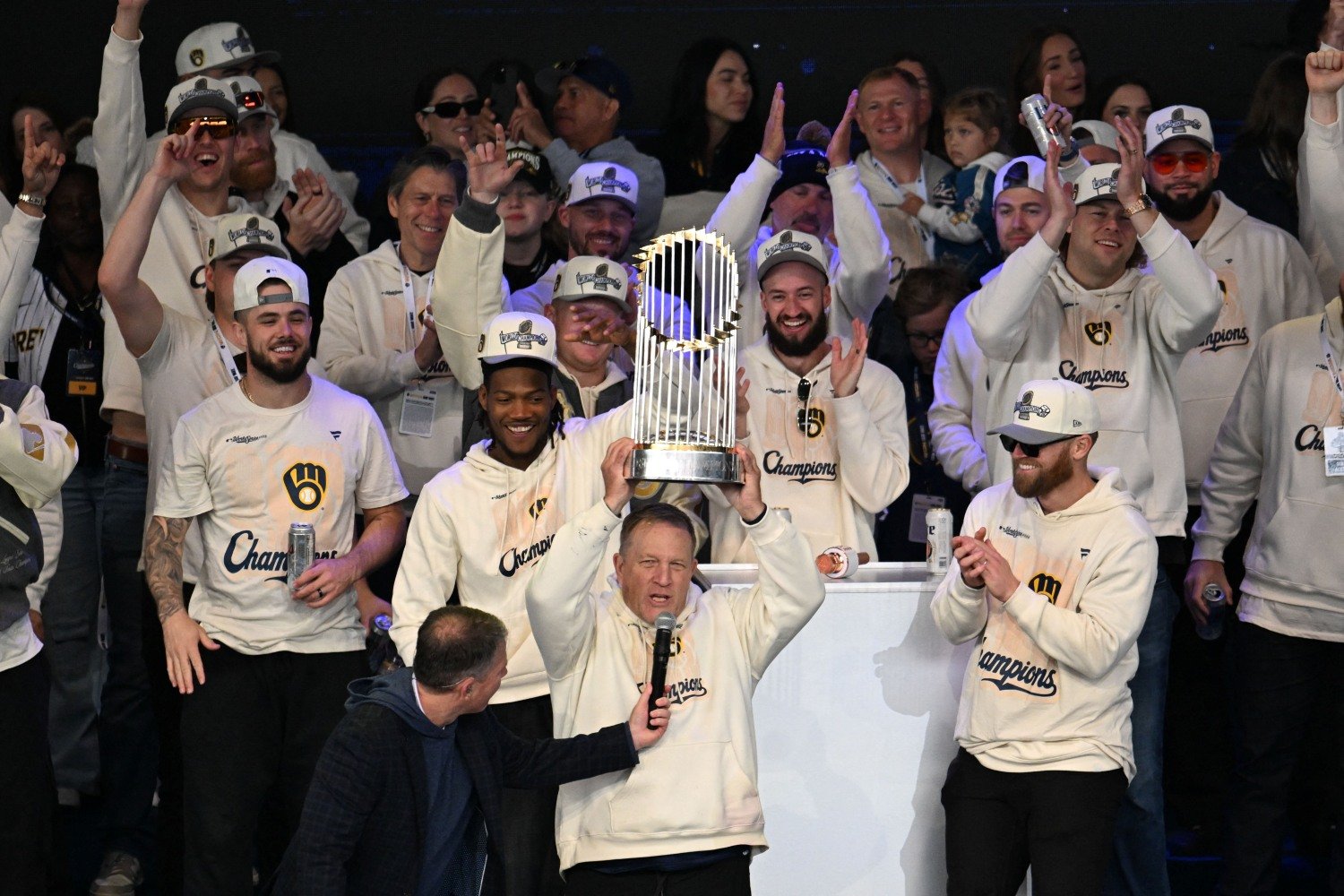 Brewers manager Pat Murphy won his third straight National League Manager of the Year Award, Major League Baseball announced on Tuesday night. Murphy's three seasons in Milwaukee are the only full campaigns he's spent at the top step of a big-league dugout, but already, he's made history. In October, he guided the team to its first-ever World Series triumph. Now, he's the first skipper ever to win this award three times in a row. Traditionally, the balloting for Manager of the Year responds to expectations, so once a team is established as a favorite, the person running that club becomes less likely to win. Even winning twice in a row has been vanishingly rare. Yet, this outcome is unsurprising. In a shockingly short time, Murphy has built a case not only as the best manager in baseball right now—there's very little doubt that he's that, by now—but as one of the best managers in recent memory, and perhaps a future Hall of Famer. After not getting a major-league managerial gig until his mid-60s, he's checked all the major boxes on a Cooperstown résumé, save the longevity. It will be very hard for him to check that final box, of course, but he might be able to sneak into the Hall without doing so. That's the degree of dominance he's shown in his short time in charge of baseball's Little Engine That Could. Beyond outperforming expectations, two major factors guide voters for this award in most years: Clear instances of overcoming adversity; and Personality Murphy excels in both aspects, which is how he's done the previously impossible. The Brewers' expectations remained modest even coming off a trip to the NLCS and a third straight NL Central title in 2025, largely because they traded ace starter Freddy Peralta over the winter and were running a lower-than-average payroll (as always). Murphy then had to navigate a last-second trade of Caleb Durbin (one of his personal favorites) on the eve of spring training and the loss of Quinn Priester for the whole season before it even began. Not long into the campaign, it was clear he'd also be without prized offseason bullpen addition Angel Zerpa (Tommy John surgery) and the very expensive Brandon Woodruff (repeated losses of velocity amid a recurrence of his major shoulder trouble, after he accepted a qualifying offer and a $22-million salary over the winter) most of the time. Early hand injuries to Jackson Chourio and Andrew Vaughn forced Murphy to mix and match with his lineup for the first six weeks of the season. Disappointing first halves for Sal Frelick and Joey Ortiz prompted the team to call up rookies Cooper Pratt and Luis Lara, but Murphy had to keep both of hsi slightly more veteran players engaged as he integrated the fresh blood. For most of the season, he had only two truly reliable starting pitchers. One was Jacob Misiorowski. The other was Kyle Harrison in the first half, but Logan Henderson in the second. Otherwise, again, he was left doing ample mixing and matching. Meanwhile, in addition to being a media darling famous both for his lengthy discussions of the finer points of the game and for his barbs directed at various reporters, Murphy proved a deft manager of the often-volatile personalities within a big-league clubhouse. His approach doesn't work for everyone, but he's shown more flexibility and a greater ability to extract the best from players than many expected when he got the job. After his first year on the job, the team lost Willy Adames and Devin Williams. After his second, they lost Peralta, Durbin and Isaac Collins. They've had to rewire and restructure the team each year, and the fact that they've remained so consistently excellent over that span is evidence that Murphy plays a greater role in their success than most managers do in that of their own clubs. It was enough to convince the voters, who gave him the edge over NL East skippers Don Mattingly and Walt Weiss.
-
In hindsight, the move looks like a stroke of genius on the part of the Brewers. Caleb Durbin is a fine player—he ended up being a catalyst of the Red Sox's run to the American League Wild Card Series in 2026—but the Brewers sold him at the peak of his value. He had just finished third in Rookie of the Year balloting, and they flipped him for three solid pieces who each had roughly as much team control remaining as Durbin himself. Yes, Milwaukee had to throw in Andruw Monasterio and Anthony Seigler, but they got back David Hamilton (a player much in the mold of those two, but better) and added two high-upside left-handed pitchers. Even if Kyle Harrison and Shane Drohan hadn't been as good as they each were at times this year, that would have been a good gamble. In the afterglow of winning the World Series, the move feels like a huge part of the greatest story in franchise history. It could have really blown up on them, though. By making the move, they were expressing their faith in their own infield depth, but they also immediately supplemented it by signing Luis Rengifo. One of the key players on whom they were betting was Jett Williams, whom they had just acquired in the Freddy Peralta trade. Williams never got out of the minor leagues in 2026. Rengifo busted, for the Brewers, though he subsequently found success in San Diego. Third base briefly became a scar on their depth chart. Only when their Plan C—calling up Cooper Pratt and sliding Joey Ortiz over to third, to share time with Hamilton—panned out did they turn the corner from good to great as a team. They got mildly lucky that the trade didn't derail their season by creating a hole in a lineup that thrived because it didn't have any. The important thing to remember is that that move really wasn't Milwaukee's idea. They were in the market for more pitching depth, but they weren't actively shopping Durbin. When the Red Sox lost out in their bid to re-sign Alex Bregman, they pivoted to the trade market, and the offer they made was too good to refuse. The value-focused front office reacted to what came their way, and in the end, it worked out perfectly. That could happen again this winter—though, as with the Durbin deal, it's much more likely to happen near the beginning of next year (in this case, after the looming lockout) than at the front end of the offseason. The team doesn't need to trade Ortiz or Garrett Mitchell, and they won't go hunting for suitors on either of them. However, when the music stops, some team will be left without a satisfactory solution either on the left side of the infield or in center field. If that team comes to the Brewers with a package akin to what the Red Sox offered them for Durbin, the Brewers will probably accept it again. Though Ortiz and Mitchell proved their value throughout this season, each is now arbitration-eligible. That makes them slightly different from Durbin, and could mean that they fetch slightly less in trade. However, each is still under team control for multiple seasons (two for Mitchell, three for Ortiz) and each will come at a relatively low financial cost, compared to similarly talented players at similar stages of their careers. As a result, the Brewers can afford to keep both. They can also afford to trade either, or both. Luis Lara, Sal Frelick and Jackson Chourio can each play center field, if needed. Brandon Lockridge's injury compromised what had a chance to be a breakthrough season, but he's a fine fourth or fifth outfielder, and the Brewers have more help on the way in the outfield, too. For one thing, Williams might fit there, given his great speed. For another, 2024 first-round pick Braylon Payne made some loud noises this season. For a third (and perhaps the most important), Josh Adamczewski looks like a plus hitter with pop who's nearly ready, and though he would need to play left field, Chourio's versatility means that's no problem. On the dirt, the team is just as deep. In addtion to Hamilton and Cooper, Williams could be in the mix at third base if he has a strong spring, and Andrew Fischer isn't far from the majors—though his best fit might be at first base, instead. Most importantly, 2027 should see the debut of Jesús Made, on about the same timeline as Pratt's June arrival in 2026. That means that any trade of Ortiz would only leave the team needing to patch a short-term hole on the infield, and (in Hamilton) they already have a player they like and trust to do so. None of those options, with the reconfigurations they would require or the slight gaps they would leave while young players matriculate, are ineluctably preferable to keeping Mitchell and Ortiz. However, a team in a pinch might come to them with an offer for one of those players that fixes one of those drawbacks or that improves their depth so much that it becomes a positive proposition, in terms of expected value. If that happens, count on the Brewers making the move. It won't happen imminently, but between now and Opening Day, it's possible the team makes another Durbin-style trade—perhaps paving the road to their second straight World Series win. Image courtesy of Benny Sieu-Imagn Images View full article
-
Will the Brewers Make Another Caleb Durbin Trade This Offseason?
Matthew Trueblood posted an article in Brewers
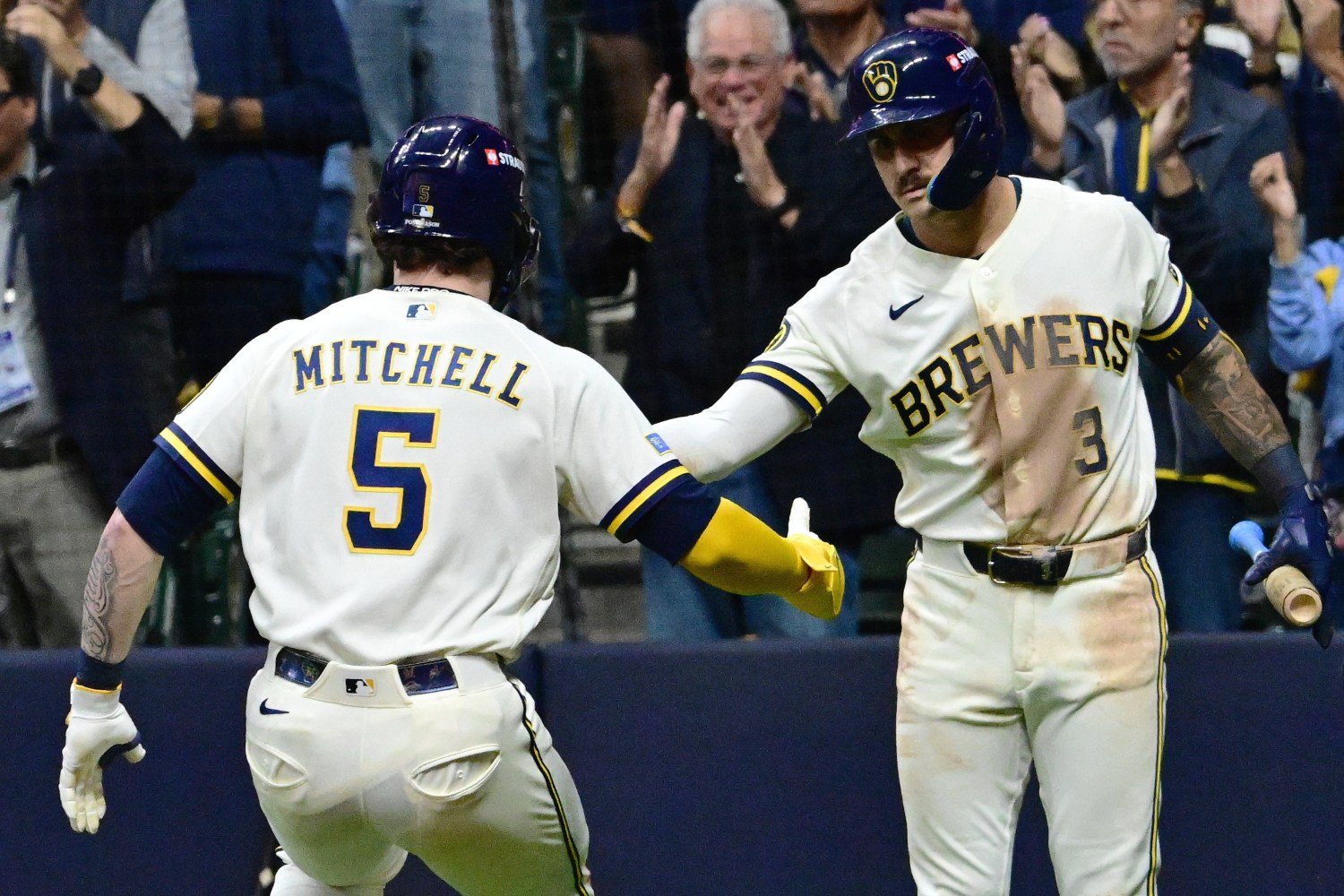 In hindsight, the move looks like a stroke of genius on the part of the Brewers. Caleb Durbin is a fine player—he ended up being a catalyst of the Red Sox's run to the American League Wild Card Series in 2026—but the Brewers sold him at the peak of his value. He had just finished third in Rookie of the Year balloting, and they flipped him for three solid pieces who each had roughly as much team control remaining as Durbin himself. Yes, Milwaukee had to throw in Andruw Monasterio and Anthony Seigler, but they got back David Hamilton (a player much in the mold of those two, but better) and added two high-upside left-handed pitchers. Even if Kyle Harrison and Shane Drohan hadn't been as good as they each were at times this year, that would have been a good gamble. In the afterglow of winning the World Series, the move feels like a huge part of the greatest story in franchise history. It could have really blown up on them, though. By making the move, they were expressing their faith in their own infield depth, but they also immediately supplemented it by signing Luis Rengifo. One of the key players on whom they were betting was Jett Williams, whom they had just acquired in the Freddy Peralta trade. Williams never got out of the minor leagues in 2026. Rengifo busted, for the Brewers, though he subsequently found success in San Diego. Third base briefly became a scar on their depth chart. Only when their Plan C—calling up Cooper Pratt and sliding Joey Ortiz over to third, to share time with Hamilton—panned out did they turn the corner from good to great as a team. They got mildly lucky that the trade didn't derail their season by creating a hole in a lineup that thrived because it didn't have any. The important thing to remember is that that move really wasn't Milwaukee's idea. They were in the market for more pitching depth, but they weren't actively shopping Durbin. When the Red Sox lost out in their bid to re-sign Alex Bregman, they pivoted to the trade market, and the offer they made was too good to refuse. The value-focused front office reacted to what came their way, and in the end, it worked out perfectly. That could happen again this winter—though, as with the Durbin deal, it's much more likely to happen near the beginning of next year (in this case, after the looming lockout) than at the front end of the offseason. The team doesn't need to trade Ortiz or Garrett Mitchell, and they won't go hunting for suitors on either of them. However, when the music stops, some team will be left without a satisfactory solution either on the left side of the infield or in center field. If that team comes to the Brewers with a package akin to what the Red Sox offered them for Durbin, the Brewers will probably accept it again. Though Ortiz and Mitchell proved their value throughout this season, each is now arbitration-eligible. That makes them slightly different from Durbin, and could mean that they fetch slightly less in trade. However, each is still under team control for multiple seasons (two for Mitchell, three for Ortiz) and each will come at a relatively low financial cost, compared to similarly talented players at similar stages of their careers. As a result, the Brewers can afford to keep both. They can also afford to trade either, or both. Luis Lara, Sal Frelick and Jackson Chourio can each play center field, if needed. Brandon Lockridge's injury compromised what had a chance to be a breakthrough season, but he's a fine fourth or fifth outfielder, and the Brewers have more help on the way in the outfield, too. For one thing, Williams might fit there, given his great speed. For another, 2024 first-round pick Braylon Payne made some loud noises this season. For a third (and perhaps the most important), Josh Adamczewski looks like a plus hitter with pop who's nearly ready, and though he would need to play left field, Chourio's versatility means that's no problem. On the dirt, the team is just as deep. In addtion to Hamilton and Cooper, Williams could be in the mix at third base if he has a strong spring, and Andrew Fischer isn't far from the majors—though his best fit might be at first base, instead. Most importantly, 2027 should see the debut of Jesús Made, on about the same timeline as Pratt's June arrival in 2026. That means that any trade of Ortiz would only leave the team needing to patch a short-term hole on the infield, and (in Hamilton) they already have a player they like and trust to do so. None of those options, with the reconfigurations they would require or the slight gaps they would leave while young players matriculate, are ineluctably preferable to keeping Mitchell and Ortiz. However, a team in a pinch might come to them with an offer for one of those players that fixes one of those drawbacks or that improves their depth so much that it becomes a positive proposition, in terms of expected value. If that happens, count on the Brewers making the move. It won't happen imminently, but between now and Opening Day, it's possible the team makes another Durbin-style trade—perhaps paving the road to their second straight World Series win.
-
Next week, Jacob Misiorowski will officially win the 2026 National League Cy Young Award. That will be a fitting end to one of the great pitching seasons of this decade and one of the best in Brewers history, but it will also be a huge boon for Misiorowski. Under the rules of the pre-arbitration bonus pool created upon the completion of the current Collective Bargaining Agreement, Misiorowski will get $2.5 million for that win. Add in the money he'll get based on a proportional distribution of other bonus money based on players' WAR outputs, and he'll receive roughly $3.2 million sometime in the next month. Not bad, for a player whose nominal salary for 2026 was under $800,000. Misiorowski will be the big earner, but four other Brewers will receive payouts via the pre-arbitration pool, according to a Brewer Fanatic review of the relevant WAR totals. Jackson Chourio will receive around $500,000. Joey Ortiz and Logan Henderson will get roughly $300,000, and Abner Uribe will get roughly $200,000. Chourio made $7 million in 2026 under the terms of his long-term contract extension, which he and the team agreed to before his debut. The other three, however, each made roughly what Misiorowski did from the Brewers in 2026, so these bonuses will be substantial raises for each of them. Each team pays an equal share ($1.67 million or so) into the pool from which $50 million is distributed to high-performing pre-arbitration players. The Brewers get a better return on that investment than any other club in the big leagues. Last year, a whopping 10 Brewers got some bonus, and their total earnings were over $4.7 million. This season's total will fall a hair shy of that (unless Chourio makes the All-MLB team, also set to be announced next week), but it should roughly match the $4.5 million earned by eight different Brewers in 2024. Milwaukee players are getting almost $3 million per year more from this new system than the Brewers are paying to fund it. This year, of course, the whole team's earnings will be augmented by the fact that they went all the way and won the World Series. Playoff shares haven't yet been announced, but each Brewers player should receive somewhere north of $450,000 for being on the team that won it all. Add together the pre-arbitration bonuses and playoff shares, and Misiorowski is in line to increase his earnings roughly sixfold, relative to his salary. For Ortiz and Henderson, the extra money will roughly double their annual pay, The Brewers don't directly profit by having their young players get more money than the team pays for pre-arbitration bonus pool allotments. In fact, those earnings reduce the team's leverage a bit when they talk to players about contract extensions. Sal Frelick won't make any new money via the pool this year, but he made about $740,000 over the previous two campaigns, which was like adding an extra year's paycheck for him. Ortiz will fall just shy of $1 million in earnings across his three pre-arbitration seasons. Misiorowski's big payday makes it a bit less urgent that he secure his future. What he's getting via the pool alone this year is about 50% more than he got as a signing bonus when the Brewers drafted him in 2022. However, the extra money filtering through the roster and the clubhouse is good for morale. It makes young players a bit more secure and a bit more willing and able to accept the team's feedback or decisions, like when they optioned Henderson to the minors to begin this year or when they bumped Ortiz out of his starting shortstop job in favor of Cooper Pratt in June. In baseball, there are few true win/win situations, and for teams who don't do as well at developing young players (or who give them fewer chances to shine), the pre-arbitration bonus pool isn't one, either. For the Brewers, though, it's a boon, not only to the players themselves, but to the team. The smallest-market team in the league runs a bigger payroll than that market size suggests, but they'll never rank among the game's big spenders. The fact that they get a good middle reliever's worth of money paid to their players from a league-wide common fund each year (and that, this year, they'll also get to spread a little over $20 million more around via playoff shares) helps them avoid looking stingy, and it helps them spend what they do with a bit more confidence. Meanwhile, it also makes players like Misiorowski rich a bit sooner than they otherwise would be, which makes the sport a bit fairer, overall. Image courtesy of USA TODAY Network via Reuters Connect View full article
-
Jacob Misiorowski's 2026 Earnings Will Roughly Sextuple This Month
Matthew Trueblood posted an article in Brewers
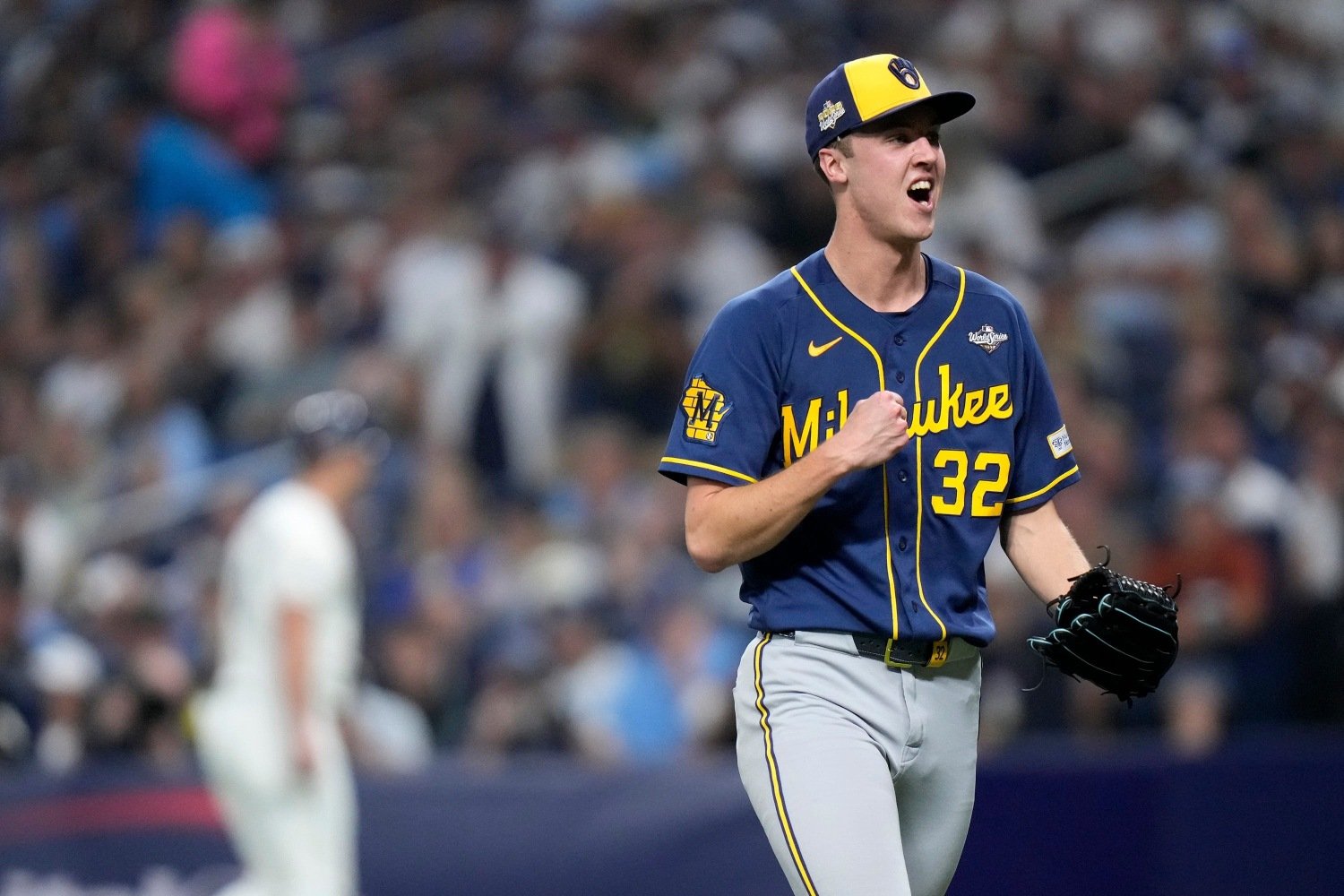 Next week, Jacob Misiorowski will officially win the 2026 National League Cy Young Award. That will be a fitting end to one of the great pitching seasons of this decade and one of the best in Brewers history, but it will also be a huge boon for Misiorowski. Under the rules of the pre-arbitration bonus pool created upon the completion of the current Collective Bargaining Agreement, Misiorowski will get $2.5 million for that win. Add in the money he'll get based on a proportional distribution of other bonus money based on players' WAR outputs, and he'll receive roughly $3.2 million sometime in the next month. Not bad, for a player whose nominal salary for 2026 was under $800,000. Misiorowski will be the big earner, but four other Brewers will receive payouts via the pre-arbitration pool, according to a Brewer Fanatic review of the relevant WAR totals. Jackson Chourio will receive around $500,000. Joey Ortiz and Logan Henderson will get roughly $300,000, and Abner Uribe will get roughly $200,000. Chourio made $7 million in 2026 under the terms of his long-term contract extension, which he and the team agreed to before his debut. The other three, however, each made roughly what Misiorowski did from the Brewers in 2026, so these bonuses will be substantial raises for each of them. Each team pays an equal share ($1.67 million or so) into the pool from which $50 million is distributed to high-performing pre-arbitration players. The Brewers get a better return on that investment than any other club in the big leagues. Last year, a whopping 10 Brewers got some bonus, and their total earnings were over $4.7 million. This season's total will fall a hair shy of that (unless Chourio makes the All-MLB team, also set to be announced next week), but it should roughly match the $4.5 million earned by eight different Brewers in 2024. Milwaukee players are getting almost $3 million per year more from this new system than the Brewers are paying to fund it. This year, of course, the whole team's earnings will be augmented by the fact that they went all the way and won the World Series. Playoff shares haven't yet been announced, but each Brewers player should receive somewhere north of $450,000 for being on the team that won it all. Add together the pre-arbitration bonuses and playoff shares, and Misiorowski is in line to increase his earnings roughly sixfold, relative to his salary. For Ortiz and Henderson, the extra money will roughly double their annual pay, The Brewers don't directly profit by having their young players get more money than the team pays for pre-arbitration bonus pool allotments. In fact, those earnings reduce the team's leverage a bit when they talk to players about contract extensions. Sal Frelick won't make any new money via the pool this year, but he made about $740,000 over the previous two campaigns, which was like adding an extra year's paycheck for him. Ortiz will fall just shy of $1 million in earnings across his three pre-arbitration seasons. Misiorowski's big payday makes it a bit less urgent that he secure his future. What he's getting via the pool alone this year is about 50% more than he got as a signing bonus when the Brewers drafted him in 2022. However, the extra money filtering through the roster and the clubhouse is good for morale. It makes young players a bit more secure and a bit more willing and able to accept the team's feedback or decisions, like when they optioned Henderson to the minors to begin this year or when they bumped Ortiz out of his starting shortstop job in favor of Cooper Pratt in June. In baseball, there are few true win/win situations, and for teams who don't do as well at developing young players (or who give them fewer chances to shine), the pre-arbitration bonus pool isn't one, either. For the Brewers, though, it's a boon, not only to the players themselves, but to the team. The smallest-market team in the league runs a bigger payroll than that market size suggests, but they'll never rank among the game's big spenders. The fact that they get a good middle reliever's worth of money paid to their players from a league-wide common fund each year (and that, this year, they'll also get to spread a little over $20 million more around via playoff shares) helps them avoid looking stingy, and it helps them spend what they do with a bit more confidence. Meanwhile, it also makes players like Misiorowski rich a bit sooner than they otherwise would be, which makes the sport a bit fairer, overall.
-
I tend to agree, on all counts. IMO, while they must and will feel some pressure to adjust their process because of what comes with a championship (and some of that is for the better!), Megill would be a strange place to make an exception. I would trade him.
-
The gratitude is palpable, and it's authentic. Jake Bauers and Trevor Megill are just the faces of a whole army of players whom the Brewers have picked up and made better over the last several seasons. In a slightly different world, it could have been Brandon Lockridge and Jared Koenig taking center stage at a championship rally late last week. It could have been Bryan Hudson or Bryse Wilson. It could have been Oliver Dunn or Eric Haase. Most of the time, when a player joins the Brewers organization, they get better; they get a real opportunity, often for the first time in their career; and they leave town very happy to have spent some time with the team. Most players feel that the team treats them well, compared to the other clubs for whom they worked. Most appreciate the advancement, and value the relationships. Yet, no two players of recent vintage capture the magic of the team better than Bauers and Megill. The pixie dust hasn't worn off on either. Each has gone from virtually anonymous to near-stardom. Each is going to get hugely rich at the end of his career, after each looked like he might have to give up on his dream (without fully establishing himself in the majors) at some time in the last few years. Their personalities are part of why they found such success, and they're part of why they were each retained and given enough chances to do so. They're also why each was so beloved, and all of that—plus their production itself, which begot plenty of love in return, from fans—led to them being loudly proud to be Brewers, and to their sounding nearly desperate to stay in remarks after the end of the Series and throughout the civic celebration. The question is this: Will the bonds that tie each to the organization and the community, deepened so much by the fact that they helped deliver the ultimate prize this fall, be enough to thwart the forces that would normally guide them out of town this winter? Bauers received the qualifying offer Monday afternoon, but by the end of the postseason, that was a no-brainer. Bauers remains a free agent, and if he wants to maximize his career earnings, he'll sign a multi-year deal this winter, rather than simply accepting the one-year QO. That highlights the key difference between the two cases. For Bauers, the decision is almost solely his. He can choose to pursue a deal that could be worth $70 million or more, and if he does, the Brewers are unlikely to be the ones to pay it. This is a simple test: How much is his love for his teammates and the city to which he brought a championship worth to Bauers? If he has another good season in 2027, he could make every bit as much money by taking the qualifying offer, but that's not guaranteed to anyone. To stay with the Brewers (be it by accepting the QO or taking some other below-market deal), he would have to accept less money than he has the opportunity to earn. He would have to make a willing sacrifice of earning power for happiness. Megill isn't so lucky. He doesn't get any real choice about whether he plays in Milwaukee next season or not; the team has that power. As a closer entering his final season of arbitration eligibility, Megill is set to earn a handsome salary, and after that, he'll be eligible for free agency. Typically, when this type of player reaches this point in their career, the Brewers trade them. Megill could fetch the team a solid prospect or two, much the way Devin Williams netted them Caleb Durbin and Nestor Cortes from the Yankees. Trading him would also create financial flexibility. It might make it easier, for instance, to sign a player like William Contreras or Brice Turang to a long-term extension, or to keep adding even if Bauers comes back on the QO. This time, it's the Brewers who have to answer the question: what is all that affection worth? It's not nothing. Megill became a part of the fabric of the clubhouse. His attitude and his aptitude are connected, and a player so dedicated to the team and its city is more likely to make the kinds of adjustments that turned around Megill's career than would be one who isn't wired that way. This isn't controversial, and it doesn't run against the Brewers' heavily analytical approach to team-building. They factor in the person when they evaluate a player and a decision. In Megill's case, though, they'd have to consider the intangibles to be exceptionally valuable to change the calculus. It's important that the team stay committed to its philosophy this winter. Start making exceptions, and it's often hard to tell where to stop. Bauers will get to decide (more or less) whether he becomes an exception, but the team holds the cards when it comes to Megill. The pair are just the tip of the iceberg. Winning the World Series is awesome; it's worth any amount of extra headaches that come with it. Those headaches do come, though. Things will get more complicated, and stay that way. Extra layers like these will be piled on most of their future decisions. If the front office is as good as they believe they are, they'll know better than to ignore those new layers. Instead, they'll have to incorporate them into a new, more complex paradigm. Image courtesy of USA TODAY Network via Reuters Connect View full article
-
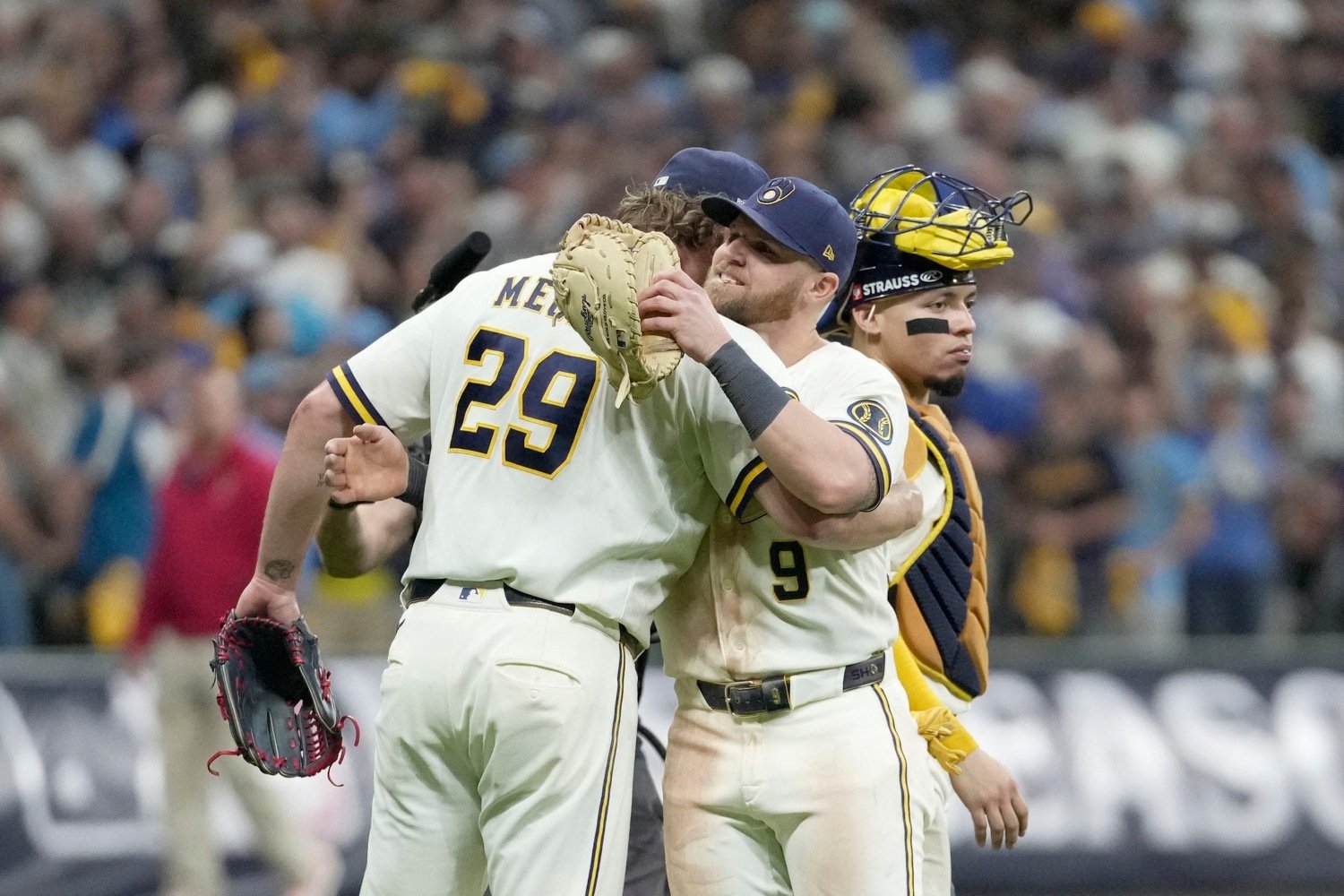 The gratitude is palpable, and it's authentic. Jake Bauers and Trevor Megill are just the faces of a whole army of players whom the Brewers have picked up and made better over the last several seasons. In a slightly different world, it could have been Brandon Lockridge and Jared Koenig taking center stage at a championship rally late last week. It could have been Bryan Hudson or Bryse Wilson. It could have been Oliver Dunn or Eric Haase. Most of the time, when a player joins the Brewers organization, they get better; they get a real opportunity, often for the first time in their career; and they leave town very happy to have spent some time with the team. Most players feel that the team treats them well, compared to the other clubs for whom they worked. Most appreciate the advancement, and value the relationships. Yet, no two players of recent vintage capture the magic of the team better than Bauers and Megill. The pixie dust hasn't worn off on either. Each has gone from virtually anonymous to near-stardom. Each is going to get hugely rich at the end of his career, after each looked like he might have to give up on his dream (without fully establishing himself in the majors) at some time in the last few years. Their personalities are part of why they found such success, and they're part of why they were each retained and given enough chances to do so. They're also why each was so beloved, and all of that—plus their production itself, which begot plenty of love in return, from fans—led to them being loudly proud to be Brewers, and to their sounding nearly desperate to stay in remarks after the end of the Series and throughout the civic celebration. The question is this: Will the bonds that tie each to the organization and the community, deepened so much by the fact that they helped deliver the ultimate prize this fall, be enough to thwart the forces that would normally guide them out of town this winter? Bauers received the qualifying offer Monday afternoon, but by the end of the postseason, that was a no-brainer. Bauers remains a free agent, and if he wants to maximize his career earnings, he'll sign a multi-year deal this winter, rather than simply accepting the one-year QO. That highlights the key difference between the two cases. For Bauers, the decision is almost solely his. He can choose to pursue a deal that could be worth $70 million or more, and if he does, the Brewers are unlikely to be the ones to pay it. This is a simple test: How much is his love for his teammates and the city to which he brought a championship worth to Bauers? If he has another good season in 2027, he could make every bit as much money by taking the qualifying offer, but that's not guaranteed to anyone. To stay with the Brewers (be it by accepting the QO or taking some other below-market deal), he would have to accept less money than he has the opportunity to earn. He would have to make a willing sacrifice of earning power for happiness. Megill isn't so lucky. He doesn't get any real choice about whether he plays in Milwaukee next season or not; the team has that power. As a closer entering his final season of arbitration eligibility, Megill is set to earn a handsome salary, and after that, he'll be eligible for free agency. Typically, when this type of player reaches this point in their career, the Brewers trade them. Megill could fetch the team a solid prospect or two, much the way Devin Williams netted them Caleb Durbin and Nestor Cortes from the Yankees. Trading him would also create financial flexibility. It might make it easier, for instance, to sign a player like William Contreras or Brice Turang to a long-term extension, or to keep adding even if Bauers comes back on the QO. This time, it's the Brewers who have to answer the question: what is all that affection worth? It's not nothing. Megill became a part of the fabric of the clubhouse. His attitude and his aptitude are connected, and a player so dedicated to the team and its city is more likely to make the kinds of adjustments that turned around Megill's career than would be one who isn't wired that way. This isn't controversial, and it doesn't run against the Brewers' heavily analytical approach to team-building. They factor in the person when they evaluate a player and a decision. In Megill's case, though, they'd have to consider the intangibles to be exceptionally valuable to change the calculus. It's important that the team stay committed to its philosophy this winter. Start making exceptions, and it's often hard to tell where to stop. Bauers will get to decide (more or less) whether he becomes an exception, but the team holds the cards when it comes to Megill. The pair are just the tip of the iceberg. Winning the World Series is awesome; it's worth any amount of extra headaches that come with it. Those headaches do come, though. Things will get more complicated, and stay that way. Extra layers like these will be piled on most of their future decisions. If the front office is as good as they believe they are, they'll know better than to ignore those new layers. Instead, they'll have to incorporate them into a new, more complex paradigm.
-
I hear you. We'll see. Put it this way: If it goes that way, I'll count you VERY right and me VERY wrong.
-
Agent fees are the same no matter what type of guaranteed deal you sign.. I think Bauers showed how much he loves Milwaukee and the organization throughout October, but he's not going to pass up his only realistic shot at a long-term payday. If the Brewers like him as much as he likes them, they can re-sign him on a multi-year deal.
-
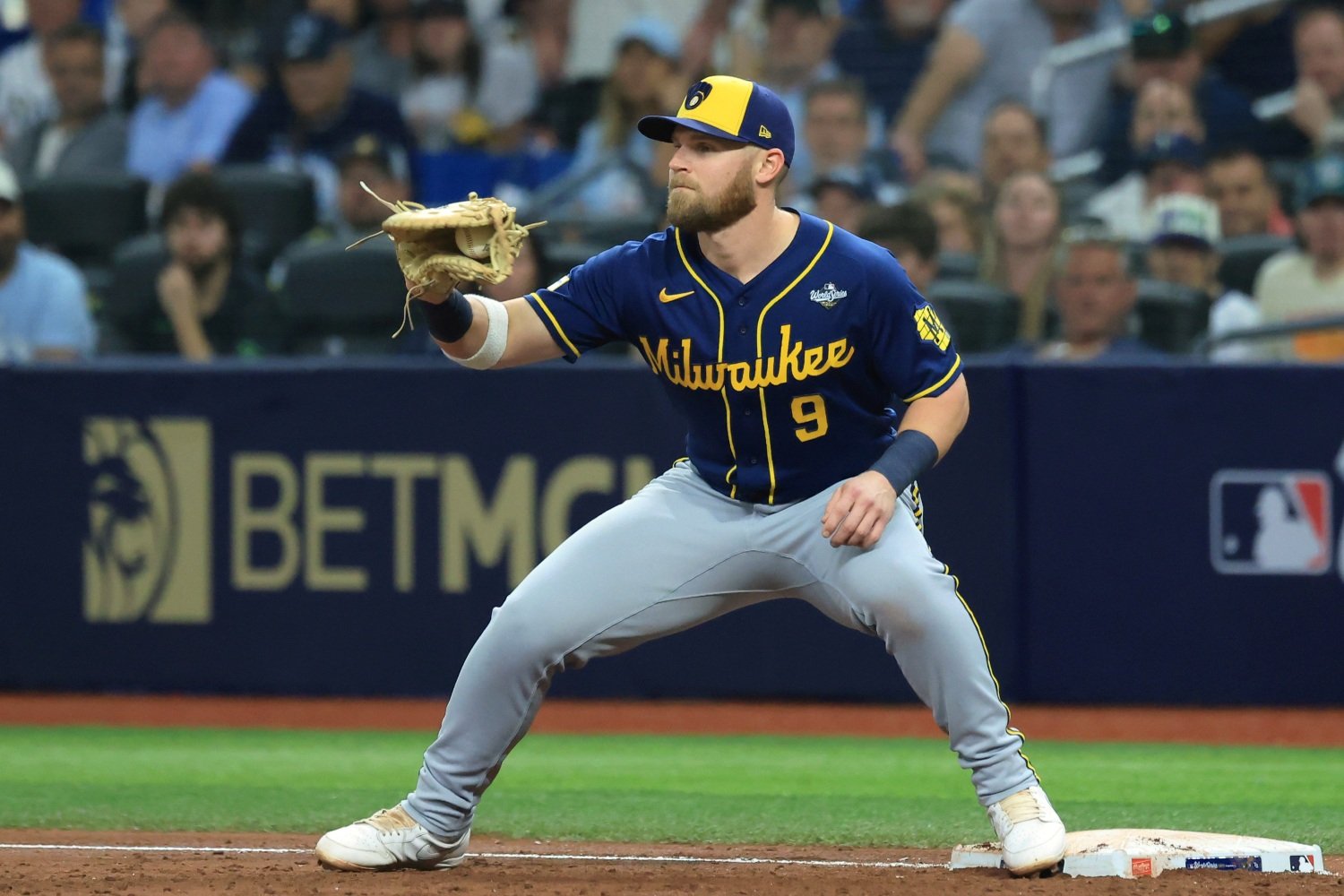 This time, there wasn't even a dilemma. There was no agonizing over whether the Brewers should trade Jake Bauers or hold onto him. There was no discourse about whether they could be considered a serious organization if they simply traded away all their great players every time they approached free agency. Just a handful of months ago, no one thought Bauers was that caliber of player. The same controversies that swirled around Corbin Burnes, Willy Adames, Devin Williams and Freddy Peralta heading into their final seasons of team control were absent with Bauers, because no one expected him to fetch a significant amount via trade, and no one was worried about the Brewers losing him for nothing. Now, even if Bauers has played his last game in a Brewers uniform, the team will get something good for him. They extended Bauers the one-year, $23.15-million qualifying offer Monday afternoon, ahead of the 4 PM CT deadline to do so at the official start of MLB free agency. Bauers will probably reject that offer and sign a multi-year deal this winter, and if (as we should expect) he signs it with some other team and earns north of $50 million in total, the Brewers will receive a pick after the end of the first round in the 2027 MLB Draft. Being a small-market, revenue-sharing-receiving team comes in handy this time of year, because the Brewers stand to receive a better pick than a richer team would if Bauers departs. Every year, the team's challenge is to find controllable talent that can make them better for multiple seasons. They get some help from the rules, in that (in addition to better compensation when top free agents leave) the Crew gets a competitive-balance draft pick after either the first or the second round every year. To make the most of those advantages, though, they also try to find opportunities to trade players nearing free agency for prospects who can be valuable for half a decade or more. The downside of letting a player reach free agency and leave, even if they leave behind a high pick via the QO, is that often, that player came with a high acquisition cost and/or used up a substantial share of the payroll in their final season before doing so. None of that is true in Bauers's case. This is almost free value for the Brewers, who neither gave up much to acquire Bauers nor paid him handsomely (by big-league standards) during his tenure with the club. They should get a good prospect for him if he goes to a wealthier team this winter, making Matt Arnold's job easier as he tries to keep Milwaukee's perpetual winning machine in motion.
-
This time, there wasn't even a dilemma. There was no agonizing over whether the Brewers should trade Jake Bauers or hold onto him. There was no discourse about whether they could be considered a serious organization if they simply traded away all their great players every time they approached free agency. Just a handful of months ago, no one thought Bauers was that caliber of player. The same controversies that swirled around Corbin Burnes, Willy Adames, Devin Williams and Freddy Peralta heading into their final seasons of team control were absent with Bauers, because no one expected him to fetch a significant amount via trade, and no one was worried about the Brewers losing him for nothing. Now, even if Bauers has played his last game in a Brewers uniform, the team will get something good for him. They extended Bauers the one-year, $23.15-million qualifying offer Monday afternoon, ahead of the 4 PM CT deadline to do so at the official start of MLB free agency. Bauers will probably reject that offer and sign a multi-year deal this winter, and if (as we should expect) he signs it with some other team and earns north of $50 million in total, the Brewers will receive a pick after the end of the first round in the 2027 MLB Draft. Being a small-market, revenue-sharing-receiving team comes in handy this time of year, because the Brewers stand to receive a better pick than a richer team would if Bauers departs. Every year, the team's challenge is to find controllable talent that can make them better for multiple seasons. They get some help from the rules, in that (in addition to better compensation when top free agents leave) the Crew gets a competitive-balance draft pick after either the first or the second round every year. To make the most of those advantages, though, they also try to find opportunities to trade players nearing free agency for prospects who can be valuable for half a decade or more. The downside of letting a player reach free agency and leave, even if they leave behind a high pick via the QO, is that often, that player came with a high acquisition cost and/or used up a substantial share of the payroll in their final season before doing so. None of that is true in Bauers's case. This is almost free value for the Brewers, who neither gave up much to acquire Bauers nor paid him handsomely (by big-league standards) during his tenure with the club. They should get a good prospect for him if he goes to a wealthier team this winter, making Matt Arnold's job easier as he tries to keep Milwaukee's perpetual winning machine in motion. Image courtesy of Kim Klement Neitzel-Imagn Images View full article
-
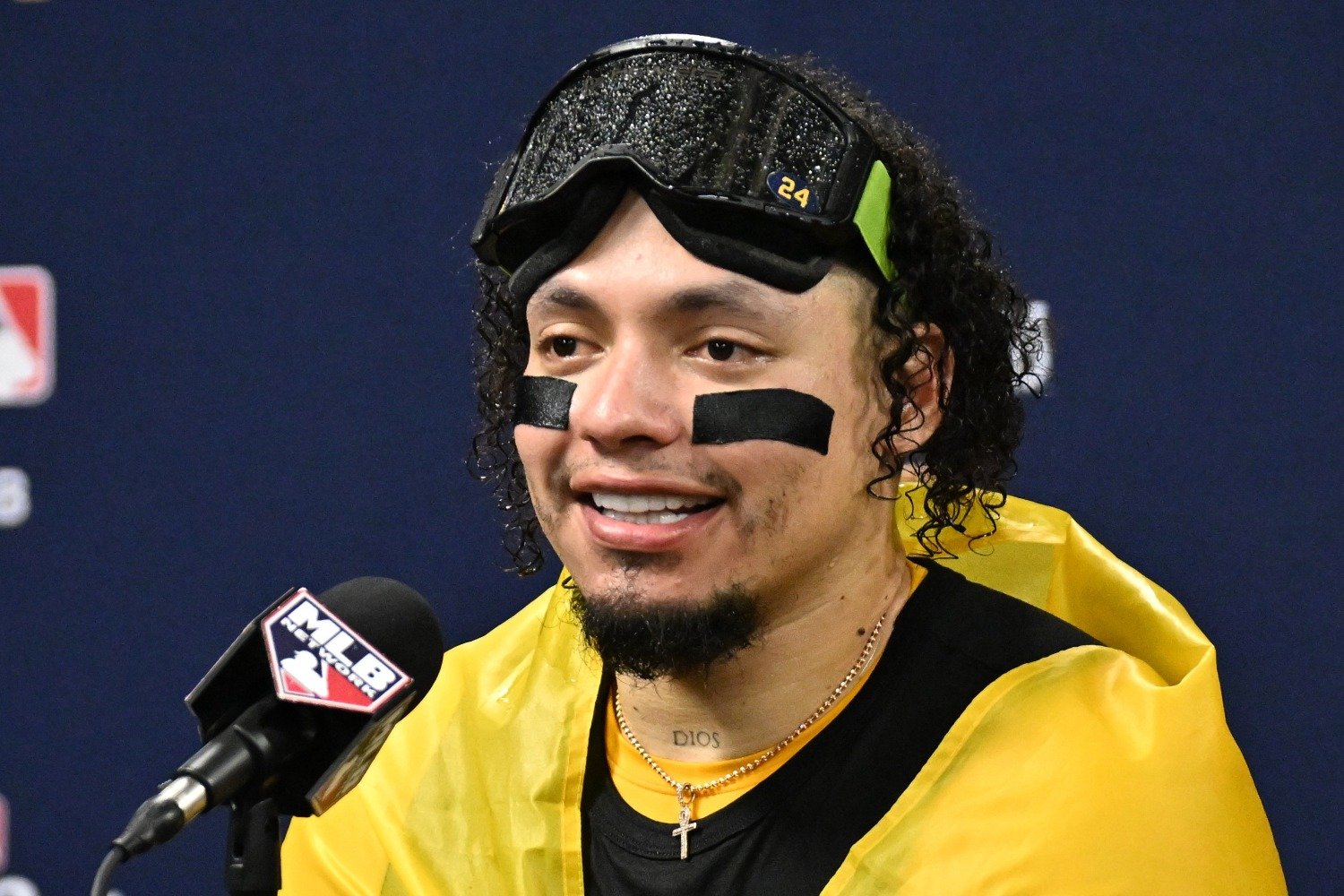 The Brewers' most likely future Hall of Famer is Jackson Chourio. Their most valuable player in 2026 was the dominant Jacob Misiorowski. They have the top prospect in baseball, in Jesús Made, who looks likely to join a stout positional corps some time next summer. The heartbeat of the team, though—the one player who would be hardest to replace, not only this offseason but in recent memory—is catcher William Contreras. The World Series MVP was so important to the team's success in all facets, and has been such a warrior for his squad since arriving in a trade over the offseason between 2022 and 2023, that even if the team had an elite catching prospect on hand, they'd have to take extra care before moving Contreras. Since Jeferson Quero is no longer that caliber of youngster, it's essential that the team explore retaining Contreras for the long term. As the offseason begins, Contreras has just one season of team control remaining, whether the team elects to exercise its option on him for 2027 or to go through arbitration with him a final time. Next year will be his age-29 season; he's due to hit free agency ahead of his age-30 campaign. That puts Contreras in much the same position Phillies All-Star J.T. Realmuto was in after the 2020 season, when he hit free agency at the same age. Though it took a long staredown (one lengthened, perhaps, by the financial uncertainty many teams faced due to the COVID-shortened season and the associated loss of revenue), Realmuto and Philadelphia reunited on a five-year deal worth $115.5 million in guaranteed money. The deal was backloaded, so its actual value was slightly lower than the face value, but in essence, it paid Realmuto $23 million a year on a long-term contract, placing him at the top of the market for catchers. That $23 million figure, in fact, is a bit of a magic number for catchers. When Joe Mauer was far and away the top backstop in the game and on the verge of free agency, over 15 years ago, he signed an eight-year, $184-million deal, which comes out to $23 million per year. In the back half of the extension Cal Raleigh signed with the Mariners last March, he'll earn $23 million per year, though that's obviously slightly below the market rate; it's part of a deal in which Raleigh surrendered some of his earning power in exchange for certainty. As the Brewers and Contreras ponder what's next, it's pretty easy to sketch out the terms of an extension the catcher would find reasonable. He wears No. 24—a uniform number that might someday be retired in his honor by the team, if he sticks around. The annual average value of a fair deal for Contreras is the easy part to figure: $24 million. That would make him the highest-paid catcher of all time, among those signing long-term deals. There are two tougher questions to answer. The first, more obvious one is how long the deal would have to be. There's no way Contreras would accept a term of fewer than five years, which would make the base value of the deal $120 million. It's possible that he would demand six years, pushing the total starting point to $144 million and making his deal more clearly lucrative than Realmuto's. That would also surpass the total value of Will Smith's deal with the Dodgers, which pays him $140 million (though it's over 10 years). Biting the bullet and paying a catcher that well through age 35 might give the Brewers front office pause, given not only their perennial budget constraints but the dismal aging curve at that position for most players. The other question is how to balance and tack on other considerations. While the Brewers are unlikely to give Contreras an eight-figure raise in 2027 when they don't have to, starting the deal a year early and replacing the team's final year of arbitration control would make a six-year term much more palatable. Alternatively, the team could try to entice Contreras to sign for five years and $120 million beginning in 2028 by adding a healthy signing bonus payable in 2027 and incentives or a vesting option for 2033. That could raise the star backstop's earning power to $150 million or more, without putting the Brewers at much more risk of having a bad contract on their hands. If Contreras wants an even bigger face value (say, $150 million over six years, for a $25-million average salary), the team is in position to afford that, but they'd need to figure out how to best do it—probably via deferrals that pay him a significant portion of his earnings after the contract is over. It's been six and a half years since the Brewers signed Christian Yelich to a long-term deal, which has become a bit expensive and unwieldy as Yelich has aged. However, Yelich has also had some great years on that contract, and on balance, his leadership and value as a face of the franchise more than make up for whatever production shortfalls have come from his injury problems and aging. The team is due to sign another Yelich-like deal, and the windfall they'll realize after winning the World Series makes that very feasible. Contreras is the right player with whom to take that kind of risk. Brice Turang is an almost equally compelling one, but Contreras is the much harder player and person to replace. He'll also cost less than Turang would on a long-term deal. Rather than considering (even for a moment) trading their lion, the Brewers should put themselves in the William Contreras business for years to come. The rest of the offseason decisions will (practically) take care of themselves.
-
The Brewers' most likely future Hall of Famer is Jackson Chourio. Their most valuable player in 2026 was the dominant Jacob Misiorowski. They have the top prospect in baseball, in Jesús Made, who looks likely to join a stout positional corps some time next summer. The heartbeat of the team, though—the one player who would be hardest to replace, not only this offseason but in recent memory—is catcher William Contreras. The World Series MVP was so important to the team's success in all facets, and has been such a warrior for his squad since arriving in a trade over the offseason between 2022 and 2023, that even if the team had an elite catching prospect on hand, they'd have to take extra care before moving Contreras. Since Jeferson Quero is no longer that caliber of youngster, it's essential that the team explore retaining Contreras for the long term. As the offseason begins, Contreras has just one season of team control remaining, whether the team elects to exercise its option on him for 2027 or to go through arbitration with him a final time. Next year will be his age-29 season; he's due to hit free agency ahead of his age-30 campaign. That puts Contreras in much the same position Phillies All-Star J.T. Realmuto was in after the 2020 season, when he hit free agency at the same age. Though it took a long staredown (one lengthened, perhaps, by the financial uncertainty many teams faced due to the COVID-shortened season and the associated loss of revenue), Realmuto and Philadelphia reunited on a five-year deal worth $115.5 million in guaranteed money. The deal was backloaded, so its actual value was slightly lower than the face value, but in essence, it paid Realmuto $23 million a year on a long-term contract, placing him at the top of the market for catchers. That $23 million figure, in fact, is a bit of a magic number for catchers. When Joe Mauer was far and away the top backstop in the game and on the verge of free agency, over 15 years ago, he signed an eight-year, $184-million deal, which comes out to $23 million per year. In the back half of the extension Cal Raleigh signed with the Mariners last March, he'll earn $23 million per year, though that's obviously slightly below the market rate; it's part of a deal in which Raleigh surrendered some of his earning power in exchange for certainty. As the Brewers and Contreras ponder what's next, it's pretty easy to sketch out the terms of an extension the catcher would find reasonable. He wears No. 24—a uniform number that might someday be retired in his honor by the team, if he sticks around. The annual average value of a fair deal for Contreras is the easy part to figure: $24 million. That would make him the highest-paid catcher of all time, among those signing long-term deals. There are two tougher questions to answer. The first, more obvious one is how long the deal would have to be. There's no way Contreras would accept a term of fewer than five years, which would make the base value of the deal $120 million. It's possible that he would demand six years, pushing the total starting point to $144 million and making his deal more clearly lucrative than Realmuto's. That would also surpass the total value of Will Smith's deal with the Dodgers, which pays him $140 million (though it's over 10 years). Biting the bullet and paying a catcher that well through age 35 might give the Brewers front office pause, given not only their perennial budget constraints but the dismal aging curve at that position for most players. The other question is how to balance and tack on other considerations. While the Brewers are unlikely to give Contreras an eight-figure raise in 2027 when they don't have to, starting the deal a year early and replacing the team's final year of arbitration control would make a six-year term much more palatable. Alternatively, the team could try to entice Contreras to sign for five years and $120 million beginning in 2028 by adding a healthy signing bonus payable in 2027 and incentives or a vesting option for 2033. That could raise the star backstop's earning power to $150 million or more, without putting the Brewers at much more risk of having a bad contract on their hands. If Contreras wants an even bigger face value (say, $150 million over six years, for a $25-million average salary), the team is in position to afford that, but they'd need to figure out how to best do it—probably via deferrals that pay him a significant portion of his earnings after the contract is over. It's been six and a half years since the Brewers signed Christian Yelich to a long-term deal, which has become a bit expensive and unwieldy as Yelich has aged. However, Yelich has also had some great years on that contract, and on balance, his leadership and value as a face of the franchise more than make up for whatever production shortfalls have come from his injury problems and aging. The team is due to sign another Yelich-like deal, and the windfall they'll realize after winning the World Series makes that very feasible. Contreras is the right player with whom to take that kind of risk. Brice Turang is an almost equally compelling one, but Contreras is the much harder player and person to replace. He'll also cost less than Turang would on a long-term deal. Rather than considering (even for a moment) trading their lion, the Brewers should put themselves in the William Contreras business for years to come. The rest of the offseason decisions will (practically) take care of themselves. Image courtesy of Jonathan Dyer-Imagn Images View full article
-
He sounded so authentically overjoyed. Hilarious. It sounds like a mean word but it’s a good color on him: dude is a rube.
- 7 replies
-
- 1
-

-
- postseason
- jacob misiorowski
- (and 4 more)
-
This one is for Bob Uecker, but you know that. More importantly, you know what that means, underneath the words—around them, and within them, and between them. If this one is for Bob Uecker, it's for every Brewers fan. If it's for Uecker, it's for every underdog. If it's for Uecker, it's for all of Wisconsin. Mark Attanasio once said he felt it his responsibility not to deliver the Brewers fan base a championship, but to give them "a summer of entertainment and passion and a chance for families to come together". No one was satisfied with that mission statement at the time, but the two goals have turned out not to be in conflict with one another. They've turned out to be complementary, and for the franchise emblemized by Uecker, that shouldn't be such a surprise. Uecker's legacy was made of summers of entertainment and passion—of cold beers and brats and slow-roasted jokes. Uecker branded himself, in a way, the crown prince of losers, but those who knew him knew he was all about winning, and not long after the world lost him, his team won what he always craved for them. The Milwaukee Brewers are World Series champions. It didn't come easily, though the history books might end up getting confused on that score. The Brewers were never pushed to the brink of elimination, or even to the brink of the brink. They rolled through the playoffs with an 11-2 record, and they nearly became the first team ever to sweep both a four-game League Championship Series and the World Series. Instead, after a disappointing (but not heartbreaking; there was no need for that kind of melodrama) Game 4 loss Tuesday night, the team simply came back to work on Wednesday night and finished the job. Their resiliency and their relentlessness were equally unsurprising. Those are the defining characteristics of this team. The Tampa Bay Rays were valiant, all things considered. Even the best the American League could offer was no match for these Brewers, and they didn't even make Milwaukee sweat, the way the Padres and Dodgers did at times in the previous series. Tampa didn't give up, though. They fought back from the edge of oblivion in the bottom of the 12th inning Tuesday night, and even though Drew Rasmussen has had his elbow rebuilt three times and he'd been handled carefully all season, manager Kevin Cash gave the ball to Rasmussen to start Game 5, on three days' rest. The AL pennant winners would give the Brewers their best shot. You wouldn't want it to be any other way. Rasmussen was impressive, too. He's a symbol, in a funny way, of the Brewers' genius and excellence. They traded him for Willy Adames in 2021, and for almost any other team, giving up such a great pitcher would be proof of (at least) a shortcoming in self-scouting. In this case, it was no such thing. Adames was phenomenal for the Brewers over his three-and-a-half-year tenure there; he left the place better than he found it. He was a leader and a producer for them. Besides, the Brewers only had Rasmussen to give up because they believed in him, when hardly anyone else did. He'd been operated on twice in college. He was damaged goods before he even reached the threshold of pro ball, but he bet on himself, over and over. The Brewers bet on him, too. Five and a half years after they traded him, running into him again this way felt like kismet. That didn't mean he would make things easy for him. The competitiveness, resourcefulness and talent the team scouted in him and cultivated after bringing him in were still in evidence. He cut through the Crew in the top of the first like a hot knife through an elbow ligament. That made it Jacob Misiorowski's turn, though. Unlike Rasmussen, Misiorowski was on full rest, and though he, too, has had a long season and been handled carefully, he had more left in the tank than his counterpart. There was just one problem: the mound. Reaching back for whatever was left in his body for the year, Misiorowski found better stuff than he'd shown in any of his previous postseason appearances, but he couldn't reliably land on firm footing; the dirt at the bottom of the mound (where only Misiorowski reaches, with his singular stride) was loose and treacherous. Still, he sliced through the Rays almost as surgically as Rasmussen had his own side in the first. Only for that long, though, could the two sides pretend parity. Almost immediately, the game tipped in favor of the better team—indeed, one of the best teams the game has seen in years. From here, instead of narrating moment by moment, let's change things up and go person by person. If Brice Turang's offensive breakout had never happened, he would still play (almost) every day for this team. Sometimes, infielders who seem to suck up everything hit their way are compared to vacuum cleaners, but the metaphor was never more apt than it is with Turang. He moves around the infield like a classic Kirby in the hands of a seasoned housekeeper: quick, gliding, bending effortlessly at hinges you can't even see. He hardly ever dives, but covers more ground than most second baseman do at the edges of their sprawl. With anticipation, quick acceleration and an effortless dip at the waist, he picks grounders breezily and gets rid of the ball almost instantly. He won the Fielding Bible Award this season at second base, and rightfully so. Turang did have an offensive breakout, though, and it raised expectations in a way that made portions of his second half feel almost disappointing. He played through a knee injury, and his numbers suffered. When the postseason curtain rose, he struggled some more. He'd been poor last October, and when he went 2-for-16 in the NLDS, it was easy to worry that he might have either a lingering physical problem or a mental block about the playoffs that would torpedo the team's hopes. Instead, in Game 1 of the NLCS, he hit the home run off Tarik Skubal that announced that this year would be different. He's been on his game ever since, and was instrumental in the team's sweep of the Dodgers. In the top of the second, against a weary Rasmussen, he got a changeup that stayed up and hit it up the gap in left-center field. It could have been a single; Johnny DeLuca got over and cut it off nicely. Turang was fast out of the box and read it all the way, though. He gained second easily. The table was set. After Game 2 of the World Series, Cooper Pratt sat on the dais for the postgame press conference next to teammate Sal Frelick. He looked the way he's looked every day since he got to the majors: big and giddy and a little uneasy, with features that still aren't sure which way to fold when he smiles and shoulders that move more than an easygoing adult's ever would. He's a confident guy, but he's so young, and it's impossible to hide it. He babbles. He giggles, albeit in a husky voice that reminds you he's caught somewhere between late-stage puberty and the gravitas of adulthood. He's trying to do "aw shucks" and "dig me" at the same time, not because he wants to manipulate the way people see him, but because both of those feelings lie authentically alongside one another in him, and he hasn't yet figured out how he might shove one down in favor of the other. Answering a question about the role Frelick has played in helping him adjust to the majors, Pratt's answer went straight to the only moment for which much of the baseball world knew him, until this week: the instance in July when Pat Murphy benched him for failures of effort and focus in a game at Citi Field in New York. He remembered what Frelick said to him, at that moment. "There's standards here. There's a way that we play, and it's okay. You're going to be all right," Pratt recalled. If those weren't the exact words of the message, they were the guts of it. Murphy didn't mean for that benching (a very brief one) to be discouraging—much the opposite. He just wanted a chance to show Pratt just how high the bar is. One thing young players have to learn, when they first reach the majors, is that being great at this level demands more of you—more intensity, more consistency, and more aptitude—than you can imagine, until you butt up against it. For rookies on other teams, it might be ok to let that learning happen slowly and painfully. Not in Milwaukee. Not on the Win Tonight Brewers. Not when the goal and the only acceptable outcome of the season already halfway done was a championship. Pratt would need a crash course, and that would mean some faster, harsher forms of feedback than other teams might give. It could also mean faster development. It could also mean a kind of flame-tempered excellence that makes a Wisconsin legend of a 22-year-old kid from Florida. What Murphy has asked of this team over the last three years is not quite impossible. At last, on Wednesday night, they proved that. It is, however, excruciatingly difficult. It's a challenge that can't be set before the wrong person with any hope of success, and the criteria that define the 'wrong person' aren't as simple as shortfalls of talent. They include those, to be sure. The Brewers needed extraordinarily talented players to create something truly new under the sun: a championship for the franchise that migrated from Seattle in 1970. Pratt is one such player. The team paid $3 million to lure him away from a commitment to play ball for the University of Mississippi, so although he was a sixth-round pick, he entered the professional ranks as well-regarded as many first-rounders. He's tall and strapping, but his swing is short. He won a Minor League Gold Glove Award in 2024, proof of his athleticism at a position usually reserved for smaller players. He's a plus runner. On top of talent, though, the Brewers decided to prize other traits, too, because that enormous challenge—to play a game that keeps the pressure on the opponent all day; to bounce back quickly after losses and to gather steam from wins; to be the deepest and most close-knit team in the league despite fewer resources than other teams had to forge that depth and savor greater stability—places demands on personality, in addition to prodigality. That's why Murphy is insistent and repetitive about the importance of "the right 'who'". That sounds nebulous, and it has to be a little bit so, because if it were too tightly defined, it wouldn't be sufficiently flexible. That doesn't mean it lacks specifics. Pratt had to learn what to expect at the plate, and how to anticipate his own successes and failures. He had to learn what was required of him between games and during them, and knowing that the same things were required of everyone on the team made it possible to get him to buy in. The Rays never did figure out how to get Pratt out. They never even got on the right track. Pratt stepped up for his first at-bat of Game 5 with two on and one out, and on the first pitch he saw, he gave Milwaukee a 1-0 lead. It was no fluke or flare—no mishit that relied on a defender being too slow. He shot a line drive into center field for a no-doubt single, and Turang raced around after getting a perfect read off the bat. Pratt would spark the next scoring rally, too, in the fifth inning. Rasmussen had departed the stage by then. It was Kevin Kelly, becoming the latest Rays arm to try fruitlessly to jam Pratt up and in. The rookie singled, and two singles later, he brought home the Crew's second run. Murphy's pick for a 2026 "quantum leap," as he said it first (with regard to Turang) two and a half years ago, was David Hamilton. That didn't really materialize during the regular season. Hamilton posted a .650 OPS in 2026, and his defense was uneven: there were great plays, but there were also bad ones. In October, though, the dynamism the manager insisted would come out in time finally peeked through. Hamilton had the nail-in-the-coffin homer in Game 4 of the NLCS, to cap a series in which he batted .571. He worked his way out of a timeshare with Joey Ortiz and started all five games of the World Series (though, to be fair, the Rays started right-handed pitchers in all five contests). If October was a story of Hamilton redeeming an unremarkable April through September, he also played out a pair of impressive redemption stories in microcosm in Games 4 and 5 of the Series. On Tuesday night, his error gave the Rays the lead in one half-inning, but he homered to erase it in the next. On Wednesday, at the one moment when Misiorowski wobbled and the Rays threatened to take the lead, Ben Williamson hit a harmless chopper to Hamilton. It was an easy inning-ending grounder, but Hamilton very nearly threw the ball away. Jake Bauers saved his bacon with a stretch, high and up the line, to snare the ball and hold the base. In the top of the fifth, after Pratt and Garrett Mitchell each singled, Hamilton got his chance to redeem himself again, and did it. On a 1-1 changeup from Kelly, he lashed the ball through the right side of the infield, at 107 MPH off the bat. That made it 2-0, and it began to feel like the Brewers could breathe—like the celebration countdown was on in earnest, for the first time. It was the final payoff of a last-second pre-spring training trade that was maligned in Milwaukee at first: Caleb Durbin, Andruw Monasterio and Anthony Seigler for Hamilton, Kyle Harrison and Shane Drohan. In turns, earlier in the year, both Harrison and Drohan did plenty to help the Brewers get this far. This month, though, all the benefits of that deal came from Hamilton. He was a game-changing No. 9 hitter—a symbol of the team's lineup depth and a testament to the number of ways they were willing and able to win games. 'The lion's share' is an expression derived from one of Aesop's Fables. It's often misused, these days. People say it when they mean most of something, but in its original form, the lion's share meant everything. The lion, as absolute ruler of the savanna, meted out justice by arrogating to himself every bit of the kill over which many animals had laid a claim. It was about understanding just how many ways the lion wields power—about how the powerful exert their will in many dimensions, seemingly at once. By the top of the sixth inning, the Rays were a kill, and all that was left was to divide it. The Brewers' lion, William Contreras, stepped forward and claimed it all. That's what he's done ever since coming to Milwaukee. He takes the lion's share of the catching duty, if he can help it. He takes the lion's share of the responsibility for his team's successes and failures. When the Brewers flipped Esteury Ruiz for him in the offseason between 2022 and 2023, Contreras was so much a bat-first catcher that few believed he would stick at the spot. He was as full of talent and passion as his new coaches were full of ideas, though, so they all went to work together, and Contreras changed. The Lion of Milwaukee became, first, a great pitch-framer. Over time, that skill has eroded and had to be rebuilt, but he maintains at least a portion of it. He was already a great thrower, but he's also become a great manager of pitching staffs. His pitchers gush about him. After the game, Misiorowski would credit Contreras with much of the hurler's success throughout the year, and with the shutdown performance in Game 5. Aaron Ashby refused Contreras's offer to share the World Series MVP; he felt too strongly that his catcher deserved it. October saw Contreras collect value in ever more ways, just like Aesop's lion. He went from disastrous to seamless at blocking pitches in the dirt, seemingly flipping a switch between rounds of the playoffs to do so. He also became razor-sharp at ABS challenges, wasting fewer but missing hardly any opportunities to flip balls into strikes. He spread his influence into every possible facet of run prevention, and by the end of the postseason, he was a positive in all of those aspects. Contreras has also reinvented himself at the plate. The guy the Brewers acquired was a lethal but erratic slugger. He's become a much more well-rounded hitter in Milwaukee. Some power has been lost, but he still finds it when he needs it. Contreras crushed three home runs during this postseason, after hitting just 18 during the regular campaign. In Game 5, when he came to bat with Christian Yelich on base in the top of the sixth, he got a slider down and in and dropped the bat head on it. It didn't quite carry out of the park, but it became an RBI double and stretched the lead to 3-0. Two batters later, Pratt flicked a fly ball down the right-field line, and Contreras raced home at top speed to make it a sacrifice fly and move it to 4-0. The Brewers' lion leaped to his feet, his helmet flying off to display his shaggy mane, and roared. Abner Uribe got a ground ball to first base on the first pitch he threw in the bottom of the seventh inning. Jake Bauers fielded it cleanly and threw to Uribe uneventfully; the high-waisted Dominican righty found the bag and went quietly back to his office in the center of the building buzz. It was a tiny, faint echo—only that. It didn't force itself upon you, but if you've watched Uribe's whole career unfold, it was impossible not to connect that ordinary 3-1 groundout to another grounder to the right side induced by Uribe while facing the Rays, back in 2024. On that occasion, something intemperately defending the honor of ejected teammate Freddy Peralta, Uribe picked a fight with Jose Siri (now long gone from Tampa; not a championship-caliber player or person) and derailed his career for a while, That brawl drew a suspension, and soon thereafter, Uribe found himself back at Triple-A Nashville. There, he injured his knee and missed almost the rest of the season. Many around the organization—and plenty within it, including his manager—wondered if Uribe would ever be master of his emotions and his mentality enough to turn his unhittable stuff into consistent value. He did, though. By the following spring, Uribe was working hard to express himself better in English, to help the world better understand him. More importantly, though, he made himself better understood within the clubhouse, and he made extra efforts to understand what the team asked of him, too. He's no shrinking violet, even now; you need look no further than his crotch-chopping provocation of the Cardinals this spring to see that. He's become a better teammate, though, and a more emotionally stable, mature professional. Murphy saw the transformation in him, and trusted it. He made him his relief workhorse from the jump in 2025, and that's remained true almost without interruption since. Uribe was downright workmanlike in Game 5. After one tiny blip amid Contreras's greatness—a throwing error that put a runner into scoring position in the seventh—brought him into the game, Uribe slammed the door on any uprising by the home nine. The countdown was down to six outs. I interviewed Trevor Megill once about his pitch mix. He told me he works diligently to keep his fastball usage around 69%, and his curveball usage around 31%. The delivery was deadpan, and he was being (relatvely) serious. He takes his craft seriously. He just isn't serious about much else. His stomping overhand delivery and the glower that comes with it are just him in work mode. The rest of the time, he can playfully invoke meme culture or sing-song the latest viral video. He catches teammates' home runs in his hat when waiting in the home bullpen, and celebrates like a kid when he does. He smiles like a 13-year-old whose fart you'll smell in about five seconds. He also throws 100 miles per hour, and he mowed down the Rays in the eighth inning without allowing a baserunner. One thing Megill does take seriously, within his job but beyond the simple execution of it, is his role. This spring, he made it extremely and unwaveringly clear: he wanted the ninth inning. In the World Series clincher, he got it. He gave up a run in the ninth and was (perhaps) just one batter from losing the right to close it out, as Ashby warmed in the bullpen, but Megill is a true closer. He wants that right, and that privilege. It was fitting, on a team so well-trained to want the right things, that one player who wanted that specific thing got it. It wouldn't have been so smooth a bottom of the eighth, though, if not for Jackson Chourio. The running, then diving catch Chourio made to rob Taylor Walls leading off the frame will be remembered less than it would have been if the game or the series had been closer, but it was a perfect example of Chourio's vast defensive improvement in left field late this year. He doesn't make that catch last season; he doesn't even make it in June. Chourio, though, has steadily emerged as this team's truest superstar. Contreras is the pounding heart, and Misiorowski might be its face. Turang is one of the game's great well-rounded players. Chourio, though, is the legend in this group. The last Milwaukee team to win a World Series, in 1957, featured 11 hits from a 23-year-old outfielder named Henry Aaron. That was a seven-game Fall Classic, though. Chourio got 11 hits in just five contests. He won't win his league's MVP award this year, as Aaron did in 1957, but that the young Venezuelan got to put his mark on the final stages of the game was inevitable. He will win an MVP someday; he might win another Series, too. One reason why Attanasio's "summer of entertainment and passion" quote was so ill-received is that, for many fans, it was hard to maintain passion for a team that was forever changing. The Josh Hader trade in July 2022 riled and disturbed the fan base; it felt like proof that the Brewers would always make the transactional choice. That meant never Going For It, and for some, it meant that the team would never win a World Series. But it also meant getting rid of great players almost as soon as they got that way. It meant never feeling like a connection would last for as long as you'd wish. That feeling was only compounded, of course, when Craig Counsell left for Chicago. That's part of what makes this team so special. There will be turnover; make no mistake about that. No team stays exactly the same from one year to the next, and no Brewers team will ever border on doing so. Even if there were no rising arbitration price tags or free agencies on the horizon, the team would need to make room for a bevy of young players who need more playing time (or even a roster spot they don't yet have to spare) in 2027 and beyond. But this team is made of players who will stick around for quite a while. Chourio, Pratt and Luis Lara all signed long-term extensions with the team, and all three are under 23 years old. Logan Henderson and Misiorowski are years from free agency, too. Murphy, it's safe to say, will retire as a Brewer, even if that retirement might be coming up sooner than it would ordinarily be for a skipper just three years into their big-league career. The front office committed to this group, because they know they're the right 'who's. Murphy has molded them, and allowed them to mold him. This group of players, coaches, front-office workers and support staff has gelled in a way that even most other great winners can only dream of. They aren't truly done; this doesn't have to mark the end of anything. However, it does mark the end of something important: decades of waiting. For fans (and fans' parents and grandparents) throughout Wisconsin, the wait for this moment has often seemed interminable. It has occasionally seemed hopeless. The Brewers were the league's plaything for far too long—since before they were the Brewers. They floated from Seattle to Milwaukee; from one division to the other in the AL, and then into the newly formed AL Central, and then over to the NL. They were buffeted by chance and purposefully undermined by ownership with dubious motives. They spent a long time lost. No more. The Brewers and their fans have found their place in the league, at last. They're not just underdogs. They can still be underdogs, in some ways, but that's no longer the extent of their identity. They're not cute, anymore. They're great. There are already plenty of fans (especially of other teams) who are tired of Murphy's shtick. It's understandable. He overplays his hand sometimes. In the end, though, it's more than his results that are above reproach. His process, however occasionally cheesy or self-serving, is authentic. He believes what he tells players, and only tells them things they should believe—truths, in short. He didn't pull together a ragged band of misfits and turn them into champions. That's the shorthand narrative for outsiders. We know better. The Brewers' deep and incredibly smart roster of front-office analysts worked with their deep and well-trained cadre of scouts to find great players. Their front-office leaders (yes, Matt Arnold, but others, too) took chances and made savvy moves on the advice of all those talent-finders. The ingredients with which Murphy got the pleasure of cooking were very high-quality. Murphy did something remarkable with them, though. The cohesion and dedication he elicited from all those players was extraordinary. For three years (and especially the last season and a half), the level at which this team has played has been historic. They've played winning baseball, and often, they've played truly beautiful baseball. Under Murphy's guidance, they've felled the giants of the sport, and they've slipped the bonds of history, to boot. When Counsell defected, the vacuum he left in the manager's office at Uecker Field was enormous. The Brewers, however, filled it with the right 'who'. Image courtesy of Kim Klement Neitzel-Imagn Images View full article
- 7 replies
-
- 1
-

-
- postseason
- jacob misiorowski
- (and 4 more)
-
The Right 'Who's: Milwaukee Brewers Win 2026 World Series
Matthew Trueblood posted an article in Brewers
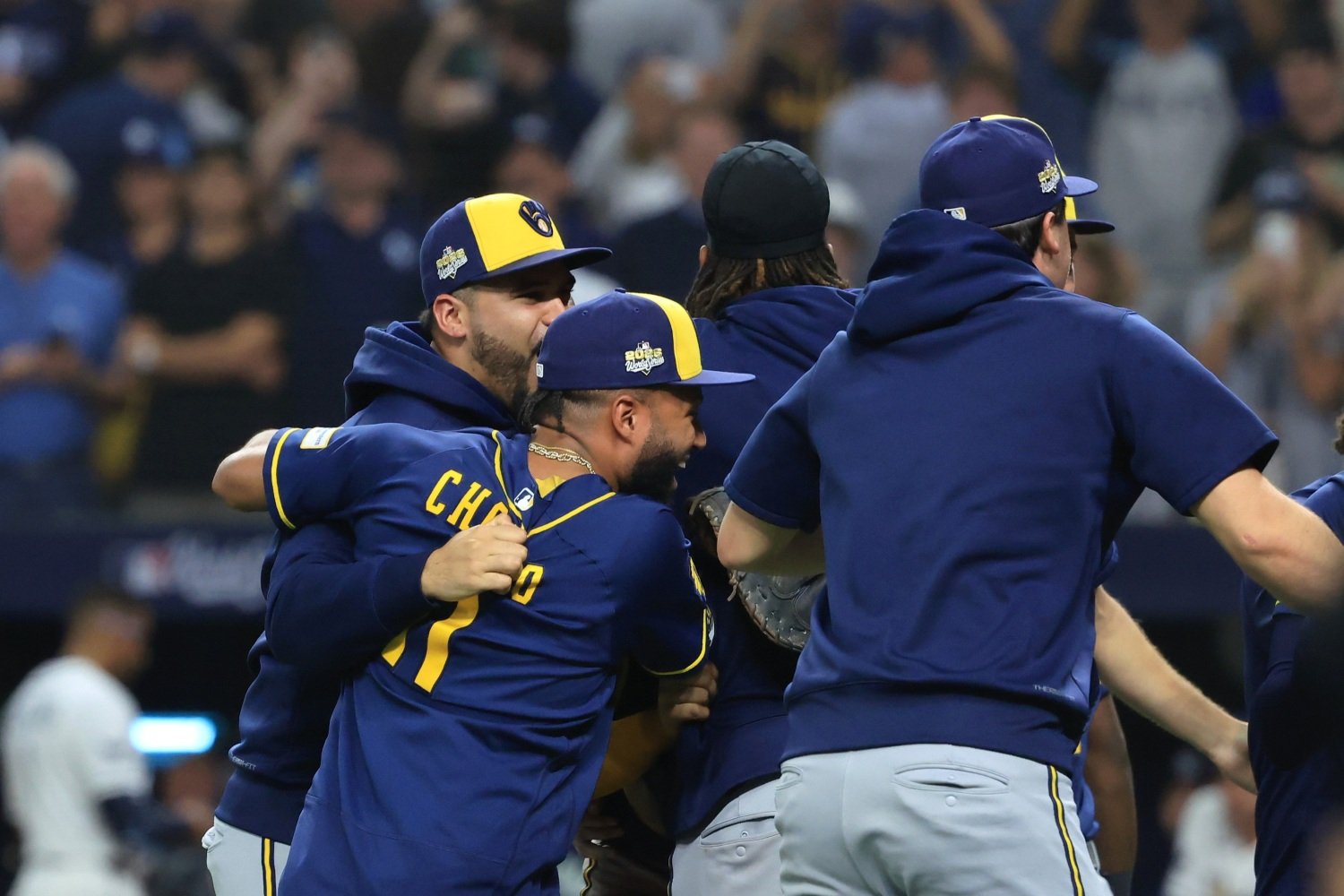 This one is for Bob Uecker, but you know that. More importantly, you know what that means, underneath the words—around them, and within them, and between them. If this one is for Bob Uecker, it's for every Brewers fan. If it's for Uecker, it's for every underdog. If it's for Uecker, it's for all of Wisconsin. Mark Attanasio once said he felt it his responsibility not to deliver the Brewers fan base a championship, but to give them "a summer of entertainment and passion and a chance for families to come together". No one was satisfied with that mission statement at the time, but the two goals have turned out not to be in conflict with one another. They've turned out to be complementary, and for the franchise emblemized by Uecker, that shouldn't be such a surprise. Uecker's legacy was made of summers of entertainment and passion—of cold beers and brats and slow-roasted jokes. Uecker branded himself, in a way, the crown prince of losers, but those who knew him knew he was all about winning, and not long after the world lost him, his team won what he always craved for them. The Milwaukee Brewers are World Series champions. It didn't come easily, though the history books might end up getting confused on that score. The Brewers were never pushed to the brink of elimination, or even to the brink of the brink. They rolled through the playoffs with an 11-2 record, and they nearly became the first team ever to sweep both a four-game League Championship Series and the World Series. Instead, after a disappointing (but not heartbreaking; there was no need for that kind of melodrama) Game 4 loss Tuesday night, the team simply came back to work on Wednesday night and finished the job. Their resiliency and their relentlessness were equally unsurprising. Those are the defining characteristics of this team. The Tampa Bay Rays were valiant, all things considered. Even the best the American League could offer was no match for these Brewers, and they didn't even make Milwaukee sweat, the way the Padres and Dodgers did at times in the previous series. Tampa didn't give up, though. They fought back from the edge of oblivion in the bottom of the 12th inning Tuesday night, and even though Drew Rasmussen has had his elbow rebuilt three times and he'd been handled carefully all season, manager Kevin Cash gave the ball to Rasmussen to start Game 5, on three days' rest. The AL pennant winners would give the Brewers their best shot. You wouldn't want it to be any other way. Rasmussen was impressive, too. He's a symbol, in a funny way, of the Brewers' genius and excellence. They traded him for Willy Adames in 2021, and for almost any other team, giving up such a great pitcher would be proof of (at least) a shortcoming in self-scouting. In this case, it was no such thing. Adames was phenomenal for the Brewers over his three-and-a-half-year tenure there; he left the place better than he found it. He was a leader and a producer for them. Besides, the Brewers only had Rasmussen to give up because they believed in him, when hardly anyone else did. He'd been operated on twice in college. He was damaged goods before he even reached the threshold of pro ball, but he bet on himself, over and over. The Brewers bet on him, too. Five and a half years after they traded him, running into him again this way felt like kismet. That didn't mean he would make things easy for him. The competitiveness, resourcefulness and talent the team scouted in him and cultivated after bringing him in were still in evidence. He cut through the Crew in the top of the first like a hot knife through an elbow ligament. That made it Jacob Misiorowski's turn, though. Unlike Rasmussen, Misiorowski was on full rest, and though he, too, has had a long season and been handled carefully, he had more left in the tank than his counterpart. There was just one problem: the mound. Reaching back for whatever was left in his body for the year, Misiorowski found better stuff than he'd shown in any of his previous postseason appearances, but he couldn't reliably land on firm footing; the dirt at the bottom of the mound (where only Misiorowski reaches, with his singular stride) was loose and treacherous. Still, he sliced through the Rays almost as surgically as Rasmussen had his own side in the first. Only for that long, though, could the two sides pretend parity. Almost immediately, the game tipped in favor of the better team—indeed, one of the best teams the game has seen in years. From here, instead of narrating moment by moment, let's change things up and go person by person. If Brice Turang's offensive breakout had never happened, he would still play (almost) every day for this team. Sometimes, infielders who seem to suck up everything hit their way are compared to vacuum cleaners, but the metaphor was never more apt than it is with Turang. He moves around the infield like a classic Kirby in the hands of a seasoned housekeeper: quick, gliding, bending effortlessly at hinges you can't even see. He hardly ever dives, but covers more ground than most second baseman do at the edges of their sprawl. With anticipation, quick acceleration and an effortless dip at the waist, he picks grounders breezily and gets rid of the ball almost instantly. He won the Fielding Bible Award this season at second base, and rightfully so. Turang did have an offensive breakout, though, and it raised expectations in a way that made portions of his second half feel almost disappointing. He played through a knee injury, and his numbers suffered. When the postseason curtain rose, he struggled some more. He'd been poor last October, and when he went 2-for-16 in the NLDS, it was easy to worry that he might have either a lingering physical problem or a mental block about the playoffs that would torpedo the team's hopes. Instead, in Game 1 of the NLCS, he hit the home run off Tarik Skubal that announced that this year would be different. He's been on his game ever since, and was instrumental in the team's sweep of the Dodgers. In the top of the second, against a weary Rasmussen, he got a changeup that stayed up and hit it up the gap in left-center field. It could have been a single; Johnny DeLuca got over and cut it off nicely. Turang was fast out of the box and read it all the way, though. He gained second easily. The table was set. After Game 2 of the World Series, Cooper Pratt sat on the dais for the postgame press conference next to teammate Sal Frelick. He looked the way he's looked every day since he got to the majors: big and giddy and a little uneasy, with features that still aren't sure which way to fold when he smiles and shoulders that move more than an easygoing adult's ever would. He's a confident guy, but he's so young, and it's impossible to hide it. He babbles. He giggles, albeit in a husky voice that reminds you he's caught somewhere between late-stage puberty and the gravitas of adulthood. He's trying to do "aw shucks" and "dig me" at the same time, not because he wants to manipulate the way people see him, but because both of those feelings lie authentically alongside one another in him, and he hasn't yet figured out how he might shove one down in favor of the other. Answering a question about the role Frelick has played in helping him adjust to the majors, Pratt's answer went straight to the only moment for which much of the baseball world knew him, until this week: the instance in July when Pat Murphy benched him for failures of effort and focus in a game at Citi Field in New York. He remembered what Frelick said to him, at that moment. "There's standards here. There's a way that we play, and it's okay. You're going to be all right," Pratt recalled. If those weren't the exact words of the message, they were the guts of it. Murphy didn't mean for that benching (a very brief one) to be discouraging—much the opposite. He just wanted a chance to show Pratt just how high the bar is. One thing young players have to learn, when they first reach the majors, is that being great at this level demands more of you—more intensity, more consistency, and more aptitude—than you can imagine, until you butt up against it. For rookies on other teams, it might be ok to let that learning happen slowly and painfully. Not in Milwaukee. Not on the Win Tonight Brewers. Not when the goal and the only acceptable outcome of the season already halfway done was a championship. Pratt would need a crash course, and that would mean some faster, harsher forms of feedback than other teams might give. It could also mean faster development. It could also mean a kind of flame-tempered excellence that makes a Wisconsin legend of a 22-year-old kid from Florida. What Murphy has asked of this team over the last three years is not quite impossible. At last, on Wednesday night, they proved that. It is, however, excruciatingly difficult. It's a challenge that can't be set before the wrong person with any hope of success, and the criteria that define the 'wrong person' aren't as simple as shortfalls of talent. They include those, to be sure. The Brewers needed extraordinarily talented players to create something truly new under the sun: a championship for the franchise that migrated from Seattle in 1970. Pratt is one such player. The team paid $3 million to lure him away from a commitment to play ball for the University of Mississippi, so although he was a sixth-round pick, he entered the professional ranks as well-regarded as many first-rounders. He's tall and strapping, but his swing is short. He won a Minor League Gold Glove Award in 2024, proof of his athleticism at a position usually reserved for smaller players. He's a plus runner. On top of talent, though, the Brewers decided to prize other traits, too, because that enormous challenge—to play a game that keeps the pressure on the opponent all day; to bounce back quickly after losses and to gather steam from wins; to be the deepest and most close-knit team in the league despite fewer resources than other teams had to forge that depth and savor greater stability—places demands on personality, in addition to prodigality. That's why Murphy is insistent and repetitive about the importance of "the right 'who'". That sounds nebulous, and it has to be a little bit so, because if it were too tightly defined, it wouldn't be sufficiently flexible. That doesn't mean it lacks specifics. Pratt had to learn what to expect at the plate, and how to anticipate his own successes and failures. He had to learn what was required of him between games and during them, and knowing that the same things were required of everyone on the team made it possible to get him to buy in. The Rays never did figure out how to get Pratt out. They never even got on the right track. Pratt stepped up for his first at-bat of Game 5 with two on and one out, and on the first pitch he saw, he gave Milwaukee a 1-0 lead. It was no fluke or flare—no mishit that relied on a defender being too slow. He shot a line drive into center field for a no-doubt single, and Turang raced around after getting a perfect read off the bat. Pratt would spark the next scoring rally, too, in the fifth inning. Rasmussen had departed the stage by then. It was Kevin Kelly, becoming the latest Rays arm to try fruitlessly to jam Pratt up and in. The rookie singled, and two singles later, he brought home the Crew's second run. Murphy's pick for a 2026 "quantum leap," as he said it first (with regard to Turang) two and a half years ago, was David Hamilton. That didn't really materialize during the regular season. Hamilton posted a .650 OPS in 2026, and his defense was uneven: there were great plays, but there were also bad ones. In October, though, the dynamism the manager insisted would come out in time finally peeked through. Hamilton had the nail-in-the-coffin homer in Game 4 of the NLCS, to cap a series in which he batted .571. He worked his way out of a timeshare with Joey Ortiz and started all five games of the World Series (though, to be fair, the Rays started right-handed pitchers in all five contests). If October was a story of Hamilton redeeming an unremarkable April through September, he also played out a pair of impressive redemption stories in microcosm in Games 4 and 5 of the Series. On Tuesday night, his error gave the Rays the lead in one half-inning, but he homered to erase it in the next. On Wednesday, at the one moment when Misiorowski wobbled and the Rays threatened to take the lead, Ben Williamson hit a harmless chopper to Hamilton. It was an easy inning-ending grounder, but Hamilton very nearly threw the ball away. Jake Bauers saved his bacon with a stretch, high and up the line, to snare the ball and hold the base. In the top of the fifth, after Pratt and Garrett Mitchell each singled, Hamilton got his chance to redeem himself again, and did it. On a 1-1 changeup from Kelly, he lashed the ball through the right side of the infield, at 107 MPH off the bat. That made it 2-0, and it began to feel like the Brewers could breathe—like the celebration countdown was on in earnest, for the first time. It was the final payoff of a last-second pre-spring training trade that was maligned in Milwaukee at first: Caleb Durbin, Andruw Monasterio and Anthony Seigler for Hamilton, Kyle Harrison and Shane Drohan. In turns, earlier in the year, both Harrison and Drohan did plenty to help the Brewers get this far. This month, though, all the benefits of that deal came from Hamilton. He was a game-changing No. 9 hitter—a symbol of the team's lineup depth and a testament to the number of ways they were willing and able to win games. 'The lion's share' is an expression derived from one of Aesop's Fables. It's often misused, these days. People say it when they mean most of something, but in its original form, the lion's share meant everything. The lion, as absolute ruler of the savanna, meted out justice by arrogating to himself every bit of the kill over which many animals had laid a claim. It was about understanding just how many ways the lion wields power—about how the powerful exert their will in many dimensions, seemingly at once. By the top of the sixth inning, the Rays were a kill, and all that was left was to divide it. The Brewers' lion, William Contreras, stepped forward and claimed it all. That's what he's done ever since coming to Milwaukee. He takes the lion's share of the catching duty, if he can help it. He takes the lion's share of the responsibility for his team's successes and failures. When the Brewers flipped Esteury Ruiz for him in the offseason between 2022 and 2023, Contreras was so much a bat-first catcher that few believed he would stick at the spot. He was as full of talent and passion as his new coaches were full of ideas, though, so they all went to work together, and Contreras changed. The Lion of Milwaukee became, first, a great pitch-framer. Over time, that skill has eroded and had to be rebuilt, but he maintains at least a portion of it. He was already a great thrower, but he's also become a great manager of pitching staffs. His pitchers gush about him. After the game, Misiorowski would credit Contreras with much of the hurler's success throughout the year, and with the shutdown performance in Game 5. Aaron Ashby refused Contreras's offer to share the World Series MVP; he felt too strongly that his catcher deserved it. October saw Contreras collect value in ever more ways, just like Aesop's lion. He went from disastrous to seamless at blocking pitches in the dirt, seemingly flipping a switch between rounds of the playoffs to do so. He also became razor-sharp at ABS challenges, wasting fewer but missing hardly any opportunities to flip balls into strikes. He spread his influence into every possible facet of run prevention, and by the end of the postseason, he was a positive in all of those aspects. Contreras has also reinvented himself at the plate. The guy the Brewers acquired was a lethal but erratic slugger. He's become a much more well-rounded hitter in Milwaukee. Some power has been lost, but he still finds it when he needs it. Contreras crushed three home runs during this postseason, after hitting just 18 during the regular campaign. In Game 5, when he came to bat with Christian Yelich on base in the top of the sixth, he got a slider down and in and dropped the bat head on it. It didn't quite carry out of the park, but it became an RBI double and stretched the lead to 3-0. Two batters later, Pratt flicked a fly ball down the right-field line, and Contreras raced home at top speed to make it a sacrifice fly and move it to 4-0. The Brewers' lion leaped to his feet, his helmet flying off to display his shaggy mane, and roared. Abner Uribe got a ground ball to first base on the first pitch he threw in the bottom of the seventh inning. Jake Bauers fielded it cleanly and threw to Uribe uneventfully; the high-waisted Dominican righty found the bag and went quietly back to his office in the center of the building buzz. It was a tiny, faint echo—only that. It didn't force itself upon you, but if you've watched Uribe's whole career unfold, it was impossible not to connect that ordinary 3-1 groundout to another grounder to the right side induced by Uribe while facing the Rays, back in 2024. On that occasion, something intemperately defending the honor of ejected teammate Freddy Peralta, Uribe picked a fight with Jose Siri (now long gone from Tampa; not a championship-caliber player or person) and derailed his career for a while, That brawl drew a suspension, and soon thereafter, Uribe found himself back at Triple-A Nashville. There, he injured his knee and missed almost the rest of the season. Many around the organization—and plenty within it, including his manager—wondered if Uribe would ever be master of his emotions and his mentality enough to turn his unhittable stuff into consistent value. He did, though. By the following spring, Uribe was working hard to express himself better in English, to help the world better understand him. More importantly, though, he made himself better understood within the clubhouse, and he made extra efforts to understand what the team asked of him, too. He's no shrinking violet, even now; you need look no further than his crotch-chopping provocation of the Cardinals this spring to see that. He's become a better teammate, though, and a more emotionally stable, mature professional. Murphy saw the transformation in him, and trusted it. He made him his relief workhorse from the jump in 2025, and that's remained true almost without interruption since. Uribe was downright workmanlike in Game 5. After one tiny blip amid Contreras's greatness—a throwing error that put a runner into scoring position in the seventh—brought him into the game, Uribe slammed the door on any uprising by the home nine. The countdown was down to six outs. I interviewed Trevor Megill once about his pitch mix. He told me he works diligently to keep his fastball usage around 69%, and his curveball usage around 31%. The delivery was deadpan, and he was being (relatvely) serious. He takes his craft seriously. He just isn't serious about much else. His stomping overhand delivery and the glower that comes with it are just him in work mode. The rest of the time, he can playfully invoke meme culture or sing-song the latest viral video. He catches teammates' home runs in his hat when waiting in the home bullpen, and celebrates like a kid when he does. He smiles like a 13-year-old whose fart you'll smell in about five seconds. He also throws 100 miles per hour, and he mowed down the Rays in the eighth inning without allowing a baserunner. One thing Megill does take seriously, within his job but beyond the simple execution of it, is his role. This spring, he made it extremely and unwaveringly clear: he wanted the ninth inning. In the World Series clincher, he got it. He gave up a run in the ninth and was (perhaps) just one batter from losing the right to close it out, as Ashby warmed in the bullpen, but Megill is a true closer. He wants that right, and that privilege. It was fitting, on a team so well-trained to want the right things, that one player who wanted that specific thing got it. It wouldn't have been so smooth a bottom of the eighth, though, if not for Jackson Chourio. The running, then diving catch Chourio made to rob Taylor Walls leading off the frame will be remembered less than it would have been if the game or the series had been closer, but it was a perfect example of Chourio's vast defensive improvement in left field late this year. He doesn't make that catch last season; he doesn't even make it in June. Chourio, though, has steadily emerged as this team's truest superstar. Contreras is the pounding heart, and Misiorowski might be its face. Turang is one of the game's great well-rounded players. Chourio, though, is the legend in this group. The last Milwaukee team to win a World Series, in 1957, featured 11 hits from a 23-year-old outfielder named Henry Aaron. That was a seven-game Fall Classic, though. Chourio got 11 hits in just five contests. He won't win his league's MVP award this year, as Aaron did in 1957, but that the young Venezuelan got to put his mark on the final stages of the game was inevitable. He will win an MVP someday; he might win another Series, too. One reason why Attanasio's "summer of entertainment and passion" quote was so ill-received is that, for many fans, it was hard to maintain passion for a team that was forever changing. The Josh Hader trade in July 2022 riled and disturbed the fan base; it felt like proof that the Brewers would always make the transactional choice. That meant never Going For It, and for some, it meant that the team would never win a World Series. But it also meant getting rid of great players almost as soon as they got that way. It meant never feeling like a connection would last for as long as you'd wish. That feeling was only compounded, of course, when Craig Counsell left for Chicago. That's part of what makes this team so special. There will be turnover; make no mistake about that. No team stays exactly the same from one year to the next, and no Brewers team will ever border on doing so. Even if there were no rising arbitration price tags or free agencies on the horizon, the team would need to make room for a bevy of young players who need more playing time (or even a roster spot they don't yet have to spare) in 2027 and beyond. But this team is made of players who will stick around for quite a while. Chourio, Pratt and Luis Lara all signed long-term extensions with the team, and all three are under 23 years old. Logan Henderson and Misiorowski are years from free agency, too. Murphy, it's safe to say, will retire as a Brewer, even if that retirement might be coming up sooner than it would ordinarily be for a skipper just three years into their big-league career. The front office committed to this group, because they know they're the right 'who's. Murphy has molded them, and allowed them to mold him. This group of players, coaches, front-office workers and support staff has gelled in a way that even most other great winners can only dream of. They aren't truly done; this doesn't have to mark the end of anything. However, it does mark the end of something important: decades of waiting. For fans (and fans' parents and grandparents) throughout Wisconsin, the wait for this moment has often seemed interminable. It has occasionally seemed hopeless. The Brewers were the league's plaything for far too long—since before they were the Brewers. They floated from Seattle to Milwaukee; from one division to the other in the AL, and then into the newly formed AL Central, and then over to the NL. They were buffeted by chance and purposefully undermined by ownership with dubious motives. They spent a long time lost. No more. The Brewers and their fans have found their place in the league, at last. They're not just underdogs. They can still be underdogs, in some ways, but that's no longer the extent of their identity. They're not cute, anymore. They're great. There are already plenty of fans (especially of other teams) who are tired of Murphy's shtick. It's understandable. He overplays his hand sometimes. In the end, though, it's more than his results that are above reproach. His process, however occasionally cheesy or self-serving, is authentic. He believes what he tells players, and only tells them things they should believe—truths, in short. He didn't pull together a ragged band of misfits and turn them into champions. That's the shorthand narrative for outsiders. We know better. The Brewers' deep and incredibly smart roster of front-office analysts worked with their deep and well-trained cadre of scouts to find great players. Their front-office leaders (yes, Matt Arnold, but others, too) took chances and made savvy moves on the advice of all those talent-finders. The ingredients with which Murphy got the pleasure of cooking were very high-quality. Murphy did something remarkable with them, though. The cohesion and dedication he elicited from all those players was extraordinary. For three years (and especially the last season and a half), the level at which this team has played has been historic. They've played winning baseball, and often, they've played truly beautiful baseball. Under Murphy's guidance, they've felled the giants of the sport, and they've slipped the bonds of history, to boot. When Counsell defected, the vacuum he left in the manager's office at Uecker Field was enormous. The Brewers, however, filled it with the right 'who'.
- 7 comments
-
- 4
-
-
-
- 2026 postseason
- jacob misiorowski
- (and 4 more)

