


Matthew Trueblood
-
Posts
1,962 -
Joined
-
Last visited
-
Days Won
10
Content Type
Profiles
Forums
Blogs
Events
News
2026 Milwaukee Brewers Top Prospects Ranking
Milwaukee Brewers Videos
2022 Milwaukee Brewers Draft Picks
Milwaukee Brewers Free Agent & Trade Rumors, Notes, & Tidbits
Guides & Resources
2023 Milwaukee Brewers Draft Picks
2024 Milwaukee Brewers Draft Picks
The Milwaukee Brewers Players Project
2025 Milwaukee Brewers Draft Pick Tracker
2026 Milwaukee Brewers Draft Tracker: Picks & Bonuses
Store
Downloads
Gallery
Everything posted by Matthew Trueblood
-
Image courtesy of Michael McLoone-Imagn Images No fear. No fear, and no self-doubt. No fear, and no self-doubt, and no waiting around. William Contreras felt responsible for the run the Dodgers scored in the top of the first inning Monday, giving the visitors another near-immediate lead and forcing the Brewers to play from behind against the untouchable mega-ace of the last two Octobers, Yoshinobu Yamamoto. He was responsible for it. A Logan Henderson changeup did hit the dirt well in front of home plate, with Mookie Betts at second base, but it came up into Contreras's chest, rather than skipping wildly or staying down in some unpredictable fashion. Contreras should have blocked it, but he failed to, and a few pitches later, Betts came home from third with the first run of the game. Contreras isn't perfect. That's never been his game. When he first arrived in Milwaukee, he was a poor framer, failing to maintain a tidy strike zone for his pitchers. He cleaned that up nicely, but went through a long period where his arm (though very strong) was inaccurate, so he struggled to control the running game. The last two years, his accuracy has gotten dramatically better. But he struggled mightily blocking errant pitches this season, and that has been a costly shortcoming already this postseason. Meanwhile, at the plate, he's played through some injuries and gone through long, profound power outages. No matter. His greatest trait on the diamond is not his bat speed or his arm strength. It's his tenacity, and second on the list is his resiliency. He plays without fear, or self-doubt, and he never waits for the game to give him the next opportunity to make up for a mistake. Instead, fueled by confidence and his desire to make good, he makes things happen. In the bottom of the same inning in which he cost the team a run, he got the chance to even the score. Brice Turang slashed a beautiful opposite-field double against Yamamoto, bringing up Contreras with a runner in scoring position and one out. Yamamoto jumped ahead of him 0-2, with back-to-back fastballs on the inner edge of the plate. He missed badly with the next two pitches, though, evening the count. Contreras had a sense of what was coming: something low, maybe even dipping out of the zone. He could have taken the approach of programming a take on that pitch, but he would have risked staring at strike three, if Yamamoto had dotted the bottom rail of the zone with an unexpected fastball. Instead, Contreras was ready. He got a slider, rather than the splitter Yamamoto had tried on the previous pitch, but it was in much the same position as that pitch had been. It was, in fact, about ankle-high on the outer edge of the plate. It's a strikeout pitch. It's a death sentence for any hitter who swings at it. Contreras, though, is a freak. He scooped that ball into left field, a humpback line drive that allowed Turang to score. His salvific services would be needed again, though. After a third-inning back-and-forth left the Brewers up 3-2, the Dodgers found two runs in the top of the fifth. Milwaukee had already chased Yamamoto, but now, they had to finagle another comeback, with the countdown clock starting to tick. Indeed, the Dodgers had nearly gotten to the halfway point. Contreras stepped into the box against lefty Kris Bubic with Los Angeles having recorded 13 of the 27 outs they needed, and Bubic started him with a strike. You can't get any closer to being exactly halfway to the end of a game, as the winning team. Then, Contreras turned off the clock, the way you turned off your alarm clock when the snooze button wasn't emphatic enough: by firing it off the back wall. Contreras's long, screaming homer felt like the hammer falling on the Dodgers, but it really only restored parity. The knockout blow would have to come an inning later. The Dodgers should have known better. They faced a tough situation, with a runner on third and one out and the left-hitting Turang due up against righty reliever Brock Stewart. They could have gone to a lefty to take on Turang, but he would have been locked into a matchup with Contreras afterward. Instead, they intentionally walked Turang. They should, really, have known better, but Dave Roberts got away with two bad intentional walks in Game 1 and seemed to be feeling himself. Contreras didn't wait around. Stewart threw a first-pitch sweeper that stayed up and on the outer third, and although he caught it off the end of the bat, the All-Star catcher dumped the ball safely into left field again. It was 5-4 Brewers, and the game felt over. The series felt over. Three huge at-bats; three huge postseason hits. Contreras hasn't been perfect all postseason. He was as good as perfect in Game 2, though. The Brewers needed him to deliver three times to vanquish the defending champs and take a 2-0 lead in the series. That's a very tall order, but Contreras filled it, with fearless swagger and no small amount of baseball IQ. Every time there was even the slightest temptation to worry, Contreras alleviated it. Now, the team can head to Southern California feeling loose and completely in control. View full article
-
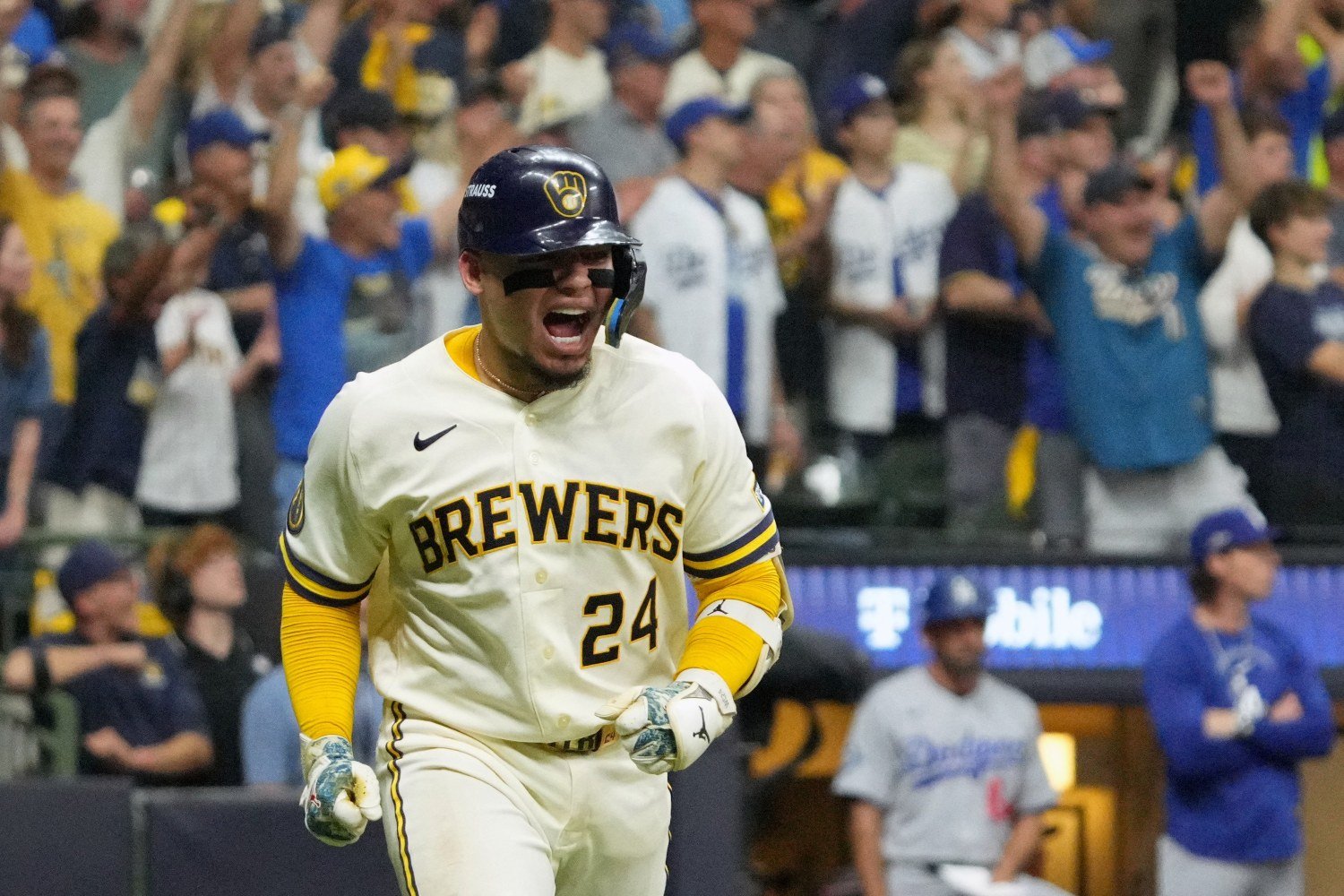 No fear. No fear, and no self-doubt. No fear, and no self-doubt, and no waiting around. William Contreras felt responsible for the run the Dodgers scored in the top of the first inning Monday, giving the visitors another near-immediate lead and forcing the Brewers to play from behind against the untouchable mega-ace of the last two Octobers, Yoshinobu Yamamoto. He was responsible for it. A Logan Henderson changeup did hit the dirt well in front of home plate, with Mookie Betts at second base, but it came up into Contreras's chest, rather than skipping wildly or staying down in some unpredictable fashion. Contreras should have blocked it, but he failed to, and a few pitches later, Betts came home from third with the first run of the game. Contreras isn't perfect. That's never been his game. When he first arrived in Milwaukee, he was a poor framer, failing to maintain a tidy strike zone for his pitchers. He cleaned that up nicely, but went through a long period where his arm (though very strong) was inaccurate, so he struggled to control the running game. The last two years, his accuracy has gotten dramatically better. But he struggled mightily blocking errant pitches this season, and that has been a costly shortcoming already this postseason. Meanwhile, at the plate, he's played through some injuries and gone through long, profound power outages. No matter. His greatest trait on the diamond is not his bat speed or his arm strength. It's his tenacity, and second on the list is his resiliency. He plays without fear, or self-doubt, and he never waits for the game to give him the next opportunity to make up for a mistake. Instead, fueled by confidence and his desire to make good, he makes things happen. In the bottom of the same inning in which he cost the team a run, he got the chance to even the score. Brice Turang slashed a beautiful opposite-field double against Yamamoto, bringing up Contreras with a runner in scoring position and one out. Yamamoto jumped ahead of him 0-2, with back-to-back fastballs on the inner edge of the plate. He missed badly with the next two pitches, though, evening the count. Contreras had a sense of what was coming: something low, maybe even dipping out of the zone. He could have taken the approach of programming a take on that pitch, but he would have risked staring at strike three, if Yamamoto had dotted the bottom rail of the zone with an unexpected fastball. Instead, Contreras was ready. He got a slider, rather than the splitter Yamamoto had tried on the previous pitch, but it was in much the same position as that pitch had been. It was, in fact, about ankle-high on the outer edge of the plate. It's a strikeout pitch. It's a death sentence for any hitter who swings at it. Contreras, though, is a freak. He scooped that ball into left field, a humpback line drive that allowed Turang to score. His salvific services would be needed again, though. After a third-inning back-and-forth left the Brewers up 3-2, the Dodgers found two runs in the top of the fifth. Milwaukee had already chased Yamamoto, but now, they had to finagle another comeback, with the countdown clock starting to tick. Indeed, the Dodgers had nearly gotten to the halfway point. Contreras stepped into the box against lefty Kris Bubic with Los Angeles having recorded 13 of the 27 outs they needed, and Bubic started him with a strike. You can't get any closer to being exactly halfway to the end of a game, as the winning team. Then, Contreras turned off the clock, the way you turned off your alarm clock when the snooze button wasn't emphatic enough: by firing it off the back wall. Contreras's long, screaming homer felt like the hammer falling on the Dodgers, but it really only restored parity. The knockout blow would have to come an inning later. The Dodgers should have known better. They faced a tough situation, with a runner on third and one out and the left-hitting Turang due up against righty reliever Brock Stewart. They could have gone to a lefty to take on Turang, but he would have been locked into a matchup with Contreras afterward. Instead, they intentionally walked Turang. They should, really, have known better, but Dave Roberts got away with two bad intentional walks in Game 1 and seemed to be feeling himself. Contreras didn't wait around. Stewart threw a first-pitch sweeper that stayed up and on the outer third, and although he caught it off the end of the bat, the All-Star catcher dumped the ball safely into left field again. It was 5-4 Brewers, and the game felt over. The series felt over. Three huge at-bats; three huge postseason hits. Contreras hasn't been perfect all postseason. He was as good as perfect in Game 2, though. The Brewers needed him to deliver three times to vanquish the defending champs and take a 2-0 lead in the series. That's a very tall order, but Contreras filled it, with fearless swagger and no small amount of baseball IQ. Every time there was even the slightest temptation to worry, Contreras alleviated it. Now, the team can head to Southern California feeling loose and completely in control.
 -
Hahahaha. Truly: I am ashamed, and sad.
-
Two Very Different Types of Changeup Collide in NLCS Game 2
Matthew Trueblood posted an article in Brewers
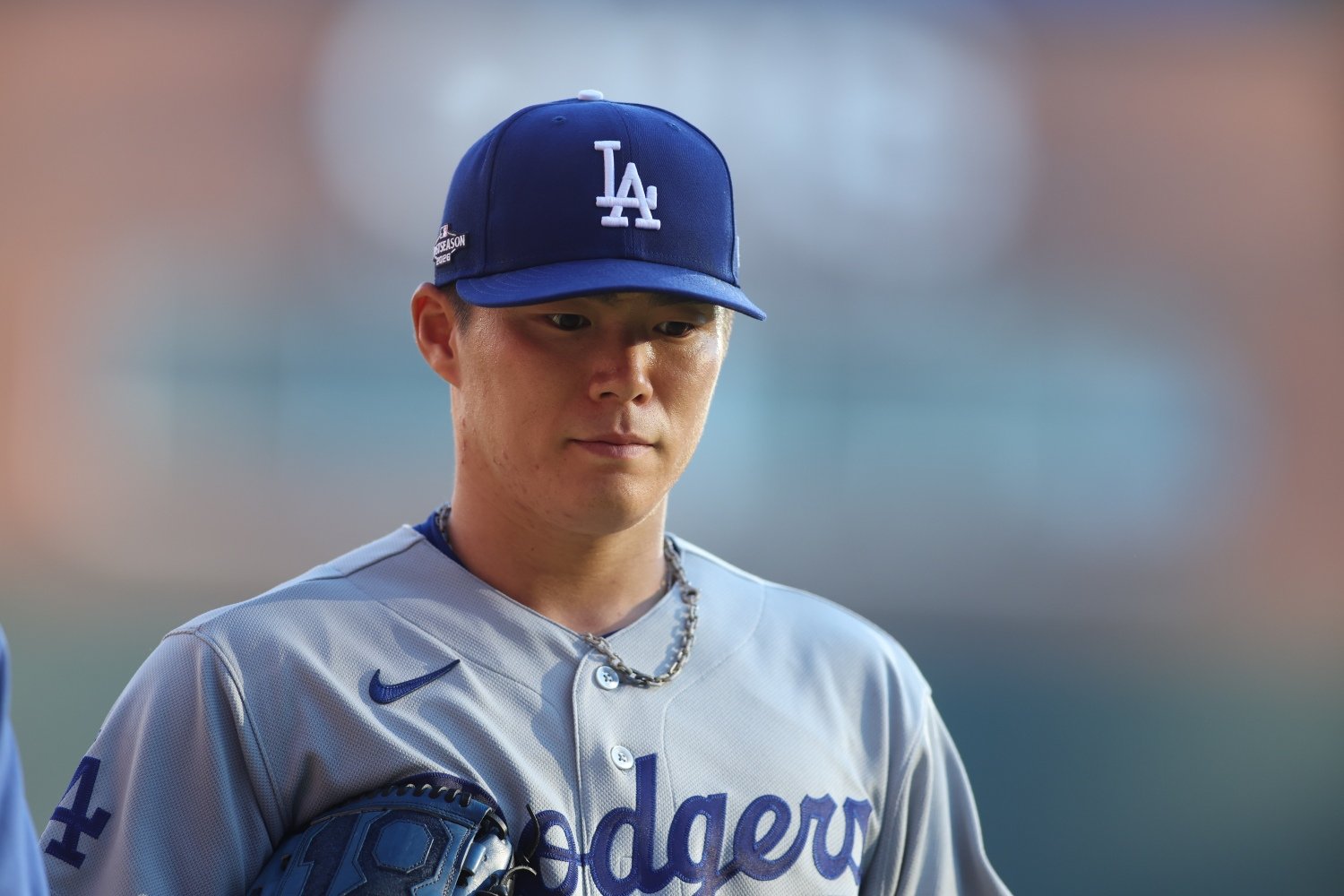 Logan Henderson has one of the best straight changeups in baseball. Yoshinobu Yamamoto has one of the best splitters. In Game 2 of the NLCS on Monday afternoon, the two will square off, and the balance of the series will tip toward whichever club figures out the other's offspeed marvel better. The tasks the two lineups face, however, are not as similar as that might make it sound. As we've discussed before, Henderson has a unique ability to match the arm speed and release point of his fastball when he throws his changeup. Opponents had a .248 weighted on-base average (wOBA) and whiffed on 37% of their swings against that offering this year, and it emanates from his ability to induce swings timed for the fastball on pitches that aren't. The changeup doesn't move exactly like his four-seamer, of course—not by a long shot—but most good changeups have more relative movement off the fastballs they complement than Henderson's does. He stumps hitters with timing, pure and simple. With Yamamoto, it's not so. Deception is important to the operation of any offspeed pitch, but it takes a different form for Yamamoto. His splitter is only about 4.5 miles per hour slower than his four-seamer, so hitters aren't out in front against it nearly as often, or by as much. Instead, almost all the value he generates with his splitter comes from getting hitters to swing over it or tap it straight into the ground. Hitters run out of bat more often against Henderson; they end up so early that they hit the ball off the end of their bat or not at all. Hitters center the ball on their barrels more against Yamamoto's splitter, and can even get jammed by it at times. It's possible to lift the ball when you center up Henderson's change, whereas Yamamoto's splitter will typically result in a ground ball or a low line drive, even if it's met cleanly. On the other hand, Henderson's change induces more whiffs, because it fools hitters so badly in terms of timing. When two right-handed pitchers with four-seamers leading their fastball mix and offspeed pitches that are better than their breaking balls face off, it's tempting to think of it as a matchup of similar styles. That's not the case here. Henderson's changeup and Yamamoto's splitter work very differently. That should make watching them even more interesting, though. As it so often does, in October, who wins will come down to which pitcher executes what they do best better.
- 1 comment
-
- 1
-

-
- yoshinobu yamamoto
- 2026 postseason
- (and 1 more)
-
Image courtesy of Brett Davis-Imagn Images Logan Henderson has one of the best straight changeups in baseball. Yoshinobu Yamamoto has one of the best splitters. In Game 2 of the NLCS on Monday afternoon, the two will square off, and the balance of the series will tip toward whichever club figures out the other's offspeed marvel better. The tasks the two lineups face, however, are not as similar as that might make it sound. As we've discussed before, Henderson has a unique ability to match the arm speed and release point of his fastball when he throws his changeup. Opponents had a .248 weighted on-base average (wOBA) and whiffed on 37% of their swings against that offering this year, and it emanates from his ability to induce swings timed for the fastball on pitches that aren't. The changeup doesn't move exactly like his four-seamer, of course—not by a long shot—but most good changeups have more relative movement off the fastballs they complement than Henderson's does. He stumps hitters with timing, pure and simple. With Yamamoto, it's not so. Deception is important to the operation of any offspeed pitch, but it takes a different form for Yamamoto. His splitter is only about 4.5 miles per hour slower than his four-seamer, so hitters aren't out in front against it nearly as often, or by as much. Instead, almost all the value he generates with his splitter comes from getting hitters to swing over it or tap it straight into the ground. Hitters run out of bat more often against Henderson; they end up so early that they hit the ball off the end of their bat or not at all. Hitters center the ball on their barrels more against Yamamoto's splitter, and can even get jammed by it at times. It's possible to lift the ball when you center up Henderson's change, whereas Yamamoto's splitter will typically result in a ground ball or a low line drive, even if it's met cleanly. On the other hand, Henderson's change induces more whiffs, because it fools hitters so badly in terms of timing. When two right-handed pitchers with four-seamers leading their fastball mix and offspeed pitches that are better than their breaking balls face off, it's tempting to think of it as a matchup of similar styles. That's not the case here. Henderson's changeup and Yamamoto's splitter work very differently. That should make watching them even more interesting, though. As it so often does, in October, who wins will come down to which pitcher executes what they do best better. View full article
-
Because words are fun!
-
Image courtesy of Benny Sieu-Imagn Images A playoff game starts like an arm-wrestling match. The opponents make contact, feel one another out for a moment, and then there's a sudden tension, as each side tries to flatten the other and win the prize—but meets almost perfectly equal resistance from the other. Both sides knew what was coming, after all. The real strategy lies in not letting the momentary wobble of that first grapple destabilize you. Clear that hurdle, and you can settle in for the long application of power and pressure that is the real substance of the fight. The 2026 National League Championship Series started that way. The Dodgers and Brewers rushed at each other at full force, right away, but each side knew there would be no instant knockout. Leadoff hitter Mookie Betts hit a sharp grounder that forced Brice Turang to cross the bag at a run and throw on the move to first base, his body only half-turned to his target. No problem. Out No. 1. Freddie Freeman lashed a line-drive single to left field in the first inning, and right away, the visitors were putting impressive swings on Jacob Misiorowski. Will Smith hit a smash, too, but this one was on the ground. Cooper Pratt fielded it slickly and got the ball to Turang, whose turn was the highlight of the play. A twin killing got Milwaukee's ace out of the first frame. Just like those locked-in bicep warriors, though, the two sides kept the pressure on one another. For Los Angeles, that meant another rally right away in the second, and this one produced a run. It could have produced more, too, but with the bases loaded, Enrique Hernández hit a ball into the hole at short. Pratt came up with it again and did well to get his shoulders turned and make a strong throw to Turang to retire the lead runner. That seemed sure to be all they would get, though; the ball wasn't even hit that hard. No. Turang got off a perfect and near-instantaneous sidearm relay, retiring Hernández to end the inning and nullify the run that nearly crossed the plate to double the Dodger advantage. Already, Turang was the key man at the keystone, keeping a messy game from truly getting away. When he stepped to the plate to lead off the bottom of the fourth, though, the Dodgers still led 1-0. Tarik Skubal was outpitching Misiorowski, and it wasn't especially close. He was throwing strikes with four or five different pitches; Misiorowski was spraying even his fastball. Worse, the Brewers showed little feel for what Skubal was trying to do, and were getting themselves out. Turang was the second batter to see him for a second time, and the first to make the proper adjustment. He laid off two four-seamers away, where Skubal was living with that pitch all night. (One of them could have been a strike, but it wasn't called so, and Will Smith did not challenge it.) On 2-0, Skubal sensibly tried a sinker, coming back to the arm side of the plate and running in on Turang. It was the right pitch in the context of the at-bat, in that if Turang was looking for more hard stuff away or even hunching on a get-me-over breaking ball, he'd have been way ahead of the pitch. He wasn't, though. The pitch ran right into Turang's newly made swing's wheelhouse, and he hit what is his trademark home run: a slicing drive just over the wall in left-center field. It was a beautiful piece of hitting. The game was tied, but the crowd was just getting its chance to come loose. They carried the Brewers the rest of the way. Misiorowski's night was imperfect; he'll have to try again in his third postseason start to put up a line worthy of his imminent Cy Young Award winner status. Pat Murphy only trusted the ball to his four trustworthy relievers, though, and they held firm. The Brewers threatened to tack on runs more than the Dodgers threatened to tip the game back in their favor. Abner Uribe's emotional strikeout celebration to end the sixth inning will live long in the memories of Brewers fans. Ditto for Garrett Mitchell's fist pump (tuned to a Game 5 win in a 2-2 series, arguably, more than to sealing Game 1) when he caught the final out. The crowd was charged up. So was the team. They've hungered for a year for this chance to prove that last season's defeat wasn't inevitable—that they're formidable opponents for the Dodgers, as much as the Dodgers are for them. Turang wasn't as emotive as his teammates. He was the icicle to the heart when the team needed a killing blow, though. He showed his teammates that Skubal was mortal; they went and got the lead an inning later. He played gorgeous defense all night. He even laid down a late sacrifice bunt. In Game 1, he shed the hircine nubs that some fans saw sprouting from his head after three straight poor playoff series. Turang is an essential piece of the Brewers' winning machinery. That machine is humming now. One game in, they're one game closer to winning the NLCS than they've been since 2018. View full article
-
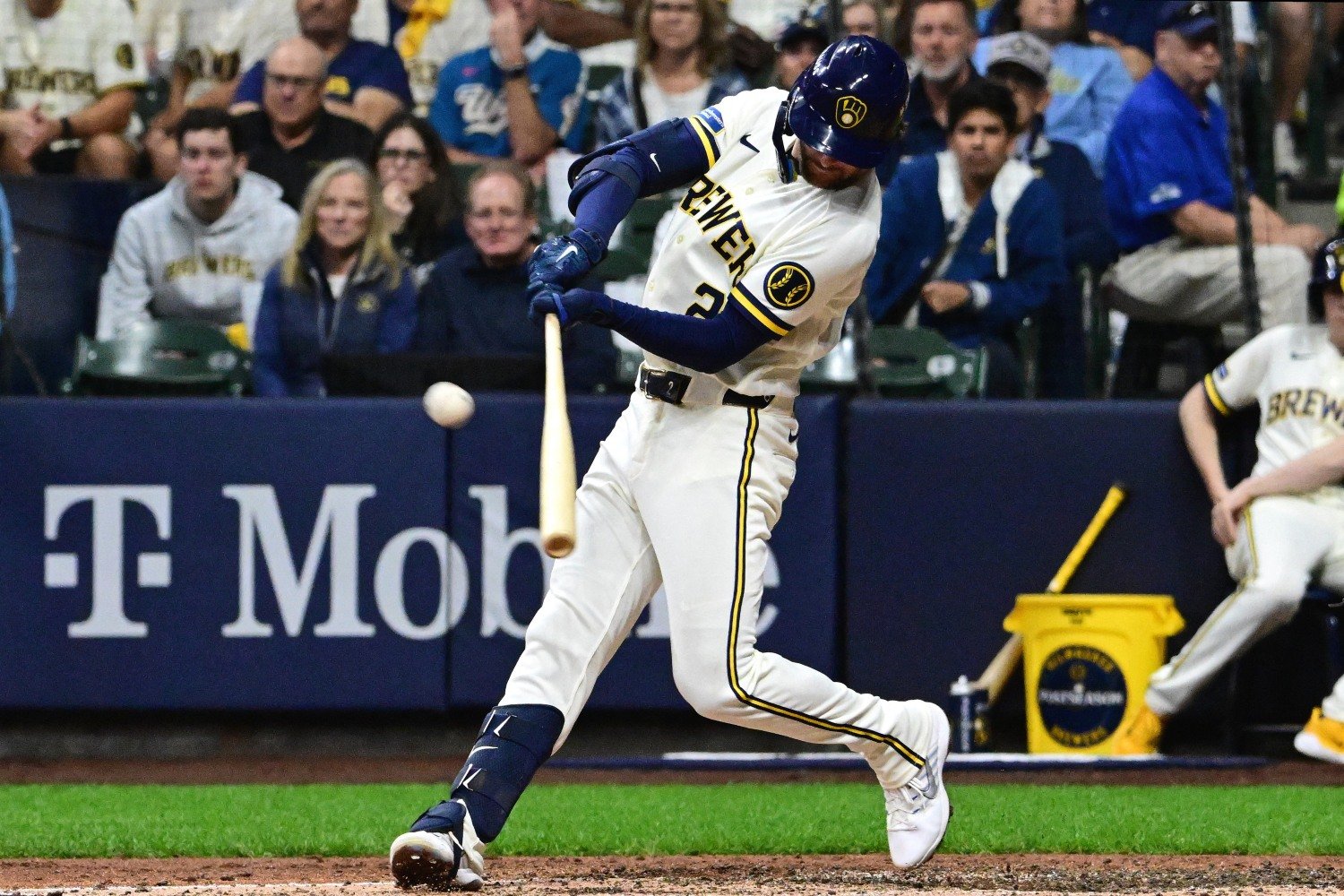 A playoff game starts like an arm-wrestling match. The opponents make contact, feel one another out for a moment, and then there's a sudden tension, as each side tries to flatten the other and win the prize—but meets almost perfectly equal resistance from the other. Both sides knew what was coming, after all. The real strategy lies in not letting the momentary wobble of that first grapple destabilize you. Clear that hurdle, and you can settle in for the long application of power and pressure that is the real substance of the fight. The 2026 National League Championship Series started that way. The Dodgers and Brewers rushed at each other at full force, right away, but each side knew there would be no instant knockout. Leadoff hitter Mookie Betts hit a sharp grounder that forced Brice Turang to cross the bag at a run and throw on the move to first base, his body only half-turned to his target. No problem. Out No. 1. Freddie Freeman lashed a line-drive single to left field in the first inning, and right away, the visitors were putting impressive swings on Jacob Misiorowski. Will Smith hit a smash, too, but this one was on the ground. Cooper Pratt fielded it slickly and got the ball to Turang, whose turn was the highlight of the play. A twin killing got Milwaukee's ace out of the first frame. Just like those locked-in bicep warriors, though, the two sides kept the pressure on one another. For Los Angeles, that meant another rally right away in the second, and this one produced a run. It could have produced more, too, but with the bases loaded, Enrique Hernández hit a ball into the hole at short. Pratt came up with it again and did well to get his shoulders turned and make a strong throw to Turang to retire the lead runner. That seemed sure to be all they would get, though; the ball wasn't even hit that hard. No. Turang got off a perfect and near-instantaneous sidearm relay, retiring Hernández to end the inning and nullify the run that nearly crossed the plate to double the Dodger advantage. Already, Turang was the key man at the keystone, keeping a messy game from truly getting away. When he stepped to the plate to lead off the bottom of the fourth, though, the Dodgers still led 1-0. Tarik Skubal was outpitching Misiorowski, and it wasn't especially close. He was throwing strikes with four or five different pitches; Misiorowski was spraying even his fastball. Worse, the Brewers showed little feel for what Skubal was trying to do, and were getting themselves out. Turang was the second batter to see him for a second time, and the first to make the proper adjustment. He laid off two four-seamers away, where Skubal was living with that pitch all night. (One of them could have been a strike, but it wasn't called so, and Will Smith did not challenge it.) On 2-0, Skubal sensibly tried a sinker, coming back to the arm side of the plate and running in on Turang. It was the right pitch in the context of the at-bat, in that if Turang was looking for more hard stuff away or even hunching on a get-me-over breaking ball, he'd have been way ahead of the pitch. He wasn't, though. The pitch ran right into Turang's newly made swing's wheelhouse, and he hit what is his trademark home run: a slicing drive just over the wall in left-center field. It was a beautiful piece of hitting. The game was tied, but the crowd was just getting its chance to come loose. They carried the Brewers the rest of the way. Misiorowski's night was imperfect; he'll have to try again in his third postseason start to put up a line worthy of his imminent Cy Young Award winner status. Pat Murphy only trusted the ball to his four trustworthy relievers, though, and they held firm. The Brewers threatened to tack on runs more than the Dodgers threatened to tip the game back in their favor. Abner Uribe's emotional strikeout celebration to end the sixth inning will live long in the memories of Brewers fans. Ditto for Garrett Mitchell's fist pump (tuned to a Game 5 win in a 2-2 series, arguably, more than to sealing Game 1) when he caught the final out. The crowd was charged up. So was the team. They've hungered for a year for this chance to prove that last season's defeat wasn't inevitable—that they're formidable opponents for the Dodgers, as much as the Dodgers are for them. Turang wasn't as emotive as his teammates. He was the icicle to the heart when the team needed a killing blow, though. He showed his teammates that Skubal was mortal; they went and got the lead an inning later. He played gorgeous defense all night. He even laid down a late sacrifice bunt. In Game 1, he shed the hircine nubs that some fans saw sprouting from his head after three straight poor playoff series. Turang is an essential piece of the Brewers' winning machinery. That machine is humming now. One game in, they're one game closer to winning the NLCS than they've been since 2018.
 -
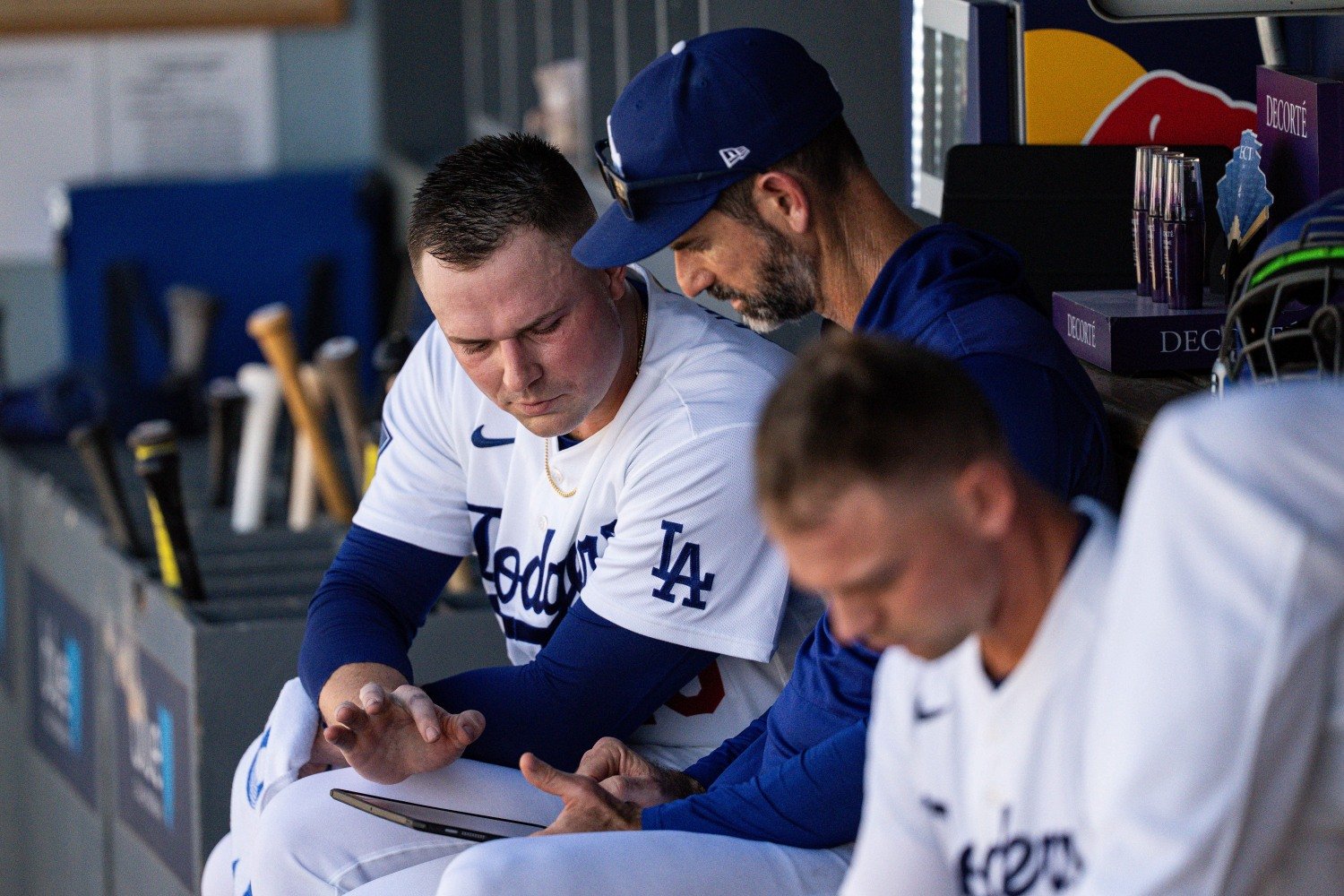 As games against Tarik Skubal go, the Brewers did well in 2026. They faced him twice, and though he got 18 outs in each appearance, the Crew also collected seven hits in each. They scored six runs, although one was unearned and another came home after he'd departed the game. It wasn't like they had his number and knocked him out of the box early—that only happened to Skubal once all year, really—but Milwaukee put up a good fight against him. It's always dangerous to extrapolate from previous experience when predicting the future, and that goes extra for baseball. Overindex on matchup history, and you can convince yourself that something very meaningful affected a recent batch of outcomes, when really, what occurred fell within the normal range that all players (and teams) experience. On the other hand, though, there's something to learn from everything you do and everything that happens to you. Let's run down a few things we can (and can't) learn from the two starts Skubal made against the Brewers this season, as the team gets ready to face him again. The Batting Order of Theseus Of all the things to know about those games and how they relate to this one, the most important is this: On April 23, Brandon Lockridge, Luis Matos, Blake Perkins and Luis Rengifo were in the lineup. On August 16, Lockridge and Jonathan Ornelas both started. That's a good reminder of several things, not least of which is that no team enters a playoff series as the same club they were all season. There is no "club they were all season". You never step into the same river or onto the same diamond twice. Change is a constant in life, but even more of one in baseball. For that matter, it's unlikely that the at-bats David Hamilton had against Skubal in April will matter much, either, for reasons we'll discuss more in a bit. Both times Skubal started against Milwaukee in the regular season, Gary Sánchez was in the middle of the lineup, and Christian Yelich and Garrett Mitchell were on the bench. Will that be true here in October? It's not guaranteed. The top-line results above, then, probably aren't as important as what we can glean from actually watching the games. Therefore, I went back to watch every pitch Skubal threw in those games. Get His Feet Moving There are a whole lot of pitchers who land in a more off-balance or unathletic position than Skubal. He's ready to field his position when he finishes delivering the ball—at least in theory. In practice, he's had some notable gaffes when forced to scramble after slow rollers and bunts over the years. Knowing that, the Brewers showed bunt (whether or not they even offered, let alone touched it or got it down) seven times in April and three times in August. Of all those bluffs and real attempts, only one (by Contreras, pulled back, in April) was by one of the players likely to start Sunday night. They were almost all effective, though, either at throwing Skubal off slightly and inducing a ball in a count when he clearly wanted to throw a strike; inviting him to throw a hittable pitch immediately afterward; or creating chaos by actually getting the bunt down. In the sixth inning of the game in Detroit in April, Hamilton had a bunt single, and Lockridge followed immediately with a sacrifice bunt that he showed late, which turned into a single when no Tigers player got to first base in time to get him. First baseman Spencer Torkelson had come in to field the ball; Skubal didn't break directly enough to cover the bag. The Tigers' corner infielders are much younger and faster than the Dodgers', too. Though neither Freddie Freeman nor Max Muncy is any slouch defensively, the best way for an offense to test each is to lay down a bunt or two. Freeman and Muncy are a combined 73 years old, and they run like it. Skubal isn't quick off the mound, though he lands in position to handle anything hit sharply back to him. Brice Turang, Luis Lara, Sal Frelick and Garrett Mitchell should at least show bunt a few times. How Aggressive is Too Aggressive? As most Brewers fans already know, no team in the league swings less often than the Brewers. That's situation-dependent, of course, but not entirely so. On the first pitch of at-bats, the league swings about 30% of the time, on average. The Brewers were second-least aggressive on the first pitch this year, offering just 28.2% of the time. Against pitchers whom they expect to fill up the zone and whom they know to have swing-and-miss stuff, though, the team changes tack. In 51 plate appearances against Skubal, they swung at the first pitch 24 times. Early swings against strike-throwing strikeout pitchers are good. They mitigate the chances of striking out, and indeed, the Brewers only fanned 12 times in those 51 plate appearances. That's not pretty (23.5% strikeout rate), but Skubal would typically punch out 15 or 16 batters in the same number of at-bats. It seemed that they had a good idea of how he would attack them, too. When he tried to get ahead with an out-of-zone changeup or a slider, they laid off. Their swings early were concentrated on his fastball. When right-handed batters got into deep counts, they started sitting on his changeup, with some success. Lefties stayed locked in on the heater. That's a good overall plan. Slightly less aggressiveness might be in order this time, though—not much, but slightly less. In August, the team worked Skubal hard and got his pitch count elevated early. He made it through six innings only because Dave Roberts was willing to push him. The hook will come slightly quicker Sunday night, so if they can get him to 80 pitches after four innings, they'll have a good chance of getting to hit against the Dodgers' middle relievers before the night is out. Besides, the approach they took this regular season was clearly (although slightly) overcooked. Most of their swings didn't produce balls in play, anyway. They'd have done just as well for themselves in those individual at-bats by taking the pitch, and they wouldn't have risked a quick out. It's Not the Same Joey Ortiz The really good news for Milwaukee is the player who looked worst against Skubal in both games. William Contreras had good swings against him. So did Turang, and Jackson Chourio. Pratt still hasn't seen him live, because he was on the injured list when the August start happened, but Andrew Vaughn and Jake Bauers both swung well in that game at Dodger Stadium. The one guy who looked utterly stumped, despite what seems to have been a solid gameplan, was Joey Ortiz. Unlike Contreras and Chourio, Ortiz seemed utterly unable to read the changeup. He chased that pitch repeatedly, and he got bullied by Skubal's fastball when the lefty sped him back up. Ortiz had a terrific resurgance after Pratt was called up and the team moved him to third base, but he looked as bad in August as he did in April, when it came to Skubal. By contrast, Hamilton had a hard-hit ball and the aforementioned bunt single back in April. Looking only at these games, you could make a case for starting Hamilton over Ortiz. However, underlying data tells us that Ortiz made a bigger change at the tail end of the year than the ones he made in the middle, and it should render him better able to handle Skubal this time. Ortiz's contact point moved about 5 inches farther in front of his body in September than it had been throughout the season. His attack angle (the vertical angle at which the barrel is traveling at contact, relative to the ground) shot up, and his attack direction swung sharply to the pull side. Ortiz is wired way, way better to hit Skubal right now than he was two months ago. On the whole, perhaps one can argue that the Brewers are less well-equipped, at least to get to Skubal the way they did in each of those previous outings. Perkins had a key double in the April game. The two bunts were pivotal, as was a misplayed grounder in the game in August. This team became more conventional as the season wore on, and while that might make them better-prepared for the playoffs as a whole, it did sap some of the quirky magic their offense ran on for the previous year or two. On balance, though, you'd rather have this Brewers team facing Skubal than any previous version, from April, August or any other time. Whether they all start or not, this will be the first time Chourio, Vaughn, Sánchez and Pratt are all available to play in the same game against the southpaw. Ortiz made meaningful improvements, and the power that Bauers, Contreras and Turang are capable of makes the lineup dangerous. They scored enough to make Skubal's teams work and to get him out of the game before Out No. 19 both times they saw him this year. To win Game 1, they need to do that again. They're unlikely to do it the same way, but they have avenues to that level of success open before them.
- 1 comment
-
- 1
-
-
- tarik skubal
- 2026 postseason
- (and 2 more)
-
Image courtesy of Jon Endow-Imagn Images As games against Tarik Skubal go, the Brewers did well in 2026. They faced him twice, and though he got 18 outs in each appearance, the Crew also collected seven hits in each. They scored six runs, although one was unearned and another came home after he'd departed the game. It wasn't like they had his number and knocked him out of the box early—that only happened to Skubal once all year, really—but Milwaukee put up a good fight against him. It's always dangerous to extrapolate from previous experience when predicting the future, and that goes extra for baseball. Overindex on matchup history, and you can convince yourself that something very meaningful affected a recent batch of outcomes, when really, what occurred fell within the normal range that all players (and teams) experience. On the other hand, though, there's something to learn from everything you do and everything that happens to you. Let's run down a few things we can (and can't) learn from the two starts Skubal made against the Brewers this season, as the team gets ready to face him again. The Batting Order of Theseus Of all the things to know about those games and how they relate to this one, the most important is this: On April 23, Brandon Lockridge, Luis Matos, Blake Perkins and Luis Rengifo were in the lineup. On August 16, Lockridge and Jonathan Ornelas both started. That's a good reminder of several things, not least of which is that no team enters a playoff series as the same club they were all season. There is no "club they were all season". You never step into the same river or onto the same diamond twice. Change is a constant in life, but even more of one in baseball. For that matter, it's unlikely that the at-bats David Hamilton had against Skubal in April will matter much, either, for reasons we'll discuss more in a bit. Both times Skubal started against Milwaukee in the regular season, Gary Sánchez was in the middle of the lineup, and Christian Yelich and Garrett Mitchell were on the bench. Will that be true here in October? It's not guaranteed. The top-line results above, then, probably aren't as important as what we can glean from actually watching the games. Therefore, I went back to watch every pitch Skubal threw in those games. Get His Feet Moving There are a whole lot of pitchers who land in a more off-balance or unathletic position than Skubal. He's ready to field his position when he finishes delivering the ball—at least in theory. In practice, he's had some notable gaffes when forced to scramble after slow rollers and bunts over the years. Knowing that, the Brewers showed bunt (whether or not they even offered, let alone touched it or got it down) seven times in April and three times in August. Of all those bluffs and real attempts, only one (by Contreras, pulled back, in April) was by one of the players likely to start Sunday night. They were almost all effective, though, either at throwing Skubal off slightly and inducing a ball in a count when he clearly wanted to throw a strike; inviting him to throw a hittable pitch immediately afterward; or creating chaos by actually getting the bunt down. In the sixth inning of the game in Detroit in April, Hamilton had a bunt single, and Lockridge followed immediately with a sacrifice bunt that he showed late, which turned into a single when no Tigers player got to first base in time to get him. First baseman Spencer Torkelson had come in to field the ball; Skubal didn't break directly enough to cover the bag. The Tigers' corner infielders are much younger and faster than the Dodgers', too. Though neither Freddie Freeman nor Max Muncy is any slouch defensively, the best way for an offense to test each is to lay down a bunt or two. Freeman and Muncy are a combined 73 years old, and they run like it. Skubal isn't quick off the mound, though he lands in position to handle anything hit sharply back to him. Brice Turang, Luis Lara, Sal Frelick and Garrett Mitchell should at least show bunt a few times. How Aggressive is Too Aggressive? As most Brewers fans already know, no team in the league swings less often than the Brewers. That's situation-dependent, of course, but not entirely so. On the first pitch of at-bats, the league swings about 30% of the time, on average. The Brewers were second-least aggressive on the first pitch this year, offering just 28.2% of the time. Against pitchers whom they expect to fill up the zone and whom they know to have swing-and-miss stuff, though, the team changes tack. In 51 plate appearances against Skubal, they swung at the first pitch 24 times. Early swings against strike-throwing strikeout pitchers are good. They mitigate the chances of striking out, and indeed, the Brewers only fanned 12 times in those 51 plate appearances. That's not pretty (23.5% strikeout rate), but Skubal would typically punch out 15 or 16 batters in the same number of at-bats. It seemed that they had a good idea of how he would attack them, too. When he tried to get ahead with an out-of-zone changeup or a slider, they laid off. Their swings early were concentrated on his fastball. When right-handed batters got into deep counts, they started sitting on his changeup, with some success. Lefties stayed locked in on the heater. That's a good overall plan. Slightly less aggressiveness might be in order this time, though—not much, but slightly less. In August, the team worked Skubal hard and got his pitch count elevated early. He made it through six innings only because Dave Roberts was willing to push him. The hook will come slightly quicker Sunday night, so if they can get him to 80 pitches after four innings, they'll have a good chance of getting to hit against the Dodgers' middle relievers before the night is out. Besides, the approach they took this regular season was clearly (although slightly) overcooked. Most of their swings didn't produce balls in play, anyway. They'd have done just as well for themselves in those individual at-bats by taking the pitch, and they wouldn't have risked a quick out. It's Not the Same Joey Ortiz The really good news for Milwaukee is the player who looked worst against Skubal in both games. William Contreras had good swings against him. So did Turang, and Jackson Chourio. Pratt still hasn't seen him live, because he was on the injured list when the August start happened, but Andrew Vaughn and Jake Bauers both swung well in that game at Dodger Stadium. The one guy who looked utterly stumped, despite what seems to have been a solid gameplan, was Joey Ortiz. Unlike Contreras and Chourio, Ortiz seemed utterly unable to read the changeup. He chased that pitch repeatedly, and he got bullied by Skubal's fastball when the lefty sped him back up. Ortiz had a terrific resurgance after Pratt was called up and the team moved him to third base, but he looked as bad in August as he did in April, when it came to Skubal. By contrast, Hamilton had a hard-hit ball and the aforementioned bunt single back in April. Looking only at these games, you could make a case for starting Hamilton over Ortiz. However, underlying data tells us that Ortiz made a bigger change at the tail end of the year than the ones he made in the middle, and it should render him better able to handle Skubal this time. Ortiz's contact point moved about 5 inches farther in front of his body in September than it had been throughout the season. His attack angle (the vertical angle at which the barrel is traveling at contact, relative to the ground) shot up, and his attack direction swung sharply to the pull side. Ortiz is wired way, way better to hit Skubal right now than he was two months ago. On the whole, perhaps one can argue that the Brewers are less well-equipped, at least to get to Skubal the way they did in each of those previous outings. Perkins had a key double in the April game. The two bunts were pivotal, as was a misplayed grounder in the game in August. This team became more conventional as the season wore on, and while that might make them better-prepared for the playoffs as a whole, it did sap some of the quirky magic their offense ran on for the previous year or two. On balance, though, you'd rather have this Brewers team facing Skubal than any previous version, from April, August or any other time. Whether they all start or not, this will be the first time Chourio, Vaughn, Sánchez and Pratt are all available to play in the same game against the southpaw. Ortiz made meaningful improvements, and the power that Bauers, Contreras and Turang are capable of makes the lineup dangerous. They scored enough to make Skubal's teams work and to get him out of the game before Out No. 19 both times they saw him this year. To win Game 1, they need to do that again. They're unlikely to do it the same way, but they have avenues to that level of success open before them. View full article
-
Image courtesy of USA TODAY Network via Reuters Connect Yes, it's nice to have the monkey off their back. No longer can anyone say that the Brewers haven't won on the road in the postseason since 2018. Yes, it was nice to see the formula work to perfection on the mound, even with Robert Gasser as the first hurler of the night. When the Brewers closed out the Padres Wednesday night, though, they didn't just achieve an important symbolic or moral victory. The significance of the win wasn't in the resilience it took to achieve it. It's much more concrete than that, and much greater. Winning this series in four games was huge. It might well be the difference between winning and losing in the NLCS. Jacob Misiorowski did briefly warm up in the ninth inning, but he never had to truly fire it up, let alone come into the game. More importantly, he won't have to pitch Friday in Milwaukee to save the team's season. Instead, he gets another clean start in a Game 1 at Uecker Field, facing the Dodgers as the tone-setter in his team's bid to avenge their loss in last year's version of this matchup. The difference between Misiorowski having to start Game 5 against the Padres and getting to start Game 1 against the Dodgers is probably a full expected win in the series for Milwaukee. Firstly, there's much less chance that Misiorowski is limited to one start in the series. Secondly, his first start will come at home, where he's been much better this year (for a tangible reason: the mound there is better for him than when the Brewers are on the road), rather than coming at Dodger Stadium in Game 3. In other words, in most of the cases in which he gets an extra start this way, it's a start at home that's added to the mix. Thirdly, if the series should go to seven games, Misiorowski is likely to be available in relief, whereas he would only get a second start if the series went seven games had he pitched Game 3. He's worth about 1.3 runs above average per 20 batters faced, and he probably picked up 20 expected batters faced in this series by getting to pitch in Game 1 of it. If you take even one or two runs away from the Dodgers in a given game because Misiorowski is available to work it instead of (for instance) Chad Patrick or Shane Drohan, you dramatically alter the balance of that game. Just as importantly, the Brewers will get extra rest for their relievers, whom Pat Murphy (unsurprisingly) rode hard in this series. Top three bullpen options Abner Uribe, Aaron Ashby and Trevor Megill combined for 10 appearances and 12 2/3 innings pitched. If the series had gone to Game 5, the trio might all have appeared again. At a minimum, they probably would have added another seven outs to that collective tally, and they'd have entered the NLCS with just one day of rest. Instead, all three (and the rest of the staff) get three days to relax and recover. Multiple Brewers position players showed signs of fatigue or nagging injury either late in the season or during this San Diego series, too. Brice Turang, Jake Bauers, Joey Ortiz and William Contreras will all benefit from an extra couple days to prepare for the series ahead. Last fall, the emotion and the stakes of the Brewers' series against the archrival Cubs seemed to drain them, and they had little turnaround time before the NLCS began. Their win over the Padres was extreme;y hard-fought, too, but they don't come out of it seeming nearly as spent. They didn't celebrate as rowdily. This team is ready to take on Los Angeles this fall, in a way they weren't last year, and their win in Game 4 Wednesday night set the stage for them to do just that. It was, arguably, the biggest win the franchise has had since they claimed their only pennant, in Game 5 of the 1982 ALCS. It might be remembered as the game that facilitated the team's push to a second such flag. View full article
-
Wednesday Night's Was the Biggest Brewers Win Since 1982
Matthew Trueblood posted an article in Brewers
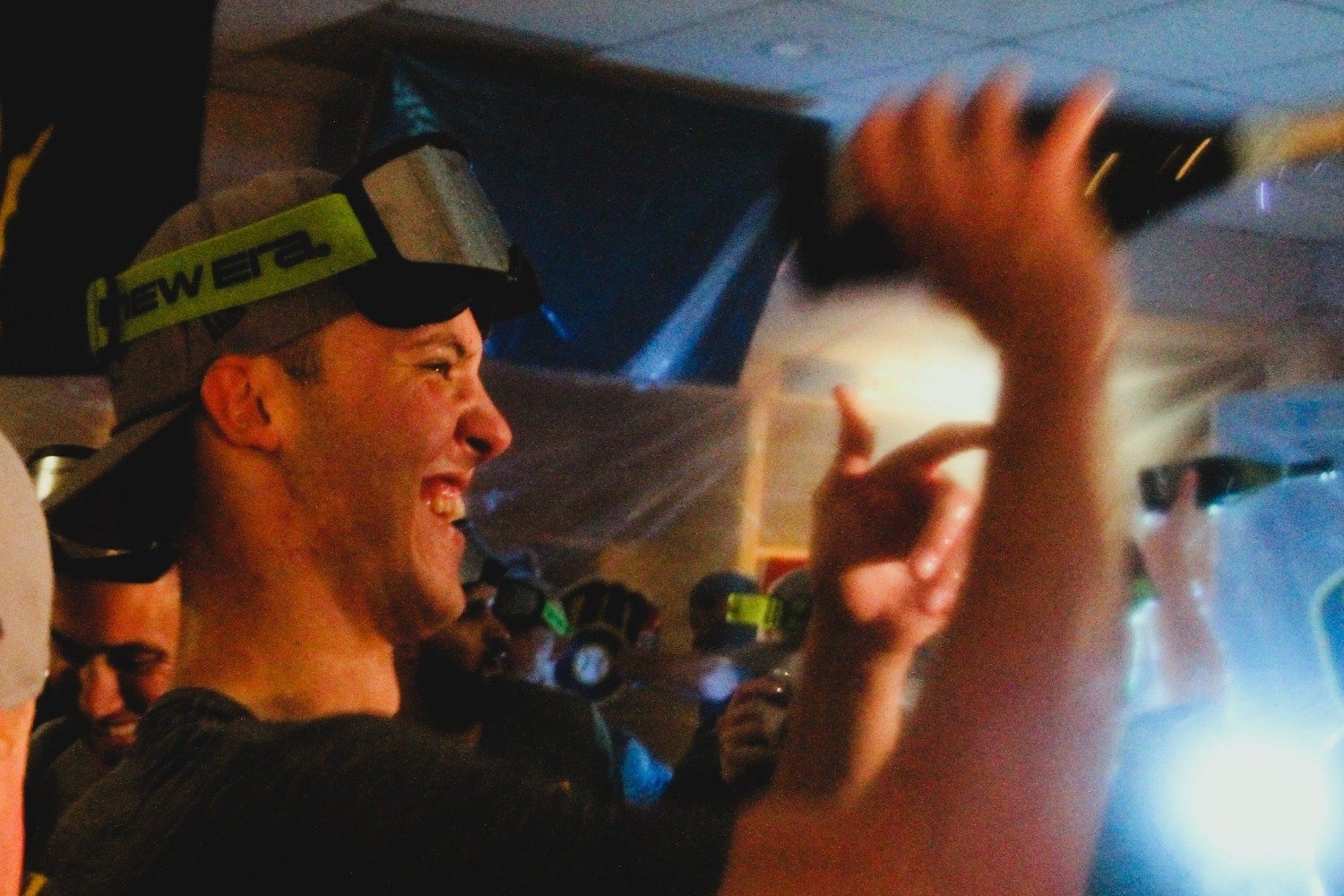 Yes, it's nice to have the monkey off their back. No longer can anyone say that the Brewers haven't won on the road in the postseason since 2018. Yes, it was nice to see the formula work to perfection on the mound, even with Robert Gasser as the first hurler of the night. When the Brewers closed out the Padres Wednesday night, though, they didn't just achieve an important symbolic or moral victory. The significance of the win wasn't in the resilience it took to achieve it. It's much more concrete than that, and much greater. Winning this series in four games was huge. It might well be the difference between winning and losing in the NLCS. Jacob Misiorowski did briefly warm up in the ninth inning, but he never had to truly fire it up, let alone come into the game. More importantly, he won't have to pitch Friday in Milwaukee to save the team's season. Instead, he gets another clean start in a Game 1 at Uecker Field, facing the Dodgers as the tone-setter in his team's bid to avenge their loss in last year's version of this matchup. The difference between Misiorowski having to start Game 5 against the Padres and getting to start Game 1 against the Dodgers is probably a full expected win in the series for Milwaukee. Firstly, there's much less chance that Misiorowski is limited to one start in the series. Secondly, his first start will come at home, where he's been much better this year (for a tangible reason: the mound there is better for him than when the Brewers are on the road), rather than coming at Dodger Stadium in Game 3. In other words, in most of the cases in which he gets an extra start this way, it's a start at home that's added to the mix. Thirdly, if the series should go to seven games, Misiorowski is likely to be available in relief, whereas he would only get a second start if the series went seven games had he pitched Game 3. He's worth about 1.3 runs above average per 20 batters faced, and he probably picked up 20 expected batters faced in this series by getting to pitch in Game 1 of it. If you take even one or two runs away from the Dodgers in a given game because Misiorowski is available to work it instead of (for instance) Chad Patrick or Shane Drohan, you dramatically alter the balance of that game. Just as importantly, the Brewers will get extra rest for their relievers, whom Pat Murphy (unsurprisingly) rode hard in this series. Top three bullpen options Abner Uribe, Aaron Ashby and Trevor Megill combined for 10 appearances and 12 2/3 innings pitched. If the series had gone to Game 5, the trio might all have appeared again. At a minimum, they probably would have added another seven outs to that collective tally, and they'd have entered the NLCS with just one day of rest. Instead, all three (and the rest of the staff) get three days to relax and recover. Multiple Brewers position players showed signs of fatigue or nagging injury either late in the season or during this San Diego series, too. Brice Turang, Jake Bauers, Joey Ortiz and William Contreras will all benefit from an extra couple days to prepare for the series ahead. Last fall, the emotion and the stakes of the Brewers' series against the archrival Cubs seemed to drain them, and they had little turnaround time before the NLCS began. Their win over the Padres was extreme;y hard-fought, too, but they don't come out of it seeming nearly as spent. They didn't celebrate as rowdily. This team is ready to take on Los Angeles this fall, in a way they weren't last year, and their win in Game 4 Wednesday night set the stage for them to do just that. It was, arguably, the biggest win the franchise has had since they claimed their only pennant, in Game 5 of the 1982 ALCS. It might be remembered as the game that facilitated the team's push to a second such flag.
- 5 comments
-
- 2
-
-
- 2026 postseason
- jacob misiorowski
- (and 3 more)
-
Image courtesy of Denis Poroy-Imagn Images At long last, in the sixth inning, you could start to breathe—as long as you're not the claustrophobic type. The Brewers already led 2-1 when the inning began, and then Jake Bauers hit a single. Cooper Pratt followed with an automatic double, and Sal Frelick followed that with a sacrifice fly to bring home Bauers. That gave Milwaukee a two-run lead. In this series, that's a lot; that's a windfall. It was fitting that Bauers, Pratt and Frelick would combine to push across the final tally and begin to stretch the game toward its conclusion—to bring on the sense of inevitability that accompanied so many Brewers wins this year, but which had been absent from the series until that late juncture. After a mostly dreadful series, Bauers was miles better in Game 4; he delivered exactly what the team needed. Walks in his first two plate appearances kept the line moving and broke down the Padres' initial pitching plan, which was in tatters by the middle of the game. He also saved a throwing error by Pratt on one bad throw early in the contest. Pratt, meanwhile, made more than one bad throw (including one Bauers couldn't save him from) early; he looked tight and scared. He was having bad at-bats, too. Overall, though, he had a strong series, with some key offensive contributions, so to come back with such force in the middle of the game Wednesday night was somewhat to be expected. Frelick, whose hard-worked walk and superb baserunning and strong throwing arm were keys to the team's moving Game 2 comeback, finished the team's final scoring rally with a just-enough batted ball; the perfect emblem with which to seal a just-enough, hard-worked series win. They were far from being the only heroes, of course. Robert Gasser put the team ahead of schedule with four innings on the mound, looking unflappable even amid terrible early support from his defense. Joey Ortiz allowed a bunt single to Manny Machado by being too slow charging and throwing, and later in the first inning, he eschewed a throw to first base on what could have been an inning-ending 5-3 double play. There were mistakes and missed opportunities like that dotted throughout the game for the Brewers, just as there were throughout the series, but Gasser's ability to work around the problem and avoid damage kept the miscues behind him from snowballing. Aaron Ashby came through equally brilliantly. Taking over for Gasser, he ended up working three almost-spotless innings, with his power sinker and his high-spin curveball both humming. It was under Ashby's watch that the game really settled down. The Brewers first took the lead, then extended it, and Ashby didn't even permit rallies that he then had to thwart. He was in command, and after a while, so were the Brewers. Then, of course, they nearly weren't. That's how this series has gone, so it was no surprise when Abner Uribe walked Fernando Tatis Jr. to lead off the bottom of the eighth. If Danger wasn't in your face hollering at you, over the last four games, it was just circling around behind you, ready to rise at your back like the sun—hot, lethal, unstoppable, eternal. Uribe walked Tatis, but he recovered to strike out Jackson Merrill. That brought up Machado, though, and Machado has already gotten a long look at Uribe during this series. He got a sinker that was down, but on the inner half, and he dropped the bat head on it. It was a classic Machado swing, and that almost-safe two-run lead looked like it was sailing into the night, never to return. But Garrett Mitchell was there. Mitchell had plenty of time to get under the ball. He'd been playing deep, and it was hit with plenty of loft. The wall just to the right of dead center at Petco Park is not very tall. Mitchell got into position, went up off both feet, and caught the ball with both hands—smartly using both, because it helped him manage and survive contact from the reaching hands of fans hoping to catch the hero shot. He came down with it. One harmless foul pop-up (harmless, at least, thanks to Brice Turang and Bauers communicating well and not panicking on an in-between ball) later, the Brewers were back in the dugout. Six outs later, they got to celebrate. It was Mitchell's night; he had a leadoff triple in the top of the fifth and came home with what was officially the winning run. He was everywhere in Game 4, after often looking overmatched in the first three contests. His catch will be part of Brewers playoff lore forever. It was a wonderful set of moments, for a player who almost wasn't part of this team. Mitchell's chronic injury issues left his future very much in doubt by the end of last season. The Brewers tendered him a contract at the November deadline, but it wasn't without a conversation about whether to do so. His talent has always been obvious, but he's so rarely been able to stay on the field and display it that the club almost had to move on. Now, after a season in which he more than doubled his career playing time, he's also a playoff hero again. That sums up this team quite nicely. The series was exhausting. Of the 300 plate appearances between the two teams over four games, less than 20% came with a two-run cushion either way, and neither team ever held a lead larger than that. In fact, until that Frelick sacrifice fly in the sixth inning Wednesday, there'd been only 30 such plate appearances in the series, with the plurality of them coming in the first three innings of Game 1. That's how ferociously the combatants contested this set. That's how easily it could have tilted either way. Huge numbers of plays weren't made (or were made badly) in this series. There were some bad at-bats, especially when the team had chances to cash in big opportunities on offense. Fortunately, the series won't be remembered for those. It will be remembered, instead, for Jackson Chourio's walkoff single in Game 2, and for the homers by Chourio and William Contreras to win Game 1, and for Mitchell's heroics in Game 4. It might also be remembered mostly as a stepping-stone series. The Brewers hadn't beaten a team outside the NL Central in a playoff series since 2018, and they hadn't won a road playoff game since then, either. With those demons vanquished, they enter the NLCS against the Dodgers (who finished off the team from outside Atlanta Wednesday night) feeling like a more fully qualified challenger to the two-time defending champions. They should even be the favorites. This should finally be the year that the Brewers claim their first National League pennant, and although that moment (if it comes) will be much more thrilling for most fans, this series was a very worthy chapter in any championship storybook. View full article
-
Brewers Outlast, Outpitch Padres to Advance to Second Straight NLCS
Matthew Trueblood posted an article in Brewers
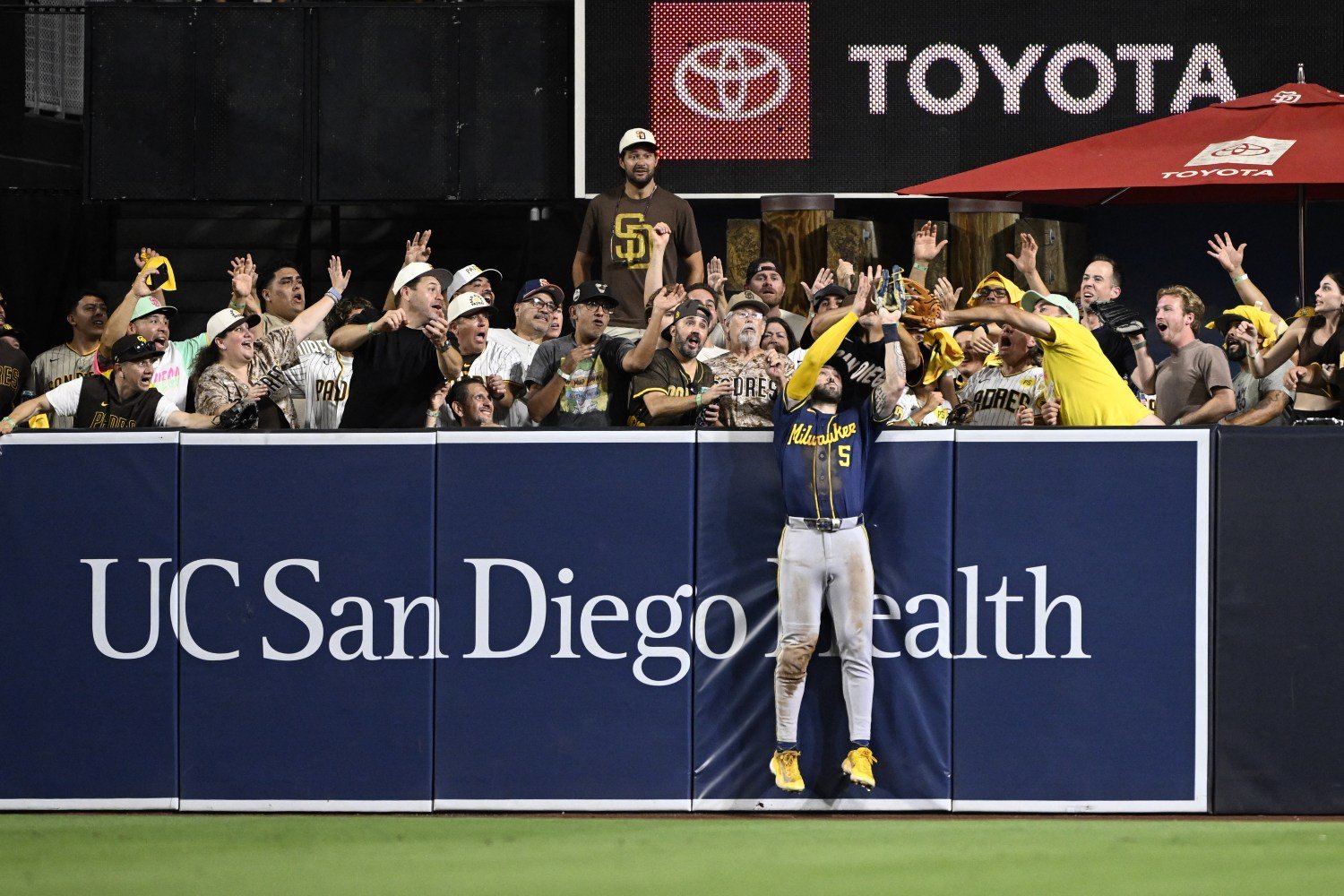 At long last, in the sixth inning, you could start to breathe—as long as you're not the claustrophobic type. The Brewers already led 2-1 when the inning began, and then Jake Bauers hit a single. Cooper Pratt followed with an automatic double, and Sal Frelick followed that with a sacrifice fly to bring home Bauers. That gave Milwaukee a two-run lead. In this series, that's a lot; that's a windfall. It was fitting that Bauers, Pratt and Frelick would combine to push across the final tally and begin to stretch the game toward its conclusion—to bring on the sense of inevitability that accompanied so many Brewers wins this year, but which had been absent from the series until that late juncture. After a mostly dreadful series, Bauers was miles better in Game 4; he delivered exactly what the team needed. Walks in his first two plate appearances kept the line moving and broke down the Padres' initial pitching plan, which was in tatters by the middle of the game. He also saved a throwing error by Pratt on one bad throw early in the contest. Pratt, meanwhile, made more than one bad throw (including one Bauers couldn't save him from) early; he looked tight and scared. He was having bad at-bats, too. Overall, though, he had a strong series, with some key offensive contributions, so to come back with such force in the middle of the game Wednesday night was somewhat to be expected. Frelick, whose hard-worked walk and superb baserunning and strong throwing arm were keys to the team's moving Game 2 comeback, finished the team's final scoring rally with a just-enough batted ball; the perfect emblem with which to seal a just-enough, hard-worked series win. They were far from being the only heroes, of course. Robert Gasser put the team ahead of schedule with four innings on the mound, looking unflappable even amid terrible early support from his defense. Joey Ortiz allowed a bunt single to Manny Machado by being too slow charging and throwing, and later in the first inning, he eschewed a throw to first base on what could have been an inning-ending 5-3 double play. There were mistakes and missed opportunities like that dotted throughout the game for the Brewers, just as there were throughout the series, but Gasser's ability to work around the problem and avoid damage kept the miscues behind him from snowballing. Aaron Ashby came through equally brilliantly. Taking over for Gasser, he ended up working three almost-spotless innings, with his power sinker and his high-spin curveball both humming. It was under Ashby's watch that the game really settled down. The Brewers first took the lead, then extended it, and Ashby didn't even permit rallies that he then had to thwart. He was in command, and after a while, so were the Brewers. Then, of course, they nearly weren't. That's how this series has gone, so it was no surprise when Abner Uribe walked Fernando Tatis Jr. to lead off the bottom of the eighth. If Danger wasn't in your face hollering at you, over the last four games, it was just circling around behind you, ready to rise at your back like the sun—hot, lethal, unstoppable, eternal. Uribe walked Tatis, but he recovered to strike out Jackson Merrill. That brought up Machado, though, and Machado has already gotten a long look at Uribe during this series. He got a sinker that was down, but on the inner half, and he dropped the bat head on it. It was a classic Machado swing, and that almost-safe two-run lead looked like it was sailing into the night, never to return. But Garrett Mitchell was there. Mitchell had plenty of time to get under the ball. He'd been playing deep, and it was hit with plenty of loft. The wall just to the right of dead center at Petco Park is not very tall. Mitchell got into position, went up off both feet, and caught the ball with both hands—smartly using both, because it helped him manage and survive contact from the reaching hands of fans hoping to catch the hero shot. He came down with it. One harmless foul pop-up (harmless, at least, thanks to Brice Turang and Bauers communicating well and not panicking on an in-between ball) later, the Brewers were back in the dugout. Six outs later, they got to celebrate. It was Mitchell's night; he had a leadoff triple in the top of the fifth and came home with what was officially the winning run. He was everywhere in Game 4, after often looking overmatched in the first three contests. His catch will be part of Brewers playoff lore forever. It was a wonderful set of moments, for a player who almost wasn't part of this team. Mitchell's chronic injury issues left his future very much in doubt by the end of last season. The Brewers tendered him a contract at the November deadline, but it wasn't without a conversation about whether to do so. His talent has always been obvious, but he's so rarely been able to stay on the field and display it that the club almost had to move on. Now, after a season in which he more than doubled his career playing time, he's also a playoff hero again. That sums up this team quite nicely. The series was exhausting. Of the 300 plate appearances between the two teams over four games, less than 20% came with a two-run cushion either way, and neither team ever held a lead larger than that. In fact, until that Frelick sacrifice fly in the sixth inning Wednesday, there'd been only 30 such plate appearances in the series, with the plurality of them coming in the first three innings of Game 1. That's how ferociously the combatants contested this set. That's how easily it could have tilted either way. Huge numbers of plays weren't made (or were made badly) in this series. There were some bad at-bats, especially when the team had chances to cash in big opportunities on offense. Fortunately, the series won't be remembered for those. It will be remembered, instead, for Jackson Chourio's walkoff single in Game 2, and for the homers by Chourio and William Contreras to win Game 1, and for Mitchell's heroics in Game 4. It might also be remembered mostly as a stepping-stone series. The Brewers hadn't beaten a team outside the NL Central in a playoff series since 2018, and they hadn't won a road playoff game since then, either. With those demons vanquished, they enter the NLCS against the Dodgers (who finished off the team from outside Atlanta Wednesday night) feeling like a more fully qualified challenger to the two-time defending champions. They should even be the favorites. This should finally be the year that the Brewers claim their first National League pennant, and although that moment (if it comes) will be much more thrilling for most fans, this series was a very worthy chapter in any championship storybook.
- 2 comments
-
- 1
-
-
- garrett mitchell
- trevor megill
- (and 3 more)
-
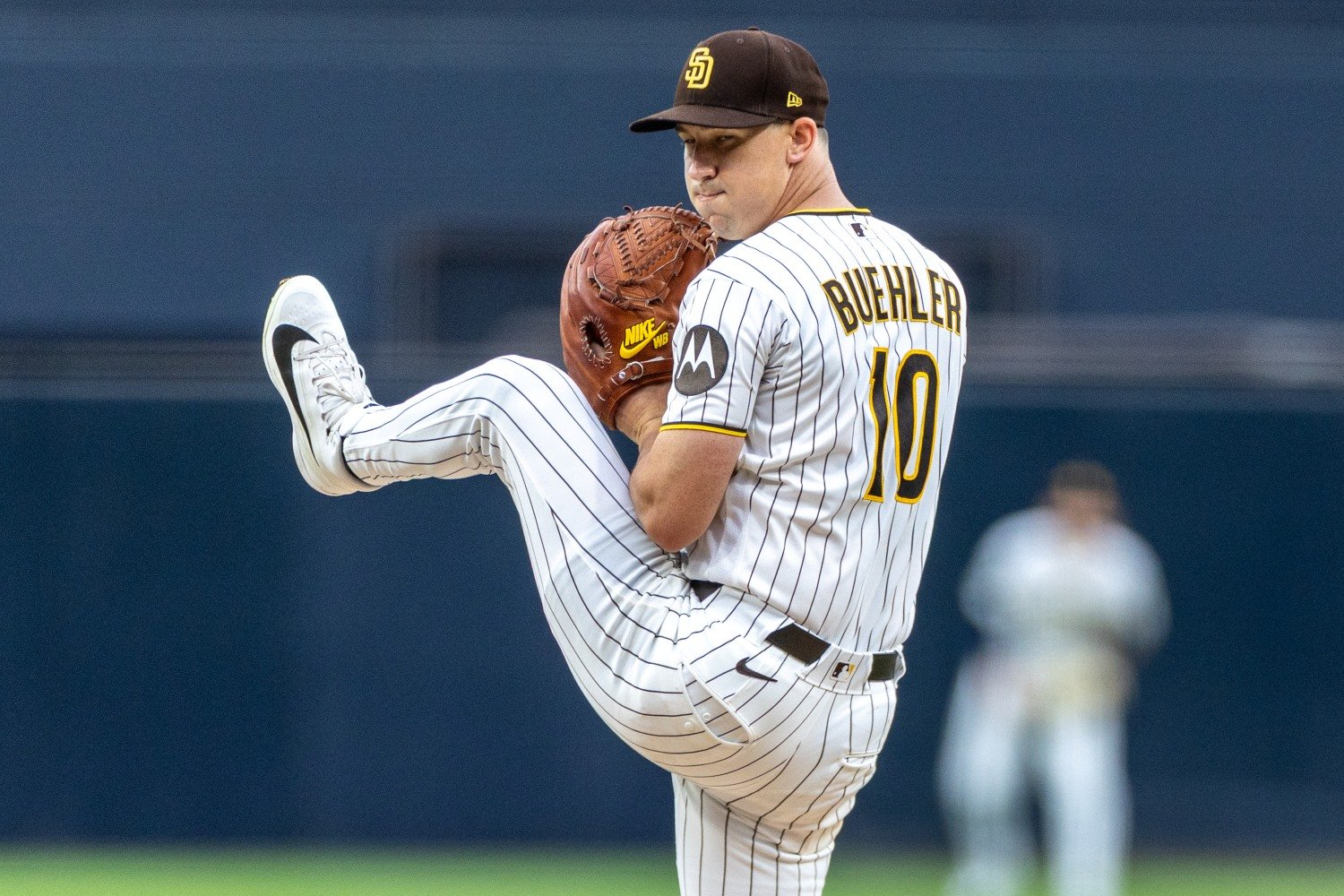 Above all, prepare for an eyeroll's worth of allusions to 'Dad Strength' on Wednesday night's game broadcast. The Padres' star closer will be fresh off a (very brief) paternity leave. The Padres' starting pitcher will be fresh off paternity leave. Fans even informally call the Padres the 'dads' when this sort of confluence isn't happening. There will be signs in the stands; the TV cameras will find them. FOX's broadcast team will roll with it. See if you can get your feed to sync up with Brewers radio, and hope for the best. It's all we can do. Ah, but maybe you're (almost) as concerned about how the Brewers can actually win Game 4 and end the series—not to mention their 12-game road losing streak in postseason games, stretching back to 2018—as about how to avoid or absorb the tidal wave of puns ahead. In that case, let's break it down a bit. That new dad toeing the rubber to begin the game for the Friars is Walker Buehler. It's vital that the Crew pounce on him and score some runs, rather than trying to scrape their way to runs against the San Diego bullpen again. Who will be most important in that effort? What should their lineup look like? Let's consider the key factors. Firstly, if it's been a while since you paid close attention to Buehler, it's time to update your conception of him. The flamethrowing strikeout maven who was capable of overpowering hitters with a four-seam fastball and little else is long gone. On the other side of multiple years of injury trouble, Buehler is much less dominant—but he can still be quite effective. He's throwing the kitchen sink at you, but he's doing it with some feel and some smarts. To righties, Buehler leans heaviest on his sinker, but just barely. He has all three fastball variants, now, and he sprinkles in a slider and a sweeper that move away from same-handed batters. The sinker, running in on them, sets up those swerving breakers best. To lefties, though, he favors the cutter and the four-seamer, with the more vertical curveball and a fading changeup as the complementary pieces. When he had a power arm, the bulldog-like Buehler sometimes struck out over 29% of opposing batters, but you can't do that with the velocity or the arsenal he has now. He fanned a below-average 20.1% of batters this year, with roughly an average walk rate. That's why he ended up with an uninspiring 4.63 ERA, and why he didn't start either game of the Wild Card Series or figure into the team's plans for the first part of this one, even before stepping away from the team for the birth of his child. He's gettable now. In fact, go down the list of pitchers most similar to him in terms of stuff (according to Baseball Savant), and all you see are gettable guys. Javier Assad of the Cubs was his closest comp this year. There's hardly a stud among the collection of hurlers who broadly match what he does. There's an opportunity here. How can the Brewers best exploit it, though? Glad you asked. Of the 13 position players on Milwaukee's NLDS roster, 12 saw at least 31 pitches this year against the 18 pitchers shown above, including Buehler. (Gary Sánchez is the exception.) Garrett Mitchell, Brice Turang and Jake Bauers each saw over 100 pitches against that set of arms. From those matchups, we can glean something meaningful about who hits Buehler (and, crucially, pitchers like Buehler) well. Here are the big takeaways from studying the data: It Should Be Joey Ortiz Over David Hamilton Most Brewers fans don't need telling twice on this front. Ortiz has become far more popular than his hot-corner platoon partner, with good reason. From June 1 on, Ortiz batted .331/.375/.506 against right-handed pitchers, compared to Hamilton's .267/.328/.382, meaning he was better than Hamilton even in the portion of the platoon that should have belonged to the latter. (It's worth noting, though, that Ortiz was protected from bad matchups pretty proactively during that time, and got fewer plate appearances against righties in that span than Hamilton did.) He's also the most reliable defender at third base. Rather than complicating that picture, isolating matchups against this pitching cohort makes the decision far easier. Ortiz hit the ball on the ground a ton against the group, but he hit it hard, and he showed good plate discipline. Hamilton, by contrast, looked oddly overmatched in plate appearances against this type of righty, who shouldn't really overmatch left-handed batters. Ortiz was 2 runs better than average per 100 pitches seen against those 18 hurlers; Hamilton was 2.3 runs worse than average. This isn't a close call. Even if whoever starts only sees six or seven pitches against Buehler, Ortiz is worth about a third of an expected run over Hamilton in this matchup. That's a huge margin for such a small thing. Luis Lara Should Start Over Sal Frelick There's no easy platoon call to make between Luis Lara and Sal Frelick in right field, but the matchup favors Lara. The difference between them in showdowns with these 18 hurlers was 3.1 runs per 100 pitches, rather than the 4.3 that separates Ortiz and Hamilton, but that's still pretty telling. Frelick really struggled to get off his 'A' swing against that class of pitcher, especially as the season wore on. Lara went 0-for-2 against Buehler himself on August 11, but he seemed to see the ball well and worked ahead in counts. More broadly, he showed a knack for squaring up hurlers who pitch like Buehler does. Defensively, this is close to a wash. It might all come down to whether Pat Murphy believes Lara can stay within himself and play poised, smart baseball in the cauldron of noise and intensity that is Petco Park. By the numbers, though, Lara deserves the nod. Brice Turang Should Slide Back Up There's no perfect answer in the top half of the lineup right now. Brice Turang isn't at his best, but neither is Jake Bauers. William Contreras, meanwhile, had the worst outputs against this class of pitchers of any Brewers batter this year. He's manipulable in exactly the ways that Buehler likes to manipulate righty batters. Milwaukee needs to get runs in fast sequences that might start at the bottom of the order—in addition to Ortiz and Lara, Cooper Pratt did well against these 18 pitchers—but will need to be cashed in at the very top. Thankfully, Jackson Chourio's swing and approach are perfect for what Buehler tries to do. Chourio was worth 2.7 runs per 100 pitches seen against Buehler-like pitchers this season, though much of that damage came relatively early in the campaign. He should do damage in this game. Turang is the best lieutenant for him, though. He was about as good as Ortiz was against La Famiglia Buehler; Bauers has a brutal 34.9% whiff rate against them and needs to slide lower. Hopefully, a swift knockout punch from the top two in the order will spare Bauers the extra look at Buehler, anyway. Mason Miller and Adrian Morejon are, reportedly, available at the back end of the San Diego bullpen Wednesday night. The Brewers have already beaten each in this series, of course, but it wouldn't do to bet on doing that again. They need to take an early lead, for the first time in the series. That makes the first few innings high-leverage ones, from an offensive standpoint. To ensure that they win the pivotal first three frames, they should make sure Ortiz and Lara are in the lineup and that Turang is back in the 2-hole.
 -
Image courtesy of David Frerker-Imagn Images Above all, prepare for an eyeroll's worth of allusions to 'Dad Strength' on Wednesday night's game broadcast. The Padres' star closer will be fresh off a (very brief) paternity leave. The Padres' starting pitcher will be fresh off paternity leave. Fans even informally call the Padres the 'dads' when this sort of confluence isn't happening. There will be signs in the stands; the TV cameras will find them. FOX's broadcast team will roll with it. See if you can get your feed to sync up with Brewers radio, and hope for the best. It's all we can do. Ah, but maybe you're (almost) as concerned about how the Brewers can actually win Game 4 and end the series—not to mention their 12-game road losing streak in postseason games, stretching back to 2018—as about how to avoid or absorb the tidal wave of puns ahead. In that case, let's break it down a bit. That new dad toeing the rubber to begin the game for the Friars is Walker Buehler. It's vital that the Crew pounce on him and score some runs, rather than trying to scrape their way to runs against the San Diego bullpen again. Who will be most important in that effort? What should their lineup look like? Let's consider the key factors. Firstly, if it's been a while since you paid close attention to Buehler, it's time to update your conception of him. The flamethrowing strikeout maven who was capable of overpowering hitters with a four-seam fastball and little else is long gone. On the other side of multiple years of injury trouble, Buehler is much less dominant—but he can still be quite effective. He's throwing the kitchen sink at you, but he's doing it with some feel and some smarts. To righties, Buehler leans heaviest on his sinker, but just barely. He has all three fastball variants, now, and he sprinkles in a slider and a sweeper that move away from same-handed batters. The sinker, running in on them, sets up those swerving breakers best. To lefties, though, he favors the cutter and the four-seamer, with the more vertical curveball and a fading changeup as the complementary pieces. When he had a power arm, the bulldog-like Buehler sometimes struck out over 29% of opposing batters, but you can't do that with the velocity or the arsenal he has now. He fanned a below-average 20.1% of batters this year, with roughly an average walk rate. That's why he ended up with an uninspiring 4.63 ERA, and why he didn't start either game of the Wild Card Series or figure into the team's plans for the first part of this one, even before stepping away from the team for the birth of his child. He's gettable now. In fact, go down the list of pitchers most similar to him in terms of stuff (according to Baseball Savant), and all you see are gettable guys. Javier Assad of the Cubs was his closest comp this year. There's hardly a stud among the collection of hurlers who broadly match what he does. There's an opportunity here. How can the Brewers best exploit it, though? Glad you asked. Of the 13 position players on Milwaukee's NLDS roster, 12 saw at least 31 pitches this year against the 18 pitchers shown above, including Buehler. (Gary Sánchez is the exception.) Garrett Mitchell, Brice Turang and Jake Bauers each saw over 100 pitches against that set of arms. From those matchups, we can glean something meaningful about who hits Buehler (and, crucially, pitchers like Buehler) well. Here are the big takeaways from studying the data: It Should Be Joey Ortiz Over David Hamilton Most Brewers fans don't need telling twice on this front. Ortiz has become far more popular than his hot-corner platoon partner, with good reason. From June 1 on, Ortiz batted .331/.375/.506 against right-handed pitchers, compared to Hamilton's .267/.328/.382, meaning he was better than Hamilton even in the portion of the platoon that should have belonged to the latter. (It's worth noting, though, that Ortiz was protected from bad matchups pretty proactively during that time, and got fewer plate appearances against righties in that span than Hamilton did.) He's also the most reliable defender at third base. Rather than complicating that picture, isolating matchups against this pitching cohort makes the decision far easier. Ortiz hit the ball on the ground a ton against the group, but he hit it hard, and he showed good plate discipline. Hamilton, by contrast, looked oddly overmatched in plate appearances against this type of righty, who shouldn't really overmatch left-handed batters. Ortiz was 2 runs better than average per 100 pitches seen against those 18 hurlers; Hamilton was 2.3 runs worse than average. This isn't a close call. Even if whoever starts only sees six or seven pitches against Buehler, Ortiz is worth about a third of an expected run over Hamilton in this matchup. That's a huge margin for such a small thing. Luis Lara Should Start Over Sal Frelick There's no easy platoon call to make between Luis Lara and Sal Frelick in right field, but the matchup favors Lara. The difference between them in showdowns with these 18 hurlers was 3.1 runs per 100 pitches, rather than the 4.3 that separates Ortiz and Hamilton, but that's still pretty telling. Frelick really struggled to get off his 'A' swing against that class of pitcher, especially as the season wore on. Lara went 0-for-2 against Buehler himself on August 11, but he seemed to see the ball well and worked ahead in counts. More broadly, he showed a knack for squaring up hurlers who pitch like Buehler does. Defensively, this is close to a wash. It might all come down to whether Pat Murphy believes Lara can stay within himself and play poised, smart baseball in the cauldron of noise and intensity that is Petco Park. By the numbers, though, Lara deserves the nod. Brice Turang Should Slide Back Up There's no perfect answer in the top half of the lineup right now. Brice Turang isn't at his best, but neither is Jake Bauers. William Contreras, meanwhile, had the worst outputs against this class of pitchers of any Brewers batter this year. He's manipulable in exactly the ways that Buehler likes to manipulate righty batters. Milwaukee needs to get runs in fast sequences that might start at the bottom of the order—in addition to Ortiz and Lara, Cooper Pratt did well against these 18 pitchers—but will need to be cashed in at the very top. Thankfully, Jackson Chourio's swing and approach are perfect for what Buehler tries to do. Chourio was worth 2.7 runs per 100 pitches seen against Buehler-like pitchers this season, though much of that damage came relatively early in the campaign. He should do damage in this game. Turang is the best lieutenant for him, though. He was about as good as Ortiz was against La Famiglia Buehler; Bauers has a brutal 34.9% whiff rate against them and needs to slide lower. Hopefully, a swift knockout punch from the top two in the order will spare Bauers the extra look at Buehler, anyway. Mason Miller and Adrian Morejon are, reportedly, available at the back end of the San Diego bullpen Wednesday night. The Brewers have already beaten each in this series, of course, but it wouldn't do to bet on doing that again. They need to take an early lead, for the first time in the series. That makes the first few innings high-leverage ones, from an offensive standpoint. To ensure that they win the pivotal first three frames, they should make sure Ortiz and Lara are in the lineup and that Turang is back in the 2-hole. View full article
-
Image courtesy of USA TODAY Network via Reuters Connect Because the Brewers' pitchers made the big pitches they needed to make, it never became a front-and-center issue. Because the team won both games, neither game will be remembered for any of the three moments. But they still happened. Three times in two games, a Brewers hurler uncorked a wild pitch, and William Contreras was unable to keep it from getting past him. It happened in the top of the fourth inning of Game 1, when Jacob Misiorowski cut loose a curveball harder and sharper than most sliders. To be fair, that made it a difficult play. Contreras couldn't make it, though. It was a strikeout, but it wasn't an out. Instead, it might have sparked a pivotal rally. ZzZZWVdfV0ZRVkV3dEdEUT09X0JsY0ZWd0pYQlFJQUFBWUNWd0FIQkFSVEFBQlhCd01BVUFNREFsSlFWMUZSVWxaUw==.mp4 Misiorowski then induced a ground ball, though, and got a double play to escape the jam before it really became one. No harm done. The next inning, though, it happened again. Aaron Ashby threw a wicked breaking ball, and Contreras couldn't get in front of it. Two runners advanced. That one, too, could have been a game-breaker. ZzZZWVdfV0ZRVkV3dEdEUT09X1V3QlpBVlFCVmdvQVdWSUVBd0FIVUFFQUFGaFJBRlFBQmdCUVZsQUNWRlVIQ0F0Ug==.mp4 Ashby, too, made the pitch he needed to work around the issue. Contreras also deserves some relief, in this case, because the pickle the Crew were in at that juncture would have been far worse, if not for his superb throw to nail Dustin Harris trying to steal earlier in the inning. His luck would run out the next day, though. In Game 2, Logan Henderson threw one of his extremely deceptive (but not precisely located) changeups, and it fooled everyone—including his catcher. ZFhPT1hfV0ZRVkV3dEdEUT09X0JnWldWbE1DVndZQUN3QUhWUUFIVkFGZkFBTU1CZ01BQVZBQ0NGWldCd2RRQUZNRA==.mp4 The run that that miss moved into scoring position did eventually score, and it made the game a tighter and tougher thing for the Brewers the rest of the way. All three of these were (rightly) called wild pitches, so by the box score's reckoning, Contreras did nothing wrong. In reality, though, there's a little bit of responsibility on each party, every time the ball goes to the screen. For most of his career, Contreras has been a good pitch blocker. Statcast credited him with 7 blocks above average (worth 2 runs in runner advancements denied) from 2023 through 2025. This season, though, he was one of the worst backstops in the league at actually being a backstop. His -7 Blocks Above Average (and -2 Blocking Runs) were better than the marks of only six other qualifying catchers. He's missed a lot of balls that he would have gotten in past years. In fact, compare that Ashby pitch above to this one, from last season. OTc5bFFfWGw0TUFRPT1fVWdjRVZBZFdBbE1BV2xRRlh3QUhCVkJXQUFNRUIxZ0FCMU5RQndNQlZBVlZBd1JS (1).mp4 A few things have changed. In the video above, note the way Contreras has his shoulders turned at an angle, whereas this year, he's more square to the incoming pitch. The latter sounds like a good thing, but that angle he had last year is the proper way to set up in the right-knee-down stance he employs most of the time. That turn gives him more ways to glide toward a ball that's moving quickly to his glove side, without coming up from the ground too much. It's probably a silly suggestion, because for most of us, the way Contreras sets up to receive the ball is a physical impossibility, or a nice (but fading) memory. If you can, though, get into that position: right knee down, with your foot behind you; left leg outstretched to the side and slightly forward; leaning forward slightly with your torso. It's not easy to move at all from that position, unless you're a strong and flexible athlete. Try moving fluidly, though—particularly to your left. It requires a kind of rocking of your hips, turning under control. Do it without rising out of that squat. You can only do so if you're set up correctly, with your hips and your back engaged but not locked into place. It's incredibly difficult. Right now. Contreras just can't do all of that power steering—not fast enough, and not with enough control of each small movement that makes up the larger one. He can't do what we just watched him do last year, on balls like the one from Ashby in Game 1. He can't rock his body over the fulcrum of his right hip and thigh to reach for a ball to the backhand side, without lunging and jabbing instead of reaching through the ball to stab it. He can't move quickly on balls that miss by a huge margin, even if he can get an early read that tells him that's happening. Some of this is, surely, about fatigue. Contreras has caught more innings than any other player in the majors since the start of 2025, counting regular season and postseason—and he caught some in the World Baseball Classic, for good measure. That he would be slightly less than his best in at least some facet of the game right now only makes sense, and this is one place where we'd expect to see that wear and tear show up. Some of it, however, is also about technique. There are adjustments he can make to reduce the chances of balls getting past him for the balance of this series and beyond. Hopefully, he and the Brewers coaching staff are working on them, because these are the small things that make or break teams with real chances to win the World Series. View full article
-
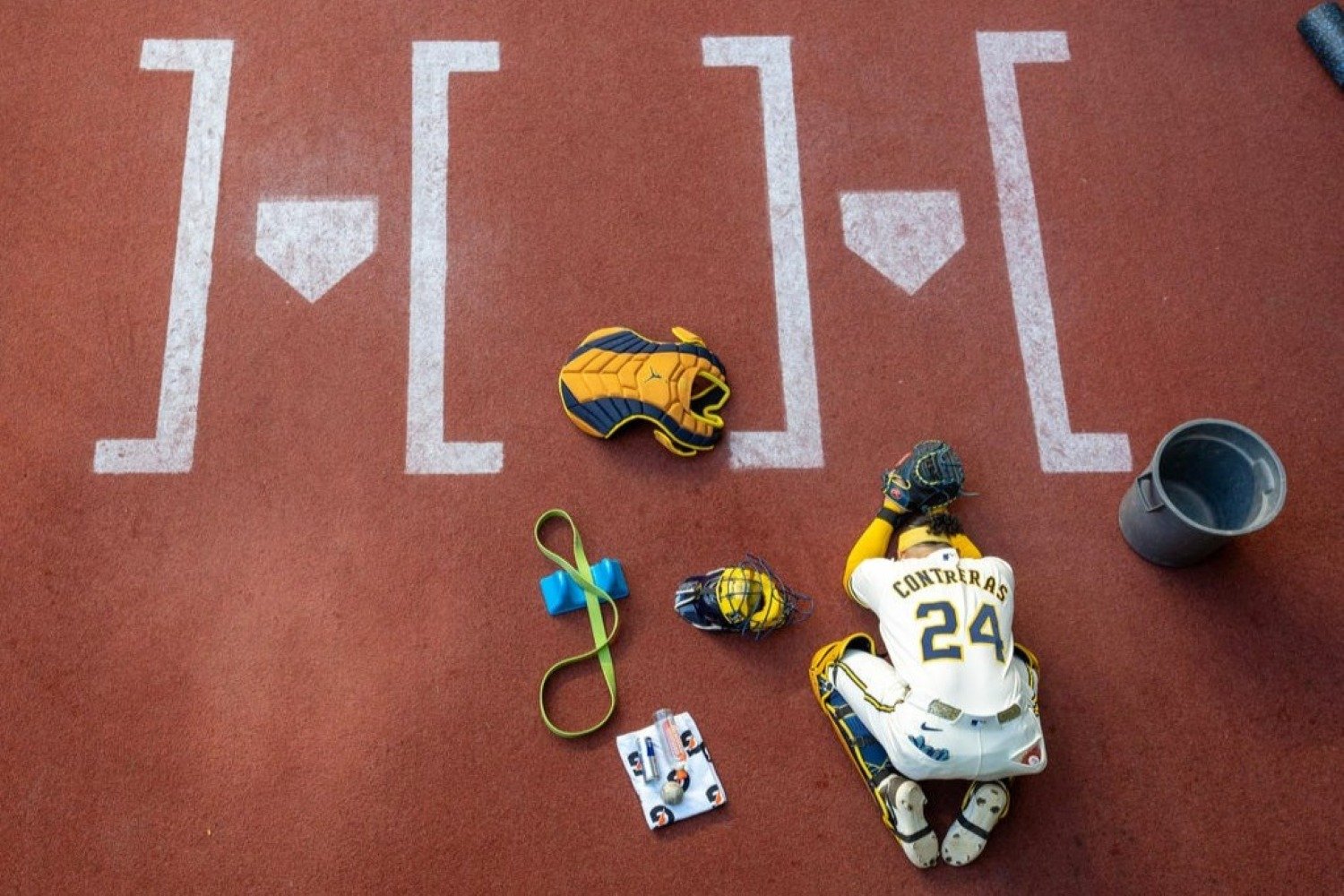 Because the Brewers' pitchers made the big pitches they needed to make, it never became a front-and-center issue. Because the team won both games, neither game will be remembered for any of the three moments. But they still happened. Three times in two games, a Brewers hurler uncorked a wild pitch, and William Contreras was unable to keep it from getting past him. It happened in the top of the fourth inning of Game 1, when Jacob Misiorowski cut loose a curveball harder and sharper than most sliders. To be fair, that made it a difficult play. Contreras couldn't make it, though. It was a strikeout, but it wasn't an out. Instead, it might have sparked a pivotal rally. ZzZZWVdfV0ZRVkV3dEdEUT09X0JsY0ZWd0pYQlFJQUFBWUNWd0FIQkFSVEFBQlhCd01BVUFNREFsSlFWMUZSVWxaUw==.mp4 Misiorowski then induced a ground ball, though, and got a double play to escape the jam before it really became one. No harm done. The next inning, though, it happened again. Aaron Ashby threw a wicked breaking ball, and Contreras couldn't get in front of it. Two runners advanced. That one, too, could have been a game-breaker. ZzZZWVdfV0ZRVkV3dEdEUT09X1V3QlpBVlFCVmdvQVdWSUVBd0FIVUFFQUFGaFJBRlFBQmdCUVZsQUNWRlVIQ0F0Ug==.mp4 Ashby, too, made the pitch he needed to work around the issue. Contreras also deserves some relief, in this case, because the pickle the Crew were in at that juncture would have been far worse, if not for his superb throw to nail Dustin Harris trying to steal earlier in the inning. His luck would run out the next day, though. In Game 2, Logan Henderson threw one of his extremely deceptive (but not precisely located) changeups, and it fooled everyone—including his catcher. ZFhPT1hfV0ZRVkV3dEdEUT09X0JnWldWbE1DVndZQUN3QUhWUUFIVkFGZkFBTU1CZ01BQVZBQ0NGWldCd2RRQUZNRA==.mp4 The run that that miss moved into scoring position did eventually score, and it made the game a tighter and tougher thing for the Brewers the rest of the way. All three of these were (rightly) called wild pitches, so by the box score's reckoning, Contreras did nothing wrong. In reality, though, there's a little bit of responsibility on each party, every time the ball goes to the screen. For most of his career, Contreras has been a good pitch blocker. Statcast credited him with 7 blocks above average (worth 2 runs in runner advancements denied) from 2023 through 2025. This season, though, he was one of the worst backstops in the league at actually being a backstop. His -7 Blocks Above Average (and -2 Blocking Runs) were better than the marks of only six other qualifying catchers. He's missed a lot of balls that he would have gotten in past years. In fact, compare that Ashby pitch above to this one, from last season. OTc5bFFfWGw0TUFRPT1fVWdjRVZBZFdBbE1BV2xRRlh3QUhCVkJXQUFNRUIxZ0FCMU5RQndNQlZBVlZBd1JS (1).mp4 A few things have changed. In the video above, note the way Contreras has his shoulders turned at an angle, whereas this year, he's more square to the incoming pitch. The latter sounds like a good thing, but that angle he had last year is the proper way to set up in the right-knee-down stance he employs most of the time. That turn gives him more ways to glide toward a ball that's moving quickly to his glove side, without coming up from the ground too much. It's probably a silly suggestion, because for most of us, the way Contreras sets up to receive the ball is a physical impossibility, or a nice (but fading) memory. If you can, though, get into that position: right knee down, with your foot behind you; left leg outstretched to the side and slightly forward; leaning forward slightly with your torso. It's not easy to move at all from that position, unless you're a strong and flexible athlete. Try moving fluidly, though—particularly to your left. It requires a kind of rocking of your hips, turning under control. Do it without rising out of that squat. You can only do so if you're set up correctly, with your hips and your back engaged but not locked into place. It's incredibly difficult. Right now. Contreras just can't do all of that power steering—not fast enough, and not with enough control of each small movement that makes up the larger one. He can't do what we just watched him do last year, on balls like the one from Ashby in Game 1. He can't rock his body over the fulcrum of his right hip and thigh to reach for a ball to the backhand side, without lunging and jabbing instead of reaching through the ball to stab it. He can't move quickly on balls that miss by a huge margin, even if he can get an early read that tells him that's happening. Some of this is, surely, about fatigue. Contreras has caught more innings than any other player in the majors since the start of 2025, counting regular season and postseason—and he caught some in the World Baseball Classic, for good measure. That he would be slightly less than his best in at least some facet of the game right now only makes sense, and this is one place where we'd expect to see that wear and tear show up. Some of it, however, is also about technique. There are adjustments he can make to reduce the chances of balls getting past him for the balance of this series and beyond. Hopefully, he and the Brewers coaching staff are working on them, because these are the small things that make or break teams with real chances to win the World Series.
 -
I think you guys need to open yourselves up more to the possibility that the Brewers are actually this good. I think they win the series without coming back to Milwaukee. I also think they'll win the World Series.
- 8 replies
-
- 3
-
-
- 2026 postseason
- jackson chourio
- (and 3 more)
-
Image courtesy of USA TODAY Network via Reuters Connect The poor San Diego Padres. They're a very good team, and they played one of their better games on Sunday. They did it in the wake of a heartbreaking loss the previous night. They did it in the belly of a tough stadium to play in, even with the roof open. They've been as hot as any team in baseball for the last month, and they did pretty much everything they could do. It wasn't enough. They were up against forces beyond their ken—namely, a team that has a date with a greater destiny than the Division Series. By all rights, the visitors should have won Sunday, evening the NLDS at 1-1 and sending it back to Petco Park for what would be a very difficult two-game trial for the Brewers. That phase of the series will still be difficult. Now, though, the Brewers will get to enter it with a 2-0 edge in the series already—much the way they did against the Cubs last October. Should the Padres (it seems improbable, now, but let's imagine) push the series back to The Ueck. though, both teams already know: there's no joy waiting in Milwaukee for the National League's other Small Market That Could. The Brewers sent a clear message, even as they struggled and strained to pull out their latest triumph. Bad defense has been the theme of the series so far for the Crew. It cost them in Game 1, though it could have cost them much more. It cost them right away in Game 2, and it could have cost them much more. Jake Bauers has played atrocious defense at first base (traditionally, the spot where you sweat defense the least), and the rest of the infield has been uncharacteristically erratic, too. By the top of the seventh on Sunday, it felt like that shakiness might prove to the team's downfall. And then, it wasn't. Sal Frelick is not this team's superhero. He's never been cut out for that role, and he's only very briefly been assigned it in his three-plus years with the Brewers. Sometimes, though, the superhero can't do it all. They need the help of the Boy Wonder—the little guy an opponent might foolishly overlook or underestimate. At the vital junctures of Game 2, that was what happened. Frelick had singled home the first run of the day for the Brewers in the bottom of the fifth, but when the top of the seventh came, the Padres still led, 2-1. Fernando Tatis Jr. reached on an error by David Hamilton, and then, with two outs, Manny Machado drew a walk. That brought Ty France to the plate against a tiring Abner Uribe, whom France also saw on Saturday night. The matchup augured ill for the Crew, and sure enough, France shot a 1-0 sinker through the right side of the infield. Tatis scored, and the Padres were almost in position to keep piling on, but Machado got overambitious. He tried for third, and Frelick threw him out, charging France's grounder well and firing without hesitation to nab the trailing runner. It was a bailout. It was partly a mistake by Machado, but it was also a brilliant play by Frelick. Between the RBI hit and that throw, the semi-veteran right fielder had earned some of his manager's trust. When Frelick's turn came in the bottom of that inning, lefty Yuki Matsui was on the mound, with one on and one out. Pat Murphy could have taken down Frelick in favor of Andrew Vaughn or (more likely) Luis Lara, but he chose to stick with his little lefty playmaker. Frelick was overanxious at first, swinging at two pitches above the zone, but then he calmed down and forced Matsui to throw him a strike. One finally came on 3-2, but Frelick fouled it away. The seventh pitch sailed high, and Frelick demonstratively threw his bat down as he headed to first. His mission was accomplished. The line kept moving. With the bottom of the order due behind him, the Crew was unable to tie the game in that seventh inning. Garrett Mitchell (whom Frelick had impelled to second with his base on balls) did score later, though, on an error by the Padres on a Hamilton ground ball. That brought Milwaukee within one. It's funny how similar Frelick's next at-bat would be, in some ways, even as it was profoundly different in others. He came up again in the bottom of the ninth, with the score still 3-2. Christian Yelich was on base, this time, and he stole second, so a single by Frelick could have tied the contest. Mason Miller wasn't throwing strikes, though, and this time, Frelick wasn't offering the opposing pitcher any charity at all. He saw six pitches. Two were called strikes, but neither of them was in the zone; Frelick challenged one and got it overturned. Four were called balls; one of those was in the zone and the Padres got it flipped. When the dust settled, though, Frelick had reached base again, without the bat entering the hitting zone. He'd had to lay off four tempting pitches to earn that free pass, and any of the four might have resulted in weak contact or a whiff. He got nothing to hit; no matter. He moved that line again. That's as far as the sidekick can take you, though. They can land a blow and weaken the enemy when things look most dire. They can keep the fight going when it looks like you might be about to be pulverized. But they're there to set the stage and lend support; the hero still has to be the hero. To get their hero to the plate, the Brewers needed one more unexpected contribution, but they got it. Gary Sánchez drew a six-pitch walk of his own, pushing Frelick into scoring position and Yelich to third base—and bringing Jackson Chourio to bat. I love stories about the unheralded hero. I love an underdog. Frelick's two hard-worked walks, and his key earlier single and that great throw, those things made the game winnable. But this game went from great to transcendent when Chourio stepped in, to face the best closer in baseball at the end of a grueling two-inning stint. In October, Chourio has been a genuine superhero. Even last year, when he made some of the key outs while playing through a significant hamstring strain in the NLCS, it was clear how capable he is of reaching another level in the heat of the playoff spotlight. He got a fairy-tale setup for this at-bat: bases loaded, two outs, one run down, an elite fireballer on the mound. When playoff games go down indelibly in the game's history, it's for moments and encounters like that one. First Pitch: Swinging Strike, 100.8 MPH, Inner Third, Upper Third Everything you hope this kind of battle will be showed up right away. Miller threw a fastball right by Chourio, which is what Miller does to people. Chourio gave it his best pass, though. This game would not end with one side trusting home-plate umpire Lance Barrett's zone; that much was certain. (Barrett had 10 calls overturned on the day.) Pitch 2: Ball, 102.2 MPH, Outside Unless you're Jacob Misiorowski, it's hard to keep that much heat on the plate. Chourio was geared up to time Miller's fastball, but not so tightly wired for it that he plunged into swing mode. Count: even. Pitch 3: Swinging Strike, 102.2 MPH, Right Down Wisconsin Ave. Oof. That was the one, you thought. It's so nasty, what Miller can do. His slider is so sharp that you can't quite force yourself to aim for the top half of that fastball, which is how he gets you, because that thing has some hop to it, even at 102. He doesn't strike out 47% of opposing batters without having the ability to simply bully them. Still, it hurt to see that one slip past. Pitch 4: Foul, 103.5 MPH, Outer Edge, Just Above Knees Last year, though the Cubs eventually ousted San Diego in the Wild Card Series, Miller dotted a 104-MPH heater on the outside corner to Carson Kelly, at the knees. It was so unfair that it became an oft-used video exemplar of how unfair modern pitching can be. This was that pitch again, only with the stakes ratcheted up higher, good enough to win the game right there and break hearts all over Milwaukee. But Chourio is no Carson Kelly. He spoiled it. This is when you could really sense that something was coming. Pitch 5: Ball, 88.8 MPH, Slider Well Below the Zone This was the right pitch, again. Miller really did work Chourio over in the at-bat. There was just something in Chourio's eye that allowed him to avert defeat on the previous pitch, and to hold off on this one, setting the stage. That was Miller's 39th pitch. He was still working fairly well, but he could feel his own clock running out. Chourio had forced him back to something a bit less perfect. He just had to not miss it, this time. Pitch 6: 101.3 MPH, Upper Third, Outer Third. Bedlam. The ball jumped off Chourio's bat at 109.5 MPH—right back where it came from, a hair steeper, no chance for anyone to stop it, and no chance you were throwing out trusty Sal Frelick as he streaked home with the winning run, either. The Ueck exploded. The game was over, and the series might as well be, too. Chourio now has 17 hits and 15 RBIs in the postseason, not even three years past his debut and before he turns 23 years old. In baseball history, only 267 batters have driven in more playoff runs. Chourio is now tied with Willie Mays, along with famous playoff heroes Cecil Cooper, Chris Chambliss, Bucky Dent, Juan González and Salvador Perez, among others. He's carving one of the great postseason legacies in the game's history, day by day. Sunday, though, might have been his greatest moment. Like all the others, it wouldn't have been possible without his teammates. They (today, especially Frelick) deserve a tremendous amount of credit. But Chourio will be the center of the story, and it shouldn't be any other way. View full article
- 8 replies
-
- 1
-
-
- 2026 postseason
- jackson chourio
- (and 3 more)
-
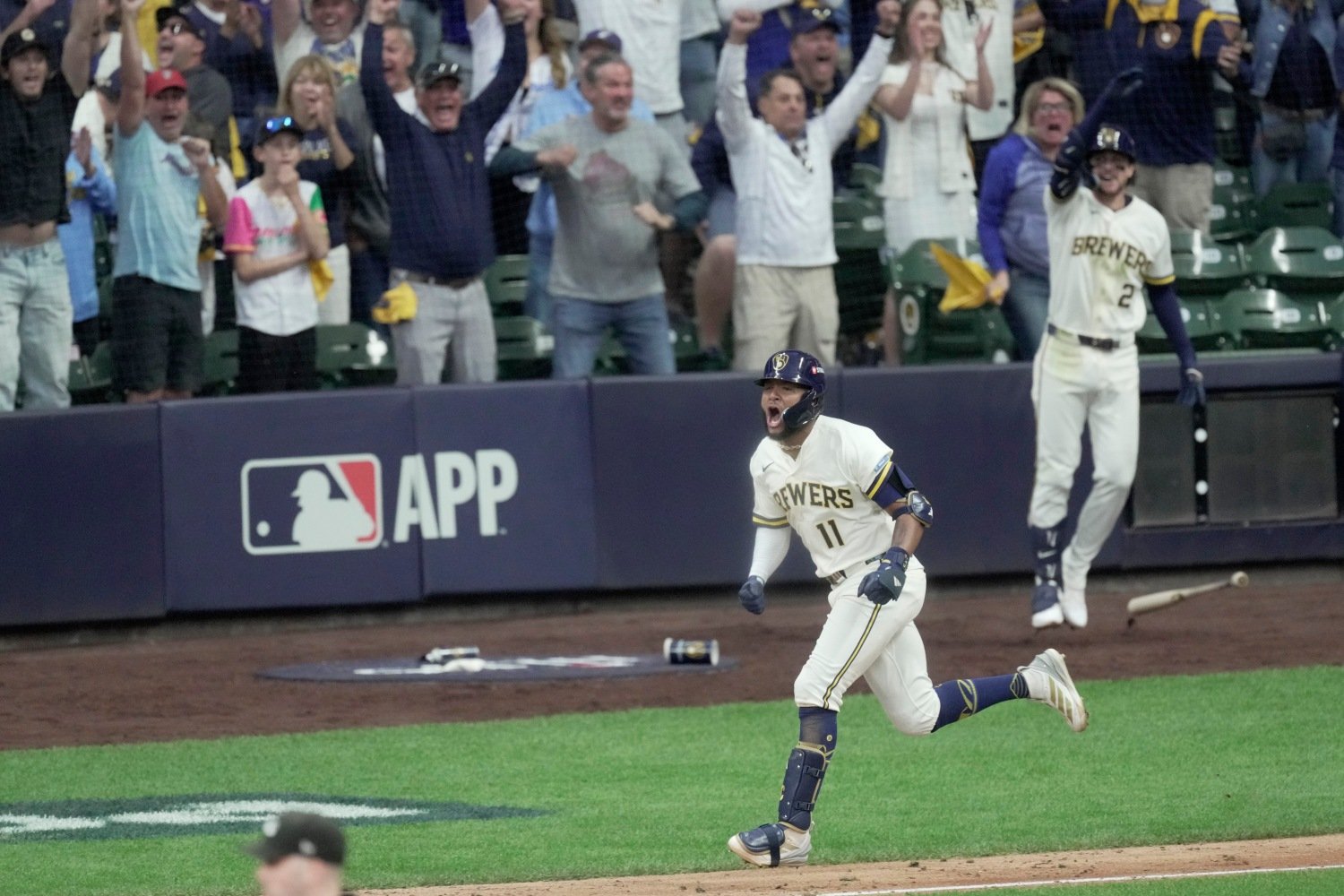 The poor San Diego Padres. They're a very good team, and they played one of their better games on Sunday. They did it in the wake of a heartbreaking loss the previous night. They did it in the belly of a tough stadium to play in, even with the roof open. They've been as hot as any team in baseball for the last month, and they did pretty much everything they could do. It wasn't enough. They were up against forces beyond their ken—namely, a team that has a date with a greater destiny than the Division Series. By all rights, the visitors should have won Sunday, evening the NLDS at 1-1 and sending it back to Petco Park for what would be a very difficult two-game trial for the Brewers. That phase of the series will still be difficult. Now, though, the Brewers will get to enter it with a 2-0 edge in the series already—much the way they did against the Cubs last October. Should the Padres (it seems improbable, now, but let's imagine) push the series back to The Ueck. though, both teams already know: there's no joy waiting in Milwaukee for the National League's other Small Market That Could. The Brewers sent a clear message, even as they struggled and strained to pull out their latest triumph. Bad defense has been the theme of the series so far for the Crew. It cost them in Game 1, though it could have cost them much more. It cost them right away in Game 2, and it could have cost them much more. Jake Bauers has played atrocious defense at first base (traditionally, the spot where you sweat defense the least), and the rest of the infield has been uncharacteristically erratic, too. By the top of the seventh on Sunday, it felt like that shakiness might prove to the team's downfall. And then, it wasn't. Sal Frelick is not this team's superhero. He's never been cut out for that role, and he's only very briefly been assigned it in his three-plus years with the Brewers. Sometimes, though, the superhero can't do it all. They need the help of the Boy Wonder—the little guy an opponent might foolishly overlook or underestimate. At the vital junctures of Game 2, that was what happened. Frelick had singled home the first run of the day for the Brewers in the bottom of the fifth, but when the top of the seventh came, the Padres still led, 2-1. Fernando Tatis Jr. reached on an error by David Hamilton, and then, with two outs, Manny Machado drew a walk. That brought Ty France to the plate against a tiring Abner Uribe, whom France also saw on Saturday night. The matchup augured ill for the Crew, and sure enough, France shot a 1-0 sinker through the right side of the infield. Tatis scored, and the Padres were almost in position to keep piling on, but Machado got overambitious. He tried for third, and Frelick threw him out, charging France's grounder well and firing without hesitation to nab the trailing runner. It was a bailout. It was partly a mistake by Machado, but it was also a brilliant play by Frelick. Between the RBI hit and that throw, the semi-veteran right fielder had earned some of his manager's trust. When Frelick's turn came in the bottom of that inning, lefty Yuki Matsui was on the mound, with one on and one out. Pat Murphy could have taken down Frelick in favor of Andrew Vaughn or (more likely) Luis Lara, but he chose to stick with his little lefty playmaker. Frelick was overanxious at first, swinging at two pitches above the zone, but then he calmed down and forced Matsui to throw him a strike. One finally came on 3-2, but Frelick fouled it away. The seventh pitch sailed high, and Frelick demonstratively threw his bat down as he headed to first. His mission was accomplished. The line kept moving. With the bottom of the order due behind him, the Crew was unable to tie the game in that seventh inning. Garrett Mitchell (whom Frelick had impelled to second with his base on balls) did score later, though, on an error by the Padres on a Hamilton ground ball. That brought Milwaukee within one. It's funny how similar Frelick's next at-bat would be, in some ways, even as it was profoundly different in others. He came up again in the bottom of the ninth, with the score still 3-2. Christian Yelich was on base, this time, and he stole second, so a single by Frelick could have tied the contest. Mason Miller wasn't throwing strikes, though, and this time, Frelick wasn't offering the opposing pitcher any charity at all. He saw six pitches. Two were called strikes, but neither of them was in the zone; Frelick challenged one and got it overturned. Four were called balls; one of those was in the zone and the Padres got it flipped. When the dust settled, though, Frelick had reached base again, without the bat entering the hitting zone. He'd had to lay off four tempting pitches to earn that free pass, and any of the four might have resulted in weak contact or a whiff. He got nothing to hit; no matter. He moved that line again. That's as far as the sidekick can take you, though. They can land a blow and weaken the enemy when things look most dire. They can keep the fight going when it looks like you might be about to be pulverized. But they're there to set the stage and lend support; the hero still has to be the hero. To get their hero to the plate, the Brewers needed one more unexpected contribution, but they got it. Gary Sánchez drew a six-pitch walk of his own, pushing Frelick into scoring position and Yelich to third base—and bringing Jackson Chourio to bat. I love stories about the unheralded hero. I love an underdog. Frelick's two hard-worked walks, and his key earlier single and that great throw, those things made the game winnable. But this game went from great to transcendent when Chourio stepped in, to face the best closer in baseball at the end of a grueling two-inning stint. In October, Chourio has been a genuine superhero. Even last year, when he made some of the key outs while playing through a significant hamstring strain in the NLCS, it was clear how capable he is of reaching another level in the heat of the playoff spotlight. He got a fairy-tale setup for this at-bat: bases loaded, two outs, one run down, an elite fireballer on the mound. When playoff games go down indelibly in the game's history, it's for moments and encounters like that one. First Pitch: Swinging Strike, 100.8 MPH, Inner Third, Upper Third Everything you hope this kind of battle will be showed up right away. Miller threw a fastball right by Chourio, which is what Miller does to people. Chourio gave it his best pass, though. This game would not end with one side trusting home-plate umpire Lance Barrett's zone; that much was certain. (Barrett had 10 calls overturned on the day.) Pitch 2: Ball, 102.2 MPH, Outside Unless you're Jacob Misiorowski, it's hard to keep that much heat on the plate. Chourio was geared up to time Miller's fastball, but not so tightly wired for it that he plunged into swing mode. Count: even. Pitch 3: Swinging Strike, 102.2 MPH, Right Down Wisconsin Ave. Oof. That was the one, you thought. It's so nasty, what Miller can do. His slider is so sharp that you can't quite force yourself to aim for the top half of that fastball, which is how he gets you, because that thing has some hop to it, even at 102. He doesn't strike out 47% of opposing batters without having the ability to simply bully them. Still, it hurt to see that one slip past. Pitch 4: Foul, 103.5 MPH, Outer Edge, Just Above Knees Last year, though the Cubs eventually ousted San Diego in the Wild Card Series, Miller dotted a 104-MPH heater on the outside corner to Carson Kelly, at the knees. It was so unfair that it became an oft-used video exemplar of how unfair modern pitching can be. This was that pitch again, only with the stakes ratcheted up higher, good enough to win the game right there and break hearts all over Milwaukee. But Chourio is no Carson Kelly. He spoiled it. This is when you could really sense that something was coming. Pitch 5: Ball, 88.8 MPH, Slider Well Below the Zone This was the right pitch, again. Miller really did work Chourio over in the at-bat. There was just something in Chourio's eye that allowed him to avert defeat on the previous pitch, and to hold off on this one, setting the stage. That was Miller's 39th pitch. He was still working fairly well, but he could feel his own clock running out. Chourio had forced him back to something a bit less perfect. He just had to not miss it, this time. Pitch 6: 101.3 MPH, Upper Third, Outer Third. Bedlam. The ball jumped off Chourio's bat at 109.5 MPH—right back where it came from, a hair steeper, no chance for anyone to stop it, and no chance you were throwing out trusty Sal Frelick as he streaked home with the winning run, either. The Ueck exploded. The game was over, and the series might as well be, too. Chourio now has 17 hits and 15 RBIs in the postseason, not even three years past his debut and before he turns 23 years old. In baseball history, only 267 batters have driven in more playoff runs. Chourio is now tied with Willie Mays, along with famous playoff heroes Cecil Cooper, Chris Chambliss, Bucky Dent, Juan González and Salvador Perez, among others. He's carving one of the great postseason legacies in the game's history, day by day. Sunday, though, might have been his greatest moment. Like all the others, it wouldn't have been possible without his teammates. They (today, especially Frelick) deserve a tremendous amount of credit. But Chourio will be the center of the story, and it shouldn't be any other way.
- 8 comments
-
- 2
-
-
- 2026 postseason
- jackson chourio
- (and 3 more)
-
 In a best-of-5 series that either extends or ends your season, every little thing matters. It's important to spot small mechanical issues and correct them before a hurler's whole day derails. It's important to have a thorough plan that sets up each hitter to make the right swing decision as often as possible. And if you can help it, you want to avoid giving good hitters a third look at the same reliever. One game into their NLDS showdown, neither the Brewers nor the Padres are in a great position to do that. Robbie Ray got San Diego just eight outs in Game 1, which wasn't a huge surprise; the team will lean harder on Michael King and Nick Pivetta. It forced the Padres bullpen to give several Brewers hitters first looks at high-leverage arms, though. Here's a chart of how many times each Milwaukee batter saw each Padres hurler who appeared in Saturday's 3-2 Brewers win. Name Matsui Morejon Ray Adam King Miller Morgan Musgrove Pivetta Rodriguez Vasquez Contreras X X XX Sanchez Vaughn X Bauers X X XX Turang X X XX Pratt X X X Ortiz X X X Hamilton Chourio X XX X Mitchell X X X Lara X X X Frelick Yelich X XX On the other side, though, things look (if anything) even more dire. Part of that is because the Padres got to bat nine times, whereas (by winning in standard fashion) the Brewers didn't get to hit in the bottom of the ninth, but another part is because Jacob Misiorowski only covered four innings and two trips through the batting order. Unlike Ray's early departure, that one was not expected, and it does not suit the Brewers' broader plan for the series well. Here's the same chart for Milwaukee pitchers and Padres hitters. Name Patrick Ashby Hall Senzatela Megill Uribe Romero Drohan May Gasser Misiorowski Harrison Henderson Tatis X X X XX Harris X X X XX Taylor Machado X X X XX France X X X XX Merrill X X X XX Andujar X Bowen Salas X XX Campusano X X XX Fermin Bogaerts X X XX Sheets Cronenworth X XX Hays X Because Misiorowski had to be lifted after 18 batters faced and the bullpen had to cover 15 outs, the top half of the Padres lineup has already gotten one look each at three Brewers righties: Antonio Senzatela, Abner Uribe and Trevor Megill. The bottom half saw Aaron Ashby and DL Hall once apiece. There was some consternation among Brewers fans (especially in our game thread, which you should join for Game 2 and beyond!) about Pat Murphy removing Ashby when he did, in favor of Uribe. This is one reason why he did so. Chad Patrick is a tough matchup for some of the top Padres batters; his utility will be a bit diminished for this series. As Murphy and his staff looked at the rest of the series, they already knew they would be racing to find ways not to have Fernando Tatis Jr., Manny Machado or Ty France face a high-leverage arm for a third time, since they were each likely to see at least one of Uribe and Megill in Game 1, even by that stage. Now, the next time Murphy needs to sneak through that pocket of the batting order, he has the option of using Ashby to do so. Of course, there are good reasons why the three righties got the top half of the order and the two lefties got the bottom half. Matchups govern these decisions, even more than familiarity does. Uribe is a good matchup for Tatis, Machado and France. He's not as good a fit for Jackson Merrill or Xander Bogaerts. The reverse is true of Hall. Working against the niceness of those matchups, though, is that they swing in the batter's favor if they see the same guy three or four times in a week. Arguably, Craig Stammen made a crucial error by leaving Adrian Morejon in for the eighth inning, after he'd given up the game-winning home run to William Contreras in the seventh. Morejon faced all nine Milwaukee hitters, including pinch-hitter Andrew Vaughn. The Brewers will like their chances if Vaughn, Contreras and/or Chourio can get a third look at Morejon in the series; they all got closer to doing so by making him work Saturday night. Neither side grabbed a clear advantage in this important game-within-the-game in Game 1, which makes the Brewers' win in the actual game even more vital. Each team is a bit more exposed than they'd like to be, heading into Game 2, but Milwaukee does so with a game in hand.
-
- 2
-
-
- trevor megill
- 2026 postseason
- (and 4 more)
-
Image courtesy of Benny Sieu-Imagn Images In a best-of-5 series that either extends or ends your season, every little thing matters. It's important to spot small mechanical issues and correct them before a hurler's whole day derails. It's important to have a thorough plan that sets up each hitter to make the right swing decision as often as possible. And if you can help it, you want to avoid giving good hitters a third look at the same reliever. One game into their NLDS showdown, neither the Brewers nor the Padres are in a great position to do that. Robbie Ray got San Diego just eight outs in Game 1, which wasn't a huge surprise; the team will lean harder on Michael King and Nick Pivetta. It forced the Padres bullpen to give several Brewers hitters first looks at high-leverage arms, though. Here's a chart of how many times each Milwaukee batter saw each Padres hurler who appeared in Saturday's 3-2 Brewers win. Name Matsui Morejon Ray Adam King Miller Morgan Musgrove Pivetta Rodriguez Vasquez Contreras X X XX Sanchez Vaughn X Bauers X X XX Turang X X XX Pratt X X X Ortiz X X X Hamilton Chourio X XX X Mitchell X X X Lara X X X Frelick Yelich X XX On the other side, though, things look (if anything) even more dire. Part of that is because the Padres got to bat nine times, whereas (by winning in standard fashion) the Brewers didn't get to hit in the bottom of the ninth, but another part is because Jacob Misiorowski only covered four innings and two trips through the batting order. Unlike Ray's early departure, that one was not expected, and it does not suit the Brewers' broader plan for the series well. Here's the same chart for Milwaukee pitchers and Padres hitters. Name Patrick Ashby Hall Senzatela Megill Uribe Romero Drohan May Gasser Misiorowski Harrison Henderson Tatis X X X XX Harris X X X XX Taylor Machado X X X XX France X X X XX Merrill X X X XX Andujar X Bowen Salas X XX Campusano X X XX Fermin Bogaerts X X XX Sheets Cronenworth X XX Hays X Because Misiorowski had to be lifted after 18 batters faced and the bullpen had to cover 15 outs, the top half of the Padres lineup has already gotten one look each at three Brewers righties: Antonio Senzatela, Abner Uribe and Trevor Megill. The bottom half saw Aaron Ashby and DL Hall once apiece. There was some consternation among Brewers fans (especially in our game thread, which you should join for Game 2 and beyond!) about Pat Murphy removing Ashby when he did, in favor of Uribe. This is one reason why he did so. Chad Patrick is a tough matchup for some of the top Padres batters; his utility will be a bit diminished for this series. As Murphy and his staff looked at the rest of the series, they already knew they would be racing to find ways not to have Fernando Tatis Jr., Manny Machado or Ty France face a high-leverage arm for a third time, since they were each likely to see at least one of Uribe and Megill in Game 1, even by that stage. Now, the next time Murphy needs to sneak through that pocket of the batting order, he has the option of using Ashby to do so. Of course, there are good reasons why the three righties got the top half of the order and the two lefties got the bottom half. Matchups govern these decisions, even more than familiarity does. Uribe is a good matchup for Tatis, Machado and France. He's not as good a fit for Jackson Merrill or Xander Bogaerts. The reverse is true of Hall. Working against the niceness of those matchups, though, is that they swing in the batter's favor if they see the same guy three or four times in a week. Arguably, Craig Stammen made a crucial error by leaving Adrian Morejon in for the eighth inning, after he'd given up the game-winning home run to William Contreras in the seventh. Morejon faced all nine Milwaukee hitters, including pinch-hitter Andrew Vaughn. The Brewers will like their chances if Vaughn, Contreras and/or Chourio can get a third look at Morejon in the series; they all got closer to doing so by making him work Saturday night. Neither side grabbed a clear advantage in this important game-within-the-game in Game 1, which makes the Brewers' win in the actual game even more vital. Each team is a bit more exposed than they'd like to be, heading into Game 2, but Milwaukee does so with a game in hand. View full article
-
Image courtesy of Michael McLoone-Imagn Images It's not just their production. The effusive intensity matters, too. Jackson Chourio and William Contreras savor big hits like few other players in the game, and their energy not only inspires their teammates, but intimidates opponents, even in advance. Their will to come up with the big hit against you radiates off them like heat; it spooks people into making the mistakes the two can turn into game-breaking hits. That didn't take long to show up in Game 1 of the NLDS Saturday night—though it took long enough to let Brewers fans sweat a little bit, anyway. Milwaukee fell behind 2-0 in a frustrating second-inning sequence that saw the Padres spoil some good pitches from Jacob Misiorowski; Misiorowski give them too many looks at his secondary stuff; and the defense behind him let the ace down. Thus, when they got their turn in the bottom of the third, they were working their way out of a hole. This was not your average Game 1. Its series leverage was much higher than for most openers in a best-of-5. The Brewers needed a break, and it couldn't wait. Thankfully, one came quickly. Garrett Mitchell got jammed as few players have ever been, fighting off a 93-mile-per-hour sinker that got deep enough in his kitchen to find his secret stash of chocolate. The resulting floater was hit so softly that shortstop Xander Bogaerts couldn't make the play on Mitchell, giving the Crew a leadoff infield single. Joey Ortiz grounded out, but Mitchell advanced to second on the play. That brought Jackson Chourio to the plate for the second time. In his first trip, against Padres starter Robbie Ray, he had worked a five-pitch at-bat, but he hit a harmless fly ball the other way on a sinker on the outer edge. That was the bad news. The good news was, in those five pitches, he'd seen Ray throw the sinker four times. He had an inkling—a hunch—that Ray might start him with a slider the second time. That was enough. Chourio had never before hit a home run at even 111 miles per hour, in terms of exit velocity. This ball screamed off his bat at 113.3 MPH. He dropped the bat head on, sure enough, a slider, which had plenty of the zone but was directionally in the right location. Ray was trying to get ahead of him. Big mistake; huge. The first time he saw a pitcher in a game this season, Chourio swung at the first pitch just 18.1% of the time. Thereafter, that rate more than doubled, to 37.7%. He went from markedly below-average in first-pitch aggressiveness to markedly above-average, beginning the second time he saw a pitcher in a given game. Maybe the Padres didn't get the memo, or maybe they thought Chourio would be a bit hesitant in the pressure of a playoff tilt, especially with his team already trailing. Either way, they were extremely wrong. Chourio's rocket of a homer restored scoreboard parity, which held for a long time. The next real turning point in the game, arguably, came in the top of the fifth inning. With Misiorowski out of the fray after just four innings, Antonio Senzatela allowed a dribbler toward first off the bat of Padres left fielder Dustin Harris. He couldn't handle Jake Bauers's flip to the base, though, and Harris reached on an unlikely infield single. That could have been the spark that became a game-winning fire for the visitors. Instead, Harris took off for second base during the ensuing at-bat—and Contreras threw him out. Everything about this throw was gorgeous. Contreras's exchange and footwork were lethally quick, but the accuracy of his peg to Brice Turang was the difference. It left no chance of any mistakes. That throw might have saved the Brewers' bacon, because Senzatela got into further trouble in the frame, before Pat Murphy could get Aaron Ashby warm and into the contest. Slowing down the onslaught allowed the Brewers to avoid damage. Contreras's biggest contribution was to come later, though, of course. He came up in the bottom of the seventh with the score still tied, two outs, and nobody on. The Padres, like the Brewers, had plunged into the deep end of their elite bullpen, and Adrian Morejon had gotten two easy outs to start the inning. Contreras would be the opposite of that. If the Padres stay at the Pfister Hotel Saturday night in Milwaukee, the rumors of that place being haunted will finally be true, because Morejon is likely to have wrestling matches with his demons and shouting matches with his pillow, rather than sleeping. His signature pitch is the changeup, but in a six-pitch sequence, he threw just one to Contreras, and it was a bad one. He fell behind 2-0, and then 3-1, and he couldn't summon the confidence in that changeup to throw it to Contreras and risk the walk. He should have; he unequivocally should have. With two outs and the bases empty, a walk is not damaging enough to risk giving up a long hit in order to avoid it. If one of San Diego's two more seasoned catchers had been behind the plate at that moment, perhaps they'd have called for at least one more changeup. Ethan Salas is just 20 years old, though, and he defaulted to Morejon's fastball, a sinker, on 3-1. Contreras fouled it off. On 3-2, Salas called for the same pitch. Morejon hit the outside edge, too. Against a hitter who was geared up to pull the ball, that pitch and that location are a good enough combination to get the final out of the inning. Contreras, though, is as smart a hitter as he is talented. He stayed closed. He looked to drive it the other way. The pitch he got was perfect for that approach. It often looks simple. Chourio and Contreras can be easy to mistake for mistake hitters, playing baseball at full speed and intensity but relying on raw talent to thrive. That couldn't be further from true. As Chourio's third-inning ambush reflected his strategically evolving approach throughout a game, Contreras's homer reflected the way he waits and anticipates and adapts to situation and opponent. Just as Contreras's throw in the fifth was a reminder of how well he's honed his craft as a controller of the running game, Chourio's adjustment to catch Ty France's roof-scraping flyout in the top of the ninth reflected his evolution into the best defensive left fielder in the National League. Chourio and Contreras started this baseball year by winning the World Baseball Classic for their native Venezuela. Their intensity, their genius and (yes) their talent are exactly what the Brewers need to finish the year with a World Series title. The first game of the Crew's postseason run underscored that beautifully. View full article
-
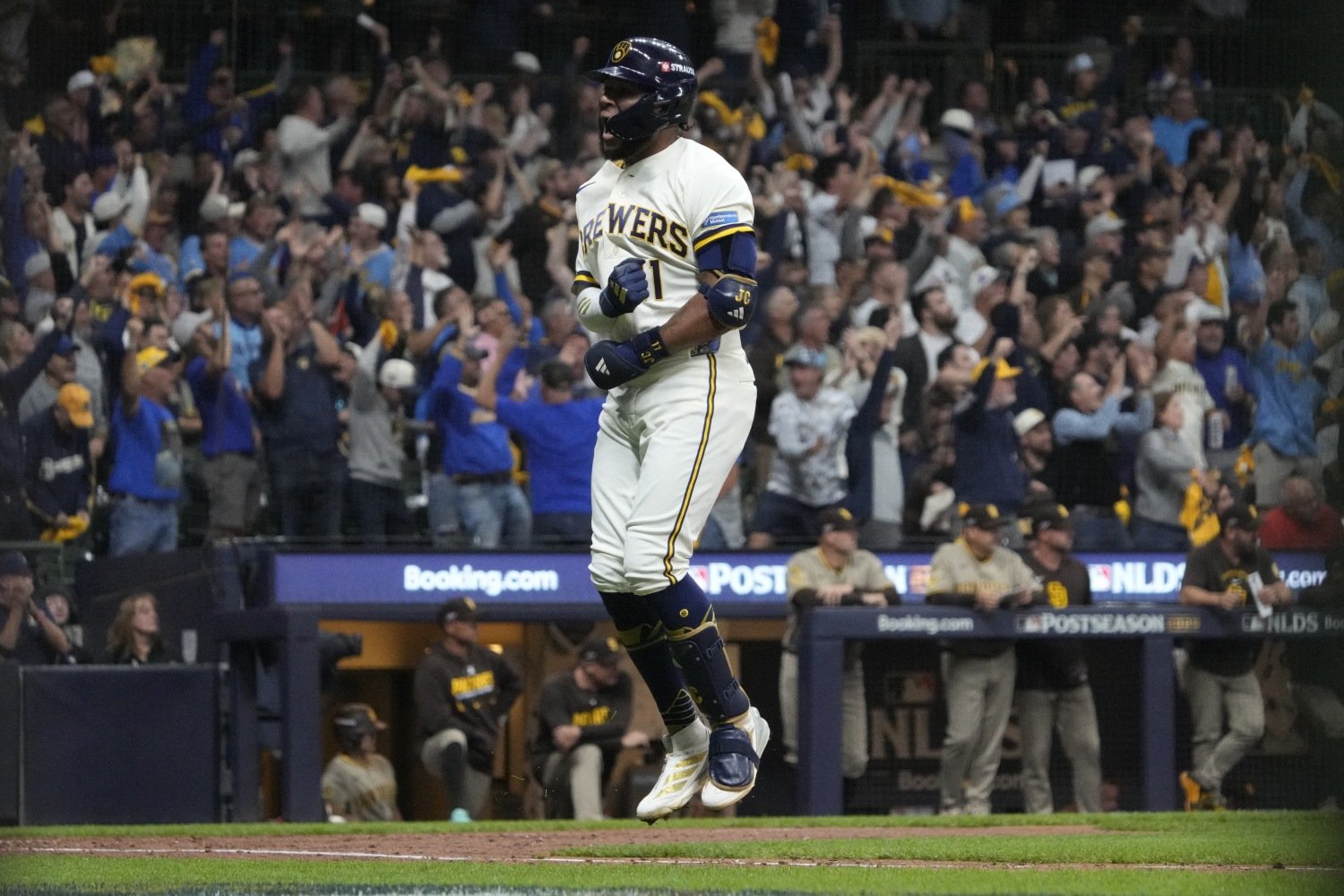 It's not just their production. The effusive intensity matters, too. Jackson Chourio and William Contreras savor big hits like few other players in the game, and their energy not only inspires their teammates, but intimidates opponents, even in advance. Their will to come up with the big hit against you radiates off them like heat; it spooks people into making the mistakes the two can turn into game-breaking hits. That didn't take long to show up in Game 1 of the NLDS Saturday night—though it took long enough to let Brewers fans sweat a little bit, anyway. Milwaukee fell behind 2-0 in a frustrating second-inning sequence that saw the Padres spoil some good pitches from Jacob Misiorowski; Misiorowski give them too many looks at his secondary stuff; and the defense behind him let the ace down. Thus, when they got their turn in the bottom of the third, they were working their way out of a hole. This was not your average Game 1. Its series leverage was much higher than for most openers in a best-of-5. The Brewers needed a break, and it couldn't wait. Thankfully, one came quickly. Garrett Mitchell got jammed as few players have ever been, fighting off a 93-mile-per-hour sinker that got deep enough in his kitchen to find his secret stash of chocolate. The resulting floater was hit so softly that shortstop Xander Bogaerts couldn't make the play on Mitchell, giving the Crew a leadoff infield single. Joey Ortiz grounded out, but Mitchell advanced to second on the play. That brought Jackson Chourio to the plate for the second time. In his first trip, against Padres starter Robbie Ray, he had worked a five-pitch at-bat, but he hit a harmless fly ball the other way on a sinker on the outer edge. That was the bad news. The good news was, in those five pitches, he'd seen Ray throw the sinker four times. He had an inkling—a hunch—that Ray might start him with a slider the second time. That was enough. Chourio had never before hit a home run at even 111 miles per hour, in terms of exit velocity. This ball screamed off his bat at 113.3 MPH. He dropped the bat head on, sure enough, a slider, which had plenty of the zone but was directionally in the right location. Ray was trying to get ahead of him. Big mistake; huge. The first time he saw a pitcher in a game this season, Chourio swung at the first pitch just 18.1% of the time. Thereafter, that rate more than doubled, to 37.7%. He went from markedly below-average in first-pitch aggressiveness to markedly above-average, beginning the second time he saw a pitcher in a given game. Maybe the Padres didn't get the memo, or maybe they thought Chourio would be a bit hesitant in the pressure of a playoff tilt, especially with his team already trailing. Either way, they were extremely wrong. Chourio's rocket of a homer restored scoreboard parity, which held for a long time. The next real turning point in the game, arguably, came in the top of the fifth inning. With Misiorowski out of the fray after just four innings, Antonio Senzatela allowed a dribbler toward first off the bat of Padres left fielder Dustin Harris. He couldn't handle Jake Bauers's flip to the base, though, and Harris reached on an unlikely infield single. That could have been the spark that became a game-winning fire for the visitors. Instead, Harris took off for second base during the ensuing at-bat—and Contreras threw him out. Everything about this throw was gorgeous. Contreras's exchange and footwork were lethally quick, but the accuracy of his peg to Brice Turang was the difference. It left no chance of any mistakes. That throw might have saved the Brewers' bacon, because Senzatela got into further trouble in the frame, before Pat Murphy could get Aaron Ashby warm and into the contest. Slowing down the onslaught allowed the Brewers to avoid damage. Contreras's biggest contribution was to come later, though, of course. He came up in the bottom of the seventh with the score still tied, two outs, and nobody on. The Padres, like the Brewers, had plunged into the deep end of their elite bullpen, and Adrian Morejon had gotten two easy outs to start the inning. Contreras would be the opposite of that. If the Padres stay at the Pfister Hotel Saturday night in Milwaukee, the rumors of that place being haunted will finally be true, because Morejon is likely to have wrestling matches with his demons and shouting matches with his pillow, rather than sleeping. His signature pitch is the changeup, but in a six-pitch sequence, he threw just one to Contreras, and it was a bad one. He fell behind 2-0, and then 3-1, and he couldn't summon the confidence in that changeup to throw it to Contreras and risk the walk. He should have; he unequivocally should have. With two outs and the bases empty, a walk is not damaging enough to risk giving up a long hit in order to avoid it. If one of San Diego's two more seasoned catchers had been behind the plate at that moment, perhaps they'd have called for at least one more changeup. Ethan Salas is just 20 years old, though, and he defaulted to Morejon's fastball, a sinker, on 3-1. Contreras fouled it off. On 3-2, Salas called for the same pitch. Morejon hit the outside edge, too. Against a hitter who was geared up to pull the ball, that pitch and that location are a good enough combination to get the final out of the inning. Contreras, though, is as smart a hitter as he is talented. He stayed closed. He looked to drive it the other way. The pitch he got was perfect for that approach. It often looks simple. Chourio and Contreras can be easy to mistake for mistake hitters, playing baseball at full speed and intensity but relying on raw talent to thrive. That couldn't be further from true. As Chourio's third-inning ambush reflected his strategically evolving approach throughout a game, Contreras's homer reflected the way he waits and anticipates and adapts to situation and opponent. Just as Contreras's throw in the fifth was a reminder of how well he's honed his craft as a controller of the running game, Chourio's adjustment to catch Ty France's roof-scraping flyout in the top of the ninth reflected his evolution into the best defensive left fielder in the National League. Chourio and Contreras started this baseball year by winning the World Baseball Classic for their native Venezuela. Their intensity, their genius and (yes) their talent are exactly what the Brewers need to finish the year with a World Series title. The first game of the Crew's postseason run underscored that beautifully.

