


Brewers Video
I was hoping that hosting a regular series on the Brewers pitching staff would demonstrate the club's steady improvement over the season, and thankfully for us... there are 125 games remaining in the season, entering Friday's series.
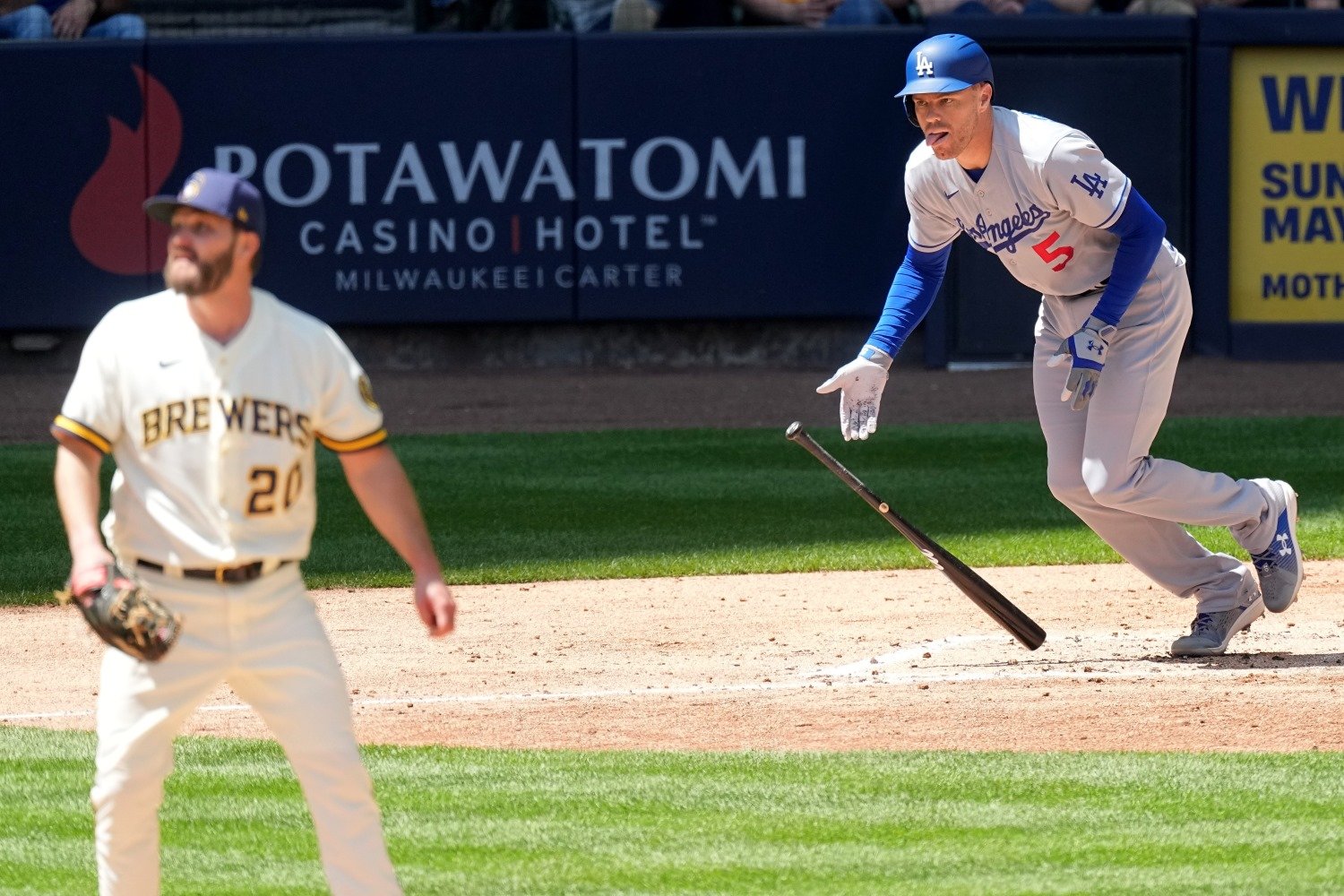
For now, I get to demonstrate that the rotation (outside of Freddy Peralta) is pretty much spinning wheels, or worse--including our hero Wade Miley, who was knocked upside the head with a regression club by the Dodgers on Wednesday. As a reminder from the first column:
QuoteI want to write a semi-regular column throughout the year taking snapshots of the starting pitching rotation exactly where they are. For these purposes, I will be using Runs Prevented, which is a statistic that simply estimates how much better (or worse) a pitcher is against their home park environment and league environment, based on innings pitched. While there are many reliable advanced pitching stats out there, like Baseball Prospectus's Deserved Run Average (DRA, and its indexed cousin DRA-) and Fielding Independent Pitching (FIP), I prefer to use Runs Prevented because it correlates to the numbers that are posted on the scoreboard. There are (and have been) many articles published on why a pitcher might fail to live up to (or exceed) their expected runs production, but at the end of the day, baseball is still decided by Runs Scored and Runs Allowed (although perhaps MLB has an appetite for that rule change, too).
Since the inaugural Junkball Blues column, the core rotation (primary four starters) pitched 74 innings over 14 games started, producing seven runs below average (-7 Runs Prevented). This performance had us all chanting, "In Adrian We Trust" when the Brewers activated Adrian Houser from the injured list this week, and Houser did not disappoint, with a fine return to the mound against a tough opponent. The rotation periphery (at this point Houser and Colin Rea) has been much better than the core over the last couple of weeks, working 21.3 innings over four starts, at a level one run below average (-1 Runs Prevented). To be clear, a typical replacement-level depth starting pitcher could be as bad as 10 runs below average (or worse) over a full season, so Rea's performance has been just fine thus far.
Let's take a look at Milwaukee's active rotation core a couple of weeks ago (THEN), versus today (NOW):
- Wade Miley: THEN: 6 runs prevented (3 GS / 18.0 IP) / NOW: 4 runs prevented (7 GS / 40.0 IP)
- Freddy Peralta: THEN: 2 runs prevented (3 GS / 17.0 IP) / NOW: 5 runs prevented (7 GS / 40.7 IP)
- Eric Lauer: THEN: 0 runs prevented (4 GS, 23.0 IP) / NOW: -6 runs prevented (7 GS / 34.3 IP)
- Corbin Burnes: THEN: -1 runs prevented (4 GS, 22.7 IP) / NOW: -1 runs prevented (7 GS / 39.7 IP)
Meanwhile, the current periphery of the rotation looks like this:
- Colin Rea: THEN: -0 runs prevented (2 GS / 10.7 IP) / NOW: -1 runs prevented (5 GS / 27.3 IP)
- NEW ENTRY: Adrian Houser (1 GS / 4.7 IP / +0 runs prevented)
- NO CHANGE Brandon Woodruff: 4 runs prevented (2 GS / 11.3 IP)
- NO CHANGE Janson Junk: -3 runs prevented (1 GS / 4.7 IP)
This rotation, as a group, worked more than 95 innings over their last 18 games started, at a level approximately eight runs below average. It's not a pretty rotation: luckily, for the season this rotation is basically average, but their current trend is downward. If you placed the most recent rotational performance on an average team for a full season and all else was held equal, this rotation would bring the club down to 74 wins.
Where does the rotation go from here? It's easy to say that 125 games remaining with a six-starter rotation core gives each of these pitchers another 20 turns to right ship. It's easy to write this off as a 36-game blip (it's not even a quarter of the season yet!).
It's easy to look at the history for Corbin Burnes and believe that he can come back, but right now, the Brewers' favorite arbitration target is posting the worst strikeout rate of his career (19.8%), coupled with one of the worst walk rates of his career (8.6%)--all the while allowing the most hard-hit balls since his disastrous 2019 campaign. But at least 2019 had the excuse of a developing pitcher; you don't want to see this type of trend from a guy who's good enough to rightfully complain about his paycheck.
Eric Lauer has everything going the wrong way from 2022: strikeouts down, walks and home runs up, while allowing the hardest-hit balls of his MLB career (including more line drives, more fly balls, and fewer ground balls (YIKES!)). Brandon Woodruff still won't return from the injured list for a little while.
It's easy to look at the injury bug and say that the club has been hit hard, but the club's boosters over the offseason touted trades like the Hunter Renfroe deal as improving an area of weakness (pitching rotation); that's not necessarily showing yet, outside of Colin Rea. If you raise the question of Aaron Ashby's performance in 2022 and question his ability to pitch in this rotation, the depth picture looks even worse.
The Brewers have been a pitching machine over the last six seasons that we started calling the arms and defense a Runs Prevention Unit. That's still the case, overall, because of the exceptional Brewers bullpen. Milwaukee relievers are currently preventing runs at five times the rate of the starters, and (frankly) keeping the club afloat while the offense also struggles (70 runs scored over the last 18 games, which is around nine runs below average). Will Brewers fans stomach the growing pains of developing rookie bats at the MLB level without the strength of a pitching rotation that was supposed to make that Big Show development plan palatable?






Recommended Comments
There are no comments to display.
Create an account or sign in to comment
You need to be a member in order to leave a comment
Create an account
Sign up for a new account in our community. It's easy!
Register a new accountSign in
Already have an account? Sign in here.
Sign In Now