


Matthew Trueblood
-
Posts
2,074 -
Joined
-
Last visited
-
Days Won
10
Content Type
Profiles
Forums
Blogs
Events
Milwaukee Brewers News, Rumors & Analysis
2026 Milwaukee Brewers Top Prospect Rankings
Milwaukee Brewers Videos
2022 Milwaukee Brewers Draft Picks & Signing Bonuses
Milwaukee Brewers Trade & Free Agent Rumors
Milwaukee Brewers Fan Guides & Resources
2023 Milwaukee Brewers Draft Picks & Signing Bonuses
2024 Milwaukee Brewers Draft Picks & Signing Bonuses
2025 Milwaukee Brewers Draft Picks & Signing Bonuses
2026 Milwaukee Brewers Draft Picks & Signing Bonuses
Store
Downloads
Gallery
Everything posted by Matthew Trueblood
-
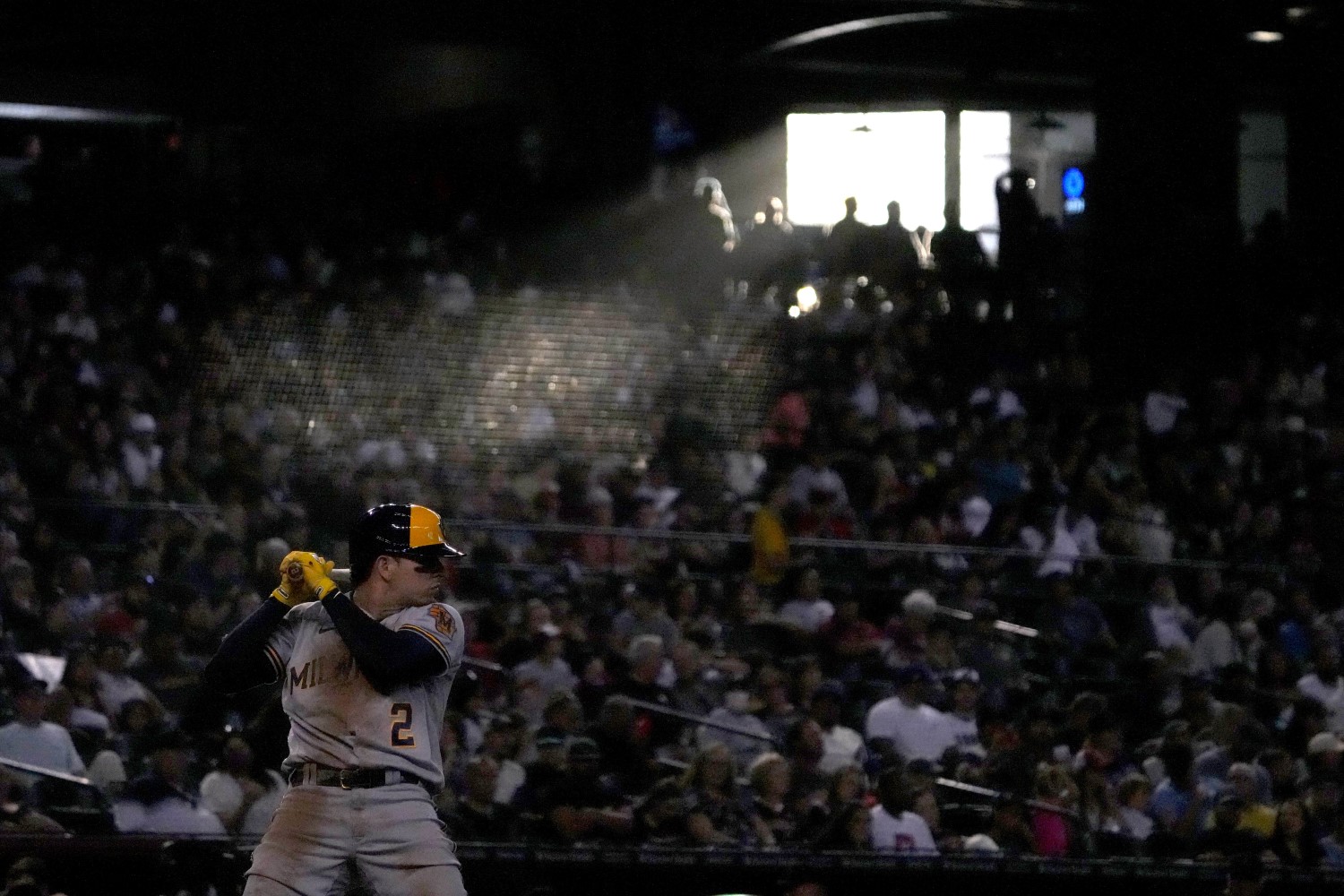 I want to build this discussion of Luis Urías and his plan at the plate around earlier work this week at Brewer Fanatic, by Tim Muma and by Harold Hutchison. On Tuesday, Tim wrote a great piece about the potential that Rowdy Tellez could do more damage by taking a new tack at bat. On Wednesday, Harold wrote about whether the Brewers should sign Urías to a contract extension. In some measure, though, that question hinges on whether Urías can sustain and build upon his success at the plate over the last two seasons. In turn, that question might hinge on whether Urías can modify his approach to better suit his strengths and weaknesses at bat. Since arriving in Milwaukee, Urías has rapidly evolved as a hitter. In his current incarnation, he has two major strengths: very good plate discipline, and above-average power. In each of the last two seasons, he’s walked more often than an average hitter and struck out less often than an average hitter. His isolated power is .182 in that span, better than the league average, and well above the typical mark for someone who manages the strike zone so well. In baseball, though, everything is about tradeoffs. This version of Urías has been trading quite a few singles for some of his walks, and it might be capping his offensive ceiling too low. More importantly, because of Urías’s contact profile throughout the zone, he might be letting too many of the pitches best suited to him sail by unmolested. No team in MLB swung at the first pitch less often than did the Brewers last season. It’s a coaching philosophy, part of an overarching commitment to grinding down opposing pitching staffs. Lowest First-Pitch Swing Rate, MLB Teams, 2022 Team Swing % Brewers 25.9 Guardians 26.8 Cardinals 27.1 Diamondbacks 28.3 Pirates 28.4 That approach works well for individuals who make good swing decisions overall, and who don’t miss mistakes when they come. That describes Urías well, which is why he’s become solidly above-average since joining the Brewers. However, there’s one more tendency required to make this kind of programmed patience work to its greatest possible extent: plate coverage. While Urias has that in the strictest sense, he does all of his damage within a single segment of the zone: between the thigh and the navel. Here is his expected production by location against all fastballs in 2022: It doesn’t have to be that way. The fact that Urías, a hitter with fine pitch recognition and good hand-eye coordination, makes contact so consistently even on pitches outside the zone speaks to the ways he could have found success with a different approach. This one is lower in volatility than some of those approaches, though, and trying to reset and rebuild him as that kind of hitter entirely would probably do more harm than good. Still, some adjustment is in order. If Urías is going to stick to an approach that prizes strike-zone management and a more grooved version of his swing, he needs to get more aggressive on the first pitch. For one of a few reasons, consider the way fastball location changes as the count progresses. Average Pitch Height by Count, Fastballs, MLB 2022 Average Pitch Height by Count, Fastballs, MLB 2022 Strikes on Batter Avg. Pitch Ht. (ft.) 0 2.5 1 2.6 2 2.8 That’s just a loose illustration of the principle, but it’s enough. Hitters who depend on getting a pitch in the heart of the plate to produce shouldn’t wait around for deep counts, even if they have the contact skills to make that approach viable. Like Tellez, Urías has enjoyed plenty of success doing things just the way the Brewers have asked them. Each could find their next gear by coming back toward the pack a little bit in terms of patience and locking in on pitches they can drive, especially early in counts. That’s part of the key to the Brewers being a top-tier offense in 2023.
-
Luis Urías is one of the quietly crucial position players in the Milwaukee Brewers lineup for 2023. He’s shown stellar upside at the plate, but like a couple of his teammates, he might benefit from a more aggressive approach. Image courtesy of © Joe Camporeale-USA TODAY Sports Luis Urías is one of the quietly crucial position players in the Milwaukee Brewers lineup for 2023. He’s shown stellar upside at the plate, but like a couple of his teammates, he might benefit from a more aggressive approach. I want to build this discussion of Luis Urías and his plan at the plate around earlier work this week at Brewer Fanatic, by Tim Muma and by Harold Hutchison. On Tuesday, Tim wrote a great piece about the potential that Rowdy Tellez could do more damage by taking a new tack at bat. On Wednesday, Harold wrote about whether the Brewers should sign Urías to a contract extension. In some measure, though, that question hinges on whether Urías can sustain and build upon his success at the plate over the last two seasons. In turn, that question might hinge on whether Urías can modify his approach to better suit his strengths and weaknesses at bat. Since arriving in Milwaukee, Urías has rapidly evolved as a hitter. In his current incarnation, he has two major strengths: very good plate discipline, and above-average power. In each of the last two seasons, he’s walked more often than an average hitter and struck out less often than an average hitter. His isolated power is .182 in that span, better than the league average, and well above the typical mark for someone who manages the strike zone so well. In baseball, though, everything is about tradeoffs. This version of Urías has been trading quite a few singles for some of his walks, and it might be capping his offensive ceiling too low. More importantly, because of Urías’s contact profile throughout the zone, he might be letting too many of the pitches best suited to him sail by unmolested. No team in MLB swung at the first pitch less often than did the Brewers last season. It’s a coaching philosophy, part of an overarching commitment to grinding down opposing pitching staffs. Lowest First-Pitch Swing Rate, MLB Teams, 2022 Team Swing % Brewers 25.9 Guardians 26.8 Cardinals 27.1 Diamondbacks 28.3 Pirates 28.4 That approach works well for individuals who make good swing decisions overall, and who don’t miss mistakes when they come. That describes Urías well, which is why he’s become solidly above-average since joining the Brewers. However, there’s one more tendency required to make this kind of programmed patience work to its greatest possible extent: plate coverage. While Urias has that in the strictest sense, he does all of his damage within a single segment of the zone: between the thigh and the navel. Here is his expected production by location against all fastballs in 2022: It doesn’t have to be that way. The fact that Urías, a hitter with fine pitch recognition and good hand-eye coordination, makes contact so consistently even on pitches outside the zone speaks to the ways he could have found success with a different approach. This one is lower in volatility than some of those approaches, though, and trying to reset and rebuild him as that kind of hitter entirely would probably do more harm than good. Still, some adjustment is in order. If Urías is going to stick to an approach that prizes strike-zone management and a more grooved version of his swing, he needs to get more aggressive on the first pitch. For one of a few reasons, consider the way fastball location changes as the count progresses. Average Pitch Height by Count, Fastballs, MLB 2022 Average Pitch Height by Count, Fastballs, MLB 2022 Strikes on Batter Avg. Pitch Ht. (ft.) 0 2.5 1 2.6 2 2.8 That’s just a loose illustration of the principle, but it’s enough. Hitters who depend on getting a pitch in the heart of the plate to produce shouldn’t wait around for deep counts, even if they have the contact skills to make that approach viable. Like Tellez, Urías has enjoyed plenty of success doing things just the way the Brewers have asked them. Each could find their next gear by coming back toward the pack a little bit in terms of patience and locking in on pitches they can drive, especially early in counts. That’s part of the key to the Brewers being a top-tier offense in 2023. View full article
-
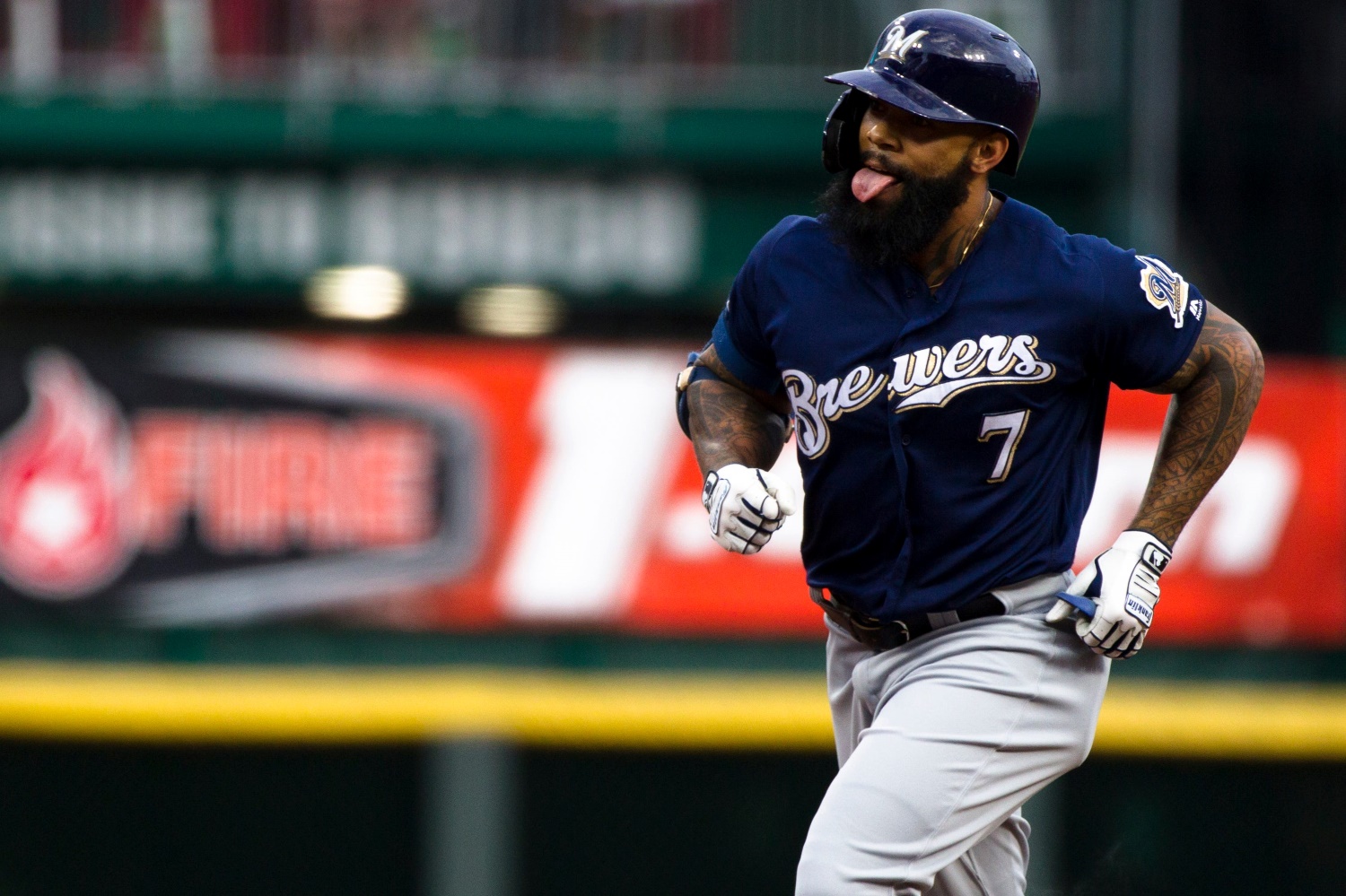 The thing I'll always remember most about Eric Thames is an article that appeared on FanGraphs in May 2017. In it, Travis Sawchik detailed the way Thames reinvented himself as a player and matured as a person during his three-year sojourn in South Korea, where he was exiled after being unable to find a big-league job in the States. It was good writing, but what jumped off the virtual page wasn't Sawchik's work, but the marvelous material Thames gave him with which to work. If you don't recall the story, or never read it, go check it out now. If you do remember it, but only in outline, let's bring back a detail or two together, for the joy of it. The piece centers on the way Thames coped with the boredom and loneliness of being in a foreign country, alone, with no knowledge of the language and little of the culture. Two of the most delightful details, though, lay in the nitty-gritty stuff. For one thing, Thames remembered reading and hearing about how Barry Bonds used to focus on a spot about three and a half inches in diameter, and make the ball be there before swinging. He talked about how he strove to emulate that, and the awesome results he achieved once he did so. At the time that Sawchik wrote the piece, Thames did, indeed, look Bonds-ian, with one of the lowest chase rates in the majors and extraordinary power. That was what he had done over a full season in Korea, finally catching the Brewers' eyes. Over time, of course, Thames was unable to sustain quite that caliber of mastery. He chased more often with each passing year during his Brewers tenure, and strikeouts became a problem, though his power never diminished much and he continued to draw walks at a stellar rate. In his stunning comeback season of 2017, he hit .247/.359/.518, with 31 home runs, helping keep the Brewers unexpectedly competitive late into the season. The encores to that spectacular showing were less impressive, but he still thumped 72 of his 96 career MLB homers with the Crew, and was a vital part of their playoff clubs in 2018 and 2019. That he got worse after the piece ran is only a reminder that no matter how strong or disciplined one is, it's impossible for most people to see the ball the way Barry Bonds did. Thames also alluded to the flat swings of Ted Williams and Rod Carew in his discussions with Sawchik for the piece, and talked about his swing path being "like an airplane landing," a neat way to name the challenge of getting the bat on plane (pardon the pun) with the pitch while maintaining speed. The other interesting thing, tossed off casually in the piece but a superb reminder of the athleticism and power required of great ballplayers, is that Thames felt lucky to have hardwood floors in his apartment in Korea. "If you swing a lot on carpet, it tears up the carpet," he told Sawchik. "I got lucky on that one. A lot of dry swings in that apartment." The implication there--the force a person has to be pulling from and moving through the ground to tear up a carpet just by swinging at imaginary baseballs in tennis shoes--is awesome. Thames had to work relentlessly to find the approach and the swing that worked for him, but that tiny anecdote is a reminder that he also possesses incredible physical gifts. The Brewers and their fans were lucky that when those gifts were in full bloom, Thames wore the ball-and-glove. Here's his retirement announcement, from Instagram. Thames last played in MLB in 2020, with the Nationals.
-
Longtime left-handed slugger and 2017-19 Milwaukee Brewers star Eric Thames announced his retirement on Instagram Wednesday, capping a career in which he played professionally on three continents and became a fan favorite on each. The journey that led to his breakout in Milwaukee is worth a brief reminiscence. Thames last played in MLB in 2020, with the Nationals. View full article
-
PECOTA and the 2023 Milwaukee Brewers: The Big Picture
Matthew Trueblood posted an article in Brewers
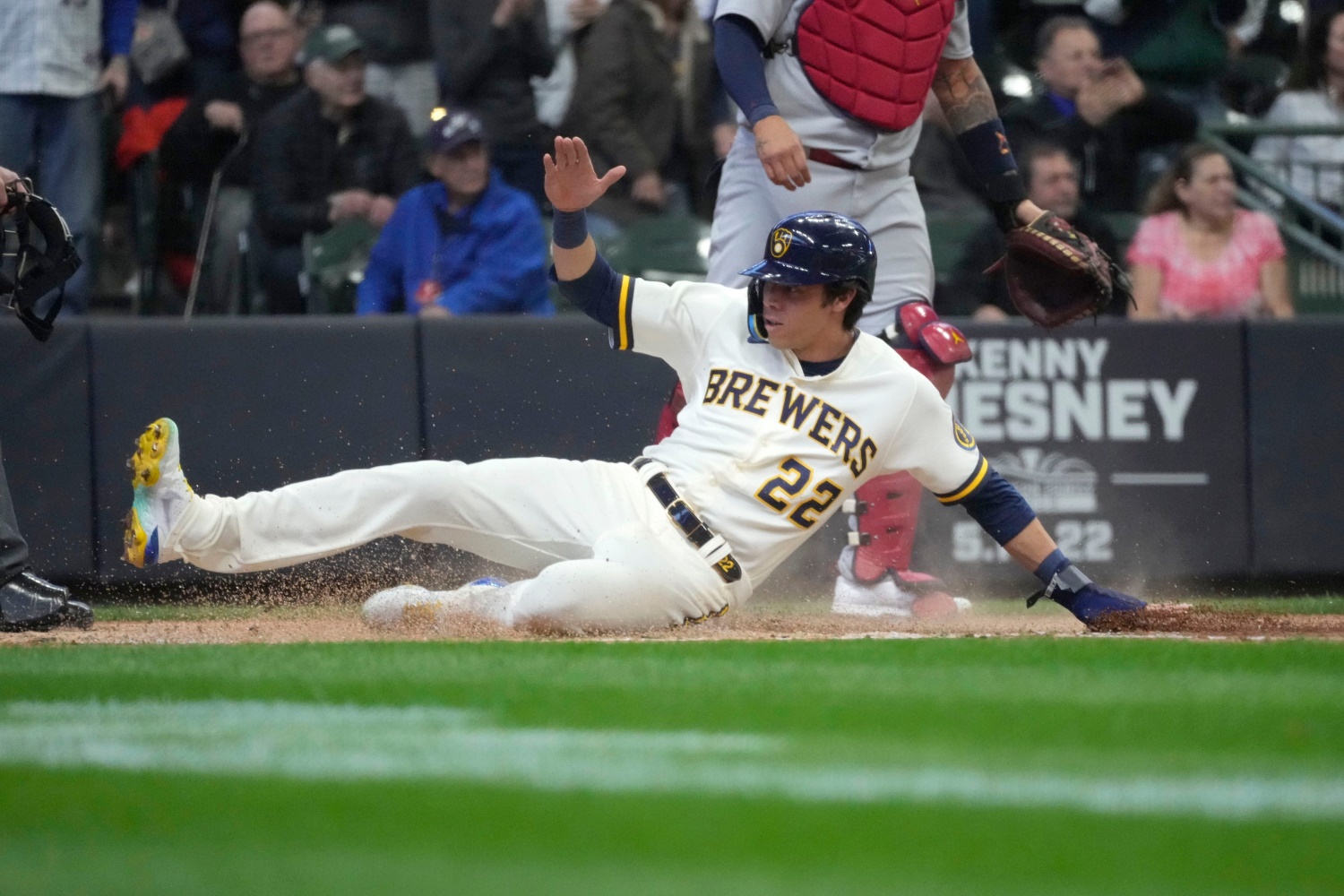 The first run of PECOTA-projected standings for 2023 make the Milwaukee Brewers co-favorites in the NL Central with the St. Louis Cardinals. The Crew are projected to win 87.6 games by the system, which utilizes thousands of simulations of the season to get average outcomes. The Cardinals are pegged for 87.5 wins, a meaninglessly small step shy of Milwaukee. Compared to the ZiPS-projected standings posted at the end of last week at FanGraphs, though, this is cause for celebration. That system had the Cardinals some eight games ahead in the divisional race, the projection system equivalent of this: As I discussed on Monday, ZiPS creator Dan Szymborski chalked that wide gap up to the system liking the Cardinals' depth better than Milwaukee's. Having PECOTA to which to compare it now, though, I'm unconvinced. The real difference seems to lie in the fact that ZiPS is much higher on the Cardinals' positional stars--especially Nolan Arenado and Tommy Edman, and is higher on the Cardinals' projected rotation than is PECOTA. Meanwhile, PECOTA likes the Brewers' key hitters much better than ZiPS does. Some of that exuberance might strike us as irrational. Christian Yelich is projected for 3.4 WARP, driven both by a better defensive rating under Prospectus's new defensive metric (also discussed in Monday's post) and by his sheer production over the last several years. As Caleb Miller talked about Monday afternoon, Yelich certainly isn't the MVP-caliber slugger we so admired and so much miss, but he's been a solid contributor even over the last couple of seasons. That said, his PECOTA projection feels bullish. The system is wooed not only by his long track record, but the highly sustainable way in which he creates offense. He's too well-rounded to fully crash to being below-average, at least in the short term. The system also adores new acquisition Jesse Winker, whose projected 127 DRC+ paces the squad. If he lives up to that billing, it would be a disappointment, indeed, if the team didn't play past the first weekend of October. It feels a bit like PECOTA tuned out for 2022 and elected to give Winker a mulligan on his woeful campaign, but that might not be the worst approach. On the other hand, there are projections here that seem somewhat dour. William Contreras only gets a 96 projected DRC+, which feels anemic compared to the potential he displayed in 2022. Prospectus editor-in-chief Craig Goldstein addressed that disappointing figure on Twitter: It's true that Contreras, like his famous older brother, hits too many ground balls, but he made such strides last year in terms of consolidating his skills and finding a viable approach at the plate that it's hard not to dream on continued progress. The system is also down on Brice Turang (projected DRC+: 79), and isn't sold on the stick of Luis Urías (100) continuing to be markedly above-average. Those individual projections deserve longer looks on another day, but for now, let's close with one more observation: it looks like something close to "NL Central champs or bust," based on these projections. Though the Cubs only sneak in for about 5 percent of the divisional win probability, leaving the Cardinals and Brewers to split 95 percent, neither team has even 65-percent overall Playoff Odds, according to the report. That's because the Dodgers (97 projected wins), Mets (97), Padres (94), Braves (92), and Phillies (90) leave very little room for a Wild Card entrant from the NL Central. More so than ZiPS, PECOTA seems to expect the NL Central contenders to lose wins to the new schedule. Get ready, then, for a long and fierce battle with St. Louis. That sounds a little bit stressful, but it's also the main ingredient in the recipe for a maximally fun summer at Miller Park.
-
On Tuesday, Baseball Prospectus began the rollout of their annual PECOTA preseason projections, and the system is much more kind to the 2023 Milwaukee Brewers than are the ZiPS projections at FanGraphs. Let's dig into the specifics of the PECOTA standings and what they tell us about the Crew. It's true that Contreras, like his famous older brother, hits too many ground balls, but he made such strides last year in terms of consolidating his skills and finding a viable approach at the plate that it's hard not to dream on continued progress. The system is also down on Brice Turang (projected DRC+: 79), and isn't sold on the stick of Luis Urías (100) continuing to be markedly above-average. Those individual projections deserve longer looks on another day, but for now, let's close with one more observation: it looks like something close to "NL Central champs or bust," based on these projections. Though the Cubs only sneak in for about 5 percent of the divisional win probability, leaving the Cardinals and Brewers to split 95 percent, neither team has even 65-percent overall Playoff Odds, according to the report. That's because the Dodgers (97 projected wins), Mets (97), Padres (94), Braves (92), and Phillies (90) leave very little room for a Wild Card entrant from the NL Central. More so than ZiPS, PECOTA seems to expect the NL Central contenders to lose wins to the new schedule. Get ready, then, for a long and fierce battle with St. Louis. That sounds a little bit stressful, but it's also the main ingredient in the recipe for a maximally fun summer at Miller Park. View full article
-
That’s definitely true. AND, be sure not to overlook the risks that come with NOT changing his approach, too. The league is always adjusting. If you’re not making at least minor changes, pitchers will find and detonate your weak points. I think Tim makes a cogent argument for a change with Rowdy, but you’re absolutely right that every change risks losing some of what your established way of doing things was doing well.
-
Maybe in how people talk about them, yeah. The projections themselves should actually resist that bias pretty well, though. I still agree about St. Louis specifically. And if you think some of their stars were playing a bit above their true level last year, then the primacy of the most recent numbers even in a projection model will slant things slightly. Can’t wait to see what PECOTA thinks, starting tomorrow.
-
I tend to agree. We can go further into it after Baseball Prospectus releases their PECOTA projections throughout this week, but I see a couple of ways in which the Crew might systematically outperform projection systems’ estimations of them. Their depth is better than Dan’s numbers think—I’ll say that flatly—but I also *think* that they use that depth in a way that augments it, and that most projections can’t quite capture.
-
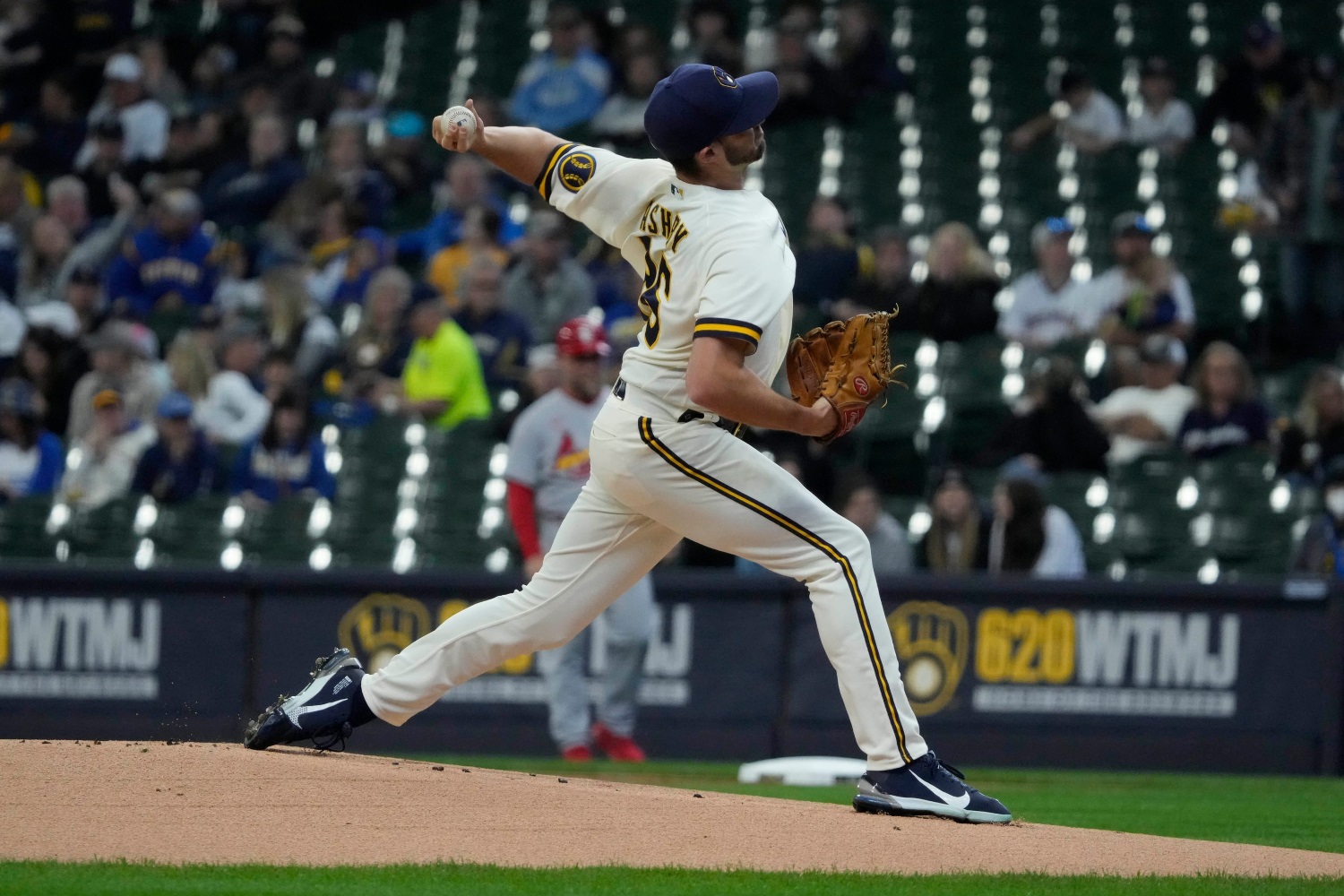 On Friday, FanGraphs released its first look at the projected National League standings for 2023, according to the ZiPS projection system. These are always interesting gauges of where teams are as spring camps open, but this year, they seem to have special significance, as we try to sort through the implications of the newly balanced schedule and the changing rule set. For Brewers fans, though, it might be a good self-care choice to ignore these, or at least to take a wait-and-see approach. The system projects the Crew not only to finish a distant second to the Cardinals in the NL Central (91 wins to 83), but to miss the playoffs for the second year in a row. Dan Szymborski, the proprietor of ZiPS, wrote in the post revealing the projected standings that his system "doesn't like Milwaukee's depth anywhere near [as] much as St. Louis'," and cites that as the biggest reason for the gap. Obviously, that's a subject on which there could be plenty of debate. A tweet from MLB.com's Mike Petriello near the end of last week reaffirmed what we all know, which is that the Brewers actually do an excellent job of avoiding massive failures and fielding sub-replacement players. This is a time of year in which we often welcome thoughts of June, with its sunshine and the end of the school year and the final banishment of the cold wetness of spring in the Upper Midwest. I read the tweet above, and I thought immediately of June, but in a bad way. It doesn't feel like Ashby will be available any sooner than May. It's more realistic to focus on June, and at that point, it's very much worth asking whether he would best help the team by preparing for and focusing on working out of the bullpen. Suddenly, the stakes of the Wade Miley contract feel higher, as do the chances that Bryse Wilson or Robert Gasser make a meaningful number of starts for the Crew in 2023. It's not the news we're waiting for (yet), but it does sound like Craig Counsell envisions an extension that would keep him on the top step of the Brewers dugout beyond the end of his contract, which expires at the end of 2023. Todd Rosiak of the Journal-Sentinel spoke to Counsell, who gave a long quote in which he said he and Mark Attanasio have already had conversations about him staying on beyond 2023, and that he feels both happy and motivated. At this stage, I wouldn't read any negativity or danger into the fact that an extension isn't yet done. If that remains the case on March 1, we'll have to revisit the topic, but I'm operating under the assumption that Attanasio and Arnold both find Counsell (as I do) to be one of the five or six best managers in baseball. As long as he wants to be back, he's likely to be, though the leash will grow short and the seat warm if the team doesn't return to the playoffs this year. Finally, with spring training set to begin this week, there was a late flurry of cleanup activity on the free-agent market. The Cubs scooped up Michael Fulmer, a right-handed reliever. The Dodgers grabbed David Peralta, a left-handed DH who can fake an outfield corner spot when needed. Neither of those are high-impact moves, and either player would have been redundant for the Brewers, so the only impact involved is that the Cubs (projected by ZiPS to finish five games behind the Brewers as of Friday morning) edge a bit closer to them, and that the Dodgers get marginally safer from being caught if they end up battling Milwaukee for a Wild Card spot. When Andrew Chafin signed with the Diamondbacks, though, I did wince a little. First of all, the Diamondbacks, too, are in the sub-contender zone, but even closer on the Brewers' heels than are the Cubs. The ZiPS standings had them at 81 wins before the Chafin deal. They're one of those teams who could pose an especially unexpected and frustrating problem if the standings tend toward chaos come August and September. Chafin is a great fit for their thin bullpen. (As an aside, it's nice that he gets a second stint with the team who drafted him in 2011 and developed him patiently over the ensuing years.) Secondly, though, Chafin would have helped the Brewers' bullpen, and they'd been one rumored landing spot for him. The relief corps leans extremely right-handed, with only Hoby Milner seemingly safely locked in from the left side. Ashby's injury enters into this conversation. So does the fact that Chafin would have offered a really good change of look and stuff profile from Milner and Ashby, and from the Brewers' staff as a whole. There are still ways Arnold can supplement Counsell's set of options, but Chafin was a very good one, now gone by the boards. That's a lot to chew on. As ever, I welcome your thoughts, on the projected standings; the trickle-down effects of Ashby's apparent unavailability early on; Counsell as this team's long-term leader; and the need (or not!) to further bolster the roster by scouring the free-agent scrapheap.
-
Between the chaos of the NBA Trade Deadline and Super Bowl week, it was easy to miss some nuggets of news and information about the Milwaukee Brewers. Here's a Monday morning catch-up. This is a time of year in which we often welcome thoughts of June, with its sunshine and the end of the school year and the final banishment of the cold wetness of spring in the Upper Midwest. I read the tweet above, and I thought immediately of June, but in a bad way. It doesn't feel like Ashby will be available any sooner than May. It's more realistic to focus on June, and at that point, it's very much worth asking whether he would best help the team by preparing for and focusing on working out of the bullpen. Suddenly, the stakes of the Wade Miley contract feel higher, as do the chances that Bryse Wilson or Robert Gasser make a meaningful number of starts for the Crew in 2023. It's not the news we're waiting for (yet), but it does sound like Craig Counsell envisions an extension that would keep him on the top step of the Brewers dugout beyond the end of his contract, which expires at the end of 2023. Todd Rosiak of the Journal-Sentinel spoke to Counsell, who gave a long quote in which he said he and Mark Attanasio have already had conversations about him staying on beyond 2023, and that he feels both happy and motivated. At this stage, I wouldn't read any negativity or danger into the fact that an extension isn't yet done. If that remains the case on March 1, we'll have to revisit the topic, but I'm operating under the assumption that Attanasio and Arnold both find Counsell (as I do) to be one of the five or six best managers in baseball. As long as he wants to be back, he's likely to be, though the leash will grow short and the seat warm if the team doesn't return to the playoffs this year. Finally, with spring training set to begin this week, there was a late flurry of cleanup activity on the free-agent market. The Cubs scooped up Michael Fulmer, a right-handed reliever. The Dodgers grabbed David Peralta, a left-handed DH who can fake an outfield corner spot when needed. Neither of those are high-impact moves, and either player would have been redundant for the Brewers, so the only impact involved is that the Cubs (projected by ZiPS to finish five games behind the Brewers as of Friday morning) edge a bit closer to them, and that the Dodgers get marginally safer from being caught if they end up battling Milwaukee for a Wild Card spot. When Andrew Chafin signed with the Diamondbacks, though, I did wince a little. First of all, the Diamondbacks, too, are in the sub-contender zone, but even closer on the Brewers' heels than are the Cubs. The ZiPS standings had them at 81 wins before the Chafin deal. They're one of those teams who could pose an especially unexpected and frustrating problem if the standings tend toward chaos come August and September. Chafin is a great fit for their thin bullpen. (As an aside, it's nice that he gets a second stint with the team who drafted him in 2011 and developed him patiently over the ensuing years.) Secondly, though, Chafin would have helped the Brewers' bullpen, and they'd been one rumored landing spot for him. The relief corps leans extremely right-handed, with only Hoby Milner seemingly safely locked in from the left side. Ashby's injury enters into this conversation. So does the fact that Chafin would have offered a really good change of look and stuff profile from Milner and Ashby, and from the Brewers' staff as a whole. There are still ways Arnold can supplement Counsell's set of options, but Chafin was a very good one, now gone by the boards. That's a lot to chew on. As ever, I welcome your thoughts, on the projected standings; the trickle-down effects of Ashby's apparent unavailability early on; Counsell as this team's long-term leader; and the need (or not!) to further bolster the roster by scouring the free-agent scrapheap. View full article
- 15 replies
-
- 3
-

-
- aaron ashby
- craig counsell
- (and 1 more)
-
That wasn't an unreasonable way to think about things, though--especially back then. Even now, I think there's merit to it. When a guy like Mike Brosseau becomes available cheaply, you can understand that it's partially because of his limitations as a player, but also keep in mind that it's partially because of the depth that the Rays always have. The Orioles of that era were such an awesome scouting and player development outfit. And then, of course, the Brewers imported much of that excellent staff, in the late 1970s!
-
That’s admirable farsightedness in theory, but the CBA long ago made it almost impossible to spend an extra $8+ million on scouting and development with any worthy return on investment. Much better to spend it on a guy with much-needed offensive upside for the parent club, even if that value be confined to the short term, as long as you aren’t going to wait too long to make a move if he’s awful again.
-
I really think they have the personnel to catch that heat this year, too. Chourio is such a compelling x-factor. But it’s obviously totally unpredictable, in a practical sense.
-
With the report date for pitchers and catchers less than a week away, it's time to turn our attention from offseason matters toward the 2023 Milwaukee Brewers season. In doing so, we have to answer one question first: What does this team need to do to call this year a success? Image courtesy of © Jeff Hanisch-USA TODAY Sports With the report date for pitchers and catchers less than a week away, it's time to turn our attention from offseason matters toward the 2023 Milwaukee Brewers season. In doing so, we have to answer one question first: What does this team need to do to call this year a success? Plainly, that's a question every fan has to answer for themselves. That doesn't mean there aren't some wrong answers, but there's a long list of right ones. This is a franchise still in search of its first World Series title, and just its second pennant. This year marks a quarter-century of play in the National League, and no National League pennant has yet belonged to the Brewers. The Bucks have won their championship. The Packers are a source of frequent frustration, but also perennial competitiveness, and they've won two titles in the lifetime of the average Brewers fan. It's fair to argue that this team, with three stars nearing free agency and one erstwhile superstar locked in for the long haul, needs to put an end to one of those droughts in order to be called a success. It's no less valid, though, to counter that the model of sustainable competition put in place by David Stearns and carried forward, now, by Matt Arnold depends on defining success more broadly than that. For that matter, Mark Attanasio thinks along the same lines. "I hope to never go through a rebuild here," he said last Opening Day. "At the trade deadline, we'll be looking carefully. We definitely have some flexibility this year." He said all that in the context of trying to get the team over the hump and deeper into October, but come July, they used that flexibility in a different way. While Corbin Burnes, Willy Adames, and Brandon Woodruff catch all the headlines, Eric Lauer is also only two years from free agency. Devin Williams is just three years away. This team has to at least contend this season, but given the way the front office and the owner each think about the challenge of winning consistently in a small market, we have to think through what shape success could take even if one of those players is traded before August begins. Certainly, a resurgent power season from Christian Yelich would shift the narrative on his contract in a welcome way. That narrative has already outstripped any real damage the team is suffering from having signed Yelich, though. His demise is much-exaggerated, especially in light of new defensive metrics from Baseball Prospectus that show him to have been almost perfectly average over the last three years. (The previous state of the art in defensive evaluation marked him almost 10 runs worse.) Most important, though, especially because of the way this team prefers to operate, is what we see from young players. If Jackson Chourio's development continues at anywhere near the pace and the level that it sustained last year, he'll arrive in the majors during the second half and make an immediate impact. Even failing that perfect an outcome, they should have the playing time and the normal evaluative conditions to get a firmer handle on which of Sal Frelick, Garrett Mitchell, and Joey Wiemer can be long-term regulars in the outfield. The same goes for Luis Urías and Brice Turang on the infield. Walker McKinven will try to prove, once again, the team's prowess at developing catcher defense, which could render William Contreras a superstar if it works yet again. I'm willing to give a list of boxes that need to be checked for this year to be a success, even if the championship eludes the club again. The team should resolve the uncertainty around at least two of Woodruff, Adames, and Burnes. Extensions are ideal, of course, and I'd certainly hope for at least one of those, but failing that, they should exploit the trade market and get back more controllable talent, staying competitive while sowing more of the seeds of long-term contention. Their organizational paradigm won't do well with the challenges that come if two of these guys are just a year from free agency come the fall. The outfield of the medium-term future needs to be clear. If Tyrone Taylor has his hoped-for breakout, terrific, but it seems more likely that they'll need to see at least two of Mitchell, Frelick, Wiemer, and Chourio have good years in order to feel the kind of confidence I'm talking about. That's a reasonable hope, given the caliber of those young players, but it's far from guaranteed. Another pitcher emerges. With Aaron Ashby starting spring training behind schedule, and with the myriad questions that encircle the top four starters on staff, the team needs to enjoy another breakout performance, like the ones they've gotten from Woodruff, Burnes, Freddy Peralta, and Lauer in succession over the last four years. Chris Hook has more than adequately replaced Derek Johnson, which seemed so improbable upon his departure, but now he faces another tough test. Given what Hook does well, I would sooner bet on Robert Gasser or Jansen Junk than Ethan Small to make the leap required, but all three are candidates. So, for that matter, is Bryse Wilson, although his opportunities to prove himself as a starter for 2023 will be much more limited. The same goes for Gus Varland. The team has to make the playoffs. This is a "last but not least" situation, if ever there was one. All four of these criteria are, to me, necessary, but none of them are sufficient without the rest. The infallibility of some of the larger-market NL Wild Card contenders has been oversold. The Cardinals are hardly an unbeatable division favorite. The Brewers have to play some home games at Miller Park in the playoffs in order to call their season a success. That said, there are good cases to be made that they can be successful without winning the pennant, or even winning the division. Again, though, this is deeply subjective, and I welcome your thoughts and your lists of criteria for a satisfying Brewers year. View full article
-
What Constitutes Success for the 2023 Milwaukee Brewers?
Matthew Trueblood posted an article in Brewers
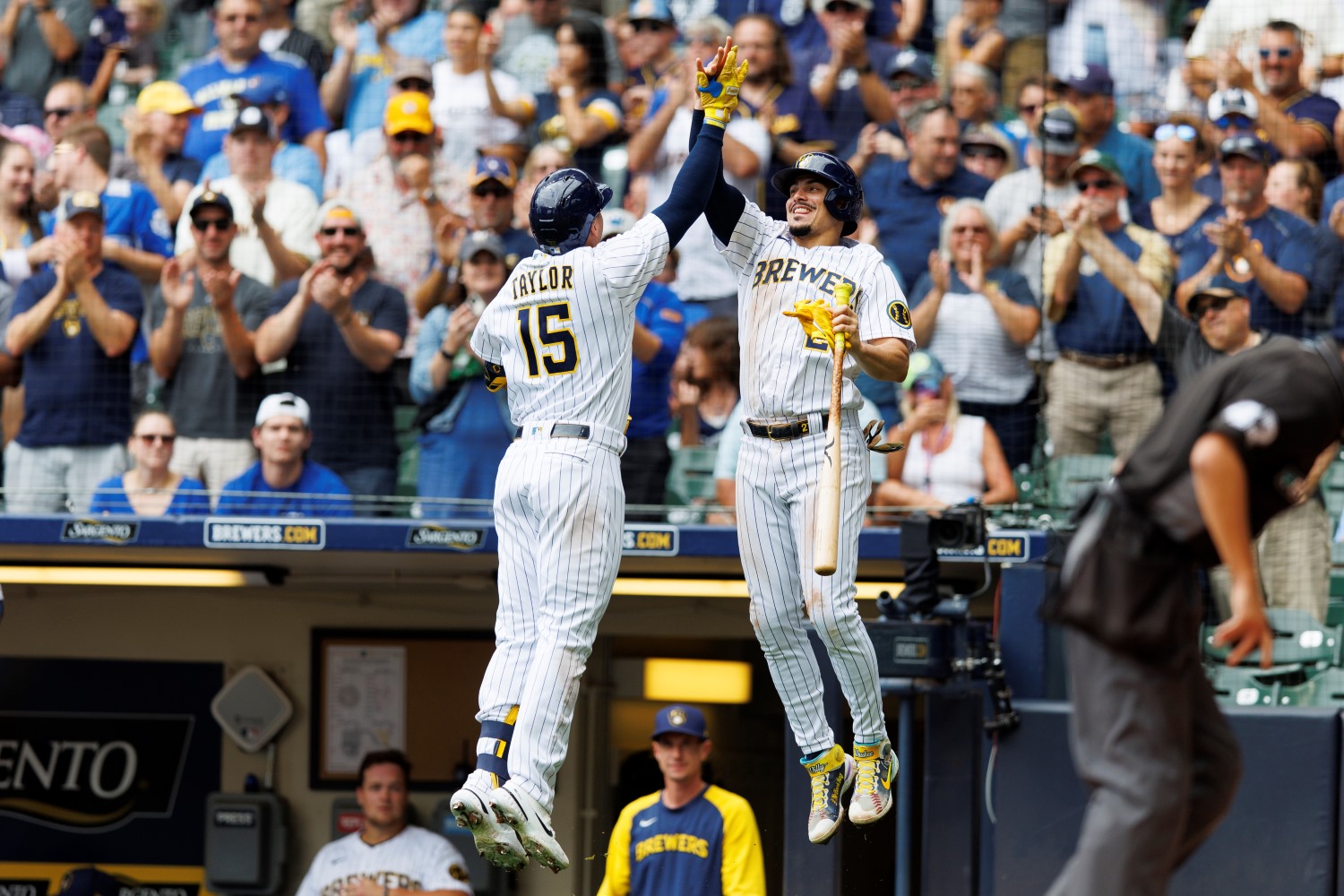 Plainly, that's a question every fan has to answer for themselves. That doesn't mean there aren't some wrong answers, but there's a long list of right ones. This is a franchise still in search of its first World Series title, and just its second pennant. This year marks a quarter-century of play in the National League, and no National League pennant has yet belonged to the Brewers. The Bucks have won their championship. The Packers are a source of frequent frustration, but also perennial competitiveness, and they've won two titles in the lifetime of the average Brewers fan. It's fair to argue that this team, with three stars nearing free agency and one erstwhile superstar locked in for the long haul, needs to put an end to one of those droughts in order to be called a success. It's no less valid, though, to counter that the model of sustainable competition put in place by David Stearns and carried forward, now, by Matt Arnold depends on defining success more broadly than that. For that matter, Mark Attanasio thinks along the same lines. "I hope to never go through a rebuild here," he said last Opening Day. "At the trade deadline, we'll be looking carefully. We definitely have some flexibility this year." He said all that in the context of trying to get the team over the hump and deeper into October, but come July, they used that flexibility in a different way. While Corbin Burnes, Willy Adames, and Brandon Woodruff catch all the headlines, Eric Lauer is also only two years from free agency. Devin Williams is just three years away. This team has to at least contend this season, but given the way the front office and the owner each think about the challenge of winning consistently in a small market, we have to think through what shape success could take even if one of those players is traded before August begins. Certainly, a resurgent power season from Christian Yelich would shift the narrative on his contract in a welcome way. That narrative has already outstripped any real damage the team is suffering from having signed Yelich, though. His demise is much-exaggerated, especially in light of new defensive metrics from Baseball Prospectus that show him to have been almost perfectly average over the last three years. (The previous state of the art in defensive evaluation marked him almost 10 runs worse.) Most important, though, especially because of the way this team prefers to operate, is what we see from young players. If Jackson Chourio's development continues at anywhere near the pace and the level that it sustained last year, he'll arrive in the majors during the second half and make an immediate impact. Even failing that perfect an outcome, they should have the playing time and the normal evaluative conditions to get a firmer handle on which of Sal Frelick, Garrett Mitchell, and Joey Wiemer can be long-term regulars in the outfield. The same goes for Luis Urías and Brice Turang on the infield. Walker McKinven will try to prove, once again, the team's prowess at developing catcher defense, which could render William Contreras a superstar if it works yet again. I'm willing to give a list of boxes that need to be checked for this year to be a success, even if the championship eludes the club again. The team should resolve the uncertainty around at least two of Woodruff, Adames, and Burnes. Extensions are ideal, of course, and I'd certainly hope for at least one of those, but failing that, they should exploit the trade market and get back more controllable talent, staying competitive while sowing more of the seeds of long-term contention. Their organizational paradigm won't do well with the challenges that come if two of these guys are just a year from free agency come the fall. The outfield of the medium-term future needs to be clear. If Tyrone Taylor has his hoped-for breakout, terrific, but it seems more likely that they'll need to see at least two of Mitchell, Frelick, Wiemer, and Chourio have good years in order to feel the kind of confidence I'm talking about. That's a reasonable hope, given the caliber of those young players, but it's far from guaranteed. Another pitcher emerges. With Aaron Ashby starting spring training behind schedule, and with the myriad questions that encircle the top four starters on staff, the team needs to enjoy another breakout performance, like the ones they've gotten from Woodruff, Burnes, Freddy Peralta, and Lauer in succession over the last four years. Chris Hook has more than adequately replaced Derek Johnson, which seemed so improbable upon his departure, but now he faces another tough test. Given what Hook does well, I would sooner bet on Robert Gasser or Jansen Junk than Ethan Small to make the leap required, but all three are candidates. So, for that matter, is Bryse Wilson, although his opportunities to prove himself as a starter for 2023 will be much more limited. The same goes for Gus Varland. The team has to make the playoffs. This is a "last but not least" situation, if ever there was one. All four of these criteria are, to me, necessary, but none of them are sufficient without the rest. The infallibility of some of the larger-market NL Wild Card contenders has been oversold. The Cardinals are hardly an unbeatable division favorite. The Brewers have to play some home games at Miller Park in the playoffs in order to call their season a success. That said, there are good cases to be made that they can be successful without winning the pennant, or even winning the division. Again, though, this is deeply subjective, and I welcome your thoughts and your lists of criteria for a satisfying Brewers year.
-
Yesterday, we discussed Milwaukee Brewers starter Eric Lauer, and the peculiarities of his platoon splits as a pitcher. Today, let’s talk about how those splits relate to where he sets up on the pitching rubber, and the implications of those interactions. Image courtesy of © Jeff Hanisch-USA TODAY Sports Yesterday, we discussed Milwaukee Brewers starter Eric Lauer, and the peculiarities of his platoon splits as a pitcher. Today, let’s talk about how those splits relate to where he sets up on the pitching rubber, and the implications of those interactions. Pitching is most often treated as a matter of physics, and that’s not untrue. Nor, however, is it the whole truth. It’s also an exercise in geometry. In the batter-pitcher showdown, all the angles matter. Arm angles are important, but so is where a pitcher elects to start his delivery. For Eric Lauer, the latter is especially telling. Generally speaking, of course, lower arm angles make pitchers more effective against same-handed batters, but less so against opposite-handed ones. (The reverse is true of high arm slots, although to a lesser extent.) That’s mostly because a pitcher can create more horizontal movement from a lower slot, but it’s also about the angle created when a pitcher releases the ball especially far toward one base or the other. An extreme stride pattern can change that, and so can an extreme arm slot, but the easiest, most mechanics-neutral way to do it is to slide to one or the other end of the pitching rubber. Often, you’ll see a hurler whose stuff moves a lot to their arm side (in on a same-handed batter) set up on the “glove” side of the rubber. For a lefty like Lauer, that’s the third-base end of the rubber. However, Lauer’s stuff mostly moves to his glove side, so when he was with the Padres, he set up roughly in the middle of the rubber. If anything, he tended to be on the first-base side of that center line. That remained true until the summer of 2021, in fact. Lauer May 2021.mp4 Halfway through 2021, Lauer made a significant move. He got over to the third-base edge of the rubber–the opposite of the direction we might expect a lefty whose arsenal features a slider and a cutter to go. He stayed there throughout the second half of that season, during which time he was dominant as the Brewers stormed to the NL Central title. In the first half of 2022, though, he moved even farther in that direction, and it started to cause predictable problems. Lauer June 2022.mp4 He missed bats at an impressive rate from that spot on the mound, and he didn’t walk many batters. Too much hard contact plagued him, though. He seemed to struggle to calibrate the usage of his new stuff from that angle. Thus, during the second half of 2022, he found his goldilocks zone, back toward the middle of the rubber. Lauer Oct 2022.mp4 Why doesn’t Lauer pitch from the first-base side of the rubber, given his arsenal and his stuff? Much of the answer lies in the same real estate we explored at the end of yesterday’s piece, with regard to why Lauer throws his fastball high and earns whiffs against righties, but not against lefties: Lauer’s psyche. It’s clear that he’s not comfortable executing the high fastball to lefties. It’s clear that he doesn’t like trying to get his stuff all the way across from the first-base side of the rubber to the third-base side of home. When he does so, he finds too much of the plate. His stuff doesn’t move as sharply. He doesn’t execute. Lauer gets the most out of his fastball by setting up right where he currently is. His revamped delivery and his placement on the rubber make room for the natural run on his heater. Unfortunately, he doesn’t seem to get much out of his other offerings from the same spot. Nor is being where he is on the rubber going to help him be more consistently effective against lefties. Because his four-seamer is the best pitch in his repertoire, though, he probably does best by staying where he is now. What adjustments remain to help him be a full-fledged mid-rotation starter in 2023, then? For one thing, he could streamline his pitch mix. Together, Lauer and the Brewers reshaped his slider during the second half of 2022. The new version is more vertical in shape, and it’s a pitch he can use against both righties and lefties. The same goes, in a smaller way, for the cutter. Here's a chart showing his horizontal and vertical movement by month and pitch type last year; the black boxes are around the cutter and slider points for the latter half of the year. That’s helpful, because he’s been leaning too much on his unimpressive curveball. He should all but junk that pitch, continue to eschew his changeup, and focus on getting the most out of his four-seamer, cutter, and slider. He can dominate without further tinkering with his mechanics or his mound position, and enjoy the better command that comes with not trying to juggle so many related offerings. If he does so, Lauer could be even better in 2023 than over the previous two campaigns. View full article
-
 Pitching is most often treated as a matter of physics, and that’s not untrue. Nor, however, is it the whole truth. It’s also an exercise in geometry. In the batter-pitcher showdown, all the angles matter. Arm angles are important, but so is where a pitcher elects to start his delivery. For Eric Lauer, the latter is especially telling. Generally speaking, of course, lower arm angles make pitchers more effective against same-handed batters, but less so against opposite-handed ones. (The reverse is true of high arm slots, although to a lesser extent.) That’s mostly because a pitcher can create more horizontal movement from a lower slot, but it’s also about the angle created when a pitcher releases the ball especially far toward one base or the other. An extreme stride pattern can change that, and so can an extreme arm slot, but the easiest, most mechanics-neutral way to do it is to slide to one or the other end of the pitching rubber. Often, you’ll see a hurler whose stuff moves a lot to their arm side (in on a same-handed batter) set up on the “glove” side of the rubber. For a lefty like Lauer, that’s the third-base end of the rubber. However, Lauer’s stuff mostly moves to his glove side, so when he was with the Padres, he set up roughly in the middle of the rubber. If anything, he tended to be on the first-base side of that center line. That remained true until the summer of 2021, in fact. Lauer May 2021.mp4 Halfway through 2021, Lauer made a significant move. He got over to the third-base edge of the rubber–the opposite of the direction we might expect a lefty whose arsenal features a slider and a cutter to go. He stayed there throughout the second half of that season, during which time he was dominant as the Brewers stormed to the NL Central title. In the first half of 2022, though, he moved even farther in that direction, and it started to cause predictable problems. Lauer June 2022.mp4 He missed bats at an impressive rate from that spot on the mound, and he didn’t walk many batters. Too much hard contact plagued him, though. He seemed to struggle to calibrate the usage of his new stuff from that angle. Thus, during the second half of 2022, he found his goldilocks zone, back toward the middle of the rubber. Lauer Oct 2022.mp4 Why doesn’t Lauer pitch from the first-base side of the rubber, given his arsenal and his stuff? Much of the answer lies in the same real estate we explored at the end of yesterday’s piece, with regard to why Lauer throws his fastball high and earns whiffs against righties, but not against lefties: Lauer’s psyche. It’s clear that he’s not comfortable executing the high fastball to lefties. It’s clear that he doesn’t like trying to get his stuff all the way across from the first-base side of the rubber to the third-base side of home. When he does so, he finds too much of the plate. His stuff doesn’t move as sharply. He doesn’t execute. Lauer gets the most out of his fastball by setting up right where he currently is. His revamped delivery and his placement on the rubber make room for the natural run on his heater. Unfortunately, he doesn’t seem to get much out of his other offerings from the same spot. Nor is being where he is on the rubber going to help him be more consistently effective against lefties. Because his four-seamer is the best pitch in his repertoire, though, he probably does best by staying where he is now. What adjustments remain to help him be a full-fledged mid-rotation starter in 2023, then? For one thing, he could streamline his pitch mix. Together, Lauer and the Brewers reshaped his slider during the second half of 2022. The new version is more vertical in shape, and it’s a pitch he can use against both righties and lefties. The same goes, in a smaller way, for the cutter. Here's a chart showing his horizontal and vertical movement by month and pitch type last year; the black boxes are around the cutter and slider points for the latter half of the year. That’s helpful, because he’s been leaning too much on his unimpressive curveball. He should all but junk that pitch, continue to eschew his changeup, and focus on getting the most out of his four-seamer, cutter, and slider. He can dominate without further tinkering with his mechanics or his mound position, and enjoy the better command that comes with not trying to juggle so many related offerings. If he does so, Lauer could be even better in 2023 than over the previous two campaigns.
-
I LOVE that observation. I actually think the “either that” COULD be consistent with the precision we perceive against lefties, though. Some of that is about feel and mentality, rather than sheer mechanical efficiency, and I think Lauer is much less comfortable aiming for that high (and especially high, inside) spot against lefties than elevating against righties. He and Counsell hint at that much in the comments quoted. It’s an intriguing part of what I’ll discuss in the follow-up post tomorrow.
-
Eric Lauer, the breakout starting pitcher of 2022 for the Milwaukee Brewers, has very strange platoon splits. Let’s talk about why, and what those splits can do to inform our 2023 projections for Lauer. Image courtesy of © Rick Scuteri-USA TODAY Sports Eric Lauer, the breakout starting pitcher of 2022 for the Milwaukee Brewers, has very strange platoon splits. Let’s talk about why, and what those splits can do to inform our 2023 projections for Lauer. Throughout his career, Eric Lauer has had reverse platoon splits. Despite being a left-handed pitcher, he’s always gotten righties out better than lefties. Since he established himself with the Brewers in 2021, though, that has at least begun to change. Eric Lauer, Platoon Splits, 2021-22 and Career v RHB v LHB AVG OBP SLG AVG OBP SLG 2021 .211 .270 .371 .228 .328 .307 2022 .230 .299 .426 .217 .296 .330 Career .244 .313 .412 .276 .351 .424 Lauer is hardly alone in this way, though. Plenty of pitchers (especially starters, and especially lefties) have neutral or reverse splits. What makes Lauer unique is the way his splits break down, at a more atomic level. Here are his splits for 2022 alone, using some different data. Eric Lauer, Platoon Splits, 2022 v. RHB v. LHB Hard Hit % 39.2 32.4 Ground Ball % 31.5 51.4 Whiff % 24.6 22 Now, we’re starting to hit on something truly unusual. Most pitchers who are tougher on opposite-handed batters manage that by limiting hard contact and keeping the ball on the ground against them. Lauer’s splits in that regard are extreme in their magnitude, but ordinary in their direction. He’s a ground-ball guy who induces soft contact against lefties, and a fly-ball guy against righties who gives up plenty of well-hit balls. Pitch mix comes into play here, and really highlights the oddity of Lauer. Most hurlers with big splits in terms of contact quality and trajectory are sinkerballers; Lauer relies on a four-seam, rising fastball. Most guys who miss more bats against opposite-handed hitters have great changeups. Despite a few stories about his work with one early last year, that’s not Lauer, either. In fact, here’s an especially quirky finding. Since the start of 2021, Lauer has gotten whiffs on 30.9 percent of swings at his four-seamer by right-handed batters. Of the 52 lefties who have gotten at least 300 swings against their heaters by righties during that time, only four induce whiffs more frequently. Flip the batter to the left side, though, and only 16.2 percent of opponent swings have come up empty. He’s 57th of 67 qualifying southpaws. His whiff rate is nearly twice as high against opposite-handed hitters with his fastball. As the drastic change in his ranking implies, that’s not normal. Why is it so? Why does Lauer get so many more whiffs on his heater against righties? It’s almost entirely a function of location, and it’s at least partially intentional. Here’s where Lauer got whiffs with his four-seamer in 2022: Here’s where he threw his four-seamers to righties: And here’s where he threw it to lefties: When he arrived in Milwaukee, Lauer was a soft-tossing southpaw with subpar extension. His fastball lacked the ability to effectively miss bats anywhere in the zone. With his shorter arm path and increased efficiency in his mechanics, though, he now has average velocity and average extension. That means that he can get whiffs with the pitch–but only at the top of the zone. Craig Counsell noted in a story as far back as early 2021 that Lauer “is a left-hander who likes facing right-handers, because he likes to throw it up in the zone and likes to throw it in on their hands. But you have to have the confidence to do that, because there are thin margins when you do that." Indeed, Lauer works almost everything in his arsenal toward the glove side (in on right-handers, away from lefties), and at the same stage in 2021, he discussed the importance of feeling comfortable with his approach. "I know myself better than anybody else. Anybody can say on paper, ‘Hey, this is your best pitch.’ But, to me, there’s a way I get to that and there’s a way that I make that my best pitch,” Lauer told Curt Hogg of the Milwaukee Journal-Sentinel. “People could obviously see that it made sense, because I could actually execute instead of just flailing stuff out there.” In the case of his four-seamer, that craving for comfort and confident execution manifests in Lauer working lefties down and away. That’s one reason why he’s been more successful recently against them, despite his inability to miss bats against them. He induces many more called strikes on the four-seamer against lefties, part of the way he uses that pitch, his slider, and his cutter in symphony on the outer part of the plate. "I don't throw extremely hard, I don't have incredibly hard breaking stuff, but the more I can get pitches to look like each other and then go opposite ways or split, I think that's kind of the way that I find success," he told Hogg back then. This can tell us much about Lauer’s 2023. There might be upside left for him, if he can start confidently applying the same principles he uses to get weak contact against lefties to his battles with righties. He could also find more whiffs against lefties, just by working up in the zone with the fastball a bit more often against them. Next week, we’ll delve more into his statistical outlook, but before that, we need to discuss one more aspect of his revamped delivery and his repertoire: where it’s coming from. That’s a story for Thursday. View full article
-
 Throughout his career, Eric Lauer has had reverse platoon splits. Despite being a left-handed pitcher, he’s always gotten righties out better than lefties. Since he established himself with the Brewers in 2021, though, that has at least begun to change. Eric Lauer, Platoon Splits, 2021-22 and Career v RHB v LHB AVG OBP SLG AVG OBP SLG 2021 .211 .270 .371 .228 .328 .307 2022 .230 .299 .426 .217 .296 .330 Career .244 .313 .412 .276 .351 .424 Lauer is hardly alone in this way, though. Plenty of pitchers (especially starters, and especially lefties) have neutral or reverse splits. What makes Lauer unique is the way his splits break down, at a more atomic level. Here are his splits for 2022 alone, using some different data. Eric Lauer, Platoon Splits, 2022 v. RHB v. LHB Hard Hit % 39.2 32.4 Ground Ball % 31.5 51.4 Whiff % 24.6 22 Now, we’re starting to hit on something truly unusual. Most pitchers who are tougher on opposite-handed batters manage that by limiting hard contact and keeping the ball on the ground against them. Lauer’s splits in that regard are extreme in their magnitude, but ordinary in their direction. He’s a ground-ball guy who induces soft contact against lefties, and a fly-ball guy against righties who gives up plenty of well-hit balls. Pitch mix comes into play here, and really highlights the oddity of Lauer. Most hurlers with big splits in terms of contact quality and trajectory are sinkerballers; Lauer relies on a four-seam, rising fastball. Most guys who miss more bats against opposite-handed hitters have great changeups. Despite a few stories about his work with one early last year, that’s not Lauer, either. In fact, here’s an especially quirky finding. Since the start of 2021, Lauer has gotten whiffs on 30.9 percent of swings at his four-seamer by right-handed batters. Of the 52 lefties who have gotten at least 300 swings against their heaters by righties during that time, only four induce whiffs more frequently. Flip the batter to the left side, though, and only 16.2 percent of opponent swings have come up empty. He’s 57th of 67 qualifying southpaws. His whiff rate is nearly twice as high against opposite-handed hitters with his fastball. As the drastic change in his ranking implies, that’s not normal. Why is it so? Why does Lauer get so many more whiffs on his heater against righties? It’s almost entirely a function of location, and it’s at least partially intentional. Here’s where Lauer got whiffs with his four-seamer in 2022: Here’s where he threw his four-seamers to righties: And here’s where he threw it to lefties: When he arrived in Milwaukee, Lauer was a soft-tossing southpaw with subpar extension. His fastball lacked the ability to effectively miss bats anywhere in the zone. With his shorter arm path and increased efficiency in his mechanics, though, he now has average velocity and average extension. That means that he can get whiffs with the pitch–but only at the top of the zone. Craig Counsell noted in a story as far back as early 2021 that Lauer “is a left-hander who likes facing right-handers, because he likes to throw it up in the zone and likes to throw it in on their hands. But you have to have the confidence to do that, because there are thin margins when you do that." Indeed, Lauer works almost everything in his arsenal toward the glove side (in on right-handers, away from lefties), and at the same stage in 2021, he discussed the importance of feeling comfortable with his approach. "I know myself better than anybody else. Anybody can say on paper, ‘Hey, this is your best pitch.’ But, to me, there’s a way I get to that and there’s a way that I make that my best pitch,” Lauer told Curt Hogg of the Milwaukee Journal-Sentinel. “People could obviously see that it made sense, because I could actually execute instead of just flailing stuff out there.” In the case of his four-seamer, that craving for comfort and confident execution manifests in Lauer working lefties down and away. That’s one reason why he’s been more successful recently against them, despite his inability to miss bats against them. He induces many more called strikes on the four-seamer against lefties, part of the way he uses that pitch, his slider, and his cutter in symphony on the outer part of the plate. "I don't throw extremely hard, I don't have incredibly hard breaking stuff, but the more I can get pitches to look like each other and then go opposite ways or split, I think that's kind of the way that I find success," he told Hogg back then. This can tell us much about Lauer’s 2023. There might be upside left for him, if he can start confidently applying the same principles he uses to get weak contact against lefties to his battles with righties. He could also find more whiffs against lefties, just by working up in the zone with the fastball a bit more often against them. Next week, we’ll delve more into his statistical outlook, but before that, we need to discuss one more aspect of his revamped delivery and his repertoire: where it’s coming from. That’s a story for Thursday.
-
Examining a potential 2025 Milwaukee Brewers starting rotation
Matthew Trueblood commented on Steven Ohlrogge's blog entry in Brewers ink Brian Anderson
Good thoughts here! I'm curious, because I think this was beyond the scope of your piece: Do you think they'll really try to remain that homegrown? Or will they trade one of their (hopefully) surfeit of good young outfielders to land an established pitcher with some team control remaining? -
This has been a good conversation. I’ll say that I think Strzelecki and Ashby could also figure into the equation, before it all has to be decided either way. And that I think they’ll trade Williams, rather than play it all the way out, unless he responds well to overtures about what would be a pretty team-friendly extension. I doubt it happens before midseason 2024, though.
-
Yeah, I think there’s an element of PR to this, from both player and team. “Screwball” (not without reason) scares people. That said, I think we also can acknowledge that he clearly has a special ability to apply spin in that direction, which must mean it’s SLIGHTLY less dangerous for him than it might be for your average pitcher.
-
On any list of the most devastating individual pitches in MLB, the primary weapon of Milwaukee Brewers closer Devin Williams would have to be near the top. It’s a bat misser, but he can throw it for a strike and catch a batter staring on occasion. It neutralizes power as well as any offering in baseball. The Airbender is many things–it just isn’t a changeup. Williams throws a screwball, and that’s a fact that matters. Image courtesy of © Matt Marton-USA TODAY Sports On any list of the most devastating individual pitches in MLB, the primary weapon of Milwaukee Brewers closer Devin Williams would have to be near the top. It’s a bat misser, but he can throw it for a strike and catch a batter staring on occasion. It neutralizes power as well as any offering in baseball. The Airbender is many things–it just isn’t a changeup. Williams throws a screwball, and that’s a fact that matters. In 2022, Devin Williams threw his screwball 620 times. It accounted for 58 percent of his pitches. Among hurlers who compiled at least 40 innings, not only did no one throw a changeup that often, but only San Diego Padres right-hander Nabil Crismatt even crept over the 50-percent threshold. However, seven pitchers used a slider at least 58 percent of the time. Breaking pitches, because they rely more on spin and movement and less on deception, are slightly more versatile and useful than are changeups. One argument, then, is that Williams’s pitch is some form of breaking ball, purely because it’s improbable that he could have this much success while relying on a changeup. That would be a thin argument on its own, of course, but it’s buttressed by the characteristics of the pitch itself. First of all, Williams’s pitch has 11.0 inches of horizontal movement on average. That’s more than any changeup in baseball, but it’s right in line with the best sliders, sweepers, and curveballs in the league, according to the PitchInfo Leaderboards at Baseball Prospectus. A slightly less extreme version of the same story plays out when you compare the pitch’s vertical movement to prospective peers. Again, though, Williams’s pitch is obviously an outlier. We can’t disqualify it from being a changeup purely because it moves more than any other changeup in baseball. It also moves more than almost any slider, sweeper, or curve. Let’s consider another dimension of pitch characteristics, though–first a metaphorical one, then a literal one. Williams’s pitch spins at a bit over 2,700 revolutions per minute (RPM), on average. That’s not only the highest spin rate on a so-called changeup in the majors, but beats the field by 200 RPM. It’s about 500 RPM higher than his fastball spin rate. A changeup, by any reasonable definition, is a pitch predicated on fooling the hitter into seeing a fastball. The deception comes from using the same arm motion and arm speed, and a very closely matched release point, while killing speed and spin by gripping the ball with more of the pitcher’s hand. Most good changeups spin considerably less than their purveyors’ fastballs. Williams’s pitch spins more. Now that we have detailed data on exactly where the pitcher releases the ball in three dimensions, we also know that Williams does that differently than guys throwing changeups do. His release extension–the distance in front of the pitching rubber at which the ball leaves his hand–is about an inch and a half greater on his fastball than on his screwball. That’s not typical, at all. A changeup not only relies on mimicking the release point of the heater, but usually invites a fraction of extra extension, as the pitcher’s hand works through from behind the ball and they “turn it over.” That’s where both the velocity differential and the fading action of a changeup comes from. However, many pitchers do have slightly less extension on their breaking balls than on their fastballs. That’s because a breaking ball requires something different. The hand goes around the ball, rather than through it, maximizing spin and altering the axis thereof at the same time. That’s what Williams is doing with his pitch; he just does it with his outer fingers and a pronating turn of the forearm, rather than his first two fingers and a supinating one. He’s using a modified version of what we now call a circle changeup grip, but the circle change is just the gentler, modern variant on the old screwball. Why does this matter? The result is the same, whether you call it a changeup or a screwball. There’s no pitch in baseball quite like it. Well, there are a couple of important factors involved. One is the health implications of throwing the screwball. Creating that much spin with a pronating delivery puts strain not only on the elbow, but on the shoulder, and it’s important to remember that as we project Williams’s longevity as the Brewers’ relief ace. There’s a reason why he extends through release less than a pitcher throwing a true changeup, and it’s the same reason for which most of the great screwballers you can name (Christy Mathewson, Carl Hubbell, Warren Spahn) have grainy black-and-white photographs on Baseball Reference. The pitch is dangerous. We’ve already seen shoulder issues render him unavailable at the worst possible time. Another reason why we should care what this pitch is called, though, is so that we can understand it–and the sport we love–better. As a changeup, it’s not merely awesome, but baffling, and not entirely in a good way. It starts to seem unfathomable and inscrutable. When we reconceptualize it as a reverse breaking ball, though, it makes more sense, and that new comprehension doesn’t compromise our ability to marvel at it. It just brings us a little closer to the clarity and vividity reserved for the really careful baseball fan, and that closeness heightens our overall enjoyment of the game itself. View full article

