
Matthew Trueblood
-
Posts
2,074 -
Joined
-
Last visited
-
Days Won
10
Content Type
Profiles
Forums
Blogs
Events
Milwaukee Brewers News, Rumors & Analysis
2026 Milwaukee Brewers Top Prospect Rankings
Milwaukee Brewers Videos
2022 Milwaukee Brewers Draft Picks & Signing Bonuses
Milwaukee Brewers Trade & Free Agent Rumors
Milwaukee Brewers Fan Guides & Resources
2023 Milwaukee Brewers Draft Picks & Signing Bonuses
2024 Milwaukee Brewers Draft Picks & Signing Bonuses
2025 Milwaukee Brewers Draft Picks & Signing Bonuses
2026 Milwaukee Brewers Draft Picks & Signing Bonuses
Store
Downloads
Gallery
Everything posted by Matthew Trueblood
-
It’s far too early to draw conclusions about its sustainability or significance, but Brian Anderson has had a strong start to what he hopes is a second act of his career. The Brewers’ new third baseman and right fielder is finally healthy, and a spring training full of experiments has yielded a swing and approach with which he can be more dangerous. Whether this can last is unknowable. We can only say with confidence that it's been made possible by the freedom Anderson has felt and the adaptability he has shown since arriving in Maryvale in February, but those things make a pretty good start on being a productive big-league hitter. View full article
-
Finally Healthy, Brian Anderson is Trying Some Things
Matthew Trueblood posted an article in Brewers
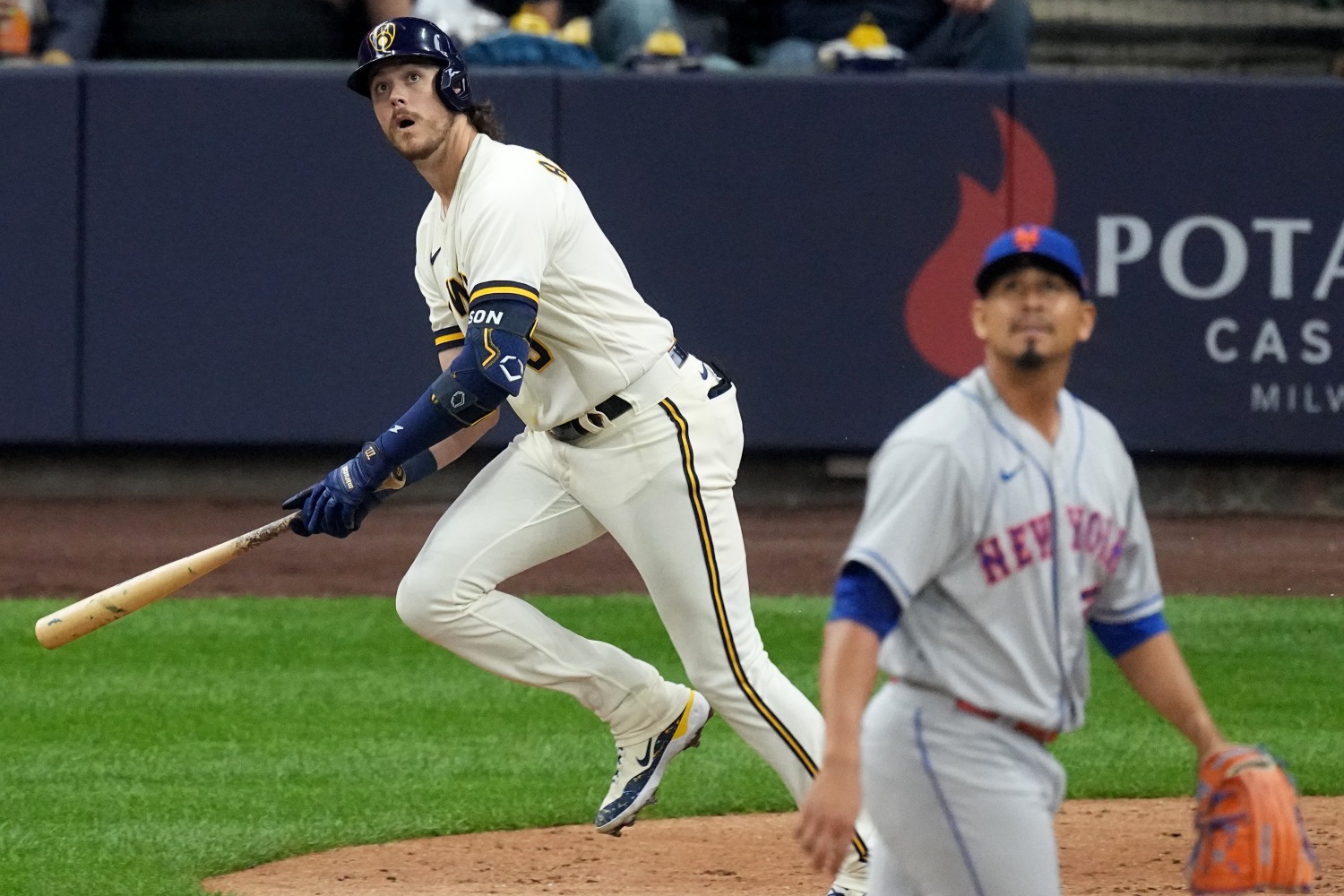 Last season, a bulging disc in his back kept Brian Anderson from being what he’s still capable of being. In 2021, it was a shoulder injury that shelved Anderson, and that flared up again at the end of the year. In 2020, his raw numbers looked good, but he was fighting for every hit, and his skills were slipping, all after a broken hand derailed his 2019. Understandably, the Marlins grew impatient after three rough campaigns, and no trade market developed for him ahead of the non-tender deadline. Still, he knew what he could do. Injuries aren’t excuses for poor performance, of course. They can be real reasons for that kind of struggle, or not, but in either event, no one is giving out dispensations for players who bravely played through something and weren’t able to perform at their best during that span. Every year, dozens of players play through something that might have forced another player to the injured list, and sometimes, they perform as well as ever. More often, they’re diminished by their malady, but they prefer playing at less than their best to the unease and mental battle of not being out there at all. This is a production business. Anderson can’t expect anyone to believe that just because he’s now healthy, he’s going to hit well all season. Still, being healthy after a significant or lingering injury can feel extraordinarily freeing for a player. It’s not just an opportunity to execute one’s best swing or throwing mechanics, or to prove that what looked like an occasional lack of hustle in a previous year was really sensible management of a real problem. It’s also a license to experiment. When a player is hurt and trying to survive that way at the MLB level, it’s everything they can do to do their usual thing. Everything shrinks. One takes fewer chances with adjustments to their bat path or their timing. It’s harder to conceive of, let alone perform, modifications that might be necessary. This spring, Anderson tweaked his stance, his pre-swing setup, and his stride pattern multiple times, working with Brewers instructors to fine-tune what went without that kind of delicate calibration last year. He also tried out three or four different bat changes, including different shapes and sizes of knob, in search of what felt best. He was doing the kind of work that hitters long to do each spring, but that some don’t feel able to do even then, and that gets even harder to do as nicks and scrapes add up over the grind of the season. Whether this can last is unknowable. We can only say with confidence that it's been made possible by the freedom Anderson has felt and the adaptability he has shown since arriving in Maryvale in February, but those things make a pretty good start on being a productive big-league hitter.
-
Every game counts the same in the standings, but not all games could honestly have gone either way. In Saturday’s taut pitchers’ duel, the Brewers got a win in one that certainly fell into that category. Image courtesy of © Kamil Krzaczynski-USA TODAY Sports Every game counts the same in the standings, but not all games could honestly have gone either way. In Saturday’s taut pitchers’ duel, the Brewers got a win in one that certainly fell into that category. Baseball people say that every team will win 54 games each year, and every team will lose 54. It’s what a club does with its other 54 games that matters. That’s not just fortune-cookie wisdom; it’s actionable. We can, with a bit of time and perspective, try to put a finger on the games that fall into that third bucket of 54 contests. If a game doesn’t go in that bucket–if its outcome was almost predetermined, based on something like relative travel schedules or pitching matchups or the untameable breaks of the game–then it’s not worth losing any sleep over it, in either direction. If a game does belong to that third bucket, though, then it’s a truly important result, even if each one still only shifts the team’s fortunes over the course of the season by about two percent. In those cases, it makes sense to take more careful stock of what happened, and to allow the game to linger with us a bit longer. The Brewers’ loss on Opening Day was a second-bucket game. That one was ticketed to become a loss from the get-go. It was a festive Wrigley Field. The Cubs made three early, tough defensive plays to scupper Milwaukee’s offensive plans, and took advantage of two Brewers mistakes in the bottom of the third. Ron Kulpa’s strike zone was consistent, but its bulge low and away to right-handed batters favored Marcus Stroman’s style more than Corbin Burnes’s. That game goes in Bucket Two. Saturday, though, was different. By the sixth inning, it was clear that that game belonged to the third bucket, and not only because of the scoreless tie. The game ebbed and flowed. Milwaukee put two runners on base in the first inning, but Justin Steele utterly thwarted them thereafter. Dansby Swanson cracked a leadoff double in the bottom of the fourth inning, but Brandon Woodruff stopped that rally in its tracks. When Ian Happ finally put a crack in the eggshell holding the game in stasis, it was a major blow, but it didn’t have the air of finality. The endgame plan Craig Counsell and the staff executed after that was brilliant. Whereas Woodruff was very fastball-forward, the bullpen–Peter Strzelecki, Matt Bush, and Devin Williams–favored their offspeed stuff. At the plate, Counsell waited to see how David Ross would deploy his bullpen, and he seized the advantage the Cubs allowed him by way of not having a lefty in their bullpen, pinch-hitting both Garrett Mitchell and Jesse Winker at opportune moments. Sure, the rest is a bit about luck. Winker’s single could as easily have found the glove of Nico Hoerner at second base as it made its way to the outfield grass. William Contreras’s game-winning hit probably should have been a harmless flyout. When Devin Williams took a line drive off his biceps, it could have hit his elbow instead. Even once that calamity was averted, the ninth inning could have gotten away from the Crew. Cody Bellinger was due to bat with two runners on base and nobody out, and he hit the ball hard, but it found a glove and turned into a double play. That, though, is how these Bucket Three games work. A team earns its good luck by keeping close games close, and by making aggressive strategic choices like pinch-hitting or starting a runner. Those types of games are also the ones where superior talent or depth can just win out through a kind of miniature attrition. Sometimes, a game is a third-bucket game for one team, but not for the other. On Saturday, though, the Brewers and Cubs both ended up in a third-bucket battle, not least because the game was between them–two divisional rivals, now limited to 13 encounters over the long season. The Brewers survived it. In some sense, now, the Brewers are 1-0, not 1-1, because their loss was one of those that just happens, but their win was the kind of game that can easily become a loss. It was a good, needed win, and now the Brewers can try to take the series Sunday. View full article
-
The Third 54 Report: Brewers Pass Their First Real Test of Season
Matthew Trueblood posted an article in Brewers
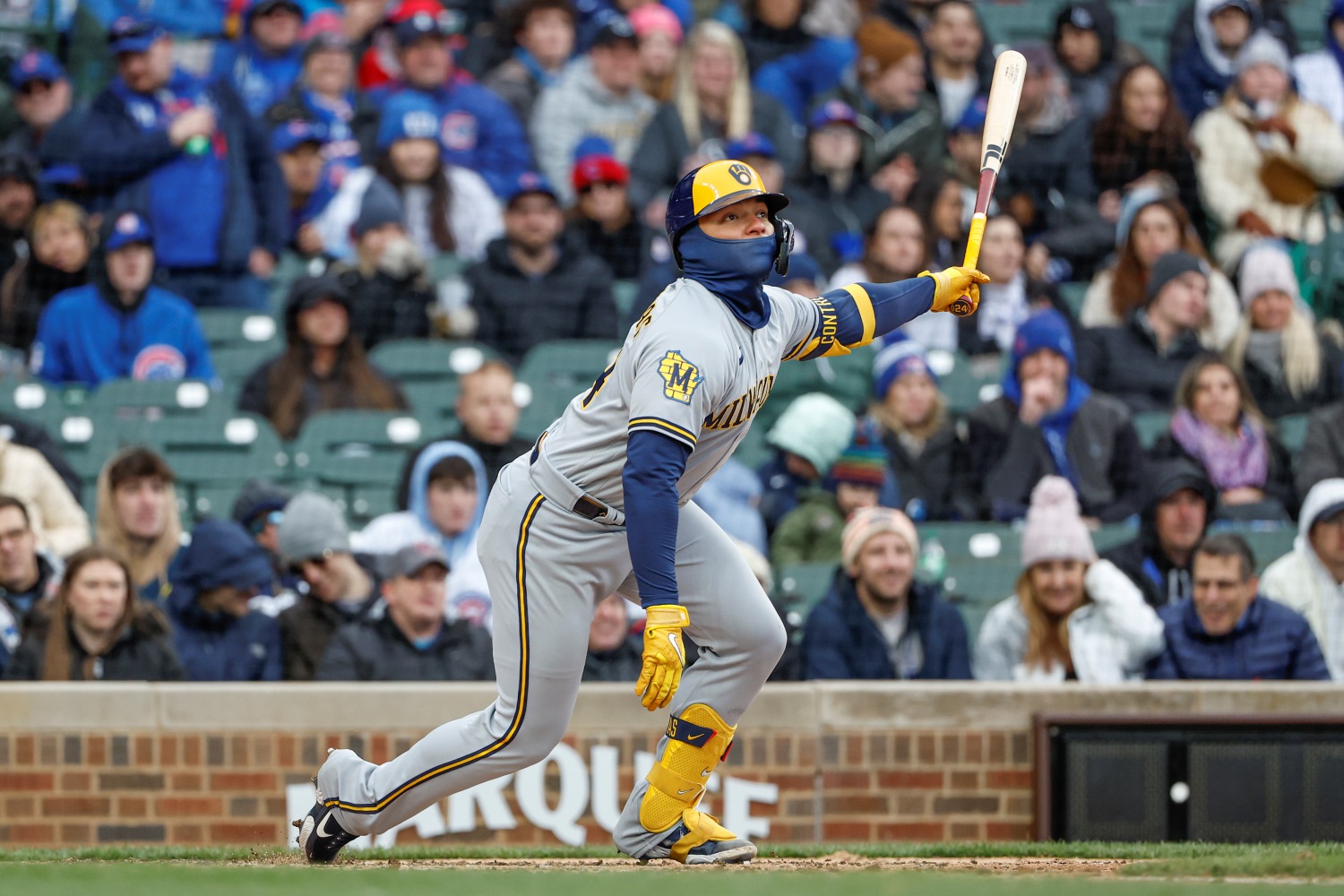 Baseball people say that every team will win 54 games each year, and every team will lose 54. It’s what a club does with its other 54 games that matters. That’s not just fortune-cookie wisdom; it’s actionable. We can, with a bit of time and perspective, try to put a finger on the games that fall into that third bucket of 54 contests. If a game doesn’t go in that bucket–if its outcome was almost predetermined, based on something like relative travel schedules or pitching matchups or the untameable breaks of the game–then it’s not worth losing any sleep over it, in either direction. If a game does belong to that third bucket, though, then it’s a truly important result, even if each one still only shifts the team’s fortunes over the course of the season by about two percent. In those cases, it makes sense to take more careful stock of what happened, and to allow the game to linger with us a bit longer. The Brewers’ loss on Opening Day was a second-bucket game. That one was ticketed to become a loss from the get-go. It was a festive Wrigley Field. The Cubs made three early, tough defensive plays to scupper Milwaukee’s offensive plans, and took advantage of two Brewers mistakes in the bottom of the third. Ron Kulpa’s strike zone was consistent, but its bulge low and away to right-handed batters favored Marcus Stroman’s style more than Corbin Burnes’s. That game goes in Bucket Two. Saturday, though, was different. By the sixth inning, it was clear that that game belonged to the third bucket, and not only because of the scoreless tie. The game ebbed and flowed. Milwaukee put two runners on base in the first inning, but Justin Steele utterly thwarted them thereafter. Dansby Swanson cracked a leadoff double in the bottom of the fourth inning, but Brandon Woodruff stopped that rally in its tracks. When Ian Happ finally put a crack in the eggshell holding the game in stasis, it was a major blow, but it didn’t have the air of finality. The endgame plan Craig Counsell and the staff executed after that was brilliant. Whereas Woodruff was very fastball-forward, the bullpen–Peter Strzelecki, Matt Bush, and Devin Williams–favored their offspeed stuff. At the plate, Counsell waited to see how David Ross would deploy his bullpen, and he seized the advantage the Cubs allowed him by way of not having a lefty in their bullpen, pinch-hitting both Garrett Mitchell and Jesse Winker at opportune moments. Sure, the rest is a bit about luck. Winker’s single could as easily have found the glove of Nico Hoerner at second base as it made its way to the outfield grass. William Contreras’s game-winning hit probably should have been a harmless flyout. When Devin Williams took a line drive off his biceps, it could have hit his elbow instead. Even once that calamity was averted, the ninth inning could have gotten away from the Crew. Cody Bellinger was due to bat with two runners on base and nobody out, and he hit the ball hard, but it found a glove and turned into a double play. That, though, is how these Bucket Three games work. A team earns its good luck by keeping close games close, and by making aggressive strategic choices like pinch-hitting or starting a runner. Those types of games are also the ones where superior talent or depth can just win out through a kind of miniature attrition. Sometimes, a game is a third-bucket game for one team, but not for the other. On Saturday, though, the Brewers and Cubs both ended up in a third-bucket battle, not least because the game was between them–two divisional rivals, now limited to 13 encounters over the long season. The Brewers survived it. In some sense, now, the Brewers are 1-0, not 1-1, because their loss was one of those that just happens, but their win was the kind of game that can easily become a loss. It was a good, needed win, and now the Brewers can try to take the series Sunday.
-
See! Had it all the way!
-
Thank god it's so damned hard to call a screwball.
-
Please be ok. Like, unaffected ok, not just stay in the game ok.
-
Hey hey! That's a helluva first big hit! Got it in the air and everything!
-
That looked like the ol' unintentional intentional. Yelich has to make them pay.
-
Still nobody out. Top of the order. Gotta kill 'em dead now.
-
Oh absolutely! Though I think it's more a situation-by-situation effect than one particular guy totally not being able to handle it in all cases.
-
Maybe he feels like Mitchell's a much better bunter.
-
Ye of little faith... The Cubs' bullpen is not bulletproof. And Happ didn't hit that that hard, so if they get someone in there whom the Crew can actually lift the ball against, we could see some stuff.
-
I actually think Yelich looks a little better so far, mechanically. He's staying back with his upper half better. If he gets the timing right, I think he can start lifting it a bit better from here. But, we'll see. Frustrating start.
-
Contreras has to learn to elevate the ball, man. Same problem his brother has run into over the years.
-
The best bait catches the biggest fish.
-
This is half-right, but the more important half, so thank you! It’s actually MLB Pipeline, ESPN, and BA, and that’s important, because Wiemer did make Pipeline’s list. But whereas I thought he was ON ESPN’s list, I see now that he was merely on their honorable mention or just-missed list. (It’s VERY aggravating that two of these lists are behind paywalls, given that they have a tangible effect on the game now. But whatever.) I’ll update the piece. Thanks again!
-
In a bittersweet development for Brewers fans, Joey Wiemer will join the parent club and make his debut this weekend at Wrigley Field. That’s the sweet part; the bitterness lies in the reason for that promotion. Luis Urías is headed to the injured list with a hamstring injury, suffered in the ninth inning Thursday. Image courtesy of © Kamil Krzaczynski-USA TODAY Sports In a bittersweet development for Brewers fans, Joey Wiemer will join the parent club and make his debut this weekend at Wrigley Field. That’s the sweet part; the bitterness lies in the reason for that promotion. Luis Urías is headed to the injured list with a hamstring injury, suffered in the ninth inning Thursday. There are more important players to the 2023 Brewers than Luis Urías, but not many of them. The young infielder showed really good all-around skills over the last two seasons, and grabbed an international spotlight with his big moments in the World Baseball Classic last month. He entered this season with a chance to take another step forward and become something close to a star-caliber infielder. His versatility, moving back and forth between second and third base and providing sound defense at each, will be missed, even if the team can nominally replace it with the likes of Mike Brosseau, Owen Miller, and Brian Anderson. We can hope, for now, that the team is just being very careful with this injury, the severity of which was not clear when Urías first came up lame trying to beat out a ground ball Thursday afternoon. Although the Brewers will play indoors or in good weather for a long stretch after this weekend, it’s not the time of year to risk further injury. Besides, they have excellent depth, as calling up Joey Wiemer reminds us. That makes it easier to make a call like this one. Still, it’s a bummer. Wiemer’s arrival, though, is a lot of fun. Presumably, Wiemer will become the everyday right fielder while Urías is sidelined, with Anderson manning third base. Against lefties, though, he could just as easily be in center, with Anderson in right and Brosseau at third. In fact, with Miller, Anderson, Brosseau, Wiemer, and Luke Voit, Craig Counsell now has the ability to hide any or all of his left-handed batters from southpaws if he sees fit. Either way, Wiemer makes the team better than Abraham Toro would have, because Toro’s skill set is redundant on a team that already has all that infield versatility. The outfield defense should be better, which could come into play right away Saturday. It’s going to be under 40 degrees at Wrigley Field come game time, with the wind howling in from the north. Wiemer will have a stern first test, then, but he has the tools to be a very good right fielder. At the plate, Wiemer is very different from Urías, and the sense of extra length and competence Urías lent to the lineup is gone for as long as he is. In a certain way, though, Wiemer might make the Brewers more dangerous. His power could cut even the gale in Chicago on a cold day. His speed makes him a threat whenever he reaches base. In two pro seasons, he has 61 steals in 69 attempts. His idiosyncratic setup and swing make a lot of people doubt that he’ll hit in the majors. Last season, he had a strikeout rate of 30 percent with Double-A Biloxi, which is usually a sign of major trouble ahead. In a fairly substantial sample after being promoted to Triple-A Nashville, though, he cut that all the way down to 20 percent. Given Wiemer’s tools, that’s the difference between being a second-division starter and being an All-Star. It’s quite a contrast from Urías’s reliability, but Wiemer’s talent is tantalizing, and we’re getting an early opportunity to find out how it will translate to the toughest competition on Earth. Editor's Note: A previous version of this piece indicated that the Brewers missed out on being eligible to gain an extra draft pick through the new Collective Bargaining Agreement's incentives to stem service-time manipulation, because they didn't carry Wiemer on the Opening Day roster. As was pointed out in the comments, Wiemer only made one of the three top prospect lists used for that incentive program, and would have needed to make two, so the Brewers could never have gotten that pick, anyway. We apologize for the confusion, and we urge MLB and the MLBPA to make the relevant lists available outside of subscription paywalls so that public analysis doesn't depend on those particular subscriptions in the future. View full article
-
 There are more important players to the 2023 Brewers than Luis Urías, but not many of them. The young infielder showed really good all-around skills over the last two seasons, and grabbed an international spotlight with his big moments in the World Baseball Classic last month. He entered this season with a chance to take another step forward and become something close to a star-caliber infielder. His versatility, moving back and forth between second and third base and providing sound defense at each, will be missed, even if the team can nominally replace it with the likes of Mike Brosseau, Owen Miller, and Brian Anderson. We can hope, for now, that the team is just being very careful with this injury, the severity of which was not clear when Urías first came up lame trying to beat out a ground ball Thursday afternoon. Although the Brewers will play indoors or in good weather for a long stretch after this weekend, it’s not the time of year to risk further injury. Besides, they have excellent depth, as calling up Joey Wiemer reminds us. That makes it easier to make a call like this one. Still, it’s a bummer. Wiemer’s arrival, though, is a lot of fun. Presumably, Wiemer will become the everyday right fielder while Urías is sidelined, with Anderson manning third base. Against lefties, though, he could just as easily be in center, with Anderson in right and Brosseau at third. In fact, with Miller, Anderson, Brosseau, Wiemer, and Luke Voit, Craig Counsell now has the ability to hide any or all of his left-handed batters from southpaws if he sees fit. Either way, Wiemer makes the team better than Abraham Toro would have, because Toro’s skill set is redundant on a team that already has all that infield versatility. The outfield defense should be better, which could come into play right away Saturday. It’s going to be under 40 degrees at Wrigley Field come game time, with the wind howling in from the north. Wiemer will have a stern first test, then, but he has the tools to be a very good right fielder. At the plate, Wiemer is very different from Urías, and the sense of extra length and competence Urías lent to the lineup is gone for as long as he is. In a certain way, though, Wiemer might make the Brewers more dangerous. His power could cut even the gale in Chicago on a cold day. His speed makes him a threat whenever he reaches base. In two pro seasons, he has 61 steals in 69 attempts. His idiosyncratic setup and swing make a lot of people doubt that he’ll hit in the majors. Last season, he had a strikeout rate of 30 percent with Double-A Biloxi, which is usually a sign of major trouble ahead. In a fairly substantial sample after being promoted to Triple-A Nashville, though, he cut that all the way down to 20 percent. Given Wiemer’s tools, that’s the difference between being a second-division starter and being an All-Star. It’s quite a contrast from Urías’s reliability, but Wiemer’s talent is tantalizing, and we’re getting an early opportunity to find out how it will translate to the toughest competition on Earth. Editor's Note: A previous version of this piece indicated that the Brewers missed out on being eligible to gain an extra draft pick through the new Collective Bargaining Agreement's incentives to stem service-time manipulation, because they didn't carry Wiemer on the Opening Day roster. As was pointed out in the comments, Wiemer only made one of the three top prospect lists used for that incentive program, and would have needed to make two, so the Brewers could never have gotten that pick, anyway. We apologize for the confusion, and we urge MLB and the MLBPA to make the relevant lists available outside of subscription paywalls so that public analysis doesn't depend on those particular subscriptions in the future.
-
Opening Day brought the Brewers frustration and some trepidation, as they lost 4-0 to the Cubs and will have to wait to hear about the severity of Luis Urias's hamstring injury. Still, baseball is back, and there was more to the first game of the season than those feelings. Image courtesy of © Kamil Krzaczynski-USA TODAY Sports Opening Day brought the Brewers frustration and some trepidation, as they lost 4-0 to the Cubs and will have to wait to hear about the severity of Luis Urias's hamstring injury. Still, baseball is back, and there was more to the first game of the season than those feelings. Corbin Burnes's Two Gears on the Cutter In the first inning, Ian Happ drew a two-out walk against the Brewers’ ace, bringing the dangerous Cody Bellinger to the plate. As rough as the last two seasons were for Bellinger, he looked good enough this spring to merit the cleanup spot in Chicago’s Opening Day lineup, and right field was the one place where the ball was carrying well in the air Thursday. Burnes knew Bellinger would step into the box thinking about creating an early run, especially in his first at-bat with a new team and in front of a raucous home crowd. He took advantage masterfully, and it was a reminder of what makes him special. His first pitch to Bellinger was a cutter, but not one of the riding cutters at 96 miles per hour that he had thrown to the first few hitters. Instead, the pitch came in at 94, and it dove like a slider toward Bellinger's back foot. That highlighted something interesting about Burnes and his lethal cutter: it can be two different pitches for him. He doesn't just throw the cutter in place of his fastball. He manipulates the pitch, such that it can also work as a breaking ball. Here are all of the cutter Burnes threw in 2022 that were over 95 miles per hour. Now, here are his cutters below that speed. The second cluster is lower, showing us that Burnes can create more vertical movement with the cutter when he takes a little bit off of it. He applies so much spin to it that turning it into as much a breaking ball as a fastball is relatively easy. He got ahead of Bellinger on that version of the offering, then induced a groundout with a good changeup, a pitch Bellinger was not going to hit hard after seeing that cutter the previous pitch. Willy Adames Has to Keep His Head The Cubs' four-run third inning didn't have to be that way. Dansby Swanson swatted an opposite-field single to score the first Cubs tally, but as the throw came in from right field, Willy Adames noticed Swanson taking a big turn around first base, and tried to steal an out by throwing behind him. Instead, he threw wildly, and Nico Hoerner came home to score a second run. While Adames's awareness is laudable on one level, he was trying to do too much there. A few batters later, with runners at the corners and two outs, Yan Gomes hit a slow grounder up the middle. Adames fielded it cleanly, but seemed caught between trying to beat Trey Mancini to second base himself and throwing over to first to retire Gomes and end the inning. He chose the former, which was a mistake. Mancini had gotten a good secondary lead and was running hard, and he beat Adames to the bag. Adames had had to charge past second to grab the ball. Trying to take it to the base meant a reversal of his momentum. Gomes, a catcher, is very slow. It seemed as though Adames just froze a little, letting the previous error get into his head. He's a very talented defender, but he'll need to be more clear-headed out there from now on. Good Relief Work It didn't change the game, because the Crew never did crack the Cubs' pitching staff, but the bullpen was solid after Burnes's departure. Peter Strzelecki, Gus Varland, and Javy Guerra worked around a couple of jams, but didn't allow a run in three innings of work. For Varland, it was a successful big-league debut. Guerra threw the four hardest pitches either team tossed all day. It was small consolation in a tough loss, perhaps, but those three provided a reminder that Craig Counsell still has formidable depth in his relief corps. View full article
-
 Corbin Burnes's Two Gears on the Cutter In the first inning, Ian Happ drew a two-out walk against the Brewers’ ace, bringing the dangerous Cody Bellinger to the plate. As rough as the last two seasons were for Bellinger, he looked good enough this spring to merit the cleanup spot in Chicago’s Opening Day lineup, and right field was the one place where the ball was carrying well in the air Thursday. Burnes knew Bellinger would step into the box thinking about creating an early run, especially in his first at-bat with a new team and in front of a raucous home crowd. He took advantage masterfully, and it was a reminder of what makes him special. His first pitch to Bellinger was a cutter, but not one of the riding cutters at 96 miles per hour that he had thrown to the first few hitters. Instead, the pitch came in at 94, and it dove like a slider toward Bellinger's back foot. That highlighted something interesting about Burnes and his lethal cutter: it can be two different pitches for him. He doesn't just throw the cutter in place of his fastball. He manipulates the pitch, such that it can also work as a breaking ball. Here are all of the cutter Burnes threw in 2022 that were over 95 miles per hour. Now, here are his cutters below that speed. The second cluster is lower, showing us that Burnes can create more vertical movement with the cutter when he takes a little bit off of it. He applies so much spin to it that turning it into as much a breaking ball as a fastball is relatively easy. He got ahead of Bellinger on that version of the offering, then induced a groundout with a good changeup, a pitch Bellinger was not going to hit hard after seeing that cutter the previous pitch. Willy Adames Has to Keep His Head The Cubs' four-run third inning didn't have to be that way. Dansby Swanson swatted an opposite-field single to score the first Cubs tally, but as the throw came in from right field, Willy Adames noticed Swanson taking a big turn around first base, and tried to steal an out by throwing behind him. Instead, he threw wildly, and Nico Hoerner came home to score a second run. While Adames's awareness is laudable on one level, he was trying to do too much there. A few batters later, with runners at the corners and two outs, Yan Gomes hit a slow grounder up the middle. Adames fielded it cleanly, but seemed caught between trying to beat Trey Mancini to second base himself and throwing over to first to retire Gomes and end the inning. He chose the former, which was a mistake. Mancini had gotten a good secondary lead and was running hard, and he beat Adames to the bag. Adames had had to charge past second to grab the ball. Trying to take it to the base meant a reversal of his momentum. Gomes, a catcher, is very slow. It seemed as though Adames just froze a little, letting the previous error get into his head. He's a very talented defender, but he'll need to be more clear-headed out there from now on. Good Relief Work It didn't change the game, because the Crew never did crack the Cubs' pitching staff, but the bullpen was solid after Burnes's departure. Peter Strzelecki, Gus Varland, and Javy Guerra worked around a couple of jams, but didn't allow a run in three innings of work. For Varland, it was a successful big-league debut. Guerra threw the four hardest pitches either team tossed all day. It was small consolation in a tough loss, perhaps, but those three provided a reminder that Craig Counsell still has formidable depth in his relief corps.
-
That’s fair. I’m evaluating him based on how it looked and on some specific things I think he needs to do but isn’t, rather than on the numbers. But you’re still right. He’s one of those guys who can be effectively wild, who has success in different ways than most, and that can make even a close scouting-and-stats evaluation unreliable. We’ll see! I really like watching Lauer when he’s right and I hope he comes out looking strong, maybe with a couple of the adjustments that looked necessary this spring.
-
It’s finally here! Happy Opening Day 2023. To celebrate, let’s look ahead and make a few bold predictions for the Brewers, in what should be a fun and pivotal season in the progress of the franchise. We don’t need to faff around here. The concept is simple. I have five bold predictions to offer for the coming campaign, which I hope nicely balance being interesting and unexpected with being plausible. Let me know whether I’ve succeeded after you read them. Garrett Mitchell will steal 40 bases. This one is my leadoff hitter, because of all my hunches about the coming season, it’s the one about which I feel most excited. Mitchell has to corral the strikeout problems that showed up when he reached MLB last season in order to get anywhere near this figure, but he’s an excellent candidate to do it if he can manage to put the ball in play. Mitchell hits the ball hard, and is a left-handed batter. The constraints on infield shifts will make his life easier at the plate this year, if only by some marginal amount. Once he reaches base, obviously, there are the newly enlarged bases and the limitations on pickoff attempts by pitchers working in his favor. Most of all, though, Mitchell has elite speed, and he’s been an efficient and reasonably aggressive baserunner in his pro career to date. Combining the minors and majors, Mitchell has 42 stolen bases in 45 attempts since being drafted in 2020, all in just 625 plate appearances of playing time. A midseason trade for a Marlins starting pitcher will cost the team one of Joey Wiemer and Sal Frelick. Let’s face it: there’s a little bit of a logjam on the Brewers’ organizational outfield depth chart. With Christian Yelich a fixture for another half-decade and little flexibility to slide guys to the designated hitter slot for 2023, a pinch is on already. If Mitchell plays the way I predicted above, and if Tyrone Taylor is able to pick up where he left off last year once his elbow heals, then Frelick and Wiemer will be fighting for a very small slice of playing time, indeed. For reasons you can read shortly, I think the Brewers will be in the market for a starting pitching upgrade come July, and the Miami Marlins are a good fit. With Corbin Burnes and Brandon Woodruff still slated for free agency after 2024, Matt Arnold might try to create more long-term certainty in the starting rotation by angling for a controllable starter, and if that happens, one of Frelick and Wiemer will need to be included in a deal. Trevor Rogers, along with the sinker he’s added this spring, is an especially appealing target, given what he and the Brewers’ pitching development team each do well. Jackson Chourio will make his debut, and it will come before September. Admittedly, this one is related to the prediction that Wiemer or Frelick will depart the organization by July 31. Absent either that kind of trade or a spate of nasty injuries, it would be hard for the teenaged Chourio to mash his way to the parent club. In theory, it should be difficult for that to happen even in that event. What this prediction comes down to, then, is a belief that Chourio is one of the truly special prospects who comes along only every five or 10 years. That’s bold, to be sure, but it’s not crazy, because if the Brewers didn’t see him that way, they wouldn’t have pushed him so aggressively throughout 2022, allowing him to reach Double A at the end of his age-18 season. It’s possible to have the kind of successful season he had even in the face of challenging level assignments at a very young age without being that sort of exceptional player, but Chourio’s stats do acquit him well. It’s not his numbers that give me this conviction, though. It just seems as though Chourio has the rare capacity for making the right play, composing himself in the face of a difficult moment, and staying under control even while playing to the edge of his athletic gifts. If all of that turns out to be true, he’s going to shred the Southern League, and he’ll force his way to Milwaukee for the stretch drive. Bryse Wilson will make at least 15 starts. On the surface, the starting rotation looks like the deepest and least delicate segment of the Brewers’ roster. By early June, I think we could be recalling that impression with bitter longing. Adrian Houser will open the season on the injured list. Aaron Ashby is at least a month away from being available, and there are reasons to believe it could be longer. Add to those present troubles the perpetual risk of Freddy Peralta feeling something and needing to be shut down, and suddenly, it’s easy to envision a miniature crisis in the back half of the rotation. As I have chronicled throughout the last two months, and as Tim Muma mentioned in his piece on broad concerns yesterday, Eric Lauer has looked dreadful this spring. There are several ways that Wilson could be pressed into starting duty by the end of April, and he’s done enough good work with the team’s pitching instructors this spring to merit some faith that he’ll seize that opportunity if it arises. The Brewers will win the NL Central and reach the NLCS. It won’t be easy. The season ahead is long, and lots of change is possible for this roster, even within the six-month schedule. I think they have more ways to beat teams than the Cardinals have, though, and that they’ll strike the balance they just missed last year when they traded Josh Hader. Of course, if they do reach the postseason, they immediately become a dangerous team, because of Burnes and Woodruff, but also because of the rising young talent they might have in place by the time 162 games are in the books. Those are my predictions for this year. What are yours? Where did I go crazy, and where could I have gone even bolder? Jump into the comments and get yourself on the record before first pitch. Image courtesy of © Michael McLoone-USA TODAY Sports View full article
-
 We don’t need to faff around here. The concept is simple. I have five bold predictions to offer for the coming campaign, which I hope nicely balance being interesting and unexpected with being plausible. Let me know whether I’ve succeeded after you read them. Garrett Mitchell will steal 40 bases. This one is my leadoff hitter, because of all my hunches about the coming season, it’s the one about which I feel most excited. Mitchell has to corral the strikeout problems that showed up when he reached MLB last season in order to get anywhere near this figure, but he’s an excellent candidate to do it if he can manage to put the ball in play. Mitchell hits the ball hard, and is a left-handed batter. The constraints on infield shifts will make his life easier at the plate this year, if only by some marginal amount. Once he reaches base, obviously, there are the newly enlarged bases and the limitations on pickoff attempts by pitchers working in his favor. Most of all, though, Mitchell has elite speed, and he’s been an efficient and reasonably aggressive baserunner in his pro career to date. Combining the minors and majors, Mitchell has 42 stolen bases in 45 attempts since being drafted in 2020, all in just 625 plate appearances of playing time. A midseason trade for a Marlins starting pitcher will cost the team one of Joey Wiemer and Sal Frelick. Let’s face it: there’s a little bit of a logjam on the Brewers’ organizational outfield depth chart. With Christian Yelich a fixture for another half-decade and little flexibility to slide guys to the designated hitter slot for 2023, a pinch is on already. If Mitchell plays the way I predicted above, and if Tyrone Taylor is able to pick up where he left off last year once his elbow heals, then Frelick and Wiemer will be fighting for a very small slice of playing time, indeed. For reasons you can read shortly, I think the Brewers will be in the market for a starting pitching upgrade come July, and the Miami Marlins are a good fit. With Corbin Burnes and Brandon Woodruff still slated for free agency after 2024, Matt Arnold might try to create more long-term certainty in the starting rotation by angling for a controllable starter, and if that happens, one of Frelick and Wiemer will need to be included in a deal. Trevor Rogers, along with the sinker he’s added this spring, is an especially appealing target, given what he and the Brewers’ pitching development team each do well. Jackson Chourio will make his debut, and it will come before September. Admittedly, this one is related to the prediction that Wiemer or Frelick will depart the organization by July 31. Absent either that kind of trade or a spate of nasty injuries, it would be hard for the teenaged Chourio to mash his way to the parent club. In theory, it should be difficult for that to happen even in that event. What this prediction comes down to, then, is a belief that Chourio is one of the truly special prospects who comes along only every five or 10 years. That’s bold, to be sure, but it’s not crazy, because if the Brewers didn’t see him that way, they wouldn’t have pushed him so aggressively throughout 2022, allowing him to reach Double A at the end of his age-18 season. It’s possible to have the kind of successful season he had even in the face of challenging level assignments at a very young age without being that sort of exceptional player, but Chourio’s stats do acquit him well. It’s not his numbers that give me this conviction, though. It just seems as though Chourio has the rare capacity for making the right play, composing himself in the face of a difficult moment, and staying under control even while playing to the edge of his athletic gifts. If all of that turns out to be true, he’s going to shred the Southern League, and he’ll force his way to Milwaukee for the stretch drive. Bryse Wilson will make at least 15 starts. On the surface, the starting rotation looks like the deepest and least delicate segment of the Brewers’ roster. By early June, I think we could be recalling that impression with bitter longing. Adrian Houser will open the season on the injured list. Aaron Ashby is at least a month away from being available, and there are reasons to believe it could be longer. Add to those present troubles the perpetual risk of Freddy Peralta feeling something and needing to be shut down, and suddenly, it’s easy to envision a miniature crisis in the back half of the rotation. As I have chronicled throughout the last two months, and as Tim Muma mentioned in his piece on broad concerns yesterday, Eric Lauer has looked dreadful this spring. There are several ways that Wilson could be pressed into starting duty by the end of April, and he’s done enough good work with the team’s pitching instructors this spring to merit some faith that he’ll seize that opportunity if it arises. The Brewers will win the NL Central and reach the NLCS. It won’t be easy. The season ahead is long, and lots of change is possible for this roster, even within the six-month schedule. I think they have more ways to beat teams than the Cardinals have, though, and that they’ll strike the balance they just missed last year when they traded Josh Hader. Of course, if they do reach the postseason, they immediately become a dangerous team, because of Burnes and Woodruff, but also because of the rising young talent they might have in place by the time 162 games are in the books. Those are my predictions for this year. What are yours? Where did I go crazy, and where could I have gone even bolder? Jump into the comments and get yourself on the record before first pitch.
-
In the second part of our final piece surveying the rest of MLB to tie together our preview of the 2023 Brewers, we take on the dregs of the American League. The Brewers are going to host a bunch of games against bad junior-circuit clubs this season. We have just two tiers and six teams left to discuss in this preview. Hopefully, though, they'll account for a healthy number of Brewers wins in 2023. The Sky’s the Limit but There is No Floor: Texas Rangers, Baltimore Orioles, Boston Red Sox All three of these teams could, plausibly, put everything together and force their way into the AL playoffs, causing trouble for unsuspecting NL teams along the way. It just seems wildly unlikely that they actually will. The Rangers have spent several fortunes on star players the last two winters, and while Corey Seager and Marcus Semien were sound investments, they were miles short of sufficient. Throwing bad money after good, then, the team bought an entire starting rotation this winter, and looks poised to spend over $100 million on starters who might combine to throw 600 innings. Jacob deGrom is awesome when he’s on the mound, but he’s not going to suddenly morph into a workhorse. Nathan Eovaldi is a slightly more durable but markedly worse spin on the same thing, and Andrew Heaney is somehow even less durable than deGrom, but also worse than Eovaldi. The Rangers have some decent young hitters populating their lineup around Seager and Semien, but the balance of probability says that it won’t matter. The Brewers visit Texas August 18-20. That’s the last of the AL teams the Brewers face on the road, though. The five worst teams in that league will all come to Miller Park this year, presenting the Crew with an opportunity to make some hay. They need to take advantage. They can start with the Orioles, who might have their best starting pitcher (Grayson Rodriguez) by the time they arrive on June 6, but who are breaking camp without him as they waffle between serious contention and self-righteous nonsense. Adley Rutschman is the game’s best young catcher. Gunnar Henderson is the favorite to win the AL Rookie of the Year. Cedric Mullins, Anthony Santander, and Austin Hays have survived another offseason without being traded, and they combine to provide some genuine punch in the lineup. With Kyle Gibson as the Opening Day starter, though, none of that will suffice. By comparison with the Red Sox, though, the Rangers and Orioles are downright methodical and predictable. The volatility of the Red Sox’s cocktail of veterans and prospects is off the charts. They paid $90 million for Masataka Yoshida the moment he was posted by his NPB team, and it might pay off handsomely–or be a repeat of the Rusney Castillo catastrophe. The good news is that Corey Kluber and Justin Turner will be in the lineup on Opening Day. The bad news is right there on the calendar–speaking of which, the Sox come to Milwaukee April 21-23, part of the same homestand as the Angels and one more team. What Stage of the Rebuild is This, Again: Detroit Tigers, Kansas City Royals, Oakland Athletics Between Boston and Los Angeles, the Tigers come to town, making clear how good an opportunity the Brewers have to rack up wins during that stretch. After an upstart vibe pervaded in 2021, Detroit splashed some money around during the lockout winter, and then everything went as wrong as it could possibly go. That got the front office fired, and new head honcho Scott Harris has largely hit the reset button, plunging the team back into the rebuild they’d been doing for the previous half-decade. Javier Báez will have a better 2023, but not nearly a good enough one to save this team. They need Spencer Torkelson to recover from a massively disappointing rookie showing in order to be so much as respectable. Similarly, though far less dramatically, the Royals were lousy in 2022, and it led to the overdue dismissal of a long-tenured executive. Dissimilarly, they retained and promoted someone from within, and the changes that appear to have taken place are of degree, rather than kind. Vinnie Pasquantino is an above-average first baseman and an emblem of the team’s rapidly improving development infrastructure for hitters. He’s just not a transformative type of player, and the guy in the organization who is (Bobby Witt, Jr.) has yet to live up to that potential. The Royals visit Milwaukee over Mother’s Day weekend. Finally, there are the A’s. They’ll bring Esteury Ruiz back for a brief visit to what were technically his old stomping grounds June 9-11. They also signed Jace Peterson this winter, which is a good encapsulation of how they spent their time. They got good value on neat little role players in several transactions. They just didn’t do anything to actually get better than they were last year. They will improve, but only incrementally, and almost inevitably: they weren’t as bad their record last season. Summary The peculiar partition of their interleague schedule–nearly all their good opponents on the road, nearly all their bad opponents at home–makes it hard to see the Brewers being far from .500 in this set of 46 games. If they’re an especially tough and disciplined team, they might steal an unexpected number of road games against those top teams and go 26-20. If they lack focus against the cupcakes, they could stumble to 20-26 fairly easily. We know that baseball is a game of small margins and big variance. This change to the schedule, and the Brewers’ matchup against their 15 American League opponents, will illustrate that in 2023. Their hopes of reaching the playoffs could hinge on how they handle the challenge. Image courtesy of © Kim Klement-USA TODAY Sports View full article