



Jamie Cameron
-
Posts
203 -
Joined
-
Last visited
Content Type
Profiles
Forums
Blogs
Events
News
2026 Milwaukee Brewers Top Prospects Ranking
Milwaukee Brewers Videos
2022 Milwaukee Brewers Draft Picks
Milwaukee Brewers Free Agent & Trade Rumors, Notes, & Tidbits
Guides & Resources
2023 Milwaukee Brewers Draft Picks
2024 Milwaukee Brewers Draft Picks
The Milwaukee Brewers Players Project
2025 Milwaukee Brewers Draft Pick Tracker
2026 Milwaukee Brewers Draft Tracker: Picks & Bonuses
Store
Downloads
Gallery
Everything posted by Jamie Cameron
-
Image courtesy of © Ken Ruinard / staff / USA TODAY NETWORK via Imagn Images I take MLB mock draft rankings from major industry outlets like MLB Pipeline, ESPN, The Athletic (and many others) to form a consensus board, with a working hypothesis that using this approach will eliminate some of the noise and variance in MLB Draft mock rankings. This is the final mock draft board, locked in just before the 2026 MLB Draft on Saturday, July 11. Round 1: Carson Bolemon, LHP, Southside Christian HS, SC Bolemon is part of an exciting crop of prep arms getting first-round consideration in the 2026 class. While he'll be 19 on draft day, it's an enticing combination of size, present stuff, and pitchability that makes him one of the more polished high school arms in recent years. Bolemon has a clean delivery and operates from a three-quarters slot. His fastball has been up to 97 mph, but will typically sit in the 92-94 mph range. The standout trait with the pitch is his command of it, as Bolemon can manipulate it throughout the strike zone with ease. Bolemom pairs his fastball with two promising breakers, an upper 70s curve and a slider that sit in the low 80s, with his changeup lagging behind the breaking pitches in both usage and effectiveness. Bolemon was the best arm on U18 US National team last summer (on a team that included Gio Rojas) and has a good chance to be the first prep arm off the board. He's currently committed to Wake Forest. Round 2: Joseph Contreras, RHP, Blessed Trinity Catholic HS, GA Joseph Contreras, son of Jose Contreras, is a tall, lean, prep pitcher currently committed to Vanderbilt who took center stage for a brief moment in the WBC as a 17-year-old, competing for Brazil against a stacked Team USA lineup. Contreras' fastball sits 94-97 mph and has been up to 100 mph. It's a quick arm, and one can see him sustaining his velocity more consistently with a bit of added weight and strength. For secondaries, there's a mid-80s slider that holds good spin rates and flashes above average to plus, a changeup in the low-80s with good fade, and a split-change/forkball he throws in the high 70s-low 80s that dies at the plate and flashes plus. That's a ton of weapons and velo for a frame still growing and adding strengths who will turn 18 just before the draft. Round 3: Caden Bogenpohl, OF, Missouri State Caden Bogenpohl is one of the most physically imposing hitters in the entire class at 6'6, 240 pounds. Raw power is the calling card here. Bogenpohl has generated exit velocities north of 117 mph in 2026, figures among the very best in the class. He pulverizes fastballs and pitchers on the inner third of the plate, but has a much tougher time when pitched away with secondaries or up with velocity. There are doubts about the hit tool with Bogenpohl, who's posted a whiff rate north of 27% in 2026 against primarily mid-major competition. In terms of supplementary tools, it's a solid profile. He's played plenty of center field, with good speed for his size and above-average arm strength. It's a profile best suited for right field, if he can hit enough. In 2026, he hit .274/.427/.413 with 6 HR (17 XBH), while walking 19.5% of the time and striking out 18% of the time (111 wRC+). Round 4: Brady Harris, OF, Trinity Christian Academy HS, FL Harris is a tooled-up prep outfielder out of Florida, currently committed to the University of Florida. Despite the loud physicality in his profile, he's slipped a bit since the beginning of the cycle in public-facing rankings. Harris has a great frame at 6'2, 185 pounds. Setting up in a relatively upright, back-weighted stance, it's some of the better rotation and bat speed on the prep side this cycle. It's easy plus raw power, and Harris can get to it in games, with some strength projection remaining. There are loud supplemental tools, too. Harris is an easy plus runner with above average arm strength who should figure to stick in center field as a pro hitter. The routes are solid, and he has a good shot to accrue positive value on the base paths and in the field. Right-handed power-reliant outfield profiles can be dinged as the draft cycle gets late. In Harris' case, it's due to swing and miss concerns. He had a poor summer circuit in 2025, exhibiting quite a bit of in-zone swing and miss. If he can improve his bat-to-ball skills and get the strikeouts in check, he can be a force. Curious to see the players around the Milwaukee Brewers' picks in the draft? Click on the button below to view the entire mock draft board! View full article
-
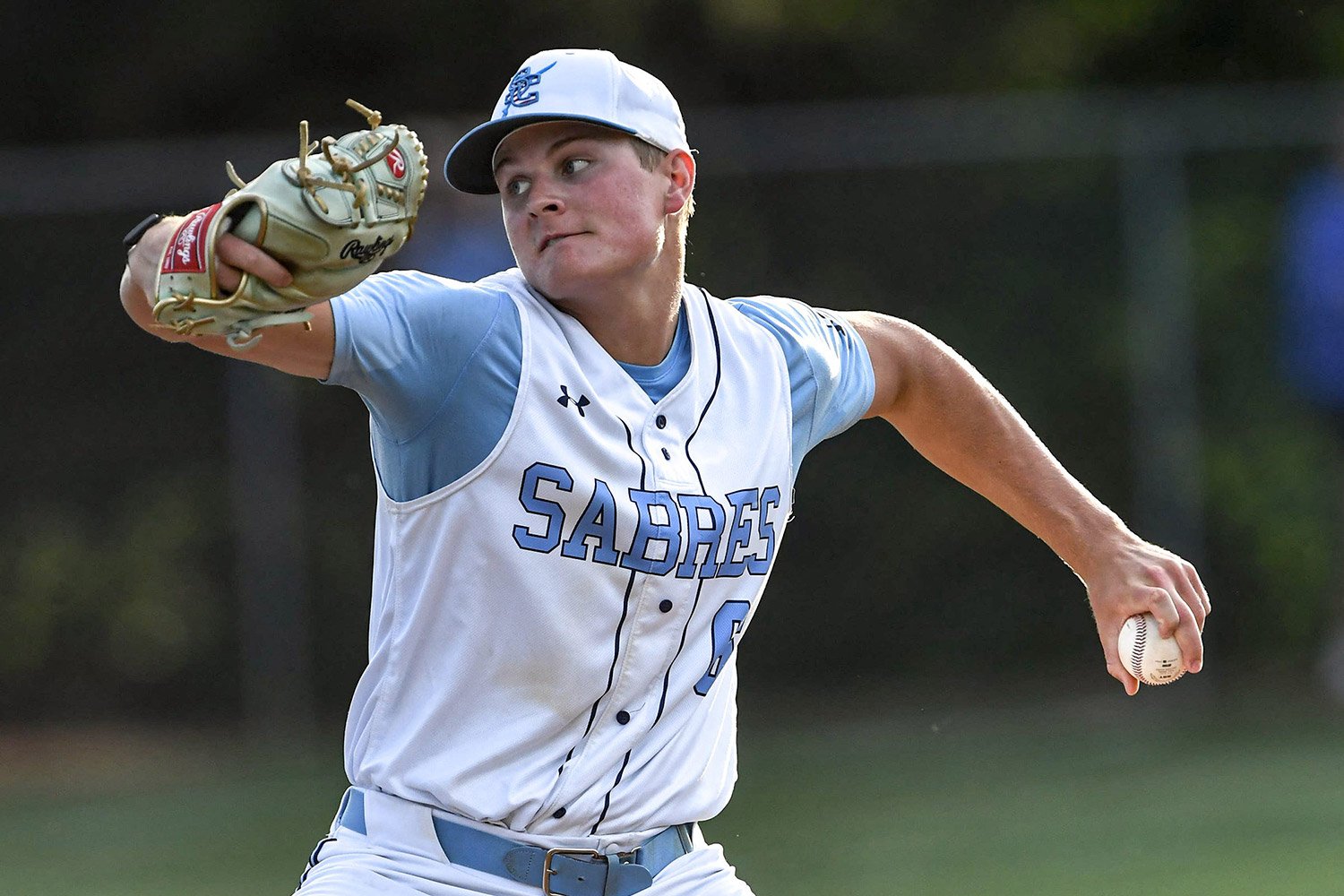 I take MLB mock draft rankings from major industry outlets like MLB Pipeline, ESPN, The Athletic (and many others) to form a consensus board, with a working hypothesis that using this approach will eliminate some of the noise and variance in MLB Draft mock rankings. This is the final mock draft board, locked in just before the 2026 MLB Draft on Saturday, July 11. Round 1: Carson Bolemon, LHP, Southside Christian HS, SC Bolemon is part of an exciting crop of prep arms getting first-round consideration in the 2026 class. While he'll be 19 on draft day, it's an enticing combination of size, present stuff, and pitchability that makes him one of the more polished high school arms in recent years. Bolemon has a clean delivery and operates from a three-quarters slot. His fastball has been up to 97 mph, but will typically sit in the 92-94 mph range. The standout trait with the pitch is his command of it, as Bolemon can manipulate it throughout the strike zone with ease. Bolemom pairs his fastball with two promising breakers, an upper 70s curve and a slider that sit in the low 80s, with his changeup lagging behind the breaking pitches in both usage and effectiveness. Bolemon was the best arm on U18 US National team last summer (on a team that included Gio Rojas) and has a good chance to be the first prep arm off the board. He's currently committed to Wake Forest. Round 2: Joseph Contreras, RHP, Blessed Trinity Catholic HS, GA Joseph Contreras, son of Jose Contreras, is a tall, lean, prep pitcher currently committed to Vanderbilt who took center stage for a brief moment in the WBC as a 17-year-old, competing for Brazil against a stacked Team USA lineup. Contreras' fastball sits 94-97 mph and has been up to 100 mph. It's a quick arm, and one can see him sustaining his velocity more consistently with a bit of added weight and strength. For secondaries, there's a mid-80s slider that holds good spin rates and flashes above average to plus, a changeup in the low-80s with good fade, and a split-change/forkball he throws in the high 70s-low 80s that dies at the plate and flashes plus. That's a ton of weapons and velo for a frame still growing and adding strengths who will turn 18 just before the draft. Round 3: Caden Bogenpohl, OF, Missouri State Caden Bogenpohl is one of the most physically imposing hitters in the entire class at 6'6, 240 pounds. Raw power is the calling card here. Bogenpohl has generated exit velocities north of 117 mph in 2026, figures among the very best in the class. He pulverizes fastballs and pitchers on the inner third of the plate, but has a much tougher time when pitched away with secondaries or up with velocity. There are doubts about the hit tool with Bogenpohl, who's posted a whiff rate north of 27% in 2026 against primarily mid-major competition. In terms of supplementary tools, it's a solid profile. He's played plenty of center field, with good speed for his size and above-average arm strength. It's a profile best suited for right field, if he can hit enough. In 2026, he hit .274/.427/.413 with 6 HR (17 XBH), while walking 19.5% of the time and striking out 18% of the time (111 wRC+). Round 4: Brady Harris, OF, Trinity Christian Academy HS, FL Harris is a tooled-up prep outfielder out of Florida, currently committed to the University of Florida. Despite the loud physicality in his profile, he's slipped a bit since the beginning of the cycle in public-facing rankings. Harris has a great frame at 6'2, 185 pounds. Setting up in a relatively upright, back-weighted stance, it's some of the better rotation and bat speed on the prep side this cycle. It's easy plus raw power, and Harris can get to it in games, with some strength projection remaining. There are loud supplemental tools, too. Harris is an easy plus runner with above average arm strength who should figure to stick in center field as a pro hitter. The routes are solid, and he has a good shot to accrue positive value on the base paths and in the field. Right-handed power-reliant outfield profiles can be dinged as the draft cycle gets late. In Harris' case, it's due to swing and miss concerns. He had a poor summer circuit in 2025, exhibiting quite a bit of in-zone swing and miss. If he can improve his bat-to-ball skills and get the strikeouts in check, he can be a force. Curious to see the players around the Milwaukee Brewers' picks in the draft? Click on the button below to view the entire mock draft board!
 -
 This guide is a comprehensive look at the 2026 MLB Draft with a focus on the Milwaukee Brewers. You’ll find a list of key dates for the draft cycle, including the release of bonus pools and pick values, the MLB Draft combine, and a breakdown of the draft itself. Additionally, you’ll find an overview of the draft combine and MLB draft weekend, in addition to links to other important draft resources like the consensus board. Brewers 2025 MLB Draft Recap The Brewers opened the 2025 draft by taking one of the best hit/power combinations in the class in Tennessee corner infielder Andrew Fischer (who has already ascended into T100 prospect lists). After prep shortstop Brady Ebel 32nd overall, the Crew went back to the college ranks for Vanderbilt lefty JD Thompson. Milwaukee followed with two more picks in the top one hundred: New Jersey prep lefty Frank Cairone (who is spending the early portion of 2026 recovering from a serious car accident) and Coastal Carolina righty Jacob Morrison. The Brewers continued to buck typical draft trends, selecting twelve high school players from their 22 selections. When Is The 2026 MLB Draft? April 1st 2026 - MLB announced draft bonus pools and pick values June 2026 - MLB Draft Combine (Chase Field, Arizona) July 11th - 12th: 2026 MLB Draft (Philadelphia, PA) July 11th - Rounds 1-4 (time TBA) July 12th - Round 5 through Round 20 (time TBA) 2026 MLB Draft Combine The draft combine is a newer event that started in the 2021 draft cycle. Held over a five-day period around a month before the draft itself, it serves as an opportunity for prospects to showcase their talents and boost their draft stock, while giving organizations better access to potential picks. In addition to medical examinations and educational programming, players have an opportunity to meet with teams in advance of the draft. Additionally, there are a number of televised workouts, featuring infield and outfield drills, batting practice for hitters, and bullpens for pitchers, all of which are tracked and underpinned by Statcast data. There is an incentive for players to attend and complete medicals, as prospects are guaranteed 75 percent of their draft slot bonus if they participate and complete medicals. How Many Rounds Are There In The MLB Draft? There is yet another design shift ahead of the 2026 draft cycle. It was shortened from a three-day event to a two-day event. Previously, day one included rounds 1 through the supplemental second round, day two included rounds 3 through 10, and day three included rounds 10 through 20. For the 2026 cycle, day one will be adjusted to include rounds one through four (~135 picks). The draft will conclude on day two with rounds five through twenty. MLB Draft Day One Explained The first day of the draft can be chaotic, as additional rounds and picks are in play beyond rounds one and two. The top of the draft (top 6 picks) is now determined by the draft lottery. Every non-playoff team is entered into the lottery, giving them the opportunity to move up in the draft order. Non-lottery-eligible teams are picked in the order they are eliminated from the postseason, with regular-season record ties broken. After the first round, prospect promotion incentive picks take place. If an eligible player wins Rookie of the Year, they earn their organization an extra pick immediately after the completion of the first round. Next come compensation picks, where teams who extend the qualifying offer to a player (who rejects it) earn an additional draft pick. Compensation pick positions depend on the contract size signed by the player rejecting the qualifying offer, as well as the payroll of the organization receiving them (there are additional compensation picks after competitive balance round B and the fourth round). After any compensation picks, comes the competitive balance round A. Teams that have one of the ten smallest markets or ten smallest revenue pools receive an additional pick in round A or round B, on an annually rotating basis. The first day of the draft is capped by the second round, competitive balance round B, and the third and fourth rounds, which typically take us through approximately 135 picks. MLB Draft Bonus Pool Allocations & Pick Values Prior to the draft, in April, MLB announces each team's bonus pool for the forthcoming draft cycle and the value of every pick in the top 10 rounds. Each pick in the first ten rounds of the draft is assigned a value, with the total of the slots for the picks each organization has in the top ten rounds comprising their total ‘bonus pool’. Organizations can sign a player to a deal greater than a slot or less than a slot, depending on their negotiations with the player, so it’s useful to think of the slots as ‘guidelines’ and little more. Organizations are allowed to spend up to 5% more than their total pool without incurring a penalty, a choice many teams take advantage of. The Twins and the Rockies are the only teams that have never spent any overage on their bonus pool. Any amount up to 5% over the pool is met with a 75% tax on the overage. If a team spends between 5-10% more than their pool, the penalty is 75% tax on the overage and loss of a future first-rounder. Any team that exceeds its bonus pool by more than 10% up to 15% pays 100% tax on the overage and will lose a first and second-round future pick. Any team that exceeds its bonus pool by more than 15% loses two future first-round picks in addition to paying 100% tax on the overage. Rounds 11-20 work differently from the first half of the draft. These picks do not come with an assigned slot value. Teams can spend up to $150,000 per pick without that spending coming out of their bonus pool. If they spend over that amount, any overage will be deducted from their bonus pool. For example, an 11th-round pick signing for $250,000 will result in $100,000 being subtracted from that team’s bonus pool. This is where some financial strategy comes into play. Often, teams will look to accrue some ‘savings’ from their bonus pool so they can spend over the maximum of $150,000 for a prospect in the second half of the draft. NOTE: Slot values increased by 2.5% from 2025 to 2026. View Brewers Mock Draft Board Brewers 2026 MLB Draft Bonus Pool Round Pick Slot Value Round 1 25th $3,696,000 Round 2 66th $1,353,100 Round 3 102nd $770,600 Round 4 130th $585,700 Round 5 163rd $425,400 Round 6 192nd $333,200 Round 7 221st $264,100 Round 8 251st $220,400 Round 9 281st $202,500 Round 10 311th $191,900 Total Bonus Pool Allocation $8,042,900 (25th in MLB) Note: The Brewers traded their Comp B pick (67th) to the Red Sox in the Caleb Durbin trade.
 -
Image courtesy of © Saul Young/News Sentinel / USA TODAY NETWORK via Imagn Images Our resident MLB Draft expert, Jamie Cameron, takes MLB mock draft rankings from major industry outlets like MLB Pipeline, ESPN, The Athletic (and many others) to form a consensus board, with a working hypothesis that using this approach will eliminate some of the noise and variance in MLB Draft mock rankings. The Milwaukee Brewers’ first picks are: Round 1: 25th Overall Round 2: 66th Overall Round 3: 102nd Overall Round 1: Tegan Kuhns, RHP, Tennessee While Kuhns performance hasn't clicked all the way into gear throughout his collegiate career, he's an easy arm to project being a force as a pro, with a great combination of easy velocity and a diverse arsenal of pitches to draw on. Originally working out of the bullpen for Tennessee, Kuhns has oscillated between the pen and a starting role in 2026. It's a little bit of an 'efforty' delivery for me, with a long arm stroke, but it doesn't seem to impact Kuhns strike throwing ability. The arsenal is headlined by a heater that sits 94-96 mph and has touched 98 mph, with good ride. It's complimented by his ability to spin the baseball. Kuhns has two distinct breakers, a slider and a curveball, both with the ability to generate swing and miss. His arsenal is rounded out by a cutter and a changeup, the latter grabbing 15 inches of horizontal break, on average. All in all, this is a good frame, velocity, and plenty of starter traits. Kuhns in a good pro system has a chance to be an impact starter at the next level. In 81 innings in 2026, he managed a 3.75 FIP, striking out 31% of hitters while walking just 4.7%. Round 2: Taylor Rabe, RHP, Ole Miss Taylor Rabe is a 6’5, right-handed pitcher for Ole’ Miss, who has been a significant late riser on draft boards down the stretch of the 2026 season. After blowing out his elbow in his senior year of high school, he made it to campus and spent his 2024 season recovering from TJ surgery. Rabe transitioned into a starting role in 2026, after functioning primarily as a reliever his sophomore season. He logged a career high 76 innings in 2026, posting a strikeout rate of 34.2%, while managing a 3.75 FIP, an excellent mark given the quality of the competition he faced regularly. Rabe has an excellent fastball that sits 95-97 mph but has touched triple digits. It’s primarily complemented by a cutter (86 mph), a slider (82 mph), and a changeup (87 mph), giving Rabe a solid four pitch mix with which to transition into pro ball. There’s excellent strike throwing here. Rabe walked just 4.9% of hitters in 2026. That’s actually up from 2025 (2.5%) and he gets good extension down the mound. There’s a ton of starter traits here, and I like Rabe a ton to polish up his arsenal and optimize his approach with an offseason in a pro system under his belt. The arrow is firmly up here. Round 3: Will Adams, 1B/OF, Hoover HS (AL) Will Adams is a hit-first prep player out of Alabama, currently committed to LSU. A two-way player until his senior year, Adams had previously been in the low 90s as a pitcher, but has since focused solely on being a position player, with versatility to play first base or in the outfield. Adams has a pretty swing from the left side. Previously a bit passive in the zone, he’s become more aggressive in-zone in the last year, producing consistently excellent bat-to-ball numbers with a patient approach. He’ll likely grow into average power in time. An average runner, Adams promises to be a solid enough defender in the outfield or at first base with an above average arm. Curious to see the players around the Milwaukee Brewers picks in the draft? Click on the button below to view the entire mock draft board! View full article
-
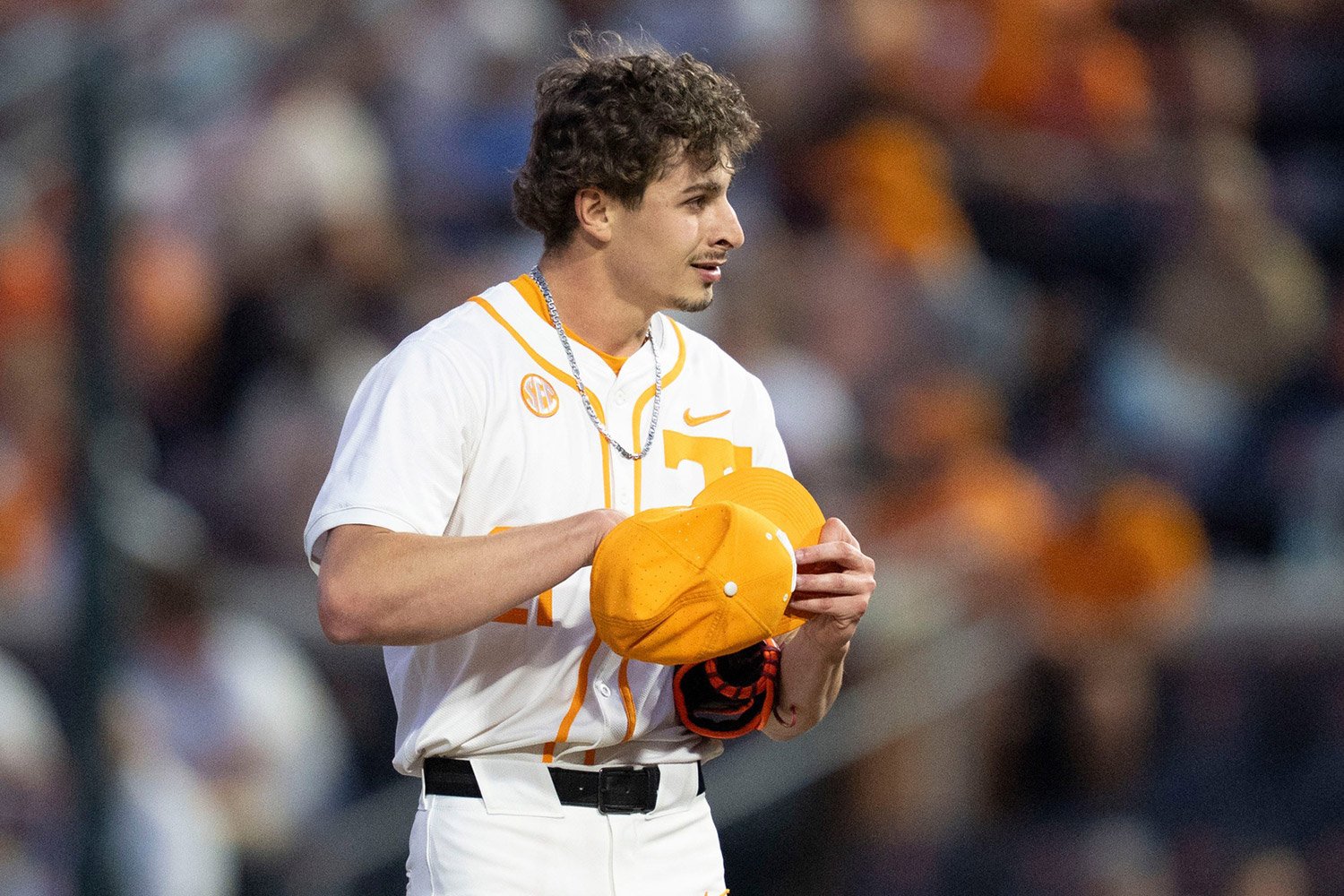 Our resident MLB Draft expert, Jamie Cameron, takes MLB mock draft rankings from major industry outlets like MLB Pipeline, ESPN, The Athletic (and many others) to form a consensus board, with a working hypothesis that using this approach will eliminate some of the noise and variance in MLB Draft mock rankings. The Milwaukee Brewers’ first picks are: Round 1: 25th Overall Round 2: 66th Overall Round 3: 102nd Overall Round 1: Tegan Kuhns, RHP, Tennessee While Kuhns performance hasn't clicked all the way into gear throughout his collegiate career, he's an easy arm to project being a force as a pro, with a great combination of easy velocity and a diverse arsenal of pitches to draw on. Originally working out of the bullpen for Tennessee, Kuhns has oscillated between the pen and a starting role in 2026. It's a little bit of an 'efforty' delivery for me, with a long arm stroke, but it doesn't seem to impact Kuhns strike throwing ability. The arsenal is headlined by a heater that sits 94-96 mph and has touched 98 mph, with good ride. It's complimented by his ability to spin the baseball. Kuhns has two distinct breakers, a slider and a curveball, both with the ability to generate swing and miss. His arsenal is rounded out by a cutter and a changeup, the latter grabbing 15 inches of horizontal break, on average. All in all, this is a good frame, velocity, and plenty of starter traits. Kuhns in a good pro system has a chance to be an impact starter at the next level. In 81 innings in 2026, he managed a 3.75 FIP, striking out 31% of hitters while walking just 4.7%. Round 2: Taylor Rabe, RHP, Ole Miss Taylor Rabe is a 6’5, right-handed pitcher for Ole’ Miss, who has been a significant late riser on draft boards down the stretch of the 2026 season. After blowing out his elbow in his senior year of high school, he made it to campus and spent his 2024 season recovering from TJ surgery. Rabe transitioned into a starting role in 2026, after functioning primarily as a reliever his sophomore season. He logged a career high 76 innings in 2026, posting a strikeout rate of 34.2%, while managing a 3.75 FIP, an excellent mark given the quality of the competition he faced regularly. Rabe has an excellent fastball that sits 95-97 mph but has touched triple digits. It’s primarily complemented by a cutter (86 mph), a slider (82 mph), and a changeup (87 mph), giving Rabe a solid four pitch mix with which to transition into pro ball. There’s excellent strike throwing here. Rabe walked just 4.9% of hitters in 2026. That’s actually up from 2025 (2.5%) and he gets good extension down the mound. There’s a ton of starter traits here, and I like Rabe a ton to polish up his arsenal and optimize his approach with an offseason in a pro system under his belt. The arrow is firmly up here. Round 3: Will Adams, 1B/OF, Hoover HS (AL) Will Adams is a hit-first prep player out of Alabama, currently committed to LSU. A two-way player until his senior year, Adams had previously been in the low 90s as a pitcher, but has since focused solely on being a position player, with versatility to play first base or in the outfield. Adams has a pretty swing from the left side. Previously a bit passive in the zone, he’s become more aggressive in-zone in the last year, producing consistently excellent bat-to-ball numbers with a patient approach. He’ll likely grow into average power in time. An average runner, Adams promises to be a solid enough defender in the outfield or at first base with an above average arm. Curious to see the players around the Milwaukee Brewers picks in the draft? Click on the button below to view the entire mock draft board!
 -
It's time to check back in with another Brewers mock. The MLB Draft is just five weeks away. This class is as muddled as any I've covered, though it's plenty deep in talent. You can find our mock consensus board here. Let's check in on some player profiles it's currently mocking to the Brewers with their first few picks in July. At #25, the Brewers Select: Cole Carlon, LHP, Arizona State Carlon is one of the fastest-rising college arms in 2026, in a demographic that has suffered from injuries and inconsistent performance. After contributing to the Sun Devils immediately as a freshman bullpen arm, Carlon improved significantly during his sophomore season, cutting his ERA in half and flashing far more dominant stuff. It's a good-looking delivery. While there aren't outlier release traits, he hides the ball well during his delivery and has an ideal pitcher's frame at 6-foot-5, 220 pounds. He's moved from the bullpen to a starting role in 2026. The results have been spectacular. Carlon has a 3.82 FIP through his first 50 innings of the season, while striking out over 39% of hitters. The stuff is as explosive as ever. His fastball sits 94-96 MPH, but he's run it up over 100 MPH in recent starts. His slider is one of the best in the class, a mid-80s gyro offering that generates a ton of swing and miss. Carlon mixes in a curveball and a changeup, too. There's still some refinement needed to the strike-throwing, but Carlon's walk rate has reduced from 11.3% in 2025 to around 9% in 2026. Carlon is looking like a first-round prospect with starter traits who should move quickly as a pro. At #66, the Brewers Select: Rocco Maniscalco, SS, Oxford HS, AL Maniscalco is a switch-hitting shortstop who has drawn Eli Willits comparisons. He attends the same Alabama high school as recent Marlins second-rounder Carter Johnson, and is currently committed to Mississippi State. Maniscalco will be one of the youngest prep players in the class. He's a reclass from 2027 and will be 17 years and 2 months old on draft day. It's a good overall offensive profile with solid bat speed and good bat-to-ball skills from both sides of the plate. Given Maniscalco's age, it's not hard to envision him adding strength and additional impact at the plate. In the field is where he truly shines. Maniscalco has a good chance to stick at shortstop long term, with smooth actions, a quick first step, an excellent internal clock and a plus arm. He's one of the better defensive prep shortstops in this class, behind Aiden Ruiz. There are both tools and skills in a strong all-around profile. At #102, the Brewers Select Cooper Sides, RHP, Orange Lutheran HS, CA Cooper Sides is a projectable prep right-handed pitcher out of California, currently committed to LSU. He has a huge frame at 6-foot-6, 225 pounds, with burgeoning stuff that has taken a step forward in velocity in the past 12 months. His fastball is already above-average, sitting 95 mph from a low three-quarter slot. There's a quality sweeping slider that goes with it, with tight break and demonstrating good spin rates. That pitch sits in the low 80s, while Sides will mix in a curveball in the upper 70s and a mid-80s changeup to round out a four-pitch mix. While the curveball and changeup need refinement, there's the makings of an exciting arsenal as he enters pro ball. Sides throws plenty of strikes, enough for above-average control. Some like him as the best prep arm in the state. It's easy to envision him being a problem after a few years of pro development. View full article
-
 It's time to check back in with another Brewers mock. The MLB Draft is just five weeks away. This class is as muddled as any I've covered, though it's plenty deep in talent. You can find our mock consensus board here. Let's check in on some player profiles it's currently mocking to the Brewers with their first few picks in July. At #25, the Brewers Select: Cole Carlon, LHP, Arizona State Carlon is one of the fastest-rising college arms in 2026, in a demographic that has suffered from injuries and inconsistent performance. After contributing to the Sun Devils immediately as a freshman bullpen arm, Carlon improved significantly during his sophomore season, cutting his ERA in half and flashing far more dominant stuff. It's a good-looking delivery. While there aren't outlier release traits, he hides the ball well during his delivery and has an ideal pitcher's frame at 6-foot-5, 220 pounds. He's moved from the bullpen to a starting role in 2026. The results have been spectacular. Carlon has a 3.82 FIP through his first 50 innings of the season, while striking out over 39% of hitters. The stuff is as explosive as ever. His fastball sits 94-96 MPH, but he's run it up over 100 MPH in recent starts. His slider is one of the best in the class, a mid-80s gyro offering that generates a ton of swing and miss. Carlon mixes in a curveball and a changeup, too. There's still some refinement needed to the strike-throwing, but Carlon's walk rate has reduced from 11.3% in 2025 to around 9% in 2026. Carlon is looking like a first-round prospect with starter traits who should move quickly as a pro. At #66, the Brewers Select: Rocco Maniscalco, SS, Oxford HS, AL Maniscalco is a switch-hitting shortstop who has drawn Eli Willits comparisons. He attends the same Alabama high school as recent Marlins second-rounder Carter Johnson, and is currently committed to Mississippi State. Maniscalco will be one of the youngest prep players in the class. He's a reclass from 2027 and will be 17 years and 2 months old on draft day. It's a good overall offensive profile with solid bat speed and good bat-to-ball skills from both sides of the plate. Given Maniscalco's age, it's not hard to envision him adding strength and additional impact at the plate. In the field is where he truly shines. Maniscalco has a good chance to stick at shortstop long term, with smooth actions, a quick first step, an excellent internal clock and a plus arm. He's one of the better defensive prep shortstops in this class, behind Aiden Ruiz. There are both tools and skills in a strong all-around profile. At #102, the Brewers Select Cooper Sides, RHP, Orange Lutheran HS, CA Cooper Sides is a projectable prep right-handed pitcher out of California, currently committed to LSU. He has a huge frame at 6-foot-6, 225 pounds, with burgeoning stuff that has taken a step forward in velocity in the past 12 months. His fastball is already above-average, sitting 95 mph from a low three-quarter slot. There's a quality sweeping slider that goes with it, with tight break and demonstrating good spin rates. That pitch sits in the low 80s, while Sides will mix in a curveball in the upper 70s and a mid-80s changeup to round out a four-pitch mix. While the curveball and changeup need refinement, there's the makings of an exciting arsenal as he enters pro ball. Sides throws plenty of strikes, enough for above-average control. Some like him as the best prep arm in the state. It's easy to envision him being a problem after a few years of pro development.
 -
Welcome to the 2026 MLB Consensus Draft Board. This is the fifth version of the board, which began in 2022 as a top-30. Since then, it’s expanded to around 150 players on an annual basis, featuring at eight different team sites. So what is the Consensus Board? How is it made? How should it be used? The concept is loosely based on Arif Hasan’s NFL Consensus Board. It’s meant to be a tool for folks getting interested in the MLB Draft. As I was learning about the draft, I struggled to navigate wildly varied rankings and evaluations of players. The Consensus Board takes every major publicly available board and combines them into a consensus ranking, eliminating some of the noise and variance of an extremely challenging evaluation process. We’ve found this process to be useful in ranking players in appropriate ranges through around the first five rounds of the draft. On the board, you’ll find player names, handedness, listed height and weight, age, and a write-up, walking through their strengths and opportunities as a prospect. As we go through the cycle, these will be updated with tweaks, final college stats, etc. Every time a major outlet (Baseball America, ESPN, The Athletic, etc.) releases an updated list, the consensus ranking shifts. As such, the board is a lagging reflection of what the industry thinks of the class and its key players. The final Consensus Board will incorporate at least 10 other boards as inputs. New MLB Mock Draft Board Features There are a few important features to point out to help you navigate the board. There’s a search bar to help you find players of interest. If you click ‘expand,’ the board will focus on the write-up you are engaged with, in addition to one immediately above it and one immediately below it. Additionally, you’ll find the logo of your team next to their draft slots to help understand where they are picking. There will be a player slotted there, based on their consensus ranking. Rather than using that ranking as an indicator of who they might actually pick, it’s more useful to use it as a proxy for what caliber of talent is available at that slot. We’ll dig in deeper to team-specific mock drafts later in the cycle. The last important note is that this year the board features ‘push’ updates. It updates automatically every hour. The board is typically updated with new write-ups five days per week, so check back regularly for updates. At #25, The Milwaukee Brewers Select: Ryder Helfrick, C, Arkansas Entering the season, Helfrick was neck and neck with Vahn Lackey as the possible best college catcher in the class. That Lackey has established himself as a clear number one says more about his incredible season than any dip in performance from Helfrick. A notable prep prospect, Helfrick got to campus at Arkansas and has featured consistently in the Razorbacks' lineup ever since. Helfrick has a solid approach. He doesn't expand the zone too much, and while there's some swing and miss in his profile, it's not a real flaw in his offensive game. His skill set is built around dealing damage on contact. He hits the ball hard in the air and has a knack for finding the barrel. Defensively, there's a lot to like, too. Helfrick isn't the same caliber of defender as Lackey, but neither is he 'a hitter who does some catching'. He calls games effectively, receives and blocks well, and has an easy plus arm. Helfrick looks likely to set a career high in walks and home runs in 2026, in addition to a career low strikeout rate. That's a combination that will put him in the top 30 consideration when we get to July. View full article
-
 Welcome to the 2026 MLB Consensus Draft Board. This is the fifth version of the board, which began in 2022 as a top-30. Since then, it’s expanded to around 150 players on an annual basis, featuring at eight different team sites. So what is the Consensus Board? How is it made? How should it be used? The concept is loosely based on Arif Hasan’s NFL Consensus Board. It’s meant to be a tool for folks getting interested in the MLB Draft. As I was learning about the draft, I struggled to navigate wildly varied rankings and evaluations of players. The Consensus Board takes every major publicly available board and combines them into a consensus ranking, eliminating some of the noise and variance of an extremely challenging evaluation process. We’ve found this process to be useful in ranking players in appropriate ranges through around the first five rounds of the draft. On the board, you’ll find player names, handedness, listed height and weight, age, and a write-up, walking through their strengths and opportunities as a prospect. As we go through the cycle, these will be updated with tweaks, final college stats, etc. Every time a major outlet (Baseball America, ESPN, The Athletic, etc.) releases an updated list, the consensus ranking shifts. As such, the board is a lagging reflection of what the industry thinks of the class and its key players. The final Consensus Board will incorporate at least 10 other boards as inputs. New MLB Mock Draft Board Features There are a few important features to point out to help you navigate the board. There’s a search bar to help you find players of interest. If you click ‘expand,’ the board will focus on the write-up you are engaged with, in addition to one immediately above it and one immediately below it. Additionally, you’ll find the logo of your team next to their draft slots to help understand where they are picking. There will be a player slotted there, based on their consensus ranking. Rather than using that ranking as an indicator of who they might actually pick, it’s more useful to use it as a proxy for what caliber of talent is available at that slot. We’ll dig in deeper to team-specific mock drafts later in the cycle. The last important note is that this year the board features ‘push’ updates. It updates automatically every hour. The board is typically updated with new write-ups five days per week, so check back regularly for updates. At #25, The Milwaukee Brewers Select: Ryder Helfrick, C, Arkansas Entering the season, Helfrick was neck and neck with Vahn Lackey as the possible best college catcher in the class. That Lackey has established himself as a clear number one says more about his incredible season than any dip in performance from Helfrick. A notable prep prospect, Helfrick got to campus at Arkansas and has featured consistently in the Razorbacks' lineup ever since. Helfrick has a solid approach. He doesn't expand the zone too much, and while there's some swing and miss in his profile, it's not a real flaw in his offensive game. His skill set is built around dealing damage on contact. He hits the ball hard in the air and has a knack for finding the barrel. Defensively, there's a lot to like, too. Helfrick isn't the same caliber of defender as Lackey, but neither is he 'a hitter who does some catching'. He calls games effectively, receives and blocks well, and has an easy plus arm. Helfrick looks likely to set a career high in walks and home runs in 2026, in addition to a career low strikeout rate. That's a combination that will put him in the top 30 consideration when we get to July.
 -
Image courtesy of Thieres Rabelo In episode 86 of Destination: The Show, Jeremy and Jamie do a full recap of the 2025 MLB Draft. They dig in on the primary picks for the Blue Jays, Padres, and Red Sox before spending some time on the Cubs. Is Chicago leaning into more college upside and volatility than other teams? The guys spend a good amount of time examining the Brewers draft, one of Jamie’s favorites, in which the Brewers took a typical power-hitting corner infield bat before loading up on interesting prep profiles. Finally, they review a tweaked approach from the Twins, who leaned into more volatility and upside with the college arms, digging in specifically on Riley Quick, James Ellwanger, Jason Reitz, and Matt Barr. 0:00 Intro 4:25 Housekeeping 7:50 Episode 86 coverage plan 8:30 Toronto Blue Jays 17:59 San Diego Padres 21:40 Boston Red Sox 27:53 Chicago Cubs 38:48 Milwaukee Brewers 52:11 Minnesota Twins 53:36 Marek Houston 1:00:19 Quentin Young 1:04:20 Riley Quick 1:11:00 James Ellwanger, Jason Reitz, Matt Barr 1:21:23 Closing You can support the show by downloading it from your preferred podcast platform, including iTunes and Spotify. If you enjoy our content, consider leaving us a five-star rating and review, and also share or retweet DTS-related content. You can follow us on Twitter @DTS_POD1, @Jeremynygaard, @J_D_Cameron, and @TheodoreTollef1. We’re now on Bluesky @destinationtheshow.bsky.social. You can also find full episodes and clips of our shows on our YouTube page @DestinationTheShow. View full article
-
Destination, The Show: Episode 86. 2025 MLB Draft Review
Jamie Cameron posted an article in Podcasts
 In episode 86 of Destination: The Show, Jeremy and Jamie do a full recap of the 2025 MLB Draft. They dig in on the primary picks for the Blue Jays, Padres, and Red Sox before spending some time on the Cubs. Is Chicago leaning into more college upside and volatility than other teams? The guys spend a good amount of time examining the Brewers draft, one of Jamie’s favorites, in which the Brewers took a typical power-hitting corner infield bat before loading up on interesting prep profiles. Finally, they review a tweaked approach from the Twins, who leaned into more volatility and upside with the college arms, digging in specifically on Riley Quick, James Ellwanger, Jason Reitz, and Matt Barr. 0:00 Intro 4:25 Housekeeping 7:50 Episode 86 coverage plan 8:30 Toronto Blue Jays 17:59 San Diego Padres 21:40 Boston Red Sox 27:53 Chicago Cubs 38:48 Milwaukee Brewers 52:11 Minnesota Twins 53:36 Marek Houston 1:00:19 Quentin Young 1:04:20 Riley Quick 1:11:00 James Ellwanger, Jason Reitz, Matt Barr 1:21:23 Closing You can support the show by downloading it from your preferred podcast platform, including iTunes and Spotify. If you enjoy our content, consider leaving us a five-star rating and review, and also share or retweet DTS-related content. You can follow us on Twitter @DTS_POD1, @Jeremynygaard, @J_D_Cameron, and @TheodoreTollef1. We’re now on Bluesky @destinationtheshow.bsky.social. You can also find full episodes and clips of our shows on our YouTube page @DestinationTheShow.
 -
Image courtesy of Thieres Rabelo In episode 85 of Destination: The Show, Jeremy and Jamie live stream an episode to get ready for day one of the 2025 MLB Draft. They walk through a mock draft of the first 36 picks and alternate picking for teams based on fit, industry steam, and value. The guys pause at each team we cover in more depth to talk about options from particular demographics that make sense with their picks. Destination: The Show will be live streaming throughout day one of the 2025 MLB Draft, breaking down every pick, kicking off at 4:30 CT on Sunday, July 13th. 0:00 Intro 3:59 Mock Draft preview 5:10 Picks 1-5 14:34 Picks 6-7 18:08 Blue Jays at 8 22:35 Picks 9-14 32:35 Red Sox at 15 35:00 Twins at 16 45:40 Cubs at 17 47:00 Picks 18-19 48:55 Brewers at 20 51:33 Picks 21-24 56:04 Padres at 25 58:00 Picks 26-31 1:07:52 Brewers at 32 1:09:45 Red Sox at 33 1:10:43 Picks 34-35 1:12:18 Twins at 36 1:16:43 Listener Questions You can support the show by downloading it from wherever you get your podcasts, including iTunes and Spotify. If you enjoy the content, consider leaving us a five-star rating and review in addition to sharing or retweeting DTS-related content. You can follow us on Twitter @DTS_POD1, @Jeremynygaard, @J_D_Cameron, and @TheodoreTollef1. We’re now on Bluesky @destinationtheshow.bsky.social. You can also find full episodes and clips of our shows on our YouTube page @DestinationTheShow. View full article
-
 In episode 85 of Destination: The Show, Jeremy and Jamie live stream an episode to get ready for day one of the 2025 MLB Draft. They walk through a mock draft of the first 36 picks and alternate picking for teams based on fit, industry steam, and value. The guys pause at each team we cover in more depth to talk about options from particular demographics that make sense with their picks. Destination: The Show will be live streaming throughout day one of the 2025 MLB Draft, breaking down every pick, kicking off at 4:30 CT on Sunday, July 13th. 0:00 Intro 3:59 Mock Draft preview 5:10 Picks 1-5 14:34 Picks 6-7 18:08 Blue Jays at 8 22:35 Picks 9-14 32:35 Red Sox at 15 35:00 Twins at 16 45:40 Cubs at 17 47:00 Picks 18-19 48:55 Brewers at 20 51:33 Picks 21-24 56:04 Padres at 25 58:00 Picks 26-31 1:07:52 Brewers at 32 1:09:45 Red Sox at 33 1:10:43 Picks 34-35 1:12:18 Twins at 36 1:16:43 Listener Questions You can support the show by downloading it from wherever you get your podcasts, including iTunes and Spotify. If you enjoy the content, consider leaving us a five-star rating and review in addition to sharing or retweeting DTS-related content. You can follow us on Twitter @DTS_POD1, @Jeremynygaard, @J_D_Cameron, and @TheodoreTollef1. We’re now on Bluesky @destinationtheshow.bsky.social. You can also find full episodes and clips of our shows on our YouTube page @DestinationTheShow.
 -
Image courtesy of © Tim Heitman-Imagn Images Draft week is finally here! We’ll have a ton of coverage for you here at Brewer Fanatic. Here are a few important details to get you oriented to our coverage. Despite making the playoffs in 2024, the Brewers are well-positioned in the 2025 MLB Draft. They have the 10th-largest bonus pool overall, at $13,138,100. This is a function of several factors. They receive a compensation pick at 32nd overall for the free-agent departure of Willy Adames. They received an additional compensation pick at 68th overall for failing to sign Chris Levonas in 2024. The Brewers would have also had an additional pick in Comp Round A, but traded that pick (33rd overall) to the Red Sox as part of the Quinn Priester deal. The Brewers top 100 picks and slot values are as follows: Slot value for pick 20: $4,268,200 Slot value for pick 32: $2,970,900 Slot value for pick 59: $1,560,200 Slot value for pick 68: $1,254,400 Slot value for pick 94: $826,400 This combination of financial and pick flexibility puts the Brewers in a strong position ahead of a draft class shaping up to be uncertain in terms of top-tier talent, but with plenty of depth through around 75 picks, with prep bats a demographic of strength. You can find our MLB Draft board here. This is a project I’ve been working on since February. The rankings are consensus rankings, taken from leveraging all of the major draft boards in the industry. The goal is to eliminate some of the noise in rankings for casual fans looking to get more interested and get to know the class better. You’ll find the logo from the team next to their pick positions in each round, to give folks an idea of the caliber of talent available in a particular portion of the draft. By Sunday, you’ll find a writeup for 136 player profiles with biographical information, scouting reports, 2025 performance for college players, and potential fits. The board will be updated every day or so until day one. Additionally, we’ll be live-streaming an episode of Destination: The Show throughout Day One. We’ll get started at 5:30 PM ET/4:30 PM CT. We’ll bring you information on all the picks, live reactions, and team-specific special guests. We hope you’ll join us. View full article
-
Brewer Fanatic 2025 Consensus MLB Draft Board and Day One Live Stream
Jamie Cameron posted an article in MLB Draft
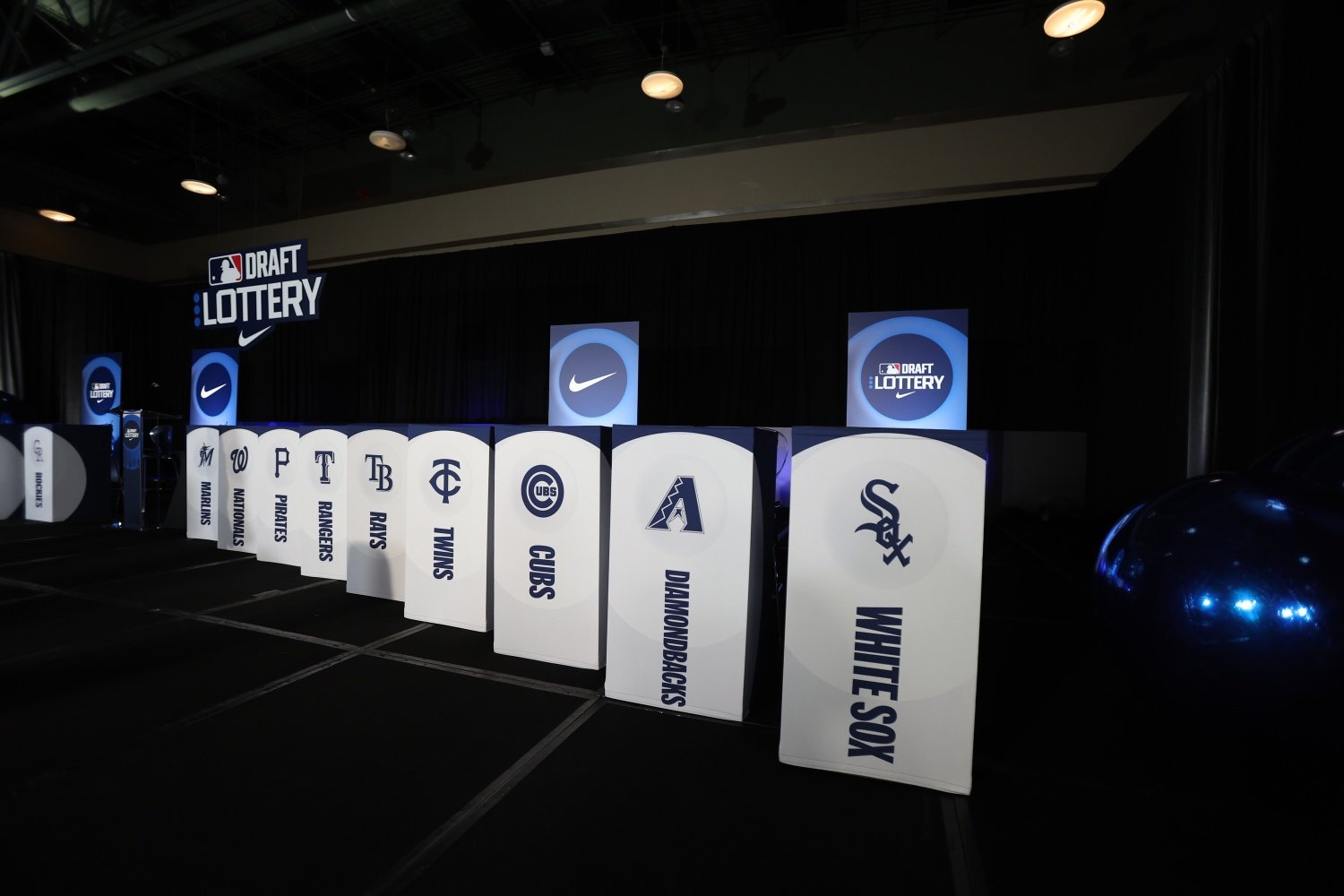 Draft week is finally here! We’ll have a ton of coverage for you here at Brewer Fanatic. Here are a few important details to get you oriented to our coverage. Despite making the playoffs in 2024, the Brewers are well-positioned in the 2025 MLB Draft. They have the 10th-largest bonus pool overall, at $13,138,100. This is a function of several factors. They receive a compensation pick at 32nd overall for the free-agent departure of Willy Adames. They received an additional compensation pick at 68th overall for failing to sign Chris Levonas in 2024. The Brewers would have also had an additional pick in Comp Round A, but traded that pick (33rd overall) to the Red Sox as part of the Quinn Priester deal. The Brewers top 100 picks and slot values are as follows: Slot value for pick 20: $4,268,200 Slot value for pick 32: $2,970,900 Slot value for pick 59: $1,560,200 Slot value for pick 68: $1,254,400 Slot value for pick 94: $826,400 This combination of financial and pick flexibility puts the Brewers in a strong position ahead of a draft class shaping up to be uncertain in terms of top-tier talent, but with plenty of depth through around 75 picks, with prep bats a demographic of strength. You can find our MLB Draft board here. This is a project I’ve been working on since February. The rankings are consensus rankings, taken from leveraging all of the major draft boards in the industry. The goal is to eliminate some of the noise in rankings for casual fans looking to get more interested and get to know the class better. You’ll find the logo from the team next to their pick positions in each round, to give folks an idea of the caliber of talent available in a particular portion of the draft. By Sunday, you’ll find a writeup for 136 player profiles with biographical information, scouting reports, 2025 performance for college players, and potential fits. The board will be updated every day or so until day one. Additionally, we’ll be live-streaming an episode of Destination: The Show throughout Day One. We’ll get started at 5:30 PM ET/4:30 PM CT. We’ll bring you information on all the picks, live reactions, and team-specific special guests. We hope you’ll join us.
 -
Image courtesy of Thieres Rabelo In episode 84 of Destination: The Show, Jeremy and Jamie dive into a deep and diverse group of prep infielders, unpacking skill sets, opportunities, and best fits. The guys examine why profiles like Eli Willits are more valuable than their scouting report might read, and whether Billy Carlson makes sense as a fit to the Blue Jays at 8. They dig into potential fits for the Twins, including Gavin Fien, Steele Hall, and Xavier Neyens, and a bonus name. Finally, they talk through some of the prep pitching profiles that fit in the 30-50 range on most boards, including options for the Padres, Brewers, and Twins. 0:00 Intro 4:35 Draft Night Plans 6:02 Prep Infielders 6:51 Ethan Holliday 9:16 Eli Willits 13:10 Billy Carlson 16:38 JoJo Parker 18:56 Kayson Cunningham 22:14 Steele Hall 24:35 Gavin Fien 27:34 Xavier Neyens 35:00 Daniel Pierce/Josh Hammond 41:48 Kruz Schoolcraft 45:15 Aaron Watson 46:39 Briggs McKenzie 48:22 Angel Cervantes 50:28 Cam Appenzeller/Landon Harmon/Uni Fernsler/Jack Bauer 58:24 Listener Questions You can support the show by downloading it from wherever you get your podcasts, including iTunes and Spotify. If you enjoy the content, consider leaving us a five-star rating and review in addition to sharing or retweeting DTS-related content. You can follow us on Twitter @DTS_POD1, @Jeremynygaard, @J_D_Cameron, and @TheodoreTollef1. We’re now on Bluesky @destinationtheshow.bsky.social. You can also find full episodes and clips of our shows on our YouTube page @DestinationTheShow. View full article
-
 In episode 84 of Destination: The Show, Jeremy and Jamie dive into a deep and diverse group of prep infielders, unpacking skill sets, opportunities, and best fits. The guys examine why profiles like Eli Willits are more valuable than their scouting report might read, and whether Billy Carlson makes sense as a fit to the Blue Jays at 8. They dig into potential fits for the Twins, including Gavin Fien, Steele Hall, and Xavier Neyens, and a bonus name. Finally, they talk through some of the prep pitching profiles that fit in the 30-50 range on most boards, including options for the Padres, Brewers, and Twins. 0:00 Intro 4:35 Draft Night Plans 6:02 Prep Infielders 6:51 Ethan Holliday 9:16 Eli Willits 13:10 Billy Carlson 16:38 JoJo Parker 18:56 Kayson Cunningham 22:14 Steele Hall 24:35 Gavin Fien 27:34 Xavier Neyens 35:00 Daniel Pierce/Josh Hammond 41:48 Kruz Schoolcraft 45:15 Aaron Watson 46:39 Briggs McKenzie 48:22 Angel Cervantes 50:28 Cam Appenzeller/Landon Harmon/Uni Fernsler/Jack Bauer 58:24 Listener Questions You can support the show by downloading it from wherever you get your podcasts, including iTunes and Spotify. If you enjoy the content, consider leaving us a five-star rating and review in addition to sharing or retweeting DTS-related content. You can follow us on Twitter @DTS_POD1, @Jeremynygaard, @J_D_Cameron, and @TheodoreTollef1. We’re now on Bluesky @destinationtheshow.bsky.social. You can also find full episodes and clips of our shows on our YouTube page @DestinationTheShow.
 -
I don't, and I appreciate that angle. He's played at three different schools in three years, though. He slugged at Duke as a freshman, Ole Miss as a Sophomore, and put up a .827 OPS on the Cape with wood. So despite the field, I think the power will play anywhere.
-
Image courtesy of © Brianna Paciorka/News Sentinel / USA TODAY NETWORK via Imagn Images It’s mock draft season! Over the next two weeks in the buildup to the draft, we’ll be rolling out at least two mock drafts, covering the first round and the first batch of competitive-balance picks. For each of these, we’re doing our best to read the tea leaves and make picks based on the talent available at a particular slot, and considering each organization's drafting tendencies. Feel free to jump into the comments with disagreements and other preferred picks. 1. Nationals: Kade Anderson, LHP, LSU All the buzz here seems to be between Anderson and Ethan Holliday. If the LSU southpaw doesn’t go number one, surely, he won’t get past three. 2. Angels: Liam Doyle, LHP, Tennessee Fast-moving college players is the Angels' trend until it isn’t, and we'll project them to take such players until they don't. 3. Mariners: Jamie Arnold, LHP, Florida State Arnold is a quality arm for a system that’s become bat-dominant. The Mariners are outstanding at developing arms. 4. Rockies: Ethan Holliday, SS, Stillwater HS, OK This appears to be the floor for Holliday. The organization for which his dad became a household name won't let him slide any further. 5. Cardinals: JoJo Parker, SS, Purvis HS, MS If the board unfolds like this, the Cardinals will get their pick of a strong cluster of prep shortstops. Parker has a chance to be the best offensive profile of the bunch. 6. Pirates: Eli Willits, SS, Fort-Cobb Broxton HS, OK Willits has been steady on boards all spring. This would be a good get at six overall. (And yes, he's the son of former big-league outfielder Reggie Willits.) 7. Marlins: Seth Hernandez, RHP, Corona HS, CA The Marlins would be thrilled to have Hernandez here. They have consistently developed pitching talent well. 8. Blue Jays: Billy Carlson, SS, Corona HS, CA The Blue Jays are in an interesting spot. There are plenty of good options here. It would be hard to pass on Aiva Arquette, the consensus top college bat available. Toronto has been linked heavily to the prep shortstop group, though. Carlson is the best defensive shortstop in the draft. There’s potential for good impact with the bat, too. 9. Reds: Aiva Arquette, SS, Oregon State Arquette is currently ranked sixth, by consensus. The Reds would be thrilled with this outcome. He’s a physical hitter who should be able to move relatively quickly, despite some refinement needed in the hit tool. 10. White Sox: Kyson Witherspoon, RHP, Oklahoma Witherspoon is the consensus college starting pitcher number four. He shouldn’t last long outside the top 10, even if he slips past Chicago. 11. Athletics: Ike Irish, C, Auburn The Athletics have found success with college bats recently (Jacob Wilson, Nick Kurtz), Irish is one of the strongest college hit/power combos in a class lacking them. 12. Rangers: Kayson Cunningham, Johnson HS, TX Cunningham might have the best hit tool on the prep side (along with Parker), to go with plus speed. 13. Giants: Marek Houston, SS, Wake Forest Houston is shortstop 1-B to Billy Carlson’s 1-A. He’s a lock to stick at that spot, with a good approach and hit tool, despite (generously) fringy power. 14. Rays: Josh Hammond, SS, Wesleyan Academy, NC Hammond is an outstanding athlete who made tremendous strides with the bat this spring. 15. Red Sox: Gavin Kilen, 2B, Tennessee Kilen ratcheted up the power with Tennessee, to go with the great hit tool. He should have plenty of suitors in the teens. There are a number of other college bats who could make sense here, including Brendan Summerhill and Wehiwa Aloy. 16. Twins: Tyler Bremner, RHP, UC Santa Barbara The Twins are well-known for successfully developing mid-to-late college arms into viable MLB options. What if the starting ball of clay was more interesting? Bremner was a consensus top-five prospect coming into this season. It’s a metrically appealing fastball, an above-average slider, and a plus changeup. There’s work to do on the command, but he finished strong. The ceiling is a playoff-caliber starter. 17. Cubs: Gage Wood, RHP, Arkansas Wood’s surge this postseason is reminiscent of Cade Horton’s in 2022. Wood punctuated a strong stretch run with a 19-strikeout no-hitter in the College World Series. This is around his range. The Cubs system is bat-heavy, and Wood has an outlandish fastball shape on which to build. 18. Diamondbacks: Steele Hall, SS, Hewitt-Trussville HS, AL Hall has some of the best speed and athleticism in the entire class. This might be the low end of his range. 19. Orioles: Wehiwa Aloy, SS, Arkansas The Orioles won’t be put off by the aggression in Aloy’s approach. This feels like the lower end of his range, but he’s a good fit in Baltimore. 20. Brewers: Gavin Fien, 3B, Great Oaks HS, CA Fien is one of the least talked-about first-round prep profiles, and one of my favorites. He hit everything and everyone last summer. While his early spring was a little uneven, he turned it around down the stretch. He has a chance to be one of the better hit/power combos in this draft class. There’s a good chance he’s taken in the mid-teens. (No, he's not the son of ex-pitcher Casey Fien.) 21. Astros: Ethan Conrad, OF, Wake Forest The Astros love strong athletic traits. Conrad missed time due to injury but was mashing after transferring from Marist. 22. Braves: Riley Quick, RHP, Alabama Quick is a good fit here for the Braves, who often lean toward arms in their usual late first-round range. 23. Royals: Kruz Schoolcraft, LHP, Sunset HS, OR The Royals are a pitching organization, now. Schoolcraft has plenty of buzz here to land with them. 24. Tigers: Slater De Brun, OF, Summit HS, OR Another steam pick here. De Brun is a table-setter type with good strength, outstanding speed and an excellent hit tool. 25. Padres: Brady Ebel, SS, Corona HS, CA What’s the safest bet in the draft? That the Padres will take a prep player with their first pick. Ebel has a sweet left-handed swing with plenty of projection to grow into a solid hit/power combo. There’s a good defensive infield skill set at play here, too. 26. Phillies: Xavier Neyens, 3B, Mount Vernon HS, WA Neyens is another profile that has been less talked up this spring. It’s power to rival that of Ethan Holliday. 27. Guardians: Brendan Summerhill, OF, Arizona Summerhill’s range likely starts in the teens. This feels low, and this is great value for the Guardians at 27. Prospect Promotion Incentive Picks 28. Royals: Daniel Pierce, SS, Mill Creek HS, GA One of the smoothest defensive profiles at short in this class, but there’s legitimate offensive upside, too. Compensation Picks 29. Diamondbacks: Caden Bodine, C, Coastal Carolina Bodine had a tremendous postseason. It’s a plus hit tool and outstanding receiving skills as a catcher. 30. Orioles: Jace Laviolette, OF, Texas A&M The preseason consensus number-one player finds a home here. He feels like an ideal candidate for an organization with two or three picks in the top 40.f 31. Orioles: Sean Gamble, SS/OF, IMG Academy, FL A left-handed hitting power/speed threat with the type of athleticism that could lend itself to the infield or outfield long-term. 32. Brewers: Andrew Fischer, 1B/3B, Tennessee Fischer feels a little under-ranked to me. He has a patient approach, a track record with wooden bats, and just put up a .760 SLG in the SEC. This offensive profile will play anywhere. He’s a first round-caliber talent, and this represents good value. It would be a nice counterbalance to the Fien pick earlier in the round for the Brewers. Competitive Balance Round A 33. Red Sox: Patrick Forbes, RHP, Louisville The Red Sox brain trust has invested in their pitching infrastructure recently. Forbes is a high-octane arm who could develop into a monster with the right development behind him. It’s ace-caliber arm talent that’s a little rough around the edges. 34. Tigers: Zach Root, LHP, Arkansas A ready-made diverse arsenal and a track record of performance in the SEC represent good value for a farm system stacked with talent. 35. Mariners: Cam Appenzeller, Glenwood HS, IL The Mariners have money to spend in this draft. Appenzeller is one of the best prep pitchability arms in this draft class. 36. Twins: Devin Taylor, OF, Indiana The Twins WILL get their bats in the first few rounds, and Taylor has been a tremendous college performer. It’s not a spectacular profile in terms of speed and defense but he mashes. He had a 169 wRC+ with 18 home runs in 2025. That was buoyed by a 19.3 BB% and a measly 11.2 K%. This is a fast-moving, high-floor college outfield bat. View full article
-
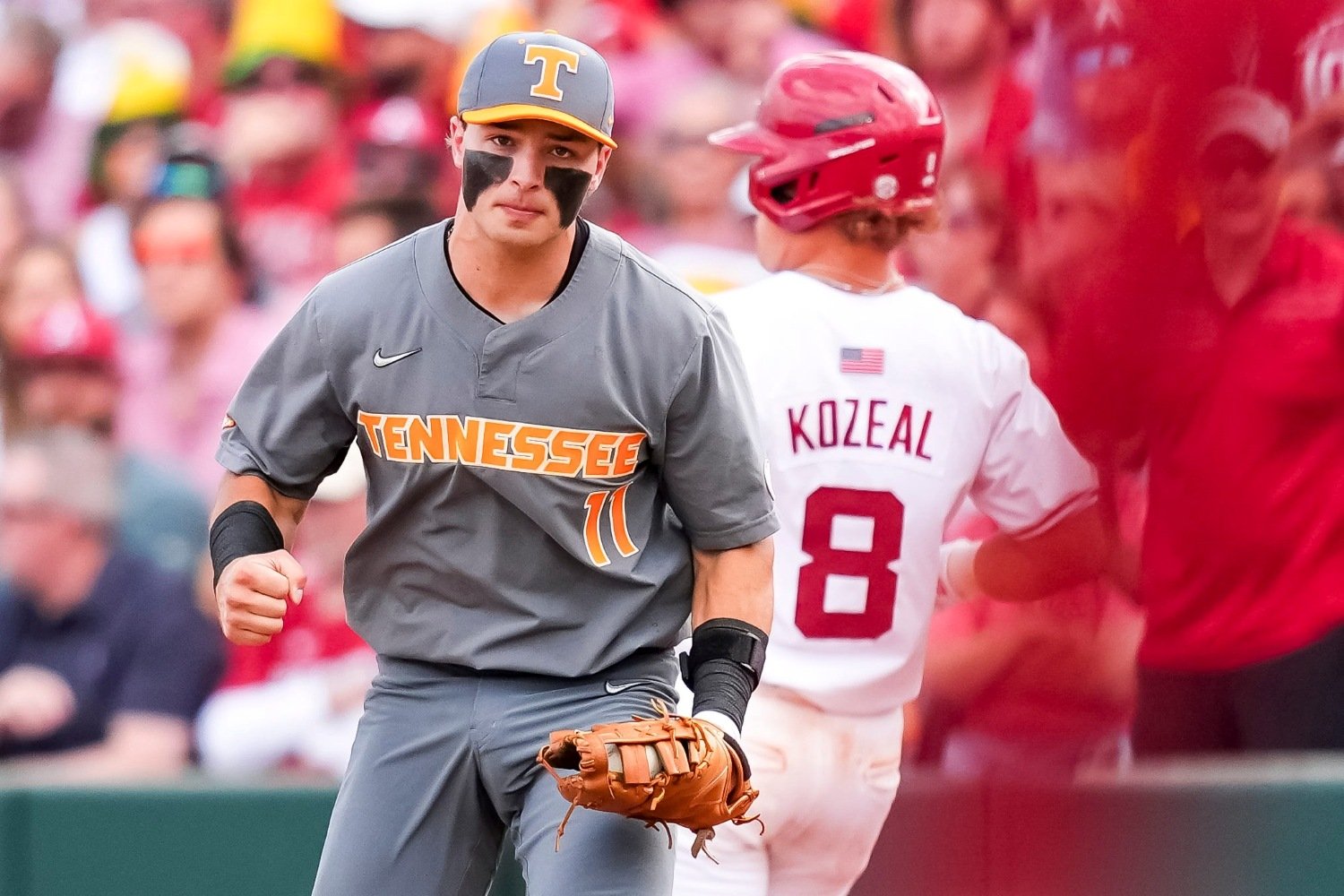 It’s mock draft season! Over the next two weeks in the buildup to the draft, we’ll be rolling out at least two mock drafts, covering the first round and the first batch of competitive-balance picks. For each of these, we’re doing our best to read the tea leaves and make picks based on the talent available at a particular slot, and considering each organization's drafting tendencies. Feel free to jump into the comments with disagreements and other preferred picks. 1. Nationals: Kade Anderson, LHP, LSU All the buzz here seems to be between Anderson and Ethan Holliday. If the LSU southpaw doesn’t go number one, surely, he won’t get past three. 2. Angels: Liam Doyle, LHP, Tennessee Fast-moving college players is the Angels' trend until it isn’t, and we'll project them to take such players until they don't. 3. Mariners: Jamie Arnold, LHP, Florida State Arnold is a quality arm for a system that’s become bat-dominant. The Mariners are outstanding at developing arms. 4. Rockies: Ethan Holliday, SS, Stillwater HS, OK This appears to be the floor for Holliday. The organization for which his dad became a household name won't let him slide any further. 5. Cardinals: JoJo Parker, SS, Purvis HS, MS If the board unfolds like this, the Cardinals will get their pick of a strong cluster of prep shortstops. Parker has a chance to be the best offensive profile of the bunch. 6. Pirates: Eli Willits, SS, Fort-Cobb Broxton HS, OK Willits has been steady on boards all spring. This would be a good get at six overall. (And yes, he's the son of former big-league outfielder Reggie Willits.) 7. Marlins: Seth Hernandez, RHP, Corona HS, CA The Marlins would be thrilled to have Hernandez here. They have consistently developed pitching talent well. 8. Blue Jays: Billy Carlson, SS, Corona HS, CA The Blue Jays are in an interesting spot. There are plenty of good options here. It would be hard to pass on Aiva Arquette, the consensus top college bat available. Toronto has been linked heavily to the prep shortstop group, though. Carlson is the best defensive shortstop in the draft. There’s potential for good impact with the bat, too. 9. Reds: Aiva Arquette, SS, Oregon State Arquette is currently ranked sixth, by consensus. The Reds would be thrilled with this outcome. He’s a physical hitter who should be able to move relatively quickly, despite some refinement needed in the hit tool. 10. White Sox: Kyson Witherspoon, RHP, Oklahoma Witherspoon is the consensus college starting pitcher number four. He shouldn’t last long outside the top 10, even if he slips past Chicago. 11. Athletics: Ike Irish, C, Auburn The Athletics have found success with college bats recently (Jacob Wilson, Nick Kurtz), Irish is one of the strongest college hit/power combos in a class lacking them. 12. Rangers: Kayson Cunningham, Johnson HS, TX Cunningham might have the best hit tool on the prep side (along with Parker), to go with plus speed. 13. Giants: Marek Houston, SS, Wake Forest Houston is shortstop 1-B to Billy Carlson’s 1-A. He’s a lock to stick at that spot, with a good approach and hit tool, despite (generously) fringy power. 14. Rays: Josh Hammond, SS, Wesleyan Academy, NC Hammond is an outstanding athlete who made tremendous strides with the bat this spring. 15. Red Sox: Gavin Kilen, 2B, Tennessee Kilen ratcheted up the power with Tennessee, to go with the great hit tool. He should have plenty of suitors in the teens. There are a number of other college bats who could make sense here, including Brendan Summerhill and Wehiwa Aloy. 16. Twins: Tyler Bremner, RHP, UC Santa Barbara The Twins are well-known for successfully developing mid-to-late college arms into viable MLB options. What if the starting ball of clay was more interesting? Bremner was a consensus top-five prospect coming into this season. It’s a metrically appealing fastball, an above-average slider, and a plus changeup. There’s work to do on the command, but he finished strong. The ceiling is a playoff-caliber starter. 17. Cubs: Gage Wood, RHP, Arkansas Wood’s surge this postseason is reminiscent of Cade Horton’s in 2022. Wood punctuated a strong stretch run with a 19-strikeout no-hitter in the College World Series. This is around his range. The Cubs system is bat-heavy, and Wood has an outlandish fastball shape on which to build. 18. Diamondbacks: Steele Hall, SS, Hewitt-Trussville HS, AL Hall has some of the best speed and athleticism in the entire class. This might be the low end of his range. 19. Orioles: Wehiwa Aloy, SS, Arkansas The Orioles won’t be put off by the aggression in Aloy’s approach. This feels like the lower end of his range, but he’s a good fit in Baltimore. 20. Brewers: Gavin Fien, 3B, Great Oaks HS, CA Fien is one of the least talked-about first-round prep profiles, and one of my favorites. He hit everything and everyone last summer. While his early spring was a little uneven, he turned it around down the stretch. He has a chance to be one of the better hit/power combos in this draft class. There’s a good chance he’s taken in the mid-teens. (No, he's not the son of ex-pitcher Casey Fien.) 21. Astros: Ethan Conrad, OF, Wake Forest The Astros love strong athletic traits. Conrad missed time due to injury but was mashing after transferring from Marist. 22. Braves: Riley Quick, RHP, Alabama Quick is a good fit here for the Braves, who often lean toward arms in their usual late first-round range. 23. Royals: Kruz Schoolcraft, LHP, Sunset HS, OR The Royals are a pitching organization, now. Schoolcraft has plenty of buzz here to land with them. 24. Tigers: Slater De Brun, OF, Summit HS, OR Another steam pick here. De Brun is a table-setter type with good strength, outstanding speed and an excellent hit tool. 25. Padres: Brady Ebel, SS, Corona HS, CA What’s the safest bet in the draft? That the Padres will take a prep player with their first pick. Ebel has a sweet left-handed swing with plenty of projection to grow into a solid hit/power combo. There’s a good defensive infield skill set at play here, too. 26. Phillies: Xavier Neyens, 3B, Mount Vernon HS, WA Neyens is another profile that has been less talked up this spring. It’s power to rival that of Ethan Holliday. 27. Guardians: Brendan Summerhill, OF, Arizona Summerhill’s range likely starts in the teens. This feels low, and this is great value for the Guardians at 27. Prospect Promotion Incentive Picks 28. Royals: Daniel Pierce, SS, Mill Creek HS, GA One of the smoothest defensive profiles at short in this class, but there’s legitimate offensive upside, too. Compensation Picks 29. Diamondbacks: Caden Bodine, C, Coastal Carolina Bodine had a tremendous postseason. It’s a plus hit tool and outstanding receiving skills as a catcher. 30. Orioles: Jace Laviolette, OF, Texas A&M The preseason consensus number-one player finds a home here. He feels like an ideal candidate for an organization with two or three picks in the top 40.f 31. Orioles: Sean Gamble, SS/OF, IMG Academy, FL A left-handed hitting power/speed threat with the type of athleticism that could lend itself to the infield or outfield long-term. 32. Brewers: Andrew Fischer, 1B/3B, Tennessee Fischer feels a little under-ranked to me. He has a patient approach, a track record with wooden bats, and just put up a .760 SLG in the SEC. This offensive profile will play anywhere. He’s a first round-caliber talent, and this represents good value. It would be a nice counterbalance to the Fien pick earlier in the round for the Brewers. Competitive Balance Round A 33. Red Sox: Patrick Forbes, RHP, Louisville The Red Sox brain trust has invested in their pitching infrastructure recently. Forbes is a high-octane arm who could develop into a monster with the right development behind him. It’s ace-caliber arm talent that’s a little rough around the edges. 34. Tigers: Zach Root, LHP, Arkansas A ready-made diverse arsenal and a track record of performance in the SEC represent good value for a farm system stacked with talent. 35. Mariners: Cam Appenzeller, Glenwood HS, IL The Mariners have money to spend in this draft. Appenzeller is one of the best prep pitchability arms in this draft class. 36. Twins: Devin Taylor, OF, Indiana The Twins WILL get their bats in the first few rounds, and Taylor has been a tremendous college performer. It’s not a spectacular profile in terms of speed and defense but he mashes. He had a 169 wRC+ with 18 home runs in 2025. That was buoyed by a 19.3 BB% and a measly 11.2 K%. This is a fast-moving, high-floor college outfield bat.
 -
 In episode 81 of Destination: The Show, Jeremy and Jamie welcome Baseball America’s Carlos Collazo back to the show for their annual MLB Draft preview show. The guys dig into a ton of different draft topics and questions. They start by examining the case for 1:1, before talking college catching, college pitching, and unpacking a loaded prep shortstop demographic. Carlos pins down some developmental next steps for a thin crop of college bats, before picking preferences from similar players types and finishing the show with some listener questions 0:00 Intro - welcome Carlos Collazo 1:33 How many guys can go 1:1? 4:46 College catching 8:01 Prep shortstops 15:24 College arms 22:17 College bats 28:20 Injured crop of players 30:30 Who should be higher? 33:12 Either/Or 38:40 Listener Questions 45:11 Thanks Carlos You can support the show by downloading it from wherever you get your podcasts, including iTunes and Spotify. If you enjoy the content, consider leaving us a five-star rating and review in addition to sharing or retweeting DTS-related content. You can follow us on Twitter @DTS_POD1, @Jeremynygaard, @J_D_Cameron, and @TheodoreTollef1. We’re now on Bluesky @destinationtheshow.bsky.social. You can also find full episodes and clips of our shows on our YouTube page @DestinationTheShow.
 -
Image courtesy of Thieres Rabelo In episode 81 of Destination: The Show, Jeremy and Jamie welcome Baseball America’s Carlos Collazo back to the show for their annual MLB Draft preview show. The guys dig into a ton of different draft topics and questions. They start by examining the case for 1:1, before talking college catching, college pitching, and unpacking a loaded prep shortstop demographic. Carlos pins down some developmental next steps for a thin crop of college bats, before picking preferences from similar players types and finishing the show with some listener questions 0:00 Intro - welcome Carlos Collazo 1:33 How many guys can go 1:1? 4:46 College catching 8:01 Prep shortstops 15:24 College arms 22:17 College bats 28:20 Injured crop of players 30:30 Who should be higher? 33:12 Either/Or 38:40 Listener Questions 45:11 Thanks Carlos You can support the show by downloading it from wherever you get your podcasts, including iTunes and Spotify. If you enjoy the content, consider leaving us a five-star rating and review in addition to sharing or retweeting DTS-related content. You can follow us on Twitter @DTS_POD1, @Jeremynygaard, @J_D_Cameron, and @TheodoreTollef1. We’re now on Bluesky @destinationtheshow.bsky.social. You can also find full episodes and clips of our shows on our YouTube page @DestinationTheShow. View full article
-
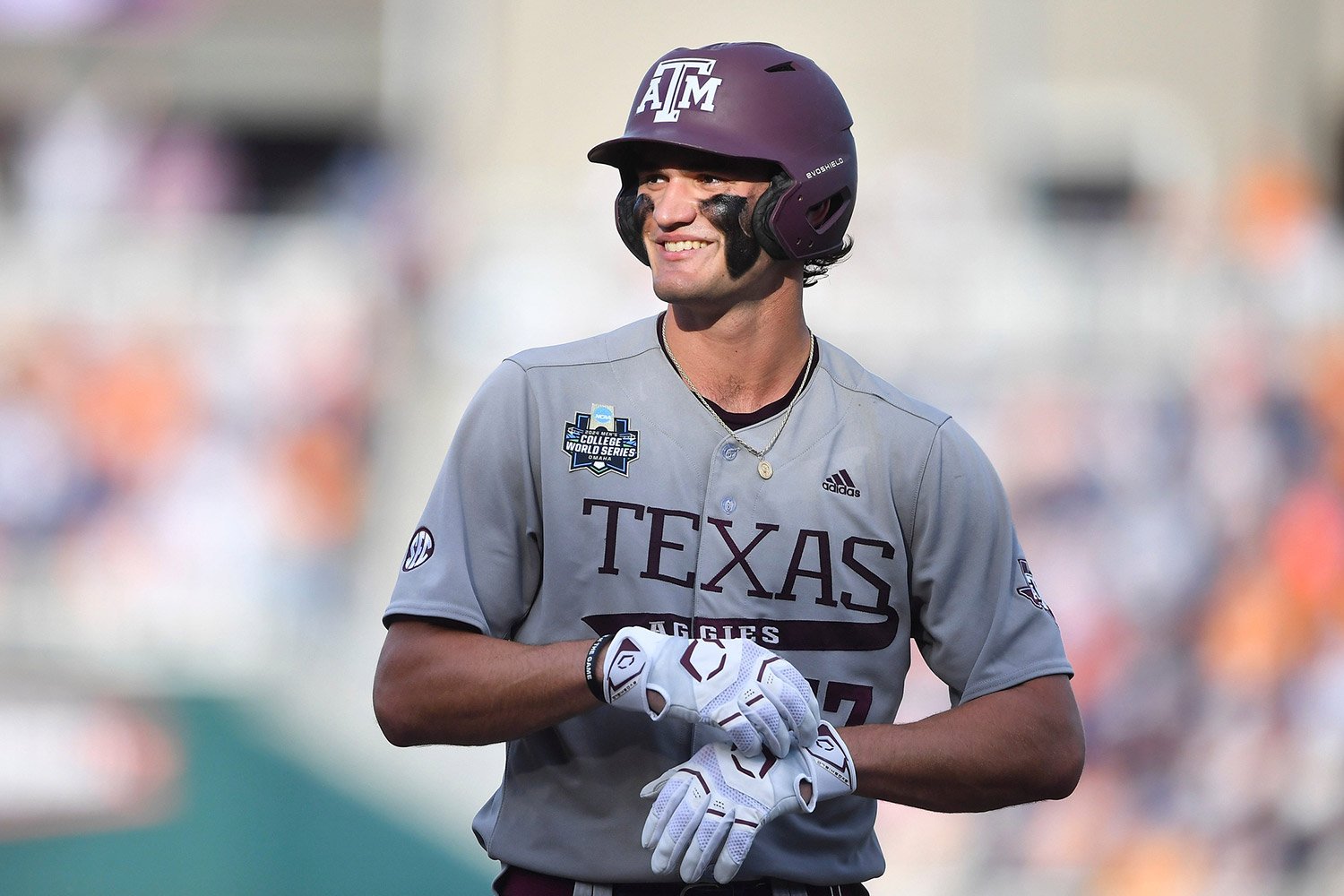 This draft cycle, we’re going to try something new. Every few weeks, I’ll post an article here listing who the Brewers would select based on their position on the consensus draft board. As the consensus board is updated, the players in those spots will be adjusted, and I’ll post another update. This is not a mock draft. Instead, I’m hoping it’ll give readers an idea of the caliber of talent in each of the team’s first few picks. Additionally, it should help readers who want to dig into draft coverage a bit more get familiar with the class. Here are the Brewers' first three picks by consensus draft ranking as of June 6, 2025. 1st Round (20th Overall): Jace Laviolette, OF, Texas A&M Laviolette was one of the preseason favorites to go number one overall coming off the back of a monster '24 season in which he put up a 1.175 OPS and hit 29 bombs in 68 games for a deep Aggies lineup. Laviolette is upright and quiet in the box, with a slightly open stance and an efficient load that allows for some serious bat speed. Laviolette ran a 109 mph EV90 in 2024 (max 116 mph) to go with a 92nd percentile chase rate (17%). He's a borderline passive hitter with some swing and miss in the profile (21.2% IZ-Whiff%). That could be a dangerous combination as he enters pro ball. Defensively, it's not a center field profile for me. He's made improvements defensively but it's just an average arm better suited to a corner. This is a power-reliant corner profile already maximizing his pulled batted-ball events. There's plenty to like but the fact that he’s now 20th overall by consensus after starting the season as number one in the class is indicative of the type of risk his profile carries. Free Agent Compensation (32nd Overall): Zach Root, LHP, Arkansas After two seasons at East Carolina, Root transferred to Arkansas and has posted consistently midway through the 2025 season. He's a more unusual college pitching profile as his current value is dependent on a high-quality and diverse arsenal of secondary pitches. Root throws from the left side and has a funky delivery. He hides the ball behind his head, turning so forcefully that his left throwing shoulder is almost facing the batter as he winds up. His fastball sits in the low 90s but has been as high as 96-97 mph. Despite the solid velocity, it doesn't have great shape and doesn't miss a ton of bats. Root has a ton of interesting secondary pitches. His changeup is exceptional and his slider is above average too, the changeup generating plenty of arm side movement. You don't see many lefties with such a well developed, diversified arsenal pre-draft. Root has performed consistently thus far in SEC play. He's cementing himself as a day one arm. 2nd Round (59th Overall): AJ Russell, RHP, Tennessee Russell is going to be a high risk, high reward proposition for an organization in the 2025 draft. He has a great frame at 6'6", 200 pounds and one of the most metrically appealing fastballs in the class. He can run it up to 98 mph (although it sits mid-90s) with an extremely low release height from a wide angle. It'll get run and carry up in the zone too, it's a bit of a unicorn pitch. Russell has a second plus pitch in his slider, a tight sweeper that, given his release traits, is an uncomfortable experience, especially for right-handed hitters. Russell gets decent extension too, adding to the overall appeal. Russell has a changeup too, more of a third pitch at present. So what's the catch? Russell had internal brace surgery to repair his elbow last June. There's a significant injury history here, and that, combined with the primarily two pitch mix, gives some reliever risk. It's some of the better stuff in the class, though. If he clicks, he'll give an org huge value.
 -
Image courtesy of © Brianna Paciorka/News Sentinel / USA TODAY NETWORK This draft cycle, we’re going to try something new. Every few weeks, I’ll post an article here listing who the Brewers would select based on their position on the consensus draft board. As the consensus board is updated, the players in those spots will be adjusted, and I’ll post another update. This is not a mock draft. Instead, I’m hoping it’ll give readers an idea of the caliber of talent in each of the team’s first few picks. Additionally, it should help readers who want to dig into draft coverage a bit more get familiar with the class. Here are the Brewers' first three picks by consensus draft ranking as of June 6, 2025. 1st Round (20th Overall): Jace Laviolette, OF, Texas A&M Laviolette was one of the preseason favorites to go number one overall coming off the back of a monster '24 season in which he put up a 1.175 OPS and hit 29 bombs in 68 games for a deep Aggies lineup. Laviolette is upright and quiet in the box, with a slightly open stance and an efficient load that allows for some serious bat speed. Laviolette ran a 109 mph EV90 in 2024 (max 116 mph) to go with a 92nd percentile chase rate (17%). He's a borderline passive hitter with some swing and miss in the profile (21.2% IZ-Whiff%). That could be a dangerous combination as he enters pro ball. Defensively, it's not a center field profile for me. He's made improvements defensively but it's just an average arm better suited to a corner. This is a power-reliant corner profile already maximizing his pulled batted-ball events. There's plenty to like but the fact that he’s now 20th overall by consensus after starting the season as number one in the class is indicative of the type of risk his profile carries. Free Agent Compensation (32nd Overall): Zach Root, LHP, Arkansas After two seasons at East Carolina, Root transferred to Arkansas and has posted consistently midway through the 2025 season. He's a more unusual college pitching profile as his current value is dependent on a high-quality and diverse arsenal of secondary pitches. Root throws from the left side and has a funky delivery. He hides the ball behind his head, turning so forcefully that his left throwing shoulder is almost facing the batter as he winds up. His fastball sits in the low 90s but has been as high as 96-97 mph. Despite the solid velocity, it doesn't have great shape and doesn't miss a ton of bats. Root has a ton of interesting secondary pitches. His changeup is exceptional and his slider is above average too, the changeup generating plenty of arm side movement. You don't see many lefties with such a well developed, diversified arsenal pre-draft. Root has performed consistently thus far in SEC play. He's cementing himself as a day one arm. 2nd Round (59th Overall): AJ Russell, RHP, Tennessee Russell is going to be a high risk, high reward proposition for an organization in the 2025 draft. He has a great frame at 6'6", 200 pounds and one of the most metrically appealing fastballs in the class. He can run it up to 98 mph (although it sits mid-90s) with an extremely low release height from a wide angle. It'll get run and carry up in the zone too, it's a bit of a unicorn pitch. Russell has a second plus pitch in his slider, a tight sweeper that, given his release traits, is an uncomfortable experience, especially for right-handed hitters. Russell gets decent extension too, adding to the overall appeal. Russell has a changeup too, more of a third pitch at present. So what's the catch? Russell had internal brace surgery to repair his elbow last June. There's a significant injury history here, and that, combined with the primarily two pitch mix, gives some reliever risk. It's some of the better stuff in the class, though. If he clicks, he'll give an org huge value. View full article
-
He's not on my board yet (~250 players at this point) so not yet familiar. However, that's not to say he won't be by the time we get a little closer. I'll keep an eye out.


