



David Go
-
Posts
156 -
Joined
-
Last visited
Content Type
Profiles
Forums
Blogs
Events
News
2026 Milwaukee Brewers Top Prospects Ranking
Milwaukee Brewers Videos
2022 Milwaukee Brewers Draft Picks
Milwaukee Brewers Free Agent & Trade Rumors, Notes, & Tidbits
Guides & Resources
2023 Milwaukee Brewers Draft Picks
2024 Milwaukee Brewers Draft Picks
The Milwaukee Brewers Players Project
2025 Milwaukee Brewers Draft Pick Tracker
2026 Milwaukee Brewers Draft Tracker: Picks & Bonuses
Store
Downloads
Gallery
Everything posted by David Go
-
There are nine former Brewers in the Baseball Hall of Fame - one of these 13 active and former Brewers could become the tenth.
-
There are nine former Brewers in the Baseball Hall of Fame - one of these 13 active and former Brewers could become the tenth. View full video
-
The 2025 National Baseball Hall of Fame Induction in July will feature multiple former Brewers for the first time. The Crew doesn't have a clear-cut future Hall of Famer gracing the diamond at American Family Field, but any of these 13 current and former players could be the next honoree. Image courtesy of © Kyle Terada-Imagn Images This list includes players set to appear on the BBWAA ballot in the next half-decade; active players with near-Hall of Fame credentials; and players still in the first half of their careers on Hall of Fame trajectories. 1. Zack Greinke Career (2004-23): 77.5 bWAR, 3,389 IP, 225 Wins, 3.49 ERA (121 ERA+), 2979 SO Brewers (2011-12): 3.6 bWAR, 294.2 IP, 3.67 ERA (110 ERA+), 323 SO Eligibility: 2029 Awards: 2009 AL Cy Young Greinke represents the last of a breed of starting pitcher, alongside Clayton Kershaw, Justin Verlander and Max Scherzer, each of whom will certainly gain election. Since 2000, eight starting pitchers have earned election to Cooperstown. Greg Maddux, Randy Johnson and Pedro Martinez are inner-circle Hall of Famers; here’s how Greinke compares to the other five. Retired Year % IP Wins ERA ERA+ SO CY bWAR Greinke, Zack 2023 N/A N/A 3389 225 3.49 121 2979 1 77.5 Sabathia, CC 2019 1st 86.8 3577 251 3.74 116 3093 1 61.8 Halladay, Roy 2013 1st 85.4 2749 203 3.38 131 2117 2 64.2 Smoltz, John 2009 1st 82.9 3473 213 3.33 125 3084 1 69.0 Mussina, Mike 2008 6th 76.7 3562 270 3.68 123 2813 0 82.8 Glavine, Tom 2008 1st 91.9 4413 305 3.54 118 2607 2 80.7 Greinke’s solid seasons in Milwaukee certainly didn’t earn him his election, but he co-anchored a strong rotation alongside Yovani Gallardo. He famously finished 15-0 at Miller Park and once started three consecutive games for the Brewers. Greinke should easily earn election in his first ballot in 2029, making him the most likely candidate on this list. 2. Christian Yelich Career (2013-present): 41.9 bWAR, 6383 PA, .287/.377/.466/.843 (133 OPS+), 204 HR, 748 RBI, 1590 Hits, 945 Runs, 205 SB Brewers (2018-present): 24.3 bWAR, 3571 PA, .285/.384/.493 (136 OPS+), 145 HR, 455 RBI, 871 Hits, 576 Runs, 133 SB Awards: 2018 NL MVP Yelich, under contract through 2028, would need a late-career surge to bolster his candidacy. However, his trajectory looks more promising after a .315/.406/.504 line in 73 games before undergoing back surgery in 2024. The 33-year-old averaged 2.4 bWAR in just 122 games across his last four seasons, but his most recent was the best. If Yelich hit those averages in the final four years of his contract, his career ledger would look like this: 51.6 bWAR 2,072 Hits 1,264 Runs 257 HR 974 RBI 282 SB Crazier things have happened in Hall of Fame elections, especially if Yelich can prove his injury-plagued 2024 output was no fluke. Getting to 300 homers, 300 steals and 1,000 RBIs would go a long way, but that would require him to play another five or six years, in all likelihood. 3. Francisco Rodríguez Career (2002-17): 24.2 bWAR, 976 IP, 437 SV, 2.86 ERA, 148 ERA+, 1142 SO Brewers (2011-13, 2014-15): 4.9 bWAR, 250 IP, 95 SV, 2.91 ERA, 136 ERA+, 266 SO Awards: 2x AL Reliever of the Year Eligibility: Currently eligible Billy Wagner earned induction in January, the eighth full-time-ish reliever to earn induction. Wagner is one of the most dominant pitchers of all-time, despite tossing a Cooperstown-low 903 innings. Below is every reliever in Cooperstown minus Mariano Rivera (he belongs in a table of his own). Rodríguez is included in the table, sorted by career saves. Retired Year % bWAR IP SV ERA ERA+ SO Hoffman, Trevor 2010 3rd 79.9 28.0 1089 601 2.87 141 1133 Smith, Lee 1997 Vet N/A 29.3 1289 478 3.03 132 1251 Rodríguez 2017 N/A N/A 24.2 976 437 2.86 148 1142 Wagner, Billy 2010 10th 82.5 27.8 903 422 2.31 187 1196 Fingers, Rollie 1985 2nd 81.2 25.6 1701 341 2.90 120 1299 Gossage, Rich 1994 9th 85.8 41.1 1809 310 3.01 126 1502 Sutter, Bruce 1988 13th 76.9 24.0 1042 300 2.83 136 861 Wilhelm, Hoyt 1972 8th 83.8 46.8 2254 228 2.52 147 1610 Each case is unique. Fingers, Gossage and Wilhelm pitched in a different era of relievers, and Sutter received a boost due to being credited with popularizing the splitter. Here’s how Rodríguez ranks in each category: bWAR: 7th IP: 7th SV: 3rd ERA: 4th ERA+: 2nd SO: 6th Some voters will point to the character clause and his charge of domestic violence (later dropped) and assault (Rodriguez pleaded guilty to a lesser charge). He garnered just 10.2% of the vote in his third year of eligibility. Unlikely, sure, but Wagner received just 10.5% on his first ballot and ultimately earned election in his final year. 4. Andrew McCutchen Career (2009-24): 49.3 bWAR, 9,156 PA, .273/.367/.462 (129 OPS+), 319 HR, 1,095 RBI, 2,152 Hits, 1,239 Runs, 219 SB Brewers (2022): 1.1 bWAR, 580 PA, .237/.316/.384 (96 OPS+), 17 HR, 69 RBI, 122 Hits, 66 Runs, 8 SB Awards: 2013 NL MVP McCutchen spent just one year in Milwaukee, his lone season with a sub-100 OPS+. The rest of his career includes over 2,000 hits, 300 home runs and 200 stolen bases—making him one of 12 players to reach those marks. His ability to continue to compile stats in Pittsburgh at the end of his career may dictate whether Uncle Larry will see the Hall. His 49.3 WAR outpaces several Hall of Famers already, including Ralph Kiner, Jim Rice and Tony Lazzeri. 5. Ryan Braun Career (2007-20): 47.1 bWAR, 7,340 PA, .296/.358/.532(134 OPS+), 352 HR, 1,154 RBI, 1,963 Hits, 1,080 Runs, 216 SB Awards: 2011 NL MVP, 2007 NL Rookie of the Year Eligibility: 2026 Let’s address the elephant in the room: Braun will not be elected, but his career deserves a second look. His PED saga placed Cooperstown out of reach, but scandal aside, his career may have earned some votes. Braun has more bWAR than Lou Brock, Red Schoendienst, Tony Oliva or Dave Parker. He hit more home runs than Parker, Hank Greenberg, Ron Santo, George Brett or Edgar Martinez. He posted a higher career OPS than Willie McCovey, Willie Stargell, Fred McGriff, Eddie Mathews or Harmon Killebrew. And he won an MVP, something Derek Jeter, Tony Gwynn, Wade Boggs and Mike Piazza can’t say. However, he'll likely fall off the ballot in his initial year of eligibility next year. 6. Josh Hader Career (2017-24): 12.5 bWAR, 459 IP, 199 SV, 2.70 ERA, 155 ERA+, 753 SO Brewers (2017-22): 10.4 bWAR, 316 IP, 125 SV, 2.48 ERA, 155 ERA+, 541 SO Awards: 3x NL Reliever of the Year Hader, 30, has thrown just 459 2/3 innings across eight seasons, but may soon challenge Billy Wagner for most dominant pitcher in MLB history. Nearly 3,000 pitchers have tossed at least 400 innings on a big league mound. Here's how Hader ranks among them. 41.5 K% (1st) .157 opponent BA (1st) 31.5 K-BB% (1st) 0.95 WHIP (2nd, behind Koji Uehara) Since Hader likely is about halfway through his career, his numbers would look this way when doubled: 25 WAR, 919 IP, 2.70 ERA, 398 SV, 1,506 SO. The innings total would be higher only than Wagner, but the dominance exceeds that of the recent electee. 7. Corbin Burnes Career (2018-24): 17.1 bWAR, 903 IP, 60 Wins, 3.19 ERA, 1,051 SO Brewers (2018-23): 13.6 bWAR, 709 IP, 45 Wins, 3.26 ERA, 870 SO Awards: 2021 NL Cy Young Burnes will need to maintain his ace standing for several more years, as the 30-year-old has accrued just 17 WAR and tossed 903 innings. Just one Hall of Fame starting pitcher has fewer than 2,000 innings, and Burnes doesn't quite have the dominance to match. Since 2021, he's averaged 189 innings with 215 SO and 4.1 WAR per season and a 2.94 ERA. The recent Diamondbacks signee also seems adept at reinventing himself to maintain his effectiveness. To make it from the desert to Cooperstown, Burnes will need to maintain a Cy Young-caliber level into his late 30s. That's unlikely, perhaps, but it is possible. 8. Devin Williams Career (2019-24): 8.9 bWAR, 235 IP, 68 SV, 1.83 ERA, 232 ERA+, 375 SO Awards: 2020 NL Rookie of the Year, 2x NL Reliever of the Year The Brewers have won five of the last seven NL Reliever of the Year Awards. Williams is responsible for two (2020 and 2023). His 1.83 ERA is second-best in the live-ball era (min. 200 innings), and his 39.4 K% ranks fourth behind just Hader, Edwin Díaz and Aroldis Chapman. His .156 opponent batting average bests Hader by one point for best, minimum 200 innings. The bad news is, Williams now sits on the wrong side of 30 with just 235 innings on his ledger. The changeup specialist will need to be a dominant closer for at least a decade to be in the Hall of Fame conversation. 9. Jackson Chourio Career (2024-present): 3.8 bWAR, 573 PA, .275/.327/.464/.791 (117 OPS+), 21 HR, 79 RBI, 145 Hits, 80 Runs, 22 SB I know this is crazy since Chourio, 20, has just one big-league season under his belt. But I can’t be the only one who’s seen the marks he achieved in 2024. 3.9 fWAR is ninth-highest among age-20 or younger in the expansion era (since 1961) An exhaustive list of players with more WAR in age-20 or younger season: Mike Trout, Alex Rodríguez, Juan Soto, Ken Griffey Jr., Manny Machado, Jason Heyward, Johnny Bench, Bryce Harper .303/.354/.525 line after Jun. 1 Youngest player in MLB history to produce a 20/20 season (20 years, 185 days) First Brewers’ rookie to record 20/20 2nd player under 21 with a multi-HR postseason game Let’s just say he has a chance. Veterans Committee Names These four players are no longer eligible to earn election from the BBWAA portion of the ballot but could be elected by the Veteran's Committee that meets each year. Dave Parker and Ted Simmons were each elected by the Veterans Committee. 10. Gary Sheffield Brewers (1988-91): 1.5 bWAR, 1,244 PA, .259/.319/.376 (95 OPS+), 3 HR, 21 RBI, 287 Hits, 138 Runs, 43 SB Career (1988-2009): 60.5 bWAR, 10,947 PA, .292/.393/.514 (140 OPS+), 509 HR, 1,676 RBI, 2,689 Hits, 1,636 Runs, 253 SB Sheffield's four-year Brewers career ended acrimoniously with just 1.5 WAR and a 95 OPS+. But his post-Brewers career included a batting title, nine All-Star selections and five Silver Sluggers. His involvement in the BALCO scandal and Mitchell Report have kept the 500-home run-hitter out of Cooperstown. 11. Jim Edmonds Career (1993-2008, 2010): 60.4 bWAR, 7,980 PA, .284/.376/.527 (132 OPS+), 393 HR, 1,199 RBI, 1,949 Hits, 1,251 Runs, 67 SB Brewers (2010): 2.0 bWAR, 240 PA, .286/.350/.493 (125 OPS+), 8 HR, 20 RBI, 62 Hits, 38 Runs, 2 SB An eight-time Gold Glove recipient with a .903 OPS (132 OPS+) and nearly 400 home runs, Edmonds went one-and-done on a crowded ballot in 2016. His WAR total and accolades squarely place him in the conversation. 12. Sal Bando Career (1966-81): 61.5 bWAR, 8,289 PA, .254/.352/.408 (119 OPS+), 242 HR, 1,039 RBI, 1,790 Hits, 982 Runs, 75 SB Brewers (1978-81): 9.4 bWAR, 2,202 PA, .250/.335/.382 (98 OPS+), 50 HR, 243 RBI, 479 Hits, 245 Runs, 15 SB Bando, who died in Oconomowoc in 2023 at age 78, played a pivotal role as a steady middle-of-the-order bat and defensive stalwart at third base in the A's three-peat in the early-1970s. (Is that the baseball equivalent of a 3-and-D guy?) His position is the most underrepresented in Cooperstown, and Bando accrued more WAR than Dick Allen, the most recent hot corner inductee. 13. Willie Randolph Career (1975-92): bWAR, 9,462 PA, .287/.377/.466(133 OPS+), 54 HR, 687 RBI, 2,210 Hits, 1,239 Runs, 271 SB Brewers (1991): 4.3 bWAR, 512 PA, .327/.424/.374 (126 OPS+), 0 HR, 54 RBI, 141 Hits, 60 Runs, 4 SB Randolph had one of the best modern homerless seasons in 1991 with Milwaukee, hitting .327 with over 4 WAR. The 18-year veteran stole 271 bases and accumulated 20 defensive WAR, despite not winning a Gold Glove at second base. JAWS, which factors in total WAR and a player's peak WAR, places Randolph immediately behind Roberto Alomar and Craig Biggio and ahead of Joe Gordon and Billy Herman—all Hall of Famers. View full article
-
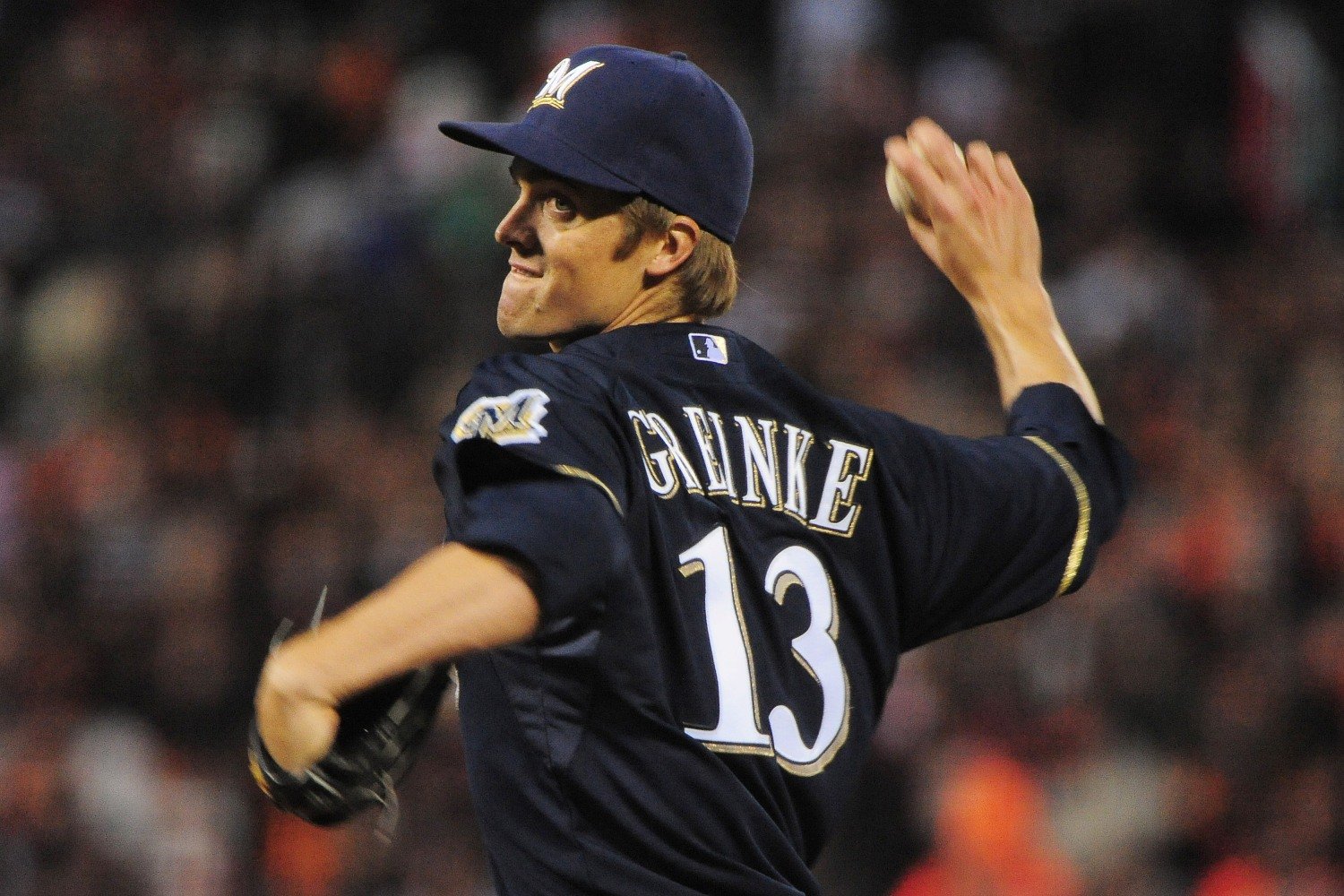 This list includes players set to appear on the BBWAA ballot in the next half-decade; active players with near-Hall of Fame credentials; and players still in the first half of their careers on Hall of Fame trajectories. 1. Zack Greinke Career (2004-23): 77.5 bWAR, 3,389 IP, 225 Wins, 3.49 ERA (121 ERA+), 2979 SO Brewers (2011-12): 3.6 bWAR, 294.2 IP, 3.67 ERA (110 ERA+), 323 SO Eligibility: 2029 Awards: 2009 AL Cy Young Greinke represents the last of a breed of starting pitcher, alongside Clayton Kershaw, Justin Verlander and Max Scherzer, each of whom will certainly gain election. Since 2000, eight starting pitchers have earned election to Cooperstown. Greg Maddux, Randy Johnson and Pedro Martinez are inner-circle Hall of Famers; here’s how Greinke compares to the other five. Retired Year % IP Wins ERA ERA+ SO CY bWAR Greinke, Zack 2023 N/A N/A 3389 225 3.49 121 2979 1 77.5 Sabathia, CC 2019 1st 86.8 3577 251 3.74 116 3093 1 61.8 Halladay, Roy 2013 1st 85.4 2749 203 3.38 131 2117 2 64.2 Smoltz, John 2009 1st 82.9 3473 213 3.33 125 3084 1 69.0 Mussina, Mike 2008 6th 76.7 3562 270 3.68 123 2813 0 82.8 Glavine, Tom 2008 1st 91.9 4413 305 3.54 118 2607 2 80.7 Greinke’s solid seasons in Milwaukee certainly didn’t earn him his election, but he co-anchored a strong rotation alongside Yovani Gallardo. He famously finished 15-0 at Miller Park and once started three consecutive games for the Brewers. Greinke should easily earn election in his first ballot in 2029, making him the most likely candidate on this list. 2. Christian Yelich Career (2013-present): 41.9 bWAR, 6383 PA, .287/.377/.466/.843 (133 OPS+), 204 HR, 748 RBI, 1590 Hits, 945 Runs, 205 SB Brewers (2018-present): 24.3 bWAR, 3571 PA, .285/.384/.493 (136 OPS+), 145 HR, 455 RBI, 871 Hits, 576 Runs, 133 SB Awards: 2018 NL MVP Yelich, under contract through 2028, would need a late-career surge to bolster his candidacy. However, his trajectory looks more promising after a .315/.406/.504 line in 73 games before undergoing back surgery in 2024. The 33-year-old averaged 2.4 bWAR in just 122 games across his last four seasons, but his most recent was the best. If Yelich hit those averages in the final four years of his contract, his career ledger would look like this: 51.6 bWAR 2,072 Hits 1,264 Runs 257 HR 974 RBI 282 SB Crazier things have happened in Hall of Fame elections, especially if Yelich can prove his injury-plagued 2024 output was no fluke. Getting to 300 homers, 300 steals and 1,000 RBIs would go a long way, but that would require him to play another five or six years, in all likelihood. 3. Francisco Rodríguez Career (2002-17): 24.2 bWAR, 976 IP, 437 SV, 2.86 ERA, 148 ERA+, 1142 SO Brewers (2011-13, 2014-15): 4.9 bWAR, 250 IP, 95 SV, 2.91 ERA, 136 ERA+, 266 SO Awards: 2x AL Reliever of the Year Eligibility: Currently eligible Billy Wagner earned induction in January, the eighth full-time-ish reliever to earn induction. Wagner is one of the most dominant pitchers of all-time, despite tossing a Cooperstown-low 903 innings. Below is every reliever in Cooperstown minus Mariano Rivera (he belongs in a table of his own). Rodríguez is included in the table, sorted by career saves. Retired Year % bWAR IP SV ERA ERA+ SO Hoffman, Trevor 2010 3rd 79.9 28.0 1089 601 2.87 141 1133 Smith, Lee 1997 Vet N/A 29.3 1289 478 3.03 132 1251 Rodríguez 2017 N/A N/A 24.2 976 437 2.86 148 1142 Wagner, Billy 2010 10th 82.5 27.8 903 422 2.31 187 1196 Fingers, Rollie 1985 2nd 81.2 25.6 1701 341 2.90 120 1299 Gossage, Rich 1994 9th 85.8 41.1 1809 310 3.01 126 1502 Sutter, Bruce 1988 13th 76.9 24.0 1042 300 2.83 136 861 Wilhelm, Hoyt 1972 8th 83.8 46.8 2254 228 2.52 147 1610 Each case is unique. Fingers, Gossage and Wilhelm pitched in a different era of relievers, and Sutter received a boost due to being credited with popularizing the splitter. Here’s how Rodríguez ranks in each category: bWAR: 7th IP: 7th SV: 3rd ERA: 4th ERA+: 2nd SO: 6th Some voters will point to the character clause and his charge of domestic violence (later dropped) and assault (Rodriguez pleaded guilty to a lesser charge). He garnered just 10.2% of the vote in his third year of eligibility. Unlikely, sure, but Wagner received just 10.5% on his first ballot and ultimately earned election in his final year. 4. Andrew McCutchen Career (2009-24): 49.3 bWAR, 9,156 PA, .273/.367/.462 (129 OPS+), 319 HR, 1,095 RBI, 2,152 Hits, 1,239 Runs, 219 SB Brewers (2022): 1.1 bWAR, 580 PA, .237/.316/.384 (96 OPS+), 17 HR, 69 RBI, 122 Hits, 66 Runs, 8 SB Awards: 2013 NL MVP McCutchen spent just one year in Milwaukee, his lone season with a sub-100 OPS+. The rest of his career includes over 2,000 hits, 300 home runs and 200 stolen bases—making him one of 12 players to reach those marks. His ability to continue to compile stats in Pittsburgh at the end of his career may dictate whether Uncle Larry will see the Hall. His 49.3 WAR outpaces several Hall of Famers already, including Ralph Kiner, Jim Rice and Tony Lazzeri. 5. Ryan Braun Career (2007-20): 47.1 bWAR, 7,340 PA, .296/.358/.532(134 OPS+), 352 HR, 1,154 RBI, 1,963 Hits, 1,080 Runs, 216 SB Awards: 2011 NL MVP, 2007 NL Rookie of the Year Eligibility: 2026 Let’s address the elephant in the room: Braun will not be elected, but his career deserves a second look. His PED saga placed Cooperstown out of reach, but scandal aside, his career may have earned some votes. Braun has more bWAR than Lou Brock, Red Schoendienst, Tony Oliva or Dave Parker. He hit more home runs than Parker, Hank Greenberg, Ron Santo, George Brett or Edgar Martinez. He posted a higher career OPS than Willie McCovey, Willie Stargell, Fred McGriff, Eddie Mathews or Harmon Killebrew. And he won an MVP, something Derek Jeter, Tony Gwynn, Wade Boggs and Mike Piazza can’t say. However, he'll likely fall off the ballot in his initial year of eligibility next year. 6. Josh Hader Career (2017-24): 12.5 bWAR, 459 IP, 199 SV, 2.70 ERA, 155 ERA+, 753 SO Brewers (2017-22): 10.4 bWAR, 316 IP, 125 SV, 2.48 ERA, 155 ERA+, 541 SO Awards: 3x NL Reliever of the Year Hader, 30, has thrown just 459 2/3 innings across eight seasons, but may soon challenge Billy Wagner for most dominant pitcher in MLB history. Nearly 3,000 pitchers have tossed at least 400 innings on a big league mound. Here's how Hader ranks among them. 41.5 K% (1st) .157 opponent BA (1st) 31.5 K-BB% (1st) 0.95 WHIP (2nd, behind Koji Uehara) Since Hader likely is about halfway through his career, his numbers would look this way when doubled: 25 WAR, 919 IP, 2.70 ERA, 398 SV, 1,506 SO. The innings total would be higher only than Wagner, but the dominance exceeds that of the recent electee. 7. Corbin Burnes Career (2018-24): 17.1 bWAR, 903 IP, 60 Wins, 3.19 ERA, 1,051 SO Brewers (2018-23): 13.6 bWAR, 709 IP, 45 Wins, 3.26 ERA, 870 SO Awards: 2021 NL Cy Young Burnes will need to maintain his ace standing for several more years, as the 30-year-old has accrued just 17 WAR and tossed 903 innings. Just one Hall of Fame starting pitcher has fewer than 2,000 innings, and Burnes doesn't quite have the dominance to match. Since 2021, he's averaged 189 innings with 215 SO and 4.1 WAR per season and a 2.94 ERA. The recent Diamondbacks signee also seems adept at reinventing himself to maintain his effectiveness. To make it from the desert to Cooperstown, Burnes will need to maintain a Cy Young-caliber level into his late 30s. That's unlikely, perhaps, but it is possible. 8. Devin Williams Career (2019-24): 8.9 bWAR, 235 IP, 68 SV, 1.83 ERA, 232 ERA+, 375 SO Awards: 2020 NL Rookie of the Year, 2x NL Reliever of the Year The Brewers have won five of the last seven NL Reliever of the Year Awards. Williams is responsible for two (2020 and 2023). His 1.83 ERA is second-best in the live-ball era (min. 200 innings), and his 39.4 K% ranks fourth behind just Hader, Edwin Díaz and Aroldis Chapman. His .156 opponent batting average bests Hader by one point for best, minimum 200 innings. The bad news is, Williams now sits on the wrong side of 30 with just 235 innings on his ledger. The changeup specialist will need to be a dominant closer for at least a decade to be in the Hall of Fame conversation. 9. Jackson Chourio Career (2024-present): 3.8 bWAR, 573 PA, .275/.327/.464/.791 (117 OPS+), 21 HR, 79 RBI, 145 Hits, 80 Runs, 22 SB I know this is crazy since Chourio, 20, has just one big-league season under his belt. But I can’t be the only one who’s seen the marks he achieved in 2024. 3.9 fWAR is ninth-highest among age-20 or younger in the expansion era (since 1961) An exhaustive list of players with more WAR in age-20 or younger season: Mike Trout, Alex Rodríguez, Juan Soto, Ken Griffey Jr., Manny Machado, Jason Heyward, Johnny Bench, Bryce Harper .303/.354/.525 line after Jun. 1 Youngest player in MLB history to produce a 20/20 season (20 years, 185 days) First Brewers’ rookie to record 20/20 2nd player under 21 with a multi-HR postseason game Let’s just say he has a chance. Veterans Committee Names These four players are no longer eligible to earn election from the BBWAA portion of the ballot but could be elected by the Veteran's Committee that meets each year. Dave Parker and Ted Simmons were each elected by the Veterans Committee. 10. Gary Sheffield Brewers (1988-91): 1.5 bWAR, 1,244 PA, .259/.319/.376 (95 OPS+), 3 HR, 21 RBI, 287 Hits, 138 Runs, 43 SB Career (1988-2009): 60.5 bWAR, 10,947 PA, .292/.393/.514 (140 OPS+), 509 HR, 1,676 RBI, 2,689 Hits, 1,636 Runs, 253 SB Sheffield's four-year Brewers career ended acrimoniously with just 1.5 WAR and a 95 OPS+. But his post-Brewers career included a batting title, nine All-Star selections and five Silver Sluggers. His involvement in the BALCO scandal and Mitchell Report have kept the 500-home run-hitter out of Cooperstown. 11. Jim Edmonds Career (1993-2008, 2010): 60.4 bWAR, 7,980 PA, .284/.376/.527 (132 OPS+), 393 HR, 1,199 RBI, 1,949 Hits, 1,251 Runs, 67 SB Brewers (2010): 2.0 bWAR, 240 PA, .286/.350/.493 (125 OPS+), 8 HR, 20 RBI, 62 Hits, 38 Runs, 2 SB An eight-time Gold Glove recipient with a .903 OPS (132 OPS+) and nearly 400 home runs, Edmonds went one-and-done on a crowded ballot in 2016. His WAR total and accolades squarely place him in the conversation. 12. Sal Bando Career (1966-81): 61.5 bWAR, 8,289 PA, .254/.352/.408 (119 OPS+), 242 HR, 1,039 RBI, 1,790 Hits, 982 Runs, 75 SB Brewers (1978-81): 9.4 bWAR, 2,202 PA, .250/.335/.382 (98 OPS+), 50 HR, 243 RBI, 479 Hits, 245 Runs, 15 SB Bando, who died in Oconomowoc in 2023 at age 78, played a pivotal role as a steady middle-of-the-order bat and defensive stalwart at third base in the A's three-peat in the early-1970s. (Is that the baseball equivalent of a 3-and-D guy?) His position is the most underrepresented in Cooperstown, and Bando accrued more WAR than Dick Allen, the most recent hot corner inductee. 13. Willie Randolph Career (1975-92): bWAR, 9,462 PA, .287/.377/.466(133 OPS+), 54 HR, 687 RBI, 2,210 Hits, 1,239 Runs, 271 SB Brewers (1991): 4.3 bWAR, 512 PA, .327/.424/.374 (126 OPS+), 0 HR, 54 RBI, 141 Hits, 60 Runs, 4 SB Randolph had one of the best modern homerless seasons in 1991 with Milwaukee, hitting .327 with over 4 WAR. The 18-year veteran stole 271 bases and accumulated 20 defensive WAR, despite not winning a Gold Glove at second base. JAWS, which factors in total WAR and a player's peak WAR, places Randolph immediately behind Roberto Alomar and Craig Biggio and ahead of Joe Gordon and Billy Herman—all Hall of Famers.
 -
Thanks, Michael!
-
Molitor had shoulder surgery that relegated him to 1B/DH after the 1990 season.
-
I don't disagree that it's a problem that Sheffield did what he did - just presenting that maybe things go differently if they kept Parker.
-
 If Harry Dalton failed to swing a specific 1991 trade, there just might be a seventh retired number occupying the area above the American Family Field scoreboard. Or maybe he’d prefer not to be honored in his least favorite city in America. Just as Parker's arrival convinced a Brewers legend to stay in Milwaukee, his departure convinced another future legend to want out. “I hated (Dalton) so much that I wanted to hurt the man,” said Gary Sheffield on the Brewers organization the year after he left Milwaukee. The trade? Sending Dave Parker to the then-California Angels. Who is the player without his number retired? Gary Sheffield. Let’s travel to the 1970s in Pittsburgh for a quick history lesson. The Pirates were perennial contenders in the 12-team National League, winning the 1971 World Series amidst three straight division titles before star outfielder Roberto Clemente’s untimely death. In the mid-1970s, Dave Parker emerged as the new star in Pittsburgh. In his first entire season donning the black-and-yellow in 1975, he rode a .308 batting average and league-leading .541 slugging percentage to a third-place MVP finish, including 25 home runs and 101 RBIs. The Cobra won MVP three years after winning his second consecutive batting title. He paced the Senior Circuit in slugging, OPS, total bases, and WAR. His Pirates took home the Commissioner’s Trophy the following year. Parker hit the market after a circuitous decade in Pittsburgh, Cincinnati, and Oakland. He’d just won his second World Series while serving as Oakland’s primary designated hitter in 1989. Meanwhile, in Milwaukee, the Brewers hadn’t supplemented their roster in free agency since 1980 and sought to build a core around an aging Yount and Molitor and a troubled young star in Sheffield. Parker supplemented the roster but was tasked with guiding the 21-year-old phenom. “Me and [hitting coach Don] Baylor were there to lead Sheffield to great things,” said Parker in an article released after his autobiography. “The manager, Tom Trebelhorn, was having problems communicating with Gary. The front office placed my locker right next to Gary.” The 6th overall pick in 1986, Sheffield had a measly .650 OPS in 494 plate appearances across his first two big league seasons. The 1990 season was a different story. “Every time I came to bat those first two months, I thought about Gary,” said Parker in 2022. “By the end of May, I was batting .335 among the league leaders. Gary was hitting close to .320 and getting on base. The Brewers were battling for first place, and our bats kept us in the fight.” Parker earned his final All-Star selection, and Sheffield hit .294 with a .771 OPS and 25 stolen bases in his first full season. Perhaps more impressively, he whiffed just 41 times while drawing 44 free passes. The former MVP guided the 21-year-old through his off-field antics - nearly refusing to return to the clubhouse after a brief hospital stay and telling the media he wanted to play shortstop in ‘91 before his manager. But the Brewers entered 1991 with a different problem - they had two DHs in Parker and Molitor. They waited until spring training to deal with one of the future Hall of Famers, ultimately sending Parker to California for Dante Bichette. “This was all about Selig reneging on the spiritual deal we had for mentoring Gary,” Parker recalled a few years ago. “Sheff flipped the f— out after he heard the news. The relationship between him and the Brewers went to pieces from there. Sheff was upset the whole season.” The fractured relationship contributed to a 100-point drop in his average and a season where he accumulated minus-1.3 WAR. After the season, the Brewers elected to send the conflicted wunderkind to San Diego. “Nothing went right there, nothing at all,” Sheffield told then-LA Times reporter Bob Nightengale at the time of the trade. “There were always rumors about me, always something. After my rookie year, I knew I wouldn’t fit in Milwaukee. “I pretty much used the press just to get out of the organization. That was the tactic I used. I guess it worked. “But I know it also damaged my reputation.” Despite the trade occurring less than two weeks before the season opener, Sheffield wasted no time acclimating to his new home in Southern California. The Tampa native paced MLB in total bases, won the NL batting title, and clubbed 33 home runs and 100 RBIs, finishing second in slugging percentage and OPS to Barry Bonds. His remarkable production earned him a third-place finish in MVP voting. “The Brewers brought out the hate in me. . . . I was a crazy man,” Sheffield told Nightengale. “I hated everything about that place. I didn’t even want to come to the ballpark. If I missed a ball or something, so what? “If the official scorer gave me an error that I didn’t think was an error, I’d say, ‘OK, here’s a real error,’ and I’d throw the next ball into the stands on purpose. I did it all.” The future star went on to club 509 home runs and steal 253 bases - one of just four to reach both marks. The others are Barry Bonds, Alex Rodriguez, and Willie Mays. Despite 9 All-Star selections, 5 Silver Sluggers, and a batting title, he failed to gain the 75% of the vote needed for the Hall of Fame election. The lone bright spot in his troubling four-year tenure with the Brewers was when Parker was at his side. Perhaps had he stayed, a different story would have been written on Sheffield’s prolific career. Note: Quotes were drawn from and attributed to the following sources NO MORE TROUBLE BREWING: New Padre Gary Sheffield Says He Left His Troubles in Milwaukee, LA Times / Bob Nightengale A Dugout From Hell : Padres’ Sheffield Says He Nearly Quit Baseball After Stint With Brewers, LA Times / Bob Nightengale Exclusive Missing Chapters From Baseball Legend Dave Parker’s Memoir | Cobra: A Life of Baseball and Brotherhood (Part 3), MLB Bro / Dave Parker & Dave Jordan
- 13 comments
-
- 1
-

-
- dave parker
- gary sheffield
- (and 1 more)
-
A certain trade led to Gary Sheffield's demise in Milwaukee, and it wasn't the one that sent him to San Diego in 1992. If Harry Dalton failed to swing a certain 1991 trade, there just may be a seventh retired number occupying the area above the American Family Field scoreboard. Or maybe he’d prefer not to be honored in his least favorite city in America. Just as Parker's arrival convinced a Brewers legend to stay in Milwaukee, his departure convinced another future legend to want out. “I hated (Dalton) so much that I wanted to hurt the man,” said Gary Sheffield on the Brewers organization the year after he left Milwaukee. The trade? Sending Dave Parker to the then-California Angels. The player with his number retired? Gary Sheffield. Let’s travel to the 1970s in Pittsburgh for a quick history lesson. The Pirates were perennial contenders in the 12-team National League, winning the 1971 World Series amidst three straight division titles before star outfielder Roberto Clemente’s untimely death. In the mid-1970s, Dave Parker emerged as the new star in Pittsburgh. In his first full season donning the black-and-yellow in 1975, he rode a .308 batting average and league-leading .541 slugging percentage to a third-place MVP finish, including 25 home runs and 101 RBIs. Three years later, the Cobra won MVP after winning his second consecutive batting title. He paced the Senior Circuit in slugging, OPS, total bases and WAR. His Pirates took home the Commissioner’s Trophy the following year. After a circuitous decade in Pittsburgh, Cincinnati and Oakland, Parker hit the market. He’d just won his second World Series while serving as Oakland’s primary designated hitter in 1989. Meanwhile in Milwaukee, the Brewers hadn’t supplemented their roster in free agency since 1980 and sought to build a core around an aging Yount and Molitor, and a troubled young star in Sheffield. Parker supplemented the roster, but he also was tasked with guiding the 21-year-old phenom. “Me and [hitting coach Don] Baylor were there to lead Sheffield to great things,” said Parker in an article released after his autobiography. “The manager, Tom Trebelhorn, was having problems communicating with Gary. The front office placed my locker right next to Gary.” The 6th overall pick in 1986, Sheffield had a measly .650 OPS in 494 plate appearances across his first two big league seasons. The 1990 season was a different story. “Every time I came to bat those first two months, I thought about Gary,” said Parker in 2022. “By the end of May, I was batting .335, among the league leaders. Gary was hitting close to .320 and getting on base. The Brewers were battling for first place and our bats were keeping us in the fight.” Parker earned his final All-Star selection, and Sheffield hit .294 with a .771 OPS and 25 stolen bases in his first full season. Perhaps more impressively, he whiffed just 41 times while drawing 44 free passes. The former MVP guided the 21-year-old through his off-field antics - nearly refusing to return to the clubhouse after a brief hospital stay and telling the media he wanted to play shortstop in ‘91 before his manager. But the Brewers entered 1991 with a different problem - they had two DHs in Parker and Molitor. They waited until spring training to deal one of the future Hall of Famers, ultimately sending Parker to California for Dante Bichette. “This was all about Selig reneging on the spiritual deal we had for mentoring Gary,” Parker recalled a few years ago. “Sheff flipped the f— out after he heard the news. The relationship between him and the Brewers went to pieces from there. Sheff was upset the whole season.” The fractured relationship contributed to a 100-point drop in his average and a season where he accumulated minus-1.3 WAR. The Brewers elected to send the conflicted wunderkind to San Diego after the season. “Nothing went right there, nothing at all,” Sheffield told then-LA Times reporter Bob Nightengale at the time of the trade. “There were always rumors about me, always something. After my rookie year, I knew I wouldn’t fit in Milwaukee. “I pretty much used the press just to get out of the organization. That was the tactic I used. I guess it worked. “But I know it also damaged my reputation.” Despite the trade occurring less than two weeks before the season opener, Sheffield wasted no time acclimating to his new home in Southern California. The Tampa native paced MLB in total bases, won the NL batting title and clubbed 33 home runs and 100 RBIs, finishing second in slugging percentage and OPS to Barry Bonds. His remarkable production earned him a third-place finish in MVP voting. “The Brewers brought out the hate in me. . . . I was a crazy man,” Sheffield told Nightengale. “I hated everything about that place. I didn’t even want to come to the ballpark. If I missed a ball or something, so what? “If the official scorer gave me an error that I didn’t think was an error, I’d say, ‘OK, here’s a real error,’ and I’d throw the next ball into the stands on purpose. I did it all.” The future star went on to club 509 home runs and steal 253 bases - one of just four ever to reach both marks. The others: Barry Bonds, Alex Rodriguez and Willie Mays. Despite 9 All-Star selections, 5 Silver Sluggers and a batting title, he failed to gain the 75% of the vote needed for Hall of Fame election. The lone bright spot in his troubling four-year tenure with the Brewers was when Parker was at his side. Perhaps had he stayed, a different story would be written on Sheffield’s prolific career. Note: Quotes were drawn from and attributed to the following sources NO MORE TROUBLE BREWING : New Padre Gary Sheffield Says He Left His Troubles in Milwaukee, LA Times / Bob Nightengale A Dugout From Hell : Padres’ Sheffield Says He Nearly Quit Baseball After Stint With Brewers, LA Times / Bob Nightengale Exclusive Missing Chapters From Baseball Legend Dave Parker’s Memoir | Cobra: A Life of Baseball and Brotherhood (Part 3), MLB Bro / Dave Parker & Dave Jordan View full article
-
Gary Sheffield was a polarizing figure in Milwaukee - mostly in one direction. Dave Parker guided him through his short tenure, but left Sheffield after a 1991 trade to California. On how things played out with the trade, and may have played out differently had they not traded Parker.
-
Gary Sheffield was a polarizing figure in Milwaukee - mostly in one direction. Dave Parker guided him through his short tenure, but left Sheffield after a 1991 trade to California. On how things played out with the trade, and may have played out differently had they not traded Parker. View full video
-
Former Reliever of the Year John Axford will join the Brewers Wall of Honor in 2025, the 72nd honoree.
-
Former Reliever of the Year John Axford will join the Brewers Wall of Honor in 2025, the 72nd honoree. View full video
-
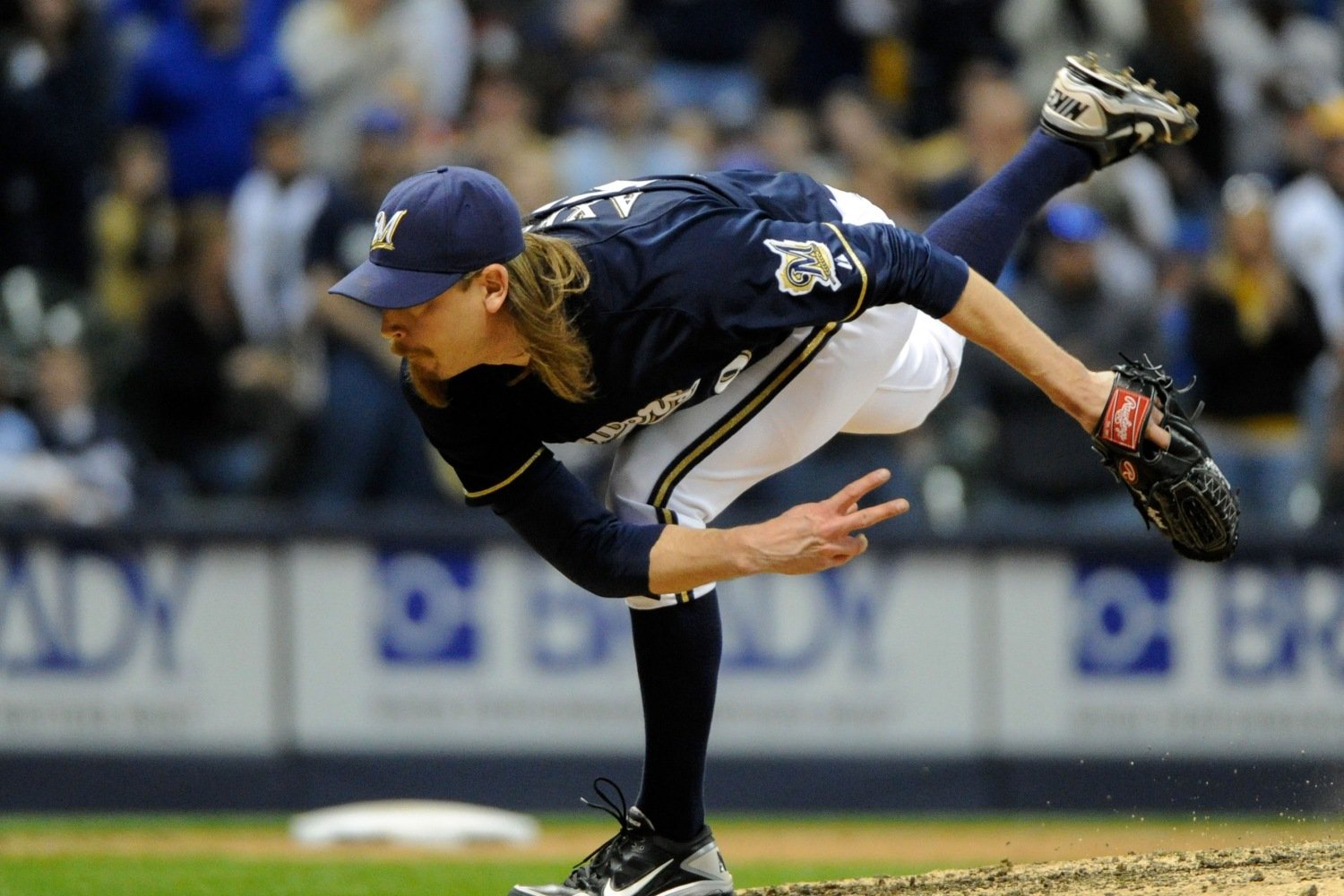 Former Reliever of the Year John Axford was selected to join the Brewers’ Wall of Honor in 2025, the Brewers announced in a statement on Monday. The date of the ceremony is still to be determined. Axford spent parts of six seasons with the Brewers. His best came in 2011, when he set the team’s single-season saves record and tied for the National League lead, with 46. He saved 3 games in their postseason run and earned the win in the NLDS-clinching Game 5 victory over Arizona, pitching a scoreless 10th after blowing the save in the 9th inning. The flamethrower notched 106 saves with the club after assuming the closer role from Trevor Hoffman midway through the 2010 season. He ranks third in franchise history in saves and ninth in appearances. His big-league debut in 2009 was the culmination of a circuitous route to the game’s highest level. Originally drafted in 2001 by the Mariners in the 7th round, he instead honored his commitment to Notre Dame. After four years (and three seasons of eligibility) with the Fighting Irish, Cincinnati used their 42nd-round selection on Axford. The Reds chose not to sign the 6-foot-5 Axford, but the Yankees took a chance on him after a 19-strikeout performance with the Melville Millionaires of the Western Canadian Baseball League, a collegiate summer league. His tenure in imagined pinstripes ended after just one season and 63 minor-league innings. Then the Brewers stepped in, signing the righthander prior to the 2008 season. Following a full-time shift to the bullpen, Axford posted a 2.77 ERA in 68 ⅓ innings across three levels, earning a September callup in late 2009. He appeared in 268 games at the back end of the Brewers’ bullpen from 2009-13, before a midseason trade to St. Louis in exchange for Michael Blazek. After stops in Cleveland, Pittsburgh, Colorado, Oakland, Los Angeles and Toronto, he found his way back onto the mound at the since-renamed Miller Park. But his time back on a big-league mound, for the organization that had truly been home for him, would only last ⅓ of an inning. After facing just five batters, Axford blew out his elbow and left the big-league mound for the final time. After seeking counsel from a Brewers legend, he elected to undergo Tommy John surgery and rehab his ailing elbow so he could represent his native Canada in the 2023 World Baseball Classic. His lone inning in the tournament was the final one in his 14-year pro career. Axford is the 72nd inductee into the Wall of Honor, located on the exterior of American Family Field. Founded in 2014, a player must meet one of several criteria: 2,000 plate appearances 1,000 innings pitched 250 appearances as a pitcher Major award winner (MVP, Cy Young, Rookie of the Year, Reliever of the Year) Manager of a pennant-winning team Recognized with a statue on the plaza Election to the Baseball Hall of Fame Primary broadcaster for 20+ seasons after Brewers playing career General manager for 10+ years including postseason berth Axford qualified by both appearances and winning the 2011 NL Reliever of the Year. He could be joined in the coming years by Dave Parker (Hall of Fame), CC Sabathia (Hall of Fame), Jeremy Jeffress (appearances), Corbin Burnes (Cy Young), Christian Yelich (MVP, PA), Devin Williams (Rookie of the Year, Reliever of the Year) and Willy Adames (PA). Zack Greinke (eligible for Hall of Fame election in 2029) and Freddy Peralta (245 ⅔ more innings) could be the next two who have yet to earn eligibility to do so.
 -
The former Brewers closer will be added to their Wall of Honor in 2025. Image courtesy of © Benny Sieu-Imagn Images Former Reliever of the Year John Axford was selected to join the Brewers’ Wall of Honor in 2025, the Brewers announced in a statement on Monday. The date of the ceremony is still to be determined. Axford spent parts of six seasons with the Brewers. His best came in 2011, when he set the team’s single-season saves record and tied for the National League lead, with 46. He saved 3 games in their postseason run and earned the win in the NLDS-clinching Game 5 victory over Arizona, pitching a scoreless 10th after blowing the save in the 9th inning. The flamethrower notched 106 saves with the club after assuming the closer role from Trevor Hoffman midway through the 2010 season. He ranks third in franchise history in saves and ninth in appearances. His big-league debut in 2009 was the culmination of a circuitous route to the game’s highest level. Originally drafted in 2001 by the Mariners in the 7th round, he instead honored his commitment to Notre Dame. After four years (and three seasons of eligibility) with the Fighting Irish, Cincinnati used their 42nd-round selection on Axford. The Reds chose not to sign the 6-foot-5 Axford, but the Yankees took a chance on him after a 19-strikeout performance with the Melville Millionaires of the Western Canadian Baseball League, a collegiate summer league. His tenure in imagined pinstripes ended after just one season and 63 minor-league innings. Then the Brewers stepped in, signing the righthander prior to the 2008 season. Following a full-time shift to the bullpen, Axford posted a 2.77 ERA in 68 ⅓ innings across three levels, earning a September callup in late 2009. He appeared in 268 games at the back end of the Brewers’ bullpen from 2009-13, before a midseason trade to St. Louis in exchange for Michael Blazek. After stops in Cleveland, Pittsburgh, Colorado, Oakland, Los Angeles and Toronto, he found his way back onto the mound at the since-renamed Miller Park. But his time back on a big-league mound, for the organization that had truly been home for him, would only last ⅓ of an inning. After facing just five batters, Axford blew out his elbow and left the big-league mound for the final time. After seeking counsel from a Brewers legend, he elected to undergo Tommy John surgery and rehab his ailing elbow so he could represent his native Canada in the 2023 World Baseball Classic. His lone inning in the tournament was the final one in his 14-year pro career. Axford is the 72nd inductee into the Wall of Honor, located on the exterior of American Family Field. Founded in 2014, a player must meet one of several criteria: 2,000 plate appearances 1,000 innings pitched 250 appearances as a pitcher Major award winner (MVP, Cy Young, Rookie of the Year, Reliever of the Year) Manager of a pennant-winning team Recognized with a statue on the plaza Election to the Baseball Hall of Fame Primary broadcaster for 20+ seasons after Brewers playing career General manager for 10+ years including postseason berth Axford qualified by both appearances and winning the 2011 NL Reliever of the Year. He could be joined in the coming years by Dave Parker (Hall of Fame), CC Sabathia (Hall of Fame), Jeremy Jeffress (appearances), Corbin Burnes (Cy Young), Christian Yelich (MVP, PA), Devin Williams (Rookie of the Year, Reliever of the Year) and Willy Adames (PA). Zack Greinke (eligible for Hall of Fame election in 2029) and Freddy Peralta (245 ⅔ more innings) could be the next two who have yet to earn eligibility to do so. View full article
-
CC Sabathia's 2008 run with the Brewers was nothing short of incredible. Here are five stats that encapsulate that run.
-
CC Sabathia's 2008 run with the Brewers was nothing short of incredible. Here are five stats that encapsulate that run. View full video
-
Video: CC Sabathia Elected to Hall of Fame
David Go posted a topic in Brewer Fanatic Front Page News
CC Sabathia became the ninth Brewer to earn election to the National Baseball Hall of Fame in Cooperstown on Tuesday, earning 86.8% of the vote in his first year of eligibility. View full video -
CC Sabathia became the ninth Brewer to earn election to the National Baseball Hall of Fame in Cooperstown on Tuesday, earning 86.8% of the vote in his first year of eligibility.
-
 Nick Castellanos recently opined that Mets infielder Jose Iglesias deserved MVP votes over Shohei Ohtani due to his impact on the Mets’ dramatic turnaround. After all, where does value derive from? On-field performance or off-field clubhouse presence, the award’s criteria are left unclear. Brewers players have brought home five such awards and former winners in the twilight stage of their careers. Enter Dave Parker. In Parker’s lone year in the Cream City, he became the only Brewer to win MLB’s Designated Hitter of the Year. His .289/.330/.451, 118 OPS+ clip garnered a selection to the 1990 All-Star Game. It proved to be the former MVP’s only year in Milwaukee. Parker agreed to join the Brewers without knowing if Yount, the reigning AL MVP, would play for the Crew the following year. In his age-33 campaign, Yount hit .318/.384/.511 with 103 RBIs despite the Brewers continuing their descent back to .500. The club failed to improve the team externally, and its superstar threatened to migrate west for greener pastures. According to the LA Times, after the 1989 season, he criticized the team’s lack of willingness to supplement its veteran talent through external acquisitions. After aggressively courting the Cobra at the Winter Meetings, Parker signed with the Brewers in December 1989, becoming the first Brewers’ free agent signing since Roy Howell in 1980. Dalton claimed the timing was mere coincidence - not a pitch for the franchise great to remain in Milwaukee. However, according to the LA Times, Yount had expressed that he would be more likely to re-sign with the Brewers if they improved in the offseason. Meanwhile, the California Angels made Yount “a huge offer,” according to the same sources. Angels owner Gene Autry and his wife Jackie also offered to help Yount with his real estate portfolio in Arizona. According to United Press International, Yount owed the Brewers more than $5 million in real estate investments. MLB required the loan to be paid back fully before he signed with the Angels unless the Angels replaced the Brewers as a co-signer. “I think he wants to be in Milwaukee, and I think he wants to be with the Angels,” Jackie Autry told the LA Times, referring to the emotional connection to Milwaukee but a higher chance of winning in Southern California. “If he could split it down the middle, he’d be happy.” Yount saw Parker’s signing as a commitment to winning. Three weeks later, Yount agreed to return to Milwaukee on a three-year contract worth $9.6 million, a mere $50,000 below the highest AAV (average annual value) in MLB history. Yount hit just .257 with 35 homers across the life of the contract and combined for fewer WAR (wins above replacement) across the three years than in his 1989 season alone. Conversely, Paul Molitor finished his career in Toronto and Minnesota after general manager Sal Bando offered a pay cut following the 1992 season. Both are in the Hall of Fame with the ball-in-glove adorning their hats, but just one has a statue on American Family Field’s concourse. Parker was named team MVP in 1990 before being dealt to the team Yount nearly joined, the California Angels. His most valuable contribution wasn’t the 21 home runs or .781 OPS he posted in Milwaukee but his contributions to helping preserve the legacy of the franchise’s most beloved icon, inadvertently ensuring Yount wore just one uniform in his career.
 -
A former MVP helped keep a franchise icon in Milwaukee despite playing just one year with the Brewers. Nick Castellanos recently opined that Mets infielder Jose Iglesias deserved MVP votes over Shohei Ohtani due to his impact on the Mets’ dramatic turnaround. After all, where does value derive from? On-field performance or off-field clubhouse presence, the award’s criteria are left unclear. Brewers players have brought home five such awards and former winners in the twilight stage of their careers. Enter Dave Parker. In Parker’s lone year in the Cream City, he became the only Brewer to win MLB’s Designated Hitter of the Year. His .289/.330/.451, 118 OPS+ clip garnered a selection to the 1990 All-Star Game. It proved to be the former MVP’s only year in Milwaukee. Parker agreed to join the Brewers without knowing if Yount, the reigning AL MVP, would play for the Crew the following year. In his age-33 campaign, Yount hit .318/.384/.511 with 103 RBIs despite the Brewers continuing their descent back to .500. The club failed to improve the team externally, and its superstar threatened to migrate west for greener pastures. According to the LA Times, after the 1989 season, he criticized the team’s lack of willingness to supplement its veteran talent through external acquisitions. After aggressively courting the Cobra at the Winter Meetings, Parker signed with the Brewers in December 1989, becoming the first Brewers’ free agent signing since Roy Howell in 1980. Dalton claimed the timing was mere coincidence - not a pitch for the franchise great to remain in Milwaukee. However, according to the LA Times, Yount had expressed that he would be more likely to re-sign with the Brewers if they improved in the offseason. Meanwhile, the California Angels made Yount “a huge offer,” according to the same sources. Angels owner Gene Autry and his wife Jackie also offered to help Yount with his real estate portfolio in Arizona. According to United Press International, Yount owed the Brewers more than $5 million in real estate investments. MLB required the loan to be paid back fully before he signed with the Angels unless the Angels replaced the Brewers as a co-signer. “I think he wants to be in Milwaukee, and I think he wants to be with the Angels,” Jackie Autry told the LA Times, referring to the emotional connection to Milwaukee but a higher chance of winning in Southern California. “If he could split it down the middle, he’d be happy.” Yount saw Parker’s signing as a commitment to winning. Three weeks later, Yount agreed to return to Milwaukee on a three-year contract worth $9.6 million, a mere $50,000 below the highest AAV (average annual value) in MLB history. Yount hit just .257 with 35 homers across the life of the contract and combined for fewer WAR (wins above replacement) across the three years than in his 1989 season alone. Conversely, Paul Molitor finished his career in Toronto and Minnesota after general manager Sal Bando offered a pay cut following the 1992 season. Both are in the Hall of Fame with the ball-in-glove adorning their hats, but just one has a statue on American Family Field’s concourse. Parker was named team MVP in 1990 before being dealt to the team Yount nearly joined, the California Angels. His most valuable contribution wasn’t the 21 home runs or .781 OPS he posted in Milwaukee but his contributions to helping preserve the legacy of the franchise’s most beloved icon, inadvertently ensuring Yount wore just one uniform in his career. View full article
-
 A generation ago, Bob Uecker gained national prominence through his appearances on legendary broadcaster Johnny Carson's "The Tonight Show." He appeared a record 62 times, his first in 1971, the initial year of his broadcasting career. These are the best of Uecker's appearances on the iconic late-night show. Uecker said he often left after games on Sunday to make a Monday night appearance, then flew a red-eye back to Milwaukee in time for a Tuesday game. He parlayed his television fame into roles in Miller Lite advertisements and in "Major League" and "Mr. Belvedere." Uecker and Carson's relationship began around World Series time in 1971, when Carson asked the former backup catcher to describe a few photos from his playing career. They became some of his most famous bits. To watch the full episode: April 30, 1976 To watch the full interview: July 29, 1976 To watch the full interview:
 -
Generations of Brewers fans know the recently deceased legend for his remarkable broadcasting career, but he was once known by the nation for his appearance on one of television's biggest shows. Uecker: My dad came to the country as a soccer player. Well, he wasn't actually a player; he blew up the balls is what he did. To watch the full episode: April 30, 1976 To watch the full interview: July 29, 1976 To watch the full interview: View full article
-
Milwaukee legend and baseball icon Bob Uecker died at age 90 on the morning of Jan. 16, 2025.
-
Milwaukee legend and baseball icon Bob Uecker died at age 90 on the morning of Jan. 16, 2025. View full video


