



David Go
-
Posts
156 -
Joined
-
Last visited
Content Type
Profiles
Forums
Blogs
Events
News
2026 Milwaukee Brewers Top Prospects Ranking
Milwaukee Brewers Videos
2022 Milwaukee Brewers Draft Picks
Milwaukee Brewers Free Agent & Trade Rumors, Notes, & Tidbits
Guides & Resources
2023 Milwaukee Brewers Draft Picks
2024 Milwaukee Brewers Draft Picks
The Milwaukee Brewers Players Project
2025 Milwaukee Brewers Draft Pick Tracker
2026 Milwaukee Brewers Draft Tracker: Picks & Bonuses
Store
Downloads
Gallery
Everything posted by David Go
-
The Brewers recalled Bradley Blalock a day ago straight from AA-Biloxi. The right-hander could work as a starter after Joe Ross left Monday's game with a lower back strain. What can we expect from Blalock?
-
The Brewers recalled Bradley Blalock a day ago straight from AA-Biloxi. The right-hander could work as a starter after Joe Ross left Monday's game with a lower back strain. What can we expect from Blalock? View full video
-
Roller is an outfielder the Brewers recently called up, and one that the club supposedly likes a lot. How will we see him used in his first taste of big league action? View full video
-
Roller is an outfielder the Brewers recently called up, and one that the club supposedly likes a lot. How will we see him used in his first taste of big league action?
-
The Milwaukee Brewers recently acquired 29-year-old reliever Mitch White from the Giants. Let's take a look at his recent struggles and his arsenal, which is strange for an MLB reliever. View full video
-
The Milwaukee Brewers recently acquired 29-year-old reliever Mitch White from the Giants. Let's take a look at his recent struggles and his arsenal, which is strange for an MLB reliever.
-
Brewers' left-hander Wade Miley was the latest victim of the injury bug, as the veteran was recently diagnosed with a torn ulnar collateral ligament. Miley will undergo season-ending Tommy John surgery. What comes next for Miley? Is his career over? And what about the Brewers as this further depletes an already thin rotation? View full video
-
Brewers' left-hander Wade Miley was the latest victim of the injury bug, as the veteran was recently diagnosed with a torn ulnar collateral ligament. Miley will undergo season-ending Tommy John surgery. What comes next for Miley? Is his career over? And what about the Brewers as this further depletes an already thin rotation?
-
The newest member of the Brewers' rotation is Tobias Myers, a former minor-league free agent signing who tossed five innings in his big league debut. The rookie could find success by relying on his fastball which shows as unique characteristics as any major league pitcher. View full video
-
The newest member of the Brewers' rotation is Tobias Myers, a former minor-league free agent signing who tossed five innings in his big league debut. The rookie could find success by relying on his fastball which shows as unique characteristics as any major league pitcher.
-
The Brewers always find a few under-the-radar arms to become valuable late-inning weapons. Minor League free agent signings, waiver claims, and non-prospects have become late-inning staples - Devin Williams, Brad Boxberger, Peter Strzelecki, and many more. Who might it be this year? Image courtesy of © Michael McLoone-USA TODAY Sports Which arms might take the baton as the breakout relievers in the Brewers’ bullpen? Last year, it was Bryse Wilson, Joel Payamps, and Elvis Peguero. In 2022, we saw Hoby Milner and Peter Strzelecki emerge as late-inning weapons. With a depleted starting rotation and injured Devin Williams, they may need to rely on some unheralded arms more than in previous years. Here are three candidates to break out in the bullpen for 2024. Trevor Megill 2023: 34.2 IP, 3.63 ERA, 52:12 K:BB The 6-foot-8 righty may have had his breakout season last year, depending on who you ask, but he stands to make 2024 his true full-season breakout. Megill posted a 2.70 ERA across 20 innings after the All-Star break, including a remarkable 32:5 K:BB ratio. A mechanical change accompanied the uptick in performance. “Being a little shorter,” Megill told Brewer Fanatic’s Matt Trueblood. “I feel like that's the direction people head in later in their careers: try to get more compact through the years. That was the focus [in the 2022-23] offseason, and throughout the [2023] season, it just progressively got better. It was a conscious effort, for sure.” In the latter half of the year, Megill's fastball averaged 99.5 mph, the third-best mark in baseball. His 2.11 FIP (fielding independent pitching) indicates an exceptional ability to control the “three true outcomes”—strikeouts, walks, and home runs. Just one pitcher (minimum 20 innings) across the Major Leagues outpaced Megill in both K% and BB% in the second half. Megill took a leap forward in 2023, hopping off the AAA shuttle to establish himself as a big-league reliever. But 2024 could be the year he takes it further, carrying last year’s late-season success into a late-inning role for the Brewers. Bryan Hudson 2023 (LAD-AAA): 55.2 IP, 2.43 ERA, 86:26 K:BB The Brewers acquired Hudson in a low-profile trade with the Dodgers this offseason after the lefty was forced off the roster to make room for Yoshinobu Yamamoto. The low-profile acquisition could pay dividends if the lefty carries his AAA performance to the big leagues. Hudson averaged just 92.0 mph on his fastball last year but steadily improved throughout the season. His extension results in his fastball “playing up,” meaning it may be more effective than merely the velocity reading. Hudson’s elite extension gives hitters little time to react, resulting in a .238 batting average against his fastball in AAA last year. The southpaw also throws a cutter and slider. “We are working on some front-side stuff, keeping it close to my body,” Hudson told Brewer Fanatic’s Matt Trueblood earlier this spring. “After working on some of this stuff, the last few times I’ve thrown, I’m up to 7.8, 7.6 [feet]... it helps me be a little bit more deceptive.” Hudson, also 6-foot-8, showed similar splits against both lefties and righties last year, allowing Murphy flexibility to deploy him for the minimum three batters even if they aren’t all left-handed. The Brewers’ bullpen featured a rotating cast of characters filling the role of second lefty - Andrew Chafin (5.82 ERA), Ethan Small (5 ER in 4 IP), Clayton Andrews (10 ER in 3.1 IP), Bennett Sousa (4 ER in 2.2 IP), Thomas Pannone (2 ER in 2.2 IP) and Alex Claudio (0.1 IP). Hudson could be the answer to a year-long problem for the Crew. J.B. Bukauskas 2023 (SEA/MIL): 7 IP, 1 ER, 7:3 K:BB 2023 (SEA/MIL-AAA): 42.2 IP, 3.59 ERA, 49:13 K:BB Bukauskas was optioned to AAA-Nashville to begin the year, but it could be just a matter of time until he finds his way to a big-league mound. The righty tossed six innings for the Brewers last year after a mid-April waiver claim. “I would like to see more from him,” said Tim Dillard on a recent episode of The Barrel Banter. “I think the only reason he probably didn’t get out there as much and didn’t have a chance was the bullpen was so good.” Added Dillard: “[It’s a] really good sinker - it’s almost straight down.” The former first-round pick works primarily from a low arm slot with a sinker and slider, resulting in a 63.3 GB%, the fourth-best in AAA’s International League. His 26.8 K% and 6.4 BB% were better than the league average. If Bukauskas consistently stays in the strike zone as he has thus far in the Brewers’ organization, he could be a valuable member of the bullpen. With the starters expected to throw fewer innings than in recent years, Bukauskas will likely find himself making frequent trips to and from Milwaukee and Nashville to eat innings. In the process, he could emerge as a legitimate option to get righties out in big spots. View full article
-
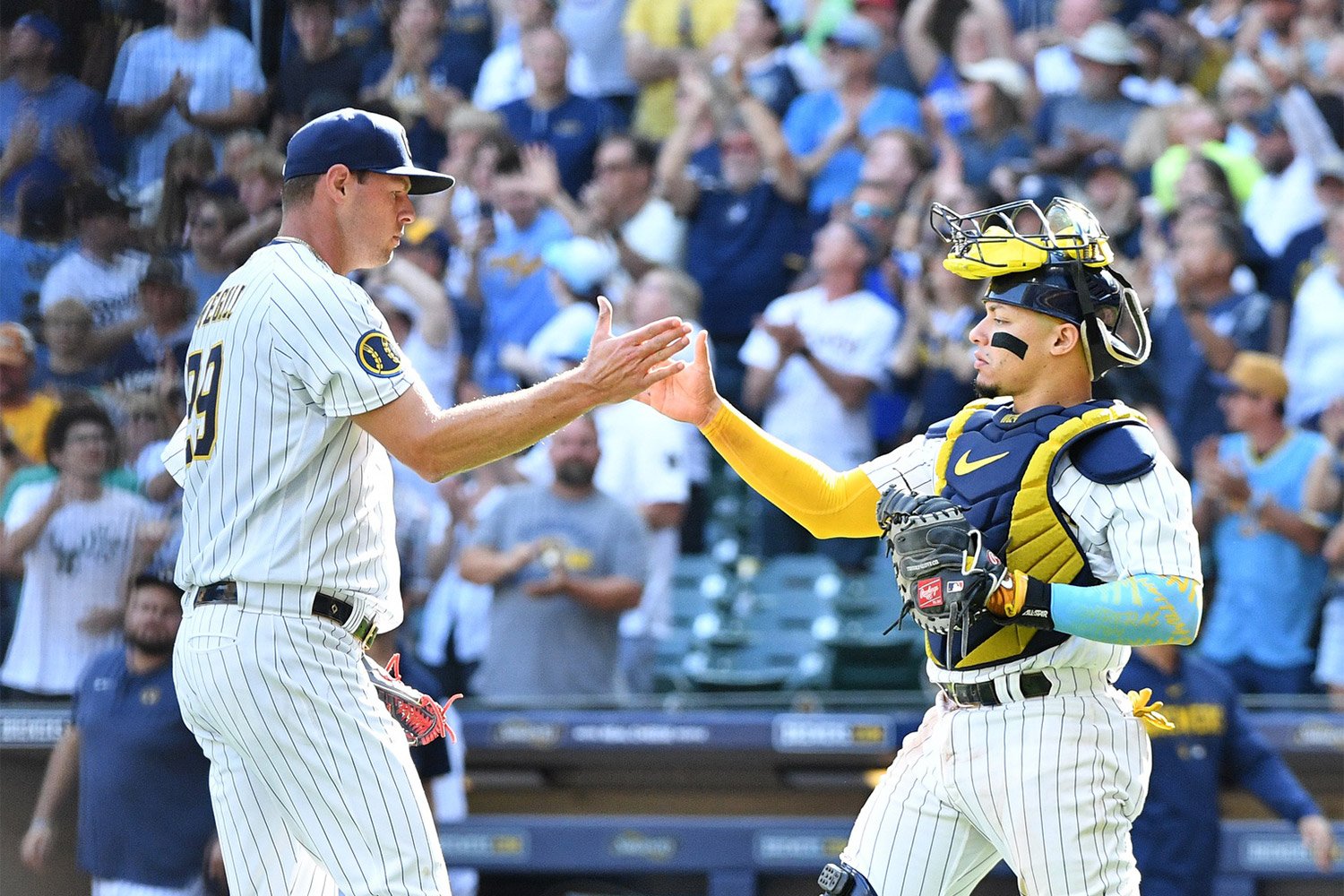 Which arms might take the baton as the breakout relievers in the Brewers’ bullpen? Last year, it was Bryse Wilson, Joel Payamps, and Elvis Peguero. In 2022, we saw Hoby Milner and Peter Strzelecki emerge as late-inning weapons. With a depleted starting rotation and injured Devin Williams, they may need to rely on some unheralded arms more than in previous years. Here are three candidates to break out in the bullpen for 2024. Trevor Megill 2023: 34.2 IP, 3.63 ERA, 52:12 K:BB The 6-foot-8 righty may have had his breakout season last year, depending on who you ask, but he stands to make 2024 his true full-season breakout. Megill posted a 2.70 ERA across 20 innings after the All-Star break, including a remarkable 32:5 K:BB ratio. A mechanical change accompanied the uptick in performance. “Being a little shorter,” Megill told Brewer Fanatic’s Matt Trueblood. “I feel like that's the direction people head in later in their careers: try to get more compact through the years. That was the focus [in the 2022-23] offseason, and throughout the [2023] season, it just progressively got better. It was a conscious effort, for sure.” In the latter half of the year, Megill's fastball averaged 99.5 mph, the third-best mark in baseball. His 2.11 FIP (fielding independent pitching) indicates an exceptional ability to control the “three true outcomes”—strikeouts, walks, and home runs. Just one pitcher (minimum 20 innings) across the Major Leagues outpaced Megill in both K% and BB% in the second half. Megill took a leap forward in 2023, hopping off the AAA shuttle to establish himself as a big-league reliever. But 2024 could be the year he takes it further, carrying last year’s late-season success into a late-inning role for the Brewers. Bryan Hudson 2023 (LAD-AAA): 55.2 IP, 2.43 ERA, 86:26 K:BB The Brewers acquired Hudson in a low-profile trade with the Dodgers this offseason after the lefty was forced off the roster to make room for Yoshinobu Yamamoto. The low-profile acquisition could pay dividends if the lefty carries his AAA performance to the big leagues. Hudson averaged just 92.0 mph on his fastball last year but steadily improved throughout the season. His extension results in his fastball “playing up,” meaning it may be more effective than merely the velocity reading. Hudson’s elite extension gives hitters little time to react, resulting in a .238 batting average against his fastball in AAA last year. The southpaw also throws a cutter and slider. “We are working on some front-side stuff, keeping it close to my body,” Hudson told Brewer Fanatic’s Matt Trueblood earlier this spring. “After working on some of this stuff, the last few times I’ve thrown, I’m up to 7.8, 7.6 [feet]... it helps me be a little bit more deceptive.” Hudson, also 6-foot-8, showed similar splits against both lefties and righties last year, allowing Murphy flexibility to deploy him for the minimum three batters even if they aren’t all left-handed. The Brewers’ bullpen featured a rotating cast of characters filling the role of second lefty - Andrew Chafin (5.82 ERA), Ethan Small (5 ER in 4 IP), Clayton Andrews (10 ER in 3.1 IP), Bennett Sousa (4 ER in 2.2 IP), Thomas Pannone (2 ER in 2.2 IP) and Alex Claudio (0.1 IP). Hudson could be the answer to a year-long problem for the Crew. J.B. Bukauskas 2023 (SEA/MIL): 7 IP, 1 ER, 7:3 K:BB 2023 (SEA/MIL-AAA): 42.2 IP, 3.59 ERA, 49:13 K:BB Bukauskas was optioned to AAA-Nashville to begin the year, but it could be just a matter of time until he finds his way to a big-league mound. The righty tossed six innings for the Brewers last year after a mid-April waiver claim. “I would like to see more from him,” said Tim Dillard on a recent episode of The Barrel Banter. “I think the only reason he probably didn’t get out there as much and didn’t have a chance was the bullpen was so good.” Added Dillard: “[It’s a] really good sinker - it’s almost straight down.” The former first-round pick works primarily from a low arm slot with a sinker and slider, resulting in a 63.3 GB%, the fourth-best in AAA’s International League. His 26.8 K% and 6.4 BB% were better than the league average. If Bukauskas consistently stays in the strike zone as he has thus far in the Brewers’ organization, he could be a valuable member of the bullpen. With the starters expected to throw fewer innings than in recent years, Bukauskas will likely find himself making frequent trips to and from Milwaukee and Nashville to eat innings. In the process, he could emerge as a legitimate option to get righties out in big spots.
-
- 1
-

-
- trevor megill
- bryan hudson
- (and 1 more)
-
The Brewers will have to endure some significant losses to reclaim the division crown this year - can they do it? What needs to happen from them and their NL Central counterparts for it to happen?
-
The Brewers will have to endure some significant losses to reclaim the division crown this year - can they do it? What needs to happen from them and their NL Central counterparts for it to happen? View full video
-
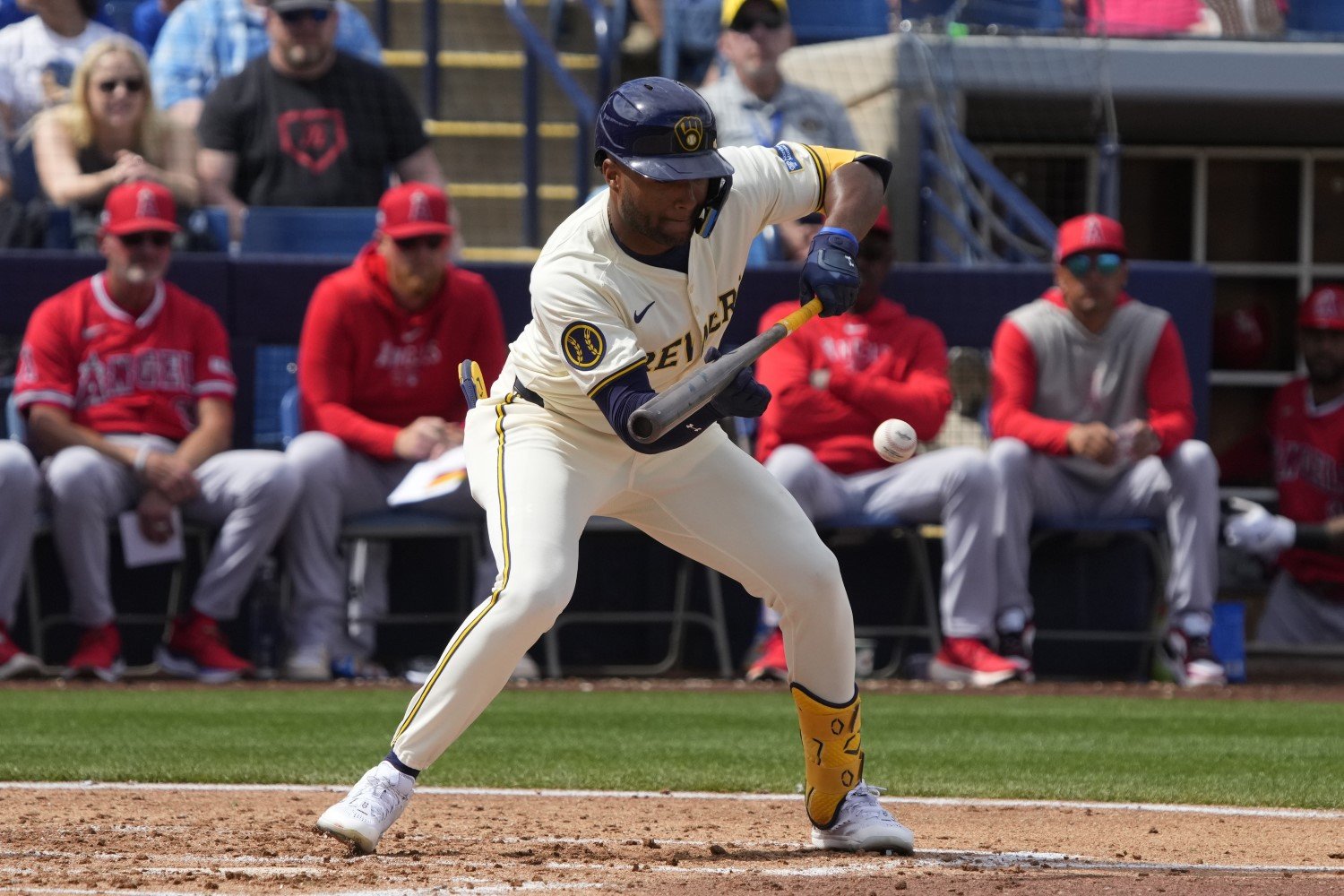 The Brewers’ center-field torch has been carried by some of its franchise greats. From Gorman Thomas to Robin Yount and from Carlos Gómez to Lorenzo Cain, the tradition is rich. That torch will soon be carried by Jackson Chourio, who has the potential to be (dare I say it?) the best of them all. But will he carry it as soon as 2024? Let’s look at the Brewers’ options to patrol the position this year. Candidates (Note: DRS figures based only on time in CF) Jackson Chourio Age (as of 7/1/24): 20 2023 (AA-AAA): 583 PA, .283/.338/.467, 22 HR, 91 RBI, 44 SB Notable stat: $82 million; biggest-ever guarantee to a player with no Major League experience (excluding NPB) The 20-year-old Chourio carries the résumé of the top-of-the-class college graduate: endless potential, but limited real-world experience. Chourio was already being mentioned as a league-wide top-10 prospect after just one full season of pro ball--a season that saw the 18-year-old belt 20 home runs, steal 16 bases and post an .879 OPS across three levels. The Venezuelan teenager followed that up with the first 20/40 season in the minor leagues in nearly 20 years, playing much of the season as the Southern League’s youngest player. According to a report Monday night from Curt Hogg of the Journal-Sentinel, Chourio will be on the Opening Day roster. If that's true, he'll surely play almost every day. The only remaining question is whether or not he'll be in center field. Garrett Mitchell Age: 25 2023 (MLB): 73 PA, .246/.315/.446 (106 OPS+), 3 HR, 7 RBI, 1 SB, +1 DRS, 0.7 bWAR Notable stat: 29.3 ft/sec. sprint speed (94th percentile) Instead of establishing himself as a big-league regular, the former first-round pick spent much of the season on the shelf. Prior to the injury, Mitchell was the first of the Brewers’ crop of young outfielders to reach the majors, debuting with a .312/.373/.459 showing, ballooned by a sky-high .548 batting average on balls in play (BABIP). The left-handed hitting Mitchell brings elite speed and up-the-middle defense, but concerns exist with the bat. He’s still appeared in just 47 big-league games, striking out in 38 percent of his plate appearances in that time. The UCLA product missed time in 2020 due to the pandemic and 2021 due to injury, resulting in just 28 Triple-A and 79 Double-A games. Mitchell still has the floor of a speed-and-defense guy you can stick in the bottom of the lineup for 2024, but the focus should be on his ceiling, and whether he can reach it. Sal Frelick Age: 24 2023 (MLB): 223 PA, .246/.341/.351 (91 OPS+), 3 HR, 24 RBI, 7 SB, +2 DRS, 1.2 bWAR Notable stat: 28:37 BB:K Among the most unexpected storylines this spring has been the Frelick-to-the-infield experiment. Pat Murphy indicated he could be the Brewers’ left-handed option at third base, but it still allows room for him to roam the outfield. Frelick, considered the organization's premier defender up the middle until Chourio’s emergence, showed his ability on that side of the ball with an above-average showing in both center and right field in his first taste of the show. Consensus says that Chourio is the best defensive center fielder among the four former top prospects, but Frelick may be close behind. Because of the Brewers’ depth, signs are pointing to a year wherein Frelick alternates between the dirt and the grass. The 5-foot-10 Frelick merely held his own in his first foray against big league pitching, hitting .246 without much power. But under the surface, he showed signs of life. Never much of a power threat, the former top prospect was well above average in making contact (14.6 Whiff%), limiting strikeouts (16.6 K%) and taking walks (12.6 BB%). Just a year ago, MLB Pipeline gave Frelick a 70-grade hit tool, indicating a future .300+ hitter. His brief 2023 showing laid the foundation for that skillset. The newly-ordained super utility player should garner everyday playing time, whether at third base or in the outfield, but it’s looking like the split may favor the infield dirt. Joey Wiemer Age: 25 2023 (MLB): 410 PA, .204/.283/.362 (76 OPS+), 13 HR, 42 RBI, 11 SB, +1 DRS, 0.9 bWAR Notable stat: .815 OPS vs. LHP, .568 OPS vs. RHP The wild-swinging Wiemer quieted his swing during the offseason, returning with a more palatable operation that could lead to more contact. More contact will be the key to playing time for the 25-year-old, who hit just .204 and struck out in 28% of his plate appearances in 2023. If Wiemer hits even .235 and taps into his immense raw power, he would be an above-average regular. Wiemer, possessing the same speed-and-defense skills as Mitchell but moving less gracefully, proved himself the superior defender in right field, while Frelick and Mitchell had as good or better or showings roaming center. His big advantage comes in his ability against left-handed pitchers. Frelick hit just .184 against lefthanders last year, and the Brewers rarely allowed Mitchell to face southpaws. On the contrary, Wiemer hit lefties to the tune of an .815 OPS and 7 home runs in 121 plate appearances. Wiemer appears best suited to start against lefties, taking a lesser role against righties. If the Brewers want Wiemer to get everyday at-bats, optioning him to Triple-A could pay off in the long run. Blake Perkins Age: 27 2023 (MLB): 168 PA, .217/.325/.350/.675 (86 OPS+), 4 HR, 20 RBI, 5 SB, +3 DRS, 1.2 bWAR Notable stat: +8 OAA; .368 OBP/.400 SLG in 2nd half The switch-hitting Perkins found his groove late in 2023, stepping up as Wiemer faded down the stretch. The 27-year-old doesn’t carry the same prospect pedigree as the previous four on the list, but he outperformed Mitchell and Wiemer and equaled Frelick in bWAR in 2023. Like the previously mentioned outfielders, Perkins boasts elite speed (99th-percentile Sprint Speed, according to Statcast) and defense (+8 OAA in a part-time role), but carries question marks with the bat. Despite hitting just .217, he takes his walks and is tapping into some gap-to-gap power as he enters his 10th professional season. Perkins isn’t an everyday center fielder, but he could get some playing time if the Brewers decide to option Wiemer to start the year. He profiles as an ideal fourth or fifth outfielder. With four options to man center field who were among last year’s top 100 prospects, competition for playing time will be stiff. Do the Brewers mix and match their options to optimize platoon advantages, or stick Chourio out there and check back after a month or two of playing time? Given the Brewers’ abundance of center fielders, we may see three true center fielders roaming the American Family outfield at once. Regardless, the battle for center field could be the biggest storyline as camp comes to a close.
 -
The Milwaukee Brewers have a logjam in center field, so who will step up? Jackson Chourio has the highest expectations, but the least experience. Sal Frelick may be the most polished, but could spend more time in the infield. Will Garrett Mitchell finally establish himself as an everyday player? Image courtesy of © Rick Scuteri-USA TODAY Sports The Brewers’ center-field torch has been carried by some of its franchise greats. From Gorman Thomas to Robin Yount and from Carlos Gómez to Lorenzo Cain, the tradition is rich. That torch will soon be carried by Jackson Chourio, who has the potential to be (dare I say it?) the best of them all. But will he carry it as soon as 2024? Let’s look at the Brewers’ options to patrol the position this year. Candidates (Note: DRS figures based only on time in CF) Jackson Chourio Age (as of 7/1/24): 20 2023 (AA-AAA): 583 PA, .283/.338/.467, 22 HR, 91 RBI, 44 SB Notable stat: $82 million; biggest-ever guarantee to a player with no Major League experience (excluding NPB) The 20-year-old Chourio carries the résumé of the top-of-the-class college graduate: endless potential, but limited real-world experience. Chourio was already being mentioned as a league-wide top-10 prospect after just one full season of pro ball--a season that saw the 18-year-old belt 20 home runs, steal 16 bases and post an .879 OPS across three levels. The Venezuelan teenager followed that up with the first 20/40 season in the minor leagues in nearly 20 years, playing much of the season as the Southern League’s youngest player. According to a report Monday night from Curt Hogg of the Journal-Sentinel, Chourio will be on the Opening Day roster. If that's true, he'll surely play almost every day. The only remaining question is whether or not he'll be in center field. Garrett Mitchell Age: 25 2023 (MLB): 73 PA, .246/.315/.446 (106 OPS+), 3 HR, 7 RBI, 1 SB, +1 DRS, 0.7 bWAR Notable stat: 29.3 ft/sec. sprint speed (94th percentile) Instead of establishing himself as a big-league regular, the former first-round pick spent much of the season on the shelf. Prior to the injury, Mitchell was the first of the Brewers’ crop of young outfielders to reach the majors, debuting with a .312/.373/.459 showing, ballooned by a sky-high .548 batting average on balls in play (BABIP). The left-handed hitting Mitchell brings elite speed and up-the-middle defense, but concerns exist with the bat. He’s still appeared in just 47 big-league games, striking out in 38 percent of his plate appearances in that time. The UCLA product missed time in 2020 due to the pandemic and 2021 due to injury, resulting in just 28 Triple-A and 79 Double-A games. Mitchell still has the floor of a speed-and-defense guy you can stick in the bottom of the lineup for 2024, but the focus should be on his ceiling, and whether he can reach it. Sal Frelick Age: 24 2023 (MLB): 223 PA, .246/.341/.351 (91 OPS+), 3 HR, 24 RBI, 7 SB, +2 DRS, 1.2 bWAR Notable stat: 28:37 BB:K Among the most unexpected storylines this spring has been the Frelick-to-the-infield experiment. Pat Murphy indicated he could be the Brewers’ left-handed option at third base, but it still allows room for him to roam the outfield. Frelick, considered the organization's premier defender up the middle until Chourio’s emergence, showed his ability on that side of the ball with an above-average showing in both center and right field in his first taste of the show. Consensus says that Chourio is the best defensive center fielder among the four former top prospects, but Frelick may be close behind. Because of the Brewers’ depth, signs are pointing to a year wherein Frelick alternates between the dirt and the grass. The 5-foot-10 Frelick merely held his own in his first foray against big league pitching, hitting .246 without much power. But under the surface, he showed signs of life. Never much of a power threat, the former top prospect was well above average in making contact (14.6 Whiff%), limiting strikeouts (16.6 K%) and taking walks (12.6 BB%). Just a year ago, MLB Pipeline gave Frelick a 70-grade hit tool, indicating a future .300+ hitter. His brief 2023 showing laid the foundation for that skillset. The newly-ordained super utility player should garner everyday playing time, whether at third base or in the outfield, but it’s looking like the split may favor the infield dirt. Joey Wiemer Age: 25 2023 (MLB): 410 PA, .204/.283/.362 (76 OPS+), 13 HR, 42 RBI, 11 SB, +1 DRS, 0.9 bWAR Notable stat: .815 OPS vs. LHP, .568 OPS vs. RHP The wild-swinging Wiemer quieted his swing during the offseason, returning with a more palatable operation that could lead to more contact. More contact will be the key to playing time for the 25-year-old, who hit just .204 and struck out in 28% of his plate appearances in 2023. If Wiemer hits even .235 and taps into his immense raw power, he would be an above-average regular. Wiemer, possessing the same speed-and-defense skills as Mitchell but moving less gracefully, proved himself the superior defender in right field, while Frelick and Mitchell had as good or better or showings roaming center. His big advantage comes in his ability against left-handed pitchers. Frelick hit just .184 against lefthanders last year, and the Brewers rarely allowed Mitchell to face southpaws. On the contrary, Wiemer hit lefties to the tune of an .815 OPS and 7 home runs in 121 plate appearances. Wiemer appears best suited to start against lefties, taking a lesser role against righties. If the Brewers want Wiemer to get everyday at-bats, optioning him to Triple-A could pay off in the long run. Blake Perkins Age: 27 2023 (MLB): 168 PA, .217/.325/.350/.675 (86 OPS+), 4 HR, 20 RBI, 5 SB, +3 DRS, 1.2 bWAR Notable stat: +8 OAA; .368 OBP/.400 SLG in 2nd half The switch-hitting Perkins found his groove late in 2023, stepping up as Wiemer faded down the stretch. The 27-year-old doesn’t carry the same prospect pedigree as the previous four on the list, but he outperformed Mitchell and Wiemer and equaled Frelick in bWAR in 2023. Like the previously mentioned outfielders, Perkins boasts elite speed (99th-percentile Sprint Speed, according to Statcast) and defense (+8 OAA in a part-time role), but carries question marks with the bat. Despite hitting just .217, he takes his walks and is tapping into some gap-to-gap power as he enters his 10th professional season. Perkins isn’t an everyday center fielder, but he could get some playing time if the Brewers decide to option Wiemer to start the year. He profiles as an ideal fourth or fifth outfielder. With four options to man center field who were among last year’s top 100 prospects, competition for playing time will be stiff. Do the Brewers mix and match their options to optimize platoon advantages, or stick Chourio out there and check back after a month or two of playing time? Given the Brewers’ abundance of center fielders, we may see three true center fielders roaming the American Family outfield at once. Regardless, the battle for center field could be the biggest storyline as camp comes to a close. View full article
-
Four Prospects For The Brewers' Rotation In 2024
David Go posted a video in Milwaukee Brewers Videos
The Brewers' plethora of position player prospects is well-known, but they have a sneaky crop of high-quality pitching prospects too. Here are four rookies we could see in the Brewers' rotation in 2024. -
The Brewers' plethora of position player prospects is well-known, but they have a sneaky crop of high-quality pitching prospects too. Here are four rookies we could see in the Brewers' rotation in 2024. View full video
-
Aaron Ashby is coming off a shoulder injury that forced him to miss the entire 2023 season. What kind of year can we expect from the former top prospect?
-
Aaron Ashby is coming off a shoulder injury that forced him to miss the entire 2023 season. What kind of year can we expect from the former top prospect? View full video
-
 “Don’t cry because it's over. Smile because it happened.” Surely, the author of that quote wasn’t addressing the Brewers’ three-headed monster in the rotation, but they might as well have been. Corbin Burnes now resides in Baltimore, while Brandon Woodruff will spend most of his time on the trainer’s table this year. Adrian Houser was acquired by his old boss in the Big Apple, and Eric Lauer failed to garner Major League interest, signing with Pittsburgh on Thursday after a career-worst year. Heck, even Wade Miley is “50-50” to be ready for Opening Day. So, who might fill the vacated innings behind Freddy Peralta and Colin Rea? Jakob Junis 2023: 3.87 ERA, 96:21 K:BB in 86 IP; 40-4 G-GS Contract: Signed through 2024, mutual option for 2025 Junis set career marks in 2023 in ERA (3.87), K% (26.2), K:BB (4.57), and fastball velocity (93.7 mph) while working primarily out of the bullpen for the first time in his career. Before 2023, the right-hander started 106 of his 128 games at the big league level, posting a 4.75 ERA while punching out 566 in 627 innings. The big shift for Junis came in his initial year in San Francisco in 2022 when he ditched his 4-seam fastball in favor of a sinker. Hitters slugged .593 off his 4-seamer in 2021. “[The Giants] were able to explain to me and show me the science of it," Junis told Brewer Fanatic’s Matt Trueblood. "So I just got a lot more comfortable throwing it right away and stuck with it.” Junis altered his entire arsenal with the Giants, not just the fastball. The Illinois native increased slider usage from 39.9% in 2021 to 50.5% in 2022, followed by 62.5% last year, the fourth-highest in the majors. The sinker-slider combination was effective against right-handed hitters, but lefties fared better, recording an .807 OPS against the right-hander. A late-season adjustment to the changeup could be the key to success as a starter facing lineups stacked with lefties. Junis threw the pitch 20% in August and September after throwing it just 6% in the first four months. The Brewers hope Junis can carry his improvements from the bullpen into the rotation to be a stabilizing force on a staff filled with question marks. Joe Ross 2023: 14 IP in SF organization 2021: 4.17 ERA, 109 SO in 108 IP in 19 GS w/ WSH before undergoing TJS The former National returned from Tommy John surgery in 2023, tossing just 14 innings across eight games at the end of the year. Ross averaged 95.9 mph with his fastball upon his return, up from 93.5 mph in 2021, albeit in shorter stints. Akin to Junis, the Brewers hope Ross can carry the velocity jump from the bullpen into the rotation. Though the Brewers are preparing Ross for a starting role, relief may be the best role for the veteran for two reasons. The 30-year-old could be compromised in his innings load in 2024 after throwing just 17 innings over the past two seasons and 125 over the past four. Additionally, Ross has significant platoon splits—lefties have carried an .844 OPS throughout his career, while righties have managed just a .654 OPS. Advantageously selecting spots with a string of righties could maximize Ross’ effectiveness. But until then, Ross will compete for a spot in the Brewers’ uncertain rotation. DL Hall (LHP) 2022-23 (MLB, bullpen): 4.36 ERA, 42:11 K:BB in 33 IP 2023 (AAA): 4.22 ERA, 70:30 K:BB in 49 IP #93 overall prospect per Baseball America The Brewers acquired the six-time top-100 prospect as a headliner in the blockbuster Corbin Burnes trade, hoping they can turn his talent into production at the Major League level. The 25-year-old threw 33 big league innings across the past two seasons with Baltimore, all out of the bullpen, striking out 42 and walking just 11. It’s easy to see why the Brewers are optimistic about Hall - the southpaw boasts one of two 80-grade (20-80 scouting scale) fastballs among all prospects, alongside fellow Brewers’ prospect Jacob Misiorowski. His 95.6 mph fastball plays up due to his funky arm angle and elite extension. In his limited big league time last year, Hall graded out in the top quartile of all pitchers in xERA (expected ERA), xBA (expected batting average), average exit velocity against, whiff%, K%, hard-hit %, and ground ball%. The talent is there, but in order for Hall to become a reliable rotation member, he must cut down on walks and avoid the injured list. The Georgia native walked 5.2 per nine innings in his Minor League career before improving in his limited big league time. And the man named DL has struggled to stay off the IL—he’s never reached 100 innings in a season. The talented Hall may be the biggest wild card in the Brewers’ rotation in 2024. Robert Gasser (LHP) 2023 (AAA): 9-1, 3.79 ERA, 166:50 K:BB in 135 IP #98 overall prospect per Baseball America Fellow left-handed prospect Robert Gasser appears ready for the show, leading AAA’s International League with 166 strikeouts in 2023. Acquired in the controversial Josh Hader trade, Gasser lacks top-of-the-rotation upside but carries the floor of an above-average reliever or back-end starter. The southpaw works with a five-pitch mix, throwing a 4-seam fastball, sinker, slider, cutter, and changeup. The slider is his best pitch - one of the better pitches in the Brewers’ organization, but question marks remain beyond the breaker. For Gasser to reach his potential as a mid-rotation starter, he must develop the changeup or cutter to throw against opposite-handed hitters - righties batted .320 and .265 against the offerings, respectively. Whether Gasser can prove their effectiveness this spring may dictate his role to begin the season. Aaron Ashby (LHP) 2023: missed season due to shoulder surgery 2022: 4.44 ERA in 107 IP, 126:47 K:BB The left-hander is gunning for a rotation spot this spring after missing last year with shoulder surgery, an operation to remove calcified muscle near his rotator cuff. Ashby returned to action on a rehab assignment in September but struggled, surrendering 14 runs and 14 walks in 7 innings while averaging just 92 mph on his fastball. A new year brings newfound health for the 25-year-old, who has sat around 94 mph, reaching 96 in his initial spring outings. The most recent time Ashby was on a big league mound, he boasted a 26.5 K% (73rd percentile), 57.4 GB% (98th percentile), and 29.4 Whiff% (75th percentile). But beyond the quality stuff, questions abound. With $19.5 million committed to Ashby over the next four years, the Brewers will likely play it cautious with the former top-100 prospect. Surely, the Brewers will place an innings limit on the lefty - Ashby has surpassed 110 innings just once in his professional career and tossed just seven in 2023. Also of concern is Ashby’s command - his 9.9 BB% in 2022 ranked in the 23rd percentile. Though the Brewers are stretching Ashby out as a starter, he may be best suited for a relief role as he re-acquaints himself with Major League hitters. Doing so may boost his performance - his ERA is a full run lower while working out of the bullpen - and his health. Janson Junk 2023 (MLB): 7.1 IP, 4 ER 2023 (AAA): 4.18 ERA in 140 IP, 94:44 K:BB Acquired in the Hunter Renfroe trade, Junk spent most of the season in Nashville, where he threw the third-most innings in the International League. However, behind a respectable 4.18 ERA lie concerning peripherals, specifically a lack of strikeouts. Junk, who averaged 92.1 mph on his fastball in AAA, sat 94 and touched 96 mph in his lone late-season relief appearance in Milwaukee. A move to the bullpen could unlock velocity for the journeyman right-hander. A move to the bullpen could also allow Junk to pare down his five-pitch mix. Hitters slugged just .265 against his curveball, widely considered a quality offering throughout his time as a prospect. Could a velocity bump and heavy reliance on the curveball turn Junk from a depth starter to a big-league reliever? Don’t rule it out. But for now, the Brewers are preparing Junk for a starting role in Music City or Cream City. The Brewers' dearth of established rotation members lends to their small-market creativity. The Crew could choose to piggyback starters, managing innings and maximizing effectiveness. Uncertainty abounds, but not without options.
 -
Gone are the days of the three co-aces, but that doesn't mean the Brewers lack rotation options. With half the rotation up for grabs, let's look at who might fill out the starting rotation for the Brewers in 2024. Image courtesy of © Rick Scuteri-USA TODAY Sports “Don’t cry because it's over. Smile because it happened.” Surely, the author of that quote wasn’t addressing the Brewers’ three-headed monster in the rotation, but they might as well have been. Corbin Burnes now resides in Baltimore, while Brandon Woodruff will spend most of his time on the trainer’s table this year. Adrian Houser was acquired by his old boss in the Big Apple, and Eric Lauer failed to garner Major League interest, signing with Pittsburgh on Thursday after a career-worst year. Heck, even Wade Miley is “50-50” to be ready for Opening Day. So, who might fill the vacated innings behind Freddy Peralta and Colin Rea? Jakob Junis 2023: 3.87 ERA, 96:21 K:BB in 86 IP; 40-4 G-GS Contract: Signed through 2024, mutual option for 2025 Junis set career marks in 2023 in ERA (3.87), K% (26.2), K:BB (4.57), and fastball velocity (93.7 mph) while working primarily out of the bullpen for the first time in his career. Before 2023, the right-hander started 106 of his 128 games at the big league level, posting a 4.75 ERA while punching out 566 in 627 innings. The big shift for Junis came in his initial year in San Francisco in 2022 when he ditched his 4-seam fastball in favor of a sinker. Hitters slugged .593 off his 4-seamer in 2021. “[The Giants] were able to explain to me and show me the science of it," Junis told Brewer Fanatic’s Matt Trueblood. "So I just got a lot more comfortable throwing it right away and stuck with it.” Junis altered his entire arsenal with the Giants, not just the fastball. The Illinois native increased slider usage from 39.9% in 2021 to 50.5% in 2022, followed by 62.5% last year, the fourth-highest in the majors. The sinker-slider combination was effective against right-handed hitters, but lefties fared better, recording an .807 OPS against the right-hander. A late-season adjustment to the changeup could be the key to success as a starter facing lineups stacked with lefties. Junis threw the pitch 20% in August and September after throwing it just 6% in the first four months. The Brewers hope Junis can carry his improvements from the bullpen into the rotation to be a stabilizing force on a staff filled with question marks. Joe Ross 2023: 14 IP in SF organization 2021: 4.17 ERA, 109 SO in 108 IP in 19 GS w/ WSH before undergoing TJS The former National returned from Tommy John surgery in 2023, tossing just 14 innings across eight games at the end of the year. Ross averaged 95.9 mph with his fastball upon his return, up from 93.5 mph in 2021, albeit in shorter stints. Akin to Junis, the Brewers hope Ross can carry the velocity jump from the bullpen into the rotation. Though the Brewers are preparing Ross for a starting role, relief may be the best role for the veteran for two reasons. The 30-year-old could be compromised in his innings load in 2024 after throwing just 17 innings over the past two seasons and 125 over the past four. Additionally, Ross has significant platoon splits—lefties have carried an .844 OPS throughout his career, while righties have managed just a .654 OPS. Advantageously selecting spots with a string of righties could maximize Ross’ effectiveness. But until then, Ross will compete for a spot in the Brewers’ uncertain rotation. DL Hall (LHP) 2022-23 (MLB, bullpen): 4.36 ERA, 42:11 K:BB in 33 IP 2023 (AAA): 4.22 ERA, 70:30 K:BB in 49 IP #93 overall prospect per Baseball America The Brewers acquired the six-time top-100 prospect as a headliner in the blockbuster Corbin Burnes trade, hoping they can turn his talent into production at the Major League level. The 25-year-old threw 33 big league innings across the past two seasons with Baltimore, all out of the bullpen, striking out 42 and walking just 11. It’s easy to see why the Brewers are optimistic about Hall - the southpaw boasts one of two 80-grade (20-80 scouting scale) fastballs among all prospects, alongside fellow Brewers’ prospect Jacob Misiorowski. His 95.6 mph fastball plays up due to his funky arm angle and elite extension. In his limited big league time last year, Hall graded out in the top quartile of all pitchers in xERA (expected ERA), xBA (expected batting average), average exit velocity against, whiff%, K%, hard-hit %, and ground ball%. The talent is there, but in order for Hall to become a reliable rotation member, he must cut down on walks and avoid the injured list. The Georgia native walked 5.2 per nine innings in his Minor League career before improving in his limited big league time. And the man named DL has struggled to stay off the IL—he’s never reached 100 innings in a season. The talented Hall may be the biggest wild card in the Brewers’ rotation in 2024. Robert Gasser (LHP) 2023 (AAA): 9-1, 3.79 ERA, 166:50 K:BB in 135 IP #98 overall prospect per Baseball America Fellow left-handed prospect Robert Gasser appears ready for the show, leading AAA’s International League with 166 strikeouts in 2023. Acquired in the controversial Josh Hader trade, Gasser lacks top-of-the-rotation upside but carries the floor of an above-average reliever or back-end starter. The southpaw works with a five-pitch mix, throwing a 4-seam fastball, sinker, slider, cutter, and changeup. The slider is his best pitch - one of the better pitches in the Brewers’ organization, but question marks remain beyond the breaker. For Gasser to reach his potential as a mid-rotation starter, he must develop the changeup or cutter to throw against opposite-handed hitters - righties batted .320 and .265 against the offerings, respectively. Whether Gasser can prove their effectiveness this spring may dictate his role to begin the season. Aaron Ashby (LHP) 2023: missed season due to shoulder surgery 2022: 4.44 ERA in 107 IP, 126:47 K:BB The left-hander is gunning for a rotation spot this spring after missing last year with shoulder surgery, an operation to remove calcified muscle near his rotator cuff. Ashby returned to action on a rehab assignment in September but struggled, surrendering 14 runs and 14 walks in 7 innings while averaging just 92 mph on his fastball. A new year brings newfound health for the 25-year-old, who has sat around 94 mph, reaching 96 in his initial spring outings. The most recent time Ashby was on a big league mound, he boasted a 26.5 K% (73rd percentile), 57.4 GB% (98th percentile), and 29.4 Whiff% (75th percentile). But beyond the quality stuff, questions abound. With $19.5 million committed to Ashby over the next four years, the Brewers will likely play it cautious with the former top-100 prospect. Surely, the Brewers will place an innings limit on the lefty - Ashby has surpassed 110 innings just once in his professional career and tossed just seven in 2023. Also of concern is Ashby’s command - his 9.9 BB% in 2022 ranked in the 23rd percentile. Though the Brewers are stretching Ashby out as a starter, he may be best suited for a relief role as he re-acquaints himself with Major League hitters. Doing so may boost his performance - his ERA is a full run lower while working out of the bullpen - and his health. Janson Junk 2023 (MLB): 7.1 IP, 4 ER 2023 (AAA): 4.18 ERA in 140 IP, 94:44 K:BB Acquired in the Hunter Renfroe trade, Junk spent most of the season in Nashville, where he threw the third-most innings in the International League. However, behind a respectable 4.18 ERA lie concerning peripherals, specifically a lack of strikeouts. Junk, who averaged 92.1 mph on his fastball in AAA, sat 94 and touched 96 mph in his lone late-season relief appearance in Milwaukee. A move to the bullpen could unlock velocity for the journeyman right-hander. A move to the bullpen could also allow Junk to pare down his five-pitch mix. Hitters slugged just .265 against his curveball, widely considered a quality offering throughout his time as a prospect. Could a velocity bump and heavy reliance on the curveball turn Junk from a depth starter to a big-league reliever? Don’t rule it out. But for now, the Brewers are preparing Junk for a starting role in Music City or Cream City. The Brewers' dearth of established rotation members lends to their small-market creativity. The Crew could choose to piggyback starters, managing innings and maximizing effectiveness. Uncertainty abounds, but not without options. View full article
-
A few relievers seem to break out every year in a Brewers' uniform - in 2023 it was Joel Payamps, Elvis Peguero and Bryse Wilson. Who might it be in 2024?
-
A few relievers seem to break out every year in a Brewers' uniform - in 2023 it was Joel Payamps, Elvis Peguero and Bryse Wilson. Who might it be in 2024? View full video
-
Devin Williams has established himself as one of the premier closers in MLB, but that didn't stop him from going to work this offseason. The two-time All-Star added two breaking balls he hopes to take him to the next level in 2024.
