



Davy Andrews
-
Posts
17 -
Joined
-
Last visited
Content Type
Profiles
Forums
Blogs
Events
News
2026 Milwaukee Brewers Top Prospects Ranking
Milwaukee Brewers Videos
2022 Milwaukee Brewers Draft Picks
Milwaukee Brewers Free Agent & Trade Rumors, Notes, & Tidbits
Guides & Resources
2023 Milwaukee Brewers Draft Picks
2024 Milwaukee Brewers Draft Picks
The Milwaukee Brewers Players Project
2025 Milwaukee Brewers Draft Pick Tracker
2026 Milwaukee Brewers Draft Tracker: Picks & Bonuses
Store
Downloads
Gallery
Everything posted by Davy Andrews
-
Maybe, Possibly, Trevor Megill Throws the Best Pitch in Baseball
Davy Andrews posted an article in Caretakers
.png.5fe42b82168aa68f3fbef8b4fb7abccb.png) Have you ever wondered what the best pitch in baseball is? I’ve been thinking about that lately, mostly because last week at FanGraphs, Ben Clemens wrote an article called “The Best Pitch of 2024.” He was talking about individual pitches, but I’ve been thinking about the combination of pitcher and pitch type. What’s the best pitch in baseball? Maybe it’s Emmanuel Clase’s cutter, or Paul Skenes’s splinker, or Jacob deGrom’s slider. Luckily, these days there are some pretty sophisticated ways to answer that question, so I consulted the pitch modeling leaderboards. Models like Stuff+, PitchingBot, and StuffPro analyze pitches based on several characteristics—velocity, spin, movement, release point, approach angle, and so on—then use years of actual big-league results to rate their nastiness. They’re by no means perfect, but they’re extremely useful. You can bet that every team in baseball has their own model, and is constantly working to improve it. For example, when you see the Mets jump all over Frankie Montas, you know they’re not doing so because of his 4.84 ERA. They’re doing it because they like the way his stuff graded out after the Brewers raised his arm slot. So who throws the best pitch in baseball? I started with the pitch modeling leaderboards at FanGraphs and set a minimum of 40 innings pitched. According to Stuff+, it’s not that Clase cutter and it’s not the Airbender. Trevor Megill throws the best pitch in baseball. Stuff+ rated Megill’s sinker a 257. For reference, 100 is average. Not only is 257 the highest Stuff+ rating in the game, but no other pitch is within 20 points of it. It’s a runaway champion. Next, I checked PitchingBot, which grades pitches on the 20-80 scouting scale. The sinker rated a perfect 80. PitchingBot also gave 11 other pitches a perfect score, but still, it’s fair to say that both models think Megill’s sinker is the best in the game. Last, I headed over to Baseball Prospectus to use StuffPro. I was in for disappointment. According to StuffPro, Megill’s sinker is all the way down at 21st on the leaderboard. Apparently, it’s not as good as Mason Miller’s thousand-mile-an-hour splinker. Still, three different models rate Megill’s sinker as either the absolute best pitch in the game, or just a few clicks behind the best. Ok, it’s time to drop the charade. If you’re a Brewer Fanatic Caretaker, you’re probably in on the joke already. Trevor Megill doesn’t throw a sinker. Like, at all! Back in March, when Matthew Trueblood broke down Megill’s repertoire and talked to Megill about his plans coming into the season, the word sinker never even came up. Megill throws a great four-seamer and a great curveball, he strikes everybody out, and then he goes back to the bullpen and sits down. He’s a two-pitch pitcher. So does this pitch exist? And if not, why do all the pitching models not only think that he has a sinker, but think that his non-existent sinker is the best pitch in all of baseball? It took me a while to figure it out. Here is Megill’s pitch chart for the entire 2024 season:
Have you ever wondered what the best pitch in baseball is? I’ve been thinking about that lately, mostly because last week at FanGraphs, Ben Clemens wrote an article called “The Best Pitch of 2024.” He was talking about individual pitches, but I’ve been thinking about the combination of pitcher and pitch type. What’s the best pitch in baseball? Maybe it’s Emmanuel Clase’s cutter, or Paul Skenes’s splinker, or Jacob deGrom’s slider. Luckily, these days there are some pretty sophisticated ways to answer that question, so I consulted the pitch modeling leaderboards. Models like Stuff+, PitchingBot, and StuffPro analyze pitches based on several characteristics—velocity, spin, movement, release point, approach angle, and so on—then use years of actual big-league results to rate their nastiness. They’re by no means perfect, but they’re extremely useful. You can bet that every team in baseball has their own model, and is constantly working to improve it. For example, when you see the Mets jump all over Frankie Montas, you know they’re not doing so because of his 4.84 ERA. They’re doing it because they like the way his stuff graded out after the Brewers raised his arm slot. So who throws the best pitch in baseball? I started with the pitch modeling leaderboards at FanGraphs and set a minimum of 40 innings pitched. According to Stuff+, it’s not that Clase cutter and it’s not the Airbender. Trevor Megill throws the best pitch in baseball. Stuff+ rated Megill’s sinker a 257. For reference, 100 is average. Not only is 257 the highest Stuff+ rating in the game, but no other pitch is within 20 points of it. It’s a runaway champion. Next, I checked PitchingBot, which grades pitches on the 20-80 scouting scale. The sinker rated a perfect 80. PitchingBot also gave 11 other pitches a perfect score, but still, it’s fair to say that both models think Megill’s sinker is the best in the game. Last, I headed over to Baseball Prospectus to use StuffPro. I was in for disappointment. According to StuffPro, Megill’s sinker is all the way down at 21st on the leaderboard. Apparently, it’s not as good as Mason Miller’s thousand-mile-an-hour splinker. Still, three different models rate Megill’s sinker as either the absolute best pitch in the game, or just a few clicks behind the best. Ok, it’s time to drop the charade. If you’re a Brewer Fanatic Caretaker, you’re probably in on the joke already. Trevor Megill doesn’t throw a sinker. Like, at all! Back in March, when Matthew Trueblood broke down Megill’s repertoire and talked to Megill about his plans coming into the season, the word sinker never even came up. Megill throws a great four-seamer and a great curveball, he strikes everybody out, and then he goes back to the bullpen and sits down. He’s a two-pitch pitcher. So does this pitch exist? And if not, why do all the pitching models not only think that he has a sinker, but think that his non-existent sinker is the best pitch in all of baseball? It took me a while to figure it out. Here is Megill’s pitch chart for the entire 2024 season: -
Pitching models fell madly in love with one of Megill's pitches. The only problem? It's not supposed to exist. Pitching models fell madly in love with one of Megill's pitches. The only problem? It's not supposed to exist. Have you ever wondered what the best pitch in baseball is? I’ve been thinking about that lately, mostly because last week at FanGraphs, Ben Clemens wrote an article called “The Best Pitch of 2024.” He was talking about individual pitches, but I’ve been thinking about the combination of pitcher and pitch type. What’s the best pitch in baseball? Maybe it’s Emmanuel Clase’s cutter, or Paul Skenes’s splinker, or Jacob deGrom’s slider. Luckily, these days there are some pretty sophisticated ways to answer that question, so I consulted the pitch modeling leaderboards. Models like Stuff+, PitchingBot, and StuffPro analyze pitches based on several characteristics—velocity, spin, movement, release point, approach angle, and so on—then use years of actual big-league results to rate their nastiness. They’re by no means perfect, but they’re extremely useful. You can bet that every team in baseball has their own model, and is constantly working to improve it. For example, when you see the Mets jump all over Frankie Montas, you know they’re not doing so because of his 4.84 ERA. They’re doing it because they like the way his stuff graded out after the Brewers raised his arm slot. So who throws the best pitch in baseball? I started with the pitch modeling leaderboards at FanGraphs and set a minimum of 40 innings pitched. According to Stuff+, it’s not that Clase cutter and it’s not the Airbender. Trevor Megill throws the best pitch in baseball. Stuff+ rated Megill’s sinker a 257. For reference, 100 is average. Not only is 257 the highest Stuff+ rating in the game, but no other pitch is within 20 points of it. It’s a runaway champion. Next, I checked PitchingBot, which grades pitches on the 20-80 scouting scale. The sinker rated a perfect 80. PitchingBot also gave 11 other pitches a perfect score, but still, it’s fair to say that both models think Megill’s sinker is the best in the game. Last, I headed over to Baseball Prospectus to use StuffPro. I was in for disappointment. According to StuffPro, Megill’s sinker is all the way down at 21st on the leaderboard. Apparently, it’s not as good as Mason Miller’s thousand-mile-an-hour splinker. Still, three different models rate Megill’s sinker as either the absolute best pitch in the game, or just a few clicks behind the best. Ok, it’s time to drop the charade. If you’re a Brewer Fanatic Caretaker, you’re probably in on the joke already. Trevor Megill doesn’t throw a sinker. Like, at all! Back in March, when Matthew Trueblood broke down Megill’s repertoire and talked to Megill about his plans coming into the season, the word sinker never even came up. Megill throws a great four-seamer and a great curveball, he strikes everybody out, and then he goes back to the bullpen and sits down. He’s a two-pitch pitcher. So does this pitch exist? And if not, why do all the pitching models not only think that he has a sinker, but think that his non-existent sinker is the best pitch in all of baseball? It took me a while to figure it out. Here is Megill’s pitch chart for the entire 2024 season: View full article
-
.png.ef4e637538ff1658a494699532226c38.png) So here’s how this started. I was on Joey Ortiz’s Statcast page, and I noticed this one particular dot. Have you ever noticed how many dots are on all those Statcast pages? There are so many dots! The sliders, the spray charts, the graphs; they’re all full of dots. If you ever find yourself wandering around your house searching in vain for a dot you lost, don’t worry, it’s not your fault. Statcast stole it. Anyway, here’s the dot that caught my eye. See that little dot right by home plate? Like, the one that’s almost directly on top of home plate. It’s an orange dot, which means it represents a single, so given its location I figured it must be either a bunt or a swinging bunt. Like anybody, I love to see a good bunt, intentional or otherwise, so I clicked on the dot. But I didn’t see a bunt. Here’s what I saw. Ortiz Chop.mp4 Not only was that ball not a bunt, it was a rocket. It came off Ortiz’s bat at 105.4 mph, and even though it landed approximately a foot and a half in front of his own left foot, it bounced so hard that it next touched the ground some 125 feet later and ended up all the way in left field. Ortiz may have been traded away from Baltimore, but he brought the chop with him. The ball had a launch angle of -19 degrees. As it turns out, Ortiz had 29 different base hits with a negative launch angle. That sounded to me like an awful lot, so I looked up the league leaders. It turns out that 29 hits with a negative launch angle only puts Ortiz in a tie for 38th place. But I noticed something else. William Contreras is in first place. Jackson Chourio is in seventh place. Brice Turang is in 11th place, and Sal Frelick is in 18th place. Now you may not know this, but all four of those guys in the top 20 play for the Milwaukee Beer Makers, I think they’re called. As it turns out, the Beer Brigade led all of baseball with 310 such base hits. No other team had as many as 280. But that’s maybe too big a category. After all, a ball hit at a launch angle of -5 degrees isn’t exactly a chopper. That’s probably just a regular old ground ball. I decided to narrow down the parameters of this exercise through various searches. For example, if you look for base hits that made it to the outfield despite having a launch angle below -15 degrees, you’ll find that the Brewers led baseball with 29. If you search for base hits that were hard-hit and traveled fewer than 10 feet, you’ll find that the Brewers led baseball with 42. Pretty much whatever you search, the Brewers led baseball, because it turns out that this season, they were just really good at smashing the ball directly into the ground and ending up with a base hit.
So here’s how this started. I was on Joey Ortiz’s Statcast page, and I noticed this one particular dot. Have you ever noticed how many dots are on all those Statcast pages? There are so many dots! The sliders, the spray charts, the graphs; they’re all full of dots. If you ever find yourself wandering around your house searching in vain for a dot you lost, don’t worry, it’s not your fault. Statcast stole it. Anyway, here’s the dot that caught my eye. See that little dot right by home plate? Like, the one that’s almost directly on top of home plate. It’s an orange dot, which means it represents a single, so given its location I figured it must be either a bunt or a swinging bunt. Like anybody, I love to see a good bunt, intentional or otherwise, so I clicked on the dot. But I didn’t see a bunt. Here’s what I saw. Ortiz Chop.mp4 Not only was that ball not a bunt, it was a rocket. It came off Ortiz’s bat at 105.4 mph, and even though it landed approximately a foot and a half in front of his own left foot, it bounced so hard that it next touched the ground some 125 feet later and ended up all the way in left field. Ortiz may have been traded away from Baltimore, but he brought the chop with him. The ball had a launch angle of -19 degrees. As it turns out, Ortiz had 29 different base hits with a negative launch angle. That sounded to me like an awful lot, so I looked up the league leaders. It turns out that 29 hits with a negative launch angle only puts Ortiz in a tie for 38th place. But I noticed something else. William Contreras is in first place. Jackson Chourio is in seventh place. Brice Turang is in 11th place, and Sal Frelick is in 18th place. Now you may not know this, but all four of those guys in the top 20 play for the Milwaukee Beer Makers, I think they’re called. As it turns out, the Beer Brigade led all of baseball with 310 such base hits. No other team had as many as 280. But that’s maybe too big a category. After all, a ball hit at a launch angle of -5 degrees isn’t exactly a chopper. That’s probably just a regular old ground ball. I decided to narrow down the parameters of this exercise through various searches. For example, if you look for base hits that made it to the outfield despite having a launch angle below -15 degrees, you’ll find that the Brewers led baseball with 29. If you search for base hits that were hard-hit and traveled fewer than 10 feet, you’ll find that the Brewers led baseball with 42. Pretty much whatever you search, the Brewers led baseball, because it turns out that this season, they were just really good at smashing the ball directly into the ground and ending up with a base hit.- 2 comments
-
- 2
-

-

-
- joey ortiz
- sal frelick
- (and 2 more)
-
The Brewers offense did things differently from the rest of the league all season long, and they led the league in one surprising category. Image courtesy of © Max Correa / The Milwaukee Journal Sentinel / USA TODAY NETWORK The Brewers offense did things differently from the rest of the league all season long, and they led the league in one surprising category. So here’s how this started. I was on Joey Ortiz’s Statcast page, and I noticed this one particular dot. Have you ever noticed how many dots are on all those Statcast pages? There are so many dots! The sliders, the spray charts, the graphs; they’re all full of dots. If you ever find yourself wandering around your house searching in vain for a dot you lost, don’t worry, it’s not your fault. Statcast stole it. Anyway, here’s the dot that caught my eye. See that little dot right by home plate? Like, the one that’s almost directly on top of home plate. It’s an orange dot, which means it represents a single, so given its location I figured it must be either a bunt or a swinging bunt. Like anybody, I love to see a good bunt, intentional or otherwise, so I clicked on the dot. But I didn’t see a bunt. Here’s what I saw. Ortiz Chop.mp4 Not only was that ball not a bunt, it was a rocket. It came off Ortiz’s bat at 105.4 mph, and even though it landed approximately a foot and a half in front of his own left foot, it bounced so hard that it next touched the ground some 125 feet later and ended up all the way in left field. Ortiz may have been traded away from Baltimore, but he brought the chop with him. The ball had a launch angle of -19 degrees. As it turns out, Ortiz had 29 different base hits with a negative launch angle. That sounded to me like an awful lot, so I looked up the league leaders. It turns out that 29 hits with a negative launch angle only puts Ortiz in a tie for 38th place. But I noticed something else. William Contreras is in first place. Jackson Chourio is in seventh place. Brice Turang is in 11th place, and Sal Frelick is in 18th place. Now you may not know this, but all four of those guys in the top 20 play for the Milwaukee Beer Makers, I think they’re called. As it turns out, the Beer Brigade led all of baseball with 310 such base hits. No other team had as many as 280. But that’s maybe too big a category. After all, a ball hit at a launch angle of -5 degrees isn’t exactly a chopper. That’s probably just a regular old ground ball. I decided to narrow down the parameters of this exercise through various searches. For example, if you look for base hits that made it to the outfield despite having a launch angle below -15 degrees, you’ll find that the Brewers led baseball with 29. If you search for base hits that were hard-hit and traveled fewer than 10 feet, you’ll find that the Brewers led baseball with 42. Pretty much whatever you search, the Brewers led baseball, because it turns out that this season, they were just really good at smashing the ball directly into the ground and ending up with a base hit. View full article
- 2 replies
-
- 1
-
-
- joey ortiz
- sal frelick
- (and 2 more)
-
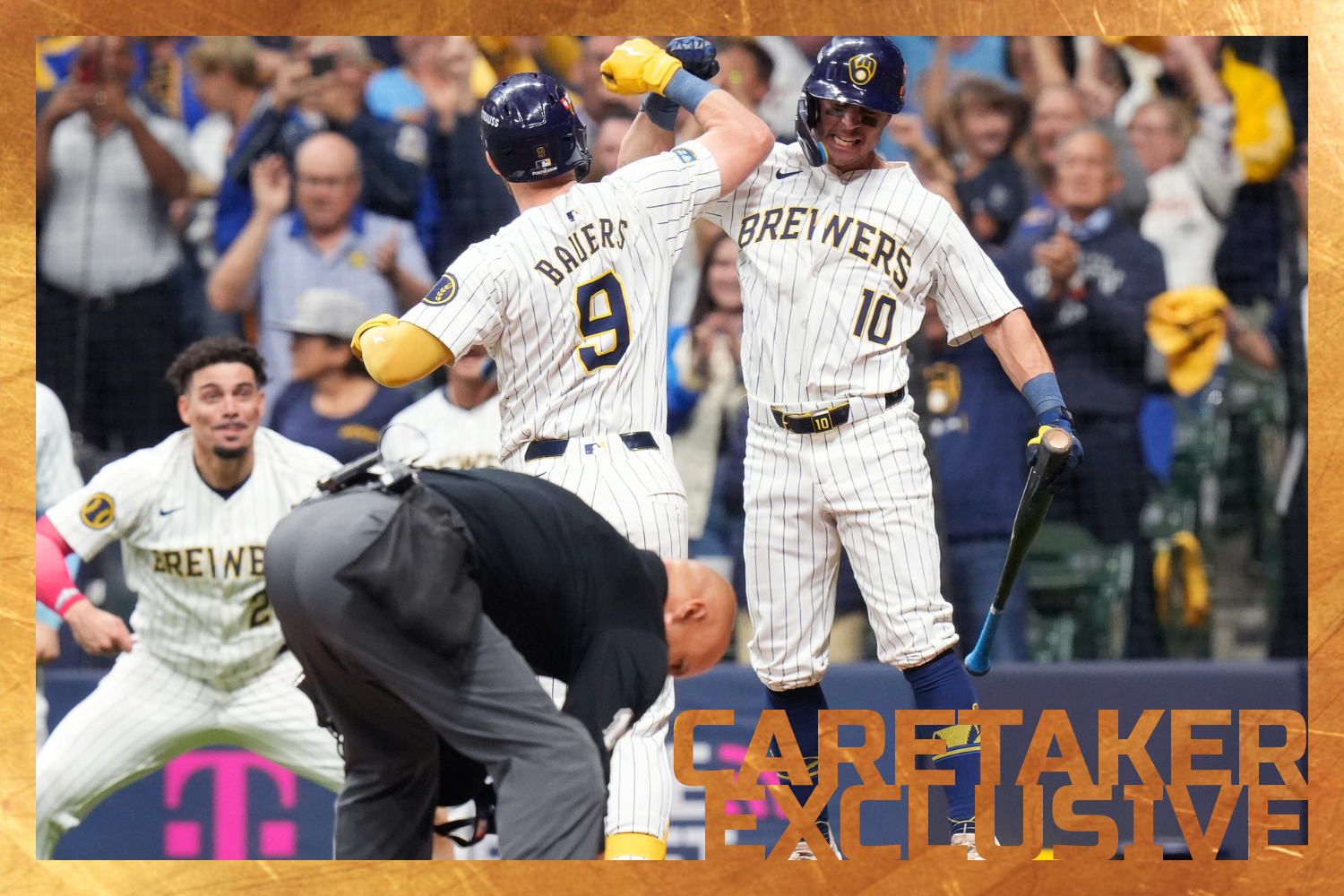 Look, I know it’s bleak. The season ended in abrupt, heartbreaking fashion. I’m sure you’re crushed. Everyone is crushed, and everyone will stay crushed for a while. If only there were some magic potion that could make us all feel better. Some elixir we could drink that would make us feel light and happy, just for a little while, to take the edge off all this pain. But unfortunately, no such thing exists. There’s no magic beverage out there that would let us drink away our troubles and then, later, maybe let us barf out a few of our troubles too. Surely, there’s no group of people who know how to concoct such a beverage. So let’s talk about the Brewers. During the glorious seventh inning of last night’s game – before, you know, all the other stuff happened – Jake Bauers and Sal Frelick hit back-to-back jacks. They hit double dongs. They went onesie-twosies. Bauers hit a home run, and then Frelick also hit a home run, right after Bauers’s home run, consecutively. It was fun (until, that other stuff happened). Let’s watch them, shall we? Ah, good times (briefly). Not long after the double fireworks, MLB.com’s Mike Petriello noted something fun. “Bauers and Frelick basically hit identical tanks,” he tweeted, along with this graphic. The two homers differed by less one mile per hour of exit velocity, two degrees of launch angle, and three feet of distance. Even the bat speed of the two swings was within 2 miles per hour. If you use the slightly complicated formula that tells you exactly how well a player squared up a ball, you can see that Frelick squared it up at 94%, while Bauers squared it up at 93%. Again, nearly identical. But what makes this even more fun is that the actual swings were absolutely not identical. They were comically different. Watch that video again, both because it’s relevant and because it may well be the only thing that bring you joy for a while. I’m going to pull a couple stills. Here are the two players at the moment of contact.
 -
Before Devin Williams hung an airbender and the world turned to garbage, Jake Bauers and Sal Frelick hit two extremely similar home runs--using two extremely different swings. Image courtesy of © Jovanny Hernandez/USA TODAY Network via Imagn Images Before Devin Williams hung an airbender and the world turned to garbage, Jake Bauers and Sal Frelick hit two extremely similar home runs--using two extremely different swings. Look, I know it’s bleak. The season ended in abrupt, heartbreaking fashion. I’m sure you’re crushed. Everyone is crushed, and everyone will stay crushed for a while. If only there were some magic potion that could make us all feel better. Some elixir we could drink that would make us feel light and happy, just for a little while, to take the edge off all this pain. But unfortunately, no such thing exists. There’s no magic beverage out there that would let us drink away our troubles and then, later, maybe let us barf out a few of our troubles too. Surely, there’s no group of people who know how to concoct such a beverage. So let’s talk about the Brewers. During the glorious seventh inning of last night’s game – before, you know, all the other stuff happened – Jake Bauers and Sal Frelick hit back-to-back jacks. They hit double dongs. They went onesie-twosies. Bauers hit a home run, and then Frelick also hit a home run, right after Bauers’s home run, consecutively. It was fun (until, that other stuff happened). Let’s watch them, shall we? Ah, good times (briefly). Not long after the double fireworks, MLB.com’s Mike Petriello noted something fun. “Bauers and Frelick basically hit identical tanks,” he tweeted, along with this graphic. The two homers differed by less one mile per hour of exit velocity, two degrees of launch angle, and three feet of distance. Even the bat speed of the two swings was within 2 miles per hour. If you use the slightly complicated formula that tells you exactly how well a player squared up a ball, you can see that Frelick squared it up at 94%, while Bauers squared it up at 93%. Again, nearly identical. But what makes this even more fun is that the actual swings were absolutely not identical. They were comically different. Watch that video again, both because it’s relevant and because it may well be the only thing that bring you joy for a while. I’m going to pull a couple stills. Here are the two players at the moment of contact. View full article
-
.png.c5aaec56f16b874646828cfbe466e417.png) It’s a long season. Somebody has to be dinged up. You mean to tell me that Rhys Hoskins couldn’t use a day to rest his aching knee? If not Hoskins, then surely somebody’s back is acting up. Somebody’s dogs are barking. Jake Bauers has looked a little slow lately, and he’s normally so speedy! It’s not important who needs the IL stint that only causes them to miss the last game of the season on Sunday. . What’s important is that it would create some roster space and allow the Brewers to make an important waiver-wire acquisition: Rowdy Tellez. Rowdy Tellez, whom the Pirates cravenly designated for assignment literally the day before he could have qualified for a $200,000 contract bonus. Rowdy Tellez, who spent the best and most productive year of his career with the Brewers in 2022 (and also the worst and least productive year of his career with the Brewers in 2023, but that’s beside the point). Rowdy Tellez, who is big and gregarious and beloved by all, got absolutely hosed. Tellez’s contract called for the bonus if he reached 425 plate appearances, so naturally, he was cut when he reached 421, leaving him 4 PAs, or one game, short of the benchmark. I’m not saying that we should take pity on Tellez or his bank account. According to FanGraphs, Tellez has accrued exactly 0.0 WAR over his seven years in the big leagues. He has been the definition of replacement level, and in exchange for his formidable fungibility, the 29-year-old Tellez has been paid more than $12 million. I’ve been a replacement-level player at a whole lot of jobs, and none of my paychecks ever had that many commas. Still, there’s no universe in which he didn’t just get screwed over royally, and the person who clawed back that money needs it a whole lot less than Tellez does. Pirates general manager Ben Cherington categorically denied that the bonus had anything to do with the decision. “No factor at all,” he told reporters. “Zero factor in the decision. Aware of it, certainly. I’m aware of the contracts that all players have. And no, I’m not concerned. If you’re asking about optics going forward and how it affects business and things like that, no. Contracts are negotiated in good faith.” That’s some serious rhetorical firepower, but quite simply, it’s hard to imagine that it’s the truth. First of all, Tellez got off to an undeniably rough start, but since June – a stretch of 84 games – he’s run a 120 wRC+. Not only did that make him Pittsburgh’s third-best hitter over that period, it marked the best 84-game stretch of his career, aside from some stretches during his career year in 2022. That is to say: over the past four months, the Pirates got the absolute best-case scenario that they could have imagined when they signed Tellez. So when Cherington says, “We feel like we gave Rowdy lots of opportunity here this year,” feel free to call BS. The second factor is just as obvious: the Pirates are cheap. Bob Nutting is a cheapskate. There’s no other way to say it. For years, the Pirates have been treated like a source of passive income, taking checks from television contracts, revenue sharing, and MLB Advanced Media, then investing the bare minimum in the club and lobbying to drop the bare minimum even lower. There is certainly no reason to extend them the benefit of the doubt. There is no reason to doubt.So that’s the situation, but here's where things get fun. I’m not arguing that the Brewers should sign Tellez out of pity or out of the goodness of their heart – to be clear, I would love it if they signed him for those reasons, but I just happen to think that there are other reasons they would find more compelling.
It’s a long season. Somebody has to be dinged up. You mean to tell me that Rhys Hoskins couldn’t use a day to rest his aching knee? If not Hoskins, then surely somebody’s back is acting up. Somebody’s dogs are barking. Jake Bauers has looked a little slow lately, and he’s normally so speedy! It’s not important who needs the IL stint that only causes them to miss the last game of the season on Sunday. . What’s important is that it would create some roster space and allow the Brewers to make an important waiver-wire acquisition: Rowdy Tellez. Rowdy Tellez, whom the Pirates cravenly designated for assignment literally the day before he could have qualified for a $200,000 contract bonus. Rowdy Tellez, who spent the best and most productive year of his career with the Brewers in 2022 (and also the worst and least productive year of his career with the Brewers in 2023, but that’s beside the point). Rowdy Tellez, who is big and gregarious and beloved by all, got absolutely hosed. Tellez’s contract called for the bonus if he reached 425 plate appearances, so naturally, he was cut when he reached 421, leaving him 4 PAs, or one game, short of the benchmark. I’m not saying that we should take pity on Tellez or his bank account. According to FanGraphs, Tellez has accrued exactly 0.0 WAR over his seven years in the big leagues. He has been the definition of replacement level, and in exchange for his formidable fungibility, the 29-year-old Tellez has been paid more than $12 million. I’ve been a replacement-level player at a whole lot of jobs, and none of my paychecks ever had that many commas. Still, there’s no universe in which he didn’t just get screwed over royally, and the person who clawed back that money needs it a whole lot less than Tellez does. Pirates general manager Ben Cherington categorically denied that the bonus had anything to do with the decision. “No factor at all,” he told reporters. “Zero factor in the decision. Aware of it, certainly. I’m aware of the contracts that all players have. And no, I’m not concerned. If you’re asking about optics going forward and how it affects business and things like that, no. Contracts are negotiated in good faith.” That’s some serious rhetorical firepower, but quite simply, it’s hard to imagine that it’s the truth. First of all, Tellez got off to an undeniably rough start, but since June – a stretch of 84 games – he’s run a 120 wRC+. Not only did that make him Pittsburgh’s third-best hitter over that period, it marked the best 84-game stretch of his career, aside from some stretches during his career year in 2022. That is to say: over the past four months, the Pirates got the absolute best-case scenario that they could have imagined when they signed Tellez. So when Cherington says, “We feel like we gave Rowdy lots of opportunity here this year,” feel free to call BS. The second factor is just as obvious: the Pirates are cheap. Bob Nutting is a cheapskate. There’s no other way to say it. For years, the Pirates have been treated like a source of passive income, taking checks from television contracts, revenue sharing, and MLB Advanced Media, then investing the bare minimum in the club and lobbying to drop the bare minimum even lower. There is certainly no reason to extend them the benefit of the doubt. There is no reason to doubt.So that’s the situation, but here's where things get fun. I’m not arguing that the Brewers should sign Tellez out of pity or out of the goodness of their heart – to be clear, I would love it if they signed him for those reasons, but I just happen to think that there are other reasons they would find more compelling. -
The Brewers have the chance to do the rowdiest thing ever. Image courtesy of © Philip G. Pavely-Imagn Images The Brewers have the chance to do the rowdiest thing ever. It’s a long season. Somebody has to be dinged up. You mean to tell me that Rhys Hoskins couldn’t use a day to rest his aching knee? If not Hoskins, then surely somebody’s back is acting up. Somebody’s dogs are barking. Jake Bauers has looked a little slow lately, and he’s normally so speedy! It’s not important who needs the IL stint that only causes them to miss the last game of the season on Sunday. . What’s important is that it would create some roster space and allow the Brewers to make an important waiver-wire acquisition: Rowdy Tellez. Rowdy Tellez, whom the Pirates cravenly designated for assignment literally the day before he could have qualified for a $200,000 contract bonus. Rowdy Tellez, who spent the best and most productive year of his career with the Brewers in 2022 (and also the worst and least productive year of his career with the Brewers in 2023, but that’s beside the point). Rowdy Tellez, who is big and gregarious and beloved by all, got absolutely hosed. Tellez’s contract called for the bonus if he reached 425 plate appearances, so naturally, he was cut when he reached 421, leaving him 4 PAs, or one game, short of the benchmark. I’m not saying that we should take pity on Tellez or his bank account. According to FanGraphs, Tellez has accrued exactly 0.0 WAR over his seven years in the big leagues. He has been the definition of replacement level, and in exchange for his formidable fungibility, the 29-year-old Tellez has been paid more than $12 million. I’ve been a replacement-level player at a whole lot of jobs, and none of my paychecks ever had that many commas. Still, there’s no universe in which he didn’t just get screwed over royally, and the person who clawed back that money needs it a whole lot less than Tellez does. Pirates general manager Ben Cherington categorically denied that the bonus had anything to do with the decision. “No factor at all,” he told reporters. “Zero factor in the decision. Aware of it, certainly. I’m aware of the contracts that all players have. And no, I’m not concerned. If you’re asking about optics going forward and how it affects business and things like that, no. Contracts are negotiated in good faith.” That’s some serious rhetorical firepower, but quite simply, it’s hard to imagine that it’s the truth. First of all, Tellez got off to an undeniably rough start, but since June – a stretch of 84 games – he’s run a 120 wRC+. Not only did that make him Pittsburgh’s third-best hitter over that period, it marked the best 84-game stretch of his career, aside from some stretches during his career year in 2022. That is to say: over the past four months, the Pirates got the absolute best-case scenario that they could have imagined when they signed Tellez. So when Cherington says, “We feel like we gave Rowdy lots of opportunity here this year,” feel free to call BS. The second factor is just as obvious: the Pirates are cheap. Bob Nutting is a cheapskate. There’s no other way to say it. For years, the Pirates have been treated like a source of passive income, taking checks from television contracts, revenue sharing, and MLB Advanced Media, then investing the bare minimum in the club and lobbying to drop the bare minimum even lower. There is certainly no reason to extend them the benefit of the doubt. There is no reason to doubt.So that’s the situation, but here's where things get fun. I’m not arguing that the Brewers should sign Tellez out of pity or out of the goodness of their heart – to be clear, I would love it if they signed him for those reasons, but I just happen to think that there are other reasons they would find more compelling. View full article
-
.png.c141569a8bd61ed4a4be3d9f0c4000e7.png) Anyone who’s watched the Brewers even a little bit this season won’t be surprised to learn that they lead all of baseball with 24 bunt hits. They’ve got an outside shot at tying the 2022 Giants at 28 for the most in this decade. Milwaukee has bunted 57 times in total, third-most in the league, and they’re not exactly running from that identity. Before Wednesday’s game against the Cardinals, the team held bunting practice, going so far as to haul garbage cans onto the fields to serve as targets. If you’re wondering why, in the year 2024, one of the league’s top 10 offenses is so committed to small ball that they’re dumpster-diving during BP, the answer is simple: It’s working. So far this season, the Brewers have a weighted on-base average of .450 when they’re bunting. To put that in perspective, Aaron Judge leads all of baseball with a .474 wOBA. If you could combine all the Brewers into one player whenever they bunt, that player would be the second-best hitter in baseball. To be clear, the Brewers are not unique in this. They only rank 12th in wOBA when bunting, and that shouldn’t be too surprising, either. As bunts have grown rarer in today’s power-oriented game, they’ve also become more successful, both because defenses aren’t defending against them and because players only bunt when they’re very confident of success. The difference is that the Brewers have bunted more often than 10 of the 11 teams ahead of them on that list. They’re combining high volume with a high success rate. That’s harder to do, and it results in a ton of value. The team is not being propped up by one player who’s way out in front of the rest of the league. Brice Turang, Blake Perkins, and Sal Frelick all rank within the top 15 in baseball in bunt hits, and 10 different Brewers have bunted at least once. Still, the team isn’t just bunting willy-nilly. They’re picking their spots. First, they’re bunting when offense is hard to come by. It’s not a coincidence that the Brewers have attempted bunts against some of the best pitchers in baseball, like Jorge López, Corbin Burnes, Tarik Skubal, Joe Ryan, Justin Steele, and Dylan Cease. Second, they’re bunting when it gives them the best chance to score a run. They lead baseball with 10 bunts with a runner on third base. This targeted small-ball approach is working, but just as important, it’s a lot of fun. A well-executed bunt can be a thing of beauty and elegance, but it can also be a harbinger of chaos. To celebrate the dribbling success of the bunt-drunk Brewers, let’s take a look at some of the most entertaining bunts of the season. Our first came all the way back in May, when Christian Yelich knocked in a run on a safety squeeze that carried all the drama of a tightrope walk. Third baseman Nolan Arenado had no choice but to watch the ball and try to force it into foul territory through telekinesis. Instead, the ball rolled straight down the line and into the bag, popping right up into his hand as if it simply couldn’t wait any longer for someone to field it. Look at the joy that this bunt brought to the fans in the stands. I’ve numbered them in the still below so that you can get a sense of how this bunt made them feel. Unclear on what just happened, but gathered that it was time to clap. Wearing blue, but crying secret Cardinals tears on the inside. Loved the bunt so much that she temporarily turned into an anime character. Didn’t see the play at all because he refused to stand up when the guy in front of him stood up, and is now so angry that he’s about to set the Guinness world record in the category of Reddest Face (Human). Has no idea the Brewers just scored because for the last two innings he’s been telling a story about that time some teenagers tipped over his campervan in the middle of the night. This is literally the happiest he’s even been. He’s Julie Andrews at the beginning of The Sound of Music. He’s a lady in a shampoo commercial. He is lighter than air. Is strongly considering burning this whole damn stadium to the ground. Just hit a crazy parlay that involved a baseball bouncing off a base. He’s about to buy the Brewers. This is the first time he’s smiled in three years. This bunt is the one thing that can, for just a moment, take his mind off that terrible, terrible thing he did four winters ago in the woods outside Oostburg. Ok, it’s time to move on. We’ve got more bunts to get to. That is, quite simply, what a perfect drag bunt looks like. The ball never strays more than 18 inches away from the baseline. Frelick is at first base before the pitcher even has a chance to decide what to do with the ball, which is convenient because there’s absolutely nothing he can do with it anyway. Look at poor Tim Mayza. This is the saddest man in North America.
Anyone who’s watched the Brewers even a little bit this season won’t be surprised to learn that they lead all of baseball with 24 bunt hits. They’ve got an outside shot at tying the 2022 Giants at 28 for the most in this decade. Milwaukee has bunted 57 times in total, third-most in the league, and they’re not exactly running from that identity. Before Wednesday’s game against the Cardinals, the team held bunting practice, going so far as to haul garbage cans onto the fields to serve as targets. If you’re wondering why, in the year 2024, one of the league’s top 10 offenses is so committed to small ball that they’re dumpster-diving during BP, the answer is simple: It’s working. So far this season, the Brewers have a weighted on-base average of .450 when they’re bunting. To put that in perspective, Aaron Judge leads all of baseball with a .474 wOBA. If you could combine all the Brewers into one player whenever they bunt, that player would be the second-best hitter in baseball. To be clear, the Brewers are not unique in this. They only rank 12th in wOBA when bunting, and that shouldn’t be too surprising, either. As bunts have grown rarer in today’s power-oriented game, they’ve also become more successful, both because defenses aren’t defending against them and because players only bunt when they’re very confident of success. The difference is that the Brewers have bunted more often than 10 of the 11 teams ahead of them on that list. They’re combining high volume with a high success rate. That’s harder to do, and it results in a ton of value. The team is not being propped up by one player who’s way out in front of the rest of the league. Brice Turang, Blake Perkins, and Sal Frelick all rank within the top 15 in baseball in bunt hits, and 10 different Brewers have bunted at least once. Still, the team isn’t just bunting willy-nilly. They’re picking their spots. First, they’re bunting when offense is hard to come by. It’s not a coincidence that the Brewers have attempted bunts against some of the best pitchers in baseball, like Jorge López, Corbin Burnes, Tarik Skubal, Joe Ryan, Justin Steele, and Dylan Cease. Second, they’re bunting when it gives them the best chance to score a run. They lead baseball with 10 bunts with a runner on third base. This targeted small-ball approach is working, but just as important, it’s a lot of fun. A well-executed bunt can be a thing of beauty and elegance, but it can also be a harbinger of chaos. To celebrate the dribbling success of the bunt-drunk Brewers, let’s take a look at some of the most entertaining bunts of the season. Our first came all the way back in May, when Christian Yelich knocked in a run on a safety squeeze that carried all the drama of a tightrope walk. Third baseman Nolan Arenado had no choice but to watch the ball and try to force it into foul territory through telekinesis. Instead, the ball rolled straight down the line and into the bag, popping right up into his hand as if it simply couldn’t wait any longer for someone to field it. Look at the joy that this bunt brought to the fans in the stands. I’ve numbered them in the still below so that you can get a sense of how this bunt made them feel. Unclear on what just happened, but gathered that it was time to clap. Wearing blue, but crying secret Cardinals tears on the inside. Loved the bunt so much that she temporarily turned into an anime character. Didn’t see the play at all because he refused to stand up when the guy in front of him stood up, and is now so angry that he’s about to set the Guinness world record in the category of Reddest Face (Human). Has no idea the Brewers just scored because for the last two innings he’s been telling a story about that time some teenagers tipped over his campervan in the middle of the night. This is literally the happiest he’s even been. He’s Julie Andrews at the beginning of The Sound of Music. He’s a lady in a shampoo commercial. He is lighter than air. Is strongly considering burning this whole damn stadium to the ground. Just hit a crazy parlay that involved a baseball bouncing off a base. He’s about to buy the Brewers. This is the first time he’s smiled in three years. This bunt is the one thing that can, for just a moment, take his mind off that terrible, terrible thing he did four winters ago in the woods outside Oostburg. Ok, it’s time to move on. We’ve got more bunts to get to. That is, quite simply, what a perfect drag bunt looks like. The ball never strays more than 18 inches away from the baseline. Frelick is at first base before the pitcher even has a chance to decide what to do with the ball, which is convenient because there’s absolutely nothing he can do with it anyway. Look at poor Tim Mayza. This is the saddest man in North America. -
The Brewers are quite possibly the best team in baseball when it comes to bunting. Let's look at some of their most fun bunts, and let's wonder why Jake Bauers is allowed to bunt, like, ever. Image courtesy of © Benny Sieu-Imagn Images The Brewers are quite possibly the best team in baseball when it comes to bunting. Let's look at some of their most fun bunts, and let's wonder why Jake Bauers is allowed to bunt, like, ever. Anyone who’s watched the Brewers even a little bit this season won’t be surprised to learn that they lead all of baseball with 24 bunt hits. They’ve got an outside shot at tying the 2022 Giants at 28 for the most in this decade. Milwaukee has bunted 57 times in total, third-most in the league, and they’re not exactly running from that identity. Before Wednesday’s game against the Cardinals, the team held bunting practice, going so far as to haul garbage cans onto the fields to serve as targets. If you’re wondering why, in the year 2024, one of the league’s top 10 offenses is so committed to small ball that they’re dumpster-diving during BP, the answer is simple: It’s working. So far this season, the Brewers have a weighted on-base average of .450 when they’re bunting. To put that in perspective, Aaron Judge leads all of baseball with a .474 wOBA. If you could combine all the Brewers into one player whenever they bunt, that player would be the second-best hitter in baseball. To be clear, the Brewers are not unique in this. They only rank 12th in wOBA when bunting, and that shouldn’t be too surprising, either. As bunts have grown rarer in today’s power-oriented game, they’ve also become more successful, both because defenses aren’t defending against them and because players only bunt when they’re very confident of success. The difference is that the Brewers have bunted more often than 10 of the 11 teams ahead of them on that list. They’re combining high volume with a high success rate. That’s harder to do, and it results in a ton of value. The team is not being propped up by one player who’s way out in front of the rest of the league. Brice Turang, Blake Perkins, and Sal Frelick all rank within the top 15 in baseball in bunt hits, and 10 different Brewers have bunted at least once. Still, the team isn’t just bunting willy-nilly. They’re picking their spots. First, they’re bunting when offense is hard to come by. It’s not a coincidence that the Brewers have attempted bunts against some of the best pitchers in baseball, like Jorge López, Corbin Burnes, Tarik Skubal, Joe Ryan, Justin Steele, and Dylan Cease. Second, they’re bunting when it gives them the best chance to score a run. They lead baseball with 10 bunts with a runner on third base. This targeted small-ball approach is working, but just as important, it’s a lot of fun. A well-executed bunt can be a thing of beauty and elegance, but it can also be a harbinger of chaos. To celebrate the dribbling success of the bunt-drunk Brewers, let’s take a look at some of the most entertaining bunts of the season. Our first came all the way back in May, when Christian Yelich knocked in a run on a safety squeeze that carried all the drama of a tightrope walk. Third baseman Nolan Arenado had no choice but to watch the ball and try to force it into foul territory through telekinesis. Instead, the ball rolled straight down the line and into the bag, popping right up into his hand as if it simply couldn’t wait any longer for someone to field it. Look at the joy that this bunt brought to the fans in the stands. I’ve numbered them in the still below so that you can get a sense of how this bunt made them feel. Unclear on what just happened, but gathered that it was time to clap. Wearing blue, but crying secret Cardinals tears on the inside. Loved the bunt so much that she temporarily turned into an anime character. Didn’t see the play at all because he refused to stand up when the guy in front of him stood up, and is now so angry that he’s about to set the Guinness world record in the category of Reddest Face (Human). Has no idea the Brewers just scored because for the last two innings he’s been telling a story about that time some teenagers tipped over his campervan in the middle of the night. This is literally the happiest he’s even been. He’s Julie Andrews at the beginning of The Sound of Music. He’s a lady in a shampoo commercial. He is lighter than air. Is strongly considering burning this whole damn stadium to the ground. Just hit a crazy parlay that involved a baseball bouncing off a base. He’s about to buy the Brewers. This is the first time he’s smiled in three years. This bunt is the one thing that can, for just a moment, take his mind off that terrible, terrible thing he did four winters ago in the woods outside Oostburg. Ok, it’s time to move on. We’ve got more bunts to get to. That is, quite simply, what a perfect drag bunt looks like. The ball never strays more than 18 inches away from the baseline. Frelick is at first base before the pitcher even has a chance to decide what to do with the ball, which is convenient because there’s absolutely nothing he can do with it anyway. Look at poor Tim Mayza. This is the saddest man in North America. View full article
-
Let's talk positional value, positional difficulties, positional penalties, and positionless hitters, baby. Image courtesy of © Rafael Suanes-USA TODAY Sports Let's talk positional value, positional difficulties, positional penalties, and positionless hitters, baby. “You don’t have to squint to see the fit here." That’s what I wrote when the Brewers signed Rhys Hoskins back in January. The move made too much sense to deny: Hoskins needed a soft landing spot after missing the entire 2023 season with a torn ACL, but he was a remarkably consistent slugger with a career 124 wRC+ coming into the season. Meanwhile, according to FanGraphs, Milwaukee had received just 0.4 WAR from the first base position over the past three seasons combined, which ranked 28th in baseball. Hand, meet glove. By taking a chance on Hoskins, it seemed like maybe, just maybe, the Brewers had finally solidified their squishy first base situation. Unfortunately, things haven’t quite worked out that way. Hoskins and trade acquisition Jake Bauers have been platooning from the beginning of the season, with Hoskins sliding over to DH against right-handed pitchers. Four other players have seen time at first, and while stationed at the cold corner, the whole sextet have combined to contributed -0.3 WAR. Even if you’re not particularly familiar with what makes for a high or low total when it comes to WAR, the minus sign up front is never a good indicator. Let’s break things down player by player, looking specifically at the WAR they’ve accrued while playing first base. We’ll also break things down way too granularly, going all the way out to the third decimal place, or the ten-thousandth of a win. WAR is absolutely not meant to be interpreted with anything approaching that level of precision, but this is a pretty depressing subject, so we’ll take our fun where we can find it. All of the numbers to follow are current as of Saturday morning. Gary Sánchez 0.2349 WAR as a First Baseman One thing’s for sure: None of this is Gary Sánchez’s fault. Sánchez has spent a measly 12 2/3 innings at first base this season, but he’s made the most of his brief time there; he leads the Brewers in WAR while playing first. Extrapolated out over a full 162-game season, his 0.2349 WAR are good for 19 WAR, making Sánchez the greatest player in baseball history. He just chose the wrong position. So that’s fun. Sánchez has made five plate appearances as a first baseman, walking once and hitting a single and a homer. If you’re keeping score at home, that’s good for a .500 average and a 379 wRC+. Amazingly, though Sánchez is famously not a first baseman and he’s only had two balls hit to him there, he’s also added the most defensive value of the bunch. Statcast credited him with one out above average at first base, thanks to this legitimately great diving play on a groundball off the bat of Kyle Isbel. elpZcm9fWGw0TUFRPT1fQjFOWkIxVU5WbGNBWFZNQ0F3QUFDUUlGQUZsWEFGQUFWMU5SQTFBR1VBRUdBVmRW.mp4 Luckily for Sánchez, OAA doesn’t care about style points, so he didn’t get docked for doing his best to throw the ball away on the only other chance he faced, two innings earlier, also on a groundball off the bat of Kyle Isbel. elpZcm9fWGw0TUFRPT1fVkZKWEJWUldCVkFBQ1ZGUVh3QUFBd0ZSQUZsVUJsVUFCMVlBQUZCVFUxSURBRk5l.mp4 Tyler Black 0.1221 WAR as a First Baseman Black has spent way more time than Sánchez at first base, though he’s currently down in Nashville. Over six games, he’s played a whopping 42 innings at first, and five of his eight base hits this season have come when he’s been at first base. Black has a 77 overall wRC+, but a 109 mark while playing first. The answer is clear: We must put both Sánchez and Black at first base. Is there a rule that says you’re not allowed to have two first basemen at once? I’m not sure, but it’s time to find out. Black has also been credited with 1 OAA, presumably thanks to the way he handled the hop on this bullet off the bat of Luis Arráez. MzVEbjFfWGw0TUFRPT1fVWdWVEJsSlFYMU1BQ2daVVVnQUFCRlJXQUZrSEFBY0FVQVlCQTFjSEJ3QlNCd1pR.mp4 Oliver Dunn 0.0000 WAR as a First Baseman Oliver Dunn has played one inning at first base this season, and it was all the way back in April. He didn’t bat and he only touched the ball once. According to the gods of WAR, managing to avoid dropping one garbage-time popup saved the Brewers 0.0086 runs. And, well, that’s it for the good stuff. Sánchez, with 0.2 WAR, Black, with 0.1, and Dunn, with 0.0 are the only Brewers who have put up positive WAR as first basemen this season. From here on out, everyone’s in the red. View full article
-
.png.bd8447379028b6c0eb621e9ce63c4105.png) “You don’t have to squint to see the fit here." That’s what I wrote when the Brewers signed Rhys Hoskins back in January. The move made too much sense to deny: Hoskins needed a soft landing spot after missing the entire 2023 season with a torn ACL, but he was a remarkably consistent slugger with a career 124 wRC+ coming into the season. Meanwhile, according to FanGraphs, Milwaukee had received just 0.4 WAR from the first base position over the past three seasons combined, which ranked 28th in baseball. Hand, meet glove. By taking a chance on Hoskins, it seemed like maybe, just maybe, the Brewers had finally solidified their squishy first base situation. Unfortunately, things haven’t quite worked out that way. Hoskins and trade acquisition Jake Bauers have been platooning from the beginning of the season, with Hoskins sliding over to DH against right-handed pitchers. Four other players have seen time at first, and while stationed at the cold corner, the whole sextet have combined to contributed -0.3 WAR. Even if you’re not particularly familiar with what makes for a high or low total when it comes to WAR, the minus sign up front is never a good indicator. Let’s break things down player by player, looking specifically at the WAR they’ve accrued while playing first base. We’ll also break things down way too granularly, going all the way out to the third decimal place, or the ten-thousandth of a win. WAR is absolutely not meant to be interpreted with anything approaching that level of precision, but this is a pretty depressing subject, so we’ll take our fun where we can find it. All of the numbers to follow are current as of Saturday morning. Gary Sánchez 0.2349 WAR as a First Baseman One thing’s for sure: None of this is Gary Sánchez’s fault. Sánchez has spent a measly 12 2/3 innings at first base this season, but he’s made the most of his brief time there; he leads the Brewers in WAR while playing first. Extrapolated out over a full 162-game season, his 0.2349 WAR are good for 19 WAR, making Sánchez the greatest player in baseball history. He just chose the wrong position. So that’s fun. Sánchez has made five plate appearances as a first baseman, walking once and hitting a single and a homer. If you’re keeping score at home, that’s good for a .500 average and a 379 wRC+. Amazingly, though Sánchez is famously not a first baseman and he’s only had two balls hit to him there, he’s also added the most defensive value of the bunch. Statcast credited him with one out above average at first base, thanks to this legitimately great diving play on a groundball off the bat of Kyle Isbel. elpZcm9fWGw0TUFRPT1fQjFOWkIxVU5WbGNBWFZNQ0F3QUFDUUlGQUZsWEFGQUFWMU5SQTFBR1VBRUdBVmRW.mp4 Luckily for Sánchez, OAA doesn’t care about style points, so he didn’t get docked for doing his best to throw the ball away on the only other chance he faced, two innings earlier, also on a groundball off the bat of Kyle Isbel. elpZcm9fWGw0TUFRPT1fVkZKWEJWUldCVkFBQ1ZGUVh3QUFBd0ZSQUZsVUJsVUFCMVlBQUZCVFUxSURBRk5l.mp4 Tyler Black 0.1221 WAR as a First Baseman Black has spent way more time than Sánchez at first base, though he’s currently down in Nashville. Over six games, he’s played a whopping 42 innings at first, and five of his eight base hits this season have come when he’s been at first base. Black has a 77 overall wRC+, but a 109 mark while playing first. The answer is clear: We must put both Sánchez and Black at first base. Is there a rule that says you’re not allowed to have two first basemen at once? I’m not sure, but it’s time to find out. Black has also been credited with 1 OAA, presumably thanks to the way he handled the hop on this bullet off the bat of Luis Arráez. MzVEbjFfWGw0TUFRPT1fVWdWVEJsSlFYMU1BQ2daVVVnQUFCRlJXQUZrSEFBY0FVQVlCQTFjSEJ3QlNCd1pR.mp4 Oliver Dunn 0.0000 WAR as a First Baseman Oliver Dunn has played one inning at first base this season, and it was all the way back in April. He didn’t bat and he only touched the ball once. According to the gods of WAR, managing to avoid dropping one garbage-time popup saved the Brewers 0.0086 runs. And, well, that’s it for the good stuff. Sánchez, with 0.2 WAR, Black, with 0.1, and Dunn, with 0.0 are the only Brewers who have put up positive WAR as first basemen this season. From here on out, everyone’s in the red.
“You don’t have to squint to see the fit here." That’s what I wrote when the Brewers signed Rhys Hoskins back in January. The move made too much sense to deny: Hoskins needed a soft landing spot after missing the entire 2023 season with a torn ACL, but he was a remarkably consistent slugger with a career 124 wRC+ coming into the season. Meanwhile, according to FanGraphs, Milwaukee had received just 0.4 WAR from the first base position over the past three seasons combined, which ranked 28th in baseball. Hand, meet glove. By taking a chance on Hoskins, it seemed like maybe, just maybe, the Brewers had finally solidified their squishy first base situation. Unfortunately, things haven’t quite worked out that way. Hoskins and trade acquisition Jake Bauers have been platooning from the beginning of the season, with Hoskins sliding over to DH against right-handed pitchers. Four other players have seen time at first, and while stationed at the cold corner, the whole sextet have combined to contributed -0.3 WAR. Even if you’re not particularly familiar with what makes for a high or low total when it comes to WAR, the minus sign up front is never a good indicator. Let’s break things down player by player, looking specifically at the WAR they’ve accrued while playing first base. We’ll also break things down way too granularly, going all the way out to the third decimal place, or the ten-thousandth of a win. WAR is absolutely not meant to be interpreted with anything approaching that level of precision, but this is a pretty depressing subject, so we’ll take our fun where we can find it. All of the numbers to follow are current as of Saturday morning. Gary Sánchez 0.2349 WAR as a First Baseman One thing’s for sure: None of this is Gary Sánchez’s fault. Sánchez has spent a measly 12 2/3 innings at first base this season, but he’s made the most of his brief time there; he leads the Brewers in WAR while playing first. Extrapolated out over a full 162-game season, his 0.2349 WAR are good for 19 WAR, making Sánchez the greatest player in baseball history. He just chose the wrong position. So that’s fun. Sánchez has made five plate appearances as a first baseman, walking once and hitting a single and a homer. If you’re keeping score at home, that’s good for a .500 average and a 379 wRC+. Amazingly, though Sánchez is famously not a first baseman and he’s only had two balls hit to him there, he’s also added the most defensive value of the bunch. Statcast credited him with one out above average at first base, thanks to this legitimately great diving play on a groundball off the bat of Kyle Isbel. elpZcm9fWGw0TUFRPT1fQjFOWkIxVU5WbGNBWFZNQ0F3QUFDUUlGQUZsWEFGQUFWMU5SQTFBR1VBRUdBVmRW.mp4 Luckily for Sánchez, OAA doesn’t care about style points, so he didn’t get docked for doing his best to throw the ball away on the only other chance he faced, two innings earlier, also on a groundball off the bat of Kyle Isbel. elpZcm9fWGw0TUFRPT1fVkZKWEJWUldCVkFBQ1ZGUVh3QUFBd0ZSQUZsVUJsVUFCMVlBQUZCVFUxSURBRk5l.mp4 Tyler Black 0.1221 WAR as a First Baseman Black has spent way more time than Sánchez at first base, though he’s currently down in Nashville. Over six games, he’s played a whopping 42 innings at first, and five of his eight base hits this season have come when he’s been at first base. Black has a 77 overall wRC+, but a 109 mark while playing first. The answer is clear: We must put both Sánchez and Black at first base. Is there a rule that says you’re not allowed to have two first basemen at once? I’m not sure, but it’s time to find out. Black has also been credited with 1 OAA, presumably thanks to the way he handled the hop on this bullet off the bat of Luis Arráez. MzVEbjFfWGw0TUFRPT1fVWdWVEJsSlFYMU1BQ2daVVVnQUFCRlJXQUZrSEFBY0FVQVlCQTFjSEJ3QlNCd1pR.mp4 Oliver Dunn 0.0000 WAR as a First Baseman Oliver Dunn has played one inning at first base this season, and it was all the way back in April. He didn’t bat and he only touched the ball once. According to the gods of WAR, managing to avoid dropping one garbage-time popup saved the Brewers 0.0086 runs. And, well, that’s it for the good stuff. Sánchez, with 0.2 WAR, Black, with 0.1, and Dunn, with 0.0 are the only Brewers who have put up positive WAR as first basemen this season. From here on out, everyone’s in the red. -
Can the Brewers Lead the League in Stolen Bases (Yes, They Can)
Davy Andrews posted an article in Caretakers
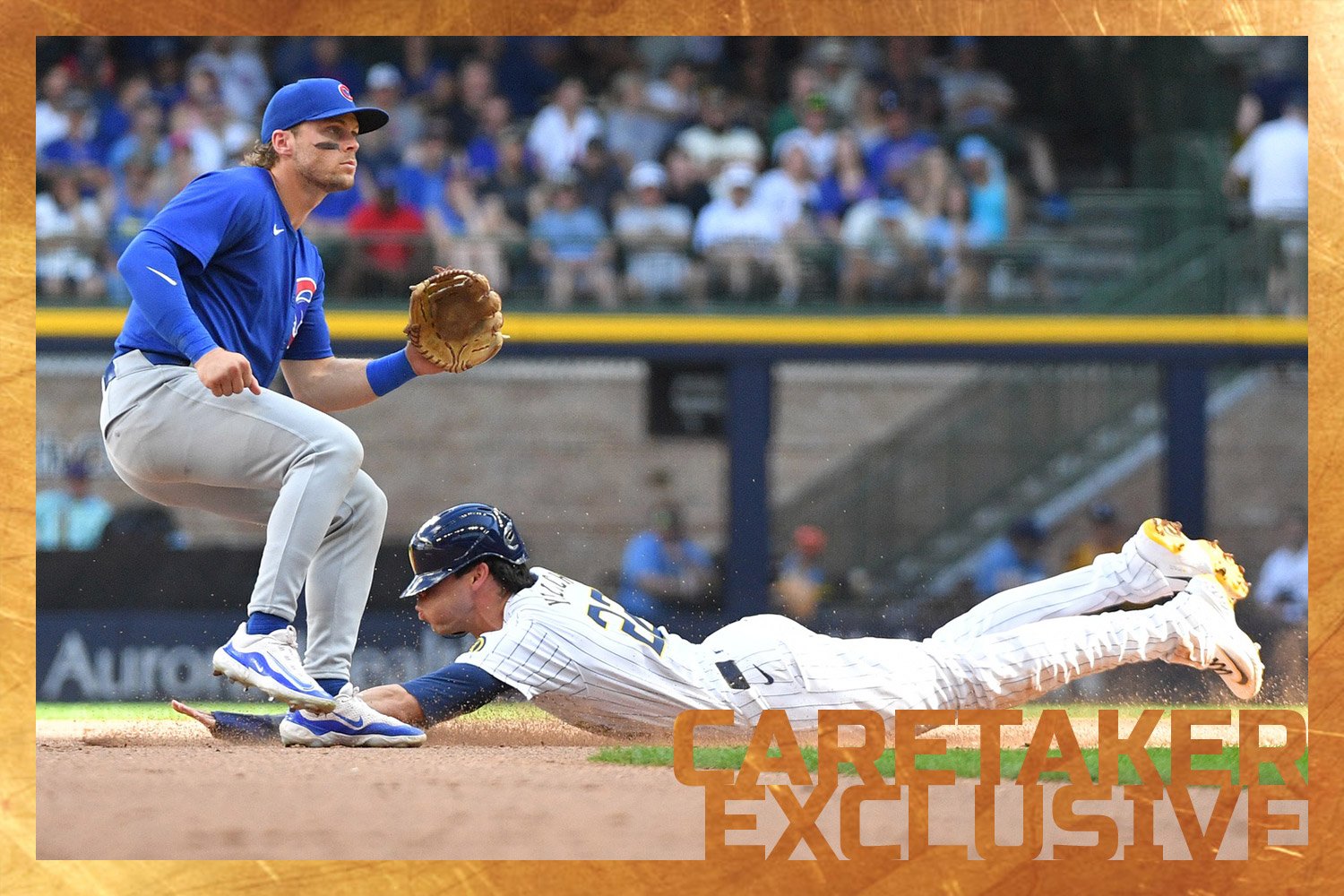 The Brewers last led the league in 2016 (just four years after taking the title in 2012), and they’re in great position to do so again this year. As things stand over the All-Star break, there are three horses in the race. The Reds, fronted by the fearless and fearsome Elly De La Cruz and his 46 robberies, lead baseball with 134 stolen bases. The Brewers, led by Brice Turang’s 30 bags, sit right behind Cincinnati with 133. The Nationals, led by Lane Thomas’s 23 swipes, bring up the rear with 126. The fourth-place Phillies have stolen a pathetically puny 99 bases. They might as well be running in quicksand and we will never mention them again. I made a fun little animation to show the progress of the race day by day: As you can see, the Brewers did not exactly get a head start. For most of the season, the Reds and Nationals have been trading the lead back and forth while the Brew Crew has been playing catch-up. Through the last games of the first half on July 14, the Brewers had only had the outright lead for five total days (March 31, April 5, and June 24, 25, and 26). Compare that to the Nationals, who have led outright for 20 days and held a share of the lead for 32. The Reds are way ahead at 60 and 84 days, respectively. Become a Brewer Fanatic Caretaker and finish reading this article! And if you become a Caretaker today, you'll receive a free ticket to join us this Saturday to watch the Brewers take on the Marlins! Click here to become a Caretaker!
- 1 comment
-
- 3
-
-
- brice turang
- christian yelich
- (and 3 more)
-
The Brewers might win it all this year. No, I don’t mean the World Series (although, sure, if that’s your thing they’ve got a shot at that too). I’m talking about something important: Major League Baseball’s stolen base crown. Image courtesy of © Michael McLoone-USA TODAY Sports The Brewers might win it all this year. No, I don’t mean the World Series (although, sure, if that’s your thing they’ve got a shot at that too). I’m talking about something important: Major League Baseball’s stolen base crown. The Brewers last led the league in 2016 (just four years after taking the title in 2012), and they’re in great position to do so again this year. As things stand over the All-Star break, there are three horses in the race. The Reds, fronted by the fearless and fearsome Elly De La Cruz and his 46 robberies, lead baseball with 134 stolen bases. The Brewers, led by Brice Turang’s 30 bags, sit right behind Cincinnati with 133. The Nationals, led by Lane Thomas’s 23 swipes, bring up the rear with 126. The fourth-place Phillies have stolen a pathetically puny 99 bases. They might as well be running in quicksand and we will never mention them again. I made a fun little animation to show the progress of the race day by day: As you can see, the Brewers did not exactly get a head start. For most of the season, the Reds and Nationals have been trading the lead back and forth while the Brew Crew has been playing catch-up. Through the last games of the first half on July 14, the Brewers had only had the outright lead for five total days (March 31, April 5, and June 24, 25, and 26). Compare that to the Nationals, who have led outright for 20 days and held a share of the lead for 32. The Reds are way ahead at 60 and 84 days, respectively. Become a Brewer Fanatic Caretaker and finish reading this article! And if you become a Caretaker today, you'll receive a free ticket to join us this Saturday to watch the Brewers take on the Marlins! Click here to become a Caretaker! View full article
-
Land in an athletic posture, opposing pitchers. Pinch your middle infield toward the bag. The Brewers--led by an unlikely player--are the best in baseball at sending the ball right back where it came from, to great success. Image courtesy of © Jay Biggerstaff-USA TODAY Sports Land in an athletic posture, opposing pitchers. Pinch your middle infield toward the bag. The Brewers--led by an unlikely player--are the best in baseball at sending the ball right back where it came from, to great success. Coming into the season, the depth charts at FanGraphs saw Blake Perkins as Milwaukee’s fifth option in center field, penciling him in for just seven plate appearances at the position and no more than a few games at the big-league level altogether. It was understandable. After all, the team already featured defensive maven Joey Wiemer, and in December, they signed Jackson Chourio, MLB Pipeline’s second-ranked overall prospect, to an $82 million, eight-year contact with additional club options. Perkins, on the other hand, was coming off a 2023 season in which he ran an 88 wRC+ as a 27-year-old rookie after signing as a minor-league free agent. Instead, Perkins broke camp with the big club and started in center on Opening Day. He’s now started in center more than 75 percent of the time, with Chourio, Christian Yelich, and Sal Frelick sharing time in the corners. Not only that, but Perkins been one of the team’s biggest contributors this season, putting up 1.5 WARP, most among the team’s outfielders and fourth-most among their position players. According to Statcast’s Fielding Run Value, he’s saved seven runs for the Brewers, tied for eighth-most in all of baseball. According to FanGraphs, he’s been worth 2.3 runs on the bases, 21st in the league. Lastly, he’s improved his hitting. In 12 different stops in the minor leagues, Perkins eclipsed a .245 batting average just three times, but he’s now batting .243, to go with a 95 wRC+. Bringing batting average into the conversation might sound outdated in today’s game, but that’s the point. Perkins is succeeding by way of a particularly old-school approach: driving the ball up the middle. Sports Info Solutions has been tracking which field the batter hits the ball to – pull, straightaway, or opposite – since 2002. This year, they have Perkins hitting the ball straightaway 44.7% of the time, just behind San Diego’s Jackson Merrill and second among all qualified players. If the season were to end today, that would also put Merrill and Perkins fourth and fifth on the all-time list. Although both players are hitting the ball back up the middle at a nearly unprecedented rate, they’re doing it very differently. View full article
- 4 replies
-
- 1
-
-
- blake perkins
- gary sanchez
- (and 1 more)
-
How Blake Perkins Embodies the Subtle Genius of the Brewers Offense
Davy Andrews posted an article in Caretakers
.png.9053f45403a919269e41b7d853b73887.png) Coming into the season, the depth charts at FanGraphs saw Blake Perkins as Milwaukee’s fifth option in center field, penciling him in for just seven plate appearances at the position and no more than a few games at the big-league level altogether. It was understandable. After all, the team already featured defensive maven Joey Wiemer, and in December, they signed Jackson Chourio, MLB Pipeline’s second-ranked overall prospect, to an $82 million, eight-year contact with additional club options. Perkins, on the other hand, was coming off a 2023 season in which he ran an 88 wRC+ as a 27-year-old rookie after signing as a minor-league free agent. Instead, Perkins broke camp with the big club and started in center on Opening Day. He’s now started in center more than 75 percent of the time, with Chourio, Christian Yelich, and Sal Frelick sharing time in the corners. Not only that, but Perkins been one of the team’s biggest contributors this season, putting up 1.5 WARP, most among the team’s outfielders and fourth-most among their position players. According to Statcast’s Fielding Run Value, he’s saved seven runs for the Brewers, tied for eighth-most in all of baseball. According to FanGraphs, he’s been worth 2.3 runs on the bases, 21st in the league. Lastly, he’s improved his hitting. In 12 different stops in the minor leagues, Perkins eclipsed a .245 batting average just three times, but he’s now batting .243, to go with a 95 wRC+. Bringing batting average into the conversation might sound outdated in today’s game, but that’s the point. Perkins is succeeding by way of a particularly old-school approach: driving the ball up the middle. Sports Info Solutions has been tracking which field the batter hits the ball to – pull, straightaway, or opposite – since 2002. This year, they have Perkins hitting the ball straightaway 44.7% of the time, just behind San Diego’s Jackson Merrill and second among all qualified players. If the season were to end today, that would also put Merrill and Perkins fourth and fifth on the all-time list. Although both players are hitting the ball back up the middle at a nearly unprecedented rate, they’re doing it very differently.
Coming into the season, the depth charts at FanGraphs saw Blake Perkins as Milwaukee’s fifth option in center field, penciling him in for just seven plate appearances at the position and no more than a few games at the big-league level altogether. It was understandable. After all, the team already featured defensive maven Joey Wiemer, and in December, they signed Jackson Chourio, MLB Pipeline’s second-ranked overall prospect, to an $82 million, eight-year contact with additional club options. Perkins, on the other hand, was coming off a 2023 season in which he ran an 88 wRC+ as a 27-year-old rookie after signing as a minor-league free agent. Instead, Perkins broke camp with the big club and started in center on Opening Day. He’s now started in center more than 75 percent of the time, with Chourio, Christian Yelich, and Sal Frelick sharing time in the corners. Not only that, but Perkins been one of the team’s biggest contributors this season, putting up 1.5 WARP, most among the team’s outfielders and fourth-most among their position players. According to Statcast’s Fielding Run Value, he’s saved seven runs for the Brewers, tied for eighth-most in all of baseball. According to FanGraphs, he’s been worth 2.3 runs on the bases, 21st in the league. Lastly, he’s improved his hitting. In 12 different stops in the minor leagues, Perkins eclipsed a .245 batting average just three times, but he’s now batting .243, to go with a 95 wRC+. Bringing batting average into the conversation might sound outdated in today’s game, but that’s the point. Perkins is succeeding by way of a particularly old-school approach: driving the ball up the middle. Sports Info Solutions has been tracking which field the batter hits the ball to – pull, straightaway, or opposite – since 2002. This year, they have Perkins hitting the ball straightaway 44.7% of the time, just behind San Diego’s Jackson Merrill and second among all qualified players. If the season were to end today, that would also put Merrill and Perkins fourth and fifth on the all-time list. Although both players are hitting the ball back up the middle at a nearly unprecedented rate, they’re doing it very differently.- 4 comments
-
- 3
-
-
- blake perkins
- gary sanchez
- (and 1 more)
.png.5fe42b82168aa68f3fbef8b4fb7abccb.png)
.png.ef4e637538ff1658a494699532226c38.png)

.png.c5aaec56f16b874646828cfbe466e417.png)
.png.c141569a8bd61ed4a4be3d9f0c4000e7.png)
.png.bd8447379028b6c0eb621e9ce63c4105.png)
.png.9053f45403a919269e41b7d853b73887.png)