


Brewers Video
Milwaukee's front office paid a steep price for the former first-rounder because they view him as a long-term rotation mainstay. Some fresh adjustments have him closer to that status, but he's not there yet.
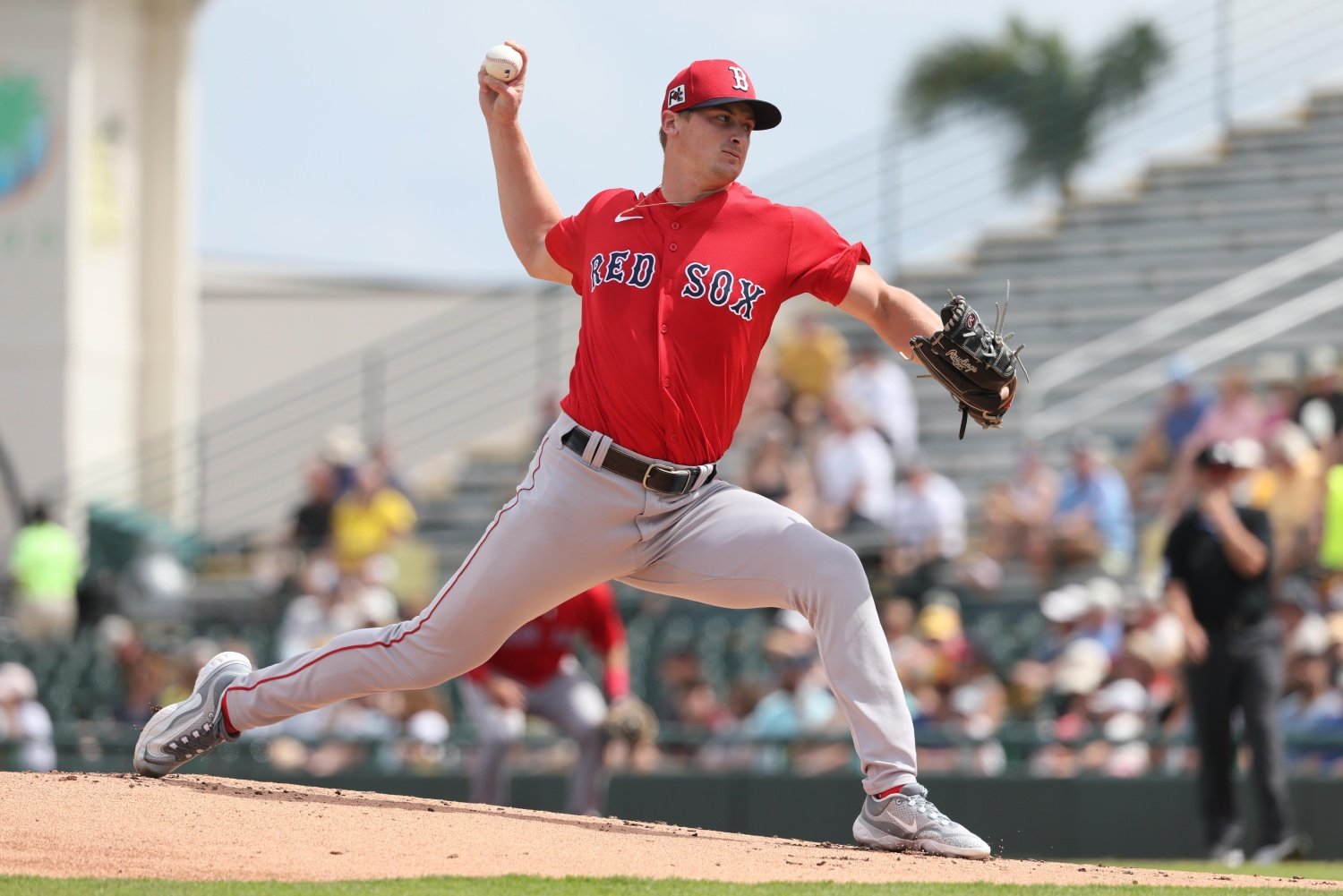
The Brewers replenished their depleted rotation depth on Monday, acquiring right-hander Quinn Priester from the Boston Red Sox.
While he slots in now as an immediate stopgap, Milwaukee could have made a smaller trade (Dallas Keuchel a year ago) or signed a cheap veteran free agent (Julio Teherán in 2023) to eat innings until reinforcements like Jose Quintana and Tobias Myers arrive. Instead, the club is trying to satisfy two needs with one move. The real key to this deal is Priester’s full six seasons of club control and the potential long-term value he could provide as a middle-of-the-rotation starter.
Controllable starting pitching does not come cheap, especially in-season. The Brewers parted with outfield prospect Yophery Rodriguez, one of their competitive balance draft picks, a player to be named later, and cash.
That’s a hefty package and has been perceived by some as an overpay, but it will prove a fair deal if Priester becomes what the club expects he will. Matt Arnold told MLB.com’s Adam McCalvy that Brewers scouts have been fond of the 24-year-old since high school and see him as a long-term contributor.
Priester has not looked the part of a big-league starter in two brief stints, pitching to a 6.23 ERA, 5.72 FIP, and 113 DRA- in 99 ⅔ innings. However, he debuted some modifications with Boston in spring training that could mesh nicely with the approach of Chris Hook and company.
The right-hander’s breaking pitches were scouted as his best and have generated plenty of swings and misses in the minor leagues. His fastballs have been problematic, though. They’ve had unremarkable movement and velocity, and Priester’s position on the rubber and traditional high-three-quarters delivery do nothing to help them play up.
As such, those heaters have yielded frequent loud contact. Triple-A opponents slugged .453 against Priester’s sinker and four-seamer last year, posting a 47.7% hard-hit rate and 91.2-mph average exit velocity. Big-league hitters smacked them at similar rates.
Priester has since added velocity and improved his fastball shapes. His sinker is now harder, with a couple more inches of run, and he has reworked what was a dreadfully straight four-seamer into a hard, riding cutter. He’s also throwing a firmer, shorter version of his signature curveball, which should play better with those heaters.

Thomas Nestico’s pitch-grading models like both fastballs more than their previous iterations, and the Brewers presumably agree. As an organization that has increasingly encouraged its high-volume pitchers to tunnel multiple fastball variants, it would not be surprising if they intend to lean heavily into Priester’s new sinker-cutter pairing.
Reasons for skepticism remain, though. Baseball Prospectus’ models still see both pitches as below average. In Priester’s first Triple-A start of the year, the sinker’s StuffPro run value was 1.2, and his cutter’s was 0.6. That cutter shape is not quite where it needs to be, either, as he has struggled thus far to generate consistent glove-side movement. Commanding its riding action in tandem with the heaviness of his sinker could also prove challenging.
Because Priester is just as much a long-term project as an immediate rotation addition, it may take time to evaluate this trade. In a perfect world, he will only need to make a few starts before several injured hurlers return, then head to Triple-A Nashville to continue calibrating his modified pitch mix. Even in his current form, he fits better under the Brewers’ style of run prevention than he did with his former organizations. Time will tell whether acquiring him was the proper use of prospect and draft capital.
Do you approve of the job Pat Murphy is doing as Brewers manager?

Follow Brewer Fanatic For Milwaukee Brewers News & Analysis



-
 3
3


Recommended Comments
There are no comments to display.
Create an account or sign in to comment
You need to be a member in order to leave a comment
Create an account
Sign up for a new account in our community. It's easy!
Register a new accountSign in
Already have an account? Sign in here.
Sign In Now