


Brewers Video
The Brewers' right fielder is swinging at more strikes and fewer pitches outside the zone. He's swinging faster. He's stronger. So why is his batted-ball profile more of a mess than ever?
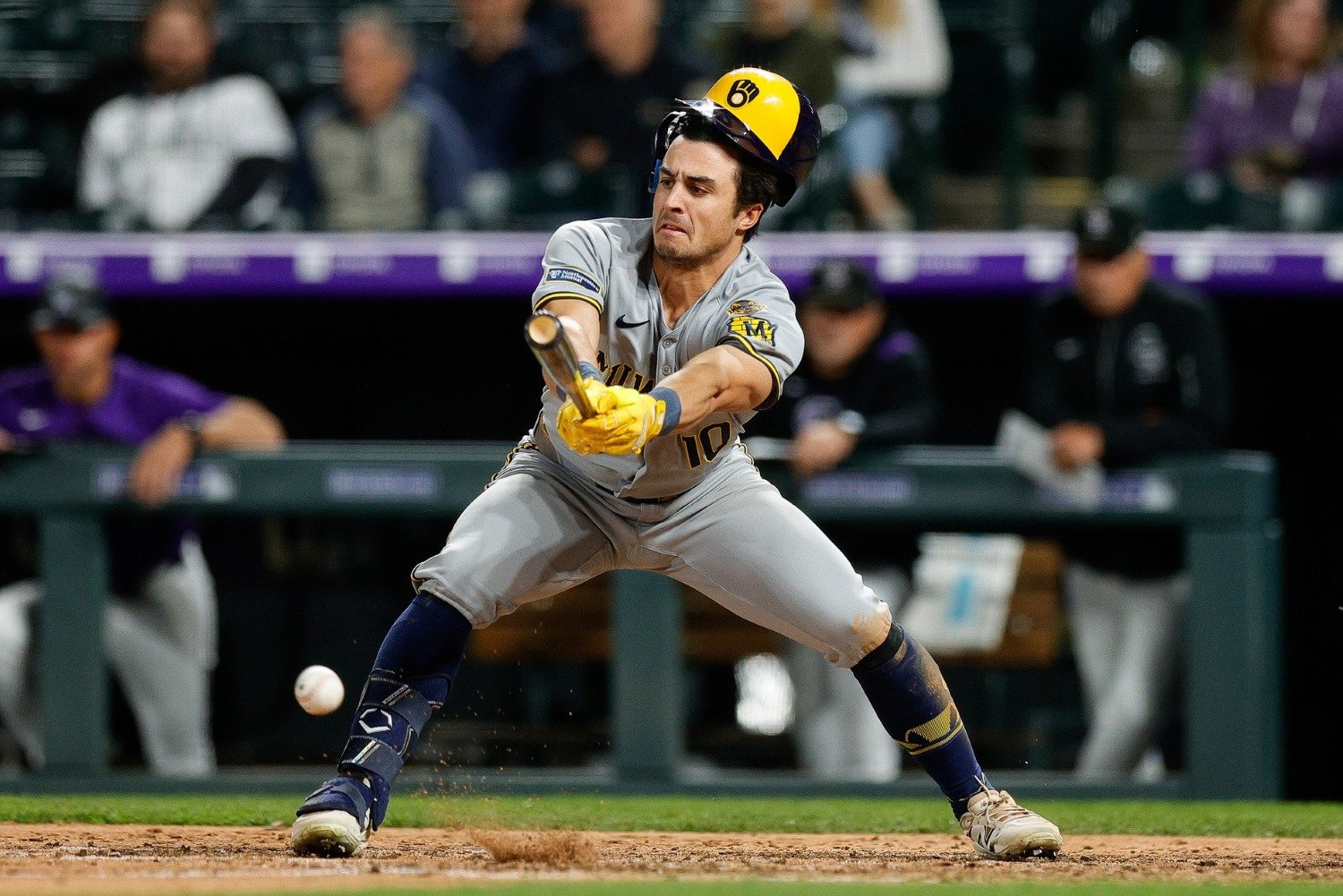
Through the Brewers' first 11 games of the year, Sal Frelick is hitting a superficially superb .356, with a .431 on-base percentage. He's been a key cog in the Milwaukee offense, often batting fifth and forming a much-needed bridge between higher-powered right-handed batters. In part, his job has been to punish teams who try to use matchup righties to tear through the meat of the Brewers batting order, and he's done that well.
However, the lack of quality contact from Frelick has been conspicuous, especially to begin a season in which the hope was that an offseason of adding weight and strength would translate to more thump, not less. Frelick only has two extra-base hits (a double and a triple), and not even those have been all that violently struck. It's been more a matter of good placement, as has been the case for most of his singles.
Frelick's hard-hit rate and average exit velocity are both up, but that's the only direction either could move. Last season, he had practically as little pop in his bat as is possible in the modern game, and this year, despite a more aggressive, faster swing, that remains true. He hasn't hit a ball even 104 miles per hour so far in the regular season, after hitting multiple balls in the 108-mph range during spring training.
One problem is that, with the exception of a few more truly vicious swings than he put on any balls last year, Frelick's distribution of swing speeds is remarkably similar to those from his first two big-league campaigns.

If you're just adding a couple of high-end swings and removing a fistful of the very slowest ones, you're not truly changing your swing speed profile. With more strength and a more aggressive mindset this spring, the hope was that the green distribution curve above would have actually shifted to the right, perhaps into phase with the dotted line that represents the league average. Instead, he's been functionally the same this year, while looking quite different.
Another issue is that Frelick is trying to reorganize his strike zone, seemingly with the intention of sitting on inside pitches and pulling the ball more often. That's a wise adjustment, since he's never going to have the toolkit to hit for much power except to his pull field, but the attempt to actually make it has been messy. Here's what Frelick's swing rates looked like, based on pitch location, in 2024.
.png.46026bf8fc1ab1535f293845c6acb04c.png)
And here's the same chart for 2025, to date:
.png.a5ee9d476f89899b8759e3c3744552fc.png)
So far, he's swinging more often within the zone and chasing less, but as he talked about even last spring, his hand-eye coordination sometimes betrays him. He can make poor swing decisions, and still make contact. Because of that, he struggles to make better ones. He's not yet taking the more thoughtful approach from conception to execution; the swings are still all over the place.
As a result, while he is pulling the ball (and pulling it in the air) much more often, the extra oomph that is supposed to come with that change hasn't materialized. Last season, Frelick was hard to defend, because he hit the ball all over the field and forced the defense to cover virtually every inch of the playing surface.

This season, he's been much more like a modern left-handed pull hitter—but without the ability to hit the ball hard enough or far enough to make that profile, itself, very difficult to defend.

So far, of course, it's all played out gorgeously. Some balls have been perfectly placed. Others have been poorly defended. Frelick's speed has bought him a couple of infield hits. Going forward, though, the Brewers need a much more dynamic version of Frelick. They need a guy who can stick to his overhauled approach, more consistently apply his newly made muscle, and start splitting gaps consistently. His strikeout and walk rates look great this spring, but they'll regress a bit—especially if he can't start scaring pitchers out of the zone with better swings. His BABIP luck will run cold soon, too. When those things happen, he has to have consolidated his in-progress adjustments into something that makes him a threat in the batter's box.





Recommended Comments
There are no comments to display.
Create an account or sign in to comment
You need to be a member in order to leave a comment
Create an account
Sign up for a new account in our community. It's easy!
Register a new accountSign in
Already have an account? Sign in here.
Sign In Now