


Brewers Video
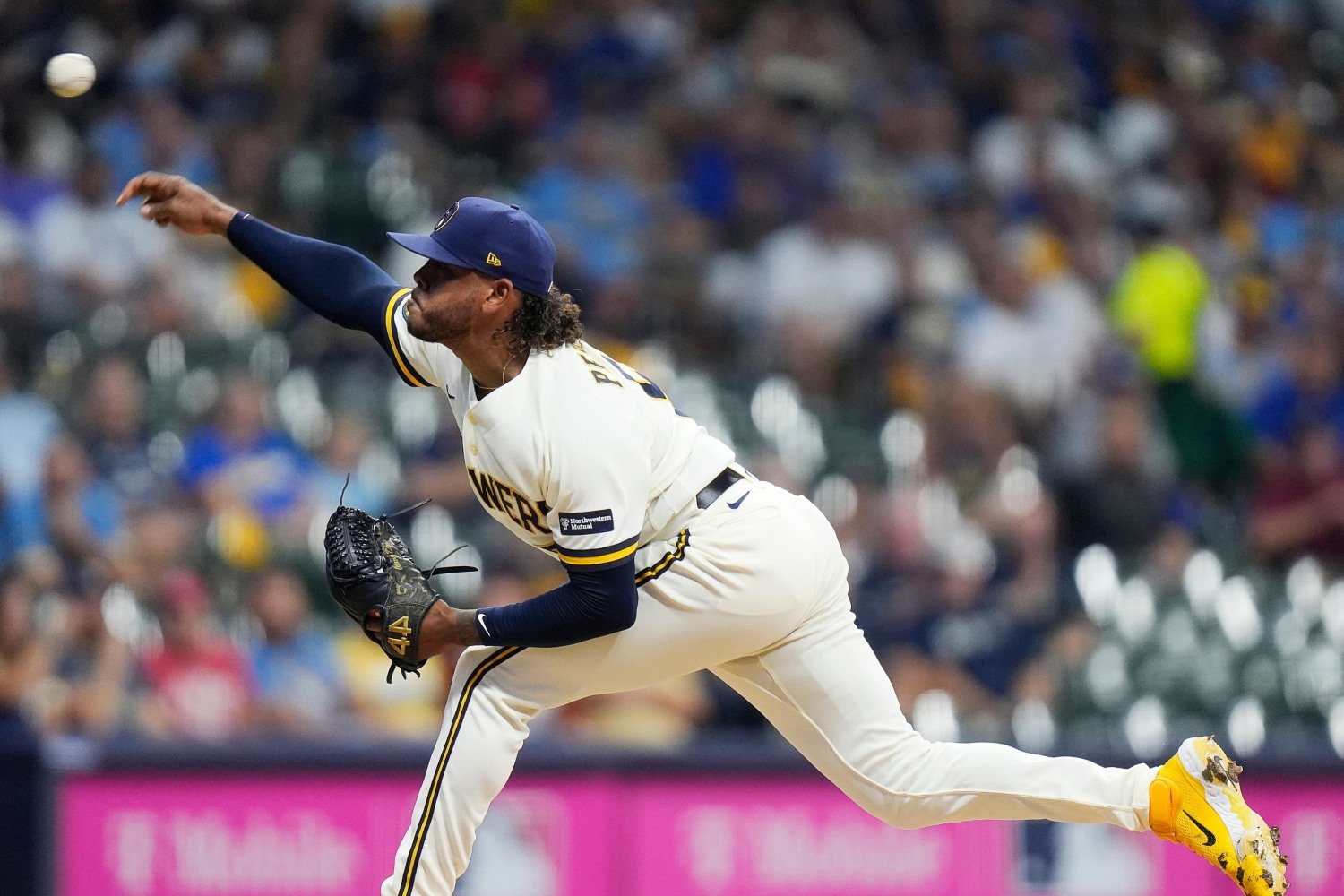
When he toes the rubber for the first pitches of the Milwaukee Brewers' 2024 season this week, Freddy Peralta will do so with a slider that represents his steady evoluation into a legitimate ace.
Fastball Freddy Peralta gained his name from an electric heater, but his slider has been an elite swing-and-miss pitch for several years now. It profiled as more of a sweeper entering 2023, but a mid-season tweak allowed him to sacrifice horizontal movement for greater control, greater vertical drop and a slight increase in velocity that paved the way to big results in the second half.
The Movement Profile
As you can see below, Peralta’s slider undertook some significant alterations around June 2023, with greater velocity and a more vertical shape. The slight changes may not seem like much, but together, they present an intriguing combination. A low-speed slider that drops early is easier to spot from a hitter’s vantage point, while extra speed usually means a pitch will drop less. By increasing both, Peralta achieved that much sought-after sharp, late break that leaves hitters with no time to adjust their swing and make contact, increasing its effectiveness.

The best way to see this is the angle at which the pitch enters the strike zone, where because the break is later, achieving that amount of movement would mean the ball is arcing downward at a steeper angle compared to a slower slider with the same vertical drop. Vertical velocity vector as the pitch crosses the zone will show just how sharply that pitch is moving downward, and for Peralta that velocity increased by 15% from 13.2 ft/sec in April to 15.2 ft/sec in August, allowing him to get underneath the barrel more often. As a result, his ground ball rate rose from just 25% in the first half against this slider to 52.3% in the second half, helping him keep the ball in the park and on the infield dirt.
The Corresponding Command Improvements
The other noticeable improvement for Peralta came in his command of the pitch in the second half, especially down in the strike zone. Even in the seven to eight degrees of horizontal break (as he was throwing earlier in the season), you can see Peralta was leaving pitches regularly in the middle of the strike zone.


A major cause for this was the erratic nature of the spin profile, with Peralta finding some pitches didn’t come out of the hand consistently in the same way. Then, when they didn’t move as expected (especially in regard to their vertical drop), they stayed in the middle of the strike zone to get hammered. Tightening up the slider has resulted in a far more consistent pitch movement and, critically, the extra drop on his slider has kept him down in or below the strike zone more often. The knock-on effect of all this is that Freddy Peralta is hanging fewer breaking pitches, and giving up fewer home runs.

The above shows the movement on Peralta’s pitches in 2023 in the first two months compared to the last two, and you can see just how much tighter the grouping in August and September was. As a result, Peralta will find it easier to command his slider, keep it down and give up less power. When he hung that slider, he had a xWOBA of .630 in 2023, with an average exit velocity of 102.2 mph, but when he stayed away from that middle-middle zone, this dropped to just 84.9 mph. Staying out of the center is absolutely key to his success, and increasing the command plus dropping the location is why his slider had such a strong turnaround in 2023.
Peralta is the Brewers' Opening Day starter for 2024, currently slated to perform against the New York Mets (though rain may decide whether that start comes on Thursday or Friday). His slider was a huge reason for his development as a pitcher in the latter half of 2023, and the best news is that it appeared to be a consistent and repeatable change. We can expect great things from him in 2024.





Recommended Comments
Create an account or sign in to comment
You need to be a member in order to leave a comment
Create an account
Sign up for a new account in our community. It's easy!
Register a new accountSign in
Already have an account? Sign in here.
Sign In Now