


Brewers Video
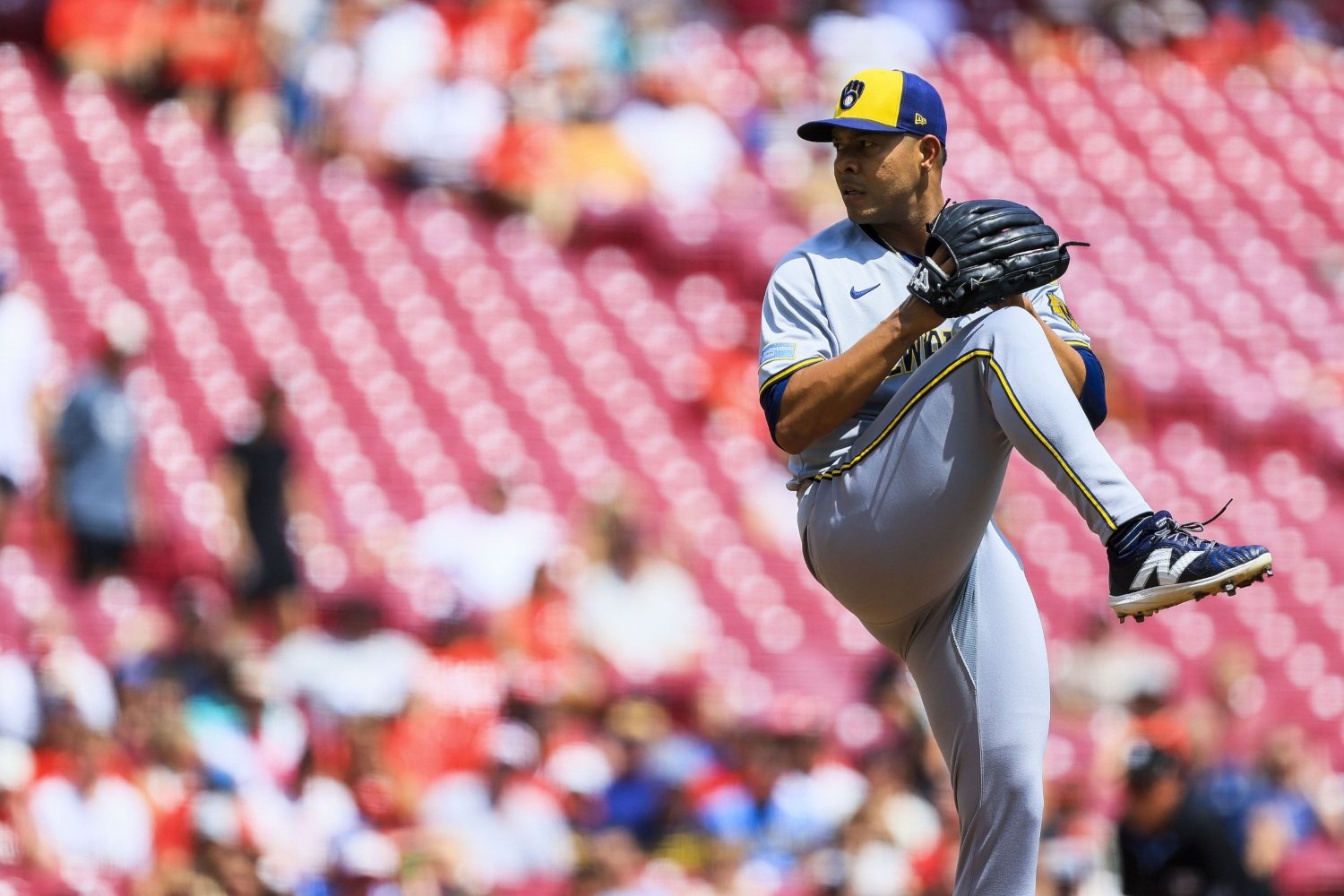
It has been an action-packed season for Jose Quintana. After signing a modest one-year contract with Milwaukee in March and getting a late start to his pre-season prep, he came out of the gate like gangbusters and posted a 1.14 ERA over his first four starts. Unfortunately, the good fortune didn’t last long. He spent a stint on the injured list, and his next 11 starts combined for a much less appealing 4.45 ERA.
Around this year’s trade deadline, there was an impending logjam in Milwaukee’s rotation. Both Quintana and Nestor Cortes were candidates to be moved. There was a strong case to be made that Quintana should’ve been the one traded, but ultimately, Cortes went to the Padres in exchange for Brandon Lockridge. Once again, it seems like Milwaukee knew something that we didn’t. In the four starts he has made since the trade deadline, Quintana has thrown 23 ⅓ innings, with a 2.70 ERA and 3.89 FIP. So is this a real improvement, or just another stretch of lucky results?
A particularly nitpicky Quintana critic might highlight that the competition he faced in his last four starts isn’t exactly the stiffest. He pitched against the Nationals (24th in OPS), Atlanta (14th in OPS), Pirates (30th in OPS), and Reds (17th in OPS). Of those teams, the only one with more than a 1% chance to make the postseason (per FanGraphs’s projections) is the Reds, who have a 19.7% chance to crack a Wild Card spot. Nonetheless, even the worst big-league teams are still good enough to be a threat on any given day. Although they were against apparently weaker opponents, these four starts tell us a lot about what is working for him and how he has adapted his game to accept his weaknesses.
Earlier in the year, Matthew Trueblood wrote a great piece about how a guy like Quintana can have bottom-of-the-barrel peripherals and rapidly declining stuff while still chewing up the game’s best hitters. This past month, he returned to doing a lot of what was discussed in Matt’s article. Without the ability to miss bats, his strikeout rate was still comfortably below 20% over this stretch of four good starts, but rather than trying to avoid the inevitable, he has been laser-focused on generating weak contact. Here's how his batted-ball data compares from the middle of the season to his most recent outings.
It’s a little kooky that his average exit velocity has stayed exactly where it is, but other than that, the major pattern that emerges is that Quintana is getting fewer ground balls and more fly balls. However, fewer of the fly balls are leaving the yard, and if you watch the tape, many of them are settling harmlessly in the gloves of Brewers outfielders. One key contributor to this shift in batted-ball data is yet another change in his pitch mix over these two spans.
Fewer sinkers means fewer ground balls, and more curveballs and fastballs mean more lift. However, he’s sitting in that Goldilocks zone where batters are getting under his pitches just enough to limit the exit velocity.
With the way that his year has gone, this shift makes sense. His sinker and changeup have been worth negative run value this year, while his curveball and slurve have been remarkably efficient in comparison. Batters are averaging just .169 and .118 against those pitches, respectively.
One characteristic that seems to limit the effectiveness of his sinker is its location. Traditionally, the best sinkers are located down in the zone. Quintana's tendency to leave his sinker a little too high creates hard-hit line drives up the middle, rather than harmless dribblers to middle infielders.
So, a heavier reliance on his secondary offerings seems to have helped bridge the gap, at least for now. Furthermore, he has only walked 4.2% of opposing hitters over the past month, which is good no matter what else you're doing.
The broader question is whether he’ll be able to keep this up, and the answer is: probably not. It’s difficult to get by as a starter in today’s league with just two pitches and no competitive fastball offering. Sooner or later, scouting reports will catch up; his curveball and changeup could soon follow a similar decline as his sinker. Luckily, it’s an issue that Milwaukee won’t have to think about for much longer, but it could have big implications on the postseason roster. They’ve trusted him to get this far, but how much they'll trust him come October is hard to guess.
Do you approve of the job the Brewers' front office is doing?

Follow Brewer Fanatic For Milwaukee Brewers News & Analysis



-
 1
1


Recommended Comments
There are no comments to display.
Create an account or sign in to comment
You need to be a member in order to leave a comment
Create an account
Sign up for a new account in our community. It's easy!
Register a new accountSign in
Already have an account? Sign in here.
Sign In Now