



Jason Wang
-
Posts
946 -
Joined
-
Last visited
-
Days Won
1
1 Follower

Recent Profile Visitors
20,675 profile views


Jason Wang's Achievements



-
 Image courtesy of Wendell Cruz-Imagn Images Honorable Mentions Aaron Ashby 12 GS, 14 ⅓ IP, 0.63 ERA, 2.32 FIP, 36.2 K%, 10.3 BB% It's been a season of ups and downs for Ashby. After getting off to an outstanding start as the Brewers’ bullpen workhorse, a summer slump threatened to derail his season. Across 24 ⅔ innings in June and July, he posted a 6.57 ERA with four blown saves. Luckily, Ashby got back on the horse in August and had his best month of the season. He gave up just one earned run this month, on a solo homer to Michael Harris II, and made some small but meaningful adjustments to make his pitches more difficult to square up. In August, opposing hitters made contact in the strike zone just 81.5% of the time and had a ground ball rate of 77.4%. Statistical Nugget: Ashby’s slider has been his best pitch this year by run value (5). Hitters are slugging just .189 while whiffing 56.4% of the time. Trevor Megill 11 G, 12 IP, 0.00 ERA, 2.67 FIP, 17.1 K%, 7.3 BB% It seems like an eternity ago at this point, but there was a point this season at which Megill was pitching so poorly that he was removed from the closer role. Given his 6.55 ERA across his first 11 innings, the decision was unsurprising. Since then, he has been so dominant that his season ERA of 2.24 would lead you to forget he was ever anything other than elite. From May 1st onward, Megill has posted a 1.09 ERA with a 1.61 FIP over 41 ⅓ innings, a span that ended with a scoreless August. His fastball is better than ever. His knuckle curve is better than ever. He’s better than ever. The Brewers started the year with concerns about his ability to remain consistent in high leverage and now it seems the only concern they’ll have is how much they may have to pay him in arbitration next year. Statistical Nugget: Megill is tied with Mason Miller and Adrian Morejon for the most fWAR accumulated by a reliever since May 1st (2.0). Logan Henderson 5 GS, 32 ⅓ IP, 2.23 ERA, 3.98 FIP, 27.4 K%, 4.3 BB% If Logan Henderson didn’t do enough to impress you last year, then surely he has put himself on your radar this year. Aside from pitching to an enticing 2.48 ERA and 3.29 FIP over 76 ⅓ innings this year, he also made headlines after the Brewers allegedly rejected a proposal that would’ve sent him to the Tigers in exchange for Tarik Skubal. He continued what’s technically still his rookie campaign with an outstanding August. Two of his best starts of the season by Game Score came in this month — a seven-inning start against the Rangers and a seven-inning start against the Dodgers, holding both teams to just one earned run. The final month of the regular season will come with some roster decisions for Milwaukee, namely deciding how they want to configure their postseason rotation. With Kyle Harrison hitting some road bumps lately, Henderson could find himself right behind Jacob Misiorowski if he continues to perform at this level. Statistical Nugget: Henderson averages 2,558 RPM on his changeup. Only Trevor Richards (2,559) and Devin Williams (2,612) spin the ball more. Pitcher of the Month — Jacob Misiorowski 5 GS, 31 IP, 2.32 ERA, 2.63 FIP, 32.2 K%, 6.1 BB% August was arguably the worst month of the season for Misiorowski since April. Of course, that’s somewhat of a misleading statement because he still pitched to strong numbers. After posting a 0.54 ERA from May 1st to June 30th, anything short of utter dominance can feel disappointing but he’s still the leading candidate for this year’s NL Cy Young award. Hitters still aren’t touching his fastball, they’re still getting cooked by his cutter, and they’re still failing to square up his breaking balls. He still has more fWAR (5.7) than any pitcher other than Cristopher Sánchez (who has three more starts and 24 ⅓ more innings of work). He’s undoubtedly the best arm talent in Milwaukee and perhaps the entire sport. Statistical Nugget: Misiorowski has a higher whiff rate (41.0%) on his four-seam fastball than any pitcher in baseball this year. View full article
 -
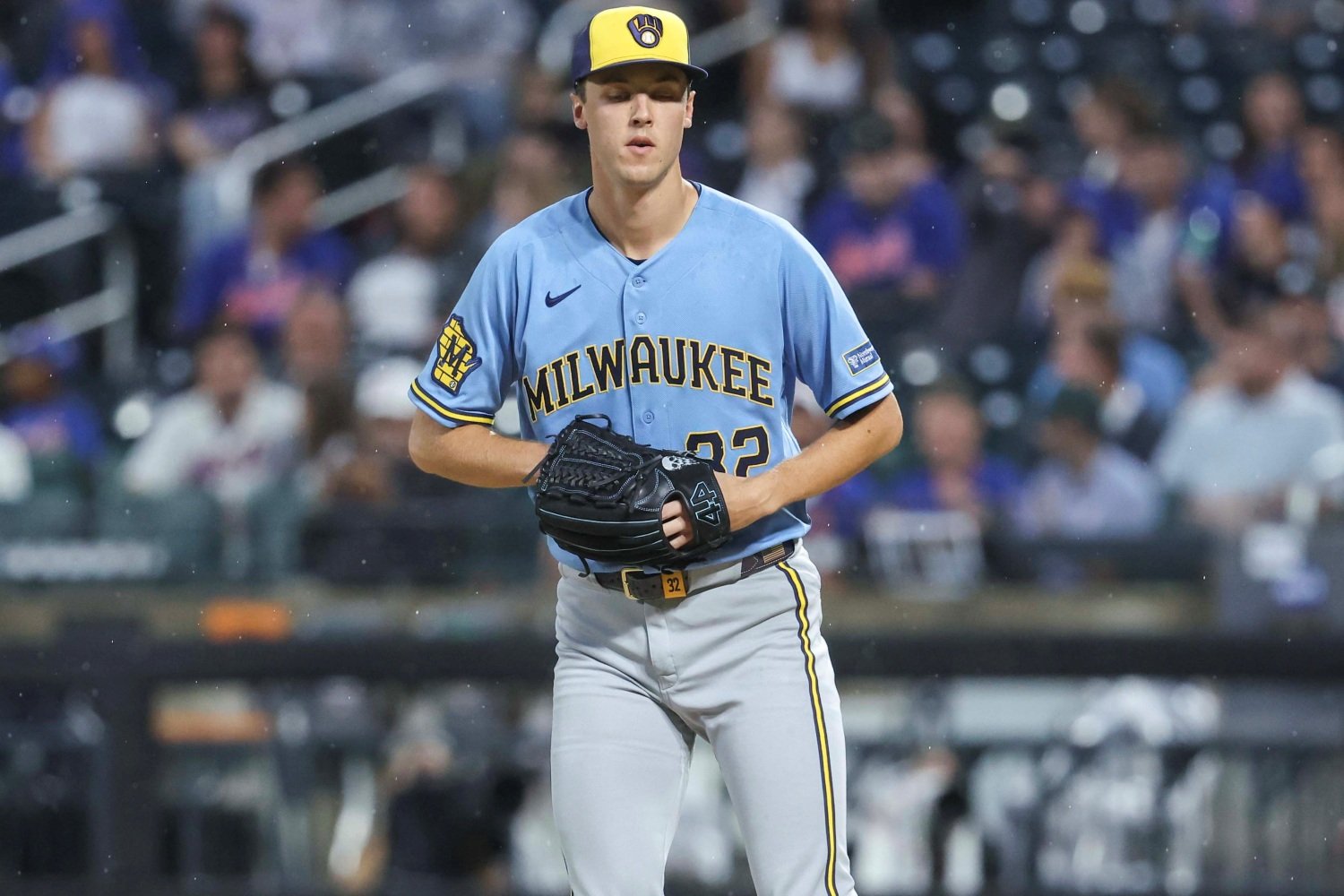 Honorable Mentions Aaron Ashby 12 GS, 14 ⅓ IP, 0.63 ERA, 2.32 FIP, 36.2 K%, 10.3 BB% It's been a season of ups and downs for Ashby. After getting off to an outstanding start as the Brewers’ bullpen workhorse, a summer slump threatened to derail his season. Across 24 ⅔ innings in June and July, he posted a 6.57 ERA with four blown saves. Luckily, Ashby got back on the horse in August and had his best month of the season. He gave up just one earned run this month, on a solo homer to Michael Harris II, and made some small but meaningful adjustments to make his pitches more difficult to square up. In August, opposing hitters made contact in the strike zone just 81.5% of the time and had a ground ball rate of 77.4%. Statistical Nugget: Ashby’s slider has been his best pitch this year by run value (5). Hitters are slugging just .189 while whiffing 56.4% of the time. Trevor Megill 11 G, 12 IP, 0.00 ERA, 2.67 FIP, 17.1 K%, 7.3 BB% It seems like an eternity ago at this point, but there was a point this season at which Megill was pitching so poorly that he was removed from the closer role. Given his 6.55 ERA across his first 11 innings, the decision was unsurprising. Since then, he has been so dominant that his season ERA of 2.24 would lead you to forget he was ever anything other than elite. From May 1st onward, Megill has posted a 1.09 ERA with a 1.61 FIP over 41 ⅓ innings, a span that ended with a scoreless August. His fastball is better than ever. His knuckle curve is better than ever. He’s better than ever. The Brewers started the year with concerns about his ability to remain consistent in high leverage and now it seems the only concern they’ll have is how much they may have to pay him in arbitration next year. Statistical Nugget: Megill is tied with Mason Miller and Adrian Morejon for the most fWAR accumulated by a reliever since May 1st (2.0). Logan Henderson 5 GS, 32 ⅓ IP, 2.23 ERA, 3.98 FIP, 27.4 K%, 4.3 BB% If Logan Henderson didn’t do enough to impress you last year, then surely he has put himself on your radar this year. Aside from pitching to an enticing 2.48 ERA and 3.29 FIP over 76 ⅓ innings this year, he also made headlines after the Brewers allegedly rejected a proposal that would’ve sent him to the Tigers in exchange for Tarik Skubal. He continued what’s technically still his rookie campaign with an outstanding August. Two of his best starts of the season by Game Score came in this month — a seven-inning start against the Rangers and a seven-inning start against the Dodgers, holding both teams to just one earned run. The final month of the regular season will come with some roster decisions for Milwaukee, namely deciding how they want to configure their postseason rotation. With Kyle Harrison hitting some road bumps lately, Henderson could find himself right behind Jacob Misiorowski if he continues to perform at this level. Statistical Nugget: Henderson averages 2,558 RPM on his changeup. Only Trevor Richards (2,559) and Devin Williams (2,612) spin the ball more. Pitcher of the Month — Jacob Misiorowski 5 GS, 31 IP, 2.32 ERA, 2.63 FIP, 32.2 K%, 6.1 BB% August was arguably the worst month of the season for Misiorowski since April. Of course, that’s somewhat of a misleading statement because he still pitched to strong numbers. After posting a 0.54 ERA from May 1st to June 30th, anything short of utter dominance can feel disappointing but he’s still the leading candidate for this year’s NL Cy Young award. Hitters still aren’t touching his fastball, they’re still getting cooked by his cutter, and they’re still failing to square up his breaking balls. He still has more fWAR (5.7) than any pitcher other than Cristopher Sánchez (who has three more starts and 24 ⅓ more innings of work). He’s undoubtedly the best arm talent in Milwaukee and perhaps the entire sport. Statistical Nugget: Misiorowski has a higher whiff rate (41.0%) on his four-seam fastball than any pitcher in baseball this year.
 -
work dirtier?
-
work harder not smarter
-
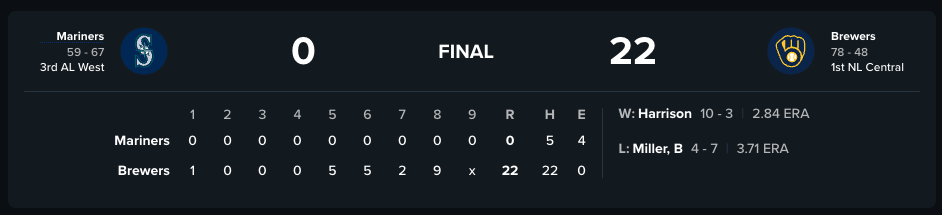
The MLB's anti-bullying policy clearly states: I wonder if this also extends to members of other clubs. If not, will this be added to the growing docket of agenda items in this season's CBA discussions? I wonder if this will make the lockout even longer...
-
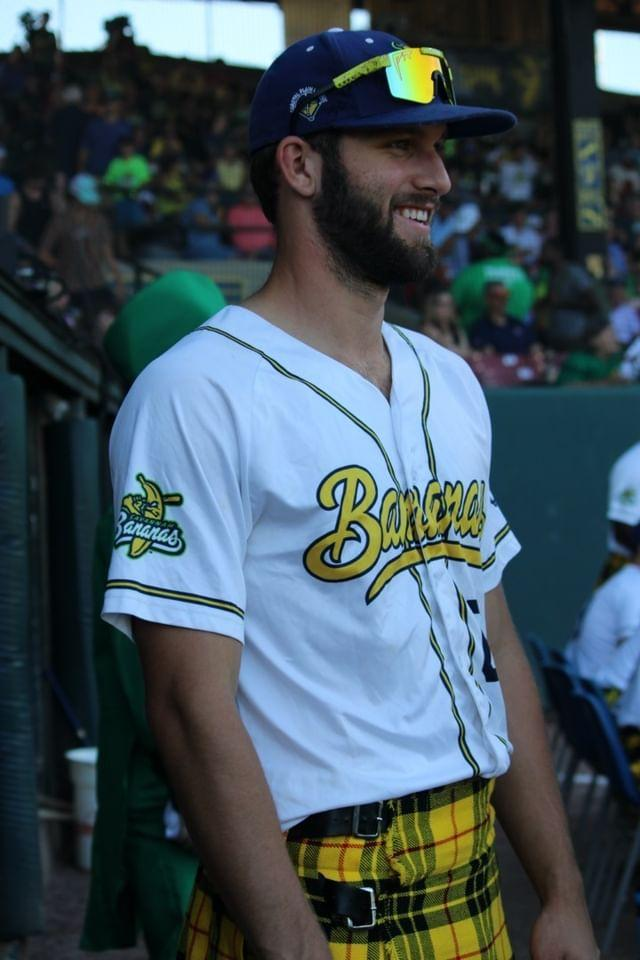
where do the savannah bananas come into this trade history
-
ai could never recreate this 5head wordplay and I tip my cap to u good sir
-
Image courtesy of IMAGN IMAGES via Reuters Connect In what may have come as a bit of a shock, the Brewers struck their biggest deal of the deadline with the St. Louis Cardinals, a notable division rival. The last time these two franchises did business was in 2015 when Milwaukee sent Jonathan Broxton to St. Louis in exchange for Malik Collymore, so it’s been a while, to say the least. What was even more surprising than the trade partner was the package. In exchange for Dustin May and JoJo Romero, the Brewers gave up Josiah Ragsdale and Alexander Frias, two highly-touted prospects. Dustin May is responsible for the bulk of the value coming to Milwaukee as he’ll reinforce an injury-ridden rotation and does carry some meaningful upside. However, JoJo Romero is no slouch either. He was mentioned on DiamondCentric’s list of Top 80 trade targets and has had a decent season with the Cardinals, posting a 3.35 ERA over 43 innings. But as a rental reliever, how much does he actually bring to the table? A quick glance at his Statcast numbers would suggest not much. The majority of his numbers are below average, and his average exit velocity of 91.3 mph places him in the fourth percentile among qualified pitchers. His 48.8% ground ball rate seems to be his only saving grace, but there must be more to the 29-year-old southpaw. The only weapon in his arsenal with a positive run value this season is his sinker, which he has used as his primary fastball offering since 2022. It’s definitely one of the pitches of all time, which, in other words, means that it’s serviceable. Opposing hitters are averaging .265 against it, which isn’t totally out of the ordinary for sinkers. What’s more concerning is the hard-hit rate, which stands at 56.1%. He has gotten somewhat lucky so far, limiting the opposing slugging percentage to just .324, but it does seem like it’s only a matter of time before that levy breaks. His secondary pitch of choice is a sweeper with quite a bit of movement. On paper, it complements his sinker well since there are 32 inches of net lateral movement between the two pitches. In practice, it has a whiff rate of just 26.9%. This is largely a location issue, as Romero lands almost half of his sweepers in the zone, which can result in considerable damage. Three of his five home runs have come against the pitch. His tertiary offering is the changeup, which has been mostly uncompetitive this year. It has a chase rate of 34.6% and a whiff rate of 30.4%, which are satisfactory by themselves but hardly enough to compensate for the 17.5% zone rate, meaning it’s landing as a waste pitch far too often to be effective. So far, this all sounds pretty underwhelming. But surely the Brewers, in their infinite wisdom, were excited about something if they wanted him included in the trade. But what is it? To start, there’s a real bullpen need for left-handed pitching. Aaron Ashby seems to be falling apart before our very eyes, posting a gruesome 6.57 ERA and 4.31 FIP since the start of June. DL Hall recently returned from the injured list, but who knows what his readiness will be like. Furthermore, both of these players profile more like starting pitchers, boasting deep arsenals and excellent stamina. Romero’s east/west tendencies seem to be what specifically made him stand out, as it’s also what Dustin May brings to the table. The Brewers don’t currently have a lot of it in their pitching staff, and adding what’s almost like a left-handed Grant Anderson in Romero gives opposing hitters yet another attack vector to prepare for. As a ground ball pitcher, he’s more reliant on the defensive capabilities of his infield, which should be better in Milwaukee. The Brewers are exceptional up the middle with Brice Turang and Cooper Pratt, and now that Joey Ortiz is spending more time at third base, he also brings his exceptional glove to the hot corner. His understudy, David Hamilton, isn’t too shabby either. Together, this defensive ensemble should augment Romero’s run prevention abilities even if his intrinsic abilities remain unchanged. There may be some pitch design changes that the Brewers decide to implement, but with two months left in the regular season, that may be asking for too much too soon. As a rental reliever, Romero’s value proposition seems to be adding a new dimension to the team’s pitching staff that synergizes well with Milwaukee’s infield defense. JoJo Romero has the potential to be a solid piece of the bullpen and will likely excel in double play situations. He doesn’t have the stuff to take the ball in high-leverage situations, but he doesn’t need to be — the Brewers already have other guys for that. If one is asked to decide whether he’s a forgettable piece of an already questionable trade or the man to finally take the Brewers to the World Series, the answer is probably something far less extreme. He’ll eat up important relief innings and get outs for the squad when needed. What more can one ask of a pitcher? View full article
-
JoJo Romero: Bullpen Behemoth Or Trade Package Afterthought?
Jason Wang posted an article in Brewers
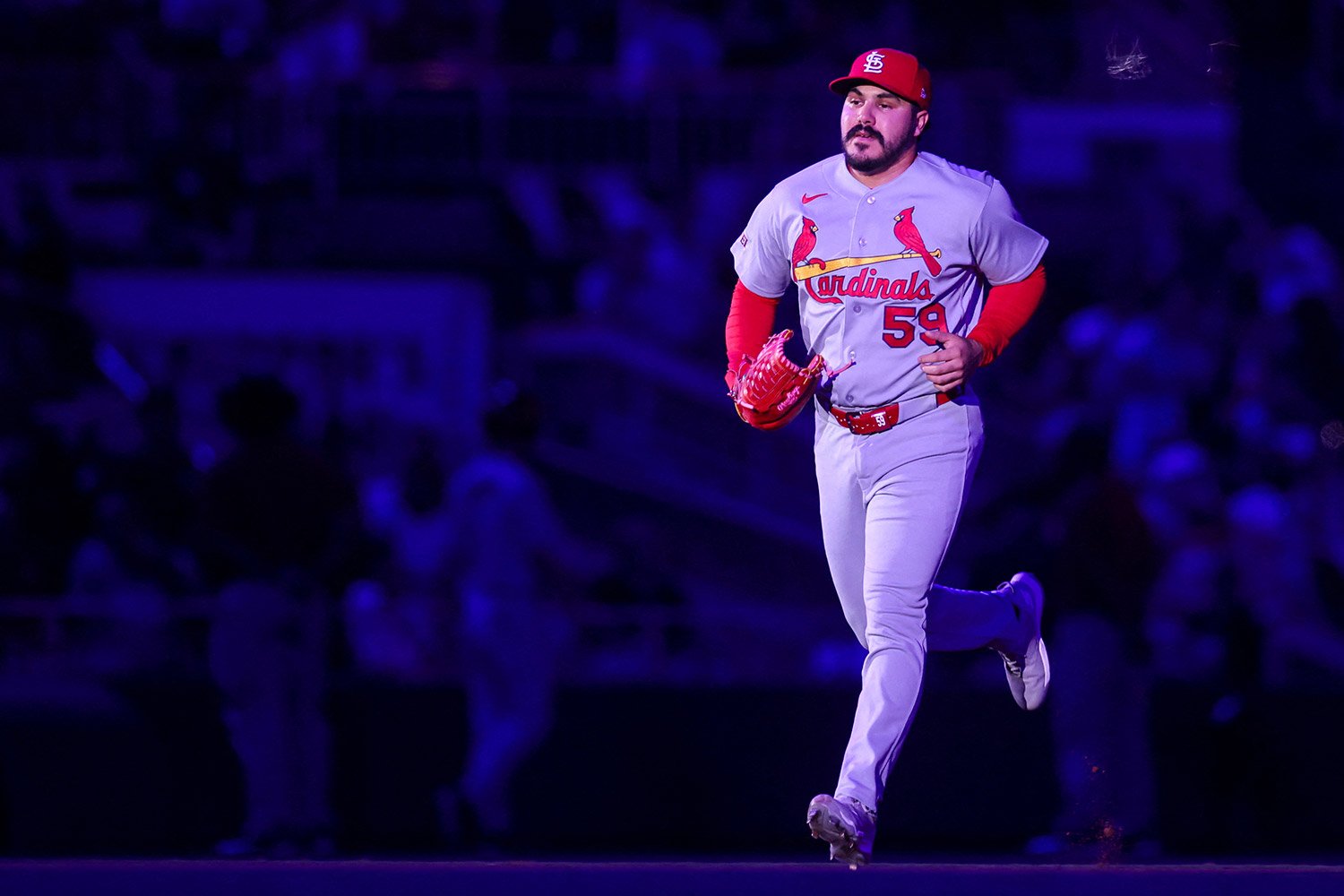 In what may have come as a bit of a shock, the Brewers struck their biggest deal of the deadline with the St. Louis Cardinals, a notable division rival. The last time these two franchises did business was in 2015 when Milwaukee sent Jonathan Broxton to St. Louis in exchange for Malik Collymore, so it’s been a while, to say the least. What was even more surprising than the trade partner was the package. In exchange for Dustin May and JoJo Romero, the Brewers gave up Josiah Ragsdale and Alexander Frias, two highly-touted prospects. Dustin May is responsible for the bulk of the value coming to Milwaukee as he’ll reinforce an injury-ridden rotation and does carry some meaningful upside. However, JoJo Romero is no slouch either. He was mentioned on DiamondCentric’s list of Top 80 trade targets and has had a decent season with the Cardinals, posting a 3.35 ERA over 43 innings. But as a rental reliever, how much does he actually bring to the table? A quick glance at his Statcast numbers would suggest not much. The majority of his numbers are below average, and his average exit velocity of 91.3 mph places him in the fourth percentile among qualified pitchers. His 48.8% ground ball rate seems to be his only saving grace, but there must be more to the 29-year-old southpaw. The only weapon in his arsenal with a positive run value this season is his sinker, which he has used as his primary fastball offering since 2022. It’s definitely one of the pitches of all time, which, in other words, means that it’s serviceable. Opposing hitters are averaging .265 against it, which isn’t totally out of the ordinary for sinkers. What’s more concerning is the hard-hit rate, which stands at 56.1%. He has gotten somewhat lucky so far, limiting the opposing slugging percentage to just .324, but it does seem like it’s only a matter of time before that levy breaks. His secondary pitch of choice is a sweeper with quite a bit of movement. On paper, it complements his sinker well since there are 32 inches of net lateral movement between the two pitches. In practice, it has a whiff rate of just 26.9%. This is largely a location issue, as Romero lands almost half of his sweepers in the zone, which can result in considerable damage. Three of his five home runs have come against the pitch. His tertiary offering is the changeup, which has been mostly uncompetitive this year. It has a chase rate of 34.6% and a whiff rate of 30.4%, which are satisfactory by themselves but hardly enough to compensate for the 17.5% zone rate, meaning it’s landing as a waste pitch far too often to be effective. So far, this all sounds pretty underwhelming. But surely the Brewers, in their infinite wisdom, were excited about something if they wanted him included in the trade. But what is it? To start, there’s a real bullpen need for left-handed pitching. Aaron Ashby seems to be falling apart before our very eyes, posting a gruesome 6.57 ERA and 4.31 FIP since the start of June. DL Hall recently returned from the injured list, but who knows what his readiness will be like. Furthermore, both of these players profile more like starting pitchers, boasting deep arsenals and excellent stamina. Romero’s east/west tendencies seem to be what specifically made him stand out, as it’s also what Dustin May brings to the table. The Brewers don’t currently have a lot of it in their pitching staff, and adding what’s almost like a left-handed Grant Anderson in Romero gives opposing hitters yet another attack vector to prepare for. As a ground ball pitcher, he’s more reliant on the defensive capabilities of his infield, which should be better in Milwaukee. The Brewers are exceptional up the middle with Brice Turang and Cooper Pratt, and now that Joey Ortiz is spending more time at third base, he also brings his exceptional glove to the hot corner. His understudy, David Hamilton, isn’t too shabby either. Together, this defensive ensemble should augment Romero’s run prevention abilities even if his intrinsic abilities remain unchanged. There may be some pitch design changes that the Brewers decide to implement, but with two months left in the regular season, that may be asking for too much too soon. As a rental reliever, Romero’s value proposition seems to be adding a new dimension to the team’s pitching staff that synergizes well with Milwaukee’s infield defense. JoJo Romero has the potential to be a solid piece of the bullpen and will likely excel in double play situations. He doesn’t have the stuff to take the ball in high-leverage situations, but he doesn’t need to be — the Brewers already have other guys for that. If one is asked to decide whether he’s a forgettable piece of an already questionable trade or the man to finally take the Brewers to the World Series, the answer is probably something far less extreme. He’ll eat up important relief innings and get outs for the squad when needed. What more can one ask of a pitcher?
 -
has anyone checked in on keston hiura lately 🤔 wonder what the kiwoom heroes would want for him.
- 11 replies
-
- 2
-

-
- 2026 trade deadline
- james wood
- (and 8 more)
-
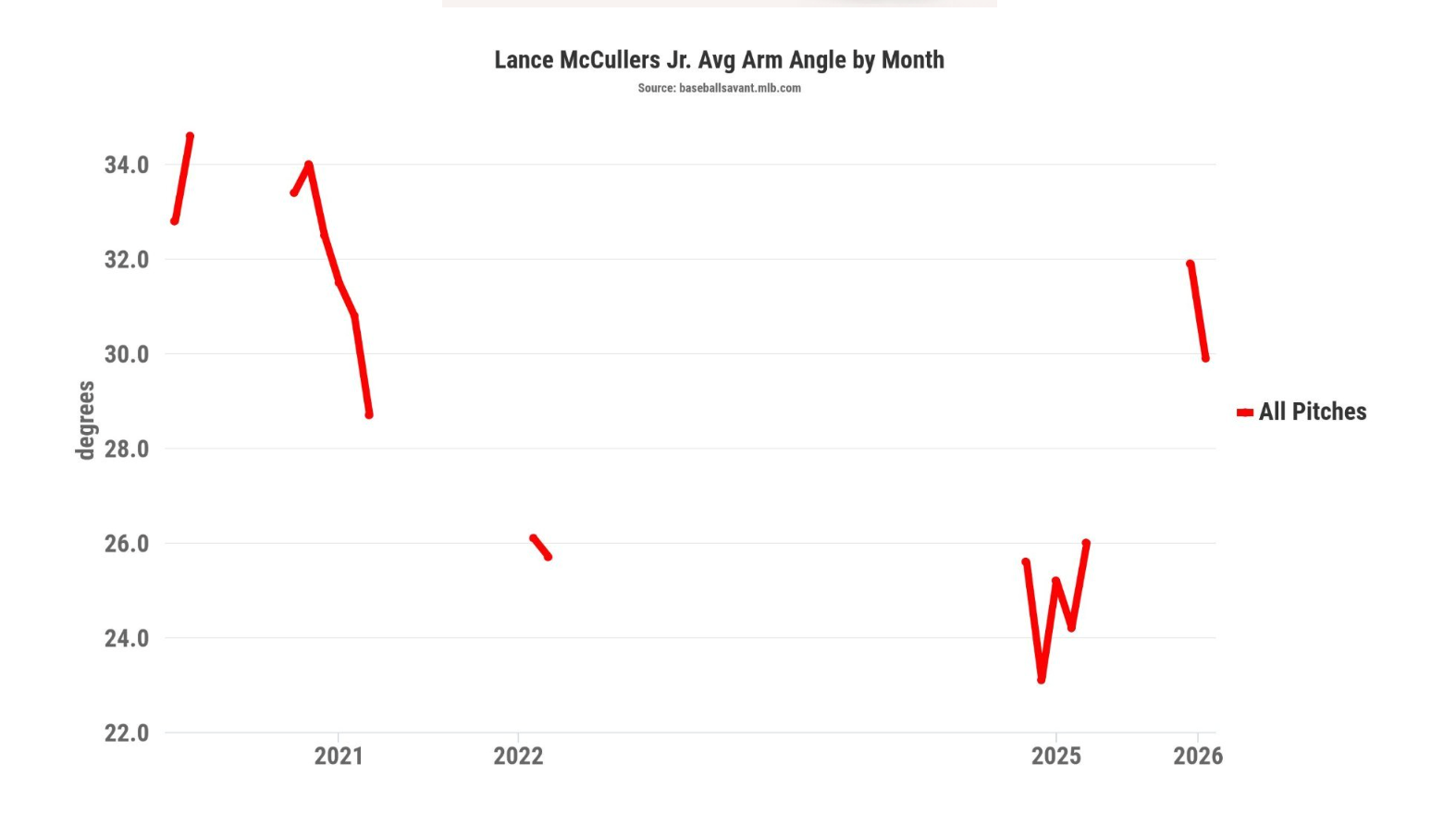
this chart is so sporadic due to his on and off injuries it looks like the scribblings of an unsound mind
- 3 replies
-
- 3
-
-
- lance mccullers jr.
- chris hook
- (and 1 more)
-
Image courtesy of © Sam Navarro-Imagn Images Round 1, Pick No. 20: 3B Andrew Fischer Fischer had outstanding numbers in college last season, playing his final season with Tennessee and slashing .341/.497/.760 with 25 home runs over 292 plate appearances. His defensive abilities at third base raised some questions, though, and he signed for $3.5 million, far below the slot value of $4.27 million. Fischer got some playing time as a pro in 2025, but things really took off for him this year. After being an imposing force on a surprisingly competitive Team Italy roster in the World Baseball Classic, he's torched minor-league opponents. He hit to a 170 wRC+ across 54 High-A plate appearances and has been similarly effective in Double-A thus far. His position on most prospect lists should continue to increase along with his impressive numbers; he's already climbed to fifth on our top-20 prospect list for the organization. Currently slated to debut in 2027 according to MLB Pipeline, Fischer could breathe some offensive life into a position that has been one of the weaker parts of the lineup over the past few years. With the Brewers currently relying on the light-hitting talents of David Hamilton and Joey Ortiz, having someone with the slugging potential of Fischer at the position could be a meaningful boost to the team’s hitting production. This looks like a home run of a pick in the back half of the first round. Round 1, Pick No. 32: SS Brady Ebel Taken out of Corona High School in California, Ebel was teammates with fellow elite prospects Seth Hernandez and Billy Carlson. He suffered from some offensive regression in the spring, which lowered his draft stock, but the Brewers seemed excited about his other strengths like his baseball IQ, arm strength, and quality of contact. One big concern is his ability to remain at shortstop as he faces higher levels of competition. Many scouts anticipate that his lack of speed and agility could necessitate a move to third base, which would allow the best parts of his profile to shine. Ebel has had encouraging results with Single-A Wilson this year, posting a 117 wRC+ over 344 plate appearances. The most notable statistic is a 20.1% walk rate, which has allowed him to maintain an on-base percentage of .404 despite a batting average of just .239. Additionally, despite concerns over his running ability, he's stolen 24 bases. He’s 15th in this very strong, deep system, according to our latest update. It's a much slower burn than Fischer, but again, this looks like a win. Round 2, Pick No. 59: LHP J.D. Thompson Thompson wasn’t the most obviously appealing pitching prospect in the draft class, but he managed to make things work across three seasons at Vanderbilt. At just six feet tall, he isn’t the most physically imposing pitcher. Nor is he blowing past batters; his fastball sits in the low 90s. However, with excellent induced vertical break on his heater and some effective secondary offerings, he finds ways to get outs. Unfortunately for Thompson, his first year of professional baseball has already been marred by injury. He got off to a late start due to a hamstring strain, but finally managed to make his first appearance for High-A Wisconsin in May. After pitching just 18 ⅓ innings, he was placed on the injured list again at the start of June and hasn’t returned. He's clinging to the 20th spot in our latest prospect rankings update. Round 2, Pick No. 68: LHP Frank Cairone Cairone was drafted out of Delsea Regional High School in New Jersey and was noted by scouts for having an impressive arsenal for a 17-year-old. His heater was already sitting at 95 mph and had great ride from a low release point. His slider is already spinning at nearly 3,000 RPM, and he's steadily developing his cutter and changeup. As a player out of high school, he has much to prove, but the Brewers seem excited about his upside. He also made headlines after being involved in a serious car accident in January, but he seems to be well on the road to recovery. He finally got around to making his professional debut a few days ago, throwing one inning in the Arizona Complex League. It will take him quite a bit of time to be fully healthy and ramped up, but at just 18 years old, there’s no rush to get him anywhere fast. Round 3, Pick No. 94: RHP Jacob Morrison Morrison cut an imposing figure while at Coastal Carolina University, measuring in at 6-foot-8 and 245 pounds. His final year with the Chanticleers was exceptional, pitching to a 2.42 ERA and 3.56 FIP over 107 ⅔ innings thanks to a fastball in the mid-90s that has carry at the top of the strike zone. He does struggle with commanding his secondary offerings sometimes, but the shape is effective enough to avoid hard contact fairly well. He has pitched 19 ⅔ innings for Single-A Wilson, with a 4.58 ERA and 4.58 FIP. Although opposing hitters are averaging just .171 against him this year, his 16.7% walk rate has become a glaring issue. This doesn't look like a bumper crop unto itself for the Brewers, like (for instance) the 2023 group could prove to be. Then again, their most important wins in that 2023 class so far are guys whom they selected lower than the ones above. What does seem clear, already, is that last year's draft netted the team a player with star-caliber upside and charisma to match; an impressive young infielder with great ballplayer bloodlines; and a trio of intriguing arms. One year later, the 2025 class looks like further proof that the Brewers run the best scouting and development operation in the league. View full article
- 2 replies
-
- 3
-

-
- andrew fischer
- jd thompson
- (and 3 more)

