


Brewers Video
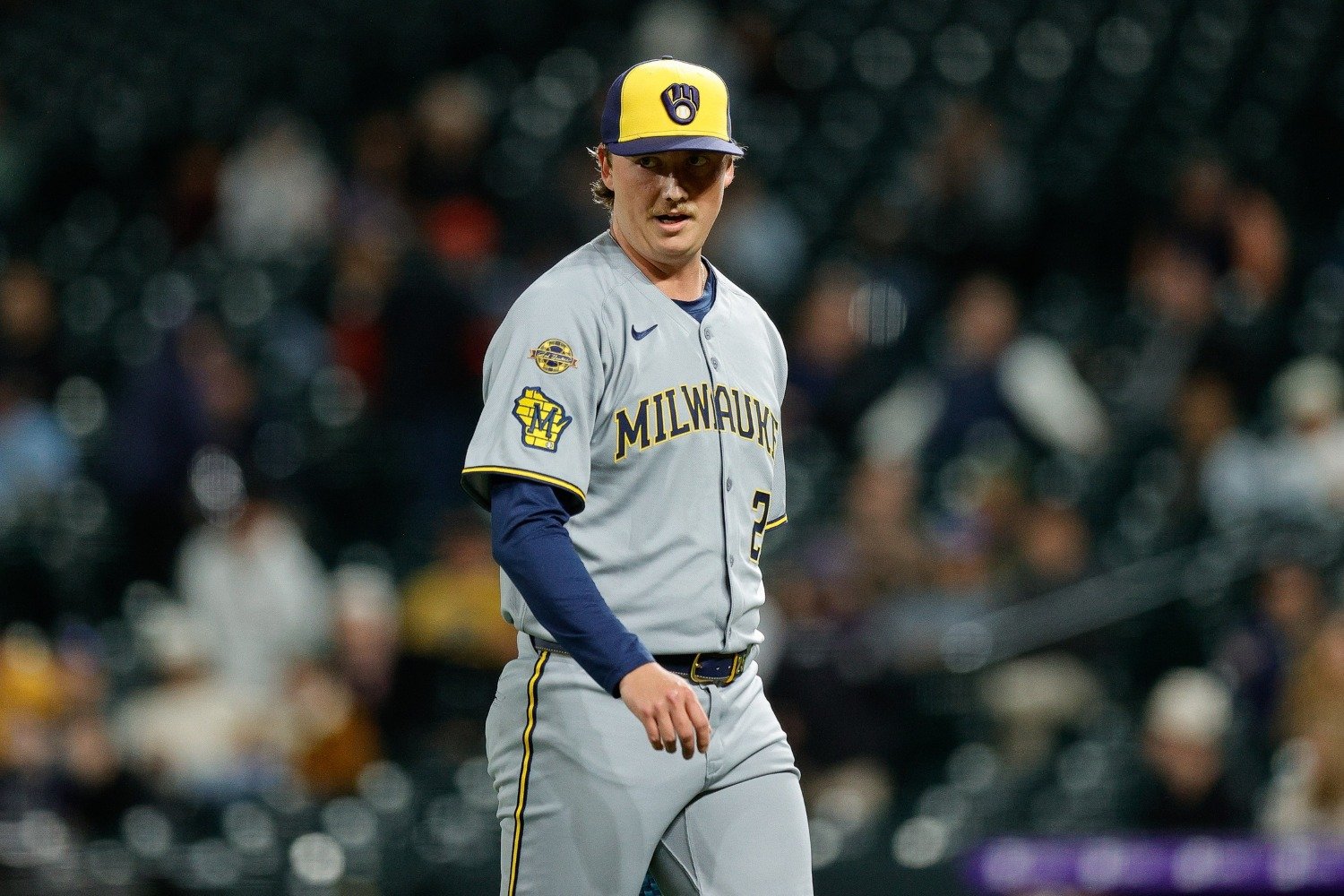
After a rocky beginning to his Brewers tenure last season, Nick Mears has started his 2025 campaign strong. In five appearances, he’s thrown 4 ⅔ perfect innings with a 42.9% strikeout rate.
“He’s been literally flawless,” said Pat Murphy, who has already entrusted Mears with high-leverage situations.
The right-hander is having early success after modifying his delivery. Compare one of his last outings before the Brewers acquired him from the Colorado Rockies with his return to Coors Field last week.
Mears now starts more closed off from the hitter, but most notably, he brings his hands up to his chest with his leg kick. He and the Brewers implemented the change to correct a mechanical flaw that prevented him from locating his fastball to both sides of the plate.
“That was something we were working on right from the get-go when I came over here,” he recalled. “If you were to look at my tendencies last year, I was very glove-side oriented.”
According to Statcast, Mears threw 46% of his in-zone fastballs last year to the glove-side third. Just 18% were to the arm-side third.

“Without my hands moving, my timing was getting a little stuck, so my arm was lagging behind,” he said. “The only way for me to get back to square in my release point was for me to yank it a little bit, so go glove side, or in to lefties.”
Predictable locations allowed hitters to lock in on Mears’s fastball, contributing to the home run woes he experienced after last year’s trade deadline. He surrendered five home runs in 13 appearances, and all but one came against a fastball over the middle or glove-side third of the plate.

Raising his hands helps Mears stay through the ball with his delivery, so he no longer has to force his release point out in front by throwing to his glove side. It’s enabled him to locate better in more areas throughout the zone.
“One of the things that we were hoping was that he could get to both sides and not just be more of a vanilla guy on one side of the plate,” Murphy said. “He’s opened some things up for himself.”
“It was very hard for me to go inside to [right-handers] last year, just because of my mechanics and how I was moving,” Mears explained. “Whereas now, I feel like I can go in to them and also go away from them, so they’re not diving to one side of the plate. They have to acknowledge that I’m going to go in eventually, it’s just about when I’m going to. I mean, part of pitching is hoping they’re not going to be ready for it.”
Mears’s new delivery has made it more difficult for hitters to be ready, by making it harder to see the ball. With a late arm, they had an earlier and wider window to see the ball once he started coming through.
“I thought when he came over last year, he was late most of the time on his breaking ball, and it popped out early,” said pitching coach Chris Hook. “His hands were dead, he kind of got stuck, and he would come out of it with an early-see breaking ball.”
With his arm more in sync with the rest of his body, Mears now hides the ball better, creating a later look for opponents.
“I think it’s a tougher see,” Hook said. “That was part of the idea, too, just letting everything be a little bit later to add a little bit more deception to what he’s doing.”
Mears experienced early results when he debuted some of the tweaks near the end of last season. He made two appearances in the Wild Card Series against the New York Mets, tossing 2 ⅓ perfect innings with three strikeouts.
“The moment he had in the playoffs, that was a lot of work and a lot of courage he put in to kind of change some things to try to get him a little bit more on time,” Hook said. “For him to show up in the playoffs and do what he did was pretty spectacular.”
Further improving his mechanics and throwing to more locations to keep hitters off-balance remained a focus heading into 2025. Mears said his adjustments have also helped him tunnel his fastball and breaking pitches more effectively.
“This year in spring training, we were really focusing on the fastballs down and away to both sides of the plate,” he said, “just so that if I go into a 1-2 count and I try to expand outside to someone with a slider or a curveball, now I can tunnel that fastball straight through that offspeed pitch and try and get the strikeout with it.”
In the past, hitters knew a pitch starting near the top of the zone would be a fastball, and a pitch near the bottom would be a breaking ball. Spotting fastballs down allows Mears to exploit incorrect guesses and force late swings. He set up Brenton Doyle with a low fastball in Colorado before getting a chase on a slider off the plate, and he froze Jake McCarthy with one in Arizona.
“Sometimes you can out-stuff guys, but tunneling is a very good concept to understand as a pitcher at any level, really,” he said. “I think that the fastballs down set up my slider a lot better.”
“They have to make a tough decision,” said Hook, painting a hitter’s perspective of a pitch that starts low and away. “That’s when you see those half swings and easy fly balls to center.”
Mears’s stuff has actually been worse than last year. His average fastball velocity is down from 96.7 mph to 94.3, and his Stuff+ has dropped from 108 to 87. However, the added deception and unpredictability have it playing better than ever. Like last season, Mears is generating whiffs on nearly one-third of swings, and his chase rate has increased from 30.4% to 36.8%.
“I think sometimes location plus a little deception, and then no popping out or no earliness to the breaking ball, can have some benefits,” Hook said.
The Brewers want the velocity to return. An illness that sidelined Mears in spring training and caused him to lose nearly 10 pounds didn’t help. He started the season on the injured list due to his delayed progression.
“It’s almost like another build-up,” noted Hook. “You know what I mean? You’re down, and then you’ve got to build back up, and you have a little dead arm, and you get back built back up after that.”
Hook still views Mears as an unfinished product, both stuff-wise and mechanically. However, he has made strides and is on the right path.
“I expect him to get back to where he normally is, but I do like where he’s at," the Crew's pitching coach said. "I think we can get a little cleaner, but I like where his start is.”
Do you approve of Brewers' ownership?

Follow Brewer Fanatic For Milwaukee Brewers News & Analysis



-
 2
2


Recommended Comments
There are no comments to display.
Create an account or sign in to comment
You need to be a member in order to leave a comment
Create an account
Sign up for a new account in our community. It's easy!
Register a new accountSign in
Already have an account? Sign in here.
Sign In Now