


Brewers Video
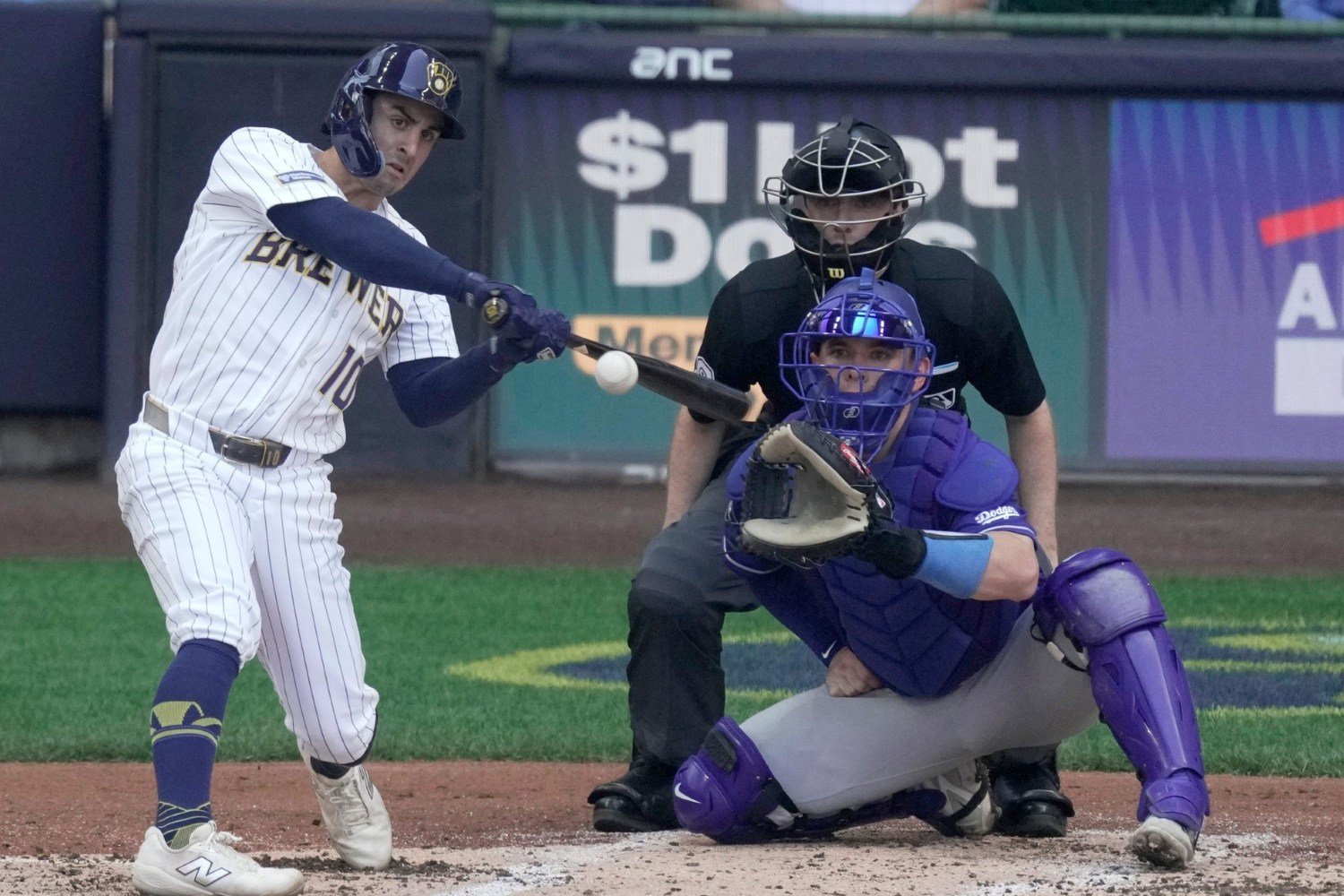
There are lots of ways to get on base, and at his best, Sal Frelick is adept at all of them. He'll take a walk—and, indeed, is walking more this year than in either of his previous two full seasons. He's not exceptional at getting hit by pitches, but nor is he afraid to do so. When he swings, he's one of the better players in the league at the sneaky art of thwacking the catcher's mitt and reaching via catcher interference (four times already this year, after four last year). He's also an excellent singles hitter. He hits the ball in quirky, unpredictable ways, often going the other way or chopping a slow bouncer that earns him an infield single. He's also reached on (non-catcher interference) errors twice this year.
Frelick boasted a .351 OBP in 2025, and given the uptick in walk rate this year, one could plausibly have hoped he would bloom into the team's reliable leadoff man against right-handed pitchers. Instead, though, he's batting .217/.287/.298 in his first 185 plate appearances of the year, and there's a cogent case to be made that he shouldn't be in the lineup as often, regardless of his placement on the card. Garrett Mitchell is outplaying him. Jake Bauers's return to (limited) outfield duty threatens his playing time. What happened to the version of Frelick that seemed so dynamic and dangerous?
It's not much of a mystery. Here's where all of his batted balls in the Statcast launch angle sweet spot (between 8° and 32°) landed in 2025.

Here's the same chart—the same selection of batted balls—for 2026.

I could do some light editing to show you the crucial difference between those two images, but it's unnecessary. You see it, right? In shallow and medium-depth right-center field, where there was a huge swamp of orange singles in 2025, there's just... nothing. Frelick simply isn't hitting the ball that made him great last year: the line drive to right-center.
It's incredibly stark, how he went from hitting that surefire single at least once a week to not doing it at all. Here's a hit that never had any chance not to be one, from last March.
Here's one from September.
All year, like clockwork, against both lefties and righties, Frelick hit clean singles over the second baseman's head. He had 50 batted balls to right or center with an exit velocity of at least 70 miles an hour and a launch angle between 8° and 17° last year. Those criteria sound incredibly specific, but he did that 50 times. Only a fisftul of players were more adept at hitting pulled line drives like that—Nico Hoerner, José Ramírez, Ernie Clement, those types. Hitting that type of batted ball consistently is one of the surest signs of a superbly organized approach at the plate. Of the 50 balls he hit that way, 42 went for hits.
This season, Frelick has only nine such batted balls. He's on pace to see the number of those easy-money singles and doubles be cut roughly in half, which explains almost all his lost production this year. It's not because defenses have started aligning themselves in radical and impenetrable ways. It's not because pitchers have started working him especially differently. Rather, Frelick just isn't getting the bat head out far enough to hit the ball that way anymore.
Frelick's swing is about as fast as it was in 2025, but it's a bit flatter. More problematically, he's letting the ball travel more—arguably, too much. Last season, his average contact point was 27.8 inches in front of his center of mass, according to Statcast. As you would guess, when you isolate those well-hit balls to the middle of the diamond and the pull field, that point edges forward, to 28.2 inches. This year, though, his contact point is just 24.6 inches in front of him. You can't hit the ball with authority to the pull field with any consistency at that depth in the hitting zone—at least, not with Frelick's swing. Guys who swing steeper and/or faster might be able to, but Frelick needs to get the bat head out and be slightly around the ball to generate that high-quality contact. Because he's letting the ball get deeper this year, he's not getting the barrel to that point where success awaits.
He's hitting more ground balls, and he is pulling those. Much of his hard contact is coming when he gets out in front on the ball—but often, that means that he's rolled over already. Here's where his batted balls at 90+ miles per hour went last season:

Here's the same image for 2026:

Frelick's average exit velocity on balls in the launch angle sweet spot is down from 89.8 MPH last year to 88.9. His average launch angle on balls hit at least 90 MPH is down from 9° to 5°. Both of those numbers are indicators that correlate strongly with overall offensive value, and especially value on contact. That Frelick is hitting it less hard when he finds the right line and less high when he hits it hard speaks to the problems at hand, and the contact point tells us where the problem lies. Somehow, he has to modify his process to get back to catching the ball squarely in that pulled line-drive zone. It might mean a change to his mechanics, to restore some of the tilt his swing has lost this spring. It's more likely that the problem comes down to timing, and to being farther forward in the hitting zone when he rolls his wrists.
Either way, though, the Brewers need him to rediscover that magic. The trademark length that made their lineup so daunting last year is absent right now, with the bottom third of the batting order containing three near-automatic outs. Replacing Frelick is an option, but not an appealing one. The team would strongly prefer that he get right. To do that, he has to catch the ball out front a bit more often, to once again become impossible to defend—instead of pretty darn easy.
Do you approve of the job the Brewers' front office is doing?

Follow Brewer Fanatic For Milwaukee Brewers News & Analysis



-
 1
1


Recommended Comments
There are no comments to display.
Create an account or sign in to comment
You need to be a member in order to leave a comment
Create an account
Sign up for a new account in our community. It's easy!
Register a new accountSign in
Already have an account? Sign in here.
Sign In Now