


Brewers Video
Pitch-calling is the most subtle, mysterious, and semi-spurious art of the great defensive catcher. As delicate a skill as pitch-framing is, it's essentially physical. Sequencing pitches to outsmart an opponent, though, is a much more layered and difficult thing to master. It requires many things: a great memory, high-level executive thinking, poise under pressure, and a certain immunity to boredom. To mix and remix what are often only three or four different options in unique and creative ways, without tying yourself into knots, is a task fraught with opportunities for error.
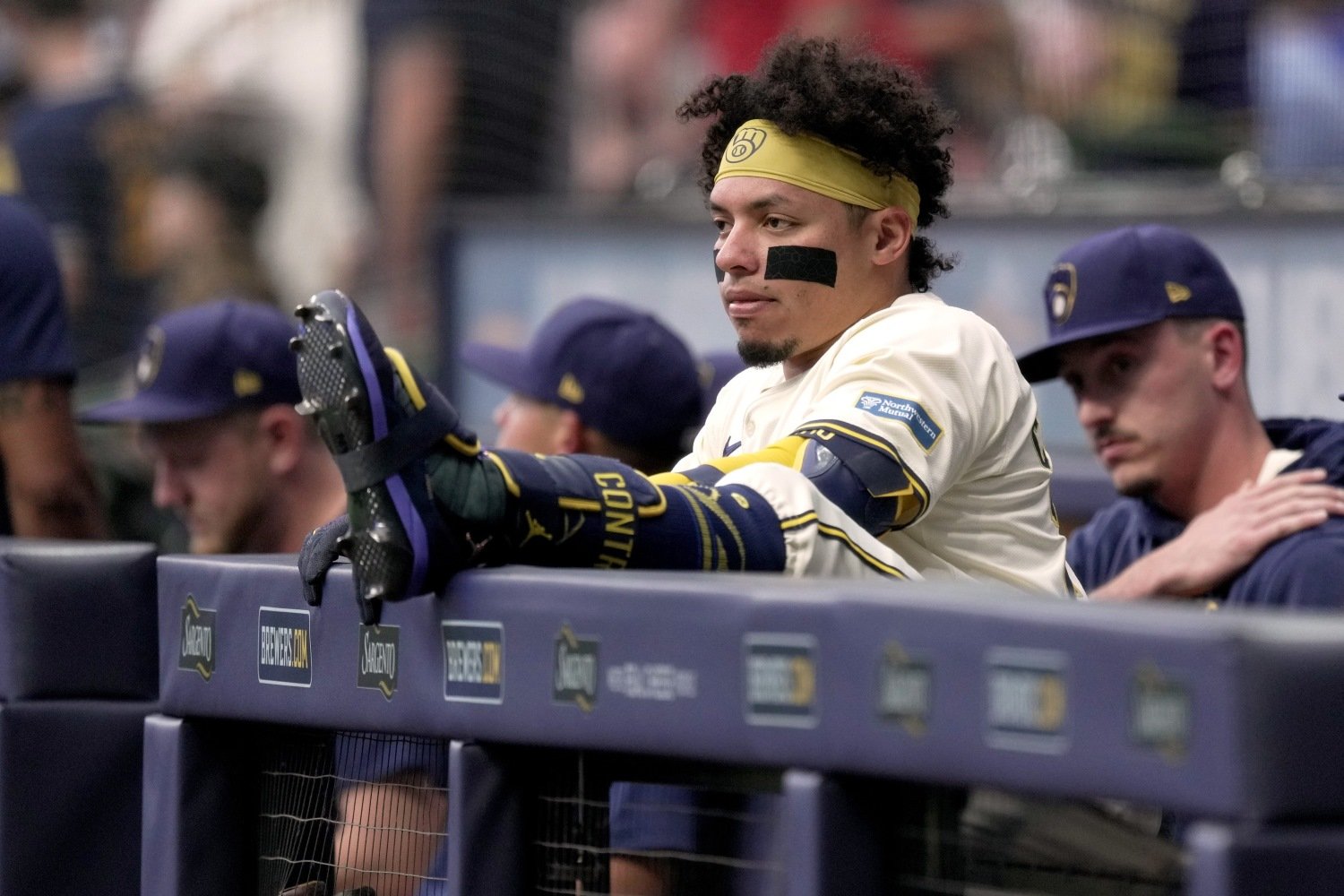
Since the Brewers acquired him from Atlanta, William Contreras has come a long way as a pitch framer and as a collaborator with his hurlers. However, he has one glaring and somewhat predictable flaw as a pitch caller--or at least, he stands out from the crowd in a fairly obvious way, and it's worth asking whether he ought to do things differently.
As a general rule, the Brewers use hard pitches about as often as any team in baseball. Contreras, in particular, uses four-seamers, sinkers, and cutters more than all but one other catcher in the league--Pittsburgh's Yasmani Grandal. Once he does turn to offspeed or breaking stuff, though, Contreras is especially likely to veer back to his base. After anything soft or breaking, Contreras calls hard pitches more often than anyone else, and by no small margin.

The patterns into which Contreras often falls--hard stuff, hard stuff, breaking ball or offspeed pitch, then back to the hard stuff--get him into some trouble. Opposing hitters have an OPS in the lowest quintile of the league against Contreras this year, overall, but if we isolate the pitch after something soft or breaking, he's merely average, at .659. Often, the pitch after a breaking ball or changeup is in an advantageous count, so the league does at least that well in many cases.
Going right back to hard pitches on the backs of breaking or offspeed ones has the unfortunate tendency to mean hittable pitches in the zone. Brewers pitchers have given up 22 home runs on hard pitches that came on the heels of soft ones with Contreras behind the plate. No catcher in the league has given up more such dingers. Consider the plate appearance in the 11th inning last Saturday in Minnesota, when Jakob Junis and Contreras were trying to finish off the Twins with a two-run lead.

Junis set Carlos Santana up with a changeup, but then threw two errant sinkers. He got back into the count with a slider, breaking low and in, and if he'd backed it up with another, he might very well have closed out the contest. Instead, though, Contreras called another sinker. Junis missed badly with it, so the blame can't all fall on Contreras, but he grooved one on the inner portion of the plate, and Santana slammed the ball into the night, tying the game.
Doubling up, with any pitch type, is highly valuable. Multiple studies over the last decade and change have demonstrated that throwing the same pitch type back-to-back is an effective way to increase overall effectiveness. Batters whiff more often when pitchers double up. Batters also whiff more often, regardless of previous pitch, on breaking and offspeed pitches.
Contreras seems temperamentally unsuited to doubling up. He has a craving for novelty in the endeavor of pitch-calling, and he's struggling to balance the unavoidable simplicity of the task with the complexity required to keep hitters guessing. Maybe it doesn't have to be doubling up, in his case. Maybe there are other, more multilayered ways for him to help his batterymates problem-solve their way through at-bats. After all, he's still helped pitchers put up good numbers, on the whole. Clearly, though, there's more that Contreras could do to subvert hitters' approaches and give the Crew an edge through sequencing. He has to resist the pull back toward the fastball, especially right after something else.
Do you approve of the job the Brewers' front office is doing?

Follow Brewer Fanatic For Milwaukee Brewers News & Analysis



-
 2
2


Recommended Comments
There are no comments to display.
Create an account or sign in to comment
You need to be a member in order to leave a comment
Create an account
Sign up for a new account in our community. It's easy!
Register a new accountSign in
Already have an account? Sign in here.
Sign In Now