


Brewers Video
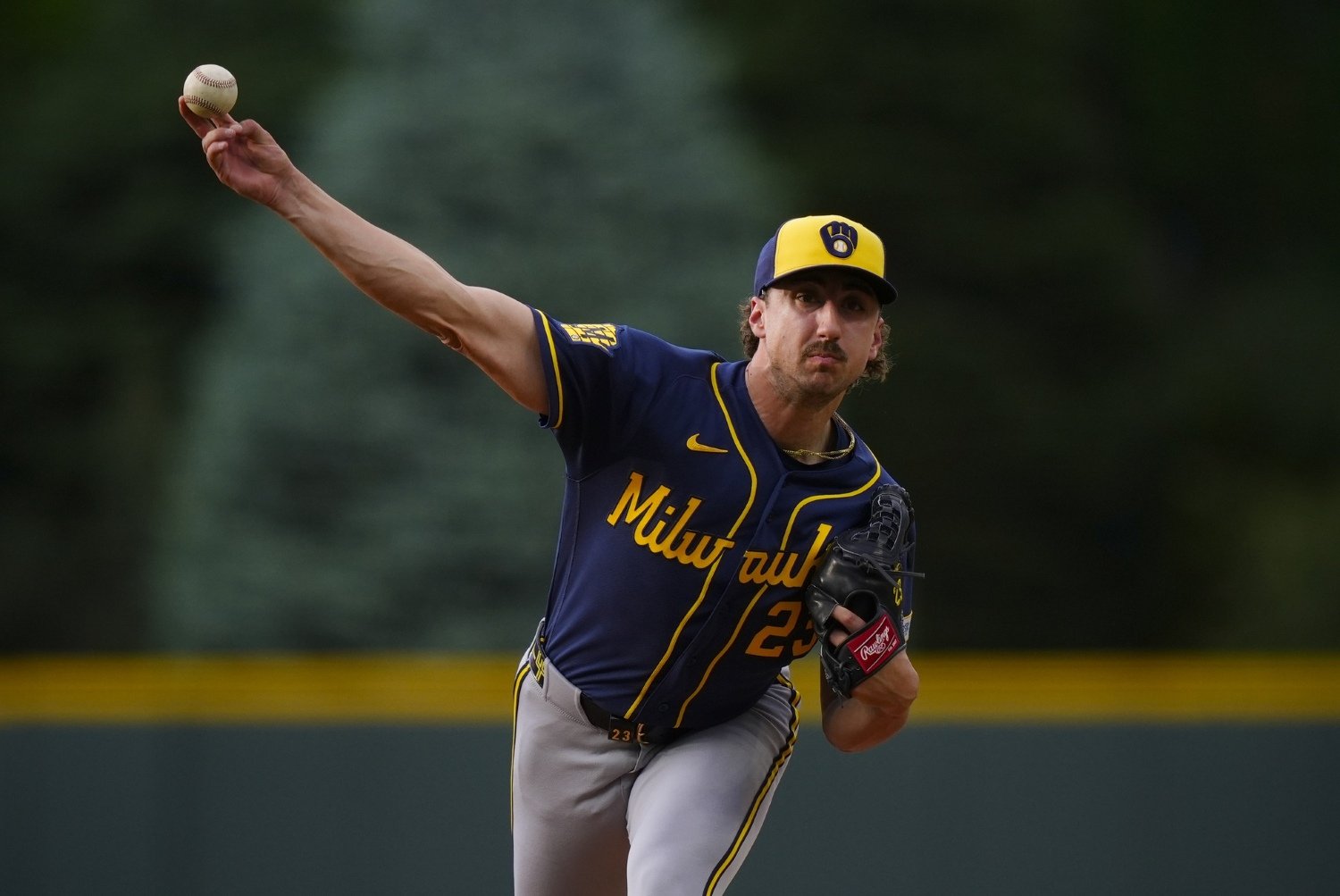
When the Milwaukee Brewers got Brandon Sproat, they gave up their 2025 ace in Freddy Peralta. The idea of having a primary option who could give Pat Murphy’s squad a chance to win every fifth day hung in the balance, though those questions were answered by megastellar starts to the season from Jacob Misiorowski and Kyle Harrison. Sproat doesn’t need to be the team’s ace, but he does need to be a consistent contributor in a rotation that is being jostled by injuries and the unsteady development of young arms beyond his own. Let’s break down the things Sproat needs to harness to become the presence Milwaukee needs.
One of the major sources of appeal with Sproat’s game is his varied pitch arsenal. While some starters get by with three or four options, the University of Florida product rolls with six different pitches: the sinker, cutter, four-seam fastball, curveball, sweeper and changeup. The more options a hitter has to choose from, the better the odds for a pitcher. As we know, the Brewers love guys with multiple fastball shapes, in particular.
So far, Sproat’s four-seamer, which rolls in at an average velocity of 96.4 miles per hour, is his most productive pitch. Opposing hitters are managing just a .204 batting average against it. The trick will be to tap into more value from one of his breaking balls.
Sproat is yet to see a lot of his potential turn into results, but he does have a few above-average metrics through the first half of the season. As a byproduct of having a firm fastball and a varied pitch arsenal, he’s running an above-average 24.7% strikeout rate. He's fresh off a six-inning, scoreless outing against the Cincinnati Reds on June 23. In order to make starts like this more consistent, the former Mets starter still has a few wrinkles to iron out.
For one, not all of Sproat’s pitches are landing as effective parts of his arsenal. While the four-seamer has worked, Sproat’s cutter, which he uses 25.3% of the time (second-most of any of his six options) is being mashed. He’s allowed his opponents to hit .341 against it, the highest opposing batting average of any pitch.
With a larger sample size than his brief big-league stint last year, he’s also being hit harder on average. In 2025, Sproat gave up an average exit velocity of 87.9 miles per hour. This year, that mark has spiked to 90.2. He’s also running into more barrels this year, seeing a spike from 3.4% to 9.0% of the batted balls he allowed be hit at dangerous exit velocities and launch angles.
The Key Adjustment
Where can someone with Sproat’s ability improve? The strikeout rate is there, but a high average exit velocity and spiked launch angle can lead to extra bases. Sproat’s ground ball rate is at just 42.9%, so it's been easier to elevate him than you'd like for a guy who features the cutter and sinker. If he can keep more of his pitches down and get opposing hitters to roll over on the ball, this could keep more balls in the infield. But the big change, of course, needs to be filling up the zone more consistently.
Sproat has walked almost 11% of the batters he's faced this year. He's making big progress on that front, with just five free passes issued in his last five starts, but he's still worked behind in some counts and put himself in position to get hit hard. That's the final adjustment he needs to make: attacking in ways that remain unpredictable, but staying in the zone. We may have seen him turn the corner on that front already—and if so, the Brewers might now have one of the best rotations in baseball.
Do you approve of Brewers' ownership?

Follow Brewer Fanatic For Milwaukee Brewers News & Analysis



-
 1
1


Recommended Comments
Create an account or sign in to comment
You need to be a member in order to leave a comment
Create an account
Sign up for a new account in our community. It's easy!
Register a new accountSign in
Already have an account? Sign in here.
Sign In Now