


Brewers Video
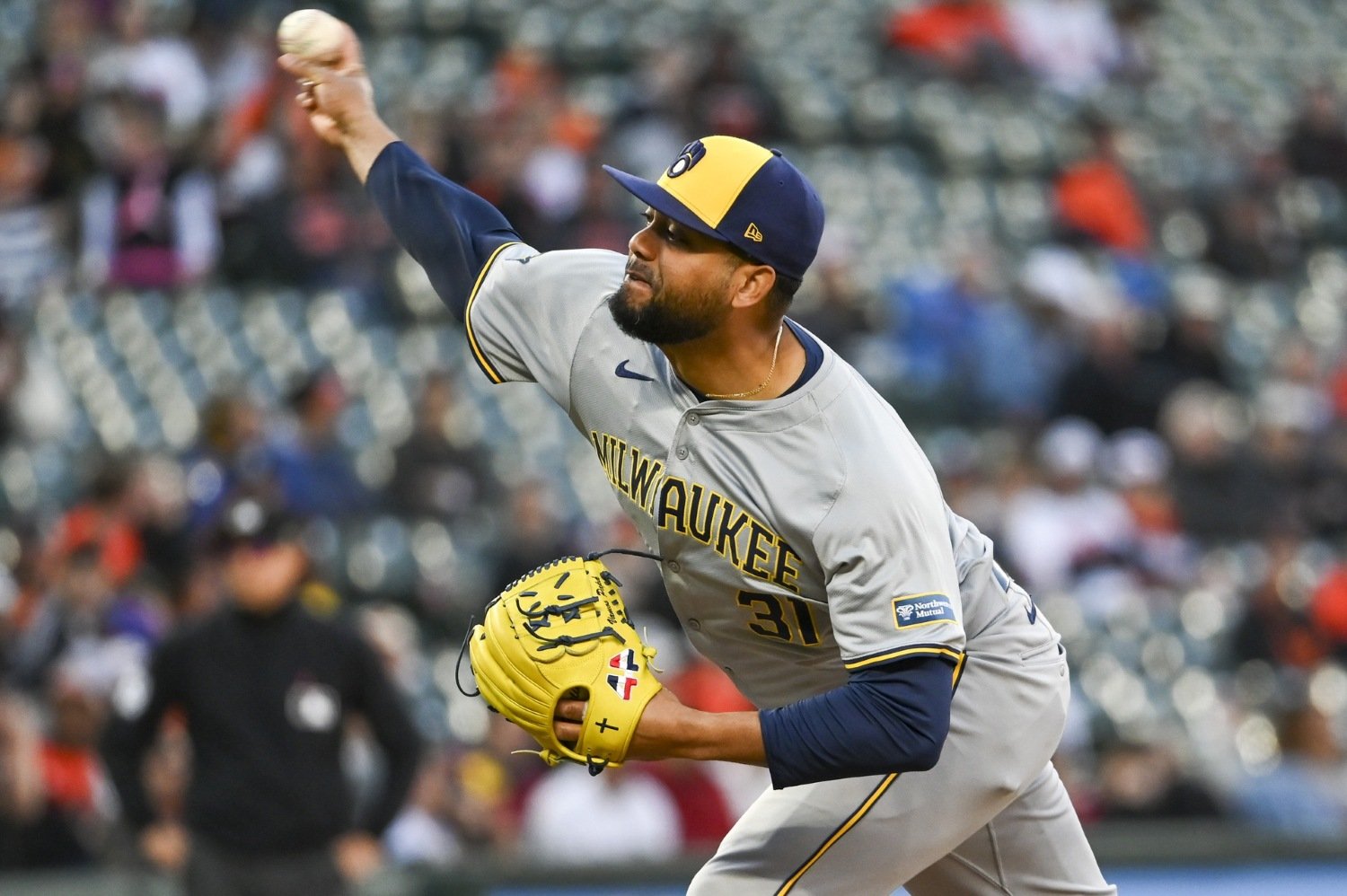
The Brewers' stout middle reliever didn't exactly have a bad 2024, but it was largely frustrating for him. He didn't seem to dominate hitters the way it seemed that he should. Maybe we can now say why.
It's not like Joel Payamps completely fell apart in 2024, after a very strong 2023 that made him one of the most prominent hurlers in the vaunted Brewers relief corps. He did seem to flirt with being designated for assignment occasionally, and as late as the end of July, his ERA was 4.26, underpinned by a pedestrian 22.5% strikeout rate.
That was strange, too, because Payamps's stuff hadn't gone all that much downhill. He might have lost half a tick of velocity on the fastball, but his four pitches still had the ability to baffle hitters when he was right. Over the final two months, too, he locked all of that in. His ERA from Aug. 1 onward was 0.86, and he fanned 30.7% of opposing batters over a 21-inning span.
In that slice of the season, then, Payamps did realize his strikeout upside. For most of the season, though, it eluded him, and it's worth unpacking why. Doing so should help us understand what to expect from him in 2025, and give us some insight into the craft of working as a short-burst reliever.
Firstly, a word of gratitude and encouragement: I owe the ability to do this analysis to Baseball Prospectus, who rolled out a version of individual pitch grades in the middle of last year and built upon that with Arsenal metrics that tell us a bit about interaction factors between those pitches earlier this month. Thanks to that work, we can study a table like this, with Payamps's StuffPro and PitchPro (for each of which, 0 is average and a negative score is better, because it represents runs against average per 100 such pitches thrown) for each of his offerings and both the actual and the expected whiff rates on those pitches, according to the StuffPro framework.
| Pitch Type | StuffPro | PitchPro | Actual Whiff% | Exp. Whiff% |
| Four-Seam | 0.0 | 0.3 | 33.1 | 34 |
| Sinker | 0.3 | -0.1 | 13.8 | 22 |
| Slider | -0.5 | -1.0 | 29.5 | 41 |
| Changeup | -0.1 | 0.5 | 20.0 | 38 |
StuffPro grades each offering based on its release, velocity, movement, handedness, and count. PitchPro uses all of those inputs and adds location. As you can see, then, Payamps's sinker and slider benefited significantly from good location, whereas his four-seamer and changeup suffered on that basis. Moving over to the righthand columns, note that his four-seamer still basically misses as many bats as you'd hope, despite the imperfect location. Why? Because his errant locations tended to be in the middle of the zone. You can find whiffs there; you're just more likely to get hit hard when batters do connect. The rest of his pitches, however, came up well short of their expected whiff rates.
Here's why. First, consider Payamps's pitch locations for each offering he used against lefties last year.

From a left-handed batter's vantage point, that changeup is not located very deceptively. Obviously, as is true of virtually every pitcher, Payamps's change has considerably more arm-side run than his four-seamer. When he throws that four-seamer mostly up and away from lefties, then, and then complements it with a changeup more often on the inner half than out away from them—and especially when the change too often caught the bottom of the zone, rather than being buried below it—he's not going to fool them very well.
Furthermore, for his slider to land in the center of the plate as often as it did, he had to be starting it out away from them. That could, in theory, make the pitch tunnel well with his four-seamer out of the hand, but in practice, it's Payamps's sinker that tunnels well with the slider—and the shapes of those two pitches complement each other much, much better against fellow righties than against lefties. About halfway through the season, Payamps practically gave up on his changeup, which had been his primary weapon against lefties before he got to the Brewers.
The Brewers moved Payamps over a bit and altered his mechanics a bit when they acquired him, as they do with virtually every pitcher. He benefited in a few ways from that, as we documented during his strong 2023, but that move did somewhat neutralize his changeup. He hasn't found a feel for pairing the pitch with his fastball ever since, and didn't really compensate well for that against lefties in 2024.
Against righties, there's a whole different dynamic at work—but some of the same things come of it.

Payamps didn't seem able to consistently locate his sinker, so he often leaned on the four-seamer even against righties last year. As you can see, though, a lot of his four-seamers ended up in the fat part of the zone, and again, the slider works much better off the sinker. Between these two graphics, it's not that hard to see why he missed many fewer bats than his individual pitch grades would have led us to expect.
To reinforce what we're seeing visually, here are Payamps's percentile scores in BP's Arsenal metrics, which Jack Stern explained through a Brewers lens this week:
- Pitch Type Probability: 29th percentile
- Movement Spread: 19th
- Velocity Spread: 10th
- Surprise Factor: 45th
In other words, because of those faulty interactions—the changeup locations being all wrong to generate deception, pairing the wrong fastball with the slider to lefties, and the fastball filling up the zone against righties too much—Payamps's arsenal doesn't make him more than the sum of his parts. In fact, he's less than that sum. Hitters can spot his stuff relatively well, relatively early, and while he can occasionally fool them badly with the wide variance between the sinker and slider in movement, most of the time, hitters' identifications of his pitches are right.
Tweaking where he threw his pitches and how he mixed them did make him better late in 2024, and the slider gained a little more sweep and the sinker gained a little more run. It wouldn't be surprising if Payamps came back in 2025 having totally scrapped the changeup, but with a better idea of how to attack lefties with the pitches left in his repertoire—and improved command, to complement that change in the mix. If he reimagines and recombinates his stuff, he can get much more out of it. When he's at least as much as the sum of his parts, he's awfully good.





Recommended Comments
Create an account or sign in to comment
You need to be a member in order to leave a comment
Create an account
Sign up for a new account in our community. It's easy!
Register a new accountSign in
Already have an account? Sign in here.
Sign In Now