


Brewers Video
Last week, MLB's Competition Committee proposed some tweaks to the new and evolving rules around pitch timers and mound visits. I don't care overmuch about the length of games, but these adjustments still got me excited.
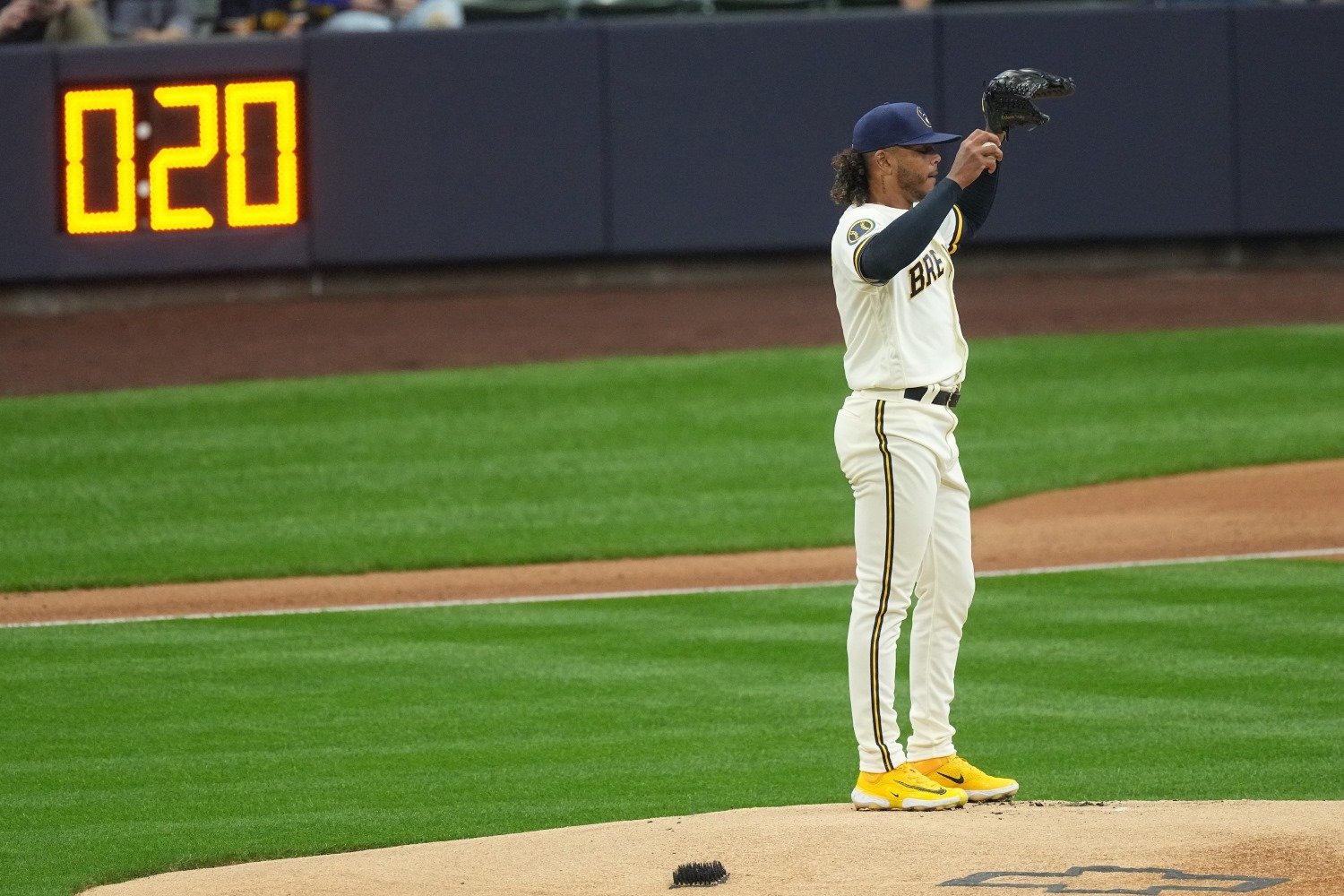
If adopted, the new pitch timer would force a pitcher to begin their delivery within 18 seconds of getting the ball back with runners on base. In 2023, that interval was 20 seconds. According to ESPN's Jeff Passan, who wrote up the proposed changes, the league is doing this in response to some upward creep in the average length of games, from 2 hours, 37 minutes in the early months to 2 hours, 44 minutes in September.
I don't care about time of game. In fact, since I believe competitive late-season games probably ought to run a bit longer than those played in April and May (by fresher players, often in cold weather and in front of sparser crowds), I tend to see that creep more as a feature than as a bug. Nonetheless, I heartily support this change, because the most interesting areas in which the pitch clock made an impact weren't anything as boring as the average length of contests.
Putting a timer on the showdown between batter and pitcher changes the dynamic of that interaction. When runners reach base, the tension and compression created by that ticking clock get even greater. I love that tension; I love that compression. I want to see the pitcher sweat when they're trying to work out of a jam. I want to see hitters trying almost (but not quite) frantically to reset their muscles after a swing and miss, refocus their eyes, regain their breath, take a sign from the third-base coach, and then lock in on the pitcher. I want to see the minds of the catcher, pitcher, and hitter race as the battery tries to outguess and outfox the batsman. When the option to deflate that balloon of stress and cogitation by simply disengaging is there, it's hard to trace that mental volley. When everyone is locked in, it shows up, in body language and then in results.
I anticipate some unforeseen consequences with this. Those are always present, when a change is made, especially in something as complex and as misunderstood as baseball. The timer itself was an underrated driver of the increase in stolen bases in 2023, and tightening the screws on pitchers by taking the clock down from 20 seconds to 18 is going to increase runners' newfound advantage. The pitcher will still be entitled to two disengagements within each at-bat, but using them proved to be a surefire way to give runners extra information and greater courage, so hurlers will keep trying not to step off or throw over except when necessary. The pressure of runner-on-base situations is going to keep rising, and that's going to be a joy to watch.
Pitchers are very worried about this, because they believe that the pitch timer caused an increase in injuries this past season. Max Scherzer voiced those concerns on a baseball web show Tuesday.
Max Scherzer says top surgeons Keith Meister and Neal ElAttrache have both said pitchers' arm injuries have been more severe since the pitch clock changes.
— Foul Territory (@FoulTerritoryTV) November 20, 2023
▶️ https://t.co/6KoSRqSO9A pic.twitter.com/uCRACNLLqU
For now, though, the data on that is insufficient to establish causation, and the surgeons supposedly talking about it are engaging in the same informed but essentially idle chitchat as pitchers themselves or tangentially-connected analysts (like me!). Even if solid science were to show that pitchers have gotten hurt more often (or more severely) while working under the pitch timer, though, I wouldn't want to see it altered. Yes, another element of this is that pitching will be more difficult and more aerobically demanding. Again, I'll use the software terminology: that's a feature, not a bug.
For far too long, pitchers have been incentivized and even coached to empty the tank fast. They throw at too high an effort level on each pitch. They emphasize velocity, spin, and movement, at the expense of intellect and command. Modern pitchers squawk and cluck at the implication that they're not craftsmen of the same material as their forebears, and they're half-right. They're more talented than those guys were. They're better, in a brutalist sort of way. But they're more machine than man, half the time, and it's their own fault, and it's hurting baseball.
Over and over, during the slow march toward the implementation of the pitch timer, Rob Manfred said that he wanted to change the pace of action in MLB, more than the lengths of games. I think he was mostly making a mealy-mouthed public statement aimed at gaining the widest possible support for a fundamentally capitalist measure, but when he said that, he fell bass-ackward into the truth. The league needs to shave strikeouts more than it needs to shave seconds, but right now, shaving more seconds is the right way to try to shave strikeouts. If pitchers keep trying to pitch the way they've pitched for the last decade under these evolving rules, they're going to keep getting hurt. The solution is simple, salubrious, and downright beautiful: they should pitch differently, instead. For the old, the stubborn, and the frauds who never would have made the majors if not for the obsession with 95 and a slider, that will sound harsh. Let them adapt, or let them fade away into independent ball.
I want the showdown. I want the pitcher and the batter in nuanced and glorious confrontation, and I would love it to more often be a starter working a third time through the order or a closer with 12 years' experience on the mound, instead of so often being an anonymous one-inning guy bused in for the day from Triple A. It's an oblique approach to the problem, but it's also the best one. Shorten the pitch timer until pitchers learn to pitch differently. Hitters will feel their own rush, anyway, and we'll all profit from the anxiety of each.
Are you optimistic about the Brewers right now?

Follow Brewer Fanatic For Milwaukee Brewers News & Analysis



-
 1
1


Recommended Comments
Create an account or sign in to comment
You need to be a member in order to leave a comment
Create an account
Sign up for a new account in our community. It's easy!
Register a new accountSign in
Already have an account? Sign in here.
Sign In Now