


-
Posts
428 -
Joined
-
Last visited
Steve Drumwright's Achievements





-
 As if the time crunch wasn’t already enough with a lockout looming in just over a month, the Milwaukee Brewers have plenty of decisions regarding their players who are up for arbitration. There are 16 players going through the process, several for the first time. Only the Tampa Bay Rays and the Boston Red Sox have more at 17. Decisions aren’t just monetary. Some might be facing reduced playing time in 2027—or at least a fight for their roster spot. Here is who is up for arbitration on the Brewers and what they are projected to make, via MLB Trade Rumors. Decisions on nontendering players aren't due until Nov. 20, with some players cutting deals before then to return. Most decisions will come down on that day, however. 1B Andrew Vaughn, $8.5 million If I told you that a Brewers first baseman hit 26 homers this year, you would have been hard-pressed to say that it was Jake Bauers. Vaughn, whose career had a resurrection after coming over from the Chicago White Sox for right-hander Aaron Civale in June 2025, hit nine homers in 254 plate appearances, including five homers in July, his first month with the team. This year? Vaughn hit just six long balls in 331 plate appearances, but had a very nice batting average as part of a .306/.390/.444 slash line, driving in 43. Prediction: The Brewers will have time to make a decision on Vaughn, who is in his last year of arbitration eligibility. He is not coming back at $8.5 million regardless of what happens with Bauers as he hits free agency and is due for a nice payday. The Brewers should have an idea whether they can re-sign Bauers by the time Nov. 20, the non-tender deadline, rolls around. It could be up to Vaughn if he will take a cut from the $7,650,000 he made in 2026 or choose to hit free agency. The guess here is Vaughn will be elsewhere in 2027. C William Contreras, $14.6 million If you had any doubt about the catcher’s value, all you had to do was watch what he did in the postseason, especially the World Series, as he was named MVP for everything he did. He was on his game, particularly defensively, while delivering big hit after big hit. Contreras had a .270/.341/.417 slash line during the regular season, which produced an OPS+ of 108, the lowest mark in his last four seasons. Still above average. Prediction: This is Contreras’ last trip through arbitration before he hits free agency following the 2027 season. The Brewers avoided a hearing with Contreras last offseason with a last-minute deal for $9.4 million (Brewers offered $8.5 million while Contreras sought $9.5 million). This year’s projection is $14.6 million, which is similar to the $14.5 million club option built into the previous settlement. Contreras is also a star Brewers player entering the dreaded final year of club control, which led to the exits of Josh Hader, Corbin Burnes and Freddy Peralta (contract extension, not club control). As with others on this list, the Brewers will have a shorter window and an uncertain contractual landscape under the upcoming new collective bargaining agreement. A trade is certainly possible considering Contreras’ value will be the highest it has ever been, but the guess here is that the Brewers give him the Willy Adames treatment and take him to the end of his contract. There is not a great option in the minors waiting to take over as Jeferson Quero dealt with injuries this season, relegating him to mainly a designated hitter role (70 of 118 Triple-A starts). RHP Bryse Wilson, $1.1 million The right-handed reliever certainly had a strange travel itinerary for 2026. He signed a minor-league contract with the Philadelphia Phillies last offseason and started the year at Triple-A, then had an opt-out in June, so the Phillies called him up for a game before being designated for assignment. The pitching-desperate Chicago Cubs traded for Wilson, pitched him in two games, and DFA’d him. Wilson then landed with the Brewers, who had him on the MLB roster for 2023-24. He served as part of the B bullpen and did a solid job, posting a 2.95 FIP (3.51 ERA) over 13 appearances and 25⅔ innings. Prediction: Considering the MLB minimum is expected to be $1 million next season, bringing Wilson back would seem to be on the table, but perhaps on a minor-league contract to protect against any moves the Brewers make during the offseason, including a probable frenzy once the lockout ends. RHP Trevor Megill, $8 million The right-hander was very good, serving as the closer after initially sharing the role with Abner Uribe to begin the season. Megill was nails at the back end of the bullpen, converting 30 of 33 save opportunities while putting up a 1.85 FIP (2.63 ERA) with a career-best 6.2% walk rate and a strikeout rate of 28.5%, right near his 28.8% career mark. He also had a .181 opponent batting average, the best of his career. Prediction: Like Contreras, Megill is in his last year of arbitration and will be a free agent after 2027. His projected arbitration number of $8 million doesn’t blow the Brewers’ budget after he made $4.7 million in 2026. But as mentioned in the Contreras item above, Megill will be a popular trade candidate and one the Brewers might be more apt to move, getting prospects in return in the cycle of life with the Brewers. Uribe could become the closer if Megill does leave. LHP Angel Zerpa, $1.3 million The left-hander, acquired from the Kansas City Royals for outfielder Isaac Collins and right-handed reliever Nick Mears last offseason, looked really good in the World Baseball Classic for Venezuela and then in his early-season outings. But then he started to struggle and required season-ending Tommy John surgery in May after just 12 appearances. That puts Zerpa out until late 2027 if not the entire year. Prediction: The price to bring Zerpa back is very low and a no-brainer at anything in this neighborhood. With some looming CBA changes, you wonder if the Brewers sign Zerpa to a two-year deal that would guarantee him being with the Crew in 2028. CF Garrett Mitchell, $2.7 million The center fielder had a breakout season while staying healthy for the first time since the Brewers drafted him in the first round of the 2020 draft. Mitchell established himself as the everyday center fielder with a .262/.354/.416 slash line, 11 homers and 65 RBIs. He stole only 14 times and was caught 11 times while playing in 145 games after being in just 141 over the past four seasons. Mitchell made the Brewers’ top defensive play of the postseason when he robbed Manny Machado’s ninth-inning drive in Game 4 of the NL Division Series. His defense is tremendous, but he could use more fine-tuning at the plate while increasing his success stealing bases. Prediction: Mitchell is in his second year of arbitration, and his projected $2.7 million salary is a bargain based on what he produced this year. Do the Brewers bank on Mitchell staying healthy in 2027 based on the training changes he made last offseason and blossom into the player they envisioned when they took him with the 20th overall pick in 2020? Or do they sell high on Mitchell knowing Luis Lara and Brandon Lockridge can man center field? While the Brewers will listen to offers for Mitchell, he returns next season. 2B Brice Turang, $9.5 million Already among the elite defensive second basemen in all of MLB, Turang has blossomed offensively the last two seasons. After hitting just .218 as a rookie in 2023, he posted a career-high .288 average in 2025. While that number slipped to .268 in 2026, he did hit career highs of 21 homers and 100 RBIs, resulting in an .816 OPS, the best of his four MLB seasons. He just missed a 20-20 season with 19 stolen bases, his lowest total. He was also a force in the postseason on both sides of the ball. Prediction: No decisions to be made here yet. Turang joined the arbitration process last year as a Super 2, making $4.15 million this year and projected to nearly double that this offseason to $9.5 million. Under club control through 2029, you wonder if the Brewers try to get Turang to sign an extension covering the next three seasons, perhaps buying out at least one free-agent year. Otherwise, the rumblings about moving Turang could begin following the 2027 season. OF Akil Baddoo, $1.3 million The outfielder was a weird signing for the Brewers to begin with last offseason, signing a split contract. He never appeared in the majors this season and slashed just .252/.342/.469 in 64 games at Triple-A Nashville while dealing with injuries. Prediction: Baddoo will be nontendered or traded. LHP DL Hall, $1 million Did anyone on the Brewers have a better, yet so quiet, 2026 than the left-handed reliever? Hall had a 1.91 ERA (3.88 FIP) in 47 appearances and 61⅓ innings. His walk rate was very high at 14.5%, while his 26.6% strikeout rate was solid. He developed into more leverage situations at the end of the season and when they presented themselves in the postseason. He picked up three playoff wins. Prediction: Again, with the MLB minimum expected to be $1 million in 2027, even doubling Hall’s projected salary would be a bargain for a reliable bullpen lefty as he goes through arbitration for the first time. RF Sal Frelick, $2.4 million The right fielder is not only one of the heart-and-soul players on the roster, but also one of the leaders. He faces offseason surgery on his right shoulder, with that injury contributing to his down season offensively. After being in contention for the NL batting title in 2025 before finishing with a .288/.351/.405 slash line, 12 homers and 63 RBIs, Frelick posted a .230/.295/.319 slash line with four homers and 40 RBIs in 384 plate appearances. But his season will be remembered for the big tying home run in Game 2 of the World Series. Prediction: In his first year of arbitration, Frelick is still very affordable at this price. But the Brewers’ outfield is becoming more crowded with the addition of Luis Lara and Mitchell establishing himself in center. At some point, another team will come after Frelick and the Brewers should seriously listen. 3B-SS Joey Ortiz, $2.4 million After being the Opening Day shortstop, Ortiz was knocked off the position when Cooper Pratt was called up in June to make his MLB debut. That moved Ortiz into a platoon at third base with David Hamilton, but that also seemed to free up Ortiz offensively. Ortiz was slashing .207/.299/.262 before Pratt’s promotion, then finished the season with a .270/.328/.402 slash line with nine homers and 45 RBIs. He also provided his top-shelf defense at both positions, standing out more at the hot corner than shortstop, where he was very steady, his error in the 12th inning of Game 4 of the World Series notwithstanding. Prediction: Ortiz is hitting arbitration for the first time. There is no doubt the Brewers would bring him back at anywhere near the $2.4 million he is projected to make in 2027. Complicating Ortiz’s outlook is the presence of Jesus Made, the top overall prospect in baseball who could be ready to make his MLB debut on Opening Day, if not sometime during the season. Ortiz may be attractive to another team, especially one looking for defense, but the Brewers will be happy having him on the roster in 2027. C Bo Naylor, $1.5 million Acquired from the Cleveland Guardians along with right-handed reliever Codi Heuer at the trade deadline, Naylor was around for depth and played in just three games during the final two months, mostly seeing action at Triple-A Nashville. He is offensively challenged, as evidenced by his career slash line of .200/.280/.374 with 41 homers and 128 RBIs in 349 games. He did hit double-digit homers in 2023-25 with the Guardians. Prediction: Up for arbitration for the first time, the Brewers would probably be satisfied to enter 2027 with Naylor as their backup catcher, but nothing more than that. The $1.5 million price tag could probably be settled with a split contract, leaving the Brewers wiggle room with possibly bringing Gary Sanchez back. A nontender candidate, too. 3B David Hamilton, $1.6 million The versatile infielder, acquired from the Boston Red Sox in the Caleb Durbin deal, was a surprising offensive force as the Brewers tapped into his speed. He led MLB in bunt hits and was the second-fastest baserunner behind Chandler Simpson of the Tampa Bay Rays. Even in a part-time role, he stole 30 bases and had a .245/.314/.336 slash line with four homers and 26 RBIs. Had two cool postseason moments, homering in the ninth inning of the clinching Game 4 of the NL Championship Series, then again to tie the game in Game 4 of the World Series. He also had a crucial error in World Series Game 4. Prediction: All those words are nice, but Hamilton is strictly a platoon player, albeit a valuable and versatile one. In arbitration for the first time, he turned in a solid season defensively after having a grand total of one game at third base previously, then 87 this year. Also filled in nicely at shortstop. Like Ortiz, Hamilton’s future with the Crew depends on what Made’s status is. If Made is with the team on Opening Day, one of Ortiz or Hamilton won’t be (both do have minor-league options remaining). RHP Grant Anderson, $1 million A key member of the Brewers’ B bullpen group, the right-hander had a solid second season with the Brewers. In 52 games and 59 innings, Anderson had a 4.32 FIP (3.36 ERA) with a 9.8% walk rate and 22.1% strikeout rate. He won’t excite you with anything he does, but a good guy to have on the roster. Prediction: Anderson, a first-timer in arbitration, wasn’t on any of the postseason rosters, but that doesn’t diminish his value. He is likely to return at this price. LHP Jared Koenig, $900,000 Remember him? The one-time valuable left-handed reliever sustained an elbow injury at the outset of the regular season after three outings. He came back for six appearances at the end of June and through mid-July, but was then optioned to Triple-A Nashville. He was good at Nashville, putting up a 2.21 ERA over 23 games and 20⅓ innings. Prediction: Also in arbitration for the first time, Koenig coming back at what is a minimal deal seems like a simple decision. It was surprising that he didn’t come up at any point down the stretch; perhaps that was because of Hall’s emergence and the acquisition of JoJo Romero, who will be a free agent this offseason. RHP Quinn Priester, $1.3 million This was a lost season for last year’s surprise starting pitcher. Priester was diagnosed with thoracic outlet syndrome in his right shoulder, but said during the postseason that he was on track to be ready for Opening Day. Prediction: Going through arbitration for the first time, Priester is coming back from a tricky injury. The price tag makes it a no-brainer to bring him back even before considering what he did in 2025 after coming over in an April trade from the Boston Red Sox. He should be in the mix for a rotation spot in 2027. Image courtesy of Nathan Ray Seebeck-Imagn Images View full article
-
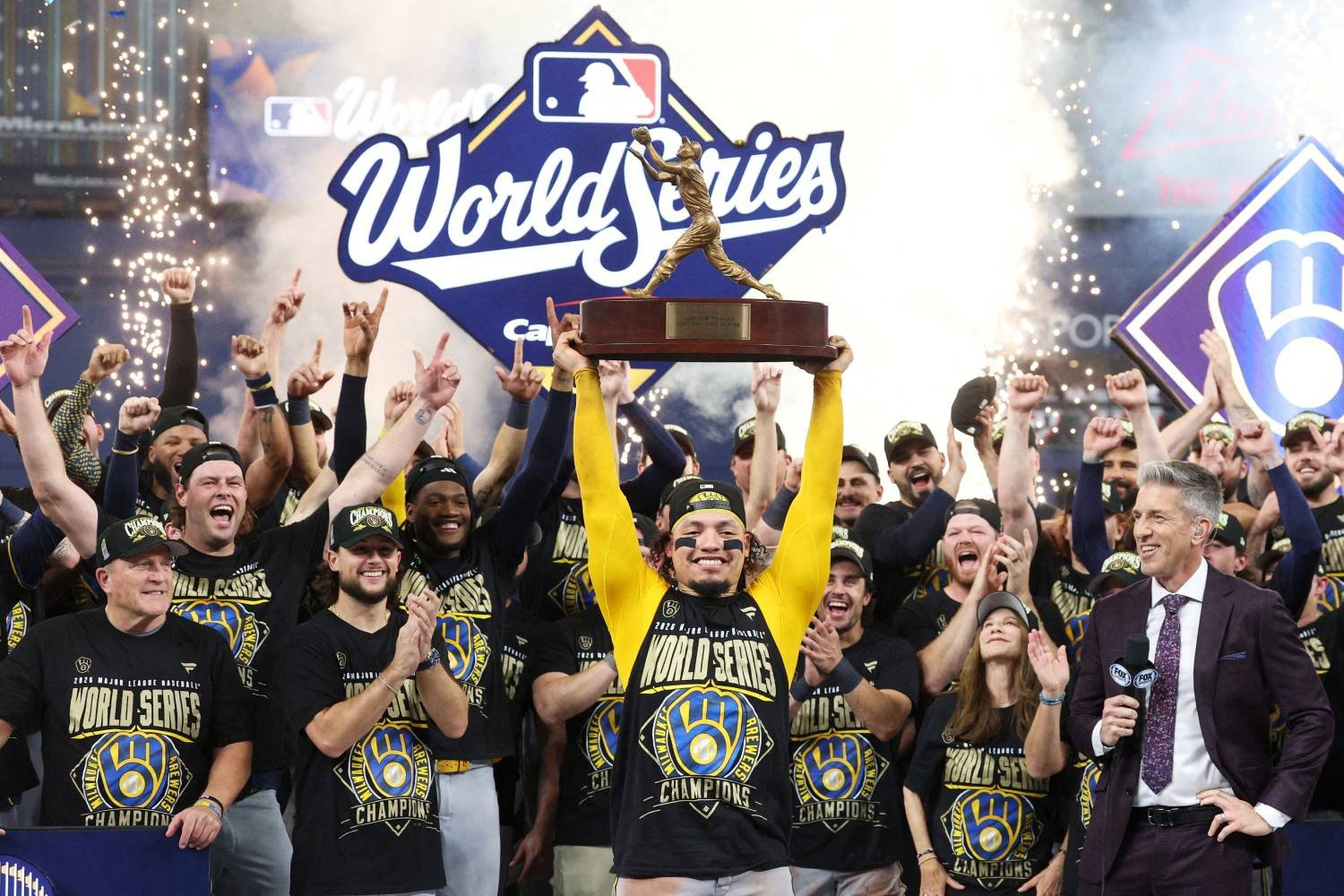 As if the time crunch wasn’t already enough with a lockout looming in just over a month, the Milwaukee Brewers have plenty of decisions regarding their players who are up for arbitration. There are 16 players going through the process, several for the first time. Only the Tampa Bay Rays and the Boston Red Sox have more at 17. Decisions aren’t just monetary. Some might be facing reduced playing time in 2027—or at least a fight for their roster spot. Here is who is up for arbitration on the Brewers and what they are projected to make, via MLB Trade Rumors. Decisions on nontendering players aren't due until Nov. 20, with some players cutting deals before then to return. Most decisions will come down on that day, however. 1B Andrew Vaughn, $8.5 million If I told you that a Brewers first baseman hit 26 homers this year, you would have been hard-pressed to say that it was Jake Bauers. Vaughn, whose career had a resurrection after coming over from the Chicago White Sox for right-hander Aaron Civale in June 2025, hit nine homers in 254 plate appearances, including five homers in July, his first month with the team. This year? Vaughn hit just six long balls in 331 plate appearances, but had a very nice batting average as part of a .306/.390/.444 slash line, driving in 43. Prediction: The Brewers will have time to make a decision on Vaughn, who is in his last year of arbitration eligibility. He is not coming back at $8.5 million regardless of what happens with Bauers as he hits free agency and is due for a nice payday. The Brewers should have an idea whether they can re-sign Bauers by the time Nov. 20, the non-tender deadline, rolls around. It could be up to Vaughn if he will take a cut from the $7,650,000 he made in 2026 or choose to hit free agency. The guess here is Vaughn will be elsewhere in 2027. C William Contreras, $14.6 million If you had any doubt about the catcher’s value, all you had to do was watch what he did in the postseason, especially the World Series, as he was named MVP for everything he did. He was on his game, particularly defensively, while delivering big hit after big hit. Contreras had a .270/.341/.417 slash line during the regular season, which produced an OPS+ of 108, the lowest mark in his last four seasons. Still above average. Prediction: This is Contreras’ last trip through arbitration before he hits free agency following the 2027 season. The Brewers avoided a hearing with Contreras last offseason with a last-minute deal for $9.4 million (Brewers offered $8.5 million while Contreras sought $9.5 million). This year’s projection is $14.6 million, which is similar to the $14.5 million club option built into the previous settlement. Contreras is also a star Brewers player entering the dreaded final year of club control, which led to the exits of Josh Hader, Corbin Burnes and Freddy Peralta (contract extension, not club control). As with others on this list, the Brewers will have a shorter window and an uncertain contractual landscape under the upcoming new collective bargaining agreement. A trade is certainly possible considering Contreras’ value will be the highest it has ever been, but the guess here is that the Brewers give him the Willy Adames treatment and take him to the end of his contract. There is not a great option in the minors waiting to take over as Jeferson Quero dealt with injuries this season, relegating him to mainly a designated hitter role (70 of 118 Triple-A starts). RHP Bryse Wilson, $1.1 million The right-handed reliever certainly had a strange travel itinerary for 2026. He signed a minor-league contract with the Philadelphia Phillies last offseason and started the year at Triple-A, then had an opt-out in June, so the Phillies called him up for a game before being designated for assignment. The pitching-desperate Chicago Cubs traded for Wilson, pitched him in two games, and DFA’d him. Wilson then landed with the Brewers, who had him on the MLB roster for 2023-24. He served as part of the B bullpen and did a solid job, posting a 2.95 FIP (3.51 ERA) over 13 appearances and 25⅔ innings. Prediction: Considering the MLB minimum is expected to be $1 million next season, bringing Wilson back would seem to be on the table, but perhaps on a minor-league contract to protect against any moves the Brewers make during the offseason, including a probable frenzy once the lockout ends. RHP Trevor Megill, $8 million The right-hander was very good, serving as the closer after initially sharing the role with Abner Uribe to begin the season. Megill was nails at the back end of the bullpen, converting 30 of 33 save opportunities while putting up a 1.85 FIP (2.63 ERA) with a career-best 6.2% walk rate and a strikeout rate of 28.5%, right near his 28.8% career mark. He also had a .181 opponent batting average, the best of his career. Prediction: Like Contreras, Megill is in his last year of arbitration and will be a free agent after 2027. His projected arbitration number of $8 million doesn’t blow the Brewers’ budget after he made $4.7 million in 2026. But as mentioned in the Contreras item above, Megill will be a popular trade candidate and one the Brewers might be more apt to move, getting prospects in return in the cycle of life with the Brewers. Uribe could become the closer if Megill does leave. LHP Angel Zerpa, $1.3 million The left-hander, acquired from the Kansas City Royals for outfielder Isaac Collins and right-handed reliever Nick Mears last offseason, looked really good in the World Baseball Classic for Venezuela and then in his early-season outings. But then he started to struggle and required season-ending Tommy John surgery in May after just 12 appearances. That puts Zerpa out until late 2027 if not the entire year. Prediction: The price to bring Zerpa back is very low and a no-brainer at anything in this neighborhood. With some looming CBA changes, you wonder if the Brewers sign Zerpa to a two-year deal that would guarantee him being with the Crew in 2028. CF Garrett Mitchell, $2.7 million The center fielder had a breakout season while staying healthy for the first time since the Brewers drafted him in the first round of the 2020 draft. Mitchell established himself as the everyday center fielder with a .262/.354/.416 slash line, 11 homers and 65 RBIs. He stole only 14 times and was caught 11 times while playing in 145 games after being in just 141 over the past four seasons. Mitchell made the Brewers’ top defensive play of the postseason when he robbed Manny Machado’s ninth-inning drive in Game 4 of the NL Division Series. His defense is tremendous, but he could use more fine-tuning at the plate while increasing his success stealing bases. Prediction: Mitchell is in his second year of arbitration, and his projected $2.7 million salary is a bargain based on what he produced this year. Do the Brewers bank on Mitchell staying healthy in 2027 based on the training changes he made last offseason and blossom into the player they envisioned when they took him with the 20th overall pick in 2020? Or do they sell high on Mitchell knowing Luis Lara and Brandon Lockridge can man center field? While the Brewers will listen to offers for Mitchell, he returns next season. 2B Brice Turang, $9.5 million Already among the elite defensive second basemen in all of MLB, Turang has blossomed offensively the last two seasons. After hitting just .218 as a rookie in 2023, he posted a career-high .288 average in 2025. While that number slipped to .268 in 2026, he did hit career highs of 21 homers and 100 RBIs, resulting in an .816 OPS, the best of his four MLB seasons. He just missed a 20-20 season with 19 stolen bases, his lowest total. He was also a force in the postseason on both sides of the ball. Prediction: No decisions to be made here yet. Turang joined the arbitration process last year as a Super 2, making $4.15 million this year and projected to nearly double that this offseason to $9.5 million. Under club control through 2029, you wonder if the Brewers try to get Turang to sign an extension covering the next three seasons, perhaps buying out at least one free-agent year. Otherwise, the rumblings about moving Turang could begin following the 2027 season. OF Akil Baddoo, $1.3 million The outfielder was a weird signing for the Brewers to begin with last offseason, signing a split contract. He never appeared in the majors this season and slashed just .252/.342/.469 in 64 games at Triple-A Nashville while dealing with injuries. Prediction: Baddoo will be nontendered or traded. LHP DL Hall, $1 million Did anyone on the Brewers have a better, yet so quiet, 2026 than the left-handed reliever? Hall had a 1.91 ERA (3.88 FIP) in 47 appearances and 61⅓ innings. His walk rate was very high at 14.5%, while his 26.6% strikeout rate was solid. He developed into more leverage situations at the end of the season and when they presented themselves in the postseason. He picked up three playoff wins. Prediction: Again, with the MLB minimum expected to be $1 million in 2027, even doubling Hall’s projected salary would be a bargain for a reliable bullpen lefty as he goes through arbitration for the first time. RF Sal Frelick, $2.4 million The right fielder is not only one of the heart-and-soul players on the roster, but also one of the leaders. He faces offseason surgery on his right shoulder, with that injury contributing to his down season offensively. After being in contention for the NL batting title in 2025 before finishing with a .288/.351/.405 slash line, 12 homers and 63 RBIs, Frelick posted a .230/.295/.319 slash line with four homers and 40 RBIs in 384 plate appearances. But his season will be remembered for the big tying home run in Game 2 of the World Series. Prediction: In his first year of arbitration, Frelick is still very affordable at this price. But the Brewers’ outfield is becoming more crowded with the addition of Luis Lara and Mitchell establishing himself in center. At some point, another team will come after Frelick and the Brewers should seriously listen. 3B-SS Joey Ortiz, $2.4 million After being the Opening Day shortstop, Ortiz was knocked off the position when Cooper Pratt was called up in June to make his MLB debut. That moved Ortiz into a platoon at third base with David Hamilton, but that also seemed to free up Ortiz offensively. Ortiz was slashing .207/.299/.262 before Pratt’s promotion, then finished the season with a .270/.328/.402 slash line with nine homers and 45 RBIs. He also provided his top-shelf defense at both positions, standing out more at the hot corner than shortstop, where he was very steady, his error in the 12th inning of Game 4 of the World Series notwithstanding. Prediction: Ortiz is hitting arbitration for the first time. There is no doubt the Brewers would bring him back at anywhere near the $2.4 million he is projected to make in 2027. Complicating Ortiz’s outlook is the presence of Jesus Made, the top overall prospect in baseball who could be ready to make his MLB debut on Opening Day, if not sometime during the season. Ortiz may be attractive to another team, especially one looking for defense, but the Brewers will be happy having him on the roster in 2027. C Bo Naylor, $1.5 million Acquired from the Cleveland Guardians along with right-handed reliever Codi Heuer at the trade deadline, Naylor was around for depth and played in just three games during the final two months, mostly seeing action at Triple-A Nashville. He is offensively challenged, as evidenced by his career slash line of .200/.280/.374 with 41 homers and 128 RBIs in 349 games. He did hit double-digit homers in 2023-25 with the Guardians. Prediction: Up for arbitration for the first time, the Brewers would probably be satisfied to enter 2027 with Naylor as their backup catcher, but nothing more than that. The $1.5 million price tag could probably be settled with a split contract, leaving the Brewers wiggle room with possibly bringing Gary Sanchez back. A nontender candidate, too. 3B David Hamilton, $1.6 million The versatile infielder, acquired from the Boston Red Sox in the Caleb Durbin deal, was a surprising offensive force as the Brewers tapped into his speed. He led MLB in bunt hits and was the second-fastest baserunner behind Chandler Simpson of the Tampa Bay Rays. Even in a part-time role, he stole 30 bases and had a .245/.314/.336 slash line with four homers and 26 RBIs. Had two cool postseason moments, homering in the ninth inning of the clinching Game 4 of the NL Championship Series, then again to tie the game in Game 4 of the World Series. He also had a crucial error in World Series Game 4. Prediction: All those words are nice, but Hamilton is strictly a platoon player, albeit a valuable and versatile one. In arbitration for the first time, he turned in a solid season defensively after having a grand total of one game at third base previously, then 87 this year. Also filled in nicely at shortstop. Like Ortiz, Hamilton’s future with the Crew depends on what Made’s status is. If Made is with the team on Opening Day, one of Ortiz or Hamilton won’t be (both do have minor-league options remaining). RHP Grant Anderson, $1 million A key member of the Brewers’ B bullpen group, the right-hander had a solid second season with the Brewers. In 52 games and 59 innings, Anderson had a 4.32 FIP (3.36 ERA) with a 9.8% walk rate and 22.1% strikeout rate. He won’t excite you with anything he does, but a good guy to have on the roster. Prediction: Anderson, a first-timer in arbitration, wasn’t on any of the postseason rosters, but that doesn’t diminish his value. He is likely to return at this price. LHP Jared Koenig, $900,000 Remember him? The one-time valuable left-handed reliever sustained an elbow injury at the outset of the regular season after three outings. He came back for six appearances at the end of June and through mid-July, but was then optioned to Triple-A Nashville. He was good at Nashville, putting up a 2.21 ERA over 23 games and 20⅓ innings. Prediction: Also in arbitration for the first time, Koenig coming back at what is a minimal deal seems like a simple decision. It was surprising that he didn’t come up at any point down the stretch; perhaps that was because of Hall’s emergence and the acquisition of JoJo Romero, who will be a free agent this offseason. RHP Quinn Priester, $1.3 million This was a lost season for last year’s surprise starting pitcher. Priester was diagnosed with thoracic outlet syndrome in his right shoulder, but said during the postseason that he was on track to be ready for Opening Day. Prediction: Going through arbitration for the first time, Priester is coming back from a tricky injury. The price tag makes it a no-brainer to bring him back even before considering what he did in 2025 after coming over in an April trade from the Boston Red Sox. He should be in the mix for a rotation spot in 2027.
-
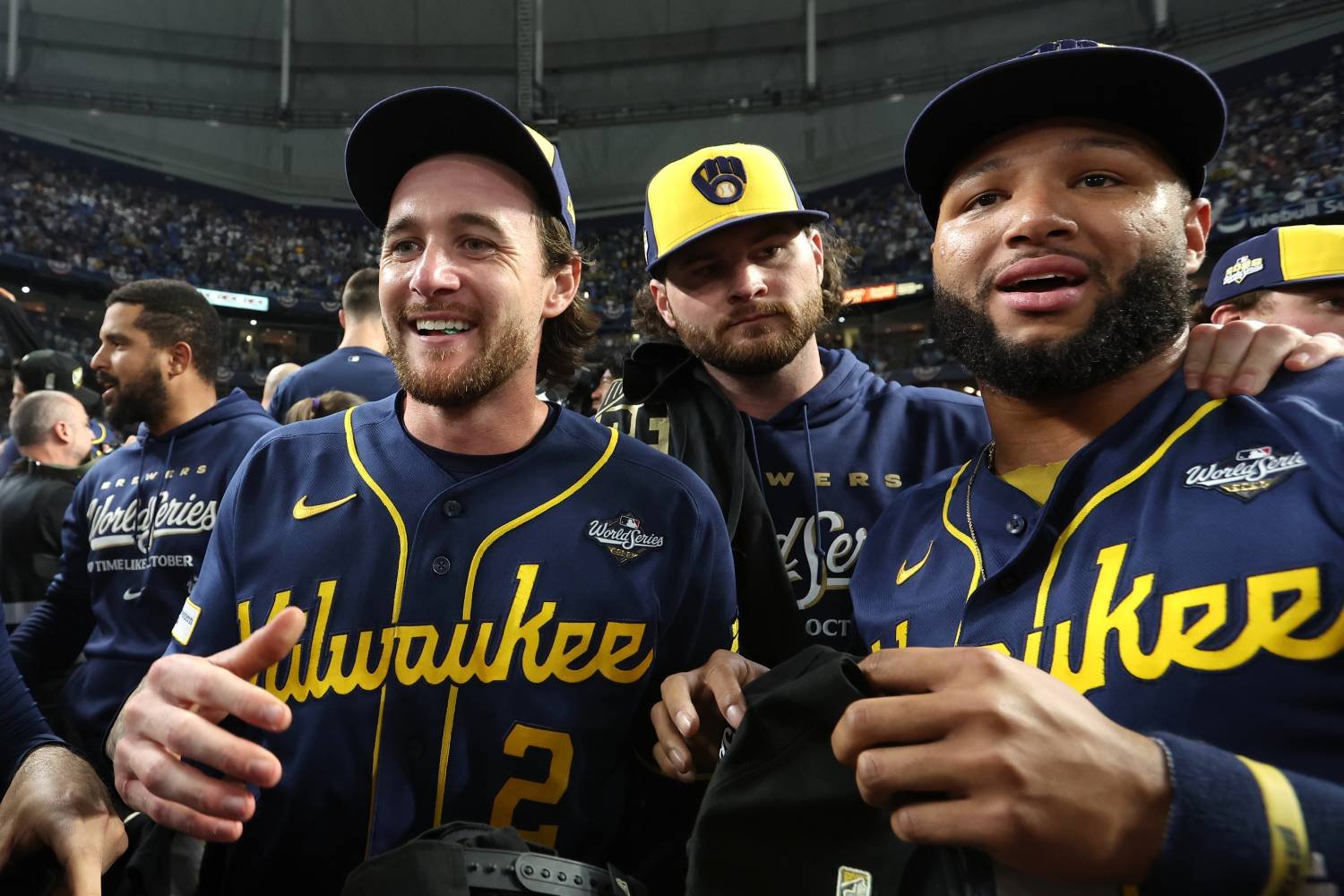 The Milwaukee Brewers already landed the postseason hardware they were seeking. Now, some players are starting to haul in some trophies of their own. Just days after winning the World Series, second baseman Brice Turang and left fielder Jackson Chourio each won NL Gold Gloves on Sunday. For Turang, it was his second Gold Glove, having also won in 2024 when he snagged the Platinum Glove as the NL's top overall defender regardless of position. Chourio's Gold Glove was the first of his three-year career. Turang, in his fourth MLB season, made just five errors in 593 chances at second base, seeing time at the position in 151 games, including 148 starts. He also led the NL with 219 putouts and was tops in MLB at the position with 91 double plays. His 15 total zone rating led MLB, according to Baseball Reference In 151 games (148 starts) at second base, Turang had a .992 fielding percentage, with a career-low five errors in 593 chances. He led the NL with 219 putouts and MLB with 91 double plays. He also led MLB with 15 total zone field runs above average, per Baseball Reference, and 19 outs above average, per Statcast. Chourio has made a remarkable improvement in his defense since breaking into the majors. While he has made just two errors, both in center field in 2025, during his three seasons, his paths to balls and reluctance to make certain plays marked the early portion of his young career. Not this year. Chourio looked like a defensive star in left field this year and even his 13 appearances in center. But in 123 games (112 starts) in left, he caught all 199 fly balls and liners, while notching eight assists for a .989 fielding percentage. He had eight total zone field runs above average and seven OAA. Chourio halted the five-year run of Ian Happ of the Chicago Cubs as the NL Gold Glove left fielder. Both players are now eligible to win the NL Platinum Glove, which will be announced Friday.
-
The Milwaukee Brewers already landed the postseason hardware they were seeking. Now, some players are starting to haul in some trophies of their own. Just days after winning the World Series, second baseman Brice Turang and left fielder Jackson Chourio each won NL Gold Gloves on Sunday. For Turang, it was his second Gold Glove, having also won in 2024 when he snagged the Platinum Glove as the NL's top overall defender regardless of position. Chourio's Gold Glove was the first of his three-year career. Turang, in his fourth MLB season, made just five errors in 593 chances at second base, seeing time at the position in 151 games, including 148 starts. He also led the NL with 219 putouts and was tops in MLB at the position with 91 double plays. His 15 total zone rating led MLB, according to Baseball Reference In 151 games (148 starts) at second base, Turang had a .992 fielding percentage, with a career-low five errors in 593 chances. He led the NL with 219 putouts and MLB with 91 double plays. He also led MLB with 15 total zone field runs above average, per Baseball Reference, and 19 outs above average, per Statcast. Chourio has made a remarkable improvement in his defense since breaking into the majors. While he has made just two errors, both in center field in 2025, during his three seasons, his paths to balls and reluctance to make certain plays marked the early portion of his young career. Not this year. Chourio looked like a defensive star in left field this year and even his 13 appearances in center. But in 123 games (112 starts) in left, he caught all 199 fly balls and liners, while notching eight assists for a .989 fielding percentage. He had eight total zone field runs above average and seven OAA. Chourio halted the five-year run of Ian Happ of the Chicago Cubs as the NL Gold Glove left fielder. Both players are now eligible to win the NL Platinum Glove, which will be announced Friday. View full rumor
-
Unlike many teams coming off a World Series championship, the Milwaukee Brewers are in a pretty good position heading into the offseason. And that is even considering they are losing a few key free agents. This team is built for sustainability, as evidenced by four straight NL Central titles, and that has now paid off in a World Series title. That includes having one of the top farm systems in baseball, which helps keep talent coming and allows the Crew to trade away star players before their contracts are up. Here is a look at where the Brewers’ roster stands going into the offseason, where they are strong and where they need to focus on strengthening. Catcher Who’s here: William Contreras, Bo Naylor, Jeferson Quero Position status: Strong Wild Bill has logged three straight seasons of 1,000 innings behind the plate, quite an accomplishment in itself, but then has been solid to good offensively during that stretch. Contreras posted a .270/.341/.417 slash line with 18 homers and a career-best 94 RBIs, while being one of the top defensive catchers in MLB and guiding a young starting staff to the best record in baseball, not to mention what he did in the postseason. Barring a stunning trade of Contreras, who is entering his final season of club control, the only question at this position is who will be his backup. Naylor was acquired at the trade deadline from the Cleveland Guardians, but provides little offensively. Due to injury, Quero mainly was the designated hitter at Triple-A following his brief call-up and doesn’t feel ready defensively. Could that lead to Gary Sanchez coming back on a cheap deal? First Base Who’s here: Andrew Vaughn Position status: Questionable. There is a very real chance that neither Vaughn nor Jake Bauers is back. Bauers, of course, is a free agent in line for a nice contract, two years after the Brewers cut him and he nearly retired. Vaughn is projected to earn $8.5 million in his final year of arbitration. Considering Vaughn’s lack of power this season (six homers), that might be too steep a price for the Crew to keep him, although he did have a .306/.390/.444 slash line. Vaughn started just twice in the postseason, then came in late as a pinch-hitter on a handful of other occasions. The Brewers could bring Vaughn back on a cheaper contract if they can’t work something out with Bauers. No, power-hitting prospect Andrew Fischer is not ready to jump to MLB yet, so a stopgap would be needed if neither Vaughn nor Bauers returns. Second Base Who’s here: Brice Turang Position status: Strong. The left-handed hitter continued to elevate his offensive game, driving in 100 runs for the first time in his four-year career, while also smashing 21 homers, also a career best after hitting 18 a year ago to go along with 81 RBIs. He was again a tremendous defender, up for a second Gold Glove. He also stole 19 bases and had a 7.3 bWAR. Rarely needs a day off, with his 151 games this year the fewest of his last three seasons. Third Base Who’s here: Joey Ortiz, David Hamilton, Jesus Made Position status: Questionable. There is no question that Ortiz and Hamilton can handle the hot corner defensively. It is on offense where the questions arise. Ortiz became a much better offensive contributor once he was moved off of shortstop and finished the season with a very league-average .270/.328/.402 slash line. Hamilton, meanwhile, was at .245/.314/.336 for his slash line but stole 30 bases. One thing to consider here: Made, the top prospect in all of baseball, could be on the Opening Day roster. While that wouldn’t necessarily change the position's level at the start of the season, Made would bring huge offensive upside. But the Brewers might also want Made to get his feet wet at Triple-A before bringing him up. Shortstop Who’s here: Cooper Pratt, Jett Williams Position status: Strong. Pratt was always a defense-first shortstop from the time he was drafted in the sixth round in 2023. That was borne out by his slash line of .257/.354/.380 in three-plus minor-league seasons. But he was a nice surprise with the bat during his rookie season, putting up a .281/.350/.368 mark with three homers, 34 RBIs and 19 stolen bases in 74 regular-season games. He added to that with his postseason performance, posting a 1.139 OPS over the Brewers' championship run. Ortiz, Hamilton and Made can also move over to short when needed. Another option is Williams, the better of the two prospects (Brandon Sproat) that the Brewers acquired from the New York Mets for Freddy Peralta. He slashed just .233/.340/.384 at Triple-A Nashville in 81 games, which got him another stint in the Arizona Fall League. Williams is also in play at third base and the outfield. Left Field Who’s here: Jackson Chourio, Akil Baddoo Position status: Strong. Chourio displayed superstar potential during the postseason after posting a 20-homer, 20-stolen base season in each of his three MLB seasons. He had his best offensive season (.291/.351/.487, 25 HRs, 75 RBIs, 129 OPS+) while missing the first month of the season with a wrist injury. He will turn 23 in March, so the ceiling on his production still hasn’t been seen. Combine that with Chourio not committing an error this season and up for a Gold Glove and the total package is there. I wouldn’t expect Baddoo to be on the roster much longer. Center Field Who’s here: Garrett Mitchell, Brandon Lockridge Position status: Very good. Mitchell stayed healthy this season for the first time since he was taken in the first round of the 2020 draft. While at times disruptive, he showed there is still more to develop in his game. He had a .262/.354/.416 slash line with 11 homers and 65 RBIs in 145 games, more than he played in his previous four MLB seasons. He should be a 20-20 performer like Chourio. That can come with better plate discipline. He struck out 31.5% of the time this year, way above the MLB average of 22.4%. He also didn’t run as much during the regular season, perhaps part of the plan to keep him healthy. Lockridge had a lost season due to the gruesome gash in his knee while making a catch. He is a fine backup who can play any of the three spots and brings a speed component. Williams can also play center. Right Field Who’s here: Sal Frelick, Luis Lara Position status: Very good. This position could be considered strong if Frelick and Lara had produced more offensively. Frelick was hampered by shoulder and knee injuries, with the shoulder needing offseason surgery. He struggled to a .230/.295/.319 slash line in 111 games. Lara found himself offensively at Triple-A Nashville this year and earned a long-term contract and MLB promotion. That part has yet to surface at the MLB level (.246/.311/.325 in 61 games), but his defense was highlight-worthy. Lara can also play center, as can Frelick, adding to the versatility of this outfield. Designated Hitter Who’s here: Christian Yelich, Tyler Black Position status: OK. That is not a slight on Yelich the person or the newly christened captain, but on the hitter he has become (derogatory). No, we aren’t expecting the NL MVP numbers of 2018 or runner-up of 2019, but Yelich put up the worst offensive season of his career with a .235/.315/.378 with 12 homers and 59 RBIs. He had a 91 OPS+ and 0.1 bWAR. Not good for a position where your only job is to hit the ball. Considering Yelich’s production in the last few years, you have to chalk it up as a blip on the radar and hope he comes back strong in 2027. He can still make a token outfield appearance, but is better served as the daily DH. Black will continue to have a hard time finding a spot on this roster. Starting Rotation Who’s here: Jacob Misiorowski, Logan Henderson, Robert Gasser, Kyle Harrison, Shane Drohan, Quinn Priester, Brandon Sproat, Coleman Crow, Colton Joseph Position status: Strong How can you say anything but strong after what this group did in 2026—and mostly as rookies? Injuries and potential trades will sort out how this group lines up in 2027, with Priester being added to the mix after missing all of this year due to right thoracic outlet syndrome. Misiorowski blossoming into the ace and probable NL Cy Young Award winner is one of the developments that put the Brewers over the top this season. The all-around leaps he made were surprising, given how he finished 2025. The biggest project for next season will be figuring out what made Sproat struggle so much. Harrison seemed to get straight in a relief role at the end of the regular season, but wasn’t used in the postseason at all. If you ask the Brandon Woodruff question, the guess here is that he will retire and join the Brewers in some sort of coaching role. Of course, a concern will be the innings that these arms logged following the World Series run. There could be some early-season caution. Bullpen Who’s here: Trevor Megill, Abner Uribe, Aaron Ashby, DL Hall, Chad Patrick, Jared Koenig, Garrett Stallings, Bryse Wilson, Angel Zerpa, Brian Fitzpatrick Position status: Strong. This group will be bolstered by an arm or two from whoever does make the rotation. There could be some movement here, too, as Megill is entering his final year of club control and will be coveted by other teams. Ashby had an otherworldly postseason, which will also make him popular on the trade market as some teams could commit to him as a starter. Patrick and Koenig will need to bounce back. Zerpa, following Tommy John surgery in May, might not pitch at all in 2027, late season at best. There will also be a free agent or two brought in. As with the starters, the postseason innings could affect performance in 2027. The Bottom Line Not many world champions return as intact as what the Brewers could potentially bring back in 2027. Plus, with a couple of key prospects in Made and Williams waiting in the wings, there are internal upgrades waiting. The biggest question will be at first base, where the Brewers might be able to attract a free-agent bat for a season as Fischer gets more seasoning in the minors. There will be surprise moves as not everyone will or wants to come back, pursuing greener pastures (cha-ching!) elsewhere. Trades could also be a big factor in this abbreviated offseason. Image courtesy of USA TODAY Network via Reuters Connect View full article
-
Where Are the Holes in the Brewers’ Roster Entering the Offseason?
Steve Drumwright posted an article in Brewers
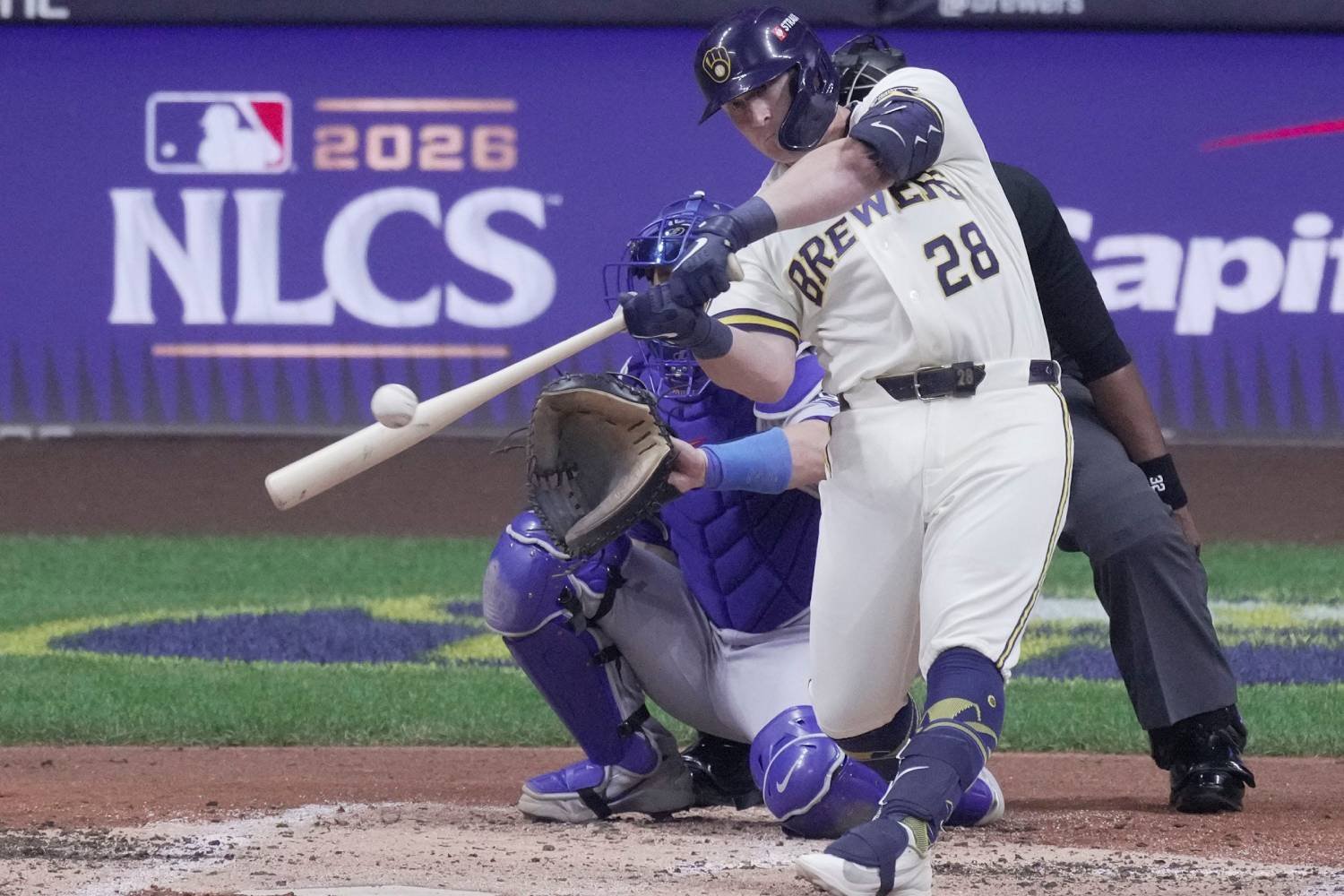 Unlike many teams coming off a World Series championship, the Milwaukee Brewers are in a pretty good position heading into the offseason. And that is even considering they are losing a few key free agents. This team is built for sustainability, as evidenced by four straight NL Central titles, and that has now paid off in a World Series title. That includes having one of the top farm systems in baseball, which helps keep talent coming and allows the Crew to trade away star players before their contracts are up. Here is a look at where the Brewers’ roster stands going into the offseason, where they are strong and where they need to focus on strengthening. Catcher Who’s here: William Contreras, Bo Naylor, Jeferson Quero Position status: Strong Wild Bill has logged three straight seasons of 1,000 innings behind the plate, quite an accomplishment in itself, but then has been solid to good offensively during that stretch. Contreras posted a .270/.341/.417 slash line with 18 homers and a career-best 94 RBIs, while being one of the top defensive catchers in MLB and guiding a young starting staff to the best record in baseball, not to mention what he did in the postseason. Barring a stunning trade of Contreras, who is entering his final season of club control, the only question at this position is who will be his backup. Naylor was acquired at the trade deadline from the Cleveland Guardians, but provides little offensively. Due to injury, Quero mainly was the designated hitter at Triple-A following his brief call-up and doesn’t feel ready defensively. Could that lead to Gary Sanchez coming back on a cheap deal? First Base Who’s here: Andrew Vaughn Position status: Questionable. There is a very real chance that neither Vaughn nor Jake Bauers is back. Bauers, of course, is a free agent in line for a nice contract, two years after the Brewers cut him and he nearly retired. Vaughn is projected to earn $8.5 million in his final year of arbitration. Considering Vaughn’s lack of power this season (six homers), that might be too steep a price for the Crew to keep him, although he did have a .306/.390/.444 slash line. Vaughn started just twice in the postseason, then came in late as a pinch-hitter on a handful of other occasions. The Brewers could bring Vaughn back on a cheaper contract if they can’t work something out with Bauers. No, power-hitting prospect Andrew Fischer is not ready to jump to MLB yet, so a stopgap would be needed if neither Vaughn nor Bauers returns. Second Base Who’s here: Brice Turang Position status: Strong. The left-handed hitter continued to elevate his offensive game, driving in 100 runs for the first time in his four-year career, while also smashing 21 homers, also a career best after hitting 18 a year ago to go along with 81 RBIs. He was again a tremendous defender, up for a second Gold Glove. He also stole 19 bases and had a 7.3 bWAR. Rarely needs a day off, with his 151 games this year the fewest of his last three seasons. Third Base Who’s here: Joey Ortiz, David Hamilton, Jesus Made Position status: Questionable. There is no question that Ortiz and Hamilton can handle the hot corner defensively. It is on offense where the questions arise. Ortiz became a much better offensive contributor once he was moved off of shortstop and finished the season with a very league-average .270/.328/.402 slash line. Hamilton, meanwhile, was at .245/.314/.336 for his slash line but stole 30 bases. One thing to consider here: Made, the top prospect in all of baseball, could be on the Opening Day roster. While that wouldn’t necessarily change the position's level at the start of the season, Made would bring huge offensive upside. But the Brewers might also want Made to get his feet wet at Triple-A before bringing him up. Shortstop Who’s here: Cooper Pratt, Jett Williams Position status: Strong. Pratt was always a defense-first shortstop from the time he was drafted in the sixth round in 2023. That was borne out by his slash line of .257/.354/.380 in three-plus minor-league seasons. But he was a nice surprise with the bat during his rookie season, putting up a .281/.350/.368 mark with three homers, 34 RBIs and 19 stolen bases in 74 regular-season games. He added to that with his postseason performance, posting a 1.139 OPS over the Brewers' championship run. Ortiz, Hamilton and Made can also move over to short when needed. Another option is Williams, the better of the two prospects (Brandon Sproat) that the Brewers acquired from the New York Mets for Freddy Peralta. He slashed just .233/.340/.384 at Triple-A Nashville in 81 games, which got him another stint in the Arizona Fall League. Williams is also in play at third base and the outfield. Left Field Who’s here: Jackson Chourio, Akil Baddoo Position status: Strong. Chourio displayed superstar potential during the postseason after posting a 20-homer, 20-stolen base season in each of his three MLB seasons. He had his best offensive season (.291/.351/.487, 25 HRs, 75 RBIs, 129 OPS+) while missing the first month of the season with a wrist injury. He will turn 23 in March, so the ceiling on his production still hasn’t been seen. Combine that with Chourio not committing an error this season and up for a Gold Glove and the total package is there. I wouldn’t expect Baddoo to be on the roster much longer. Center Field Who’s here: Garrett Mitchell, Brandon Lockridge Position status: Very good. Mitchell stayed healthy this season for the first time since he was taken in the first round of the 2020 draft. While at times disruptive, he showed there is still more to develop in his game. He had a .262/.354/.416 slash line with 11 homers and 65 RBIs in 145 games, more than he played in his previous four MLB seasons. He should be a 20-20 performer like Chourio. That can come with better plate discipline. He struck out 31.5% of the time this year, way above the MLB average of 22.4%. He also didn’t run as much during the regular season, perhaps part of the plan to keep him healthy. Lockridge had a lost season due to the gruesome gash in his knee while making a catch. He is a fine backup who can play any of the three spots and brings a speed component. Williams can also play center. Right Field Who’s here: Sal Frelick, Luis Lara Position status: Very good. This position could be considered strong if Frelick and Lara had produced more offensively. Frelick was hampered by shoulder and knee injuries, with the shoulder needing offseason surgery. He struggled to a .230/.295/.319 slash line in 111 games. Lara found himself offensively at Triple-A Nashville this year and earned a long-term contract and MLB promotion. That part has yet to surface at the MLB level (.246/.311/.325 in 61 games), but his defense was highlight-worthy. Lara can also play center, as can Frelick, adding to the versatility of this outfield. Designated Hitter Who’s here: Christian Yelich, Tyler Black Position status: OK. That is not a slight on Yelich the person or the newly christened captain, but on the hitter he has become (derogatory). No, we aren’t expecting the NL MVP numbers of 2018 or runner-up of 2019, but Yelich put up the worst offensive season of his career with a .235/.315/.378 with 12 homers and 59 RBIs. He had a 91 OPS+ and 0.1 bWAR. Not good for a position where your only job is to hit the ball. Considering Yelich’s production in the last few years, you have to chalk it up as a blip on the radar and hope he comes back strong in 2027. He can still make a token outfield appearance, but is better served as the daily DH. Black will continue to have a hard time finding a spot on this roster. Starting Rotation Who’s here: Jacob Misiorowski, Logan Henderson, Robert Gasser, Kyle Harrison, Shane Drohan, Quinn Priester, Brandon Sproat, Coleman Crow, Colton Joseph Position status: Strong How can you say anything but strong after what this group did in 2026—and mostly as rookies? Injuries and potential trades will sort out how this group lines up in 2027, with Priester being added to the mix after missing all of this year due to right thoracic outlet syndrome. Misiorowski blossoming into the ace and probable NL Cy Young Award winner is one of the developments that put the Brewers over the top this season. The all-around leaps he made were surprising, given how he finished 2025. The biggest project for next season will be figuring out what made Sproat struggle so much. Harrison seemed to get straight in a relief role at the end of the regular season, but wasn’t used in the postseason at all. If you ask the Brandon Woodruff question, the guess here is that he will retire and join the Brewers in some sort of coaching role. Of course, a concern will be the innings that these arms logged following the World Series run. There could be some early-season caution. Bullpen Who’s here: Trevor Megill, Abner Uribe, Aaron Ashby, DL Hall, Chad Patrick, Jared Koenig, Garrett Stallings, Bryse Wilson, Angel Zerpa, Brian Fitzpatrick Position status: Strong. This group will be bolstered by an arm or two from whoever does make the rotation. There could be some movement here, too, as Megill is entering his final year of club control and will be coveted by other teams. Ashby had an otherworldly postseason, which will also make him popular on the trade market as some teams could commit to him as a starter. Patrick and Koenig will need to bounce back. Zerpa, following Tommy John surgery in May, might not pitch at all in 2027, late season at best. There will also be a free agent or two brought in. As with the starters, the postseason innings could affect performance in 2027. The Bottom Line Not many world champions return as intact as what the Brewers could potentially bring back in 2027. Plus, with a couple of key prospects in Made and Williams waiting in the wings, there are internal upgrades waiting. The biggest question will be at first base, where the Brewers might be able to attract a free-agent bat for a season as Fischer gets more seasoning in the minors. There will be surprise moves as not everyone will or wants to come back, pursuing greener pastures (cha-ching!) elsewhere. Trades could also be a big factor in this abbreviated offseason.
-
The World Series is over. The Milwaukee Brewers are world champions for the first time in their 58-year history. Now the cycle of MLB life quickly turns to roster decisions. President of baseball operations Matt Arnold and his crew have been working hard behind the scenes to map out a game plan for how this offseason, with a looming lockout, will transpire. There will be decisions made by fan favorites to leave and by the club to go in a different direction from some who were on the World Series roster. This is meant to be a primer on where everyone on the 40-man roster sits contractually for the 2027 season. All options—player, club, or mutual—must be exercised within five days of the end of the World Series. Mutual options are almost universally declined. Players eligible for a qualifying offer must receive one with that same five-day period, then have another seven days to decide whether to accept, which puts the player under contract for the 2027 season. This year's qualifying offer is reportedly $23.15 million, although that could change when formally announced by MLB. Players who are eligible for arbitration must be tendered a contract by the end of November. This is different from exchanging figures for a hearing, but it guarantees a player will be under contract. Those who are non-tendered become free agents. Players who are pre-arbitration or on minor-league contracts also must be tendered a contract by this same deadline. Minor-league contracts are generally one-year deals. All arbitration projections are courtesy of MLB Trade Rumors. Pre-arbitration players basically make a version of the MLB minimum salary, which was $780,000 for 2026 (slight raises for second and third years). The minimum is expected to be $1 million in the new collective-bargaining agreement. Super 2 players become eligible for arbitration a year early and have four years of arb. This article is a reference list to know the contract status of every play on the 40-man roster. If you do some rudimentary math, you'll see that there are more than 40 players listed (there are 42). Players on the 60-day injured list do not count toward the 40-man. All players come off the injured list after the World Series as a matter or procedure, regardless of their health status. Any player, whether eligible for arbitration or a free agent, can re-sign with the Padres at any time. Negotiations with other teams can't begin until five days after the World Series ends. Unless otherwise noted, any free agent can be given a qualifying offer. Contract info courtesy of Cot's and Spotrac. Pitchers (24) Grant Anderson: First year eligible for arbitration. Projection: $1 million. Aaron Ashby: Due $7.7 million as final year of five-year, $20.5 million contract that has club options for 2028 ($9 million) and 2029 ($13 million). Coleman Crow: Pre-arbitration. Shane Drohan: Pre-arbitration. Brian Fitzpatrick. On 60-day IL (Tommy John surgery on left elbow). Pre-arbitration. Robert Gasser: Pre-arbitration, outside Super 2 candidate. Colton Gordon: Pre-arbitration. DL Hall: First year eligible for arbitration. Projection: $1 million. Kyle Harrison: Pre-arbitration. Logan Henderson: Pre-arbitration. Jared Koenig: First year eligible for arbitration. Projection: $800,000. Dustin May: Mutual option for $20 million in 2027 with a $500,000 buyout. Trevor Megill: Final year eligible for arbitration. Projection: $8 million. Jacob Misiorowski: Pre-arbitration. Chad Patrick: Pre-arbitration. Quinn Priester: On 60-day IL (right thoracic outlet syndrome). JoJo Romero: First year eligible for arbitration. Projection: $1.3 million. Antonio Senzatela: Club option for $14 million for 2027 with no buyout. Brandon Sproat: Pre-arbitration. Garrett Stallings: Pre-arbitration. Abner Uribe: Pre-arbitration. Bryse Wilson: Final year eligible for arbitration. Projection: $1.1 million. Brandon Woodruff: Free agent. Not eligible for qualifying offer. Angel Zerpa: On 60-day IL (Tommy John surgery on left elbow). Second year eligible for arbitration. Projection: $1.3 million Catchers (4) William Contreras: Club option for $14.5 million. If declined, final year eligible for arbitration. Projection: $14.6 million. Bo Naylor: First year eligible for arbitration. Projection: $1.5 million. Jeferson Quero: Pre-arbitration. Gary Sanchez: Mutual option for $1.75 million for 2027 with a $250,000 buyout. Infielders (6) Jake Bauers: Free agent. David Hamilton: First year eligible for arbitration. Projection: $1.6 million. Joey Ortiz: First year eligible for arbitration. Projection: $2.4 million. Cooper Pratt: Due $3.875 million as part of eight-year, $50.75 million contract through 2033. Brice Turang: Second year eligible for arbitration as Super 2. Projection: $9.5 million. Andrew Vaughn: Final year eligible for arbitration. Projection: $8.5 million. Outfielders (6) Akil Baddoo: Second year eligible for arbitration. Projection: $1.3 million. Jackson Chourio: Due $8.25 million as part of eight-year, $82 million contract through 2031. Sal Frelick: First year eligible for arbitration. Projection: $2.4 million. Luis Lara: Due $2,285,714 as part of seven-year, $31 million contract through 2032. Brandon Lockridge: Pre-arbitration. Garrett Mitchell: Second year eligible for arbitration. Projection: $2.7 million. Designated Hitter (2) Tyler Black: Pre-arbitration. Christian Yelich: Due $26 million as part of nine-year, $215 million contract through 2028. Image courtesy of Matt Marton-Imagn Images View full article
-
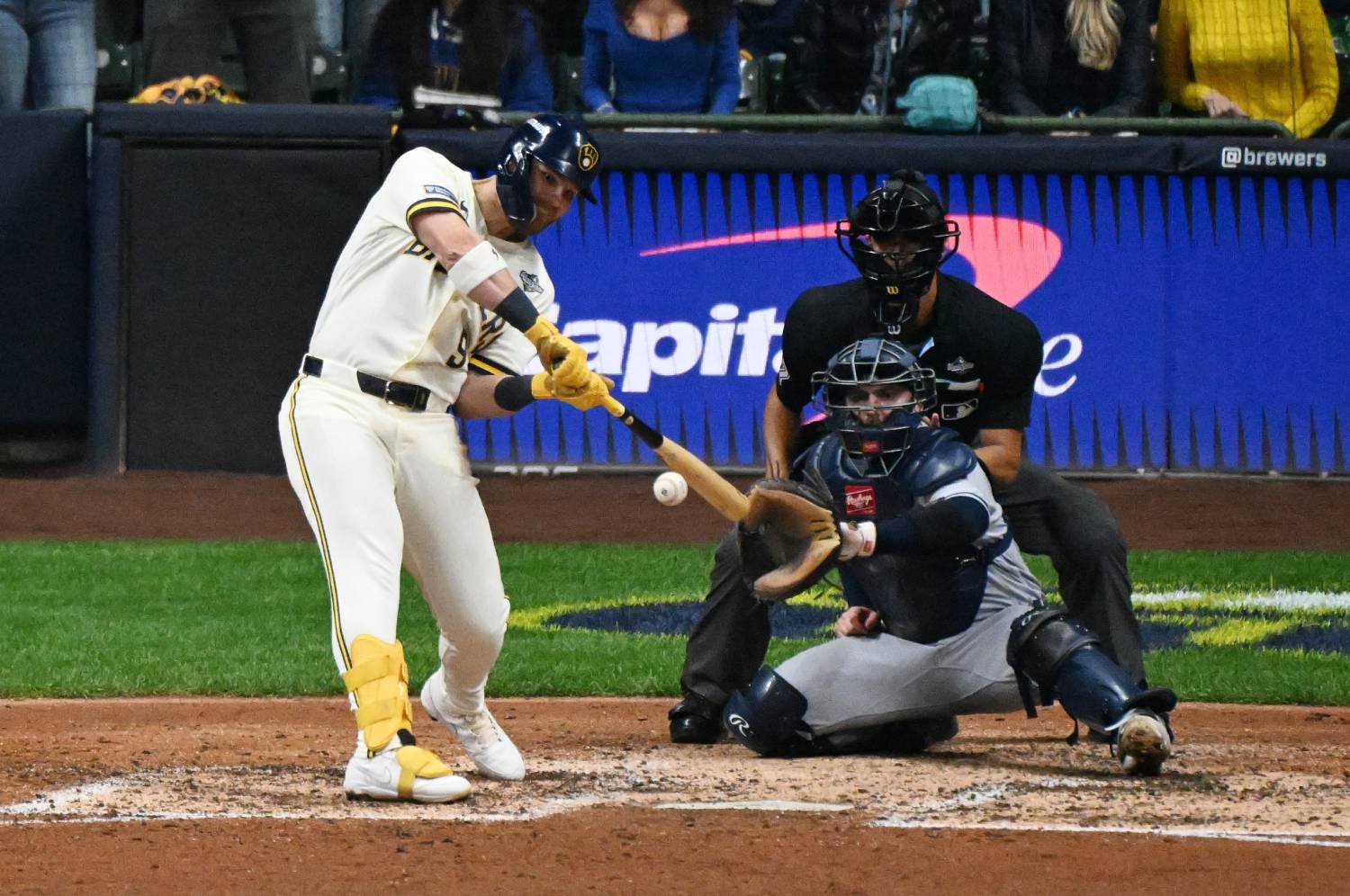 The World Series is over. The Milwaukee Brewers are world champions for the first time in their 58-year history. Now the cycle of MLB life quickly turns to roster decisions. President of baseball operations Matt Arnold and his crew have been working hard behind the scenes to map out a game plan for how this offseason, with a looming lockout, will transpire. There will be decisions made by fan favorites to leave and by the club to go in a different direction from some who were on the World Series roster. This is meant to be a primer on where everyone on the 40-man roster sits contractually for the 2027 season. All options—player, club, or mutual—must be exercised within five days of the end of the World Series. Mutual options are almost universally declined. Players eligible for a qualifying offer must receive one with that same five-day period, then have another seven days to decide whether to accept, which puts the player under contract for the 2027 season. This year's qualifying offer is reportedly $23.15 million, although that could change when formally announced by MLB. Players who are eligible for arbitration must be tendered a contract by the end of November. This is different from exchanging figures for a hearing, but it guarantees a player will be under contract. Those who are non-tendered become free agents. Players who are pre-arbitration or on minor-league contracts also must be tendered a contract by this same deadline. Minor-league contracts are generally one-year deals. All arbitration projections are courtesy of MLB Trade Rumors. Pre-arbitration players basically make a version of the MLB minimum salary, which was $780,000 for 2026 (slight raises for second and third years). The minimum is expected to be $1 million in the new collective-bargaining agreement. Super 2 players become eligible for arbitration a year early and have four years of arb. This article is a reference list to know the contract status of every play on the 40-man roster. If you do some rudimentary math, you'll see that there are more than 40 players listed (there are 42). Players on the 60-day injured list do not count toward the 40-man. All players come off the injured list after the World Series as a matter or procedure, regardless of their health status. Any player, whether eligible for arbitration or a free agent, can re-sign with the Padres at any time. Negotiations with other teams can't begin until five days after the World Series ends. Unless otherwise noted, any free agent can be given a qualifying offer. Contract info courtesy of Cot's and Spotrac. Pitchers (24) Grant Anderson: First year eligible for arbitration. Projection: $1 million. Aaron Ashby: Due $7.7 million as final year of five-year, $20.5 million contract that has club options for 2028 ($9 million) and 2029 ($13 million). Coleman Crow: Pre-arbitration. Shane Drohan: Pre-arbitration. Brian Fitzpatrick. On 60-day IL (Tommy John surgery on left elbow). Pre-arbitration. Robert Gasser: Pre-arbitration, outside Super 2 candidate. Colton Gordon: Pre-arbitration. DL Hall: First year eligible for arbitration. Projection: $1 million. Kyle Harrison: Pre-arbitration. Logan Henderson: Pre-arbitration. Jared Koenig: First year eligible for arbitration. Projection: $800,000. Dustin May: Mutual option for $20 million in 2027 with a $500,000 buyout. Trevor Megill: Final year eligible for arbitration. Projection: $8 million. Jacob Misiorowski: Pre-arbitration. Chad Patrick: Pre-arbitration. Quinn Priester: On 60-day IL (right thoracic outlet syndrome). JoJo Romero: First year eligible for arbitration. Projection: $1.3 million. Antonio Senzatela: Club option for $14 million for 2027 with no buyout. Brandon Sproat: Pre-arbitration. Garrett Stallings: Pre-arbitration. Abner Uribe: Pre-arbitration. Bryse Wilson: Final year eligible for arbitration. Projection: $1.1 million. Brandon Woodruff: Free agent. Not eligible for qualifying offer. Angel Zerpa: On 60-day IL (Tommy John surgery on left elbow). Second year eligible for arbitration. Projection: $1.3 million Catchers (4) William Contreras: Club option for $14.5 million. If declined, final year eligible for arbitration. Projection: $14.6 million. Bo Naylor: First year eligible for arbitration. Projection: $1.5 million. Jeferson Quero: Pre-arbitration. Gary Sanchez: Mutual option for $1.75 million for 2027 with a $250,000 buyout. Infielders (6) Jake Bauers: Free agent. David Hamilton: First year eligible for arbitration. Projection: $1.6 million. Joey Ortiz: First year eligible for arbitration. Projection: $2.4 million. Cooper Pratt: Due $3.875 million as part of eight-year, $50.75 million contract through 2033. Brice Turang: Second year eligible for arbitration as Super 2. Projection: $9.5 million. Andrew Vaughn: Final year eligible for arbitration. Projection: $8.5 million. Outfielders (6) Akil Baddoo: Second year eligible for arbitration. Projection: $1.3 million. Jackson Chourio: Due $8.25 million as part of eight-year, $82 million contract through 2031. Sal Frelick: First year eligible for arbitration. Projection: $2.4 million. Luis Lara: Due $2,285,714 as part of seven-year, $31 million contract through 2032. Brandon Lockridge: Pre-arbitration. Garrett Mitchell: Second year eligible for arbitration. Projection: $2.7 million. Designated Hitter (2) Tyler Black: Pre-arbitration. Christian Yelich: Due $26 million as part of nine-year, $215 million contract through 2028.
-
There is a lot of thought that goes into lineup construction. But to simplify, you want your top three spots to be your best three hitters. The middle trio should be run producers to knock in those first three. The bottom three? What is left in an order that makes sense. Over 162 games, Milwaukee Brewers manager Pat Murphy penciled in 146 combinations. Yeah, there is always tinkering, injury situations, days off for a regular, etc. Whether he was saving this setup for a special occasion or it just came to him while he doodled lineups on a napkin or a slip of paper in the morning, he came up with a really good nine for the World Series. And the names he put in the Nos. 7, 8 and 9 slots came up with many of the biggest hits in the 2026 World Series. Those names played a huge role in the Brewers winning the first World Series in the franchise’s 58 seasons with a 4-1 victory over the Tampa Bay Rays in Game 5 on Wednesday. After going with rookie shortstop Cooper Pratt at No. 7, right fielder Sal Frelick at No. 8 and third baseman David Hamilton at No. 9 for the first three games, he flipped Frelick with No. 6 hitter Garrett Mitchell in Game 4. It didn’t slow anything down. That trio did damage early in Game 4 to knock out Rays ace right-hander Drew Rasmussen. Pratt knocked in the first run, the third time in the World Series he has put the Brewers ahead. With Brice Turang having doubled and Frelick hit by a pitch with one out in the second, Pratt chiseled a first-pitch cutter into center to bring in Turang for his fifth straight World Series hit. Pratt made it a six-pack of consecutive hits when he got on top of an up-and-in 1-1 four-seamer and lined it to left with one out in the fifth. Mitchell singled Pratt to third and Hamilton pulled a grounder through a drawn-in infield and into right field to plate Pratt for a 2-0 advantage. They let the big boys contribute a bit as cleanup hitter William Contreras laced a double to right to bring in Christian Yelich, who was hit by a pitch. Turang looped a single to left, putting Contreras at third, then Pratt’s hit streak came to an end, but it was still a productive at-bat as he lofted a sacrifice fly into foul territory to right for a 4-0 cushion. Those were just the Game 5 contributions. Surprisingly, Frelick (Game 2), Hamilton (Game 4) and Pratt (Game 4) also accounted for all of the Brewers’ World Series homers. All were key blasts. Frelick’s tied the game 4-4 in the fifth inning of Game 2, with Pratt atoning for a first-inning error with a go-ahead single in the seventh. Hamilton’s long ball came after he made a fielding miscue, tying Game 4 in the fifth inning 2-2. Pratt hit what appeared to be a World Series-deciding homer in the top of the 12th of Game 4, putting the Crew up 3-2. During the regular season, Pratt had three homers, Frelick four and Hamilton four. In those bottom three spots, well, let’s make it four considering the flip-flop with Mitchell and Frelick, they combined for 20 hits in five games, with Pratt driving in a team-high seven runs and putting him in the conversation for World Series MVP. Those four played significant roles in each of the postseason chapters that wrote this championship story. Yes, there was more that went into the Crew crockpot that cooked up three wins over the San Diego Padres, four over the two-time defending World Series champion Los Angeles Dodgers, the greatest team money could buy, and four more over the Rays. Murphy, Aaron Ashby, Jacob Misiorowski, Jackson Chourio, William Contreras and more. But those at the bottom of the lineup are why Wisconsin is a beer-soaked state after realizing a dream that began with an expansion team called the Seattle Pilots in 1969, then moved to Milwaukee and becoming the Brewers in 1970. It was a long wait since 1982, the most iconic team in Brewers history until this 2026 club. That 1982 Brew Crew will always hold a special place in fans’ hearts and they are happy to take a step back to allow someone to take their place following a world championship. Image courtesy of USA TODAY Network via Reuters Connect View full article
- 3 replies
-
- 1
-

-
- sal frelick
- cooper pratt
- (and 2 more)
-
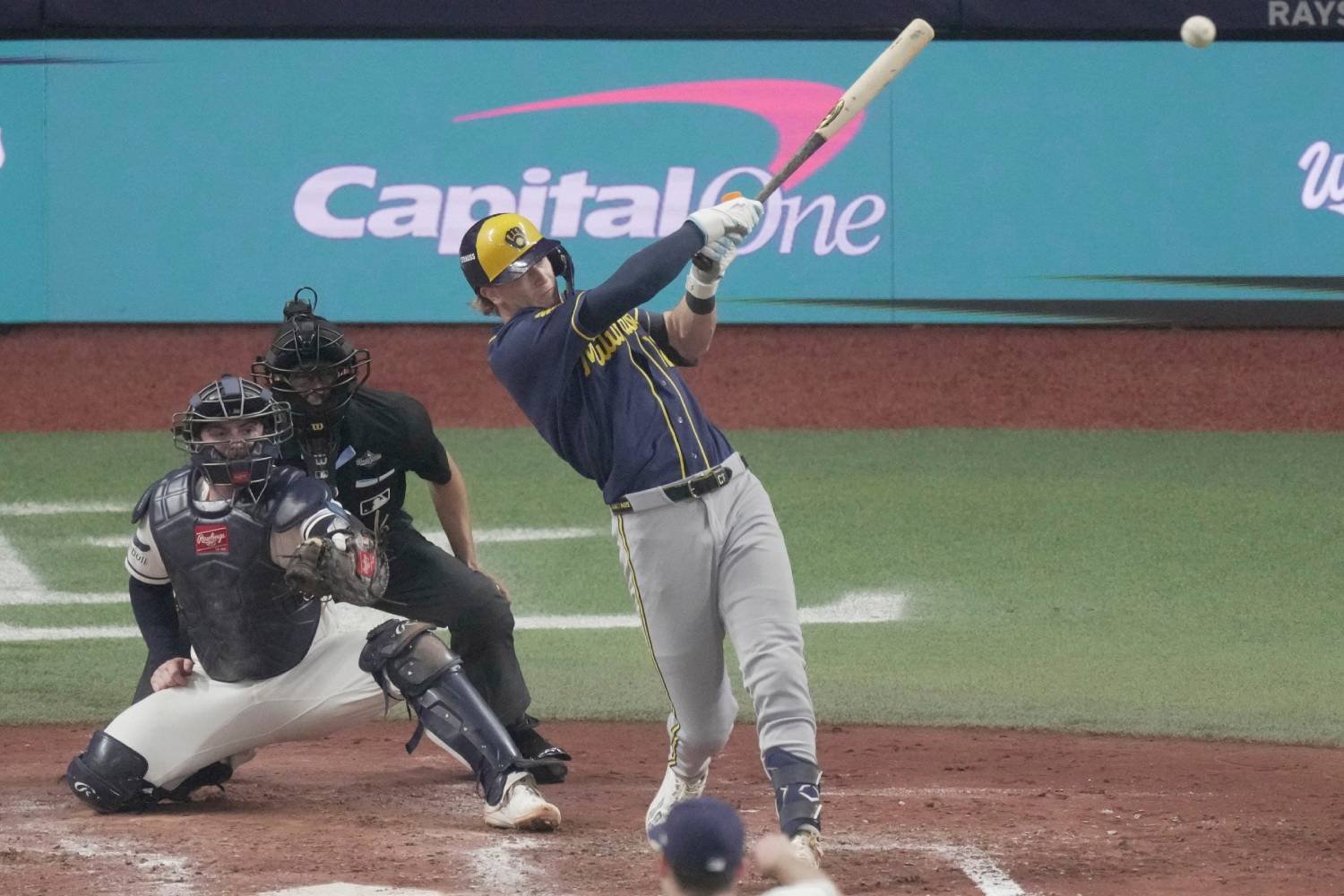 There is a lot of thought that goes into lineup construction. But to simplify, you want your top three spots to be your best three hitters. The middle trio should be run producers to knock in those first three. The bottom three? What is left in an order that makes sense. Over 162 games, Milwaukee Brewers manager Pat Murphy penciled in 146 combinations. Yeah, there is always tinkering, injury situations, days off for a regular, etc. Whether he was saving this setup for a special occasion or it just came to him while he doodled lineups on a napkin or a slip of paper in the morning, he came up with a really good nine for the World Series. And the names he put in the Nos. 7, 8 and 9 slots came up with many of the biggest hits in the 2026 World Series. Those names played a huge role in the Brewers winning the first World Series in the franchise’s 58 seasons with a 4-1 victory over the Tampa Bay Rays in Game 5 on Wednesday. After going with rookie shortstop Cooper Pratt at No. 7, right fielder Sal Frelick at No. 8 and third baseman David Hamilton at No. 9 for the first three games, he flipped Frelick with No. 6 hitter Garrett Mitchell in Game 4. It didn’t slow anything down. That trio did damage early in Game 4 to knock out Rays ace right-hander Drew Rasmussen. Pratt knocked in the first run, the third time in the World Series he has put the Brewers ahead. With Brice Turang having doubled and Frelick hit by a pitch with one out in the second, Pratt chiseled a first-pitch cutter into center to bring in Turang for his fifth straight World Series hit. Pratt made it a six-pack of consecutive hits when he got on top of an up-and-in 1-1 four-seamer and lined it to left with one out in the fifth. Mitchell singled Pratt to third and Hamilton pulled a grounder through a drawn-in infield and into right field to plate Pratt for a 2-0 advantage. They let the big boys contribute a bit as cleanup hitter William Contreras laced a double to right to bring in Christian Yelich, who was hit by a pitch. Turang looped a single to left, putting Contreras at third, then Pratt’s hit streak came to an end, but it was still a productive at-bat as he lofted a sacrifice fly into foul territory to right for a 4-0 cushion. Those were just the Game 5 contributions. Surprisingly, Frelick (Game 2), Hamilton (Game 4) and Pratt (Game 4) also accounted for all of the Brewers’ World Series homers. All were key blasts. Frelick’s tied the game 4-4 in the fifth inning of Game 2, with Pratt atoning for a first-inning error with a go-ahead single in the seventh. Hamilton’s long ball came after he made a fielding miscue, tying Game 4 in the fifth inning 2-2. Pratt hit what appeared to be a World Series-deciding homer in the top of the 12th of Game 4, putting the Crew up 3-2. During the regular season, Pratt had three homers, Frelick four and Hamilton four. In those bottom three spots, well, let’s make it four considering the flip-flop with Mitchell and Frelick, they combined for 20 hits in five games, with Pratt driving in a team-high seven runs and putting him in the conversation for World Series MVP. Those four played significant roles in each of the postseason chapters that wrote this championship story. Yes, there was more that went into the Crew crockpot that cooked up three wins over the San Diego Padres, four over the two-time defending World Series champion Los Angeles Dodgers, the greatest team money could buy, and four more over the Rays. Murphy, Aaron Ashby, Jacob Misiorowski, Jackson Chourio, William Contreras and more. But those at the bottom of the lineup are why Wisconsin is a beer-soaked state after realizing a dream that began with an expansion team called the Seattle Pilots in 1969, then moved to Milwaukee and becoming the Brewers in 1970. It was a long wait since 1982, the most iconic team in Brewers history until this 2026 club. That 1982 Brew Crew will always hold a special place in fans’ hearts and they are happy to take a step back to allow someone to take their place following a world championship.
- 3 comments
-
- 1
-
-
- sal frelick
- cooper pratt
- (and 2 more)
-
Brewers-Rays World Series Game 5 Matchup By The Numbers
Steve Drumwright posted an article in Brewers
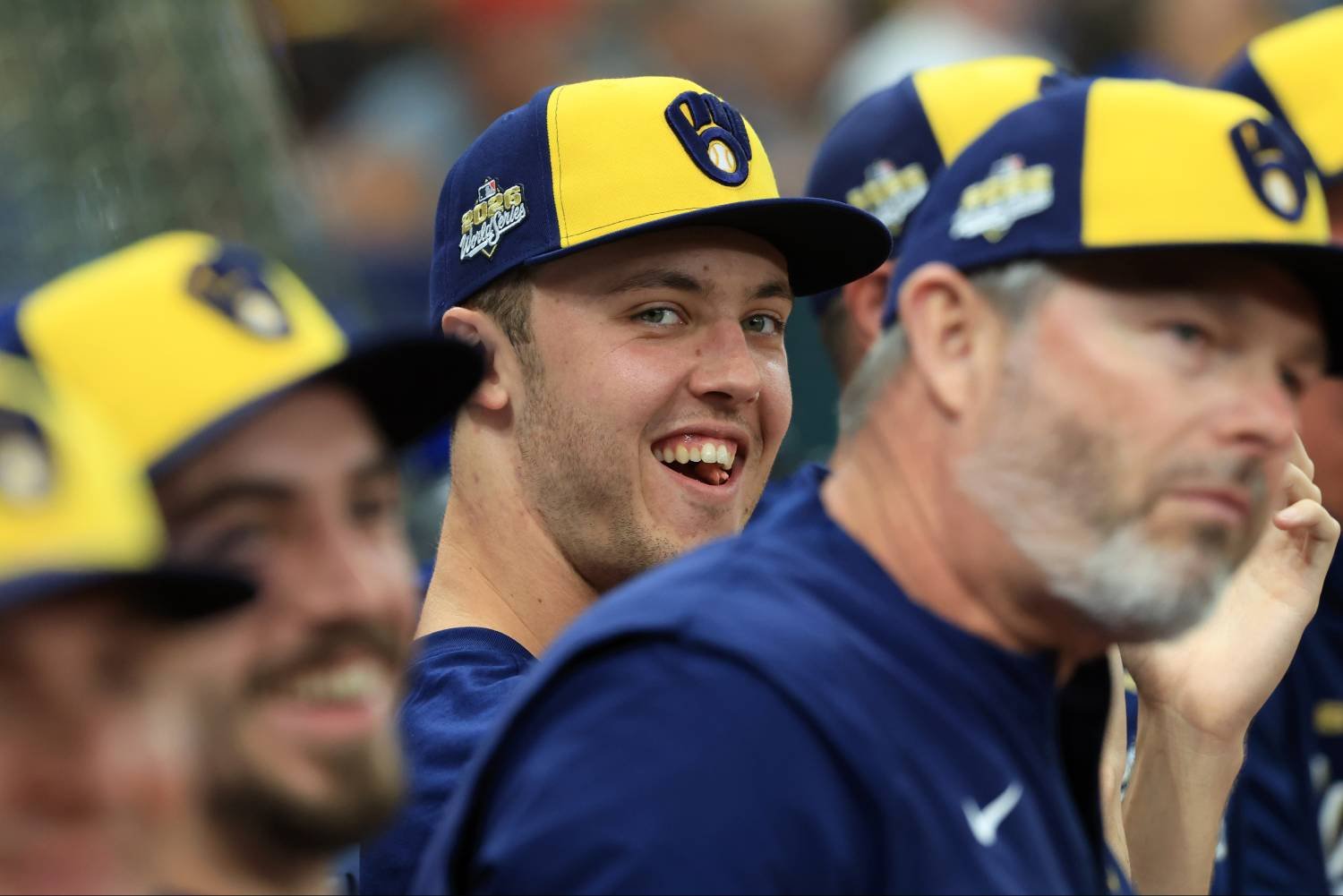 Following an eight-game winning streak, the Milwaukee Brewers lost for the first time since the NL Division Series and just the second time this postseason as they attempted to win the first World Series championship in franchise history. Now, the Brewers will look to bounce back from a 4-3 loss in 12 innings against the Tampa Bay Rays and have their best starting pitcher headed to the mound: ace right-hander Jacob Misiorowski. The Miz will make his first road start and fourth of this postseason in Game 5 of the World Series as the Brewers look to close out the Rays on Wednesday (7 p.m. CT, Fox). The Rays are just the 11th team (44 attempts) in any best-of-seven postseason series to force a Game 5 after being down 3-0 with none in the World Series getting to a Game 6. In Game 1 of the World Series, Misirowski, the leader in the clubhouse for this year's NL Cy Young Award, went five innings vs. the Rays, allowing a run on four hits and a walk with three strikeouts. Misiorowski has made his last two starts with extra rest (seven and 11 days), yet will be making this one on a typical four days of rest. His three strikeouts in Game 1 were the fewest this season. He generated just seven whiffs during his 78 pitches as he struggled with his location, particularly against right-handed batters. Velocity didn't seem to be an issue as Misiorowski's first pitch was a World Series-record 103.5 mph and his final pitch was 103 mph. As for the Brewers' bullpen, this is where the blowout in Game 3 comes back and pays dividends for the Crew. The only pitchers who would seemingly be unavailable are right-handers Dustin May and Antonio Senzatela. May threw 39 pitches in his start Tuesday and Senzatela has pitched in each of the last two games and tossed 44 pitches, losing steam in Game 4. Left-hander Aaron Ashby, who has an MLB postseason-record 19 scoreless innings this year, threw 31 pitches in Game 4 and can probably go an inning at most in Game 5. Otherwise, all of the other relievers are good to go for at least one inning. Rays first baseman Jonathan Aranda went 3-for-3 with a walk in Game 1, getting a line-drive single in his first at-bat and a walk in his second trip vs. Misiorowski. The only run scored on a weak grounder to first base by Liam Hicks. Jacob Misiorowski vs. Tampa Bay Rays: Current Batters Table Rk Player B PA AB H 2B 3B HR RBI BB SO BA OBP SLG OPS SH SF IBB HBP GIDP 1 Jonathan Aranda L 3 3 0 0 0 0 0 0 0 .000 .000 .000 .000 0 0 0 0 0 2 Junior Caminero R 3 3 0 0 0 0 0 0 2 .000 .000 .000 .000 0 0 0 0 0 3 Yandy Díaz R 3 3 1 0 0 1 2 0 1 .333 .333 1.333 1.667 0 0 0 0 0 4 Nick Fortes R 3 3 1 0 0 0 0 0 0 .333 .333 .333 .667 0 0 0 0 0 5 Cedric Mullins L 3 3 0 0 0 0 0 0 3 .000 .000 .000 .000 0 0 0 0 0 6 Chandler Simpson L 3 2 1 0 0 0 0 1 0 .500 .667 .500 1.167 0 0 0 0 0 7 Ben Williamson R 3 3 0 0 0 0 0 0 0 .000 .000 .000 .000 0 0 0 0 0 8 Liam Hicks L 2 2 1 0 0 0 1 0 0 .500 .500 .500 1.000 0 0 0 0 0 9 Jorge Mateo R 2 2 1 0 0 0 0 0 0 .500 .500 .500 1.000 0 0 0 0 0 10 Richie Palacios L 2 0 0 0 0 0 0 1 0 1.000 0 0 0 1 0 Provided by Stathead: Found with Stathead. See Full Results. Generated 10/28/2026. With Game 1 starter Nick Martinez pitching in relief in Game 4, the Rays are going with ace right-hander Drew Rasmussen in order to stave off elimination for a second day in a row. Rasmussen, who will be pitching on three days' rest, has had Tommy John surgery three times and manager Kevin Cash expressed caution when asked about Rasmussen's availability for Game 5. But the former Brewers prospect pronounced himself ready, although it is likely to be a shorter start. This will be his fewest days of rest this season. Of course, Rasmussen, an AL Cy Young Award candidate, had a rather abbreviated start in Game 2 of the World Series. Staked to a 4-0 lead before he threw a pitch, Rasmussen lasted just 3⅔ innings as the Brewers got to him for three runs on six hits and two walks with four strikeouts. William Contreras had a pair of hits against Rasmussen in Game 1, including driving in one in a two-run bottom of the first. The Rays' pitching situation is more dire than the Brewers after the bullpen had to cover 5⅓ innings in Game 3 and eight innings in Game 4. Martinez, typically a starter, and right-handed closer Bryan Baker each pitched two innings. Martinez, a former reliever, might be able to squeeze out another inning, while Baker didn't go two innings at all this year, maxing out at 1⅔ innings. He was efficient with 21 pitches (14 strikes), so perhaps can get a few batters out of him if he is available. You could even see Game 3 starter, former Brewer Freddy Peralta, for an inning as this would typically be his bullpen day. Regardless, Cash has his work cut out for him to piece together this pitching plan. The Brewers' offense has been performing fairly well, led by Jackson Chourio (10-for-20), Contreras (7-for-17) and rookie Cooper Pratt (6-for-16), who hit a go-ahead homer in the 12th inning of Game 4. Drew Rasmussen vs. Milwaukee Brewers: Current Batters Table Rk Player B PA AB H 2B 3B HR RBI BB SO BA OBP SLG OPS SH SF IBB HBP GIDP 1 Jake Bauers L 9 8 3 0 0 0 0 1 3 .375 .444 .375 .819 0 0 0 0 0 2 William Contreras R 6 5 2 0 0 1 1 1 0 .400 .500 1.000 1.500 0 0 0 0 0 3 Sal Frelick L 5 5 0 0 0 0 0 0 2 .000 .000 .000 .000 0 0 0 0 0 4 Brice Turang L 5 4 1 0 0 1 2 1 0 .250 .400 1.000 1.400 0 0 0 0 0 5 Joey Ortiz R 4 4 1 0 0 0 0 0 1 .250 .250 .250 .500 0 0 0 0 0 6 Gary Sánchez R 4 4 1 1 0 0 1 0 0 .250 .250 .500 .750 0 0 0 0 0 7 Christian Yelich L 4 4 1 0 0 1 1 0 2 .250 .250 1.000 1.250 0 0 0 0 0 8 Jackson Chourio R 3 3 0 0 0 0 0 0 0 .000 .000 .000 .000 0 0 0 0 0 9 David Hamilton L 2 2 0 0 0 0 0 0 1 .000 .000 .000 .000 0 0 0 0 0 10 Garrett Mitchell L 2 2 1 0 0 0 0 0 1 .500 .500 .500 1.000 0 0 0 0 0 11 Bo Naylor L 2 2 0 0 0 0 0 0 1 .000 .000 .000 .000 0 0 0 0 0 Provided by Stathead: Found with Stathead. See Full Results. Generated 10/28/2026.
-
Following an eight-game winning streak, the Milwaukee Brewers lost for the first time since the NL Division Series and just the second time this postseason as they attempted to win the first World Series championship in franchise history. Now, the Brewers will look to bounce back from a 4-3 loss in 12 innings against the Tampa Bay Rays and have their best starting pitcher headed to the mound: ace right-hander Jacob Misiorowski. The Miz will make his first road start and fourth of this postseason in Game 5 of the World Series as the Brewers look to close out the Rays on Wednesday (7 p.m. CT, Fox). The Rays are just the 11th team (44 attempts) in any best-of-seven postseason series to force a Game 5 after being down 3-0 with none in the World Series getting to a Game 6. In Game 1 of the World Series, Misirowski, the leader in the clubhouse for this year's NL Cy Young Award, went five innings vs. the Rays, allowing a run on four hits and a walk with three strikeouts. Misiorowski has made his last two starts with extra rest (seven and 11 days), yet will be making this one on a typical four days of rest. His three strikeouts in Game 1 were the fewest this season. He generated just seven whiffs during his 78 pitches as he struggled with his location, particularly against right-handed batters. Velocity didn't seem to be an issue as Misiorowski's first pitch was a World Series-record 103.5 mph and his final pitch was 103 mph. As for the Brewers' bullpen, this is where the blowout in Game 3 comes back and pays dividends for the Crew. The only pitchers who would seemingly be unavailable are right-handers Dustin May and Antonio Senzatela. May threw 39 pitches in his start Tuesday and Senzatela has pitched in each of the last two games and tossed 44 pitches, losing steam in Game 4. Left-hander Aaron Ashby, who has an MLB postseason-record 19 scoreless innings this year, threw 31 pitches in Game 4 and can probably go an inning at most in Game 5. Otherwise, all of the other relievers are good to go for at least one inning. Rays first baseman Jonathan Aranda went 3-for-3 with a walk in Game 1, getting a line-drive single in his first at-bat and a walk in his second trip vs. Misiorowski. The only run scored on a weak grounder to first base by Liam Hicks. Jacob Misiorowski vs. Tampa Bay Rays: Current Batters Table Rk Player B PA AB H 2B 3B HR RBI BB SO BA OBP SLG OPS SH SF IBB HBP GIDP 1 Jonathan Aranda L 3 3 0 0 0 0 0 0 0 .000 .000 .000 .000 0 0 0 0 0 2 Junior Caminero R 3 3 0 0 0 0 0 0 2 .000 .000 .000 .000 0 0 0 0 0 3 Yandy Díaz R 3 3 1 0 0 1 2 0 1 .333 .333 1.333 1.667 0 0 0 0 0 4 Nick Fortes R 3 3 1 0 0 0 0 0 0 .333 .333 .333 .667 0 0 0 0 0 5 Cedric Mullins L 3 3 0 0 0 0 0 0 3 .000 .000 .000 .000 0 0 0 0 0 6 Chandler Simpson L 3 2 1 0 0 0 0 1 0 .500 .667 .500 1.167 0 0 0 0 0 7 Ben Williamson R 3 3 0 0 0 0 0 0 0 .000 .000 .000 .000 0 0 0 0 0 8 Liam Hicks L 2 2 1 0 0 0 1 0 0 .500 .500 .500 1.000 0 0 0 0 0 9 Jorge Mateo R 2 2 1 0 0 0 0 0 0 .500 .500 .500 1.000 0 0 0 0 0 10 Richie Palacios L 2 0 0 0 0 0 0 1 0 1.000 0 0 0 1 0 Provided by Stathead: Found with Stathead. See Full Results. Generated 10/28/2026. With Game 1 starter Nick Martinez pitching in relief in Game 4, the Rays are going with ace right-hander Drew Rasmussen in order to stave off elimination for a second day in a row. Rasmussen, who will be pitching on three days' rest, has had Tommy John surgery three times and manager Kevin Cash expressed caution when asked about Rasmussen's availability for Game 5. But the former Brewers prospect pronounced himself ready, although it is likely to be a shorter start. This will be his fewest days of rest this season. Of course, Rasmussen, an AL Cy Young Award candidate, had a rather abbreviated start in Game 2 of the World Series. Staked to a 4-0 lead before he threw a pitch, Rasmussen lasted just 3⅔ innings as the Brewers got to him for three runs on six hits and two walks with four strikeouts. William Contreras had a pair of hits against Rasmussen in Game 1, including driving in one in a two-run bottom of the first. The Rays' pitching situation is more dire than the Brewers after the bullpen had to cover 5⅓ innings in Game 3 and eight innings in Game 4. Martinez, typically a starter, and right-handed closer Bryan Baker each pitched two innings. Martinez, a former reliever, might be able to squeeze out another inning, while Baker didn't go two innings at all this year, maxing out at 1⅔ innings. He was efficient with 21 pitches (14 strikes), so perhaps can get a few batters out of him if he is available. You could even see Game 3 starter, former Brewer Freddy Peralta, for an inning as this would typically be his bullpen day. Regardless, Cash has his work cut out for him to piece together this pitching plan. The Brewers' offense has been performing fairly well, led by Jackson Chourio (10-for-20), Contreras (7-for-17) and rookie Cooper Pratt (6-for-16), who hit a go-ahead homer in the 12th inning of Game 4. Drew Rasmussen vs. Milwaukee Brewers: Current Batters Table Rk Player B PA AB H 2B 3B HR RBI BB SO BA OBP SLG OPS SH SF IBB HBP GIDP 1 Jake Bauers L 9 8 3 0 0 0 0 1 3 .375 .444 .375 .819 0 0 0 0 0 2 William Contreras R 6 5 2 0 0 1 1 1 0 .400 .500 1.000 1.500 0 0 0 0 0 3 Sal Frelick L 5 5 0 0 0 0 0 0 2 .000 .000 .000 .000 0 0 0 0 0 4 Brice Turang L 5 4 1 0 0 1 2 1 0 .250 .400 1.000 1.400 0 0 0 0 0 5 Joey Ortiz R 4 4 1 0 0 0 0 0 1 .250 .250 .250 .500 0 0 0 0 0 6 Gary Sánchez R 4 4 1 1 0 0 1 0 0 .250 .250 .500 .750 0 0 0 0 0 7 Christian Yelich L 4 4 1 0 0 1 1 0 2 .250 .250 1.000 1.250 0 0 0 0 0 8 Jackson Chourio R 3 3 0 0 0 0 0 0 0 .000 .000 .000 .000 0 0 0 0 0 9 David Hamilton L 2 2 0 0 0 0 0 0 1 .000 .000 .000 .000 0 0 0 0 0 10 Garrett Mitchell L 2 2 1 0 0 0 0 0 1 .500 .500 .500 1.000 0 0 0 0 0 11 Bo Naylor L 2 2 0 0 0 0 0 0 1 .000 .000 .000 .000 0 0 0 0 0 Provided by Stathead: Found with Stathead. See Full Results. Generated 10/28/2026. Image courtesy of Kim Klement Neitzel-Imagn Images View full article
-
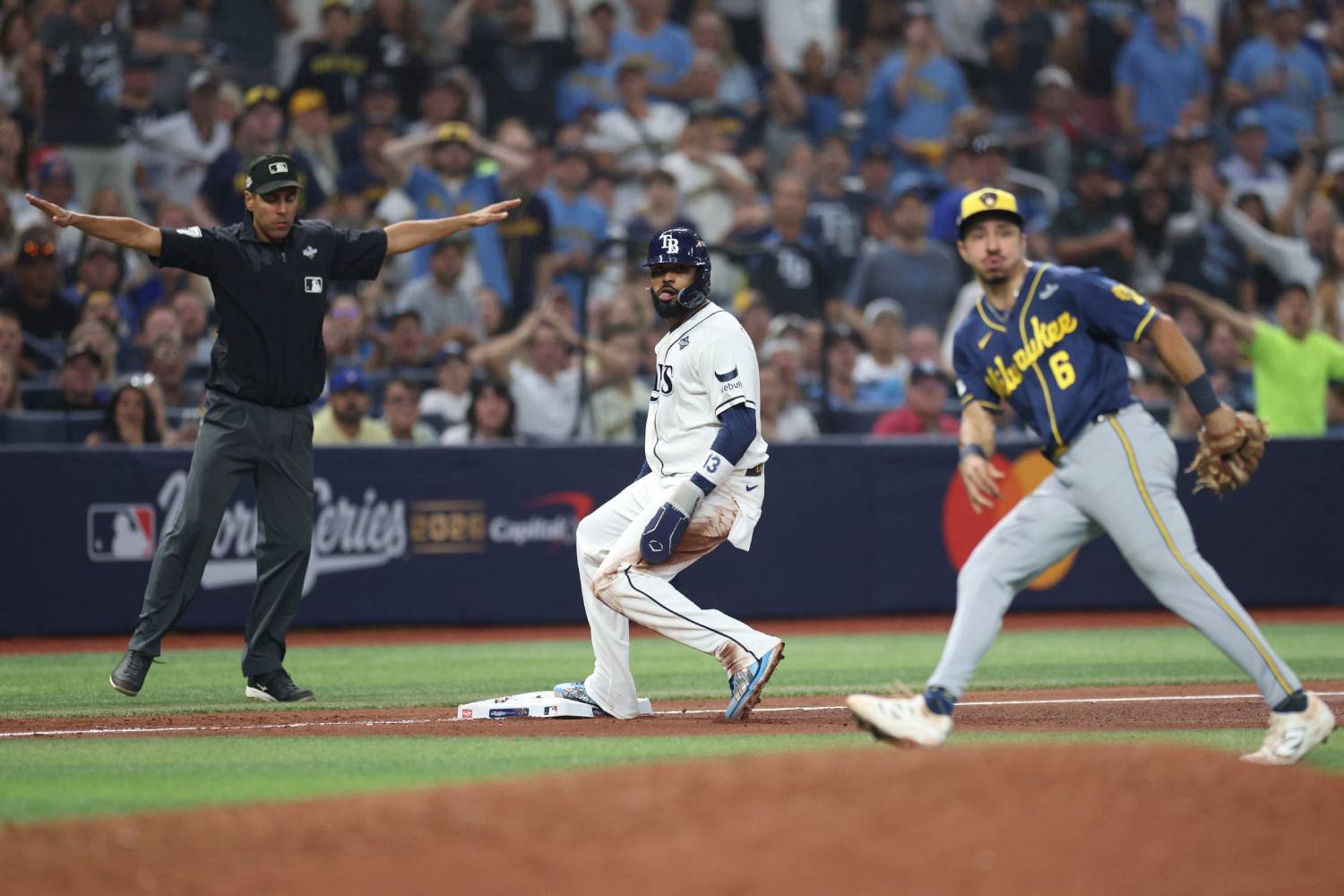 If there has been an unexpected storyline to the 2026 World Series, it is mistakes. Most of those have happened on the basepaths, which has belied what the Milwaukee Brewers and Tampa Bay Rays were accustomed to doing throughout this season—winning games by making the big plays with their feet. But whatever it has been, the World Series has brought out some of the worst of these two teams. There have also been fielding flaws. Most of those were by the Rays. But on the day the Brewers had a chance to win the first World Series in the franchise’s 58 seasons, their defense played a significant role in that being put off at least a day. Errors by both of the Brewers’ third basemen—first David Hamilton, then Joey Ortiz—opened the door for the Rays to stay alive, scoring twice in the bottom of the 12th inning for a 4-3 walk-off victory Tuesday in Game 4 of the World Series. The rare lapse defensively left the Brewers with a 3-1 lead in the best-of-seven series, still with a chance to win their first title in Wednesday’s Game 5. The Brewers are typically a very good defensive team. They ranked seventh in fielding percentage, but their fielding run value was 13th. They only had 10 games all regular season in which they committed two errors, the fourth-fewest in MLB. The first miscue came courtesy of Hamilton. With one out in the bottom of the fourth and Junior Caminero on second, left-handed reliever JoJo Romero faced Jonny DeLuca, his second batter after replacing right-handed starter Dustin May. Romero got what he needed when DeLuca hit a grounder to Hamilton. Caminero for some reason was running on the play and Hamilton tried to tag the Rays’ superstar and flailed in that effort, although barely missing his back foot. Hamilton recovered from a stumble and threw to first, but that throw was offline and bounced past first baseman Jake Bauers, allowing Caminero to score, making it 2-1, and putting DeLuca on second. Hamilton did atone for his error by shockingly hitting his second homer of the postseason after hitting just four during the regular season, tying the game 2-2 in the top of the fifth. It stayed that way until the top of the 12th inning. Rookie Cooper Pratt hit a go-ahead homer that had the Brewers within three outs of the elusive World Series title. After manager Pat Murphy sent Andrew Vaughn to pinch-hit for Hamilton in the ninth, Ortiz replaced him defensively at third. Caminero led off the bottom of the 12th against right-hander Antonio Senzatela by hitting a grounder that hugged the line, but found Ortiz playing deep. The normally reliable Ortiz, however, short-hopped the long throw to Bauers to begin the Rays’ rally. Four batters and four singles later, all against rookie left-hander Shane Drohan, the Brewers were walked off by Ben Williamson, the last player on the Rays’ bench. For the first time since Game 7 of 1982, the Brewers lost a World Series game. Of course, this is the first time the Brewers have been in the World Series in those 44 years. Before that 12th inning, the Brewers had done most everything they could do to put themselves in position for a sweep. But unlike the previous three games, the Rays didn’t buckle defensively and give the Brewers an opening to pounce on. There was one error and another play that could have been very costly. The error came when Christian Yelich stole second in the top of the first, with catcher Liam Hicks’ throw going into center, sending Yelich to third. But Yelich and the Brewers didn’t score. The other one came in the 10th inning and had Rays fans shivering. With two outs, Jake Bauers hit a foul pop on the third-base side. Hicks seemed to have a bead on the ball as Caminero, the third baseman, also closed in. Caminero seemed to cede the situation to Hicks, who at the last second looked toward Caminero as the ball fell between the two. Bauers, the NL Championship Series MVP and former Ray who has yet to have a big hit in the World Series, suddenly had a second life. Would this be Bauers’ World Series moment? It would not as he struck out. However, the Rays made two plays that kept the tide from turning against them. DeLuca and left fielder Chandler Simpson made tremendous catches to keep the Brewers from gaining momentum or, possibly, winning the game. William Contreras, leading off the fourth inning and the Crew down 1-0, hit a knuckling liner right at DeLuca, who got a nice jump and stayed with the wavering ball as it continued to sink, snagging it just inches above the Tropicana Field turf. A split-second later and Contreras at worst has a single and at best has a triple. The Brewers would go on to score their first run of the game in that inning, which might have mushroomed had DeLuca not made that grab. The Simpson play came with one out in the ninth. After Pratt singled with one out, Garrett Mitchell, who homered in back-to-back games in the NL Championship Series, looked like he might have a shot at an even bigger homer. But Simpson, up for a Gold Glove this year, used his speed to get back to the wall and leapt to keep it from banging off the wall, catching it for the second out. Two big plays by the Rays, two miscues from the Brewers. Now, the Brewers have to answer adversity following their first loss since Game 3 of the NL Division Series vs. the San Diego Padres. Their eight-game postseason winning streak, tied for the longest in MLB history, is over. There was no popping of bottles after this one, only thinking about what might have been. Those bottles will sit on ice for another 24 hours. The question will be how the Brewers bounce back from this walk-off loss. They have had the answer throughout the season. But this is the World Series. The Rays are a terrific team looking to do something no other team has done in World Series history. The Brewers can’t afford those same mistakes if they are to finally win their first title.
-
If there has been an unexpected storyline to the 2026 World Series, it is mistakes. Most of those have happened on the basepaths, which has belied what the Milwaukee Brewers and Tampa Bay Rays were accustomed to doing throughout this season—winning games by making the big plays with their feet. But whatever it has been, the World Series has brought out some of the worst of these two teams. There have also been fielding flaws. Most of those were by the Rays. But on the day the Brewers had a chance to win the first World Series in the franchise’s 58 seasons, their defense played a significant role in that being put off at least a day. Errors by both of the Brewers’ third basemen—first David Hamilton, then Joey Ortiz—opened the door for the Rays to stay alive, scoring twice in the bottom of the 12th inning for a 4-3 walk-off victory Tuesday in Game 4 of the World Series. The rare lapse defensively left the Brewers with a 3-1 lead in the best-of-seven series, still with a chance to win their first title in Wednesday’s Game 5. The Brewers are typically a very good defensive team. They ranked seventh in fielding percentage, but their fielding run value was 13th. They only had 10 games all regular season in which they committed two errors, the fourth-fewest in MLB. The first miscue came courtesy of Hamilton. With one out in the bottom of the fourth and Junior Caminero on second, left-handed reliever JoJo Romero faced Jonny DeLuca, his second batter after replacing right-handed starter Dustin May. Romero got what he needed when DeLuca hit a grounder to Hamilton. Caminero for some reason was running on the play and Hamilton tried to tag the Rays’ superstar and flailed in that effort, although barely missing his back foot. Hamilton recovered from a stumble and threw to first, but that throw was offline and bounced past first baseman Jake Bauers, allowing Caminero to score, making it 2-1, and putting DeLuca on second. Hamilton did atone for his error by shockingly hitting his second homer of the postseason after hitting just four during the regular season, tying the game 2-2 in the top of the fifth. It stayed that way until the top of the 12th inning. Rookie Cooper Pratt hit a go-ahead homer that had the Brewers within three outs of the elusive World Series title. After manager Pat Murphy sent Andrew Vaughn to pinch-hit for Hamilton in the ninth, Ortiz replaced him defensively at third. Caminero led off the bottom of the 12th against right-hander Antonio Senzatela by hitting a grounder that hugged the line, but found Ortiz playing deep. The normally reliable Ortiz, however, short-hopped the long throw to Bauers to begin the Rays’ rally. Four batters and four singles later, all against rookie left-hander Shane Drohan, the Brewers were walked off by Ben Williamson, the last player on the Rays’ bench. For the first time since Game 7 of 1982, the Brewers lost a World Series game. Of course, this is the first time the Brewers have been in the World Series in those 44 years. Before that 12th inning, the Brewers had done most everything they could do to put themselves in position for a sweep. But unlike the previous three games, the Rays didn’t buckle defensively and give the Brewers an opening to pounce on. There was one error and another play that could have been very costly. The error came when Christian Yelich stole second in the top of the first, with catcher Liam Hicks’ throw going into center, sending Yelich to third. But Yelich and the Brewers didn’t score. The other one came in the 10th inning and had Rays fans shivering. With two outs, Jake Bauers hit a foul pop on the third-base side. Hicks seemed to have a bead on the ball as Caminero, the third baseman, also closed in. Caminero seemed to cede the situation to Hicks, who at the last second looked toward Caminero as the ball fell between the two. Bauers, the NL Championship Series MVP and former Ray who has yet to have a big hit in the World Series, suddenly had a second life. Would this be Bauers’ World Series moment? It would not as he struck out. However, the Rays made two plays that kept the tide from turning against them. DeLuca and left fielder Chandler Simpson made tremendous catches to keep the Brewers from gaining momentum or, possibly, winning the game. William Contreras, leading off the fourth inning and the Crew down 1-0, hit a knuckling liner right at DeLuca, who got a nice jump and stayed with the wavering ball as it continued to sink, snagging it just inches above the Tropicana Field turf. A split-second later and Contreras at worst has a single and at best has a triple. The Brewers would go on to score their first run of the game in that inning, which might have mushroomed had DeLuca not made that grab. The Simpson play came with one out in the ninth. After Pratt singled with one out, Garrett Mitchell, who homered in back-to-back games in the NL Championship Series, looked like he might have a shot at an even bigger homer. But Simpson, up for a Gold Glove this year, used his speed to get back to the wall and leapt to keep it from banging off the wall, catching it for the second out. Two big plays by the Rays, two miscues from the Brewers. Now, the Brewers have to answer adversity following their first loss since Game 3 of the NL Division Series vs. the San Diego Padres. Their eight-game postseason winning streak, tied for the longest in MLB history, is over. There was no popping of bottles after this one, only thinking about what might have been. Those bottles will sit on ice for another 24 hours. The question will be how the Brewers bounce back from this walk-off loss. They have had the answer throughout the season. But this is the World Series. The Rays are a terrific team looking to do something no other team has done in World Series history. The Brewers can’t afford those same mistakes if they are to finally win their first title. Image courtesy of Nathan Ray Seebeck-Imagn Images View full article
-
Brewers-Rays World Series Game 4 Matchup By The Numbers
Steve Drumwright posted an article in Brewers
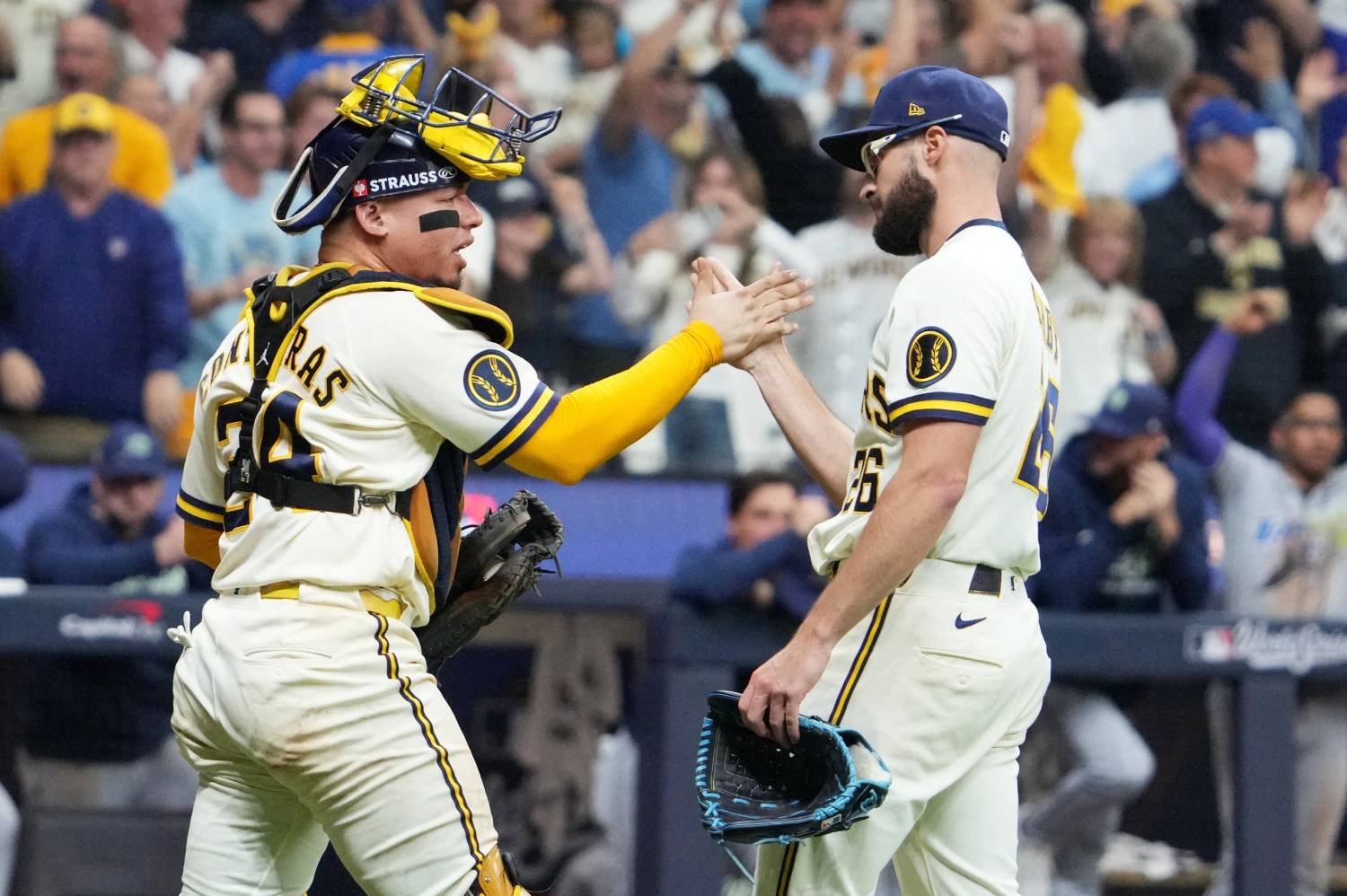 It is no longer a pie-in-the-sky wish. It is reality. The Milwaukee Brewers are one win away from the franchise's first World Series championship. Their first chance at that elusive accomplishment comes in Tuesday's Game 4, where the Brewers will look to sweep the Tampa Bay Rays in the best-of-seven series. While the Brewers have yet to make an announcement as to who will be their starting pitcher, rookie left-hander Shane Drohan is a top candidate as an opener. Drohan also started the Game 4 clincher of the NL Championship Series against the two-time defending World Series champion Los Angeles Dodgers. Drohan faced just five batters, pitching into the second inning, giving up a run on two hits and two walks with a strikeout as the Brewers completed a four-game sweep of the Dodgers with a 6-2 victory. Drohan starting will force a tough decision for Rays manager Kevin Cash. The Rays had three new players in their starting lineup against Brewers left-hander Robert Gasser for Game 3. Gasser allowed just one hit over six innings. But with Drohan only facing a handful of batters before other length options such as right-hander Dustin May follow, Cash could opt to go with his right-handed lineup in a desperate must-win game for the Rays. That would include Jonathan Aranda at first base, Richie Palacios at second and Liam Hicks at catcher, all better offensive options than their Game 3 replacements of Ryan Vilade, Ben Williamson and Nick Fortes, respectively. But Brewers manager will also be able to counter with left-handed relievers JoJo Romero and his best weapon of the postseason, Aaron Ashby further complicating Cash's call. Regardless, all of the Brewers' key bullpen arms had the day off in the 10-1 Game 3 rout, meaning two days off since their last appearance in Game 2. Shane Drohan vs. Tampa Bay Rays: Current Batters Table Rk Player B PA AB H 2B 3B HR RBI BB SO BA OBP SLG OPS SH SF IBB HBP GIDP 1 Liam Hicks L 3 3 1 0 0 0 0 0 0 .333 .333 .333 .667 0 0 0 0 0 Provided by Stathead: Found with Stathead. See Full Results. Generated 10/27/2026. Looking to keep the Rays alive for at least another day is right-handed starter Griffin Jax. Converted from reliever to starter early this season, Jax has made 23 starts among his 34 appearances this year. He has a 3.76 FIP (3.53 ERA) with a 7.6% walk rate and 25.3% strikeout rate. The walk rate is pretty much on his career mark of 7.2%, while his strikeout rate is down several points from where it has been the last two seasons (34.4%, 35%), when he was a reliever for the Minnesota Twins. Jax was acquired by the Rays at the 2025 trade deadline. Jax did make two relief appearances vs. the Brewers this season. He pitched a scoreless seventh inning in a 3-2 Rays win March 30, striking out one and not allowing a hit or a walk. In the April 1 series finale, the Brewers lit Jax up for five runs (three earned) with three hits and a walk while he didn't get an out in the eighth inning of an 8-2 Brewers win. That outing and a start for the Twins in 2021 where Jax allowed six runs in five innings have put his ERA at 6.75 ERA over 12 appearances in 14⅔ innings. He has made two postseason appearances this year. In the NL Division Series vs. the New York Yankees, Jax pitched two innings of relief in the Game 3 clincher, allowing a run on a hit with a walk and four strikeouts. He started Game 3 of the AL Championship Series against the Cleveland Guardians and pitched into the fifth inning, giving up three runs on five hits and two walks and two strikeouts. Among current Brewers, Christian Yelich is 2-for-6 with a walk and two RBIs, while William Contreras is 2-for-4 with two strikeouts. Jackson Chourio, who has the second-most hits in the first three games in World Series history with eight, has not faced Jax. Chourio, who had two hits in the eight-run fifth inning of Game 3, is the only player in MLB postseason history to have two hits in a single inning of multiple postseason games. Griffin Jax vs. Milwaukee Brewers: Current Batters Table Rk Player B PA AB H 2B 3B HR RBI BB SO BA OBP SLG OPS SH SF IBB HBP GIDP 1 Christian Yelich L 7 6 2 1 0 0 2 1 1 .333 .429 .500 .929 0 0 0 0 0 2 Bo Naylor L 6 5 0 0 0 0 0 0 3 .000 .000 .000 .000 1 0 0 0 0 3 Jake Bauers L 4 3 1 0 0 0 0 1 0 .333 .500 .333 .833 0 0 0 0 0 4 William Contreras R 4 4 2 0 0 0 0 0 2 .500 .500 .500 1.000 0 0 0 0 0 5 Brice Turang L 4 3 1 0 0 0 0 0 0 .333 .333 .333 .667 1 0 0 0 0 6 Sal Frelick L 2 1 1 0 0 0 0 0 0 1.000 1.000 1.000 2.000 0 0 0 0 0 7 David Hamilton L 2 2 1 0 0 0 0 0 0 .500 .500 .500 1.000 0 0 0 0 0 8 Garrett Mitchell L 2 2 0 0 0 0 0 0 2 .000 .000 .000 .000 0 0 0 0 0 9 Joey Ortiz R 2 2 1 0 0 0 0 0 0 .500 .500 .500 1.000 0 0 0 0 0 10 Brandon Lockridge R 1 1 0 0 0 0 0 0 0 .000 .000 .000 .000 0 0 0 0 0 11 Gary Sánchez R 1 1 1 0 0 1 2 0 0 1.000 1.000 4.000 5.000 0 0 0 0 0 Provided by Stathead: Found with Stathead. See Full Results. Generated 10/27/2026.

