



-
Posts
378 -
Joined
-
Last visited
Content Type
Profiles
Forums
Blogs
Events
News
2026 Milwaukee Brewers Top Prospects Ranking
Milwaukee Brewers Videos
2022 Milwaukee Brewers Draft Picks
Milwaukee Brewers Free Agent & Trade Rumors, Notes, & Tidbits
Guides & Resources
2023 Milwaukee Brewers Draft Picks
2024 Milwaukee Brewers Draft Picks
The Milwaukee Brewers Players Project
2025 Milwaukee Brewers Draft Pick Tracker
2026 Milwaukee Brewers Draft Tracker: Picks & Bonuses
Store
Downloads
Gallery
Everything posted by Steve Drumwright
-

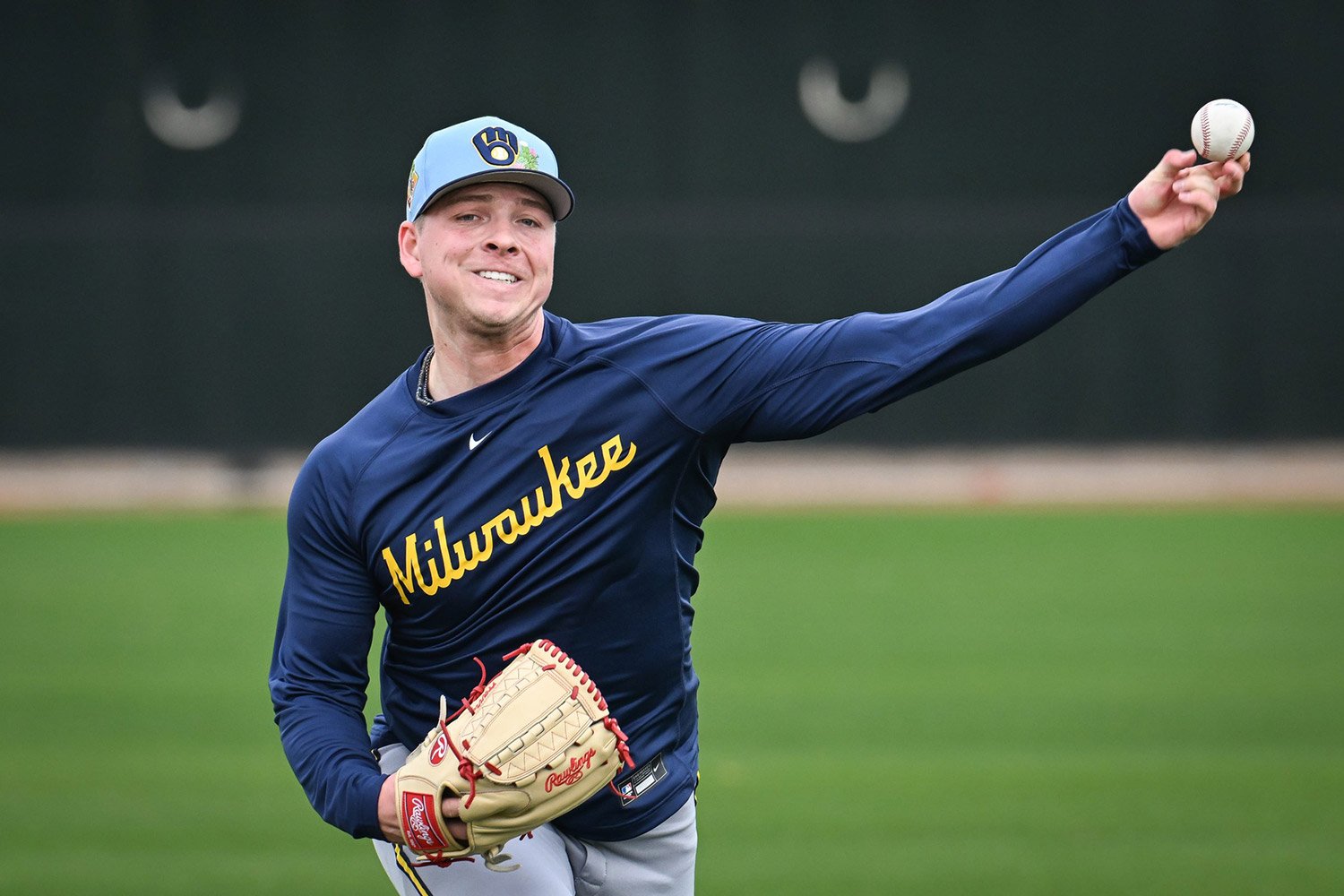 Everyone who is expected to be part of the Milwaukee Brewers' Opening Day roster has now played in at least one game. While there are minimal injury concerns at the moment, now the work to get everyone sharp is truly underway. The Brewers are without several camp regulars due to the World Baseball Classic. The absences of Jackson Chourio, William Contreras, Brice Turang, Abner Uribe, Angel Zerpa, Rob Zastryzny, Tyler Black, and Carlos Rodriguez open opportunities for others. As a reminder: Don't take anything too seriously in this recap. It is only spring training, where exhibition games often devolve into minor-league scrimmages. The information below is meant as basic news, not necessarily hardcore analysis. The Crew dropped to 5-7 in Cactus League play. After having Monday off, the Brewers lost to the rival Chicago Cubs 4-1 on Tuesday, lost to Great Britain 7-3 on Wednesday in a WBC exhibition, and beat the Colorado Rockies 10-8 on Thursday. Who's Hot? 🔥 Kyle Harrison The left-hander, acquired this spring in the six-player Caleb Durbin deal, made his exhibition debut against Great Britain and displayed a new weapon. Harrison's kick change was a rousing success, helping him get eight swings and misses during his three scoreless innings. Harrison allowed two hits and a walk while striking out a pair. Four of those eight whiffs came on his changeup, which he threw 10 times among his 40 pitches. Harrison only used three pitches, his four-seamer, changeup, and slurve, after also using a cutter and sinker last year. Perhaps those pitches come out later. But the changeup, revised following the trade, is certainly something that bodes well. Garrett Mitchell After a late start to game action and a 0-for-4 beginning, the potential Opening Day center fielder showed off the tools that have the Crew expecting big things from him if he can stay healthy. Mitchell went 2-for-3 with four RBIs, including a 462-foot homer on the first pitch of the game vs. Rockies right-hander Michael Lorenzen, then a ringing opposite-field double with the bases loaded off right-hander Davison Palmer, who finished last season at Double-A. Mitchell has been the clear-cut top center fielder in the organization for the past few years, but he has played just 113 games over the last three seasons due to a variety of injuries. Jake Bauers After missing a few days, Bauers was back in the lineup against the Rockies and went 2-for-3 with his first spring homer, a two-run shot off Palmer. Bauers, who was the starting designated hitter, also stole a base and was hit by a pitch as he raised his spring average to a robust .545 (6-for-11). He is expected to see some time in left field soon as he prepares for whatever role the Brewers need him for once Opening Day rolls around. The left-handed hitter is the backup first baseman to Andrew Vaughn and was a valuable bat down the stretch and in the postseason last year. Who's Not? 🧊 Jared Koenig The reliable left-handed reliever coughed up a whopping five runs in one-third of an inning against Great Britain in his spring debut. But he came out of the appearance unconcerned about the metrics in his outing. Koenig came on to start the fifth inning against Great Britain, walking two and allowing four hits, including a two-run homer to Washington Nationals catcher Harry Ford. Only 12 of his 22 pitches were strikes, a very un-Koenig-like outing. But remember, it was his first game action this spring. Robert Gasser The left-hander, bidding for a spot in the starting rotation, gave up three runs on three hits in 2⅔ innings vs. the Rockies. It was his second start this spring. While not giving up much in the way of hard hits (82.4 mph average exit velocity), it was the three walks that were troublesome. With Quinn Priester's status now in doubt for Opening Day, Gasser and the other candidates have a little wiggle room, yet still know they have to perform with the depth of the starters vying for a job. This was not a concerning outing for Gasser, but it could knock him down a rung if you are rating the candidates on a daily basis (which we hope you aren't). Cooper Pratt The shortstop, expected to be the starter at Triple-A to begin the season, has yet to get untracked this spring. He went 1-for-5 while appearing in all three games, but did have a hit, two walks, and scored twice against the Rockies. The 21-year-old is hitting just .200 (3-for-15) this spring. Pratt had a rough 2025 at Double-A Biloxi, posting a .238/.343/.348 while playing a career-high 120 games. His defense is not a question, but he has been inconsistent offensively, a trait that will need to change to become part of the MLB equation.
- 1 comment
-
- 1
-

-
- kyle harrison
- garrett mitchell
- (and 4 more)
-
Image courtesy of © Mark J. Rebilas-Imagn Images The World Baseball Classic always throws a wrench into spring training. Chunks of teams leave camp for a couple of weeks to represent their countries, leaving those still in camp an opportunity for more playing time. With few roster battles, the Milwaukee Brewers will be keeping a close eye on who capitalizes on those chances. As a reminder: Don't take anything too seriously in this recap. It is only spring training, where exhibition games often devolve into minor-league scrimmages. The information below is meant as basic news, not necessarily hardcore analysis. The Crew saw its Cactus League record drop to 4-6 after beating the Chicago White Sox 5-2 Friday, then losing to the Cincinnati Reds 9-7 on Saturday and Kansas City Royals 3-1 on Sunday. Who's Hot? ? Joey Ortiz: Every pessimistic fan's whipping boy, the shortstop left camp for the WBC (Mexico) in a good frame of mind hitting-wise. Maybe it's because of the new beard he is sporting. Whatever it is, Ortiz went 3-for-3 with a pair of runs scored against the White Sox, then had another hit in three trips against the Reds. That boosted his spring average to .412 (7-for-17). Considering he had .239 and .230 batting averages the past two years, that shows some promising signs, even if it's just spring training. Luis Rengifo: The probable starting third baseman bounced back from an 0-for-5 start to his spring by going 3-for-6 in two starts this weekend. That began with his first hit, a homer to right leading off the third inning, against White Sox right-hander Sean Burke, the surprise Opening Day starter last year. The switch-hitting Rengifo followed that up with an infield single that deflected off right-hander Tanner McDougal, who made it up to Double-A in 2025. Against the Royals, Rengifo led off the game with a line-drive single to left off left-hander Kris Bubic. Luis Lara: I prefer giving the benefit of the doubt to the young prospects getting a shot in camp, especially guys who might be a couple years away. That's why I didn't want to knock Lara's start to Cactus League play, in which he went 3-for-16. But in playing two of the three games this weekend, the switch-hitting outfielder went 3-for-5, with a first-pitch single against Bubic. Granted, the exit velocity was a whopping 58.8 mph and dribbled to the first baseman, but everything counts, right? That came after he went 2-for-2 against the Reds, with a ground-rule double in the sixth inning and a bunt single in the eighth. It was a confidence-boosting pair of games. Who's Not? ? Jared Koenig: The durable left-handed reliever finally made his spring debut Saturday—and was rocked. Coming in to face the Reds' 2-3-4 hitters, Koenig was tagged for four runs on three hits in one-third of an inning. Matt McLain greeted Koenig with a hard-hit single to left. Elly De La Cruz lined a double to right. After striking out Sal Stewart, Koenig walked Spencer Steer to load the bases. That brought up Blake Dunn, who has 49 games of MLB experience, and he hit a bases-clearing double down the left-field line. That was it for Koenig, who threw 14 of his 22 pitches for strikes. William Contreras: While he notched hits in his last two games before joining Venezuela for the WBC, Contreras is off to a 3-for-14 (.214) start to his spring. It's nothing to be concerned about with the catcher's track record and something that could come around with the juices flowing in the WBC. He told MLB Network that he is healthy after offseason surgery to fix the broken middle finger on his catching hand, which was the primary concern coming into camp. The hits will come. Gary Sánchez: Keeping it with the catchers, Sánchez has yet to get going, either. He went 1-for-6 while getting one start at catcher and another at designated hitter. That dropped his spring showing to 3-for-15 (.200). Sánchez's spot on the roster is secure, as the No. 2 catcher who could get some DH time. He'll probably see more time now, with Contreras out of camp. View full article
-
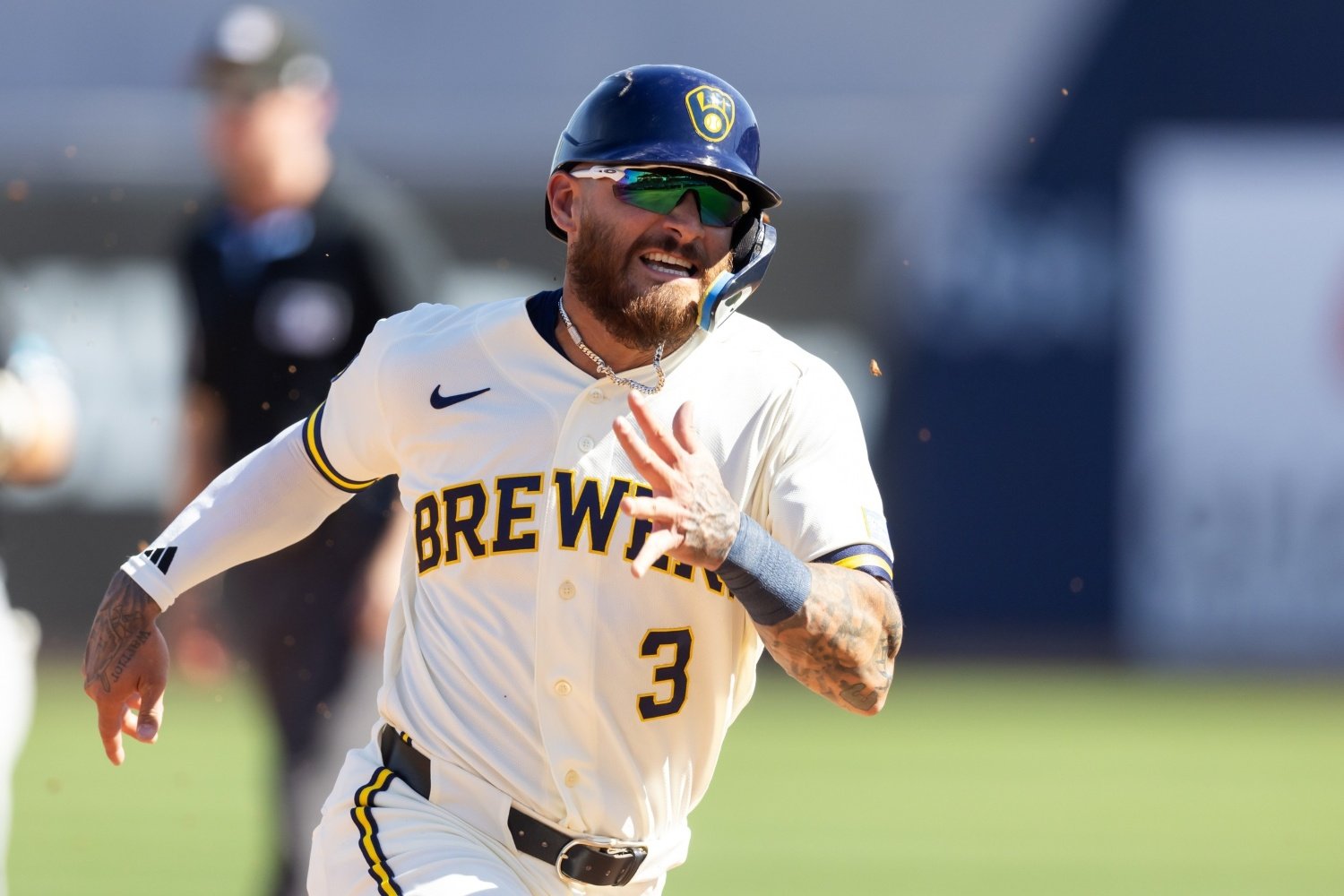 The World Baseball Classic always throws a wrench into spring training. Chunks of teams leave camp for a couple of weeks to represent their countries, leaving those still in camp an opportunity for more playing time. With few roster battles, the Milwaukee Brewers will be keeping a close eye on who capitalizes on those chances. As a reminder: Don't take anything too seriously in this recap. It is only spring training, where exhibition games often devolve into minor-league scrimmages. The information below is meant as basic news, not necessarily hardcore analysis. The Crew saw its Cactus League record drop to 4-6 after beating the Chicago White Sox 5-2 Friday, then losing to the Cincinnati Reds 9-7 on Saturday and Kansas City Royals 3-1 on Sunday. Who's Hot? ? Joey Ortiz: Every pessimistic fan's whipping boy, the shortstop left camp for the WBC (Mexico) in a good frame of mind hitting-wise. Maybe it's because of the new beard he is sporting. Whatever it is, Ortiz went 3-for-3 with a pair of runs scored against the White Sox, then had another hit in three trips against the Reds. That boosted his spring average to .412 (7-for-17). Considering he had .239 and .230 batting averages the past two years, that shows some promising signs, even if it's just spring training. Luis Rengifo: The probable starting third baseman bounced back from an 0-for-5 start to his spring by going 3-for-6 in two starts this weekend. That began with his first hit, a homer to right leading off the third inning, against White Sox right-hander Sean Burke, the surprise Opening Day starter last year. The switch-hitting Rengifo followed that up with an infield single that deflected off right-hander Tanner McDougal, who made it up to Double-A in 2025. Against the Royals, Rengifo led off the game with a line-drive single to left off left-hander Kris Bubic. Luis Lara: I prefer giving the benefit of the doubt to the young prospects getting a shot in camp, especially guys who might be a couple years away. That's why I didn't want to knock Lara's start to Cactus League play, in which he went 3-for-16. But in playing two of the three games this weekend, the switch-hitting outfielder went 3-for-5, with a first-pitch single against Bubic. Granted, the exit velocity was a whopping 58.8 mph and dribbled to the first baseman, but everything counts, right? That came after he went 2-for-2 against the Reds, with a ground-rule double in the sixth inning and a bunt single in the eighth. It was a confidence-boosting pair of games. Who's Not? ? Jared Koenig: The durable left-handed reliever finally made his spring debut Saturday—and was rocked. Coming in to face the Reds' 2-3-4 hitters, Koenig was tagged for four runs on three hits in one-third of an inning. Matt McLain greeted Koenig with a hard-hit single to left. Elly De La Cruz lined a double to right. After striking out Sal Stewart, Koenig walked Spencer Steer to load the bases. That brought up Blake Dunn, who has 49 games of MLB experience, and he hit a bases-clearing double down the left-field line. That was it for Koenig, who threw 14 of his 22 pitches for strikes. William Contreras: While he notched hits in his last two games before joining Venezuela for the WBC, Contreras is off to a 3-for-14 (.214) start to his spring. It's nothing to be concerned about with the catcher's track record and something that could come around with the juices flowing in the WBC. He told MLB Network that he is healthy after offseason surgery to fix the broken middle finger on his catching hand, which was the primary concern coming into camp. The hits will come. Gary Sánchez: Keeping it with the catchers, Sánchez has yet to get going, either. He went 1-for-6 while getting one start at catcher and another at designated hitter. That dropped his spring showing to 3-for-15 (.200). Sánchez's spot on the roster is secure, as the No. 2 catcher who could get some DH time. He'll probably see more time now, with Contreras out of camp.
-
- 1
-
-
- joey ortiz
- luis lara
- (and 4 more)
-
Image courtesy of © Jayne Kamin-Oncea-Imagn Images With a full week of Cactus League games now under their belt, Milwaukee Brewers players are starting to settle into routines. The fake games can beget unrealistic enthusiasm, as starters play a few innings, then give way to the minor-leaguers trying to see if they can hang. The Brewers finally allowed a pitcher to go more than one inning, but they continue to take it slow to begin the exhibition season. As a reminder: Don't take anything too seriously in this recap. It is only spring training, where exhibition games often devolve into minor-league scrimmages. The information below is meant as basic news, not necessarily hardcore analysis. For the Brewers as a whole, they won three of the four games to improve to 3-4. They fell to 0-4 after dropping a 7-5 decision to the Padres on Monday, before bouncing back by beating the A's 10-0 Tuesday, the San Francisco Giants 13-12 Wednesday and the Texas Rangers 5-1 Thursday. Who's Hot? ? Brandon Lockridge: Could he be making a push to start Opening Day in center field? If he continues to hit this way, you have to consider it. Lockridge went 4-for-8 while starting three games in center and right. He homered, doubled, was hit by a pitch and scored four times. Lockridge figured to be a lock as a backup outfielder, but depending on how Garrett Mitchell and Blake Perkins do, he could have a bigger role come Opening Day. Tyler Black: I like to distribute the kudos evenly whenever possible, but when you have two games like Black did, it is impossible to set him aside. Black went 3-for-3 with a double, a homer, a stolen base and six RBIs vs. the A's, then followed that up two days later by going 3-for-4 with a double, a triple and two more RBIs. That made him 8-for-12 this spring, a sizzling .667. He started at first base in both games. Black's homer came off A's right-hander Mason Barnett, who has five games of MLB experience. Black, who does have a minor-league option remaining, is competing for a bench spot and is a younger version of Jake Bauers, a left-handed hitter able to play first base and left field. Craig Yoho: After being a cult figure as a prospect, Yoho lost a little luster with one really bad inning in his debut season, in which he made eight appearances in four call-ups. But after two Cactus League appearances, the changeup specialist is off to a good beginning to his spring. He faced the minimum three hitters in a perfect inning against the Giants, throwing 12 pitches (nine strikes), then facing five batters against the Rangers, allowing a single and a walk on 16 pitches (seven strikes). Who's Not? ? Jackson Chourio: This is actually a mixed result. Chourio went 0-for-5 in two games to drop his spring performance to 2-for-12 (.167). But Chourio, who famously hasn't shown enough patience to draw walks, earned three free passes in those two games, all against pitchers with MLB experience, two of whom are veterans. Pat Murphy was "excited" about one of those walks, a 10-pitch grind that showed real engagement. Chourio is set to depart for the World Baseball Classic to play for Venezuela, so his bat is likely to get going while representing his country. David Hamilton: It's impossible to know the upheaval a player goes through when traded during spring training. But Hamilton, expected to be the top backup infielder after coming over from the Boston Red Sox in the Caleb Durbin deal, has yet to find his groove. He went 1-for-9 in three games, getting a double, driving in a run and scoring once, while walking twice and striking out just once. He started twice at third base and once more at short, positions he figures to see a lot of time at this season. Hamilton, who is now 2-for-12 this spring, is known more for his defense anyway, so no reason to hit panic here. Peter Strzelecki: You never can make a judgment on one outing, and I am not doing that here. Just chalk this one up to a bad game. Strzelecki, who has made 66 of his 77 MLB appearances out of the Crew's bullpen, is back after bouncing between three teams last season, all spent in the minors. He was the second pitcher in the Giants game and allowed two runs in his one inning. He hit the first batter he faced, struck out the next, then got Harrison Bader to pop out in foul territory before his second four-seam fastball to top Giants prospect Bryce Eldridge was drilled for a homer. He gave up a single to Jung Hoo Lee before striking out former Brewers catcher Eric Haase to end the third inning. View full article
-
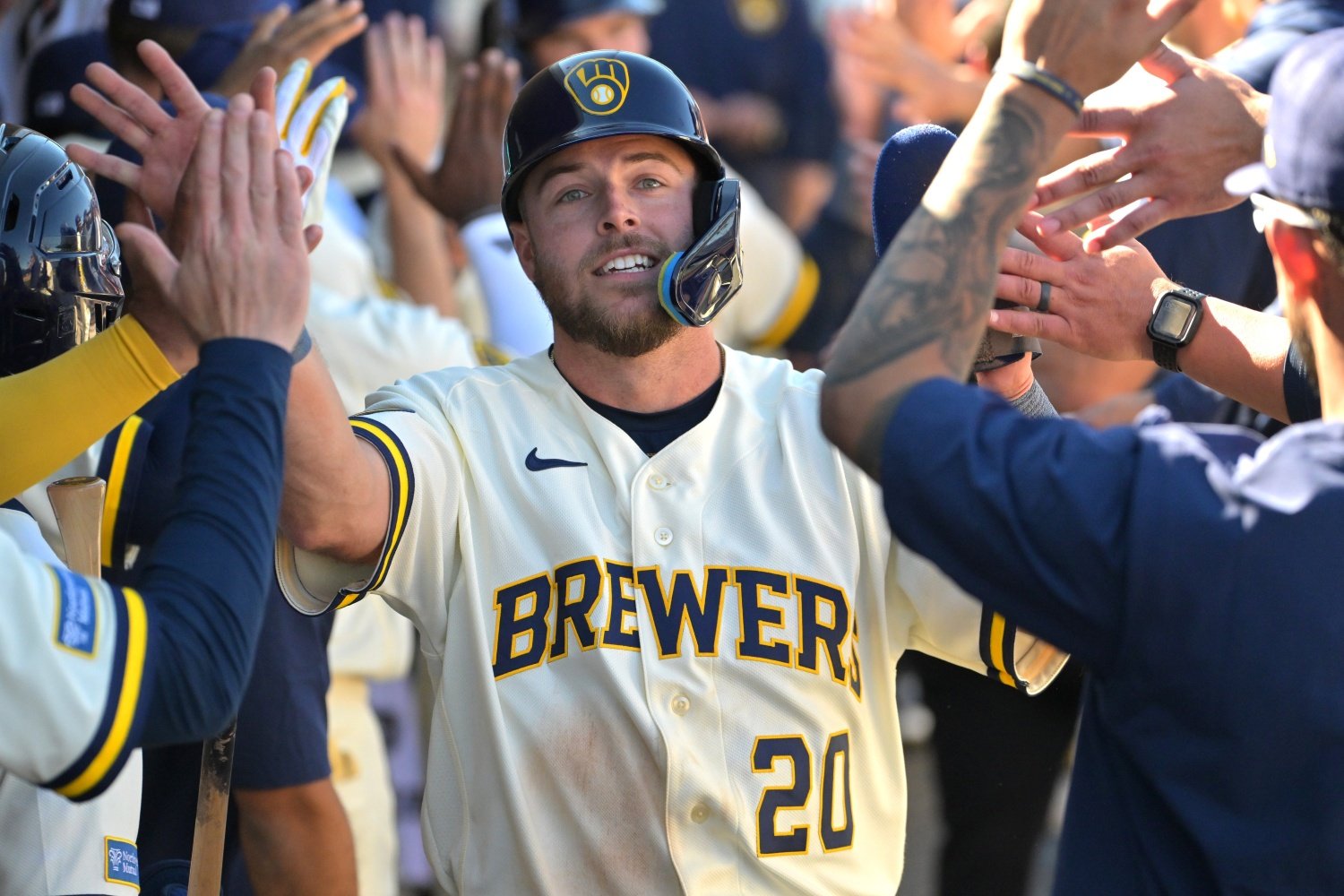 With a full week of Cactus League games now under their belt, Milwaukee Brewers players are starting to settle into routines. The fake games can beget unrealistic enthusiasm, as starters play a few innings, then give way to the minor-leaguers trying to see if they can hang. The Brewers finally allowed a pitcher to go more than one inning, but they continue to take it slow to begin the exhibition season. As a reminder: Don't take anything too seriously in this recap. It is only spring training, where exhibition games often devolve into minor-league scrimmages. The information below is meant as basic news, not necessarily hardcore analysis. For the Brewers as a whole, they won three of the four games to improve to 3-4. They fell to 0-4 after dropping a 7-5 decision to the Padres on Monday, before bouncing back by beating the A's 10-0 Tuesday, the San Francisco Giants 13-12 Wednesday and the Texas Rangers 5-1 Thursday. Who's Hot? ? Brandon Lockridge: Could he be making a push to start Opening Day in center field? If he continues to hit this way, you have to consider it. Lockridge went 4-for-8 while starting three games in center and right. He homered, doubled, was hit by a pitch and scored four times. Lockridge figured to be a lock as a backup outfielder, but depending on how Garrett Mitchell and Blake Perkins do, he could have a bigger role come Opening Day. Tyler Black: I like to distribute the kudos evenly whenever possible, but when you have two games like Black did, it is impossible to set him aside. Black went 3-for-3 with a double, a homer, a stolen base and six RBIs vs. the A's, then followed that up two days later by going 3-for-4 with a double, a triple and two more RBIs. That made him 8-for-12 this spring, a sizzling .667. He started at first base in both games. Black's homer came off A's right-hander Mason Barnett, who has five games of MLB experience. Black, who does have a minor-league option remaining, is competing for a bench spot and is a younger version of Jake Bauers, a left-handed hitter able to play first base and left field. Craig Yoho: After being a cult figure as a prospect, Yoho lost a little luster with one really bad inning in his debut season, in which he made eight appearances in four call-ups. But after two Cactus League appearances, the changeup specialist is off to a good beginning to his spring. He faced the minimum three hitters in a perfect inning against the Giants, throwing 12 pitches (nine strikes), then facing five batters against the Rangers, allowing a single and a walk on 16 pitches (seven strikes). Who's Not? ? Jackson Chourio: This is actually a mixed result. Chourio went 0-for-5 in two games to drop his spring performance to 2-for-12 (.167). But Chourio, who famously hasn't shown enough patience to draw walks, earned three free passes in those two games, all against pitchers with MLB experience, two of whom are veterans. Pat Murphy was "excited" about one of those walks, a 10-pitch grind that showed real engagement. Chourio is set to depart for the World Baseball Classic to play for Venezuela, so his bat is likely to get going while representing his country. David Hamilton: It's impossible to know the upheaval a player goes through when traded during spring training. But Hamilton, expected to be the top backup infielder after coming over from the Boston Red Sox in the Caleb Durbin deal, has yet to find his groove. He went 1-for-9 in three games, getting a double, driving in a run and scoring once, while walking twice and striking out just once. He started twice at third base and once more at short, positions he figures to see a lot of time at this season. Hamilton, who is now 2-for-12 this spring, is known more for his defense anyway, so no reason to hit panic here. Peter Strzelecki: You never can make a judgment on one outing, and I am not doing that here. Just chalk this one up to a bad game. Strzelecki, who has made 66 of his 77 MLB appearances out of the Crew's bullpen, is back after bouncing between three teams last season, all spent in the minors. He was the second pitcher in the Giants game and allowed two runs in his one inning. He hit the first batter he faced, struck out the next, then got Harrison Bader to pop out in foul territory before his second four-seam fastball to top Giants prospect Bryce Eldridge was drilled for a homer. He gave up a single to Jung Hoo Lee before striking out former Brewers catcher Eric Haase to end the third inning.
 -
Image courtesy of © Dave Kallmann / Milwaukee Journal Sentinel / USA TODAY NETWORK via Imagn Images Unless you are all about sentimentality, the move makes perfect sense. Brandon Woodruff might not be available to start Opening Day for the Milwaukee Brewers, as the right-hander takes his time ramping up this spring following a strained right lat that prematurely brought his feel-good comeback story to an end with less than two weeks to go in the 2025 season. His goal is to be healthy at the end of the 2026 season and be there for any postseason games the Crew may play. That didn't happen in 2023, when a shoulder injury that would require surgery, took him out on the eve of that year's postseason and sidelined him for the entire 2024 season. Then, it happened again in 2025. With 2026 perhaps being Woodruff's final season wearing a Brewers uniform, the 33-year-old would rather throw a pitch in the last game of the season than the first. Still, if Woodruff doesn't begin the season as the Opening Day starter March 26 against the Chicago White Sox, how do the Brewers replace the most veteran pitcher on the staff? His return to the team, after accepting the $22.025-million qualifying offer instead of finding a new home in free agency, was one reason why the Crew were willing to deal Freddy Peralta this winter. Peralta is now with the New York Mets. Woodruff was also the ideal pitcher to lead the staff post-Peralta, providing leadership and production. In 12 starts in his comeback, Woodruff had a 3.17 FIP, walking 5.4% of the batters he faced, while striking out 32.3%. Both marks are the best of his eight-year career. He struck out eight or more batters seven times, including a 10-strikeout performance in his second start. The good news is that the Brewers are in a good position to absorb a short-term loss of Woodruff, but much depends on how the team plans to reintegrate him into the rotation. "What that looks like early on, it could look a little bit different," Woodruff said Monday. "Nothing’s set in concrete, though." One possible scenario would be to handle Woodruff similarly to how the Los Angeles Dodgers brought along Shohei Ohtani last year, following his elbow surgery. As a two-way player, Ohtani didn't have the ability to go out on a rehab assignment without missing the chance to impact games as a designated hitter. Ohtani returned to pitching in mid-June and increased his workload gradually, such that the kid gloves were off by the time the postseason rolled around. He also had more time off between starts. Woodruff made two fewer starts in the regular season than Ohtani, but logged 17⅔ more innings. Of course, Ohtani's situation was made more palatable due to his two-way status, allowing Los Angeles to carry an extra pitcher. The Brewers do not have that luxury with Woodruff. Right-handers Quinn Priester and Jacob Misiorowski are the only other locks at the moment to be in the Crew's Opening Day rotation, with one of those two taking the ball that day instead of Woodruff. That turns what had been a battle royale for two rotation slots into one for three. For those in the competition, it doesn't really change much. None of the candidates wants to start the season at Triple-A Nashville, although more will than won't. As a quick refresher, those in contention include Chad Patrick, Logan Henderson, Robert Gasser, Kyle Harrison, Brandon Sproat, Shane Drohan and Carlos Rodriguez. DL Hall and Ángel Zerpa, more likely to be in the bullpen, could be early-season solutions as well. Henderson is coming back from his own injury, a strained flexor that ended his season in August. But the right-hander started one of the Crew's split-squad exhibition games Sunday. Otherwise, everyone seems healthy at this point. Patrick is the next-closest thing to a lock, due to his performance in 2025. He was in the rotation for 23 of his 27 appearances and posted a 3.53 FIP, with an identical ERA. He was also electric out of the bullpen down the stretch and in the postseason, which will b an alternative for him this year if he doesn't make the rotation. After that, Henderson, Gasser and Harrison are in the next tier. Henderson made his first five MLB starts before being hurt, while Gasser came back from Tommy John surgery to make two quick-hook starts and was on the postseason roster. Harrison, a left-hander, has the most experience of the group, with 37 starts in his 42 MLB appearances. He came to the Crew in the Caleb Durbin trade, after going to the Boston Red Sox in the Rafael Devers deal with the San Francisco Giants. Prospects yet to prove themselves at the highest level are in the next group. That begins with Sproat and includes Drohan and Rodriguez. Sproat was one of the two players the Brewers received in the Peralta trade and got a brief taste of the majors at the end of 2025, with mixed results. Drohan—another lefty picked up in the Durbin deal—has battled injuries but has seen time at Triple-A each of the last three seasons. Rodriguez is homegrown, having been a sixth-round draft pick in 2021, but has struggled in his seven MLB appearances. Would it be surprising to see the Crew go out and sign a veteran to fill in for Woodruff? It depends on the plan the Brewers' medical staff has laid out for their incumbent ace. With a relatively raw group of pitchers who will be part of the team's future one way or the other, it would be a bit surprising. Most of these pitchers are ready to prove themselves in the majors. The starting group after Woodruff is nine deep, and that ignores Hall and Zerpa. While the Brewers might not have Woodruff for one final Opening Day, the team could make the strategy pay off by winning a fourth straight NL Central title and giving the ball to the big right-hander in the postseason. View full article
-
How Slow-Playing Brandon Woodruff Affects Brewers' Starting Rotation
Steve Drumwright posted an article in Brewers
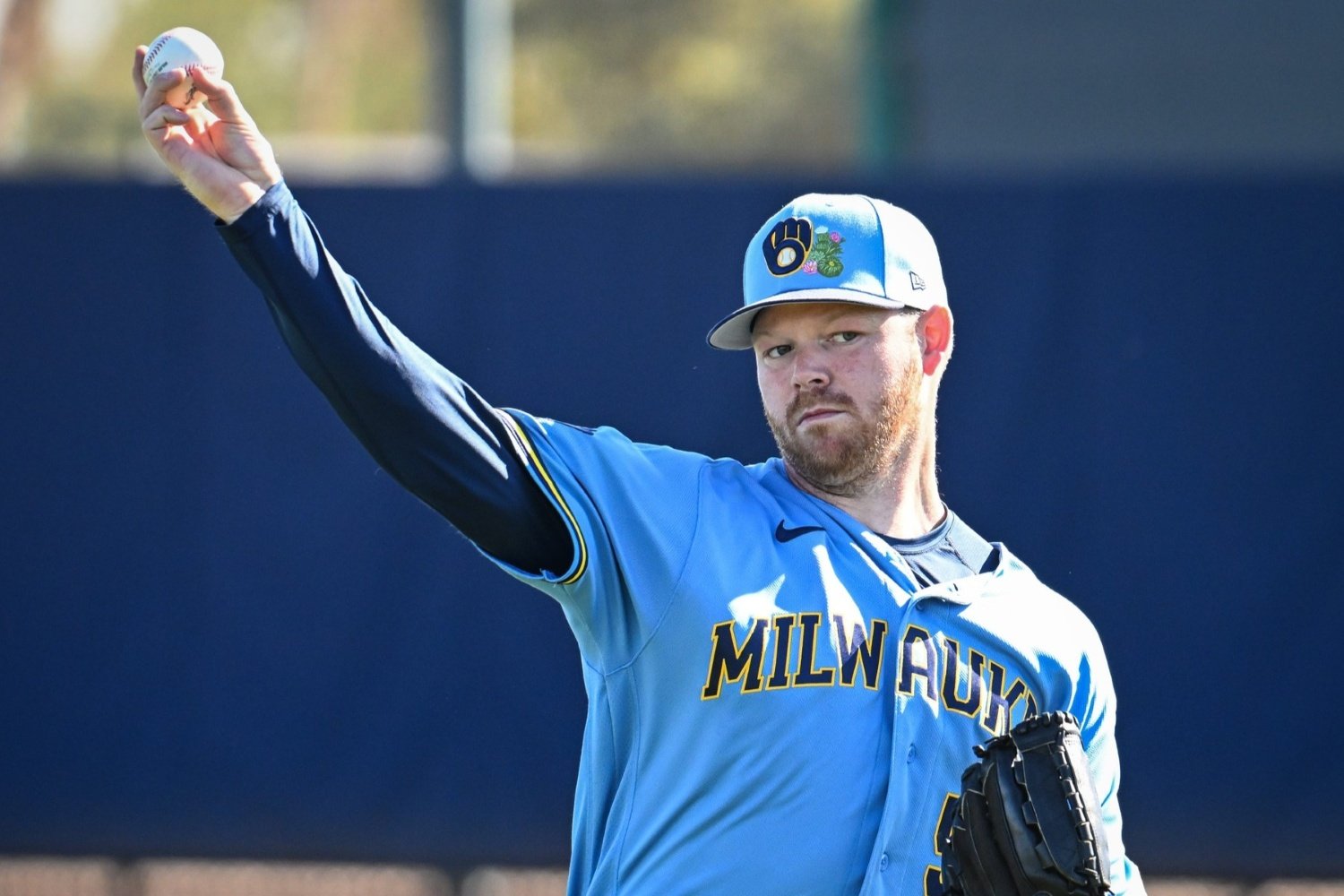 Unless you are all about sentimentality, the move makes perfect sense. Brandon Woodruff might not be available to start Opening Day for the Milwaukee Brewers, as the right-hander takes his time ramping up this spring following a strained right lat that prematurely brought his feel-good comeback story to an end with less than two weeks to go in the 2025 season. His goal is to be healthy at the end of the 2026 season and be there for any postseason games the Crew may play. That didn't happen in 2023, when a shoulder injury that would require surgery, took him out on the eve of that year's postseason and sidelined him for the entire 2024 season. Then, it happened again in 2025. With 2026 perhaps being Woodruff's final season wearing a Brewers uniform, the 33-year-old would rather throw a pitch in the last game of the season than the first. Still, if Woodruff doesn't begin the season as the Opening Day starter March 26 against the Chicago White Sox, how do the Brewers replace the most veteran pitcher on the staff? His return to the team, after accepting the $22.025-million qualifying offer instead of finding a new home in free agency, was one reason why the Crew were willing to deal Freddy Peralta this winter. Peralta is now with the New York Mets. Woodruff was also the ideal pitcher to lead the staff post-Peralta, providing leadership and production. In 12 starts in his comeback, Woodruff had a 3.17 FIP, walking 5.4% of the batters he faced, while striking out 32.3%. Both marks are the best of his eight-year career. He struck out eight or more batters seven times, including a 10-strikeout performance in his second start. The good news is that the Brewers are in a good position to absorb a short-term loss of Woodruff, but much depends on how the team plans to reintegrate him into the rotation. "What that looks like early on, it could look a little bit different," Woodruff said Monday. "Nothing’s set in concrete, though." One possible scenario would be to handle Woodruff similarly to how the Los Angeles Dodgers brought along Shohei Ohtani last year, following his elbow surgery. As a two-way player, Ohtani didn't have the ability to go out on a rehab assignment without missing the chance to impact games as a designated hitter. Ohtani returned to pitching in mid-June and increased his workload gradually, such that the kid gloves were off by the time the postseason rolled around. He also had more time off between starts. Woodruff made two fewer starts in the regular season than Ohtani, but logged 17⅔ more innings. Of course, Ohtani's situation was made more palatable due to his two-way status, allowing Los Angeles to carry an extra pitcher. The Brewers do not have that luxury with Woodruff. Right-handers Quinn Priester and Jacob Misiorowski are the only other locks at the moment to be in the Crew's Opening Day rotation, with one of those two taking the ball that day instead of Woodruff. That turns what had been a battle royale for two rotation slots into one for three. For those in the competition, it doesn't really change much. None of the candidates wants to start the season at Triple-A Nashville, although more will than won't. As a quick refresher, those in contention include Chad Patrick, Logan Henderson, Robert Gasser, Kyle Harrison, Brandon Sproat, Shane Drohan and Carlos Rodriguez. DL Hall and Ángel Zerpa, more likely to be in the bullpen, could be early-season solutions as well. Henderson is coming back from his own injury, a strained flexor that ended his season in August. But the right-hander started one of the Crew's split-squad exhibition games Sunday. Otherwise, everyone seems healthy at this point. Patrick is the next-closest thing to a lock, due to his performance in 2025. He was in the rotation for 23 of his 27 appearances and posted a 3.53 FIP, with an identical ERA. He was also electric out of the bullpen down the stretch and in the postseason, which will b an alternative for him this year if he doesn't make the rotation. After that, Henderson, Gasser and Harrison are in the next tier. Henderson made his first five MLB starts before being hurt, while Gasser came back from Tommy John surgery to make two quick-hook starts and was on the postseason roster. Harrison, a left-hander, has the most experience of the group, with 37 starts in his 42 MLB appearances. He came to the Crew in the Caleb Durbin trade, after going to the Boston Red Sox in the Rafael Devers deal with the San Francisco Giants. Prospects yet to prove themselves at the highest level are in the next group. That begins with Sproat and includes Drohan and Rodriguez. Sproat was one of the two players the Brewers received in the Peralta trade and got a brief taste of the majors at the end of 2025, with mixed results. Drohan—another lefty picked up in the Durbin deal—has battled injuries but has seen time at Triple-A each of the last three seasons. Rodriguez is homegrown, having been a sixth-round draft pick in 2021, but has struggled in his seven MLB appearances. Would it be surprising to see the Crew go out and sign a veteran to fill in for Woodruff? It depends on the plan the Brewers' medical staff has laid out for their incumbent ace. With a relatively raw group of pitchers who will be part of the team's future one way or the other, it would be a bit surprising. Most of these pitchers are ready to prove themselves in the majors. The starting group after Woodruff is nine deep, and that ignores Hall and Zerpa. While the Brewers might not have Woodruff for one final Opening Day, the team could make the strategy pay off by winning a fourth straight NL Central title and giving the ball to the big right-hander in the postseason.
 -
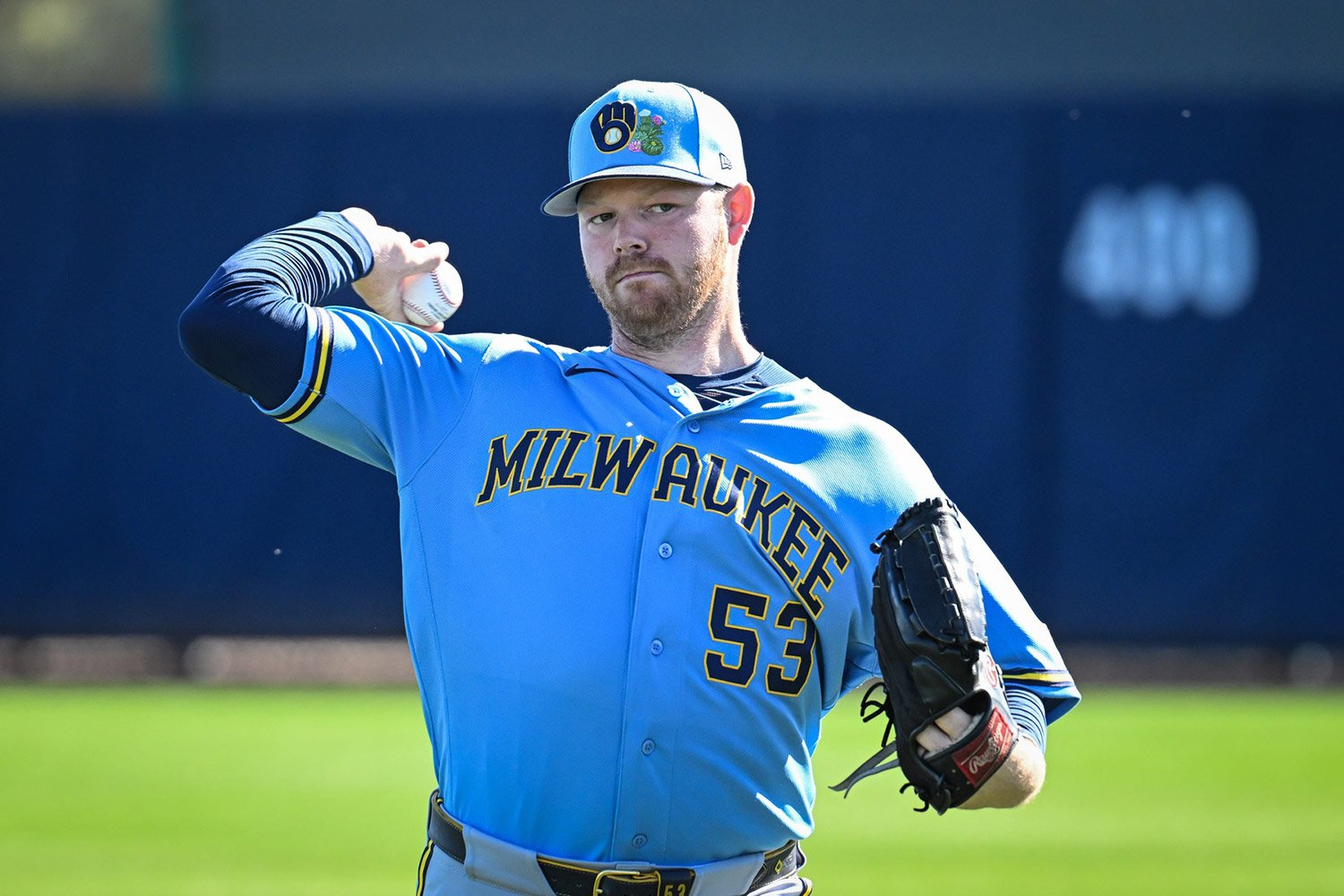 Right-hander Brandon Woodruff, already a two-time Opening Day starter for the Milwaukee Brewers, was the logical choice to do the same for the 2026 season as the most accomplished pitcher on the staff. But he and the Crew's medical staff are taking it cautiously with Big Woo following a strained right lat that sidelined him for most of the final two weeks of the regular season and all of the postseason. Woodruff threw a 33-pitch simulated game Monday, his first time facing live hitters since his final start of 2025 on Sept. 17. That puts the 33-year-old, who accepted the $22.025 million qualifying offer to return to the Brewers, behind the other rotation candidates in camp and also makes his starting Opening Day on March 26 vs. the Chicago White Sox at American Family Field questionable. “It’s up in the air right now,” Woodruff told Adam McCalvy of MLB.com. “I know that term’s used a lot. There’s one goal I have this year, and that’s to be healthy. I want to be available at the end of the year when it matters most. What that looks like early on, it could look a little bit different. Nothing’s set in concrete, though." Woodruff returned from October 2023 shoulder surgery and a couple of minor setbacks while rehabbing to make his 2025 debut on July 6. All he did in 12 starts was rekindle the thoughts of Woodruff pre-shoulder surgery as he turned in a 3.17 FIP and 130 ERA+. His control, previously terrific, was the best of his career, walking just 5.4% of hitters. He also struck out 32.3% of batters, also the best of his eight-year career. If Woodruff is unable to go, that would leave right-hander Quinn Priester and Jacob Misiorowski as the leading contenders to start Opening Day. Neither was in the majors last season on Opening Day.
 -
Right-hander Brandon Woodruff, already a two-time Opening Day starter for the Milwaukee Brewers, was the logical choice to do the same for the 2026 season as the most accomplished pitcher on the staff. But he and the Crew's medical staff are taking it cautiously with Big Woo following a strained right lat that sidelined him for most of the final two weeks of the regular season and all of the postseason. Woodruff threw a 33-pitch simulated game Monday, his first time facing live hitters since his final start of 2025 on Sept. 17. That puts the 33-year-old, who accepted the $22.025 million qualifying offer to return to the Brewers, behind the other rotation candidates in camp and also makes his starting Opening Day on March 26 vs. the Chicago White Sox at American Family Field questionable. “It’s up in the air right now,” Woodruff told Adam McCalvy of MLB.com. “I know that term’s used a lot. There’s one goal I have this year, and that’s to be healthy. I want to be available at the end of the year when it matters most. What that looks like early on, it could look a little bit different. Nothing’s set in concrete, though." Woodruff returned from October 2023 shoulder surgery and a couple of minor setbacks while rehabbing to make his 2025 debut on July 6. All he did in 12 starts was rekindle the thoughts of Woodruff pre-shoulder surgery as he turned in a 3.17 FIP and 130 ERA+. His control, previously terrific, was the best of his career, walking just 5.4% of hitters. He also struck out 32.3% of batters, also the best of his eight-year career. If Woodruff is unable to go, that would leave right-hander Quinn Priester and Jacob Misiorowski as the leading contenders to start Opening Day. Neither was in the majors last season on Opening Day. View full rumor
-
Image courtesy of © Jayne Kamin-Oncea-Imagn Images Every fan wants to make judgments on the athletes who play for their team based on what they see in action. For MLB spring training, it is a bit more complicated. Starting players, whether position players or pitchers, ease into their springs, playing minimal innings to begin and ramping up over a month. It is the other players, those fighting for jobs or prospects looking to get noticed or show they are ready for bigger roles, who take more of the at-bats and pitch more of the innings. And those come against players on other teams in similar situations. For the Milwaukee Brewers, there are a few position battles going on, but room on the Opening Day roster is tight. There are fewer non-roster veteran players in camp this year due to a well-stocked farm system. Don't take anything too seriously in this recap. It is only spring training, where exhibition games often devolve into minor-league scrimmages. The information below is meant as basic information, not necessarily hardcore analysis. This recap covers the Brewers' first three Cactus League games. The Crew went 0-3, losing to the Cleveland Guardians' split squad 9-6, then splitting up themselves Sunday for a 5-2 loss to the Chicago White Sox and a 7-3 loss to the Kansas City Royals. Who's Hot? 🔥 Tyler Black: Once a highly touted prospect, the first baseman-outfielder is now fighting for a role as other talent moves up the organization ladder. The 25-year-old left-handed hitter started twice, once at first and the other in left, going 2-for-5 with a walk and two stolen bases. Starting allows players to face other starters. Black grounded out vs. Guardians left-hander Joey Cantillo, then struck out against White Sox right-hander Mike Vasil, singled vs. right-hander Jordan Leasure, and flew out against right-hander Sean Burke. Akil Baddoo: A candidate for a backup outfield job, Baddoo went 2-for-4 with a homer and two RBIs. Baddoo started in left and hit third vs. the Guardians, getting a sacrifice fly in the first inning off Cantillo and striking out in the third vs. Connor Brogdon. Baddoo started in center against the White Sox, walking against Vasil and then homering on the first pitch Leasure threw, leading off the third inning. Logan Henderson and Robert Gasser: With 23 pitchers throwing no more than one inning, it was tough to single out one pitcher. These are two of the top candidates for a starting role and started each of Sunday's games. Henderson went against the White Sox, retiring Derek Hill on a sharp fly to center, getting Kyle Teel on a bouncer back to the mound, and getting Munetaka Murakami to fly out to right. He threw just 14 pitches, nine of which were strikes. Gasser also went just one inning against the Royals. Maikel Garcia singled to left, Jac Caglianone struck out, and Nick Loftin grounded into an inning-ending double play. Gasser threw seven strikes among his 11 pitches. Who's Not? 🧊 Brice Turang: After opening eyes with his late-season power surge, the former Platinum Glove-winning second baseman was selected to be on the U.S. roster for the World Baseball Classic. He is expected to be a backup there, so his plate appearances before leaving camp have a little more importance. In two games, Turang went 1-for-5 with a strikeout and a run scored. His spring started well, with a single off Cantillo on the fourth pitch of the first game. He stole second, went to third on a Jackson Chourio hit, and scored on Baddoo's sac fly. But nothing to panic about here. Luis Lara: Perhaps the Opening Day center fielder in a couple of years, Lara got a pair of starts in right field. He went 1-for-6 with two strikeouts. His lone hit was a grounded double to left off White Sox right-hander Luke Bell. This spring is more of getting a taste of where Lara needs to get to in order to join the major-league roster. Carlos Rodriguez: With seven MLB appearances already on his ledger, Rodriguez remains an outside candidate to join the Opening Day rotation. His first game this spring was bumpy. Coming on after Henderson in the White Sox game, Austin Hays greeted him with a double and went to third on Lenyn Sosa's groundout. Curtis Mead had an RBI single, but Rodriguez struck out Branden Montgomery and Korey Lee. He had 15 strikes in his 23 pitches. Not a bad outing. View full article
-
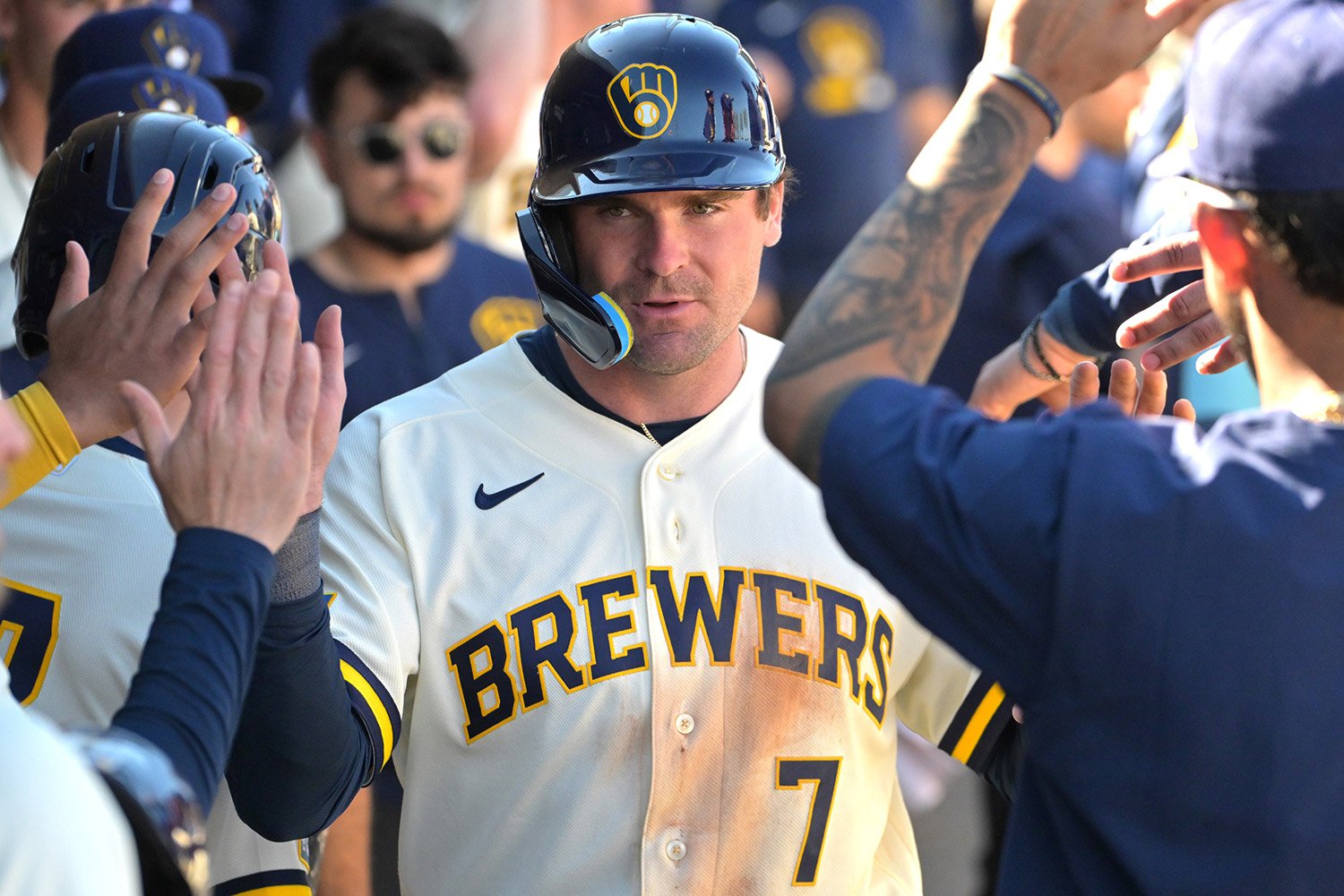 Every fan wants to make judgments on the athletes who play for their team based on what they see in action. For MLB spring training, it is a bit more complicated. Starting players, whether position players or pitchers, ease into their springs, playing minimal innings to begin and ramping up over a month. It is the other players, those fighting for jobs or prospects looking to get noticed or show they are ready for bigger roles, who take more of the at-bats and pitch more of the innings. And those come against players on other teams in similar situations. For the Milwaukee Brewers, there are a few position battles going on, but room on the Opening Day roster is tight. There are fewer non-roster veteran players in camp this year due to a well-stocked farm system. Don't take anything too seriously in this recap. It is only spring training, where exhibition games often devolve into minor-league scrimmages. The information below is meant as basic information, not necessarily hardcore analysis. This recap covers the Brewers' first three Cactus League games. The Crew went 0-3, losing to the Cleveland Guardians' split squad 9-6, then splitting up themselves Sunday for a 5-2 loss to the Chicago White Sox and a 7-3 loss to the Kansas City Royals. Who's Hot? 🔥 Tyler Black: Once a highly touted prospect, the first baseman-outfielder is now fighting for a role as other talent moves up the organization ladder. The 25-year-old left-handed hitter started twice, once at first and the other in left, going 2-for-5 with a walk and two stolen bases. Starting allows players to face other starters. Black grounded out vs. Guardians left-hander Joey Cantillo, then struck out against White Sox right-hander Mike Vasil, singled vs. right-hander Jordan Leasure, and flew out against right-hander Sean Burke. Akil Baddoo: A candidate for a backup outfield job, Baddoo went 2-for-4 with a homer and two RBIs. Baddoo started in left and hit third vs. the Guardians, getting a sacrifice fly in the first inning off Cantillo and striking out in the third vs. Connor Brogdon. Baddoo started in center against the White Sox, walking against Vasil and then homering on the first pitch Leasure threw, leading off the third inning. Logan Henderson and Robert Gasser: With 23 pitchers throwing no more than one inning, it was tough to single out one pitcher. These are two of the top candidates for a starting role and started each of Sunday's games. Henderson went against the White Sox, retiring Derek Hill on a sharp fly to center, getting Kyle Teel on a bouncer back to the mound, and getting Munetaka Murakami to fly out to right. He threw just 14 pitches, nine of which were strikes. Gasser also went just one inning against the Royals. Maikel Garcia singled to left, Jac Caglianone struck out, and Nick Loftin grounded into an inning-ending double play. Gasser threw seven strikes among his 11 pitches. Who's Not? 🧊 Brice Turang: After opening eyes with his late-season power surge, the former Platinum Glove-winning second baseman was selected to be on the U.S. roster for the World Baseball Classic. He is expected to be a backup there, so his plate appearances before leaving camp have a little more importance. In two games, Turang went 1-for-5 with a strikeout and a run scored. His spring started well, with a single off Cantillo on the fourth pitch of the first game. He stole second, went to third on a Jackson Chourio hit, and scored on Baddoo's sac fly. But nothing to panic about here. Luis Lara: Perhaps the Opening Day center fielder in a couple of years, Lara got a pair of starts in right field. He went 1-for-6 with two strikeouts. His lone hit was a grounded double to left off White Sox right-hander Luke Bell. This spring is more of getting a taste of where Lara needs to get to in order to join the major-league roster. Carlos Rodriguez: With seven MLB appearances already on his ledger, Rodriguez remains an outside candidate to join the Opening Day rotation. His first game this spring was bumpy. Coming on after Henderson in the White Sox game, Austin Hays greeted him with a double and went to third on Lenyn Sosa's groundout. Curtis Mead had an RBI single, but Rodriguez struck out Branden Montgomery and Korey Lee. He had 15 strikes in his 23 pitches. Not a bad outing.
-
- 3
-
-
- tyler black
- akil baddoo
- (and 5 more)
-
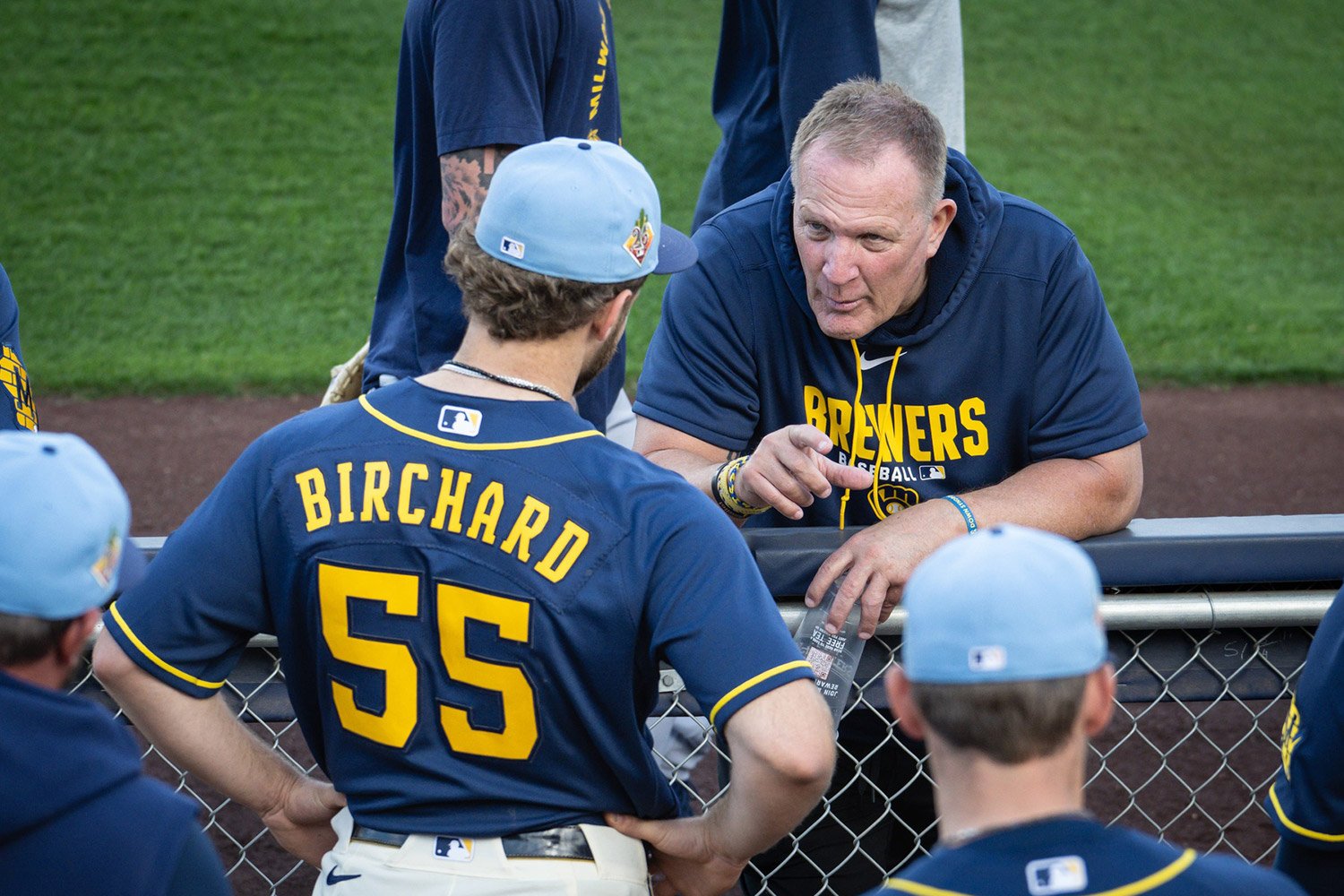 Pat Murphy, who won the National League Manager of the Year in his first two seasons with the Milwaukee Brewers, has signed a new three-year contract, Ken Rosenthal of The Athletic reported Thursday. Murphy, 67, was entering the final year of his deal. This new contract replaces the final season and includes a club option for the 2029 season. ESPN's Jeff Passan said Murphy is receiving $8.95 million in new money, making him one of MLB's highest-paid managers. Before joining the Brewers, Murphy's only previous MLB managing experience came on an interim basis during the 2015 season after Bud Black was fired. Murphy, who had been the Triple-A manager when promoted, was not retained by the Padres after that season. Coincidentally, then-Brewers manager Craig Counsell had tried to hire Murphy, his former Notre Dame coach, before the 2015 season, but the Padres blocked the move. But that allowed Murphy to join Counsell's staff in 2016 as bench coach, a position he held until Counsell went to the Chicago Cubs after the 2023 season, when Murphy replaced his former player as the Crew's manager. Murphy picked up where Counsell left off, winning the NL Central in 2024 and 2025, giving the Brewers three straight division championships. Each year, the Brewers edged out Counsell's Cubs. Murphy was named NL Manager of the Year in each season, the first Brewers skipper to win the award in team history. The Brewers finished 93-69 in 2024, a one-game improvement over Counsell's final season, then posted the best record in MLB in 2025 at 97-65. The Brewers, who lost to the New York Mets in the NL Wild Card Series in 2024, then beat Counsell's Cubs in the NL Division Series in 2025 before being swept by the eventual World Series champion Los Angeles Dodgers. The 2025 record was surprising due to a 0-4 start to the season and a number of injuries that decimated the starting rotation. But once the Brewers got healthy, they put together an 11-game winning streak, followed by a club-record 14-game streak. Murphy has blossomed into a fan favorite, not just in Milwaukee but across baseball. In 2025, he became famous for pocket pancakes, a pancake that he kept in his pocket so he could munch on it when he was hungry. He also stuffs other types of food for safekeeping, a practice he has been doing for years, but only became noteworthy when he did it during a nationally televised game.
 -
Image courtesy of © Mark Hoffman/Milwaukee Journal Sentinel / USA TODAY NETWORK via Imagn Images Pat Murphy, who won the National League Manager of the Year in his first two seasons with the Milwaukee Brewers, has signed a new three-year contract, Ken Rosenthal of The Athletic reported Thursday. Murphy, 67, was entering the final year of his deal. This new contract replaces the final season and includes a club option for the 2029 season. ESPN's Jeff Passan said Murphy is receiving $8.95 million in new money, making him one of MLB's highest-paid managers. Before joining the Brewers, Murphy's only previous MLB managing experience came on an interim basis during the 2015 season after Bud Black was fired. Murphy, who had been the Triple-A manager when promoted, was not retained by the Padres after that season. Coincidentally, then-Brewers manager Craig Counsell had tried to hire Murphy, his former Notre Dame coach, before the 2015 season, but the Padres blocked the move. But that allowed Murphy to join Counsell's staff in 2016 as bench coach, a position he held until Counsell went to the Chicago Cubs after the 2023 season, when Murphy replaced his former player as the Crew's manager. Murphy picked up where Counsell left off, winning the NL Central in 2024 and 2025, giving the Brewers three straight division championships. Each year, the Brewers edged out Counsell's Cubs. Murphy was named NL Manager of the Year in each season, the first Brewers skipper to win the award in team history. The Brewers finished 93-69 in 2024, a one-game improvement over Counsell's final season, then posted the best record in MLB in 2025 at 97-65. The Brewers, who lost to the New York Mets in the NL Wild Card Series in 2024, then beat Counsell's Cubs in the NL Division Series in 2025 before being swept by the eventual World Series champion Los Angeles Dodgers. The 2025 record was surprising due to a 0-4 start to the season and a number of injuries that decimated the starting rotation. But once the Brewers got healthy, they put together an 11-game winning streak, followed by a club-record 14-game streak. Murphy has blossomed into a fan favorite, not just in Milwaukee but across baseball. In 2025, he became famous for pocket pancakes, a pancake that he kept in his pocket so he could munch on it when he was hungry. He also stuffs other types of food for safekeeping, a practice he has been doing for years, but only became noteworthy when he did it during a nationally televised game. View full article
-
3 Position Battles to Watch as Brewers Begin Cactus League Play
Steve Drumwright posted an article in Brewers
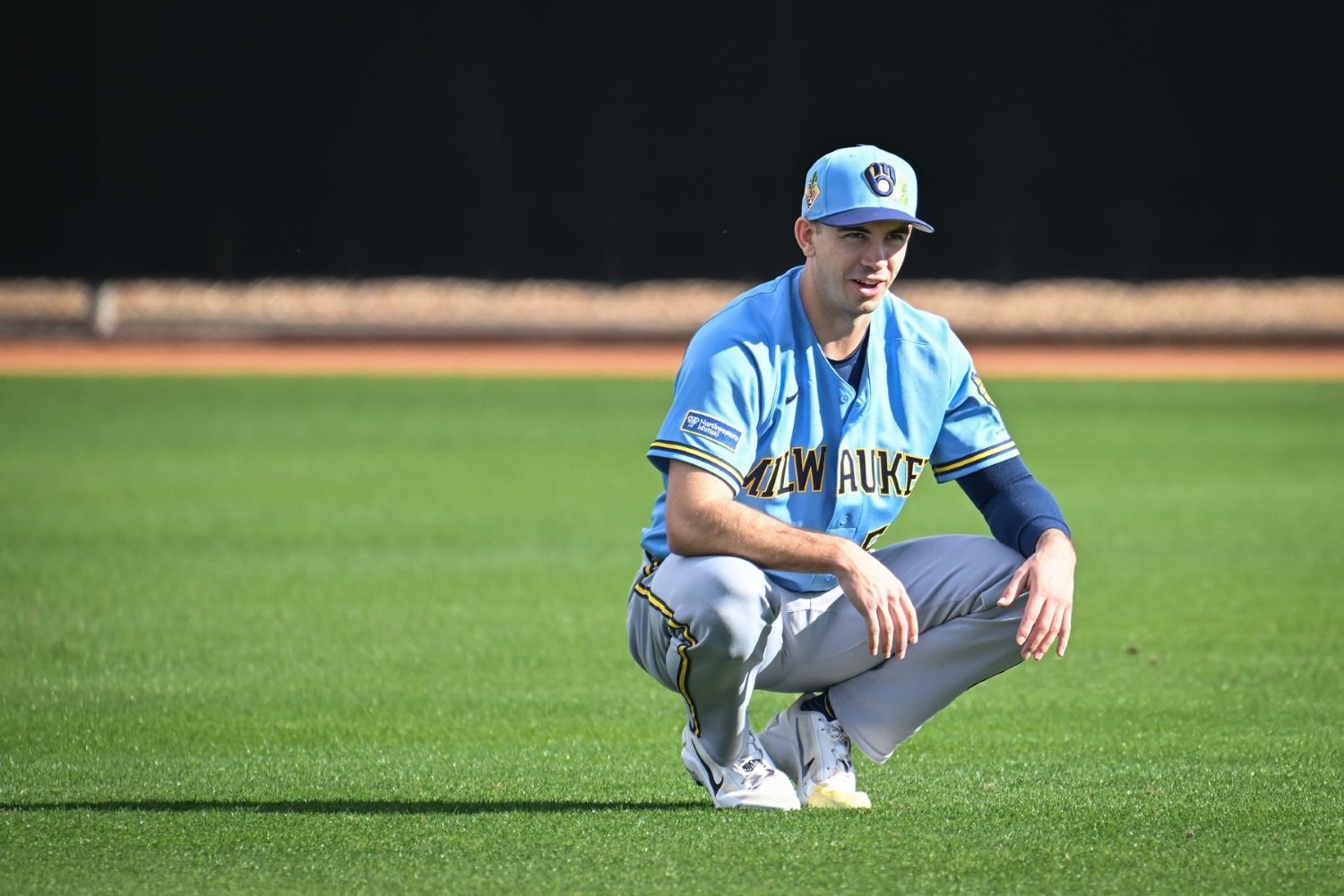 Spring training has two purposes. One is for all the players to get back up to game speed, following the offseason. The other is to figure out the best 26 players to put on your Opening Day roster, and which roles they ought to fill. With games in Arizona and Florida beginning this weekend and the Milwaukee Brewers opening Cactus League play Saturday against the Cleveland Guardians, competition for a few of those roster spots begins in earnest. Just like the regular season, things will get more intense as we check games off the schedule. With the moves made by president of baseball operations Matt Arnold this offseason, there are only a few things to figure out this spring. Here are the three position battles to pay attention to during Cactus League play. (Players listed in order of strongest candidacy.) No. 4 and No. 5 Starting Pitcher Let's start with the given. Right-handers Brandon Woodruff, Quinn Priester and Jacob Misiorowski occupy the top three slots in the starting rotation. There's a nice group of pitchers to fill out the final two spots following the Freddy Peralta trade. The winner of this competition might be Triple-A Nashville manager Rick Sweet, who could have an MLB-level rotation. Everyone in this section is already on the 40-man roster. At least one (and perhaps two) could end up in the bullpen. RHP Chad Patrick: He finished seventh in NL Rookie of the Year voting after starting 23 games and making four relief appearances in the regular season. He posted a 3.53 FIP and a 117 ERA+ with an 8% walk rate and 25.2% strikeout rate, both better than the MLB averages. He was also a dynamic reliever in the postseason, allowing two runs over 11 innings, striking out 11 and walking one. A bullpen role could be an option, depending on how the rotation shakes out. RHP Logan Henderson: In addition to 16 starts at Triple-A, Henderson also made five MLB starts before his 2025 was cut short by a strained flexor in early August. He was really good in the minors and much better in his brief time in MLB, although his 3.02 FIP belied his 1.78 ERA. He did have a 33.3% strikeout rate and would seem to be in a good position for an Opening Day spot. LHP Robert Gasser: He underwent Tommy John surgery early in the 2024 campaign, but returned to make two starts late in 2025 and was included on the postseason roster. As a rare left-hander in this competition, he could have an advantage if the Brewers want to have a southpaw in the rotation. But he is also ready to prove what he can do at the highest level. He hasn't been a big strikeout pitcher in his brief MLB time, with his 14.7% strikeout rate about half of what it has been in the minors, while he has been better at limiting walks in the majors than he was in the minors. LHP Kyle Harrison: One of two pitchers acquired in the Caleb Durbin trade, Harrison joins Gasser as a lefty vying for a starting gig. His repertoire was retooled with the Red Sox, who kept him at Triple-A until three late-season outings. If the Brewers have even more adjustments in mind, he could be the next success story for one of the game's best pitching development groups. RHP Brandon Sproat: The pitcher the Crew got back in the Peralta-Tobias Myers deal, Sproat made his MLB debut as the New York Mets tried to plug their struggling rotation late last year. In four starts, the results were mixed. He could easily start the season in the big-league rotation, but could also benefit from a little extra seasoning at Triple-A. He did post a 4.24 ERA in 26 games (25 starts) at that level in 2025. RHP Coleman Crow: After having Tommy John surgery late in the 2023 season and being acquired from the New York Mets that offseason, Crow played in the Arizona Fall League in 2024 and made 12 starts between Double-A Biloxi and Triple-A Nashville last year. He had a 2.51 ERA at Biloxi in 10 starts and a 7.71 ERA in two starts at Nashville. Perhaps most importantly, he had a healthy offseason to get ready for this spring. LHP Shane Drohan: The other pitcher picked up in the Durbin deal, Drohan has a ton of potential, but has battled injuries and poor control. His potential got him to Triple-A in 2023, and he may have finally had a breakthrough in 2025, when he had a 2.25 ERA in 12 outings (11 starts) at that level. In five minor-league seasons, Drohan has a 4.29 ERA, striking out 10.3 per nine innings and walking 4.5. RHP Carlos Rodriguez: The 24-year-old has had two cups of coffee with the Brewers; neither went well. He also didn't dominate at Triple-A in 2025, the second year in a row at that level. He would appear ticketed back there, unless he shows something different this spring. He might also be the most vulnerable player on the 40-man roster, should the team need a spot. Center Field Position battle might be too strong for this. This is more of a health issue. Yeah, we're talking about ... Garrett Mitchell: Having made his debut in 2022, the uber-talented Mitchell has yet to play in a season's worth of games. Due to a variety of injuries, he has played in a mere 141 games at the MLB level in those four seasons. When he has played, Mitchell has accrued 3.3 fWAR by putting up a .254/.333/.433 slash line with 13 homers, 40 RBIs and 23 steals. The Brewers have had stellar defense in center for most of the last decade, but the lack of a true offensive contributor from the position would be a nice thing to change. If Mitchell can stay healthy, that's eminently possible. Blake Perkins: After a 2025 that didn't go his way, Perkins's role for 2026 is really dependent on Mitchell. A terrific defender, Perkins broke his leg on a foul tip in spring training and didn't return until mid-July. He has his moments offensively, but in his three-year career, Perkins has a slash line of .232/.314/.339, with 13 homers, 82 RBIs and 35 stolen bases in 242 games. That results in a 3.1 fWAR. Perkins is a switch-hitter, while Mitchell hits left-handed, so they could end up platooning. Last Bench Spot This has changed a bit with the Durbin trade, which zapped the experienced infield depth by including Andruw Monasterio and Anthony Seigler. Of course, that's been partially balancd by the signing of Luis Rengifo to play third base. Each team has four bench spots, with one occupied by the backup catcher. In the Crew's case, that is Gary Sánchez. How about the other three backups? One goes to first baseman-outfielder Jake Bauers, who earned his roster spot with his late-season and postseason performance in 2025. Perkins has another, leaving one more to figure out. There needs to be a backup infielder who has positional versatility. David Hamilton: The third and final player who came over in the Durbin deal, Hamilton is the top candidate to replace Monasterio as the utility player. In 204 games over the last three seasons with the Red Sox, the Crew's eighth-round draft choice in 2019 has split time at second base (109) and shortstop (87). He has limited experience in the minors in center field, and even less at third base. As long as he can fill the defensive requirements as Monasterio did, anything he produces offensively will be a bonus. Jett Williams: I am contractually obliged to mention the other player the Crew picked up in the Peralta trade. He has had a brief time at Triple-A in 2025, with a .231/.326/.449 slash line with seven homers in 40 games. He can play anywhere up the middle: shortstop, second base or center field. Williams has the potential to be a dynamic player and is a top-75 prospect in all of baseball. His talent could lead to a spring surge and see him play his way onto the Opening Day roster, potentially even starting at third base if he sees time there this spring. Otherwise, he could be an option to be called up from Nashville, where he will get the playing time he needs to continue his development. Cooper Pratt: Like Williams, Pratt is not on the 40-man roster, which is a hurdle to him making the roster. Pratt has yet to play a game at Triple-A, which makes his inclusion here a bit of a long shot. At Double-A Biloxi in 2025, Pratt slashed .238/.343/.348, with eight homers, 62 RBIs and 31 stolen bases. Other than three games at rookie ball, Pratt has only played shortstop in the minors. He needs to diversify that this spring, even if it's just by moonlighting at second base. But unless he forces his way into a starting position, he will have the same destination as Williams: Nashville.
- 4 comments
-
- 2
-
-
- robert gasser
- chad patrick
- (and 7 more)
-
Image courtesy of © Dave Kallmann / Milwaukee Journal Sentinel / USA TODAY NETWORK via Imagn Images Spring training has two purposes. One is for all the players to get back up to game speed, following the offseason. The other is to figure out the best 26 players to put on your Opening Day roster, and which roles they ought to fill. With games in Arizona and Florida beginning this weekend and the Milwaukee Brewers opening Cactus League play Saturday against the Cleveland Guardians, competition for a few of those roster spots begins in earnest. Just like the regular season, things will get more intense as we check games off the schedule. With the moves made by president of baseball operations Matt Arnold this offseason, there are only a few things to figure out this spring. Here are the three position battles to pay attention to during Cactus League play. (Players listed in order of strongest candidacy.) No. 4 and No. 5 Starting Pitcher Let's start with the given. Right-handers Brandon Woodruff, Quinn Priester and Jacob Misiorowski occupy the top three slots in the starting rotation. There's a nice group of pitchers to fill out the final two spots following the Freddy Peralta trade. The winner of this competition might be Triple-A Nashville manager Rick Sweet, who could have an MLB-level rotation. Everyone in this section is already on the 40-man roster. At least one (and perhaps two) could end up in the bullpen. RHP Chad Patrick: He finished seventh in NL Rookie of the Year voting after starting 23 games and making four relief appearances in the regular season. He posted a 3.53 FIP and a 117 ERA+ with an 8% walk rate and 25.2% strikeout rate, both better than the MLB averages. He was also a dynamic reliever in the postseason, allowing two runs over 11 innings, striking out 11 and walking one. A bullpen role could be an option, depending on how the rotation shakes out. RHP Logan Henderson: In addition to 16 starts at Triple-A, Henderson also made five MLB starts before his 2025 was cut short by a strained flexor in early August. He was really good in the minors and much better in his brief time in MLB, although his 3.02 FIP belied his 1.78 ERA. He did have a 33.3% strikeout rate and would seem to be in a good position for an Opening Day spot. LHP Robert Gasser: He underwent Tommy John surgery early in the 2024 campaign, but returned to make two starts late in 2025 and was included on the postseason roster. As a rare left-hander in this competition, he could have an advantage if the Brewers want to have a southpaw in the rotation. But he is also ready to prove what he can do at the highest level. He hasn't been a big strikeout pitcher in his brief MLB time, with his 14.7% strikeout rate about half of what it has been in the minors, while he has been better at limiting walks in the majors than he was in the minors. LHP Kyle Harrison: One of two pitchers acquired in the Caleb Durbin trade, Harrison joins Gasser as a lefty vying for a starting gig. His repertoire was retooled with the Red Sox, who kept him at Triple-A until three late-season outings. If the Brewers have even more adjustments in mind, he could be the next success story for one of the game's best pitching development groups. RHP Brandon Sproat: The pitcher the Crew got back in the Peralta-Tobias Myers deal, Sproat made his MLB debut as the New York Mets tried to plug their struggling rotation late last year. In four starts, the results were mixed. He could easily start the season in the big-league rotation, but could also benefit from a little extra seasoning at Triple-A. He did post a 4.24 ERA in 26 games (25 starts) at that level in 2025. RHP Coleman Crow: After having Tommy John surgery late in the 2023 season and being acquired from the New York Mets that offseason, Crow played in the Arizona Fall League in 2024 and made 12 starts between Double-A Biloxi and Triple-A Nashville last year. He had a 2.51 ERA at Biloxi in 10 starts and a 7.71 ERA in two starts at Nashville. Perhaps most importantly, he had a healthy offseason to get ready for this spring. LHP Shane Drohan: The other pitcher picked up in the Durbin deal, Drohan has a ton of potential, but has battled injuries and poor control. His potential got him to Triple-A in 2023, and he may have finally had a breakthrough in 2025, when he had a 2.25 ERA in 12 outings (11 starts) at that level. In five minor-league seasons, Drohan has a 4.29 ERA, striking out 10.3 per nine innings and walking 4.5. RHP Carlos Rodriguez: The 24-year-old has had two cups of coffee with the Brewers; neither went well. He also didn't dominate at Triple-A in 2025, the second year in a row at that level. He would appear ticketed back there, unless he shows something different this spring. He might also be the most vulnerable player on the 40-man roster, should the team need a spot. Center Field Position battle might be too strong for this. This is more of a health issue. Yeah, we're talking about ... Garrett Mitchell: Having made his debut in 2022, the uber-talented Mitchell has yet to play in a season's worth of games. Due to a variety of injuries, he has played in a mere 141 games at the MLB level in those four seasons. When he has played, Mitchell has accrued 3.3 fWAR by putting up a .254/.333/.433 slash line with 13 homers, 40 RBIs and 23 steals. The Brewers have had stellar defense in center for most of the last decade, but the lack of a true offensive contributor from the position would be a nice thing to change. If Mitchell can stay healthy, that's eminently possible. Blake Perkins: After a 2025 that didn't go his way, Perkins's role for 2026 is really dependent on Mitchell. A terrific defender, Perkins broke his leg on a foul tip in spring training and didn't return until mid-July. He has his moments offensively, but in his three-year career, Perkins has a slash line of .232/.314/.339, with 13 homers, 82 RBIs and 35 stolen bases in 242 games. That results in a 3.1 fWAR. Perkins is a switch-hitter, while Mitchell hits left-handed, so they could end up platooning. Last Bench Spot This has changed a bit with the Durbin trade, which zapped the experienced infield depth by including Andruw Monasterio and Anthony Seigler. Of course, that's been partially balancd by the signing of Luis Rengifo to play third base. Each team has four bench spots, with one occupied by the backup catcher. In the Crew's case, that is Gary Sánchez. How about the other three backups? One goes to first baseman-outfielder Jake Bauers, who earned his roster spot with his late-season and postseason performance in 2025. Perkins has another, leaving one more to figure out. There needs to be a backup infielder who has positional versatility. David Hamilton: The third and final player who came over in the Durbin deal, Hamilton is the top candidate to replace Monasterio as the utility player. In 204 games over the last three seasons with the Red Sox, the Crew's eighth-round draft choice in 2019 has split time at second base (109) and shortstop (87). He has limited experience in the minors in center field, and even less at third base. As long as he can fill the defensive requirements as Monasterio did, anything he produces offensively will be a bonus. Jett Williams: I am contractually obliged to mention the other player the Crew picked up in the Peralta trade. He has had a brief time at Triple-A in 2025, with a .231/.326/.449 slash line with seven homers in 40 games. He can play anywhere up the middle: shortstop, second base or center field. Williams has the potential to be a dynamic player and is a top-75 prospect in all of baseball. His talent could lead to a spring surge and see him play his way onto the Opening Day roster, potentially even starting at third base if he sees time there this spring. Otherwise, he could be an option to be called up from Nashville, where he will get the playing time he needs to continue his development. Cooper Pratt: Like Williams, Pratt is not on the 40-man roster, which is a hurdle to him making the roster. Pratt has yet to play a game at Triple-A, which makes his inclusion here a bit of a long shot. At Double-A Biloxi in 2025, Pratt slashed .238/.343/.348, with eight homers, 62 RBIs and 31 stolen bases. Other than three games at rookie ball, Pratt has only played shortstop in the minors. He needs to diversify that this spring, even if it's just by moonlighting at second base. But unless he forces his way into a starting position, he will have the same destination as Williams: Nashville. View full article
-
With the full squad having reported to Phoenix for spring training, it was time for manager Pat Murphy to set the tone for the Milwaukee Brewers in 2026. He did so in a speech to his players, some of which was provided via the team's social media channels. It was Murph at his finest. Leaning into what made the Crew so good in a 2025 that saw the team post the best record in MLB at 97-65, win their third straight NL Central title and advance to the NL Championship Series, where they were swept by the eventual World Series champion Los Angeles Dodgers. Among Murphy's nuggets: "We found out what matters is who's in this room." "We're about people, we're about team." "We don't worry about what anybody thinks. (If) we stick to our standard, then you'll have another incredible season. ... And don't be shocked." But enough writing, listen to how Murphy delivered his words: View full rumor
-
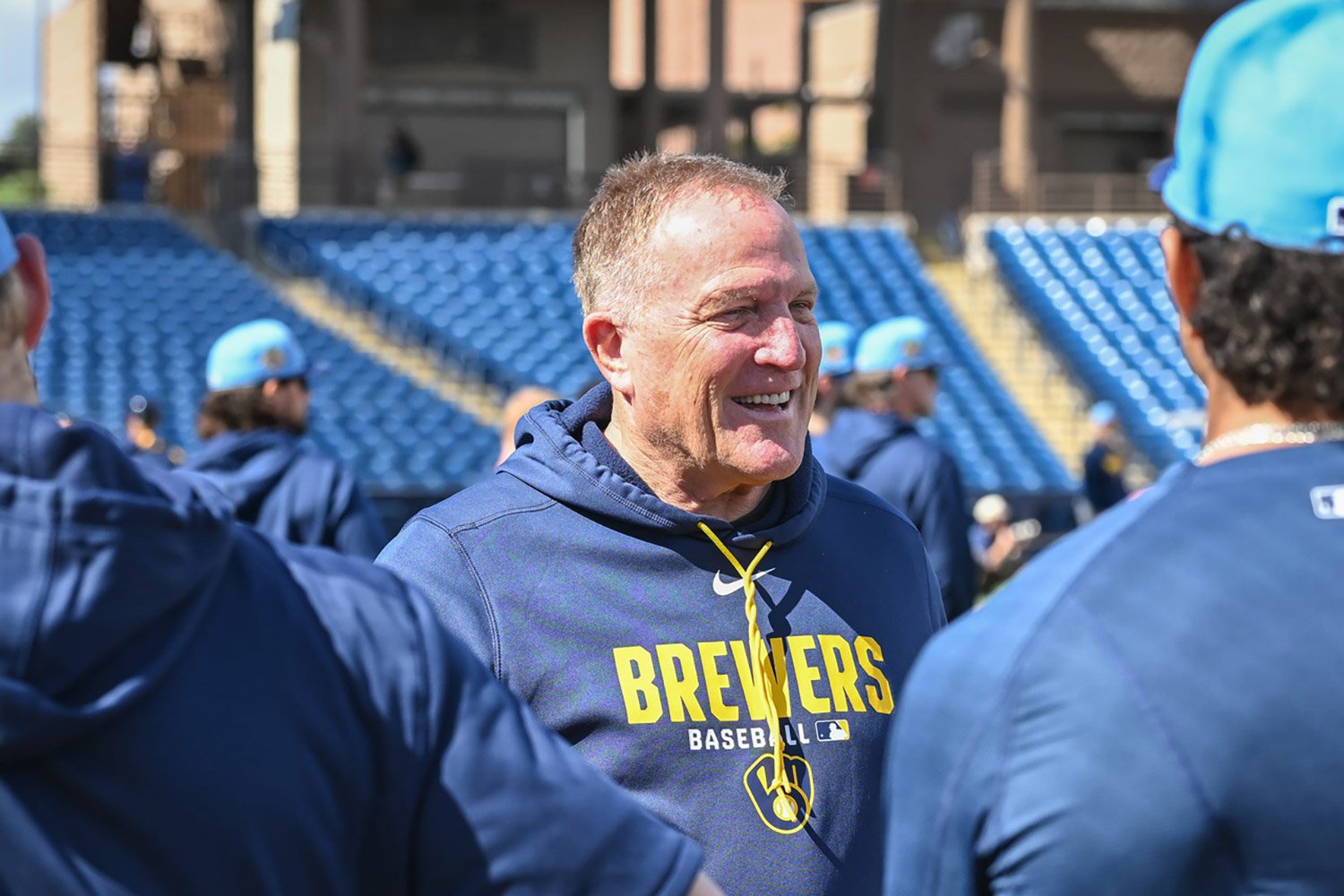 With the full squad having reported to Phoenix for spring training, it was time for manager Pat Murphy to set the tone for the Milwaukee Brewers in 2026. He did so in a speech to his players, some of which was provided via the team's social media channels. It was Murph at his finest. Leaning into what made the Crew so good in a 2025 that saw the team post the best record in MLB at 97-65, win their third straight NL Central title and advance to the NL Championship Series, where they were swept by the eventual World Series champion Los Angeles Dodgers. Among Murphy's nuggets: "We found out what matters is who's in this room." "We're about people, we're about team." "We don't worry about what anybody thinks. (If) we stick to our standard, then you'll have another incredible season. ... And don't be shocked." But enough writing, listen to how Murphy delivered his words:
 -
While other teams have reduced their spring training television schedule with the demise of FanDuel Sports Network, the Milwaukee Brewers are status quo for 2026. The Crew announced Wednesday that eight of their Cactus League games will be carried on Brewers.tv, the new home for televised games this season. That is one more game than was carried by FanDuel Sports Wisconsin in 2025. The Brewers said those eight games will be available for free to anyone with an MLB.com account in the MLB app. All 31 spring training games will be broadcast in some variety. An additional eight games will be streamed at Brewers.com. There are likely to be other games televised on MLB Network. Also, there will be 20 radio broadcasts on the Brewers Radio Network, including six on WTMJ (620 AM) and 14 on WKTI (94.5 FM, ESPN Milwaukee). The Brewers' Spring Breakout games, March 20 vs. the Seattle Mariners and March 22 at the A's, will be on Brewers.TV. The Brewers open exhibition play Saturday vs. the Cleveland Guardians at American Family Fields of Phoenix. That is a radio-only game. The following games will be on Brewers.TV: Sunday at Chicago White Sox* Monday at San Diego Padres* Feb. 28 vs. Cincinnati Reds March 4 vs. Chicago Cubs March 9 vs. Los Angeles Dodgers March 21 vs. San Diego Padres March 22 at Chicago Cubs* * opponent telecast View full rumor
-
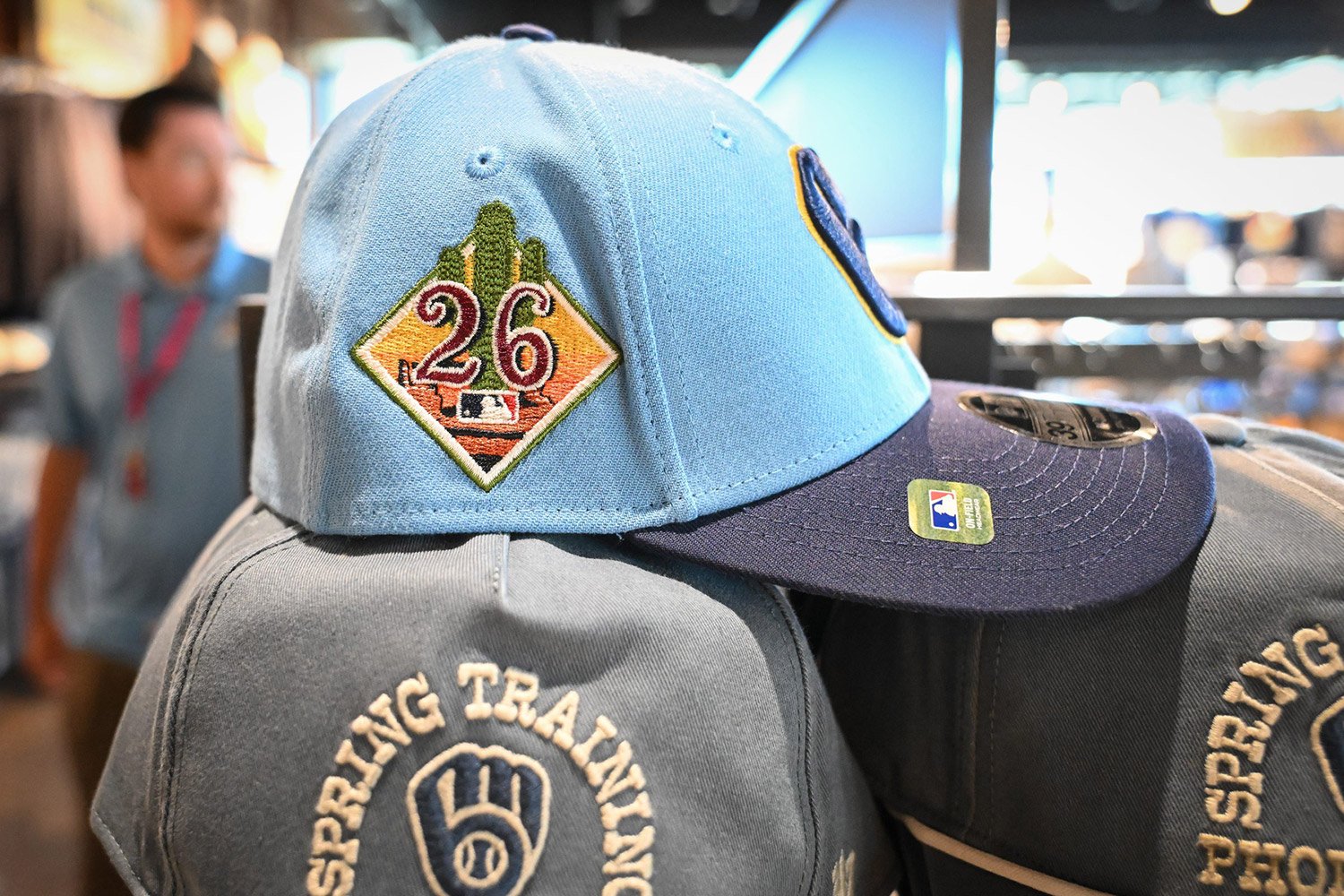 While other teams have reduced their spring training television schedule with the demise of FanDuel Sports Network, the Milwaukee Brewers are status quo for 2026. The Crew announced Wednesday that eight of their Cactus League games will be carried on Brewers.tv, the new home for televised games this season. That is one more game than was carried by FanDuel Sports Wisconsin in 2025. The Brewers said those eight games will be available for free to anyone with an MLB.com account in the MLB app. All 31 spring training games will be broadcast in some variety. An additional eight games will be streamed at Brewers.com. There are likely to be other games televised on MLB Network. Also, there will be 20 radio broadcasts on the Brewers Radio Network, including six on WTMJ (620 AM) and 14 on WKTI (94.5 FM, ESPN Milwaukee). The Brewers' Spring Breakout games, March 20 vs. the Seattle Mariners and March 22 at the A's, will be on Brewers.TV. The Brewers open exhibition play Saturday vs. the Cleveland Guardians at American Family Fields of Phoenix. That is a radio-only game. The following games will be on Brewers.TV: Sunday at Chicago White Sox* Monday at San Diego Padres* Feb. 28 vs. Cincinnati Reds March 4 vs. Chicago Cubs March 9 vs. Los Angeles Dodgers March 21 vs. San Diego Padres March 22 at Chicago Cubs* * opponent telecast
 -
Image courtesy of © Dave Kallmann / Milwaukee Journal Sentinel / USA TODAY NETWORK via Imagn Images People love to talk about the Milwaukee Brewers' payroll. People also like to talk about the on-field success the Brewers have, with postseason appearances in seven of the last eight seasons. Sure, there are only two postseason series victories in that span, but a short series (one, three or five games) can be determined by luck, as much as talent or even teamwork. Thus, Brewers president of baseball operations Matt Arnold sought to keep the train on that track this offseason. The Brewers appeared to be in good shape entering the winter, with no glaring holes to patch. More power from the starting lineup would be nice, but some of that could be achieved from what the Crew already had. Is outfielder Jackson Chourio capable of 30 homers? How about 20 from second baseman Brice Turang? Over a full season, first baseman Andrew Vaughn can crank out 30, right? And what can the Brewers get from a healthy Garrett Mitchell, who remains toolsy and tantalizing despite all the missed time? Believing positive answers to those questions await, Arnold focused on amassing maximal pitching depth this winter. With camp underway in Phoenix, it is time to assess what Arnold did this offseason. In a winter that didn't need a lot of news to be made, Arnold created enough headlines to keep things interesting, but didn't acquire enough talent to impress projection systems, which once again make the Cubs the favorites in the NL Central. Will the Brewers prove them wrong again? It will take 162 games to figure that out. For now, let's review the six moves made that affected the MLB roster before pitchers and catchers reported to Phoenix. That doesn't include Friday's addition of Luis Rengifo, who plugs a hole that Arnold created just four days earlier, but that move feels relatively minor, anyway. Grading Every Brewers Move This Offseason Free-Agent Signing: RHP Brandon Woodruff to 1-year, $22.025 million contract While some fans were surprised that the Crew would actually hand out a qualifying offer, it was the right thing to do. If Woodruff were to sign elsewhere, they needed to at least get a draft pick to compensate for the loss. Instead of testing the free-agent market beyond his three-week trial period, Woodruff accepted the offer and will stick around for (in all likelihood) a final season in Milwaukee. This came after Woodruff declined his end of a mutual option that would have paid him $20 million in 2026, instead receiving a $10-million buyout. That $10 million was figured into the Brewers' budget for 2025, when Woodruff nominally made just $5 million, so the raise here is not as drastic as it might first appear, but it's substantial. The biggest reason Woodruff accepted the QO was the shoulder injury that (again) ended his season. The right-handed starter, who has been in the organization since being drafted in the 11th round out of Mississippi State in 2014, missed the last two weeks of the regular season and the postseason due to a strained lat. This followed his return from surgery in September 2023 on his right shoulder, from which it took him 21 months to fully return. When he did come back, though, it was like he never missed a beat. The two-time All-Star posted a 3.17 FIP in 12 starts, with career bests of a 5.4% walk rate and a 32.3% strikeout rate. He appears to be fully healthy at the start of spring training. Arnold said Woodruff's return played a role in the trade of Freddy Peralta. Grade: A Free-Agent Signing: OF Akil Baddoo to 1-year, $1.25-million contract Given all the outfield depth the Brewers already had, Baddoo was a curious addition. He signed a split contract that will pay him less while he is in the minors, which is probably where he'll spend most of the campaign. The left-handed-hitting outfielder, who mainly plays left, was a success story as a Rule 5 pick before the 2021 season. Baddoo ended up starting 107 and appearing in 124 games for a Tigers team that went 77-85. He put together a .259/.330/.436 line in 2021, hitting 13 homers, driving in 55 runs and stealing 18 bases in 22 attempts. But those numbers plummeted over the next four seasons, as he put up a combined .201/.288/.323 mark with 15 homers, 49 RBIs and 25 steals in 223 games. He was designated for assignment by the Tigers after the 2024 season, but returned on a minor-league deal and played in just seven MLB games in 2025. Baddoo is simply a depth piece, in case injuries take their toll on the outfield. Grade: C- Trade: LHP Ángel Zerpa acquired from Royals for OF Isaac Collins and RHP Nick Mears This deal had fans scratching their heads. Collins is coming off a surprising 2025 in which he finished fourth in the NL Rookie of the Year voting, but also wasn't a big part of their postseason lineup, getting 10 plate appearances over seven games. Mears had arguably the best of his six MLB seasons, with a career-high 63 appearances and career-low 0.97 WHIP to go along with a 3.86 FIP (3.49 ERA). But in Zerpa, the Brewers saw a left-hander who could either relieve or start and had an additional year of control over Mears. Unlike Mears, Zerpa can also be optioned to the minors. Collins, a superb defender perhaps squeezed out of regular playing time with a healthy Mitchell, still has five more years of club control, but probably wouldn't have been in the team's plans for more than two of those years. Zerpa has 129 appearances over the last two seasons with the Royals, with FIPs of 3.97 in 2024 and 3.86 in 2025. With some fine-tuning, perhaps more can be unlocked with Zerpa. As a sinkerballer, he should work well with the Brewers' stellar infield defense. Zerpa could work his way into a role as the top lefty in Pat Murphy's bullpen, pending the roles, health and performance of Jared Koenig and Aaron Ashby. Grade: B- Trade: IF-OF Jett Williams and RHP Brandon Sproat acquired from Mets for RHP Freddy Peralta and RHP Tobias Myers This was the headline move of the offseason, and one on which speculation began just hours after the Brewers were eliminated from the postseason by the Los Angeles Dodgers. Losing Peralta is a tough blow to the team in general and the rotation, specifically. Peralta grew from a fresh-faced rookie with braces to a clubhouse leader and two-time Opening Day starting pitcher who led the NL in wins in 2025. Those are the attributes that also made him attractive to other teams, augmented by the fact that he's set to make a very affordable $8 million in 2026. Myers didn't have a guaranteed spot on the big-league staff, as a starter or reliever, so his loss is minimal—especially given the other notable move the team made, after this one. In exchange, Arnold extracted two of the Mets' top five prospects, in infielder-outfielder Jett Williams and right-handed starter Brandon Sproat. While Williams is the better (at least more highly rated) of the two prospects, Sproat will get most of the attention immediately; he's in competition for the rotation spot vacated by the very trade in which he arrived. A specialist at inducing grounders, Sproat is seen more as a No. 3-type starter than as a potential ace, but the team seems fine with that. H made his big-league debut in 2025, with four late-season starts for the Mets. Williams, however, is more dynamic. Think of a right-handed-hitting Sal Frelick with a bit more power and more of a threat to steal bases, while being able to play either middle-infield spot or center. Williams had 34 games at Triple-A in 2025, so he probably needs a bit more seasoning before joining the parent club. That also suits the Brewers, as they don't have a need up the middle at the moment. Williams is likely to get some work at third base following the Caleb Durbin trade, though they've also patched the hole that move briefly created. Grade: B+ Trade: LHP Kyle Harrison, IF David Hamilton and LHP Shane Drohan acquired from Red Sox for 3B Caleb Durbin, IF Andruw Monasterio and IF Anthony Seigler This one hit like a surprise snowstorm in late April (or, I guess, a heat wave in February). The Brewers took Durbin, the third-place finisher in last year's NL Rookie of the Year voting, and two spare-part infielders, and acquired a similar utility player and two left-handed starting pitchers who have a ton of potential. Durbin was the guts of the return in the Devin Williams trade with the New York Yankees following the 2024 season. He was bypassed in spring training by Vinny Capra and Oliver Dunn, partially because Capra was out of options but partially, too, because it didn't look like Durbin could handle third base defensively. But it was Durbin who was one of the underlying stars of the Brewers' run to an MLB-best 97 wins, making leaps and bounds with the glove and being enough of an offensive contributor to keep the line moving. His departure left a gap at the hot corner just days before pitchers and catchers were to report. Monasterio was a solid backup infielder, but his days were numbered, anyway. Seigler was a break-glass-in-case-of-emergency guy, with more versatility than real utility. Getting Harrison is the initial headline of this deal. He was part of the four-player return the Red Sox got in the Rafael Devers trade with the San Francisco Giants—three of whom are now with yet another organization. Harrison, just two years removed from being the Giants' No. 1 prospect, still has five years of club control, though he's already made 37 MLB starts and five relief appearances since debuting in 2023. He has a career 4.43 FIP and, like Zerpa, could benefit from Milwaukee's strong developmental infrastructure, though he already benefited from Boston's, too. Hamilton returns to the Brewers' organization (he was shipped, along with Jackie Bradley Jr. and another prospect, to the Red Sox for Hunter Renfroe after the 2021 season), and is the favorite to be the Monasterio replacement as the backup infielder. Drohan is the piece in this deal to keep an eye on. He has battled some injuries, but had a nice stint at Triple-A in 2025 to increase his value. Was this a deal that needed to be made? No. Was it one that could pay off handsomely for the Crew? Most definitely, especially if you believe that what Durbin showed in 2025 was close to his ceiling. Grade: A- Free-Agent Signing: C Gary Sánchez to a 1-year, $1.5 million contract Sánchez returned a day before pitchers and catchers reported, for a minimal price. He figures to get most of his action as a pinch-hitter, as William Contreras hates taking a day off and Christian Yelich seems locked into the designated hitter role. Sánchez can still provide the long ball and is a solid backup catcher, as the Crew found out in 2024. It might be that Contreras finally plays less this year, whether he likes it or not. Grade: B- Conclusion The moves executed by Arnold and his front office this offseason felt like efforts to optimize the team's chances in the medium term, even if that meant getting very slightly worse in the short term. However, the underlying logic of each move seems sound. The best move of the offseason could be bringing back Woodruff to sit atop the rotation. He is likely to be the Opening Day starter for the third time (2020, 2021), as long as he truly is healthy—even if that honor is conferred more out of deference to his veteran bona fides than because he's expected to be the ace. If he can stay in the rotation for the whole season, the signing will stand out. But it also could stand out for the wrong reasons, if Woodruff's shoulder has more issues. Zerpa, Harrison and Sproat are the newcomers likely to have the most impact in 2026. While fans might have rather seen Peralta sign an extension and Durbin still holding down third base, this is what the Brewers do, and why they have won three straight NL Central championships. Final grade: B View full article
-
 People love to talk about the Milwaukee Brewers' payroll. People also like to talk about the on-field success the Brewers have, with postseason appearances in seven of the last eight seasons. Sure, there are only two postseason series victories in that span, but a short series (one, three or five games) can be determined by luck, as much as talent or even teamwork. Thus, Brewers president of baseball operations Matt Arnold sought to keep the train on that track this offseason. The Brewers appeared to be in good shape entering the winter, with no glaring holes to patch. More power from the starting lineup would be nice, but some of that could be achieved from what the Crew already had. Is outfielder Jackson Chourio capable of 30 homers? How about 20 from second baseman Brice Turang? Over a full season, first baseman Andrew Vaughn can crank out 30, right? And what can the Brewers get from a healthy Garrett Mitchell, who remains toolsy and tantalizing despite all the missed time? Believing positive answers to those questions await, Arnold focused on amassing maximal pitching depth this winter. With camp underway in Phoenix, it is time to assess what Arnold did this offseason. In a winter that didn't need a lot of news to be made, Arnold created enough headlines to keep things interesting, but didn't acquire enough talent to impress projection systems, which once again make the Cubs the favorites in the NL Central. Will the Brewers prove them wrong again? It will take 162 games to figure that out. For now, let's review the six moves made that affected the MLB roster before pitchers and catchers reported to Phoenix. That doesn't include Friday's addition of Luis Rengifo, who plugs a hole that Arnold created just four days earlier, but that move feels relatively minor, anyway. Grading Every Brewers Move This Offseason Free-Agent Signing: RHP Brandon Woodruff to 1-year, $22.025 million contract While some fans were surprised that the Crew would actually hand out a qualifying offer, it was the right thing to do. If Woodruff were to sign elsewhere, they needed to at least get a draft pick to compensate for the loss. Instead of testing the free-agent market beyond his three-week trial period, Woodruff accepted the offer and will stick around for (in all likelihood) a final season in Milwaukee. This came after Woodruff declined his end of a mutual option that would have paid him $20 million in 2026, instead receiving a $10-million buyout. That $10 million was figured into the Brewers' budget for 2025, when Woodruff nominally made just $5 million, so the raise here is not as drastic as it might first appear, but it's substantial. The biggest reason Woodruff accepted the QO was the shoulder injury that (again) ended his season. The right-handed starter, who has been in the organization since being drafted in the 11th round out of Mississippi State in 2014, missed the last two weeks of the regular season and the postseason due to a strained lat. This followed his return from surgery in September 2023 on his right shoulder, from which it took him 21 months to fully return. When he did come back, though, it was like he never missed a beat. The two-time All-Star posted a 3.17 FIP in 12 starts, with career bests of a 5.4% walk rate and a 32.3% strikeout rate. He appears to be fully healthy at the start of spring training. Arnold said Woodruff's return played a role in the trade of Freddy Peralta. Grade: A Free-Agent Signing: OF Akil Baddoo to 1-year, $1.25-million contract Given all the outfield depth the Brewers already had, Baddoo was a curious addition. He signed a split contract that will pay him less while he is in the minors, which is probably where he'll spend most of the campaign. The left-handed-hitting outfielder, who mainly plays left, was a success story as a Rule 5 pick before the 2021 season. Baddoo ended up starting 107 and appearing in 124 games for a Tigers team that went 77-85. He put together a .259/.330/.436 line in 2021, hitting 13 homers, driving in 55 runs and stealing 18 bases in 22 attempts. But those numbers plummeted over the next four seasons, as he put up a combined .201/.288/.323 mark with 15 homers, 49 RBIs and 25 steals in 223 games. He was designated for assignment by the Tigers after the 2024 season, but returned on a minor-league deal and played in just seven MLB games in 2025. Baddoo is simply a depth piece, in case injuries take their toll on the outfield. Grade: C- Trade: LHP Ángel Zerpa acquired from Royals for OF Isaac Collins and RHP Nick Mears This deal had fans scratching their heads. Collins is coming off a surprising 2025 in which he finished fourth in the NL Rookie of the Year voting, but also wasn't a big part of their postseason lineup, getting 10 plate appearances over seven games. Mears had arguably the best of his six MLB seasons, with a career-high 63 appearances and career-low 0.97 WHIP to go along with a 3.86 FIP (3.49 ERA). But in Zerpa, the Brewers saw a left-hander who could either relieve or start and had an additional year of control over Mears. Unlike Mears, Zerpa can also be optioned to the minors. Collins, a superb defender perhaps squeezed out of regular playing time with a healthy Mitchell, still has five more years of club control, but probably wouldn't have been in the team's plans for more than two of those years. Zerpa has 129 appearances over the last two seasons with the Royals, with FIPs of 3.97 in 2024 and 3.86 in 2025. With some fine-tuning, perhaps more can be unlocked with Zerpa. As a sinkerballer, he should work well with the Brewers' stellar infield defense. Zerpa could work his way into a role as the top lefty in Pat Murphy's bullpen, pending the roles, health and performance of Jared Koenig and Aaron Ashby. Grade: B- Trade: IF-OF Jett Williams and RHP Brandon Sproat acquired from Mets for RHP Freddy Peralta and RHP Tobias Myers This was the headline move of the offseason, and one on which speculation began just hours after the Brewers were eliminated from the postseason by the Los Angeles Dodgers. Losing Peralta is a tough blow to the team in general and the rotation, specifically. Peralta grew from a fresh-faced rookie with braces to a clubhouse leader and two-time Opening Day starting pitcher who led the NL in wins in 2025. Those are the attributes that also made him attractive to other teams, augmented by the fact that he's set to make a very affordable $8 million in 2026. Myers didn't have a guaranteed spot on the big-league staff, as a starter or reliever, so his loss is minimal—especially given the other notable move the team made, after this one. In exchange, Arnold extracted two of the Mets' top five prospects, in infielder-outfielder Jett Williams and right-handed starter Brandon Sproat. While Williams is the better (at least more highly rated) of the two prospects, Sproat will get most of the attention immediately; he's in competition for the rotation spot vacated by the very trade in which he arrived. A specialist at inducing grounders, Sproat is seen more as a No. 3-type starter than as a potential ace, but the team seems fine with that. H made his big-league debut in 2025, with four late-season starts for the Mets. Williams, however, is more dynamic. Think of a right-handed-hitting Sal Frelick with a bit more power and more of a threat to steal bases, while being able to play either middle-infield spot or center. Williams had 34 games at Triple-A in 2025, so he probably needs a bit more seasoning before joining the parent club. That also suits the Brewers, as they don't have a need up the middle at the moment. Williams is likely to get some work at third base following the Caleb Durbin trade, though they've also patched the hole that move briefly created. Grade: B+ Trade: LHP Kyle Harrison, IF David Hamilton and LHP Shane Drohan acquired from Red Sox for 3B Caleb Durbin, IF Andruw Monasterio and IF Anthony Seigler This one hit like a surprise snowstorm in late April (or, I guess, a heat wave in February). The Brewers took Durbin, the third-place finisher in last year's NL Rookie of the Year voting, and two spare-part infielders, and acquired a similar utility player and two left-handed starting pitchers who have a ton of potential. Durbin was the guts of the return in the Devin Williams trade with the New York Yankees following the 2024 season. He was bypassed in spring training by Vinny Capra and Oliver Dunn, partially because Capra was out of options but partially, too, because it didn't look like Durbin could handle third base defensively. But it was Durbin who was one of the underlying stars of the Brewers' run to an MLB-best 97 wins, making leaps and bounds with the glove and being enough of an offensive contributor to keep the line moving. His departure left a gap at the hot corner just days before pitchers and catchers were to report. Monasterio was a solid backup infielder, but his days were numbered, anyway. Seigler was a break-glass-in-case-of-emergency guy, with more versatility than real utility. Getting Harrison is the initial headline of this deal. He was part of the four-player return the Red Sox got in the Rafael Devers trade with the San Francisco Giants—three of whom are now with yet another organization. Harrison, just two years removed from being the Giants' No. 1 prospect, still has five years of club control, though he's already made 37 MLB starts and five relief appearances since debuting in 2023. He has a career 4.43 FIP and, like Zerpa, could benefit from Milwaukee's strong developmental infrastructure, though he already benefited from Boston's, too. Hamilton returns to the Brewers' organization (he was shipped, along with Jackie Bradley Jr. and another prospect, to the Red Sox for Hunter Renfroe after the 2021 season), and is the favorite to be the Monasterio replacement as the backup infielder. Drohan is the piece in this deal to keep an eye on. He has battled some injuries, but had a nice stint at Triple-A in 2025 to increase his value. Was this a deal that needed to be made? No. Was it one that could pay off handsomely for the Crew? Most definitely, especially if you believe that what Durbin showed in 2025 was close to his ceiling. Grade: A- Free-Agent Signing: C Gary Sánchez to a 1-year, $1.5 million contract Sánchez returned a day before pitchers and catchers reported, for a minimal price. He figures to get most of his action as a pinch-hitter, as William Contreras hates taking a day off and Christian Yelich seems locked into the designated hitter role. Sánchez can still provide the long ball and is a solid backup catcher, as the Crew found out in 2024. It might be that Contreras finally plays less this year, whether he likes it or not. Grade: B- Conclusion The moves executed by Arnold and his front office this offseason felt like efforts to optimize the team's chances in the medium term, even if that meant getting very slightly worse in the short term. However, the underlying logic of each move seems sound. The best move of the offseason could be bringing back Woodruff to sit atop the rotation. He is likely to be the Opening Day starter for the third time (2020, 2021), as long as he truly is healthy—even if that honor is conferred more out of deference to his veteran bona fides than because he's expected to be the ace. If he can stay in the rotation for the whole season, the signing will stand out. But it also could stand out for the wrong reasons, if Woodruff's shoulder has more issues. Zerpa, Harrison and Sproat are the newcomers likely to have the most impact in 2026. While fans might have rather seen Peralta sign an extension and Durbin still holding down third base, this is what the Brewers do, and why they have won three straight NL Central championships. Final grade: B
- 7 comments
-
- 2
-
-
- caleb durbin
- brandon woodruff
- (and 2 more)
-
 Just four days after creating a vacuum at third base by trading Caleb Durbin, the Milwaukee Brewers have theoretically plugged that hole via free agency. Luis Rengifo, a versatile defender who stole 24 bases in a limited 2024 season, has agreed to a one-year, $3.5 million contract with the Crew, according to MLB.com's Mark Feinsand. The deal, which is currently unofficial and pending a physical, includes a $10 million mutual option for 2027. Rengifo, a top outside candidate to fill the void left by the Durbin deal, immediately vaults to the top of the depth chart at third base, a position he has played 199 times at the MLB level. A former Los Angeles Angel, Rengifo was having a breakthrough 2024, posting a .300/.347/.417 slash line with those 24 steals to go along with nine homers and 30 RBIs in 78 games. Then, he injured his right wrist in early July. He tried to come back, but lasted just nine games before requiring season-ending surgery. The versatile infielder, who turns 29 on Feb. 26, came back in 2025 and had a subpar showing for the last-place Angels, putting up a slash line of .238/.287/.335 with nine homers, 43 RBIs and 10 steals in 147 games, below his career marks of .250/..307/.382. He split 2025 between second and third base, playing in 76 games at the hot corner, committing two errors in 146⅓ innings. The switch-hitting Rengifo does hit left-handed pitchers better than right-handers, registering a .268/.311/.438 slash line with 23 homers in 349 career games vs. southpaws, while owning a .242/.305/.360 mark with 39 homers in 619 games against righties. David Hamilton, a former Brewers prospect who was part of the Durbin trade, was the leading candidate to start at third, but now is the top choice to fill the role vacated by Andruw Monasterio's inclusion in this week's trade as the main utility man on the roster.
 -
Image courtesy of © Jay Biggerstaff-Imagn Images Just four days after creating a vacuum at third base by trading Caleb Durbin, the Milwaukee Brewers have theoretically plugged that hole via free agency. Luis Rengifo, a versatile defender who stole 24 bases in a limited 2024 season, has agreed to a one-year, $3.5 million contract with the Crew, according to MLB.com's Mark Feinsand. The deal, which is currently unofficial and pending a physical, includes a $10 million mutual option for 2027. Rengifo, a top outside candidate to fill the void left by the Durbin deal, immediately vaults to the top of the depth chart at third base, a position he has played 199 times at the MLB level. A former Los Angeles Angel, Rengifo was having a breakthrough 2024, posting a .300/.347/.417 slash line with those 24 steals to go along with nine homers and 30 RBIs in 78 games. Then, he injured his right wrist in early July. He tried to come back, but lasted just nine games before requiring season-ending surgery. The versatile infielder, who turns 29 on Feb. 26, came back in 2025 and had a subpar showing for the last-place Angels, putting up a slash line of .238/.287/.335 with nine homers, 43 RBIs and 10 steals in 147 games, below his career marks of .250/..307/.382. He split 2025 between second and third base, playing in 76 games at the hot corner, committing two errors in 146⅓ innings. The switch-hitting Rengifo does hit left-handed pitchers better than right-handers, registering a .268/.311/.438 slash line with 23 homers in 349 career games vs. southpaws, while owning a .242/.305/.360 mark with 39 homers in 619 games against righties. David Hamilton, a former Brewers prospect who was part of the Durbin trade, was the leading candidate to start at third, but now is the top choice to fill the role vacated by Andruw Monasterio's inclusion in this week's trade as the main utility man on the roster. View full article
-
Image courtesy of © Benny Sieu-Imagn Images There was a time when Gary Sanchez was only valuable because of his ability to hit home runs. When you hit at least 30 homers twice for the New York Yankees, your hype train will be out of control. But Sanchez, who returned to the Milwaukee Brewers as a backup catcher on a one-year, $1.75 million contract, wasn't very good with the glove. In his last two seasons with the Yankees, he had a run value of -5 in the 60-game 2020 season and -11 in 2021, per Statcast. The Fielding Bible had Sanchez with a -4 defensive runs saved in 2020, which ranked 94th among 101 catchers, and -10 in 2021, which was 114th out of 116. He turned a corner when he went to the Minnesota Twins in 2022, where he had a +2 run value and a zero DRS. Splitting 2023 with the New York Mets, who cut him at the end of May, and the San Diego Padres, he had a +4 run value and +7 DRS. So maybe it was a Yankees problem? In only 28 games at catcher with the Brewers in 2024, Sanchez was at zero run value and -1 DRS. But it was noticeable how Sanchez was no longer a liability behind the plate. His framing numbers were horrible with the Yankees, registering a -5 each of his last three seasons there (2019-2021), then were at zero, +3, and zero from 2022-24. For some reason, Sanchez regressed in 2025 with the Baltimore Orioles. He had a -5 run value, -8 DRS, and -3 framing. Sanchez was limited to 29 games with the Orioles in 2025 due to a sprained right knee and inflammation in his right wrist after signing for $8.5 million. Sanchez made $3 million with the Crew in 2024. But now the 33-year-old is back for a second tour of duty with the Brewers, who have a reputation for fixing and developing catchers. So that is perhaps what drew him to return, getting back to what made him an OK defender. As the backup to William Contreras, Sanchez won't be needed that much behind the plate. The Crew's two backups in 2025, Eric Haase and Danny Jansen, had a combined 34 starts behind the plate. Sanchez had a .231/.297/.418 slash line with the Orioles in 2025 in 101 plate appearances, with five homers and 24 RBIs. That came after a .220/.307/.392 showing with the Crew in 2024. What the Brewers do need from Sanchez, a right-handed hitter, is his ability to hit the long ball. In 2024, he hit 11 homers in 280 plate appearances over 89 games. He had 27 starts at catcher, 40 starts as the designated hitter, and one at first base. As a pinch-hitter with the Crew, Sanchez had a .294/.368/.471 slash line (5-for-17) with one homer and three RBIs. Never known for his batting average, Sanchez had similar splits against right-handed pitchers as he did against left-handers. Against righties, he has a career mark of .228/.309/.459, while posting a .214/.309/.468 line when facing lefties. He has homered in 5.5% of his plate appearances vs. righties and 6.1% vs. lefties. How much time Sanchez gets at designated hitter will depend on how much regular DH Christian Yelich plays in left field, which, at the moment, doesn't appear very often (19 games in 2024). Injuries can change that scenario, however. So Sanchez will get about two dozen or so games starting in place of Contreras, who will DH on most days he isn't catching. That will leave Sanchez to be a pinch-hitter, although manager Pat Murphy will need to be careful as to when to deploy him in case of an injury to Contreras. Sanchez would be the best power option off a bench that is likely looking like first baseman-left fielder Jake Bauers, outfielder Brandon Lockridge, and one of either Garrett Mitchell or Blake Perkins, whoever isn't starting in center. Following the trade of Andruw Monasterio in the Caleb Durbin deal with the Boston Red Sox, there is one open bench spot for an infielder. View full article
-
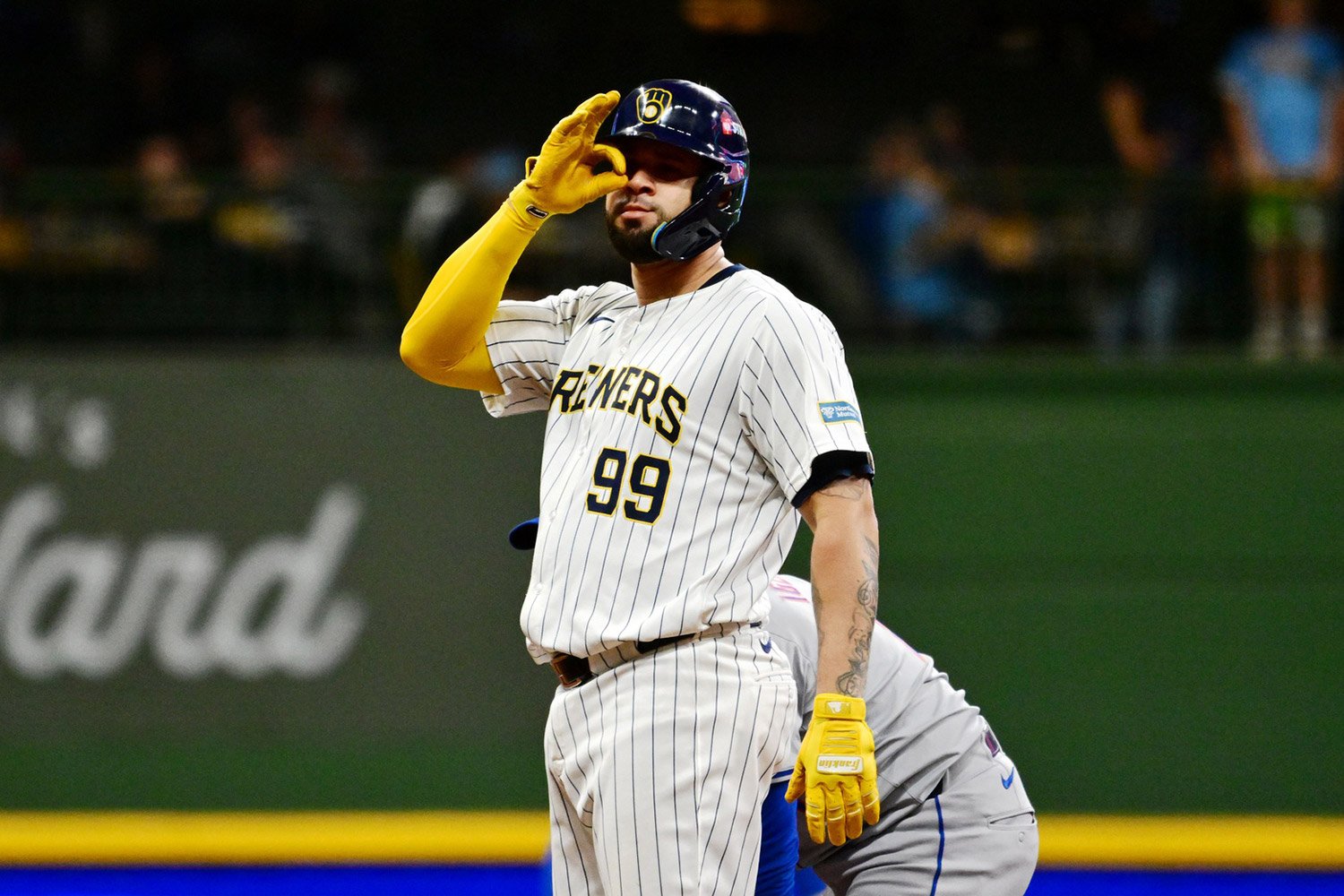 There was a time when Gary Sanchez was only valuable because of his ability to hit home runs. When you hit at least 30 homers twice for the New York Yankees, your hype train will be out of control. But Sanchez, who returned to the Milwaukee Brewers as a backup catcher on a one-year, $1.75 million contract, wasn't very good with the glove. In his last two seasons with the Yankees, he had a run value of -5 in the 60-game 2020 season and -11 in 2021, per Statcast. The Fielding Bible had Sanchez with a -4 defensive runs saved in 2020, which ranked 94th among 101 catchers, and -10 in 2021, which was 114th out of 116. He turned a corner when he went to the Minnesota Twins in 2022, where he had a +2 run value and a zero DRS. Splitting 2023 with the New York Mets, who cut him at the end of May, and the San Diego Padres, he had a +4 run value and +7 DRS. So maybe it was a Yankees problem? In only 28 games at catcher with the Brewers in 2024, Sanchez was at zero run value and -1 DRS. But it was noticeable how Sanchez was no longer a liability behind the plate. His framing numbers were horrible with the Yankees, registering a -5 each of his last three seasons there (2019-2021), then were at zero, +3, and zero from 2022-24. For some reason, Sanchez regressed in 2025 with the Baltimore Orioles. He had a -5 run value, -8 DRS, and -3 framing. Sanchez was limited to 29 games with the Orioles in 2025 due to a sprained right knee and inflammation in his right wrist after signing for $8.5 million. Sanchez made $3 million with the Crew in 2024. But now the 33-year-old is back for a second tour of duty with the Brewers, who have a reputation for fixing and developing catchers. So that is perhaps what drew him to return, getting back to what made him an OK defender. As the backup to William Contreras, Sanchez won't be needed that much behind the plate. The Crew's two backups in 2025, Eric Haase and Danny Jansen, had a combined 34 starts behind the plate. Sanchez had a .231/.297/.418 slash line with the Orioles in 2025 in 101 plate appearances, with five homers and 24 RBIs. That came after a .220/.307/.392 showing with the Crew in 2024. What the Brewers do need from Sanchez, a right-handed hitter, is his ability to hit the long ball. In 2024, he hit 11 homers in 280 plate appearances over 89 games. He had 27 starts at catcher, 40 starts as the designated hitter, and one at first base. As a pinch-hitter with the Crew, Sanchez had a .294/.368/.471 slash line (5-for-17) with one homer and three RBIs. Never known for his batting average, Sanchez had similar splits against right-handed pitchers as he did against left-handers. Against righties, he has a career mark of .228/.309/.459, while posting a .214/.309/.468 line when facing lefties. He has homered in 5.5% of his plate appearances vs. righties and 6.1% vs. lefties. How much time Sanchez gets at designated hitter will depend on how much regular DH Christian Yelich plays in left field, which, at the moment, doesn't appear very often (19 games in 2024). Injuries can change that scenario, however. So Sanchez will get about two dozen or so games starting in place of Contreras, who will DH on most days he isn't catching. That will leave Sanchez to be a pinch-hitter, although manager Pat Murphy will need to be careful as to when to deploy him in case of an injury to Contreras. Sanchez would be the best power option off a bench that is likely looking like first baseman-left fielder Jake Bauers, outfielder Brandon Lockridge, and one of either Garrett Mitchell or Blake Perkins, whoever isn't starting in center. Following the trade of Andruw Monasterio in the Caleb Durbin deal with the Boston Red Sox, there is one open bench spot for an infielder.


