



-
Posts
334 -
Joined
-
Last visited
Content Type
Profiles
Forums
Blogs
Events
News
2026 Milwaukee Brewers Top Prospects Ranking
Milwaukee Brewers Videos
2022 Milwaukee Brewers Draft Picks
Milwaukee Brewers Free Agent & Trade Rumors, Notes, & Tidbits
Guides & Resources
2023 Milwaukee Brewers Draft Picks
2024 Milwaukee Brewers Draft Picks
The Milwaukee Brewers Players Project
2025 Milwaukee Brewers Draft Pick Tracker
2026 Milwaukee Brewers Draft Tracker: Picks & Bonuses
Store
Downloads
Gallery
Everything posted by Steve Drumwright
-
 Coleman Crow will have to wait to follow up his impressive MLB debut. The Milwaukee Brewers sent Crow back to Triple-A Nashville on Saturday and promoted right-hander Carlos Rodriguez from Triple-A. Crow looked very poised and unleashed his dazzling curveball during his debut Friday against the Miami Marlins, going 5⅓ innings, allowing two runs on four hits and a walk with four strikeouts. The Brewers won 7-5 in 10 innings. He was called up to make a spot start with left-hander Kyle Harrison needing a few extra days after a slight injury to his left wrist in Sunday's start. Harrison is scheduled to have a bullpen session Saturday and return to the rotation in the next series against the Detroit Tigers. Rodriguez, a starter, will add length out of the Brewers' bullpen. He has made seven appearances, including three starts, over the last two seasons with the Crew, posting a 6.95 ERA. In three starts at Nashville this year, Rodriguez has an 8.71 ERA, allowing 10 runs on 16 hits and 10 walks with 12 strikeouts. View full rumor
 -
Coleman Crow's much-anticipated MLB debut is happening. The right-hander was called up from Triple-A Nashville by the Milwaukee Brewers and will start Friday's series opener on the road against the Miami Marlins. Right-handed reliever Easton McGee was sent back to Nashville. The 25-year-old Crow, the No. 23 prospect by Brewer Fanatic, was acquired by the Crew from the New York Mets for right-hander Adrian Houser and center fielder Tyrone Taylor in December 2023. At the time, he was recovering from Tommy John surgery. It was the second time the Crow had been traded that year. Originally a 28th-round draft choice of the Los Angeles Angels, the Mets acquired him and another minor-leaguer for third baseman Eduardo Escobar. He underwent Tommy John surgery shortly thereafter. Crow did not pitch again until representing the Brewers in the 2024 Arizona Fall League, then made his organizational debut in 2025, appearing in 10 games for Double-A Biloxi and two for Nashville. In those 10 starts at Biloxi, he had a 2.51 ERA and a 0.907 WHIP with eight walks and 52 strikeouts in 43 innings. In three appearances (two starts) at Nashville this year, Crow had a 4.02 ERA with 18 strikeouts and five walks in 15⅔ innings. It remains to be seen if this is a spot start for Crow or if he will be up longer. Left-handed starter Kyle Harrison has been dealing with a wrist issue since his falling during his last start. McGee appeared in just one game with the Brewers, pitching a perfect ninth inning a week ago Friday in a 7-3 loss to the Washington Nationals. View full rumor
-
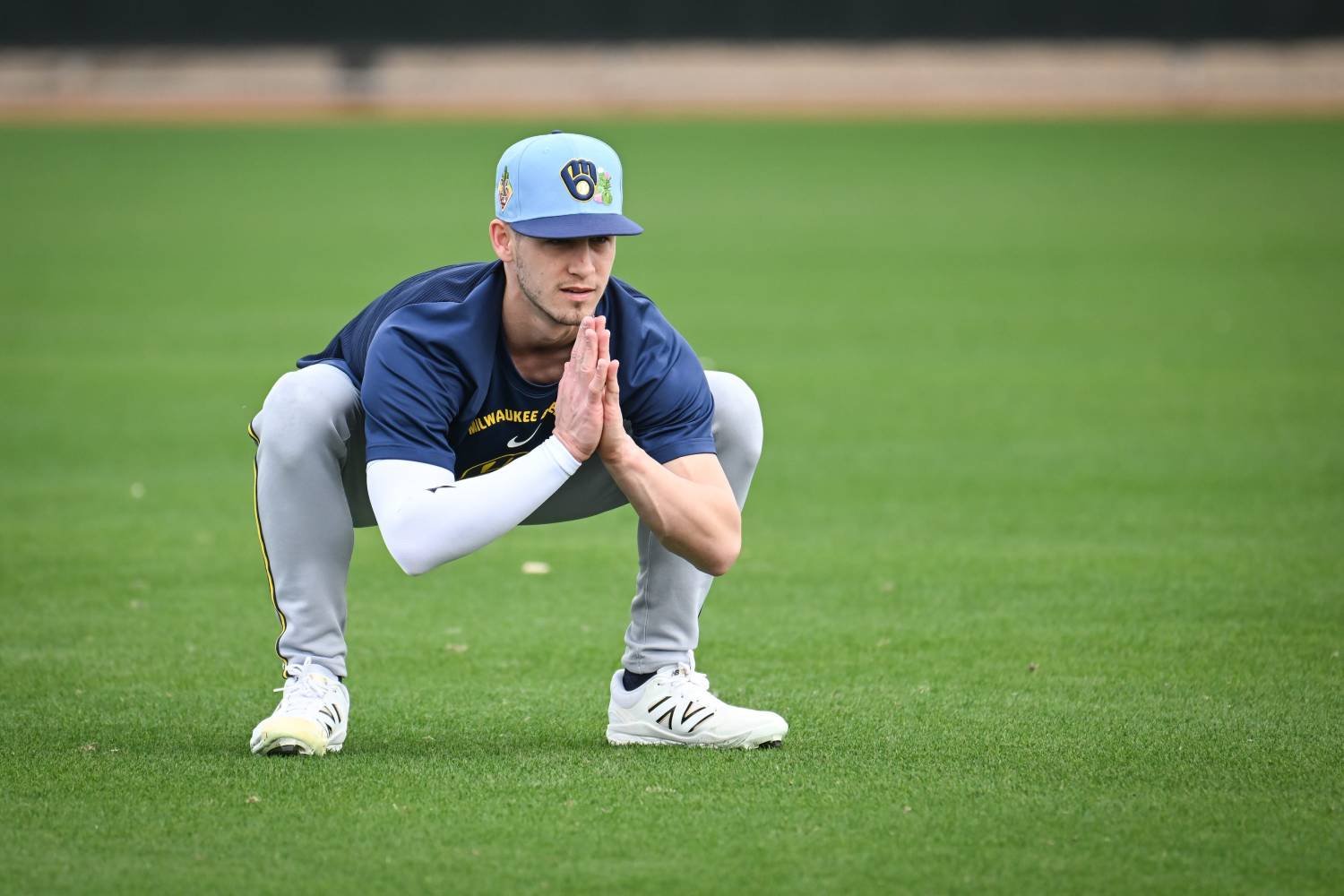 Coleman Crow's much-anticipated MLB debut is happening. The right-hander was called up from Triple-A Nashville by the Milwaukee Brewers and will start Friday's series opener on the road against the Miami Marlins. Right-handed reliever Easton McGee was sent back to Nashville. The 25-year-old Crow, the No. 23 prospect by Brewer Fanatic, was acquired by the Crew from the New York Mets for right-hander Adrian Houser and center fielder Tyrone Taylor in December 2023. At the time, he was recovering from Tommy John surgery. It was the second time the Crow had been traded that year. Originally a 28th-round draft choice of the Los Angeles Angels, the Mets acquired him and another minor-leaguer for third baseman Eduardo Escobar. He underwent Tommy John surgery shortly thereafter. Crow did not pitch again until representing the Brewers in the 2024 Arizona Fall League, then made his organizational debut in 2025, appearing in 10 games for Double-A Biloxi and two for Nashville. In those 10 starts at Biloxi, he had a 2.51 ERA and a 0.907 WHIP with eight walks and 52 strikeouts in 43 innings. In three appearances (two starts) at Nashville this year, Crow had a 4.02 ERA with 18 strikeouts and five walks in 15⅔ innings. It remains to be seen if this is a spot start for Crow or if he will be up longer. Left-handed starter Kyle Harrison has been dealing with a wrist issue since his falling during his last start. McGee appeared in just one game with the Brewers, pitching a perfect ninth inning a week ago Friday in a 7-3 loss to the Washington Nationals.
 -
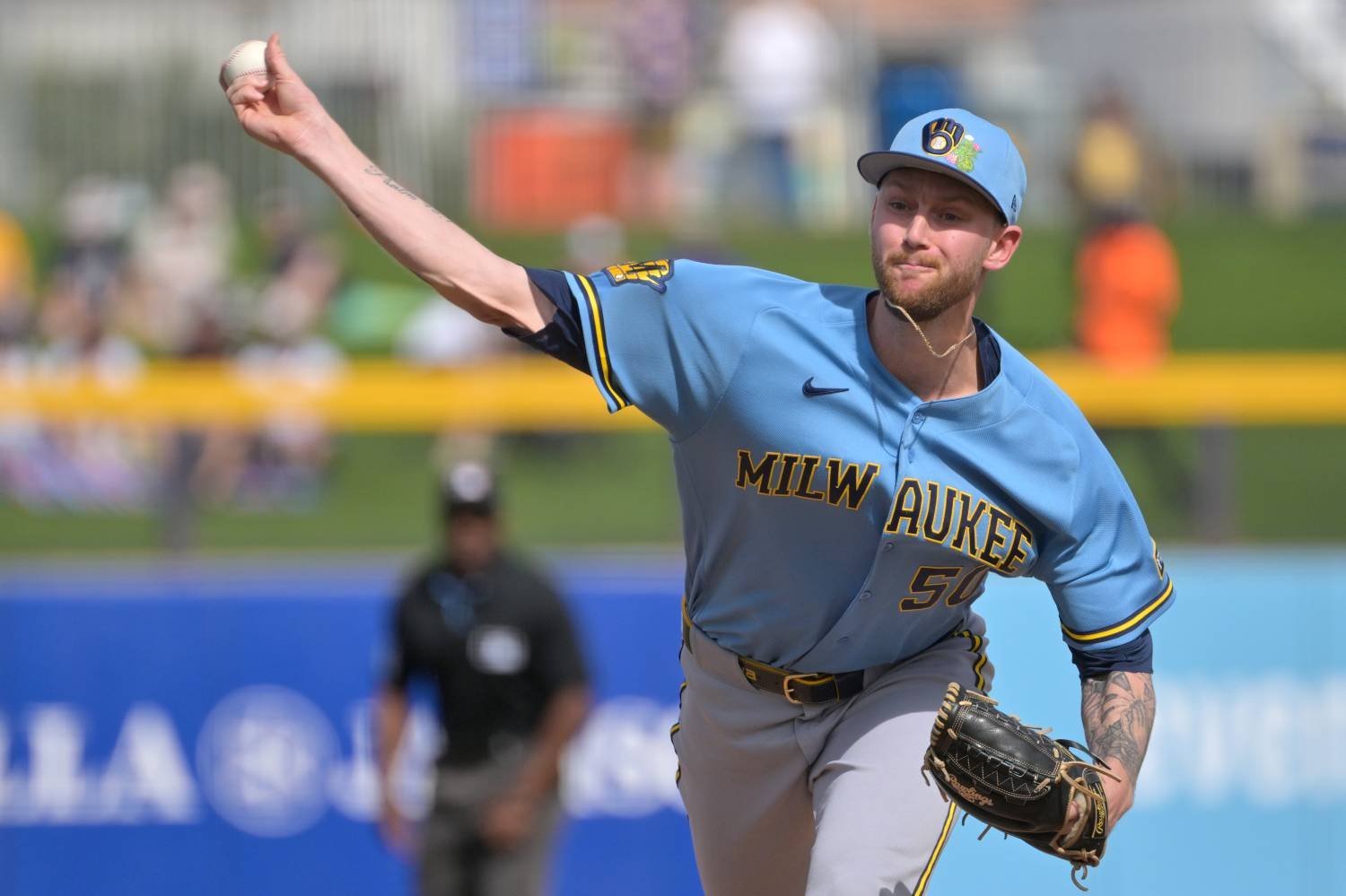 Easton McGee was the casualty when the Milwaukee Brewers made a last-minute trade for fellow right-handed reliever Jake Woodford with the Tampa Bay Rays. Woodford took the last bullpen spot on the Crew's Opening Day roster, with McGee sent to Triple-A Nashville. Now, McGee gets to join Woodford in the Brewers' bullpen. The Brewers called up McGee from Nashville to fill the spot vacated by left-handed starter Shane Drohan, who was optioned Thursday to Triple-A after making his MLB debut Wednesday. McGee made nine appearances for the Crew in 2025, with a 3.27 FIP (5.52 ERA), striking out 13 and walking five in 14⅔ innings. In four appearances for Nashville this year, McGee has a 9.53 ERA with three walks and five strikeouts in 5⅔ innings.
 -
Easton McGee was the casualty when the Milwaukee Brewers made a last-minute trade for fellow right-handed reliever Jake Woodford with the Tampa Bay Rays. Woodford took the last bullpen spot on the Crew's Opening Day roster, with McGee sent to Triple-A Nashville. Now, McGee gets to join Woodford in the Brewers' bullpen. The Brewers called up McGee from Nashville to fill the spot vacated by left-handed starter Shane Drohan, who was optioned Thursday to Triple-A after making his MLB debut Wednesday. McGee made nine appearances for the Crew in 2025, with a 3.27 FIP (5.52 ERA), striking out 13 and walking five in 14⅔ innings. In four appearances for Nashville this year, McGee has a 9.53 ERA with three walks and five strikeouts in 5⅔ innings. View full rumor
-
Shane Drohan's first stint in MLB didn't figure to be a long one—and it wasn't. The Milwaukee Brewers' left-handed starter, who made his MLB debut Wednesday, was sent back to Triple-A Nashville, MLB.com's Adam McCalvy reported Thursday. The Crew will have to make a corresponding move before opening this weekend's series vs. the Washington Nationals on Friday. Drohan's debut did not go well. Facing the Boston Red Sox, the team that traded him to the Brewers in the Caleb Durbin deal this spring, at Fenway Park, Dohan lasted just 2⅔ innings, walking four and allowing three runs and three hits while striking out two. Drohan made the spot start due to the doubleheader Saturday against the Kansas City Royals following Friday's rainout. Right-hander Chad Patrick was originally scheduled to start Wednesday, but that would have come on short rest. Patrick, who started the opener of the doubleheader, will start Friday against Nationals right-hander Jake Irvin. As for possible call-ups, right-hander Craig Yoho could be a candidate. Yoho is on the 15-day injured list with a strained right calf and is eligible to be activated. His stay on the IL, which began March 22, was projected to be a short one. View full rumor
-
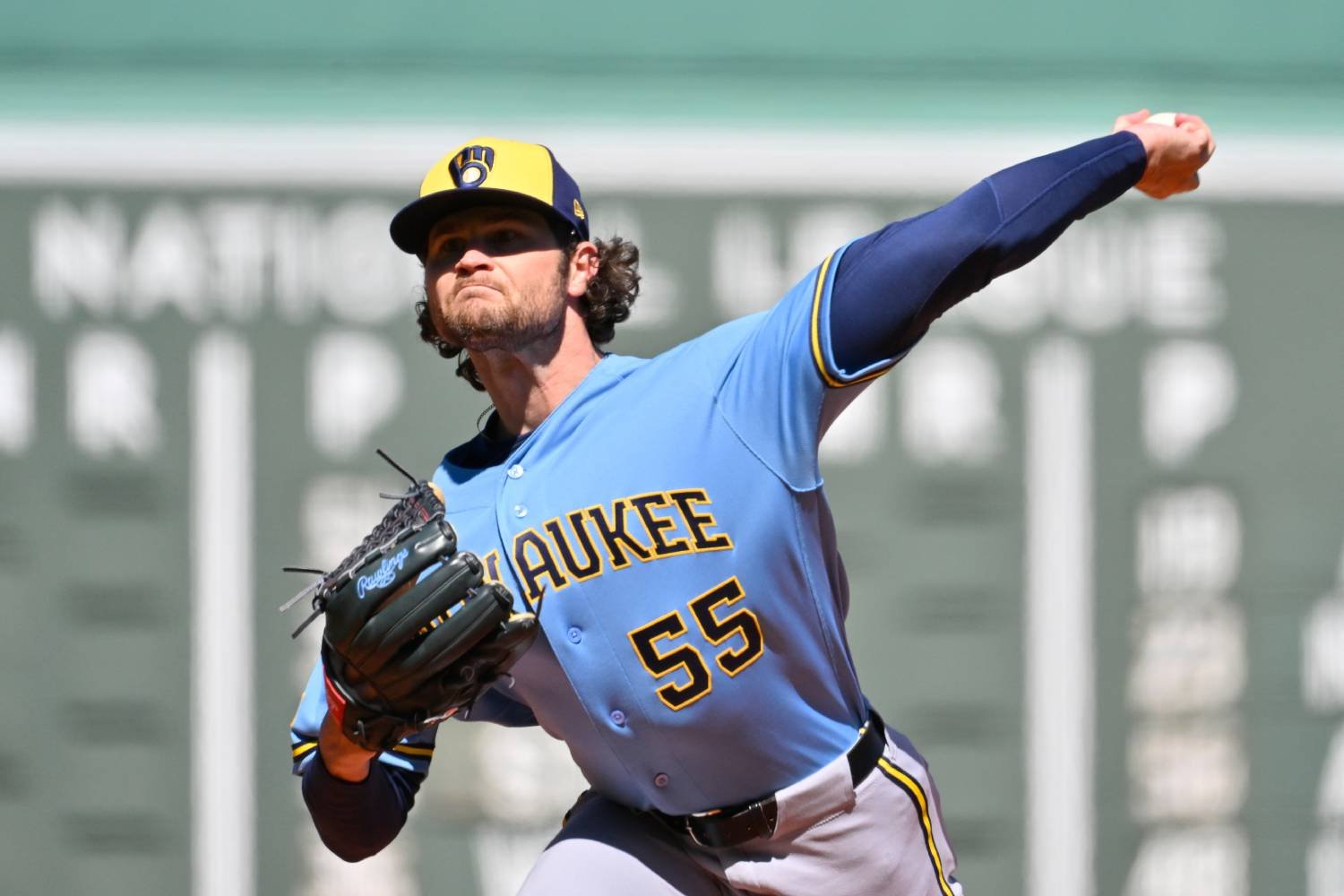 Shane Drohan's first stint in MLB didn't figure to be a long one—and it wasn't. The Milwaukee Brewers' left-handed starter, who made his MLB debut Wednesday, was sent back to Triple-A Nashville, MLB.com's Adam McCalvy reported Thursday. The Crew will have to make a corresponding move before opening this weekend's series vs. the Washington Nationals on Friday. Drohan's debut did not go well. Facing the Boston Red Sox, the team that traded him to the Brewers in the Caleb Durbin deal this spring, at Fenway Park, Dohan lasted just 2⅔ innings, walking four and allowing three runs and three hits while striking out two. Drohan made the spot start due to the doubleheader Saturday against the Kansas City Royals following Friday's rainout. Right-hander Chad Patrick was originally scheduled to start Wednesday, but that would have come on short rest. Patrick, who started the opener of the doubleheader, will start Friday against Nationals right-hander Jake Irvin. As for possible call-ups, right-hander Craig Yoho could be a candidate. Yoho is on the 15-day injured list with a strained right calf and is eligible to be activated. His stay on the IL, which began March 22, was projected to be a short one.
 -
Davey Lopes Came Along at a Key Time in Brewers History
Steve Drumwright posted an article in Brewers
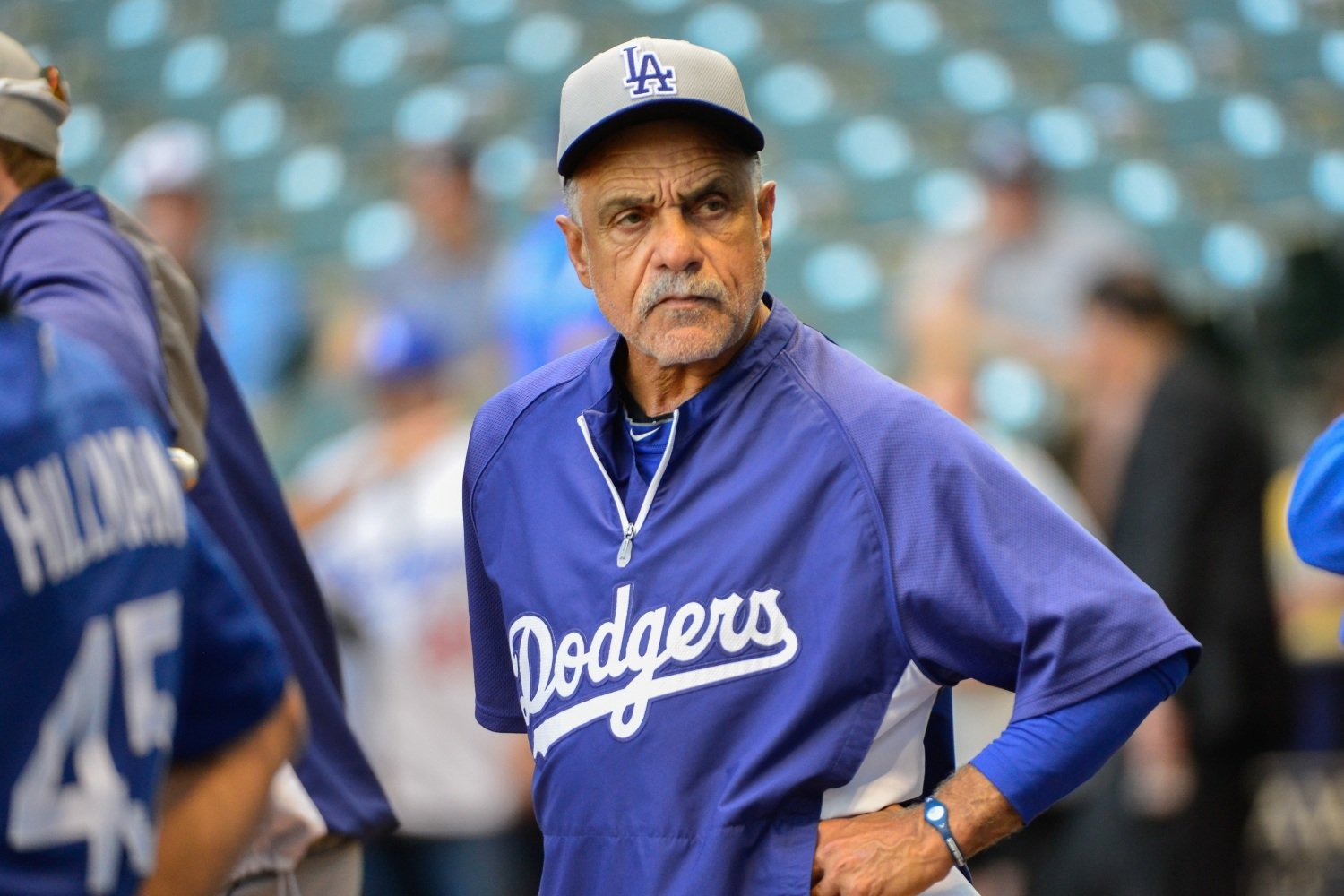 Davey Lopes wasn't the best manager in Milwaukee Brewers history—far from it. But he was chosen to be the Crew's skipper at one of the most important times in franchise history. Lopes passed away on Wednesday at the age of 80. In addition to being the Brewers' manager from 2000 through early 2002, he was a baseball lifer. He was a pesky second baseman and a four-time All-Star with the Los Angeles Dodgers during his 10 seasons there (1972-81). Lopes, who didn't make his MLB debut until he was 27, was a prolific base-stealer, leading MLB in swipes with 77 in 1975—including a then-record 38 straight—and the NL with 63 in 1976. That was a stretch in which he had six consecutive seasons of 40 or more steals. Perhaps more famously, he was part of the Dodgers infield with first baseman Steve Garvey, shortstop Bill Russell and third baseman Ron Cey. The quartet played a record 833 games together. Lopes was on the 1981 Dodgers World Series championship team. When his 16-year playing career ended in 1987, he immediately went into coaching, joining the Texas Rangers' staff the next year and becoming the bench coach from 1989-91 under manager Bobby Valentine. That started a second career in dugouts throughout the league, which would keep him in the game though 2017. As the 1990s wore on, Lopes became a managerial candidate. No one went with the fiery Lopes until the Brewers did so on Nov. 4, 1999, following his tenure as the third base coach with the San Diego Padres. The Brewers had fired the popular Phil Garner, who had guided the team since 1992 and racked up a franchise-best 563 managerial wins, during the season, with Jim Lefebvre in charge for the final 49 games. That was the Crew's second season in the National League, having moved from the American League due to expansion. Lopes was a candidate for two other managerial jobs at the time, in Anaheim and Cleveland. "There was a point in my career—lately, in fact—that I didn't think this would happen," Lopes said at his introductory press conference. The hiring of Lopes came at the urging of Bud Selig, then MLB's commissioner and the Brewers' former owner, who wanted to see more people of color get high-profile positions. While born and raised in East Providence, Rhode Island, Lopes has family ties to Cape Verde, an island off the coast of West Africa. Selig had yielded control of the Brewers to his daughter, Wendy Selig-Prieb, but his influence on the team was still profound and not much of a secret. Lopes was hired by general manager Dean Taylor, who had been hired to replace Sal Bando just a couple of months earlier. It was a fresh start for the Crew, with some historic moments in the offing. Not only were the Brewers getting ready to flip the calendar to 2000, but they were about to close down County Stadium and move into what was then called Miller Park, the retractable-roof stadium built in the parking lot of County Stadium. The stadium's opening had been delayed a year by a crane accident that resulted in the deaths of three construction workers. Taylor felt Lopes was the right choice, as the Brewers had lost their way under Garner. The hope was that Lopes would be able to bring the no-nonsense approach that epitomized his playing career. In Lopes's first season in 2000, the Brewers didn't fare much better record-wise, finishing 73-89, one game worse than Garner's final season. But this time, instead of another fifth-place finish in the division, the Brewers were the third-place team in the NL Central in the final season at County Stadium, 22 games behind the St. Louis Cardinals. The 2001 season saw Lopes and the Brewers christen Miller Park, which cost $392 million to build. But the new digs and 2.8 million fans pouring through the turnstiles didn't improve the product on the field. The Crew finished 68-93, fourth in the NL Central, 25 games behind the first-place Houston Astros. That season also saw Lopes's intense, old-school style start to wear on the team. Lopes drew headlines after one game against the Padres following Rickey Henderson stealing with a seven-run lead, saying Henderson was "showing up" the Brewers. "He was going on his ass," Lopes said postgame. "We were going to drill him." The next day, Elias Sports Bureau published a list of seven times Lopes stole a base with his team leading by at least seven runs. When the Brewers started 2002 with a 3-12 record, Lopes was fired, replaced by bench coach Jerry Royster for the remainder of the season. In his two-plus seasons, Lopes's Brewers had a 144-195 record, a .425 winning percentage. Lopes rejoined the Padres as the first base coach in 2003 and continued coaching through the 2017 season with the Dodgers, Baltimore Orioles and Philadelphia Phillies. He earned a World Series ring with the Phillies in 2008, and was renowned for his work with baserunners, especially when stationed as the first-base coach. His time with the Brewers was rocky, but he contributed tremendously to the game, and served at a fascinating and difficult time in the Crew's history.
 -
When his 16-year playing career ended in 1987, he immediately went into coaching, joining the Texas Rangers' staff the next year and becoming the bench coach from 1989-91 under manager Bobby Valentine. That started a second career in dugouts throughout the league, which would keep him in the game though 2017. As the 1990s wore on, Lopes became a managerial candidate. No one went with the fiery Lopes until the Brewers did so on Nov. 4, 1999, following his tenure as the third base coach with the San Diego Padres. The Brewers had fired the popular Phil Garner, who had guided the team since 1992 and racked up a franchise-best 563 managerial wins, during the season, with Jim Lefebvre in charge for the final 49 games. That was the Crew's second season in the National League, having moved from the American League due to expansion. Lopes was a candidate for two other managerial jobs at the time, in Anaheim and Cleveland. "There was a point in my career—lately, in fact—that I didn't think this would happen," Lopes said at his introductory press conference. The hiring of Lopes came at the urging of Bud Selig, then MLB's commissioner and the Brewers' former owner, who wanted to see more people of color get high-profile positions. While born and raised in East Providence, Rhode Island, Lopes has family ties to Cape Verde, an island off the coast of West Africa. Selig had yielded control of the Brewers to his daughter, Wendy Selig-Prieb, but his influence on the team was still profound and not much of a secret. Lopes was hired by general manager Dean Taylor, who had been hired to replace Sal Bando just a couple of months earlier. It was a fresh start for the Crew, with some historic moments in the offing. Not only were the Brewers getting ready to flip the calendar to 2000, but they were about to close down County Stadium and move into what was then called Miller Park, the retractable-roof stadium built in the parking lot of County Stadium. The stadium's opening had been delayed a year by a crane accident that resulted in the deaths of three construction workers. Taylor felt Lopes was the right choice, as the Brewers had lost their way under Garner. The hope was that Lopes would be able to bring the no-nonsense approach that epitomized his playing career. In Lopes's first season in 2000, the Brewers didn't fare much better record-wise, finishing 73-89, one game worse than Garner's final season. But this time, instead of another fifth-place finish in the division, the Brewers were the third-place team in the NL Central in the final season at County Stadium, 22 games behind the St. Louis Cardinals. The 2001 season saw Lopes and the Brewers christen Miller Park, which cost $392 million to build. But the new digs and 2.8 million fans pouring through the turnstiles didn't improve the product on the field. The Crew finished 68-93, fourth in the NL Central, 25 games behind the first-place Houston Astros. That season also saw Lopes's intense, old-school style start to wear on the team. Lopes drew headlines after one game against the Padres following Rickey Henderson stealing with a seven-run lead, saying Henderson was "showing up" the Brewers. "He was going on his ass," Lopes said postgame. "We were going to drill him." The next day, Elias Sports Bureau published a list of seven times Lopes stole a base with his team leading by at least seven runs. When the Brewers started 2002 with a 3-12 record, Lopes was fired, replaced by bench coach Jerry Royster for the remainder of the season. In his two-plus seasons, Lopes's Brewers had a 144-195 record, a .425 winning percentage. Lopes rejoined the Padres as the first base coach in 2003 and continued coaching through the 2017 season with the Dodgers, Baltimore Orioles and Philadelphia Phillies. He earned a World Series ring with the Phillies in 2008, and was renowned for his work with baserunners, especially when stationed as the first-base coach. His time with the Brewers was rocky, but he contributed tremendously to the game, and served at a fascinating and difficult time in the Crew's history. View full article
-
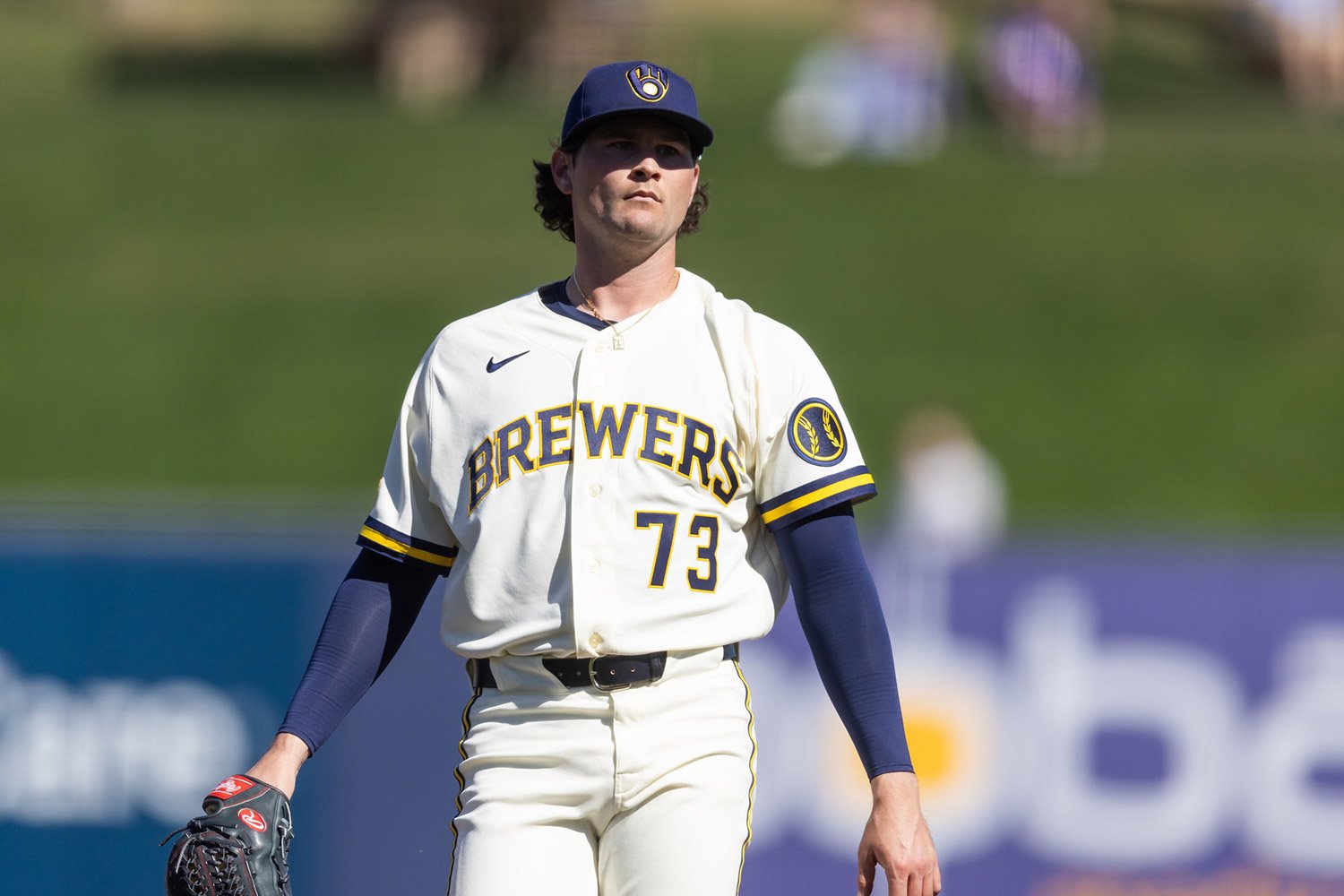 In the first injury news of the regular season affecting the Milwaukee Brewers' pitching staff, left-handed reliever Jared Koenig was placed on the 15-day injured list Monday with a sprained UCL in his left elbow. To replace Koenig, the Crew called up left-hander Shane Drohan from Triple-A Nashville. Drohan will make his MLB debut when he appears in a game. In a bit of ironic timing, Drohan will be active for the three-game series vs. the Boston Red Sox that begins Monday. Drohan was one of three players the Brewers acquired from the Red Sox in exchange for third baseman Caleb Durbin and two other infielders. Koenig is expected to be out two to four weeks. Drohan, once a well thought of prospect, had nerve decompression surgery shortly after the Chicago White Sox selected him in the Rule 5 draft following the 2023 season. The procedure was one reason why the White Sox returned him to the Red Sox the following season. Drohan had a 2.27 ERA in 14 appearances at Triple-A last season in 15 appearances, all but one a start. He appeared in one game for Nashville this season, striking out six, walking four and allowing two runs in 3⅓ innings. Right-hander Chad Patrick had been scheduled to start the finale of the Red Sox series on short rest Wednesday, but that spot is now listed as TBA, possibly an opening for Drohan if he doesn't pitch in relief in the first two games.
 -
In the first injury news of the regular season affecting the Milwaukee Brewers' pitching staff, left-handed reliever Jared Koenig was placed on the 15-day injured list Monday with a sprained UCL in his left elbow. To replace Koenig, the Crew called up left-hander Shane Drohan from Triple-A Nashville. Drohan will make his MLB debut when he appears in a game. In a bit of ironic timing, Drohan will be active for the three-game series vs. the Boston Red Sox that begins Monday. Drohan was one of three players the Brewers acquired from the Red Sox in exchange for third baseman Caleb Durbin and two other infielders. Koenig is expected to be out two to four weeks. Drohan, once a well thought of prospect, had nerve decompression surgery shortly after the Chicago White Sox selected him in the Rule 5 draft following the 2023 season. The procedure was one reason why the White Sox returned him to the Red Sox the following season. Drohan had a 2.27 ERA in 14 appearances at Triple-A last season in 15 appearances, all but one a start. He appeared in one game for Nashville this season, striking out six, walking four and allowing two runs in 3⅓ innings. Right-hander Chad Patrick had been scheduled to start the finale of the Red Sox series on short rest Wednesday, but that spot is now listed as TBA, possibly an opening for Drohan if he doesn't pitch in relief in the first two games. View full rumor
-
Image courtesy of © Michael McLoone-Imagn Images Should we be surprised that the Milwaukee Brewers are leading MLB in stolen bases? Probably not. After all, the Crew finished second in MLB last year with 164 steals, 30 behind the Tampa Bay Rays. It is more the frequency—and the success rate—that the Brewers are swiping bases. After six games, the Brewers had 15 steals in 16 tries. The Colorado Rockies (double-checks notes, yes, the Rockies) are second with nine in 12 attempts. Those are the only teams to have double-digit attempts entering the weekend. At this rate, 2.5 per game, the Brewers are on pace for 405 steals, which would easily break the MLB record of 347 set by the 1911 New York Giants. But, of course, it is too early to even consider that. We are talking about six games. David Hamilton, thought to be the utility infielder entering the season, is the early ringleader of this band of thieves. The former Brewers prospect who was shipped away before the 2022 season and then brought back in the six-player Caleb Durbin trade with the Boston Red Sox this spring has four stolen bases, tied for the MLB lead. Hamilton has started four times, three at third base and another at shortstop, and is just off to a 2-for-12 start, meaning he has twice as many steals as hits. Hamilton has also walked four times. Center fielder Garrett Mitchell is right behind with three steals, which is the same or better total than 14 teams. Is it just because Hamilton is a better base stealer than Durbin is? Or Mitchell than Blake Perkins? That might be part of the answer. Hamilton swiped 55 bases over the last two seasons with the Red Sox, getting 33 in 98 games (317 plate appearances) in 2024 and 22 in 91 games (194 PAs) in 2025. Durbin, meanwhile, had a minor-league reputation of being a base-stealer, getting 31 in 105 games in 2022, 36 in 69 games in 2023, and 31 in 90 games in 2024. But it was in the 2024 Arizona Fall League where he really stood out. In just 24 games, Durbin swiped 29 bases in 30 attempts. But Durbin didn't flash that ability in his only season with the Crew. He tried to steal just 24 times and was successful 18 times in 136 games. Maybe Durbin didn't have the green light to run? Or maybe he didn't feel comfortable running as a rookie? Durbin tried to steal after getting his first hit with the Red Sox this year. It could be a change in mindset, too, for the Brewers in 2026. Especially now, with not having the injured Jackson Chourio and Andrew Vaughn, manager Pat Murphy may have decided to be more aggressive without two of his more dependable power hitters. It could also be a tool to get the Crew's offense ignited early in the season. Remember, the Brewers didn't hit their stride last year until around Memorial Day weekend and needed 11- and 14-game winning streaks to win the NL Central by five games. The Brewers entered this weekend averaging 7.5 runs per game, again an unsustainable rate. But that could help players loosen up in the early stages of the season, hoping that more power follows later on. Mitchell is another interesting case. Speed is definitely part of his talent toolbox. He has 26 steals in his 146-game start-and-stop four-plus-year career in the majors and 41 in 158 minor-league games. That 41 is more indicative of the type of trouble Mitchell can create on the basepaths when healthy. He has begun 2026 with three steals in five games, including two in the second game of the season against the Chicago White Sox, the same game Hamilton stole a pair. That game saw the Crew steal seven times against the White Sox, including another pair by Joey Ortiz. They all came against catcher Reese McGuire, who had been in camp with the Brewers this spring before opting out of his contract just before Opening Day, so maybe they knew they could run wild. McGuire would have begun this year as a backup at Triple-A Nashville had he stayed with the Crew. Nick Fortes, whom the Tampa Bay Rays acquired for his defense last year, allowed a pair of two-steal games when he was behind the plate in the second series of the season. Whatever the reason, the aggressiveness to begin the season has been noticeable and helped the Brewers be one of three MLB teams to jump out to a 5-1 start. View full article
-
Stolen Bases Are Fueling Brewers' Quick Start To Season
Steve Drumwright posted an article in Brewers
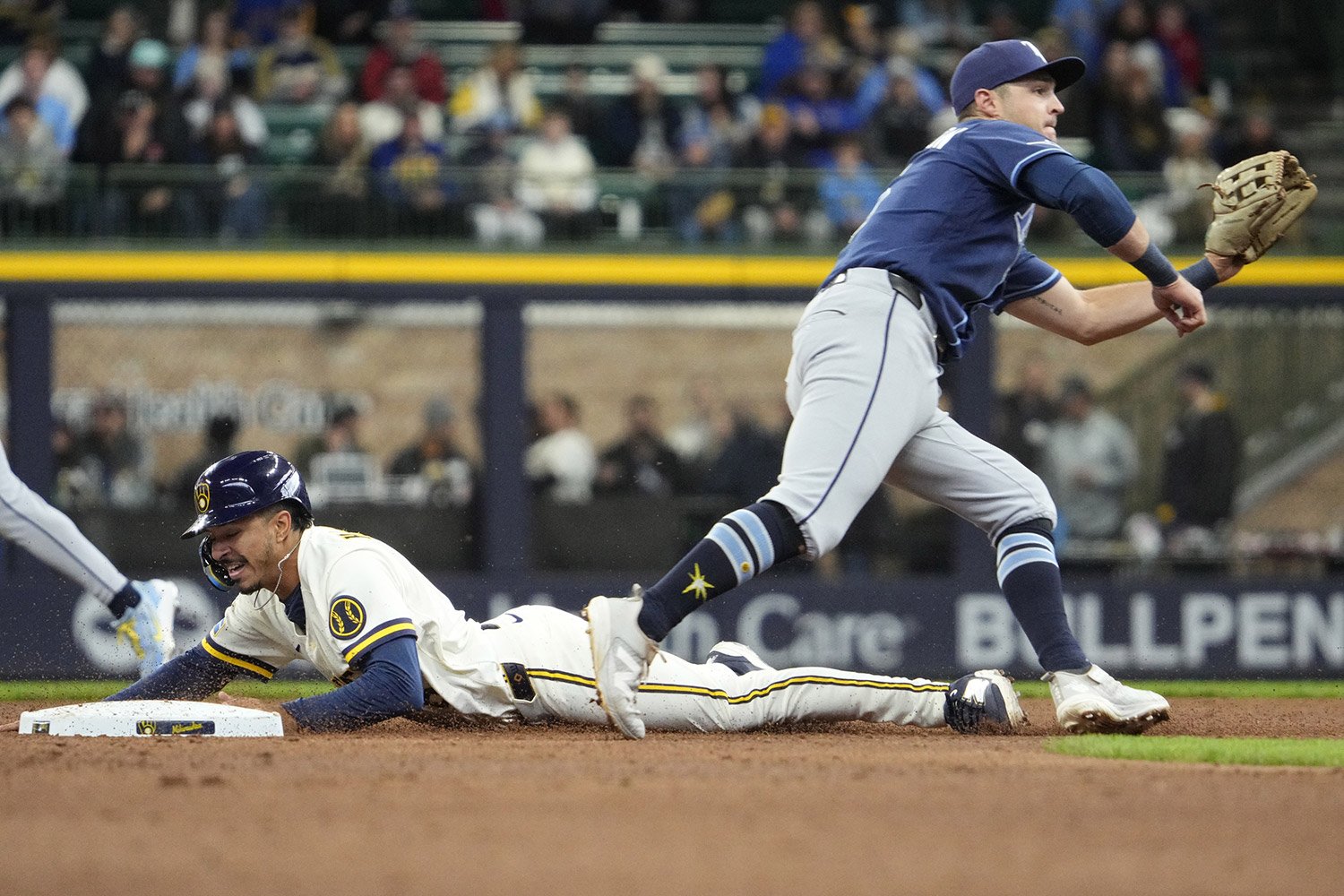 Should we be surprised that the Milwaukee Brewers are leading MLB in stolen bases? Probably not. After all, the Crew finished second in MLB last year with 164 steals, 30 behind the Tampa Bay Rays. It is more the frequency—and the success rate—that the Brewers are swiping bases. After six games, the Brewers had 15 steals in 16 tries. The Colorado Rockies (double-checks notes, yes, the Rockies) are second with nine in 12 attempts. Those are the only teams to have double-digit attempts entering the weekend. At this rate, 2.5 per game, the Brewers are on pace for 405 steals, which would easily break the MLB record of 347 set by the 1911 New York Giants. But, of course, it is too early to even consider that. We are talking about six games. David Hamilton, thought to be the utility infielder entering the season, is the early ringleader of this band of thieves. The former Brewers prospect who was shipped away before the 2022 season and then brought back in the six-player Caleb Durbin trade with the Boston Red Sox this spring has four stolen bases, tied for the MLB lead. Hamilton has started four times, three at third base and another at shortstop, and is just off to a 2-for-12 start, meaning he has twice as many steals as hits. Hamilton has also walked four times. Center fielder Garrett Mitchell is right behind with three steals, which is the same or better total than 14 teams. Is it just because Hamilton is a better base stealer than Durbin is? Or Mitchell than Blake Perkins? That might be part of the answer. Hamilton swiped 55 bases over the last two seasons with the Red Sox, getting 33 in 98 games (317 plate appearances) in 2024 and 22 in 91 games (194 PAs) in 2025. Durbin, meanwhile, had a minor-league reputation of being a base-stealer, getting 31 in 105 games in 2022, 36 in 69 games in 2023, and 31 in 90 games in 2024. But it was in the 2024 Arizona Fall League where he really stood out. In just 24 games, Durbin swiped 29 bases in 30 attempts. But Durbin didn't flash that ability in his only season with the Crew. He tried to steal just 24 times and was successful 18 times in 136 games. Maybe Durbin didn't have the green light to run? Or maybe he didn't feel comfortable running as a rookie? Durbin tried to steal after getting his first hit with the Red Sox this year. It could be a change in mindset, too, for the Brewers in 2026. Especially now, with not having the injured Jackson Chourio and Andrew Vaughn, manager Pat Murphy may have decided to be more aggressive without two of his more dependable power hitters. It could also be a tool to get the Crew's offense ignited early in the season. Remember, the Brewers didn't hit their stride last year until around Memorial Day weekend and needed 11- and 14-game winning streaks to win the NL Central by five games. The Brewers entered this weekend averaging 7.5 runs per game, again an unsustainable rate. But that could help players loosen up in the early stages of the season, hoping that more power follows later on. Mitchell is another interesting case. Speed is definitely part of his talent toolbox. He has 26 steals in his 146-game start-and-stop four-plus-year career in the majors and 41 in 158 minor-league games. That 41 is more indicative of the type of trouble Mitchell can create on the basepaths when healthy. He has begun 2026 with three steals in five games, including two in the second game of the season against the Chicago White Sox, the same game Hamilton stole a pair. That game saw the Crew steal seven times against the White Sox, including another pair by Joey Ortiz. They all came against catcher Reese McGuire, who had been in camp with the Brewers this spring before opting out of his contract just before Opening Day, so maybe they knew they could run wild. McGuire would have begun this year as a backup at Triple-A Nashville had he stayed with the Crew. Nick Fortes, whom the Tampa Bay Rays acquired for his defense last year, allowed a pair of two-steal games when he was behind the plate in the second series of the season. Whatever the reason, the aggressiveness to begin the season has been noticeable and helped the Brewers be one of three MLB teams to jump out to a 5-1 start.
 -
After a tremendous 2025 regular season in which they had MLB's best record, the Milwaukee Brewers won't have a lot to work with regarding a 2026 draft bonus pool. But when has that ever mattered to the Crew? The Brewers were informed that they will have $8,042,900 in their pool this year, which ranks 25th among the 30 MLB teams. They also have the No. 25 pick in the draft, which moved up due to four teams being penalized for eclipsing the second competitive balance tax threshold. The slot value for the Crew's top pick is $3,696,000. Last year, when the Brewers picked 20th and selected corner infielder Andrew Fischer, their pick had a value of $4,268,100. The top bonus pool belongs to the Pittsburgh Pirates at $19,130,700, while the smallest pool goes to the Los Angeles Dodgers, one of those four teams who had their top pick moved back 10 spots as a CBT penalty. The Chicago White Sox hold the No. 1 pick, which has a slot value of $11,350,600. They also have the No. 3 bonus pool of $17,592,100. Each slot value went up 2.5% based on increased MLB revenue. 2026 MLB Draft bonus pools Pittsburgh Pirates: $19,130,700 Tampa Bay Rays: $19,009,300 Chicago White Sox: $17,592,100 Minnesota Twins: $16,929,600 St. Louis Cardinals: $16,612,300 Kansas City Royals: $15,954,000 Atlanta: $15,870,800 Colorado Rockies: $15,557,600 San Francisco Giants: $14,080,400 Athletics: $13,840,300 Houston Astros: $13,712,700 Arizona Diamondbacks: $13,603,100 Baltimore Orioles: $13,114,000 Cleveland Guardians: $12,573,900 Washington Nationals: $12,278,300 Miami Marlins: $11,960,100 Los Angeles Angels: $11,755,400 Cincinnati Reds: $10,758,500 Texas Rangers: $10,219,200 Chicago Cubs: $9,644,100 San Diego Padres: $9,479,000 Detroit Tigers: $9,165,100 Boston Red Sox: $8,219,200 Seattle Mariners: $8,218,200 Milwaukee Brewers: $8,042,900 Philadelphia Phillies: $7,773,000 New York Yankees: $7,342,800 New York Mets: $6,730,900 Toronto Blue Jays: $5,543,100 Los Angeles Dodgers: $3,951,900 View full rumor
-
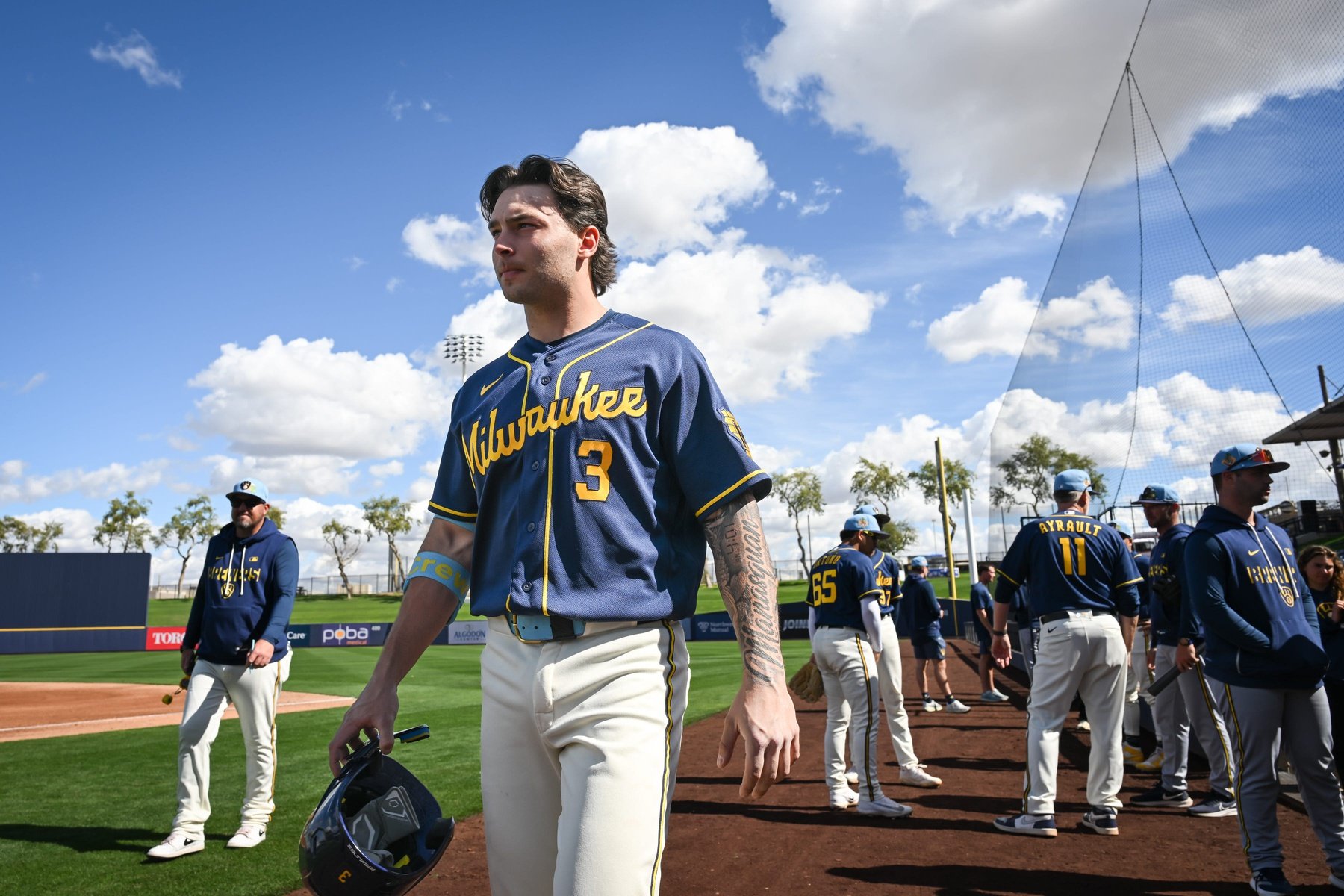 After a tremendous 2025 regular season in which they had MLB's best record, the Milwaukee Brewers won't have a lot to work with regarding a 2026 draft bonus pool. But when has that ever mattered to the Crew? The Brewers were informed that they will have $8,042,900 in their pool this year, which ranks 25th among the 30 MLB teams. They also have the No. 25 pick in the draft, which moved up due to four teams being penalized for eclipsing the second competitive balance tax threshold. The slot value for the Crew's top pick is $3,696,000. Last year, when the Brewers picked 20th and selected corner infielder Andrew Fischer, their pick had a value of $4,268,100. The top bonus pool belongs to the Pittsburgh Pirates at $19,130,700, while the smallest pool goes to the Los Angeles Dodgers, one of those four teams who had their top pick moved back 10 spots as a CBT penalty. The Chicago White Sox hold the No. 1 pick, which has a slot value of $11,350,600. They also have the No. 3 bonus pool of $17,592,100. Each slot value went up 2.5% based on increased MLB revenue. 2026 MLB Draft bonus pools Pittsburgh Pirates: $19,130,700 Tampa Bay Rays: $19,009,300 Chicago White Sox: $17,592,100 Minnesota Twins: $16,929,600 St. Louis Cardinals: $16,612,300 Kansas City Royals: $15,954,000 Atlanta: $15,870,800 Colorado Rockies: $15,557,600 San Francisco Giants: $14,080,400 Athletics: $13,840,300 Houston Astros: $13,712,700 Arizona Diamondbacks: $13,603,100 Baltimore Orioles: $13,114,000 Cleveland Guardians: $12,573,900 Washington Nationals: $12,278,300 Miami Marlins: $11,960,100 Los Angeles Angels: $11,755,400 Cincinnati Reds: $10,758,500 Texas Rangers: $10,219,200 Chicago Cubs: $9,644,100 San Diego Padres: $9,479,000 Detroit Tigers: $9,165,100 Boston Red Sox: $8,219,200 Seattle Mariners: $8,218,200 Milwaukee Brewers: $8,042,900 Philadelphia Phillies: $7,773,000 New York Yankees: $7,342,800 New York Mets: $6,730,900 Toronto Blue Jays: $5,543,100 Los Angeles Dodgers: $3,951,900
 -
Brewers Acquire Outfielder Luis Matos From Giants
Steve Drumwright replied to dlk9s's topic in Milwaukee Brewers Talk
Not that the Milwaukee Brewers are hurting for outfield bodies, but that position just got a little deeper. The Brewers on Monday picked up outfielder Luis Matos from the San Francisco Giants in exchange for cash. Matos had been designated for assignment on Wednesday after not getting a spot on the Giants' Opening Day roster. To make room on the Brewers' 40-man roster, minor-league left-handed reliever Sammy Peralta was designated for assignment. Peralta will now hit the waiver wire and will either be claimed, traded, or outrighted to Triple-A Nashville. Matos is out of minor-league options, so a corresponding move to put him on the 26-man roster is needed. He is expected to join the Brewers on Tuesday. So, unless there is another injury, that could mean center fielder Blake Perkins returns to Nashville. Perkins was called up on Opening Day when star outfielder Jackson Chourio went on the 10-day injured list with a fractured left hand. Another option would be sending catcher Jeferson Quero back down after three days up for his MLB debut. The 24-year-old Matos, a native of Venezuela like Chourio, catcher William Contreras, and left-handed reliever Angel Zerpa, has played in 178 games with the Giants over the last three seasons and put up a .231/.281/.369 slash line with 15 homers, 61 RBIs, and seven steals. A right-handed hitter, Matos started 2025 on the Giants' Opening Day roster, but was on the plane to Triple-A three times and had an MLB slash line of .221/.266/.424 in 59 games, hitting eight homers, driving in 22 runs, and stealing four bases. In 36 games at Triple-A Sacramento last year, Matos slashed .293/.327/.510 with seven homers, 29 RBIs, and six stolen bases. Before the 2022 season, Matos was a consensus top-75 prospect. View full rumor -
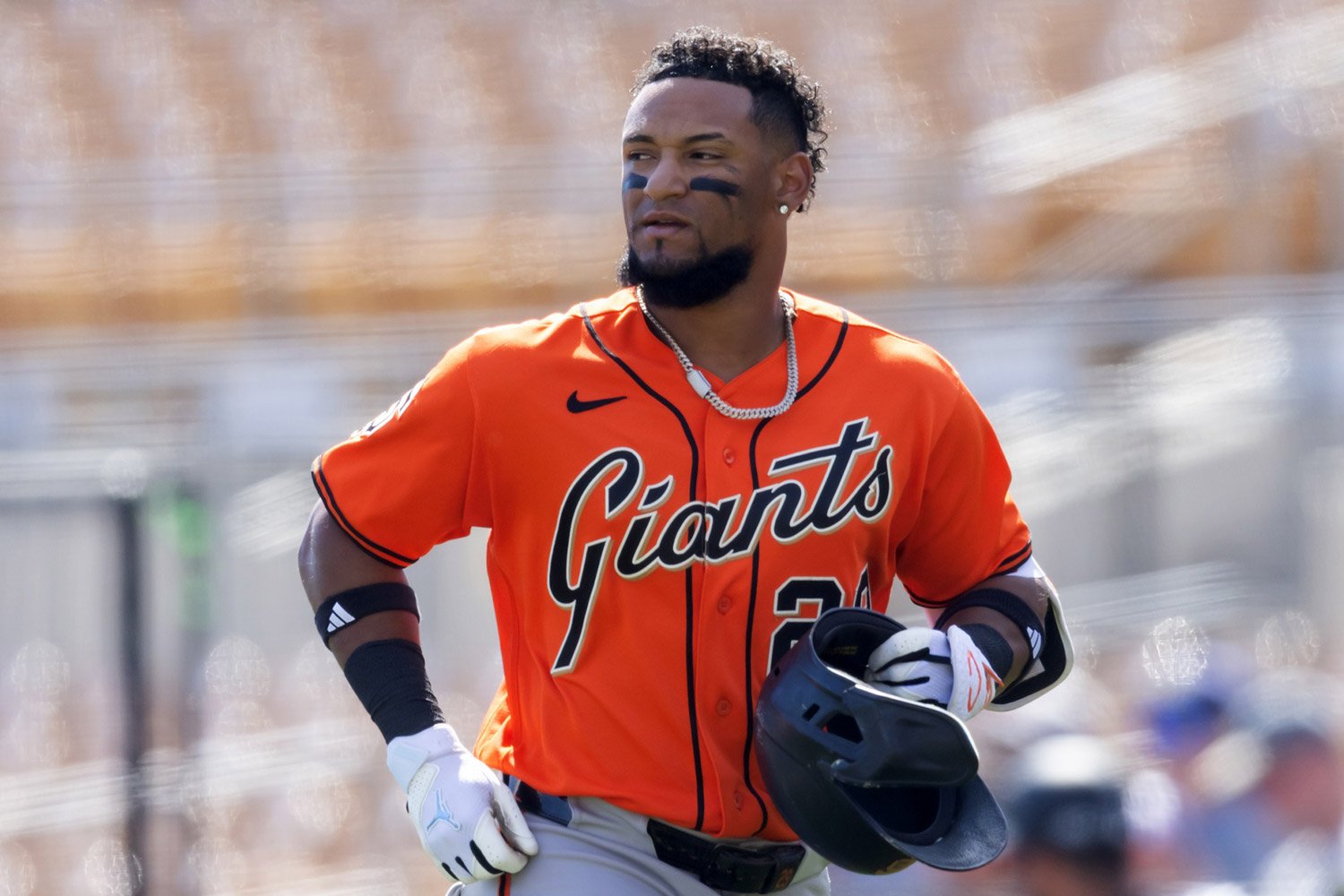 Not that the Milwaukee Brewers are hurting for outfield bodies, but that position just got a little deeper. The Brewers on Monday picked up outfielder Luis Matos from the San Francisco Giants in exchange for cash. Matos had been designated for assignment on Wednesday after not getting a spot on the Giants' Opening Day roster. To make room on the Brewers' 40-man roster, minor-league left-handed reliever Sammy Peralta was designated for assignment. Peralta will now hit the waiver wire and will either be claimed, traded, or outrighted to Triple-A Nashville. Matos is out of minor-league options, so a corresponding move to put him on the 26-man roster is needed. He is expected to join the Brewers on Tuesday. So, unless there is another injury, that could mean center fielder Blake Perkins returns to Nashville. Perkins was called up on Opening Day when star outfielder Jackson Chourio went on the 10-day injured list with a fractured left hand. Another option would be sending catcher Jeferson Quero back down after three days up for his MLB debut. The 24-year-old Matos, a native of Venezuela like Chourio, catcher William Contreras, and left-handed reliever Angel Zerpa, has played in 178 games with the Giants over the last three seasons and put up a .231/.281/.369 slash line with 15 homers, 61 RBIs, and seven steals. A right-handed hitter, Matos started 2025 on the Giants' Opening Day roster, but was on the plane to Triple-A three times and had an MLB slash line of .221/.266/.424 in 59 games, hitting eight homers, driving in 22 runs, and stealing four bases. In 36 games at Triple-A Sacramento last year, Matos slashed .293/.327/.510 with seven homers, 29 RBIs, and six stolen bases. Before the 2022 season, Matos was a consensus top-75 prospect.
 -
Image courtesy of © Dave Kallmann / Milwaukee Journal Sentinel / USA TODAY NETWORK via Imagn Images After just one game of the regular season, the Milwaukee Brewers are suddenly down two of the primary nine position players they expected to begin 2026 with. First, on Opening Day, left fielder Jackson Chourio was ruled out for two to four weeks after he sustained a fractured left hand with Venezuela in a March 4 World Baseball Classic exhibition game and exacerbated the injury in the final tune-up games to begin this week. Then on Saturday, first baseman Andrew Vaughn followed Chourio to the 10-day injured list with a fractured left hamate bone. Vaughn is expected to miss four to six weeks following surgery, which is scheduled for Monday. The hamate bone is a small, relatively useless bone at the base of the ring and little finger bones. New York Mets shortstop Francisco Lindor had surgery to remove his left hamate bone on Feb. 11 and returned to play a spring training game on March 15. Arizona Diamondbacks left fielder Corbin Carroll broke his right hamate bone on Feb. 11, had surgery the same day, and was back in action March 11. Baltimore Orioles second baseman Jackson Holliday had his right hamate bone removed Feb. 12 and began a rehab assignment Friday. Those cases show the ends of the four- to six-week recovery. Generally, there are no long-term effects to hitters who have their hamate bone removed, although there could be some short-term negative impact. So what do the Brewers do now? It is a little complicated, but that is what the Brewers do. This is where their positional versatility will come into play. It just depends on how manager Pat Murphy wants to execute the plan. With catcher Jeferson Quero, Brewer Fanatic's No. 7 prospect, called up to take Vaughn's spot on the roster and set to make his MLB debut, there are two obvious solutions. Jake Bauers, a left-handed hitter who plays first base and left field and was expected to be the top bat off the bench this year, started in left field on Opening Day in place of Chourio. Bauers went 2-for-5 with a three-run homer in the Crew's 14-2 triumph over the Chicago White Sox. Bauers is a good defender at the position and had a tremendous spring that carried over to the season's first game. If Bauers is at first base, that would put Brandon Lockridge, a right-handed hitter, or Blake Perkins, a switch-hitter, in left field. On Saturday, Bauers started at first, and Lockridge was in left. The other top option, considering Quero was called up, would be backup catcher Gary Sanchez, a right-handed hitter who could be in the lineup against left-handed starting pitchers. Bauers could still be in the lineup in left field, with Sanchez at first base and William Contreras behind the plate. Sanchez doesn't have a wealth of experience at first, having made four of his seven MLB appearances at the position in 2024 in his first stint with the Crew. Those two choices provide Murphy with the ultimate flexibility. But there are other pieces to the plan. Contreras, who wants to play every day, could slide over to first base, where he made his lone appearance last year in the ninth inning of a 14-0 victory over the Pittsburgh Pirates on Aug. 12. That would come into play when Quero starts behind the plate. A bit out of the box, infielders Luis Rengifo and David Hamilton could try their hand at first base. Neither has played the position in the majors or minors, but both have played third base and should be able to adjust to the mechanics of first base, at least in an emergency. Bauers at first and Lockridge in left feels like the most likely configuration, but the Brewers do have the flexibility for other combinations. Vaughn and Chourio were big parts of the Brewers' offense entering the season, but now must deal with the absence of the hitters for a good chunk of April, a month where they have a season-high five days off (not including July's All-Star break). View full article
-
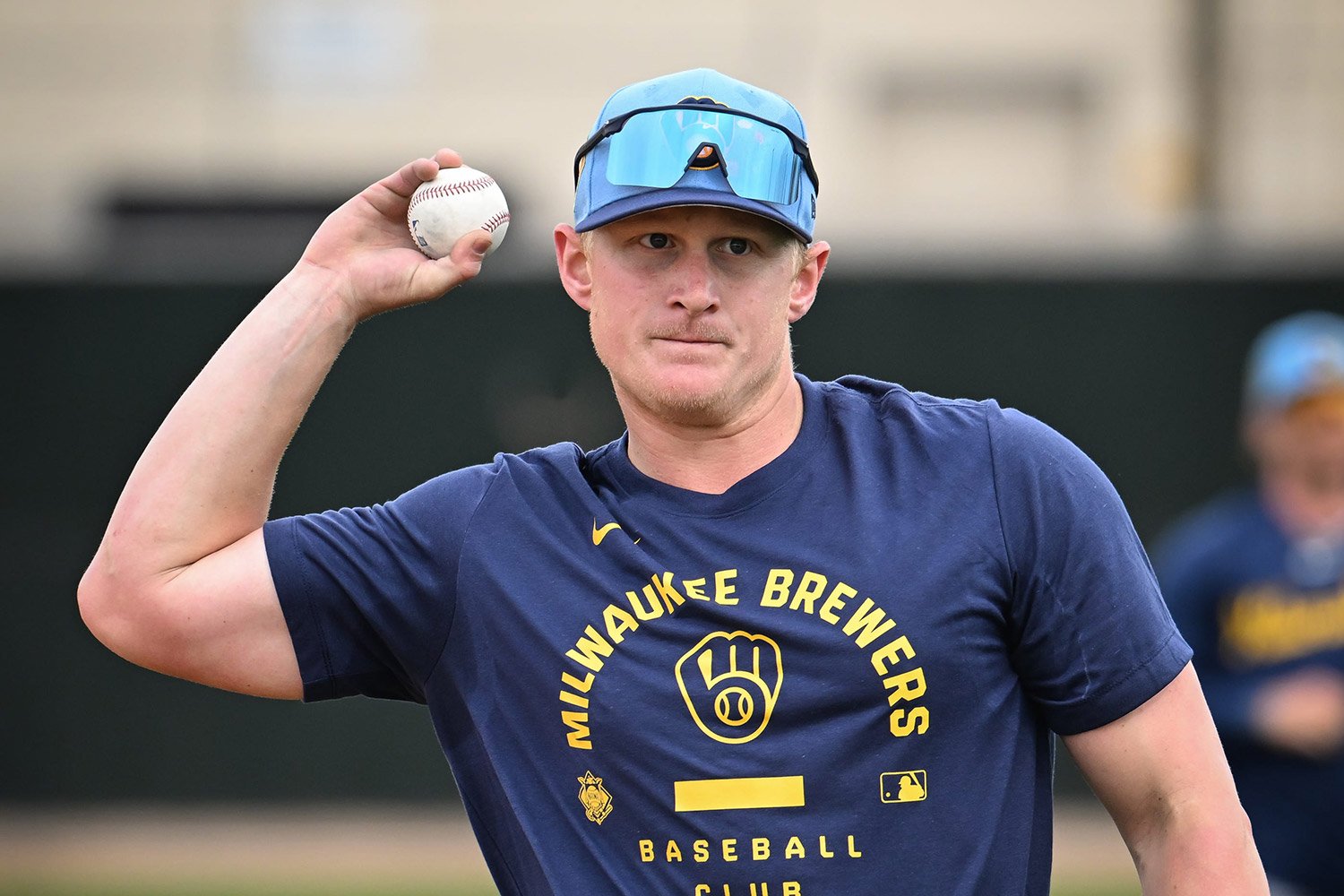 After just one game of the regular season, the Milwaukee Brewers are suddenly down two of the primary nine position players they expected to begin 2026 with. First, on Opening Day, left fielder Jackson Chourio was ruled out for two to four weeks after he sustained a fractured left hand with Venezuela in a March 4 World Baseball Classic exhibition game and exacerbated the injury in the final tune-up games to begin this week. Then on Saturday, first baseman Andrew Vaughn followed Chourio to the 10-day injured list with a fractured left hamate bone. Vaughn is expected to miss four to six weeks following surgery, which is scheduled for Monday. The hamate bone is a small, relatively useless bone at the base of the ring and little finger bones. New York Mets shortstop Francisco Lindor had surgery to remove his left hamate bone on Feb. 11 and returned to play a spring training game on March 15. Arizona Diamondbacks left fielder Corbin Carroll broke his right hamate bone on Feb. 11, had surgery the same day, and was back in action March 11. Baltimore Orioles second baseman Jackson Holliday had his right hamate bone removed Feb. 12 and began a rehab assignment Friday. Those cases show the ends of the four- to six-week recovery. Generally, there are no long-term effects to hitters who have their hamate bone removed, although there could be some short-term negative impact. So what do the Brewers do now? It is a little complicated, but that is what the Brewers do. This is where their positional versatility will come into play. It just depends on how manager Pat Murphy wants to execute the plan. With catcher Jeferson Quero, Brewer Fanatic's No. 7 prospect, called up to take Vaughn's spot on the roster and set to make his MLB debut, there are two obvious solutions. Jake Bauers, a left-handed hitter who plays first base and left field and was expected to be the top bat off the bench this year, started in left field on Opening Day in place of Chourio. Bauers went 2-for-5 with a three-run homer in the Crew's 14-2 triumph over the Chicago White Sox. Bauers is a good defender at the position and had a tremendous spring that carried over to the season's first game. If Bauers is at first base, that would put Brandon Lockridge, a right-handed hitter, or Blake Perkins, a switch-hitter, in left field. On Saturday, Bauers started at first, and Lockridge was in left. The other top option, considering Quero was called up, would be backup catcher Gary Sanchez, a right-handed hitter who could be in the lineup against left-handed starting pitchers. Bauers could still be in the lineup in left field, with Sanchez at first base and William Contreras behind the plate. Sanchez doesn't have a wealth of experience at first, having made four of his seven MLB appearances at the position in 2024 in his first stint with the Crew. Those two choices provide Murphy with the ultimate flexibility. But there are other pieces to the plan. Contreras, who wants to play every day, could slide over to first base, where he made his lone appearance last year in the ninth inning of a 14-0 victory over the Pittsburgh Pirates on Aug. 12. That would come into play when Quero starts behind the plate. A bit out of the box, infielders Luis Rengifo and David Hamilton could try their hand at first base. Neither has played the position in the majors or minors, but both have played third base and should be able to adjust to the mechanics of first base, at least in an emergency. Bauers at first and Lockridge in left feels like the most likely configuration, but the Brewers do have the flexibility for other combinations. Vaughn and Chourio were big parts of the Brewers' offense entering the season, but now must deal with the absence of the hitters for a good chunk of April, a month where they have a season-high five days off (not including July's All-Star break).
- 7 comments
-
- 2
-

-
- andrew vaughn
- jake bauers
- (and 2 more)
-
Image courtesy of © Jeff Curry-Imagn Images On the surface, you might wonder how the Nashville Sounds, the Triple-A affiliate of the Milwaukee Brewers, would fare over a 162-game MLB schedule. That is because the roster is loaded with prospects, some of whom will make their MLB debuts this season or return to the majors to fortify the major-league roster. But the players on the Sounds' 28-player Opening Day roster are in Nashville for one reason or another. For several, they need that extra bit of seasoning before they start to cook for the Brewers. For others, it was simply a numbers issue at the MLB level. Seven of Brewer Fanatic's Top 20 prospects, including three of the top seven, begin the season with the Sounds. Already, the Brewers have tapped into that depth as they had to call up center fielder Blake Perkins, a surprise demotion, to replace injured outfielder Jackson Chourio. For the moment, the Sounds only have two listed outfielders, although some of the infielders can easily move to the outfield. Left-hander Robert Gasser will be on the mound as the Sounds open the season Friday on the road with three games against the Norfolk Tides, a Baltimore Orioles affiliate. Nashville returns home Tuesday to open its first homestand against the Charlotte Knights (Chicago White Sox). Three players are on the injured list. Right-handers Gerson Garabito (broken ankle) is on the 60-day IL, while relievers J.B. Bukauskas and Thomas Pannone are on the seven-day IL. Here is the roster that manager Rick Sweet will have to work with: Projected starting rotation (5) Robert Gasser, LH Logan Henderson, RH (No. 6 Brewer Fanatic prospect) Shane Drohan, LH Coleman Crow, RH Carlos Rodriguez, RH Gasser and Henderson could have easily been in the Brewers' rotation. They will undoubtedly get their shots at some point in the season. Is there anything to read into Gasser starting the season opener over Henderson? Probably not. Gasser came back from Tommy John surgery after five MLB starts to begin 2024 to make two abbreviated late-season starts and was included on the postseason roster, making a pair of relief appearances. Henderson had three call-ups and made five starts in his MLB debut season of 2025 before elbow issues shut him down prematurely. That elbow caused him to miss a little time in spring training, which may have led to him starting the season at Nashville. Drohan and Crow are exciting arms to watch. Drohan certainly would have been included in our prospect list, but was acquired from the Boston Red Sox after it was published. Both have dealt with significant injuries, with Drohan limited to 15 starts in 2025 by a forearm strain and Crow returning from Tommy John surgery to make 12 starts. The 24-year-old Rodriguez has been pushed down the depth chart, but has made five MLB appearances for the Crew over the last to seasons. Projected bullpen (9) Kaleb Bowman, RH Will Childers, RH Joe Corbett, RH Brian Fitzpatrick, LH Blake Holub, RH Tate Kuehner, LH Easton McGee, RH Sammy Peralta, LH Drew Rom, RH Garrett Stallings, RH Peter Strzelecki, RH Jacob Waguespeck, RH While technically there are no prospects in the bullpen, there are plenty of talented arms. McGee was bumped off the Brewers' Opening Day roster by the acquisition of right-hander Jake Woodford on Tuesday. Holub, Kuehner, Peralta, and Waguespeck are some of the other interesting arms who could find their way to Milwaukee at some point this season. Catcher (3) Jeferson Quero (No. 7 prospect) Andrick Nava Ramon Rodriguez Quero is the Brewers' catcher of the future, perhaps starting in 2027, depending on whether William Contreras is still around. Quero dealt with surgery on his right labrum after being injured in the 2024 season opener for the Sounds, then had a cranky hamstring that delayed the start of his 2025 season, and later injured his left shoulder. Quero is terrific defensively, but his throwing has not been as good as it was before the surgery. His power, which produced 16 homers in 90 games in 2024 and 11 in 69 last year, has been slow to return, but improved as 2025 wore on. Getting his arm back up to par and showing off his hit tool (.276/.353/.453 career slash line in the minors) will be key. Infield (8) Luke Adams, 3B (No. 13 prospect) Tyler Black, 1B-LF Eddys Leonard Ethan Murray Cooper Pratt, SS (No. 4 prospect) Brock Wilken, 3B (No. 15 prospect) Jett Williams, SS-2B-CF (No. 3 prospect) Freddy Zamora Sweet will be like a kid in a candy store with this talented group. With only two outfielders to begin with, Williams is likely to get more time in the outfield to begin the season. Otherwise, Sweet will be able to roll out a number of different combinations. Williams' versatility is the key to that, while Pratt is likely to play a position other than shortstop for the first time since just after he was drafted in 2023 and had three games at second base in the Arizona Complex League. Williams, a consensus top-75 prospect, could force his way onto the Brewers' roster with a good first-half showing. He struggled in 34 games after being promoted by the New York Mets to Triple-A last year. Adams and Wilken will probably alternate at the two corner infield spots, with Black, who had a strong spring, also seeing time at first. Adams further developed his power in 2025, but still topped out at 11 homers for the season. He did hit three homers in 16 Arizona Fall League games. Wilken is looking to stay healthy after two freak injuries marred his last two seasons (hit in the face by a pitch, knee injury while celebrating the first-half title). Still, Wilken produced 18 homers in 79 games in 2025. Outfield (2) Greg Jones Luis Lara (No. 11 prospect) Lara's defense is the star attraction, which bodes well for him eventually fitting into the Brewers' roster. But he has also made improvements at the plate. He had a .257/.369/.343 with 44 steals in 51 attempts. In three seasons since coming Stateside, Lara has translated his speed into 121 steals in 152 attempts. Unfortunately, the power is nonexistent, with eight homers in that same timespan. Any improvement there would help raise his profile for his eventual MLB debut. View full article
-
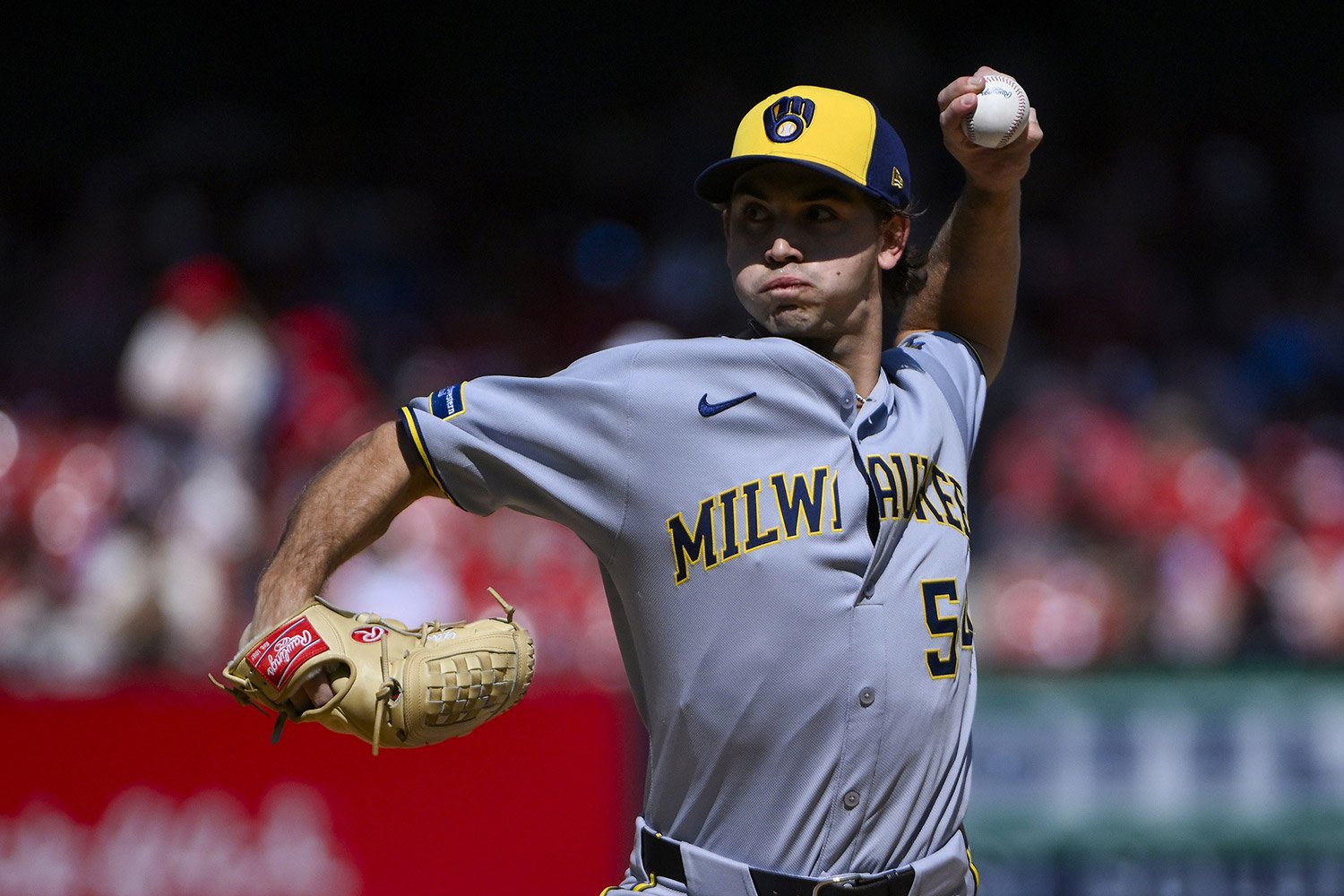 On the surface, you might wonder how the Nashville Sounds, the Triple-A affiliate of the Milwaukee Brewers, would fare over a 162-game MLB schedule. That is because the roster is loaded with prospects, some of whom will make their MLB debuts this season or return to the majors to fortify the major-league roster. But the players on the Sounds' 28-player Opening Day roster are in Nashville for one reason or another. For several, they need that extra bit of seasoning before they start to cook for the Brewers. For others, it was simply a numbers issue at the MLB level. Seven of Brewer Fanatic's Top 20 prospects, including three of the top seven, begin the season with the Sounds. Already, the Brewers have tapped into that depth as they had to call up center fielder Blake Perkins, a surprise demotion, to replace injured outfielder Jackson Chourio. For the moment, the Sounds only have two listed outfielders, although some of the infielders can easily move to the outfield. Left-hander Robert Gasser will be on the mound as the Sounds open the season Friday on the road with three games against the Norfolk Tides, a Baltimore Orioles affiliate. Nashville returns home Tuesday to open its first homestand against the Charlotte Knights (Chicago White Sox). Three players are on the injured list. Right-handers Gerson Garabito (broken ankle) is on the 60-day IL, while relievers J.B. Bukauskas and Thomas Pannone are on the seven-day IL. Here is the roster that manager Rick Sweet will have to work with: Projected starting rotation (5) Robert Gasser, LH Logan Henderson, RH (No. 6 Brewer Fanatic prospect) Shane Drohan, LH Coleman Crow, RH Carlos Rodriguez, RH Gasser and Henderson could have easily been in the Brewers' rotation. They will undoubtedly get their shots at some point in the season. Is there anything to read into Gasser starting the season opener over Henderson? Probably not. Gasser came back from Tommy John surgery after five MLB starts to begin 2024 to make two abbreviated late-season starts and was included on the postseason roster, making a pair of relief appearances. Henderson had three call-ups and made five starts in his MLB debut season of 2025 before elbow issues shut him down prematurely. That elbow caused him to miss a little time in spring training, which may have led to him starting the season at Nashville. Drohan and Crow are exciting arms to watch. Drohan certainly would have been included in our prospect list, but was acquired from the Boston Red Sox after it was published. Both have dealt with significant injuries, with Drohan limited to 15 starts in 2025 by a forearm strain and Crow returning from Tommy John surgery to make 12 starts. The 24-year-old Rodriguez has been pushed down the depth chart, but has made five MLB appearances for the Crew over the last to seasons. Projected bullpen (9) Kaleb Bowman, RH Will Childers, RH Joe Corbett, RH Brian Fitzpatrick, LH Blake Holub, RH Tate Kuehner, LH Easton McGee, RH Sammy Peralta, LH Drew Rom, RH Garrett Stallings, RH Peter Strzelecki, RH Jacob Waguespeck, RH While technically there are no prospects in the bullpen, there are plenty of talented arms. McGee was bumped off the Brewers' Opening Day roster by the acquisition of right-hander Jake Woodford on Tuesday. Holub, Kuehner, Peralta, and Waguespeck are some of the other interesting arms who could find their way to Milwaukee at some point this season. Catcher (3) Jeferson Quero (No. 7 prospect) Andrick Nava Ramon Rodriguez Quero is the Brewers' catcher of the future, perhaps starting in 2027, depending on whether William Contreras is still around. Quero dealt with surgery on his right labrum after being injured in the 2024 season opener for the Sounds, then had a cranky hamstring that delayed the start of his 2025 season, and later injured his left shoulder. Quero is terrific defensively, but his throwing has not been as good as it was before the surgery. His power, which produced 16 homers in 90 games in 2024 and 11 in 69 last year, has been slow to return, but improved as 2025 wore on. Getting his arm back up to par and showing off his hit tool (.276/.353/.453 career slash line in the minors) will be key. Infield (8) Luke Adams, 3B (No. 13 prospect) Tyler Black, 1B-LF Eddys Leonard Ethan Murray Cooper Pratt, SS (No. 4 prospect) Brock Wilken, 3B (No. 15 prospect) Jett Williams, SS-2B-CF (No. 3 prospect) Freddy Zamora Sweet will be like a kid in a candy store with this talented group. With only two outfielders to begin with, Williams is likely to get more time in the outfield to begin the season. Otherwise, Sweet will be able to roll out a number of different combinations. Williams' versatility is the key to that, while Pratt is likely to play a position other than shortstop for the first time since just after he was drafted in 2023 and had three games at second base in the Arizona Complex League. Williams, a consensus top-75 prospect, could force his way onto the Brewers' roster with a good first-half showing. He struggled in 34 games after being promoted by the New York Mets to Triple-A last year. Adams and Wilken will probably alternate at the two corner infield spots, with Black, who had a strong spring, also seeing time at first. Adams further developed his power in 2025, but still topped out at 11 homers for the season. He did hit three homers in 16 Arizona Fall League games. Wilken is looking to stay healthy after two freak injuries marred his last two seasons (hit in the face by a pitch, knee injury while celebrating the first-half title). Still, Wilken produced 18 homers in 79 games in 2025. Outfield (2) Greg Jones Luis Lara (No. 11 prospect) Lara's defense is the star attraction, which bodes well for him eventually fitting into the Brewers' roster. But he has also made improvements at the plate. He had a .257/.369/.343 with 44 steals in 51 attempts. In three seasons since coming Stateside, Lara has translated his speed into 121 steals in 152 attempts. Unfortunately, the power is nonexistent, with eight homers in that same timespan. Any improvement there would help raise his profile for his eventual MLB debut.
 -
Image courtesy of © Mark J. Rebilas-Imagn Images After an offseason of waiting, Opening Day is finally here. The Milwaukee Brewers will host the Chicago White Sox on Thursday at 1:10 p.m. CT at American Family Field, to begin the 2026 season. The Brewers have high expectations, having won the last three NL Central championships, but they also enter the season with several questions. As such, here are three reasons why the Brewers will again finish atop the Central—and three reasons they could fall short. The Brewers will win the Central because ... The young starting pitchers step up With a recent history of pulling the most out of pitchers, the Brewers' four young starters—Jacob Misiorowski, Chad Patrick, Brandon Sproat and Kyle Harrison—will elevate their performances and carry the Crew to a fourth consecutive Central championship. Misiorowski has the ability to become an NL Cy Young contender with his 31.9% strikeout rate, which is nearly 50% better than the MLB average. The key for Misiorowski will be his control, as he walked 11.4% of hitters as a rookie, a full three percentage points worse than the MLB average. He did have a nice opponent batting average of .214. Patrick feels like the most stable of these four, so simply repeating last year's 3.53 FIP and improving his .248 opponent batting average would suffice. Sproat has the potential to be surprising. He was very good from a metrics point of view in his four-game MLB debut with the New York Mets, not only limiting hard contact but also inducing groundballs. That fits into the Crew's defensive scheme very well. But the biggest step will be taken by Harrison. Acquired from the Boston Red Sox in the six-player Caleb Durbin deal, Harrison unveiled a kick-change late last year and took another step with it this spring, notching eight strikeouts in his first spring outing. That pitch will turn into a monster for the left-hander, who will finish behind only Misiorowski on the club in strikeouts. All of this by the young starters will also invigorate veteran Brandon Woodruff. Jackson Chourio becomes a superstar Jackson Chourio has had a very nice first two years, becoming the youngest player in MLB history with back-to-back 20-homer, 20-stolen base seasons. His slash lines have been remarkably similar, going .275/.327/.464 as a rookie to .270/.308/.463 in his sophomore season. But there is more to unlock in Chourio. He has a quick bat and speed that reminds many of Ronald Acuña Jr. He also plays with the joy of a Julio Rodríguez. Dreaming on Chourio being a 30-30 player isn't hard. But what if Chourio ramped up his game to 35 homers and 40 stolen bases? That would also come with taking his batting average up to the .290 or .300 level. Chourio has shown more discipline this spring in drawing walks, which will force pitchers to attack him more, leading to more hits and being able to utilize his speed on the basepaths. Chourio has an electric smile and talent to match. It is time to put that on display for all of MLB to see. Hopefully, his hand injury will be only a brief and unimportant setback on that journey. Garrett Mitchell plays 145 games The wait for the Garrett Mitchell breakthrough has been agonizing, because the reason he hasn't been on the field is for what feels like a series of unrelated injuries. But 2026 is the year in which Mitchell avoids any health issues and more than doubles the number of games he has played in his first three-plus seasons with the Brewers (141). The center fielder with the sweet swing can be a dynamic force for the Brewers with his power and speed combination. In 2024, when he played in a career-high 69 games, he hit eight homers and stole 11 bases. That would put him around a 20-20 pace if he played in 145 games and hits in the .275 range. Combine that with what Chourio and William Contreras can do offensively, and the Brewers will be lighting up scoreboards around MLB this year. The Brewers won't win the Central because ... Brandon Woodruff's shoulder falls apart It gives me no pleasure to write this. Yet, it is the thought that every one of us has as Brandon Woodruff begins 2026 with the Brewers. The sturdy right-hander hasn't had a full spring training, only making two starts and going five innings as he makes his way back from the strained right lat that knocked him out of commission in mid-September. The Brewers signaled early in spring training that Woodruff was going to be slow-played this season, not emphasizing getting him to full speed for Opening Day. Instead, they're making sure (as much as they can) that he will be around for Game 162 and the postseason. Of course, the lat injury followed the right shoulder surgery (anterior capsule) he had at the end of the 2023 season and which kept him out all of 2024. His 2025 debut was delayed by other injuries, including being drilled by a comebacker in a minor-league rehab game. While he deserves a much better ending considering his performance history, his season, probably his final one in Milwaukee, will come to an end early as his right shoulder gives out one more time. Brice Turang and Sal Frelick regress offensively One of the keys to the Crew's offense in 2026 was that second baseman Brice Turang and right fielder Sal Frelick, both 2024 Gold Glove winners, were no longer black holes with the bat. Turang, in particular, has shown remarkable progress at the plate in each of the last two seasons. Turang jumped from .218 as a rookie in 2023 to .254 in 2024 and up to .288 last year—not to mention the late-season power surge he experienced with 10 blasts in August and six homers in 2023 and seven in 2024. He finished with 18 in 2025. Frelick, meanwhile, has gone from .246 to .259 to .288. While not as dramatic as Turang's climb, the growth of both offensively was why the Brewers clicked last year. But if Turang goes back to hitting single-digits in home runs and he and Frelick drop down to .260 or less, the Crew's offense will be in trouble in 2026. Luis Rengifo is a bust at third base If things go right for the Brewers, they just need Luis Rengifo to be himself in 2026. They don't need him to shoulder the burden of the offense, just match his career slash line of .250/.307/.382 with maybe 10 homers. That was close to the output of Durbin last year. But Rengifo has played more often at second base than third base in his career, and he will be at the hot corner only with the Crew. Last year, he had a career-high 76 appearances at third, as well as 74 at second. At third, Rengifo had -5 Defensive Runs Saved, which ranked 166th out of 176 MLB third basemen. He had a poor season at the plate last year with the Los Angeles Angels, slashing .238/.287/.335 and striking out 19.2% of the time. While that strikeout rate is just a bit worse than the MLB average, it was his highest since going down on strikes 20% of the time in 2021. Rengifo struggled this spring, hitting .244 (11-for-45) while hitting three homers and driving in five. If he struggles to the point of needing to release him, that could pave the way for Jett Williams to possibly come up—but a lot of damage could be done before then, and the NL Central is unforgiving. View full article
-
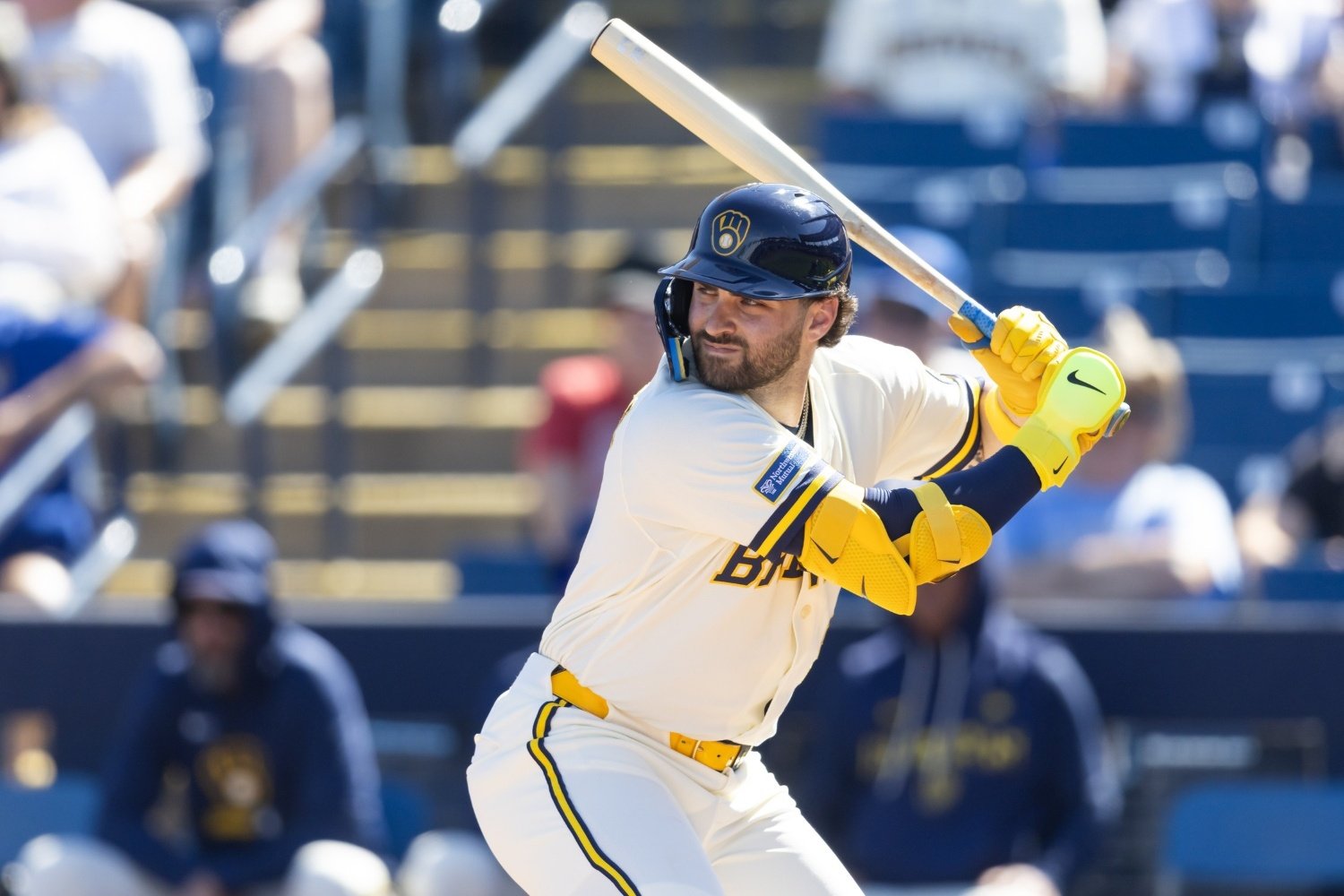 After an offseason of waiting, Opening Day is finally here. The Milwaukee Brewers will host the Chicago White Sox on Thursday at 1:10 p.m. CT at American Family Field, to begin the 2026 season. The Brewers have high expectations, having won the last three NL Central championships, but they also enter the season with several questions. As such, here are three reasons why the Brewers will again finish atop the Central—and three reasons they could fall short. The Brewers will win the Central because ... The young starting pitchers step up With a recent history of pulling the most out of pitchers, the Brewers' four young starters—Jacob Misiorowski, Chad Patrick, Brandon Sproat and Kyle Harrison—will elevate their performances and carry the Crew to a fourth consecutive Central championship. Misiorowski has the ability to become an NL Cy Young contender with his 31.9% strikeout rate, which is nearly 50% better than the MLB average. The key for Misiorowski will be his control, as he walked 11.4% of hitters as a rookie, a full three percentage points worse than the MLB average. He did have a nice opponent batting average of .214. Patrick feels like the most stable of these four, so simply repeating last year's 3.53 FIP and improving his .248 opponent batting average would suffice. Sproat has the potential to be surprising. He was very good from a metrics point of view in his four-game MLB debut with the New York Mets, not only limiting hard contact but also inducing groundballs. That fits into the Crew's defensive scheme very well. But the biggest step will be taken by Harrison. Acquired from the Boston Red Sox in the six-player Caleb Durbin deal, Harrison unveiled a kick-change late last year and took another step with it this spring, notching eight strikeouts in his first spring outing. That pitch will turn into a monster for the left-hander, who will finish behind only Misiorowski on the club in strikeouts. All of this by the young starters will also invigorate veteran Brandon Woodruff. Jackson Chourio becomes a superstar Jackson Chourio has had a very nice first two years, becoming the youngest player in MLB history with back-to-back 20-homer, 20-stolen base seasons. His slash lines have been remarkably similar, going .275/.327/.464 as a rookie to .270/.308/.463 in his sophomore season. But there is more to unlock in Chourio. He has a quick bat and speed that reminds many of Ronald Acuña Jr. He also plays with the joy of a Julio Rodríguez. Dreaming on Chourio being a 30-30 player isn't hard. But what if Chourio ramped up his game to 35 homers and 40 stolen bases? That would also come with taking his batting average up to the .290 or .300 level. Chourio has shown more discipline this spring in drawing walks, which will force pitchers to attack him more, leading to more hits and being able to utilize his speed on the basepaths. Chourio has an electric smile and talent to match. It is time to put that on display for all of MLB to see. Hopefully, his hand injury will be only a brief and unimportant setback on that journey. Garrett Mitchell plays 145 games The wait for the Garrett Mitchell breakthrough has been agonizing, because the reason he hasn't been on the field is for what feels like a series of unrelated injuries. But 2026 is the year in which Mitchell avoids any health issues and more than doubles the number of games he has played in his first three-plus seasons with the Brewers (141). The center fielder with the sweet swing can be a dynamic force for the Brewers with his power and speed combination. In 2024, when he played in a career-high 69 games, he hit eight homers and stole 11 bases. That would put him around a 20-20 pace if he played in 145 games and hits in the .275 range. Combine that with what Chourio and William Contreras can do offensively, and the Brewers will be lighting up scoreboards around MLB this year. The Brewers won't win the Central because ... Brandon Woodruff's shoulder falls apart It gives me no pleasure to write this. Yet, it is the thought that every one of us has as Brandon Woodruff begins 2026 with the Brewers. The sturdy right-hander hasn't had a full spring training, only making two starts and going five innings as he makes his way back from the strained right lat that knocked him out of commission in mid-September. The Brewers signaled early in spring training that Woodruff was going to be slow-played this season, not emphasizing getting him to full speed for Opening Day. Instead, they're making sure (as much as they can) that he will be around for Game 162 and the postseason. Of course, the lat injury followed the right shoulder surgery (anterior capsule) he had at the end of the 2023 season and which kept him out all of 2024. His 2025 debut was delayed by other injuries, including being drilled by a comebacker in a minor-league rehab game. While he deserves a much better ending considering his performance history, his season, probably his final one in Milwaukee, will come to an end early as his right shoulder gives out one more time. Brice Turang and Sal Frelick regress offensively One of the keys to the Crew's offense in 2026 was that second baseman Brice Turang and right fielder Sal Frelick, both 2024 Gold Glove winners, were no longer black holes with the bat. Turang, in particular, has shown remarkable progress at the plate in each of the last two seasons. Turang jumped from .218 as a rookie in 2023 to .254 in 2024 and up to .288 last year—not to mention the late-season power surge he experienced with 10 blasts in August and six homers in 2023 and seven in 2024. He finished with 18 in 2025. Frelick, meanwhile, has gone from .246 to .259 to .288. While not as dramatic as Turang's climb, the growth of both offensively was why the Brewers clicked last year. But if Turang goes back to hitting single-digits in home runs and he and Frelick drop down to .260 or less, the Crew's offense will be in trouble in 2026. Luis Rengifo is a bust at third base If things go right for the Brewers, they just need Luis Rengifo to be himself in 2026. They don't need him to shoulder the burden of the offense, just match his career slash line of .250/.307/.382 with maybe 10 homers. That was close to the output of Durbin last year. But Rengifo has played more often at second base than third base in his career, and he will be at the hot corner only with the Crew. Last year, he had a career-high 76 appearances at third, as well as 74 at second. At third, Rengifo had -5 Defensive Runs Saved, which ranked 166th out of 176 MLB third basemen. He had a poor season at the plate last year with the Los Angeles Angels, slashing .238/.287/.335 and striking out 19.2% of the time. While that strikeout rate is just a bit worse than the MLB average, it was his highest since going down on strikes 20% of the time in 2021. Rengifo struggled this spring, hitting .244 (11-for-45) while hitting three homers and driving in five. If he struggles to the point of needing to release him, that could pave the way for Jett Williams to possibly come up—but a lot of damage could be done before then, and the NL Central is unforgiving.
- 2 comments
-
- 1
-
-
- jackson chourio
- jacob misiorowski
- (and 5 more)
-
Image courtesy of © Dave Kallmann / Milwaukee Journal Sentinel / USA TODAY NETWORK via Imagn Images It takes the full 26-man roster (and then some) to survive each MLB season. After all, the 162-game schedule isn't the sprint that the NFL has (17 games) or the middle-distance race of the NBA (82 games). No, this is an endurance race that has many ups and downs. The Milwaukee Brewers learned that last year. Remember the season-opening series against the New York Yankees, when the world became aware of Torpedo bats and the Crew were outscored 32-12 in the final two games? That led to an 0-4 start, but that was followed by four straight wins. The team more than erased their slow start, eventually, with 11- and 14-game winning streaks (the latter being a club record) and a 97-65 record, best in MLB and best in franchise history. It took contributions from everyone who donned a Brewers uniform to forge that fantastic result in 2025. With that being said, we're now on the cusp of the 2026 season, and new faces and new expectations litter the roster. Who are the most important Brewers, as the team seeks a fourth straight NL Central championship? Here is one opinion. (Players are ranked based on their importance to how the 2026 season goes.) 26. Jake Woodford Acquired Tuesday from the Tampa Bay Rays, the right-hander will toil in a bit of a swing role, especially as the last man in the bullpen. Woodford was released from the minors by three teams in 2025 before landing a major-league job with the Arizona Diamondbacks. Like others in this bullpen, Woodford has the ability to go more than one inning consistently. He's a bit of a flier for the Crew after he put up a 4.26 FIP (6.44 ERA) in 22 appearances with the D'backs. 25. Grant Anderson Following two years with the Texas Rangers, the right-hander found a nice role in his first season with the Brewers in 2025. Anderson made 66 appearances, a significant bump from the 49 he made in his two seasons in Texas. More of the B bullpen, often coming in during blowouts in order to preserve the arms of the more vital members of the relief corps, Anderson had a 3.84 FIP in 69 ⅔ innings. He had a solid strikeout rate of 24.9%, but did walk 9.7%, which needs to be improved upon. 24. DL Hall Will this be the year the Brewers truly get to see what the left-hander can do? Hall has been limited by injuries and ineffectiveness in his two seasons with the Crew, appearing in just 33 games. At one point thought to be a starter, Hall is now focused on a relief role. He is one of a few relievers with the ability to go multiple innings, something that could prove valuable early in the season. Hall has had a problem with walks with the Brewers, issuing free passes to 10.8% of the hitters he has faced. 23. Gary Sánchez Finding at-bats for the backup catcher will be tougher in his second tour of duty with the Crew. In 2024, Sánchez, in addition to giving William Contreras the occasional day off, could also be in the lineup as the designated hitter. But that was when Christian Yelich still played left field on a regular basis. Now that Yelich is basically a full-time DH, Sánchez will be relegated to pinch-hitting when not starting as the backstop. His 2025 with the Baltimore Orioles came to an early end with a sprained right knee, after he'd played in just 29 games. Whatever power Sánchez can produce when he does come to the plate will be just what the Brewers were looking for. 22. David Hamilton The former Brewers prospect who was traded away came back in the same fashion, as part of the six-player trade that sent third baseman Caleb Durbin to the Boston Red Sox. Hamilton brings two Crew favorites, speed and defense, to the infield mix. He's more of a second baseman and third baseman, but has also shown this spring the ability to play shortstop. The offense is the big question with Hamilton, but with him taking over the Andruw Monasterio role, not a lot of offense is expected. 21. Jared Koenig The left-hander has been a quiet and stable force in the Crew's bullpen. During his two seasons in Milwaukee, Koenig has a 3.31 FIP in 127 appearances. He won't be forced to pitch in as many big situations this year with the arrival of Ángel Zerpa, but that won't diminish his importance. He could be called upon more to clean up a bad outing by a starter. Still, he is as reliable as they come. 20. Brandon Lockridge No one knew or, frankly, cared much about the center fielder when the Brewers acquired him at the trade deadline from the San Diego Padres in exchange for left-hander Nestor Cortes and prospect shortstop Jorge Quintana. That all changed with what he did down the stretch, after being needed on the active roster immediately instead of going to Triple-A after the deal. Now, Lockridge figures to be a platoon candidate with Garrett Mitchell in center to begin 2026, with his speed and newly tapped-into power being the skills he brings to the offense. 19. Jake Bauers The left-handed-hitting first baseman/left fielder will be a key bench bat for the Crew. In fact, he could hit his way into a more prominent role. While that also depends on the production of others, Bauers was one of the few consistent bats the Brewers had to finish the regular season and into the postseason. Then he nearly hit .500 (.457) this spring. How his at-bats shake out will be interesting, with Andrew Vaughn starting at first base, Jackson Chourio in left field and Christian Yelich at designated hitter. 18. Luis Rengifo You have to consider what the Brewers will actually get out of the third baseman, and not compare him to any predecessors. The Crew actually got lucky with Durbin having the type of season he did last year, after trotting out Vinny Capra for Opening Day. Rengifo is more of a second baseman who can play third. Of his 673 MLB games, 499 have come at second and 199 at third. Last year, it was evenly split between the two (74 at second, 79 at third). His offense suffered last year with the Los Angeles Angels, as he put up a .238/.287/.335 slash line with 9 homers, 43 RBIs and 10 steals over a full season. That came after a 2024 in which he had a .300/.347/.417 mark with 6 homers, 30 RBIs and 24 steals in 78 games. His season was curtailed by left wrist inflammation. Something in the middle would suit the Brewers just fine, as long as he plays good defense at the hot corner and shows off his speed when he does get on base. 17. Ángel Zerpa The new, shiny toy in the Crew's bullpen, Zerpa was acquired from the Kansas City Royals for outfielder Isaac Collins and right-handed reliever Nick Mears. For those who hadn't seen the left-hander until then, the World Baseball Classic certainly opened the eyes of fans unsure of what they were getting. Zerpa was downright nasty for Venezuela, not allowing a run in his six appearances. In a lefty-heavy bullpen, Zerpa is likely to slot in behind Abner Uribe and Trevor Megill in terms of late-inning usage. He was a key piece of the Royals' bullpen the last two years, with 129 appearances. 16. Aaron Ashby The durable left-hander is primed for a huge season. In 2025, he showed how valuable he can be by posting a 2.70 FIP (2.16 ERA) in 43 games, a figure that seems low. He was a key piece of how the Brewers put together their postseason pitching plan, with a number of regular starters injured or ineffective. He only made one regular-season start in 2025—something that feels bound to change based on what has transpired this spring, when he started three of his five appearances. Regardless of his role, he is simply an outgetter and has been reliable when called upon. 15. Kyle Harrison Acquired from the Red Sox in the Durbin trade, the left-hander begins the season as the No. 4 starter. Harrison bounced from the MLB rotation with the San Francisco Giants to the Triple-A rotation with the Red Sox following the Rafael Devers trade. He was the headliner in the Red Sox's return, in what has turned out to be a roundabout salary dump. Now, he is with the Crew and will be counted upon to shoulder a veteran's role in a rather young rotation. Harrison has started 37 of 42 MLB appearances, numbers no one else in the rotation mix (not named Brandon Woodruff) can claim. The Brewers did their usual tinkering with Harrison, and are ready to see him live up to the hype that made him the Giants' No. 1 prospect just a few years ago. 14. Joey Ortiz Is the beard the secret to unlocking the shortstop's offense? While it looks like he might be getting ready for the witness protection program after all of the daggers that were thrown his way last year, Ortiz had a .394/.487/.515 slash line in Cactus League play and went 3-for-10 with Mexico in the World Baseball Classic. He walked seven times and struck out 10 times overall. While that won't repeat during the regular season, any improvement from his 2025 slash line of .230/.276/.317—in which he always seemed to come up with the bases loaded and didn't produce—will be a welcome relief. Ortiz provides terrific defense at the most important spot on the field, finishing 2025 with one fewer error in an additional 120 innings than in 2024. He only drew a walk 5.3% of the time, a significant drop from the 11% of 2024, while reducing his strikeout rate from 20.2% to 14.6%. 13. Abner Uribe Manager Pat Murphy raised a few eyebrows when he essentially said that Uribe and Megill would be sharing the closer's role this season. He later backed off of that and indicated that Uribe would still be mainly setting up Megill, but is likely to get more opportunities to close in order not to overwork Megill (without using Uribe too much). There is no question that Uribe is the closer of the future, perhaps as early as next season, so having someone of his caliber available at the back end of the bullpen makes that a major asset. 12. Trevor Megill The right-hander has been really good in finishing off games, notching 51 saves in 60 chances over the last two seasons. Megill made a career-high 50 appearances last year, two more than in 2024, but that was also limited somewhat, as he missed a month late in the season with a strained right flexor. Megill was the subject of trade rumors this offseason, which will only increase after 2026 as he will be entering his final season of arbitration eligibility and is likely to be dealt away. Still, the bullpen is the bedrock of this team, and it begins with Megill locking down victories. 11. Sal Frelick The right fielder was in the hunt for the NL batting title in 2025, finishing seventh at .288. It was a significant step up from .246 and .259 in his first two seasons, respectively. He also went from 2 to 12 homers and has a combined 37 steals over the last two years. It doesn't feel like there is much more power in his game, but as long as he can drive the ball often enough to get on base for the rest of the offense, he provides an option as a leadoff hitter or someone to keep the bottom half of the lineup productive. 10. Brandon Sproat The right-hander earned the No. 3 slot in the Brewers' rotation after coming over with infielder/outfielder Jett Williams from the New York Mets in the late-January Freddy Peralta/Tobias Myers trade. Sproat made his MLB debut last year, making four late-season starts. Now, he's the de facto replacement for Peralta, who was the Brewers' Opening Day starter the last two years. Some scouting reports say Brewer Fanatic's No. 5 prospect is a back-end starter, while others say he has the stuff to handle a No. 3 or even a No. 2 spot. Now, he has his chance to show which side is correct. 9. Garrett Mitchell The center fielder needs to stay healthy. Since being called up for his MLB debut with 38 games left in the 2022 season, Mitchell has appeared in a mere 141 games—a number you might understand for a full season, but not for three-plus years. But various injuries have prevented Mitchell from displaying his talents on a regular basis. He survived spring training, but was just 2-for-32 (.063/.189/.188) with 15 strikeouts. If he can shed the horrible spring and stay on the field, he could be another dynamic piece of the Crew's offense. If not, the team will have to rejigger its outfield significantly. 8. Chad Patrick The right-hander was an early winner of the Crew's rotation battle, getting named a starter along with Jacob Misiorowski with three weeks left in camp. Perhaps that was a nod to what Patrick did in 2025. Patrick made the Opening Day roster last year, with his first appearance a late-inning mop-up in the torpedo bat series disaster. But then he was thrust into the rotation, with a 3.53 FIP in 23 starts and four relief appearances. He was very valuable in relief in the postseason, allowing just two runs over nine innings, striking out 11, and walking one. Now, he'll be counted on to eat innings and repeat his 2025 performance, which saw him finish seventh in NL Rookie of the Year voting. He was one of three Brewers in the top seven. 7. Andrew Vaughn The range of outcomes for Vaughn in 2026 is huge. You can't expect a repeat of his first month with the Crew following the trade from the Chicago White Sox (.365/.426/.731, 5 HR, 21 RBI in July), but you also can't expect the same production he had before the trade (.189/.218/.314, 5 HR, 19 RBI) that resulted in the lowly South Siders sending him to the minors. Vaughn has fit right in with the Crew and had a very nice spring (.372/.449/.581). With his average and power, he slots into the lineup as protection for William Contreras and Christian Yelich. 6. Brice Turang We all saw the second baseman's power come to life in August, when he almost reached the total from his first two seasons (13) in 31 days. Those 10 homers showed that Turang can drive the ball when he wants to. While he isn't being encouraged to be a 40-homer guy, hitting 20 homers (more spread-out over the season, of course) is certainly within reach. His defense at second base has been stellar, as recognized by his 2024 NL Platinum Glove, but his offense has taken strides in each of his three seasons. Turang went from a .218 hitter as a rookie to .288 in 2025, which helped him earn down-ballot MVP votes. His stolen base total took a step back from the 50 he had in 2024, as he had 24, so keeping the running game as a more consistent part of his game will benefit the offense. 5. Christian Yelich Pretty much locked into the designated hitter role due to his series of back injuries, Yelich played left field just 19 times in 2025. While his ability to play left more often would make the Brewers' offense more flexible, the most important part of his game is his left-handed bat. His slash line was a bit down in 2025 at .264/.343/.452, but he did have 29 homers (third-most of his career) and 103 RBIs. That came after a slash line of .315/.406/.504 before his 2024 season ended after 70 games due to back surgery. Getting his average back up around the .300 mark would help fuel the Brewers' offense. 4. William Conteras The catcher is entering a crucial season for his career. With the way the Brewers handle star players entering their final year of arbitration (generally trading them in the offseason), Contreras is basically in a platform season. The good news is that he should be motivated by his subpar performance from 2025, which was hampered by a fractured middle finger on his catching hand. Contreras had an offseason procedure to repair the injury, which led to his .260/.355/.399 slash line with 17 homers and 76 RBIs. He expects more out of himself, and hitting in the middle of the Crew's lineup should give him plenty of opportunities to do so. 3. Jackson Chourio The floor has been set for the 22-year-old outfielder. Chourio is the youngest player in MLB history to have back-to-back 20-homer, 20-stolen base seasons. He was much more consistent in 2025 than in his rookie year of 2024. Now, how much more is there to tap into? A 30-30 season could be the next step. More important, though, is Chourio's continued maturation at the plate. In Cactus League play, Chourio struck out just three times in 28 plate appearances, while drawing three walks. He walked twice and struck out four times in 19 plate appearances in the World Baseball Classic. His patience at the plate (5.9% career walk rate, 36.9% chase rate in 2025) has been a sore spot. 2. Jacob Misiorowski Following a spectacular start to his MLB career (which landed him a surprising spot in the All-Star Game), the flame-throwing right-handed starter endured some struggles and an injury that eventually took him out of the rotation. Misiorowski did right himself and was a weapon in the postseason, including a five-inning relief effort in Game 3 of the NL Championship Series against the Los Angeles Dodgers. Now, Misiorowski, who turns 24 just a few days after the season begins, is the Crew's Opening Day starter. It seemed like he bucked some of the things the coaching staff was trying to help him with, which led to his stint in the bullpen, but now he has a fresh start in 2026 and needs to be the version of himself that began his career for the Brewers to have success. 1. Brandon Woodruff While he will slide into the rotation as the No. 5 starter, that isn't because of his talent. Woodruff is still on the comeback trail from a lat injury that kept him out of action for the last couple weeks of the regular season and the postseason. The Brewers are taking baby steps with Woodruff, so he won't be a traditional ace, but there is no doubting his importance to this team and this pitching staff. He returned from 2023 surgery on his right shoulder to put up a 3.17 FIP in 12 starts in 2025, with career bests in walk rate (5.4%) and strikeout rate (32.3%). In order to keep Woodruff healthy for the entire season, they will slowly build him up, perhaps taking a page out of the book the Los Angeles Dodgers wrote last season with Shohei Ohtani's comeback from elbow surgery. Woodruff is also important to the team as a leader in the clubhouse, so his presence matters on multiple levels. View full article
-
The Most Important Brewers for 2026: Ranking the Roster from 1 to 26
Steve Drumwright posted an article in Brewers
 It takes the full 26-man roster (and then some) to survive each MLB season. After all, the 162-game schedule isn't the sprint that the NFL has (17 games) or the middle-distance race of the NBA (82 games). No, this is an endurance race that has many ups and downs. The Milwaukee Brewers learned that last year. Remember the season-opening series against the New York Yankees, when the world became aware of Torpedo bats and the Crew were outscored 32-12 in the final two games? That led to an 0-4 start, but that was followed by four straight wins. The team more than erased their slow start, eventually, with 11- and 14-game winning streaks (the latter being a club record) and a 97-65 record, best in MLB and best in franchise history. It took contributions from everyone who donned a Brewers uniform to forge that fantastic result in 2025. With that being said, we're now on the cusp of the 2026 season, and new faces and new expectations litter the roster. Who are the most important Brewers, as the team seeks a fourth straight NL Central championship? Here is one opinion. (Players are ranked based on their importance to how the 2026 season goes.) 26. Jake Woodford Acquired Tuesday from the Tampa Bay Rays, the right-hander will toil in a bit of a swing role, especially as the last man in the bullpen. Woodford was released from the minors by three teams in 2025 before landing a major-league job with the Arizona Diamondbacks. Like others in this bullpen, Woodford has the ability to go more than one inning consistently. He's a bit of a flier for the Crew after he put up a 4.26 FIP (6.44 ERA) in 22 appearances with the D'backs. 25. Grant Anderson Following two years with the Texas Rangers, the right-hander found a nice role in his first season with the Brewers in 2025. Anderson made 66 appearances, a significant bump from the 49 he made in his two seasons in Texas. More of the B bullpen, often coming in during blowouts in order to preserve the arms of the more vital members of the relief corps, Anderson had a 3.84 FIP in 69 ⅔ innings. He had a solid strikeout rate of 24.9%, but did walk 9.7%, which needs to be improved upon. 24. DL Hall Will this be the year the Brewers truly get to see what the left-hander can do? Hall has been limited by injuries and ineffectiveness in his two seasons with the Crew, appearing in just 33 games. At one point thought to be a starter, Hall is now focused on a relief role. He is one of a few relievers with the ability to go multiple innings, something that could prove valuable early in the season. Hall has had a problem with walks with the Brewers, issuing free passes to 10.8% of the hitters he has faced. 23. Gary Sánchez Finding at-bats for the backup catcher will be tougher in his second tour of duty with the Crew. In 2024, Sánchez, in addition to giving William Contreras the occasional day off, could also be in the lineup as the designated hitter. But that was when Christian Yelich still played left field on a regular basis. Now that Yelich is basically a full-time DH, Sánchez will be relegated to pinch-hitting when not starting as the backstop. His 2025 with the Baltimore Orioles came to an early end with a sprained right knee, after he'd played in just 29 games. Whatever power Sánchez can produce when he does come to the plate will be just what the Brewers were looking for. 22. David Hamilton The former Brewers prospect who was traded away came back in the same fashion, as part of the six-player trade that sent third baseman Caleb Durbin to the Boston Red Sox. Hamilton brings two Crew favorites, speed and defense, to the infield mix. He's more of a second baseman and third baseman, but has also shown this spring the ability to play shortstop. The offense is the big question with Hamilton, but with him taking over the Andruw Monasterio role, not a lot of offense is expected. 21. Jared Koenig The left-hander has been a quiet and stable force in the Crew's bullpen. During his two seasons in Milwaukee, Koenig has a 3.31 FIP in 127 appearances. He won't be forced to pitch in as many big situations this year with the arrival of Ángel Zerpa, but that won't diminish his importance. He could be called upon more to clean up a bad outing by a starter. Still, he is as reliable as they come. 20. Brandon Lockridge No one knew or, frankly, cared much about the center fielder when the Brewers acquired him at the trade deadline from the San Diego Padres in exchange for left-hander Nestor Cortes and prospect shortstop Jorge Quintana. That all changed with what he did down the stretch, after being needed on the active roster immediately instead of going to Triple-A after the deal. Now, Lockridge figures to be a platoon candidate with Garrett Mitchell in center to begin 2026, with his speed and newly tapped-into power being the skills he brings to the offense. 19. Jake Bauers The left-handed-hitting first baseman/left fielder will be a key bench bat for the Crew. In fact, he could hit his way into a more prominent role. While that also depends on the production of others, Bauers was one of the few consistent bats the Brewers had to finish the regular season and into the postseason. Then he nearly hit .500 (.457) this spring. How his at-bats shake out will be interesting, with Andrew Vaughn starting at first base, Jackson Chourio in left field and Christian Yelich at designated hitter. 18. Luis Rengifo You have to consider what the Brewers will actually get out of the third baseman, and not compare him to any predecessors. The Crew actually got lucky with Durbin having the type of season he did last year, after trotting out Vinny Capra for Opening Day. Rengifo is more of a second baseman who can play third. Of his 673 MLB games, 499 have come at second and 199 at third. Last year, it was evenly split between the two (74 at second, 79 at third). His offense suffered last year with the Los Angeles Angels, as he put up a .238/.287/.335 slash line with 9 homers, 43 RBIs and 10 steals over a full season. That came after a 2024 in which he had a .300/.347/.417 mark with 6 homers, 30 RBIs and 24 steals in 78 games. His season was curtailed by left wrist inflammation. Something in the middle would suit the Brewers just fine, as long as he plays good defense at the hot corner and shows off his speed when he does get on base. 17. Ángel Zerpa The new, shiny toy in the Crew's bullpen, Zerpa was acquired from the Kansas City Royals for outfielder Isaac Collins and right-handed reliever Nick Mears. For those who hadn't seen the left-hander until then, the World Baseball Classic certainly opened the eyes of fans unsure of what they were getting. Zerpa was downright nasty for Venezuela, not allowing a run in his six appearances. In a lefty-heavy bullpen, Zerpa is likely to slot in behind Abner Uribe and Trevor Megill in terms of late-inning usage. He was a key piece of the Royals' bullpen the last two years, with 129 appearances. 16. Aaron Ashby The durable left-hander is primed for a huge season. In 2025, he showed how valuable he can be by posting a 2.70 FIP (2.16 ERA) in 43 games, a figure that seems low. He was a key piece of how the Brewers put together their postseason pitching plan, with a number of regular starters injured or ineffective. He only made one regular-season start in 2025—something that feels bound to change based on what has transpired this spring, when he started three of his five appearances. Regardless of his role, he is simply an outgetter and has been reliable when called upon. 15. Kyle Harrison Acquired from the Red Sox in the Durbin trade, the left-hander begins the season as the No. 4 starter. Harrison bounced from the MLB rotation with the San Francisco Giants to the Triple-A rotation with the Red Sox following the Rafael Devers trade. He was the headliner in the Red Sox's return, in what has turned out to be a roundabout salary dump. Now, he is with the Crew and will be counted upon to shoulder a veteran's role in a rather young rotation. Harrison has started 37 of 42 MLB appearances, numbers no one else in the rotation mix (not named Brandon Woodruff) can claim. The Brewers did their usual tinkering with Harrison, and are ready to see him live up to the hype that made him the Giants' No. 1 prospect just a few years ago. 14. Joey Ortiz Is the beard the secret to unlocking the shortstop's offense? While it looks like he might be getting ready for the witness protection program after all of the daggers that were thrown his way last year, Ortiz had a .394/.487/.515 slash line in Cactus League play and went 3-for-10 with Mexico in the World Baseball Classic. He walked seven times and struck out 10 times overall. While that won't repeat during the regular season, any improvement from his 2025 slash line of .230/.276/.317—in which he always seemed to come up with the bases loaded and didn't produce—will be a welcome relief. Ortiz provides terrific defense at the most important spot on the field, finishing 2025 with one fewer error in an additional 120 innings than in 2024. He only drew a walk 5.3% of the time, a significant drop from the 11% of 2024, while reducing his strikeout rate from 20.2% to 14.6%. 13. Abner Uribe Manager Pat Murphy raised a few eyebrows when he essentially said that Uribe and Megill would be sharing the closer's role this season. He later backed off of that and indicated that Uribe would still be mainly setting up Megill, but is likely to get more opportunities to close in order not to overwork Megill (without using Uribe too much). There is no question that Uribe is the closer of the future, perhaps as early as next season, so having someone of his caliber available at the back end of the bullpen makes that a major asset. 12. Trevor Megill The right-hander has been really good in finishing off games, notching 51 saves in 60 chances over the last two seasons. Megill made a career-high 50 appearances last year, two more than in 2024, but that was also limited somewhat, as he missed a month late in the season with a strained right flexor. Megill was the subject of trade rumors this offseason, which will only increase after 2026 as he will be entering his final season of arbitration eligibility and is likely to be dealt away. Still, the bullpen is the bedrock of this team, and it begins with Megill locking down victories. 11. Sal Frelick The right fielder was in the hunt for the NL batting title in 2025, finishing seventh at .288. It was a significant step up from .246 and .259 in his first two seasons, respectively. He also went from 2 to 12 homers and has a combined 37 steals over the last two years. It doesn't feel like there is much more power in his game, but as long as he can drive the ball often enough to get on base for the rest of the offense, he provides an option as a leadoff hitter or someone to keep the bottom half of the lineup productive. 10. Brandon Sproat The right-hander earned the No. 3 slot in the Brewers' rotation after coming over with infielder/outfielder Jett Williams from the New York Mets in the late-January Freddy Peralta/Tobias Myers trade. Sproat made his MLB debut last year, making four late-season starts. Now, he's the de facto replacement for Peralta, who was the Brewers' Opening Day starter the last two years. Some scouting reports say Brewer Fanatic's No. 5 prospect is a back-end starter, while others say he has the stuff to handle a No. 3 or even a No. 2 spot. Now, he has his chance to show which side is correct. 9. Garrett Mitchell The center fielder needs to stay healthy. Since being called up for his MLB debut with 38 games left in the 2022 season, Mitchell has appeared in a mere 141 games—a number you might understand for a full season, but not for three-plus years. But various injuries have prevented Mitchell from displaying his talents on a regular basis. He survived spring training, but was just 2-for-32 (.063/.189/.188) with 15 strikeouts. If he can shed the horrible spring and stay on the field, he could be another dynamic piece of the Crew's offense. If not, the team will have to rejigger its outfield significantly. 8. Chad Patrick The right-hander was an early winner of the Crew's rotation battle, getting named a starter along with Jacob Misiorowski with three weeks left in camp. Perhaps that was a nod to what Patrick did in 2025. Patrick made the Opening Day roster last year, with his first appearance a late-inning mop-up in the torpedo bat series disaster. But then he was thrust into the rotation, with a 3.53 FIP in 23 starts and four relief appearances. He was very valuable in relief in the postseason, allowing just two runs over nine innings, striking out 11, and walking one. Now, he'll be counted on to eat innings and repeat his 2025 performance, which saw him finish seventh in NL Rookie of the Year voting. He was one of three Brewers in the top seven. 7. Andrew Vaughn The range of outcomes for Vaughn in 2026 is huge. You can't expect a repeat of his first month with the Crew following the trade from the Chicago White Sox (.365/.426/.731, 5 HR, 21 RBI in July), but you also can't expect the same production he had before the trade (.189/.218/.314, 5 HR, 19 RBI) that resulted in the lowly South Siders sending him to the minors. Vaughn has fit right in with the Crew and had a very nice spring (.372/.449/.581). With his average and power, he slots into the lineup as protection for William Contreras and Christian Yelich. 6. Brice Turang We all saw the second baseman's power come to life in August, when he almost reached the total from his first two seasons (13) in 31 days. Those 10 homers showed that Turang can drive the ball when he wants to. While he isn't being encouraged to be a 40-homer guy, hitting 20 homers (more spread-out over the season, of course) is certainly within reach. His defense at second base has been stellar, as recognized by his 2024 NL Platinum Glove, but his offense has taken strides in each of his three seasons. Turang went from a .218 hitter as a rookie to .288 in 2025, which helped him earn down-ballot MVP votes. His stolen base total took a step back from the 50 he had in 2024, as he had 24, so keeping the running game as a more consistent part of his game will benefit the offense. 5. Christian Yelich Pretty much locked into the designated hitter role due to his series of back injuries, Yelich played left field just 19 times in 2025. While his ability to play left more often would make the Brewers' offense more flexible, the most important part of his game is his left-handed bat. His slash line was a bit down in 2025 at .264/.343/.452, but he did have 29 homers (third-most of his career) and 103 RBIs. That came after a slash line of .315/.406/.504 before his 2024 season ended after 70 games due to back surgery. Getting his average back up around the .300 mark would help fuel the Brewers' offense. 4. William Conteras The catcher is entering a crucial season for his career. With the way the Brewers handle star players entering their final year of arbitration (generally trading them in the offseason), Contreras is basically in a platform season. The good news is that he should be motivated by his subpar performance from 2025, which was hampered by a fractured middle finger on his catching hand. Contreras had an offseason procedure to repair the injury, which led to his .260/.355/.399 slash line with 17 homers and 76 RBIs. He expects more out of himself, and hitting in the middle of the Crew's lineup should give him plenty of opportunities to do so. 3. Jackson Chourio The floor has been set for the 22-year-old outfielder. Chourio is the youngest player in MLB history to have back-to-back 20-homer, 20-stolen base seasons. He was much more consistent in 2025 than in his rookie year of 2024. Now, how much more is there to tap into? A 30-30 season could be the next step. More important, though, is Chourio's continued maturation at the plate. In Cactus League play, Chourio struck out just three times in 28 plate appearances, while drawing three walks. He walked twice and struck out four times in 19 plate appearances in the World Baseball Classic. His patience at the plate (5.9% career walk rate, 36.9% chase rate in 2025) has been a sore spot. 2. Jacob Misiorowski Following a spectacular start to his MLB career (which landed him a surprising spot in the All-Star Game), the flame-throwing right-handed starter endured some struggles and an injury that eventually took him out of the rotation. Misiorowski did right himself and was a weapon in the postseason, including a five-inning relief effort in Game 3 of the NL Championship Series against the Los Angeles Dodgers. Now, Misiorowski, who turns 24 just a few days after the season begins, is the Crew's Opening Day starter. It seemed like he bucked some of the things the coaching staff was trying to help him with, which led to his stint in the bullpen, but now he has a fresh start in 2026 and needs to be the version of himself that began his career for the Brewers to have success. 1. Brandon Woodruff While he will slide into the rotation as the No. 5 starter, that isn't because of his talent. Woodruff is still on the comeback trail from a lat injury that kept him out of action for the last couple weeks of the regular season and the postseason. The Brewers are taking baby steps with Woodruff, so he won't be a traditional ace, but there is no doubting his importance to this team and this pitching staff. He returned from 2023 surgery on his right shoulder to put up a 3.17 FIP in 12 starts in 2025, with career bests in walk rate (5.4%) and strikeout rate (32.3%). In order to keep Woodruff healthy for the entire season, they will slowly build him up, perhaps taking a page out of the book the Los Angeles Dodgers wrote last season with Shohei Ohtani's comeback from elbow surgery. Woodruff is also important to the team as a leader in the clubhouse, so his presence matters on multiple levels.

