


.png.c6fdced0e304141528a6142b01bdf5a0.png)
Brent Sirvio
-
Posts
85 -
Joined
Content Type
Profiles
Forums
Blogs
Events
News
2026 Milwaukee Brewers Top Prospects Ranking
Milwaukee Brewers Videos
2022 Milwaukee Brewers Draft Picks
Milwaukee Brewers Free Agent & Trade Rumors, Notes, & Tidbits
Guides & Resources
2023 Milwaukee Brewers Draft Picks
2024 Milwaukee Brewers Draft Picks
The Milwaukee Brewers Players Project
2025 Milwaukee Brewers Draft Pick Tracker
2026 Milwaukee Brewers Draft Pick Tracker
Store
Downloads
Gallery
Everything posted by Brent Sirvio
-
.thumb.png.fb2aea91da59c37baaec678b5ce8166f.png) I stand by what I said.
I stand by what I said. -
https://www.mprnews.org/story/2007/04/12/stadiumdesign It is strongly implied here -- and there are renderings out there of what would be TF that include one -- that a roof could have been added to the current site, footprint and all. Again, cost -- for better or worse -- was the precluding factor.
-
https://www.mprnews.org/story/2007/04/12/stadiumdesign It is strongly implied here -- and there are renderings out there of what would be TF that include one -- that a roof could have been added to the current site, footprint and all. Again, cost -- for better or worse -- was the precluding factor.
-
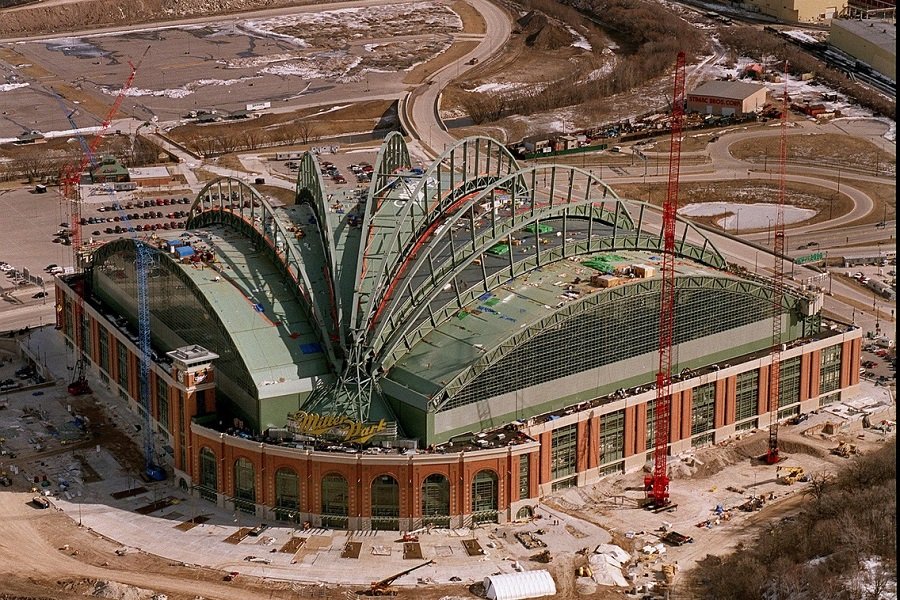 The fading green paint on the roof panels. Outdated signage. The bracing placed in spots along the inner facade along the tracks for the roof. Visiting the clubhouse last fall, it's clear those facilities were built at the turn of the century with the turn of the century in mind. The Weekly is a column on the Brewers. 'On' may do heavier lifting on some weeks than others. Put bluntly, what is now American Family Field is not aging well, and with the Brewers' lease expiring in 2030 at the soonest, it's not too soon to wonder what comes next. In fact, thinking about updates -- or even a replacement -- for the ballpark should have already been on the radar since before the five-county sales tax that amortized Miller Park's debt expired in 2020. In 2030, American Family Field will be approaching 30 years old. Mark Attanasio will be 73 years old. By way of comparison, Bud Selig sold the Brewers to Attanasio's investment group in 2004 at age 70. Failure by all stakeholders involved to get out in front of the stadium issue brings us back to the mid-90s, when Selig threatened to move the team to the Carolinas if the public wouldn't help with stadium financing. Or, worse yet, potentially to the early 1960s, when Milwaukee County's bumbling and bombastic leadership all but chased the Braves to Atlanta. Failure by Attanasio and the Brewers to be forthright about the need for significant structural updates sooner than later will tell more than anyone might be comfortable admitting about what current ownership's next chapters and/or exit strategy might be. To be fair, it's understandable that there may not be much public appetite for this kind of talk. And, generally speaking, this writer does not believe it appropriate for government to subsidize or otherwise bankroll the construction or renovation of sports stadiums without either a clear, real return on investment or otherwise not being left on the hook. In other words, if a deal is to be struck by partial way of public financing, it needs to be less Foxconn and more Fiserv Forum. And even if a renovation of American Family Field is agreed to, there is no guarantee that won't be a bandage on a bullet wound: Kansas City's Kauffman Stadium underwent a $250m renovation between 2007 and 2009, and the Royals, once quietly, are now openly looking at buying property either downtown or near the 18th and Vine historic district to build a new stadium. The Kansas City Star led with that story just last weekend. They also just changed hands in 2019, from David Glass to Kansas City energy magnate John Sherman. (By the way, if you haven't been to the Negro Leagues Baseball Museum at 18th and Vine, you are missing out on an incredible experience. And a new ballpark there would be pretty cool, if it weren't for the fact that The K is one of the best baseball experiences in America.) Let's take Kauffman as a baseline: $250m in 2009 is roughly $310m today. If renovations were to start later this decade, that puts us at a minimum of $330m, and that's not considering any major work to the bespoke retractable roof system. If Kauffman Stadium is any bellwether, saying nothing of Atlanta or Arlington, we should be clear-eyed about the fact that we can sink upwards of $400m (or more) into American Family Field in a project around 2028 or 2030 only for the team to have eyes on something somewhere else within a decade, or we should be looking at something somewhere else. Because if we're not, the Brewers will, and that somewhere won't be in the state of Wisconsin. Fiserv Forum may have been a Pyrrhic victory this way. In reality, American Family Field was not built to be timeless in the way that Camden Yards, Oracle Park or PNC Park were. That element of design was sacrificed for the roof, rightly, to guarantee 81 home games a year. (An indirectly-related aside: Fans to the west of Wisconsin too-conveniently forget that Target Field was supposed to and should have a roof, but dithering and heel-dragging among public officials and Twins leadership alike allowed the cost to build the stadium to spiral to the point where a roof was no longer affordable.) The Brewers are expected to present a report in 'early summer', according to the Milwaukee Journal Sentinel's Tom Daykin, and we'll all have a clearer sense of where things might be headed. In the meantime, we are left with a disquieting fact: that without a proactive and assertive response by the region and the state, and a shared willingness by all parties to engage in good faith, the Brewers might be headed the way of the Braves. I honestly don't think anyone wants that to happen, but without a clear and active want for that to not happen, what other option is there? To dare history to not repeat itself? It's not the conversation anyone wants to have. I get that. It's much more fun to talk about dominant pitching and walk-off dingers and the most frustrating, incredible and frustratingly incredible Brewers team we've seen in some time. But we can't root, root, root for the home team unless that team has a home. And the time to talk about what home looks like and what it should be is now.
 -
I first noticed it moving back to Wisconsin from the middle of the country about ten years ago. Actually, before that. The rust stains from rain rolling off the roof panels on the outer stadium facade appeared only a few years after Miller Park opened. And with every trip to the ballpark, gameday or otherwise, I've noticed something else every time I've visited. The fading green paint on the roof panels. Outdated signage. The bracing placed in spots along the inner facade along the tracks for the roof. Visiting the clubhouse last fall, it's clear those facilities were built at the turn of the century with the turn of the century in mind. The Weekly is a column on the Brewers. 'On' may do heavier lifting on some weeks than others. Put bluntly, what is now American Family Field is not aging well, and with the Brewers' lease expiring in 2030 at the soonest, it's not too soon to wonder what comes next. In fact, thinking about updates -- or even a replacement -- for the ballpark should have already been on the radar since before the five-county sales tax that amortized Miller Park's debt expired in 2020. In 2030, American Family Field will be approaching 30 years old. Mark Attanasio will be 73 years old. By way of comparison, Bud Selig sold the Brewers to Attanasio's investment group in 2004 at age 70. Failure by all stakeholders involved to get out in front of the stadium issue brings us back to the mid-90s, when Selig threatened to move the team to the Carolinas if the public wouldn't help with stadium financing. Or, worse yet, potentially to the early 1960s, when Milwaukee County's bumbling and bombastic leadership all but chased the Braves to Atlanta. Failure by Attanasio and the Brewers to be forthright about the need for significant structural updates sooner than later will tell more than anyone might be comfortable admitting about what current ownership's next chapters and/or exit strategy might be. To be fair, it's understandable that there may not be much public appetite for this kind of talk. And, generally speaking, this writer does not believe it appropriate for government to subsidize or otherwise bankroll the construction or renovation of sports stadiums without either a clear, real return on investment or otherwise not being left on the hook. In other words, if a deal is to be struck by partial way of public financing, it needs to be less Foxconn and more Fiserv Forum. And even if a renovation of American Family Field is agreed to, there is no guarantee that won't be a bandage on a bullet wound: Kansas City's Kauffman Stadium underwent a $250m renovation between 2007 and 2009, and the Royals, once quietly, are now openly looking at buying property either downtown or near the 18th and Vine historic district to build a new stadium. The Kansas City Star led with that story just last weekend. They also just changed hands in 2019, from David Glass to Kansas City energy magnate John Sherman. (By the way, if you haven't been to the Negro Leagues Baseball Museum at 18th and Vine, you are missing out on an incredible experience. And a new ballpark there would be pretty cool, if it weren't for the fact that The K is one of the best baseball experiences in America.) Let's take Kauffman as a baseline: $250m in 2009 is roughly $310m today. If renovations were to start later this decade, that puts us at a minimum of $330m, and that's not considering any major work to the bespoke retractable roof system. If Kauffman Stadium is any bellwether, saying nothing of Atlanta or Arlington, we should be clear-eyed about the fact that we can sink upwards of $400m (or more) into American Family Field in a project around 2028 or 2030 only for the team to have eyes on something somewhere else within a decade, or we should be looking at something somewhere else. Because if we're not, the Brewers will, and that somewhere won't be in the state of Wisconsin. Fiserv Forum may have been a Pyrrhic victory this way. In reality, American Family Field was not built to be timeless in the way that Camden Yards, Oracle Park or PNC Park were. That element of design was sacrificed for the roof, rightly, to guarantee 81 home games a year. (An indirectly-related aside: Fans to the west of Wisconsin too-conveniently forget that Target Field was supposed to and should have a roof, but dithering and heel-dragging among public officials and Twins leadership alike allowed the cost to build the stadium to spiral to the point where a roof was no longer affordable.) The Brewers are expected to present a report in 'early summer', according to the Milwaukee Journal Sentinel's Tom Daykin, and we'll all have a clearer sense of where things might be headed. In the meantime, we are left with a disquieting fact: that without a proactive and assertive response by the region and the state, and a shared willingness by all parties to engage in good faith, the Brewers might be headed the way of the Braves. I honestly don't think anyone wants that to happen, but without a clear and active want for that to not happen, what other option is there? To dare history to not repeat itself? It's not the conversation anyone wants to have. I get that. It's much more fun to talk about dominant pitching and walk-off dingers and the most frustrating, incredible and frustratingly incredible Brewers team we've seen in some time. But we can't root, root, root for the home team unless that team has a home. And the time to talk about what home looks like and what it should be is now. View full article
- 26 replies
-
- 1
-

-
- milwaukee brewers
- american family field
- (and 2 more)
-
People will see what they will. When one doesn't choose to make of themselves something of their own design, others will make one into what they see. This is a story of Willy Adames, as well as a growing list of discarded professional wrestlers and a dead philosopher. Nobody will do it for you was the slogan emblazoned on t-shirts for DIY, the tag team of Johnny Gargano and Tommaso Ciampa, two relatively small-ish professional wrestlers who languished in the independent wrestling scene and on smaller promotions until opening eyes in a NXT/WWE cruiserweight tournament match in 2016. The two became adept sparring and training partners, fast friends and learned to work remarkably well together in the ring, alongside and against each other. Simply put, the two knew how to put on a show; and when audience reaction turned into a grassroots movement behind them -- not unlike the ascendance of Bryan Danielson, in WWE as Daniel Bryan -- they got a run at the tag team championships, which led to their break-up, one of the great storytelling feuds in recent pro wrestling memory and some memorable singles title runs as well. (Ciampa is billed as from Milwaukee, Wisconsin -- where his wife is from and where they were about to put down roots before his wrestling career took off.) This runs counter to what happens in pro wrestling by way of Vince McMahon's 'sports entertainment': a character is packaged -- name, music, gimmick, background -- with little to no input from the person portraying said character, and then future endeavor'd, internet wrestling parlance for fired, when the character isn't a hit with the crowds and doesn't sell merchandise. For every Cody Rhodes, who is decidedly a unicorn in this era, there are countless others who get chewed up and spit out. (Poor Pete Dunne.) What does any of this have to do with Willy Adames? Adames was signed by the Detroit Tigers as a free agent out of the Dominican Republic in 2012. While many saw his promise and potential, they perceived him as John Hick's blind men from his pluralistic hypothesis of religion: each feeling a different part of an elephant but unable to understand it as a whole because they could not comprehend that they were each observing the same thing. Now, Hick's thought experiment within the realms of philosophy and religion is problematic for any number of reasons, but it would appear that those who observed Adames had no idea who he could be. Then-Tigers GM Dave Dombrowski, no stranger to having no idea what unfinished projects could be, said little more about trading Adames, as part of a package for Tampa Bay Rays pitcher and Cy Young Award winner David Price, than "This guy is a real good young player." No, really, that's almost the full extent of it. Adames was the #3 prospect in the Tigers system. He was also only 18 years old with two years of developmental and minor league ball under his belt. Adames moved into the Rays organization and continued his ascent, though who and what he was remained a mystery. Mike Rosenbaum at Bleacher Report had Adames as the Rays' #1 prospect in 2015, noting his potentially "impact" bat and plus defense at short thanks to "athleticism and instincts", but his "average range" and an eventual drop in speed would force a move to third base. Rich Wilson at Prospect361.com listed Adames as the Rays' sixth-best prospect in 2016. Adames was a "prototypical" shortstop, but missing power, expecting 8-12 home runs a season and generally struggling with major league pitching. Then again, Wilson had Casey Gillaspie ranked ahead of Adames (and loved him), along with Taylor Guerrieri, Garrett Whitley, Brent Honeywell and Blake Snell. There's a reason you've only heard of two of those guys, and, I suppose, a reason you've never heard of Rich Wilson. MLB Pipeline had Adames as the sixth-best shortstop prospect in baseball in 2018, in with Fernando Tatis, Jr., Bo Bichette, Royce Lewis and Brendan Rodgers. Sources told Rays beat writer Bill Chastain at that time that Adames' future might be at third, due to "average speed", though Rays farm director (and one-time Appleton Fox) Mitch Lukevics insisted that Adames would be a starting MLB shortstop. No less than Keith Law saw Adames as someone only keeping shortstop warm for someone else. In his 2018 Top 100 list at ESPN, Adames, the 20th ranked prospect, looked "like someone who'll eventually be bumped to another position by a plus defender who can offer more range and agility", also suspecting an eventual move to the hot corner. Rays prospects writer Mat Germain, writing at DRays Bay, had Adames at #1 in 2018. Writing more in aggregate for the DRB team and from other sources, Germain keeps Adames at shortstop. Though he keeps the door open to a potential move to third, Germain does not relegate or assume a move as others did. Here, though, Germain picks up on what was missed by almost everyone else: character. Less is said about Adames' skill and ability -- though a comp to Francisco Lindor is certainly flattering, as is noting that his early performance outshined the Yankees' Gleyber Torres -- than about who the kid is. Quoting Lukevics and others, much is made of Willy Adames, the man as opposed to the disparate components within a flesh casing, or parts of an elephant rather than the pachyderm itself. And this is where scouting reports, writers covering prospects, sabermetricians and general seamhead wonks so often get things wrong. These are people, and a person's talent is beholden exclusively to that person. Someone can have all the talent in the world, but the person has to embrace it. For every Bryce Harper, and even Harper can be maddeningly inconsistent, there are Josh Hamiltons, Nick Franklins and countless more we've not heard of. Willy Adames, from day one in the Tigers system, to his first day in the Rays' organization, to knocking at the door of the parent club, to entering The Show itself, worked at his craft. That willingness to accept coaching and criticism and work at it doesn't sell well, which I suspect is part of the reason Adames kept finding himself creeping toward the top of these prospect lists, only to be consistently obscured by some other, readily-packaged, readily-marketable young talent, from Fernando Tatis to Wander Franco. This is not to suggest that any of these other guys don't work at it, it's just that it's easier to market hype than hope. Each of those writers missed something in particular about Adames' ability, but they all missed on who Adames is, a man who sees himself as a constant work in progress. After Sunday, Adames is in the top-third in Baseball in sprint speed. Nothing about his game in the field suggests an eventual move to another position. His expected slugging, xwOBA and barrels are among the game's best per Statcast. He is a likely 20-20-20 candidate for the foreseeable future. Adames stepped in and became the Brewers' clubhouse leader and presence this roster needed a year ago, and he is the heart and soul of the team now. Some people come into whatever it is they do and hit the ground running, and those people are notable, exceptional. But there are also the Tommaso Ciampas, the Johnny Garganos, the Bryan Danielsons, the Willy Adameses(!), those who grind and refuse to settle for anything less than better than before, those guys become something more than exceptional. They become respected. They become irreplaceable. And often, they also become legends. View full article
-
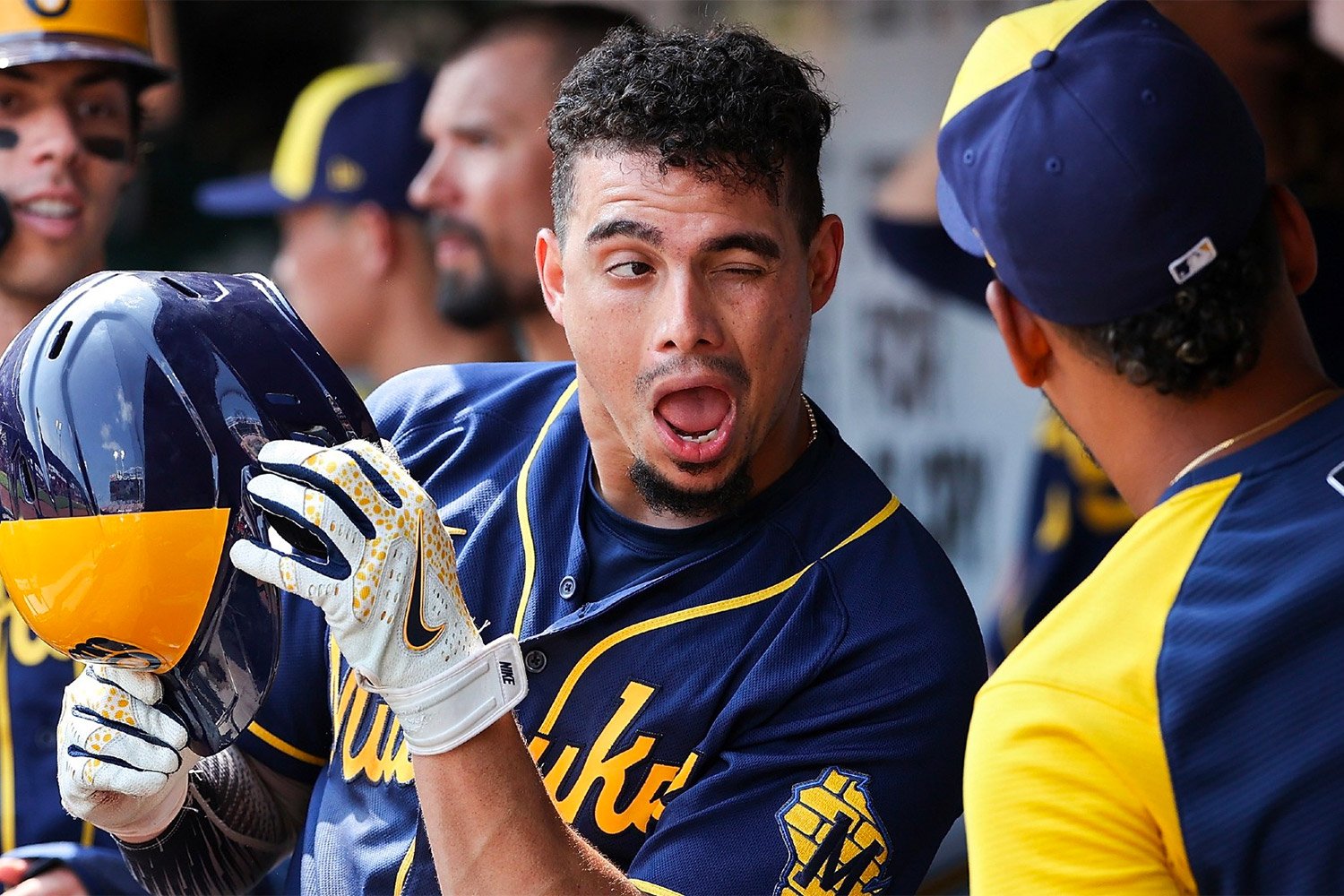 Nobody will do it for you was the slogan emblazoned on t-shirts for DIY, the tag team of Johnny Gargano and Tommaso Ciampa, two relatively small-ish professional wrestlers who languished in the independent wrestling scene and on smaller promotions until opening eyes in a NXT/WWE cruiserweight tournament match in 2016. The two became adept sparring and training partners, fast friends and learned to work remarkably well together in the ring, alongside and against each other. Simply put, the two knew how to put on a show; and when audience reaction turned into a grassroots movement behind them -- not unlike the ascendance of Bryan Danielson, in WWE as Daniel Bryan -- they got a run at the tag team championships, which led to their break-up, one of the great storytelling feuds in recent pro wrestling memory and some memorable singles title runs as well. (Ciampa is billed as from Milwaukee, Wisconsin -- where his wife is from and where they were about to put down roots before his wrestling career took off.) This runs counter to what happens in pro wrestling by way of Vince McMahon's 'sports entertainment': a character is packaged -- name, music, gimmick, background -- with little to no input from the person portraying said character, and then future endeavor'd, internet wrestling parlance for fired, when the character isn't a hit with the crowds and doesn't sell merchandise. For every Cody Rhodes, who is decidedly a unicorn in this era, there are countless others who get chewed up and spit out. (Poor Pete Dunne.) What does any of this have to do with Willy Adames? Adames was signed by the Detroit Tigers as a free agent out of the Dominican Republic in 2012. While many saw his promise and potential, they perceived him as John Hick's blind men from his pluralistic hypothesis of religion: each feeling a different part of an elephant but unable to understand it as a whole because they could not comprehend that they were each observing the same thing. Now, Hick's thought experiment within the realms of philosophy and religion is problematic for any number of reasons, but it would appear that those who observed Adames had no idea who he could be. Then-Tigers GM Dave Dombrowski, no stranger to having no idea what unfinished projects could be, said little more about trading Adames, as part of a package for Tampa Bay Rays pitcher and Cy Young Award winner David Price, than "This guy is a real good young player." No, really, that's almost the full extent of it. Adames was the #3 prospect in the Tigers system. He was also only 18 years old with two years of developmental and minor league ball under his belt. Adames moved into the Rays organization and continued his ascent, though who and what he was remained a mystery. Mike Rosenbaum at Bleacher Report had Adames as the Rays' #1 prospect in 2015, noting his potentially "impact" bat and plus defense at short thanks to "athleticism and instincts", but his "average range" and an eventual drop in speed would force a move to third base. Rich Wilson at Prospect361.com listed Adames as the Rays' sixth-best prospect in 2016. Adames was a "prototypical" shortstop, but missing power, expecting 8-12 home runs a season and generally struggling with major league pitching. Then again, Wilson had Casey Gillaspie ranked ahead of Adames (and loved him), along with Taylor Guerrieri, Garrett Whitley, Brent Honeywell and Blake Snell. There's a reason you've only heard of two of those guys, and, I suppose, a reason you've never heard of Rich Wilson. MLB Pipeline had Adames as the sixth-best shortstop prospect in baseball in 2018, in with Fernando Tatis, Jr., Bo Bichette, Royce Lewis and Brendan Rodgers. Sources told Rays beat writer Bill Chastain at that time that Adames' future might be at third, due to "average speed", though Rays farm director (and one-time Appleton Fox) Mitch Lukevics insisted that Adames would be a starting MLB shortstop. No less than Keith Law saw Adames as someone only keeping shortstop warm for someone else. In his 2018 Top 100 list at ESPN, Adames, the 20th ranked prospect, looked "like someone who'll eventually be bumped to another position by a plus defender who can offer more range and agility", also suspecting an eventual move to the hot corner. Rays prospects writer Mat Germain, writing at DRays Bay, had Adames at #1 in 2018. Writing more in aggregate for the DRB team and from other sources, Germain keeps Adames at shortstop. Though he keeps the door open to a potential move to third, Germain does not relegate or assume a move as others did. Here, though, Germain picks up on what was missed by almost everyone else: character. Less is said about Adames' skill and ability -- though a comp to Francisco Lindor is certainly flattering, as is noting that his early performance outshined the Yankees' Gleyber Torres -- than about who the kid is. Quoting Lukevics and others, much is made of Willy Adames, the man as opposed to the disparate components within a flesh casing, or parts of an elephant rather than the pachyderm itself. And this is where scouting reports, writers covering prospects, sabermetricians and general seamhead wonks so often get things wrong. These are people, and a person's talent is beholden exclusively to that person. Someone can have all the talent in the world, but the person has to embrace it. For every Bryce Harper, and even Harper can be maddeningly inconsistent, there are Josh Hamiltons, Nick Franklins and countless more we've not heard of. Willy Adames, from day one in the Tigers system, to his first day in the Rays' organization, to knocking at the door of the parent club, to entering The Show itself, worked at his craft. That willingness to accept coaching and criticism and work at it doesn't sell well, which I suspect is part of the reason Adames kept finding himself creeping toward the top of these prospect lists, only to be consistently obscured by some other, readily-packaged, readily-marketable young talent, from Fernando Tatis to Wander Franco. This is not to suggest that any of these other guys don't work at it, it's just that it's easier to market hype than hope. Each of those writers missed something in particular about Adames' ability, but they all missed on who Adames is, a man who sees himself as a constant work in progress. After Sunday, Adames is in the top-third in Baseball in sprint speed. Nothing about his game in the field suggests an eventual move to another position. His expected slugging, xwOBA and barrels are among the game's best per Statcast. He is a likely 20-20-20 candidate for the foreseeable future. Adames stepped in and became the Brewers' clubhouse leader and presence this roster needed a year ago, and he is the heart and soul of the team now. Some people come into whatever it is they do and hit the ground running, and those people are notable, exceptional. But there are also the Tommaso Ciampas, the Johnny Garganos, the Bryan Danielsons, the Willy Adameses(!), those who grind and refuse to settle for anything less than better than before, those guys become something more than exceptional. They become respected. They become irreplaceable. And often, they also become legends.
 -
I did get pretty well dragged for last week's edition of The Weekly, wherein I suggested the Brewers' ability to develop catchers is at least overstated. Almost immediately after the post went live and I went to re-read it, I wished I were able to devote more time to developing it. Focus, assembly, delivery, all aspects were lacking. That's on me. For that, I apologize. Mea culpa. I stand by the premise -- that if Omar Narvaez is the latest model coming off the catching assembly line, perhaps we should be taking a harder look at whether or not that's a blueprint worth retaining or a production system above reproach -- but I do not stand by the presentation. There's a stronger case to be made than the one that was offered, and I didn't deliver that to you. I hope this week's edition and beyond show stronger resolve to delivering compelling, thoughtful, if not provocative work. Thank you for reading.
-
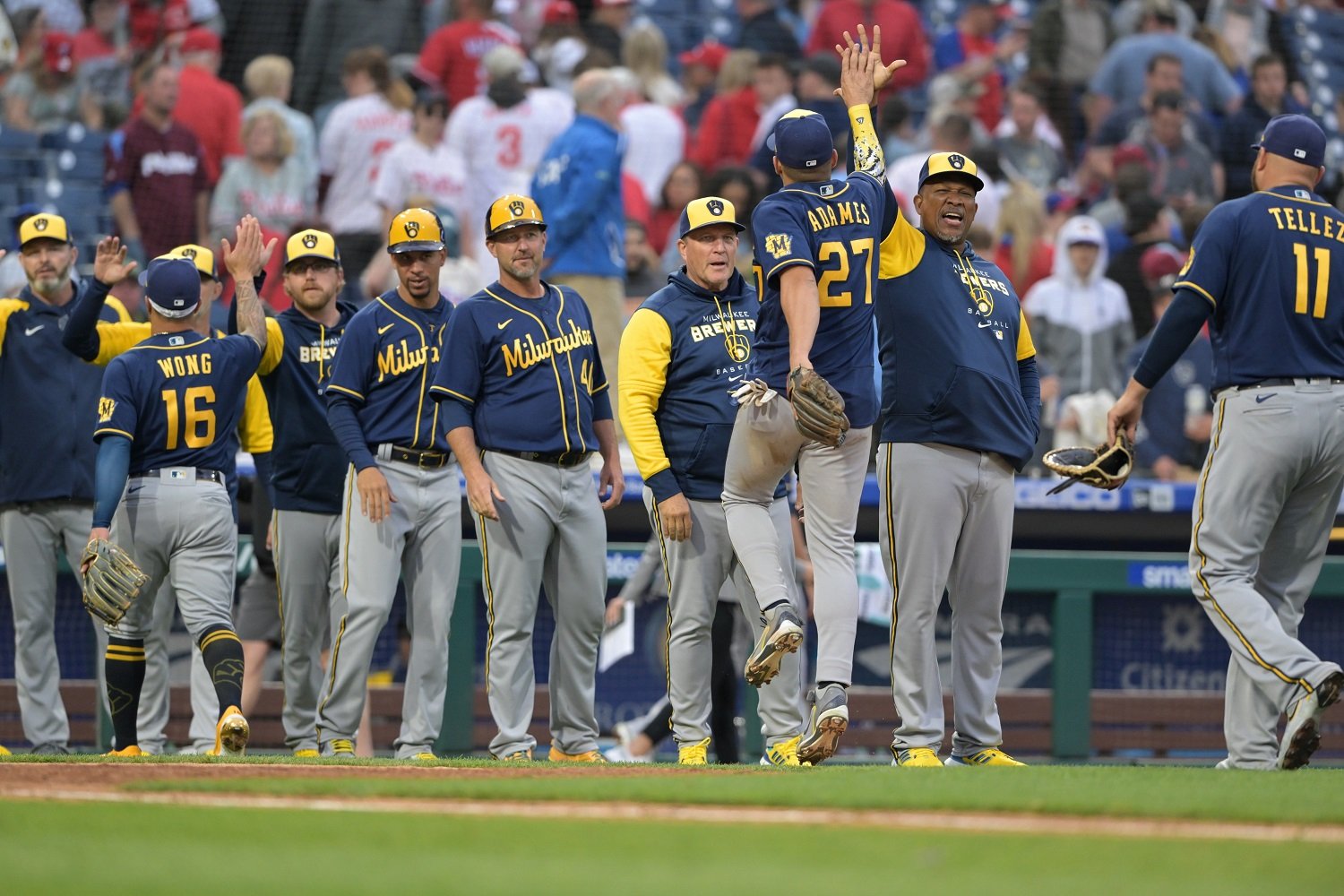 There was this really interesting time in 20th century science where scientists and philosophers enjoyed significant overlap and dialogue, specifically in conversations surrounding quantum mechanics and our ever in-transit understanding of epistemology. (For my money, Michael Polanyi is my jam.) Erwin Schrödinger enjoyed dancing on the high wire between science and philosophy, and while the cat thought experiment is the pop cultural touchpoint, it's this off-hand quip later in his piece where the famous cat experiment was born that draws my attention: There is a difference between a shaky or out-of-focus photograph and a snapshot of clouds and fog banks. We don't know which one it is unless we were there observing, and thus it is entirely possible that two things exist until one of those things is clearly observed. And yet, if we observe something directly, in spite of context, we may not know exactly what it is we are observing. It's not as simple as 'The Milwaukee Brewers offense is butt.' To be sure, it has been frustrating to watch Brewers batters over the first three-ish weeks of the 2022 season, and we've seen some echoes of 2021 carry into the present. But condemning Brewer bats to a place devoid of sunshine might be unwarranted damnation. The bad news: according to Baseball Savant after Saturday, the Brewers are league-worst in nearly every advanced offensive metric. Yet, they don't chase -- the Brewers are a full five percentage points below league average in chase rate, and when they do chase, they make contact at nearly a full percentage point above league average. They don't whiff, they're toward the middle of the pack in strikeouts according to Baseball-Reference. They don't hit a ton of balls on the ground or pop out much, they're currently behind league average per Statcast in both regards. These are good things! So, what's the deal? Their zone swing percentage lags, as does zone contact (though not by much.) They get barrels, but not solid contact (8, just over average; 5, well under average, respectively.) It has been well-documented that Andrew McCutchen goes after the first pitch, but it turns out that this is now a team-wide gambit now: nine of 13 Brewers who have seen the lineup card in 2022 are swinging at pitch 1 20% of the time (including Kolten Wong at 19.6.) Lorenzo Cain swings at first pitches more than Cutch, and by quite a bit. The Brewers are also seeing a league-average number of middle-middle pitches (meatballs), yet they swing at nearly two full percent fewer of them. They both top and get under pitches well above league average. BABIP is almost 30 points below league mean. Now, here's where the deal really gets bad: the longer Brewers hitters are in counts, the worse-off they are, which would explain the team-wide interest in swinging away at pitch one, though, with a slash of .304/.333/.348 on the first pitch overall, and swinging at it yields .202/.211/.248 and 4 XBH against 24 eventual strikeouts, perhaps enthusiasm for that approach should be tempered by a lot. Slashes and sOPS+ (OPS against league average) by count: 1-1: .348/.348/.500 116 2-1: .286/.304/.381 51 3-1: .250/.696/.750 119 Even knowing a 3-1 pitch is going to be something almost certainly hittable, the result is 14 walks and two hits, one double and one home run, and only 23 PAs have gotten to that point per Baseball Reference. Couple that with Matt Pauley's note in Saturday's pregame program on WTMJ about the Brewers' inability to hit with runners in scoring position and two out and those gaudy OBP and SLG figures in that prime hitter's count are worthless. The real ugliness: 0-2: .143/.167/.200 113 1-2: .085/.142/.169 45 2-2: .133/.130/.200 60 Full: .143/.424/.304 95 When a Brewer hitter is ahead, it's not killing pitchers. When a pitcher gets deep into the count against the Brewers, they have the advantage, and they're beginning to realize it. They're also realizing something else: Brewer batters know their zones well enough, but they don't appear to have any idea what's coming at them. They don't chase, but they're also not driving the ball or squaring it up. They're not even recognizing center-cut, eminently-driveable pitches. They've started trying to ambush first pitches, which only helps opposing pitchers by giving them more reason to throw fewer fastballs there (of the total pitches the Brewers have seen in 2022, between 29-30% have been four-seam fastballs.) This is no longer a matter just relegated to pitchers the Brewers have not seen before: it is now a problem with every pitcher they face, thus it can't just be chalked up to 'welp, it's a pitcher's game' or humidors or deadened balls or cold weather, especially when the Cardinals visited and were tagging pitches into Toyota Territory while the Brewers demonstrated warning track power. The reality of the matter is that this data, this snapshot we have right now is blurry: we don't know what this Brewers offense is actually capable of because, by looking at the metrics, it's increasingly clear they're not adequately prepared to face major league pitching. This isn't a failure of players; it's a failure of management to adjust and counter-adjust; to know their opponent. In this case, the Brewers' total organizational sellout in years past to launching the ball apparently came at the cost of pitch recognition, only to have the organization seemingly not realize that one has to recognize the right pitch in the first place to decide whether or not to launch it. In an ironic twist, the empiricists went full science and data with their pitching, full philosopher with their hitting, while choosing solopsism with regard to their counterparts across the diamond. There are reasons to think that, with even a little bit of appetite to gather better data on opposing pitchers, these numbers can start turning around. We're not seeing the Brewers strikeout at alarming rates as we did in 2019 and 2020. They're showing a willingness to take walks and spit on pitches. There's even evidence of situational hitting. There are still a lot of variables, both known and unknown and, frankly, a lot of season ahead of us. It is reasonable to suggest, though, that the Brewers will continue to struggle without a strategic recalibration from the front office in how to best put batters in a position to succeed. The evidence might be blurry, and it might be clouds. This offense may be dead. It might also be alive and we just don't know it yet. Baseball Reference, Fangraphs, Baseball Savant and some quick and crude spreadsheet development were all indispensible toward the development of this piece. Also, thanks to Erwin Schrödinger, whose poor cat has been once more mixed or smeared by the writer.
 -
It might be good, it might be bad. It might be both, "mixed or smeared out in equal parts." The Milwaukee Brewers are owners of living and/or dead bats. There was this really interesting time in 20th century science where scientists and philosophers enjoyed significant overlap and dialogue, specifically in conversations surrounding quantum mechanics and our ever in-transit understanding of epistemology. (For my money, Michael Polanyi is my jam.) Erwin Schrödinger enjoyed dancing on the high wire between science and philosophy, and while the cat thought experiment is the pop cultural touchpoint, it's this off-hand quip later in his piece where the famous cat experiment was born that draws my attention: There is a difference between a shaky or out-of-focus photograph and a snapshot of clouds and fog banks. We don't know which one it is unless we were there observing, and thus it is entirely possible that two things exist until one of those things is clearly observed. And yet, if we observe something directly, in spite of context, we may not know exactly what it is we are observing. It's not as simple as 'The Milwaukee Brewers offense is butt.' To be sure, it has been frustrating to watch Brewers batters over the first three-ish weeks of the 2022 season, and we've seen some echoes of 2021 carry into the present. But condemning Brewer bats to a place devoid of sunshine might be unwarranted damnation. The bad news: according to Baseball Savant after Saturday, the Brewers are league-worst in nearly every advanced offensive metric. Yet, they don't chase -- the Brewers are a full five percentage points below league average in chase rate, and when they do chase, they make contact at nearly a full percentage point above league average. They don't whiff, they're toward the middle of the pack in strikeouts according to Baseball-Reference. They don't hit a ton of balls on the ground or pop out much, they're currently behind league average per Statcast in both regards. These are good things! So, what's the deal? Their zone swing percentage lags, as does zone contact (though not by much.) They get barrels, but not solid contact (8, just over average; 5, well under average, respectively.) It has been well-documented that Andrew McCutchen goes after the first pitch, but it turns out that this is now a team-wide gambit now: nine of 13 Brewers who have seen the lineup card in 2022 are swinging at pitch 1 20% of the time (including Kolten Wong at 19.6.) Lorenzo Cain swings at first pitches more than Cutch, and by quite a bit. The Brewers are also seeing a league-average number of middle-middle pitches (meatballs), yet they swing at nearly two full percent fewer of them. They both top and get under pitches well above league average. BABIP is almost 30 points below league mean. Now, here's where the deal really gets bad: the longer Brewers hitters are in counts, the worse-off they are, which would explain the team-wide interest in swinging away at pitch one, though, with a slash of .304/.333/.348 on the first pitch overall, and swinging at it yields .202/.211/.248 and 4 XBH against 24 eventual strikeouts, perhaps enthusiasm for that approach should be tempered by a lot. Slashes and sOPS+ (OPS against league average) by count: 1-1: .348/.348/.500 116 2-1: .286/.304/.381 51 3-1: .250/.696/.750 119 Even knowing a 3-1 pitch is going to be something almost certainly hittable, the result is 14 walks and two hits, one double and one home run, and only 23 PAs have gotten to that point per Baseball Reference. Couple that with Matt Pauley's note in Saturday's pregame program on WTMJ about the Brewers' inability to hit with runners in scoring position and two out and those gaudy OBP and SLG figures in that prime hitter's count are worthless. The real ugliness: 0-2: .143/.167/.200 113 1-2: .085/.142/.169 45 2-2: .133/.130/.200 60 Full: .143/.424/.304 95 When a Brewer hitter is ahead, it's not killing pitchers. When a pitcher gets deep into the count against the Brewers, they have the advantage, and they're beginning to realize it. They're also realizing something else: Brewer batters know their zones well enough, but they don't appear to have any idea what's coming at them. They don't chase, but they're also not driving the ball or squaring it up. They're not even recognizing center-cut, eminently-driveable pitches. They've started trying to ambush first pitches, which only helps opposing pitchers by giving them more reason to throw fewer fastballs there (of the total pitches the Brewers have seen in 2022, between 29-30% have been four-seam fastballs.) This is no longer a matter just relegated to pitchers the Brewers have not seen before: it is now a problem with every pitcher they face, thus it can't just be chalked up to 'welp, it's a pitcher's game' or humidors or deadened balls or cold weather, especially when the Cardinals visited and were tagging pitches into Toyota Territory while the Brewers demonstrated warning track power. The reality of the matter is that this data, this snapshot we have right now is blurry: we don't know what this Brewers offense is actually capable of because, by looking at the metrics, it's increasingly clear they're not adequately prepared to face major league pitching. This isn't a failure of players; it's a failure of management to adjust and counter-adjust; to know their opponent. In this case, the Brewers' total organizational sellout in years past to launching the ball apparently came at the cost of pitch recognition, only to have the organization seemingly not realize that one has to recognize the right pitch in the first place to decide whether or not to launch it. In an ironic twist, the empiricists went full science and data with their pitching, full philosopher with their hitting, while choosing solopsism with regard to their counterparts across the diamond. There are reasons to think that, with even a little bit of appetite to gather better data on opposing pitchers, these numbers can start turning around. We're not seeing the Brewers strikeout at alarming rates as we did in 2019 and 2020. They're showing a willingness to take walks and spit on pitches. There's even evidence of situational hitting. There are still a lot of variables, both known and unknown and, frankly, a lot of season ahead of us. It is reasonable to suggest, though, that the Brewers will continue to struggle without a strategic recalibration from the front office in how to best put batters in a position to succeed. The evidence might be blurry, and it might be clouds. This offense may be dead. It might also be alive and we just don't know it yet. Baseball Reference, Fangraphs, Baseball Savant and some quick and crude spreadsheet development were all indispensible toward the development of this piece. Also, thanks to Erwin Schrödinger, whose poor cat has been once more mixed or smeared by the writer. View full article
-
Article: The Weekly: Mythological catchers
Brent Sirvio replied to Brent Sirvio's topic in Brewer Fanatic Front Page News
For offense, defense, upside/team control or any or all of the above: Realmuto, Perez, Garver, Molina, Contreras, Will Smith, Sean Murphy, d'Arnaud, Stephenson, Maldonado, Joey Bart, Mejia... If Narvaez is top-10, he's #10. But I would take any of the above over Narvaez. ## Narvaez' OPS against RHP is inflated by his outsized April sample. The more he played, following the Brewers' 2021 offense as a whole, the more he was exposed and the more he was exposed at the plate, the more he regressed behind it. -
Article: The Weekly: Mythological catchers
Brent Sirvio replied to Brent Sirvio's topic in Brewer Fanatic Front Page News
For offense, defense, upside/team control or any or all of the above: Realmuto, Perez, Garver, Molina, Contreras, Will Smith, Sean Murphy, d'Arnaud, Stephenson, Maldonado, Joey Bart, Mejia... If Narvaez is top-10, he's #10. But I would take any of the above over Narvaez. ## Narvaez' OPS against RHP is inflated by his outsized April sample. The more he played, following the Brewers' 2021 offense as a whole, the more he was exposed and the more he was exposed at the plate, the more he regressed behind it. -
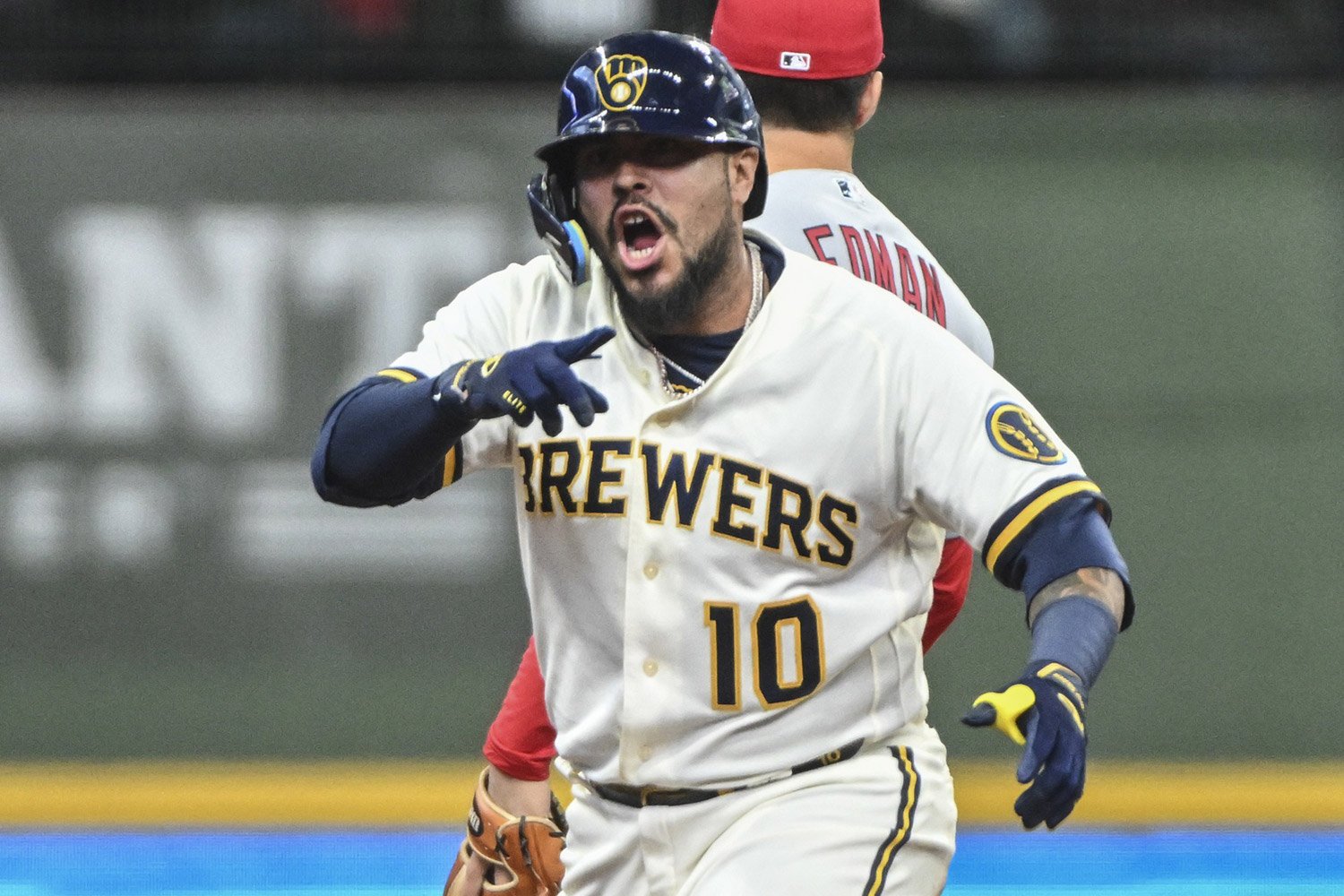 Green Bay Packers fans were deluded [and this is where I could place a period] into thinking that Mike McCarthy was a quarterback whisperer and Ted Thompson a sort of demigod when in reality, the team won a single Super Bowl despite the former's buffoonery and lost many more chances at one as a direct result of it. They held onto that idea because Brett Favre and Aaron Rodgers played exceptionally well for a long enough time. The generations that remembered the 70s and 80s aged out from being peak fans. Now, younger Packers fans do not remember when Lambeau Field was a simple bowl, an oval dumpster containing a fire worthy of its location. Milwaukee Brewers fans face a similar, tantalizing stupor. Now that we have arrived at a time when the club is perennially competitive and has been involved in October baseball for an unprecedented four consecutive seasons, fans -- and perhaps some of the front office -- have become convinced of some myths about their club. Compare these two players: Player A: 280 PA, .238/.307/.347, 12 2B, 5 HR, 11 GIDP, 30 RBI, 24 BB, 57 K, -0.548 WPA Player B: 258 PA, .219/.349/.381, 8 2B, 9 HR, 6 GIDP, 24 RBI, 43 BB, 57 K, 1.337 WPA They're both not very good at the plate, but one gets on base reasonably well and doesn't get more guys than himself out at once by half. Player B was Dan Vogelbach last season. Player A was Omar Narvaez from June 15 through the end of the 2021 regular season. Many of us ignored that his offensive game completely disappeared because the Brewers played very strong June-July-August baseball. There was also the fact that Christian Yelich and Keston Hiura's bats, in particular, remained MIA, and the pitching rotation was all-time great. The Brewers can develop catchers. They cannot -- and they should not -- reconstruct them. Since Jonathan Lucroy left the Brewers in 2016, the Brewers have featured Manny Piña, Jett Bandy, Andrew Susac, Erik Kratz, Luke Maile, Jacob Nottingham, and Yasmani Grandal behind the plate. Stephen Vogt spent most of his time as a Brewer injured; Pedro Severino's career reclamation project with the Crew was largely the byproduct of better yet banned pharmacology. Piña's defense was never in question. Aside from having a flair for the dramatic and being a beloved clubhouse stalwart by teammates and fans alike, his bat has always been beneath league average. In that respect, you knew what you were getting with him and could marshal resources accordingly. Bandy, Susac, and Maile were barely major league-caliber players. Kratz, a Brewer folk hero for his triumphant 2018 NLDS, was traded for C.J. Hinojosa and Hinojosa continues to bounce around the minors. Grandal bet on himself in 2019 and cashed in with the White Sox, where age would appear to be catching up to him finally. If the Brewers were truly good at catcher fixer-upper projects, they wouldn't have needed seven different catchers in the last five years, and Narvaez would have something to show for his Brewer career beyond backing into an All-Star because Yadier Molina recused himself from the proceedings. Further, if the Brewers wanted a strong defensive catcher with whatever they get from that catcher as a bonus, they should have kept Piña. Narvaez' defense may have improved by the metrics, but many of those metrics are still below average; while his skill as a receiver did improve in 2020, he reverted in 2021. There's a reason the Mariners were all too happy to move Narvaez for little more than a bucket of baseballs in 2019: the Brewers paid him to do nothing with his bat in 2020, nearly $1.5M per (BRef) win above replacement in 2021 and he's scheduled to make $5M this season. Last year, the only 5-bWAR players on the Brewers' roster were Brandon Woodruff and Corbin Burnes, which says more about the Brewer offense than anything, but expecting Narvaez to pull a Salvador Perez (5.3 bWAR in 2021) is expecting far too much. Plainly put, Narvaez represents a sunk cost. Mario Feliciano should be ready to take over behind the plate in 2023, and Jeferson Quero, the Brewers' No. 5 prospect, shows considerable promise further up the pipeline. Still, for a team that has deep October and even World Series aspirations, hope doesn't help them right now. Neither do myths.
 -
"If the deeds of an actual historical figure proclaim him to have been a hero, the builders of his legend will invent for him appropriate adventures in depth." -- Joseph Campbell, The Hero with a Thousand Faces In the good times, it's remarkably easy to ignore problems. When hope meets fulfillment -- Do you believe in miracles? Morgan, a smash up the middle, base hit to center! Wisconsin, we've got a room at the top of the world tonight! She said yes! -- who wants to think about the negative? Green Bay Packers fans were deluded [and this is where I could place a period] into thinking that Mike McCarthy was a quarterback whisperer and Ted Thompson a sort of demigod when in reality, the team won a single Super Bowl despite the former's buffoonery and lost many more chances at one as a direct result of it. They held onto that idea because Brett Favre and Aaron Rodgers played exceptionally well for a long enough time. The generations that remembered the 70s and 80s aged out from being peak fans. Now, younger Packers fans do not remember when Lambeau Field was a simple bowl, an oval dumpster containing a fire worthy of its location. Milwaukee Brewers fans face a similar, tantalizing stupor. Now that we have arrived at a time when the club is perennially competitive and has been involved in October baseball for an unprecedented four consecutive seasons, fans -- and perhaps some of the front office -- have become convinced of some myths about their club. Compare these two players: Player A: 280 PA, .238/.307/.347, 12 2B, 5 HR, 11 GIDP, 30 RBI, 24 BB, 57 K, -0.548 WPA Player B: 258 PA, .219/.349/.381, 8 2B, 9 HR, 6 GIDP, 24 RBI, 43 BB, 57 K, 1.337 WPA They're both not very good at the plate, but one gets on base reasonably well and doesn't get more guys than himself out at once by half. Player B was Dan Vogelbach last season. Player A was Omar Narvaez from June 15 through the end of the 2021 regular season. Many of us ignored that his offensive game completely disappeared because the Brewers played very strong June-July-August baseball. There was also the fact that Christian Yelich and Keston Hiura's bats, in particular, remained MIA, and the pitching rotation was all-time great. The Brewers can develop catchers. They cannot -- and they should not -- reconstruct them. Since Jonathan Lucroy left the Brewers in 2016, the Brewers have featured Manny Piña, Jett Bandy, Andrew Susac, Erik Kratz, Luke Maile, Jacob Nottingham, and Yasmani Grandal behind the plate. Stephen Vogt spent most of his time as a Brewer injured; Pedro Severino's career reclamation project with the Crew was largely the byproduct of better yet banned pharmacology. Piña's defense was never in question. Aside from having a flair for the dramatic and being a beloved clubhouse stalwart by teammates and fans alike, his bat has always been beneath league average. In that respect, you knew what you were getting with him and could marshal resources accordingly. Bandy, Susac, and Maile were barely major league-caliber players. Kratz, a Brewer folk hero for his triumphant 2018 NLDS, was traded for C.J. Hinojosa and Hinojosa continues to bounce around the minors. Grandal bet on himself in 2019 and cashed in with the White Sox, where age would appear to be catching up to him finally. If the Brewers were truly good at catcher fixer-upper projects, they wouldn't have needed seven different catchers in the last five years, and Narvaez would have something to show for his Brewer career beyond backing into an All-Star because Yadier Molina recused himself from the proceedings. Further, if the Brewers wanted a strong defensive catcher with whatever they get from that catcher as a bonus, they should have kept Piña. Narvaez' defense may have improved by the metrics, but many of those metrics are still below average; while his skill as a receiver did improve in 2020, he reverted in 2021. There's a reason the Mariners were all too happy to move Narvaez for little more than a bucket of baseballs in 2019: the Brewers paid him to do nothing with his bat in 2020, nearly $1.5M per (BRef) win above replacement in 2021 and he's scheduled to make $5M this season. Last year, the only 5-bWAR players on the Brewers' roster were Brandon Woodruff and Corbin Burnes, which says more about the Brewer offense than anything, but expecting Narvaez to pull a Salvador Perez (5.3 bWAR in 2021) is expecting far too much. Plainly put, Narvaez represents a sunk cost. Mario Feliciano should be ready to take over behind the plate in 2023, and Jeferson Quero, the Brewers' No. 5 prospect, shows considerable promise further up the pipeline. Still, for a team that has deep October and even World Series aspirations, hope doesn't help them right now. Neither do myths. View full article
-
Stathead -- the folks at Sports Reference, the people behind the incomparable Baseball Reference -- is exceptionally powerful, but slicing and dicing data can be frustrating. This is the output of the work I did for this morning's column, as you can see, there's no way to derive game result at that level, so yes, I had to go one-by-one through the no-decision games to come up with a record. That wasn't fun, but when I noticed that the Brewers were struggling more as the strikeout totals diminished, particularly noticeable under 5 K/gm, that's when I started paying closer attention. As the Brewers have gone all-in on launching the ball in recent seasons at the cost of increased strikeouts, it would appear to be a conscious overcorrection with an attempt to paper over their fundamental and long-standing inability to successfully put the ball in play, which comes from both sound plate principles and pitch recognition and adjustment, as Will Sammon notes in his piece last week in The Athletic. One hopes that the new hitting coach tandem of Timmons and Dawson, attorneys at law, and their do what you do well philosophy is representative of a sea change under the Stearns-Arnold administration. But hitting a baseball is the hardest thing to do in sports! Give the boys a break! No. We ought not make excuses for professional atheletes because we deem -- rightly -- what they do to be difficult. They are professional baseballers precisely because the job is difficult and is something you and I cannot do well, in the same way that brain surgeons ought not be excused from a procedural mistake or consequence because what they do is intricate and requires the utmost precision. Yes, this is a new era of dominant pitching, but it is also a byproduct of teams' offensive mindsets changing into a crude 'hit ball far' mantra. Pitchers look better than they are when they are freely given outs and strikeouts, which brings us full circle to this morning's column.
-
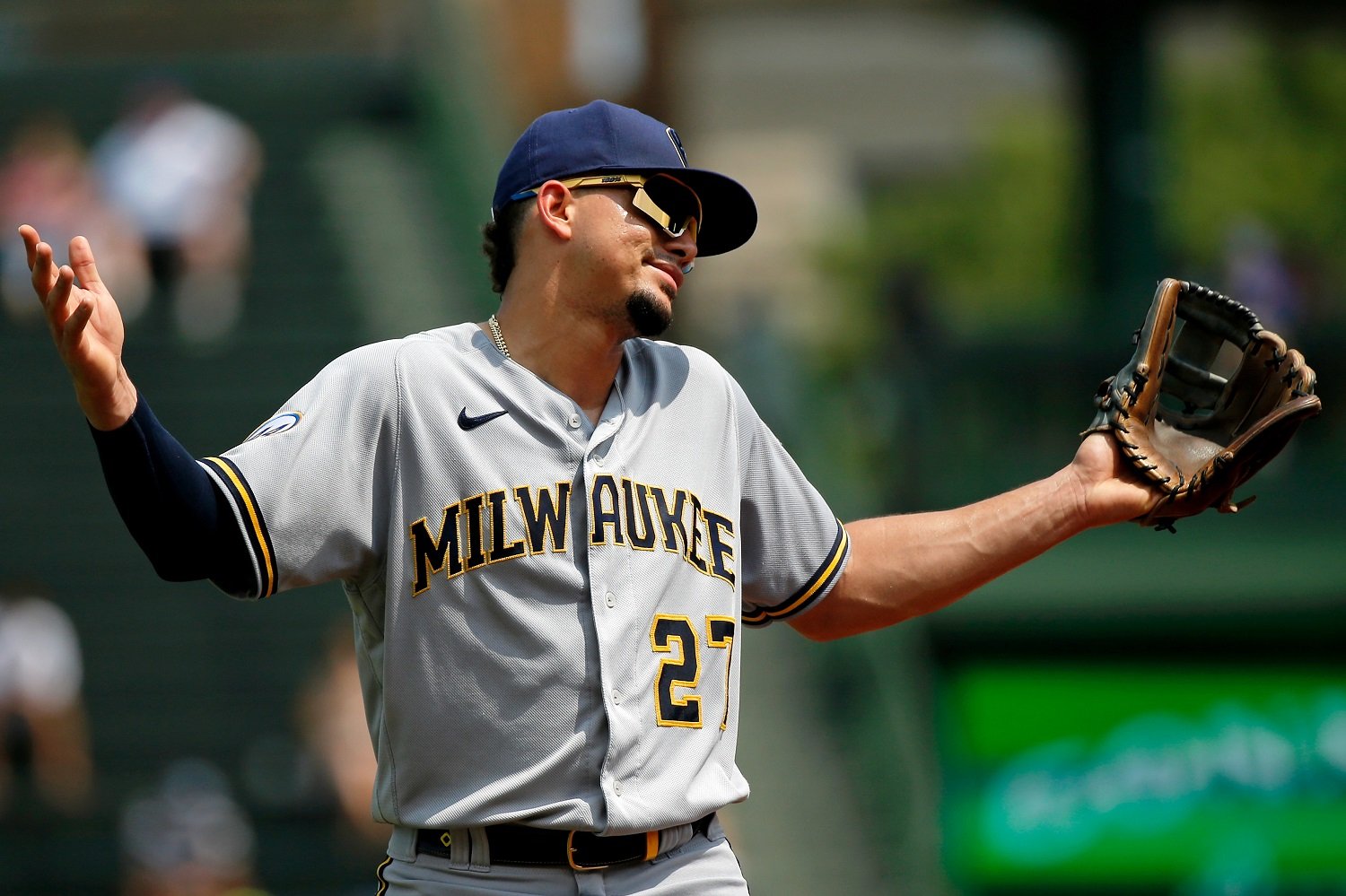 The Weekly is a column on the Brewers. 'On' may do heavier lifting on some weeks than others. After Saturday's frustrating 9-0 loss to the Chicago Cubs -- no, that's not accurate. Let's try again. During Saturday's frustrating 9-0 loss to the Chicago Cubs, I went back to a lurking, recurring question I've had rattling around in my head for years now: Why do the Milwaukee Brewers always seem to struggle against inexperienced pitchers? After the game and a cathartic walking of the dog on a lovely, if not warm late afternoon, I fired up Stathead and decided to see if my hunch was correct. For context, I decided to filter down to the Brewers' era of relevance, from their Wild Card appearance in 2008 through the start of this season (which doesn't mean much beyond being the far end of the parameters.) That's just under 3,800 games, and of those, the Brewers have seen 448 first-time pitchers. To be clear, these may not be inexperienced pitchers: included here are veterans the Brewers hadn't seen before. The way I had to set the filtering up had to be pitchers facing the Brewers as a starter for the first time in their careers. Even then, I think the exercise is particularly instructive in that it underscores the big takeaway. The surface numbers: starting pitchers facing the Crew for the first time are 118-167. Hey, that doesn't seem so bad. Let's take a look at the medians, though: Innings Pitched: 5 2/3 (The perfect median here is Jacob deGrom, including 18 others; luminaries like Matt Garza, Burke Badenhop and something called an Edgar Gonzalez, who may or may not be a comp-generated player in MVP Baseball 2004 franchise mode.) Strikeouts: 5 (65 times first-time starters struck out five Brewers, including some studs like Touki Toussaint, Joe Musgrove, Madison Bumgarner and Kyle Hendricks [ducks], and Guys like Ian Kennedy, Chad Kuhl, Andrew Cashner and Erik Bedard.) Hits: 5 (Uh-oh. The Brewers could only amass five hits 85 times against first-timers, legitimate arms like Carlos Carrasco, Walker Buehler, Max Scherzer; also, and Tommy Milone, Homer Bailey, Doug Fister.) Walks: 2 (120 times.) Runs: 2 (a lot of times.) Game Score (James model, average is 50): 51 (Dustin May, Daniel Cabrera, JT Brubaker, Tyler Glasnow, Jayson Aquino) Win Probability Added: Flat (63 pitchers neither added anything to nor took anything away from the game's outcome; Guys including Tyler Mahle, Carlos Rodon, Nathan Eovaldi, Jhoulys Chacin, Zach Davies and...Luke Hochevar?!) WHIP: 1.313 (Spencer Turnbull, Nick Kingham, Ryan Rowland-Smith - League average WHIP in 2008 was 1.39; at 2021's end, it was 1.29.) TL; DR: Your run-of-the-mill first-time starter against the Brewers is going 5 2/3 innings, striking out five, giving up two runs on five hits and two walks and generally keeping your team in a position to win the game. Here's where things get weird: Teams that run a first-timer out there and that starter doesn't get the decision have gone 95-58. Further, the Brewers historically perform worse as these strikeout totals diminish. Even if they were chasing pitchers from contests -- which is what one would hope from a potent offensive team: make lesser or rookie pitchers pay! -- the offense tends to stall out, or their pitching implodes, resulting in a shootout and hoping for the best, which in this case, by the evidence, would be hoping against hope. The other interesting aspect of sorting through nearly 150 box scores -- acute PTSD aside -- is how many of these pitchers would eventually become Brewers. And in some cases, one might be tempted to think the only reason they became Brewers was that they performed against them in that one instance. First impressions, indeed. But all of this underscores an institutional deficiency that has persisted since the Brewers returned to October baseball almost 14 years ago: it's not the superstar hurlers that will kill a team's chances; it's often the workhorses, the average guys, and in the Brewers' case, the fringe dudes that curtail championship ambitions. After all, there are only so many aces to go around and most of them do their laundry on the coasts now. The Brewers, with their current rotation -- two games into 2022 notwithstanding -- are very much an exception. While pitching keeps runs off the opponent's line, hitting and generating runs matters in what is increasingly returning to a pitcher's game. And if proficient hitters beat mediocre pitchers, the flat fact is that the Milwaukee Brewers offense has not been as good or sustainable as it should be to maintain serious pennant and World Series aspirations. Through managerial, coaching and front office changes over the last decade-plus, the beat remains the same: this franchise has not done and it does not do enough in the way of business intelligence [read scouting the competition] either at the major league or developmental levels. You could roll the dice with the devil you know, or the angel you don't, Justin Verlander or Justin Steele: the reality is that it likely wouldn't make much difference throughout this era of Brewers baseball. Stathead was invaluable in helping to remove this particular splinter from my mind.
 -
448 pitchers can't be wrong. The Weekly is a column on the Brewers. 'On' may do heavier lifting on some weeks than others. After Saturday's frustrating 9-0 loss to the Chicago Cubs -- no, that's not accurate. Let's try again. During Saturday's frustrating 9-0 loss to the Chicago Cubs, I went back to a lurking, recurring question I've had rattling around in my head for years now: Why do the Milwaukee Brewers always seem to struggle against inexperienced pitchers? After the game and a cathartic walking of the dog on a lovely, if not warm late afternoon, I fired up Stathead and decided to see if my hunch was correct. For context, I decided to filter down to the Brewers' era of relevance, from their Wild Card appearance in 2008 through the start of this season (which doesn't mean much beyond being the far end of the parameters.) That's just under 3,800 games, and of those, the Brewers have seen 448 first-time pitchers. To be clear, these may not be inexperienced pitchers: included here are veterans the Brewers hadn't seen before. The way I had to set the filtering up had to be pitchers facing the Brewers as a starter for the first time in their careers. Even then, I think the exercise is particularly instructive in that it underscores the big takeaway. The surface numbers: starting pitchers facing the Crew for the first time are 118-167. Hey, that doesn't seem so bad. Let's take a look at the medians, though: Innings Pitched: 5 2/3 (The perfect median here is Jacob deGrom, including 18 others; luminaries like Matt Garza, Burke Badenhop and something called an Edgar Gonzalez, who may or may not be a comp-generated player in MVP Baseball 2004 franchise mode.) Strikeouts: 5 (65 times first-time starters struck out five Brewers, including some studs like Touki Toussaint, Joe Musgrove, Madison Bumgarner and Kyle Hendricks [ducks], and Guys like Ian Kennedy, Chad Kuhl, Andrew Cashner and Erik Bedard.) Hits: 5 (Uh-oh. The Brewers could only amass five hits 85 times against first-timers, legitimate arms like Carlos Carrasco, Walker Buehler, Max Scherzer; also, and Tommy Milone, Homer Bailey, Doug Fister.) Walks: 2 (120 times.) Runs: 2 (a lot of times.) Game Score (James model, average is 50): 51 (Dustin May, Daniel Cabrera, JT Brubaker, Tyler Glasnow, Jayson Aquino) Win Probability Added: Flat (63 pitchers neither added anything to nor took anything away from the game's outcome; Guys including Tyler Mahle, Carlos Rodon, Nathan Eovaldi, Jhoulys Chacin, Zach Davies and...Luke Hochevar?!) WHIP: 1.313 (Spencer Turnbull, Nick Kingham, Ryan Rowland-Smith - League average WHIP in 2008 was 1.39; at 2021's end, it was 1.29.) TL; DR: Your run-of-the-mill first-time starter against the Brewers is going 5 2/3 innings, striking out five, giving up two runs on five hits and two walks and generally keeping your team in a position to win the game. Here's where things get weird: Teams that run a first-timer out there and that starter doesn't get the decision have gone 95-58. Further, the Brewers historically perform worse as these strikeout totals diminish. Even if they were chasing pitchers from contests -- which is what one would hope from a potent offensive team: make lesser or rookie pitchers pay! -- the offense tends to stall out, or their pitching implodes, resulting in a shootout and hoping for the best, which in this case, by the evidence, would be hoping against hope. The other interesting aspect of sorting through nearly 150 box scores -- acute PTSD aside -- is how many of these pitchers would eventually become Brewers. And in some cases, one might be tempted to think the only reason they became Brewers was that they performed against them in that one instance. First impressions, indeed. But all of this underscores an institutional deficiency that has persisted since the Brewers returned to October baseball almost 14 years ago: it's not the superstar hurlers that will kill a team's chances; it's often the workhorses, the average guys, and in the Brewers' case, the fringe dudes that curtail championship ambitions. After all, there are only so many aces to go around and most of them do their laundry on the coasts now. The Brewers, with their current rotation -- two games into 2022 notwithstanding -- are very much an exception. While pitching keeps runs off the opponent's line, hitting and generating runs matters in what is increasingly returning to a pitcher's game. And if proficient hitters beat mediocre pitchers, the flat fact is that the Milwaukee Brewers offense has not been as good or sustainable as it should be to maintain serious pennant and World Series aspirations. Through managerial, coaching and front office changes over the last decade-plus, the beat remains the same: this franchise has not done and it does not do enough in the way of business intelligence [read scouting the competition] either at the major league or developmental levels. You could roll the dice with the devil you know, or the angel you don't, Justin Verlander or Justin Steele: the reality is that it likely wouldn't make much difference throughout this era of Brewers baseball. Stathead was invaluable in helping to remove this particular splinter from my mind. View full article
-
Article: 4 Bold Brewers Predictions for 2022
Brent Sirvio replied to Tim Muma's topic in Brewer Fanatic Front Page News
The only really different thing is launch angle. In his MVP 2018 season, it was 5*. In 2019, it jumped to 11.3, then the kneecap, then COVID, the COVID season. In 2021, it was 2.8, the same as it was in 2016 in Miami. It would seem that he was trying to return to form, but overcompensated. Yelich's path to the ball has always been relatively flat, so seeing that double-digit number in '19 is jarring, because that's not his offensive game at all. Yes, he should be something more than latter-day Tony Gwynn right now, and I'm actually bullish on his ability to find that average + power combination. If he can hit the ball with authority to the opposite field, pitchers will have no choice but to come back in and up, where he can do damage. What also didn't help him any was the lack of legitimate protection in the lineup. This is where Renfroe needs to be more than Avi Garcia's replacement, and Cutch/Tellez/Hiura/Urias/Wong need to be consistent threats to put the ball in play. None of these things solve Yelich's ability to drive the ball, but they don't put undue pressure on him to do elite things at the plate every AB, either. -
Article: 4 Bold Brewers Predictions for 2022
Brent Sirvio replied to Tim Muma's topic in Brewer Fanatic Front Page News
The only really different thing is launch angle. In his MVP 2018 season, it was 5*. In 2019, it jumped to 11.3, then the kneecap, then COVID, the COVID season. In 2021, it was 2.8, the same as it was in 2016 in Miami. It would seem that he was trying to return to form, but overcompensated. Yelich's path to the ball has always been relatively flat, so seeing that double-digit number in '19 is jarring, because that's not his offensive game at all. Yes, he should be something more than latter-day Tony Gwynn right now, and I'm actually bullish on his ability to find that average + power combination. If he can hit the ball with authority to the opposite field, pitchers will have no choice but to come back in and up, where he can do damage. What also didn't help him any was the lack of legitimate protection in the lineup. This is where Renfroe needs to be more than Avi Garcia's replacement, and Cutch/Tellez/Hiura/Urias/Wong need to be consistent threats to put the ball in play. None of these things solve Yelich's ability to drive the ball, but they don't put undue pressure on him to do elite things at the plate every AB, either. -
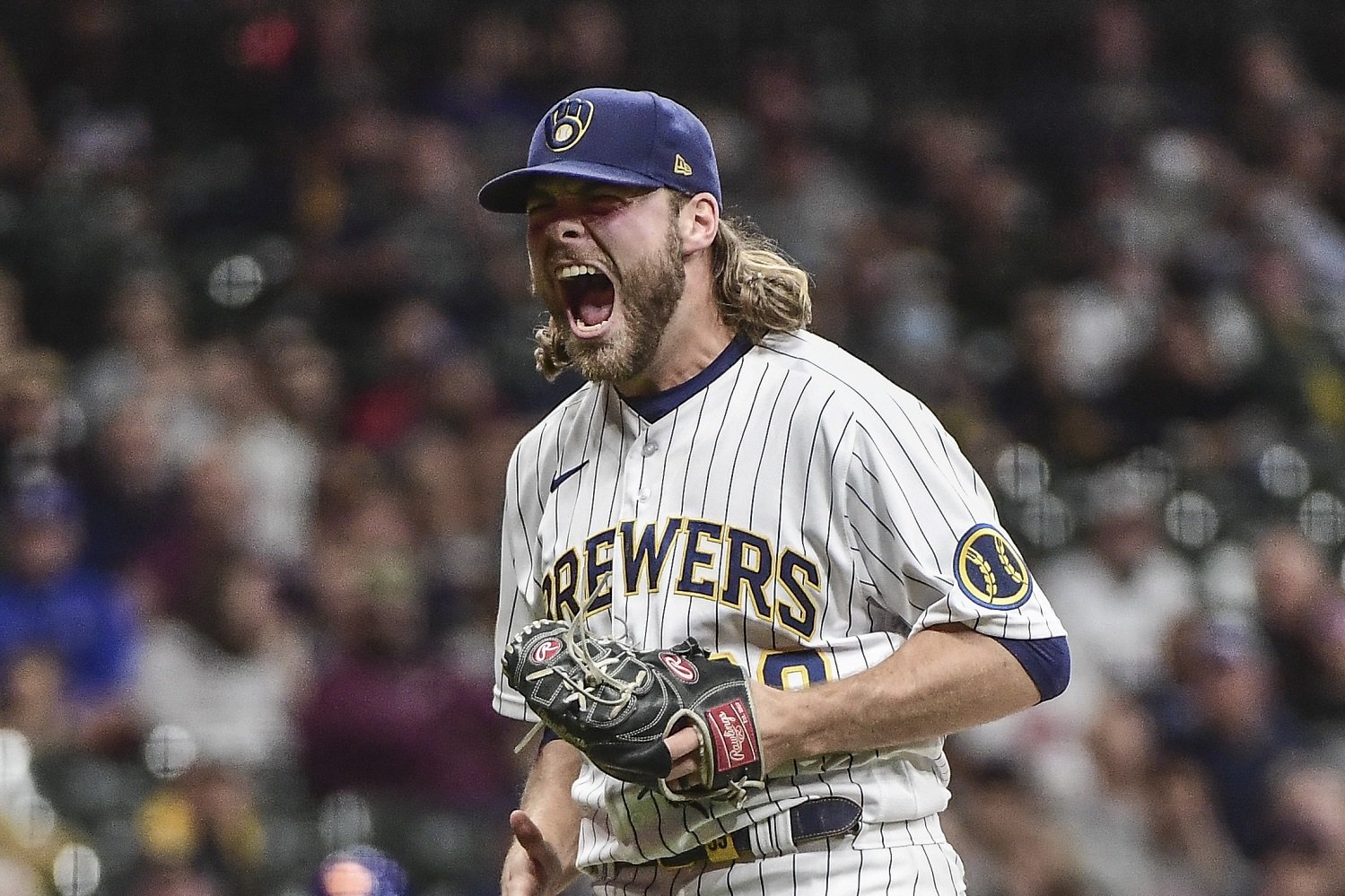 The Weekly is a column on the Brewers. 'On' may do heavier lifting on some weeks than others. We shouldn't call it regression, because that's not really what it is. Regression is a deterioration -- or perhaps, for us on the outside looking in, a recalibration -- of ability. For example, Brady Anderson and his sideburns weren't actually as good as he was in 1996, when he hit a most-suspicious 50 home runs with a 1.000+ OPS and almost immediately regressed to career-expected numbers. Brady Anderson wasn't bad, per se; he enjoyed a 15-year career, logged over 1600 major league hits, over 600 of those for extra bases. But '96 was the exception and not the rule. He regressed. For a more contemporary example of Baltimore Orioles regression, see Davis, Chris. Side note: The good people of Baltimore deserve better. (And better is coming! Have you seen Cedric Mullins play? And the young guys in Ryan Mountcastle and Trey Mancini and more coming up, with Adley Rutschman in the wings and John Means anchoring the rotation? Last year's Orioles team was the best 50-win team in baseball history, and the AL East needs to take them seriously in 2022 or they're going to add 20-25 wins to last season's total. Don't look at the payroll, look at the team control. I digress.) With pitchers, seldom is that initial, coruscating burst of greatness sustained throughout a career. And that's where we should probably actually discuss matters germane to a site named Brewer Fanatic. Corbin Burnes, once unfairly and cruelly maligned by much of the Packers-fans-in-summer contingency of Brewers Twitter, finally assembled an all-world campaign in 2021, fulfilling all the promise he brought as a rising prospect in the Milwaukee Brewers farm system. The numbers were gaudy, aside from innings pitched: a 1.63 FIP, 0.94 WHIP, ERA+ of 176, 234 strikeouts, 34 walks, while yielding a scant seven dingers. To mention an otherwise-impressive 2.43 ERA almost does those prior figures a disservice. He threw eight innings of a no-hitter, the second in Brewers history, knocking out the one leg Bill Schroeder had to stand on from his catbird seat/bully pulpit in the press box. The Brewers lost six games in which he started due to their dreadful offense, as opposed to the outright criminal lack of run support provided to co-ace Brandon Woodruff, who got squeezed by both his own team at the plate and the umpires behind it. It was appointment television. Corbin Burnes starts, that is, not the pitiful offense or atrocious umpiring. It's not unfair or unrealistic, though, to expect a drawback in Burnes' 2022 numbers. First, he won't be taking teams by surprise. The book is out on Burnes and, like reliever with changeup par excellence Devin Williams, teams can begin analyzing video to determine how to adjust plate approach. Secondly, good, young pitchers tend to take time in countering the counter. Let's look at a few examples: Age W L ERA GS IP H R ER HR BB SO ERA+ FIP WHIP SO9 SO/W 26 9 6 2.69 22 140.1 117 44 42 7 43 144 128 2.67 1.140 9.2 3.35 27 14 8 2.54 30 191.0 149 59 54 16 38 205 149 2.70 0.979 9.7 5.39 28 7 8 3.04 24 148.0 142 53 50 15 36 143 132 3.32 1.203 8.7 3.97 29 15 10 3.53 31 201.1 180 87 79 28 59 239 117 3.50 1.187 10.7 4.05 30 10 9 1.70 32 217.0 152 48 41 10 46 269 218 1.98 0.912 11.2 5.85 31 11 8 2.43 32 204.0 154 59 55 19 44 255 169 2.67 0.971 11.3 5.80 32 4 2 2.38 12 68.0 47 21 18 7 18 104 180 2.26 0.956 13.8 5.78 33 7 2 1.08 15 92.0 40 14 11 6 11 146 373 1.24 0.554 14.3 13.27 Age W L ERA G IP H R ER HR BB SO ERA+ FIP WHIP SO9 SO/W 22 0 2 7.15 2 11.1 15 9 9 1 5 7 61 4.52 1.765 5.6 1.40 23 17 9 3.63 30 186.0 187 78 75 21 60 124 125 4.35 1.328 6.0 2.07 24 18 6 3.66 32 201.2 181 88 82 20 67 183 125 3.99 1.230 8.2 2.73 25 11 17 4.84 33 201.0 195 119 108 18 87 163 92 4.18 1.403 7.3 1.87 26 19 9 3.45 35 240.0 219 99 92 20 63 269 131 2.80 1.175 10.1 4.27 27 18 9 3.37 33 224.1 190 89 84 14 71 219 124 2.97 1.163 8.8 3.08 28 24 5 2.40 34 251.0 174 73 67 24 57 250 172 2.99 0.920 9.0 4.39 29 17 8 2.64 33 238.1 192 81 70 19 60 239 161 2.94 1.057 9.0 3.98 Age W L ERA G IP H R ER HR BB SO ERA+ FIP WHIP SO9 SO/W 20 0 1 2.25 2 8.0 6 2 2 0 1 8 163 1.16 0.875 9.0 8.00 21 10 5 2.61 65 107.0 76 34 31 5 57 119 146 3.08 1.243 10.0 2.09 22 11 5 3.42 24 144.2 115 58 55 11 45 142 124 3.32 1.106 8.8 3.16 23 14 10 3.51 30 194.2 158 79 76 21 66 174 123 3.90 1.151 8.0 2.64 24 13 10 3.70 33 216.2 189 100 89 19 70 222 117 3.27 1.195 9.2 3.17 25 17 8 1.90 31 241.1 158 65 51 16 67 305 219 2.39 0.932 11.4 4.55 26 19 7 2.89 33 233.2 188 82 75 26 67 251 163 3.40 1.091 9.7 3.75 27 23 4 2.07 31 213.1 160 56 49 9 37 313 243 1.39 0.923 13.2 8.46 28 18 6 1.74 29 217.0 128 44 42 17 32 284 291 2.17 0.737 11.8 8.88 These are three very different, but Hall of Fame-grade career trajectories nonetheless, and all three have similar pitch repertoires as Burnes. What is clear from all three is that each of them has a pullback season, sometimes multiple seasons, where the league seems to catch up to him. Each of these pitchers goes back to the lab, not necessarily to reinvent themselves en route to the prime of their careers, but to remain a step ahead of opposing hitters. Now, let's revisit Corbin Burnes: Age W L ERA GS IP H R ER HR BB SO ERA+ FIP WHIP SO9 SO/W 23 7 0 2.61 0 38.0 27 11 11 4 11 35 158 3.79 1.000 8.3 3.18 24 1 5 8.82 4 49.0 70 52 48 17 20 70 51 6.09 1.837 12.9 3.50 25 4 1 2.11 9 59.2 37 15 14 2 24 88 216 2.03 1.022 13.3 3.67 26 11 5 2.43 28 167.0 123 47 45 7 34 234 176 1.63 0.940 12.6 6.88 Expecting Burnes to duplicate or leapfrog his 2021 success in 2022 is mostly foolhardy, but that is not the same as suggesting he isn't capable of being a reliable, effective starter with the ability to sustain a strong, perhaps even Hall of Fame-worthy career. It's saying that Corbin Burnes, like Jacob deGrom, Justin Verlander or -- I would argue, the pitcher he most strongly resembles -- Pedro Martinez, will face headwinds this season to which he will will have to adjust in order to stay at the upper echelon of Major League pitching over the long term. And what should encourage Brewers fans is that, with Burnes' prior focus on the mental and emotional aspects of being a professional athlete, he may be particularly well-suited to not only weather the imminent storm, but mitigate its effects. So, while we might not see that superhuman Corbin Burnes this season, we will still at least see an impact starter in a corps of effective-to-exceptional starters. We'll be watching Burnes not in regression, but in the midst of evolutionary adaptation; changes that may well pivot him from being a top-end starter to something even more. Statistics courtesy Baseball Reference.
-
- 1
-
-
- corbin burnes
- mlb
- (and 2 more)
-
With apologies to Tom Jones fans everywhere, it's not unusual for great pitchers to take a step back on their path toward immortality. And not all great pitchers get to that place. Corbin Burnes in 2022 is going to take that step back, and we have three case studies that can help inform where he goes from here. The Weekly is a column on the Brewers. 'On' may do heavier lifting on some weeks than others. We shouldn't call it regression, because that's not really what it is. Regression is a deterioration -- or perhaps, for us on the outside looking in, a recalibration -- of ability. For example, Brady Anderson and his sideburns weren't actually as good as he was in 1996, when he hit a most-suspicious 50 home runs with a 1.000+ OPS and almost immediately regressed to career-expected numbers. Brady Anderson wasn't bad, per se; he enjoyed a 15-year career, logged over 1600 major league hits, over 600 of those for extra bases. But '96 was the exception and not the rule. He regressed. For a more contemporary example of Baltimore Orioles regression, see Davis, Chris. Side note: The good people of Baltimore deserve better. (And better is coming! Have you seen Cedric Mullins play? And the young guys in Ryan Mountcastle and Trey Mancini and more coming up, with Adley Rutschman in the wings and John Means anchoring the rotation? Last year's Orioles team was the best 50-win team in baseball history, and the AL East needs to take them seriously in 2022 or they're going to add 20-25 wins to last season's total. Don't look at the payroll, look at the team control. I digress.) With pitchers, seldom is that initial, coruscating burst of greatness sustained throughout a career. And that's where we should probably actually discuss matters germane to a site named Brewer Fanatic. Corbin Burnes, once unfairly and cruelly maligned by much of the Packers-fans-in-summer contingency of Brewers Twitter, finally assembled an all-world campaign in 2021, fulfilling all the promise he brought as a rising prospect in the Milwaukee Brewers farm system. The numbers were gaudy, aside from innings pitched: a 1.63 FIP, 0.94 WHIP, ERA+ of 176, 234 strikeouts, 34 walks, while yielding a scant seven dingers. To mention an otherwise-impressive 2.43 ERA almost does those prior figures a disservice. He threw eight innings of a no-hitter, the second in Brewers history, knocking out the one leg Bill Schroeder had to stand on from his catbird seat/bully pulpit in the press box. The Brewers lost six games in which he started due to their dreadful offense, as opposed to the outright criminal lack of run support provided to co-ace Brandon Woodruff, who got squeezed by both his own team at the plate and the umpires behind it. It was appointment television. Corbin Burnes starts, that is, not the pitiful offense or atrocious umpiring. It's not unfair or unrealistic, though, to expect a drawback in Burnes' 2022 numbers. First, he won't be taking teams by surprise. The book is out on Burnes and, like reliever with changeup par excellence Devin Williams, teams can begin analyzing video to determine how to adjust plate approach. Secondly, good, young pitchers tend to take time in countering the counter. Let's look at a few examples: Age W L ERA GS IP H R ER HR BB SO ERA+ FIP WHIP SO9 SO/W 26 9 6 2.69 22 140.1 117 44 42 7 43 144 128 2.67 1.140 9.2 3.35 27 14 8 2.54 30 191.0 149 59 54 16 38 205 149 2.70 0.979 9.7 5.39 28 7 8 3.04 24 148.0 142 53 50 15 36 143 132 3.32 1.203 8.7 3.97 29 15 10 3.53 31 201.1 180 87 79 28 59 239 117 3.50 1.187 10.7 4.05 30 10 9 1.70 32 217.0 152 48 41 10 46 269 218 1.98 0.912 11.2 5.85 31 11 8 2.43 32 204.0 154 59 55 19 44 255 169 2.67 0.971 11.3 5.80 32 4 2 2.38 12 68.0 47 21 18 7 18 104 180 2.26 0.956 13.8 5.78 33 7 2 1.08 15 92.0 40 14 11 6 11 146 373 1.24 0.554 14.3 13.27 Age W L ERA G IP H R ER HR BB SO ERA+ FIP WHIP SO9 SO/W 22 0 2 7.15 2 11.1 15 9 9 1 5 7 61 4.52 1.765 5.6 1.40 23 17 9 3.63 30 186.0 187 78 75 21 60 124 125 4.35 1.328 6.0 2.07 24 18 6 3.66 32 201.2 181 88 82 20 67 183 125 3.99 1.230 8.2 2.73 25 11 17 4.84 33 201.0 195 119 108 18 87 163 92 4.18 1.403 7.3 1.87 26 19 9 3.45 35 240.0 219 99 92 20 63 269 131 2.80 1.175 10.1 4.27 27 18 9 3.37 33 224.1 190 89 84 14 71 219 124 2.97 1.163 8.8 3.08 28 24 5 2.40 34 251.0 174 73 67 24 57 250 172 2.99 0.920 9.0 4.39 29 17 8 2.64 33 238.1 192 81 70 19 60 239 161 2.94 1.057 9.0 3.98 Age W L ERA G IP H R ER HR BB SO ERA+ FIP WHIP SO9 SO/W 20 0 1 2.25 2 8.0 6 2 2 0 1 8 163 1.16 0.875 9.0 8.00 21 10 5 2.61 65 107.0 76 34 31 5 57 119 146 3.08 1.243 10.0 2.09 22 11 5 3.42 24 144.2 115 58 55 11 45 142 124 3.32 1.106 8.8 3.16 23 14 10 3.51 30 194.2 158 79 76 21 66 174 123 3.90 1.151 8.0 2.64 24 13 10 3.70 33 216.2 189 100 89 19 70 222 117 3.27 1.195 9.2 3.17 25 17 8 1.90 31 241.1 158 65 51 16 67 305 219 2.39 0.932 11.4 4.55 26 19 7 2.89 33 233.2 188 82 75 26 67 251 163 3.40 1.091 9.7 3.75 27 23 4 2.07 31 213.1 160 56 49 9 37 313 243 1.39 0.923 13.2 8.46 28 18 6 1.74 29 217.0 128 44 42 17 32 284 291 2.17 0.737 11.8 8.88 These are three very different, but Hall of Fame-grade career trajectories nonetheless, and all three have similar pitch repertoires as Burnes. What is clear from all three is that each of them has a pullback season, sometimes multiple seasons, where the league seems to catch up to him. Each of these pitchers goes back to the lab, not necessarily to reinvent themselves en route to the prime of their careers, but to remain a step ahead of opposing hitters. Now, let's revisit Corbin Burnes: Age W L ERA GS IP H R ER HR BB SO ERA+ FIP WHIP SO9 SO/W 23 7 0 2.61 0 38.0 27 11 11 4 11 35 158 3.79 1.000 8.3 3.18 24 1 5 8.82 4 49.0 70 52 48 17 20 70 51 6.09 1.837 12.9 3.50 25 4 1 2.11 9 59.2 37 15 14 2 24 88 216 2.03 1.022 13.3 3.67 26 11 5 2.43 28 167.0 123 47 45 7 34 234 176 1.63 0.940 12.6 6.88 Expecting Burnes to duplicate or leapfrog his 2021 success in 2022 is mostly foolhardy, but that is not the same as suggesting he isn't capable of being a reliable, effective starter with the ability to sustain a strong, perhaps even Hall of Fame-worthy career. It's saying that Corbin Burnes, like Jacob deGrom, Justin Verlander or -- I would argue, the pitcher he most strongly resembles -- Pedro Martinez, will face headwinds this season to which he will will have to adjust in order to stay at the upper echelon of Major League pitching over the long term. And what should encourage Brewers fans is that, with Burnes' prior focus on the mental and emotional aspects of being a professional athlete, he may be particularly well-suited to not only weather the imminent storm, but mitigate its effects. So, while we might not see that superhuman Corbin Burnes this season, we will still at least see an impact starter in a corps of effective-to-exceptional starters. We'll be watching Burnes not in regression, but in the midst of evolutionary adaptation; changes that may well pivot him from being a top-end starter to something even more. Statistics courtesy Baseball Reference. View full article
-
Ureña's reputation as a headhunter worries me. A minor league deal just to see what, if anything, he has left in the tank can't hurt, but I have to think that if he gives the Brewers significant innings this season, something has gone very, very wrong.
-
Ureña's reputation as a headhunter worries me. A minor league deal just to see what, if anything, he has left in the tank can't hurt, but I have to think that if he gives the Brewers significant innings this season, something has gone very, very wrong.
-
Ureña's reputation as a headhunter worries me. A minor league deal just to see what, if anything, he has left in the tank can't hurt, but I have to think that if he gives the Brewers significant innings this season, something has gone very, very wrong.
-
Ureña's reputation as a headhunter worries me. A minor league deal just to see what, if anything, he has left in the tank can't hurt, but I have to think that if he gives the Brewers significant innings this season, something has gone very, very wrong.
.thumb.png.fb2aea91da59c37baaec678b5ce8166f.png)
