


.png.c6fdced0e304141528a6142b01bdf5a0.png)
Brent Sirvio
-
Posts
85 -
Joined
Content Type
Profiles
Forums
Blogs
Events
News
2026 Milwaukee Brewers Top Prospects Ranking
Milwaukee Brewers Videos
2022 Milwaukee Brewers Draft Picks
Milwaukee Brewers Free Agent & Trade Rumors, Notes, & Tidbits
Guides & Resources
2023 Milwaukee Brewers Draft Picks
2024 Milwaukee Brewers Draft Picks
The Milwaukee Brewers Players Project
2025 Milwaukee Brewers Draft Pick Tracker
2026 Milwaukee Brewers Draft Tracker: Picks & Bonuses
Store
Downloads
Gallery
Everything posted by Brent Sirvio
-
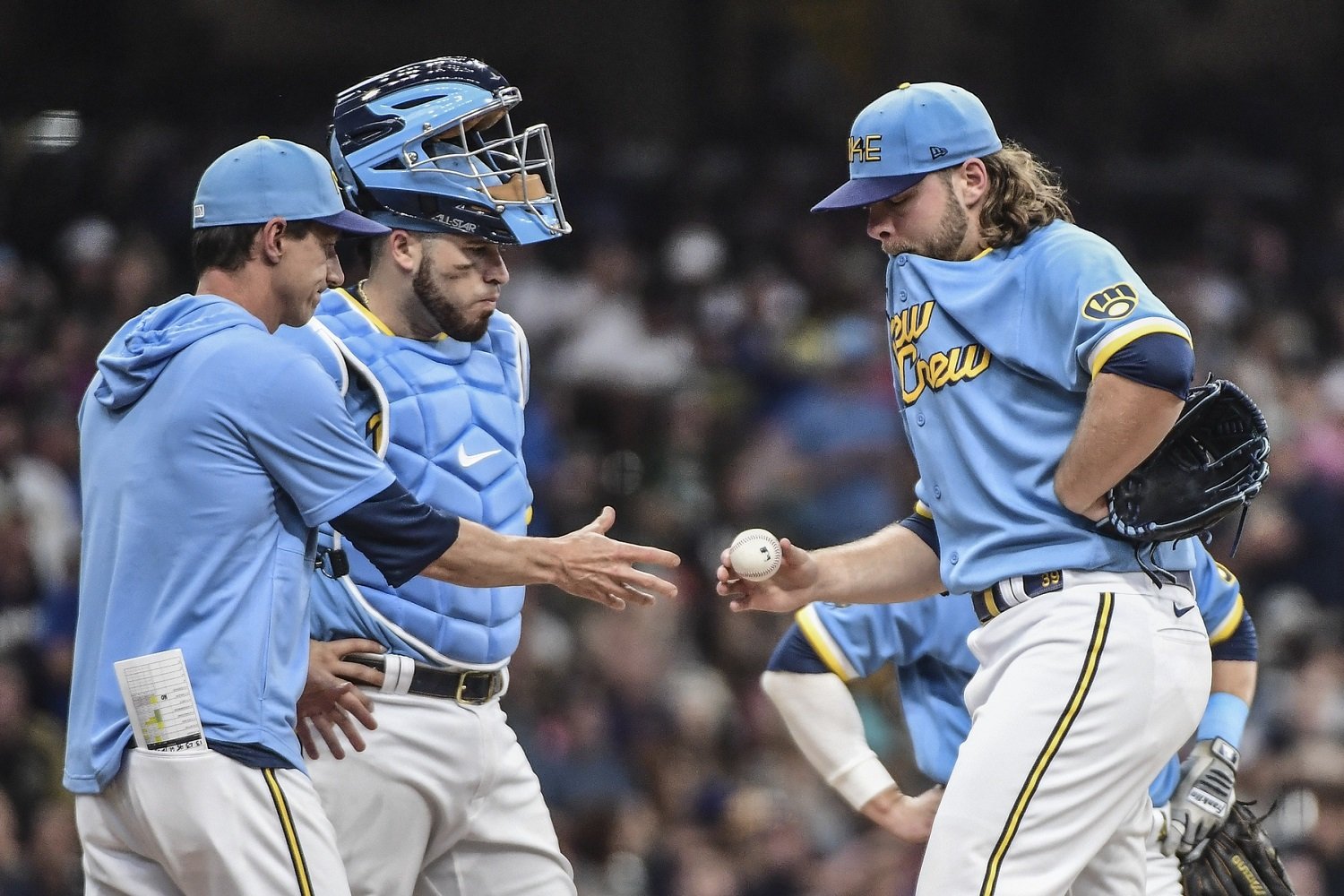 I start this week’s column with a clear proposition: the Milwaukee Brewers have a talented pitching staff. I do not want this to be in any way misunderstood. The rotation still has long-term upside: Corbin Burnes is not yet a finished product (imagine that!), while Brandon Woodruff and Freddy Peralta are still working to sort out how to best navigate lineups deep into contests. Adrian Houser has a ceiling as a decent #2, solid #3, advantageous #4 pitcher in a rotation, but hasn’t been able to put all the pieces together yet. The Weekly Dispatch is a column on the Brewers. 'On' may do heavier lifting on some weeks than others. The key players out of the bullpen are also solid to exceptional. Newly-extended Aaron Ashby remains a work in progress, but the Brewers’ faith in his ability to become a consistent force and enter the rotation in the future is not unjustified. Brad Boxberger, while obscenely overused in 2022, remains reliable out of the bullpen. Devin Williams has been given center stage after Josh Hader was inexplicably traded to the Padres for damaged goods and prospects. If it wasn’t obvious before that the Brewers’ front office assumed 2022 would be a facsimile of an all-time franchise best 2021, it is now. Assuming a lack of injury, that the league wouldn’t in some ways catch up to their formidable starters and bullpen, that run prevention would be as effective as it has been, that the stuff would be as crisp as ever, was folly. Not bolstering the offense beyond adding Hunter Renfroe in the offseason, or getting an impact bat or two at any time before the trade deadline only added pressure to a staff that had more than contributed their share to the club’s unprecedented fourth-consecutive postseason appearance. David Stearns and Matt Arnold tried to get blood from turnips, and their patience ran out as evidenced by the Hader trade. And, in some ways, they may have signaled a fatalist approach to a meat grinder 31 games in 31 days. The Brewers’ pitching staff entering play Saturday is second in the National League in hits allowed (864) and third in strikeouts (1043), but tenth in walks and 11th in home runs (365, 126). This talented, vaunted corps musters only a 106 adjusted ERA, falling well short of the 120 achievement from last year’s franchise-best staff. Yes, part of that is missing Peralta and Houser for stretches, Ethan Small’s struggles and needing to rely on Chi Chi Gonzalez to provide meaningful, productive innings, but injuries and regression are both parts of baseball life and it’s exceptionally difficult to meet historic bests in consecutive years. I projected out how this pitching staff may finish the season based on numbers through Friday night: 1456 strikeouts, 1422 hits, 530 walks, 186 home runs and a consistent 106 ERA+. No team in the expansion era has met or exceeded those counting numbers except the 2019 Boston Red Sox. They finished 84-78, third in the American League Central and had the luxury of an offensive core featuring Mookie Betts, Xander Bogaerts and Rafael Devers. Their adjusted ERA? 104. It should come as no surprise that all the talk from the team about a World Series before and after the All-Star break has abruptly stopped. Further, while the eye test indicates defensive regression, ERA to FIP is relatively flat (3.84, 3.90), while it should also be noted that the SIERA-to-ERA contrast suggests defensive lapses have been a little more impactful (3.65) while being somewhat counterbalanced and perhaps disguised by the gaudy strikeout totals. It’s also possible that the Brewers’ philosophy with their starting pitchers is to actually emphasize pitch to contact, leaning too much on run prevention and the strikeouts are more a reflection of the era, or more bug than feature. The problem is that the Brewers’ three major starters and Ashby are strikeout guys, and asking them to nibble around the edges to induce contact is not the best way to utilize their respective repertoires. This could potentially explain the two-strike struggles Ashby has, as diagnosed excellently earlier this weekend here by Tim Muma, while also generally providing insight as to why impact strikeout guys aren’t getting efficient Ks, triggering shorter starts and overextending the Brewers’ beleaguered, triaged middle relief. Whatever happened to the wipeout pitch? Between an offense that generally struggles with run support and opponents’ seeming knack for driving balls in 2022 they weren’t in ‘21, while also outlasting Brewer pitchers with walks and base knocks, the pitching has no margin for error. Asking for excellence and effort is one thing, asking for perfection – while apparently being content with a deficient, bordering on broken offense – is another. Like getting blood from a turnip. Stathead and Fangraphs were used in informing this article.
 -
.thumb.png.fb2aea91da59c37baaec678b5ce8166f.png) It’s been argued in this space before that the Milwaukee Brewers were asking too much of their pitching staff to repeat its high water mark 2021 season, which yielded Corbin Burnes a Cy Young Award and Josh Hader (another) Trevor Hoffman Award. A look at the numbers shows that to not only be the case, but that, save for a sudden change in performance, the Brewers’ vaunted pitching staff will be one of the reasons why they may well be on the outside looking in on October baseball. Image courtesy of © Benny Sieu-USA TODAY Sports It’s been argued in this space before that the Milwaukee Brewers were asking too much of their pitching staff to repeat its high water mark 2021 season, which yielded Corbin Burnes a Cy Young Award and Josh Hader (another) Trevor Hoffman Award. A look at the numbers shows that to not only be the case, but that, save for a sudden change in performance, the Brewers’ vaunted pitching staff will be one of the reasons why they may well be on the outside looking in on October baseball. I start this week’s column with a clear proposition: the Milwaukee Brewers have a talented pitching staff. I do not want this to be in any way misunderstood. The rotation still has long-term upside: Corbin Burnes is not yet a finished product (imagine that!), while Brandon Woodruff and Freddy Peralta are still working to sort out how to best navigate lineups deep into contests. Adrian Houser has a ceiling as a decent #2, solid #3, advantageous #4 pitcher in a rotation, but hasn’t been able to put all the pieces together yet. The Weekly Dispatch is a column on the Brewers. 'On' may do heavier lifting on some weeks than others. The key players out of the bullpen are also solid to exceptional. Newly-extended Aaron Ashby remains a work in progress, but the Brewers’ faith in his ability to become a consistent force and enter the rotation in the future is not unjustified. Brad Boxberger, while obscenely overused in 2022, remains reliable out of the bullpen. Devin Williams has been given center stage after Josh Hader was inexplicably traded to the Padres for damaged goods and prospects. If it wasn’t obvious before that the Brewers’ front office assumed 2022 would be a facsimile of an all-time franchise best 2021, it is now. Assuming a lack of injury, that the league wouldn’t in some ways catch up to their formidable starters and bullpen, that run prevention would be as effective as it has been, that the stuff would be as crisp as ever, was folly. Not bolstering the offense beyond adding Hunter Renfroe in the offseason, or getting an impact bat or two at any time before the trade deadline only added pressure to a staff that had more than contributed their share to the club’s unprecedented fourth-consecutive postseason appearance. David Stearns and Matt Arnold tried to get blood from turnips, and their patience ran out as evidenced by the Hader trade. And, in some ways, they may have signaled a fatalist approach to a meat grinder 31 games in 31 days. The Brewers’ pitching staff entering play Saturday is second in the National League in hits allowed (864) and third in strikeouts (1043), but tenth in walks and 11th in home runs (365, 126). This talented, vaunted corps musters only a 106 adjusted ERA, falling well short of the 120 achievement from last year’s franchise-best staff. Yes, part of that is missing Peralta and Houser for stretches, Ethan Small’s struggles and needing to rely on Chi Chi Gonzalez to provide meaningful, productive innings, but injuries and regression are both parts of baseball life and it’s exceptionally difficult to meet historic bests in consecutive years. I projected out how this pitching staff may finish the season based on numbers through Friday night: 1456 strikeouts, 1422 hits, 530 walks, 186 home runs and a consistent 106 ERA+. No team in the expansion era has met or exceeded those counting numbers except the 2019 Boston Red Sox. They finished 84-78, third in the American League Central and had the luxury of an offensive core featuring Mookie Betts, Xander Bogaerts and Rafael Devers. Their adjusted ERA? 104. It should come as no surprise that all the talk from the team about a World Series before and after the All-Star break has abruptly stopped. Further, while the eye test indicates defensive regression, ERA to FIP is relatively flat (3.84, 3.90), while it should also be noted that the SIERA-to-ERA contrast suggests defensive lapses have been a little more impactful (3.65) while being somewhat counterbalanced and perhaps disguised by the gaudy strikeout totals. It’s also possible that the Brewers’ philosophy with their starting pitchers is to actually emphasize pitch to contact, leaning too much on run prevention and the strikeouts are more a reflection of the era, or more bug than feature. The problem is that the Brewers’ three major starters and Ashby are strikeout guys, and asking them to nibble around the edges to induce contact is not the best way to utilize their respective repertoires. This could potentially explain the two-strike struggles Ashby has, as diagnosed excellently earlier this weekend here by Tim Muma, while also generally providing insight as to why impact strikeout guys aren’t getting efficient Ks, triggering shorter starts and overextending the Brewers’ beleaguered, triaged middle relief. Whatever happened to the wipeout pitch? Between an offense that generally struggles with run support and opponents’ seeming knack for driving balls in 2022 they weren’t in ‘21, while also outlasting Brewer pitchers with walks and base knocks, the pitching has no margin for error. Asking for excellence and effort is one thing, asking for perfection – while apparently being content with a deficient, bordering on broken offense – is another. Like getting blood from a turnip. Stathead and Fangraphs were used in informing this article. View full article
It’s been argued in this space before that the Milwaukee Brewers were asking too much of their pitching staff to repeat its high water mark 2021 season, which yielded Corbin Burnes a Cy Young Award and Josh Hader (another) Trevor Hoffman Award. A look at the numbers shows that to not only be the case, but that, save for a sudden change in performance, the Brewers’ vaunted pitching staff will be one of the reasons why they may well be on the outside looking in on October baseball. Image courtesy of © Benny Sieu-USA TODAY Sports It’s been argued in this space before that the Milwaukee Brewers were asking too much of their pitching staff to repeat its high water mark 2021 season, which yielded Corbin Burnes a Cy Young Award and Josh Hader (another) Trevor Hoffman Award. A look at the numbers shows that to not only be the case, but that, save for a sudden change in performance, the Brewers’ vaunted pitching staff will be one of the reasons why they may well be on the outside looking in on October baseball. I start this week’s column with a clear proposition: the Milwaukee Brewers have a talented pitching staff. I do not want this to be in any way misunderstood. The rotation still has long-term upside: Corbin Burnes is not yet a finished product (imagine that!), while Brandon Woodruff and Freddy Peralta are still working to sort out how to best navigate lineups deep into contests. Adrian Houser has a ceiling as a decent #2, solid #3, advantageous #4 pitcher in a rotation, but hasn’t been able to put all the pieces together yet. The Weekly Dispatch is a column on the Brewers. 'On' may do heavier lifting on some weeks than others. The key players out of the bullpen are also solid to exceptional. Newly-extended Aaron Ashby remains a work in progress, but the Brewers’ faith in his ability to become a consistent force and enter the rotation in the future is not unjustified. Brad Boxberger, while obscenely overused in 2022, remains reliable out of the bullpen. Devin Williams has been given center stage after Josh Hader was inexplicably traded to the Padres for damaged goods and prospects. If it wasn’t obvious before that the Brewers’ front office assumed 2022 would be a facsimile of an all-time franchise best 2021, it is now. Assuming a lack of injury, that the league wouldn’t in some ways catch up to their formidable starters and bullpen, that run prevention would be as effective as it has been, that the stuff would be as crisp as ever, was folly. Not bolstering the offense beyond adding Hunter Renfroe in the offseason, or getting an impact bat or two at any time before the trade deadline only added pressure to a staff that had more than contributed their share to the club’s unprecedented fourth-consecutive postseason appearance. David Stearns and Matt Arnold tried to get blood from turnips, and their patience ran out as evidenced by the Hader trade. And, in some ways, they may have signaled a fatalist approach to a meat grinder 31 games in 31 days. The Brewers’ pitching staff entering play Saturday is second in the National League in hits allowed (864) and third in strikeouts (1043), but tenth in walks and 11th in home runs (365, 126). This talented, vaunted corps musters only a 106 adjusted ERA, falling well short of the 120 achievement from last year’s franchise-best staff. Yes, part of that is missing Peralta and Houser for stretches, Ethan Small’s struggles and needing to rely on Chi Chi Gonzalez to provide meaningful, productive innings, but injuries and regression are both parts of baseball life and it’s exceptionally difficult to meet historic bests in consecutive years. I projected out how this pitching staff may finish the season based on numbers through Friday night: 1456 strikeouts, 1422 hits, 530 walks, 186 home runs and a consistent 106 ERA+. No team in the expansion era has met or exceeded those counting numbers except the 2019 Boston Red Sox. They finished 84-78, third in the American League Central and had the luxury of an offensive core featuring Mookie Betts, Xander Bogaerts and Rafael Devers. Their adjusted ERA? 104. It should come as no surprise that all the talk from the team about a World Series before and after the All-Star break has abruptly stopped. Further, while the eye test indicates defensive regression, ERA to FIP is relatively flat (3.84, 3.90), while it should also be noted that the SIERA-to-ERA contrast suggests defensive lapses have been a little more impactful (3.65) while being somewhat counterbalanced and perhaps disguised by the gaudy strikeout totals. It’s also possible that the Brewers’ philosophy with their starting pitchers is to actually emphasize pitch to contact, leaning too much on run prevention and the strikeouts are more a reflection of the era, or more bug than feature. The problem is that the Brewers’ three major starters and Ashby are strikeout guys, and asking them to nibble around the edges to induce contact is not the best way to utilize their respective repertoires. This could potentially explain the two-strike struggles Ashby has, as diagnosed excellently earlier this weekend here by Tim Muma, while also generally providing insight as to why impact strikeout guys aren’t getting efficient Ks, triggering shorter starts and overextending the Brewers’ beleaguered, triaged middle relief. Whatever happened to the wipeout pitch? Between an offense that generally struggles with run support and opponents’ seeming knack for driving balls in 2022 they weren’t in ‘21, while also outlasting Brewer pitchers with walks and base knocks, the pitching has no margin for error. Asking for excellence and effort is one thing, asking for perfection – while apparently being content with a deficient, bordering on broken offense – is another. Like getting blood from a turnip. Stathead and Fangraphs were used in informing this article. View full article-
- 1
-

-
- corbin burnes
- josh hader
- (and 3 more)
-
We hear 'It's a business' a lot when teams make moves or players move on. When the normal rules of business don't apply -- and they certainly don't apply to professional sports franchises like, say, oh, I don't know, the Milwaukee Brewers -- is it, though? Image courtesy of © Jeff Hanisch-USA TODAY Sports We hear 'It's a business' a lot when teams make moves or players move on. When the normal rules of business don't apply -- and they certainly don't apply to professional sports franchises like, say, oh, I don't know, the Milwaukee Brewers -- is it, though? The silence coming from 1 Brewers Way this week was deafening. Sure, there were prepared, perfunctory statements released through the Brewers' comms team and the typical post-transaction presser via Zoom Monday afternoon, but the first time stakeholders in the Brewers organization fielded real, face-to-face questions from the media was Friday, as the team prepared for their 40th anniversary-slash-alumni weekend. The Weekly Dispatch is a column on the Brewers. 'On' may do heavier lifting on some weeks than others. And they needed to show their faces, because this quote from President of Baseball Operations David Stearns Monday froze like a spitwad at -10°: We're thrilled with the amount of talent and the diversity of talent that we were able to get back in this trade. We were able to immediately add to our major-league team and able to bring in two very high-ceiling prospects. It brings me no pleasure to remind you that Josh Hader was traded Monday to the San Diego Padres – whom the Brewers may very well face in two months’ time – for Dinelson Lamet, Robert Gasser, Esteury Ruiz and Taylor Rogers. Lamet was designated for assignment Wednesday and claimed by the Colorado Rockies. Ruiz, the closest of the two prospects received to big-league readiness, was surrounded by the newly-promoted outfield trio of Sal Frelick, Garrett Mitchell and Joey Wiemer. Rogers has pitched in one inning since joining the Brewers. In the strictest sense of the term, yes, Stearns added to the major league team and added two prospects – though Ruiz is about as polarizing a prospect as one can find and Gasser is by most accounts more of a sleeper prospect than a needle-moving acquisition. Meanwhile, the Brewers looked like a team adrift on the field. After a week in which they showed major signs of life at the plate against the Rockies and Boston Red Sox and gave us renewed reason to believe in this roster, they went to Pittsburgh and suffered three crushing losses – two of which occurred in the vacuum created by Hader’s departure – at the hands of the Pirates, who some time ago traded in their privateer for a tank. Friday night, the Brewers returned to Milwaukee and resorted to their frustrating first-half form: lots of walks, plenty of strikeouts, runs generated by homers. The win, coming against another tanking team in the Cincinnati Reds, was a palate cleanse, but Hader’s absence from the bullpen still loomed large as Trevor Gott couldn’t get the job done and Devin Williams needed to come in for an Eric Gagne save. Of course, we’re relitigating the action on the field. What was happening both in the national baseball media and on social media was something else entirely. Granted, what happens on social media isn’t typically representative of reality, but the uniform confusion, if not anger, from insiders, outsiders, analysts and fans alike, combined with the half-hearted comments from players in the wake of the clubhouse shake-up and the immediate on-field malaise, made it abundantly clear that the Milwaukee Brewers placed themselves squarely into crisis mode, and did shockingly little to meet that crisis head-on. Crisis management is the process of preparing for and managing any disruptive or unexpected emergency situations that affect your business, stakeholders, employees, customers, and revenue. I’d say HubSpot is right on the money: trading Josh Hader was disruptive and unexpected, while it also clearly affected business, stakeholders, employees and customers. And the Brewers clearly didn’t have a plan in place to get out in front of the crisis. Bad business decisions typically start with leadership that has lost touch with either the organization they lead or the market they serve. In 2003, Mike Lazaridis infamously scoffed at the idea that a cell phone should have a camera. In 2022, BlackBerry has nothing to do with mobile phones. Circuit City eliminated an entire stratum of employees in 2007 and replaced them with lower-paid workers. That hit to an experienced workforce and company morale forced the retailer’s shutdown in early 2009. I could go on. Lehman Brothers. Countrywide Financial. Sears. Or, at the risk of coming too close to the nose of current affairs, Bear Stearns. If Mark Attanasio’s comments and body language said anything Friday, it’s that the Brewers’ organizational structure is firm: Stearns wanted the President of Baseball Operations role and responsibilities; he has them. The place to hold Stearns and General Manager Matt Arnold to account isn’t out in front of cameras and reporters. What Attanasio couldn’t do was hide his obvious discomfort, perhaps even disagreement, with the decision his baseball people made. David Stearns’ actions took us from aspirational to Oakland in a week. That might be a little extreme, but Dave Kaval at one time not too long ago was one of the most engaging and fan-friendly baseball executives in the game. Now that the Athletics are stuck in bureaucratic and litigious hell with regard to Howard Terminal, it’s a very different story: a truly atrocious ballclub, an alienated diehard fanbase stuck with a dilapidated stadium where the concourses fill with poowater and leadership that, when not sniping at fans or subtweeting rivals, is being openly courted to uproot from the Bay Area and join their former co-tenants in Las Vegas. Brewers fans aren’t there yet, if at all, though a vocal contingency of them are adamant Mark Attanasio is a cheapskate while also complaining about $8 beers they weren’t going to buy in the first place, while also selling surplus (and, in some cases, purloined) Robin Yount giveaway jerseys on Craigslist by the time the sausages race on Sunday. They’ve also conveniently memoryholed Bud Selig’s threat to move the Brewers. We are so good at forgetting the things that might blow up a preferred narrative. In fairness to Stearns and Arnold, there’s a lot we don’t know about what was happening leading up to the trade deadline. There was the suggestion of other deals that didn’t materialize for whatever reason. (Curiously, Juan Soto got namedropped by both ownership and management on Friday.) The former can’t afford to play the long game with Rogers, Gasser or Ruiz as he could with Eric Lauer or Luis Urias, and with Stearns’ contract running through the end of the 2022 (or is it 2023?) season, he likely won’t. My guess was that they wanted Lamet to work in the Arizona pitching lab, while Rogers worked out whatever was plaguing him in San Diego in the bullpen. Then they designated Lamet – there was no way he was going to clear waivers – and buried Rogers. Between the Hader deal and aftermath, the Luke Barker fiasco and then landing on adding Matt Bush and Trevor Rosenthal, none of this seems like work of the same guy who landed Christian Yelich or Rowdy Tellez, or even John Hammond’d his way into Hunter Renfroe. I’ve half-joked on Twitter that the oral histories that will be told later about the 2022 Brewers will be most interesting reading, but right now, in the midst of a crisis that has strained a fanbase, a clubhouse, a good portion of the baseball world and has seen the Brewers drop from first place in the Central to, as of Saturday night, on the outside looking into October, there’s just not a lot to laugh about. The reality is that none of this will move the needle with stakeholders. Major League Baseball and its teams won’t implode due to competition or discover a public sense of self-awareness due to a sudden, direct loss of revenue. There are no disruptors that will shake it from its own sense of self-contentment. There are no Bill Veecks to remind owners that fans are integral to the baseball milieu. Standard tickets are a decreasing percentage of overall revenue, with luxury boxes and group sales acting as tentpoles. Broadcast and streaming rights, in-stadium advertising and sponsorships cover most of the ground, while revenue sharing insulates teams from fan disinterest or discontent (i.e., #SelltheTeamBob efforts in Cincinnati and Pittsburgh.) It’s not truly possible to vote with one’s pocketbook, not showing up ultimately drives up costs elsewhere, either in ticket or parking rates or merchandise markup. In fact, withholding dollars will only hasten further changes we don’t want: jersey ads, more naming rights, a ticking timebomb situation with MLB’s cringey, cozy relationship with gambling outfits. Fans that protest press for their own marginalization, or ironically serve to make a case for franchise relocation stronger. In the same thought, I need not remind anyone that the clock is ticking on making sure a clear plan for a renovation of or replacement for American Family Field is in place. And that’s where we’re at: a business that isn’t really a business at all, protected by Supreme Court ruling from federal oversight and accountability that has also protected itself from its own customers and, if anything were to change with their status vis-à-vis antitrust law, has threatened to nuke minor league baseball as we know it. This is the ultimate business-to-business enterprise that also manages to demand more money from fewer fans. There is nowhere else in American life where this works so brazenly (aside from perhaps the Internal Revenue Service.) What’s left to say? There was no crisis management plan because this season and its bizarre developments are only a crisis to those of us who choose to follow this team and love this game. The Yankees are the Yankees, the Rockies are the Rockies, the A’s are the A’s and in all those cases, there’s nothing that can or will be done about that. All that remains is just this single, uncomfortable notion: This is not your crew. And this last week made that abundantly clear. View full article
-
 The silence coming from 1 Brewers Way this week was deafening. Sure, there were prepared, perfunctory statements released through the Brewers' comms team and the typical post-transaction presser via Zoom Monday afternoon, but the first time stakeholders in the Brewers organization fielded real, face-to-face questions from the media was Friday, as the team prepared for their 40th anniversary-slash-alumni weekend. The Weekly Dispatch is a column on the Brewers. 'On' may do heavier lifting on some weeks than others. And they needed to show their faces, because this quote from President of Baseball Operations David Stearns Monday froze like a spitwad at -10°: We're thrilled with the amount of talent and the diversity of talent that we were able to get back in this trade. We were able to immediately add to our major-league team and able to bring in two very high-ceiling prospects. It brings me no pleasure to remind you that Josh Hader was traded Monday to the San Diego Padres – whom the Brewers may very well face in two months’ time – for Dinelson Lamet, Robert Gasser, Esteury Ruiz and Taylor Rogers. Lamet was designated for assignment Wednesday and claimed by the Colorado Rockies. Ruiz, the closest of the two prospects received to big-league readiness, was surrounded by the newly-promoted outfield trio of Sal Frelick, Garrett Mitchell and Joey Wiemer. Rogers has pitched in one inning since joining the Brewers. In the strictest sense of the term, yes, Stearns added to the major league team and added two prospects – though Ruiz is about as polarizing a prospect as one can find and Gasser is by most accounts more of a sleeper prospect than a needle-moving acquisition. Meanwhile, the Brewers looked like a team adrift on the field. After a week in which they showed major signs of life at the plate against the Rockies and Boston Red Sox and gave us renewed reason to believe in this roster, they went to Pittsburgh and suffered three crushing losses – two of which occurred in the vacuum created by Hader’s departure – at the hands of the Pirates, who some time ago traded in their privateer for a tank. Friday night, the Brewers returned to Milwaukee and resorted to their frustrating first-half form: lots of walks, plenty of strikeouts, runs generated by homers. The win, coming against another tanking team in the Cincinnati Reds, was a palate cleanse, but Hader’s absence from the bullpen still loomed large as Trevor Gott couldn’t get the job done and Devin Williams needed to come in for an Eric Gagne save. Of course, we’re relitigating the action on the field. What was happening both in the national baseball media and on social media was something else entirely. Granted, what happens on social media isn’t typically representative of reality, but the uniform confusion, if not anger, from insiders, outsiders, analysts and fans alike, combined with the half-hearted comments from players in the wake of the clubhouse shake-up and the immediate on-field malaise, made it abundantly clear that the Milwaukee Brewers placed themselves squarely into crisis mode, and did shockingly little to meet that crisis head-on. Crisis management is the process of preparing for and managing any disruptive or unexpected emergency situations that affect your business, stakeholders, employees, customers, and revenue. I’d say HubSpot is right on the money: trading Josh Hader was disruptive and unexpected, while it also clearly affected business, stakeholders, employees and customers. And the Brewers clearly didn’t have a plan in place to get out in front of the crisis. Bad business decisions typically start with leadership that has lost touch with either the organization they lead or the market they serve. In 2003, Mike Lazaridis infamously scoffed at the idea that a cell phone should have a camera. In 2022, BlackBerry has nothing to do with mobile phones. Circuit City eliminated an entire stratum of employees in 2007 and replaced them with lower-paid workers. That hit to an experienced workforce and company morale forced the retailer’s shutdown in early 2009. I could go on. Lehman Brothers. Countrywide Financial. Sears. Or, at the risk of coming too close to the nose of current affairs, Bear Stearns. If Mark Attanasio’s comments and body language said anything Friday, it’s that the Brewers’ organizational structure is firm: Stearns wanted the President of Baseball Operations role and responsibilities; he has them. The place to hold Stearns and General Manager Matt Arnold to account isn’t out in front of cameras and reporters. What Attanasio couldn’t do was hide his obvious discomfort, perhaps even disagreement, with the decision his baseball people made. David Stearns’ actions took us from aspirational to Oakland in a week. That might be a little extreme, but Dave Kaval at one time not too long ago was one of the most engaging and fan-friendly baseball executives in the game. Now that the Athletics are stuck in bureaucratic and litigious hell with regard to Howard Terminal, it’s a very different story: a truly atrocious ballclub, an alienated diehard fanbase stuck with a dilapidated stadium where the concourses fill with poowater and leadership that, when not sniping at fans or subtweeting rivals, is being openly courted to uproot from the Bay Area and join their former co-tenants in Las Vegas. Brewers fans aren’t there yet, if at all, though a vocal contingency of them are adamant Mark Attanasio is a cheapskate while also complaining about $8 beers they weren’t going to buy in the first place, while also selling surplus (and, in some cases, purloined) Robin Yount giveaway jerseys on Craigslist by the time the sausages race on Sunday. They’ve also conveniently memoryholed Bud Selig’s threat to move the Brewers. We are so good at forgetting the things that might blow up a preferred narrative. In fairness to Stearns and Arnold, there’s a lot we don’t know about what was happening leading up to the trade deadline. There was the suggestion of other deals that didn’t materialize for whatever reason. (Curiously, Juan Soto got namedropped by both ownership and management on Friday.) The former can’t afford to play the long game with Rogers, Gasser or Ruiz as he could with Eric Lauer or Luis Urias, and with Stearns’ contract running through the end of the 2022 (or is it 2023?) season, he likely won’t. My guess was that they wanted Lamet to work in the Arizona pitching lab, while Rogers worked out whatever was plaguing him in San Diego in the bullpen. Then they designated Lamet – there was no way he was going to clear waivers – and buried Rogers. Between the Hader deal and aftermath, the Luke Barker fiasco and then landing on adding Matt Bush and Trevor Rosenthal, none of this seems like work of the same guy who landed Christian Yelich or Rowdy Tellez, or even John Hammond’d his way into Hunter Renfroe. I’ve half-joked on Twitter that the oral histories that will be told later about the 2022 Brewers will be most interesting reading, but right now, in the midst of a crisis that has strained a fanbase, a clubhouse, a good portion of the baseball world and has seen the Brewers drop from first place in the Central to, as of Saturday night, on the outside looking into October, there’s just not a lot to laugh about. The reality is that none of this will move the needle with stakeholders. Major League Baseball and its teams won’t implode due to competition or discover a public sense of self-awareness due to a sudden, direct loss of revenue. There are no disruptors that will shake it from its own sense of self-contentment. There are no Bill Veecks to remind owners that fans are integral to the baseball milieu. Standard tickets are a decreasing percentage of overall revenue, with luxury boxes and group sales acting as tentpoles. Broadcast and streaming rights, in-stadium advertising and sponsorships cover most of the ground, while revenue sharing insulates teams from fan disinterest or discontent (i.e., #SelltheTeamBob efforts in Cincinnati and Pittsburgh.) It’s not truly possible to vote with one’s pocketbook, not showing up ultimately drives up costs elsewhere, either in ticket or parking rates or merchandise markup. In fact, withholding dollars will only hasten further changes we don’t want: jersey ads, more naming rights, a ticking timebomb situation with MLB’s cringey, cozy relationship with gambling outfits. Fans that protest press for their own marginalization, or ironically serve to make a case for franchise relocation stronger. In the same thought, I need not remind anyone that the clock is ticking on making sure a clear plan for a renovation of or replacement for American Family Field is in place. And that’s where we’re at: a business that isn’t really a business at all, protected by Supreme Court ruling from federal oversight and accountability that has also protected itself from its own customers and, if anything were to change with their status vis-à-vis antitrust law, has threatened to nuke minor league baseball as we know it. This is the ultimate business-to-business enterprise that also manages to demand more money from fewer fans. There is nowhere else in American life where this works so brazenly (aside from perhaps the Internal Revenue Service.) What’s left to say? There was no crisis management plan because this season and its bizarre developments are only a crisis to those of us who choose to follow this team and love this game. The Yankees are the Yankees, the Rockies are the Rockies, the A’s are the A’s and in all those cases, there’s nothing that can or will be done about that. All that remains is just this single, uncomfortable notion: This is not your crew. And this last week made that abundantly clear.
 -
The Weekly Dispatch: Big, Drastic Changes
Brent Sirvio replied to Brent Sirvio's topic in Brewer Fanatic Front Page News
I'm sorry you feel that way. Thanks for reading! -
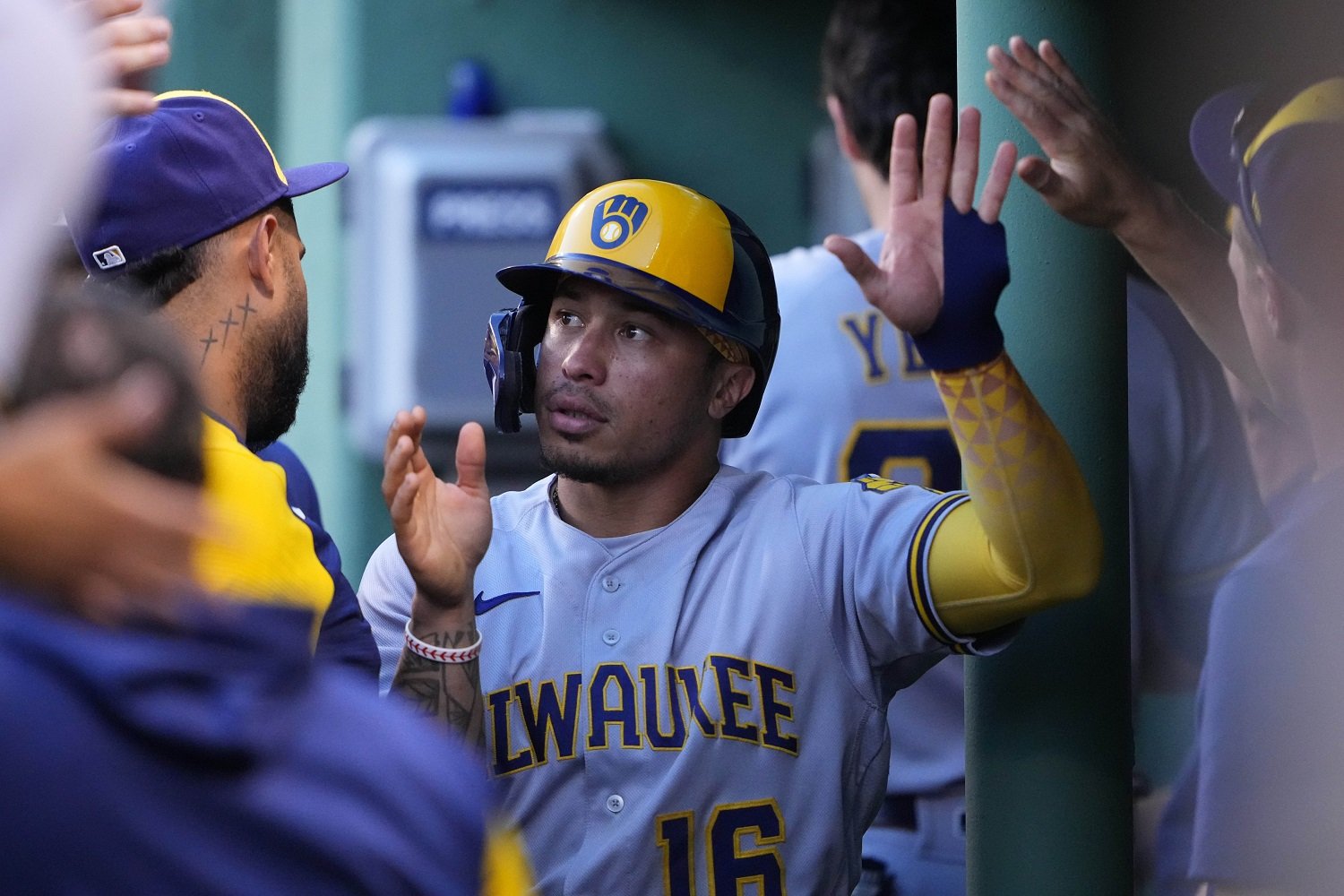 Brewer Fanatic colleague Tim Muma put it best Friday night, following the Brewers' win over the Boston Red Sox at American Family Field East Fenway Park: "Fun, fun ballgame." Brewers fans were subjected to some painful baseball in the front half of this 2022 campaign. Yet for all the misery at the plate, thanks to three divisional rivals deciding to sit the season out and the Cardinals sputtering in July (this is what you get for taking Matt Pauley from us!), the Brewers entered the All-Star break gassed and in first place. After an uneven series with the Colorado Rockies where they still took three of four, and swept the two-game mini-series with their faux rival Minnesota Twins, they put together a convincing victory someplace they haven't played since 2014, with the combination of a Brandon Woodruff performance reminding everyone that he is an ace and an ability to manufacture runs when it mattered. It was exactly what a good ballgame should be, with the exception of time of game, which came courtesy of Red Sox manager Alex Cora's opener nonsense/cry for help. Fun games should feature good pitching, timely hitting, crisp pacing [after the opener gambit, that is] and exciting moments. Brewers and Red Sox fans alike could walk away satisfied, even if the latter weren’t necessarily happy with the end result. For us Brewers partisans, it certainly felt better than anything we saw in June. This writer penned a column here earlier this month after noticing a stunning number of outs coming from batted balls at a 30* or higher launch angle, all with abysmal expected batting averages. I looked at what the Brewers were doing at the plate – seriously, though, what were they doing? – and reviewed the macabre metrics and results. What could one reasonably hope for with a team-wide commitment to golfing the ball, come what may? Here’s what I wrote at the time: “Getting better, more drivable pitches requires Brewers hitters to stop swinging at less-than-ideal balls in the zone…. It also requires the Brewers to paradoxically give up on the home run in favor of flatter-planed swings, forcing pitchers and catchers into adjusting their approach, wearing them down and digging into bullpens.” In the interest of fairness, this writer added that “making moves toward an offensive sea change in-season is highly unlikely.” Mea culpa, I guess. Said Counsell: “It wasn’t, ‘Change our approach.’ It was just, ‘Let’s be a little bit better.’ We’re not asking for big, drastic things from anybody in our approach, we’re just trying to do everything in every moment just a little bit better.” If you believe this, you are being worked. This is an organization that provides as little useful information as possible, if it doesn’t flat out engage in paltering. Moving Christian Yelich is a textbook definition of asking for big, drastic things in baseball. A radically and noticeably different approach at the plate from before to after the All-Star break is something more than trying to be a little bit better. It is commendable for the club to use the break to reset and look at the findings from the first half autopsy and make adjustments. Frankly, the approach was a bucket of cold water to the face; seeing the team take Colorado Rockies pitching consistently to the opposite field, rather than pulling out the 5-wood and hoping for the best, was fantastic! And not only that, they’ve kept it up, banging out the second-most hits for any club with an eight-game sample through Sunday morning (81, Toronto has 88), while second in the league in team hitting and leading all of baseball in OPS, with a robust .380 team OBP. None of this was happening before. Big, drastic things. And yes, tHe SaMpLe SiZe Is SmAlL. I get that, but this team wasn’t doing any of this before the break aside from dingers. What’s happening right now is remarkable, and there’s no indication they’re going to revert. In revisiting Baseball Savant, it’s clear the Brewers still like to try launching the ball: 42 of their 81 outs in eight games have come as a result of one of these 30+ degree duds. But, as noted as encouraging in my earlier column, where the 26-29* batted balls were promising before, they’re fulfilling now. Of eight Brewers hitters who have found that sweet spot thus far, their composite is .750, for 2.333 and a wOBA of 1.277 against an expected .948. Is that outsized result sustainable? Probably not, but running these two sets of data shows who still struggles at the plate (Willy Adames) and who’s figuring things out (Kolten Wong, Rowdy Tellez). What’s truly unsustainable is expecting any kind of reasonable or consistent performance from 30-and-up, regardless of what Omar Narvaez did yesterday (which is, by eye test and data, an exception to his rule.) The other component to this is the Brewers’ commitment to hitting the ball the other way. Yelich, Wong and Tellez are feasting off this approach: a combined 15-21 for six doubles and a .750 shift-busting BABIP. Sacrificing dingers for opposite field balls in play, and a return to an approach that lets the lineup keep moving is also producing winning baseball and, incidentally, better pitches to drive. It’s also awfully hard to take pitches the other way when you’re dipping the shoulder with intent to pull and launch. Changes like these are how you get there, and how a club goes from being tagged with a 2014 vibe with one of, say, the 2021 Braves variety. There are still months of baseball to be played; things can break in any direction. But what we’ve seen since July 22 is reason to believe in this team again, as good a reason as we’ve had all year. What’s happening now, coupled with the Brewers’ penchant for taking bases on balls, is the way forward for this offense and a team that has gone on the record with stated desires for a World Series. And even for that much alone, the Brewers deserve credit. Baseball Reference, Baseball Savant and MLB.com provided invaluable data toward this column.
 -
With apologies to Milwaukee Brewers manager Craig Counsell, there's no way what's been happening since the All-Star break is a result of the team saying, 'Let's be a little bit better.' The Brewers are a lot better, and they're a lot better because they've made significant changes with their plate approach. Image courtesy of © Gregory Fisher-USA TODAY Sports With apologies to Milwaukee Brewers manager Craig Counsell, there's no way what's been happening since the All-Star break is a result of the team saying, 'Let's be a little bit better.' The Brewers are a lot better, and they're a lot better because they've made significant changes with their plate approach. Brewer Fanatic colleague Tim Muma put it best Friday night, following the Brewers' win over the Boston Red Sox at American Family Field East Fenway Park: "Fun, fun ballgame." Brewers fans were subjected to some painful baseball in the front half of this 2022 campaign. Yet for all the misery at the plate, thanks to three divisional rivals deciding to sit the season out and the Cardinals sputtering in July (this is what you get for taking Matt Pauley from us!), the Brewers entered the All-Star break gassed and in first place. After an uneven series with the Colorado Rockies where they still took three of four, and swept the two-game mini-series with their faux rival Minnesota Twins, they put together a convincing victory someplace they haven't played since 2014, with the combination of a Brandon Woodruff performance reminding everyone that he is an ace and an ability to manufacture runs when it mattered. It was exactly what a good ballgame should be, with the exception of time of game, which came courtesy of Red Sox manager Alex Cora's opener nonsense/cry for help. Fun games should feature good pitching, timely hitting, crisp pacing [after the opener gambit, that is] and exciting moments. Brewers and Red Sox fans alike could walk away satisfied, even if the latter weren’t necessarily happy with the end result. For us Brewers partisans, it certainly felt better than anything we saw in June. This writer penned a column here earlier this month after noticing a stunning number of outs coming from batted balls at a 30* or higher launch angle, all with abysmal expected batting averages. I looked at what the Brewers were doing at the plate – seriously, though, what were they doing? – and reviewed the macabre metrics and results. What could one reasonably hope for with a team-wide commitment to golfing the ball, come what may? Here’s what I wrote at the time: “Getting better, more drivable pitches requires Brewers hitters to stop swinging at less-than-ideal balls in the zone…. It also requires the Brewers to paradoxically give up on the home run in favor of flatter-planed swings, forcing pitchers and catchers into adjusting their approach, wearing them down and digging into bullpens.” In the interest of fairness, this writer added that “making moves toward an offensive sea change in-season is highly unlikely.” Mea culpa, I guess. Said Counsell: “It wasn’t, ‘Change our approach.’ It was just, ‘Let’s be a little bit better.’ We’re not asking for big, drastic things from anybody in our approach, we’re just trying to do everything in every moment just a little bit better.” If you believe this, you are being worked. This is an organization that provides as little useful information as possible, if it doesn’t flat out engage in paltering. Moving Christian Yelich is a textbook definition of asking for big, drastic things in baseball. A radically and noticeably different approach at the plate from before to after the All-Star break is something more than trying to be a little bit better. It is commendable for the club to use the break to reset and look at the findings from the first half autopsy and make adjustments. Frankly, the approach was a bucket of cold water to the face; seeing the team take Colorado Rockies pitching consistently to the opposite field, rather than pulling out the 5-wood and hoping for the best, was fantastic! And not only that, they’ve kept it up, banging out the second-most hits for any club with an eight-game sample through Sunday morning (81, Toronto has 88), while second in the league in team hitting and leading all of baseball in OPS, with a robust .380 team OBP. None of this was happening before. Big, drastic things. And yes, tHe SaMpLe SiZe Is SmAlL. I get that, but this team wasn’t doing any of this before the break aside from dingers. What’s happening right now is remarkable, and there’s no indication they’re going to revert. In revisiting Baseball Savant, it’s clear the Brewers still like to try launching the ball: 42 of their 81 outs in eight games have come as a result of one of these 30+ degree duds. But, as noted as encouraging in my earlier column, where the 26-29* batted balls were promising before, they’re fulfilling now. Of eight Brewers hitters who have found that sweet spot thus far, their composite is .750, for 2.333 and a wOBA of 1.277 against an expected .948. Is that outsized result sustainable? Probably not, but running these two sets of data shows who still struggles at the plate (Willy Adames) and who’s figuring things out (Kolten Wong, Rowdy Tellez). What’s truly unsustainable is expecting any kind of reasonable or consistent performance from 30-and-up, regardless of what Omar Narvaez did yesterday (which is, by eye test and data, an exception to his rule.) The other component to this is the Brewers’ commitment to hitting the ball the other way. Yelich, Wong and Tellez are feasting off this approach: a combined 15-21 for six doubles and a .750 shift-busting BABIP. Sacrificing dingers for opposite field balls in play, and a return to an approach that lets the lineup keep moving is also producing winning baseball and, incidentally, better pitches to drive. It’s also awfully hard to take pitches the other way when you’re dipping the shoulder with intent to pull and launch. Changes like these are how you get there, and how a club goes from being tagged with a 2014 vibe with one of, say, the 2021 Braves variety. There are still months of baseball to be played; things can break in any direction. But what we’ve seen since July 22 is reason to believe in this team again, as good a reason as we’ve had all year. What’s happening now, coupled with the Brewers’ penchant for taking bases on balls, is the way forward for this offense and a team that has gone on the record with stated desires for a World Series. And even for that much alone, the Brewers deserve credit. Baseball Reference, Baseball Savant and MLB.com provided invaluable data toward this column. View full article
-
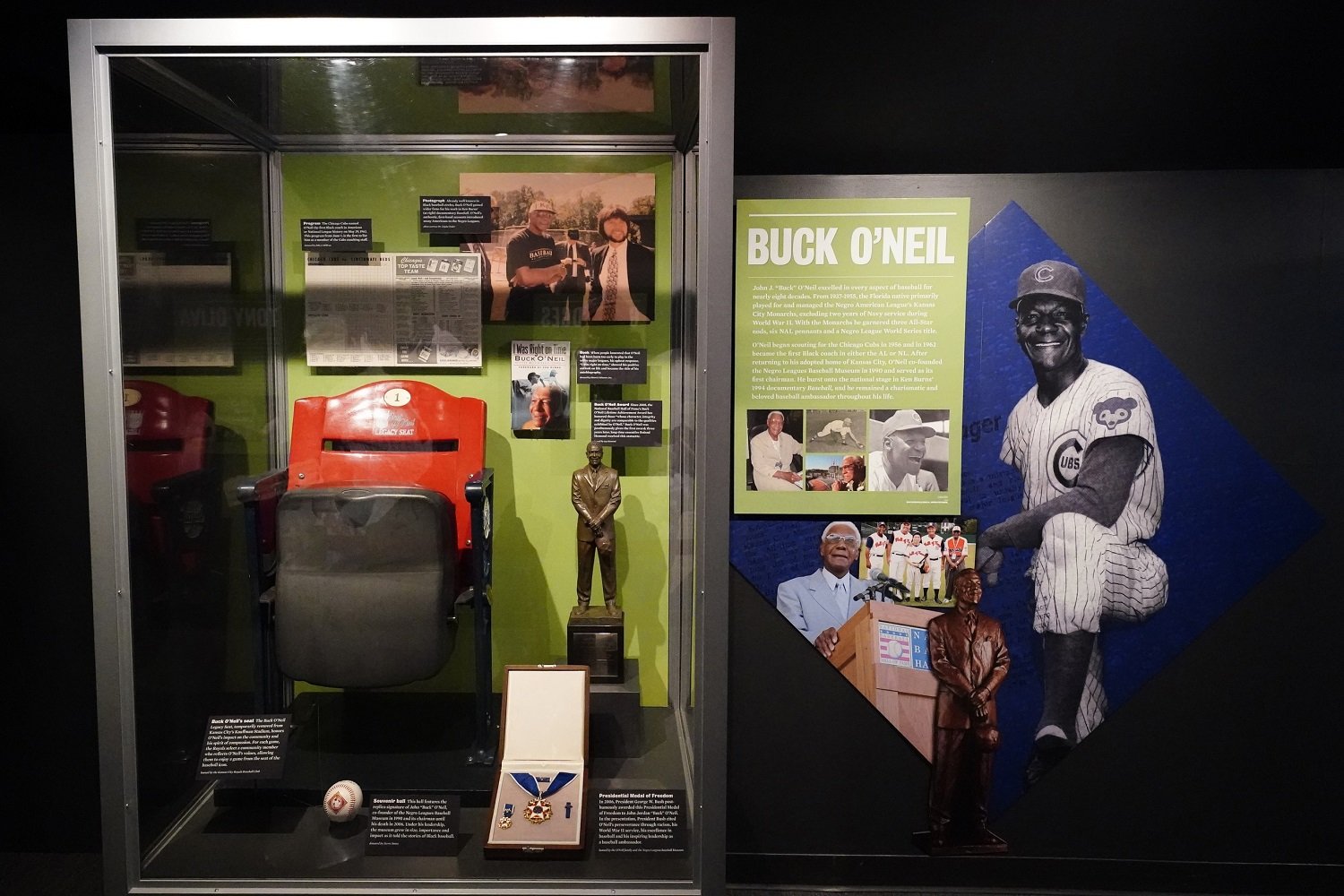 We depart from the typical focus on the Brewers to discuss a far more important matter happening this very weekend about 950 miles east from where I type. The scene is Cooperstown, New York and the National Baseball Hall of Fame, where seven inductees will be formally enshrined. Amongst them will be the late Buck O'Neil. I would call this class the revenge tour, including long-overlooked and underappreciated guys like Jim Kaat, Tony Oliva and Minnie Miñoso, but Dick Allen inexplicably didn't get the nod from the committee, so we're not quite there yet. Further, Buck would've never liked being part of a revenge play. He was far too classy and too decent a human being for that. John Jordan O'Neil: Kansas City Monarch, Chicago Cub, coach, scout, executive, teacher, ambassador, humanitarian, historian, icon. And now, a Hall of Famer. This is the end of an error. The Weekly Dispatch is a column on the Brewers. 'On' may do heavier lifting on some weeks than others. Buck was snubbed. In 2006, a special committee explicitly designed to recognize overlooked Negro Leagues players and influential figures selected 17 for enshrinement into Cooperstown. Buck was not one of them. In what could be characterized as insult to injury, Buck was tasked with delivering the induction speech honoring those including Effa Manley, Oscar Charleston, Cristobal Torriente and JL Wilkinson, and he did so, almost 16 years to the day this piece is published, with the grace, good humor and dignity that were his hallmark. Buck, sick with an ailing heart and what would be diagnosed later as bone marrow cancer, would not live to see the 2006 World Series. While Buck would never admit it, Negro Leagues Baseball Museum president Bob Kendrick would later concede this failure haunted his friend, the singular force behind developing the facility that, along with the American Jazz Museum, serves as a twin diamond in Kansas City's historic 18th and Vine District. He would be posthumously awarded the Presidential Medal of Freedom that winter. A year later, Buck would be honored with the inaugural, eponymous lifetime achievement award and a statue in Cooperstown, a tacit non-admission of that committee's failure to get it right. After all, when it comes to the Hall of Fame, nothing less than a plaque will do. You probably know Buck O'Neil best from his liberal interviews with Ken Burns and company when they interviewed and shot footage for Baseball for PBS, that seamhead creature comfort MLB Network runs regularly between Christmas and New Year's Day. A firsthand witness to the victory Jackie Robinson earned for Black Americans, as well as the beginning of the end of the Negro Leagues, that beautiful byproduct of distinctly American institutional atrocity, Buck recognized early on that the opportunity Robinson and Larry Doby opened up for he and his peers also threatened to wipe their chapter from our societal memory. "While a fine ballplayer in his own right ... and nurturer of the likes of Ernie Banks and Lou Brock," writes Lawrence Hogan in Shades of Glory, "...in his senior years [Buck O'Neil] has been even a finer preserver and disseminator of the history of Negro baseball." Buck himself recognized the ramifications of integrating Major League Baseball. In his interviews for Baseball, he sympathetically noted "[T]he one thing I didn't like--in the Negro Leagues, there were some 200 people with jobs. Now, these people didn't have the jobs anymore. We eliminated those jobs." When societal evils ossify into ways of life, life adapts. No one, not even Buck O'Neil, would say that the Negro Leagues were a good thing: everyone knew this brand of baseball only existed as a result of racism and bigotry. To put a finer point on it, it was dues to the 'gentleman's agreement' [probably] initiated by Cap Anson, who would solidify his on-field greatness as a member of the Chicago White Stockings, later the Cubs. Buck would never see the field as a major league player, but was hired as a scout in 1955. For the Cubs. In those years with the Cubs, he also worked as an instructor and coach, the first African-American coach in MLB, and after his career with the Cubs came to a close, became the Negro Leagues Baseball Museum's chairman in 1990, championing Black Baseball's history from the Paseo YMCA in Kansas City through the construction of the museum at 18th and Vine. Returning to the city where he spent nearly his entire career as a ballplayer, Buck adopted Kansas City, and Kansas City returned the favor. His tireless advocacy for baseball's rich Black heritage, as well as for Black youth and education in the area, continues to inspire long after his passing. His induction in 2006 should have been a slam dunk. Joe Posnanski, who was there with Buck when the committee held its ballot behind closed doors: Now, after everything, he was being told that the life he had spent in baseball was not worthy of the Hall of Fame. It was enough to make those around him cry. But Buck laughed. “I’m still Buck,” he said. “Look at me. I’ve lived a good life. I’m still living a good life. Nothing has changed for me.” Ollie Gates, of Kansas City barbecue fame and a longtime patron and board member for the NLBM, insists the news that day killed Buck. His body destroying him from within, he kept his focus on the celebration of those others who won induction. That's the man he was, dignified to the very end. Buck's induction this weekend places a bookend not only on his life and legacy, but a fitting coda on a chapter of American sports history that never should have been written in the first place. Those proceedings in a small town in central New York will mean more than any baseball game played, because the game would not be what it is without those players whose legacy Buck O'Neil fought to keep from being memory-holed. There will be other HoF-related causes to champion and wrongs to right -- Dave Parker and the aforementioned Allen, to name two -- but Sunday is a good day for our game, regardless of what happens in the Menomonee River valley. This is the end of an error. *** Postscript: If you haven't made the trip to Kansas City to visit the Negro Leagues Baseball Museum and the Paseo YMCA, I cannot more strongly recommend taking a long weekend and bringing your family to the middle of the country. The stories housed at the NLBM are inspiring, hilarious, poignant and heart-breaking. It will make you smile, laugh, think and cry, sometimes all at once. If you love this game, or even have a passion for American history and civil rights, you owe it to yourself to make the trip. It is as essential for the baseball lover as Cooperstown.
 -
Sorry to disappoint; this is not my goodbye column. Image courtesy of © Gregory Fisher-USA TODAY Sports Sorry to disappoint; this is not my goodbye column. We depart from the typical focus on the Brewers to discuss a far more important matter happening this very weekend about 950 miles east from where I type. The scene is Cooperstown, New York and the National Baseball Hall of Fame, where seven inductees will be formally enshrined. Amongst them will be the late Buck O'Neil. I would call this class the revenge tour, including long-overlooked and underappreciated guys like Jim Kaat, Tony Oliva and Minnie Miñoso, but Dick Allen inexplicably didn't get the nod from the committee, so we're not quite there yet. Further, Buck would've never liked being part of a revenge play. He was far too classy and too decent a human being for that. John Jordan O'Neil: Kansas City Monarch, Chicago Cub, coach, scout, executive, teacher, ambassador, humanitarian, historian, icon. And now, a Hall of Famer. This is the end of an error. The Weekly Dispatch is a column on the Brewers. 'On' may do heavier lifting on some weeks than others. Buck was snubbed. In 2006, a special committee explicitly designed to recognize overlooked Negro Leagues players and influential figures selected 17 for enshrinement into Cooperstown. Buck was not one of them. In what could be characterized as insult to injury, Buck was tasked with delivering the induction speech honoring those including Effa Manley, Oscar Charleston, Cristobal Torriente and JL Wilkinson, and he did so, almost 16 years to the day this piece is published, with the grace, good humor and dignity that were his hallmark. Buck, sick with an ailing heart and what would be diagnosed later as bone marrow cancer, would not live to see the 2006 World Series. While Buck would never admit it, Negro Leagues Baseball Museum president Bob Kendrick would later concede this failure haunted his friend, the singular force behind developing the facility that, along with the American Jazz Museum, serves as a twin diamond in Kansas City's historic 18th and Vine District. He would be posthumously awarded the Presidential Medal of Freedom that winter. A year later, Buck would be honored with the inaugural, eponymous lifetime achievement award and a statue in Cooperstown, a tacit non-admission of that committee's failure to get it right. After all, when it comes to the Hall of Fame, nothing less than a plaque will do. You probably know Buck O'Neil best from his liberal interviews with Ken Burns and company when they interviewed and shot footage for Baseball for PBS, that seamhead creature comfort MLB Network runs regularly between Christmas and New Year's Day. A firsthand witness to the victory Jackie Robinson earned for Black Americans, as well as the beginning of the end of the Negro Leagues, that beautiful byproduct of distinctly American institutional atrocity, Buck recognized early on that the opportunity Robinson and Larry Doby opened up for he and his peers also threatened to wipe their chapter from our societal memory. "While a fine ballplayer in his own right ... and nurturer of the likes of Ernie Banks and Lou Brock," writes Lawrence Hogan in Shades of Glory, "...in his senior years [Buck O'Neil] has been even a finer preserver and disseminator of the history of Negro baseball." Buck himself recognized the ramifications of integrating Major League Baseball. In his interviews for Baseball, he sympathetically noted "[T]he one thing I didn't like--in the Negro Leagues, there were some 200 people with jobs. Now, these people didn't have the jobs anymore. We eliminated those jobs." When societal evils ossify into ways of life, life adapts. No one, not even Buck O'Neil, would say that the Negro Leagues were a good thing: everyone knew this brand of baseball only existed as a result of racism and bigotry. To put a finer point on it, it was dues to the 'gentleman's agreement' [probably] initiated by Cap Anson, who would solidify his on-field greatness as a member of the Chicago White Stockings, later the Cubs. Buck would never see the field as a major league player, but was hired as a scout in 1955. For the Cubs. In those years with the Cubs, he also worked as an instructor and coach, the first African-American coach in MLB, and after his career with the Cubs came to a close, became the Negro Leagues Baseball Museum's chairman in 1990, championing Black Baseball's history from the Paseo YMCA in Kansas City through the construction of the museum at 18th and Vine. Returning to the city where he spent nearly his entire career as a ballplayer, Buck adopted Kansas City, and Kansas City returned the favor. His tireless advocacy for baseball's rich Black heritage, as well as for Black youth and education in the area, continues to inspire long after his passing. His induction in 2006 should have been a slam dunk. Joe Posnanski, who was there with Buck when the committee held its ballot behind closed doors: Now, after everything, he was being told that the life he had spent in baseball was not worthy of the Hall of Fame. It was enough to make those around him cry. But Buck laughed. “I’m still Buck,” he said. “Look at me. I’ve lived a good life. I’m still living a good life. Nothing has changed for me.” Ollie Gates, of Kansas City barbecue fame and a longtime patron and board member for the NLBM, insists the news that day killed Buck. His body destroying him from within, he kept his focus on the celebration of those others who won induction. That's the man he was, dignified to the very end. Buck's induction this weekend places a bookend not only on his life and legacy, but a fitting coda on a chapter of American sports history that never should have been written in the first place. Those proceedings in a small town in central New York will mean more than any baseball game played, because the game would not be what it is without those players whose legacy Buck O'Neil fought to keep from being memory-holed. There will be other HoF-related causes to champion and wrongs to right -- Dave Parker and the aforementioned Allen, to name two -- but Sunday is a good day for our game, regardless of what happens in the Menomonee River valley. This is the end of an error. *** Postscript: If you haven't made the trip to Kansas City to visit the Negro Leagues Baseball Museum and the Paseo YMCA, I cannot more strongly recommend taking a long weekend and bringing your family to the middle of the country. The stories housed at the NLBM are inspiring, hilarious, poignant and heart-breaking. It will make you smile, laugh, think and cry, sometimes all at once. If you love this game, or even have a passion for American history and civil rights, you owe it to yourself to make the trip. It is as essential for the baseball lover as Cooperstown. View full article
-
When the game comes first, you can find yourself watching any team anywhere and appreciate what's happening because it's the game. Someday, I'd love to be able to sit up late and watch West Coast baseball and not worry about being dead the morning after. Do I like the Mariners? Not especially, but I love watching the way the game is played, interpreted and presented by teams outside of my own primary experience.
-
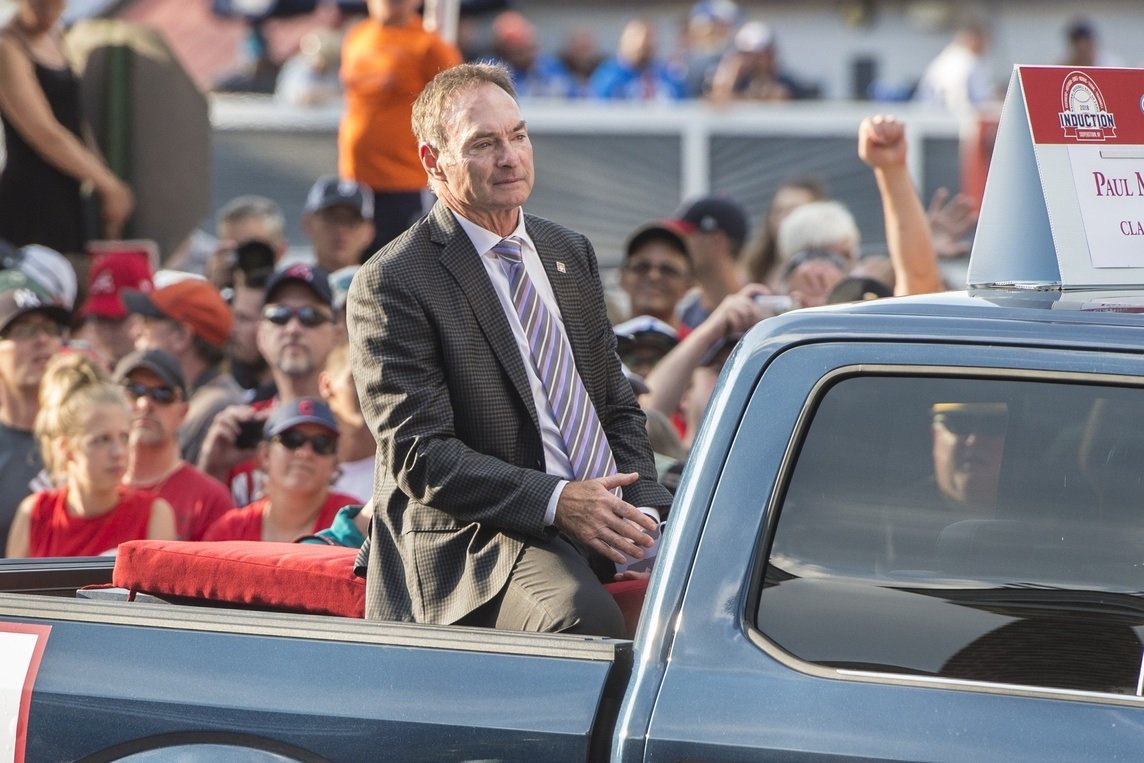 The Weekly Dispatch is a column on the Brewers. 'On' may do heavier lifting on some weeks than others. The rivalries MLB set up with the dawn of interleague play are mostly ridiculous. Some are intuitive; others, historically-inclined: Cubs-White Sox, Yankees-Mets, Royals-Cardinals, Giants-Athletics. Others -- Rays-Marlins? Padres-Mariners??? -- have the stink of MLB's marketing brain trust all over them. Yes, there was brief history between the Brewers and Twins, but there really isn't anything there. If anything, similar to the Detroit Tigers-Pittsburgh Pirates rIvAlRy (aside below): they took another rivalry, in the latter example, the NHL's Red Wings and Penguins, in the former, the old NFC Central/North's Packers and Vikings and called it a border battle, even though the two metropolitan areas are five hours apart. [Aside: Anyone who's been around the region knows that Pittsburgh and Cleveland are two cities that hate each other. Failing to seize upon that rivalry in favor of a fairly non-descript diagonal rivalry with Cincinnati was peak lazy MLB. While I'm here, the fact that it's the Ohio Cup (seriously, look at this hunk of metal) and not the Chili Bowl doubles down on just how facile this business is. As you were.] Rivals should have history. They should bring out the best in each other. At the very least, they should have great players on both sides who faced off with something to lose. The Royals and Cardinals have 1985. The Lakers had the Celtics. The Milwaukee Brewers (410-495) and Minnesota Twins (427-476) had Robin Yount and Rob Deer and Kirby Puckett and Kent Hrbek in the 80s, but the baseball heritage these franchises actually share is poverty and Paul Molitor. Forgive me for not really feeling invested in what is an obviously-astroturfed deal, especially when the Brewers' actual rivals were just in town last week. Complicating my ennui for this two-game(!) series being something of actual importance is that I was born in Wisconsin to a Yooper expatriate father steeped in the Lombardi-era Packers and a native outstate Minnesotan mother. My first memory is seeing the decaying Metropolitan Stadium from northbound Highway 77 in Bloomington. My maternal grandmother was a lifelong baseball and Twins fan, the Edgar Martinez of church picnics in southwest Minnesota. The Brewers were mostly terrible when and where I grew up; ours was a household with limited exposure to the Brewers, who in most of my formative years had no television presence outside Milwaukee. In 1987, my grandparents mailed Homer Hankies to my brother and me. Grandma kept a pristine stash hidden away and, when she passed, we found them in amongst her hoarded things. They were placed under archival glass and framed. One hangs in my family room today in her honor. The idea of a rival is that someone is close to your equal in greatness, someone who brings out your best. The rival need not be a bad descriptor, provided there exists respect between the two, or at least an acknowledgement of the other's humanity. Think Larry Bird and Magic Johnson; Muhammad Ali and Joe Frazier. Without those qualifiers, it's not rivalry as much as it is bullying, or the most pitiful form of prejudice known to mankind, because we default to lesser instincts as a result of the clothes on a person's back. How is this different from hating or marginalizing another based on their skin color? To be a fan is to pledge allegiance to a tribe. Colleges and high schools are more -- for better or worse -- entitled to this tribalism instinct. They are communities within which their athletes are developed and placed at the competitive level. In this respect, the Wisconsin-Minnesota collegiate rivalry rings true in a way Brewers-Twins, or any professional team, for that matter, cannot. The university rears; the professional club acquires. Joe DiMaggio was a West Coast native. Babe Ruth hailed from Baltimore. Joe Mauer is an extreme outlier. Henry Aaron's closing act as a Brewer was far more doing right by the player and getting a novelty act as it was a prudent baseball decision. No one faults Aaron for coming home or the moribund 1970s Brewers bringing a Milwaukee god back to the city where his legendary career started. But a theology of adoption is lost in the modern American church, saying nothing of the cathedrals of our modern religion. Christian Yelich was beloved until a foul off the knee seemingly derailed his career. Now Brewers fans largely think of him as an albatross. "What have you done for me lately?" is a pretty crappy measure of commitment. The idea of a fan was flawed to begin with, and is totally unraveled now. I love the Milwaukee Brewers, but I came to my love for this team by way of being a displaced undergraduate student, following the Brewers by way of Milwaukee Journal Sentinel online gamers and opinion pieces from Tom Haudricourt, Drew Olson, Dale Hoffman, Michael Hunt, Bob Wolfley and Todd Rosiak. Having said that, I'd have no affinity for the Brewers without falling in love with baseball. That renewal of my passion for the game happened almost literally in the shadow of the Metrodome, watching the Twins come back to life as much as I followed Jack Zduriencik from afar as he used those years of Brewers failure to sow the drafted seeds welcoming in this new era of relevant Brewers baseball. Then, waiting for Rickie Weeks, Prince Fielder, Jeremy Jeffress, J.J. Hardy, Corey Hart and Ryan Braun to arrive. Love and commitment are two sides of the same coin. Penelope waited, and her persistence, even defiance in waiting, was in time rewarded. Pittsburgh Pirates and Cincinnati Reds faithful: your day will come. Maybe. In the end, it's all hot dish and fish fry. One shouldn't dislike one because she happens to like the other. That's the least-valid, most childish reason to not eat. If our allegiance isn't first to the game and then to its participant clubs, we will have missed what makes this entire enterprise so special. And that means looking past the laundry to see players for who they are. Luis Arraez is a remarkable talent. Byron Buxton, when healthy, is about as enjoyable a player to watch as anyone in Major League Baseball. These guys don't suck because they wear another uniform. They don't suck at all. If rIvAlRy forces us to marginalize Minnesota Twins because MLB did some gerrymandering 25 years ago, then this rivalry, perhaps any rivalry, is to Baseball's detriment. Enjoy the games this week.
 -
WIth the resumption of annual proceedings between the Minnesota Twins and Milwaukee Brewers this week at Target Field, a look at the nature of the fan, the triviality of modern rivalry and how allegiance to laundry helps us miss the forest for the trees. Image courtesy of © Gregory J. Fisher-USA TODAY Sports WIth the resumption of annual proceedings between the Minnesota Twins and Milwaukee Brewers this week at Target Field, a look at the nature of the fan, the triviality of modern rivalry and how allegiance to laundry helps us miss the forest for the trees. The Weekly Dispatch is a column on the Brewers. 'On' may do heavier lifting on some weeks than others. The rivalries MLB set up with the dawn of interleague play are mostly ridiculous. Some are intuitive; others, historically-inclined: Cubs-White Sox, Yankees-Mets, Royals-Cardinals, Giants-Athletics. Others -- Rays-Marlins? Padres-Mariners??? -- have the stink of MLB's marketing brain trust all over them. Yes, there was brief history between the Brewers and Twins, but there really isn't anything there. If anything, similar to the Detroit Tigers-Pittsburgh Pirates rIvAlRy (aside below): they took another rivalry, in the latter example, the NHL's Red Wings and Penguins, in the former, the old NFC Central/North's Packers and Vikings and called it a border battle, even though the two metropolitan areas are five hours apart. [Aside: Anyone who's been around the region knows that Pittsburgh and Cleveland are two cities that hate each other. Failing to seize upon that rivalry in favor of a fairly non-descript diagonal rivalry with Cincinnati was peak lazy MLB. While I'm here, the fact that it's the Ohio Cup (seriously, look at this hunk of metal) and not the Chili Bowl doubles down on just how facile this business is. As you were.] Rivals should have history. They should bring out the best in each other. At the very least, they should have great players on both sides who faced off with something to lose. The Royals and Cardinals have 1985. The Lakers had the Celtics. The Milwaukee Brewers (410-495) and Minnesota Twins (427-476) had Robin Yount and Rob Deer and Kirby Puckett and Kent Hrbek in the 80s, but the baseball heritage these franchises actually share is poverty and Paul Molitor. Forgive me for not really feeling invested in what is an obviously-astroturfed deal, especially when the Brewers' actual rivals were just in town last week. Complicating my ennui for this two-game(!) series being something of actual importance is that I was born in Wisconsin to a Yooper expatriate father steeped in the Lombardi-era Packers and a native outstate Minnesotan mother. My first memory is seeing the decaying Metropolitan Stadium from northbound Highway 77 in Bloomington. My maternal grandmother was a lifelong baseball and Twins fan, the Edgar Martinez of church picnics in southwest Minnesota. The Brewers were mostly terrible when and where I grew up; ours was a household with limited exposure to the Brewers, who in most of my formative years had no television presence outside Milwaukee. In 1987, my grandparents mailed Homer Hankies to my brother and me. Grandma kept a pristine stash hidden away and, when she passed, we found them in amongst her hoarded things. They were placed under archival glass and framed. One hangs in my family room today in her honor. The idea of a rival is that someone is close to your equal in greatness, someone who brings out your best. The rival need not be a bad descriptor, provided there exists respect between the two, or at least an acknowledgement of the other's humanity. Think Larry Bird and Magic Johnson; Muhammad Ali and Joe Frazier. Without those qualifiers, it's not rivalry as much as it is bullying, or the most pitiful form of prejudice known to mankind, because we default to lesser instincts as a result of the clothes on a person's back. How is this different from hating or marginalizing another based on their skin color? To be a fan is to pledge allegiance to a tribe. Colleges and high schools are more -- for better or worse -- entitled to this tribalism instinct. They are communities within which their athletes are developed and placed at the competitive level. In this respect, the Wisconsin-Minnesota collegiate rivalry rings true in a way Brewers-Twins, or any professional team, for that matter, cannot. The university rears; the professional club acquires. Joe DiMaggio was a West Coast native. Babe Ruth hailed from Baltimore. Joe Mauer is an extreme outlier. Henry Aaron's closing act as a Brewer was far more doing right by the player and getting a novelty act as it was a prudent baseball decision. No one faults Aaron for coming home or the moribund 1970s Brewers bringing a Milwaukee god back to the city where his legendary career started. But a theology of adoption is lost in the modern American church, saying nothing of the cathedrals of our modern religion. Christian Yelich was beloved until a foul off the knee seemingly derailed his career. Now Brewers fans largely think of him as an albatross. "What have you done for me lately?" is a pretty crappy measure of commitment. The idea of a fan was flawed to begin with, and is totally unraveled now. I love the Milwaukee Brewers, but I came to my love for this team by way of being a displaced undergraduate student, following the Brewers by way of Milwaukee Journal Sentinel online gamers and opinion pieces from Tom Haudricourt, Drew Olson, Dale Hoffman, Michael Hunt, Bob Wolfley and Todd Rosiak. Having said that, I'd have no affinity for the Brewers without falling in love with baseball. That renewal of my passion for the game happened almost literally in the shadow of the Metrodome, watching the Twins come back to life as much as I followed Jack Zduriencik from afar as he used those years of Brewers failure to sow the drafted seeds welcoming in this new era of relevant Brewers baseball. Then, waiting for Rickie Weeks, Prince Fielder, Jeremy Jeffress, J.J. Hardy, Corey Hart and Ryan Braun to arrive. Love and commitment are two sides of the same coin. Penelope waited, and her persistence, even defiance in waiting, was in time rewarded. Pittsburgh Pirates and Cincinnati Reds faithful: your day will come. Maybe. In the end, it's all hot dish and fish fry. One shouldn't dislike one because she happens to like the other. That's the least-valid, most childish reason to not eat. If our allegiance isn't first to the game and then to its participant clubs, we will have missed what makes this entire enterprise so special. And that means looking past the laundry to see players for who they are. Luis Arraez is a remarkable talent. Byron Buxton, when healthy, is about as enjoyable a player to watch as anyone in Major League Baseball. These guys don't suck because they wear another uniform. They don't suck at all. If rIvAlRy forces us to marginalize Minnesota Twins because MLB did some gerrymandering 25 years ago, then this rivalry, perhaps any rivalry, is to Baseball's detriment. Enjoy the games this week. View full article
-
The Milwaukee Brewers are committed are committed to launching fastballs, come hell or high water. Other teams know this. The Brewers don't seem to know that other teams know this. This is a problem. Image courtesy of © Jeff Hanisch-USA TODAY Sports The Milwaukee Brewers are committed are committed to launching fastballs, come hell or high water. Other teams know this. The Brewers don't seem to know that other teams know this. This is a problem. The Weekly Dispatch is a column on the Brewers. 'On' may do heavier lifting on some weeks than others. First things first, temper your enthusiasm for revived Brewer bats: they hung 19 runs on a Pittsburgh Pirates club that lacks major league talent up and down its roster, left a young arm out to rot -- rightly earning the non-partisan scorn of Baseball Twitter -- and is about to sell its best commodity for what will almost certainly be 40 cents on the dollar. What they did Friday night is decidedly the exception to the rule. We can look at a more manageable schedule and probably anticipate the Brewers build their division lead by 2-3 games in a tripartite involving the Pirates, Chicago Cubs and Pirates again, before hitting the road for stronger competition; the Minnesota Twins and the almost Minnesota ballclub, the San Francisco Giants, lead into the All-Star break. The Brewers won't hang 19 runs every night, especially when they're not designed (primarily or otherwise) to fill up box scores. This remains a run prevention team that doesn't do a particularly good job of preventing runs. They are overly reliant on a injury-riddled pitching staff and three true outcomes (top-six in MLB in HR, BB, SO) and lefty bats in a home ballpark with a short right field fence that is, for the first time in its 20+ year history, benefiting pitchers. Whether that's the humidor or baseballs with the apparent composition of a wet sock, MLB has done the Brewers no favors in 2022. In the same breath, though, the Brewers are doing themselves no favors this year. This space has mentioned the apparent lack of advance scouting and good analysis on opposing pitchers in the past. It is a deficiency that has plagued this organization long before its current administration. It takes no real acumen for strategy to rely on three true outcomes: either hit ball hard, don't swing at ball. or get out trying, requires minimal mental investment. The team approach to offense -- something, again, that has less to do with whomever occupies the hitting coach position and more to do with whomever is running baseball operations -- has been to lift and drive the ball, something that can best be accomplished with hanging breaking stuff and fastballs. The problem is that if a batter is unable to recognize a pitch, and the Brewers all season have struggled to pull the trigger on hanging stuff, it's easy to fool him. So they launch, third in the majors in home runs, feasting on lesser opponents and scraping by against contenders. I looked at all batted ball outcomes in 2022 where Brewers hitters have made contact with a launch angle of 30 degrees or greater, and removed small sample size hitters to normalize results. The results? Well, Brewers hitters are clearly not being put in a position to succeed. While these 30-degree and up outcomes represent less than 1.5% of total pitches seen, they comprise nearly 21% of team outs. If a pitcher wants to beat the Brewers, they'll simply get them to do what they've been instructed to do. Here are the month-by-month breakdowns: April: 21-147, .126 BA, .158 xBA , .057 BAbip, .349 SLG, 46.49 average launch angle May: 32-196, .181 BA, .176 xBA, .027 BAbip, .661 SLG, 44.57 average launch angle June: 19-169, .130 BA, 140 xBA, .057 BAbip, .510 SLG, 46.26 average launch angle Bear in mind, these figures exclude cameo appearance players and the Brewers as a team don't chase outside the zone relative to league average. If they get under the ball, it's not going out. To wit, the numbers on batted balls with a launch between 26-29* are much more encouraging, but the sample size is far smaller. Opposing batteries seem to know better and have adjusted accordingly. The Brewers, not so much. In essence, the team is winning in spite of its own organizational prerogative. It was borderline absurd to expect Brewers' starters to replicate their franchise-best dominance in 2021 (saying nothing of sustaining health) and emerge from a lockout-induced sequester with two new hitting coaches and suddenly start mashing. In fact, given the interrupted offseason and staff-in-transition -- and the strong possibility there was some sort of fire causing the smoke of offseason rumblings about David Stearns and/or Matt Arnold being lured to another organization -- a continued reliance on 3TO was probably the most reasonable prediction. Turning this cruiseliner around is no easy proposition. Getting better, more drivable pitches requires Brewers hitters to stop swinging at less-than-ideal balls in the zone. That's a challenge when they don't have adequate intel on what's coming, and regardless of whether it's a deficiency in databases or scouting, whatever it is they do have is obviously broken. Working counts into walks isn't a bad thing; there are those of us who remember the Brewers striking out with impunity not that long ago. Walks are great when a team is among the league leaders in grounding into double plays, keeps its bats on the shoulder more than league average, and also resides amongst the league's worst in BAbip. It also requires the Brewers to paradoxically give up on the home run in favor of flatter-planed swings, forcing pitchers and catchers into adjusting their approach, wearing them down and digging into bullpens. Moving Christian Yelich to lead-off, recommended here by BF's own Tim Muma weeks before it happened, is in a way a concession to the need for a change in approach. This is also a roster that wasn't necessarily built for athleticism on the base paths or for putting the ball in play. Given the litany of injuries and the lack of adequate reinforcements at Triple-A, making moves toward an offensive sea change in-season is highly unlikely. The Brewers are, from this vantage point, stuck with what they've got: a team that might be good enough to get into October, but also has some uncomfortably familiar 2014 vibes. After three months of 2022, the takeaway from the data is clear: if the ball gets in the air, hope for the best and expect the worst. Baseball Savant, FanGraphs, Baseball Reference and Statmuse were instrumental in developing this piece. View full article
-
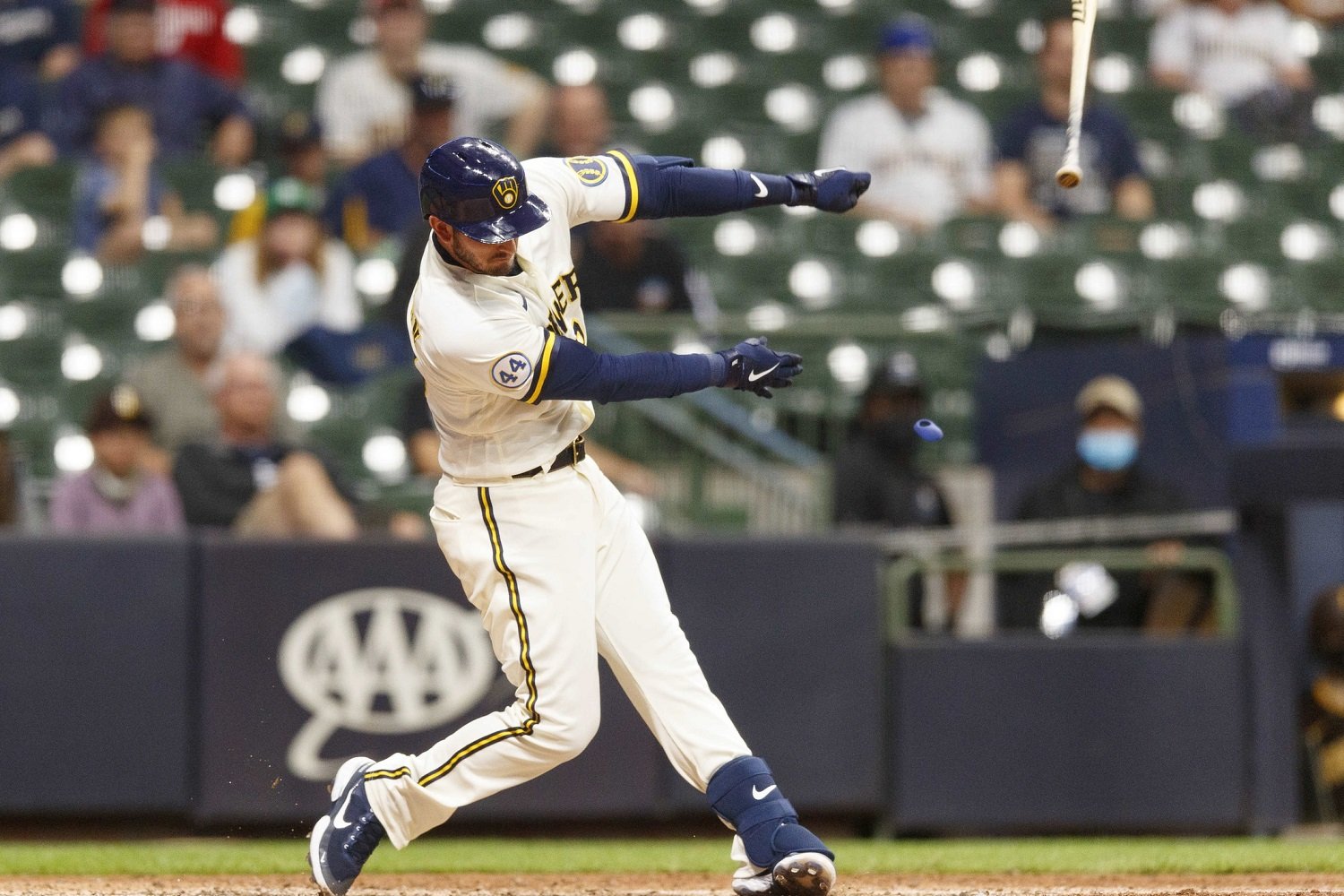 The Weekly Dispatch is a column on the Brewers. 'On' may do heavier lifting on some weeks than others. First things first, temper your enthusiasm for revived Brewer bats: they hung 19 runs on a Pittsburgh Pirates club that lacks major league talent up and down its roster, left a young arm out to rot -- rightly earning the non-partisan scorn of Baseball Twitter -- and is about to sell its best commodity for what will almost certainly be 40 cents on the dollar. What they did Friday night is decidedly the exception to the rule. We can look at a more manageable schedule and probably anticipate the Brewers build their division lead by 2-3 games in a tripartite involving the Pirates, Chicago Cubs and Pirates again, before hitting the road for stronger competition; the Minnesota Twins and the almost Minnesota ballclub, the San Francisco Giants, lead into the All-Star break. The Brewers won't hang 19 runs every night, especially when they're not designed (primarily or otherwise) to fill up box scores. This remains a run prevention team that doesn't do a particularly good job of preventing runs. They are overly reliant on a injury-riddled pitching staff and three true outcomes (top-six in MLB in HR, BB, SO) and lefty bats in a home ballpark with a short right field fence that is, for the first time in its 20+ year history, benefiting pitchers. Whether that's the humidor or baseballs with the apparent composition of a wet sock, MLB has done the Brewers no favors in 2022. In the same breath, though, the Brewers are doing themselves no favors this year. This space has mentioned the apparent lack of advance scouting and good analysis on opposing pitchers in the past. It is a deficiency that has plagued this organization long before its current administration. It takes no real acumen for strategy to rely on three true outcomes: either hit ball hard, don't swing at ball. or get out trying, requires minimal mental investment. The team approach to offense -- something, again, that has less to do with whomever occupies the hitting coach position and more to do with whomever is running baseball operations -- has been to lift and drive the ball, something that can best be accomplished with hanging breaking stuff and fastballs. The problem is that if a batter is unable to recognize a pitch, and the Brewers all season have struggled to pull the trigger on hanging stuff, it's easy to fool him. So they launch, third in the majors in home runs, feasting on lesser opponents and scraping by against contenders. I looked at all batted ball outcomes in 2022 where Brewers hitters have made contact with a launch angle of 30 degrees or greater, and removed small sample size hitters to normalize results. The results? Well, Brewers hitters are clearly not being put in a position to succeed. While these 30-degree and up outcomes represent less than 1.5% of total pitches seen, they comprise nearly 21% of team outs. If a pitcher wants to beat the Brewers, they'll simply get them to do what they've been instructed to do. Here are the month-by-month breakdowns: April: 21-147, .126 BA, .158 xBA , .057 BAbip, .349 SLG, 46.49 average launch angle May: 32-196, .181 BA, .176 xBA, .027 BAbip, .661 SLG, 44.57 average launch angle June: 19-169, .130 BA, 140 xBA, .057 BAbip, .510 SLG, 46.26 average launch angle Bear in mind, these figures exclude cameo appearance players and the Brewers as a team don't chase outside the zone relative to league average. If they get under the ball, it's not going out. To wit, the numbers on batted balls with a launch between 26-29* are much more encouraging, but the sample size is far smaller. Opposing batteries seem to know better and have adjusted accordingly. The Brewers, not so much. In essence, the team is winning in spite of its own organizational prerogative. It was borderline absurd to expect Brewers' starters to replicate their franchise-best dominance in 2021 (saying nothing of sustaining health) and emerge from a lockout-induced sequester with two new hitting coaches and suddenly start mashing. In fact, given the interrupted offseason and staff-in-transition -- and the strong possibility there was some sort of fire causing the smoke of offseason rumblings about David Stearns and/or Matt Arnold being lured to another organization -- a continued reliance on 3TO was probably the most reasonable prediction. Turning this cruiseliner around is no easy proposition. Getting better, more drivable pitches requires Brewers hitters to stop swinging at less-than-ideal balls in the zone. That's a challenge when they don't have adequate intel on what's coming, and regardless of whether it's a deficiency in databases or scouting, whatever it is they do have is obviously broken. Working counts into walks isn't a bad thing; there are those of us who remember the Brewers striking out with impunity not that long ago. Walks are great when a team is among the league leaders in grounding into double plays, keeps its bats on the shoulder more than league average, and also resides amongst the league's worst in BAbip. It also requires the Brewers to paradoxically give up on the home run in favor of flatter-planed swings, forcing pitchers and catchers into adjusting their approach, wearing them down and digging into bullpens. Moving Christian Yelich to lead-off, recommended here by BF's own Tim Muma weeks before it happened, is in a way a concession to the need for a change in approach. This is also a roster that wasn't necessarily built for athleticism on the base paths or for putting the ball in play. Given the litany of injuries and the lack of adequate reinforcements at Triple-A, making moves toward an offensive sea change in-season is highly unlikely. The Brewers are, from this vantage point, stuck with what they've got: a team that might be good enough to get into October, but also has some uncomfortably familiar 2014 vibes. After three months of 2022, the takeaway from the data is clear: if the ball gets in the air, hope for the best and expect the worst. Baseball Savant, FanGraphs, Baseball Reference and Statmuse were instrumental in developing this piece.
 -
Until all the tough conversations are had and we genuinely bridge and reconcile racial divides in this country, Juneteenth will only be salt in the wound. The game that gave us Jackie Robinson, Larry Doby and Henry Aaron can and should lead the way. Image courtesy of © Benny Sieu-USA TODAY Sports Until all the tough conversations are had and we genuinely bridge and reconcile racial divides in this country, Juneteenth will only be salt in the wound. The game that gave us Jackie Robinson, Larry Doby and Henry Aaron can and should lead the way. The Weekly Dispatch is a column on the Brewers. 'On' may do heavier lifting on some weeks than others. Baseball requires a kind of commitment antithetical to American life. The season is a day-in, day-out orchestral performance, different from basketball's jazz, football's marching band, hockey's 80s butt rock or soccer's 28-year-long song. It is -- provided current leadership is not allowed to have its way -- unconstrained by artificial time constraints: a baseball game conceivably could have no end. It is a relic of a bygone era; of the sports Americans were drawn to 100 years ago. Others, like boxing and horse racing, are marginal events that surface on the societal radar a handful of times a year. It is a game birthed in the city and given to (and perhaps made more perfect by) the country, a pathway for those from the latter to join the former. Baseball has survived five wars, four impeachment crises, numerous work stoppages, several pandemics and some seriously incompetent, spineless or otherwise bumbling leadership. It may even survive Bob Manfred. Another relic of a bygone era, a spectre lingering over American life that has been allowed to stay too long, is our stained legacy of racism. Some have called it America's 'original sin,' drawing from the biblical allegory of creation and the Garden of Eden. In the throes of a pandemic, our societal consciousness was pricked by footage of George Floyd's needless, senseless murder. We had a unique moment in history, a window wherein we could have addressed racial strife and inequity as well as police reform without the influence of partisan hacks or agents provocateurs. The fact that we as a society, as Americans, failed to seize upon it is a footnote written to our everlasting shame. 'Stick to sports' is a refrain that dies on arrival; sports exist within the milieu of life and asking its participants and proprietors to do is to ask a dandelion not reproduce. It is often proffered in the worst faith in that the person who requests it of the other disagrees to the point of demanding a self-imposed restriction on his or her liberty. It is an attitude that says 'I will patronize you insofar as I hear nothing inconvenient to me.' Tyranny in three words, often asked by paper tigers incapable of and unwilling to defend themselves. Milwaukee is notoriously the most segregated city in America. Its interstate highways -- concrete and rebar overbuild that, amongst other victims, claimed both Bronzeville and Borchert Field -- served and continue to serve as racially-based neighborhood boundaries. White flight into satellite cities and suburbs, then exburbs, then municipalities beyond, exacerbated racial tension. Baseball did its part in erecting walls between black and white Americans, 'a victim of its own prejudice,' as Jerry Malloy put it. Moses Fleetwood Walker was mercilessly taunted by opposing teams and fans alike in his one season playing major league (American Association) baseball with Toledo. The 'gentleman's agreement' in 1887 gave us the grounds for the modern-day Major Leagues. Active, actionable social evil became a banality within the game when Branch Rickey and Jackie Robinson would cause their seismic shift in sports -- and American -- life. The thing about time is that it allows us to order or compartmentalize our lives. It is a conditioning mechanism. Start waking up at 4:30 in the morning for a week and it takes two weeks to adjust and four more weeks to re-adjust. Work a 8-5 job with a noon lunch and before long, you begin to get hungry at 11:15. More than physical responses, time allows us to restrict our contextual awareness, for better or worse. Other sports may unify a community for a short time -- see Milwaukee in 2021 with the Bucks - but a season where the first half barely matters and the playoffs are an interminable slog of exhausted teams pitted against one another in a war of attrition does not lend itself toward sustainable community. Football commands one sacred day a week for its consumers while spinning a cult-like web around them, convincing them that watching men kill themselves in an act of gridiron martyrdom with an oblong ball is worth ordering their existence. It is the game shaped by the advent of television more than any other. Glorious warfare, brought to you by Little Caesars and DraftKings. 'Baseball is boring!' is the common reply from those who do not appreciate it. To the outsider, the kid who wanders into the room to see what's on, it looks like a lot of nothing. It's the game made for radio, every day of the season is a narratival process kept with scorecards and broadcasters who become familiar, close friends, even family. (Can Brewers fans imagine a baseball summer without Bob Uecker? Sure, road games are handled by a talented crew of Jeff Levering, Lane Grindle and Josh Maurer, but their presence only underscores Uecker's absence.) That kind of shared experience, unconcerned with the passage of time -- after all, it is a pastime -- cultivates something more than fair-weathered affiliation or a pseudo-military fraternal order. Like the (multi-cultural!) emergence of barbecue in America, a process that lends itself to cold beverages and conversation while tending to a pit and exercising the patience that only comes from being exposed to smoked meat for hours at a time, baseball engenders a deeper, more intimate relationship, one that facilitates friendships and encourages shared life. Life is boring, if one sits in front of a television and is spoonfed its programming. "Milwaukee was perfect for me. Any player would have been fortunate to play in front of those fans. Baseball has never seen fans like Milwaukee's in the 1950s and never will again." -- Henry Aaron Aaron's recollections of his time in Wisconsin are overwhelmingly positive; as a minor leaguer in Eau Claire, he was welcomed into a community largely unfamiliar with African-Americans and only earned equity on his time there by hitting .336 in his sole season with the Bears. Hammer helped the Braves, along with fellow African-Americans in Wes Covington and Bill Bruton, to Milwaukee's only World Series championship in 1957 and became a god to children throughout the Upper Midwest, which was then entirely Braves radio territory. Aaron prompted desegregation in Mequon, where he bought a home in 1958 and was a forceful, if publicly understated influence for racial justice and reconciliation in Greater Milwaukee. The Braves left Milwaukee after 1965. It is a tragic irony -- correlation, not causation, but nonetheless ironic -- that should not be lost on anyone that Milwaukee's race riot erupted two years later. Aaron sold his home shortly thereafter, making Atlanta his family's full-time home. The freeway system remodeled a fractured city. Baseball diamonds took up too much valuable real estate. Televisions proliferated in homes throughout America, showing cities and countries on fire and football on Sundays. The Green Bay Packers became long-term interlopers for spurned Wisconsinites in what was, up to that point, baseball-obsessed Wisconsin. Baseball is an enduring reflection of life and society: from Cap Anson's bigotry to the Negro Leagues' innovations that would transform the game in its golden age, to Rickey's persistence and vision to Jackie Robinson's endurance and performance under extreme pressure, to Henry Aaron's life and legacy of baseball and personal excellence, to baseball's perception now as a white person's game with an obscenely-expensive entry point for participation. The blemishes are not slights on the game, they are indictments of our culture. A game that distinctly lends itself so well to relationship-building has become an ivory tower. Those who love this game ought to be ashamed at how it has regressed from social conscience. It took far too long for us to formally recognize Juneteenth as a holiday for all Americans, but if anything, the day shows us how far we've drifted from visions of racial unity and justice shared by so many, some to the point of personal sacrifice, over generations. We need more opportunities to see and share life together, experience one another and foster conversations that can break down personal and social barriers. More than another Henry Aaron or Roberto Clemente -- though to have anyone who can even remotely get their feet into those shoes would be more than welcomed -- we need to recognize our American need for community, from the city to the suburb to the country and back again. From a tailgate, to giving a foul ball to a child, to bringing the family to the ballpark and seeing that first glimpse of green grass and all those seats, baseball can be a transcendent experience that draws out the best in us: wonder, generosity, kindness, patience, endurance, inspiration, love. All the good things that make life worth living inside and outside stadium confines. Things that help us see past race and affirm one another's humanity and dignity. Things with which evil cannot coexist. There is a game with 162 chances a year that can do just that. I believe baseball can change the world, but only if we want it to. View full article
-
The Weekly Dispatch: Baseball Can Change the World, If We Want It To
Brent Sirvio posted an article in Brewers
 The Weekly Dispatch is a column on the Brewers. 'On' may do heavier lifting on some weeks than others. Baseball requires a kind of commitment antithetical to American life. The season is a day-in, day-out orchestral performance, different from basketball's jazz, football's marching band, hockey's 80s butt rock or soccer's 28-year-long song. It is -- provided current leadership is not allowed to have its way -- unconstrained by artificial time constraints: a baseball game conceivably could have no end. It is a relic of a bygone era; of the sports Americans were drawn to 100 years ago. Others, like boxing and horse racing, are marginal events that surface on the societal radar a handful of times a year. It is a game birthed in the city and given to (and perhaps made more perfect by) the country, a pathway for those from the latter to join the former. Baseball has survived five wars, four impeachment crises, numerous work stoppages, several pandemics and some seriously incompetent, spineless or otherwise bumbling leadership. It may even survive Bob Manfred. Another relic of a bygone era, a spectre lingering over American life that has been allowed to stay too long, is our stained legacy of racism. Some have called it America's 'original sin,' drawing from the biblical allegory of creation and the Garden of Eden. In the throes of a pandemic, our societal consciousness was pricked by footage of George Floyd's needless, senseless murder. We had a unique moment in history, a window wherein we could have addressed racial strife and inequity as well as police reform without the influence of partisan hacks or agents provocateurs. The fact that we as a society, as Americans, failed to seize upon it is a footnote written to our everlasting shame. 'Stick to sports' is a refrain that dies on arrival; sports exist within the milieu of life and asking its participants and proprietors to do is to ask a dandelion not reproduce. It is often proffered in the worst faith in that the person who requests it of the other disagrees to the point of demanding a self-imposed restriction on his or her liberty. It is an attitude that says 'I will patronize you insofar as I hear nothing inconvenient to me.' Tyranny in three words, often asked by paper tigers incapable of and unwilling to defend themselves. Milwaukee is notoriously the most segregated city in America. Its interstate highways -- concrete and rebar overbuild that, amongst other victims, claimed both Bronzeville and Borchert Field -- served and continue to serve as racially-based neighborhood boundaries. White flight into satellite cities and suburbs, then exburbs, then municipalities beyond, exacerbated racial tension. Baseball did its part in erecting walls between black and white Americans, 'a victim of its own prejudice,' as Jerry Malloy put it. Moses Fleetwood Walker was mercilessly taunted by opposing teams and fans alike in his one season playing major league (American Association) baseball with Toledo. The 'gentleman's agreement' in 1887 gave us the grounds for the modern-day Major Leagues. Active, actionable social evil became a banality within the game when Branch Rickey and Jackie Robinson would cause their seismic shift in sports -- and American -- life. The thing about time is that it allows us to order or compartmentalize our lives. It is a conditioning mechanism. Start waking up at 4:30 in the morning for a week and it takes two weeks to adjust and four more weeks to re-adjust. Work a 8-5 job with a noon lunch and before long, you begin to get hungry at 11:15. More than physical responses, time allows us to restrict our contextual awareness, for better or worse. Other sports may unify a community for a short time -- see Milwaukee in 2021 with the Bucks - but a season where the first half barely matters and the playoffs are an interminable slog of exhausted teams pitted against one another in a war of attrition does not lend itself toward sustainable community. Football commands one sacred day a week for its consumers while spinning a cult-like web around them, convincing them that watching men kill themselves in an act of gridiron martyrdom with an oblong ball is worth ordering their existence. It is the game shaped by the advent of television more than any other. Glorious warfare, brought to you by Little Caesars and DraftKings. 'Baseball is boring!' is the common reply from those who do not appreciate it. To the outsider, the kid who wanders into the room to see what's on, it looks like a lot of nothing. It's the game made for radio, every day of the season is a narratival process kept with scorecards and broadcasters who become familiar, close friends, even family. (Can Brewers fans imagine a baseball summer without Bob Uecker? Sure, road games are handled by a talented crew of Jeff Levering, Lane Grindle and Josh Maurer, but their presence only underscores Uecker's absence.) That kind of shared experience, unconcerned with the passage of time -- after all, it is a pastime -- cultivates something more than fair-weathered affiliation or a pseudo-military fraternal order. Like the (multi-cultural!) emergence of barbecue in America, a process that lends itself to cold beverages and conversation while tending to a pit and exercising the patience that only comes from being exposed to smoked meat for hours at a time, baseball engenders a deeper, more intimate relationship, one that facilitates friendships and encourages shared life. Life is boring, if one sits in front of a television and is spoonfed its programming. "Milwaukee was perfect for me. Any player would have been fortunate to play in front of those fans. Baseball has never seen fans like Milwaukee's in the 1950s and never will again." -- Henry Aaron Aaron's recollections of his time in Wisconsin are overwhelmingly positive; as a minor leaguer in Eau Claire, he was welcomed into a community largely unfamiliar with African-Americans and only earned equity on his time there by hitting .336 in his sole season with the Bears. Hammer helped the Braves, along with fellow African-Americans in Wes Covington and Bill Bruton, to Milwaukee's only World Series championship in 1957 and became a god to children throughout the Upper Midwest, which was then entirely Braves radio territory. Aaron prompted desegregation in Mequon, where he bought a home in 1958 and was a forceful, if publicly understated influence for racial justice and reconciliation in Greater Milwaukee. The Braves left Milwaukee after 1965. It is a tragic irony -- correlation, not causation, but nonetheless ironic -- that should not be lost on anyone that Milwaukee's race riot erupted two years later. Aaron sold his home shortly thereafter, making Atlanta his family's full-time home. The freeway system remodeled a fractured city. Baseball diamonds took up too much valuable real estate. Televisions proliferated in homes throughout America, showing cities and countries on fire and football on Sundays. The Green Bay Packers became long-term interlopers for spurned Wisconsinites in what was, up to that point, baseball-obsessed Wisconsin. Baseball is an enduring reflection of life and society: from Cap Anson's bigotry to the Negro Leagues' innovations that would transform the game in its golden age, to Rickey's persistence and vision to Jackie Robinson's endurance and performance under extreme pressure, to Henry Aaron's life and legacy of baseball and personal excellence, to baseball's perception now as a white person's game with an obscenely-expensive entry point for participation. The blemishes are not slights on the game, they are indictments of our culture. A game that distinctly lends itself so well to relationship-building has become an ivory tower. Those who love this game ought to be ashamed at how it has regressed from social conscience. It took far too long for us to formally recognize Juneteenth as a holiday for all Americans, but if anything, the day shows us how far we've drifted from visions of racial unity and justice shared by so many, some to the point of personal sacrifice, over generations. We need more opportunities to see and share life together, experience one another and foster conversations that can break down personal and social barriers. More than another Henry Aaron or Roberto Clemente -- though to have anyone who can even remotely get their feet into those shoes would be more than welcomed -- we need to recognize our American need for community, from the city to the suburb to the country and back again. From a tailgate, to giving a foul ball to a child, to bringing the family to the ballpark and seeing that first glimpse of green grass and all those seats, baseball can be a transcendent experience that draws out the best in us: wonder, generosity, kindness, patience, endurance, inspiration, love. All the good things that make life worth living inside and outside stadium confines. Things that help us see past race and affirm one another's humanity and dignity. Things with which evil cannot coexist. There is a game with 162 chances a year that can do just that. I believe baseball can change the world, but only if we want it to.
 -
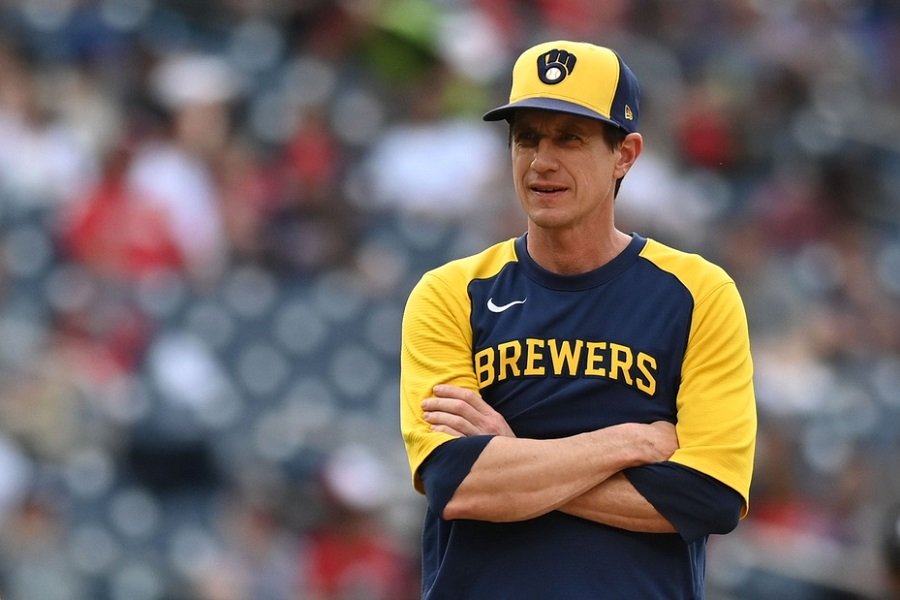 The Weekly Dispatch is a column on the Brewers. 'On' may do heavier lifting on some weeks than others. The response from many in the Brewers' fourth estate has been deployed before, and amounts to a series of baseball cliches. 'It's a long season,' 'Every team slumps from time to time,' 'Baseball is a difficult game,' even 'You can't win 'em all.' These are all factual, if not platitudinous statements which provide cold comfort to a suffering interested public. It is absolutely accurate that baseball teams 1) have an excruciatingly-long season, 2) go through rough stretches of play, 3) participate in one of the most difficult games ever devised and that, as of publication, 4) no team has ever gone 162-0. But these facts simply do not fit the situation, like Tom Callahan putting on a sportcoat. The Milwaukee Brewers are a team on fire, and this is not fine. As the week lurched on, I wondered when manager Craig Counsell would get himself kicked out of a contest, and it happened in about as perfunctory a manner as possible in Friday night's playing both down and dead to the woeful Washington Nationals. Granted, anyone's managerial ire will be prompted by the joint umpirical incompetence of home plate officiant Ramon De Jesus and crew chief Alfonso Marquez, but this was a team sliding out of first place, with a manager on the cusp of meeting Phil Garner's club record for wins for a week, a lineup that had been shut out three times in six games and, on more than one occasion in the last month, pulled some Mike McCarthy classic 'make the score look closer than the game really was' efforts. Was this swoon really all that surprising? Well, no: they've been blown out more than they've been the ones doing the blowing out, they've been especially pinched by the Manfred Man and do not hold a winning record against a team we can reasonably expect to be playing meaningful baseball in October. (The teams against which the Brewers have a winning record: the Baltimore Orioles, Cincinnati Reds, Miami Marlins and Pittsburgh Pirates. They are .500 against the Chicago Cubs, St. Louis Cardinals and, after Friday night's debacle, the Nationals.) This was also a Brewers club that entered the season with nearly the same roster makeup as the one dismissed by the Atlanta Braves last fall. The Brewers' bet was contingent on two things: One, a razor-thin margin of error; the Brewers needed an all-time collective performance from its pitching staff to overcome its deficiencies at the plate and win the NL Central in '21. The Brewers would not only need it a second time, but they'd also need the pitching to hold up both in effectiveness and against injury. That has not happened for obvious reasons, and may have been a bridge too far in the first place. The Brewers also, secondly, needed franchise player Christian Yelich to return to something resembling his MVP form and better approaches up and down the lineup. They added Andrew McCutchen and Hunter Renfroe to provide protection against left-handed pitching and added pop, respectively. How is that working out? 2021 slash (pitchers excluded): .233/.317/.396, OPS+ 96 2022: .230/.306/.393, OPS+ 95 Andy Haines was, in fact, a scapegoat. Hitting coaches are only as effective as they are allowed to be, and it has been strongly suggested on background to this writer that the issue with offensive performance is flawed at the higher levels of Brewers baseball operations. (Yes, even bloggers can have sources.) Fool me once, and so on. Back to the heart of the matter: fact-truth and losing streaks. Yes, every team struggles in the course of a season. There are chapters every year that are painful to write, and more painful to read. There isn't a club in Major League Baseball that doesn't have bad body language, look lifeless or otherwise just have a series of Job-grade bad breaks. The Milwaukee Brewers have had 24 losing streaks of at least seven games in the last 30 years. Every team struggles, but not every team does this. Yes, it is true that this happened in 2011 and 2018 en route to division championships, but those are the exceptions rather than the rule. Final records for those clubs in the current stadium era, excluding the outliers: 2015: 68-94 2014: 82-80 2012: 83-79 2010: 77-85 2006: 75-87 2005: 81-81 2004: 67-94 2002: 56-106 2001: 68-94 There are some really, really bad teams here. There are also some interesting notes to correlate: 2002: Davey Lopes is fired and replaced by Jerry Royster. 2005: Rich Dauer and Rich Donnelly leave the Brewers coaching staff after the season. 2006: Robin Yount and Butch Wyneger leave the Brewers coaching staff after the season. 2010: Ken Macha, Willie Randolph and Rick Peterson leave the Brewers after the season. 2015: After an offseason organizational review in which Johnny Narron and Garth Iorg are dismissed, Ron Roenicke inexplicably survives and is fired about a month into the season. Craig Counsell takes over. Even after those division championship seasons, there were changes: Dale Sveum left after 2011 (presumably because he didn't get the job when Macha was fired) and Darnell Coles departed after 2018 (so, too, did Derek Johnson, but he left for the Reds courtesy a contractual loophole, not anything to do with performance.) If history is any indicator, Craig Counsell pulling a Norman Dale Friday night is a tacit concession that this clubhouse and organization are in need of a shake-up. It didn't take an eight-game stretch for David Stearns and Matt Arnold to go get Willy Adames in 2021, but going and getting a player two years in a row serves to lay bare what is only thinly-veiled now: the Brewers are leaking oil, and fans are not unjustified in not showing up to home games (15th in MLB in 2022, lagging behind top-10 attendance paces set since 2017; you can't blame the schedule, three other clubs have drawn more in 27 home games) and wondering aloud if things shouldn't change. In most other seasons and under most circumstances, I'd come down hard on the 'FIRE SO-AND-SO' crowd. The law firm of Timmons and Dawson hasn't had enough time -- or perhaps license -- to do what they can do transform the offense. Chris Hook is not to blame for the injuries to the pitching staff. The starting rotation hasn't been an outright liability, they were merely asked to do the historical for a second consecutive season. Mark Attanasio was too new and trusting an owner to pull the trigger on Doug Melvin until it was about four to six (or more!) seasons too late. Craig Counsell probably should have a few manager of the year awards and is everything one could ask for in a homegrown success story, but the reality of the matter is that, as the tenured manager in the National League with zero pennants to show for it, it's not unfair to ask if he may have lost the clubhouse in the wake of several relative successes. The coaches have changed, but the principal actors are all the same: Counsell, Arnold, Stearns, Tod Johnson, Tom Flanagan. It's not unfair to ask, based on overall performance since the gang got together in 2017, if this is the leadership team that can get the Brewers from being more than their 2020s cover band of the 2000s Oakland Athletics. Not all experts are sages. Further, it's not unfair for fans -- the ones who turn the stiles, pay bloated parking prices and even-more-bloated prices for concessions and Fanatics' and FOCO's poorly-manufactured, zero-quality-control Brewers swag -- to be vocal about expecting more from their investment, especially when the stadium has a roof so that those who travel to Milwaukee for games while paying about $5/gallon to get there. Put a dysfunctional or otherwise underperforming product on the field, and you won't get people from West Allis to show up. Why should anyone from Wausau? What is unfair is to deride critics as hitting the panic button, to deflect or attempt to disarm criticism by talking about season length or otherwise paltering by way of factual, but glib statements. Not all the critics are irrational. If losing doesn't force reevaluation, or prompt those who can to press for answers and insights, then we're all no more than wrestling marks. The difference is that we don't have an equivalent domestic alternative to MLB in the way that WWE has AEW. (Can you imagine Vince McMahon's product with Bob Manfred's antitrust exemption?) The fact is that this Brewers club is not in good shape right now. The Brewers front office made a bad bet, overvalued its roster and after five years together, the key stakeholders in baseball operations should be held to higher expectations than merely showing up for October baseball. The fact is also that this team will not be this bad for the next three months. But history suggests that, with this kind of slide, there may and should be some significant changes coming to the organization. Facts can no longer hide the truth. What's more, they shouldn't.
-
- 2
-

-
- craig counsell
- christian yelich
- (and 2 more)
-
There is a considerable gap between a thing being 'factual' and that thing being 'truthful'. Facts can be deployed in the service of understanding. They can just as easily be used to disinform. This is a fact: the Milwaukee Brewers have lost eight games in a row. Image courtesy of © Tommy Gilligan-USA TODAY Sports There is a considerable gap between a thing being 'factual' and that thing being 'truthful'. Facts can be deployed in the service of understanding. They can just as easily be used to disinform. This is a fact: the Milwaukee Brewers have lost eight games in a row. The Weekly Dispatch is a column on the Brewers. 'On' may do heavier lifting on some weeks than others. The response from many in the Brewers' fourth estate has been deployed before, and amounts to a series of baseball cliches. 'It's a long season,' 'Every team slumps from time to time,' 'Baseball is a difficult game,' even 'You can't win 'em all.' These are all factual, if not platitudinous statements which provide cold comfort to a suffering interested public. It is absolutely accurate that baseball teams 1) have an excruciatingly-long season, 2) go through rough stretches of play, 3) participate in one of the most difficult games ever devised and that, as of publication, 4) no team has ever gone 162-0. But these facts simply do not fit the situation, like Tom Callahan putting on a sportcoat. The Milwaukee Brewers are a team on fire, and this is not fine. As the week lurched on, I wondered when manager Craig Counsell would get himself kicked out of a contest, and it happened in about as perfunctory a manner as possible in Friday night's playing both down and dead to the woeful Washington Nationals. Granted, anyone's managerial ire will be prompted by the joint umpirical incompetence of home plate officiant Ramon De Jesus and crew chief Alfonso Marquez, but this was a team sliding out of first place, with a manager on the cusp of meeting Phil Garner's club record for wins for a week, a lineup that had been shut out three times in six games and, on more than one occasion in the last month, pulled some Mike McCarthy classic 'make the score look closer than the game really was' efforts. Was this swoon really all that surprising? Well, no: they've been blown out more than they've been the ones doing the blowing out, they've been especially pinched by the Manfred Man and do not hold a winning record against a team we can reasonably expect to be playing meaningful baseball in October. (The teams against which the Brewers have a winning record: the Baltimore Orioles, Cincinnati Reds, Miami Marlins and Pittsburgh Pirates. They are .500 against the Chicago Cubs, St. Louis Cardinals and, after Friday night's debacle, the Nationals.) This was also a Brewers club that entered the season with nearly the same roster makeup as the one dismissed by the Atlanta Braves last fall. The Brewers' bet was contingent on two things: One, a razor-thin margin of error; the Brewers needed an all-time collective performance from its pitching staff to overcome its deficiencies at the plate and win the NL Central in '21. The Brewers would not only need it a second time, but they'd also need the pitching to hold up both in effectiveness and against injury. That has not happened for obvious reasons, and may have been a bridge too far in the first place. The Brewers also, secondly, needed franchise player Christian Yelich to return to something resembling his MVP form and better approaches up and down the lineup. They added Andrew McCutchen and Hunter Renfroe to provide protection against left-handed pitching and added pop, respectively. How is that working out? 2021 slash (pitchers excluded): .233/.317/.396, OPS+ 96 2022: .230/.306/.393, OPS+ 95 Andy Haines was, in fact, a scapegoat. Hitting coaches are only as effective as they are allowed to be, and it has been strongly suggested on background to this writer that the issue with offensive performance is flawed at the higher levels of Brewers baseball operations. (Yes, even bloggers can have sources.) Fool me once, and so on. Back to the heart of the matter: fact-truth and losing streaks. Yes, every team struggles in the course of a season. There are chapters every year that are painful to write, and more painful to read. There isn't a club in Major League Baseball that doesn't have bad body language, look lifeless or otherwise just have a series of Job-grade bad breaks. The Milwaukee Brewers have had 24 losing streaks of at least seven games in the last 30 years. Every team struggles, but not every team does this. Yes, it is true that this happened in 2011 and 2018 en route to division championships, but those are the exceptions rather than the rule. Final records for those clubs in the current stadium era, excluding the outliers: 2015: 68-94 2014: 82-80 2012: 83-79 2010: 77-85 2006: 75-87 2005: 81-81 2004: 67-94 2002: 56-106 2001: 68-94 There are some really, really bad teams here. There are also some interesting notes to correlate: 2002: Davey Lopes is fired and replaced by Jerry Royster. 2005: Rich Dauer and Rich Donnelly leave the Brewers coaching staff after the season. 2006: Robin Yount and Butch Wyneger leave the Brewers coaching staff after the season. 2010: Ken Macha, Willie Randolph and Rick Peterson leave the Brewers after the season. 2015: After an offseason organizational review in which Johnny Narron and Garth Iorg are dismissed, Ron Roenicke inexplicably survives and is fired about a month into the season. Craig Counsell takes over. Even after those division championship seasons, there were changes: Dale Sveum left after 2011 (presumably because he didn't get the job when Macha was fired) and Darnell Coles departed after 2018 (so, too, did Derek Johnson, but he left for the Reds courtesy a contractual loophole, not anything to do with performance.) If history is any indicator, Craig Counsell pulling a Norman Dale Friday night is a tacit concession that this clubhouse and organization are in need of a shake-up. It didn't take an eight-game stretch for David Stearns and Matt Arnold to go get Willy Adames in 2021, but going and getting a player two years in a row serves to lay bare what is only thinly-veiled now: the Brewers are leaking oil, and fans are not unjustified in not showing up to home games (15th in MLB in 2022, lagging behind top-10 attendance paces set since 2017; you can't blame the schedule, three other clubs have drawn more in 27 home games) and wondering aloud if things shouldn't change. In most other seasons and under most circumstances, I'd come down hard on the 'FIRE SO-AND-SO' crowd. The law firm of Timmons and Dawson hasn't had enough time -- or perhaps license -- to do what they can do transform the offense. Chris Hook is not to blame for the injuries to the pitching staff. The starting rotation hasn't been an outright liability, they were merely asked to do the historical for a second consecutive season. Mark Attanasio was too new and trusting an owner to pull the trigger on Doug Melvin until it was about four to six (or more!) seasons too late. Craig Counsell probably should have a few manager of the year awards and is everything one could ask for in a homegrown success story, but the reality of the matter is that, as the tenured manager in the National League with zero pennants to show for it, it's not unfair to ask if he may have lost the clubhouse in the wake of several relative successes. The coaches have changed, but the principal actors are all the same: Counsell, Arnold, Stearns, Tod Johnson, Tom Flanagan. It's not unfair to ask, based on overall performance since the gang got together in 2017, if this is the leadership team that can get the Brewers from being more than their 2020s cover band of the 2000s Oakland Athletics. Not all experts are sages. Further, it's not unfair for fans -- the ones who turn the stiles, pay bloated parking prices and even-more-bloated prices for concessions and Fanatics' and FOCO's poorly-manufactured, zero-quality-control Brewers swag -- to be vocal about expecting more from their investment, especially when the stadium has a roof so that those who travel to Milwaukee for games while paying about $5/gallon to get there. Put a dysfunctional or otherwise underperforming product on the field, and you won't get people from West Allis to show up. Why should anyone from Wausau? What is unfair is to deride critics as hitting the panic button, to deflect or attempt to disarm criticism by talking about season length or otherwise paltering by way of factual, but glib statements. Not all the critics are irrational. If losing doesn't force reevaluation, or prompt those who can to press for answers and insights, then we're all no more than wrestling marks. The difference is that we don't have an equivalent domestic alternative to MLB in the way that WWE has AEW. (Can you imagine Vince McMahon's product with Bob Manfred's antitrust exemption?) The fact is that this Brewers club is not in good shape right now. The Brewers front office made a bad bet, overvalued its roster and after five years together, the key stakeholders in baseball operations should be held to higher expectations than merely showing up for October baseball. The fact is also that this team will not be this bad for the next three months. But history suggests that, with this kind of slide, there may and should be some significant changes coming to the organization. Facts can no longer hide the truth. What's more, they shouldn't. View full article
-
The 2022 MLB season met its first checkpoint just after Memorial Day and, against all odds or cursory glances, the weathered, well-traveled Milwaukee Brewers sat atop the National League Central. As history is wont to do, it provides us a glimpse into the future. Or does it? Image courtesy of © Jeff Hanisch-USA TODAY Sports The 2022 MLB season met its first checkpoint just after Memorial Day and, against all odds or cursory glances, the weathered, well-traveled Milwaukee Brewers sat atop the National League Central. As history is wont to do, it provides us a glimpse into the future. Or does it? You'll note that the column's title has changed. I couldn't think of anything better when I first started here, so I settled on The Weekly. Of course, that is the name of the weekly news magazine produced by The New York Times. They are under no threat of infringement at the hands of a small-fry Brewers blogger, but even small-fry Brewers bloggers are capable of a reasonable sense of professionalism and self-respect. Having said that, The Weekly Dispatch is a column on the Brewers. 'On' may do heavier lifting on some weeks than others. After two months of season, one begins to get their first real sense of what a team is. There's enough sample size to the statistics provide context, and a historical plumbline by which the balance of the season may be measured. It is true that the Milwaukee Brewers are off to their finest start in club history, which is tempered some by the fact that Brewers club history isn't exactly sterling, and that we fans in 2022 exist alongside the best chapter in franchise history. Despite cruel and unusual scheduling -- though not fully included below, the Brewers as of composition time are winding down a particularly brutal stretch of 18 games in 17 consecutive days -- a spat of injuries that make less of an injury bug than a full-on, Exodus 10-grade plague of locusts, and some abysmal hitting for contact while also leading the league in home runs, the Brewers are living and dying by three true outcomes. Here is some historical context, so that Brewers fans might have a sense for what the team has accomplished, and what lies ahead. Teams in the wild card era [excluding 2020] that have played at least 51 games with 1900 plate appearances, with at least 350 hits, 430 strikeouts, 220 runs scored, 60 home runs and an OPS of at least .700: Results Table Rk Team W L Rank Postseason PA AB RS RA H 2B 3B HR RBI BA OBP SLG OPS BB IBB SO HBP SH SF ROE GDP SB CS 1 NYY 34 17 1 Division Champ 1946 1714 273 207 440 75 4 81 255 .257 .335 .447 .782 189 7 439 20 8 15 20 43 26 5 4 NYY 33 18 2 Wildcard 2004 1751 288 221 445 101 7 84 279 .254 .337 .464 .801 211 8 456 18 5 19 21 28 23 5 5 MIL 32 19 1 1900 1690 235 196 395 73 7 70 227 .234 .311 .410 .720 172 3 451 23 1 14 15 35 31 12 6 TBR 32 19 2 Wildcard 1979 1762 234 162 453 97 13 67 224 .257 .333 .441 .774 179 7 493 25 3 10 19 45 34 10 7 COL 32 19 3 Wildcard 1936 1747 259 218 466 92 11 66 249 .267 .324 .445 .769 138 7 441 16 23 12 20 34 12 11 8 BOS 31 20 2 Wildcard 1900 1723 264 212 448 110 4 68 244 .260 .322 .447 .769 140 7 449 22 2 12 20 37 22 5 9 LAD 31 20 2 Wildcard 2011 1727 263 189 420 77 11 62 252 .243 .342 .408 .750 228 17 466 36 10 10 13 32 16 5 10 SFG 31 20 1 Division Champ 1901 1664 239 181 377 72 7 71 226 .227 .314 .406 .720 199 11 499 16 13 8 22 42 21 6 11 TBR 31 20 1 Division Champ 1983 1748 252 202 404 97 5 62 238 .231 .317 .399 .716 197 7 539 26 4 7 20 23 28 13 12 ARI 31 20 2 Wildcard 1945 1756 253 198 462 92 13 71 238 .263 .330 .452 .782 165 15 450 13 7 4 16 29 48 12 13 NYY 31 20 2 Wildcard 2024 1783 280 214 478 81 6 78 265 .268 .346 .452 .797 201 2 459 17 7 13 29 42 32 9 14 ATL 31 20 1 Division Champ 1936 1710 229 184 421 77 6 70 221 .246 .321 .421 .742 177 5 467 16 21 11 23 37 16 12 16 CHC 30 21 3 2028 1749 275 221 452 89 7 82 264 .258 .349 .458 .807 221 16 458 30 12 16 16 41 13 9 17 CHC 29 22 4 1921 1676 237 206 404 71 9 62 228 .241 .324 .405 .729 180 8 482 33 14 17 16 33 31 12 18 MIL 29 22 2 Wildcard 1995 1751 250 237 435 74 2 81 246 .248 .333 .432 .765 204 18 492 23 2 11 12 47 30 10 19 BAL 29 22 2 Wildcard 1924 1738 231 219 450 99 3 69 219 .259 .324 .438 .762 164 9 435 9 1 12 14 41 8 6 20 BAL 29 22 2 Wildcard 1960 1765 230 222 439 89 7 75 213 .249 .314 .435 .749 154 4 430 20 8 12 13 54 20 15 21 SFG 28 23 3 1966 1725 264 237 424 86 3 64 252 .246 .327 .410 .737 193 3 432 25 0 23 14 38 21 8 22 LAA 27 24 2 1911 1710 237 208 426 78 6 68 228 .249 .321 .421 .742 169 8 467 15 10 7 12 35 30 13 23 BAL 27 24 5 1967 1801 229 234 457 85 3 69 217 .254 .311 .419 .730 140 3 456 14 2 10 23 34 12 4 24 MIL 27 24 2 1932 1735 259 236 441 95 11 72 249 .254 .325 .446 .771 165 8 471 17 12 3 16 33 42 17 25 CLE 27 24 2 Wildcard 1964 1756 252 233 460 105 10 65 241 .262 .329 .444 .774 169 6 432 16 6 17 14 33 38 10 26 MIL 27 24 4 1918 1698 263 211 438 78 11 71 253 .258 .328 .442 .770 163 22 440 20 25 12 13 27 15 17 27 ARI 26 25 2 2016 1813 264 225 465 112 11 73 252 .257 .323 .451 .774 156 8 462 26 9 11 11 36 25 3 28 CLE 26 25 1 Division Champ 1996 1794 247 231 445 96 4 75 240 .248 .318 .431 .749 168 8 438 19 7 7 11 25 27 12 29 OAK 26 25 2 Wildcard 1956 1755 229 236 430 99 7 62 220 .245 .315 .415 .731 165 2 460 21 2 13 14 38 11 10 30 TBR 26 25 3 1960 1728 232 206 425 75 10 71 223 .246 .326 .424 .751 197 12 529 15 7 12 13 33 23 8 31 ATL 25 26 1 WS Champ 1901 1668 248 248 391 79 7 81 240 .234 .316 .436 .752 178 15 476 28 12 15 11 31 14 6 32 NYM 25 26 3 1982 1757 235 248 426 83 6 64 227 .243 .321 .406 .727 179 12 485 29 9 8 14 38 17 9 33 TEX 25 26 3 1975 1745 285 276 441 106 9 80 275 .253 .333 .461 .794 192 6 500 22 6 8 22 36 37 12 34 CHC 25 26 1 Division Champ 2013 1757 239 238 416 80 12 66 222 .237 .325 .409 .734 206 18 445 29 12 9 25 40 15 8 35 CIN 25 26 5 1964 1730 259 318 437 72 8 78 246 .253 .330 .439 .768 181 11 437 23 20 10 18 29 30 14 Rk Team W L Rank Postseason PA AB RS RA H 2B 3B HR RBI BA OBP SLG OPS BB IBB SO HBP SH SF ROE GDP SB CS 36 COL 24 27 4 1998 1798 269 275 461 107 20 68 261 .256 .317 .452 .768 152 7 495 14 19 15 16 25 16 13 37 TOR 24 27 4 1941 1724 240 254 398 102 7 66 225 .231 .310 .413 .723 184 8 460 20 1 12 25 31 21 6 38 DET 24 27 5 1944 1714 239 260 414 85 11 60 228 .242 .327 .409 .736 203 10 448 16 5 6 24 41 14 14 39 DET 24 27 2 1910 1746 230 249 456 80 11 67 222 .261 .318 .435 .753 139 8 442 11 3 11 16 33 16 9 40 CIN 23 28 3 1956 1733 245 271 425 81 4 71 232 .245 .322 .420 .741 168 3 454 33 9 13 15 42 12 11 41 SEA 23 28 5 1976 1751 270 307 426 90 5 93 265 .243 .319 .460 .779 183 1 502 20 2 19 13 19 31 11 43 MIN 21 30 5 1922 1707 240 259 412 92 5 70 225 .241 .316 .424 .740 173 4 446 21 2 17 13 31 16 3 44 WSN 20 31 2 WS Champ 1939 1725 231 269 424 81 4 67 218 .246 .319 .414 .733 166 8 484 24 14 10 18 35 30 9 45 ARI 20 31 5 1957 1729 253 316 440 111 8 60 246 .255 .333 .432 .765 199 12 468 9 9 11 12 38 28 8 Provided by Stathead.com: View Stathead Tool Used Generated 6/4/2022. That's 41 teams, and only about half of them made it to October. The best statistical corollary to what the Brewers have done thus far is a few rows below their current campaign: last year's San Francisco Giants, who eked out the NL West on a hot final third of the season and were dismissed from the October proceedings at the hands of their ancient, transcontinental enemies in the Dodgers. What's also notable about this list is that it is in no way a determinant of success: there are the 2003 Cincinnati Reds, who hammered the ball to roughly a .500 record and finished the season 69-93. There are also the 2017 Chicago Cubs, who were similarly around .500 and went on to win the division in 2017. Only two clubs, as you can see, won the whole dang thing. The Brewers have done this offensive work before, in 2001, 2017 and 2019, with Richie Sexson, Jeromy Burnitz, Jose Hernandez and Geoff Jenkins swinging away toward a 68-94 record in '01. That 2017 club that came one heartbreaking game shy of playing postseason ball. And 2019, similarly hopeful, similarly heartbreaking, except that the broken heart came when Josh Hader was extraordinarily human (Remember when he wasn't destroying batters every night?) and Trent Grisham made the error that would, in time, give the Brewers Luis Urias and Eric Lauer. The other story here in the midst of all this offensive data is that it takes really good pitching to make offense count; that's what the Brewers have done thus far, and how the 2019 Washington Nationals and 2021 Atlanta Braves similarly 1) drove the Brewers out of October and 2) beat the Houston Astros to win it all. It's not a well-substantiated blueprint for success, but a [recent] blueprint nonetheless. There are still reasons to be bullish on this Brewers squad: The disproportionately road-heavy schedule now is complemented by a much more palatable second half featuring five of six series at home to close the season and zero three-city road trips. It won't necessarily be an easier schedule, but it's nothing compared to the logistical meat grinder the Brewers have been thrown into here in the front half of the season. The defense (and offense) will soon be bolstered by the return of Willy Adames and Hunter Renfroe. Three teams in the Central are not actively trying to win and the Brewers have 35 games against them the rest of the way; the Brewers have been fairly effective in 2022 at taking care of business against beatable opponents. There are also reasons to be concerned: as mentioned above, performance now is no indicator of future success. Some teams go on to the postseason, some flame out, most that do make it don't win pennants and none of these teams that played October ball had an OBP at the end of May as low as the 2022 Brewers. There are the soft tissue injuries (Adames, Brosseau, Renfroe, Urias) that seldom entirely resolve as a season grinds on. Christian Yelich surfaced for a moment and is mired again, now in a 3-29 slump entering Saturday, while batting nearly 100 points beneath his weight and OBP is not far over it. What if the bats come back to life? What if the pitching falters? What if the defensive yips up and down the roster continue? What if the team is plagued by more injuries? What if the Stearns-Arnold administration makes a move? The sense we get of this Brewers club is that there isn't much sense we can make of this club. And that kind of uncertainty engenders a disquiet amongst fans and followers that understandably leads to skepticism and doubt. What complicates this skepticism is that the Brewers have been postseason players for three years now with nothing to show for it but excruciating losses. At some point, people grow numb to a team that wins enough to lose when it really counts. Our rule of thirds here is that there are two-thirds of a season that can swing this club wildly in any direction. The Brewers are in a mix of contenders and cellar-dwellars and could as easily follow two of the last three World Series champions as they could those 2003 Reds, or, far more unlikely, their 2001 forebears. It's quite literally all in play. View full article
-
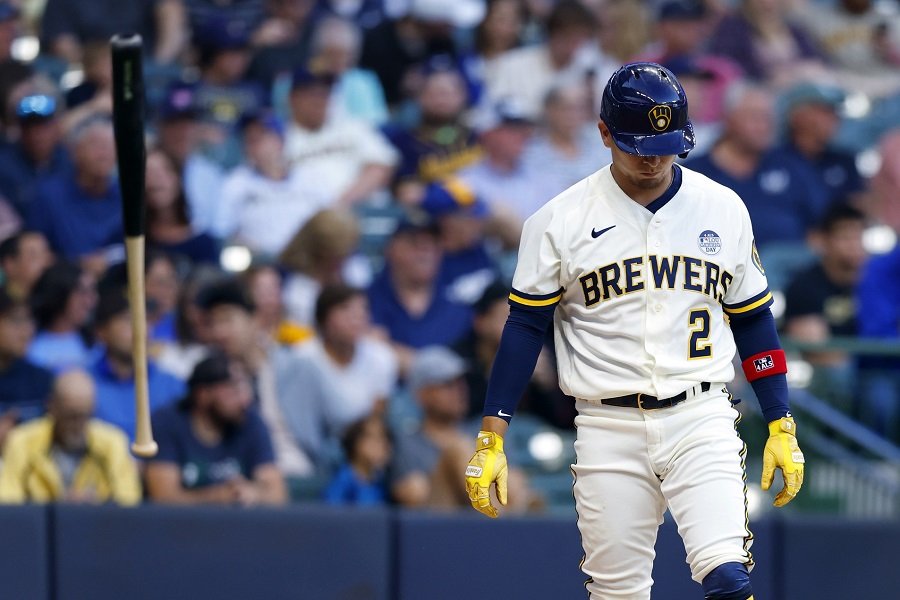 You'll note that the column's title has changed. I couldn't think of anything better when I first started here, so I settled on The Weekly. Of course, that is the name of the weekly news magazine produced by The New York Times. They are under no threat of infringement at the hands of a small-fry Brewers blogger, but even small-fry Brewers bloggers are capable of a reasonable sense of professionalism and self-respect. Having said that, The Weekly Dispatch is a column on the Brewers. 'On' may do heavier lifting on some weeks than others. After two months of season, one begins to get their first real sense of what a team is. There's enough sample size to the statistics provide context, and a historical plumbline by which the balance of the season may be measured. It is true that the Milwaukee Brewers are off to their finest start in club history, which is tempered some by the fact that Brewers club history isn't exactly sterling, and that we fans in 2022 exist alongside the best chapter in franchise history. Despite cruel and unusual scheduling -- though not fully included below, the Brewers as of composition time are winding down a particularly brutal stretch of 18 games in 17 consecutive days -- a spat of injuries that make less of an injury bug than a full-on, Exodus 10-grade plague of locusts, and some abysmal hitting for contact while also leading the league in home runs, the Brewers are living and dying by three true outcomes. Here is some historical context, so that Brewers fans might have a sense for what the team has accomplished, and what lies ahead. Teams in the wild card era [excluding 2020] that have played at least 51 games with 1900 plate appearances, with at least 350 hits, 430 strikeouts, 220 runs scored, 60 home runs and an OPS of at least .700: Results Table Rk Team W L Rank Postseason PA AB RS RA H 2B 3B HR RBI BA OBP SLG OPS BB IBB SO HBP SH SF ROE GDP SB CS 1 NYY 34 17 1 Division Champ 1946 1714 273 207 440 75 4 81 255 .257 .335 .447 .782 189 7 439 20 8 15 20 43 26 5 4 NYY 33 18 2 Wildcard 2004 1751 288 221 445 101 7 84 279 .254 .337 .464 .801 211 8 456 18 5 19 21 28 23 5 5 MIL 32 19 1 1900 1690 235 196 395 73 7 70 227 .234 .311 .410 .720 172 3 451 23 1 14 15 35 31 12 6 TBR 32 19 2 Wildcard 1979 1762 234 162 453 97 13 67 224 .257 .333 .441 .774 179 7 493 25 3 10 19 45 34 10 7 COL 32 19 3 Wildcard 1936 1747 259 218 466 92 11 66 249 .267 .324 .445 .769 138 7 441 16 23 12 20 34 12 11 8 BOS 31 20 2 Wildcard 1900 1723 264 212 448 110 4 68 244 .260 .322 .447 .769 140 7 449 22 2 12 20 37 22 5 9 LAD 31 20 2 Wildcard 2011 1727 263 189 420 77 11 62 252 .243 .342 .408 .750 228 17 466 36 10 10 13 32 16 5 10 SFG 31 20 1 Division Champ 1901 1664 239 181 377 72 7 71 226 .227 .314 .406 .720 199 11 499 16 13 8 22 42 21 6 11 TBR 31 20 1 Division Champ 1983 1748 252 202 404 97 5 62 238 .231 .317 .399 .716 197 7 539 26 4 7 20 23 28 13 12 ARI 31 20 2 Wildcard 1945 1756 253 198 462 92 13 71 238 .263 .330 .452 .782 165 15 450 13 7 4 16 29 48 12 13 NYY 31 20 2 Wildcard 2024 1783 280 214 478 81 6 78 265 .268 .346 .452 .797 201 2 459 17 7 13 29 42 32 9 14 ATL 31 20 1 Division Champ 1936 1710 229 184 421 77 6 70 221 .246 .321 .421 .742 177 5 467 16 21 11 23 37 16 12 16 CHC 30 21 3 2028 1749 275 221 452 89 7 82 264 .258 .349 .458 .807 221 16 458 30 12 16 16 41 13 9 17 CHC 29 22 4 1921 1676 237 206 404 71 9 62 228 .241 .324 .405 .729 180 8 482 33 14 17 16 33 31 12 18 MIL 29 22 2 Wildcard 1995 1751 250 237 435 74 2 81 246 .248 .333 .432 .765 204 18 492 23 2 11 12 47 30 10 19 BAL 29 22 2 Wildcard 1924 1738 231 219 450 99 3 69 219 .259 .324 .438 .762 164 9 435 9 1 12 14 41 8 6 20 BAL 29 22 2 Wildcard 1960 1765 230 222 439 89 7 75 213 .249 .314 .435 .749 154 4 430 20 8 12 13 54 20 15 21 SFG 28 23 3 1966 1725 264 237 424 86 3 64 252 .246 .327 .410 .737 193 3 432 25 0 23 14 38 21 8 22 LAA 27 24 2 1911 1710 237 208 426 78 6 68 228 .249 .321 .421 .742 169 8 467 15 10 7 12 35 30 13 23 BAL 27 24 5 1967 1801 229 234 457 85 3 69 217 .254 .311 .419 .730 140 3 456 14 2 10 23 34 12 4 24 MIL 27 24 2 1932 1735 259 236 441 95 11 72 249 .254 .325 .446 .771 165 8 471 17 12 3 16 33 42 17 25 CLE 27 24 2 Wildcard 1964 1756 252 233 460 105 10 65 241 .262 .329 .444 .774 169 6 432 16 6 17 14 33 38 10 26 MIL 27 24 4 1918 1698 263 211 438 78 11 71 253 .258 .328 .442 .770 163 22 440 20 25 12 13 27 15 17 27 ARI 26 25 2 2016 1813 264 225 465 112 11 73 252 .257 .323 .451 .774 156 8 462 26 9 11 11 36 25 3 28 CLE 26 25 1 Division Champ 1996 1794 247 231 445 96 4 75 240 .248 .318 .431 .749 168 8 438 19 7 7 11 25 27 12 29 OAK 26 25 2 Wildcard 1956 1755 229 236 430 99 7 62 220 .245 .315 .415 .731 165 2 460 21 2 13 14 38 11 10 30 TBR 26 25 3 1960 1728 232 206 425 75 10 71 223 .246 .326 .424 .751 197 12 529 15 7 12 13 33 23 8 31 ATL 25 26 1 WS Champ 1901 1668 248 248 391 79 7 81 240 .234 .316 .436 .752 178 15 476 28 12 15 11 31 14 6 32 NYM 25 26 3 1982 1757 235 248 426 83 6 64 227 .243 .321 .406 .727 179 12 485 29 9 8 14 38 17 9 33 TEX 25 26 3 1975 1745 285 276 441 106 9 80 275 .253 .333 .461 .794 192 6 500 22 6 8 22 36 37 12 34 CHC 25 26 1 Division Champ 2013 1757 239 238 416 80 12 66 222 .237 .325 .409 .734 206 18 445 29 12 9 25 40 15 8 35 CIN 25 26 5 1964 1730 259 318 437 72 8 78 246 .253 .330 .439 .768 181 11 437 23 20 10 18 29 30 14 Rk Team W L Rank Postseason PA AB RS RA H 2B 3B HR RBI BA OBP SLG OPS BB IBB SO HBP SH SF ROE GDP SB CS 36 COL 24 27 4 1998 1798 269 275 461 107 20 68 261 .256 .317 .452 .768 152 7 495 14 19 15 16 25 16 13 37 TOR 24 27 4 1941 1724 240 254 398 102 7 66 225 .231 .310 .413 .723 184 8 460 20 1 12 25 31 21 6 38 DET 24 27 5 1944 1714 239 260 414 85 11 60 228 .242 .327 .409 .736 203 10 448 16 5 6 24 41 14 14 39 DET 24 27 2 1910 1746 230 249 456 80 11 67 222 .261 .318 .435 .753 139 8 442 11 3 11 16 33 16 9 40 CIN 23 28 3 1956 1733 245 271 425 81 4 71 232 .245 .322 .420 .741 168 3 454 33 9 13 15 42 12 11 41 SEA 23 28 5 1976 1751 270 307 426 90 5 93 265 .243 .319 .460 .779 183 1 502 20 2 19 13 19 31 11 43 MIN 21 30 5 1922 1707 240 259 412 92 5 70 225 .241 .316 .424 .740 173 4 446 21 2 17 13 31 16 3 44 WSN 20 31 2 WS Champ 1939 1725 231 269 424 81 4 67 218 .246 .319 .414 .733 166 8 484 24 14 10 18 35 30 9 45 ARI 20 31 5 1957 1729 253 316 440 111 8 60 246 .255 .333 .432 .765 199 12 468 9 9 11 12 38 28 8 Provided by Stathead.com: View Stathead Tool Used Generated 6/4/2022. That's 41 teams, and only about half of them made it to October. The best statistical corollary to what the Brewers have done thus far is a few rows below their current campaign: last year's San Francisco Giants, who eked out the NL West on a hot final third of the season and were dismissed from the October proceedings at the hands of their ancient, transcontinental enemies in the Dodgers. What's also notable about this list is that it is in no way a determinant of success: there are the 2003 Cincinnati Reds, who hammered the ball to roughly a .500 record and finished the season 69-93. There are also the 2017 Chicago Cubs, who were similarly around .500 and went on to win the division in 2017. Only two clubs, as you can see, won the whole dang thing. The Brewers have done this offensive work before, in 2001, 2017 and 2019, with Richie Sexson, Jeromy Burnitz, Jose Hernandez and Geoff Jenkins swinging away toward a 68-94 record in '01. That 2017 club that came one heartbreaking game shy of playing postseason ball. And 2019, similarly hopeful, similarly heartbreaking, except that the broken heart came when Josh Hader was extraordinarily human (Remember when he wasn't destroying batters every night?) and Trent Grisham made the error that would, in time, give the Brewers Luis Urias and Eric Lauer. The other story here in the midst of all this offensive data is that it takes really good pitching to make offense count; that's what the Brewers have done thus far, and how the 2019 Washington Nationals and 2021 Atlanta Braves similarly 1) drove the Brewers out of October and 2) beat the Houston Astros to win it all. It's not a well-substantiated blueprint for success, but a [recent] blueprint nonetheless. There are still reasons to be bullish on this Brewers squad: The disproportionately road-heavy schedule now is complemented by a much more palatable second half featuring five of six series at home to close the season and zero three-city road trips. It won't necessarily be an easier schedule, but it's nothing compared to the logistical meat grinder the Brewers have been thrown into here in the front half of the season. The defense (and offense) will soon be bolstered by the return of Willy Adames and Hunter Renfroe. Three teams in the Central are not actively trying to win and the Brewers have 35 games against them the rest of the way; the Brewers have been fairly effective in 2022 at taking care of business against beatable opponents. There are also reasons to be concerned: as mentioned above, performance now is no indicator of future success. Some teams go on to the postseason, some flame out, most that do make it don't win pennants and none of these teams that played October ball had an OBP at the end of May as low as the 2022 Brewers. There are the soft tissue injuries (Adames, Brosseau, Renfroe, Urias) that seldom entirely resolve as a season grinds on. Christian Yelich surfaced for a moment and is mired again, now in a 3-29 slump entering Saturday, while batting nearly 100 points beneath his weight and OBP is not far over it. What if the bats come back to life? What if the pitching falters? What if the defensive yips up and down the roster continue? What if the team is plagued by more injuries? What if the Stearns-Arnold administration makes a move? The sense we get of this Brewers club is that there isn't much sense we can make of this club. And that kind of uncertainty engenders a disquiet amongst fans and followers that understandably leads to skepticism and doubt. What complicates this skepticism is that the Brewers have been postseason players for three years now with nothing to show for it but excruciating losses. At some point, people grow numb to a team that wins enough to lose when it really counts. Our rule of thirds here is that there are two-thirds of a season that can swing this club wildly in any direction. The Brewers are in a mix of contenders and cellar-dwellars and could as easily follow two of the last three World Series champions as they could those 2003 Reds, or, far more unlikely, their 2001 forebears. It's quite literally all in play.
 -
Does anyone think fondly of the 90s "MB" logo?
Brent Sirvio replied to Brock Beauchamp's topic in Milwaukee Brewers Talk
This was an early Todd Radom design and is in every way a product of its time. It suffers from two problems: one, it replaced an iconic logo tied to both the rebirth of Milwaukee baseball and its brief glory years, and two, the teams that used this logo were very, very bad. Given the chance to stand alone, it’s better than people think. This doesn’t change the fact that Radom has given us better designs since. -
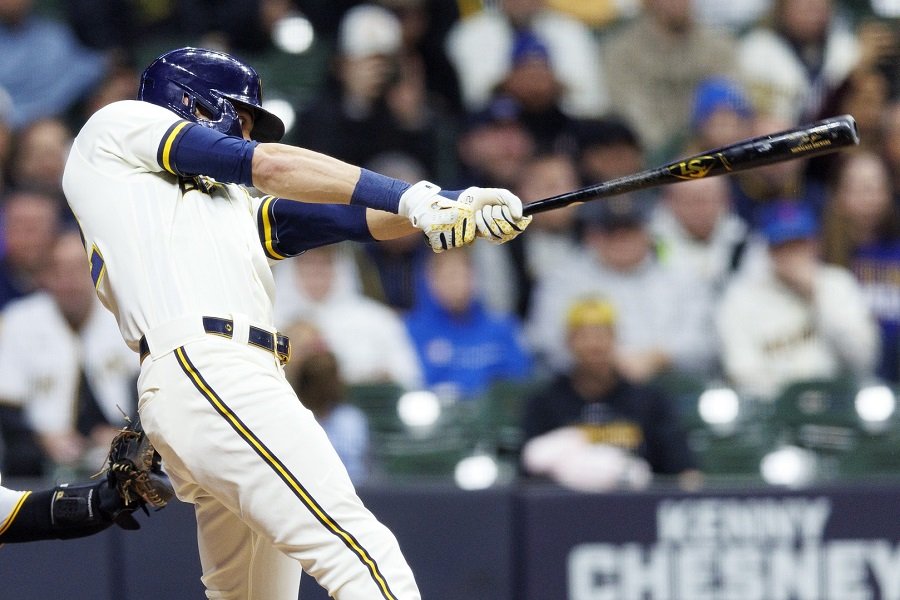 The Weekly is a column on the Brewers. 'On' may do heavier lifting on some weeks than others. Also, it's a beautiful weekend. Why aren't you out there getting a farmer tan and meat sweats? I'm as surprised as you are. Of course, this post goes live on Sunday morning and there's plenty of time for the talking heads and Twitters to mention it. But as of Saturday afternoon, it's a shocker. This team, this offensively-challenged Brewers club is currently third in all Major League Baseball with 59 tanks. By a look at the metrics, that's not a good thing. Not when the batting average is dead middle of the pack (.236, 15th in MLB, 9th in NL). Not when they are hanging around the bottom tier in doubles (11th in NL), strikeouts (also 11th) and a below-league-average on-base percentage (.312, .317). The Brewers are a ball club bound to three true outcomes. They walk, they strikeout, they, like Big Al, hit dingers. And without a change in offensive approach, they'll be drummed out of the postseason much as they were last October. If there is need for any further confirmation of this, one need not look further than than Friday night's box score: eight strikeouts, four walks, all run-scoring offense in the 9th courtesy a Keston Hiura home run. We should be happy with the walks and more or less deal with the strikeouts, especially in an era when Ray Charles could don the protective gear and an FTX-branded polo and get 'Way Wharles' tweets at Umpire Scorecards the morning after -- and he's not only blind, he's dead! Last month, I wrote about the Brewers as 'Schrödinger's offense' and noted some stats based on counts. Overall, the futility is still present in nearly every one of those metrics, though it's encouraging to see significant improvement in 1-2 counts, and they still essentially bail out of any 0-2 situation. Here's a new wrinkle: that NL-leading home run-hitting club hits better when trailing in contests: Entering Saturday, per Baseball Reference: Ahead (719 PAs): .225/.303/.382, 182 K, 66 BB, 25 HR Behind (491 PAs): .247/.318/.441, 109 K, 43 BB, 21 HR It's almost as though the team needs to be punched in the mouth to begin asserting itself -- that is, if they muster a response: in losing efforts, the Brewers slouch toward the Mendoza line (.208), boasting a .316 slugging percentage and .108 ISO (league average ISO: .145). Brandon Woodruff, whose patience in the midst of abysmal run support in recent years makes saints look like impetuous threenagers, should start flipping some tables. If the pitching wavers, and we've seen five pitching injury scares in scarcely two months of season with Freddy Peralta, Devin Williams and Josh Hader (both to and around him) -- and Luis Perdomo and Woodruff Friday night alone -- or even makes a single mistake, well, what does that sound like? We've seen more glimpses in recent weeks of this club's ability to put the ball in play, particularly from Omar Narvaez (of whom I have been critical and remain deeply skeptical), Mike Brosseau (credit to Matt Pauley for calling out Brosseau's respectable play at the plate; entering play Saturday, Brosseau in May has hit safely in eight of 12 contests), singles machine Luis Urias and, per usual, Christian Yelich, who in 2022 is apparently doomed to cosplay as 2018 Ryan Braun. Hunter Renfroe's recently-discovered ability to hit the ball to all fields prior to a hamstring-induced trip to the IL has been fun to see. This is the way: Barrel the ball, put it in play, see what happens when you don't give up easy outs and continually apply stress to pitchers. For many years and on several websites, I've espoused the Royals approach from their pennant- and World Series-winning years: no easy outs, make the pitcher scratch and claw for every retired side, make consistent contact and break through via attrition. We're seeing some of these elements with the walks and even with stealing bases (the Brewers - yes, these Brewers with the delightfully not-fleet-of-foot Rowdy Tellez and Narvaez and Hunter Renfroe, are fifth in Baseball with 30 steals in 42 attempts), but consistently hitting for contact is the elusive piece of the puzzle. Joey Wiemer isn't walking through the clubhouse doors and saving this club. He's not even on the 40-man. But if he can bring his overall batted ball skills up to his nuke-launching skills, watch out. In 2024 or so, that is. In the meantime, Brewers brass needs to be honest about some key cogs in this lineup, while coaches continue to try turning the Three True Outcomes Express around. That ship docks no later than early October. Baseball Reference, FanGraphs, Baseball Savant and ESPN were liberally used in this piece.
 -
After taking care of the St. Louis Cardinals in a white-knuckler on Thursday night, the Milwaukee Brewers led the National League in home runs. As of Saturday morning, they continue to. That is not a misprint. Image courtesy of © Jeff Hanisch-USA TODAY Sports After taking care of the St. Louis Cardinals in a white-knuckler on Thursday night, the Milwaukee Brewers led the National League in home runs. As of Saturday morning, they continue to. That is not a misprint. The Weekly is a column on the Brewers. 'On' may do heavier lifting on some weeks than others. Also, it's a beautiful weekend. Why aren't you out there getting a farmer tan and meat sweats? I'm as surprised as you are. Of course, this post goes live on Sunday morning and there's plenty of time for the talking heads and Twitters to mention it. But as of Saturday afternoon, it's a shocker. This team, this offensively-challenged Brewers club is currently third in all Major League Baseball with 59 tanks. By a look at the metrics, that's not a good thing. Not when the batting average is dead middle of the pack (.236, 15th in MLB, 9th in NL). Not when they are hanging around the bottom tier in doubles (11th in NL), strikeouts (also 11th) and a below-league-average on-base percentage (.312, .317). The Brewers are a ball club bound to three true outcomes. They walk, they strikeout, they, like Big Al, hit dingers. And without a change in offensive approach, they'll be drummed out of the postseason much as they were last October. If there is need for any further confirmation of this, one need not look further than than Friday night's box score: eight strikeouts, four walks, all run-scoring offense in the 9th courtesy a Keston Hiura home run. We should be happy with the walks and more or less deal with the strikeouts, especially in an era when Ray Charles could don the protective gear and an FTX-branded polo and get 'Way Wharles' tweets at Umpire Scorecards the morning after -- and he's not only blind, he's dead! Last month, I wrote about the Brewers as 'Schrödinger's offense' and noted some stats based on counts. Overall, the futility is still present in nearly every one of those metrics, though it's encouraging to see significant improvement in 1-2 counts, and they still essentially bail out of any 0-2 situation. Here's a new wrinkle: that NL-leading home run-hitting club hits better when trailing in contests: Entering Saturday, per Baseball Reference: Ahead (719 PAs): .225/.303/.382, 182 K, 66 BB, 25 HR Behind (491 PAs): .247/.318/.441, 109 K, 43 BB, 21 HR It's almost as though the team needs to be punched in the mouth to begin asserting itself -- that is, if they muster a response: in losing efforts, the Brewers slouch toward the Mendoza line (.208), boasting a .316 slugging percentage and .108 ISO (league average ISO: .145). Brandon Woodruff, whose patience in the midst of abysmal run support in recent years makes saints look like impetuous threenagers, should start flipping some tables. If the pitching wavers, and we've seen five pitching injury scares in scarcely two months of season with Freddy Peralta, Devin Williams and Josh Hader (both to and around him) -- and Luis Perdomo and Woodruff Friday night alone -- or even makes a single mistake, well, what does that sound like? We've seen more glimpses in recent weeks of this club's ability to put the ball in play, particularly from Omar Narvaez (of whom I have been critical and remain deeply skeptical), Mike Brosseau (credit to Matt Pauley for calling out Brosseau's respectable play at the plate; entering play Saturday, Brosseau in May has hit safely in eight of 12 contests), singles machine Luis Urias and, per usual, Christian Yelich, who in 2022 is apparently doomed to cosplay as 2018 Ryan Braun. Hunter Renfroe's recently-discovered ability to hit the ball to all fields prior to a hamstring-induced trip to the IL has been fun to see. This is the way: Barrel the ball, put it in play, see what happens when you don't give up easy outs and continually apply stress to pitchers. For many years and on several websites, I've espoused the Royals approach from their pennant- and World Series-winning years: no easy outs, make the pitcher scratch and claw for every retired side, make consistent contact and break through via attrition. We're seeing some of these elements with the walks and even with stealing bases (the Brewers - yes, these Brewers with the delightfully not-fleet-of-foot Rowdy Tellez and Narvaez and Hunter Renfroe, are fifth in Baseball with 30 steals in 42 attempts), but consistently hitting for contact is the elusive piece of the puzzle. Joey Wiemer isn't walking through the clubhouse doors and saving this club. He's not even on the 40-man. But if he can bring his overall batted ball skills up to his nuke-launching skills, watch out. In 2024 or so, that is. In the meantime, Brewers brass needs to be honest about some key cogs in this lineup, while coaches continue to try turning the Three True Outcomes Express around. That ship docks no later than early October. Baseball Reference, FanGraphs, Baseball Savant and ESPN were liberally used in this piece. View full article
-
There is no hinting here. If the team goes up for sale and the buyer is not locally-tied in some way or otherwise enjoined from moving, the Brewers' future in Milwaukee is absolutely uncertain. Portland, Nashville and Montreal are all openly seeking a MLB franchise, and Oakland has one foot out the door en route to Las Vegas. The Bradley Center opened practically obsolete, and it took an overwhelming commitment from ownership past and present to secure Fiserv Forum. We have to be clear-eyed about the fact that when the club goes up for sale, so too is the future of baseball in Milwaukee.
-
There is no hinting here. If the team goes up for sale and the buyer is not locally-tied in some way or otherwise enjoined from moving, the Brewers' future in Milwaukee is absolutely uncertain. Portland, Nashville and Montreal are all openly seeking a MLB franchise, and Oakland has one foot out the door en route to Las Vegas. The Bradley Center opened practically obsolete, and it took an overwhelming commitment from ownership past and present to secure Fiserv Forum. We have to be clear-eyed about the fact that when the club goes up for sale, so too is the future of baseball in Milwaukee.
.thumb.png.fb2aea91da59c37baaec678b5ce8166f.png)
