.png.c6fdced0e304141528a6142b01bdf5a0.png)
Brent Sirvio
-
Posts
85 -
Joined
Content Type
Profiles
Forums
Blogs
Events
News
2026 Milwaukee Brewers Top Prospects Ranking
Milwaukee Brewers Videos
2022 Milwaukee Brewers Draft Picks
Milwaukee Brewers Free Agent & Trade Rumors, Notes, & Tidbits
Guides & Resources
2023 Milwaukee Brewers Draft Picks
2024 Milwaukee Brewers Draft Picks
The Milwaukee Brewers Players Project
2025 Milwaukee Brewers Draft Pick Tracker
2026 Milwaukee Brewers Draft Pick Tracker
Store
Downloads
Gallery
Everything posted by Brent Sirvio
-
.thumb.png.fb2aea91da59c37baaec678b5ce8166f.png) Solid, well-reasoned piece, Adam. I might add that Avi Garcia's back was an issue all season long, not just later in the summer when the club was more open about it.
Solid, well-reasoned piece, Adam. I might add that Avi Garcia's back was an issue all season long, not just later in the summer when the club was more open about it. -
Solid, well-reasoned piece, Adam. I might add that Avi Garcia's back was an issue all season long, not just later in the summer when the club was more open about it.
-
Solid, well-reasoned piece, Adam. I might add that Avi Garcia's back was an issue all season long, not just later in the summer when the club was more open about it.
-
Solid, well-reasoned piece, Adam. I might add that Avi Garcia's back was an issue all season long, not just later in the summer when the club was more open about it.
-
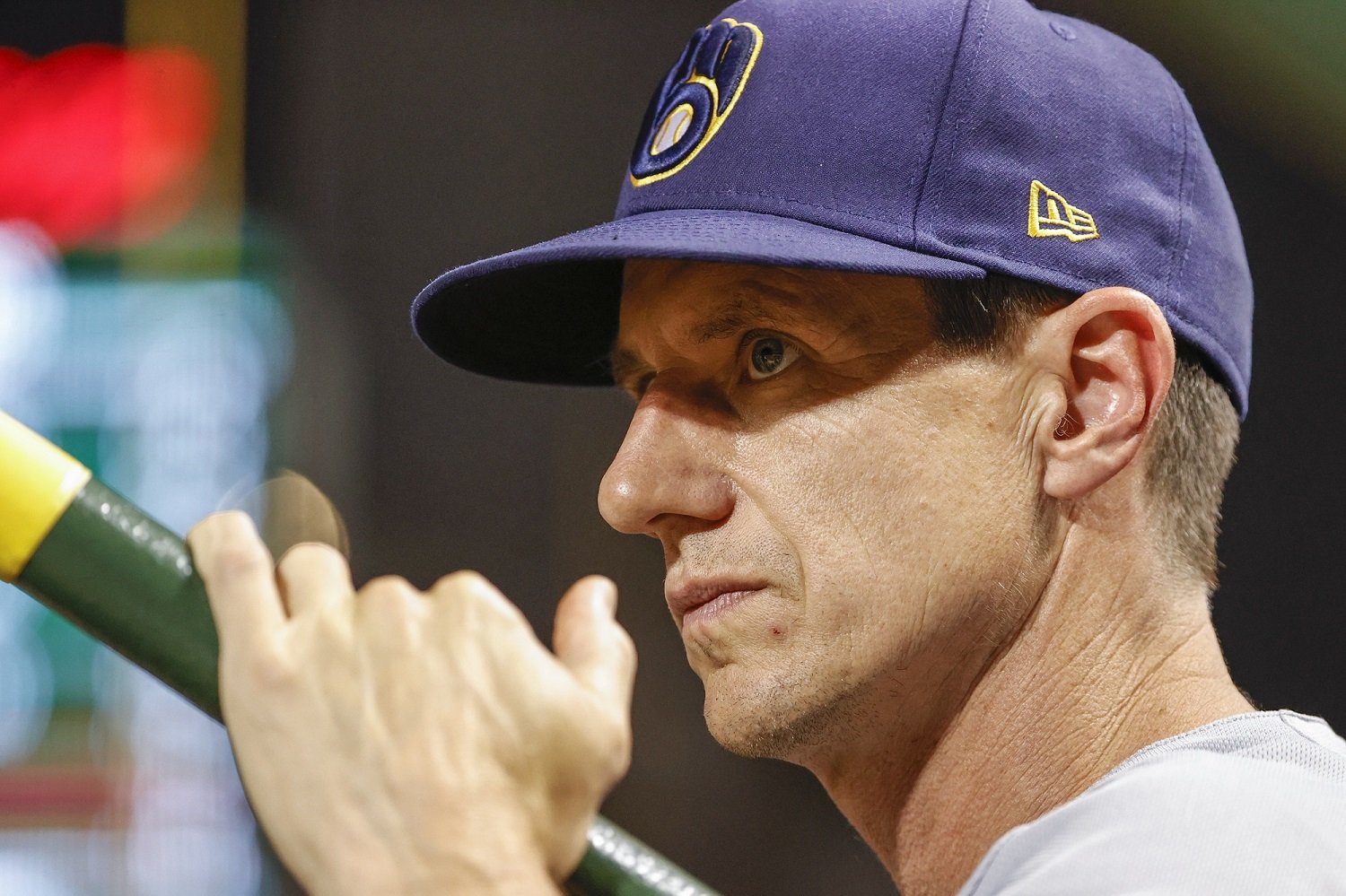 The Weekly is a column on the Brewers. 'On' may do heavier lifting on some weeks than others. This tweet resurfaced when MLB and the MLBPA agreed to return to the extra innings ghost runner -- or as I and others prefer to call it, the Manfred man -- in 2022. We thought the new CBA put this silliness to bed. We were wrong. Also, this tweet marks the first time I've seen the acronym XIPR in reference to the Manfred man. Is that pronounced 'zipper'? Is that supposed to make us feel good, like BACON? It shouldn't surprise anyone that data types like Tango and analytics-minded members of management like Craig Counsell would come out in favor of something like this. Data scientists and metrics wonks need clearly-defined parameters in order to operate. A tie game after nine innings enters a kind of foyer into infinity. Forcing the issue by artificially dropping a runner into scoring position helps establish finitude which is seen as necessary toward understanding. And Counsell is right to note -- as Tango underscores by virtue of retweet -- that the game changes and rules, too, change. He rightly also notes that it's a kind of perverse non-reward for a staff pitcher/s or fourth or fifth outfielder who performs admirably that night to be sent down to Triple-A before daybreak. But all of this, willfully or otherwise, ignores the plain realities of cause and effect: that issues with pace of play, skyrocketing three true outcomes and a product that is perceived to be flawed and anachronistic (incidentally, a perception largely perpetuated by the strange bedfellows of those who are stakeholders in the game and those who are its detractors) are byproducts of the sabermetric revolution. As such, they are engaging in a form of begging the question. More to the point, they painted themselves into a corner and choose to blame the room. Those marathon games didn't just start happening in a vacuum. Launch angle wasn't just a thing that appeared ex nihilo. It wasn't players that created the opaque and impossible-to-negotiate video replay process. These new rules aren't the result of Willson Contreras heading to the mound 624 times a game, which is why we now have the mound visits rule. The game grows and evolves, yes, but that fact alone does not justify rule changes, especially rule changes that paper over the bugs that have come with baseball-by-algorithm. It's the same kind of buck-passing we see from executives over failing businesses, or from former presidents in need of a new personal jet. If it isn't right that players get shuttled from the minors to the majors because of overuse, then the league and the players need to address the size of rosters. If games are too-often taking too long or needing extra innings -- the Brewers shared the National League lead for extra innings games in 2021 (19) with the Los Angeles Dodgers and San Francisco Giants -- plopping a runner on second addresses the problem in the same way that breaking the window solves the problem of being too warm inside a car. The actual issue is with the approach to the game, one that prizes dingers over doubles, refuses to let pitchers pitch and doesn't generally view sacrifice flies and stealing bases as a risk-reward proposition even worth considering. For everything they get right -- #neverbunt, for instance -- they miss on so much more. Progress has a way of feigning ease; convenient new inventions bait the tease. Yes, Craig, it's OK to change rules. Yes, the game must grow and adapt. But change to the game needs to be clearly proportional and contextual to on-field antecedent. And in the case of the Manfred man, there is literally none. Change for change's sake is never for the better. There are plenty of ways to converse about and address pace of play, but persistent extra innings games underscore a different, disquieting fact: that this new era of elevating data science and analytics has not improved the game, but made it more dystopic, in which case, baseball remains as quintessentially American as ever. Brent Sirvio is a columnist for Brewer Fanatic.
 -
We start a new era of Milwaukee Brewers coverage here at Brewer Fanatic nearly a year ago to the day, when MLB data maven Tom Tango pulled an excerpt from the Milwaukee Journal Sentinel's weekend Brewers notes column on the once and future ghost runner. The Weekly is a column on the Brewers. 'On' may do heavier lifting on some weeks than others. This tweet resurfaced when MLB and the MLBPA agreed to return to the extra innings ghost runner -- or as I and others prefer to call it, the Manfred man -- in 2022. We thought the new CBA put this silliness to bed. We were wrong. Also, this tweet marks the first time I've seen the acronym XIPR in reference to the Manfred man. Is that pronounced 'zipper'? Is that supposed to make us feel good, like BACON? It shouldn't surprise anyone that data types like Tango and analytics-minded members of management like Craig Counsell would come out in favor of something like this. Data scientists and metrics wonks need clearly-defined parameters in order to operate. A tie game after nine innings enters a kind of foyer into infinity. Forcing the issue by artificially dropping a runner into scoring position helps establish finitude which is seen as necessary toward understanding. And Counsell is right to note -- as Tango underscores by virtue of retweet -- that the game changes and rules, too, change. He rightly also notes that it's a kind of perverse non-reward for a staff pitcher/s or fourth or fifth outfielder who performs admirably that night to be sent down to Triple-A before daybreak. But all of this, willfully or otherwise, ignores the plain realities of cause and effect: that issues with pace of play, skyrocketing three true outcomes and a product that is perceived to be flawed and anachronistic (incidentally, a perception largely perpetuated by the strange bedfellows of those who are stakeholders in the game and those who are its detractors) are byproducts of the sabermetric revolution. As such, they are engaging in a form of begging the question. More to the point, they painted themselves into a corner and choose to blame the room. Those marathon games didn't just start happening in a vacuum. Launch angle wasn't just a thing that appeared ex nihilo. It wasn't players that created the opaque and impossible-to-negotiate video replay process. These new rules aren't the result of Willson Contreras heading to the mound 624 times a game, which is why we now have the mound visits rule. The game grows and evolves, yes, but that fact alone does not justify rule changes, especially rule changes that paper over the bugs that have come with baseball-by-algorithm. It's the same kind of buck-passing we see from executives over failing businesses, or from former presidents in need of a new personal jet. If it isn't right that players get shuttled from the minors to the majors because of overuse, then the league and the players need to address the size of rosters. If games are too-often taking too long or needing extra innings -- the Brewers shared the National League lead for extra innings games in 2021 (19) with the Los Angeles Dodgers and San Francisco Giants -- plopping a runner on second addresses the problem in the same way that breaking the window solves the problem of being too warm inside a car. The actual issue is with the approach to the game, one that prizes dingers over doubles, refuses to let pitchers pitch and doesn't generally view sacrifice flies and stealing bases as a risk-reward proposition even worth considering. For everything they get right -- #neverbunt, for instance -- they miss on so much more. Progress has a way of feigning ease; convenient new inventions bait the tease. Yes, Craig, it's OK to change rules. Yes, the game must grow and adapt. But change to the game needs to be clearly proportional and contextual to on-field antecedent. And in the case of the Manfred man, there is literally none. Change for change's sake is never for the better. There are plenty of ways to converse about and address pace of play, but persistent extra innings games underscore a different, disquieting fact: that this new era of elevating data science and analytics has not improved the game, but made it more dystopic, in which case, baseball remains as quintessentially American as ever. Brent Sirvio is a columnist for Brewer Fanatic. View full article
-
I realize I may be somewhat of an unknown quantity to many of you, so here's a little about me and my background:
I'm not new to writing about MLB or the Brewers. I cut my teeth in 2015 writing for now-defunct Outside Pitch MLB, starting as a Brewers beat writer, writing gamers and series previews and recaps and player profiles few people saw. I was promoted to managing editor there, worked with some killer writers, some of whom are now doing this dang thing full-time for major outlets or are Baseball Twitter superstars. Later, I was promoted to VP of Content, overseeing all editorial operations for three OP verticals.
After OP, I launched Bronx to Bushville in 2017 with some of those guys, a boutique, baseball and baseball-adjacent website where the content could be either a lot more abstract and freeform, or could be us breaking the story about the Dodgers' malfeasance surrounding covered up allegations of sexual assault and the penalties that were supposed to come down and didn't. BtB ended last summer, and I decided to do a semi-frequent Substack, Crowd Pops and Bat Flips, which talks about baseball and/or professional wrestling.
Through the good fortune of being name-dropped, the Twins Daily/BF brass reached out to me, seeing if I had interest in coming aboard here as a contributor. I was flattered, and said I'd think it over.
The rest? Well, the rest is being typed now.
I love the Brewers, but I love baseball more. It's the best game on the planet, and while my team is local, I resist the urge to be a homer. If I could, I'd be all too happy watching West Coast games late into the night, not worrying about needing to be up the next morning. Poor Mike Trout.
I believe in numbers. I also believe in trusting a gut. Analytics are fine. Hunches are fine. Analytics alone are a disaster. Hunches alone are also a disaster. Statistics give us information, history gives us insight. I'm more John Thorn, less Jay Jaffe. I'm also a member of SABR and IBWAA.
So hopefully that gives you a glimpse into my background and generally where I'm coming from when I write. It's nice to have this opportunity to move beyond IYKYK status.
-
Popularized by Kurt Russell's portrayal of Herb Brooks in Miracle, the title of this, my debut column for Brewer Fanatic, is something that occurred to me considering not just Luis Urias' quad injury, but also the myriad lower body injuries that have plagued the Milwaukee Brewers in recent years. Let's look at some of the recent highlights: Luis Urias' quad (last year and this!) Willy Adames' quad. Christian Yelich's kneecap. Travis Shaw's ankle. Rowdy Tellez' knee. Dan "Big Rhinelander" Vogelbach's hamstring. Lorenzo Cain's hamstrings. Eduardo Escobar's hamstring. Running a Google search for 'brewers injury' and a part of the lower anatomy just about breaks the internet entirely. Ask a golfer, or a basketball player (though not Sunday night's Badgers!), or anyone from that 1980 Lake Placid squad, or a pitcher -- good mechanics require strength and conditioning throughout the body, but power comes from the legs. It's entirely plausible that Urias' struggles at the plate in 2021 pre-Willy Adames were a result of both having too much pressure on him and at least to an extent dealing with lingering effects from that quad strain. Wonder what happened to Yelich's power, or why he looked so hesitant at the plate over 2020 and 2021? If the legs aren't right, don't expect comfortable-looking at-bats or consistent performance from batted balls. Which is exactly what we got from an offense-deficient 2021 Brewers club that rode their franchise-best rotation into October. While it's true that divisions and pennants aren't won in March or April, it is also true that *checks notes* games played in April still count. You can't win the division in April, but you absolutely can lose one struggling with injuries or underperformance out of the gate. For this reason, we have reason to hope and cause for concern. Hope in that Christian Yelich is seeing the ball really, really well right away. He's not trying to do too much with pitches, and the results are plain to see. Are these the quality of pitches and pitchers he can expect in just over two weeks' time when the wins and losses matter? Probably not (though they do open against the Cubs and Orioles, sooooo...) But Yelich's ability as a slugger is an extension of his quality as a hitter, as it was with Prince Fielder and as it should be. On the other hand, Urias, coming off a revelatory 2021 in which he struggled, then hit 25 doubles and 23 dingers and produced a slightly-deceptive 111 wRC+, now has the double burden of meeting heightened expectations and the league knowing what he's capable of. There's real concern for a sophomore slump from a young player for whom we should all be rooting. And the rest of those guys mentioned above? Adames wasn't the same impact bat after returning from his 2+ weeks on the injured list. Travis Shaw, early feelgood story of 2021, was never the same after his ankle injury April 11 and finished his campaign with the Boston Red Sox. Vogelbach had little reason to be in the Brewers lineup in the first place. Cain missed all of June and most of July. Only Escobar and Tellez maintained their performance, though Escobar's power disappeared, and I need not remind anyone that neither of them started the season in the organization. A team cannot emphasize launch angle and a homer-happy offense unless they also emphasize the need to keep the lower body healthy in equal measure. Computer modeling won't do the work in the weight room or conditioning drills or on the back fields. Data informs, it does not feed. The legs feed the wolf.
- 3 comments
-
- 3
-

-
- milwaukee brewers
- luis urias
- (and 2 more)
.thumb.png.fb2aea91da59c37baaec678b5ce8166f.png)