Caswell
-
Posts
120 -
Joined
-
Last visited
Content Type
Profiles
Forums
Blogs
Events
Milwaukee Brewers News, Rumors & Analysis
2026 Milwaukee Brewers Top Prospect Rankings
Milwaukee Brewers Videos
2022 Milwaukee Brewers Draft Picks & Signing Bonuses
Milwaukee Brewers Trade & Free Agent Rumors
Milwaukee Brewers Fan Guides & Resources
2023 Milwaukee Brewers Draft Picks & Signing Bonuses
2024 Milwaukee Brewers Draft Picks & Signing Bonuses
The Milwaukee Brewers Players Project
2025 Milwaukee Brewers Draft Picks & Signing Bonuses
2026 Milwaukee Brewers Draft Picks & Signing Bonuses
Store
Downloads
Gallery
Everything posted by Caswell
-
Trust me, I agree 100%. I just think this may be the reasoning... I think it is very dumb. I just wrote an article recently, here, that talks about it and Pedro. Obviously the injury to Tyrone Taylor allows this a bit though. Maybe get some trade bait for a team not in contention or with injuries.
-
Good stretch by Caratini on both of those plays
-
We aren't that great against lefties...

-
Caratini is probably the better defensive option at any of those positions, and will allow him to save his legs a little for the remaining of the series, plus a tryout for Severino at catcher.
-
Bad framing by Severino on that "ball". Pedro is horrible framing. Worst we've seen by a Brewer in a while
-
Pedro Severino is slated to come off the restricted list after the game on Saturday following his 80 game suspension for a positive PED test. What will happen when he returns? Image courtesy of © Scott Taetsch-USA TODAY Sports Pedro Severino is slated to come off the restricted list after the game on Saturday following his 80 game suspension for a positive PED test. What will happen when he returns? Pedro Severino was assumed to be the backup catcher to Omar Narvaez following the departure of Manny Pina in free agency during the offseason. This plan was tossed out on April 5th, just before the season started, after the results of a PED test administered before the MLB lockout began on December 2nd showed Clomiphene in his body, a substance banned by the MLB. Reason for Suspension Severino accepted responsibility for his mistake and apologized immediately in a statement released via the MLBPA, saying that his wife and himself have been working to start a family and had been unsuccessful thus far. A doctor in the Dominican Republic, where Severino is from, prescribed him a medication which contained Clomiphene to help aid in this endeavor. Clomiphene is often used to improve fertility, but typically only in females as it is what is termed an “ovary stimulant,” as it facilitates ovulation. As such, it has only been approved by the FDA in women. The use in men has shown varying results by increasing sperm count, but will often decrease with improper dosing. Another use for Clomiphene in men is as a “downer” following a steroid cycle. This is done by rebalancing the testosterone levels within the body and hiding the usage of a steroid. There is obviously much more science involved, but this is a quick summary. Now I am not saying that Pedro used anything besides Clomiphene, and this all may be a huge mistake, I just want to explain a bit about what he was marked positive for. Career Batting The seven-year veteran started his career with the Nationals in 2015. After four years there, he was waived and claimed by the Orioles in 2019, spending the next three years there, before being granted free agency by the Baltimore club. He signed with the Brewers shortly thereafter. In his major league career, he has played in 362 games, 327 of them as a catcher. Most of these games were during his time with the Orioles, as he played in 257 games in his time there, compared to the 105 games in his four years with the Nats. He definitely had improved success with more consistent playing time, raising his batting average over 60 points, to .249, in his years with the Orioles. The twenty-eight year-old has hit 33 home runs in his time in the bigs, with 133 rbis, accruing an OBP of 0.305. Defensive Comparison Defensively, he has been consistently decent, with a career fielding percentage of 0.993. Severino has caught 28% of runners trying to steal a base on him. His pop time to second base is in the middle of the rankings for catchers at 51 percentile, averaging 1.97 seconds in 2021. For reference, this year both Victor Caratini and Narvaez have pop times of 2.01. Caratini has an exchange time of 0.75, while Narvaez has an exchange time of 0.72. Severino had an exchange time of 0.75 in 2021, and also has a slightly stronger arm. His pitch framing, however, is quite poor. By that, I mean he was ranked in the bottom 1% of the league for stealing potential strikes for his pitchers, with a strike rate of just 43.7% in 2021, and never reaching 47.5% in a season in his entire career. He is marginally better at getting strike calls on the inside or outside edges, like most other catchers, but overall it is quite poor, to the tune of an absolutely horrible -10 catcher framing runs in 2021, and -22 in his entire career. For this metric, you want to be positive. In 2021, Narvaez actually led the league with 10 catcher framing runs and had a strike rate of 49.2%, but Tomas Nido led the league with a strike rate of 53.5%. Severino is bad at getting an extra strike call. Roster Situation Due to the suspension of Severino, Milwaukee went out and got Caratini, who has formed a formidable duo with Narvaez behind the plate. Severino could look to replace Alex Jackson , the catcher who filled in while either Caratini or Narvaez were unavailable, but that would mean the Brewers would have to carry three catchers on their 26-man roster. This is due to the fact Severino has no options remaining. Despite it being unlikely either active catcher gets sent down, it is worthwhile to include that Narvaez also has no options remaining, but Caratini does have one. A quick comparison of the catchers shows that Caratini and Severino have quite similar career numbers and Narvaez leads the group, but this year he has exploded to an OPS+ of 129, which would lead all Brewers’ hitters if he were to qualify. Severino is unlikely to usurp this, as there is not a reasonable scenario where Caratini would be sent down, and Narvaez will not be moved out of the organization. Positional Flexibility There is the chance that one of these players would get some time at another position. Severino has been taking reps at first base in his rehab stint with Biloxi as he prepares to be reactivated. He has never played first before in his minor league career, let alone in the majors before his first recovery game on June 18th. Narvaez has a little bit of experience, appearing in one game at first base, playing in five innings in a game in 2017 while with the White Sox. In that appearance, he made one error in his six defensive chances. When he first became professional while within the Tampa Bay organization, he did have much more experience at first base, starting in 37 of the 42 games played there, and even started a game in left field. Caratini has significantly more broad experience on the field than either other player. He has started at first base in 23 games in the majors, playing in 59. Caratini has also been deployed at third base seven times and in the outfield in one game, though that was on an emergency basis. In the minors, Caratini played in 86 games at first base, starting 84 of those and played in 59 games at third base, starting 57 of those. He even made a start at shortstop once while playing rookie ball in 2013 while with the Braves. His last start in the minors at third base was in 2018, but has more recently during the winter in 2018-2019 and again in 2019-2020 while playing in the Puerto Rican Winter League. He made appearances in eight games at third base, starting seven of those. Caratini has also started six games, playing in seven at first in those two seasons. Concluding Thoughts This leads to the question, could Severino join the catching tandem and push Caratini into a corner infield spot? My guess is no. With postseason intentions, Milwaukee must consider the fact that Severino will not be eligible for the playoffs this year due to the suspension. There could be value in limiting reps for the current catchers, but Severino has horrible framing, and his hitting is enough. I expect him to be traded or designated for assignment once he returns barring all injuries. I have spoken of positional flexibility, but the Brewers will not be likely to utilize Caratini outside of catcher often. Third base, or especially first base, have been performing decently enough, with an OPS of 0.659 for third basemen and 0.789 for first basemen. The OPS at third is lower than the league average for third basemen, which is 0.719, while the overall league average is 0.705. I don’t expect him to man the hot corner at all, due to lack of recent experience there as well as the return of Mike Brosseau and rise of Jace Peterson this year. Caratini could see reps at first, but not enough to need to carry an additional catcher. Rowdy Tellez will remain the main option at first base. TL;DR Pedro Severino would be a very useful player to have within the organization despite his framing concerns due to the rest of his defense and decent hitting, but is not a better option than what the Brewers have right now. Victor Caratini filled in the void left by the suspension, and Narvaez has performed as expected. Due to not having an remaining options to the minors, I expect Severino to be leaving the Milwaukee Brewer organization following his suspension's completion. View full article
-
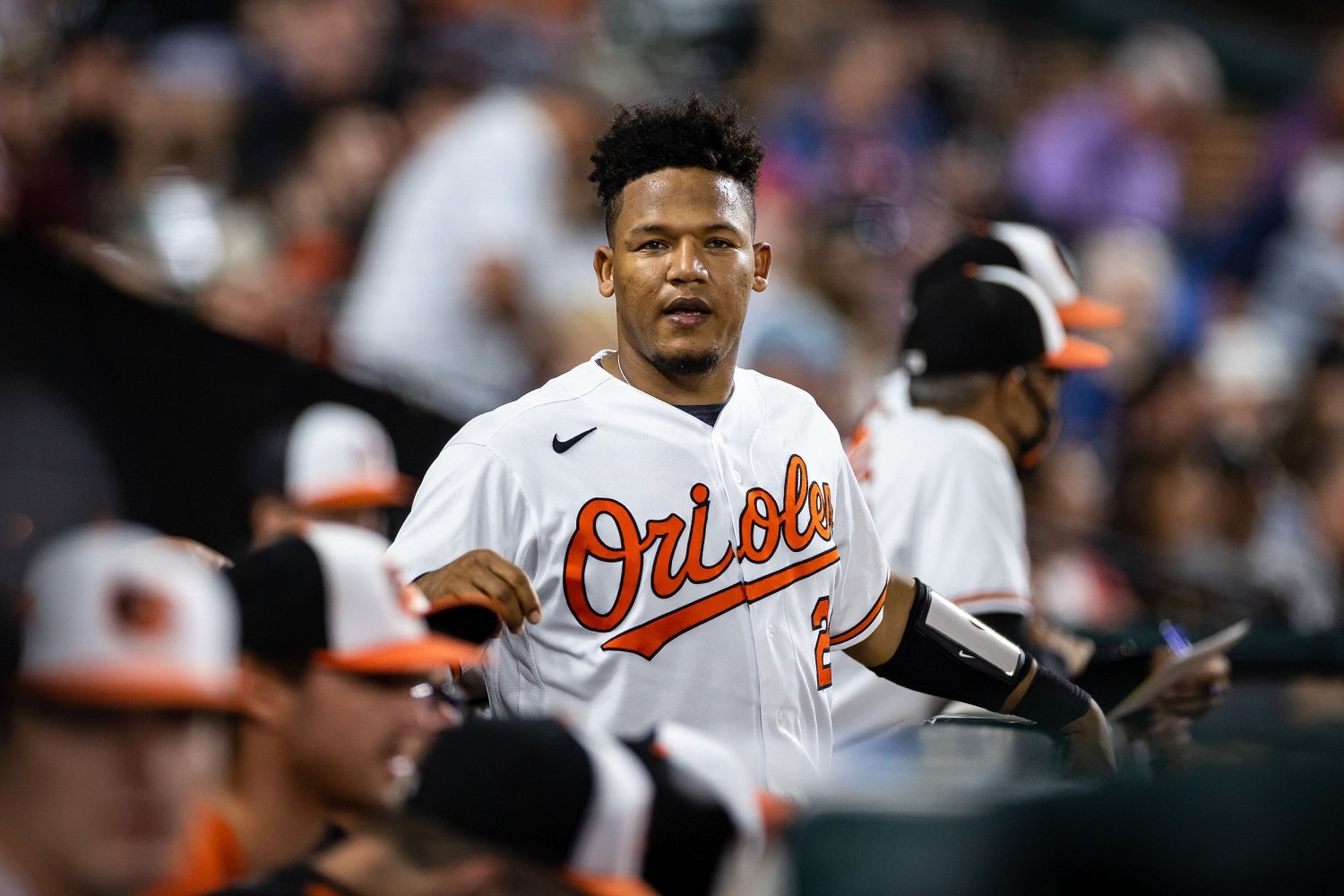 Pedro Severino was assumed to be the backup catcher to Omar Narvaez following the departure of Manny Pina in free agency during the offseason. This plan was tossed out on April 5th, just before the season started, after the results of a PED test administered before the MLB lockout began on December 2nd showed Clomiphene in his body, a substance banned by the MLB. Reason for Suspension Severino accepted responsibility for his mistake and apologized immediately in a statement released via the MLBPA, saying that his wife and himself have been working to start a family and had been unsuccessful thus far. A doctor in the Dominican Republic, where Severino is from, prescribed him a medication which contained Clomiphene to help aid in this endeavor. Clomiphene is often used to improve fertility, but typically only in females as it is what is termed an “ovary stimulant,” as it facilitates ovulation. As such, it has only been approved by the FDA in women. The use in men has shown varying results by increasing sperm count, but will often decrease with improper dosing. Another use for Clomiphene in men is as a “downer” following a steroid cycle. This is done by rebalancing the testosterone levels within the body and hiding the usage of a steroid. There is obviously much more science involved, but this is a quick summary. Now I am not saying that Pedro used anything besides Clomiphene, and this all may be a huge mistake, I just want to explain a bit about what he was marked positive for. Career Batting The seven-year veteran started his career with the Nationals in 2015. After four years there, he was waived and claimed by the Orioles in 2019, spending the next three years there, before being granted free agency by the Baltimore club. He signed with the Brewers shortly thereafter. In his major league career, he has played in 362 games, 327 of them as a catcher. Most of these games were during his time with the Orioles, as he played in 257 games in his time there, compared to the 105 games in his four years with the Nats. He definitely had improved success with more consistent playing time, raising his batting average over 60 points, to .249, in his years with the Orioles. The twenty-eight year-old has hit 33 home runs in his time in the bigs, with 133 rbis, accruing an OBP of 0.305. Defensive Comparison Defensively, he has been consistently decent, with a career fielding percentage of 0.993. Severino has caught 28% of runners trying to steal a base on him. His pop time to second base is in the middle of the rankings for catchers at 51 percentile, averaging 1.97 seconds in 2021. For reference, this year both Victor Caratini and Narvaez have pop times of 2.01. Caratini has an exchange time of 0.75, while Narvaez has an exchange time of 0.72. Severino had an exchange time of 0.75 in 2021, and also has a slightly stronger arm. His pitch framing, however, is quite poor. By that, I mean he was ranked in the bottom 1% of the league for stealing potential strikes for his pitchers, with a strike rate of just 43.7% in 2021, and never reaching 47.5% in a season in his entire career. He is marginally better at getting strike calls on the inside or outside edges, like most other catchers, but overall it is quite poor, to the tune of an absolutely horrible -10 catcher framing runs in 2021, and -22 in his entire career. For this metric, you want to be positive. In 2021, Narvaez actually led the league with 10 catcher framing runs and had a strike rate of 49.2%, but Tomas Nido led the league with a strike rate of 53.5%. Severino is bad at getting an extra strike call. Roster Situation Due to the suspension of Severino, Milwaukee went out and got Caratini, who has formed a formidable duo with Narvaez behind the plate. Severino could look to replace Alex Jackson , the catcher who filled in while either Caratini or Narvaez were unavailable, but that would mean the Brewers would have to carry three catchers on their 26-man roster. This is due to the fact Severino has no options remaining. Despite it being unlikely either active catcher gets sent down, it is worthwhile to include that Narvaez also has no options remaining, but Caratini does have one. A quick comparison of the catchers shows that Caratini and Severino have quite similar career numbers and Narvaez leads the group, but this year he has exploded to an OPS+ of 129, which would lead all Brewers’ hitters if he were to qualify. Severino is unlikely to usurp this, as there is not a reasonable scenario where Caratini would be sent down, and Narvaez will not be moved out of the organization. Positional Flexibility There is the chance that one of these players would get some time at another position. Severino has been taking reps at first base in his rehab stint with Biloxi as he prepares to be reactivated. He has never played first before in his minor league career, let alone in the majors before his first recovery game on June 18th. Narvaez has a little bit of experience, appearing in one game at first base, playing in five innings in a game in 2017 while with the White Sox. In that appearance, he made one error in his six defensive chances. When he first became professional while within the Tampa Bay organization, he did have much more experience at first base, starting in 37 of the 42 games played there, and even started a game in left field. Caratini has significantly more broad experience on the field than either other player. He has started at first base in 23 games in the majors, playing in 59. Caratini has also been deployed at third base seven times and in the outfield in one game, though that was on an emergency basis. In the minors, Caratini played in 86 games at first base, starting 84 of those and played in 59 games at third base, starting 57 of those. He even made a start at shortstop once while playing rookie ball in 2013 while with the Braves. His last start in the minors at third base was in 2018, but has more recently during the winter in 2018-2019 and again in 2019-2020 while playing in the Puerto Rican Winter League. He made appearances in eight games at third base, starting seven of those. Caratini has also started six games, playing in seven at first in those two seasons. Concluding Thoughts This leads to the question, could Severino join the catching tandem and push Caratini into a corner infield spot? My guess is no. With postseason intentions, Milwaukee must consider the fact that Severino will not be eligible for the playoffs this year due to the suspension. There could be value in limiting reps for the current catchers, but Severino has horrible framing, and his hitting is enough. I expect him to be traded or designated for assignment once he returns barring all injuries. I have spoken of positional flexibility, but the Brewers will not be likely to utilize Caratini outside of catcher often. Third base, or especially first base, have been performing decently enough, with an OPS of 0.659 for third basemen and 0.789 for first basemen. The OPS at third is lower than the league average for third basemen, which is 0.719, while the overall league average is 0.705. I don’t expect him to man the hot corner at all, due to lack of recent experience there as well as the return of Mike Brosseau and rise of Jace Peterson this year. Caratini could see reps at first, but not enough to need to carry an additional catcher. Rowdy Tellez will remain the main option at first base. TL;DR Pedro Severino would be a very useful player to have within the organization despite his framing concerns due to the rest of his defense and decent hitting, but is not a better option than what the Brewers have right now. Victor Caratini filled in the void left by the suspension, and Narvaez has performed as expected. Due to not having an remaining options to the minors, I expect Severino to be leaving the Milwaukee Brewer organization following his suspension's completion.
-
Six NL Central Trades the Brewers Should Target
Caswell replied to Tim Muma's topic in Brewer Fanatic Front Page News
This is an awesome read! Thank you for putting it together! I would love to get Reynolds, but doubt we have the assets to acquire him. Unfortunately, I doubt we make a splash within the trade market, so those dream options will remain dreams I think. I can certainly see the Crew trading for one of those pitchers, and would prefer some of the internal options in the outfield rather than Naquin. I just want to see David Dahl up with the Crew! -
Blue Jays Preview: A Different Kind of Bird
Caswell replied to Tommy Ciaccio's topic in Brewer Fanatic Front Page News
Blue Jays are going to be coming in with some disdain for the umps. It was a messy series against the White Sox over the week with an awful showing behind the plate by Doug Eddings, who missed an amazingly bad 29 blown calls on Tuesday. On Wednesday during the lineup exchange before the game, hitting coach Guillermo Martinez was ejected by the home plate ump for that game, Phil Cuzzo, after giving Eddings his thoughts on the historically bad showing. Martinez is suspended for five games following this altercation, along with a fine of an unknown amount. It will be interesting to see if there is anything that comes from this! I'm going to the game this evening so looking forward to it even more! The umpiring crew is Jansen Visconti, Ted Barrett, Ed Hickox, and Brock Ballou for this series. -
The Brewers Are Mishandling Keston Hiura
Caswell replied to Cole McCormack's topic in Brewer Fanatic Front Page News
Keston is quite the interesting player and I have been musing over what to do with him for awhile. I've definitely noticed how much better he hits against righties, but there is such a small sample size, as Jopal78 said. He definitely needs consistent at bats, and he's not getting them here. I want him to succeed, but I don't think it'll be in the bigs with Milwaukee this year. -
Ooh that hurts
-
Please just don't over swing
-
Mark my words. At least one steal on the year for Rowdy....
-
That ground rule double saved the Cards an extra run there. Rowdy has wheels
-
Yes! did you see the Blue Jays games last night? it was horrid
-
Speaking of Yelich though, did anyone read my recent story about Yelich just posted this morning? I really enjoyed looking through the stats and putting it together! I hope you liked it! Link Trying to figure out the next iteration of that series, along with more stories you want to read!
-
Still one of the most funny catch attempts I've seen. Climbs the fence, lands on the warning track...
-
Rock calls it! 40 rbis for Rowdy now
-
CasWell Informed: Breaking Down Christian Yelich
Caswell replied to Caswell's topic in Brewer Fanatic Front Page News
Yes I agree! It was very interesting going through all the data I could and compiling it into a single entity. Yelich is definitely starting to get there. It seems like in 2020 he was trying so hard to increase his power numbers and was swinging too hard to an extent. Like his hard hit percentage went up to 56.6% that year, but that came at a cost. His K% increased a lot, and he also started to see a more significant struggle with changeups and curveballs, which is in part, due to the struggle against right handed pitchers. Then in 2021, he tried to overcorrect, and put the ball on the ground much more (average launch angle of 2.8). He got better against righties, but was going over the ball 43.9% of the time. He is getting there, but the pendulum swung a little wildly for a couple years. -
Let's take a look at Christian Yelich to see if these last few years are the new him. Image courtesy of © Sam Greene/The Enquirer / USA TODAY NETWORK Let's take a look at Christian Yelich to see if these last few years are the new him. Two time All-Star, Christian Yelich has had a highly documented fall from grace from his 2018 N.L. MVP-winning season and 2019, where he came runner-up in the N.L. MVP race to Cody Bellinger. The Californian born in December 1991, making him 30 years old, earned many accolades from pundits in his first two years before injuries seemingly derailed his career, cutting short his monster 2019 season. He definitely did enough to sign a huge contract before the start of the 2020 season, but has not lived up to it. Hello! Welcome to a new series where I, Caswell, go through the nerdy stuff to try to make it a little more simple so others can be more Well Informed with the statistics. We are going to go through how a player compares to themselves over previous years, against the rest of the team and league for that year, and maybe even get some historical comparisons. So is he still falling? Are things back on track? Should fans shun him? Let’s find out Before Milwaukee Before joining the Brewers, Yelich wasn’t the star the Brewers saw his first two years in Milwaukee, but he was still very good. He never hit lower than 0.282 in his five seasons in Miami, launching 21 and 18 home runs in his last two years before the switch. Yelich consistently showed a great bat, along with a keen eye, walking 300 times in the five years in Florida. This culminated into a great OPS+ each season. OPS+ uses the players regular OPS, which is on-base plus slugging, and normalizes it across the entire league, while also adjusting for additional factors such as the ballpark played. The average OPS+ is 100, so a player who earns an OPS that is 10% better than league average will get an OPS+ of 110, without taking into account external factors. The above graph shows that he was above average every single year as a Marlin, so far as to get an OPS+ of 135 in 2016. WAR, which stands for Wins Above Replacement, is a lot of math which comes out to the number of wins a particular player gets for their team instead of a “replacement level player,” which is defined by Major League Baseball as a minor league replacement or available fill-in free agent. (If you want to read more about this very interesting statistic, Baseball Reference does a great job at explaining it further.) It is a counting statistic, such that it will culminate over the entirety of a player’s career. Despite this, it is earned throughout the entirety of the season, so one’s WAR can be found for just one year. WAR less than 0 means that a team is better off with a replacement. Commonly, WAR between 0-2 would be considered a bench player, while anything above that is considered a starter. Typically, when a player has a WAR above 5, they are All-Star worthy, and above 8 is MVP worthy. Yelich’s WAR over his 5 seasons with Miami, he was a 17.6 WAR player, getting as much as 4.9 WAR in 2016, which is the year he got his first Silver Slugger Award. He also only played 62 games in 2013, but still got 1.6 WAR as a rookie. He was definitely a good player as a Marlin, but his first two years in Milwaukee were down-right fantastic, winning his second and third Silver Slugger Awards, and placing first and second in MVP voting in the N.L. back to back. First Two Years in Milwaukee In the trade that brought Yelich to Milwaukee, the Brewers sent a haul of prospects, including highly ranked prospect, Lewis Brinson, along with Isan Diaz, Monte Harrison, and Jordan Yamamoto, fans weren’t too sure what they were going to get. He was definitely a good player as a Marlin, but Lewis Brinson was thought to have a very bright future, ranking in the top 20 of all prospects for over two years. Nonetheless, Yelich’s output in his first two years in Milwaukee were down-right fantastic, winning his second and third Silver Slugger Awards, and placing first and second in MVP voting in the N.L. back to back and silencing the critics. As such, I will just let the numbers speak for themselves by comparing him to some all-time greats and their 162 game average as calculated by Baseball Reference. The current generation is represented by Mike Trout, a player who is already being considered the greatest player of all time. Ty Cobb, the pure greatest hitter of all-time, is used. Finally, Henry Aaron, a Milwaukee baseball hero will end the comparison. Despite playing in 147 games in 2018 and 130 games in 2019, Yelich is still close in all counting statistics among the 162 game average for the legends of the game selected in this comparison. His 44 home runs in 2019 is at the top of the list. He has the second and third highest batting average and has the highest and third highest OPS. 2018 Yelich is three RBIs behind Henry Aaron in RBI, and second in totals hits behind Ty Cobb. He was quite frankly, fantastic. Christian earned 7.3 WAR in 2018 and 7 in 2019, his first two years in Milwaukee, ranking among the leaders in most statistics. Yelich’s Fall Yelich only played in 130 games in 2019, which is a result of a season ending broken kneecap he sustained in September of 2019. In that offseason, Yelich signed a 7 year, $188.5M contract extension, keeping him in Milwaukee until 2028, which also includes a mutual option for 2029. This seemed like an absolute bargain at the time due to his incredible play and being a fan favorite, marking him a Brewer for likely the rest of his career. The morale surrounding this deal would come crashing down as struggles persisted. In the COVID shortened year, he played 58 of the 60 games yielded a batting average of 0.205, down from 0.326 and 0.329 in his first two years. His on-base percentage slid to 0.356 with an OPS+ of only 110. He hit 12 big flies and had 22 RBIs. There was concern, but it wasn’t massive, as there were substantial abnormalities that year and many players struggled. Injuries plagued his 2021 season, in which he had three different stints on the injured list with a lower back strain. He spent 20 days in the INjured List, came off for a day, before going back on for another 15 days. The third was a 12-day stint on the COVID-19 IL. This back issue is one that first came up while in the Marlins’ farm system and early years in Miami. Yelich only played in 117 games in the full season. His batting average improved to 0.248, but his OBP only improved marginally to 0.362 and his power numbers truly tanked, hitting only 9 home runs on the year. This resulted in the lowest OPS of his career, at 0.736 and an OPS+ of 99, meaning he was an ever-so-slightly below average batter that year. Alarmingly, he went from an MVP caliber player, to a borderline bench player, in terms of WAR. What Changed? The stats clearly took a plunge, but what else varied in his second two years as a Brewer compared to his first? The first thing to look at is his strikeout percentage and his walk percentage each year. We can see that his strikeout rate went up significantly, and his walk rate went up as well, with a significant jump in 2020 which can be attributed to the COVID year and his stellar 2019. Typically, the average strikeout and walk rates across the MLB sit around 20% and 8%, respectively. This means Yelich’s strikeout rate is fine and he walks well. The bump in the later two years is significant, but would not impact his overall statistics that much The approach at the plate of Yelich seems to have changed after his first two years, as he was a center to pull hitter, which is seen above, but highlighted below. Meanwhile, the 2020 season showed a much more consistent approach, with hot zones to the opposite field and on the pull side of center, with the latter showing a glimpse of the old Yeli. 2021 appears to be going back to the old, but clearly shows a more even approach, skewing to the opposite field a lot more. Typically this would show improvement at the plate, but does not apply to Yelich, as most of his success comes from pulling the ball, or going towards center. Another very important thing is where he is missing the ball. The following four graphics are Whiff %, which is swing and miss strikes per swing, over the four years show that they increase and expand. Whiff %: Christian Yelich The K% shows similarities to above, as the rates expand and increase in the second year of two years. In addition to that, he wasn’t hitting the ball as well as often despite having a decent hard hit percentage. This is explicitly seen in the barrel per plate appearance stat, as it was an elite rate in the first two years, but slunk down to MLB average levels, which is denoted as the dashed line. `So what about now? To start, he is pulling the ball much more again, which is a good sign for Yelich. The minor issue, however, is still the strikeout rate, as it sits at 25.2%, which is 1.4% higher than last year’s mark of 23.8%, but 5.6% down from 2020’s dreadful 30.8% strikeout rate. Despite this, his zonal strikeout percent looks significantly better, as inside pitches are no longer as much of an issue. His K% on the outside of the zone is still quite high, but is less severe than in 2020-2021, and he has reintroduced more low strikeout zones, which allows him to look for pitches better, as many pitchers will look to avoid those areas on an at bat where they are looking for a strikeout. When considering these strikeout percent numbers, it is important to look at the swing rate, as well as the whiff rate in these areas. From this data, we can see that his swing and misses in the strike zone are quite slim, while he is swinging at most of the pitches inside the strike zone. This is evident by his 64.3% zone swing percentage (66.9%), which is actually lower than league average, but his 83.2% zone contact percentage is higher than league average (82.0%). This works well for him, as his chase rate is 20.2%, which is the rate pitches outside of the zone are swung at, is significantly less than league average (28.3%). This shows that pitchers have to look for other ways to get him out, especially considering his contact percentage on all swings is 76.1% The other way pitchers have to get him out for the most part is via the ground ball, which is how he hits the ball 55.9% of the time. The league average is 45.0%, meaning Yelich puts the ball on the ground more than 10% more than average! It may be surprising, but his career average is at 54.8%. A more telling metric however is the ratio of ground outs to air outs compared to his ratio of ground balls to fly balls. His GO:AO is 1.52, but his GB:FB is only 1.24. This means that when he hits the ball, he is significantly more likely to record an out than if he is to hit the ball on the ground. This is not just because the fly balls hit are gone for home runs however, as only 10.0% of balls hit in the air leave the park. This is down a lot from his numbers in 2018 and 2019, which were 22.2% and 20.7%, respectively. The most important thing about this trend, however, is what this means for his hitting, which is the major concern. His hit rate, which is the total hits per total at bats is down to 24.23%, which was up to as high as 32.58% in 2018, and 32.92% in 2019. He is hitting a home run 2.4% of the time, down from 5.5% in 2018 and 7.6% in 2019. Is Yelich Done For? The pure numbers don’t look great, I’ll admit it, but I still believe in Christian Yelich, and so should you. His barrel per plate appearance is up to 6.9 and at lead-off he is starting to tear it up, hitting 0.298 when first in the lineup, with an OBP of 0.353. His slugging is only at 0.426, leading to an OPS of 0.779 in this spot. This is better than the 0.703 OPS across the entire league, but I think his can go higher yet than what we have seen from him at the top of the order. This is in large part due to his lack of line drives he has hit, which is only at 16.8%, down from his career average of 25.5%. His hard hit rate is good, at 50.8% and even better, his sweet spot rate, which is the rate in which the idealized combination of launch angle and exit velocity, is at 31.8%. His line drive rate is just suboptimal. Not just this, but teams have begun to utilize a pitch, which he cannot seem to square up. This is the changeup, which is being hit hard only 36.8% of the time, and is only garnering a paltry 0.103 batting average off of. In fact, all of his off speed hitting is slightly down. The good thing about this though, is that he is absolutely destroying fastballs, and overall, his numbers should be quite a bit better. His expected weighted batting average is 0.310 and he is in the top 10% in the league in hard hit rate, he just needs to start hitting those off-speed pitches again and put the ball on a line. Christian Yelich might not be the best in the league, but he will be good, once a few things change. So what would you like for me to analyze next time on CasWell Informed? It could be anything baseball related! Let me know in the comments and I'll keep an eye out! Thank you for reading! View full article
-
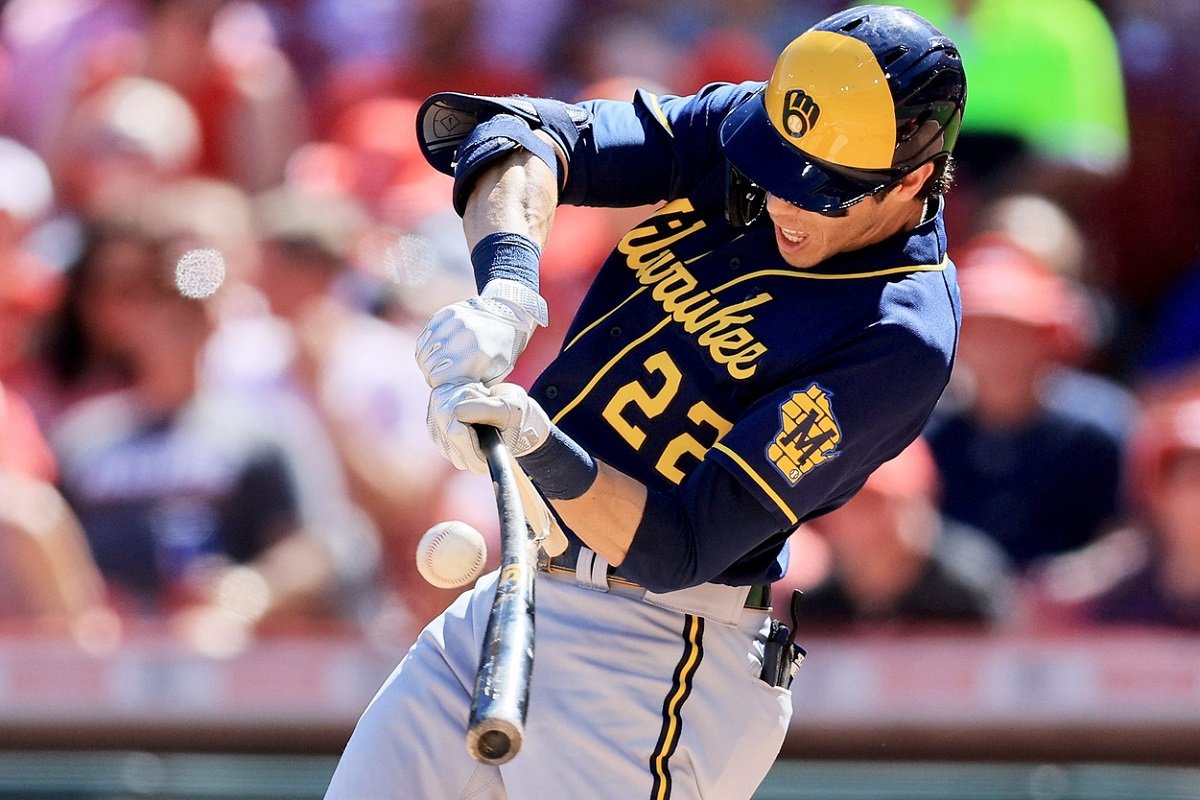 Two time All-Star, Christian Yelich has had a highly documented fall from grace from his 2018 N.L. MVP-winning season and 2019, where he came runner-up in the N.L. MVP race to Cody Bellinger. The Californian born in December 1991, making him 30 years old, earned many accolades from pundits in his first two years before injuries seemingly derailed his career, cutting short his monster 2019 season. He definitely did enough to sign a huge contract before the start of the 2020 season, but has not lived up to it. Hello! Welcome to a new series where I, Caswell, go through the nerdy stuff to try to make it a little more simple so others can be more Well Informed with the statistics. We are going to go through how a player compares to themselves over previous years, against the rest of the team and league for that year, and maybe even get some historical comparisons. So is he still falling? Are things back on track? Should fans shun him? Let’s find out Before Milwaukee Before joining the Brewers, Yelich wasn’t the star the Brewers saw his first two years in Milwaukee, but he was still very good. He never hit lower than 0.282 in his five seasons in Miami, launching 21 and 18 home runs in his last two years before the switch. Yelich consistently showed a great bat, along with a keen eye, walking 300 times in the five years in Florida. This culminated into a great OPS+ each season. OPS+ uses the players regular OPS, which is on-base plus slugging, and normalizes it across the entire league, while also adjusting for additional factors such as the ballpark played. The average OPS+ is 100, so a player who earns an OPS that is 10% better than league average will get an OPS+ of 110, without taking into account external factors. The above graph shows that he was above average every single year as a Marlin, so far as to get an OPS+ of 135 in 2016. WAR, which stands for Wins Above Replacement, is a lot of math which comes out to the number of wins a particular player gets for their team instead of a “replacement level player,” which is defined by Major League Baseball as a minor league replacement or available fill-in free agent. (If you want to read more about this very interesting statistic, Baseball Reference does a great job at explaining it further.) It is a counting statistic, such that it will culminate over the entirety of a player’s career. Despite this, it is earned throughout the entirety of the season, so one’s WAR can be found for just one year. WAR less than 0 means that a team is better off with a replacement. Commonly, WAR between 0-2 would be considered a bench player, while anything above that is considered a starter. Typically, when a player has a WAR above 5, they are All-Star worthy, and above 8 is MVP worthy. Yelich’s WAR over his 5 seasons with Miami, he was a 17.6 WAR player, getting as much as 4.9 WAR in 2016, which is the year he got his first Silver Slugger Award. He also only played 62 games in 2013, but still got 1.6 WAR as a rookie. He was definitely a good player as a Marlin, but his first two years in Milwaukee were down-right fantastic, winning his second and third Silver Slugger Awards, and placing first and second in MVP voting in the N.L. back to back. First Two Years in Milwaukee In the trade that brought Yelich to Milwaukee, the Brewers sent a haul of prospects, including highly ranked prospect, Lewis Brinson, along with Isan Diaz, Monte Harrison, and Jordan Yamamoto, fans weren’t too sure what they were going to get. He was definitely a good player as a Marlin, but Lewis Brinson was thought to have a very bright future, ranking in the top 20 of all prospects for over two years. Nonetheless, Yelich’s output in his first two years in Milwaukee were down-right fantastic, winning his second and third Silver Slugger Awards, and placing first and second in MVP voting in the N.L. back to back and silencing the critics. As such, I will just let the numbers speak for themselves by comparing him to some all-time greats and their 162 game average as calculated by Baseball Reference. The current generation is represented by Mike Trout, a player who is already being considered the greatest player of all time. Ty Cobb, the pure greatest hitter of all-time, is used. Finally, Henry Aaron, a Milwaukee baseball hero will end the comparison. Despite playing in 147 games in 2018 and 130 games in 2019, Yelich is still close in all counting statistics among the 162 game average for the legends of the game selected in this comparison. His 44 home runs in 2019 is at the top of the list. He has the second and third highest batting average and has the highest and third highest OPS. 2018 Yelich is three RBIs behind Henry Aaron in RBI, and second in totals hits behind Ty Cobb. He was quite frankly, fantastic. Christian earned 7.3 WAR in 2018 and 7 in 2019, his first two years in Milwaukee, ranking among the leaders in most statistics. Yelich’s Fall Yelich only played in 130 games in 2019, which is a result of a season ending broken kneecap he sustained in September of 2019. In that offseason, Yelich signed a 7 year, $188.5M contract extension, keeping him in Milwaukee until 2028, which also includes a mutual option for 2029. This seemed like an absolute bargain at the time due to his incredible play and being a fan favorite, marking him a Brewer for likely the rest of his career. The morale surrounding this deal would come crashing down as struggles persisted. In the COVID shortened year, he played 58 of the 60 games yielded a batting average of 0.205, down from 0.326 and 0.329 in his first two years. His on-base percentage slid to 0.356 with an OPS+ of only 110. He hit 12 big flies and had 22 RBIs. There was concern, but it wasn’t massive, as there were substantial abnormalities that year and many players struggled. Injuries plagued his 2021 season, in which he had three different stints on the injured list with a lower back strain. He spent 20 days in the INjured List, came off for a day, before going back on for another 15 days. The third was a 12-day stint on the COVID-19 IL. This back issue is one that first came up while in the Marlins’ farm system and early years in Miami. Yelich only played in 117 games in the full season. His batting average improved to 0.248, but his OBP only improved marginally to 0.362 and his power numbers truly tanked, hitting only 9 home runs on the year. This resulted in the lowest OPS of his career, at 0.736 and an OPS+ of 99, meaning he was an ever-so-slightly below average batter that year. Alarmingly, he went from an MVP caliber player, to a borderline bench player, in terms of WAR. What Changed? The stats clearly took a plunge, but what else varied in his second two years as a Brewer compared to his first? The first thing to look at is his strikeout percentage and his walk percentage each year. We can see that his strikeout rate went up significantly, and his walk rate went up as well, with a significant jump in 2020 which can be attributed to the COVID year and his stellar 2019. Typically, the average strikeout and walk rates across the MLB sit around 20% and 8%, respectively. This means Yelich’s strikeout rate is fine and he walks well. The bump in the later two years is significant, but would not impact his overall statistics that much The approach at the plate of Yelich seems to have changed after his first two years, as he was a center to pull hitter, which is seen above, but highlighted below. Meanwhile, the 2020 season showed a much more consistent approach, with hot zones to the opposite field and on the pull side of center, with the latter showing a glimpse of the old Yeli. 2021 appears to be going back to the old, but clearly shows a more even approach, skewing to the opposite field a lot more. Typically this would show improvement at the plate, but does not apply to Yelich, as most of his success comes from pulling the ball, or going towards center. Another very important thing is where he is missing the ball. The following four graphics are Whiff %, which is swing and miss strikes per swing, over the four years show that they increase and expand. Whiff %: Christian Yelich The K% shows similarities to above, as the rates expand and increase in the second year of two years. In addition to that, he wasn’t hitting the ball as well as often despite having a decent hard hit percentage. This is explicitly seen in the barrel per plate appearance stat, as it was an elite rate in the first two years, but slunk down to MLB average levels, which is denoted as the dashed line. `So what about now? To start, he is pulling the ball much more again, which is a good sign for Yelich. The minor issue, however, is still the strikeout rate, as it sits at 25.2%, which is 1.4% higher than last year’s mark of 23.8%, but 5.6% down from 2020’s dreadful 30.8% strikeout rate. Despite this, his zonal strikeout percent looks significantly better, as inside pitches are no longer as much of an issue. His K% on the outside of the zone is still quite high, but is less severe than in 2020-2021, and he has reintroduced more low strikeout zones, which allows him to look for pitches better, as many pitchers will look to avoid those areas on an at bat where they are looking for a strikeout. When considering these strikeout percent numbers, it is important to look at the swing rate, as well as the whiff rate in these areas. From this data, we can see that his swing and misses in the strike zone are quite slim, while he is swinging at most of the pitches inside the strike zone. This is evident by his 64.3% zone swing percentage (66.9%), which is actually lower than league average, but his 83.2% zone contact percentage is higher than league average (82.0%). This works well for him, as his chase rate is 20.2%, which is the rate pitches outside of the zone are swung at, is significantly less than league average (28.3%). This shows that pitchers have to look for other ways to get him out, especially considering his contact percentage on all swings is 76.1% The other way pitchers have to get him out for the most part is via the ground ball, which is how he hits the ball 55.9% of the time. The league average is 45.0%, meaning Yelich puts the ball on the ground more than 10% more than average! It may be surprising, but his career average is at 54.8%. A more telling metric however is the ratio of ground outs to air outs compared to his ratio of ground balls to fly balls. His GO:AO is 1.52, but his GB:FB is only 1.24. This means that when he hits the ball, he is significantly more likely to record an out than if he is to hit the ball on the ground. This is not just because the fly balls hit are gone for home runs however, as only 10.0% of balls hit in the air leave the park. This is down a lot from his numbers in 2018 and 2019, which were 22.2% and 20.7%, respectively. The most important thing about this trend, however, is what this means for his hitting, which is the major concern. His hit rate, which is the total hits per total at bats is down to 24.23%, which was up to as high as 32.58% in 2018, and 32.92% in 2019. He is hitting a home run 2.4% of the time, down from 5.5% in 2018 and 7.6% in 2019. Is Yelich Done For? The pure numbers don’t look great, I’ll admit it, but I still believe in Christian Yelich, and so should you. His barrel per plate appearance is up to 6.9 and at lead-off he is starting to tear it up, hitting 0.298 when first in the lineup, with an OBP of 0.353. His slugging is only at 0.426, leading to an OPS of 0.779 in this spot. This is better than the 0.703 OPS across the entire league, but I think his can go higher yet than what we have seen from him at the top of the order. This is in large part due to his lack of line drives he has hit, which is only at 16.8%, down from his career average of 25.5%. His hard hit rate is good, at 50.8% and even better, his sweet spot rate, which is the rate in which the idealized combination of launch angle and exit velocity, is at 31.8%. His line drive rate is just suboptimal. Not just this, but teams have begun to utilize a pitch, which he cannot seem to square up. This is the changeup, which is being hit hard only 36.8% of the time, and is only garnering a paltry 0.103 batting average off of. In fact, all of his off speed hitting is slightly down. The good thing about this though, is that he is absolutely destroying fastballs, and overall, his numbers should be quite a bit better. His expected weighted batting average is 0.310 and he is in the top 10% in the league in hard hit rate, he just needs to start hitting those off-speed pitches again and put the ball on a line. Christian Yelich might not be the best in the league, but he will be good, once a few things change. So what would you like for me to analyze next time on CasWell Informed? It could be anything baseball related! Let me know in the comments and I'll keep an eye out! Thank you for reading!
-
Yes. Cheers!
-
Worst pitch of the game considering the count. Did well all in all. He needs to drop that sinker from his arsenal in my opinion from what I have gathered. His off-speed is good, but his sinker just gets slammed, can't reiterate that enough haha. First innings are his worst
-
Yup... Pitch 4. A 92 mph 4-seamer