Caswell
-
Posts
120 -
Joined
-
Last visited
Content Type
Profiles
Forums
Blogs
Events
News
2026 Milwaukee Brewers Top Prospects Ranking
Milwaukee Brewers Videos
2022 Milwaukee Brewers Draft Picks
Milwaukee Brewers Free Agent & Trade Rumors, Notes, & Tidbits
Guides & Resources
2023 Milwaukee Brewers Draft Picks
2024 Milwaukee Brewers Draft Picks
The Milwaukee Brewers Players Project
2025 Milwaukee Brewers Draft Pick Tracker
2026 Milwaukee Brewers Draft Tracker: Picks & Bonuses
Store
Downloads
Gallery
Everything posted by Caswell
-
Yup! Great pickup and gave up basically nothing. Quite similar career to Wade Miley, with higher highs
-
Just as we expected, Dallas Keuchel was traded to the Brewers. But is it a move that should’ve happened five years ago, a month ago, or not at all? Image courtesy of © Erik Williams-USA TODAY Sports In a surprise move by the Milwaukee Brewers, Dallas Keuchel was acquired Tuesday afternoon from the Seattle Mariners for cash considerations. The 36-year-old left-handed starter has not seen the majors this year but does have lots of major league experience. He’s thrown over 1,625 innings across 12 seasons and six different teams, most recently the Minnesota Twins in the 2023 season, where he was… fine. Appearing in just ten games (six of those starts) in the last two months of the season for the Twins, Keuchel pitched 37.2 innings for an ERA of 5.97. Although high, a significant amount of that damage comes from his second start, which was on short rest against the World Series-winning Texas Rangers in Texas. He was excellent in the minor leagues for Minnesota before being called up. He has been fine again this season in Triple-A for the Mariners organization. Keuchel has started 13 games for an ERA of 3.93 and WHIP of 1.211, though most importantly for Milwaukee, he averages 5.5 innings per appearance this year. Formerly a true ace, the two-time All-Star and five-time Gold Glover was a Cy Young Award winner in 2015 and a fixture of the top of a rotation up from his breakout season in 2013 until 2020. He is known as a grinder. The Milwaukee Brewers have used 12 different starters this year and are desperate for stability in their rotation, especially since DL Hall is now on the 60-day injured list. Keuchel will give the team five, maybe six innings, which is valuable for the team with an average of only 4.8 innings per start, ahead of only the San Francisco Giants. Dallas Keuchel offers four pitches: a sinker, changeup, cutter, and two types of sliders. He mostly relies on his sinker and changeup. He is not the same pitcher as a couple of years ago, but he can be a valuable asset for a team that needs outs. View full article
-
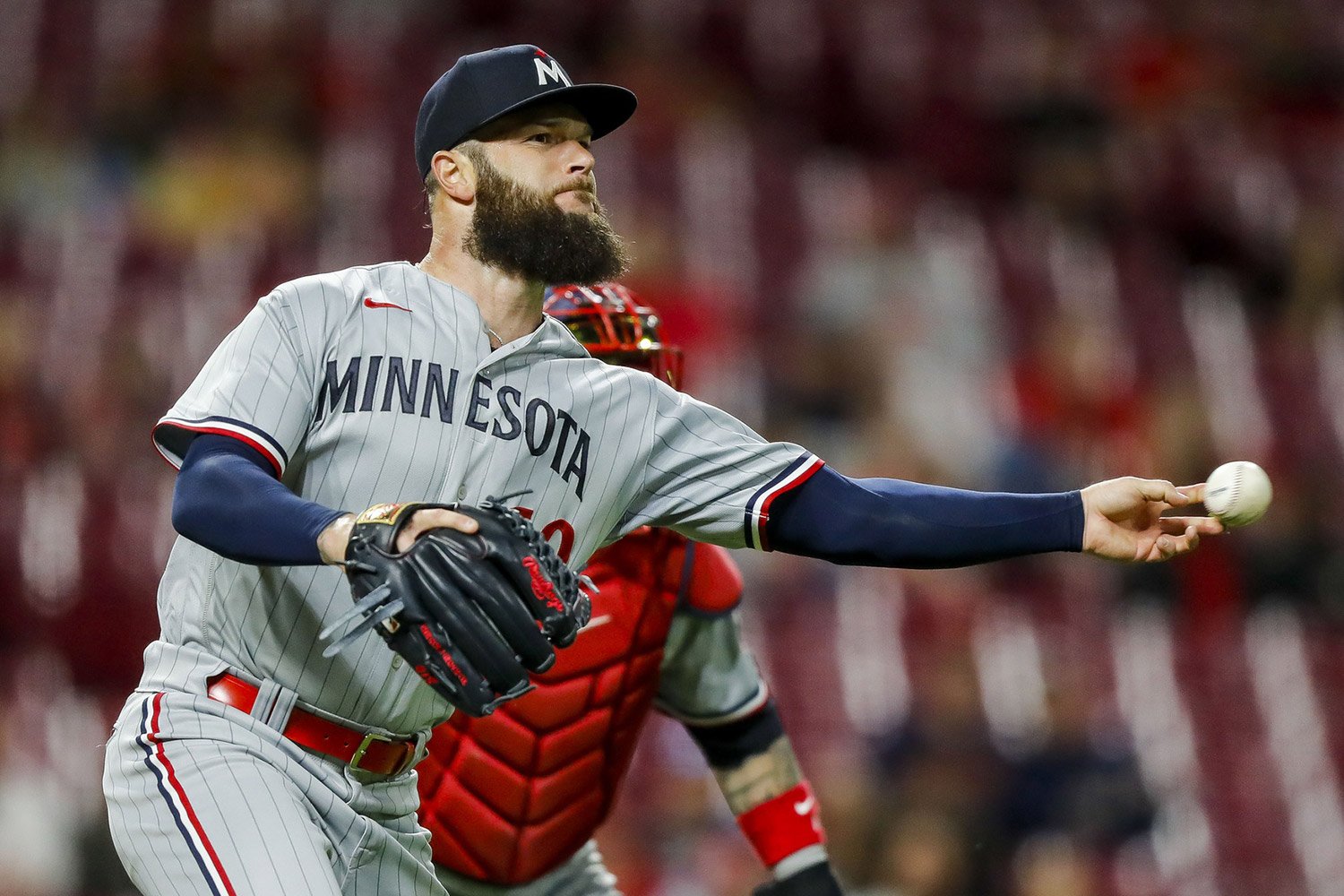 In a surprise move by the Milwaukee Brewers, Dallas Keuchel was acquired Tuesday afternoon from the Seattle Mariners for cash considerations. The 36-year-old left-handed starter has not seen the majors this year but does have lots of major league experience. He’s thrown over 1,625 innings across 12 seasons and six different teams, most recently the Minnesota Twins in the 2023 season, where he was… fine. Appearing in just ten games (six of those starts) in the last two months of the season for the Twins, Keuchel pitched 37.2 innings for an ERA of 5.97. Although high, a significant amount of that damage comes from his second start, which was on short rest against the World Series-winning Texas Rangers in Texas. He was excellent in the minor leagues for Minnesota before being called up. He has been fine again this season in Triple-A for the Mariners organization. Keuchel has started 13 games for an ERA of 3.93 and WHIP of 1.211, though most importantly for Milwaukee, he averages 5.5 innings per appearance this year. Formerly a true ace, the two-time All-Star and five-time Gold Glover was a Cy Young Award winner in 2015 and a fixture of the top of a rotation up from his breakout season in 2013 until 2020. He is known as a grinder. The Milwaukee Brewers have used 12 different starters this year and are desperate for stability in their rotation, especially since DL Hall is now on the 60-day injured list. Keuchel will give the team five, maybe six innings, which is valuable for the team with an average of only 4.8 innings per start, ahead of only the San Francisco Giants. Dallas Keuchel offers four pitches: a sinker, changeup, cutter, and two types of sliders. He mostly relies on his sinker and changeup. He is not the same pitcher as a couple of years ago, but he can be a valuable asset for a team that needs outs.
 -
The new shift restrictions went into place this offseason, but teams still find a way to implement the fielding alignment. Image courtesy of Bally Sports North March 3rd, 2023, is the day we saw the shift return to Major League Baseball after restrictions were implemented after the 2022 season. New rules stipulate that four fielders must be within the infield dirt, and they cannot switch sides during an inning. This eliminates the possibility of a four-outfielder setup and diminishes the radical infield shifts we've seen in recent years. These rules do not affect regulations regarding the alignment of players in the outfield, so when Joey Gallo stepped up to bat with two outs and the bases empty in the bottom of the second for the Minnesota Twins against the Boston Red Sox, we saw something funky. By funky, the infield looked almost the same as last year with the mega-shift. The right side of the field looked almost identical to Gallo, with a fielder in a rover position in shallow right field where we have seen the second baseman previously, though there were still two infielders on the left side. The Boston Red Sox shifted their centerfielder, Adam Duval, to the roving position into shallow right and put their second basemen, Enmanuel Valdez, near second base, where the shortstop often positioned themself during a shift. The shortstop, David Hamilton, lined up almost behind second base, while third baseman, Bobby Dalbec, lined up equidistant between second and third. This left the outfield duo to cover the entire outfield. Ramel Tapia, who often played center for the Colorado Rockies and, more recently, the Toronto Blue Jays, was inked into the lineup as the left fielder and moved to a more traditional center fielder, shading to the left side of the outfield. Meanwhile, right fielder Alex Verdugo lined up as expected for his position. So how did this strange alignment work out for Alex Cora’s Boston Red Sox? Joey Gallo walked. How often will we see this alignment utilized during the regular season? While it looks similar to previous super-shifts, this new form of shifting takes what is usually the most athletic outfielder - the center fielder - and moves him into a limited role where foot speed likely won't come into play. Standing in the traditional centerfielder spot is the generally-less-fast left fielder. What do you think, Brewer Fanatics? Will we see this kind of alignment used against the likes of Jess Winker and Rowdy Tellez in the 2023 season? View full article
-
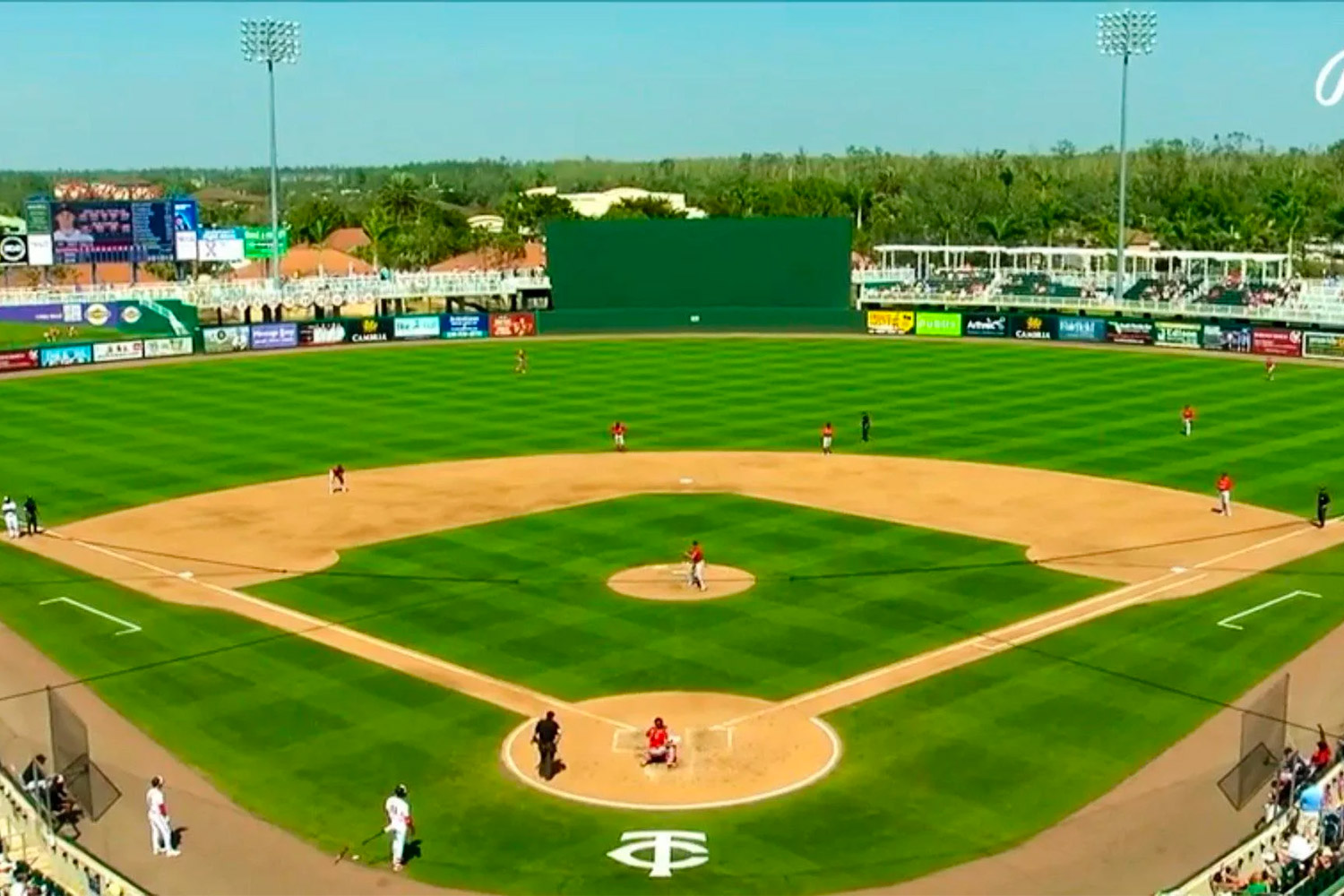 March 3rd, 2023, is the day we saw the shift return to Major League Baseball after restrictions were implemented after the 2022 season. New rules stipulate that four fielders must be within the infield dirt, and they cannot switch sides during an inning. This eliminates the possibility of a four-outfielder setup and diminishes the radical infield shifts we've seen in recent years. These rules do not affect regulations regarding the alignment of players in the outfield, so when Joey Gallo stepped up to bat with two outs and the bases empty in the bottom of the second for the Minnesota Twins against the Boston Red Sox, we saw something funky. By funky, the infield looked almost the same as last year with the mega-shift. The right side of the field looked almost identical to Gallo, with a fielder in a rover position in shallow right field where we have seen the second baseman previously, though there were still two infielders on the left side. The Boston Red Sox shifted their centerfielder, Adam Duval, to the roving position into shallow right and put their second basemen, Enmanuel Valdez, near second base, where the shortstop often positioned themself during a shift. The shortstop, David Hamilton, lined up almost behind second base, while third baseman, Bobby Dalbec, lined up equidistant between second and third. This left the outfield duo to cover the entire outfield. Ramel Tapia, who often played center for the Colorado Rockies and, more recently, the Toronto Blue Jays, was inked into the lineup as the left fielder and moved to a more traditional center fielder, shading to the left side of the outfield. Meanwhile, right fielder Alex Verdugo lined up as expected for his position. So how did this strange alignment work out for Alex Cora’s Boston Red Sox? Joey Gallo walked. How often will we see this alignment utilized during the regular season? While it looks similar to previous super-shifts, this new form of shifting takes what is usually the most athletic outfielder - the center fielder - and moves him into a limited role where foot speed likely won't come into play. Standing in the traditional centerfielder spot is the generally-less-fast left fielder. What do you think, Brewer Fanatics? Will we see this kind of alignment used against the likes of Jess Winker and Rowdy Tellez in the 2023 season?
 -
Fans of baseball see the massive amount of money spent, though fans of the Milwaukee Brewers look on from afar. While it is still a couple of months out, with Opening Day on March 30th this year, there could be a reason to be concerned. Just so you know, the data in this article is accurate as of 1:00 pm on January 9th, 2023. The details of Adam Engel's deal with the San Diego Padres have yet to be released. Contract information has been gathered from spotrac and Baseball Prospectus, while inflation data has been gathered from the United States Bureau of Labor Statistics. Ticket pricing is from official Milwaukee Brewer documents. The Milwaukee Brewers became the last team to sign someone to a major league contract, with Wade Miley returning to the team where he had his one of his best seasons in 2018. Despite the other moves made via trades, the Brewers remain behind the eight ball in actual spending. Ninety-six players signed major league contracts in free agency, committing over $3.6 billion without including any bonuses. Both New York teams spent the most, with eight signings for $717 million by the Mets and four for $573.5 million by the Yankees. Eight teams have committed over $100 million, and just one has spent less than Milwaukee, the Atlanta Braves. Looking at the National League Central, spending this offseason shows continued trailing efforts, with drastic improvements by the rival Chicago Cubs mainly to their shortstop of the future, Dansby Swanson. St. Louis has also been working to improve by replacing their longtime backstop, Yadier Molina, with the former Cub, Willson Contreras . Team Number of Signings Total Cash AAV Cincinnati Reds 3 $11,925,000 $11,925,000 Chicago Cubs 7 $291,520,000 $76,055,714 Milwaukee Brewers 1 $4,500,000 $4,500,000 Pittsburgh Pirates 5 $25,375,000 $25,375,000 St. Louis Cardinals 1 $87,500,000 $17,500,000 The Brewers have done something, as all teams have, with most of the changes being made via trade. They, too, brought a catching Contreras to the team via Willson’s brother, William Contreras. In addition to that key acquisition, the Brewers have traded for seven other players who have appeared in the MLB previously (Abraham Toro, Elvis Peguero, Janson Junk, Javy Guerra, Jesse Winker, Owen Miller, and Payton Henry), among other players. Esteury Ruiz, Hunter Renfroe, and Kolten Wong are the critical players lost in these trades. These moves leave the fans wanting more, with a general feeling of contented-ness, if there would be some activity in securing one of the current stars for a long-term extension. There is room remaining to drop some money in free agency as well. When Mark Attanasio bought the Milwaukee Brewers in 2005, he spent $223 million. The most recent valuation by Forbes of the Brewers has them at $1.28 billion, an increase of almost 500%. Despite this significant investment and fantastic recent team success, an unwillingness to spend more appears. Source: https://www.statista.com/statistics/194623/mlb-franchise-value-of-the-milwaukee-brewers-since-2006/ The franchise record for salary was set in 2022 at approximately $130 million. As of now, there is only about $47 million officially committed for the 2023 season, but projections have them spending about $115 million after all contract negotiations and arbitration processes, which is an 11.5% decrease from the team which just missed the postseason for the first time in four seasons. Despite living on the verge of success, there is yet to be visible progress while other teams jump ahead. Looking at two division rivals, the Cardinals and the Cubs have revamped their roster, each having committed at or above what projections have slated for the Brewers. Their projections are $154 million for the Cardinals and $172 million for the Cubs. Across the league, the Crew looks low, with an average projection of approximately $150 million, markedly less than Milwaukee’s payroll projection of $115 million. The payroll is a moving average, and projections for this year appear to match last year’s average payroll of $150 million, even with the vast spending spree thus far in free agency. With this moving average, the Brewers remain below standard. They rank near the bottom third in total payroll and have met the league average once. Milwaukee Brewers Season Payroll (*Projected) Payroll Ranking Normalized Payroll 2020 $41,434,086.00 23 0.67 2021 $99,377,415.00 19 0.76 2022 $130,769,325.00 19 0.87 2023* $115,176,286.00 19 0.76 2023 $47,284,960.00 24 0.41 Note: 2020 season was shortened to 60 games due to the global Covid-19 Pandemic Most disappointingly, however, is how this spending is inversely proportional to what the most die-hard fans pay to become a season seat holder. What these fans pay is marketed as a discount of up to 37% in 2023 and 35% in 2022 off the single-game demand-based rate. Since 2021, new season seat holder prices have gone up, on average, about 4% per year, with some going up as much as 8% (based on data from 2021 and 2023). For returning season seat holders, from 2022 to 2023, prices have gone up 5% on average, with some as much as 15% from the previous season. I guess one thing that fans could be thankful for is that these prices haven’t grossly exceeded inflation over these periods for the most part. Revenue is more than season ticket sales, let alone ticket sales overall. With that being said, the Milwaukee Brewers have exploded in valuation, yet are putting out a declining product without investing more money to fix the issues despite taking more money from the consumer, the fans. View full article
-
 Just so you know, the data in this article is accurate as of 1:00 pm on January 9th, 2023. The details of Adam Engel's deal with the San Diego Padres have yet to be released. Contract information has been gathered from spotrac and Baseball Prospectus, while inflation data has been gathered from the United States Bureau of Labor Statistics. Ticket pricing is from official Milwaukee Brewer documents. The Milwaukee Brewers became the last team to sign someone to a major league contract, with Wade Miley returning to the team where he had his one of his best seasons in 2018. Despite the other moves made via trades, the Brewers remain behind the eight ball in actual spending. Ninety-six players signed major league contracts in free agency, committing over $3.6 billion without including any bonuses. Both New York teams spent the most, with eight signings for $717 million by the Mets and four for $573.5 million by the Yankees. Eight teams have committed over $100 million, and just one has spent less than Milwaukee, the Atlanta Braves. Looking at the National League Central, spending this offseason shows continued trailing efforts, with drastic improvements by the rival Chicago Cubs mainly to their shortstop of the future, Dansby Swanson. St. Louis has also been working to improve by replacing their longtime backstop, Yadier Molina, with the former Cub, Willson Contreras . Team Number of Signings Total Cash AAV Cincinnati Reds 3 $11,925,000 $11,925,000 Chicago Cubs 7 $291,520,000 $76,055,714 Milwaukee Brewers 1 $4,500,000 $4,500,000 Pittsburgh Pirates 5 $25,375,000 $25,375,000 St. Louis Cardinals 1 $87,500,000 $17,500,000 The Brewers have done something, as all teams have, with most of the changes being made via trade. They, too, brought a catching Contreras to the team via Willson’s brother, William Contreras. In addition to that key acquisition, the Brewers have traded for seven other players who have appeared in the MLB previously (Abraham Toro, Elvis Peguero, Janson Junk, Javy Guerra, Jesse Winker, Owen Miller, and Payton Henry), among other players. Esteury Ruiz, Hunter Renfroe, and Kolten Wong are the critical players lost in these trades. These moves leave the fans wanting more, with a general feeling of contented-ness, if there would be some activity in securing one of the current stars for a long-term extension. There is room remaining to drop some money in free agency as well. When Mark Attanasio bought the Milwaukee Brewers in 2005, he spent $223 million. The most recent valuation by Forbes of the Brewers has them at $1.28 billion, an increase of almost 500%. Despite this significant investment and fantastic recent team success, an unwillingness to spend more appears. Source: https://www.statista.com/statistics/194623/mlb-franchise-value-of-the-milwaukee-brewers-since-2006/ The franchise record for salary was set in 2022 at approximately $130 million. As of now, there is only about $47 million officially committed for the 2023 season, but projections have them spending about $115 million after all contract negotiations and arbitration processes, which is an 11.5% decrease from the team which just missed the postseason for the first time in four seasons. Despite living on the verge of success, there is yet to be visible progress while other teams jump ahead. Looking at two division rivals, the Cardinals and the Cubs have revamped their roster, each having committed at or above what projections have slated for the Brewers. Their projections are $154 million for the Cardinals and $172 million for the Cubs. Across the league, the Crew looks low, with an average projection of approximately $150 million, markedly less than Milwaukee’s payroll projection of $115 million. The payroll is a moving average, and projections for this year appear to match last year’s average payroll of $150 million, even with the vast spending spree thus far in free agency. With this moving average, the Brewers remain below standard. They rank near the bottom third in total payroll and have met the league average once. Milwaukee Brewers Season Payroll (*Projected) Payroll Ranking Normalized Payroll 2020 $41,434,086.00 23 0.67 2021 $99,377,415.00 19 0.76 2022 $130,769,325.00 19 0.87 2023* $115,176,286.00 19 0.76 2023 $47,284,960.00 24 0.41 Note: 2020 season was shortened to 60 games due to the global Covid-19 Pandemic Most disappointingly, however, is how this spending is inversely proportional to what the most die-hard fans pay to become a season seat holder. What these fans pay is marketed as a discount of up to 37% in 2023 and 35% in 2022 off the single-game demand-based rate. Since 2021, new season seat holder prices have gone up, on average, about 4% per year, with some going up as much as 8% (based on data from 2021 and 2023). For returning season seat holders, from 2022 to 2023, prices have gone up 5% on average, with some as much as 15% from the previous season. I guess one thing that fans could be thankful for is that these prices haven’t grossly exceeded inflation over these periods for the most part. Revenue is more than season ticket sales, let alone ticket sales overall. With that being said, the Milwaukee Brewers have exploded in valuation, yet are putting out a declining product without investing more money to fix the issues despite taking more money from the consumer, the fans.
 -
The Milwaukee Brewers Best Rookie and Most Improved, as voted by Brewer Fanatic staff, have been revealed. We find our way once again on the mound where Corbin Burnes follows up his 2021 Cy Young Award-winning season with the 2022 Brewer Fanatic Pitcher of the Year Award. I'm sure it's just as meaningful to the 27-year-old. Before we get into Corbin Burnes’ 2022 season, let’s get into who he beat out in Pitcher of the Year voting, starting with a couple of Honorable Mentions. Honorable Mentions Eric Lauer and Hoby Milner just missed out on the top three. Lauer had a great season, starting the second-most games for the Brewers and having an ERA of 3.69. He surely would have ranked higher if it weren’t for those blow-up starts. Milner was named Brewer Fanatic's Most Improved Player and has previously been discussed in this series of articles (which you should definitely go back and read), but was heavily used. His 67 games pitched was second most on the team. He finished with a 3.72 ERA. Others receiving votes: Josh Hader and Freddy Peralta. 3rd: Devin Williams 6-4, 1.93 ERA, 60 2/3 IP, 14.2 K/9, 4.5 BB/9, 4.6 H/9, 0.3 HR/9 Devin Williams earned his first All-Star appearance in 2022 after struggling with command to start the season. He recovered and went on to be dominant and became the primary closer following Josh Hader’s departure. Things were bumpy, but he still compiled 15 saves (and was charged with two blown saves). Williams struck out 40.0% of batters faced, and had a WHIP of 1.01 to go along with his 2.01 FIP. 2nd: Brandon Woodruff 13-4, 3.05 ERA, 153 1/3 IP, 11.2 K/9, 2.5 BB/9, 7.2 H/9, 1.1 HR/9 Despite missing a month due to a well documented injury, Brandon Woodruff went on to be an important contributor and very consistent. After a poor first outing of the season in which he allowed 7 runs across 3.2 innings, Woody would only have 3 other outings where he allowed more than 3. 15 of his 27 games were quality starts, which was second best on the Milwaukee Brewers. Despite his very good numbers, he was let down a little by relievers who came in to clean up any mess, as 9 of his runners which were inherited went on to score. He is the only player besides Burnes to receive a 1st place vote. Expect more good to come! Pitcher of the Year - Corbin Burnes 12-8, 2.94 ERA, 202.0 IP, 10.8 K/9, 2.3 BB/9, 6.4 H/9, 1.0 HR/9 A big question mark going into the season was Corbin Burnes’ durability. Even though he had won the 2021 Cy Young Award, he pitched less than 200 innings, one of 17 pitchers to win the award with that (including the COVID-shortened 2020 season, and strike-shortened 1984 season). These concerns were silenced, as he paced the league - along with Gerrit Cole, Nick Pivetta, and Merrill Kelly - with 33 games started and fourth in innings pitched with 202.0 innings. Burnes had a fantastic 21 quality starts, good for eighth across the league and his 243 strikeouts were second, only behind Cole. There were some minor struggles for the Brewers’ ace, but a dominant eight-inning performance against the Miami Marlins on September 30th, resulting in a 1-0 win over fellow Cy Young Award contender Sandy Alcantara cemented his place as best overall pitcher. Your turn... There probably isn't going to be much, if any, argument about the selection of Corbin Burnes as Pitcher of the Year. How would you rank the top three or four Brewers pitchers in 2022? View full article
-
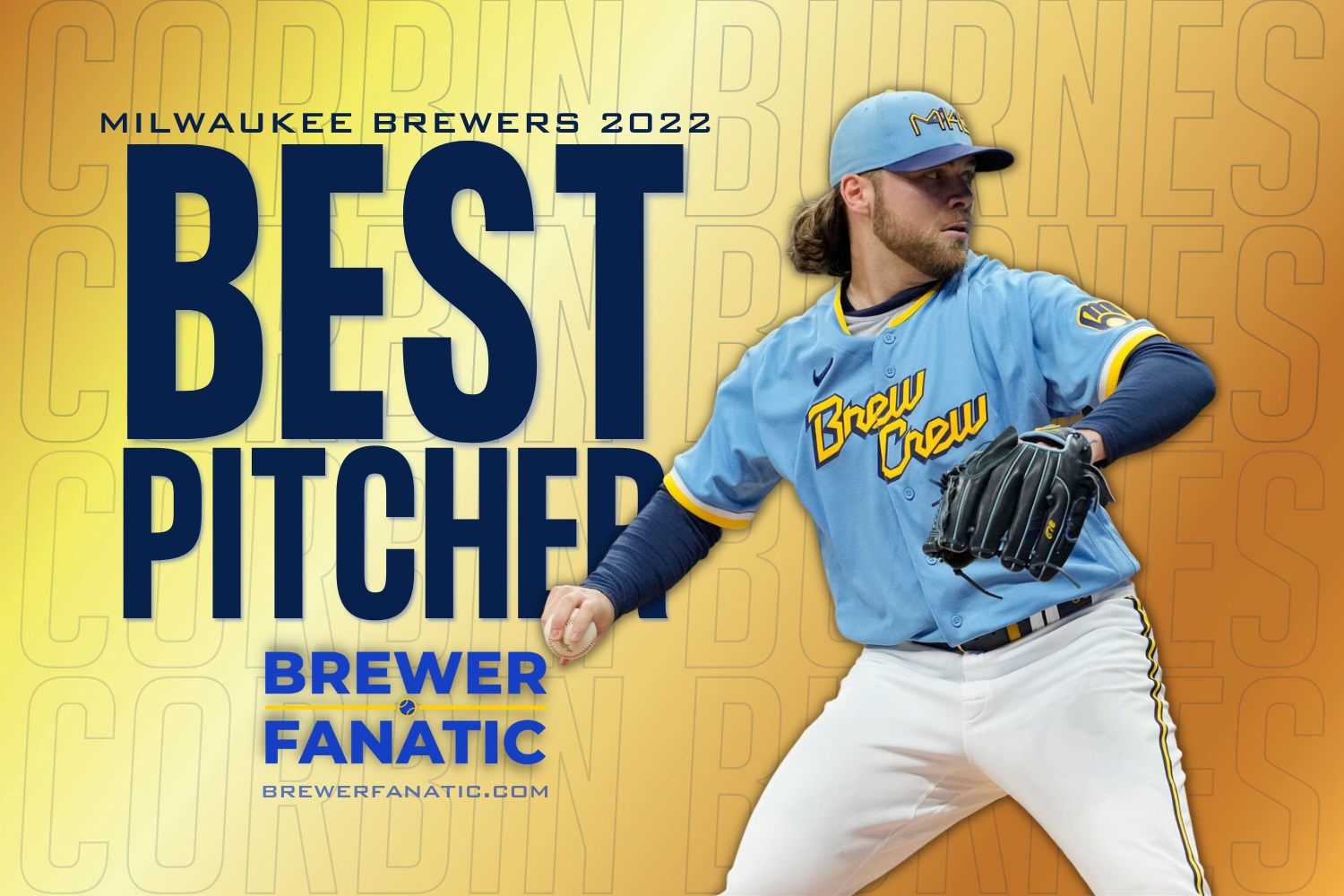 Before we get into Corbin Burnes’ 2022 season, let’s get into who he beat out in Pitcher of the Year voting, starting with a couple of Honorable Mentions. Honorable Mentions Eric Lauer and Hoby Milner just missed out on the top three. Lauer had a great season, starting the second-most games for the Brewers and having an ERA of 3.69. He surely would have ranked higher if it weren’t for those blow-up starts. Milner was named Brewer Fanatic's Most Improved Player and has previously been discussed in this series of articles (which you should definitely go back and read), but was heavily used. His 67 games pitched was second most on the team. He finished with a 3.72 ERA. Others receiving votes: Josh Hader and Freddy Peralta. 3rd: Devin Williams 6-4, 1.93 ERA, 60 2/3 IP, 14.2 K/9, 4.5 BB/9, 4.6 H/9, 0.3 HR/9 Devin Williams earned his first All-Star appearance in 2022 after struggling with command to start the season. He recovered and went on to be dominant and became the primary closer following Josh Hader’s departure. Things were bumpy, but he still compiled 15 saves (and was charged with two blown saves). Williams struck out 40.0% of batters faced, and had a WHIP of 1.01 to go along with his 2.01 FIP. 2nd: Brandon Woodruff 13-4, 3.05 ERA, 153 1/3 IP, 11.2 K/9, 2.5 BB/9, 7.2 H/9, 1.1 HR/9 Despite missing a month due to a well documented injury, Brandon Woodruff went on to be an important contributor and very consistent. After a poor first outing of the season in which he allowed 7 runs across 3.2 innings, Woody would only have 3 other outings where he allowed more than 3. 15 of his 27 games were quality starts, which was second best on the Milwaukee Brewers. Despite his very good numbers, he was let down a little by relievers who came in to clean up any mess, as 9 of his runners which were inherited went on to score. He is the only player besides Burnes to receive a 1st place vote. Expect more good to come! Pitcher of the Year - Corbin Burnes 12-8, 2.94 ERA, 202.0 IP, 10.8 K/9, 2.3 BB/9, 6.4 H/9, 1.0 HR/9 A big question mark going into the season was Corbin Burnes’ durability. Even though he had won the 2021 Cy Young Award, he pitched less than 200 innings, one of 17 pitchers to win the award with that (including the COVID-shortened 2020 season, and strike-shortened 1984 season). These concerns were silenced, as he paced the league - along with Gerrit Cole, Nick Pivetta, and Merrill Kelly - with 33 games started and fourth in innings pitched with 202.0 innings. Burnes had a fantastic 21 quality starts, good for eighth across the league and his 243 strikeouts were second, only behind Cole. There were some minor struggles for the Brewers’ ace, but a dominant eight-inning performance against the Miami Marlins on September 30th, resulting in a 1-0 win over fellow Cy Young Award contender Sandy Alcantara cemented his place as best overall pitcher. Your turn... There probably isn't going to be much, if any, argument about the selection of Corbin Burnes as Pitcher of the Year. How would you rank the top three or four Brewers pitchers in 2022?
 -
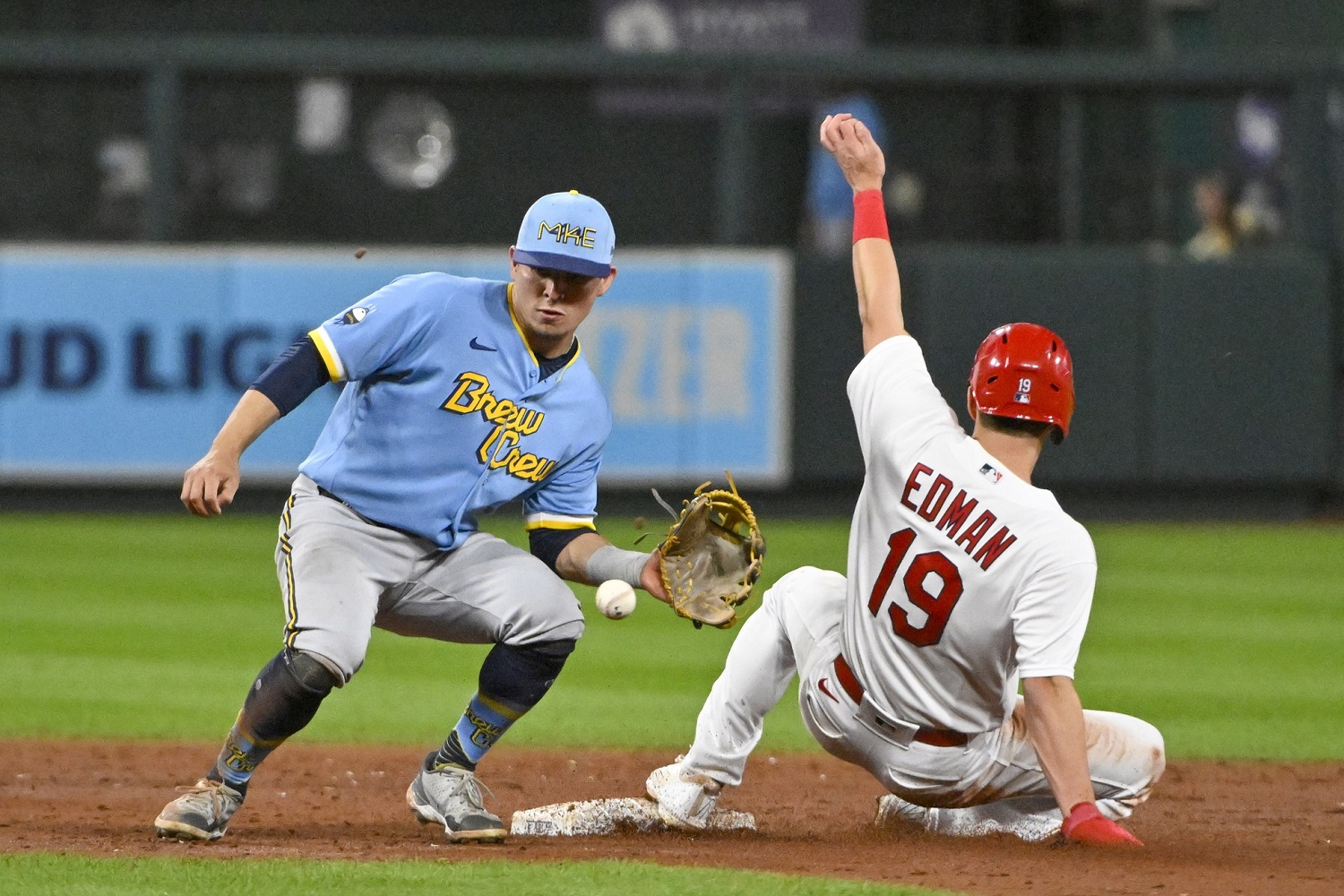 After a great 8-4 win on Tuesday, September 13th, the Brewers lost the following day 1-4 in Adam Wainwright and Yadier Molina’s record breaking 325th game as a battery for the Cardinals. This is a disappointing result on what could have been a huge momentum-changing two-game set, and makes the path to not only a potential repeat of division champions very hard. But the second half record of some of the Brewers’ opponents might provide a glimmer of hope, if not for the division crown, at least for a fifth straight postseason berth. With exactly three weeks remaining in the regular season, both the Brewers and Cardinals have 19 games remaining after that discouraging loss on Wednesday night. The Cards are staying in St. Louis, where they will be playing a five-game series against the Cincinnati Reds. Following this, most of their time down the stretch will be on the road, with only a quick three-game set against Pittsburgh in their second to last series. Before getting home, though, the Cardinals will have a tough stretch, heading out West after the long series against the Reds to play the Padres and the Dodgers three games a piece across six days. This could help the Brewers in two ways, since the Crews is chasing the Padres for the last Wild Card spot. Obviously, the two games remaining versus the Cardinals are the most important for the Brewers’ hopes for division triumph. After an off day, the Cardinals come to Milwaukee for that quick set starting on Tuesday, September 27th. Any division-winning scenario starts with a sweep of that series. Since there no longer being a possibility of game 163, tiebreakers are important. Winning those two games would shift the split in the Brewers’ favor, but dropping either would mean the Cardinals take the season series. At first glance, the rest of the Crew’s schedule looks a bit more rough than the Cards. Milwaukee’s opponents have an average winning percentage of 0.514, while St. Louis’ have just 0.489. Averaging for games played, Milwaukee’s opponents win percentage falls to below 0.500, but just barely, at 0.499, while St. Louis’ also fall to 0.477. But looking at just the second half of the season, the schedule becomes much similar. Each of the teams will face three teams with a winning record after the All Star Break, and averaging for games played, Milwaukee plays teams with WP of 0.478 to St. Louis’s 0.472, a marginal difference. Looking closer at the individual opponents: Milwaukee has to pounce on the opportunity of the Yankees’ second half (.451 winning percentage) struggles. They need to hope they avoid Max Scherzer’s Mets’ return from injury. It is likely they will be facing Jacob DeGrom, but not having to face both of those elite pitchers would be great. Cincinnati must be dealt with, and the Crew must at least match the wins St. Louis achieves against the Reds. Miami has been horrible in the second half, with just a 0.294 winning percentage. Unfortunately, Arizona has been great over the second half (as the Crew found out), with a winning percentage of 0.531. Even so, making up the additional six games the Brewers would be a herculean task. It comes down to winning games. The Brewers have to win series, and have a few sweeps. They will need some help, but it is still reasonably possible. But even if they can’t, a strong finish positions them well to challenge for the Wild Card. Here's to hope.
 -
The Brewers sit 8.0 games back, with an elimination number of 12 in the NL Central behind the Cardinals. So lets’ look for some hope. After a great 8-4 win on Tuesday, September 13th, the Brewers lost the following day 1-4 in Adam Wainwright and Yadier Molina’s record breaking 325th game as a battery for the Cardinals. This is a disappointing result on what could have been a huge momentum-changing two-game set, and makes the path to not only a potential repeat of division champions very hard. But the second half record of some of the Brewers’ opponents might provide a glimmer of hope, if not for the division crown, at least for a fifth straight postseason berth. With exactly three weeks remaining in the regular season, both the Brewers and Cardinals have 19 games remaining after that discouraging loss on Wednesday night. The Cards are staying in St. Louis, where they will be playing a five-game series against the Cincinnati Reds. Following this, most of their time down the stretch will be on the road, with only a quick three-game set against Pittsburgh in their second to last series. Before getting home, though, the Cardinals will have a tough stretch, heading out West after the long series against the Reds to play the Padres and the Dodgers three games a piece across six days. This could help the Brewers in two ways, since the Crews is chasing the Padres for the last Wild Card spot. Obviously, the two games remaining versus the Cardinals are the most important for the Brewers’ hopes for division triumph. After an off day, the Cardinals come to Milwaukee for that quick set starting on Tuesday, September 27th. Any division-winning scenario starts with a sweep of that series. Since there no longer being a possibility of game 163, tiebreakers are important. Winning those two games would shift the split in the Brewers’ favor, but dropping either would mean the Cardinals take the season series. At first glance, the rest of the Crew’s schedule looks a bit more rough than the Cards. Milwaukee’s opponents have an average winning percentage of 0.514, while St. Louis’ have just 0.489. Averaging for games played, Milwaukee’s opponents win percentage falls to below 0.500, but just barely, at 0.499, while St. Louis’ also fall to 0.477. But looking at just the second half of the season, the schedule becomes much similar. Each of the teams will face three teams with a winning record after the All Star Break, and averaging for games played, Milwaukee plays teams with WP of 0.478 to St. Louis’s 0.472, a marginal difference. Looking closer at the individual opponents: Milwaukee has to pounce on the opportunity of the Yankees’ second half (.451 winning percentage) struggles. They need to hope they avoid Max Scherzer’s Mets’ return from injury. It is likely they will be facing Jacob DeGrom, but not having to face both of those elite pitchers would be great. Cincinnati must be dealt with, and the Crew must at least match the wins St. Louis achieves against the Reds. Miami has been horrible in the second half, with just a 0.294 winning percentage. Unfortunately, Arizona has been great over the second half (as the Crew found out), with a winning percentage of 0.531. Even so, making up the additional six games the Brewers would be a herculean task. It comes down to winning games. The Brewers have to win series, and have a few sweeps. They will need some help, but it is still reasonably possible. But even if they can’t, a strong finish positions them well to challenge for the Wild Card. Here's to hope. View full article
-
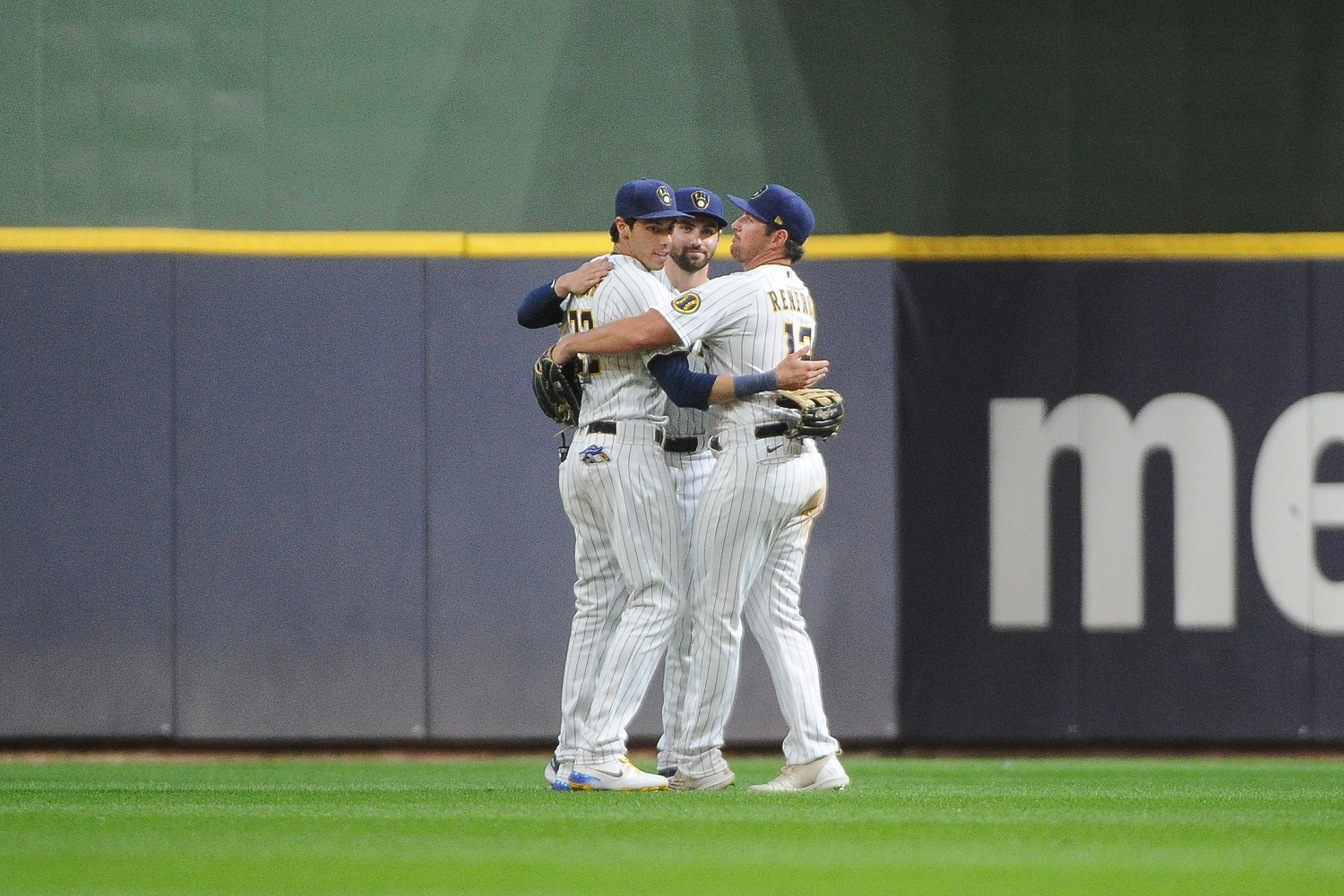 Milwaukee Brewer fans got to see top prospect Garrett Mitchell for the first time in the big leagues after his call up on Saturday August 27th. The 23-year-old outfielder is replacing center fielder Jonathan Davis, who was placed on the Injured List with a right elbow contusion. Davis has struggled at the plate for the most part, batting 0.224 in 37 games. He does own an OBP of 0.344 and excellent defense. Mitchell, meanwhile, has been great and is a highly rated prospect, currently ranked 5th in the Brewer system. He has seen time in rookie ball, Double-A and Triple-A this year, and is hitting 0.287 across all three. The potential five tool player has a batting average of 0.343 in his 20 games in Triple-A and will look to pounce on the opportunity. A left handed hitter, will look to form a great pairing with Tyrone Taylor in center, and made his first appearance tonight as a defensive replacement. If you would like to read all about what you can expect from Mitchell, check out our scouting report.
 -
With Jonathan Davis heading to the IL, a top prospect is filling the spot. Milwaukee Brewer fans got to see top prospect Garrett Mitchell for the first time in the big leagues after his call up on Saturday August 27th. The 23-year-old outfielder is replacing center fielder Jonathan Davis, who was placed on the Injured List with a right elbow contusion. Davis has struggled at the plate for the most part, batting 0.224 in 37 games. He does own an OBP of 0.344 and excellent defense. Mitchell, meanwhile, has been great and is a highly rated prospect, currently ranked 5th in the Brewer system. He has seen time in rookie ball, Double-A and Triple-A this year, and is hitting 0.287 across all three. The potential five tool player has a batting average of 0.343 in his 20 games in Triple-A and will look to pounce on the opportunity. A left handed hitter, will look to form a great pairing with Tyrone Taylor in center, and made his first appearance tonight as a defensive replacement. If you would like to read all about what you can expect from Mitchell, check out our scouting report. View full article
-
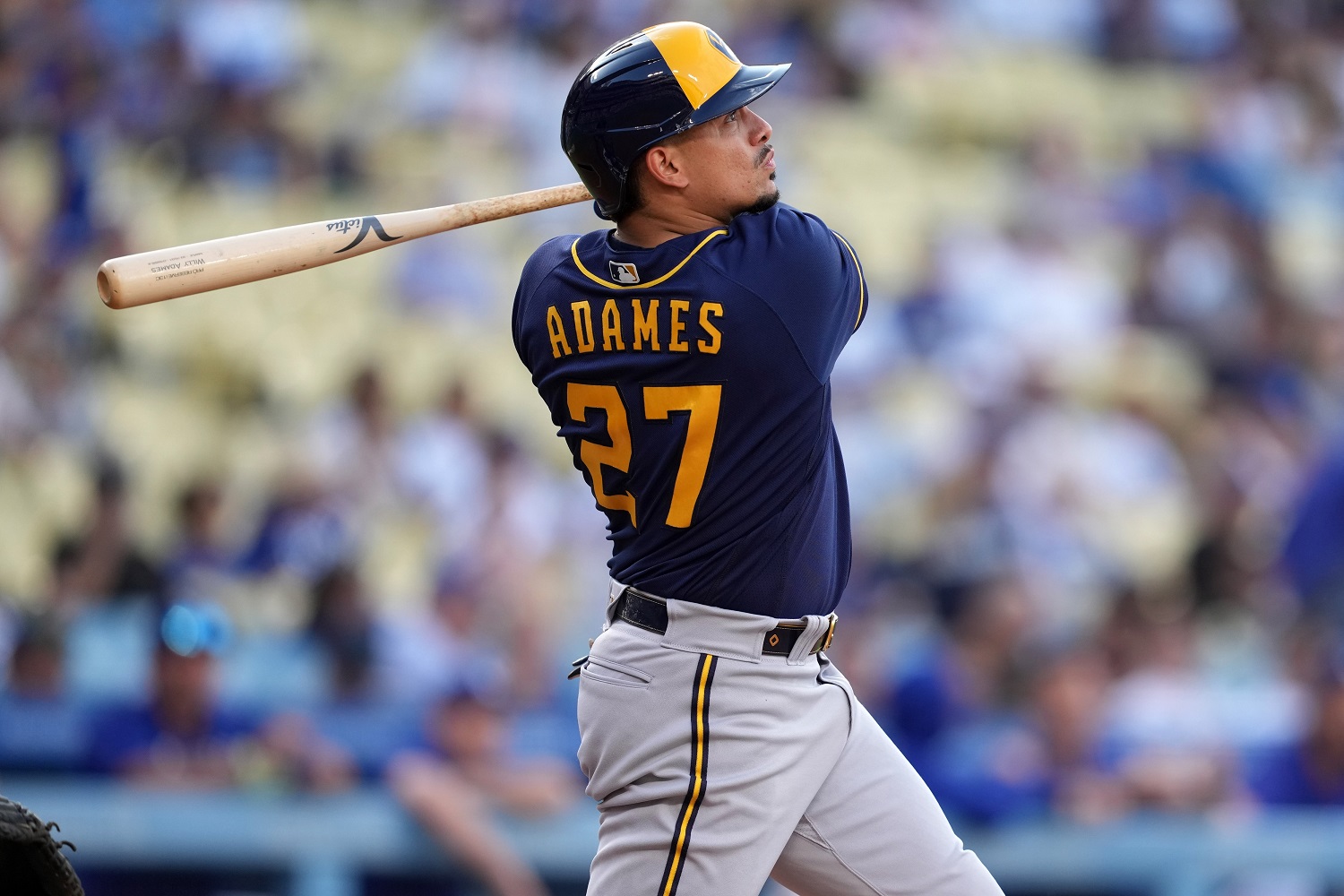 On the afternoon of my sister’s 19th birthday, May 21st, 2021, the Milwaukee Brewers sent Drew Rasmussen and J.P. Feyereisen down to the Tampa Bay Rays for Trevor Richards and Willy Adames. Initially, I was upset about this trade. The Crew were sending two serviceable, young arms (one of whom was a Wisconsin kid) for what I deemed a lesser arm and a falling star. Instead, all Brewer fans were treated to a birthday gift, where Richards was useful before being turned into Rowdy Tellez in another trade, and Adames finished 16th in MVP voting due to his excellence after the trade. In 2022, Adames has not reached the gaudy expectations set from his phenomenal partial first season, where it was thought the Milwaukee Brewers had added a young, perpetual MVP candidate at a premium position with many more years of team control. It is hard to say that he has been a disappointment, ranking first among Milwaukee’s position players in WAR and second behind reigning Cy Young Award winner Corbin Burnes across all players. Adames has earned 2.9 WAR, good enough to be within the top 65 position players in the entire MLB, but only barely making the top 50% of all shortstops. Willy Adames’ stat line shows a hitter who has been focusing on power. Through the Dodgers series, he has hit 25 home runs on the year, which makes him the leader for most among shortstops. He has a slugging of 0.460, which is quite a bit better than the league average of 0.395 and the league average of shortstops of 0.383. He has 73 RBIs and has scored 62 runs. But the overall stat-line shows a hitter who is primarily swinging for the fences. Adames’ batting average is 0.226, and his OBP is 0.291. He has struck out 118 times while only drawing 37 walks in his 101 games played. That strikeout total is tied for third highest among shortstops and 28th across the entire league. His OPS is 0.751 for an OPS+ of 109. Baseball Prospectus’ PECOTA suggests Adames has changed something as his expectations do not fit in with his previous statistical trends. PECOTA projects a player’s future performance using sabermetric analysis. It is commonly thought of as one of the best systems to forecast a player’s performance. So, using this resource, I was able to create the following table. An important note for my analysis is that I normalized the number of games played in order to determine the predicted values with the same number of games played as this year. In addition to this, I assumed a linear approach to the percentile correlation to the projected statistics. This is not how it actually is done, but without access to formulae, this allows for a reasonably close answer, with an error of less than 2% in almost all cases. The percentile stated is a comparison against all projections of Willy Adames, with 50% signifying some sort of average expected performance. Stat Adames Percentile BA 0.226 <1% OBP 0.291 <1% SLG 0.460 90% OPS 0.751 42% HR 25 >99% Hits 91 87% SO 118 3% BB 37 18% WAR 2.9 80% It is apparent there is a variation in his play this year to what was expected from this data. Obviously, one must expect some disparity between what was expected, but with percentiles less than 1% or greater than 99%, something is seriously different. Adames’ home run total is fantastic, exceeding the 99th percentile of what was expected, but other outputs are, suffice to say, not great. He is not getting on base, and striking out at a disproportionate rate, even with elevated career rates. His OBP is the lowest seasonal total in his career. Willy Adames has struck out a lot, but with the overarching sentiment amongst baseball executives in the era of sabermetrics that striking out a ton isn’t always bad; three true outcome players hold great value. The thing with Adames is that he is basically a two true outcomes player, as he rarely walks. He’s striking out 26.6% of the time against 8.3% walk rate. This strikeout rate is actually slightly below his career average of 28.2%, but higher than league average of 22.8%. His career walk rate is 9.1% and league average is 8.5%. As a result of this, Adames’ overall offensive production is down and his OPS is not only lower than last year's, it's lower than PECOTA (and certainly Brewer faithful) expected. So what is going on? It looks like he has made a distinct change in the approach. His launch angle is higher than any other year, at 19.7 degrees on average, over 5 degrees higher than his career average of 14.1 degrees, and over 7 degrees higher than MLB average of 12.1 degrees. As a result, Adames is hitting a fly ball most often, at a rate of 37.5%, up from his career average of 28.7%. This comes at the chagrin of ground balls, down to a rate of 34.0% from the 41.7% career average. Clearly, there is a need for change with Willy Adames, but it is hard to explicitly prescribe a cure. Christian Yelich was seemingly “fixed” with a change in the batting order and some mechanical tweaks. Would moving Willy from the two hole, where he has batted in 98 of his 101 games, help him? And if so, where to? It is obvious that he needs to try to get over the ball, but would something else expedite this? Let me know what you think in the comment section!
 -
The acquisition of Willy Adames was often heralded as the catalyst for the 2021 Milwaukee Brewer season. That magic has not carried on to the 2022 season, so a change is necessary. On the afternoon of my sister’s 19th birthday, May 21st, 2021, the Milwaukee Brewers sent Drew Rasmussen and J.P. Feyereisen down to the Tampa Bay Rays for Trevor Richards and Willy Adames. Initially, I was upset about this trade. The Crew were sending two serviceable, young arms (one of whom was a Wisconsin kid) for what I deemed a lesser arm and a falling star. Instead, all Brewer fans were treated to a birthday gift, where Richards was useful before being turned into Rowdy Tellez in another trade, and Adames finished 16th in MVP voting due to his excellence after the trade. In 2022, Adames has not reached the gaudy expectations set from his phenomenal partial first season, where it was thought the Milwaukee Brewers had added a young, perpetual MVP candidate at a premium position with many more years of team control. It is hard to say that he has been a disappointment, ranking first among Milwaukee’s position players in WAR and second behind reigning Cy Young Award winner Corbin Burnes across all players. Adames has earned 2.9 WAR, good enough to be within the top 65 position players in the entire MLB, but only barely making the top 50% of all shortstops. Willy Adames’ stat line shows a hitter who has been focusing on power. Through the Dodgers series, he has hit 25 home runs on the year, which makes him the leader for most among shortstops. He has a slugging of 0.460, which is quite a bit better than the league average of 0.395 and the league average of shortstops of 0.383. He has 73 RBIs and has scored 62 runs. But the overall stat-line shows a hitter who is primarily swinging for the fences. Adames’ batting average is 0.226, and his OBP is 0.291. He has struck out 118 times while only drawing 37 walks in his 101 games played. That strikeout total is tied for third highest among shortstops and 28th across the entire league. His OPS is 0.751 for an OPS+ of 109. Baseball Prospectus’ PECOTA suggests Adames has changed something as his expectations do not fit in with his previous statistical trends. PECOTA projects a player’s future performance using sabermetric analysis. It is commonly thought of as one of the best systems to forecast a player’s performance. So, using this resource, I was able to create the following table. An important note for my analysis is that I normalized the number of games played in order to determine the predicted values with the same number of games played as this year. In addition to this, I assumed a linear approach to the percentile correlation to the projected statistics. This is not how it actually is done, but without access to formulae, this allows for a reasonably close answer, with an error of less than 2% in almost all cases. The percentile stated is a comparison against all projections of Willy Adames, with 50% signifying some sort of average expected performance. Stat Adames Percentile BA 0.226 <1% OBP 0.291 <1% SLG 0.460 90% OPS 0.751 42% HR 25 >99% Hits 91 87% SO 118 3% BB 37 18% WAR 2.9 80% It is apparent there is a variation in his play this year to what was expected from this data. Obviously, one must expect some disparity between what was expected, but with percentiles less than 1% or greater than 99%, something is seriously different. Adames’ home run total is fantastic, exceeding the 99th percentile of what was expected, but other outputs are, suffice to say, not great. He is not getting on base, and striking out at a disproportionate rate, even with elevated career rates. His OBP is the lowest seasonal total in his career. Willy Adames has struck out a lot, but with the overarching sentiment amongst baseball executives in the era of sabermetrics that striking out a ton isn’t always bad; three true outcome players hold great value. The thing with Adames is that he is basically a two true outcomes player, as he rarely walks. He’s striking out 26.6% of the time against 8.3% walk rate. This strikeout rate is actually slightly below his career average of 28.2%, but higher than league average of 22.8%. His career walk rate is 9.1% and league average is 8.5%. As a result of this, Adames’ overall offensive production is down and his OPS is not only lower than last year's, it's lower than PECOTA (and certainly Brewer faithful) expected. So what is going on? It looks like he has made a distinct change in the approach. His launch angle is higher than any other year, at 19.7 degrees on average, over 5 degrees higher than his career average of 14.1 degrees, and over 7 degrees higher than MLB average of 12.1 degrees. As a result, Adames is hitting a fly ball most often, at a rate of 37.5%, up from his career average of 28.7%. This comes at the chagrin of ground balls, down to a rate of 34.0% from the 41.7% career average. Clearly, there is a need for change with Willy Adames, but it is hard to explicitly prescribe a cure. Christian Yelich was seemingly “fixed” with a change in the batting order and some mechanical tweaks. Would moving Willy from the two hole, where he has batted in 98 of his 101 games, help him? And if so, where to? It is obvious that he needs to try to get over the ball, but would something else expedite this? Let me know what you think in the comment section! View full article
-
Ah good to hear he wasn't necessarily wild besides that one pitch. Were those first three balls to that batter close, or working around him? Off-speed look good? I'm wondering when we will see Esteury Ruiz up.
-
Ah good to hear he wasn't necessarily wild besides that one pitch. Were those first three balls to that batter close, or working around him? Off-speed look good? I'm wondering when we will see Esteury Ruiz up.
-
Excited to see Rosenthal up with the Crew soon. Sounds like his outing was effective, albeit a little wild. I love reading these.
-
Excited to see Rosenthal up with the Crew soon. Sounds like his outing was effective, albeit a little wild. I love reading these.
-
Hoby Milner's breakout year has been accompanied by major changes in his pitch selection and how he attacks hitters. He's also made at least one big adjustment on the mound. As of 8/5, Hoby Milner 's ERA is at 2.93 and his WHIP is just 1.075 on the year. This turnaround is astounding, and no one is really talking about just how amazing Milner’s season has been. So we've been diving into the details. On Thursday, we showed how his success reflects his newfound ability to get right-handed hitters out and a change in his pitch selection. On Friday, we dove deeper into those pitches, to see why the new mix is so effective. This major shift in ideology comes with an actual change in physical position when Milner releases the ball. Beginning this year, he has been setting up further towards the first base side of the rubber. This allows him to better attack batters on this East-West plane as he has been throughout this season, starkly different from throwing up in the zone to induce outs. Obviously there needs to be a development to the pitches in order for this rapid turnaround to take place. This is where the sinker (the fastball option he has newly embraced) has changed, having more lateral movement. In 2021, the break for the sinker and the changeup were exactly the same, with 16.3 inches of movement. This year, Milner’s sinker moves, on average, 18 inches laterally, thereby introducing further variance between those pitches, making them more effective together. Another massive development in Milner’s production is the way he actually gets people out. Rather than attempting to miss the bat, part of the importance of his location change comes from the goal of an at bat. Inducing weak contact is paramount to his success, which comes from either jamming hitters by pitching inside or off the end of the bat by going away. This comes to an absolutely incredible weak contact rate of 10.3%, much higher than the MLB average of 3.8%. He also only has had a total of 4 batted balls which were barreled, for a rate of 3.4%, almost half the MLB average of 6.7%. Yes, only 4. All this comes to an average exit velocity of 84.4 mph, and an expected batting average of just 0.230. As a result, there has been just one home run hit off him in his 43 appearances, and just three of the 22 inherited runners have scored. He has also earned his first career win this season, owning a record of 3 and 1. All of these are stark improvements over the course of his major league tenure, marking a turning point in what had appeared to be an otherwise bleak career. Milner, at 31 years old, has reinvented his himself. And the more one looks into the adjustments he has made, the more it looks like his success is here to stay. Part 1: Identifying Issues Part 2: Pitch Selection View full article
-
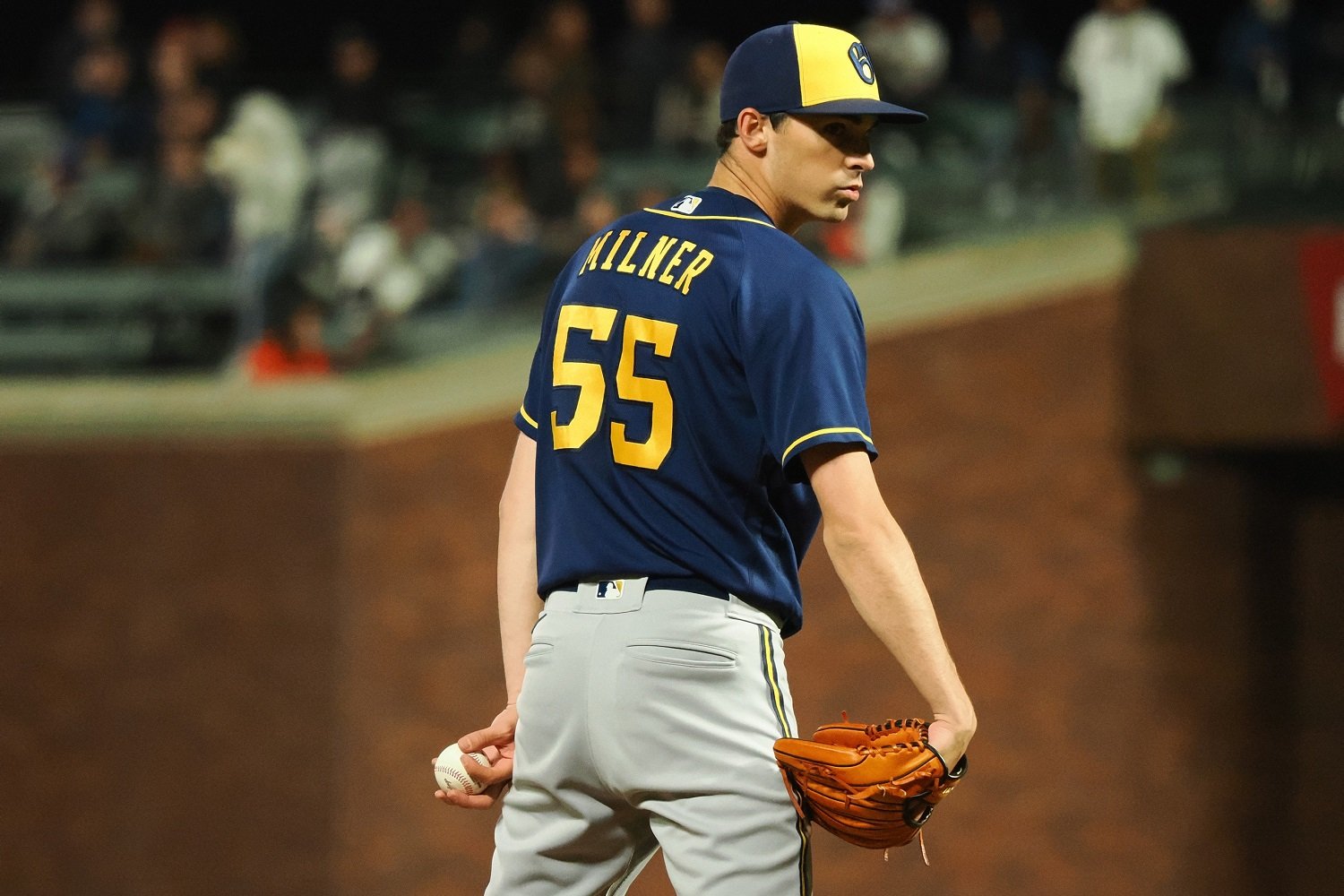 As of 8/5, Hoby Milner 's ERA is at 2.93 and his WHIP is just 1.075 on the year. This turnaround is astounding, and no one is really talking about just how amazing Milner’s season has been. So we've been diving into the details. On Thursday, we showed how his success reflects his newfound ability to get right-handed hitters out and a change in his pitch selection. On Friday, we dove deeper into those pitches, to see why the new mix is so effective. This major shift in ideology comes with an actual change in physical position when Milner releases the ball. Beginning this year, he has been setting up further towards the first base side of the rubber. This allows him to better attack batters on this East-West plane as he has been throughout this season, starkly different from throwing up in the zone to induce outs. Obviously there needs to be a development to the pitches in order for this rapid turnaround to take place. This is where the sinker (the fastball option he has newly embraced) has changed, having more lateral movement. In 2021, the break for the sinker and the changeup were exactly the same, with 16.3 inches of movement. This year, Milner’s sinker moves, on average, 18 inches laterally, thereby introducing further variance between those pitches, making them more effective together. Another massive development in Milner’s production is the way he actually gets people out. Rather than attempting to miss the bat, part of the importance of his location change comes from the goal of an at bat. Inducing weak contact is paramount to his success, which comes from either jamming hitters by pitching inside or off the end of the bat by going away. This comes to an absolutely incredible weak contact rate of 10.3%, much higher than the MLB average of 3.8%. He also only has had a total of 4 batted balls which were barreled, for a rate of 3.4%, almost half the MLB average of 6.7%. Yes, only 4. All this comes to an average exit velocity of 84.4 mph, and an expected batting average of just 0.230. As a result, there has been just one home run hit off him in his 43 appearances, and just three of the 22 inherited runners have scored. He has also earned his first career win this season, owning a record of 3 and 1. All of these are stark improvements over the course of his major league tenure, marking a turning point in what had appeared to be an otherwise bleak career. Milner, at 31 years old, has reinvented his himself. And the more one looks into the adjustments he has made, the more it looks like his success is here to stay. Part 1: Identifying Issues Part 2: Pitch Selection
 -
Hoby Milner has been performing at an All-Star caliber level this year, having a breakout year in the Brewers Bullpen. Yesterday we found that he's suddenly become effective versus right-handed hitters, and we saw that his pitch selection had completely changed. Today we'll dive into why his new mix of pitches is working so well. This year, Milner has almost completely swapped which pitch he is throwing as his fastball, substituting his sinker for his four-seam fastball. In addition, he's throwing his changeup a lot more. This pitch change directly contributes to the success Milner has had this season against right-handed batters. When attacking right-handers this year, there is a clear and obvious trend. The sinker is used most often, then the changeup and curveball are used at almost the same rate, while there are almost no four-seamers thrown. Against lefties, there have been absolutely no changeups thrown, while sinker and four-seamers are used while curveball is the tertiary pitch. This is quite the change. In the past, the 4-seamer has been heavily relied upon against right-handed batters, and the changeup has mostly been an afterthought. With Milner using both the curveball and the changeup to get righties out, there is much more a batter needs to look out for. Lefties see both of the fastballs, sinker and 4-seamer, and the curveball, allowing varying eye levels. This shift in eye level is a key contributor to Milner’s success. Rather than working up in the zone with the fastball, the primary pitch, sinker, is thrown nearer to the left-handed batter’s box and lower in the zone. Comparing that to just 2021, the primary pitch, his four-seamer, was thrown basically directly in the center of the zone. Even now, in 2022, when the 4-seamer is thrown, it is mainly dotting the upper corners of the strike zone, and therefore avoiding the principal barrel path of batters. It is used as an effective pitch to change the sight plane of hitters. Milner is pairing this fastball location with excellent positioning of the offspeed pitches. The curveball is only placed lower in the strike zone, but has a couple instances of being higher when outside the zone. It travels through the zone quite a bit, sweeping across the plate before ending towards the right handed batter’s box side. The changeup is almost exclusively positioned as a shadow of the sinker, hitting the lower part of the zone nearer to that left handed batter’s box 2022: Heat Map for Pitches 2021: Heat Map for Pitches These new locations and pitch selection plays very well, as there is fantastic spin masking of those pitches. This makes determining Milner’s pitches significantly more difficult. Each of the four-seamer, sinker, and changeup all have primarily ¾ based rotation, while the curveball has ¼ rotation. This change in rotation spot may seem to be a problem to the uninitiated, but all this pitches adhere to the same rotational axis, thereby making it near impossible to actually make out which of the actual pitches are thrown. But while pitch selection is a big part of the story, there are other factors, too, including a change that Milner has made in how he releases the ball. We'll go through that on Monday in our final and third part. Part 1: Identifying Issues Part 3: Mechanics and Strategy View full article
-
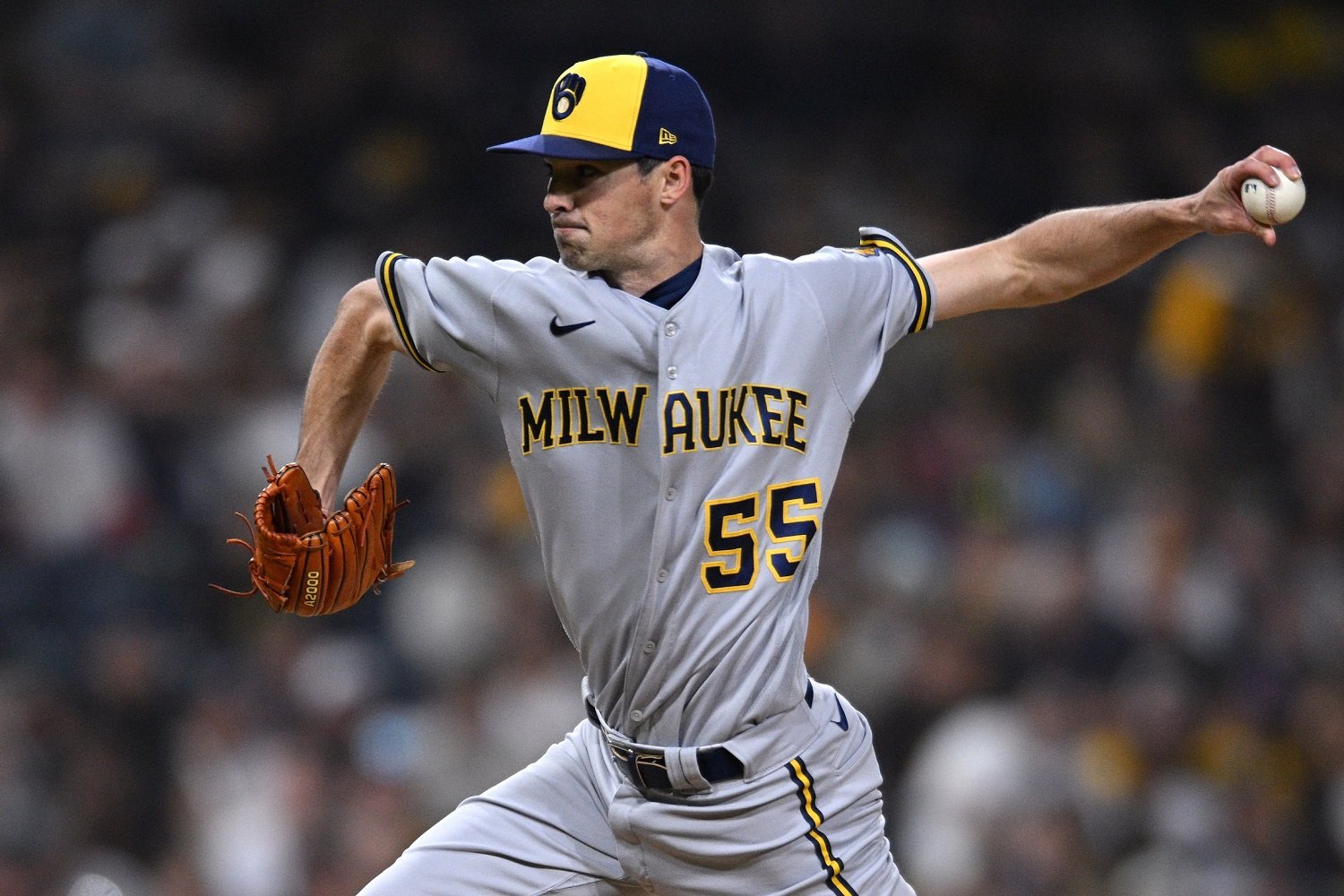 This year, Milner has almost completely swapped which pitch he is throwing as his fastball, substituting his sinker for his four-seam fastball. In addition, he's throwing his changeup a lot more. This pitch change directly contributes to the success Milner has had this season against right-handed batters. When attacking right-handers this year, there is a clear and obvious trend. The sinker is used most often, then the changeup and curveball are used at almost the same rate, while there are almost no four-seamers thrown. Against lefties, there have been absolutely no changeups thrown, while sinker and four-seamers are used while curveball is the tertiary pitch. This is quite the change. In the past, the 4-seamer has been heavily relied upon against right-handed batters, and the changeup has mostly been an afterthought. With Milner using both the curveball and the changeup to get righties out, there is much more a batter needs to look out for. Lefties see both of the fastballs, sinker and 4-seamer, and the curveball, allowing varying eye levels. This shift in eye level is a key contributor to Milner’s success. Rather than working up in the zone with the fastball, the primary pitch, sinker, is thrown nearer to the left-handed batter’s box and lower in the zone. Comparing that to just 2021, the primary pitch, his four-seamer, was thrown basically directly in the center of the zone. Even now, in 2022, when the 4-seamer is thrown, it is mainly dotting the upper corners of the strike zone, and therefore avoiding the principal barrel path of batters. It is used as an effective pitch to change the sight plane of hitters. Milner is pairing this fastball location with excellent positioning of the offspeed pitches. The curveball is only placed lower in the strike zone, but has a couple instances of being higher when outside the zone. It travels through the zone quite a bit, sweeping across the plate before ending towards the right handed batter’s box side. The changeup is almost exclusively positioned as a shadow of the sinker, hitting the lower part of the zone nearer to that left handed batter’s box 2022: Heat Map for Pitches 2021: Heat Map for Pitches These new locations and pitch selection plays very well, as there is fantastic spin masking of those pitches. This makes determining Milner’s pitches significantly more difficult. Each of the four-seamer, sinker, and changeup all have primarily ¾ based rotation, while the curveball has ¼ rotation. This change in rotation spot may seem to be a problem to the uninitiated, but all this pitches adhere to the same rotational axis, thereby making it near impossible to actually make out which of the actual pitches are thrown. But while pitch selection is a big part of the story, there are other factors, too, including a change that Milner has made in how he releases the ball. We'll go through that on Monday in our final and third part. Part 1: Identifying Issues Part 3: Mechanics and Strategy
 -
I'm expecting Turang to be the opening day starter at second base next year. His numbers look really good
-
Article: Here's Why Hoby Milner is Crazy Good (Part 1)
Caswell replied to Caswell's topic in Brewer Fanatic Front Page News
Thank you! Very exciting project on what has been an incredible turnaround for Milner.