
Matthew Trueblood
-
Posts
1,922 -
Joined
-
Last visited
-
Days Won
10
Content Type
Profiles
Forums
Blogs
Events
News
2026 Milwaukee Brewers Top Prospects Ranking
Milwaukee Brewers Videos
2022 Milwaukee Brewers Draft Picks
Milwaukee Brewers Free Agent & Trade Rumors, Notes, & Tidbits
Guides & Resources
2023 Milwaukee Brewers Draft Picks
2024 Milwaukee Brewers Draft Picks
The Milwaukee Brewers Players Project
2025 Milwaukee Brewers Draft Pick Tracker
2026 Milwaukee Brewers Draft Tracker: Picks & Bonuses
Store
Downloads
Gallery
Everything posted by Matthew Trueblood
-
Love to hear that. Yeah, the fan culture on social media deflates me, too. It all seems to come from a place of tribalism, which blinds everyone who immerses themselves in it to good things done by any other team or player and to bad things done by anyone representing their tribe. We're trying hard to be the antidote to that: fun yet serious, critical but never cynical or rude. We won't always strike the perfect balance, either, but it's a lot easier to do that at sites like this than on Twitter or Bluesky or (God forbid) Facebook.
-
Image courtesy of © Jeff Hanisch-Imagn Images When Pat Murphy and the Brewers staff sits down to fill out the lineup card each day, they have a wealth of good options. Frustrating though it might be for fans to watch some of the weak hitters at the bottom of the order bat, Joey Ortiz, David Hamilton, Cooper Pratt and Blake Perkins each have considerable defensive and baserunning value. Ditto for Sal Frelick, when he's right. And even among their more offense-focused personnel, they have several good guys from whom to choose. Murphy has loved having such flexibility all season. Even during spring training, he was effusive about the improved depth of his team. It does make the choices on which they settle more interesting, though. For instance, against a starter without stark platoon splits—and with different approaches based on the handedness of the opposing batter—how do you choose between Jake Bauers and Andrew Vaughn at first base? Earlier this week, our Jack Stern wrote about the team's tendency to default to Bauers, even since Vaughn returned from the injured list at the beginning of May. Jack couched that daily dilemma largely in terms of the platoon advantage, and indeed, with right-handed starter Gavin Williams taking the ball for Cleveland on Wednesday night, it's Bauers starting over Vaughn. But there's a bit more to that decision, too. Firstly, Williams is one of an increasingly common breed of pitcher who essentiually workessentially from two distinct arsenals. Against righties, he leans heavily on a sinker and sweeper, moving east and west to find outs. Against lefties, he switches gears, going mostly with a four-seamer and a curveball and mixing in a cutter. Thus, when evaluating which hitters match up best against him, the Brewers almost have to ask which hitter they trust against the type of pitcher Williams is in those specific matchups—while baking in the demonstrated value of having at least a couple of same-handed batters in a lineup to force a pitcher to switch back and forth between approaches or pitch mixes. Because of the way the team's lineup works right now, this means assessing Vaughn, Bauers, Jackson Chourio, William Contreras and Frelick. In theory, the Brewers could sit any of them, or start all five, but mostly, Contreras's days at catcher and the imperative to use Christian Yelich when he's available will set up a short series of real dilemmas: Is Bauers or Vaughn better-suited to hit the opponent? If it's Bauers, should he go play the outfield for the night, at the expense of either Chourio or Frelick, making way for Vaughn? The Brewers gave us their answer when they issued the night's lineup card. Bauers is in there. So are Frelick, Garrett Mitchell and David Hamilton, over possible right-handed alternatives like Gary Sánchez and Joey Ortiz. Contreras and Chourio made the cut from the right side, but Vaughn didn't. The interesting question is: Why those guys? And now, we can furnish some answers to ourselves, using new Statcast data. Simply put, Vaughn struggles with the sinker-sweeper righty. That might be his toughest matchup. Looking at the distributions of his swing timing in all three dimensions against sinkers and sweepers from right-handed hurlers, you can see that Vaughn is often off the center of the barrel, often early or late, and unable to line up the barrel with the ball vertically as much as the average batter. This data is quite new, so I'm not expecting you to have contextualized the above already. Hopefully, though, you can see the difference between those distributions and these, for Chourio: Chourio can cover both pitches from a righty much better than Vaughn can. Even some of the times on which he's slightly off—early on the sweeper, for instance—result in hard contact in the air, because of his bat path and the way he adapts based on what he sees. Vaughn's best swing takes him through the ball on the inner third, and he struggles to connect cleanly if a pitch appears to be headed there and then ends up on the outer edge, instead. Chourio is much better at it. Starting Chourio over Vaughn, then, would be an easy choice, but that's not really the choice the Brewers faced. They first had to decide whether to give the nod to Vaughn or Bauers at first base, and that meant evaluating Bauers's ability to handle a righty who throws a four-seamer, a curveball and a cutter. The curve is awfully tough on Bauers, truth be told, but he's unexpectedly excellent at covering the four-seamer from a righty—especially up, His ability to line up the barrel with the ball vertically is far superior to that of the average batter, and with his elite bat speed, he's able to punish mistakes on either the cutter or the curve. In the past, we could have shrugged and said that a lefty is likely to hit a righty better than a righty is. Now, we can see clearly that Bauers is better able to stay on time and make solid contact against a pitcher like Williams than Vaughn is. The final option for the team would be to bench Frelick at Vaughn's expense, by moving Bauers out to right field. That's a decision they need to weigh a bit more seriously, unless and until Frelick shows more than he has of late either at bat or in the field. When it comes to hitting a righty like Williams, though, Frelick is much better equipped to make solid contact than is Vaughn. Frelick is superb at staying on time and finding the barrel against this suite of pitches, in this kind of matchup. His very low bat speed and tendency to let the ball get too deep on him are real concerns, but he's still much better against this type of pitcher than Vaughn is against the type of pitcher Williams is against righties. That's not to mention that a defensive configuration with Frelick in right field and Bauers at first is more robust than one with Vaughn at first and Bauers in right. Not all starting pitchers pose such interesting problems. Not all teams have such an array of possibilities when building a lineup. Thankfully, though, we now have some insight into how the Brewers can choose between those options on a fascinating night like Wednesday. Vaughn doesn't belong in the lineup initially, but that doesn't mean there won't be a pitcher later in the game against whom he's the right bat. And the Brewers are armed with terrific data to tell when and whether that moment comes. View full article
-
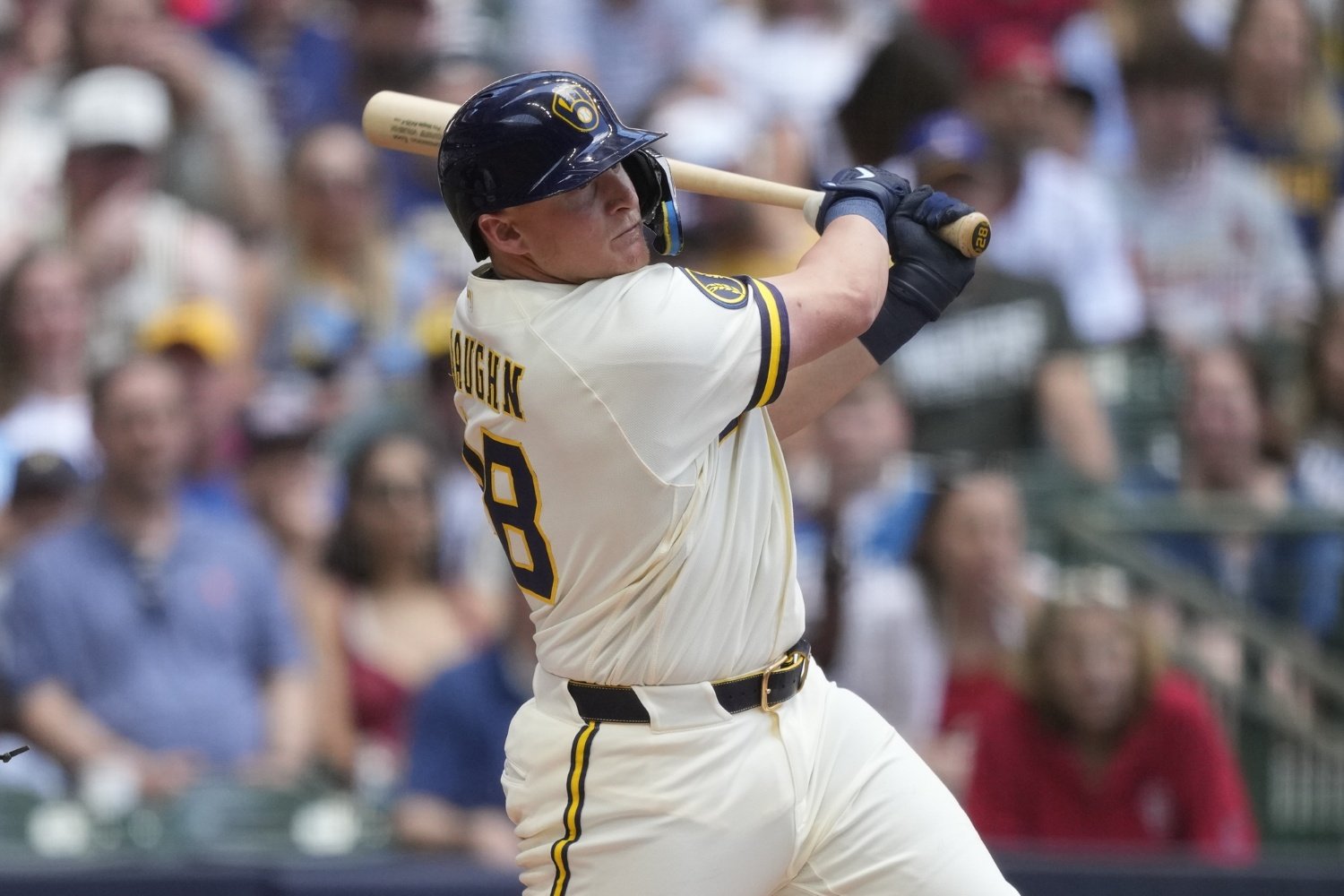 When Pat Murphy and the Brewers staff sits down to fill out the lineup card each day, they have a wealth of good options. Frustrating though it might be for fans to watch some of the weak hitters at the bottom of the order bat, Joey Ortiz, David Hamilton, Cooper Pratt and Blake Perkins each have considerable defensive and baserunning value. Ditto for Sal Frelick, when he's right. And even among their more offense-focused personnel, they have several good guys from whom to choose. Murphy has loved having such flexibility all season. Even during spring training, he was effusive about the improved depth of his team. It does make the choices on which they settle more interesting, though. For instance, against a starter without stark platoon splits—and with different approaches based on the handedness of the opposing batter—how do you choose between Jake Bauers and Andrew Vaughn at first base? Earlier this week, our Jack Stern wrote about the team's tendency to default to Bauers, even since Vaughn returned from the injured list at the beginning of May. Jack couched that daily dilemma largely in terms of the platoon advantage, and indeed, with right-handed starter Gavin Williams taking the ball for Cleveland on Wednesday night, it's Bauers starting over Vaughn. But there's a bit more to that decision, too. Firstly, Williams is one of an increasingly common breed of pitcher who essentiually workessentially from two distinct arsenals. Against righties, he leans heavily on a sinker and sweeper, moving east and west to find outs. Against lefties, he switches gears, going mostly with a four-seamer and a curveball and mixing in a cutter. Thus, when evaluating which hitters match up best against him, the Brewers almost have to ask which hitter they trust against the type of pitcher Williams is in those specific matchups—while baking in the demonstrated value of having at least a couple of same-handed batters in a lineup to force a pitcher to switch back and forth between approaches or pitch mixes. Because of the way the team's lineup works right now, this means assessing Vaughn, Bauers, Jackson Chourio, William Contreras and Frelick. In theory, the Brewers could sit any of them, or start all five, but mostly, Contreras's days at catcher and the imperative to use Christian Yelich when he's available will set up a short series of real dilemmas: Is Bauers or Vaughn better-suited to hit the opponent? If it's Bauers, should he go play the outfield for the night, at the expense of either Chourio or Frelick, making way for Vaughn? The Brewers gave us their answer when they issued the night's lineup card. Bauers is in there. So are Frelick, Garrett Mitchell and David Hamilton, over possible right-handed alternatives like Gary Sánchez and Joey Ortiz. Contreras and Chourio made the cut from the right side, but Vaughn didn't. The interesting question is: Why those guys? And now, we can furnish some answers to ourselves, using new Statcast data. Simply put, Vaughn struggles with the sinker-sweeper righty. That might be his toughest matchup. Looking at the distributions of his swing timing in all three dimensions against sinkers and sweepers from right-handed hurlers, you can see that Vaughn is often off the center of the barrel, often early or late, and unable to line up the barrel with the ball vertically as much as the average batter. This data is quite new, so I'm not expecting you to have contextualized the above already. Hopefully, though, you can see the difference between those distributions and these, for Chourio: Chourio can cover both pitches from a righty much better than Vaughn can. Even some of the times on which he's slightly off—early on the sweeper, for instance—result in hard contact in the air, because of his bat path and the way he adapts based on what he sees. Vaughn's best swing takes him through the ball on the inner third, and he struggles to connect cleanly if a pitch appears to be headed there and then ends up on the outer edge, instead. Chourio is much better at it. Starting Chourio over Vaughn, then, would be an easy choice, but that's not really the choice the Brewers faced. They first had to decide whether to give the nod to Vaughn or Bauers at first base, and that meant evaluating Bauers's ability to handle a righty who throws a four-seamer, a curveball and a cutter. The curve is awfully tough on Bauers, truth be told, but he's unexpectedly excellent at covering the four-seamer from a righty—especially up, His ability to line up the barrel with the ball vertically is far superior to that of the average batter, and with his elite bat speed, he's able to punish mistakes on either the cutter or the curve. In the past, we could have shrugged and said that a lefty is likely to hit a righty better than a righty is. Now, we can see clearly that Bauers is better able to stay on time and make solid contact against a pitcher like Williams than Vaughn is. The final option for the team would be to bench Frelick at Vaughn's expense, by moving Bauers out to right field. That's a decision they need to weigh a bit more seriously, unless and until Frelick shows more than he has of late either at bat or in the field. When it comes to hitting a righty like Williams, though, Frelick is much better equipped to make solid contact than is Vaughn. Frelick is superb at staying on time and finding the barrel against this suite of pitches, in this kind of matchup. His very low bat speed and tendency to let the ball get too deep on him are real concerns, but he's still much better against this type of pitcher than Vaughn is against the type of pitcher Williams is against righties. That's not to mention that a defensive configuration with Frelick in right field and Bauers at first is more robust than one with Vaughn at first and Bauers in right. Not all starting pitchers pose such interesting problems. Not all teams have such an array of possibilities when building a lineup. Thankfully, though, we now have some insight into how the Brewers can choose between those options on a fascinating night like Wednesday. Vaughn doesn't belong in the lineup initially, but that doesn't mean there won't be a pitcher later in the game against whom he's the right bat. And the Brewers are armed with terrific data to tell when and whether that moment comes.
- 9 comments
-
- 1
-

-
- andrew vaughn
- jake bauers
- (and 2 more)
-
Image courtesy of © Lucas Peltier-Imagn Images The Cooper Pratt Era (such as it may be) will begin in earnest Tuesday night. The Brewers plan to start Pratt at shortstop for his major-league debut, and in making room for him on the active roster, they designated infielder Luis Rengifo for assignment. That it's Rengifo's place on the team Pratt is taking is no surprise, but it's of some interest that the veteran has been told to pack his bags, rather than being stashed away on the injured list. It looked as though Rengifo might have an injury worthy of a stint on the shelf, necessitating and facilitating Pratt's promotion. That would have kept the team's powder dry, holding onto Rengifo and keeping him in the mix with incumbent infield options Joey Ortiz, David Hamilton and Pratt, depending on how things develop from here. Instead, Rengifo is now effectively gone. That makes this move a bit more commital than it looked at first glance. Pratt is, effectively, taking over at shortstop, making (semi-)permanent the platoon of Ortiz and Hamilton at third base. This locks everything into place a little more than we might have anticipated. A roaring surge or a calamitous slump by either Ortiz or Hamilton could still change the equation. So could Jett Williams turning it on at Triple-A Nashville. Tentatively, though, it sure looks like the team plans to proceed from here with their freshly extended rookie at short and two players working in a complementary role next to him. There's a little risk here that wasn't there if and when one envisioned Rengifo landing on the injured list. It's not as easy, now, to foresee the team optioning either Ortiz or Hamilton if their performance demands it. The front office is gambling a bit, because this can no longer be an audition of a few weeks or a month. The Brewers need some mileage from Pratt, and their hopes for stabilizing the bottom end of the batting order now rest on the trio of Pratt, Ortiz and Hamilton. Rengifo could pass through waivers, given the money still owed to him, but it's unlikely that he'll have interest in going to Nashville. At this point, it seems like the Brewers can hope only to save a morsel of the money they still owe to Rengifo after signing him for $4 million over the winter. They're jettisoning him in the name of making the runway from which Pratt's career will take off as clear as possible. It was already exciting to see Pratt called up. Now, it's also intriguing, and a little bit risky. The upside for his team just rose considerably. Its floor might have dropped a bit, though. The club will hope the latter never comes into play. View full article
-
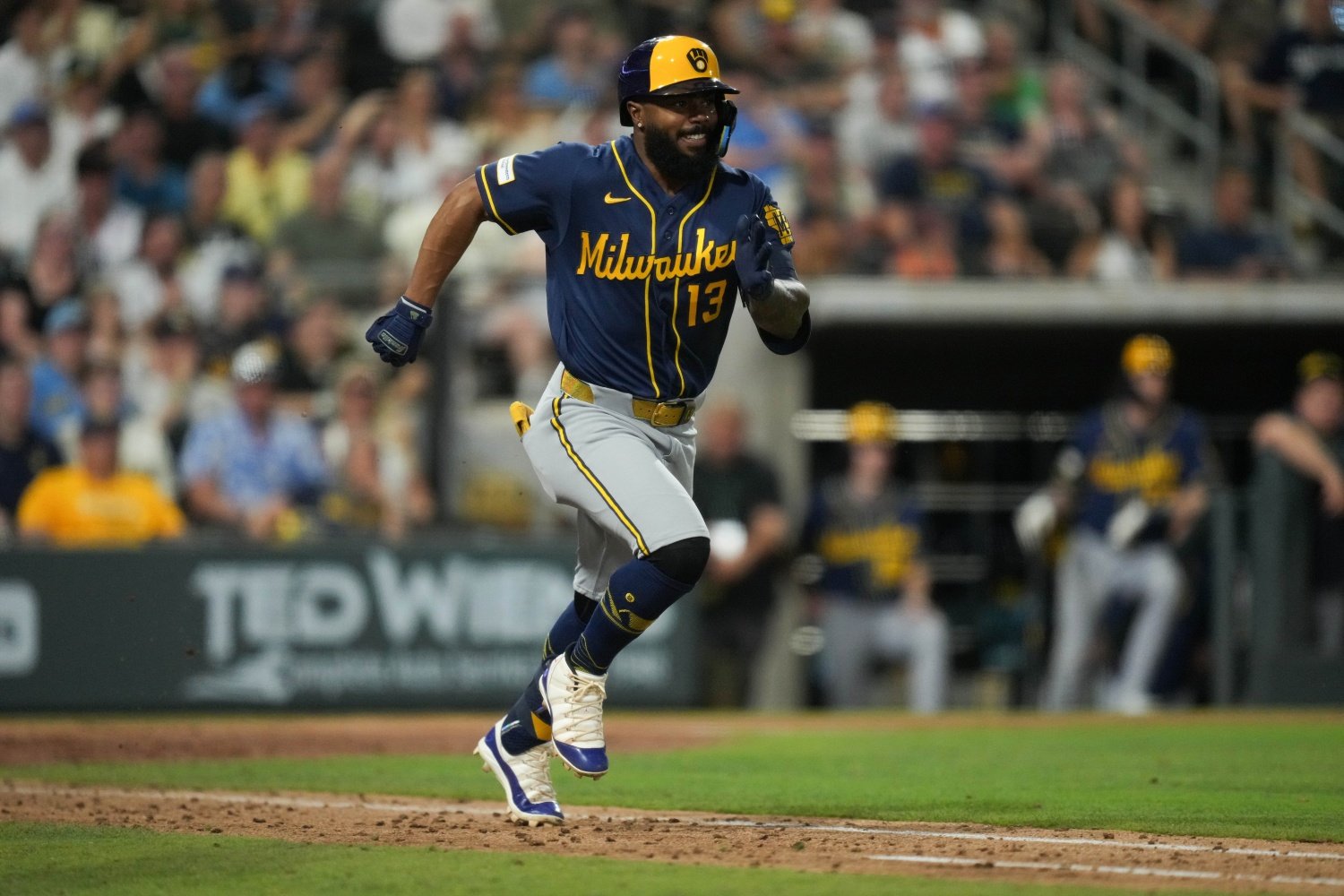 The Cooper Pratt Era (such as it may be) will begin in earnest Tuesday night. The Brewers plan to start Pratt at shortstop for his major-league debut, and in making room for him on the active roster, they designated infielder Luis Rengifo for assignment. That it's Rengifo's place on the team Pratt is taking is no surprise, but it's of some interest that the veteran has been told to pack his bags, rather than being stashed away on the injured list. It looked as though Rengifo might have an injury worthy of a stint on the shelf, necessitating and facilitating Pratt's promotion. That would have kept the team's powder dry, holding onto Rengifo and keeping him in the mix with incumbent infield options Joey Ortiz, David Hamilton and Pratt, depending on how things develop from here. Instead, Rengifo is now effectively gone. That makes this move a bit more commital than it looked at first glance. Pratt is, effectively, taking over at shortstop, making (semi-)permanent the platoon of Ortiz and Hamilton at third base. This locks everything into place a little more than we might have anticipated. A roaring surge or a calamitous slump by either Ortiz or Hamilton could still change the equation. So could Jett Williams turning it on at Triple-A Nashville. Tentatively, though, it sure looks like the team plans to proceed from here with their freshly extended rookie at short and two players working in a complementary role next to him. There's a little risk here that wasn't there if and when one envisioned Rengifo landing on the injured list. It's not as easy, now, to foresee the team optioning either Ortiz or Hamilton if their performance demands it. The front office is gambling a bit, because this can no longer be an audition of a few weeks or a month. The Brewers need some mileage from Pratt, and their hopes for stabilizing the bottom end of the batting order now rest on the trio of Pratt, Ortiz and Hamilton. Rengifo could pass through waivers, given the money still owed to him, but it's unlikely that he'll have interest in going to Nashville. At this point, it seems like the Brewers can hope only to save a morsel of the money they still owe to Rengifo after signing him for $4 million over the winter. They're jettisoning him in the name of making the runway from which Pratt's career will take off as clear as possible. It was already exciting to see Pratt called up. Now, it's also intriguing, and a little bit risky. The upside for his team just rose considerably. Its floor might have dropped a bit, though. The club will hope the latter never comes into play.
 -
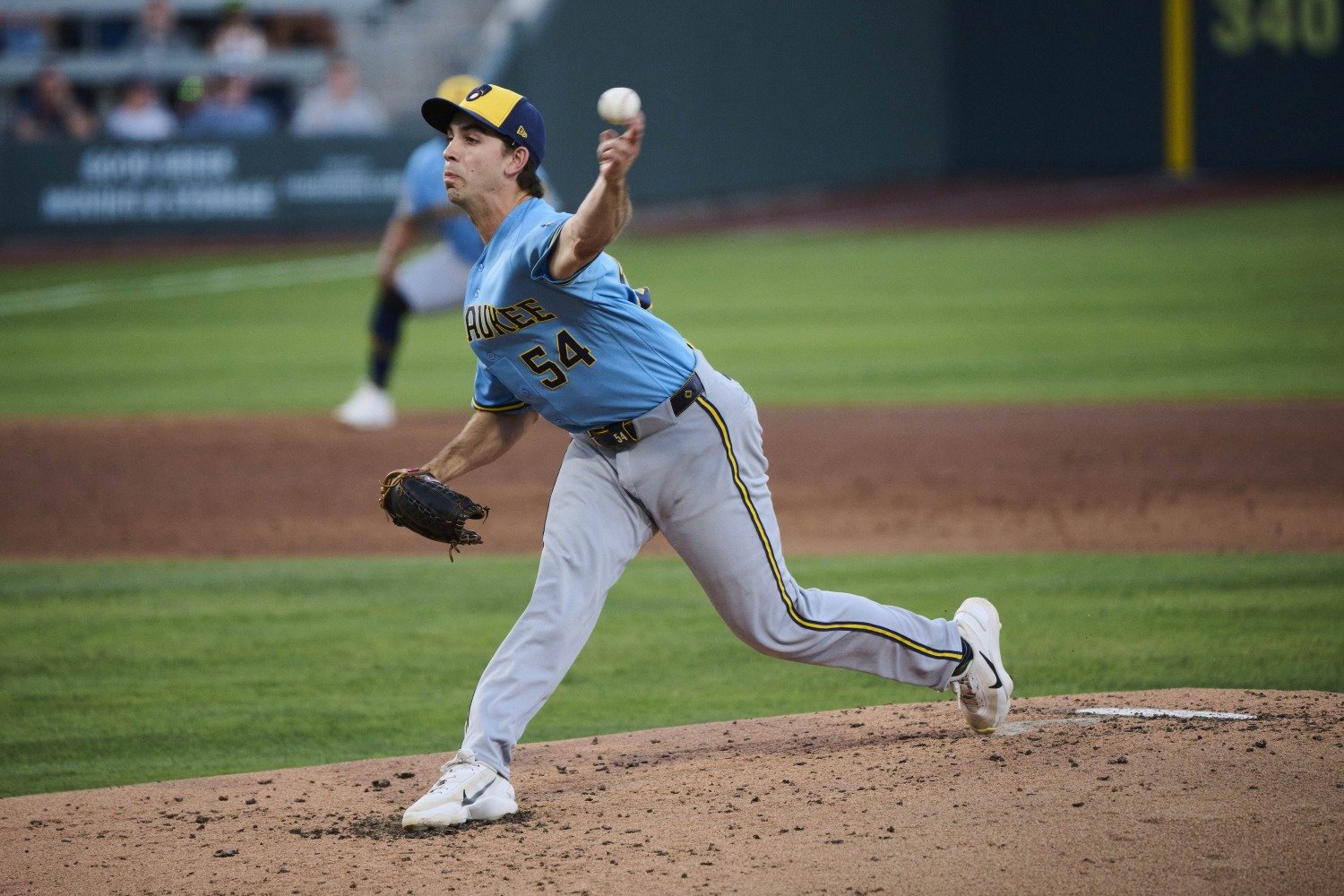 Robert Gasser was a two-fastball guy last year, who was really more like two different one-fastball guys. He leaned heavily on his four-seamer against right-handed batters, and on his sinker—really, a running two-seamer—against lefties. He only made two starts in the majors, but that's what he showed in them, and it roughly matched what he had shown in his rookie season of 2024, before going down with an elbow injury. He comes at you from a low slot, but he doesn't have anything with much depth. Instead, he's working east and west at all times, and his project within each at-bat is to set up and execute a sweeper to get you out. This season, much of that has changed. Gasser's slot is even lower in 2026 than it was in 2025. He's also using more of a crossfire delivery. In this pair of images, you can clearly see the lower arm angle, though the slight difference in camera angles makes it harder to tell that he's striding closed as he comes down the mound. Those adaptations give Gasser a clearer path to being a useful left-handed reliever, but interestingly, the changes he's made to his arsenal push in the opposite direction. He's now something much closer to a true three-fastball guy, who not only has a cutter he trusts again, but throws the four-seamer, the sinker, and the cutter to both lefties and righties. Ah, yes, and about that sinker: it's not a two-seamer that runs but doesn't sink much, anymore. Gasser acknowledged after his first big-league start of the year that he's made a grip change this year. He now throws what he calls a "one-seam" sinker, with more depth. For those unfamiliar with the concept, a one-seam grip places one of a ball's horseshoe-shaped laces between the fingers of a pitcher, letting one seam catch the air and create downward movement via air resistance, rather than spin direction or traditional seam-shifted wake. It's an unusual grip for a pitcher coming from a low slot like Gasser's, but the effect has been to give his sinker much more true sink. Despite the lower slot, Gasser's four-seamer has as much rising action as ever this year, but induced vertical break on the sinker is 6.8 inches, down from 9.6 inches in 2025. Unequivocally, this is a nastier pitch, and mixing it with the good changeup and sweeper Gasser has long had plus the two other fastball shapes should allow him to miss bats and collect weak contact, if the rest of the pieces fall into place. What are the rest of the pieces? In a word: location. Gasser has walked nine of the 87 batters he's faced this season, which is alarming, because control isn't even his biggest problem. Rather, it's that he's also allowed 11 extra-base hits. A handful of those came in Las Vegas, where the conditions weren't conducive to success for any pitcher, but he's been hit hard in each of his appearances so far. He's just making too many mistakes in the heart of the zone to dismiss any of the damage being done against him as a matter of bad luck. Though the tweaks to his sinker have given him a chance to hit better spots with it low in the zone, in practice, he's leaving it up too much—be that in the zone, when it was meant to be below it, or up up. RDFkOXlfWGw0TUFRPT1fVUFrRkFBRUdBZ0lBRFFBRVVBQUhCVlFGQUZnTUFnQUFCd1JVQndkUkJnZFdBRk5U.mp4 Living mostly in the 91-93 MPH zone, Gasser doesn't have the margin for error to miss as much as he's been missing, with any of his pitches. He's built a more interesting arsenal than he had in the past, thanks in part to being healthy enough to get the reps in and do so. These were needed changes. To lock them in and enjoy the fruits of them, though, Gasser will have to keep drilling on the mechanics involved. He'll have to succeed at hitting his targets, because the stuff is now good enough to win—but it will never be good enough to make up for missing in the middle of the dish to big-leaguers.
 -
Image courtesy of © Jeffery Bennett-Imagn Images Robert Gasser was a two-fastball guy last year, who was really more like two different one-fastball guys. He leaned heavily on his four-seamer against right-handed batters, and on his sinker—really, a running two-seamer—against lefties. He only made two starts in the majors, but that's what he showed in them, and it roughly matched what he had shown in his rookie season of 2024, before going down with an elbow injury. He comes at you from a low slot, but he doesn't have anything with much depth. Instead, he's working east and west at all times, and his project within each at-bat is to set up and execute a sweeper to get you out. This season, much of that has changed. Gasser's slot is even lower in 2026 than it was in 2025. He's also using more of a crossfire delivery. In this pair of images, you can clearly see the lower arm angle, though the slight difference in camera angles makes it harder to tell that he's striding closed as he comes down the mound. Those adaptations give Gasser a clearer path to being a useful left-handed reliever, but interestingly, the changes he's made to his arsenal push in the opposite direction. He's now something much closer to a true three-fastball guy, who not only has a cutter he trusts again, but throws the four-seamer, the sinker, and the cutter to both lefties and righties. Ah, yes, and about that sinker: it's not a two-seamer that runs but doesn't sink much, anymore. Gasser acknowledged after his first big-league start of the year that he's made a grip change this year. He now throws what he calls a "one-seam" sinker, with more depth. For those unfamiliar with the concept, a one-seam grip places one of a ball's horseshoe-shaped laces between the fingers of a pitcher, letting one seam catch the air and create downward movement via air resistance, rather than spin direction or traditional seam-shifted wake. It's an unusual grip for a pitcher coming from a low slot like Gasser's, but the effect has been to give his sinker much more true sink. Despite the lower slot, Gasser's four-seamer has as much rising action as ever this year, but induced vertical break on the sinker is 6.8 inches, down from 9.6 inches in 2025. Unequivocally, this is a nastier pitch, and mixing it with the good changeup and sweeper Gasser has long had plus the two other fastball shapes should allow him to miss bats and collect weak contact, if the rest of the pieces fall into place. What are the rest of the pieces? In a word: location. Gasser has walked nine of the 87 batters he's faced this season, which is alarming, because control isn't even his biggest problem. Rather, it's that he's also allowed 11 extra-base hits. A handful of those came in Las Vegas, where the conditions weren't conducive to success for any pitcher, but he's been hit hard in each of his appearances so far. He's just making too many mistakes in the heart of the zone to dismiss any of the damage being done against him as a matter of bad luck. Though the tweaks to his sinker have given him a chance to hit better spots with it low in the zone, in practice, he's leaving it up too much—be that in the zone, when it was meant to be below it, or up up. RDFkOXlfWGw0TUFRPT1fVUFrRkFBRUdBZ0lBRFFBRVVBQUhCVlFGQUZnTUFnQUFCd1JVQndkUkJnZFdBRk5U.mp4 Living mostly in the 91-93 MPH zone, Gasser doesn't have the margin for error to miss as much as he's been missing, with any of his pitches. He's built a more interesting arsenal than he had in the past, thanks in part to being healthy enough to get the reps in and do so. These were needed changes. To lock them in and enjoy the fruits of them, though, Gasser will have to keep drilling on the mechanics involved. He'll have to succeed at hitting his targets, because the stuff is now good enough to win—but it will never be good enough to make up for missing in the middle of the dish to big-leaguers. View full article
-
Image courtesy of © Michael McLoone-Imagn Images Let's get this much straight: Joey Ortiz still is not a good hitter. You don't want to see him anywhere but the bottom of your team's lineup card, and maybe not even there. In the last 30 days, he's batting .222/.364/.296, with four doubles and no home runs. He's only come to bat 67 times, as the Brewers have given David Hamilton a share of his time at shortstop and shielded him from right-handed pitchers much of the time. That's not a good offensive player. If you saw those numbers and made an intrigued, almost happy "huh" sound, it's only because you're so used to execrable production from Ortiz, who has been infamously inept at the plate for the majority of the last two years. Still, we have to reckon with his upturn in production a little bit, because we're likely to see the team reckon with the ramifications of a roster shakeup in the days ahead. Cooper Pratt will join the team Tuesday to make his big-league debut, and that will make him (for a spell, at least) one of the team's regulars. This isn't the kind of player whom you call up to moulder on the bench, even if it appears to have been a move prompted not by the proactive desire to install him permanently at shortstop, but by Luis Rengifo's apparent injury Sunday afternoon. Pratt's playing time can't all come from Rengifo's (presumably) surrendered share. Some of it will come from Ortiz's, and/or Hamilton's. So we need to be able to answer the question now: Is Joey Ortiz, in some important sense, fixed? Or is he the one who should be unceremoniously shunted out of the way to make room for Pratt? Let's dig in. Here's the most important fact about Ortiz getting better, as of about the middle of last month: it started with a concrete approach change. He has generally been a patient hitter (though, at times, a passive one, really), but he went to extremes of not swinging there, for a while. It worked, in that he started drawing walks at a healthy rate and getting on base much more often. But not swinging is not a long-term offensive strategy, especially for a player who doesn't strike any fear in the hearts of opposing pitchers. As you can see from that chart, though, Ortiz began swinging at a healthy rate again, on or about June 1, and his production didn't suddenly plunge back into the depths. So, let's talk about how he's changed in terms of his setup and movements. Here's Ortiz collecting a bloop hit against the White Sox on Opening Day. ek13WDVfWGw0TUFRPT1fQndoVVZWRUZBd29BQzFZRUFBQUhWVkpmQUZnQUJWTUFWRklEQ1FZRkIxVlZBd05l.mp4 The result was nice, but this isn't good process. This stiff, awkward, often lunging swing was Ortiz's norm throughout April, which is how he ended up running a sub-.400 OPS for a significant period. It wasn't working, so in the middle of May, the team and the player collaborated to try something new: a kind of factory reset. Here he is striking out against the Cardinals last month. bGJ3TlZfWGw0TUFRPT1fQndVRVhGWUNBd0lBQ0FNRVhnQUhVMWNEQUFOUkJRVUFBRklOVWdBQUNRcFFVZ2NE.mp4 This looks like a default setting, doesn't it? His feet are even. His hand position is neutral. Everything is very bland. It's no more effective than his previous stance and swing—in the particular cases I've selected, it was less effective—but it does take some of the tension and blockage out of his eyesight and movement. Making Ortiz get into this uncomfortably neutral position helped him reorganize his strike zone a bit, and it broke a few bad habits. Around the beginning of June, the slate cleared, Ortiz and the Brewers restored his preferences—but with a couple of important tweaks. Here he is truly hammering a ball, this weekend against the Phillies. b0d3S1hfWGw0TUFRPT1fVXdrRFhRVUJWZ1FBV1ZvQVZRQUhDVk5WQUZrQ1ZWVUFDMUJRQjFjTlZBVlVVUVlB.mp4 He got a little lucky here. He got a real meatball, right in his happy zone. The thing is, a couple of months ago, Ortiz didn't even have a happy zone at the plate. Although he's still no fearsome slugger, he's regained a sense of what he's looking for and what to do with it. What you can't spot for yourself in these videos, we can illustrate using some Statcast data on his stance and stride. Note that after the cleansing switch to standing straight and level, he's back to basically the same set of angles and the same stride direction now as he had in April—but with his weight a bit more forward. You can see this in the videos, too. His weight starts more even, and he's less coiled into his back hip—not in a way that costs him the power hitters get from their back side, but in a way that loosens his front hip and leg to move more fluidly. He's also moving his head a bit less, which leads to both better swing decisions and cleaner contact when he does swing. I'm not here to tell you the Brewers should trust Ortiz and return him to a full-time role. Some of the benefits and improvements we're talking about here are partially the product of having the platoon advantage more often than is typical. Some of them reflect the salutary discomfort of being less of a regular. When you get fewer reps, sometimes you swing less, and sometimes, that's exactly what needs to happen. Expanding a player's role after watching them improve when their role is reduced is often a mistake. I am here to tell you, though, that Ortiz has made some material changes, even if they seem subtle. He's putting himself in a position to succeed at the plate again, even if it be in a limited way. Given the value he provides on defense, that's all the team needed from him. If Rengifo is out a while and Pratt takes up residence at shortstop, don't be surprised if Ortiz becomes a productive member of a platoon at the hot corner—and, for the second time in three years, one half of the best defensive left side of the infield in the entire National League. View full article
-
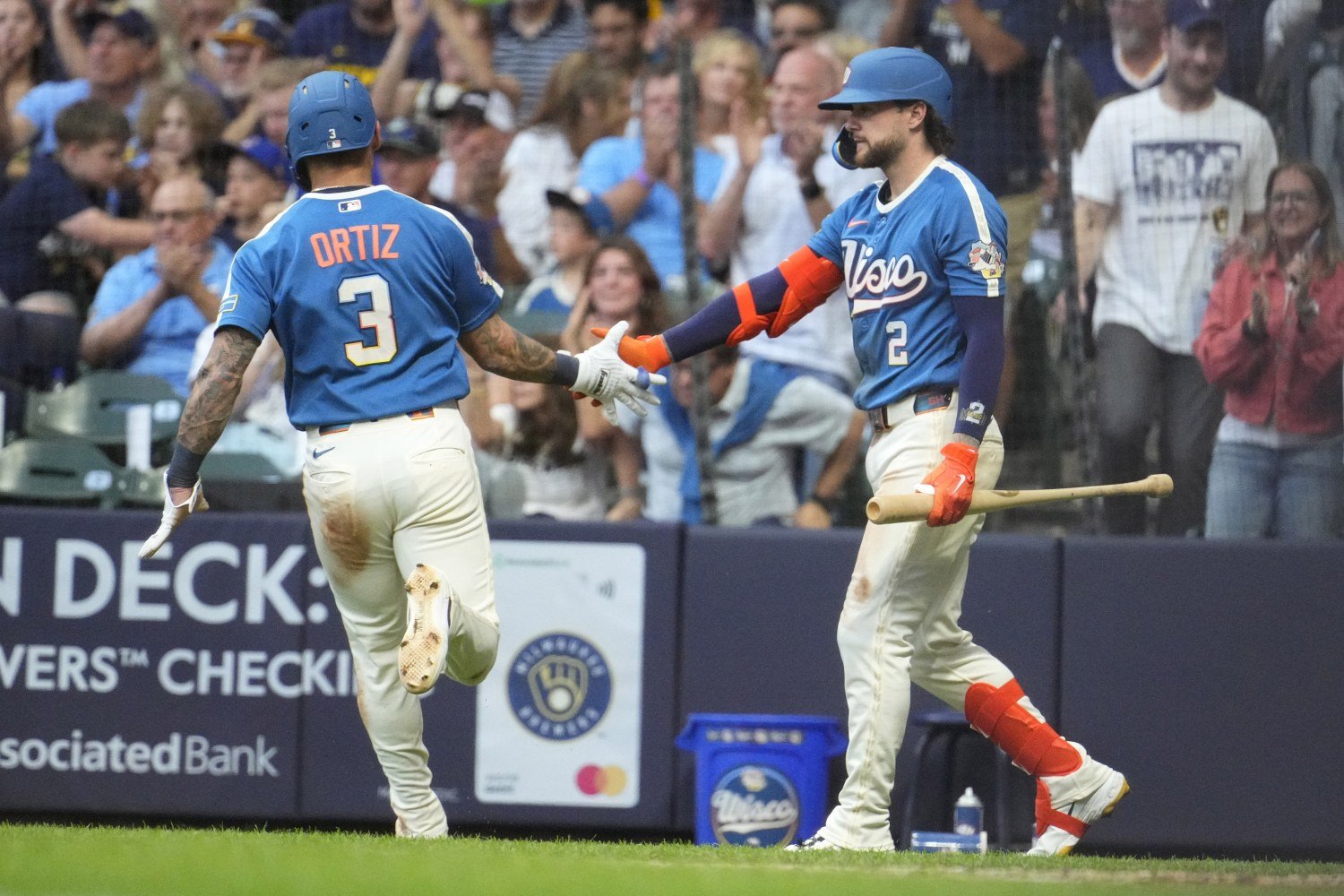 Let's get this much straight: Joey Ortiz still is not a good hitter. You don't want to see him anywhere but the bottom of your team's lineup card, and maybe not even there. In the last 30 days, he's batting .222/.364/.296, with four doubles and no home runs. He's only come to bat 67 times, as the Brewers have given David Hamilton a share of his time at shortstop and shielded him from right-handed pitchers much of the time. That's not a good offensive player. If you saw those numbers and made an intrigued, almost happy "huh" sound, it's only because you're so used to execrable production from Ortiz, who has been infamously inept at the plate for the majority of the last two years. Still, we have to reckon with his upturn in production a little bit, because we're likely to see the team reckon with the ramifications of a roster shakeup in the days ahead. Cooper Pratt will join the team Tuesday to make his big-league debut, and that will make him (for a spell, at least) one of the team's regulars. This isn't the kind of player whom you call up to moulder on the bench, even if it appears to have been a move prompted not by the proactive desire to install him permanently at shortstop, but by Luis Rengifo's apparent injury Sunday afternoon. Pratt's playing time can't all come from Rengifo's (presumably) surrendered share. Some of it will come from Ortiz's, and/or Hamilton's. So we need to be able to answer the question now: Is Joey Ortiz, in some important sense, fixed? Or is he the one who should be unceremoniously shunted out of the way to make room for Pratt? Let's dig in. Here's the most important fact about Ortiz getting better, as of about the middle of last month: it started with a concrete approach change. He has generally been a patient hitter (though, at times, a passive one, really), but he went to extremes of not swinging there, for a while. It worked, in that he started drawing walks at a healthy rate and getting on base much more often. But not swinging is not a long-term offensive strategy, especially for a player who doesn't strike any fear in the hearts of opposing pitchers. As you can see from that chart, though, Ortiz began swinging at a healthy rate again, on or about June 1, and his production didn't suddenly plunge back into the depths. So, let's talk about how he's changed in terms of his setup and movements. Here's Ortiz collecting a bloop hit against the White Sox on Opening Day. ek13WDVfWGw0TUFRPT1fQndoVVZWRUZBd29BQzFZRUFBQUhWVkpmQUZnQUJWTUFWRklEQ1FZRkIxVlZBd05l.mp4 The result was nice, but this isn't good process. This stiff, awkward, often lunging swing was Ortiz's norm throughout April, which is how he ended up running a sub-.400 OPS for a significant period. It wasn't working, so in the middle of May, the team and the player collaborated to try something new: a kind of factory reset. Here he is striking out against the Cardinals last month. bGJ3TlZfWGw0TUFRPT1fQndVRVhGWUNBd0lBQ0FNRVhnQUhVMWNEQUFOUkJRVUFBRklOVWdBQUNRcFFVZ2NE.mp4 This looks like a default setting, doesn't it? His feet are even. His hand position is neutral. Everything is very bland. It's no more effective than his previous stance and swing—in the particular cases I've selected, it was less effective—but it does take some of the tension and blockage out of his eyesight and movement. Making Ortiz get into this uncomfortably neutral position helped him reorganize his strike zone a bit, and it broke a few bad habits. Around the beginning of June, the slate cleared, Ortiz and the Brewers restored his preferences—but with a couple of important tweaks. Here he is truly hammering a ball, this weekend against the Phillies. b0d3S1hfWGw0TUFRPT1fVXdrRFhRVUJWZ1FBV1ZvQVZRQUhDVk5WQUZrQ1ZWVUFDMUJRQjFjTlZBVlVVUVlB.mp4 He got a little lucky here. He got a real meatball, right in his happy zone. The thing is, a couple of months ago, Ortiz didn't even have a happy zone at the plate. Although he's still no fearsome slugger, he's regained a sense of what he's looking for and what to do with it. What you can't spot for yourself in these videos, we can illustrate using some Statcast data on his stance and stride. Note that after the cleansing switch to standing straight and level, he's back to basically the same set of angles and the same stride direction now as he had in April—but with his weight a bit more forward. You can see this in the videos, too. His weight starts more even, and he's less coiled into his back hip—not in a way that costs him the power hitters get from their back side, but in a way that loosens his front hip and leg to move more fluidly. He's also moving his head a bit less, which leads to both better swing decisions and cleaner contact when he does swing. I'm not here to tell you the Brewers should trust Ortiz and return him to a full-time role. Some of the benefits and improvements we're talking about here are partially the product of having the platoon advantage more often than is typical. Some of them reflect the salutary discomfort of being less of a regular. When you get fewer reps, sometimes you swing less, and sometimes, that's exactly what needs to happen. Expanding a player's role after watching them improve when their role is reduced is often a mistake. I am here to tell you, though, that Ortiz has made some material changes, even if they seem subtle. He's putting himself in a position to succeed at the plate again, even if it be in a limited way. Given the value he provides on defense, that's all the team needed from him. If Rengifo is out a while and Pratt takes up residence at shortstop, don't be surprised if Ortiz becomes a productive member of a platoon at the hot corner—and, for the second time in three years, one half of the best defensive left side of the infield in the entire National League.
 -
No NTCs. Though I think you'd catch a LOT of heat for trading a player really soon after committing to players like that. Bad juju with agents you need to maintain relationships with. Bad relationships and reputation league-wide. These sound like small, soft things but the Brewers care about them. I would view these two as essentially off-limits in trade talks for the next 12-18 months, minimum.
-
Image courtesy of © Benny Sieu-Imagn Images It's easy to overhype a great prospect, or a player who has a tremendous rookie season. It's also easy to get jaded, and to dismiss the alleged greatness of something when the world seems to be juicing it up too much. Let's try to find a sweet spot in the middle together, shall we? Jacob Misiorowski will celebrate the one-year anniversary of his debut Friday by making his 32nd appearance in the big leagues, counting his three outings last October. He's still only pitched 156 innings at the game's highest level. However, he's already left an indelible imprint on his team, his adopted city and his sport. Let's talk about how. Here are the five best moments and performances of Misiorowski's young career. 1. Starting His Career with 11 No-Hit Innings Everyone knew Misiorowski's name even before he debuted. but this was not like the so-called Strasmas of June 2010, when Nationals phenom Stephen Strasburg took the bump for the parent club for the first time and mowed down 14 Pirates in seven innings. Strasburg had been the No. 1 pick in the MLB Draft just a year earlier. Misiorowski was a bit of a novelty item: a junior-college find by Brewers scouts who threw exceptionally hard but often didn't know where it was going. He'd turned a corner with his control in the minors, but would he have the command to dominate the best hitters on Earth? He immediately answered that question, with extreme prejudice. He only pitched five innings that first day against the Cardinals, with the crowd at Uecker Field roaring and thrumming with the electricity he put into the atmosphere, but he didn't give up a hit. He walked four and struck out five, before leaving after a bizarre ankle-wobble that was just enough to convince Pat Murphy to play it safe. That was a stunning debut, and immediately, the baseball world was abuzz with talk about The Miz. But what he did a week later turned the dial up to 11—literally. On a hot night in Minneapolis, with a Brewers-leaning Friday night crowd that was every bit as pitched toward excitement as the last one, Misiorowski fired another six no-hit innings against the Twins. In fact, this time, he was perfect through six frames: 18 batters faced, six strikeouts, zero baserunners. Murphy felt he'd earned a shot at the 7th, and the night ended quickly with a walk and a home run, but the story of the game was unchanged. Misiorowski wasn't just a good and unusual pitching prospect. He announced himself, immediately, as one of the best pitchers in the sport. 2. The All-Star Nod A huge kerfuffle erupted in the baseball world when Misiorowski was named to the National League All-Star team after making just five appearances in the majors. Given the scale of that internet scrap, one side or the other was going to have to look stupid at the end. It's the naysayers who sound like numbskulls, with the benefit of hindsight. It was certainly unusual to tack a player into the All-Star Game after so brief a stint in the bigs, but Misiorowski acquitted himself well on all fronts. He handled some tedious questions with his usual, affable shrug. He fired a scoreless inning in the game itself. It was the first instance in which he was asked to be the face of the league, in a sense, though not the last. He handled it well, on the field and off. 3. The Bounce, the Fist Pump, the Tide Change It's easy to forget this now—the Brewers' triumph feels almost inevitable, looking back on it—but Misiorowski was called upon in Game 2 of the NLDS at a precarious moment. The Brewers had blown the Cubs' doors off in Game 1, but it was 3-3 after two innings the next day. Chicago had gotten to Aaron Ashby, and Nick Mears was brought in only to bridge a gap and get out of the second. The series could easily have tipped in Chicago's favor. Instead, Misiorowski (with the help of the Brewers offense) shoved it the other way. He held Chicago scoreless over three innings, and the way he did it—twice topping 104 MPH in raw velocity, and with enormous intensity and passion—ended up turning the tide in Milwaukee's favor. He finished his first inning of work by running to the base to record the putout himself on a grounder he fielded, and then bounced off the field, roaring and pumping his fists. The crowd went berserk. Cubs fans (in a different way) went berserk. That was just the first of Misiorowski's innings, though. To go out after that display of catharsis and record two more strong frames showed his poise—the shark-eyed dominator that lies beneath the jubilant and sometimes disarming exterior. It's worth remarking and remembering, too, that the Brewers trusted Misiorowski with that assignment on purpose, even after he struggled to the finish line in the regular season. Some even speculated that he might not be on the Division Series roster. Seeing his makeup for what it is, as well as trusting the stuff, the Brewers leaned hard on him, instead. He got the win that night, and again in Game 5, when it was four innings of one-run ball. His charisma, as well as his incredible talent, was on full display. 4. Keeping a Little Bit of Pride Alas, the Brewers were not going to win the NLCS. Things needed to break their way, and they just didn't. Having worked at the end of the Cubs series, Misiorowski didn't take the mound again until Game 3 of the following series, on the road at Dodger Stadium. The Crew lost, but Misiorowski gave an even bigger audience—and a national media quick to dismiss the Brewers and crown the Dodgers as the cream of the crop for a second straight year—an eyeful of what the smallest market in the league can produce. He pitched five innings, giving up two runs on just three hits and a walk. He struck out nine, and left Shohei Ohtani so impressed (read: frustrated) that he gushed a bit about him to the Japanese press afterward. That moment made Misiorowski a global sensation. This spring, Japanese reporters showed up at Brewers camp to check in on the team, with special attention paid to Misiorowski. Step by step, over the first handful of months of a very young career, he blossomed from a second-round pick and a lottery ticket of a prospect into a full-fledged superstar. 5. The Streak As electrifying as Misiorowski was in 2025, however, he wasn't completely dominant. There were periods of real ineffectiveness, which is why he was in danger of not making the postseason roster (at least to outside eyes). There were a lot of walks. Entering 2026, it was fair to hope he might become the ace of the squad, but not quite reasonable to expect it. And then, very quickly, any doubt was swatted away, like a fly slowed down by too much nectar and buzzing too close to an ear. Misiorowski showed up in camp carrying more weight—good weight. He was only listed 4 pounds heavier in this year's Brewers media guide (201) than in last year's (197), and Brewers media relations ace Mike Vassallo takes great pride in the accuracy of his reported weights, but Misiorowski is simply thicker this year: thicker in the legs, thicker in the arms. He remains slender, but he's more physically mature. Injuries helped it happen, but very early in camp, it was clear he would be the Brewers' Opening Day starter. He asserted himself. Misiorowski struck out 11 in five innings on Opening Day and was similarly impressive the next time out, but early in the year, he consistently talked about feeling unable to open it all the way up—to throw as hard and as freely as he felt was possible—because of a mechanical issue in his lower half. It was easy to raise an eyebrow at this. No one throws as hard as Misiorowski. It was most likely that he himself couldn't throw any harder than he was. And then he did. After four starts early on in which he sat 98-99, Misiorowski's average heater has been at least 99.7 MPH in every outing since, culminating in averaging 101.3 last weekend in Colorado. That's just the actual velocity. His release extension has also ticked up over the same period. As a result, we've seen a pitcher against whom every hitter on Earth is essentially helpless. Aaron Judge got to try hitting this version of Misiorowski; he came away muttering about the best fastball he'd ever seen. Two pitches Misiorowski threw to Judge had a perceived velocity over 106 MPH, after adding the extension to sheer velocities over 103. With a keen sense of occasion, Misiorowski pitched against the Cardinals at home late last month and threw himself an early anniversary party. Once again, the Cardinals had no hits through the first five innings. This time, Misiorowski stuck around through seven, and he eventually gave up a run, but that was the first tally he'd surrendered in 30 innings of work. He's pitched twice more since, adding seven more frames each time, and the only run he's allowed in that span was unearned. In one sense—blending the utterly unprecedented velocity with the command he's found and a deeper arsenal, and considering the superb results—we're watching a legitimate candidate for the best pitcher in baseball history. There's no credible argument that anyone else is the best pitcher in the game at this moment, despite the brilliance of Cristopher Sánchez. Misiorowski is overpowering, cocksure, intelligent, and driven. Sixteen months ago, the pitcher he'll face Friday night—the Phillies' Andrew Painter—was a more famous name among prospect gurus. One year ago, he was a slightly skinny kid who didn't have his manager's full trust. Since then, he's made the fastest ascent toward baseball immortality this side of Mike Trout's historic rookie season—or, if you prefer to compare apples to pitchers, Strasmas. Merry Mis-mas, everyone. View full article
-
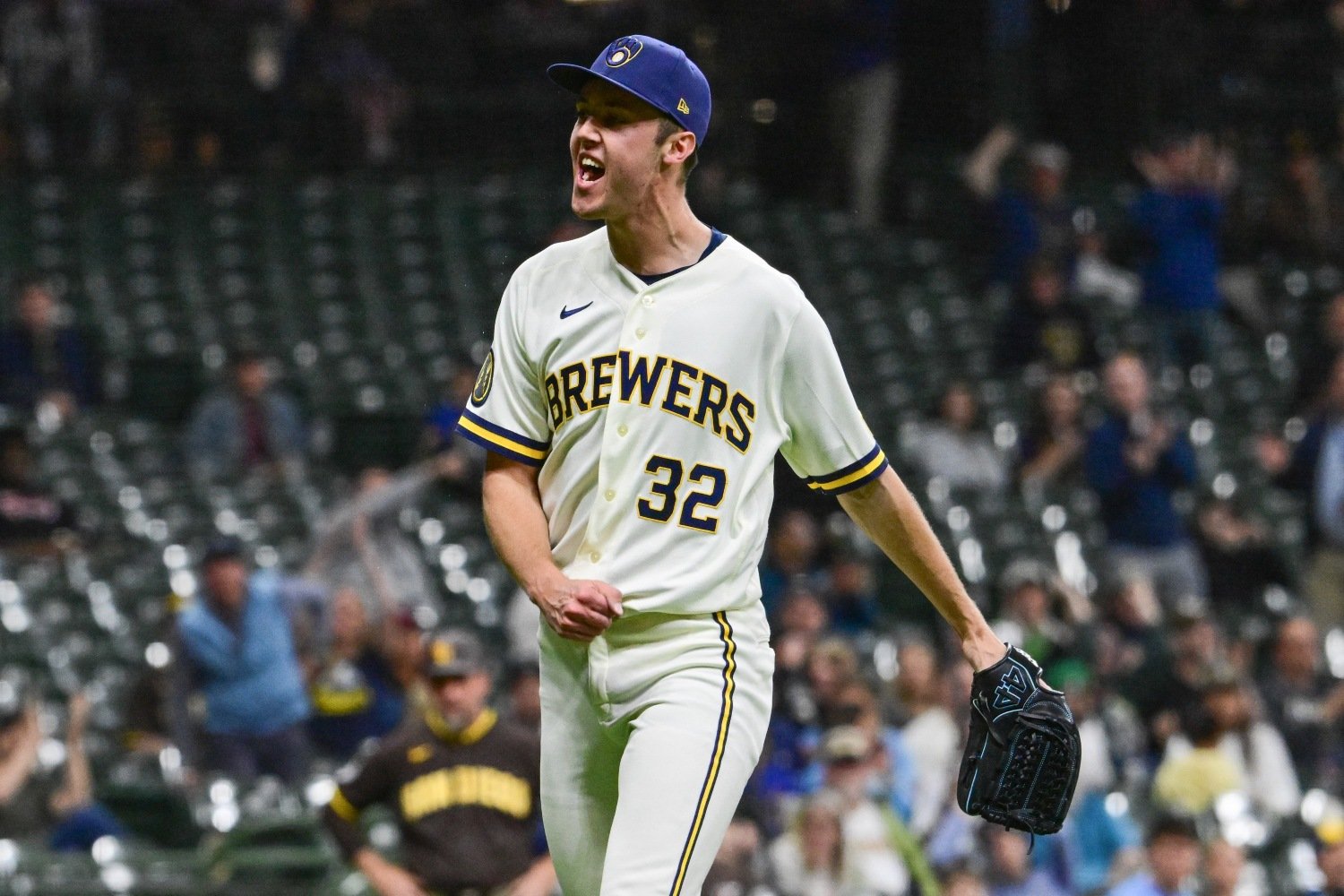 It's easy to overhype a great prospect, or a player who has a tremendous rookie season. It's also easy to get jaded, and to dismiss the alleged greatness of something when the world seems to be juicing it up too much. Let's try to find a sweet spot in the middle together, shall we? Jacob Misiorowski will celebrate the one-year anniversary of his debut Friday by making his 32nd appearance in the big leagues, counting his three outings last October. He's still only pitched 156 innings at the game's highest level. However, he's already left an indelible imprint on his team, his adopted city and his sport. Let's talk about how. Here are the five best moments and performances of Misiorowski's young career. 1. Starting His Career with 11 No-Hit Innings Everyone knew Misiorowski's name even before he debuted. but this was not like the so-called Strasmas of June 2010, when Nationals phenom Stephen Strasburg took the bump for the parent club for the first time and mowed down 14 Pirates in seven innings. Strasburg had been the No. 1 pick in the MLB Draft just a year earlier. Misiorowski was a bit of a novelty item: a junior-college find by Brewers scouts who threw exceptionally hard but often didn't know where it was going. He'd turned a corner with his control in the minors, but would he have the command to dominate the best hitters on Earth? He immediately answered that question, with extreme prejudice. He only pitched five innings that first day against the Cardinals, with the crowd at Uecker Field roaring and thrumming with the electricity he put into the atmosphere, but he didn't give up a hit. He walked four and struck out five, before leaving after a bizarre ankle-wobble that was just enough to convince Pat Murphy to play it safe. That was a stunning debut, and immediately, the baseball world was abuzz with talk about The Miz. But what he did a week later turned the dial up to 11—literally. On a hot night in Minneapolis, with a Brewers-leaning Friday night crowd that was every bit as pitched toward excitement as the last one, Misiorowski fired another six no-hit innings against the Twins. In fact, this time, he was perfect through six frames: 18 batters faced, six strikeouts, zero baserunners. Murphy felt he'd earned a shot at the 7th, and the night ended quickly with a walk and a home run, but the story of the game was unchanged. Misiorowski wasn't just a good and unusual pitching prospect. He announced himself, immediately, as one of the best pitchers in the sport. 2. The All-Star Nod A huge kerfuffle erupted in the baseball world when Misiorowski was named to the National League All-Star team after making just five appearances in the majors. Given the scale of that internet scrap, one side or the other was going to have to look stupid at the end. It's the naysayers who sound like numbskulls, with the benefit of hindsight. It was certainly unusual to tack a player into the All-Star Game after so brief a stint in the bigs, but Misiorowski acquitted himself well on all fronts. He handled some tedious questions with his usual, affable shrug. He fired a scoreless inning in the game itself. It was the first instance in which he was asked to be the face of the league, in a sense, though not the last. He handled it well, on the field and off. 3. The Bounce, the Fist Pump, the Tide Change It's easy to forget this now—the Brewers' triumph feels almost inevitable, looking back on it—but Misiorowski was called upon in Game 2 of the NLDS at a precarious moment. The Brewers had blown the Cubs' doors off in Game 1, but it was 3-3 after two innings the next day. Chicago had gotten to Aaron Ashby, and Nick Mears was brought in only to bridge a gap and get out of the second. The series could easily have tipped in Chicago's favor. Instead, Misiorowski (with the help of the Brewers offense) shoved it the other way. He held Chicago scoreless over three innings, and the way he did it—twice topping 104 MPH in raw velocity, and with enormous intensity and passion—ended up turning the tide in Milwaukee's favor. He finished his first inning of work by running to the base to record the putout himself on a grounder he fielded, and then bounced off the field, roaring and pumping his fists. The crowd went berserk. Cubs fans (in a different way) went berserk. That was just the first of Misiorowski's innings, though. To go out after that display of catharsis and record two more strong frames showed his poise—the shark-eyed dominator that lies beneath the jubilant and sometimes disarming exterior. It's worth remarking and remembering, too, that the Brewers trusted Misiorowski with that assignment on purpose, even after he struggled to the finish line in the regular season. Some even speculated that he might not be on the Division Series roster. Seeing his makeup for what it is, as well as trusting the stuff, the Brewers leaned hard on him, instead. He got the win that night, and again in Game 5, when it was four innings of one-run ball. His charisma, as well as his incredible talent, was on full display. 4. Keeping a Little Bit of Pride Alas, the Brewers were not going to win the NLCS. Things needed to break their way, and they just didn't. Having worked at the end of the Cubs series, Misiorowski didn't take the mound again until Game 3 of the following series, on the road at Dodger Stadium. The Crew lost, but Misiorowski gave an even bigger audience—and a national media quick to dismiss the Brewers and crown the Dodgers as the cream of the crop for a second straight year—an eyeful of what the smallest market in the league can produce. He pitched five innings, giving up two runs on just three hits and a walk. He struck out nine, and left Shohei Ohtani so impressed (read: frustrated) that he gushed a bit about him to the Japanese press afterward. That moment made Misiorowski a global sensation. This spring, Japanese reporters showed up at Brewers camp to check in on the team, with special attention paid to Misiorowski. Step by step, over the first handful of months of a very young career, he blossomed from a second-round pick and a lottery ticket of a prospect into a full-fledged superstar. 5. The Streak As electrifying as Misiorowski was in 2025, however, he wasn't completely dominant. There were periods of real ineffectiveness, which is why he was in danger of not making the postseason roster (at least to outside eyes). There were a lot of walks. Entering 2026, it was fair to hope he might become the ace of the squad, but not quite reasonable to expect it. And then, very quickly, any doubt was swatted away, like a fly slowed down by too much nectar and buzzing too close to an ear. Misiorowski showed up in camp carrying more weight—good weight. He was only listed 4 pounds heavier in this year's Brewers media guide (201) than in last year's (197), and Brewers media relations ace Mike Vassallo takes great pride in the accuracy of his reported weights, but Misiorowski is simply thicker this year: thicker in the legs, thicker in the arms. He remains slender, but he's more physically mature. Injuries helped it happen, but very early in camp, it was clear he would be the Brewers' Opening Day starter. He asserted himself. Misiorowski struck out 11 in five innings on Opening Day and was similarly impressive the next time out, but early in the year, he consistently talked about feeling unable to open it all the way up—to throw as hard and as freely as he felt was possible—because of a mechanical issue in his lower half. It was easy to raise an eyebrow at this. No one throws as hard as Misiorowski. It was most likely that he himself couldn't throw any harder than he was. And then he did. After four starts early on in which he sat 98-99, Misiorowski's average heater has been at least 99.7 MPH in every outing since, culminating in averaging 101.3 last weekend in Colorado. That's just the actual velocity. His release extension has also ticked up over the same period. As a result, we've seen a pitcher against whom every hitter on Earth is essentially helpless. Aaron Judge got to try hitting this version of Misiorowski; he came away muttering about the best fastball he'd ever seen. Two pitches Misiorowski threw to Judge had a perceived velocity over 106 MPH, after adding the extension to sheer velocities over 103. With a keen sense of occasion, Misiorowski pitched against the Cardinals at home late last month and threw himself an early anniversary party. Once again, the Cardinals had no hits through the first five innings. This time, Misiorowski stuck around through seven, and he eventually gave up a run, but that was the first tally he'd surrendered in 30 innings of work. He's pitched twice more since, adding seven more frames each time, and the only run he's allowed in that span was unearned. In one sense—blending the utterly unprecedented velocity with the command he's found and a deeper arsenal, and considering the superb results—we're watching a legitimate candidate for the best pitcher in baseball history. There's no credible argument that anyone else is the best pitcher in the game at this moment, despite the brilliance of Cristopher Sánchez. Misiorowski is overpowering, cocksure, intelligent, and driven. Sixteen months ago, the pitcher he'll face Friday night—the Phillies' Andrew Painter—was a more famous name among prospect gurus. One year ago, he was a slightly skinny kid who didn't have his manager's full trust. Since then, he's made the fastest ascent toward baseball immortality this side of Mike Trout's historic rookie season—or, if you prefer to compare apples to pitchers, Strasmas. Merry Mis-mas, everyone.
 -
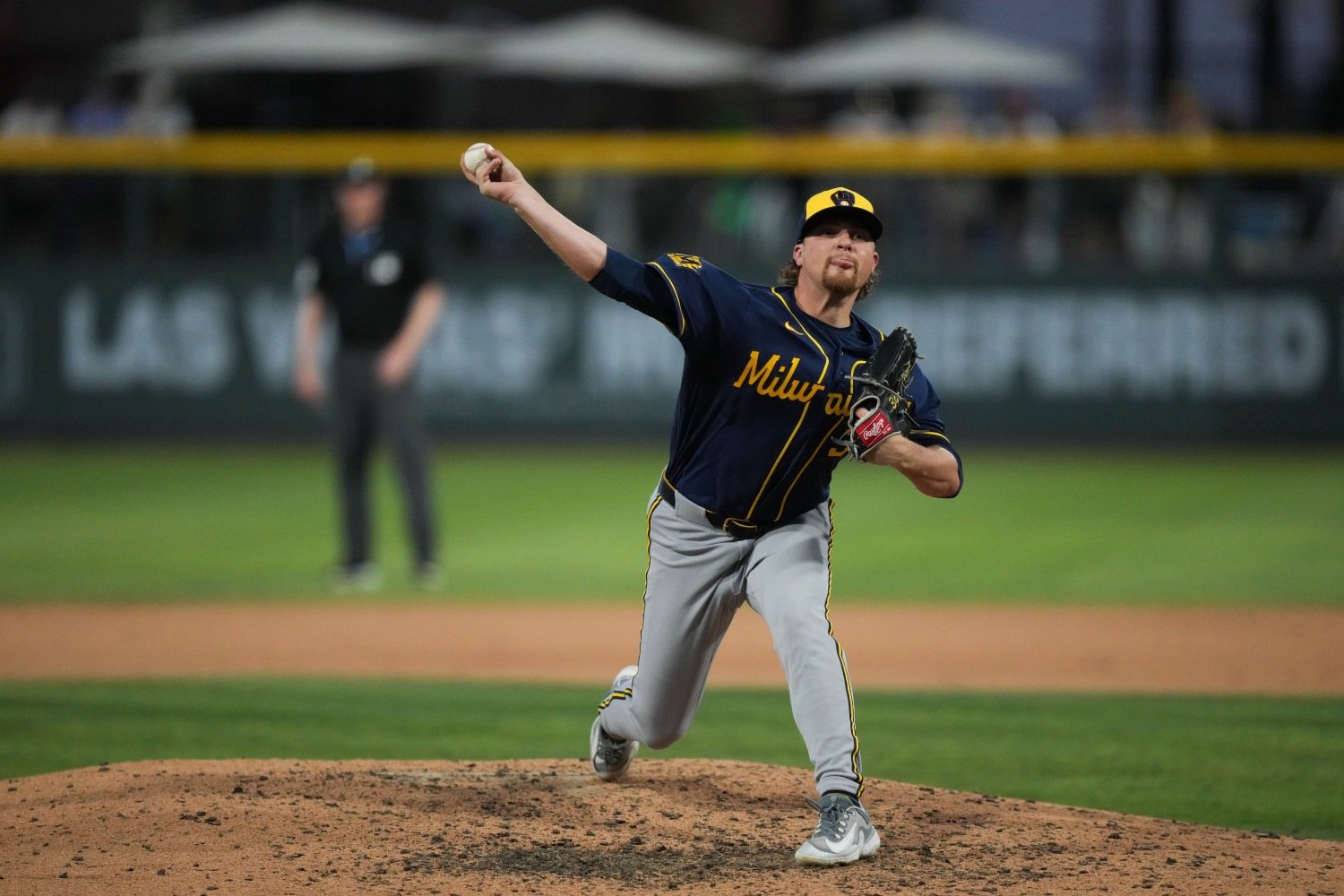 Hitters love to boast about what they could time up, if you just told them it was coming. Henry Aaron talked about being able to hit a speeding bullet. Some people, strangely, say a hitter could hit a jet at top speed, which sounds like it would be the jet hitting them, really, or else would set off some cataclysm like the one xkcd imagined years ago—a scenario, by the way, that does sometimes feel nearly possible when you watch Jacob Misiorowski. Anyway, hitters (and baseball people in general) are eager to tell you that merely throwing hard is not enough to get the ball past big-league bats. It's true, too. Now, we have Statcast data that lays out exactly how true it is. Of the pitchers against whom batters have swung at least 100 times on four-seamers and/or sinkers this year, do you know who induces the most late swings? Far from being either Misiorowski or Mason Miller, it's (this is truly delightful) the Blue Jays' Tyler Rogers. The submariner gives hitters such an uncomfortable look (and mixes in his perversely rising slider so often) that they're late on his heat over half the time, even though he throws in the low to mid-80s. That doesn't mean that velocity doesn't matter, though. Of course not. Firstly, great velocity can often help a pitcher move off the center of the barrel horizontally, as a hitter rushes to get to the hitting zone. It can also get over a bat, because the batter has time to get to the contact point laterally, but not enough to get uphill into the pitch. This is why high fastballs are, generally, more effective than low ones. Still, the idea behind the fastball is to force hitters to be late, right? The more often you force them to be late, the more they have to cheat to catch up, at which point they become vulnerable to your other offerings. And while a batter can hit the ball hard even if they're not on time, hard contact on late swings is less damaging than hard contact on on-time (or even early) swings, too. So, let's talk about how four Brewers hurlers do an exceptional job making opposing batters late on their heaters. Misiorowski's method is obvious, and we won't spend too much time on it here. (There's more to come on him tomorrow; I promise you won't be disappointed.) His heater is faster than any in the history of baseball, especially when you factor in his elite release extension. That extension adds deception and makes it hard to time up 103 MPH. It's already hard to time up 103 MPH, of course, but Misiorowski's delivery makes it even harder. That covers him. But (again, perhaps surprisingly) Misiorowski isn't even the Brewers hurler who best makes hitters late on his heat. That honor goes, instead, to an unlikely candidate: DL Hall. The southpaw reliever has been hunting for velocity he lost to injuries for years now, but he induces late swings on 39% of his four-seamers and sinkers, good for 13th of those 259 qualifying pitchers. That's remarkable, but the reason for it is remarkably simple: Hall is a hurler with lots of pitches, who works mostly in relief. Specifically, he throws both the sinker and the four-seamer, plus a changeup with about 10 MPH of separation from his heat and three flavors of breaking ball. For a guy opponents only see once in most outings, that's a dazzling array. It makes it very hard to sit on a fastball, and because Hall has two distinct heaters, even a hitter sitting on that speed has to wait an extra millisecond or two to decide which one he's attacking. This is the power of pitch mix (and a role that limits one's exposure) in action. (It also doesn't hurt that Hall, too, has exceptionally good extension.) Next among the Brewers, though just one spot ahead of Misiorowski on the leaderboard, is another lefty: Kyle Harrison. We've already talked at length about what has made his fastball such a weapon this year, but let's briefly touch on it again. By slightly raising his arm slot to get into a position where he can better tunnel the fastball with his slurve (and perfecting the spin mirroring on those two pitches), he's made it almost impossible for a batter to recognize either offering early. They differ in speed by about 13 MPH, so if the hitter can't commit to either pitch right out of the hand, they're likely to get caught in-between, both in terms of timing and in terms of the X-Y movement of bat and ball. Harrison is getting late swings on 35% of his heaters, virtually identical to Misiorowski's rate, despite throwing about 5 MPH slower. Finally, there's Chad Patrick. That name, too, might surprise you, but he's gotten late swings on 31% of swings against his four-seamer and sinker this year, good for 47th on the list. The reason here is simple, too: Everyone has to be ready for his cutter. That's the pitch Patrick throws most often, and it's about 5 MPH slower than his two true fastballs. Thus, hitters can't let themselves get all the way to those offerings very much. They're usually sitting cutter, which means that in addition to being late when he throws the sinker or four-seamer, they're usually underneath those pitches (41% of the time, easily above the league average) and often either jammed or getting the ball off the end of the bat. In fact, in this quartet, Patrick is the best at finding his way off the center of the barre with his fastballs by tying hitters up. Much of that goes back to what I wrote about earlier this year: being willing and able to throw glove-side sinkers and arm-side cutters, as well as the more natural, opposite locations. Working east and west. Changing speeds often. Getting down the mound in an extraordinary way. Maximizing deception. There are a lot of ways to disrupt timing; that's why pitchers get hitters out most of the time. The Brewers have four aces in this aspect of the game this year, and while they're not all the guys you might first guess, these four hurlers have driven much of the team's success on the mound, by making hitters be late early and often.
-
- 1
-
-
- dl hall
- jacob misiorowski
- (and 2 more)
-
Image courtesy of © Lucas Peltier-Imagn Images Hitters love to boast about what they could time up, if you just told them it was coming. Henry Aaron talked about being able to hit a speeding bullet. Some people, strangely, say a hitter could hit a jet at top speed, which sounds like it would be the jet hitting them, really, or else would set off some cataclysm like the one xkcd imagined years ago—a scenario, by the way, that does sometimes feel nearly possible when you watch Jacob Misiorowski. Anyway, hitters (and baseball people in general) are eager to tell you that merely throwing hard is not enough to get the ball past big-league bats. It's true, too. Now, we have Statcast data that lays out exactly how true it is. Of the pitchers against whom batters have swung at least 100 times on four-seamers and/or sinkers this year, do you know who induces the most late swings? Far from being either Misiorowski or Mason Miller, it's (this is truly delightful) the Blue Jays' Tyler Rogers. The submariner gives hitters such an uncomfortable look (and mixes in his perversely rising slider so often) that they're late on his heat over half the time, even though he throws in the low to mid-80s. That doesn't mean that velocity doesn't matter, though. Of course not. Firstly, great velocity can often help a pitcher move off the center of the barrel horizontally, as a hitter rushes to get to the hitting zone. It can also get over a bat, because the batter has time to get to the contact point laterally, but not enough to get uphill into the pitch. This is why high fastballs are, generally, more effective than low ones. Still, the idea behind the fastball is to force hitters to be late, right? The more often you force them to be late, the more they have to cheat to catch up, at which point they become vulnerable to your other offerings. And while a batter can hit the ball hard even if they're not on time, hard contact on late swings is less damaging than hard contact on on-time (or even early) swings, too. So, let's talk about how four Brewers hurlers do an exceptional job making opposing batters late on their heaters. Misiorowski's method is obvious, and we won't spend too much time on it here. (There's more to come on him tomorrow; I promise you won't be disappointed.) His heater is faster than any in the history of baseball, especially when you factor in his elite release extension. That extension adds deception and makes it hard to time up 103 MPH. It's already hard to time up 103 MPH, of course, but Misiorowski's delivery makes it even harder. That covers him. But (again, perhaps surprisingly) Misiorowski isn't even the Brewers hurler who best makes hitters late on his heat. That honor goes, instead, to an unlikely candidate: DL Hall. The southpaw reliever has been hunting for velocity he lost to injuries for years now, but he induces late swings on 39% of his four-seamers and sinkers, good for 13th of those 259 qualifying pitchers. That's remarkable, but the reason for it is remarkably simple: Hall is a hurler with lots of pitches, who works mostly in relief. Specifically, he throws both the sinker and the four-seamer, plus a changeup with about 10 MPH of separation from his heat and three flavors of breaking ball. For a guy opponents only see once in most outings, that's a dazzling array. It makes it very hard to sit on a fastball, and because Hall has two distinct heaters, even a hitter sitting on that speed has to wait an extra millisecond or two to decide which one he's attacking. This is the power of pitch mix (and a role that limits one's exposure) in action. (It also doesn't hurt that Hall, too, has exceptionally good extension.) Next among the Brewers, though just one spot ahead of Misiorowski on the leaderboard, is another lefty: Kyle Harrison. We've already talked at length about what has made his fastball such a weapon this year, but let's briefly touch on it again. By slightly raising his arm slot to get into a position where he can better tunnel the fastball with his slurve (and perfecting the spin mirroring on those two pitches), he's made it almost impossible for a batter to recognize either offering early. They differ in speed by about 13 MPH, so if the hitter can't commit to either pitch right out of the hand, they're likely to get caught in-between, both in terms of timing and in terms of the X-Y movement of bat and ball. Harrison is getting late swings on 35% of his heaters, virtually identical to Misiorowski's rate, despite throwing about 5 MPH slower. Finally, there's Chad Patrick. That name, too, might surprise you, but he's gotten late swings on 31% of swings against his four-seamer and sinker this year, good for 47th on the list. The reason here is simple, too: Everyone has to be ready for his cutter. That's the pitch Patrick throws most often, and it's about 5 MPH slower than his two true fastballs. Thus, hitters can't let themselves get all the way to those offerings very much. They're usually sitting cutter, which means that in addition to being late when he throws the sinker or four-seamer, they're usually underneath those pitches (41% of the time, easily above the league average) and often either jammed or getting the ball off the end of the bat. In fact, in this quartet, Patrick is the best at finding his way off the center of the barre with his fastballs by tying hitters up. Much of that goes back to what I wrote about earlier this year: being willing and able to throw glove-side sinkers and arm-side cutters, as well as the more natural, opposite locations. Working east and west. Changing speeds often. Getting down the mound in an extraordinary way. Maximizing deception. There are a lot of ways to disrupt timing; that's why pitchers get hitters out most of the time. The Brewers have four aces in this aspect of the game this year, and while they're not all the guys you might first guess, these four hurlers have driven much of the team's success on the mound, by making hitters be late early and often. View full article
-
Image courtesy of © Benny Sieu-Imagn Images "Why are you worrying about Christian Yelich?" you might be asking, and you'd have a fair point. David Hamilton is only slowly pulling himself out of a career-threatening cold snap to start the season. Sal Frelick is mired in the same depth of trouble. Blake Perkins, Joey Ortiz and Luis Rengifo are holding onto big-league jobs by their fingernails, and that's especially bad news in their cases, because they only really do well when they're working with their glove. Yelich, meanwhile, is batting .287/.354/.434. It's a normal season. Find a new slant. Well, no. Sorry. There's real danger lurking behind Yelich's superficially solid numbers, and we had better talk about it a bit. Thankfully, some new data from Statcast sheds plenty of light on the problem. Yelich is running into some concrete problems with clear explanations, even if not all of those problems are solvable. He's over his skis right now, and uisually, when you get over your skis, you end up crashing. In 158 plate appearances this year, Yelich is striking out 28.5% of the time. Only in the hopelessly bizarre, meaningless 2020 season did he punch out more often. Even that year, he walked at a shockingly high 18.6% rate. This season, that number is less than half as high, at 8.9%. This would be, in short, the worst strikeout rate and the worst walk rate of his career. He's also hitting the ball less hard on average, hitting it hard less often, and hitting it on the ground more. If none of that sounds good, give yourself a gold star; you know ball. Expected stats don't always tell the whole story, but Yelich's stand in unusually stark contrast to his solid surface-level numbers. He's not controlling the zone well, and he's not making up for that by hitting the ball productively in any sense. He's not going to keep being a good hitter for long, if this keeps up. And here's why. This image comes from Baseball Savant's new leaderboards showing swing timing and miss distance. Initially, they might seem inscrutable, but walk through them with me. Here, we've isolated what Yelich is doing on swings against breaking balls, and we're comparing 2025 to 2026. As you can see, last year, he had a fairly normal distribution in his swings against breaking pitches, in terms of where he met (or would have met) the ball on the bat, horizontally (left); whether he was early, late or on time against them (center); and whether he swung above, below or right through the ball, vertically (right). Those are the slightly forest-hued green curves. In 2026, something different is happening. As he tries to adapt to what's happening with his body, Yelich is taking a bifurcated approach, which is producing a bimodal distribution. Sometimes, he's sitting on a breaking ball. Other times, he's gearing up for the heat. When it's the former, he's usually on time, and he centers the ball on his barrel laterally pretty well. When it's the latter, he's usually early, which means he either ends up getting the ball with the end of his bat or running out of bat altogether and whiffing. The right-hand image might be the most interesting, though it contains the least obvious difference from one year to the next: he's swinging over the ball (be it very slightly, leading to contact but downward launch angles, or extremely, leading to whiffs) even when he's otherwise lined things up. This is why Yelich is whiffing on roughly half the breaking balls he sees this year. It's why he's hitting worse against those pitches than he has since he was a pup in Miami: You could chalk this problem up to Yelich sitting on fastballs, but you'd be wrong. For one thing, he hasn't gotten any extra juice out of his swings against fastballs, really. More importantly, though, look at how well he's hitting offspeed pitches. We already saw that he's sometimes sitting on breaking stuff, putting him on time for them more often than in the past. He's doing the same thing with changeups, but succeeding much more often. The reason is simple: Yelich has gotten much more grooved, with his swing. This trend began last year, when his contact rate on pitches outside the zone fell to a career-low (except 2020) 44.2%. This season, that figure has plunged all the way to 36.3%, the lowest of his career even if you want to count that husk of a year in the shadow of COVID. He has one swing plane on which he can succeed. He's unable to adapt the way he used to, without presetting his plan to aim higher or lower than usual. Against changeups, that works. Most (though not all) hitters can spot and intuit the way most changeups will drop en route to the plate. Pitchers with a good combination of ride on the fastball and depth on the change can get whiffs from hitters based on the movement, but most of a changeup's effectiveness comes from the speed differential on it. This is also why flatter swings work best, on average, against offspeed stuff. Breaking balls are different. Even a great hitter who's an expert at spotting the telltale dot on a slider and/or is hunting a breaking ball can struggle to adapt to their movement, which can be extreme and vary widely even from pitch to pitch for a given hurler. As a result, you have to be able to bend and adjust your swing while the ball is in flight. That sounds impossible, and if you're thinking about it up there, it is. Through enough reps and their extraordinary talent, though, many hitters learn to do it. At some points in his career, Yelich has been able to do it, too. A lot of that subtle, even subconscious adjustment happens in your lower half, though. A lot of it happens in your spinal column. At this point in his career, on the other side of major back surgery, Yelich simply doesn't have that adaptability. He's gotten stiffer, as virtually everyone does when they enter their mid-30s and as everyone does after they have back surgery. Thus, even when he sits on breaking balls and ends up on time, he can come up completely empty. In fact, he's often doing so. The league's average whiff rate on breaking pitches for which they're on time is 17.5%. Yelich's mark has hovered just above that all along (as far back as 2023, when bat-tracking data went live), but this year, it's gone through the ceiling. Last year, he whiffed on 22.9% of on-time swings against breaking balls, swinging over the ball 21% of the time and missing by 3.9 inches, on average. This year, he's whiffing on 39.5% of those on-time swings, swinging over it 37% of the time and missing by 4.8 inches. Here's what that often looks like. R0JyenJfWGw0TUFRPT1fQkFaWVVRRUJVUVFBQVZKVFVnQUhBMVVIQUZsV0J3VUFWRmNGQVZBQkJGQUdCd0FE.mp4 "Ok," you might say, "but that's just a bad swing decision. He was sitting on a fastball that time, and chased a pitch down and out of the zone." That's true, to some extent. We'll even ignore the fact that he might be making more of those poor decisions because, as he ages, he's losing bat speed and needs to decide earlier about each pitch. But plenty of his breaking ball whiffs also look like this. TkFOWE9fWGw0TUFRPT1fQVFVQ0JsMVhVZ01BWFFZTFVBQUhWQVJYQUFOV0JsWUFDMUFFVmxZTlYxQmNWUVpT (1).mp4 Or like this: b0d3OWxfWGw0TUFRPT1fVWdSWEIxUlNCMVFBWEZWUlh3QUhCZ1JlQUFBRkJnTUFBbEVGQndGWFZBY0JCZ1JV (1).mp4 Both of those are cases of pitches nipping the corners of the zone, forcing Yelich to swing. He was on time for them, which tells us he was ready to attack them. Still, he swung right over them. Lots of other left-handed batters—and, importantly, past versions of Yelich, too—would have at least fouled off one of these, and perhaps crushed them. Yelich wasn't even especially close to them, given how tight the movement on each was. Is this problem fixable? Maybe, and partially. Yelich isn't going to get younger, and it's unlikely that his health baseline will improve much from here. He might eventually need to change his approach a bit and stop chasing certain pitches. That spot down and in might now be a hole in his swing, if a pitcher executes it well. However, Yelich can also put in work to adjust and improve in this regard. Targeted cage and Trajekt machine work can make it easier for him to recognize and lay off pitches that are breaking out of his hitting zone. He can also change the way he presets his swing path a bit, based on situation and opponent. The erosion of his quality of contact and his plate discipline can be stopped, if not reversed. He can continue to outperform his expected stats, because he's strong and uses the whole field and knows how to outguess opposing pitchers at times. It's not fun to ponder the underlying red flags around Yelich. It's not good that there's a persistent and significant problem causing his problems. However, it's fun to have new insight on the nature of that issue, and since we can be sure the Brewers know everything we do (and then some), it's somewhat comforting. In all likelihood, this is already a project on Daniel Vogelbach's to-do list, and a part of Yelich's routine. View full article
-
 "Why are you worrying about Christian Yelich?" you might be asking, and you'd have a fair point. David Hamilton is only slowly pulling himself out of a career-threatening cold snap to start the season. Sal Frelick is mired in the same depth of trouble. Blake Perkins, Joey Ortiz and Luis Rengifo are holding onto big-league jobs by their fingernails, and that's especially bad news in their cases, because they only really do well when they're working with their glove. Yelich, meanwhile, is batting .287/.354/.434. It's a normal season. Find a new slant. Well, no. Sorry. There's real danger lurking behind Yelich's superficially solid numbers, and we had better talk about it a bit. Thankfully, some new data from Statcast sheds plenty of light on the problem. Yelich is running into some concrete problems with clear explanations, even if not all of those problems are solvable. He's over his skis right now, and uisually, when you get over your skis, you end up crashing. In 158 plate appearances this year, Yelich is striking out 28.5% of the time. Only in the hopelessly bizarre, meaningless 2020 season did he punch out more often. Even that year, he walked at a shockingly high 18.6% rate. This season, that number is less than half as high, at 8.9%. This would be, in short, the worst strikeout rate and the worst walk rate of his career. He's also hitting the ball less hard on average, hitting it hard less often, and hitting it on the ground more. If none of that sounds good, give yourself a gold star; you know ball. Expected stats don't always tell the whole story, but Yelich's stand in unusually stark contrast to his solid surface-level numbers. He's not controlling the zone well, and he's not making up for that by hitting the ball productively in any sense. He's not going to keep being a good hitter for long, if this keeps up. And here's why. This image comes from Baseball Savant's new leaderboards showing swing timing and miss distance. Initially, they might seem inscrutable, but walk through them with me. Here, we've isolated what Yelich is doing on swings against breaking balls, and we're comparing 2025 to 2026. As you can see, last year, he had a fairly normal distribution in his swings against breaking pitches, in terms of where he met (or would have met) the ball on the bat, horizontally (left); whether he was early, late or on time against them (center); and whether he swung above, below or right through the ball, vertically (right). Those are the slightly forest-hued green curves. In 2026, something different is happening. As he tries to adapt to what's happening with his body, Yelich is taking a bifurcated approach, which is producing a bimodal distribution. Sometimes, he's sitting on a breaking ball. Other times, he's gearing up for the heat. When it's the former, he's usually on time, and he centers the ball on his barrel laterally pretty well. When it's the latter, he's usually early, which means he either ends up getting the ball with the end of his bat or running out of bat altogether and whiffing. The right-hand image might be the most interesting, though it contains the least obvious difference from one year to the next: he's swinging over the ball (be it very slightly, leading to contact but downward launch angles, or extremely, leading to whiffs) even when he's otherwise lined things up. This is why Yelich is whiffing on roughly half the breaking balls he sees this year. It's why he's hitting worse against those pitches than he has since he was a pup in Miami: You could chalk this problem up to Yelich sitting on fastballs, but you'd be wrong. For one thing, he hasn't gotten any extra juice out of his swings against fastballs, really. More importantly, though, look at how well he's hitting offspeed pitches. We already saw that he's sometimes sitting on breaking stuff, putting him on time for them more often than in the past. He's doing the same thing with changeups, but succeeding much more often. The reason is simple: Yelich has gotten much more grooved, with his swing. This trend began last year, when his contact rate on pitches outside the zone fell to a career-low (except 2020) 44.2%. This season, that figure has plunged all the way to 36.3%, the lowest of his career even if you want to count that husk of a year in the shadow of COVID. He has one swing plane on which he can succeed. He's unable to adapt the way he used to, without presetting his plan to aim higher or lower than usual. Against changeups, that works. Most (though not all) hitters can spot and intuit the way most changeups will drop en route to the plate. Pitchers with a good combination of ride on the fastball and depth on the change can get whiffs from hitters based on the movement, but most of a changeup's effectiveness comes from the speed differential on it. This is also why flatter swings work best, on average, against offspeed stuff. Breaking balls are different. Even a great hitter who's an expert at spotting the telltale dot on a slider and/or is hunting a breaking ball can struggle to adapt to their movement, which can be extreme and vary widely even from pitch to pitch for a given hurler. As a result, you have to be able to bend and adjust your swing while the ball is in flight. That sounds impossible, and if you're thinking about it up there, it is. Through enough reps and their extraordinary talent, though, many hitters learn to do it. At some points in his career, Yelich has been able to do it, too. A lot of that subtle, even subconscious adjustment happens in your lower half, though. A lot of it happens in your spinal column. At this point in his career, on the other side of major back surgery, Yelich simply doesn't have that adaptability. He's gotten stiffer, as virtually everyone does when they enter their mid-30s and as everyone does after they have back surgery. Thus, even when he sits on breaking balls and ends up on time, he can come up completely empty. In fact, he's often doing so. The league's average whiff rate on breaking pitches for which they're on time is 17.5%. Yelich's mark has hovered just above that all along (as far back as 2023, when bat-tracking data went live), but this year, it's gone through the ceiling. Last year, he whiffed on 22.9% of on-time swings against breaking balls, swinging over the ball 21% of the time and missing by 3.9 inches, on average. This year, he's whiffing on 39.5% of those on-time swings, swinging over it 37% of the time and missing by 4.8 inches. Here's what that often looks like. R0JyenJfWGw0TUFRPT1fQkFaWVVRRUJVUVFBQVZKVFVnQUhBMVVIQUZsV0J3VUFWRmNGQVZBQkJGQUdCd0FE.mp4 "Ok," you might say, "but that's just a bad swing decision. He was sitting on a fastball that time, and chased a pitch down and out of the zone." That's true, to some extent. We'll even ignore the fact that he might be making more of those poor decisions because, as he ages, he's losing bat speed and needs to decide earlier about each pitch. But plenty of his breaking ball whiffs also look like this. TkFOWE9fWGw0TUFRPT1fQVFVQ0JsMVhVZ01BWFFZTFVBQUhWQVJYQUFOV0JsWUFDMUFFVmxZTlYxQmNWUVpT (1).mp4 Or like this: b0d3OWxfWGw0TUFRPT1fVWdSWEIxUlNCMVFBWEZWUlh3QUhCZ1JlQUFBRkJnTUFBbEVGQndGWFZBY0JCZ1JV (1).mp4 Both of those are cases of pitches nipping the corners of the zone, forcing Yelich to swing. He was on time for them, which tells us he was ready to attack them. Still, he swung right over them. Lots of other left-handed batters—and, importantly, past versions of Yelich, too—would have at least fouled off one of these, and perhaps crushed them. Yelich wasn't even especially close to them, given how tight the movement on each was. Is this problem fixable? Maybe, and partially. Yelich isn't going to get younger, and it's unlikely that his health baseline will improve much from here. He might eventually need to change his approach a bit and stop chasing certain pitches. That spot down and in might now be a hole in his swing, if a pitcher executes it well. However, Yelich can also put in work to adjust and improve in this regard. Targeted cage and Trajekt machine work can make it easier for him to recognize and lay off pitches that are breaking out of his hitting zone. He can also change the way he presets his swing path a bit, based on situation and opponent. The erosion of his quality of contact and his plate discipline can be stopped, if not reversed. He can continue to outperform his expected stats, because he's strong and uses the whole field and knows how to outguess opposing pitchers at times. It's not fun to ponder the underlying red flags around Yelich. It's not good that there's a persistent and significant problem causing his problems. However, it's fun to have new insight on the nature of that issue, and since we can be sure the Brewers know everything we do (and then some), it's somewhat comforting. In all likelihood, this is already a project on Daniel Vogelbach's to-do list, and a part of Yelich's routine.
 -
Good point! If I'm honest, a piece of me discounts his age-related projection because of his size—he won't be able to improve in as many ways because of the limitations of his frame. But I have no idea whether that's backed up by data! I might be punishing him for the crime of being a much stronger version of me, physically. Hahaha.
-
I do think his arm is a difference-maker in the outfield, too. We've started to see Sal be limited this year by a weak arm. I worry a bit that Lara's jumps will fade from elite to merely very good in the majors, where they hit it harder and the third deck can make things trickier and all, but yeah, he should be capable of what Sal did last year. (IMO, Sal still should be, too, so.)
-
Image courtesy of © Lucas Peltier-Imagn Images Give the Brewers credit. (Probably, you were already, but give them even more.) Four games into a six-game road trip designed to destroy them, they're 4-0. They hung on to win a preposterous 15-14 decision against the Athletics in Las Vegas Monday night, with two runs in the seventh inning, one in the eighth, two in the ninth, four in the 10th and one in the 12th. Somehow, they got one day closer to their fourth straight division title. They specialize in this. When there's adversity at hand, they ratchet their game up just enough to meet and overcome it. They're ahead of schedule, yet again. However, even after just one game in the Nevada desert, it's clear that the schedule-makers did the team dirty here. Earlier this season, many Brewers fans lamented the surfeit of early off days in the team's schedule, which will lead to a dense schedule and little rest in the second half. That was partially by the Brewers' own design, though. They get input into the structure of their schedule; every team does. It seems safe to say, however, that the team didn't sign up for this trip. Nor does the league appear to have properly thought it through. After three games at the pitcher-shredding mountainside pasture of Coors Field, the Brewers had to fly right to Vegas to play in what turns out to be an equally destructive environment, or nearly so. Vegas is nowhere near the elevation of Denver, but the heat (Monday's contest had an official game-time temperature of 87°, despite starting at 7:05 local time) makes up for the loss of altitude. The Brewers were outhomered 7 to 4. Four balls were hit at least 440 feet. Brewers hurlers struck out 20 A's batters, but it still took seven arms to limp to the finish line. The Gravitron (Kyle Harrison) crashed, thanks to the disruption of gravity itself: his fastball had 3 inches less induced vertical break than his season average. The same was true for A's starter Jeffrey Springs, and for the four-seamers of Grant Anderson and Chad Patrick. Las Vegas isn't just a tough place to pitch. Until the team can finish building a stadium that mitigates some of the environmental effects better, it's a second Coors. The A's don't normally play there, of course. This is something akin to exhibition baseball, but the only way to get a big-league team to agree to play against the eventual Vegas residents there was to make the contests count. Putting a trip to this version of Vegas right behind a weekend at Coors, however, was a mistake by the league for which the Brewers will pay a heavy price. At a glance, the team's bullpen picture doesn't look that bad, save for the hit it took Monday: THU FRI SAT SUN MON TOT Ashby 0 18 0 0 36 54 Anderson, G 0 0 19 0 28 47 Patrick 30 0 0 21 8 59 Kuhnel 16 0 0 0 20 36 Rom 0 0 17 0 25 42 Uribe 0 0 0 0 15 15 Crow 70 0 0 0 0 70 Megill 0 18 0 0 0 18 Remember, though, that this is not the team's 'A' bullpen—not by a long shot. They've suffered a series of injuries this year, and a cluster of them recently. They've swapped out multiple tired arms for fresh ones. Now, they're a little bit roster-locked, trying to get by with the group on hand, and they only have two truly fresh arms going into Tuesday night. One of those is Megill, who hasn't pitched since Friday. Either the team is hiding something that's nagging him, or—and this is more likely—Pat Murphy correctly saw what was happening to pitchers' fastball shapes Monday night and realized Megill would be a poor candidate to pitch well in Vegas. There are two games left in the series, though. Will Megill simply sit them out? Coors Field rips pitching staffs apart for as much as a week after a tough visit, and though they swept the Rockies, the Brewers had a tough visit, indeed. Now, they have to try to survive what looks to be a second straight series under nigh-impossible conditions in which to pitch well. This is all also happening just as the average drag on the ball drops precipitously, league-wide. Lately, the ball has gotten a whole lot more lively, and whether it was intentional or not, the league sent a team on a road trip into Coors and Coors Light to throw balls that are much readier to fly out of the park, anyway. Yes, the Rockies just have to live this way. They also get the benefit of acclimation, though, and can build (though rarely have built) a roster with their home park and its quiddities in mind. The Brewers have no such recourse. They'll still get through this, as their record to start the trip proves. They'll win the division again, and they might play deeper into October this time. They're a very good team. But this was very bad scheduling, and the league made one of its best teams do some needless gymnastics this week. It's not over, either. More roster moves resulting directly from this brutal week lie ahead. View full article
-
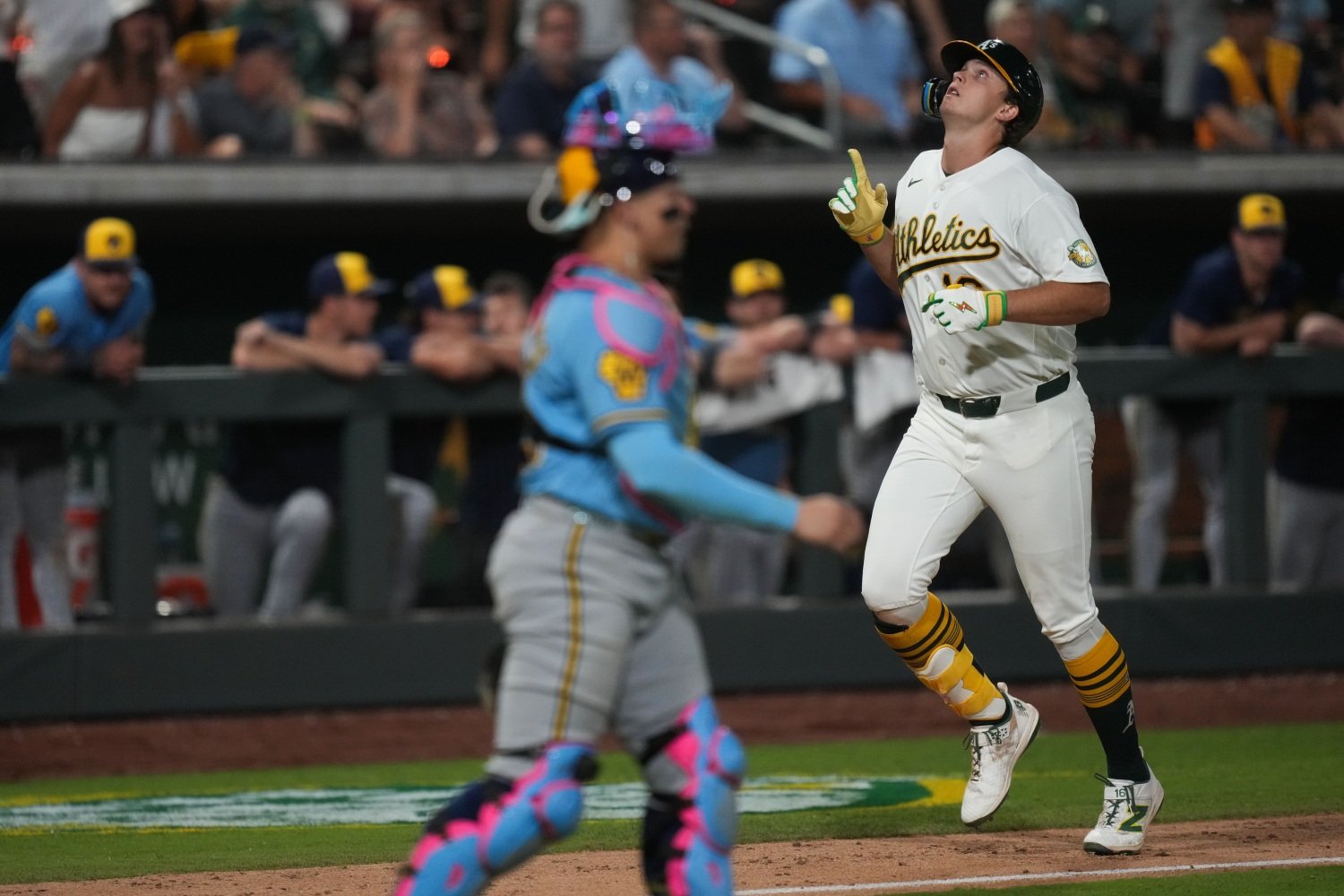 Give the Brewers credit. (Probably, you were already, but give them even more.) Four games into a six-game road trip designed to destroy them, they're 4-0. They hung on to win a preposterous 15-14 decision against the Athletics in Las Vegas Monday night, with two runs in the seventh inning, one in the eighth, two in the ninth, four in the 10th and one in the 12th. Somehow, they got one day closer to their fourth straight division title. They specialize in this. When there's adversity at hand, they ratchet their game up just enough to meet and overcome it. They're ahead of schedule, yet again. However, even after just one game in the Nevada desert, it's clear that the schedule-makers did the team dirty here. Earlier this season, many Brewers fans lamented the surfeit of early off days in the team's schedule, which will lead to a dense schedule and little rest in the second half. That was partially by the Brewers' own design, though. They get input into the structure of their schedule; every team does. It seems safe to say, however, that the team didn't sign up for this trip. Nor does the league appear to have properly thought it through. After three games at the pitcher-shredding mountainside pasture of Coors Field, the Brewers had to fly right to Vegas to play in what turns out to be an equally destructive environment, or nearly so. Vegas is nowhere near the elevation of Denver, but the heat (Monday's contest had an official game-time temperature of 87°, despite starting at 7:05 local time) makes up for the loss of altitude. The Brewers were outhomered 7 to 4. Four balls were hit at least 440 feet. Brewers hurlers struck out 20 A's batters, but it still took seven arms to limp to the finish line. The Gravitron (Kyle Harrison) crashed, thanks to the disruption of gravity itself: his fastball had 3 inches less induced vertical break than his season average. The same was true for A's starter Jeffrey Springs, and for the four-seamers of Grant Anderson and Chad Patrick. Las Vegas isn't just a tough place to pitch. Until the team can finish building a stadium that mitigates some of the environmental effects better, it's a second Coors. The A's don't normally play there, of course. This is something akin to exhibition baseball, but the only way to get a big-league team to agree to play against the eventual Vegas residents there was to make the contests count. Putting a trip to this version of Vegas right behind a weekend at Coors, however, was a mistake by the league for which the Brewers will pay a heavy price. At a glance, the team's bullpen picture doesn't look that bad, save for the hit it took Monday: THU FRI SAT SUN MON TOT Ashby 0 18 0 0 36 54 Anderson, G 0 0 19 0 28 47 Patrick 30 0 0 21 8 59 Kuhnel 16 0 0 0 20 36 Rom 0 0 17 0 25 42 Uribe 0 0 0 0 15 15 Crow 70 0 0 0 0 70 Megill 0 18 0 0 0 18 Remember, though, that this is not the team's 'A' bullpen—not by a long shot. They've suffered a series of injuries this year, and a cluster of them recently. They've swapped out multiple tired arms for fresh ones. Now, they're a little bit roster-locked, trying to get by with the group on hand, and they only have two truly fresh arms going into Tuesday night. One of those is Megill, who hasn't pitched since Friday. Either the team is hiding something that's nagging him, or—and this is more likely—Pat Murphy correctly saw what was happening to pitchers' fastball shapes Monday night and realized Megill would be a poor candidate to pitch well in Vegas. There are two games left in the series, though. Will Megill simply sit them out? Coors Field rips pitching staffs apart for as much as a week after a tough visit, and though they swept the Rockies, the Brewers had a tough visit, indeed. Now, they have to try to survive what looks to be a second straight series under nigh-impossible conditions in which to pitch well. This is all also happening just as the average drag on the ball drops precipitously, league-wide. Lately, the ball has gotten a whole lot more lively, and whether it was intentional or not, the league sent a team on a road trip into Coors and Coors Light to throw balls that are much readier to fly out of the park, anyway. Yes, the Rockies just have to live this way. They also get the benefit of acclimation, though, and can build (though rarely have built) a roster with their home park and its quiddities in mind. The Brewers have no such recourse. They'll still get through this, as their record to start the trip proves. They'll win the division again, and they might play deeper into October this time. They're a very good team. But this was very bad scheduling, and the league made one of its best teams do some needless gymnastics this week. It's not over, either. More roster moves resulting directly from this brutal week lie ahead.
 -
Remember in the first week, or something, when he left a game with tightness in his side? Wouldn't surprise me at all to learn he's played all year with a strained oblique that should have shelved him for a month of rest. That's not an excuse, y'know? It's your responsibility to tell someone if you're hurt, and your numbers are your responsibility if you're healthy enough to play. But yeah, he could ABSOILUTELY be compromised.
-
Image courtesy of © Mark Hoffman/Milwaukee Journal Sentinel / USA TODAY NETWORK via Imagn Images Finding playing time in the majors is all about demonstrating strengths. Teams don't play anyone because of their relative lack of weaknesses. Although it doesn't feel like a game as given to positional distribution of responsibility as football or soccer are, baseball has that same ethos. Not everyone should be the star. Not everyone has to do everything well. But you play when you show a team that you do something well. Are you slow-footed and weak-armed, but a great hitter? They'll find a place for you at first base or designated hitter, batting near the top of the order. A sure-handed and nimble fielder with a paucity of power? You can just bat eighth. You have to take your turns contributing to run creation, but they give you fewer of them. You make most of your contributions by keeping runs off the board for the opponents. There's a phrase for a guy without a carrying tool—without any trait on which to hang their hat: organizational depth. It sounds harsh, but the realities of baseball are just that way. If you find a way to concretely help the team (even if it be something that doesn't feel concrete on the outside, like boosting clubhouse vibes or calming a panicking pitcher), you can stay. If you can't, sooner or later, you get the boot. That boot is swinging back and taking aim at Sal Frelick right now. Yes, the left side of the Brewers infield has been lousy, but David Hamilton's speed and versatility are signature skills. Joey Ortiz's defense gives Pat Murphy a good reason to put his name on the lineup card. Even Luis Rengifo and Blake Perkins, with their blend of high baseball IQ, the capacity to switch-hit, and bursts of defensive brilliance, have roles you can describe to a fellow fan to justify their inclusion on the team, however shakily. At this moment, it's hard to make that case for Frelick. According to Statcast, this is the hardest catch Frelick has made in right field all season. OTdQeVZfWGw0TUFRPT1fQVFRRUIxUldWZ0VBV2xBQ1ZRQUhWd05SQUFNRVZGZ0FDd0FOQndZQkNGZFVBbEZX.mp4 You can probably quibble with that, and point to one or two other near-highlight plays, but undeniably, Frelick has been worse in the field this season. He's not actively hurting the team's run prevention (much) by being out there, but nor is he helping. That's a problem, because as a right fielder, he carries little positional value. To bolster run prevention, he has to show great range and/or great arm utility; he hasn't shown either this year. Worse, he's not doing anything to augment the team's offense. Thankfully, they haven't needed much from him, but Frelick's .223/.297/.310 line remains dreadful. He's making tons of contact, but producing no actual value on it. Of the 230 batters with at least 154 plate appearances this season, only seven have a worse slugging average on contact (SLGCON) than Frelick's .351, according to Baseball Prospectus. His control of the strike zone is good, but not great, and not good enough to put him on base as often as he needs to be in order to use his plus speed. Nor is any of that fluky. Frelick doesn't consistently hit the ball hard or get it in the air. His expected weighted on-base average is back down to .283, where it was in 2024, after ticking up to .299 in 2025. He significantly outperformed that xwOBA last season, too, but isn't doing it this year, thanks to no longer having the knack for the line-drive single to right-center field. Rengifo and Ortiz each have a worse SLGCON than does Frelick. Hamilton doesn't control the zone as well. All of them can do something that clearly makes the Brewers better in one facet, though. Over two months into the 2026 season, Frelick has shown little sign that the same is true of him. His playing time might not face as obvious a threat as the one prospects Jett Williams and Cooper Pratt pose to Ortiz, Hamilton and Rengifo, but Frelick would be the easiest player to justify benching or optioning to the minors right now. Nothing looks right, and he's not positively impacting the team on either side of the ledger. View full article
-
If Sal Frelick Isn't a Plus Defender, How Long Can He Keep His Job?
Matthew Trueblood posted an article in Brewers
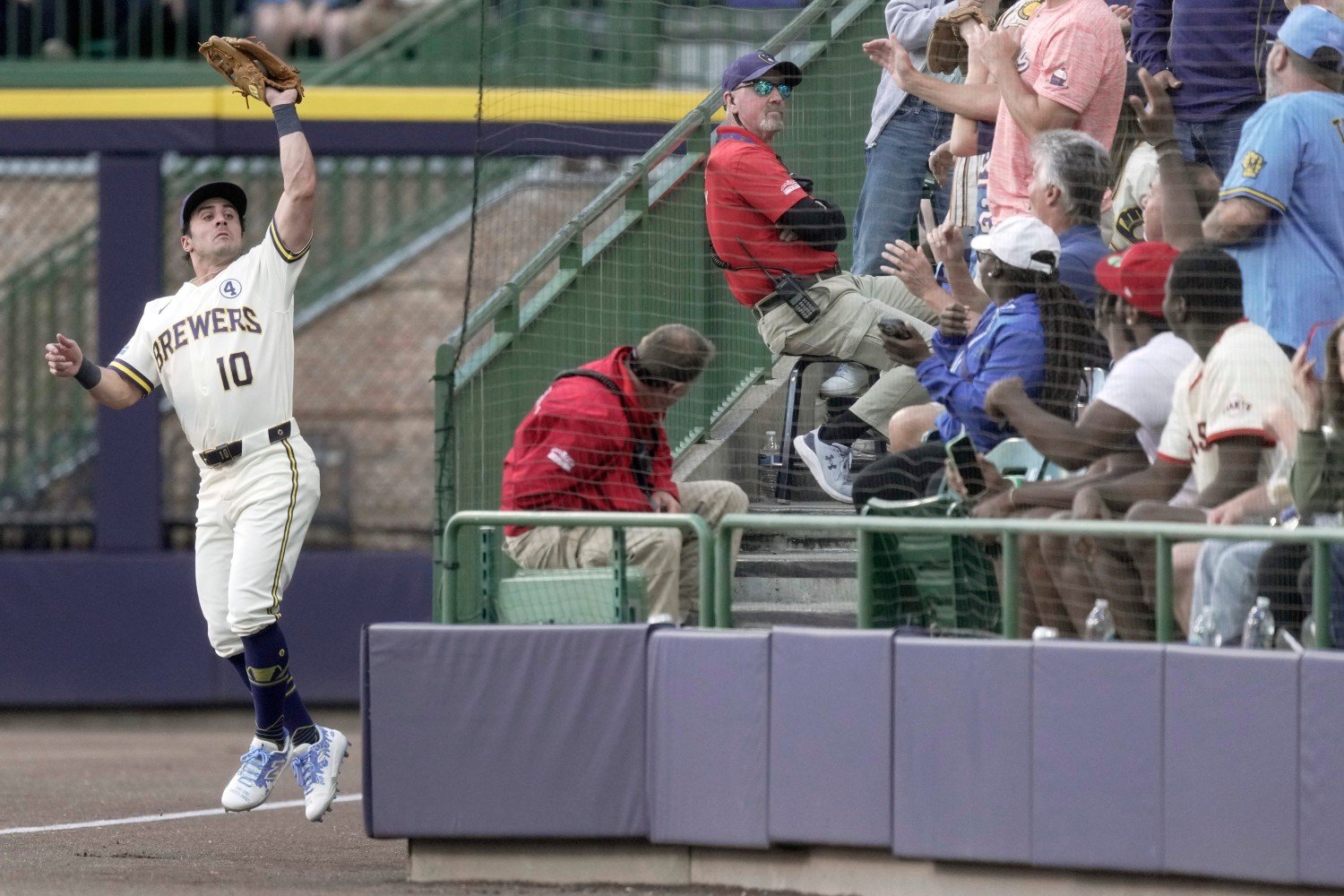 Finding playing time in the majors is all about demonstrating strengths. Teams don't play anyone because of their relative lack of weaknesses. Although it doesn't feel like a game as given to positional distribution of responsibility as football or soccer are, baseball has that same ethos. Not everyone should be the star. Not everyone has to do everything well. But you play when you show a team that you do something well. Are you slow-footed and weak-armed, but a great hitter? They'll find a place for you at first base or designated hitter, batting near the top of the order. A sure-handed and nimble fielder with a paucity of power? You can just bat eighth. You have to take your turns contributing to run creation, but they give you fewer of them. You make most of your contributions by keeping runs off the board for the opponents. There's a phrase for a guy without a carrying tool—without any trait on which to hang their hat: organizational depth. It sounds harsh, but the realities of baseball are just that way. If you find a way to concretely help the team (even if it be something that doesn't feel concrete on the outside, like boosting clubhouse vibes or calming a panicking pitcher), you can stay. If you can't, sooner or later, you get the boot. That boot is swinging back and taking aim at Sal Frelick right now. Yes, the left side of the Brewers infield has been lousy, but David Hamilton's speed and versatility are signature skills. Joey Ortiz's defense gives Pat Murphy a good reason to put his name on the lineup card. Even Luis Rengifo and Blake Perkins, with their blend of high baseball IQ, the capacity to switch-hit, and bursts of defensive brilliance, have roles you can describe to a fellow fan to justify their inclusion on the team, however shakily. At this moment, it's hard to make that case for Frelick. According to Statcast, this is the hardest catch Frelick has made in right field all season. OTdQeVZfWGw0TUFRPT1fQVFRRUIxUldWZ0VBV2xBQ1ZRQUhWd05SQUFNRVZGZ0FDd0FOQndZQkNGZFVBbEZX.mp4 You can probably quibble with that, and point to one or two other near-highlight plays, but undeniably, Frelick has been worse in the field this season. He's not actively hurting the team's run prevention (much) by being out there, but nor is he helping. That's a problem, because as a right fielder, he carries little positional value. To bolster run prevention, he has to show great range and/or great arm utility; he hasn't shown either this year. Worse, he's not doing anything to augment the team's offense. Thankfully, they haven't needed much from him, but Frelick's .223/.297/.310 line remains dreadful. He's making tons of contact, but producing no actual value on it. Of the 230 batters with at least 154 plate appearances this season, only seven have a worse slugging average on contact (SLGCON) than Frelick's .351, according to Baseball Prospectus. His control of the strike zone is good, but not great, and not good enough to put him on base as often as he needs to be in order to use his plus speed. Nor is any of that fluky. Frelick doesn't consistently hit the ball hard or get it in the air. His expected weighted on-base average is back down to .283, where it was in 2024, after ticking up to .299 in 2025. He significantly outperformed that xwOBA last season, too, but isn't doing it this year, thanks to no longer having the knack for the line-drive single to right-center field. Rengifo and Ortiz each have a worse SLGCON than does Frelick. Hamilton doesn't control the zone as well. All of them can do something that clearly makes the Brewers better in one facet, though. Over two months into the 2026 season, Frelick has shown little sign that the same is true of him. His playing time might not face as obvious a threat as the one prospects Jett Williams and Cooper Pratt pose to Ortiz, Hamilton and Rengifo, but Frelick would be the easiest player to justify benching or optioning to the minors right now. Nothing looks right, and he's not positively impacting the team on either side of the ledger.
 -
What Makes Abner Uribe So Dangerous?
Matthew Trueblood replied to Cory Sparks's topic in Brewer Fanatic Front Page News
?? "Uribe isn't and won't be the team's sole closer any time soon. He's sharing that role with Trevor Megill, and indeed, Megill is getting more of the save chances lately. " -
Image courtesy of © Mark Hoffman/Milwaukee Journal Sentinel / USA TODAY NETWORK via Imagn Images Brice Turang had a career night (or something like it) in just six innings Monday night. As the Brewers blew out the Giants, Turang departed early, but before doing so, he had a line-drive double, a long triple, and a pair of walks. If you watched the first six weeks of this season like a hawk and then were extremely busy for about three weeks, it probably felt like business as usual. Quietly, though, Turang went through a prolonged slump to end May. A good approach kept him viable—most hitters go through some slump during the season, and his .623 OPS during his is a lot better than most hitters' nadirs—but he stopped being the engine of the team's elite offense. Here, in a snapshot, is why—and why you could see his return to form coming, even before he snapped out of his funk Monday night. Remember last season, when Turang entered August with a .271/.339/.363 batting line, and then hit .321/.399/.580 the rest of the way? It happened because, at long last, he opened himself up to pulling the ball. The above is his rolling average for attack direction over 100-plate appearance samples. When he stopped being baseball's most extreme opposite-field hitter (not in terms of batted-ball distribution, but in terms of the angle of his barrel at his contact point on each swing), he suddenly became one of its most dangerous hitters. He maintained that terrifying blend of strike zone control, feel for contact and the ability to blast the ball well into this season, too. Then, as you can see via the highlighting above, he had a relapse. Turang got back to being, to put it one way, late. Unlike most players, he whiffs almost as frequently on fastballs as on other pitch types. The league's average contact point on balls in play is about 4 inches deeper in the hitting zone than the intercept point on whiffs, but Turang's intercept point is 2 inches farther in front of him on balls in play. In other words, when he whiffs, it's more often because he was late on the ball, compared to other players. Indeed, when he sagged back into being an extreme opposite-field guy with regard to attack direction, his contact rate fell. It coincides just about perfectly with the decline in his overall production. Ah, but go back to that first chart, and note the direction of the tail at the far right. Over the last week or so, Turang had trended back toward being square to the ball. He went 0-for the week against the Cardinals and Astros, but quietly, he was creeping back into his lost groove. On Monday, he found it again, even though both of his hits were to the opposite field. It's too early to say he's fixed, but the signs of a revival are here. Turang is a guy whose biggest upside comes when he gets forward more than is strictly comfortable; that capacity comes and goes a bit. Right now, though, he looks like he's on time, and another binge like what we saw for the first month-plus of the season could be at hand. View full article