


Matthew Trueblood
-
Posts
1,964 -
Joined
-
Last visited
-
Days Won
10
Content Type
Profiles
Forums
Blogs
Events
News
2026 Milwaukee Brewers Top Prospects Ranking
Milwaukee Brewers Videos
2022 Milwaukee Brewers Draft Picks
Milwaukee Brewers Free Agent & Trade Rumors, Notes, & Tidbits
Guides & Resources
2023 Milwaukee Brewers Draft Picks
2024 Milwaukee Brewers Draft Picks
The Milwaukee Brewers Players Project
2025 Milwaukee Brewers Draft Pick Tracker
2026 Milwaukee Brewers Draft Tracker: Picks & Bonuses
Store
Downloads
Gallery
Everything posted by Matthew Trueblood
-
Image courtesy of © Michael McLoone-Imagn Images Abner Uribe is, in one reading of all this, just that loud person at the party who no longer has any desire to let some quiet tensions simmer. Maybe they actually challenge someone to step outside and take care of things, but more often, they say something they know will stir up what they feel has been allowed to settle and stagnate when it shouldn't. They don't throw fists; they throw down the proverbial gauntlet. A mess ensues, and everyone at the party ends up doing one form of cleanup or another. You just hope the air is actually clearer afterward. In this case, the match that lit the waiting fuse was fairly vulgar, like a drunken but unmistakable accusation of cheating or a carefully chosen, exceptionally rude bit of name-calling. He struck out Alec Burleson Tuesday night, and turned to the Cardinals dugout with relish. As gleefully as untold millions of 11-year-olds have done it over the last few decades, he gyrated his hips and elaborately, repeatedly chopped his crotch, inviting the Cardinals to suck it and (ironically) drawing a sharp intake of breath from just about everyone except the occupants of the visitors' dugout. The tea has spilled pretty freely since. Uribe removed subtext and shattered the fragile privacy of the diamond by doing what he did, so reporters have followed up doggedly ever since. In brief, here's what happened: The Cardinals suspected the Brewers of picking up a tip or a pitch grip from St. Louis starter Matthew Liberatore on Monday afternoon, and relaying the needed information to their batters via the hitting coaches in the dugout. No one has suggested to me, on or off the record, that the Brewers were using illegal sign-stealing, with any kind of technological assistance, but the league has cracked down this year on the practice of base coaches relaying intel to hitters, too. That's why base coaches have to stay in their boxes now, and the spirit of that rule is that non-players shouldn't use their advantageous angles to give information directly to the batter. If the Brewers were doing so, it's not a violation of a written rule, but it won't be taken kindly by opponents. Once that suspicion arose, Cardinals manager Oliver Marmol began staring daggers into the Brewers dugout throughout the game Monday. That, too, is considered gauche, if not outright aggressive. Brewers personnel saw him staring them down in a way they interpreted as both intrusive and threatening, and he gestured to his side and to his head as he yelled across at one juncture. Marmol admitted to this in the fallout after Uribe broke the seal, saying his message was, "Don't do it. Be smart. You're going to get someone hurt." During the Cardinals' batting practice on Tuesday, hitting coach Daniel Vogelbach and Marmol aired their respective grievances with one another. It caused a minor commotion, but no fracas or physicality came of it. Uribe saw some of the above first-hand, and heard some about it from teammates after the game Monday and before the game Tuesday. In his mind, the aggression toward the Cardinals after finishing the top of the eighth inning was a matter of showing them Milwaukee would not be intimidated or denigrated. If all of this sounds a bit petty or childish, it should; that's what it is. Uribe's demonstrations were inappropriate in their intensity and escalatory effect, but apropos in their immaturity. Every team is trying to pick up and relay information, at all times. It should very rarely lead to this kind of sudden surge in tension, and certainly didn't need to do so this time. That said, let's assess some of the claims on both sides. Were the Brewers Doing Something Wrong in the First Place? This is the hardest question to answer, really, because it depends a great deal on whom you ask. For a long time, players and teams felt that any intelligence that could be gleaned with naked eyes on the field or from the dugouts or bullpens was fair game, as long as it was relayed via organic means. The infamous trash can-banging Astros were regarded as doubly criminal, because the way they got their information broke the first part of the unwritten rules, and the way they got that information from the tunnel behind the dugout to the field broke the second part. For most of baseball history, though, what the Cardinals accused the Brewers of doing this week would not have been considered a breach. As discussed above, the league changed an actual rule (or, rather, its enforcement) recently, to try to curb on-field collection and relaying of tips and tells. That's partially because, in the wake of the revelations about the Astros, the league's collective attitude toward intelligence gathering and communication shifted. Ironically, the Cardinals—an organization with a reputation for extreme old-fashionedness—took umbrage with the Brewers because they have a very new-school understanding of what's ok when it comes to picking up information from the other side. Two players, a coach and two front-office employees from other organizations acknowledged that the Brewers have a reputation for drawing a bead on you, often via the acuity of non-players. They get that information to the field, the sources said, via direct conversations between players and coaches both on the field and in the dugout, but also via surreptitious signaling. No one I spoke to said they believe the Brewers are doing anything explicitly against the rules or egregious, but one former Brewer now playing for another team admitted that his new teammates asked him some probing questions about Milwaukee's methods at the beginning of spring training. Crucially, Marmol didn't accuse the Brewers of doing anything truly wrong—and teams are often trying to enforce something other than actual rules when they engage in the kind of behavior Marmol did Monday. That brings us to the next question. Was Marmol Really Threatening to Hit Brewers Batters with Pitches? This one, by contrast, is easy. Yes. Yes, of course he was, and this is one of the silliest layers of unwritten rules and their passive-aggressive enforcement. Marmol explained to reporters exactly what he communicated to the Brewers on Monday, as detailed above. He said that wasn't a threat to hit anyone, but a simple matter of telling them to knock it off. Well, that's stupid, and anyone really listening and unwilling to put up with microaggressions will see why. "Be smart," Marmol told the home side, pointing to his head. "You're going to get someone hurt," he said, pointing to his side. He wasn't implying that Christian Yelich was going to strain an oblique turning to peak at whatever sign Vogelbach might have been sending him. The gesture to the side is a threat to hit a batter if the other team doesn't stop the behavior they're being told to stop. Marmol refused to characterize it that way, but in doing so, he was either insulting the intelligence of the whole baseball world or (more like) asking everyone to play along with him. Moreover, doing so is a bit of old-school intimidation in the service of Marmol's aforementioned new-school ethics about the game and its balance of intelligence and counterintelligence. For the lion's share of baseball history, a threat (veiled or otherwise) to plunk someone for being in violation of the unwritten rules has been considered in-bounds, but that's going the way of the complete game. Teams very rarely throw at anyone on purpose anymore, and the intimation of an intention to do so is no longer considered light fare between friends. So: Was Marmol Wrong, and If So, for What? Ask many baseball people about this aspect of Marmol's tenure with the Cardinals, and you get quick, decisive answers. The Cardinals' skipper is not well-liked inside any other dugout in the league. In most of them, he's one of the most aggressively disliked. Implying that the team would throw at a Brewers batter might not have been over the line for everyone, and Marmol said he's never actually ordered any such action. However, players, coaches and one former opposing manager all confirmed that Marmol is often guilty of staring into the opposing dugout, looking for a reason to get upset or to raise the temperature of the conflict on the field. Even those who guard information dearly and don't want to let a rival get an advantage without feeling some pushback often try not to introduce the distraction of these often subtle but distracting bouts of back-and-forth. Marmol, one ex-Cardinal who spoke only on condition of anonymity because of their new role with another organization, "seems to love that s---," and tries to motivate his team by raising the emotional stakes that way. Few people in modern dugouts take well to the threat gestures Marmol made, but his eyes can be as much of a problem as his hands and mouth. In the opinion of most people outside this particular conflict, Marmol effectively started it, by hunting for something to which to react and (arguably) overreacting when he found it. To return to the metaphor of a late-night house party, Marmol is the guy who actually wants to fight way too often, even if he has the restraint and the cooler-headed friends to prevent that from happening most of the time. Vogelbach might have actually committed a party foul, or Marmol might have only imagined he did, but either way, the party took on an uneasy edge after the two had their say and went back to their sides of the room. Uribe, who emotes freely, loves antagonism just as much as Marmol, and didn't care for the vibe shift on his side of the party after the initial dustup, decided he would put things right by doing a foolish stunt to assert his side's dominance. It didn't work as well as he might have envisioned, in that plenty of people on his own side found his tactics distasteful. It will surely draw a fine from Major League Baseball, as well it should, and the Cardinals will skate without any tangible punishment. But it was just ridiculous enough to take some of that serrations off the whole thing. Wednesday's series finale was a taut game, but not an overly tense one, and the teams both say they've put the matter to bed. As a visual communicator, Uribe is to be commended for his layered (though not nuanced) messaging, as well as his clarity. He asserted dominance. He stood up for his teammates. He also said, without words, "Here's a sign everyone will see, so we can all be clear about what we're being clear about." Of course, he also has to be castigated for a gesture that holds within it some implied homophobia, sexism and wanton malice, as well as being stupid-looking. This was an interesting glimpse into the things often going on beneath the radar for the average fan, but the most important takeaways from it are that the Brewers are clearly in the heads of all their NL Central rivals; that the Cardinals and their skipper were looking for a fight when one wasn't really there to be had; and that Uribe can always be counted on to dispense with subtlety. Going forward, the Crew will hope he focuses on dispensing with batters, instead. View full article
-
Image courtesy of © Jeff Hanisch-Imagn Images When Shohei Ohtani took off for second base Friday night, it was hard to like William Contreras's chances. Ohtani has proved to be a very efficient basestealer, and he's very fast. On the mound, rookie Logan Henderson was focused on executing a good pitch, and wasn't very quick to the plate. Given Ohtani's speed and his jump by the time Contreras caught the ball, Statcast estimated that the Brewers' catcher had just an 18% chance to gun down the reigning two-time National League MVP. Then he did it. MTZOYlZfWGw0TUFRPT1fQndJSFhRRUZYd0lBQzFFRVZ3QUhBVk5mQUZnTlZWSUFCZ05VVlFaWEJnZGNCVlJW.mp4 Contreras's throw was slightly high, but Ohtani saw the reach of Joey Ortiz's glove and pulled his own hand down to protect it from the ball, slowing him down a bit as he slid into second. Ortiz had time to snatch the throw and sweep the tag downward, and although Ohtani was initially called safe, that call would be overturned on review. This has become a common sight this season: a runner goes, and they seem to have a good jump and an easy steal before them. Contreras flips the script. For a player who's always been known as a dynamic athlete for a catcher, this aspect of his game took a long time to develop. It's in full bloom now, though. In fact, it's the best in baseball. When Contreras first came to Milwaukee, he had a strong arm, but no good ideas about how to use it. His footwork was too slow. Relatively quickly, under the guidance of the Brewers' vaunted corps of catching instructors, he improved in that regard, but two years ago, his accuracy consistently did him in. He was getting rid of the ball pretty fast, but not putting his throws where they needed to be. That, too, has now been fixed. NnlNcWRfWGw0TUFRPT1fQTFRREFRVlhBZ29BWFFNREJ3QUhBUU1EQUFBTUFGUUFDMUFGQWxVSEJRQUFVMUFG.mp4 As manager Pat Murphy loves to remind folks, this is the very model of a modern throw to second base. The way it requires Ortiz to move as he receives it almost makes the ball look off-target, but in reality, this is where every team wants their catchers throwing on steal attempts. The infielder should set up right above the bag, to give the catcher a good target, but the throw should take them to the first-base side of second. That optimizes the chances of a tag before the runner slides into the base. Contreras has gotten very good at that. In fact, though, he's simply gotten good at everything involved in the throws to nail runners from behind home. His exchange from glove to hand is much smoother than in the past; he doesn't pause or hitch to reorient the seams as he gets into a throwing position. Two years ago, I wrote about Contreras needing the pitch to come to the first-base side of the plate in order to get set well and make a strong throw; it was part of his broader accuracy issues. By last season, he had fixed that problem, and now he thrives on throws from that side of the plate. This year, the improvement has come from slightly better awareness—he always seems ready, and isn't geting caught unprepared or poorly positioned on any steal attempts—and from that quicker exchange. It helps that his hands work better than they did a year ago. Here's a side-by-side look at one play from 2025 and one from this month, right as Contreras's front foot (the left) touches the dirt for the first time as he sets to throw. Look how much more in position to fire he is this year. However, he's also doing something important with his lower half. Here are two fastballs up, on which the runner tried to steal. This is the last frame before Contreras caught each pitch. He's geting up out of his crouch well as he receives the ball, whenever he's able. He was doing that last year, too, though. In fact, though this wasn't one of those times, last year, Contreras often used what catchers call the "cheat stance," whereby he would pop up from one knee down to a standard crouch as the pitcher began his delivery, getting into throwing motion before the ball even got on its way to him. The key difference in the images above is that, this year, Contreras is turning his body better. As he comes out of his kneeling stance, he's not squaring up to the ball, which he often did last year and which forced him to turn his shoulders more as he made the transfer from glove to hand. Now, by changing the set of his hips and the angle at which he pushes upward with his legs, he's getting his chest facing toward first base earlier, setting him up for an easier transfer and throw. WERaME5fWGw0TUFRPT1fQkFVQUJsRUVBMVFBRHdGWEF3QUhWRkJRQUZrRFVWVUFCd1lCQVF0VVZBRlZWZ2RT.mp4 Officially, runners are 12-for-26 stealing bases against Contreras, according to Baseball Reference. That gives him credit for a few times caught stealing that were actually pickoffs by the pitchers and infielders, but it also gives runners credit for a couple of steals that were utterly indefensible from Contreras's perspective. When he's had any kind of chance at all, he's been phenomenal. According to Baseball Savant, he's already been worth 4 Catcher Stealing Runs this year. If he keeps up at this pace, he'll become the new record holder in that stat—though, admittedly, it's only been tracked since 2016. No catcher with at least 10 attempts against them has ever dealt with faster average runners in a season than Contreras has had to deal with so far, at 29.2 feet per second. Runners are getting better jumps against Brewers pitchers this year than at any time in Contreras's tenure with the team. None of it matters. He's become the best possible form of himself as a thrower and running-game stopper, and arguably the best catcher in the sport at that skill. For the Brewers, it's just one more developmental win involving a player whom they've systematically unlocked over almost half a decade, now. View full article
-
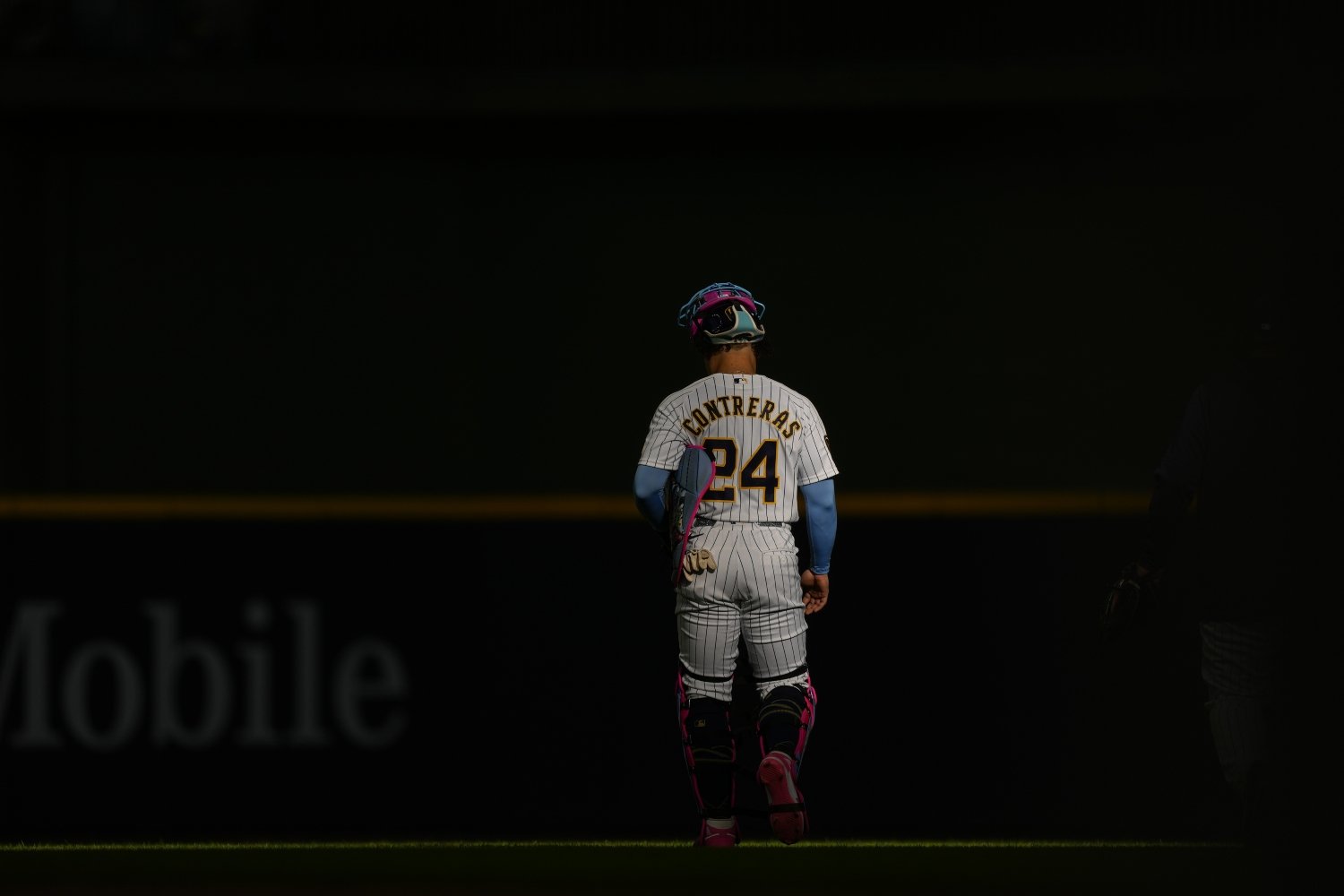 When Shohei Ohtani took off for second base Friday night, it was hard to like William Contreras's chances. Ohtani has proved to be a very efficient basestealer, and he's very fast. On the mound, rookie Logan Henderson was focused on executing a good pitch, and wasn't very quick to the plate. Given Ohtani's speed and his jump by the time Contreras caught the ball, Statcast estimated that the Brewers' catcher had just an 18% chance to gun down the reigning two-time National League MVP. Then he did it. MTZOYlZfWGw0TUFRPT1fQndJSFhRRUZYd0lBQzFFRVZ3QUhBVk5mQUZnTlZWSUFCZ05VVlFaWEJnZGNCVlJW.mp4 Contreras's throw was slightly high, but Ohtani saw the reach of Joey Ortiz's glove and pulled his own hand down to protect it from the ball, slowing him down a bit as he slid into second. Ortiz had time to snatch the throw and sweep the tag downward, and although Ohtani was initially called safe, that call would be overturned on review. This has become a common sight this season: a runner goes, and they seem to have a good jump and an easy steal before them. Contreras flips the script. For a player who's always been known as a dynamic athlete for a catcher, this aspect of his game took a long time to develop. It's in full bloom now, though. In fact, it's the best in baseball. When Contreras first came to Milwaukee, he had a strong arm, but no good ideas about how to use it. His footwork was too slow. Relatively quickly, under the guidance of the Brewers' vaunted corps of catching instructors, he improved in that regard, but two years ago, his accuracy consistently did him in. He was getting rid of the ball pretty fast, but not putting his throws where they needed to be. That, too, has now been fixed. NnlNcWRfWGw0TUFRPT1fQTFRREFRVlhBZ29BWFFNREJ3QUhBUU1EQUFBTUFGUUFDMUFGQWxVSEJRQUFVMUFG.mp4 As manager Pat Murphy loves to remind folks, this is the very model of a modern throw to second base. The way it requires Ortiz to move as he receives it almost makes the ball look off-target, but in reality, this is where every team wants their catchers throwing on steal attempts. The infielder should set up right above the bag, to give the catcher a good target, but the throw should take them to the first-base side of second. That optimizes the chances of a tag before the runner slides into the base. Contreras has gotten very good at that. In fact, though, he's simply gotten good at everything involved in the throws to nail runners from behind home. His exchange from glove to hand is much smoother than in the past; he doesn't pause or hitch to reorient the seams as he gets into a throwing position. Two years ago, I wrote about Contreras needing the pitch to come to the first-base side of the plate in order to get set well and make a strong throw; it was part of his broader accuracy issues. By last season, he had fixed that problem, and now he thrives on throws from that side of the plate. This year, the improvement has come from slightly better awareness—he always seems ready, and isn't geting caught unprepared or poorly positioned on any steal attempts—and from that quicker exchange. It helps that his hands work better than they did a year ago. Here's a side-by-side look at one play from 2025 and one from this month, right as Contreras's front foot (the left) touches the dirt for the first time as he sets to throw. Look how much more in position to fire he is this year. However, he's also doing something important with his lower half. Here are two fastballs up, on which the runner tried to steal. This is the last frame before Contreras caught each pitch. He's geting up out of his crouch well as he receives the ball, whenever he's able. He was doing that last year, too, though. In fact, though this wasn't one of those times, last year, Contreras often used what catchers call the "cheat stance," whereby he would pop up from one knee down to a standard crouch as the pitcher began his delivery, getting into throwing motion before the ball even got on its way to him. The key difference in the images above is that, this year, Contreras is turning his body better. As he comes out of his kneeling stance, he's not squaring up to the ball, which he often did last year and which forced him to turn his shoulders more as he made the transfer from glove to hand. Now, by changing the set of his hips and the angle at which he pushes upward with his legs, he's getting his chest facing toward first base earlier, setting him up for an easier transfer and throw. WERaME5fWGw0TUFRPT1fQkFVQUJsRUVBMVFBRHdGWEF3QUhWRkJRQUZrRFVWVUFCd1lCQVF0VVZBRlZWZ2RT.mp4 Officially, runners are 12-for-26 stealing bases against Contreras, according to Baseball Reference. That gives him credit for a few times caught stealing that were actually pickoffs by the pitchers and infielders, but it also gives runners credit for a couple of steals that were utterly indefensible from Contreras's perspective. When he's had any kind of chance at all, he's been phenomenal. According to Baseball Savant, he's already been worth 4 Catcher Stealing Runs this year. If he keeps up at this pace, he'll become the new record holder in that stat—though, admittedly, it's only been tracked since 2016. No catcher with at least 10 attempts against them has ever dealt with faster average runners in a season than Contreras has had to deal with so far, at 29.2 feet per second. Runners are getting better jumps against Brewers pitchers this year than at any time in Contreras's tenure with the team. None of it matters. He's become the best possible form of himself as a thrower and running-game stopper, and arguably the best catcher in the sport at that skill. For the Brewers, it's just one more developmental win involving a player whom they've systematically unlocked over almost half a decade, now.
 -
Great work. Close enough to right, at the very least. What a beast this guy is, if it's now essentially two different breaking balls and two different heaters.
-
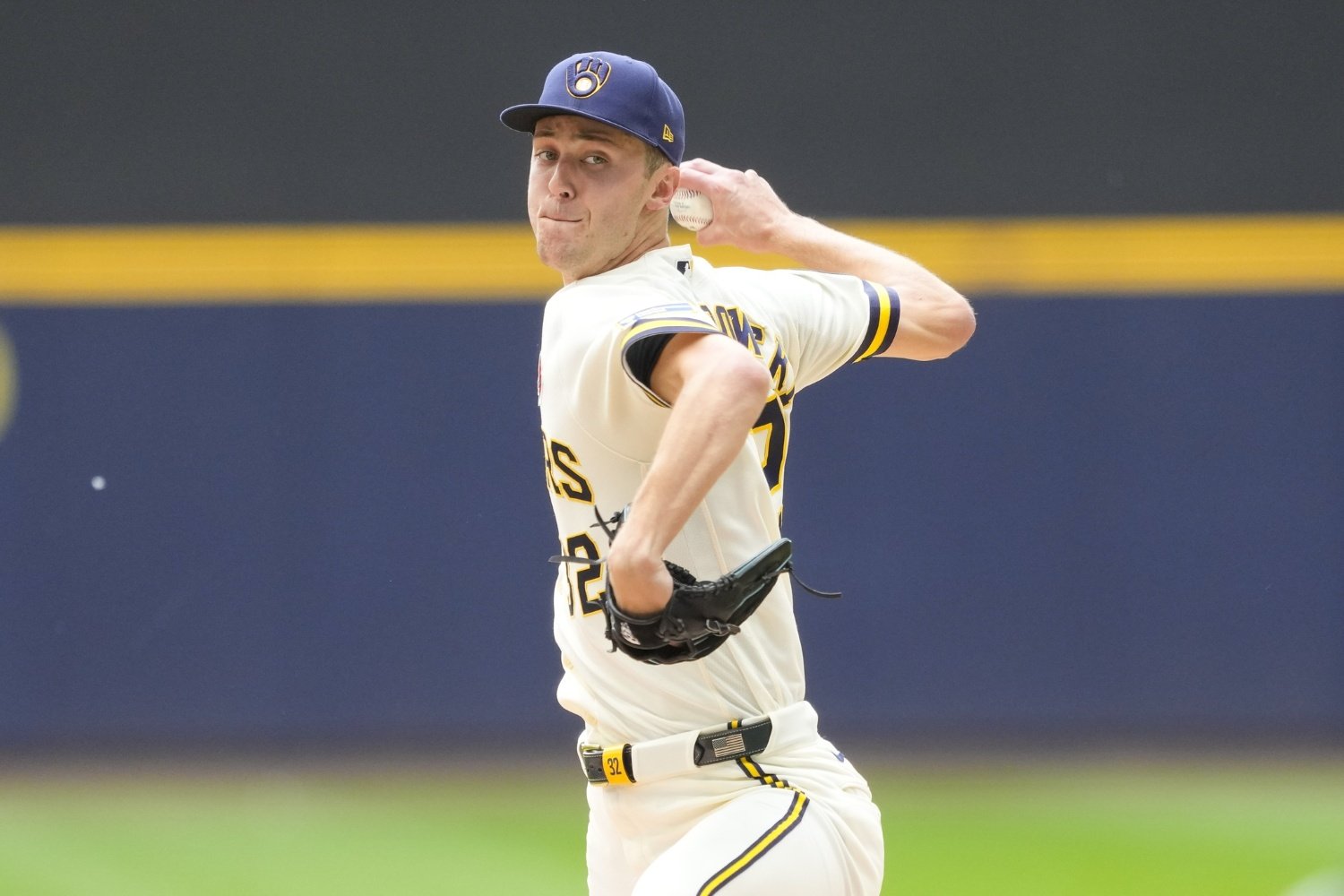 It was hard not to give all one's attention to Jacob Misiorowski's fastball on Monday. There's never been such an overpowering arm; he's bullying hitters with an utterly unprecedented heater. He threw 59 pitches with a perceived velocity (the raw velocity, plus an adjustment for his elite extension, releasing the ball about 12% of the way from the pitcher's mound to home plate) of 102 miles per hour or more in the game, sliding him into third place all-time in such pitches. He's only one behind Jordan Hicks for second—all this in less than a year in the majors. Amid his 7 dazzling innings of two-hit, one-run, 12-strikeout ball, though, Misiorowski did something else worth noting on Monday: he mixed in a true slider. His breaking stuff stretched across an unusually continuous spectrum of speed and movement, becoming impossible to contend with for Cardinals batters just trying to cope with 103 miles per hour. Over the winter, our Jack Stern wrote about the fact that Misiorowski's pitch often labeled a slider is really a cutter. It's often come in at more than 95 MPH, and it hasn't had the depth of movement—in particular, the separation of movement from the fastball—of a true slider. In several key respects, the pitch is much more like a cutter than a slider. That was true last year, and it's remained true for most of this season. Here's what his movement plot for his antepenultimate start against the Padres looked like. There's actually more separation in movement between the fastball and the so-called slider than between the slider and the curveball, in this image, which invites you to think of the in-between pitch as a slider. In truth, though, that's only because his curveball is such a tight, power pitch. Most of those mustard-yellow pitches in the center of the plot are pretty clearly cutters, especially when you factor in the mid-90s velocity. However, the distribution there did preview something, as we'll soon see. Here's the same plot for his start against the Cubs last week. As you can see, the distribution of that "slider" is much smaller; it was unequivocally a hard cutter that night at Wrigley Field. Now, though, compare each of the above images to this one, showing the movement of his stuff on Monday at Uecker Field. At a certain point, Statcast's spirit breaks, and it gives up a little bit. Is a pitch that comes in at almost exactly 90 miles per hour, but with more depth than any slider you've seen lately, really a curveball? It's hard to say. The computers aren't designed to deal with anything quite this freakish. It tagged a couple of pitches that might have been extremely high-powered curves as sliders; it tagged a couple of could-be sliders as turbo curves. Either way, though, look at how wide and uniform the distribution of his breaking balls' movement was. Indeed, there's a blend from curveball to slider, but none of what you'd readily call a cutter, as there was even one start ago. Pitch-tagging trouble could be introducing distortions, but it sure looks like Misiorowski threw the slowest average sliders of his season Monday—rivaled only by that game against the Padres earlier this month. When two pitches' velocity is up and one is down in a given outing, it signals some kind of intentional change. So does the fact that Misiorowski's slider had a higher spin rate than usual on Monday, despite the lower velocity. (Those two numbers are usually strongly correlated, and his curveball's average spin rate is lower than his slider's, so the higher spin rate on the slider suggests that few or none of them were mistagged curves.) Misiorowski has also never had so much vertical depth on his slider: Or so much glove-side movement: There really seems to be a new pitch in the mix, here. It's likely that Misiorowski is still throwing that hard cutter some of the time, but he now seems to have a feel for a slider that fits between the cutter and his curveball in terms of both movement and velocity. That's just unfair, but it's true. This new pitch didn't actually miss any bats for Misiorowski on Monday. However, he got multiple weak swings and feeble pieces of contact on it, leading to easy outs and upping his already impressive efficiency. If this turns out to be a durable new dimension to his game, watch out. Already, in his last six starts, he's allowed zero extra-base hits. If this change locks in for him, a no-hitter is right around the corner.
 -
Image courtesy of © Jeff Hanisch-Imagn Images It was hard not to give all one's attention to Jacob Misiorowski's fastball on Monday. There's never been such an overpowering arm; he's bullying hitters with an utterly unprecedented heater. He threw 59 pitches with a perceived velocity (the raw velocity, plus an adjustment for his elite extension, releasing the ball about 12% of the way from the pitcher's mound to home plate) of 102 miles per hour or more in the game, sliding him into third place all-time in such pitches. He's only one behind Jordan Hicks for second—all this in less than a year in the majors. Amid his 7 dazzling innings of two-hit, one-run, 12-strikeout ball, though, Misiorowski did something else worth noting on Monday: he mixed in a true slider. His breaking stuff stretched across an unusually continuous spectrum of speed and movement, becoming impossible to contend with for Cardinals batters just trying to cope with 103 miles per hour. Over the winter, our Jack Stern wrote about the fact that Misiorowski's pitch often labeled a slider is really a cutter. It's often come in at more than 95 MPH, and it hasn't had the depth of movement—in particular, the separation of movement from the fastball—of a true slider. In several key respects, the pitch is much more like a cutter than a slider. That was true last year, and it's remained true for most of this season. Here's what his movement plot for his antepenultimate start against the Padres looked like. There's actually more separation in movement between the fastball and the so-called slider than between the slider and the curveball, in this image, which invites you to think of the in-between pitch as a slider. In truth, though, that's only because his curveball is such a tight, power pitch. Most of those mustard-yellow pitches in the center of the plot are pretty clearly cutters, especially when you factor in the mid-90s velocity. However, the distribution there did preview something, as we'll soon see. Here's the same plot for his start against the Cubs last week. As you can see, the distribution of that "slider" is much smaller; it was unequivocally a hard cutter that night at Wrigley Field. Now, though, compare each of the above images to this one, showing the movement of his stuff on Monday at Uecker Field. At a certain point, Statcast's spirit breaks, and it gives up a little bit. Is a pitch that comes in at almost exactly 90 miles per hour, but with more depth than any slider you've seen lately, really a curveball? It's hard to say. The computers aren't designed to deal with anything quite this freakish. It tagged a couple of pitches that might have been extremely high-powered curves as sliders; it tagged a couple of could-be sliders as turbo curves. Either way, though, look at how wide and uniform the distribution of his breaking balls' movement was. Indeed, there's a blend from curveball to slider, but none of what you'd readily call a cutter, as there was even one start ago. Pitch-tagging trouble could be introducing distortions, but it sure looks like Misiorowski threw the slowest average sliders of his season Monday—rivaled only by that game against the Padres earlier this month. When two pitches' velocity is up and one is down in a given outing, it signals some kind of intentional change. So does the fact that Misiorowski's slider had a higher spin rate than usual on Monday, despite the lower velocity. (Those two numbers are usually strongly correlated, and his curveball's average spin rate is lower than his slider's, so the higher spin rate on the slider suggests that few or none of them were mistagged curves.) Misiorowski has also never had so much vertical depth on his slider: Or so much glove-side movement: There really seems to be a new pitch in the mix, here. It's likely that Misiorowski is still throwing that hard cutter some of the time, but he now seems to have a feel for a slider that fits between the cutter and his curveball in terms of both movement and velocity. That's just unfair, but it's true. This new pitch didn't actually miss any bats for Misiorowski on Monday. However, he got multiple weak swings and feeble pieces of contact on it, leading to easy outs and upping his already impressive efficiency. If this turns out to be a durable new dimension to his game, watch out. Already, in his last six starts, he's allowed zero extra-base hits. If this change locks in for him, a no-hitter is right around the corner. View full article
-
Image courtesy of © Mark Hoffman/Milwaukee Journal Sentinel / USA TODAY NETWORK via Imagn Images There are lots of ways to get on base, and at his best, Sal Frelick is adept at all of them. He'll take a walk—and, indeed, is walking more this year than in either of his previous two full seasons. He's not exceptional at getting hit by pitches, but nor is he afraid to do so. When he swings, he's one of the better players in the league at the sneaky art of thwacking the catcher's mitt and reaching via catcher interference (four times already this year, after four last year). He's also an excellent singles hitter. He hits the ball in quirky, unpredictable ways, often going the other way or chopping a slow bouncer that earns him an infield single. He's also reached on (non-catcher interference) errors twice this year. Frelick boasted a .351 OBP in 2025, and given the uptick in walk rate this year, one could plausibly have hoped he would bloom into the team's reliable leadoff man against right-handed pitchers. Instead, though, he's batting .217/.287/.298 in his first 185 plate appearances of the year, and there's a cogent case to be made that he shouldn't be in the lineup as often, regardless of his placement on the card. Garrett Mitchell is outplaying him. Jake Bauers's return to (limited) outfield duty threatens his playing time. What happened to the version of Frelick that seemed so dynamic and dangerous? It's not much of a mystery. Here's where all of his batted balls in the Statcast launch angle sweet spot (between 8° and 32°) landed in 2025. Here's the same chart—the same selection of batted balls—for 2026. I could do some light editing to show you the crucial difference between those two images, but it's unnecessary. You see it, right? In shallow and medium-depth right-center field, where there was a huge swamp of orange singles in 2025, there's just... nothing. Frelick simply isn't hitting the ball that made him great last year: the line drive to right-center. It's incredibly stark, how he went from hitting that surefire single at least once a week to not doing it at all. Here's a hit that never had any chance not to be one, from last March. Uk80MlhfWGw0TUFRPT1fQWxkV0FsTlJWUWNBV2xzRkFBQUhVMU5VQUFCV0JRVUFCQVFOQXdWUVVBTUFDVlFF.mp4 Here's one from September. QXdhQXZfWGw0TUFRPT1fQmxkVFhWMEVVRk1BWGxzS0JBQUhCQUJXQUZrTVVsRUFVRlVNVmxkVEF3QlVBZ3BT.mp4 All year, like clockwork, against both lefties and righties, Frelick hit clean singles over the second baseman's head. He had 50 batted balls to right or center with an exit velocity of at least 70 miles an hour and a launch angle between 8° and 17° last year. Those criteria sound incredibly specific, but he did that 50 times. Only a fisftul of players were more adept at hitting pulled line drives like that—Nico Hoerner, José Ramírez, Ernie Clement, those types. Hitting that type of batted ball consistently is one of the surest signs of a superbly organized approach at the plate. Of the 50 balls he hit that way, 42 went for hits. This season, Frelick has only nine such batted balls. He's on pace to see the number of those easy-money singles and doubles be cut roughly in half, which explains almost all his lost production this year. It's not because defenses have started aligning themselves in radical and impenetrable ways. It's not because pitchers have started working him especially differently. Rather, Frelick just isn't getting the bat head out far enough to hit the ball that way anymore. Frelick's swing is about as fast as it was in 2025, but it's a bit flatter. More problematically, he's letting the ball travel more—arguably, too much. Last season, his average contact point was 27.8 inches in front of his center of mass, according to Statcast. As you would guess, when you isolate those well-hit balls to the middle of the diamond and the pull field, that point edges forward, to 28.2 inches. This year, though, his contact point is just 24.6 inches in front of him. You can't hit the ball with authority to the pull field with any consistency at that depth in the hitting zone—at least, not with Frelick's swing. Guys who swing steeper and/or faster might be able to, but Frelick needs to get the bat head out and be slightly around the ball to generate that high-quality contact. Because he's letting the ball get deeper this year, he's not getting the barrel to that point where success awaits. He's hitting more ground balls, and he is pulling those. Much of his hard contact is coming when he gets out in front on the ball—but often, that means that he's rolled over already. Here's where his batted balls at 90+ miles per hour went last season: Here's the same image for 2026: Frelick's average exit velocity on balls in the launch angle sweet spot is down from 89.8 MPH last year to 88.9. His average launch angle on balls hit at least 90 MPH is down from 9° to 5°. Both of those numbers are indicators that correlate strongly with overall offensive value, and especially value on contact. That Frelick is hitting it less hard when he finds the right line and less high when he hits it hard speaks to the problems at hand, and the contact point tells us where the problem lies. Somehow, he has to modify his process to get back to catching the ball squarely in that pulled line-drive zone. It might mean a change to his mechanics, to restore some of the tilt his swing has lost this spring. It's more likely that the problem comes down to timing, and to being farther forward in the hitting zone when he rolls his wrists. Either way, though, the Brewers need him to rediscover that magic. The trademark length that made their lineup so daunting last year is absent right now, with the bottom third of the batting order containing three near-automatic outs. Replacing Frelick is an option, but not an appealing one. The team would strongly prefer that he get right. To do that, he has to catch the ball out front a bit more often, to once again become impossible to defend—instead of pretty darn easy. View full article
-
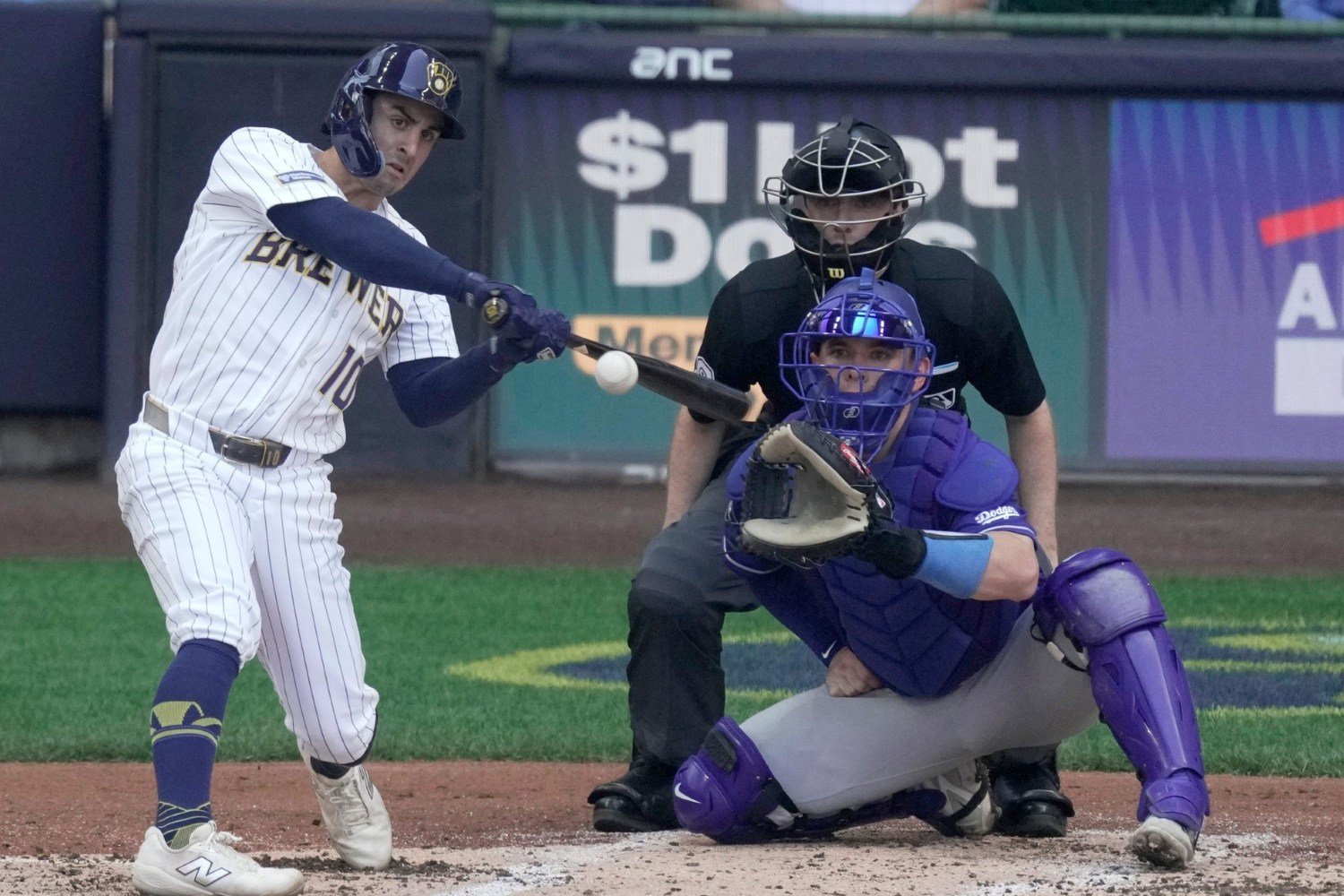 There are lots of ways to get on base, and at his best, Sal Frelick is adept at all of them. He'll take a walk—and, indeed, is walking more this year than in either of his previous two full seasons. He's not exceptional at getting hit by pitches, but nor is he afraid to do so. When he swings, he's one of the better players in the league at the sneaky art of thwacking the catcher's mitt and reaching via catcher interference (four times already this year, after four last year). He's also an excellent singles hitter. He hits the ball in quirky, unpredictable ways, often going the other way or chopping a slow bouncer that earns him an infield single. He's also reached on (non-catcher interference) errors twice this year. Frelick boasted a .351 OBP in 2025, and given the uptick in walk rate this year, one could plausibly have hoped he would bloom into the team's reliable leadoff man against right-handed pitchers. Instead, though, he's batting .217/.287/.298 in his first 185 plate appearances of the year, and there's a cogent case to be made that he shouldn't be in the lineup as often, regardless of his placement on the card. Garrett Mitchell is outplaying him. Jake Bauers's return to (limited) outfield duty threatens his playing time. What happened to the version of Frelick that seemed so dynamic and dangerous? It's not much of a mystery. Here's where all of his batted balls in the Statcast launch angle sweet spot (between 8° and 32°) landed in 2025. Here's the same chart—the same selection of batted balls—for 2026. I could do some light editing to show you the crucial difference between those two images, but it's unnecessary. You see it, right? In shallow and medium-depth right-center field, where there was a huge swamp of orange singles in 2025, there's just... nothing. Frelick simply isn't hitting the ball that made him great last year: the line drive to right-center. It's incredibly stark, how he went from hitting that surefire single at least once a week to not doing it at all. Here's a hit that never had any chance not to be one, from last March. Uk80MlhfWGw0TUFRPT1fQWxkV0FsTlJWUWNBV2xzRkFBQUhVMU5VQUFCV0JRVUFCQVFOQXdWUVVBTUFDVlFF.mp4 Here's one from September. QXdhQXZfWGw0TUFRPT1fQmxkVFhWMEVVRk1BWGxzS0JBQUhCQUJXQUZrTVVsRUFVRlVNVmxkVEF3QlVBZ3BT.mp4 All year, like clockwork, against both lefties and righties, Frelick hit clean singles over the second baseman's head. He had 50 batted balls to right or center with an exit velocity of at least 70 miles an hour and a launch angle between 8° and 17° last year. Those criteria sound incredibly specific, but he did that 50 times. Only a fisftul of players were more adept at hitting pulled line drives like that—Nico Hoerner, José Ramírez, Ernie Clement, those types. Hitting that type of batted ball consistently is one of the surest signs of a superbly organized approach at the plate. Of the 50 balls he hit that way, 42 went for hits. This season, Frelick has only nine such batted balls. He's on pace to see the number of those easy-money singles and doubles be cut roughly in half, which explains almost all his lost production this year. It's not because defenses have started aligning themselves in radical and impenetrable ways. It's not because pitchers have started working him especially differently. Rather, Frelick just isn't getting the bat head out far enough to hit the ball that way anymore. Frelick's swing is about as fast as it was in 2025, but it's a bit flatter. More problematically, he's letting the ball travel more—arguably, too much. Last season, his average contact point was 27.8 inches in front of his center of mass, according to Statcast. As you would guess, when you isolate those well-hit balls to the middle of the diamond and the pull field, that point edges forward, to 28.2 inches. This year, though, his contact point is just 24.6 inches in front of him. You can't hit the ball with authority to the pull field with any consistency at that depth in the hitting zone—at least, not with Frelick's swing. Guys who swing steeper and/or faster might be able to, but Frelick needs to get the bat head out and be slightly around the ball to generate that high-quality contact. Because he's letting the ball get deeper this year, he's not getting the barrel to that point where success awaits. He's hitting more ground balls, and he is pulling those. Much of his hard contact is coming when he gets out in front on the ball—but often, that means that he's rolled over already. Here's where his batted balls at 90+ miles per hour went last season: Here's the same image for 2026: Frelick's average exit velocity on balls in the launch angle sweet spot is down from 89.8 MPH last year to 88.9. His average launch angle on balls hit at least 90 MPH is down from 9° to 5°. Both of those numbers are indicators that correlate strongly with overall offensive value, and especially value on contact. That Frelick is hitting it less hard when he finds the right line and less high when he hits it hard speaks to the problems at hand, and the contact point tells us where the problem lies. Somehow, he has to modify his process to get back to catching the ball squarely in that pulled line-drive zone. It might mean a change to his mechanics, to restore some of the tilt his swing has lost this spring. It's more likely that the problem comes down to timing, and to being farther forward in the hitting zone when he rolls his wrists. Either way, though, the Brewers need him to rediscover that magic. The trademark length that made their lineup so daunting last year is absent right now, with the bottom third of the batting order containing three near-automatic outs. Replacing Frelick is an option, but not an appealing one. The team would strongly prefer that he get right. To do that, he has to catch the ball out front a bit more often, to once again become impossible to defend—instead of pretty darn easy.
 -
Image courtesy of © David Banks-Imagn Images William Contreras played a portion of 2024 and all of 2025 with a fracture in his left middle finger, causing discomfort that affected his game. We know that. He underwent surgery in November to address it, because he and the Brewers felt that the injury had lingered and prevented him from being his best self for the majority of 2025. Because he had that operation, though, the hope was that this year would mark a return to the peak of Contreras's powers—literally. In his first two seasons with the Brewers, Contreras batted .285/.366/.462. In 1,290 plate appearances, he clubbed 75 doubles, 3 triples and 40 home runs. That was an elite offensive profile for a catcher, of course, but more importantly, it made Contreras a productive part of the middle of the Brewers lineup. They could win with pitching, defense and speed, because they had a very good hitter who could generate enough power to cash in the chances other players created, while playing a premium defensive spot. Last year, Contreras was gutting it out. His bat speed was down early in the season, but he rediscovered it by midsummer. Still, his swing wasn't quite the same. He used a well-structured approach to maintain his on-base skills, but the power went missing. For the year, he batted .260/.355/.399, with 28 doubles and 17 home runs in 659 trips to the plate. That's still solid work for a catcher; it's still solid work for anyone. The league averaged an OBP of .319 and a slugging average of .404, and OBP is more important than slugging, so a .355 OBP with roughly average power is hugely valuable, particularly for a player with major defensive responsibilities. Still, the hope was that the power (and perhaps the batting average, by dint of more exit velocity even on non-fly balls) would rebound in 2026, to somewhere near .450. Giving him a reset on that finger injury and then a full offseason to recover and prepare should have positioned him to do that. Instead, this year, the batting average is back—but the power isn't. Contreras is hitting .294/.366/.389 in 202 plate appearances. He has only 11 extra-base hits, and eight of those are doubles. What gives? It's not a problem of batted-ball profile, in the usual sense. He's pulling the ball more than in the past. He's lifting the ball more than he has in the past—and especially, he's hitting fewer ground balls. He's hitting it a little bit less hard, but that should be made up for by more lift and more pull. In fact, in fairness, his expected slugging this year is .430, up from .393 in 2025. But that's almost entirely because his expected batting average is up from .248 to .281; his isolated power hasn't surged along with the rise in average. Instead, Contreras's expected average is up almost entirely because he's making way, way more contact. He's swinging almost exactly as often as he did last year, but he's whiffing on just 18.3% of those swings, down from 24.2% last year and more like 28% in 2023 and 2024. Thus, his strikeout rate is down to an extraordinary 11.2%, so he's going to get more hits. That's happened, but the power hasn't come along for the ride, even though the expected stats say it should have at least halfway done so. Here's why. Since 2024, Contreras has gotten increasingly closed in his setup at the plate. His stance has angled itself more and more toward first base, closing his front shoulder to the pitcher. As we've discussed in the past, that doesn't necessarily set his direction to the baseball. He opens up toward the pitcher more with his stride than most batters. In the past, that allowed him to turn on the ball unexpectedly and generate a ton of power to left field. Here's an example, from 2024. elpZVjBfWGw0TUFRPT1fRGdVRUFGWUZBZ2NBRFZwVVVRQUFVd0pRQUZoUVV3Y0FBRklOQmxKUVZWVmRCMVlD.mp4 Crazy though it might sound, the slight closure of his stance has made that tougher, even though his stride still opens him up relatively well. That's because he's also made another change, perhaps a bit less consciously. His stride is longer than it was last year, by about two inches. That sounds tiny, but for one thing, all the margins that differentiate bad from good and good from great in hitting are tiny; and for another, the magnitude of this change's impact on Contreras's game is boosted by the change in his stance and the directionality of his swing. Here's what it looks like this season. WU9WRDlfWGw0TUFRPT1fVXdjQ0JWTUVBQVFBRGdBQ0FBQUhWUUFFQUFCUUFGa0FVVlFEQkFZTUJRVUVBQXND.mp4 With that initial set of his body to a slightly more closed angle and a slightly longer stride, Contreras ends up a bit less able to get his front hip open and maximize the torque of his torso. He also ends up having to go out a bit farther, around his frame and in front of himself. To wit, Contreras's contact point has moved a bit farther out in front of him this year—another thing we would typically expect to result in more power, not less—but he's also flatter to the ball. His swing has less tilt and is working less uphill when he catches the ball, because of the way his body moves in this new combination of stance orientation and stride length. Here are two telling moments in his swing, from each of the last three years. On the left, from top to bottom, we see what it looks like when Contreras's front foot comes down and he begins his swing, for 2024, 2025 and 2026. On the right, we see the moment when his barrel stops working down into the hitting zone and starts to work upward, through the ball. First, let's talk about his first moves. Last year, cheating a little bit to make up for diminished bat speed, he got his hands a bit farther from his body and a bit lower, with his bat a bit flatter. This season, he's basically back to the set point he used in 2024—but note the angles of his lower half. He's locked a bit more into that position than in the past. Now, look at the images on the right. The differences are a bit more pronounced. For one thing, his weight hasn't shifted forward as much as it had in the past. That gives him more adjustability, which might explain his better contact rate, but it means slightly less energy crashing forward into the ball. The longer stride doesn't let him rotate as well, because it puts him deeper in his legs. Meanwhile, his front shoulder is more closed, and his hands are working differently. He's not hitting underneath his front side. His bat is coming around more than in the last two seasons; his top hand is already getting around and in front of his frame. All of these are small changes, but they add up to a swing with a lower launch-angle sweet spot than his old one and a greater likelihood of his best contact being toward center field. It's possible Contreras is doing it all on purpose, in the name of getting on base as often as possible by putting it in play at the best possible rate. Ideally, though, he'd reorient himself just enough to get back the version of his swing that maximizes his power potential. A small tweak to his setup and stride should have him slugging at somewhere close to his old rate. It's just a matter of time before he finds the right way to make that adjustment. View full article
-
William Contreras's Power Isn't Back. Where Has It Gone?
Matthew Trueblood posted an article in Brewers
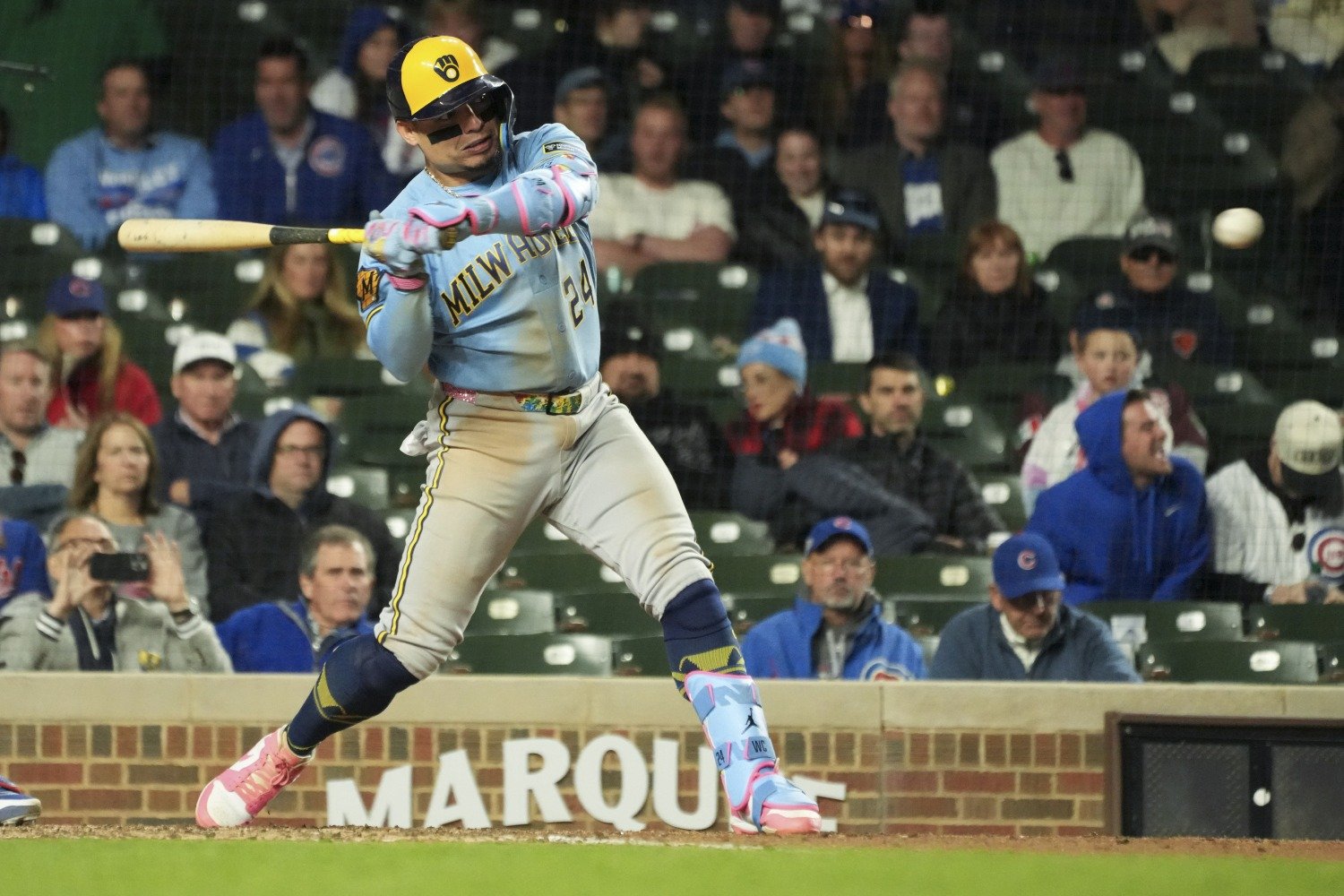 William Contreras played a portion of 2024 and all of 2025 with a fracture in his left middle finger, causing discomfort that affected his game. We know that. He underwent surgery in November to address it, because he and the Brewers felt that the injury had lingered and prevented him from being his best self for the majority of 2025. Because he had that operation, though, the hope was that this year would mark a return to the peak of Contreras's powers—literally. In his first two seasons with the Brewers, Contreras batted .285/.366/.462. In 1,290 plate appearances, he clubbed 75 doubles, 3 triples and 40 home runs. That was an elite offensive profile for a catcher, of course, but more importantly, it made Contreras a productive part of the middle of the Brewers lineup. They could win with pitching, defense and speed, because they had a very good hitter who could generate enough power to cash in the chances other players created, while playing a premium defensive spot. Last year, Contreras was gutting it out. His bat speed was down early in the season, but he rediscovered it by midsummer. Still, his swing wasn't quite the same. He used a well-structured approach to maintain his on-base skills, but the power went missing. For the year, he batted .260/.355/.399, with 28 doubles and 17 home runs in 659 trips to the plate. That's still solid work for a catcher; it's still solid work for anyone. The league averaged an OBP of .319 and a slugging average of .404, and OBP is more important than slugging, so a .355 OBP with roughly average power is hugely valuable, particularly for a player with major defensive responsibilities. Still, the hope was that the power (and perhaps the batting average, by dint of more exit velocity even on non-fly balls) would rebound in 2026, to somewhere near .450. Giving him a reset on that finger injury and then a full offseason to recover and prepare should have positioned him to do that. Instead, this year, the batting average is back—but the power isn't. Contreras is hitting .294/.366/.389 in 202 plate appearances. He has only 11 extra-base hits, and eight of those are doubles. What gives? It's not a problem of batted-ball profile, in the usual sense. He's pulling the ball more than in the past. He's lifting the ball more than he has in the past—and especially, he's hitting fewer ground balls. He's hitting it a little bit less hard, but that should be made up for by more lift and more pull. In fact, in fairness, his expected slugging this year is .430, up from .393 in 2025. But that's almost entirely because his expected batting average is up from .248 to .281; his isolated power hasn't surged along with the rise in average. Instead, Contreras's expected average is up almost entirely because he's making way, way more contact. He's swinging almost exactly as often as he did last year, but he's whiffing on just 18.3% of those swings, down from 24.2% last year and more like 28% in 2023 and 2024. Thus, his strikeout rate is down to an extraordinary 11.2%, so he's going to get more hits. That's happened, but the power hasn't come along for the ride, even though the expected stats say it should have at least halfway done so. Here's why. Since 2024, Contreras has gotten increasingly closed in his setup at the plate. His stance has angled itself more and more toward first base, closing his front shoulder to the pitcher. As we've discussed in the past, that doesn't necessarily set his direction to the baseball. He opens up toward the pitcher more with his stride than most batters. In the past, that allowed him to turn on the ball unexpectedly and generate a ton of power to left field. Here's an example, from 2024. elpZVjBfWGw0TUFRPT1fRGdVRUFGWUZBZ2NBRFZwVVVRQUFVd0pRQUZoUVV3Y0FBRklOQmxKUVZWVmRCMVlD.mp4 Crazy though it might sound, the slight closure of his stance has made that tougher, even though his stride still opens him up relatively well. That's because he's also made another change, perhaps a bit less consciously. His stride is longer than it was last year, by about two inches. That sounds tiny, but for one thing, all the margins that differentiate bad from good and good from great in hitting are tiny; and for another, the magnitude of this change's impact on Contreras's game is boosted by the change in his stance and the directionality of his swing. Here's what it looks like this season. WU9WRDlfWGw0TUFRPT1fVXdjQ0JWTUVBQVFBRGdBQ0FBQUhWUUFFQUFCUUFGa0FVVlFEQkFZTUJRVUVBQXND.mp4 With that initial set of his body to a slightly more closed angle and a slightly longer stride, Contreras ends up a bit less able to get his front hip open and maximize the torque of his torso. He also ends up having to go out a bit farther, around his frame and in front of himself. To wit, Contreras's contact point has moved a bit farther out in front of him this year—another thing we would typically expect to result in more power, not less—but he's also flatter to the ball. His swing has less tilt and is working less uphill when he catches the ball, because of the way his body moves in this new combination of stance orientation and stride length. Here are two telling moments in his swing, from each of the last three years. On the left, from top to bottom, we see what it looks like when Contreras's front foot comes down and he begins his swing, for 2024, 2025 and 2026. On the right, we see the moment when his barrel stops working down into the hitting zone and starts to work upward, through the ball. First, let's talk about his first moves. Last year, cheating a little bit to make up for diminished bat speed, he got his hands a bit farther from his body and a bit lower, with his bat a bit flatter. This season, he's basically back to the set point he used in 2024—but note the angles of his lower half. He's locked a bit more into that position than in the past. Now, look at the images on the right. The differences are a bit more pronounced. For one thing, his weight hasn't shifted forward as much as it had in the past. That gives him more adjustability, which might explain his better contact rate, but it means slightly less energy crashing forward into the ball. The longer stride doesn't let him rotate as well, because it puts him deeper in his legs. Meanwhile, his front shoulder is more closed, and his hands are working differently. He's not hitting underneath his front side. His bat is coming around more than in the last two seasons; his top hand is already getting around and in front of his frame. All of these are small changes, but they add up to a swing with a lower launch-angle sweet spot than his old one and a greater likelihood of his best contact being toward center field. It's possible Contreras is doing it all on purpose, in the name of getting on base as often as possible by putting it in play at the best possible rate. Ideally, though, he'd reorient himself just enough to get back the version of his swing that maximizes his power potential. A small tweak to his setup and stride should have him slugging at somewhere close to his old rate. It's just a matter of time before he finds the right way to make that adjustment.
 -
That's possible, for sure. I don't think it's likely. Do that, and you're likely to end up needing either Williams or Hamilton to spend some time in the outfield. I think they badly want both of those guys to keep getting reps on the dirt instead. I hear you on Bauers, but he only plays in the outfield now when they're forced to do so. I will say this: I don't know if we're all that far from a Luis Lara promotion, either. Lara could certainly take Perkins's roster spot, and then get his playing time from Mitchell and Frelick. The Brewers wouldn't be as squeamish about moving a guy between two outfield positions as between two infield ones or the infield and the outfield.
- 18 replies
-
- 4
-

-
- jett williams
- luis rengifo
- (and 2 more)
-
They certainly prefer Ortiz's glove, all else equal, but they wouldn't agree with you that Hamilton isn't a "true SS".
-
I'm not sure what you mean by "gimmicky," but the speed and the bunting ability are pluses, not minuses, as far as the Brewers are concerned. I know Ortiz finally ran into a couple of balls, but he absolutely doesn't offer more usable power than Hamilton does right now.
-
They're already starting Hamilton over Ortiz the majority of the time, now. Their trust in Hamilton's defense is rising enough to make him the one they'd rather play regularly at short, and Ortiz is the one who can more clearly benefit from an offensive reset in AAA.
- 18 replies
-
- 1
-
-
- jett williams
- luis rengifo
- (and 2 more)
-
Image courtesy of © Rick Scuteri-Imagn Images It's starting to wear on Pat Murphy. He can't let it show, but when you ask him about Jett Williams, you can see him working not to betray the eagerness he feels for the arrival of his next dynamic two-way weapon. It's just a question of when and how to best introduce him to the majors—and what roster machinations will make it possible. "I love the kid, and I think it won't be long," Murphy said Sunday at Target Field in Minneapolis. "I love Jett, and I keep in contact with him." Not every prospect gets regular, direct check-ins from the big-league manager. In fact, some skippers elect not to do that at all, lest the players on their big-league roster start feeling like the boss no longer has their back. Murphy texts and speaks with Williams regularly, though, and continues to get reports from the Triple-A coaching staff on his progress. His defense is of particular interest, because Williams has sanded some of the rough edges off his offensive game, but the Brewers need him to be ready to play well in the field when he arrives—and not in a fill-in, move-around-the-diamond kind of way. "No," Murphy said, when asked whether the eventual call-up might be a situation wherein Williams plays shortstop on some days and third base on others. "He plays both, he could play second [base], he can play center field, he can play left field. He can do a lot of things. [But] you don't like the idea of a young player coming to the big leagues and being a utility player." Murphy believes the speed of the game and the subtleties of each position created by that greater intensity only make it more difficult for a player matriculating from the minors to the majors, at a time when that jump has never been more difficult, anyway. Murphy has been (understandably) dissastisfied with what he's seen from his team so far this season, despite their recent winning skein and first-place position in the NL Central standings table. "The major-league team, right now, as it sits, has to get better," he said, during a discussion in which he praised the depth waiting at Nashville, including Williams, Cooper Pratt, Luis Lara and others. "We have to continue to work and find our rhythm a little bit." As Murphy acknowledged, the timeline of Williams's promotion will depend as much on the needs of the team as on his development, now. He's increased his in-zone contact rate and smoothed out some problems with hitting non-fastballs this spring, and is batting a solid .248/.375/.412 for the Sounds. He's pulling the ball a ton and hitting it on the ground a bit more, which the team will try to help him even out, but his approach and his combination of plus-plus speed and sneaky pop look essentially ready for the majors. Murphy and the Brewers just don't want to promote him before they have a clear role for him to fill. Williams is the rare top prospect who spent his whole childhood moving around the diamond, playing several positions. He swears that he doesn't have a preference for any particular spot, and Murphy acknowledged that that makes it a bit easier to envision him in a super-sub role—but ideally, that would come after he's fully established in the majors, rather than right away. "I think he's a likely kid that could be the one that could do it a little bit," Murphy said. "And if forced to do it, I think we could do it. I think the best version of Jett is playing him every day somewhere, and kind of consistently learning a position at this level with the speed of the game at this level." That doesn't have to mean keeping Williams in the minors until he's a defensive ace at one spot. As Murphy noted, Caleb Durbin took time to blossom as a defender at third base last year, even though he'd had experience there in the minors. Ditto for Joey Ortiz, when Ortiz moved from third base back to short. Isaac Collins needed time to adjust to how big-leaguers hit the ball before becoming (however briefly) a strong defensive outfielder. Rather, what the Brewers want is an open spot into which Williams can be slotted, so that his adjustment and growth period goes as smoothly as possible and he can dedicate enough time to the other side of the runs ledger, too. It's becoming pretty clear that that spot is the hot corner, where Luis Rengifo finds himself on an increasingly hot seat. Rengifo has shown signs of life and made some big plays for the team over the last fortnight, but even in that stretch, there have also been some glaring mistakes. He was thrown out trying to stretch a single into a double Monday night. On Tuesday, a misplay on a hard-hit ground ball at third base nearly opened the floodgates on a Cubs comeback attempt. Rengifo also isn't hitting lefties well this year, which makes his utility harder to express or see in simple terms. His .712 OPS from the right side is easily the stronger of the switch-hitter's splits, and was a vital aspect of his appeal to the Brewers. Albeit in just 60 plate appearances, he's batting .107/.150/.143 against southpaws in 2026. Rengifo also lost his platoon partner, in part, when the offensive ineptitude of Ortiz forced the Brewers to start playing David Hamilton more often at shortstop. Hamilton has started at short in three of the Brewers' last four games (and 7 of their last 11) against right-handed starters. Rengifo's defense has been inconsistent; his offense has been anemic. With Hamilton getting more comfortable at short, the door is starting to swing open on Williams at third. Indeed, Williams has started 32 games at that position for Nashville, and just five each at shortstop and in center field. Murphy said the reports have been "very good" on his glove work at the position. If he were on the 40-man roster (like fellow top prospect but purer shortstop Cooper Pratt), Williams might already be in the majors. The Brewers did create a vacancy on their 40-man over the weekend, however, when they designated reliever Peter Strzelecki for assignment to make room on the 26-man roster for spot starter Robert Gasser. Rengifo's hold on the third-base job could be running out extremely quickly. That doesn't necessarily mean the team would dump him as part of calling up Williams, though. In fact, to preserve depth and give their investment a bit more time to turn for the better, they'd be more likely to option either Ortiz or Hamilton (the former being more likely, for multiple reasons) and roll with Rengifo as a bench option for a spell. In any event, Murphy is right: it won't be long before Williams comes to the big leagues. Injuries could solve the dilemma for the team, but it's becoming increasingly likely that the sustained underperformance of the left side of the infield will force the club's hand. Williams is the more ready of the two Nashville infielders, offensively, and the team seems to feel a greater urgency to fix third base, anyway. If none of Rengifo, Ortiz and Hamilton turn a corner for the better in the very near future, Williams (or, perhaps, Pratt) will be taking one of their jobs imminently. View full article
- 18 replies
-
- 1
-
-
- jett williams
- luis rengifo
- (and 2 more)
-
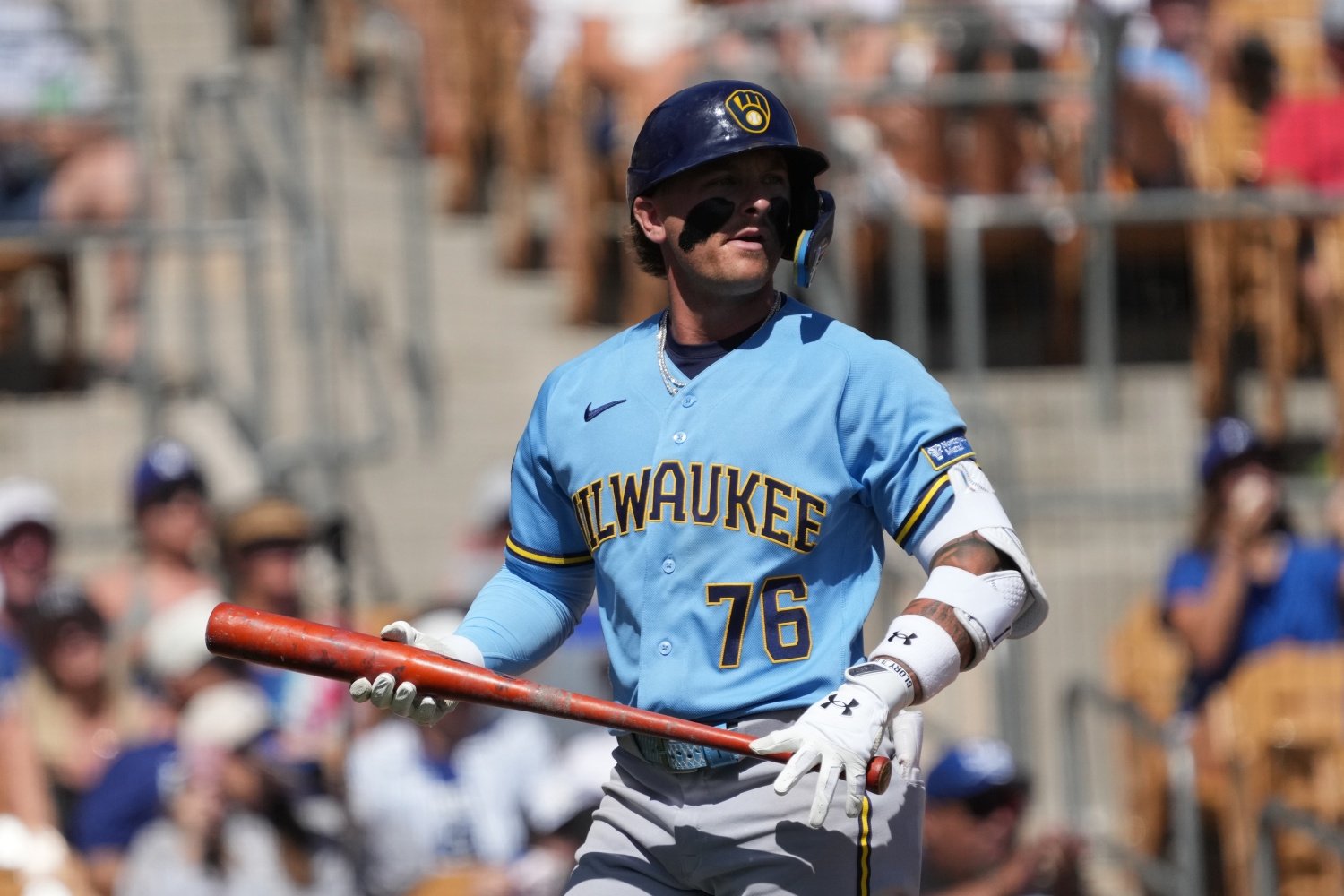 It's starting to wear on Pat Murphy. He can't let it show, but when you ask him about Jett Williams, you can see him working not to betray the eagerness he feels for the arrival of his next dynamic two-way weapon. It's just a question of when and how to best introduce him to the majors—and what roster machinations will make it possible. "I love the kid, and I think it won't be long," Murphy said Sunday at Target Field in Minneapolis. "I love Jett, and I keep in contact with him." Not every prospect gets regular, direct check-ins from the big-league manager. In fact, some skippers elect not to do that at all, lest the players on their big-league roster start feeling like the boss no longer has their back. Murphy texts and speaks with Williams regularly, though, and continues to get reports from the Triple-A coaching staff on his progress. His defense is of particular interest, because Williams has sanded some of the rough edges off his offensive game, but the Brewers need him to be ready to play well in the field when he arrives—and not in a fill-in, move-around-the-diamond kind of way. "No," Murphy said, when asked whether the eventual call-up might be a situation wherein Williams plays shortstop on some days and third base on others. "He plays both, he could play second [base], he can play center field, he can play left field. He can do a lot of things. [But] you don't like the idea of a young player coming to the big leagues and being a utility player." Murphy believes the speed of the game and the subtleties of each position created by that greater intensity only make it more difficult for a player matriculating from the minors to the majors, at a time when that jump has never been more difficult, anyway. Murphy has been (understandably) dissastisfied with what he's seen from his team so far this season, despite their recent winning skein and first-place position in the NL Central standings table. "The major-league team, right now, as it sits, has to get better," he said, during a discussion in which he praised the depth waiting at Nashville, including Williams, Cooper Pratt, Luis Lara and others. "We have to continue to work and find our rhythm a little bit." As Murphy acknowledged, the timeline of Williams's promotion will depend as much on the needs of the team as on his development, now. He's increased his in-zone contact rate and smoothed out some problems with hitting non-fastballs this spring, and is batting a solid .248/.375/.412 for the Sounds. He's pulling the ball a ton and hitting it on the ground a bit more, which the team will try to help him even out, but his approach and his combination of plus-plus speed and sneaky pop look essentially ready for the majors. Murphy and the Brewers just don't want to promote him before they have a clear role for him to fill. Williams is the rare top prospect who spent his whole childhood moving around the diamond, playing several positions. He swears that he doesn't have a preference for any particular spot, and Murphy acknowledged that that makes it a bit easier to envision him in a super-sub role—but ideally, that would come after he's fully established in the majors, rather than right away. "I think he's a likely kid that could be the one that could do it a little bit," Murphy said. "And if forced to do it, I think we could do it. I think the best version of Jett is playing him every day somewhere, and kind of consistently learning a position at this level with the speed of the game at this level." That doesn't have to mean keeping Williams in the minors until he's a defensive ace at one spot. As Murphy noted, Caleb Durbin took time to blossom as a defender at third base last year, even though he'd had experience there in the minors. Ditto for Joey Ortiz, when Ortiz moved from third base back to short. Isaac Collins needed time to adjust to how big-leaguers hit the ball before becoming (however briefly) a strong defensive outfielder. Rather, what the Brewers want is an open spot into which Williams can be slotted, so that his adjustment and growth period goes as smoothly as possible and he can dedicate enough time to the other side of the runs ledger, too. It's becoming pretty clear that that spot is the hot corner, where Luis Rengifo finds himself on an increasingly hot seat. Rengifo has shown signs of life and made some big plays for the team over the last fortnight, but even in that stretch, there have also been some glaring mistakes. He was thrown out trying to stretch a single into a double Monday night. On Tuesday, a misplay on a hard-hit ground ball at third base nearly opened the floodgates on a Cubs comeback attempt. Rengifo also isn't hitting lefties well this year, which makes his utility harder to express or see in simple terms. His .712 OPS from the right side is easily the stronger of the switch-hitter's splits, and was a vital aspect of his appeal to the Brewers. Albeit in just 60 plate appearances, he's batting .107/.150/.143 against southpaws in 2026. Rengifo also lost his platoon partner, in part, when the offensive ineptitude of Ortiz forced the Brewers to start playing David Hamilton more often at shortstop. Hamilton has started at short in three of the Brewers' last four games (and 7 of their last 11) against right-handed starters. Rengifo's defense has been inconsistent; his offense has been anemic. With Hamilton getting more comfortable at short, the door is starting to swing open on Williams at third. Indeed, Williams has started 32 games at that position for Nashville, and just five each at shortstop and in center field. Murphy said the reports have been "very good" on his glove work at the position. If he were on the 40-man roster (like fellow top prospect but purer shortstop Cooper Pratt), Williams might already be in the majors. The Brewers did create a vacancy on their 40-man over the weekend, however, when they designated reliever Peter Strzelecki for assignment to make room on the 26-man roster for spot starter Robert Gasser. Rengifo's hold on the third-base job could be running out extremely quickly. That doesn't necessarily mean the team would dump him as part of calling up Williams, though. In fact, to preserve depth and give their investment a bit more time to turn for the better, they'd be more likely to option either Ortiz or Hamilton (the former being more likely, for multiple reasons) and roll with Rengifo as a bench option for a spell. In any event, Murphy is right: it won't be long before Williams comes to the big leagues. Injuries could solve the dilemma for the team, but it's becoming increasingly likely that the sustained underperformance of the left side of the infield will force the club's hand. Williams is the more ready of the two Nashville infielders, offensively, and the team seems to feel a greater urgency to fix third base, anyway. If none of Rengifo, Ortiz and Hamilton turn a corner for the better in the very near future, Williams (or, perhaps, Pratt) will be taking one of their jobs imminently.
- 18 comments
-
- 4
-
-
- jett williams
- luis rengifo
- (and 2 more)
-
Hook, but also Henderson, Charlie Greene, McKinven before he left. They just work really well with these guys as a staff.
-
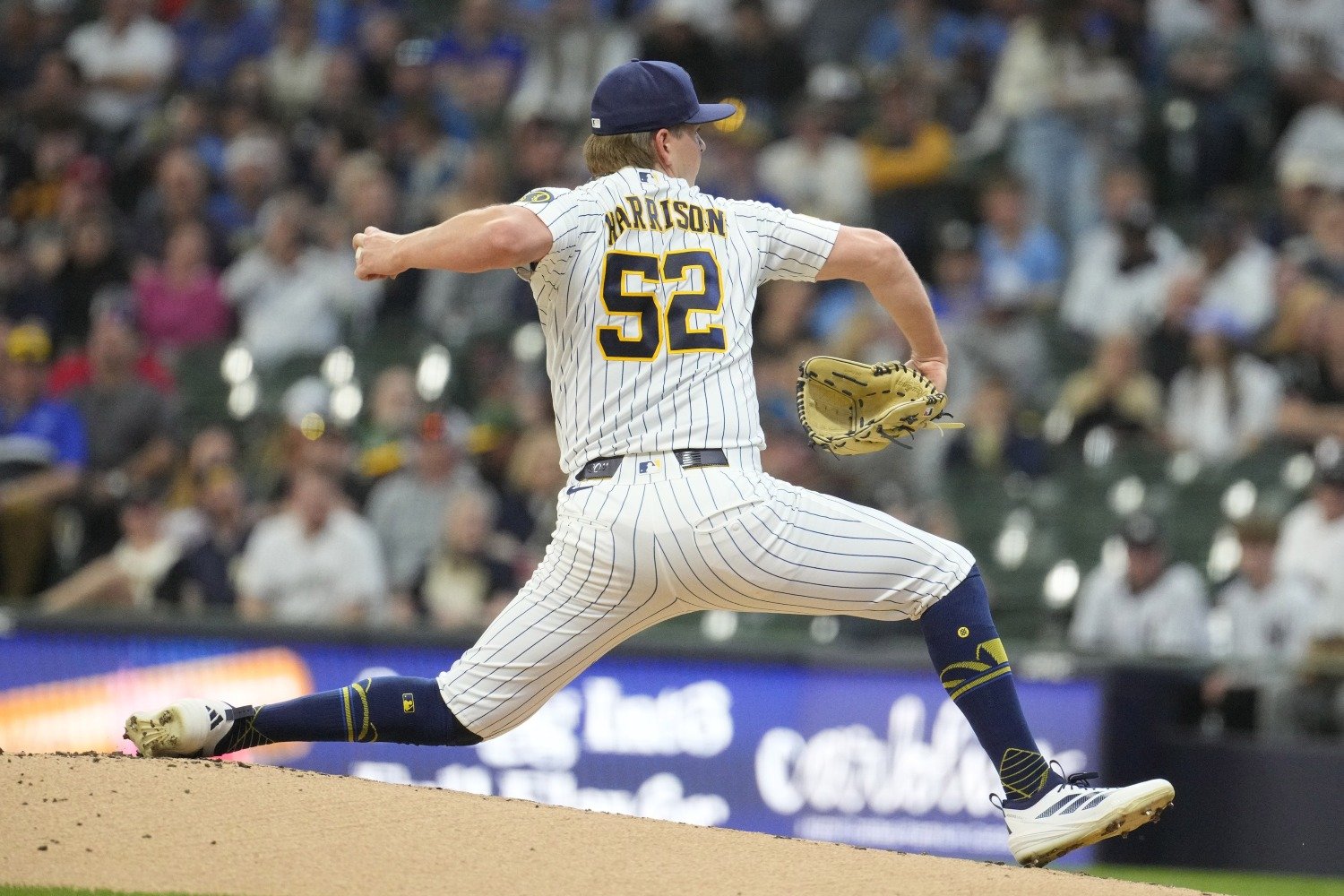 When people ask Chris Hook about Kyle Harrison, he talks up the fact that Harrison has a low arm angle. He says it gives his pitches deceptive movement, especially when he can find lift on his fastball. But Harrison had a low arm angle (27°) last year, when he was an up-and-down guy and was traded from the Giants to the Red Sox. He had an even lower one (24°) in 2024, when he pitched to a 4.56 ERA in the pitcher-friendly environs of San Francisco. In fact, you know what? His arm angle is actually up quite a bit this year, to 33°. That's not a complete mechanical overhaul, but it's noticeable. "Yeah, it's just how the ball is coming out [best]," Harrison said Sunday, inside the visitors' clubhouse at Target Field in Minneapolis. "I'm staying behind the ball a little better up there. I think it's helped the shape on the fastball, helped the changeup after I changed that grip, I think the curveball tunnels a little better from there." What gives, though? Shouldn't this adjustment—however good it feels for the southpaw—be compromising something important? Hook has insisted that the combination of fastball movement and arm slot is the key to Harrison's success, because it cues the hitter to expect something other than what they get. That's not how things are playing out. Well, firstly, there's more than one way to get low and cause trouble for your opponent. Here are side-by-side shots of Harrison at release on a four-seam fastball, in 2024 and earlier this season. You can see how much higher the slot is now. But the hitter only gains information with which to intuit expected movement based on the arm angle. The vertical release point—the raw distance between one's hand and the ground, especially relative to the eventual location of the pitch as it crosses home plate—controls vertical approach angle, which is the source of much of Harrison's power over opposing batters. To release a pitch from down low, you can throw from a sidearm angle, but you can also drive farther down the mound and get deeper into your legs at delivery. As you can see above, Harrison is doing more of that this year. His raw release height is still up a bit this year; raising the slot made that unavoidable. However, because the slot is still low three-quarters (not standard three-quarters or overhand) and because he gets so low with his drop-and-drive mechanics, the 6-foot-2 Harrison releases the ball barely over 5 feet above the ground. Of the 248 pitchers who have thrown at least 100 four-seam fastballs this year, only 14 have a lower average release height than Harrison, so he remains capable of throwing that high fastball with an exceptionally flat VAA, even from a higher slot. Harrison is right, too, that the higher slot is getting his hand behind the baseball better. The induced vertical break (IVB) on his heater is up about three inches this year, which makes it much more effective at the top of the zone. Batters might expect that extra carry, because his slot is higher, but that doesn't mean they can contend with it, given how flat it is as it steams through the zone. It doesn't hurt that Harrison threw the hardest pitches of his career in his last outing against the Padres, almost touching 98 MPH, and that he now sits comfortably at or above 95. Being behind the ball has given him more backspin on the four-seamer, which now mirrors the spin on his slurve just about perfectly. Meanwhile, the depth on his changeup is getting better all the time, thanks to that same combination of movement direction and hand position. Seeing Harrison benefit so much from a slight but noticeable rise in his arm angle, I was forcibly reminded of the old pitching saw: You want to be a Ferris wheel, not a merry-go-round. Even pitchers who use low arm slots get this advice at some point, because it's not solely about slot. It's also about working down the mound well, and making sure one's energy flows directly toward the target. I asked Harrison whether he thinks that's why he's better from up higher, despite the benefits of being down low. "Actually, I had an old pitching coach—that's so interesting, that you say that, because he used to say that I'm halfway between a Ferris wheel and a merry-go-round," Harrison said, flattening his hand and holding it at a 45° angle. "In terms of what the hitter gets, I'm in between those in a way that's hard to pick up." Aha! I think we've hit on something. Do you remember the Gravitron? If you haven't been to a county fair or a pop-up carnival recently, you might not, but the Gravitron is one of the best portable thrill rides such events offer. It lines riders up along the outer walls of a round platform, then uses centrifugal force to hold them in place as it spins increasingly fast—and as the platform slowly tilts upward. Plastered to the barrier, riders experience roughly three times the ordinary force of gravity, and they're held in place even as the ride sometimes spins them almost at a Ferris wheel's angle, before the mechanical arm brings them back down. Kyle Harrison is Gravitron. His low release height and unique hand position at release let him manipulate gravity on hitters in ways that leave them looking as slow and helpless as if they're suddenly three times their usual weight. That shows up in the fastball, and in that devastating new kick-change, and in his slurve. Harrison feels he's concretized all of that by moving across to the first-base side of the rubber, too, which forces him to be more direct with his fastball placement. "In the past," he said, "when I would try to throw the fastball in on righties, it would sometimes run a little bit too much and just leak back over the middle of the plate, which is never what you want. So now, being on the other side of the rubber, it kind of forces me to get out front and across more, and throw it on a straight line at them. I think that's also where the tunneling comes in better, with the [slurve]." Opponents probably agree. Harrison has a 30% strikeout rate and a 2.09 ERA in eight starts. He's a tough combination of traits to guess against. He's a good athlete tapping into that better than ever. He's the advanced course, not the one for beginners. He's neither a Ferris wheel nor a merry-go-round; he's the more exciting next step. He's Gravitron.
 -
Image courtesy of © Michael McLoone-Imagn Images When people ask Chris Hook about Kyle Harrison, he talks up the fact that Harrison has a low arm angle. He says it gives his pitches deceptive movement, especially when he can find lift on his fastball. But Harrison had a low arm angle (27°) last year, when he was an up-and-down guy and was traded from the Giants to the Red Sox. He had an even lower one (24°) in 2024, when he pitched to a 4.56 ERA in the pitcher-friendly environs of San Francisco. In fact, you know what? His arm angle is actually up quite a bit this year, to 33°. That's not a complete mechanical overhaul, but it's noticeable. "Yeah, it's just how the ball is coming out [best]," Harrison said Sunday, inside the visitors' clubhouse at Target Field in Minneapolis. "I'm staying behind the ball a little better up there. I think it's helped the shape on the fastball, helped the changeup after I changed that grip, I think the curveball tunnels a little better from there." What gives, though? Shouldn't this adjustment—however good it feels for the southpaw—be compromising something important? Hook has insisted that the combination of fastball movement and arm slot is the key to Harrison's success, because it cues the hitter to expect something other than what they get. That's not how things are playing out. Well, firstly, there's more than one way to get low and cause trouble for your opponent. Here are side-by-side shots of Harrison at release on a four-seam fastball, in 2024 and earlier this season. You can see how much higher the slot is now. But the hitter only gains information with which to intuit expected movement based on the arm angle. The vertical release point—the raw distance between one's hand and the ground, especially relative to the eventual location of the pitch as it crosses home plate—controls vertical approach angle, which is the source of much of Harrison's power over opposing batters. To release a pitch from down low, you can throw from a sidearm angle, but you can also drive farther down the mound and get deeper into your legs at delivery. As you can see above, Harrison is doing more of that this year. His raw release height is still up a bit this year; raising the slot made that unavoidable. However, because the slot is still low three-quarters (not standard three-quarters or overhand) and because he gets so low with his drop-and-drive mechanics, the 6-foot-2 Harrison releases the ball barely over 5 feet above the ground. Of the 248 pitchers who have thrown at least 100 four-seam fastballs this year, only 14 have a lower average release height than Harrison, so he remains capable of throwing that high fastball with an exceptionally flat VAA, even from a higher slot. Harrison is right, too, that the higher slot is getting his hand behind the baseball better. The induced vertical break (IVB) on his heater is up about three inches this year, which makes it much more effective at the top of the zone. Batters might expect that extra carry, because his slot is higher, but that doesn't mean they can contend with it, given how flat it is as it steams through the zone. It doesn't hurt that Harrison threw the hardest pitches of his career in his last outing against the Padres, almost touching 98 MPH, and that he now sits comfortably at or above 95. Being behind the ball has given him more backspin on the four-seamer, which now mirrors the spin on his slurve just about perfectly. Meanwhile, the depth on his changeup is getting better all the time, thanks to that same combination of movement direction and hand position. Seeing Harrison benefit so much from a slight but noticeable rise in his arm angle, I was forcibly reminded of the old pitching saw: You want to be a Ferris wheel, not a merry-go-round. Even pitchers who use low arm slots get this advice at some point, because it's not solely about slot. It's also about working down the mound well, and making sure one's energy flows directly toward the target. I asked Harrison whether he thinks that's why he's better from up higher, despite the benefits of being down low. "Actually, I had an old pitching coach—that's so interesting, that you say that, because he used to say that I'm halfway between a Ferris wheel and a merry-go-round," Harrison said, flattening his hand and holding it at a 45° angle. "In terms of what the hitter gets, I'm in between those in a way that's hard to pick up." Aha! I think we've hit on something. Do you remember the Gravitron? If you haven't been to a county fair or a pop-up carnival recently, you might not, but the Gravitron is one of the best portable thrill rides such events offer. It lines riders up along the outer walls of a round platform, then uses centrifugal force to hold them in place as it spins increasingly fast—and as the platform slowly tilts upward. Plastered to the barrier, riders experience roughly three times the ordinary force of gravity, and they're held in place even as the ride sometimes spins them almost at a Ferris wheel's angle, before the mechanical arm brings them back down. Kyle Harrison is Gravitron. His low release height and unique hand position at release let him manipulate gravity on hitters in ways that leave them looking as slow and helpless as if they're suddenly three times their usual weight. That shows up in the fastball, and in that devastating new kick-change, and in his slurve. Harrison feels he's concretized all of that by moving across to the first-base side of the rubber, too, which forces him to be more direct with his fastball placement. "In the past," he said, "when I would try to throw the fastball in on righties, it would sometimes run a little bit too much and just leak back over the middle of the plate, which is never what you want. So now, being on the other side of the rubber, it kind of forces me to get out front and across more, and throw it on a straight line at them. I think that's also where the tunneling comes in better, with the [slurve]." Opponents probably agree. Harrison has a 30% strikeout rate and a 2.09 ERA in eight starts. He's a tough combination of traits to guess against. He's a good athlete tapping into that better than ever. He's the advanced course, not the one for beginners. He's neither a Ferris wheel nor a merry-go-round; he's the more exciting next step. He's Gravitron. View full article
-
Shane Drohan Goes to Splitsville
Matthew Trueblood replied to Matthew Trueblood's topic in Brewer Fanatic Front Page News
I'm always very intrigued by people who can be personable and thoughtful and who have a sense of humor, but who just have a strong default toward seriousness and are slow to crack up. As you can probably(?) tell by now, I'm the opposite, and I've always been vaguely admiring and envious of people comfortable enough in a space or in their own skin not to lean on laughs. Drohan certainly strikes me as that kind of person, in limited interactions. -
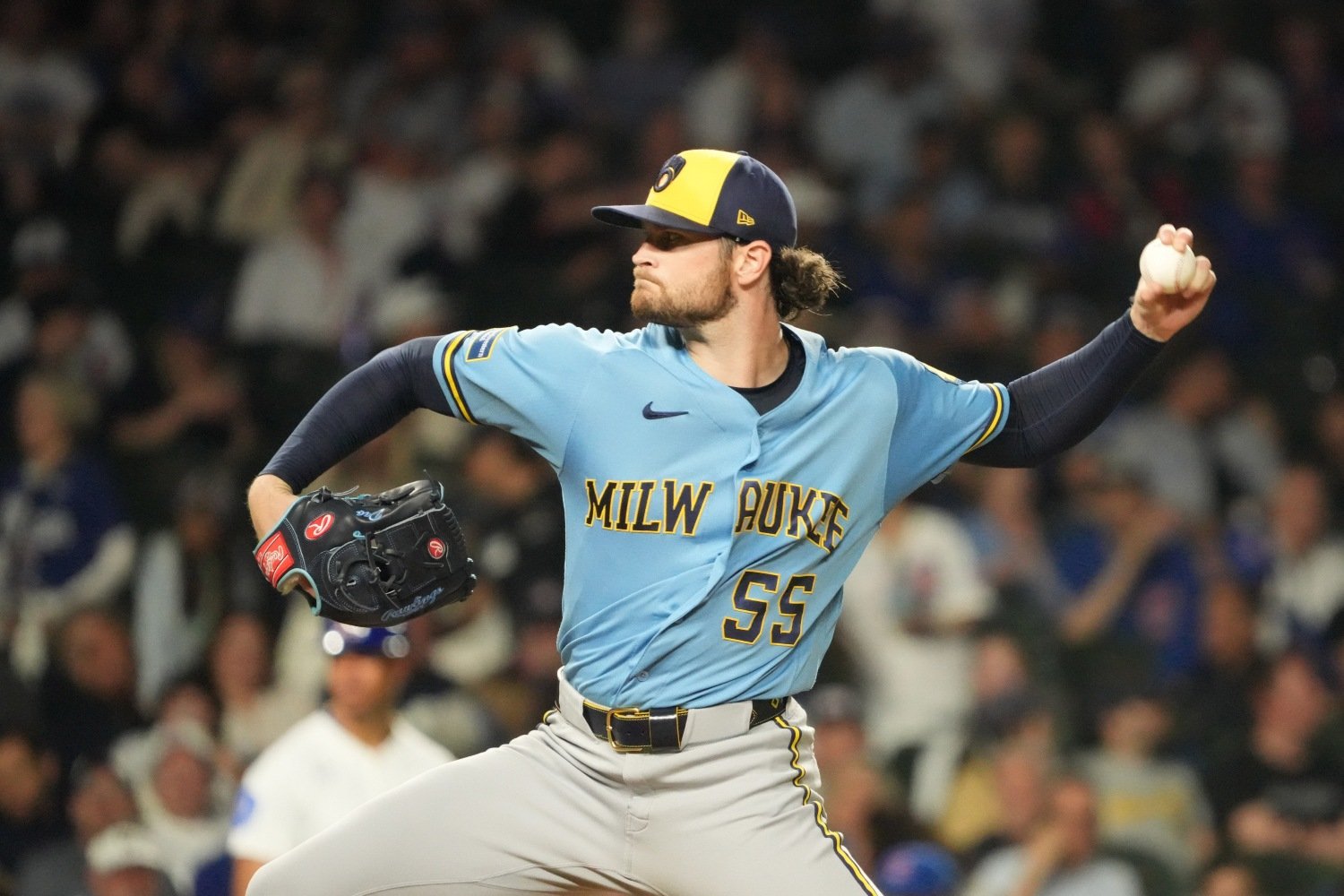 Although his debut in Boston went pear-shaped, Shane Drohan has been pretty darn good ever since. He got the win after pitching 4 1/3 strong innings of relief Monday night at Wrigley Field, and now has a 1.47 ERA in seven appearances since his return to the majors on April 24. In that span, he's faced 72 batters, fanned 18, and walked just two, He hasn't given up a home run in the majors yet. Most of that is attributable to the stuff and the maturity that Drohan brought with him from the Boston organization, whence the Brewers acquired him in February's Caleb Durbin trade. The team took an interest in his mid-90s heat from the left side and a compelling array of pitch shapes, and they had him stay ready to work as a starter this spring despite some temptation to move him into a relief role like the one in which DL Hall is now toiling. Ultimately, of course, Drohan landed in a role much like Hall's, but he's been a weapon for manager Pat Murphy, deployable in a variety of ways. Drohan's main stuff is unchanged. He's slightly altered the movement profile on his four-seamer, but his high-riding cutter remains intact. His slider and curveball, like the cutter, have an unusual shape for his arm slot, which the team was bound to love. Milwaukee has helped Drohan add a sinker to his mix, and it shows modest promise, but it's a complementary piece. He's a three-fastball guy now, but not a materially different one than the hurler who was racking up whiffs in the high minors for the Red Sox last summer. There is, however, one pitch I haven't mentioned yet: the changeup. Therein, as Josh Bard would say, lies the rub. When Drohan made his debut on April 8 against the Red Sox, his changeup had some potential. On balance, though, it deviated too much from his fastball to be useful. This is an underdiscussed danger for guys who want to throw a good cambio: You might create so much of a gap in velocity and movement that, despite your best efforts to use the same arm slot and mimic the arm speed of the fastball, the hitter is able to tell the difference early and can spit on a pitch you'd rather he tried to hit. Pitchers who are excellent at manipulating the spin of the ball can sometimes work around the problem of spinning it the opposite way from their breaking balls, but find that the resulting offering moves too much because of its active spin. YVl4djdfVjBZQUhRPT1fVWxkV1YxVlNWUXNBQ0FFQ1hnQUhDQWRVQUZrTVVBVUFCd01GVlFRSFVsWlJWQVJV.mp4 That's not a bad pitch, and had the Brewers challenged it, it would have resulted in Strike 3. Overall, though, the changeup didn't fool the Red Sox. Drohan needed something different to round out his arsenal. During his time back in Nashville, he seems to have found it. Here's the (Statcast-labeled) changeup on which he struck out Nico Hoerner during Monday's victory: RDFkS25fVjBZQUhRPT1fVTFSWlZWQUVVRkVBWGdRQUFBQUhWQVpTQUZrQlV3UUFCVkJUQkFNQkFBTUdWZ0pU.mp4 That pitch is much firmer, and it has more vertical depth, but it doesn't run to the arm side nearly as much as his old one. It shouldn't necessarily work well, but because of his slot and the array of other looks he gives batters, it does. How did the change happen? It's hard to tell for certain on video, but it's pretty clear that Drohan is now throwing some version of a splitter or split-change, rather than the circle-change he was throwing before. His average changeup spin rate in Boston over a month ago was 1,590 RPM. In every outing since returning to the bigs, Drohan has averaged under 1,200 RPM with that pitch, and it's sometimes been under 1,000. The splitter works because a pitcher's grip kills the spin on the ball as it leaves their hand, giving the pitch its trademark tumble. It also tends not to run as much to the arm side as other changeups. Drohan has moved to a splitter (or splitter variant), and the results are excellent. He hasn't given up a hit on the changeup, and it's earning plenty of whiffs, even from great contact hitters like Hoerner. This is not the defining pitch for Drohan. He's a spin-and-speed artist, and overpowered the Cubs with a heater that touched the high side of 96 MPH and sat around 95 Monday night. The changeup is a spare part, at least unless and until he returns to a true starting role. This is an important adjustment, though, in that it testifies to Drohan's coachability (a key trait for any Brewers contributor) and to the sense on the part of the coaching staff that all they needed to do was add the finishing touches for him. He's a valuable arm with big upside. This change to his change is a capstone to a career of adjustment and progress; the Brewers just helped him identify the best version of himself.
 -
Image courtesy of © David Banks-Imagn Images Although his debut in Boston went pear-shaped, Shane Drohan has been pretty darn good ever since. He got the win after pitching 4 1/3 strong innings of relief Monday night at Wrigley Field, and now has a 1.47 ERA in seven appearances since his return to the majors on April 24. In that span, he's faced 72 batters, fanned 18, and walked just two, He hasn't given up a home run in the majors yet. Most of that is attributable to the stuff and the maturity that Drohan brought with him from the Boston organization, whence the Brewers acquired him in February's Caleb Durbin trade. The team took an interest in his mid-90s heat from the left side and a compelling array of pitch shapes, and they had him stay ready to work as a starter this spring despite some temptation to move him into a relief role like the one in which DL Hall is now toiling. Ultimately, of course, Drohan landed in a role much like Hall's, but he's been a weapon for manager Pat Murphy, deployable in a variety of ways. Drohan's main stuff is unchanged. He's slightly altered the movement profile on his four-seamer, but his high-riding cutter remains intact. His slider and curveball, like the cutter, have an unusual shape for his arm slot, which the team was bound to love. Milwaukee has helped Drohan add a sinker to his mix, and it shows modest promise, but it's a complementary piece. He's a three-fastball guy now, but not a materially different one than the hurler who was racking up whiffs in the high minors for the Red Sox last summer. There is, however, one pitch I haven't mentioned yet: the changeup. Therein, as Josh Bard would say, lies the rub. When Drohan made his debut on April 8 against the Red Sox, his changeup had some potential. On balance, though, it deviated too much from his fastball to be useful. This is an underdiscussed danger for guys who want to throw a good cambio: You might create so much of a gap in velocity and movement that, despite your best efforts to use the same arm slot and mimic the arm speed of the fastball, the hitter is able to tell the difference early and can spit on a pitch you'd rather he tried to hit. Pitchers who are excellent at manipulating the spin of the ball can sometimes work around the problem of spinning it the opposite way from their breaking balls, but find that the resulting offering moves too much because of its active spin. YVl4djdfVjBZQUhRPT1fVWxkV1YxVlNWUXNBQ0FFQ1hnQUhDQWRVQUZrTVVBVUFCd01GVlFRSFVsWlJWQVJV.mp4 That's not a bad pitch, and had the Brewers challenged it, it would have resulted in Strike 3. Overall, though, the changeup didn't fool the Red Sox. Drohan needed something different to round out his arsenal. During his time back in Nashville, he seems to have found it. Here's the (Statcast-labeled) changeup on which he struck out Nico Hoerner during Monday's victory: RDFkS25fVjBZQUhRPT1fVTFSWlZWQUVVRkVBWGdRQUFBQUhWQVpTQUZrQlV3UUFCVkJUQkFNQkFBTUdWZ0pU.mp4 That pitch is much firmer, and it has more vertical depth, but it doesn't run to the arm side nearly as much as his old one. It shouldn't necessarily work well, but because of his slot and the array of other looks he gives batters, it does. How did the change happen? It's hard to tell for certain on video, but it's pretty clear that Drohan is now throwing some version of a splitter or split-change, rather than the circle-change he was throwing before. His average changeup spin rate in Boston over a month ago was 1,590 RPM. In every outing since returning to the bigs, Drohan has averaged under 1,200 RPM with that pitch, and it's sometimes been under 1,000. The splitter works because a pitcher's grip kills the spin on the ball as it leaves their hand, giving the pitch its trademark tumble. It also tends not to run as much to the arm side as other changeups. Drohan has moved to a splitter (or splitter variant), and the results are excellent. He hasn't given up a hit on the changeup, and it's earning plenty of whiffs, even from great contact hitters like Hoerner. This is not the defining pitch for Drohan. He's a spin-and-speed artist, and overpowered the Cubs with a heater that touched the high side of 96 MPH and sat around 95 Monday night. The changeup is a spare part, at least unless and until he returns to a true starting role. This is an important adjustment, though, in that it testifies to Drohan's coachability (a key trait for any Brewers contributor) and to the sense on the part of the coaching staff that all they needed to do was add the finishing touches for him. He's a valuable arm with big upside. This change to his change is a capstone to a career of adjustment and progress; the Brewers just helped him identify the best version of himself. View full article
-
Connection: Jake Bauers and the Enormous Power of a Clear Mind
Matthew Trueblood posted an article in Brewers
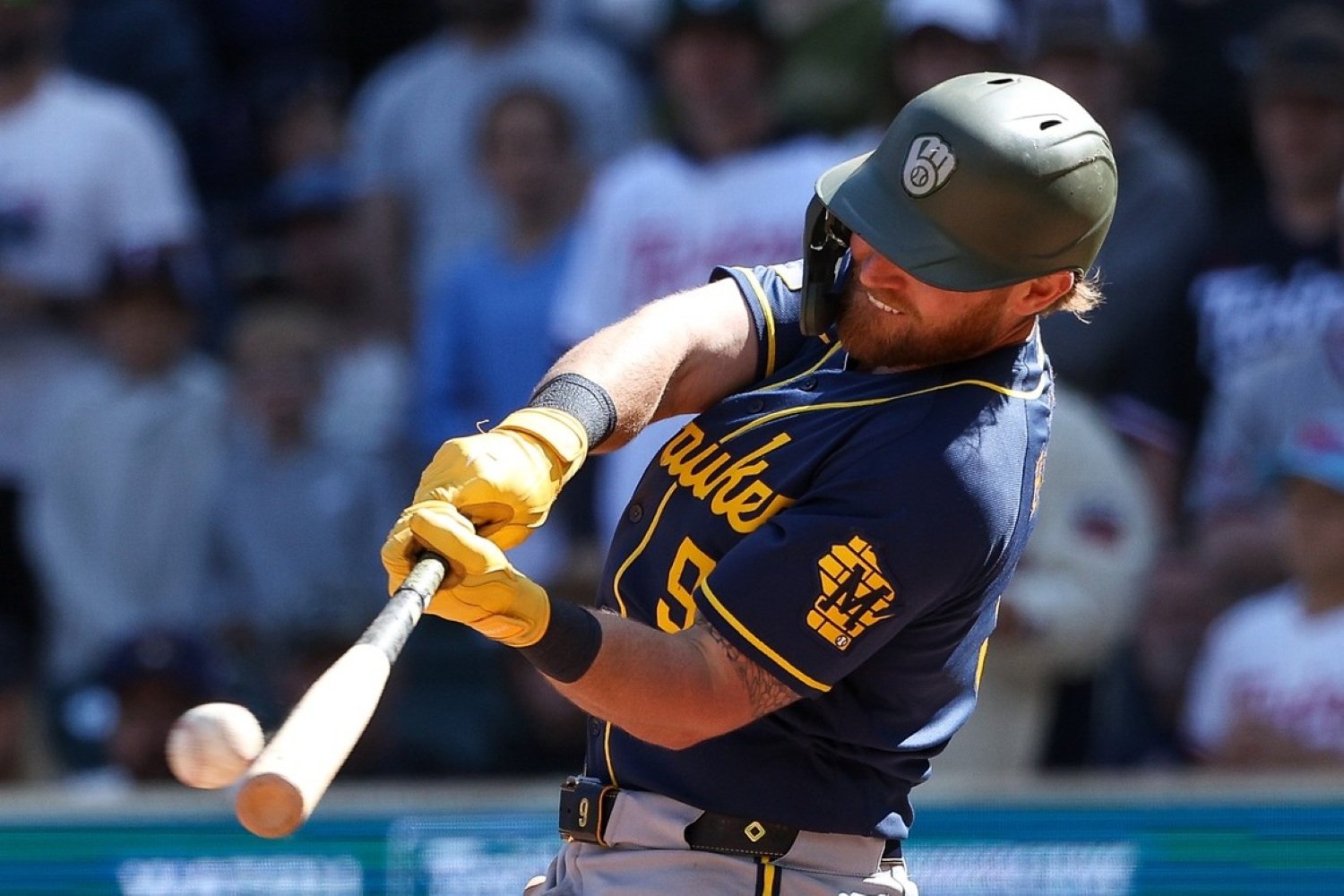 Jake Bauers has changed his stance this season. He's changed his contact point and his approach a bit. But all that work has amounted to the programming of muscle memory. Once he steps to the plate, his mind and his eyes are clear. He says that's the key to his late-blooming success. He changed his setup after dealing with an injury-related slump last summer, but hasn't spent time refining his new stance or tweaked swing. He's just focused on seeing the ball. "I'll be honest with you," Bauers said Sunday morning, inside the visitors' clubhouse at Target Field in Minneapolis. "I haven't thought about mechanics in the box even one time since I got [to Arizona for spring training]." The stats say it's working, and working exceptionally well. Bauers went 4-for-8 with a pair of doubles, a walk and a stolen base over the weekend against the Twins, and (as manager Pat Murphy noted) Sunday's double and one long flyout could easily have been home runs, if not for swirling winds that knocked the ball down for most of the final game of the set. He's batting .281/.358/.489 on the season, and there's room for growth from there, based on his batted-ball profile and the lowest strikeout rate of his career (21.9%). He's been a godsend, for a team sorely in need of that offensive juice. They're just stick figures, but you can see the relaxation in Bauers's swing by comparing a Statcast animation of the very start of it to those of other lefty batters who roughly match his near-elite bat speed. Here's what Jac Caglianone looks like when his front foot lands and his swing begins. His bat is fairly flat behind him, forcing it to describe a long arc to the hitting zone. Meanwhile, hie front shoulder is turned in, while his weight is already shifting from his back leg to his front one, opening his hips. It's not hard to see where Caglianone is getting the torque in his swing, but nor is it hard to guess why he whiffs on 31.8% of his swings. Here's Kyle Schwarber, who does a lot of the same things—though he stays on his back leg a hair longer, allowing him to make slightly later adjustments and find the barrel more often. Here's teammate Garrett Mitchell, built much the same way as Bauers. Now, here's Bauers. Notice how upright he is, and how his barrel isn't wrapped around behind him or flattened the way the others' are. Notice, too, how much closer together his feet are, and how even is his weight distribution. This hasn't always been how he's hit. You can see the difference even by looking at last year's visual, but to wash out the distortion created by the changes he implemented in late 2025, let's look at his 2024 self. This is a much more standard lefty power hitter's initial swing position. The feet are farther apart; he's taken a longer stride. He's leaning forward a bit more as he uses his lower half to generate power, forcing a compensatory movement up top to stay balanced. His bat is flatter, and his hands are farther behind his torso. This was the version of Bauers the league saw for years. This year's is a new guy, full of confidence and clarity and the added functional strength on which he worked hard late last year and throughout the offseason. It doesn't look like most lefty sluggers do. That's a good thing. "I'm just trusting myself," Bauers said. "It sounds simple; it's not simple. But you have to take some of those other thoughts out of it. In the past, I would be in the box thinking about my swing, thinking about what I was trying to do physically, and it just got in the way." It takes a great deal of hard work to earn the privilege of hitting that way, of course. You have to know your swing exceptionally well, in order to start pushing thoughts about it down into the subconscious part of the brain during the activity itself. Bauers said he's also simplified the way he digests information about opposing pitchers, and uses reps on the Trajekt machine when the Crew is at home to prepare for encounters with specific pitchers in a setting that feels more alive than pages of a scouting report. "Part of it is trusting the hitting coaches, that they'll bring something to me if there's something going wrong or something I need to be doing," Bauers said. "But I just want to be in the box with the plan to see it well." Prospect lists can be overrated, in the sense that they give a false impression of certainty about which current minor-leaguers will become great big-leaguers. They encourage fans to see the game through the prism of talent, when there's much more in the stew that becomes success than just that key ingredient. However, they're not as irrelevant as some of their denigrators would have you believe, either. When you're a top prospect, you get an abundance of one irreplaceable currency: opportunity. When a team has a player in whom they've made a major investment, and when that player gets the marketability and trade-value boost of being identified as a top prosect, they funnel chances toward that player. They pave a road to the majors for them, including a full-time role when they first arrive, and they don't give up on them easily. That stability—that routine, and that rapid familiarity with the league, and that absence of pressure to make something happen in every plate appearance, and most of all, all those reps—is hugely valuable. In 2013, Bauers was a 7th-round pick by the Padres out of his California high school. He signed, but not for big money. After his first full season in the San Diego system, he was part of the infamous trade sending Wil Myers to the Padres and Trea Turner to the Nationals. Bauers landed with the Rays, where he spent the next four seasons. He didn't debut until 2018, but to their credit, the Rays did set him up to succeed, handing him a job on June 7 that year and never taking it away. Unfortunately, it would be (essentially) the last time he ever got that luxury. That winter, Bauers was part of the beefy three-team trade that sent Yandy Díaz to Tampa, Carlos Santana back to Cleveland (for the first time) and Edwin Encarnación to Seattle. Bauers landed on the shores of Lake Erie, and Cleveland tried to give him (more or less) a full-fledged shot. He struggled so mightily, though, that they demoted him to Triple-A Columbus for all of August. He would languish a little longer in the Cleveland system, but get no more real chances. They traded him to Seattle for a player to be named later in June 2021. Seattle cut him that fall. He latched on with the Reds for 2022, and the Yankees scooped him up in a cash deal that June. New York cut him that fall. They re-signed him about a month later, though, and a pattern began to emerge: Once you have Bauers around for a bit, you tend to want him around longer than you'd think. He certainly wasn't in Cleveland's plans, after that initial failure in 2019, but they weren't quick to jettison him, by any means. The Yankees went out of their way to get him twice. They traded him to the Brewers after 2023, and the Brewers would cut him one year later—but they also re-signed him, and voluntarily retained him again this winter. Bauers's career high in plate appearances is still 423, from that 2019 season. That might change this season, though. Finally, at age 30, Bauers is getting some runway—partially because Andrew Vaughn got hurt on Opening Day, but partially because he's earned it, and is taking full advantage of it. He's on pace to qualify for the batting title, and he's been worth 6 runs more than an average batter, according to Baseball Reference. It's been difficult to make the last several years work for him, rather than against him, but Bauers now feels that he's amassed enough reps in the majors to achieve a level of physical and mental comfort that empowers him. "It's just been getting the chances, getting the reps, and getting more confident about what I know to do," he said. The simplicity of it all undersells the achievement, especially because he never got his uninterrupted shot for a full season in the majors—let alone two or three of them, as many higher-profile prospects might have gotten. Bauers is, quite suddenly, a respected veteran in the clubhouse, rather than someone clinging to the edge of the roster. He's friendly, thoughtful and just the right amount of talkative to fit into a big-league clubhouse. He, Brice Turang, Christian Yelich and others pass information well back and forth, and they have an easy camaraderie in their personal interactions, too. He exudes a California cool. Even though he's meandered from those roots and spends his winters in the Dallas area, he still likes the beach, and wears the same sand-colored sleeveless t-shirt around the clubhouse virtually all the time. A relaxed mindset was always where he was likely to find the power to emerge as a star, or as close to it as a 7th-round pick gets after only establishing themselves upon joining their eighth pro organization. That relaxation is a privilege conferred on elite prospects, but through enough resiliency and focused work, it can also be achieved by the Other Guys.
 -
Image courtesy of © Matt Krohn-Imagn Images Jake Bauers has changed his stance this season. He's changed his contact point and his approach a bit. But all that work has amounted to the programming of muscle memory. Once he steps to the plate, his mind and his eyes are clear. He says that's the key to his late-blooming success. He changed his setup after dealing with an injury-related slump last summer, but hasn't spent time refining his new stance or tweaked swing. He's just focused on seeing the ball. "I'll be honest with you," Bauers said Sunday morning, inside the visitors' clubhouse at Target Field in Minneapolis. "I haven't thought about mechanics in the box even one time since I got [to Arizona for spring training]." The stats say it's working, and working exceptionally well. Bauers went 4-for-8 with a pair of doubles, a walk and a stolen base over the weekend against the Twins, and (as manager Pat Murphy noted) Sunday's double and one long flyout could easily have been home runs, if not for swirling winds that knocked the ball down for most of the final game of the set. He's batting .281/.358/.489 on the season, and there's room for growth from there, based on his batted-ball profile and the lowest strikeout rate of his career (21.9%). He's been a godsend, for a team sorely in need of that offensive juice. They're just stick figures, but you can see the relaxation in Bauers's swing by comparing a Statcast animation of the very start of it to those of other lefty batters who roughly match his near-elite bat speed. Here's what Jac Caglianone looks like when his front foot lands and his swing begins. His bat is fairly flat behind him, forcing it to describe a long arc to the hitting zone. Meanwhile, hie front shoulder is turned in, while his weight is already shifting from his back leg to his front one, opening his hips. It's not hard to see where Caglianone is getting the torque in his swing, but nor is it hard to guess why he whiffs on 31.8% of his swings. Here's Kyle Schwarber, who does a lot of the same things—though he stays on his back leg a hair longer, allowing him to make slightly later adjustments and find the barrel more often. Here's teammate Garrett Mitchell, built much the same way as Bauers. Now, here's Bauers. Notice how upright he is, and how his barrel isn't wrapped around behind him or flattened the way the others' are. Notice, too, how much closer together his feet are, and how even is his weight distribution. This hasn't always been how he's hit. You can see the difference even by looking at last year's visual, but to wash out the distortion created by the changes he implemented in late 2025, let's look at his 2024 self. This is a much more standard lefty power hitter's initial swing position. The feet are farther apart; he's taken a longer stride. He's leaning forward a bit more as he uses his lower half to generate power, forcing a compensatory movement up top to stay balanced. His bat is flatter, and his hands are farther behind his torso. This was the version of Bauers the league saw for years. This year's is a new guy, full of confidence and clarity and the added functional strength on which he worked hard late last year and throughout the offseason. It doesn't look like most lefty sluggers do. That's a good thing. "I'm just trusting myself," Bauers said. "It sounds simple; it's not simple. But you have to take some of those other thoughts out of it. In the past, I would be in the box thinking about my swing, thinking about what I was trying to do physically, and it just got in the way." It takes a great deal of hard work to earn the privilege of hitting that way, of course. You have to know your swing exceptionally well, in order to start pushing thoughts about it down into the subconscious part of the brain during the activity itself. Bauers said he's also simplified the way he digests information about opposing pitchers, and uses reps on the Trajekt machine when the Crew is at home to prepare for encounters with specific pitchers in a setting that feels more alive than pages of a scouting report. "Part of it is trusting the hitting coaches, that they'll bring something to me if there's something going wrong or something I need to be doing," Bauers said. "But I just want to be in the box with the plan to see it well." Prospect lists can be overrated, in the sense that they give a false impression of certainty about which current minor-leaguers will become great big-leaguers. They encourage fans to see the game through the prism of talent, when there's much more in the stew that becomes success than just that key ingredient. However, they're not as irrelevant as some of their denigrators would have you believe, either. When you're a top prospect, you get an abundance of one irreplaceable currency: opportunity. When a team has a player in whom they've made a major investment, and when that player gets the marketability and trade-value boost of being identified as a top prosect, they funnel chances toward that player. They pave a road to the majors for them, including a full-time role when they first arrive, and they don't give up on them easily. That stability—that routine, and that rapid familiarity with the league, and that absence of pressure to make something happen in every plate appearance, and most of all, all those reps—is hugely valuable. In 2013, Bauers was a 7th-round pick by the Padres out of his California high school. He signed, but not for big money. After his first full season in the San Diego system, he was part of the infamous trade sending Wil Myers to the Padres and Trea Turner to the Nationals. Bauers landed with the Rays, where he spent the next four seasons. He didn't debut until 2018, but to their credit, the Rays did set him up to succeed, handing him a job on June 7 that year and never taking it away. Unfortunately, it would be (essentially) the last time he ever got that luxury. That winter, Bauers was part of the beefy three-team trade that sent Yandy Díaz to Tampa, Carlos Santana back to Cleveland (for the first time) and Edwin Encarnación to Seattle. Bauers landed on the shores of Lake Erie, and Cleveland tried to give him (more or less) a full-fledged shot. He struggled so mightily, though, that they demoted him to Triple-A Columbus for all of August. He would languish a little longer in the Cleveland system, but get no more real chances. They traded him to Seattle for a player to be named later in June 2021. Seattle cut him that fall. He latched on with the Reds for 2022, and the Yankees scooped him up in a cash deal that June. New York cut him that fall. They re-signed him about a month later, though, and a pattern began to emerge: Once you have Bauers around for a bit, you tend to want him around longer than you'd think. He certainly wasn't in Cleveland's plans, after that initial failure in 2019, but they weren't quick to jettison him, by any means. The Yankees went out of their way to get him twice. They traded him to the Brewers after 2023, and the Brewers would cut him one year later—but they also re-signed him, and voluntarily retained him again this winter. Bauers's career high in plate appearances is still 423, from that 2019 season. That might change this season, though. Finally, at age 30, Bauers is getting some runway—partially because Andrew Vaughn got hurt on Opening Day, but partially because he's earned it, and is taking full advantage of it. He's on pace to qualify for the batting title, and he's been worth 6 runs more than an average batter, according to Baseball Reference. It's been difficult to make the last several years work for him, rather than against him, but Bauers now feels that he's amassed enough reps in the majors to achieve a level of physical and mental comfort that empowers him. "It's just been getting the chances, getting the reps, and getting more confident about what I know to do," he said. The simplicity of it all undersells the achievement, especially because he never got his uninterrupted shot for a full season in the majors—let alone two or three of them, as many higher-profile prospects might have gotten. Bauers is, quite suddenly, a respected veteran in the clubhouse, rather than someone clinging to the edge of the roster. He's friendly, thoughtful and just the right amount of talkative to fit into a big-league clubhouse. He, Brice Turang, Christian Yelich and others pass information well back and forth, and they have an easy camaraderie in their personal interactions, too. He exudes a California cool. Even though he's meandered from those roots and spends his winters in the Dallas area, he still likes the beach, and wears the same sand-colored sleeveless t-shirt around the clubhouse virtually all the time. A relaxed mindset was always where he was likely to find the power to emerge as a star, or as close to it as a 7th-round pick gets after only establishing themselves upon joining their eighth pro organization. That relaxation is a privilege conferred on elite prospects, but through enough resiliency and focused work, it can also be achieved by the Other Guys. View full article
-
Image courtesy of © Mark Hoffman/Milwaukee Journal Sentinel / USA TODAY NETWORK via Imagn Images It's always jarring to realize, after all the money spent finding elite athletes and turning them into optimized baseball machines, that their excellence remains so fragile. Tiny grains of sand can interfere with the vast, otherwise beautiful construction. There is no such thing as a small mistake. That's the takeaway from the Brewers' loss Wednesday night against the Padres. An offense still trying to find its groove scored just one run, but Jacob Misiorowski and Aaron Ashby made that tally stand tall through eight frames. Abner Uribe came on to close out the win, but he simply didn't have it—and the problem all came down to a patch of dirt a few inches wide, at the front of the mound. Here's what it looks like when Uribe executes his slider exactly as he intends to. QndSNnJfWGw0TUFRPT1fVUFSVVZ3ZFNWMUFBQ2x0VVZRQUhVbE1EQUFNSEJsTUFBd0FBVVFFQVV3VldCbEJT.mp4 There's a ton of violence in Uribe's delivery, from the ground up. His arm works exceptionally quickly—he's what pitching coaches call "whippy". He gets much of the energy for that whiplike action from his long legs, though. He flies down the mound and spins off to the first-base side of it after he releases the ball; that's just how his body operates. The intensity and immensity of his limbs in motion create deception for the batter, and are part of both why his stuff is so good and why hitters struggle against it so badly. Nothing comes without costs, though. Sometimes, moving that fast means a loss of stability or consistency. In Uribe's case, that chaos can be both productive and dangerous. Here's a slight variation on the pitch above, from his appearance last night against the Padres. QndSNmRfWGw0TUFRPT1fQndSWlUxTUNWUW9BVzFjRkJBQUhVbFJlQUZsUUFsVUFDMWNEQ1FOVEExSlVCbE5m.mp4 Everything is almost the same, but Uribe lands slightly more closed with his left foot. He has to get around his front side a bit more, which flattens out the break on the pitch. He's also a hair early with his arm, which (in combination with the alteration in the landing spot) makes it easier for Xander Bogaerts to see that the ball will break out of the zone. This kind of variation from pitch to pitch is very much the norm, but its effects are no less real because everyone experiences them. Here's another pitch from last night, with a better result for Uribe. QndSNmRfWGw0TUFRPT1fVWxSWVVWSUVVZ1VBWFFOWEJ3QUhWRlFFQUFBSEJRVUFBbE1DVlZJREFRRUdDQXBW.mp4 This one is a lot like the ball thrown to Bogaerts later in the inning, in that Uribe lands almost undetectably farther toward third base than when he snaps off his very best, two-plane sliders. This time, he's on time with the arm, which creates a pitch with lots of sweep and power—but it stays up. That works in Uribe's favor, rather than against him, because he locates well and the horizontal movement takes the pitch away from Fernando Tatis Jr.'s barrel. Now, here's what trouble looks like. QndSNmRfWGw0TUFRPT1fVXdBRUFWTUFWMUVBRGxZRUJRQUhCd1pTQUFBQVYxVUFWQUFHQ0FZREFnWmNWRkZR.mp4 I bet you thought that would be Gavin Sheets's home run. We'll get there. No, this pitch worked, in that it stole a strike for Uribe to start the at-bat. But he missed his landing spot by a bit more this time, and it carried his release point rightward. He couldn't get depth on the pitch, and this time, he couldn't steer it across the plate, either. Sheets was frozen, but not for long. QndSNmRfWGw0TUFRPT1fVWdOVVZBVUFBd1FBRGdjSFZBQUhBRkpVQUZnR0JsSUFDMU5RQVZBRkFRc0dVbGND.mp4 Same mechanical mistake—a small but noticeable change in stride direction that leads to a pitch with more carry. This one turns the corner just a little, horizontally, but it runs right into Sheets's bat. He had just seen the exact same pitch. He was ready for it. Not all mistakes get punished. Not all of them even should be punished, by a smart and talented hitter. Some backup sliders are good pitches. They fool the hitter, because all that happens is that the pitcher slightly errs in the spin direction by releasing the pitch a tiny bit wrong. It's impossible to read that kind of mistake, and often, it's maddeningly hard to hit it. WU81ZzlfWGw0TUFRPT1fQmxCUlhRRUZCQW9BREZ0V0J3QUhCRmRWQUZrTkJWVUFVd0FOQWxjRkJsQlFCd05X.mp4 However, when a pitcher puts a foot wrong—when the stride is a bit off, forcing a different arm path and/or throwing off the hurler's timing—it gets easier to spot and to attack the resulting meatball. Here's where Uribe was at foot strike (the moment when the front foot first engages with the ground) on four of the pitches above. On the left, we have the best version of a Uribe slider. His stride is direct, or slightly open. His hip-shoulder separation is huge, which gives the resulting pitch speed and snap and makes the hitter instinctively gear up for a fastball. The arm is on time; that's the position you want it in. Next, we have the Bogaerts pitch, on which you can just see the front foot having landed farther to the right and the arm being slightly early in coming around. Second from right, we see the pitch with which he beat Tatis: stride a little closed, but the arm on time, creating more of a sweeper and less of a depth-oriented slider than his usual but still making it hard for the same-handed batter. Finally, at right, you see the pitch on which Sheets homered. The stride is slightly closed, but this time, the arm is also late. That results in a miss both high and arm-side, but because of the stride direction and its effects on his mechanics, it's more the former than the latter. If he'd been on time, he would have thrown a vicious pitch, perhaps down on the lower third of the outer edge for another called strike. If he'd been similarly late with the arm but strode more directly, he'd have produced a pitch that looked more like a mistake than the actual one did—but it would have been more deceptive to Sheets, who might well have whiffed on it like Jose Tena did in the final video above. Pitches spun the way Uribe's was spinning are also more prone to backspin off the bat than better-executed ones. That's why mistake breaking balls often carry so well, and why Sheets's liner managed to stay up long enough to clear the wall in right-center field. It was a confluence of things that, had any of them not been true, would have resulted in a more manageable result for the Brewers. Unfortunately, success in this game is fragile, and Uribe's almost imperceptible mistakes turned into game-altering damage on Wednesday night. View full article

