
Matthew Trueblood
-
Posts
1,964 -
Joined
-
Last visited
-
Days Won
10
Content Type
Profiles
Forums
Blogs
Events
News
2026 Milwaukee Brewers Top Prospects Ranking
Milwaukee Brewers Videos
2022 Milwaukee Brewers Draft Picks
Milwaukee Brewers Free Agent & Trade Rumors, Notes, & Tidbits
Guides & Resources
2023 Milwaukee Brewers Draft Picks
2024 Milwaukee Brewers Draft Picks
The Milwaukee Brewers Players Project
2025 Milwaukee Brewers Draft Pick Tracker
2026 Milwaukee Brewers Draft Tracker: Picks & Bonuses
Store
Downloads
Gallery
Everything posted by Matthew Trueblood
-
Missed By a Foot: Abner Uribe and the Fragility of Brilliance
Matthew Trueblood posted an article in Brewers
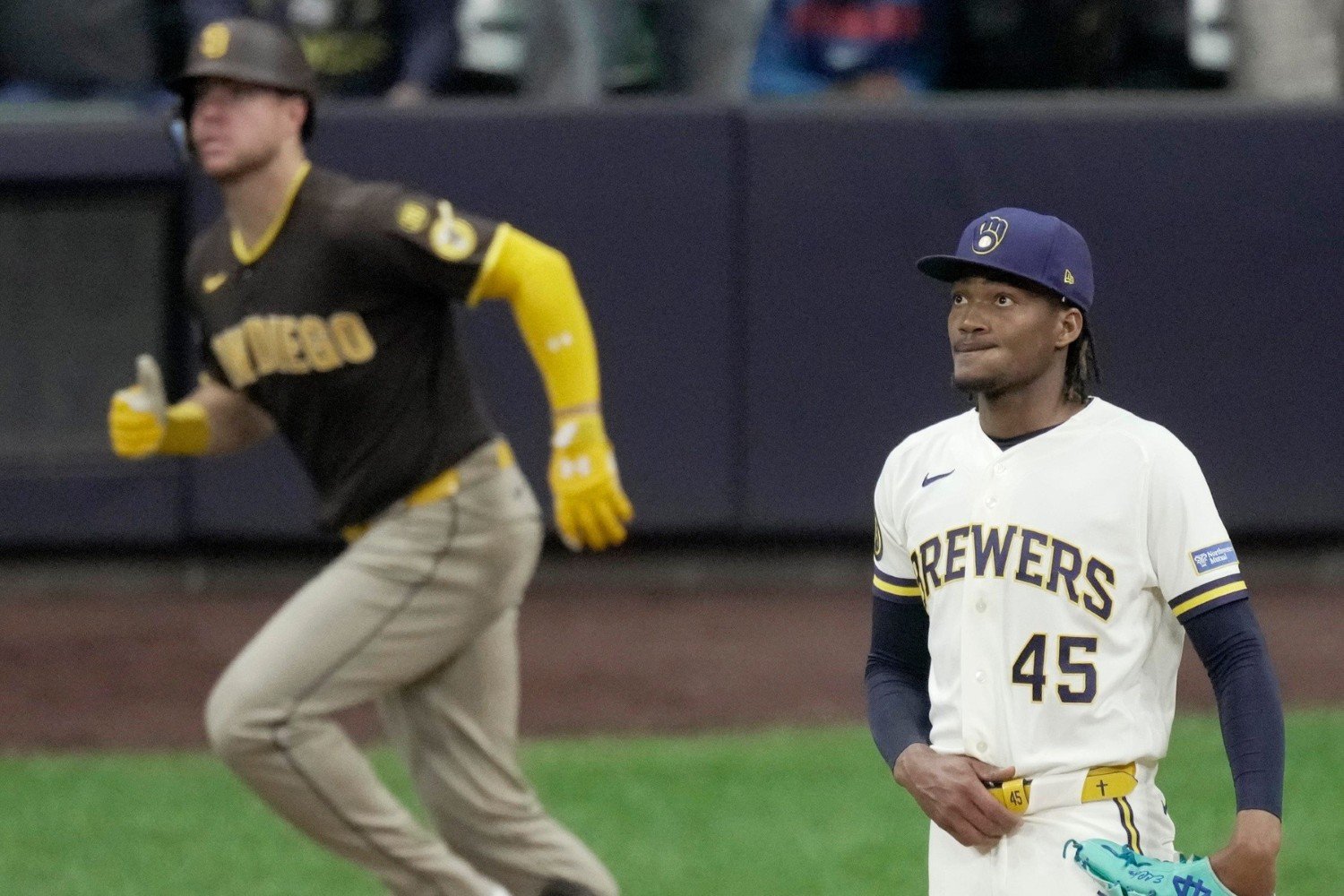 It's always jarring to realize, after all the money spent finding elite athletes and turning them into optimized baseball machines, that their excellence remains so fragile. Tiny grains of sand can interfere with the vast, otherwise beautiful construction. There is no such thing as a small mistake. That's the takeaway from the Brewers' loss Wednesday night against the Padres. An offense still trying to find its groove scored just one run, but Jacob Misiorowski and Aaron Ashby made that tally stand tall through eight frames. Abner Uribe came on to close out the win, but he simply didn't have it—and the problem all came down to a patch of dirt a few inches wide, at the front of the mound. Here's what it looks like when Uribe executes his slider exactly as he intends to. QndSNnJfWGw0TUFRPT1fVUFSVVZ3ZFNWMUFBQ2x0VVZRQUhVbE1EQUFNSEJsTUFBd0FBVVFFQVV3VldCbEJT.mp4 There's a ton of violence in Uribe's delivery, from the ground up. His arm works exceptionally quickly—he's what pitching coaches call "whippy". He gets much of the energy for that whiplike action from his long legs, though. He flies down the mound and spins off to the first-base side of it after he releases the ball; that's just how his body operates. The intensity and immensity of his limbs in motion create deception for the batter, and are part of both why his stuff is so good and why hitters struggle against it so badly. Nothing comes without costs, though. Sometimes, moving that fast means a loss of stability or consistency. In Uribe's case, that chaos can be both productive and dangerous. Here's a slight variation on the pitch above, from his appearance last night against the Padres. QndSNmRfWGw0TUFRPT1fQndSWlUxTUNWUW9BVzFjRkJBQUhVbFJlQUZsUUFsVUFDMWNEQ1FOVEExSlVCbE5m.mp4 Everything is almost the same, but Uribe lands slightly more closed with his left foot. He has to get around his front side a bit more, which flattens out the break on the pitch. He's also a hair early with his arm, which (in combination with the alteration in the landing spot) makes it easier for Xander Bogaerts to see that the ball will break out of the zone. This kind of variation from pitch to pitch is very much the norm, but its effects are no less real because everyone experiences them. Here's another pitch from last night, with a better result for Uribe. QndSNmRfWGw0TUFRPT1fVWxSWVVWSUVVZ1VBWFFOWEJ3QUhWRlFFQUFBSEJRVUFBbE1DVlZJREFRRUdDQXBW.mp4 This one is a lot like the ball thrown to Bogaerts later in the inning, in that Uribe lands almost undetectably farther toward third base than when he snaps off his very best, two-plane sliders. This time, he's on time with the arm, which creates a pitch with lots of sweep and power—but it stays up. That works in Uribe's favor, rather than against him, because he locates well and the horizontal movement takes the pitch away from Fernando Tatis Jr.'s barrel. Now, here's what trouble looks like. QndSNmRfWGw0TUFRPT1fVXdBRUFWTUFWMUVBRGxZRUJRQUhCd1pTQUFBQVYxVUFWQUFHQ0FZREFnWmNWRkZR.mp4 I bet you thought that would be Gavin Sheets's home run. We'll get there. No, this pitch worked, in that it stole a strike for Uribe to start the at-bat. But he missed his landing spot by a bit more this time, and it carried his release point rightward. He couldn't get depth on the pitch, and this time, he couldn't steer it across the plate, either. Sheets was frozen, but not for long. QndSNmRfWGw0TUFRPT1fVWdOVVZBVUFBd1FBRGdjSFZBQUhBRkpVQUZnR0JsSUFDMU5RQVZBRkFRc0dVbGND.mp4 Same mechanical mistake—a small but noticeable change in stride direction that leads to a pitch with more carry. This one turns the corner just a little, horizontally, but it runs right into Sheets's bat. He had just seen the exact same pitch. He was ready for it. Not all mistakes get punished. Not all of them even should be punished, by a smart and talented hitter. Some backup sliders are good pitches. They fool the hitter, because all that happens is that the pitcher slightly errs in the spin direction by releasing the pitch a tiny bit wrong. It's impossible to read that kind of mistake, and often, it's maddeningly hard to hit it. WU81ZzlfWGw0TUFRPT1fQmxCUlhRRUZCQW9BREZ0V0J3QUhCRmRWQUZrTkJWVUFVd0FOQWxjRkJsQlFCd05X.mp4 However, when a pitcher puts a foot wrong—when the stride is a bit off, forcing a different arm path and/or throwing off the hurler's timing—it gets easier to spot and to attack the resulting meatball. Here's where Uribe was at foot strike (the moment when the front foot first engages with the ground) on four of the pitches above. On the left, we have the best version of a Uribe slider. His stride is direct, or slightly open. His hip-shoulder separation is huge, which gives the resulting pitch speed and snap and makes the hitter instinctively gear up for a fastball. The arm is on time; that's the position you want it in. Next, we have the Bogaerts pitch, on which you can just see the front foot having landed farther to the right and the arm being slightly early in coming around. Second from right, we see the pitch with which he beat Tatis: stride a little closed, but the arm on time, creating more of a sweeper and less of a depth-oriented slider than his usual but still making it hard for the same-handed batter. Finally, at right, you see the pitch on which Sheets homered. The stride is slightly closed, but this time, the arm is also late. That results in a miss both high and arm-side, but because of the stride direction and its effects on his mechanics, it's more the former than the latter. If he'd been on time, he would have thrown a vicious pitch, perhaps down on the lower third of the outer edge for another called strike. If he'd been similarly late with the arm but strode more directly, he'd have produced a pitch that looked more like a mistake than the actual one did—but it would have been more deceptive to Sheets, who might well have whiffed on it like Jose Tena did in the final video above. Pitches spun the way Uribe's was spinning are also more prone to backspin off the bat than better-executed ones. That's why mistake breaking balls often carry so well, and why Sheets's liner managed to stay up long enough to clear the wall in right-center field. It was a confluence of things that, had any of them not been true, would have resulted in a more manageable result for the Brewers. Unfortunately, success in this game is fragile, and Uribe's almost imperceptible mistakes turned into game-altering damage on Wednesday night.
 -
Ddefinitely possible; crossed my mind too.
-
Image courtesy of © Mark Hoffman/Milwaukee Journal Sentinel / USA TODAY NETWORK via Imagn Images Visit Garrett Mitchell's Baseball Savant player card, and you'll see an impressive number next to Arm Strength. On competitive throws, Mitchell averages a velocity of nearly 94 miles per hour, according to Statcast. Outfielders can sometimes top 100 MPH when the circumstances are conducive, because they often get the luxury of a crow hop as they load up for the throw. On the other hand, they have to get off the throw under time pressure, so throws that hard are rare. Mitchell's average velocity on the throws Statcast uses for its measurements is in the 97th percentile, the way the system counts these things. Yet, Mitchell doesn't actually deliver positive value with his arm. On the contrary, runners take more bases against him on hits and flyouts than against an average outfielder. Ditto for Sal Frelick, whose arm is much less trong on average but who flashes the ability to make exceptionally accurate, strong pegs. He throws well, but he doesn't control the running game on balls in play well. As a team, the Brewers have lost 3 runs via opponent extra bases taken, relative to an average club. Only the Reds and Rockies have been worse this season. It's a rare detail-oriented aspect of the game in which the Crew do not excel, and it's worth asking: why do Mitchell and Frelick (the two most consistent pieces of the team's outfield firmament so far) lose value with their arms, despite throwing relatively well? The obvious answer, of course, is that some of Mitchell's throws look like this: NXk5VjBfVjBZQUhRPT1fRGxCWkJnQlhCRkFBRDFNRFhnQUhCVlZUQUFNRFVWTUFBMVZRVVFRRkJnUURBUVFG.mp4 Quantifying arm accuracy isn't easy, but occasionally, a glaring mistake like that one makes obvious the disconnect between sheer arm strength and arm value. Whether Mitchell should have thrown to the plate at all is an interesting call. As the 3D reconstruction of the play available on the MLB Gameday page for the game shows, Mitchell fielded the ball almost exactly as Jacob Young hit third base. When an outfielder with a strong arm is coming in on a ball with a head of steam and they field it just as the runner reaches third, a throw home is appropriate. The batter-runner, catcher Keibert Ruiz, is slow enough to make that throw relatively cost-free most of the time, and there's a real chance to get an out at the plate. On the other hand, Young has plus speed, so getting him was unlikely, even for the strong-armed Mitchell. The biggest problem, though, was how wide the throw went, leaving Young unthreatened as he scored and pulling William Contreras far up the line. It sailed, too, so that it couldn't even be cut off along the way. That was a lost opportunity to prevent one run, and it made another one slightly more likely. Ruiz didn't come around to score, as it turned out, but Mitchell hurt the Brewers' chances with that bad throw. Inaccurate pegs are just part of the problem, though, and not the biggest part, by any means. Much more often, arm utility comes down to the subtler aspects of playing the ball: positioning, how quickly you get to the ball, and the footwork you use when you do. Here's one example. d2VvcWxfVjBZQUhRPT1fRHdGWlVsY01Yd0FBRFFjRFVRQUhDQUFEQUFNTUFnSUFWRmNIVWxGVUFndFFDRmRW.mp4 On a long drive by the Nationals' Jose Tena, Mitchell got too close to the wall and had it bounce over his head. There was never a chance of catching the ball, and by chasing it too ardently, Mitchell ended up out of position to play the carom off the fence. That meant both that it took longer for him to corral it and that he couldn't even get off a strong throw once he did so. The way he played it turned a double into a triple. Here's another play where what was possible—what Mitchell didn't prevent—isn't immediately obvious, and where the reasons why he was unable to prevent the extra base is hard to see at first. bmJ3V3ZfVjBZQUhRPT1fQXdSVUFnVUVWRmNBV2xvR0FBQUhBQUpSQUFBQUFBTUFVRjBCQ0ZZREJBQlNVMWRm.mp4 Positioning was a huge piece of the equation here. Mitchell started the play 322 feet from home plate, which is about the average depth for a center fielder these days. Against Victor Scott II, though, you usually don't have to play that deep. Mitchell was there because, with two outs and an above-average runner aboard, the Brewers wanted to prevent a double, more than they wanted to thwart a single or stop Masyn Winn from taking third on one. In that sense, the fact that Winn did advance on this play is not a huge loss, and it's certainly not all on Mitchell. That's a team decision, made for strategic reasons. However, Mitchell still could have done more to prevent Winn from reaching third. Look at the way he fields the ball. Getting down on the ball well in that situation is critical. Letting it get past you turns a single into more and allows that run the team is hoping to forestall to score, needlessly. However, Mitchell got behind the ball, only to slow down and drop into a boxy infielder's crouch as he played what was a sharply hit ball. He might have read it as being hit more slowly than it really was. Had he read it right and taken a more aggressive tack with his charge, he could have been getting into a throwing position by the moment we see above, and there could have been more behind his throw to third. As you can see, Winn had just passed second base at this moment; there was a play to be made on him. Mitchell's failure to get into an aggressive throwing position early squandered the chance. One more play in which we'll pick on Mitchell a bit, before moving on. akR3ZGdfVjBZQUhRPT1fQkZRSEFnWUdWQVFBQ1FjSFh3QUhBMUJlQUZnQ0JsVUFVd1lOQkZJRVVsVldDVlpW (1).mp4 A portion of arm utility is simply knowing when to use it. Here, Mitchell conceded the run too easily. He doesn't charge the ball as aggressively as he could have, but even so, he gets to the ball just as Liam Hicks rounds third. Here, again, is the 3D rendering of the moment when Mitchell fields the ball. Hicks is a catcher by trade and a slow runner. With a player like him at this spot and a center fielder who can throw well holding the ball, it's worth a throw to the plate. Mitchell plays it safe—too much so. Now, let's talk about Sal Frelick. He's not working with the same kind of hose Mitchell has. He needs to use his speed and his footwork to get off the strongest throws of which he's capable, and he has to be on the money. Generally speaking, he does so. So why does he still come in below average when it comes to actually preventing runners from taking the extra base? Firstly, there's positioning. A bit too often, this year, the Brewers have had Frelick shaded toward the gap, only to see the ball go down the right-field line. The extra 20 feet Frelick has to run in such situations can often make the difference between a runner taking an extra 90 feet or not, and it's got little to do with Frelick himself. Depending on your mood, this can be construed as bad luck, poor implementation of the plan by the battery, or mistaken advance scouting by the coaches aligning the defense, but whatever the cause, the value leaks away. b0d3bERfWGw0TUFRPT1fQXdCVVVnWlJVbEVBQVFCVEFBQUhDQUFDQUZoVFUxTUFBRllGVkFSVEF3SlJCZ2NF.mp4 Frelick has been caught playing a bit too deep at times, too. Here's one hit on which he could have stopped a runner from reaching third, if he'd been in a better starting position or taken a better initial route when it left the bat. TUFYMjFfWGw0TUFRPT1fQUZJQ1hGTlFWUWNBQ2xjSEJBQUhDUTllQUZoV0FBY0FVRkZVQ0FZTlV3UUJBbGRS.mp4 In fairness to Frelick, this is another case wherein the Brewers' top priorities are not to prevent the runner from going first to third. Still, because he was playing deep and initially gave ground on the ball, the trailing runner was able to do just that. Here's the moment at which Frelick fielded the ball, in 3D rendering. You won't throw out even an average runner from this depth in right field to third base, if they're already up to speed and reaching second as you field the ball—not, at least, unless you have a Mitchell-caliber cannon. Frelick doesn't, so the play was over by the time he fielded the ball. Had he gotten a better read, though, Frelick could have met the ball earlier and shallower, with a pretty good angle to throw and an extra step's worth of time to get it to third. Here's where he might have intercepted the ball, had he not initially thought Konnor Griffin's slicing drive would force him to defend the corner. The animated version of Frelick here is the real one, and as you can see, he's about 15 feet from where the ball is, still running away from it a bit. That's only because he was playing so deep and took a banana route to the ball, though: first in, then over and back, bending into position. If his first step had been better or he'd been a step shallower in the first place, he could have had the ball at this point, changing the math of the play. There are lots of little things like this happening when the opponent finds grass in the outfield against the Brewers this year. Frelick and Mitchell don't communicate well on gappers; they've repeatedly gotten too close together and been in each other's way as one tried to quickly get off a strong throw after fielding the ball. Frelick and Brandon Lockridge each took their turns getting too close to the wall and having the ball squirt past them, just as we watched Mitchell do above. Lockridge has been more aggressive and more accurate with charges and throws, but has a weak spot down the left-field line where he made multiple mistakes of creating an angle or throwing to a target that led to an opponent getting an extra base. It's still early, and there have been an unusual number of disruptions to the team's plans for the outfield already. By the end of the season, Milwaukee's phalanx is likely to be restored, with coaches getting their players into better positions and communication improving. Still, Mitchell will have to be more aware and more accurate, and the team will have to be more on the ball down the stretch. Extra bases turn into extra runs, and the extra runs the Brewers don't allow are how they've been able to win three straight National League Central titles. View full article
-
The Brewers' One Glaring Defensive Weakness: You Can Run on Them
Matthew Trueblood posted an article in Brewers
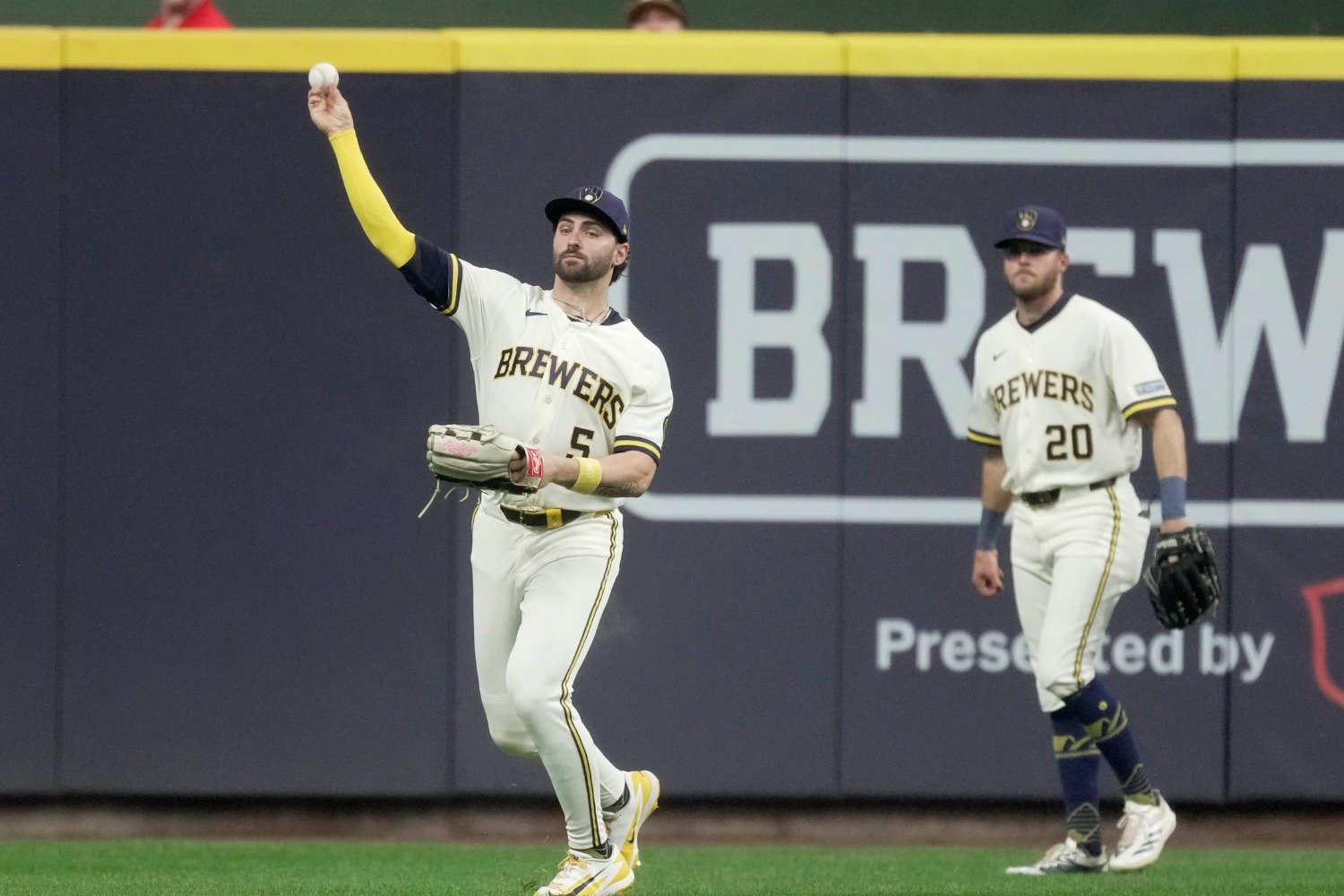 Visit Garrett Mitchell's Baseball Savant player card, and you'll see an impressive number next to Arm Strength. On competitive throws, Mitchell averages a velocity of nearly 94 miles per hour, according to Statcast. Outfielders can sometimes top 100 MPH when the circumstances are conducive, because they often get the luxury of a crow hop as they load up for the throw. On the other hand, they have to get off the throw under time pressure, so throws that hard are rare. Mitchell's average velocity on the throws Statcast uses for its measurements is in the 97th percentile, the way the system counts these things. Yet, Mitchell doesn't actually deliver positive value with his arm. On the contrary, runners take more bases against him on hits and flyouts than against an average outfielder. Ditto for Sal Frelick, whose arm is much less trong on average but who flashes the ability to make exceptionally accurate, strong pegs. He throws well, but he doesn't control the running game on balls in play well. As a team, the Brewers have lost 3 runs via opponent extra bases taken, relative to an average club. Only the Reds and Rockies have been worse this season. It's a rare detail-oriented aspect of the game in which the Crew do not excel, and it's worth asking: why do Mitchell and Frelick (the two most consistent pieces of the team's outfield firmament so far) lose value with their arms, despite throwing relatively well? The obvious answer, of course, is that some of Mitchell's throws look like this: NXk5VjBfVjBZQUhRPT1fRGxCWkJnQlhCRkFBRDFNRFhnQUhCVlZUQUFNRFVWTUFBMVZRVVFRRkJnUURBUVFG.mp4 Quantifying arm accuracy isn't easy, but occasionally, a glaring mistake like that one makes obvious the disconnect between sheer arm strength and arm value. Whether Mitchell should have thrown to the plate at all is an interesting call. As the 3D reconstruction of the play available on the MLB Gameday page for the game shows, Mitchell fielded the ball almost exactly as Jacob Young hit third base. When an outfielder with a strong arm is coming in on a ball with a head of steam and they field it just as the runner reaches third, a throw home is appropriate. The batter-runner, catcher Keibert Ruiz, is slow enough to make that throw relatively cost-free most of the time, and there's a real chance to get an out at the plate. On the other hand, Young has plus speed, so getting him was unlikely, even for the strong-armed Mitchell. The biggest problem, though, was how wide the throw went, leaving Young unthreatened as he scored and pulling William Contreras far up the line. It sailed, too, so that it couldn't even be cut off along the way. That was a lost opportunity to prevent one run, and it made another one slightly more likely. Ruiz didn't come around to score, as it turned out, but Mitchell hurt the Brewers' chances with that bad throw. Inaccurate pegs are just part of the problem, though, and not the biggest part, by any means. Much more often, arm utility comes down to the subtler aspects of playing the ball: positioning, how quickly you get to the ball, and the footwork you use when you do. Here's one example. d2VvcWxfVjBZQUhRPT1fRHdGWlVsY01Yd0FBRFFjRFVRQUhDQUFEQUFNTUFnSUFWRmNIVWxGVUFndFFDRmRW.mp4 On a long drive by the Nationals' Jose Tena, Mitchell got too close to the wall and had it bounce over his head. There was never a chance of catching the ball, and by chasing it too ardently, Mitchell ended up out of position to play the carom off the fence. That meant both that it took longer for him to corral it and that he couldn't even get off a strong throw once he did so. The way he played it turned a double into a triple. Here's another play where what was possible—what Mitchell didn't prevent—isn't immediately obvious, and where the reasons why he was unable to prevent the extra base is hard to see at first. bmJ3V3ZfVjBZQUhRPT1fQXdSVUFnVUVWRmNBV2xvR0FBQUhBQUpSQUFBQUFBTUFVRjBCQ0ZZREJBQlNVMWRm.mp4 Positioning was a huge piece of the equation here. Mitchell started the play 322 feet from home plate, which is about the average depth for a center fielder these days. Against Victor Scott II, though, you usually don't have to play that deep. Mitchell was there because, with two outs and an above-average runner aboard, the Brewers wanted to prevent a double, more than they wanted to thwart a single or stop Masyn Winn from taking third on one. In that sense, the fact that Winn did advance on this play is not a huge loss, and it's certainly not all on Mitchell. That's a team decision, made for strategic reasons. However, Mitchell still could have done more to prevent Winn from reaching third. Look at the way he fields the ball. Getting down on the ball well in that situation is critical. Letting it get past you turns a single into more and allows that run the team is hoping to forestall to score, needlessly. However, Mitchell got behind the ball, only to slow down and drop into a boxy infielder's crouch as he played what was a sharply hit ball. He might have read it as being hit more slowly than it really was. Had he read it right and taken a more aggressive tack with his charge, he could have been getting into a throwing position by the moment we see above, and there could have been more behind his throw to third. As you can see, Winn had just passed second base at this moment; there was a play to be made on him. Mitchell's failure to get into an aggressive throwing position early squandered the chance. One more play in which we'll pick on Mitchell a bit, before moving on. akR3ZGdfVjBZQUhRPT1fQkZRSEFnWUdWQVFBQ1FjSFh3QUhBMUJlQUZnQ0JsVUFVd1lOQkZJRVVsVldDVlpW (1).mp4 A portion of arm utility is simply knowing when to use it. Here, Mitchell conceded the run too easily. He doesn't charge the ball as aggressively as he could have, but even so, he gets to the ball just as Liam Hicks rounds third. Here, again, is the 3D rendering of the moment when Mitchell fields the ball. Hicks is a catcher by trade and a slow runner. With a player like him at this spot and a center fielder who can throw well holding the ball, it's worth a throw to the plate. Mitchell plays it safe—too much so. Now, let's talk about Sal Frelick. He's not working with the same kind of hose Mitchell has. He needs to use his speed and his footwork to get off the strongest throws of which he's capable, and he has to be on the money. Generally speaking, he does so. So why does he still come in below average when it comes to actually preventing runners from taking the extra base? Firstly, there's positioning. A bit too often, this year, the Brewers have had Frelick shaded toward the gap, only to see the ball go down the right-field line. The extra 20 feet Frelick has to run in such situations can often make the difference between a runner taking an extra 90 feet or not, and it's got little to do with Frelick himself. Depending on your mood, this can be construed as bad luck, poor implementation of the plan by the battery, or mistaken advance scouting by the coaches aligning the defense, but whatever the cause, the value leaks away. b0d3bERfWGw0TUFRPT1fQXdCVVVnWlJVbEVBQVFCVEFBQUhDQUFDQUZoVFUxTUFBRllGVkFSVEF3SlJCZ2NF.mp4 Frelick has been caught playing a bit too deep at times, too. Here's one hit on which he could have stopped a runner from reaching third, if he'd been in a better starting position or taken a better initial route when it left the bat. TUFYMjFfWGw0TUFRPT1fQUZJQ1hGTlFWUWNBQ2xjSEJBQUhDUTllQUZoV0FBY0FVRkZVQ0FZTlV3UUJBbGRS.mp4 In fairness to Frelick, this is another case wherein the Brewers' top priorities are not to prevent the runner from going first to third. Still, because he was playing deep and initially gave ground on the ball, the trailing runner was able to do just that. Here's the moment at which Frelick fielded the ball, in 3D rendering. You won't throw out even an average runner from this depth in right field to third base, if they're already up to speed and reaching second as you field the ball—not, at least, unless you have a Mitchell-caliber cannon. Frelick doesn't, so the play was over by the time he fielded the ball. Had he gotten a better read, though, Frelick could have met the ball earlier and shallower, with a pretty good angle to throw and an extra step's worth of time to get it to third. Here's where he might have intercepted the ball, had he not initially thought Konnor Griffin's slicing drive would force him to defend the corner. The animated version of Frelick here is the real one, and as you can see, he's about 15 feet from where the ball is, still running away from it a bit. That's only because he was playing so deep and took a banana route to the ball, though: first in, then over and back, bending into position. If his first step had been better or he'd been a step shallower in the first place, he could have had the ball at this point, changing the math of the play. There are lots of little things like this happening when the opponent finds grass in the outfield against the Brewers this year. Frelick and Mitchell don't communicate well on gappers; they've repeatedly gotten too close together and been in each other's way as one tried to quickly get off a strong throw after fielding the ball. Frelick and Brandon Lockridge each took their turns getting too close to the wall and having the ball squirt past them, just as we watched Mitchell do above. Lockridge has been more aggressive and more accurate with charges and throws, but has a weak spot down the left-field line where he made multiple mistakes of creating an angle or throwing to a target that led to an opponent getting an extra base. It's still early, and there have been an unusual number of disruptions to the team's plans for the outfield already. By the end of the season, Milwaukee's phalanx is likely to be restored, with coaches getting their players into better positions and communication improving. Still, Mitchell will have to be more aware and more accurate, and the team will have to be more on the ball down the stretch. Extra bases turn into extra runs, and the extra runs the Brewers don't allow are how they've been able to win three straight National League Central titles.
 -
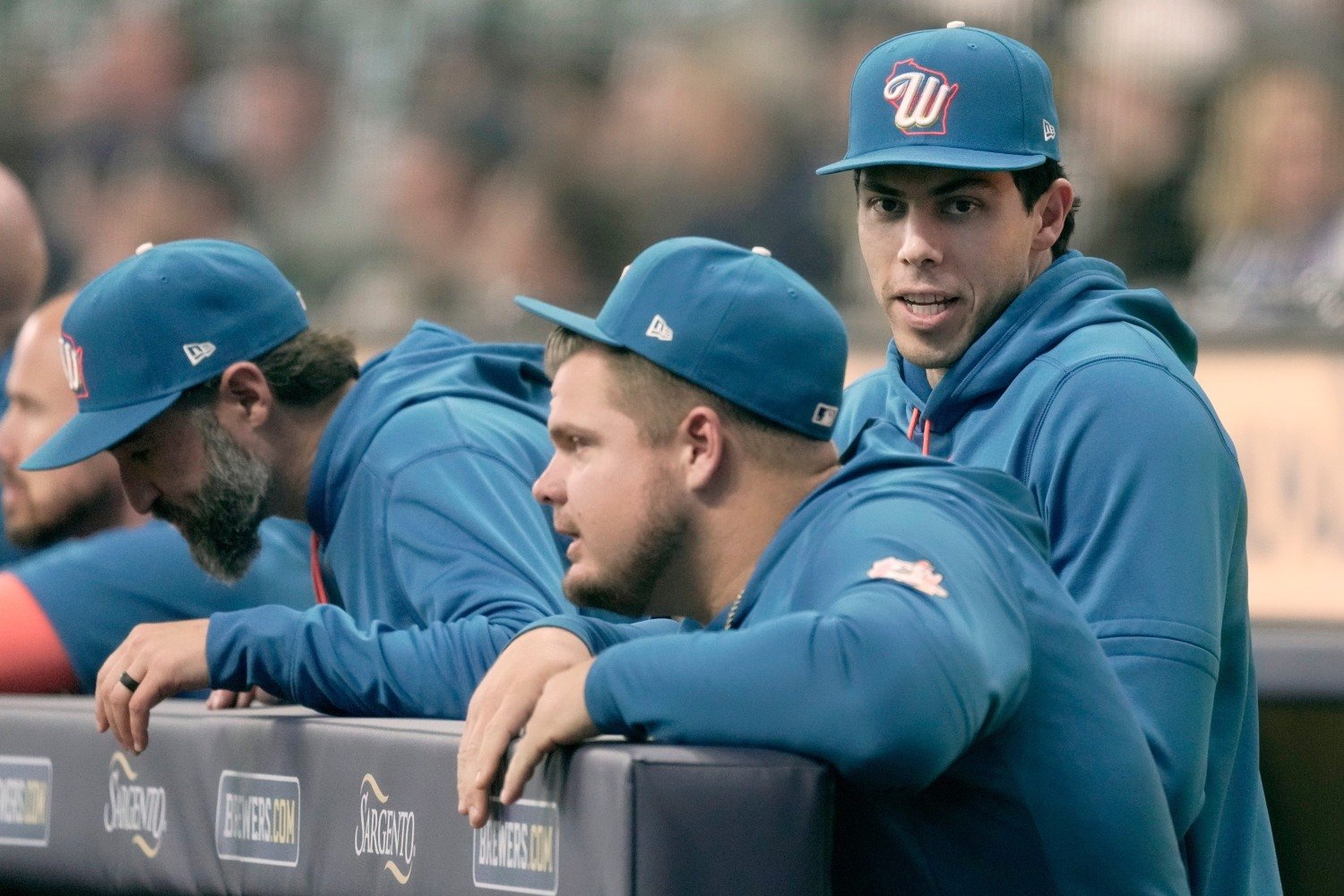 The Brewers offense rediscovered its stride after just a short wobble. They missed Christian Yelich, but they've done fine without him lately. He returns to the team's lineup Tuesday night against the Padres, joining a team that's currently fifth in MLB in runs per game and 10th in Baseball Prospectus's DRC+. The team survived the long absences of Jackson Chourio and Andrew Vaughn, the pressure of which was compounded when Yelich, too, went down. He returns without having embarked on a rehab assignment—a rare thing, after four weeks away, but understandable in this case. Yelich is the veteran leader of the team and has never felt he gets much from rehab games. With the Trajekt system available to him at Uecker Field, he was able to get simulated reps without leaving the team or risking injury in game action. Slotting Yelich back into the top part of the Brewers batting order makes it quite fearsome. Brice Turang's emergence as a superstar with burgeoning power has made it easier to see the upside of this time, and with Chourio, Yelich, William Contreras and Jake Bauers behind him, pitchers don't get a break until they get all the way to the bottom third of the lineup card. In some other matchups, the team might also elect to slide Chourio to center field and move Bauers to left, getting Vaughn into the mix with the aforementioned top five. Garrett Mitchell's recent slump makes that seem like a pretty good idea; so does the utter lack of punch delivered by David Hamilton and Joey Ortiz at the bottom end of the order. Yelich takes the place of Tyler Black on the roster, sending Black back to Triple-A Nashville after his most encouraging taste of the majors to date. Black still has no defensive home and doesn't add anything Bauers and Yelich don't do already, so his path to playing time remains murky. When he rejoins the Sounda, though, he'll be alongside a few players who could soon be in play to take this lineup from whole to truly complete. Cooper Pratt, Jett Williams and Luis Lara are all showing varying signs of readiness to have an impact in the major leagues. Meanwhile, Mitchell, Ortiz and Hamilton are struggling. It doesn't seem that a swap of any of the three prospects for one of the current big-leaguers is imminent, but another week or two of things trending the same way would force a more serious conversation. If the Brewers can find even one more solid bat among Williams, Pratt and Lara, they could turn the corner and become an elite offense, even before the arrival of Jesus Made in the bigs some time in the next 12 months. It's strange that Yelich's return occasions this vision of the future, since he's very much a part of the team's present but is slowly moving toward being part of its past. However, his return is a symbol of what's possible for this team, and increasingly, what seems possible is a future in which a team long built around pitching and defense will have the league's most formidable offense, too.
 -
Image courtesy of © Mark Hoffman/Milwaukee Journal Sentinel / USA TODAY NETWORK via Imagn Images The Brewers offense rediscovered its stride after just a short wobble. They missed Christian Yelich, but they've done fine without him lately. He returns to the team's lineup Tuesday night against the Padres, joining a team that's currently fifth in MLB in runs per game and 10th in Baseball Prospectus's DRC+. The team survived the long absences of Jackson Chourio and Andrew Vaughn, the pressure of which was compounded when Yelich, too, went down. He returns without having embarked on a rehab assignment—a rare thing, after four weeks away, but understandable in this case. Yelich is the veteran leader of the team and has never felt he gets much from rehab games. With the Trajekt system available to him at Uecker Field, he was able to get simulated reps without leaving the team or risking injury in game action. Slotting Yelich back into the top part of the Brewers batting order makes it quite fearsome. Brice Turang's emergence as a superstar with burgeoning power has made it easier to see the upside of this time, and with Chourio, Yelich, William Contreras and Jake Bauers behind him, pitchers don't get a break until they get all the way to the bottom third of the lineup card. In some other matchups, the team might also elect to slide Chourio to center field and move Bauers to left, getting Vaughn into the mix with the aforementioned top five. Garrett Mitchell's recent slump makes that seem like a pretty good idea; so does the utter lack of punch delivered by David Hamilton and Joey Ortiz at the bottom end of the order. Yelich takes the place of Tyler Black on the roster, sending Black back to Triple-A Nashville after his most encouraging taste of the majors to date. Black still has no defensive home and doesn't add anything Bauers and Yelich don't do already, so his path to playing time remains murky. When he rejoins the Sounda, though, he'll be alongside a few players who could soon be in play to take this lineup from whole to truly complete. Cooper Pratt, Jett Williams and Luis Lara are all showing varying signs of readiness to have an impact in the major leagues. Meanwhile, Mitchell, Ortiz and Hamilton are struggling. It doesn't seem that a swap of any of the three prospects for one of the current big-leaguers is imminent, but another week or two of things trending the same way would force a more serious conversation. If the Brewers can find even one more solid bat among Williams, Pratt and Lara, they could turn the corner and become an elite offense, even before the arrival of Jesus Made in the bigs some time in the next 12 months. It's strange that Yelich's return occasions this vision of the future, since he's very much a part of the team's present but is slowly moving toward being part of its past. However, his return is a symbol of what's possible for this team, and increasingly, what seems possible is a future in which a team long built around pitching and defense will have the league's most formidable offense, too. View full article
-
It's definitely a fair question, at least. That fastball down and in to lefties does set up the curve well, but once they start looking for it, it will stop being a good pitch and become a problem in a hurry. There's a reason most pitchers don't live there with the heater.
-
Image courtesy of © Mark Hoffman/Milwaukee Journal Sentinel / USA TODAY NETWORK via Imagn Images For many, many Brewers fans, Bill Hall's Mothers Day walkoff homer in 2006 was a watershed moment. It was very early in the days of players using pink bats for breast cancer awareness on that day; that made it visually interesting and memorable. For young fans who'd grown up in a household forever abuzz about the team's dramatic Easter win in 1987, it was a new springtime landmark to savor, one that belonged to the new generation. It also felt like a turning point—an announcement that the winds of positive change were pulling the organization out of the doldrums in which they'd been mired for the previous few years. Hall himself had been a nice find in 2005, and he blossoming into someone about whom to be downright excited. That team would ultimately win just 75 games, but it sowed the seeds that germinated the following year. In one sense, the franchise has not been the same since that game; they've become a perennially competitive team. There were no competitive doldrums to blow away for Brice Turang on Sunday, but beating the Yankees would mean sweeping the weekend series between the two teams. In an admittedly messy American League, the Bronx Bombers look as much like a juggernaut as anyone, and the Brewers had revenge to ponder after New York embarrassed them so badly in the great Torpedoing of the season-opening series in 2025. On so many levels, what Turang did in the bottom of the ninth inning was immensely satisfying. WERaMGFfWGw0TUFRPT1fQVZkU0JsZFFBMUVBRGxWUkJBQUhDQUlDQUZnR1VGUUFBZ01CQ1FJRVVnUlVWQXBS.mp4 One of the loveliest things about the homer, though, is the way its parallels with Hall's also highlight the important distinctions to be drawn. This team is vastly different from that one; so is its Mothers Day hero. Hall had a great 2006, with 35 homers and 78 total extra-base hits. Even then, though, it was pretty clear he was enjoying a career year. He'd never be anywhere near that good again; he lost his starting job by 2009. That's not going to happen with Turang. Whether he signs an extension with Milwaukee or is eventually traded, it's increasingly clear that the team's 2018 first-round pick is going to go down as one of the best players in franchise history. This homer won't be the Turang highlight; it'll just be one of several. We already have a handful of other candidates, in fact. Each year, Turang gets better at the plate. That can't go on forever, of course. In fact, it would be a major shock if he gets much better than this, at any point. Then again, try telling your mid-2023 self that Turang—the scrappy, slappy glove man demoted to Triple-A Nashville mid-year—would push his OPS+ to 86 in 2024; then 120 in 2025; then 163 in 2026. What he's doing is phenomenally improbable, and it's only possible because he's been assiduous and brilliant in his approach to improving at the plate. We've already talked at length about how Turang has altered his swing plane over the years. Just to update that a bit, though: his average swing tilt (as measured by Statcast) is now 37° this year, up from 31° last year. It was somewhat notable that he went from 29° in 2023 to that 31° figure in 2025. Remember about a decade ago, when the term "swing changer" came into vogue, as players leaned into the fly-ball revolution? When you see a 6° change in swing plane from one year to the next, that's a swing changer. Turang was a great hitter last year, but he overhauled what he's doing at the plate coming into this season. Here's an animated look at his swing from 2025. This is a digital visualization of a composite of swings, not an actual capture of a particular one, but it can make it easier to see several important things. Firstly, look at how far apart his feet are. (This is meant to show only the actual swing, so his stride is done at this point; the front foot is down already.) Note, too, the openness of his front foot and hip. From those elements of his lower-half operation comes a flatter-than-average swing, albeit one that covered the zone wonderfully well and produced plenty of hard contact to all fields. Turang 25.mp4 Now, compare that to this visualization of Turang for 2026. Check on the same things: distance between feet, the angle of the front foot and hip relative to the incoming pitch. But look, too, at the shoulders. Turang 26.mp4 Without dipping his back shoulder in a way that costs him bat speed or takes him off the plane of the pitch, Turang can now create more loft in his swing, because he's more upright as he swings. Being more upright—in other words, striding shorter—can mean generating less energy and (therefore) less power, but Turang's slightly more closed lower half lets him create torque by uncoiling with a bit more lift, the front shoulder rolling upward and outward more forcefully so that the top hand can steer the bat "underneath" his front side, as hitting people say. Torque and bat speed aren't the sources of Turang's improvements this year, though. Strength is certainly a component—getting into the right position to drive the ball out to the left of dead center on a pitch breaking down and in on you takes terrific strength—but Turang's bat speed is almost exactly where it was last year. The percentage of his swings topping 75 MPH in bat speed—what Statcast dubs Fast Swings—is actually down quite a bit, from 18.1% to 10.8%. Much of the added value comes, instead, from all that newfound tilt. Take two equally fast swings in terms of sheer Statcast speed measurements, and the one with more tilt is actually faster, in practical terms, so there's a kind of hidden bat speed bump in what Turang is doing this year. Another big chunk of his value comes from better swing decisions, and the league's smaller strike zone, especially for lefty batters. His walk rate is through the roof, which is why he's leading the National League in on-base percentage. However, there's also something to the way his swing speeds are distributed from which we can learn. Here are those distributions for each of Turang's big-league seasons (though bat-tracking data goes back only to the middle of his rookie year, 2023). He pushed the right edge of that distribution more in 2025, but look at how much more clustered his swing speeds are this year. Turang isn't trying to outguess pitchers and put his 'A+' swing on mistakes, but nor is he using a bimodal swing plan wherein he slows down or speeds up based on what he's looking for and what he sees as the ball leaves the pitcher's hand. This year, Turang is getting off his 'A-' swing at a much higher rate, because he knows it will work. With more tilt in the bat path and better swing decisions, he ends up with lots of ways to achieve a good outcome, if he can just take a representative swing every time he swings at all. Instead of comparing him only to himself, perhaps we can try comparing him to some relevant players who make natural foils. Here's Turang's distribution for this year, along with teammate Sal Frelick and fellow NL Central second basemen Nico Hoerner and Brandon Lowe. Few hitters in the game are more grip it-and-rip it than Lowe, which shows up here—not just in how many of his swings cluster into the small range at the right of his distribution, but in the visible rightward skew of that curve itself. He's pushing for maximum bat speed whenever he can lock onto a pitch. Frelick is the opposite end of the spectrum, very often decelerating his swing to make contact and using two different strokes based on what he's expecting or what the team needs. With his flatter, slower swing, that's necessary; it's the only way he can produce positive outcomes across a broad swath of situations. Hoerner is even more extreme than Turang in his effort to get off the same swing every time. As you can see, though, the swing he's repeating so diligently is slower. It's also flatter. Hoerner has a great feel for contact in his own right, but he hasn't figured out how to impact the ball the way Turang has—and if he ever did, it would probably have to come with the kinds of sacrifices Turang has found ways not to make this spring. Finding that sweet spot where he's maximizing per-swing output without losing consistency or adaptability is hugely valuable and impressive; Turang has threaded a needle. In the modern game, almost no one has a durable, true talent level of .298/.422/.511. Turang will probably come back to Earth a bit from this apex. He's been incredibly good, though, and he's been this way for 400 plate appearances, dating back to last August. To finish as well as he did last year and still make a major swing adjustment this year speaks to the plasticity and the ambition in Turang. He's a genuine superstar, and with William Contreras and Jackson Chourio hitting on either side of him, he could become the centerpiece of one of baseball's best offenses over the next year and a half. View full article
-
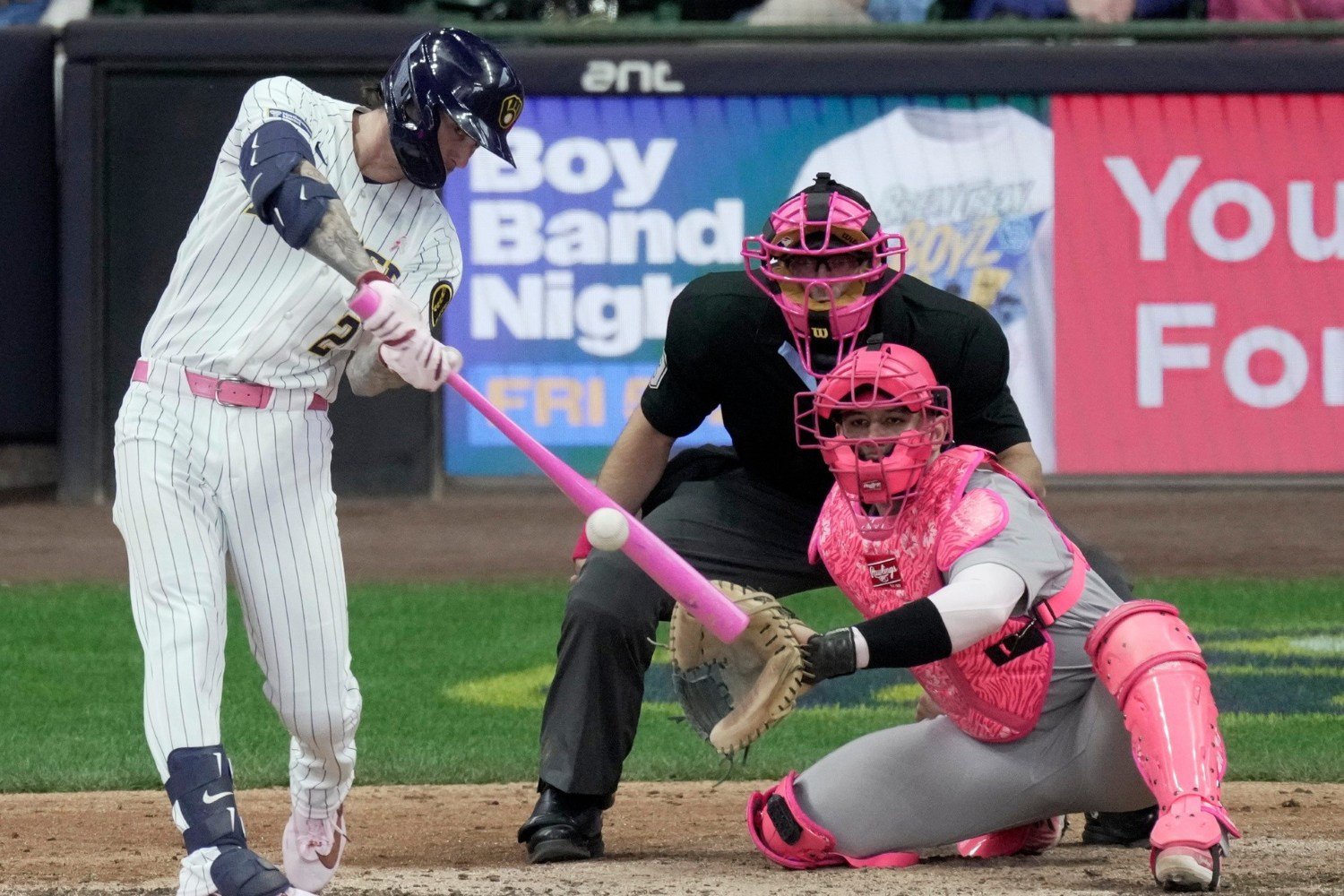 For many, many Brewers fans, Bill Hall's Mothers Day walkoff homer in 2006 was a watershed moment. It was very early in the days of players using pink bats for breast cancer awareness on that day; that made it visually interesting and memorable. For young fans who'd grown up in a household forever abuzz about the team's dramatic Easter win in 1987, it was a new springtime landmark to savor, one that belonged to the new generation. It also felt like a turning point—an announcement that the winds of positive change were pulling the organization out of the doldrums in which they'd been mired for the previous few years. Hall himself had been a nice find in 2005, and he blossoming into someone about whom to be downright excited. That team would ultimately win just 75 games, but it sowed the seeds that germinated the following year. In one sense, the franchise has not been the same since that game; they've become a perennially competitive team. There were no competitive doldrums to blow away for Brice Turang on Sunday, but beating the Yankees would mean sweeping the weekend series between the two teams. In an admittedly messy American League, the Bronx Bombers look as much like a juggernaut as anyone, and the Brewers had revenge to ponder after New York embarrassed them so badly in the great Torpedoing of the season-opening series in 2025. On so many levels, what Turang did in the bottom of the ninth inning was immensely satisfying. WERaMGFfWGw0TUFRPT1fQVZkU0JsZFFBMUVBRGxWUkJBQUhDQUlDQUZnR1VGUUFBZ01CQ1FJRVVnUlVWQXBS.mp4 One of the loveliest things about the homer, though, is the way its parallels with Hall's also highlight the important distinctions to be drawn. This team is vastly different from that one; so is its Mothers Day hero. Hall had a great 2006, with 35 homers and 78 total extra-base hits. Even then, though, it was pretty clear he was enjoying a career year. He'd never be anywhere near that good again; he lost his starting job by 2009. That's not going to happen with Turang. Whether he signs an extension with Milwaukee or is eventually traded, it's increasingly clear that the team's 2018 first-round pick is going to go down as one of the best players in franchise history. This homer won't be the Turang highlight; it'll just be one of several. We already have a handful of other candidates, in fact. Each year, Turang gets better at the plate. That can't go on forever, of course. In fact, it would be a major shock if he gets much better than this, at any point. Then again, try telling your mid-2023 self that Turang—the scrappy, slappy glove man demoted to Triple-A Nashville mid-year—would push his OPS+ to 86 in 2024; then 120 in 2025; then 163 in 2026. What he's doing is phenomenally improbable, and it's only possible because he's been assiduous and brilliant in his approach to improving at the plate. We've already talked at length about how Turang has altered his swing plane over the years. Just to update that a bit, though: his average swing tilt (as measured by Statcast) is now 37° this year, up from 31° last year. It was somewhat notable that he went from 29° in 2023 to that 31° figure in 2025. Remember about a decade ago, when the term "swing changer" came into vogue, as players leaned into the fly-ball revolution? When you see a 6° change in swing plane from one year to the next, that's a swing changer. Turang was a great hitter last year, but he overhauled what he's doing at the plate coming into this season. Here's an animated look at his swing from 2025. This is a digital visualization of a composite of swings, not an actual capture of a particular one, but it can make it easier to see several important things. Firstly, look at how far apart his feet are. (This is meant to show only the actual swing, so his stride is done at this point; the front foot is down already.) Note, too, the openness of his front foot and hip. From those elements of his lower-half operation comes a flatter-than-average swing, albeit one that covered the zone wonderfully well and produced plenty of hard contact to all fields. Turang 25.mp4 Now, compare that to this visualization of Turang for 2026. Check on the same things: distance between feet, the angle of the front foot and hip relative to the incoming pitch. But look, too, at the shoulders. Turang 26.mp4 Without dipping his back shoulder in a way that costs him bat speed or takes him off the plane of the pitch, Turang can now create more loft in his swing, because he's more upright as he swings. Being more upright—in other words, striding shorter—can mean generating less energy and (therefore) less power, but Turang's slightly more closed lower half lets him create torque by uncoiling with a bit more lift, the front shoulder rolling upward and outward more forcefully so that the top hand can steer the bat "underneath" his front side, as hitting people say. Torque and bat speed aren't the sources of Turang's improvements this year, though. Strength is certainly a component—getting into the right position to drive the ball out to the left of dead center on a pitch breaking down and in on you takes terrific strength—but Turang's bat speed is almost exactly where it was last year. The percentage of his swings topping 75 MPH in bat speed—what Statcast dubs Fast Swings—is actually down quite a bit, from 18.1% to 10.8%. Much of the added value comes, instead, from all that newfound tilt. Take two equally fast swings in terms of sheer Statcast speed measurements, and the one with more tilt is actually faster, in practical terms, so there's a kind of hidden bat speed bump in what Turang is doing this year. Another big chunk of his value comes from better swing decisions, and the league's smaller strike zone, especially for lefty batters. His walk rate is through the roof, which is why he's leading the National League in on-base percentage. However, there's also something to the way his swing speeds are distributed from which we can learn. Here are those distributions for each of Turang's big-league seasons (though bat-tracking data goes back only to the middle of his rookie year, 2023). He pushed the right edge of that distribution more in 2025, but look at how much more clustered his swing speeds are this year. Turang isn't trying to outguess pitchers and put his 'A+' swing on mistakes, but nor is he using a bimodal swing plan wherein he slows down or speeds up based on what he's looking for and what he sees as the ball leaves the pitcher's hand. This year, Turang is getting off his 'A-' swing at a much higher rate, because he knows it will work. With more tilt in the bat path and better swing decisions, he ends up with lots of ways to achieve a good outcome, if he can just take a representative swing every time he swings at all. Instead of comparing him only to himself, perhaps we can try comparing him to some relevant players who make natural foils. Here's Turang's distribution for this year, along with teammate Sal Frelick and fellow NL Central second basemen Nico Hoerner and Brandon Lowe. Few hitters in the game are more grip it-and-rip it than Lowe, which shows up here—not just in how many of his swings cluster into the small range at the right of his distribution, but in the visible rightward skew of that curve itself. He's pushing for maximum bat speed whenever he can lock onto a pitch. Frelick is the opposite end of the spectrum, very often decelerating his swing to make contact and using two different strokes based on what he's expecting or what the team needs. With his flatter, slower swing, that's necessary; it's the only way he can produce positive outcomes across a broad swath of situations. Hoerner is even more extreme than Turang in his effort to get off the same swing every time. As you can see, though, the swing he's repeating so diligently is slower. It's also flatter. Hoerner has a great feel for contact in his own right, but he hasn't figured out how to impact the ball the way Turang has—and if he ever did, it would probably have to come with the kinds of sacrifices Turang has found ways not to make this spring. Finding that sweet spot where he's maximizing per-swing output without losing consistency or adaptability is hugely valuable and impressive; Turang has threaded a needle. In the modern game, almost no one has a durable, true talent level of .298/.422/.511. Turang will probably come back to Earth a bit from this apex. He's been incredibly good, though, and he's been this way for 400 plate appearances, dating back to last August. To finish as well as he did last year and still make a major swing adjustment this year speaks to the plasticity and the ambition in Turang. He's a genuine superstar, and with William Contreras and Jackson Chourio hitting on either side of him, he could become the centerpiece of one of baseball's best offenses over the next year and a half.
 -
Image courtesy of © Michael McLoone-Imagn Images In a perfect world, the Brewers would suddenly start asking DL Hall to do an easier version of his job, and he would simply do it. Hall, 27, is in his third season with the Brewers, and he's enjoying the longest uninterrupted period of health and availability he's had during that span. Injury disruptions slowly took him out of the team's starting rotation plans, and he's become a versatile piece of their bullpen picture this spring. The Brewers have asked him to do everything from bridging gaps between short starts and the high-leverage arms in close midgame situations to sponging up innings in blowouts, and ultimately, he's succeeded in that work. He's even been used for one-batter matchup work a time or two. Now, all the team needs is for him to get three outs at a time, in the seventh or eighth inning. What Hall hasn't yet done, though, is consistently throw strikes with enough of his offerings to be reliable in that role. That was unfortunate when he was working as a roving long man, but now, it's starting to look more like a fatal flaw. Fellow left-handed reliever Ángel Zerpa will undergo Tommy John surgery next week, the Brewers announced Tuesday, making him the second southpaw reliever facing elbow woes. Jared Koenig is trying to rehab his own damaged ulnar collateral ligament, but it's not clear that he'll be back with the team this season, either. The Brewers don't need Hall just to keep them in games and lighten the load of other, better relievers anymore; they need him to be a sturdy setup man. Alternatively, of course, Shane Drohan could step up and claim the same mantle. Drohan, also 27, arrived this offseason in a way similar to the one in which Hall arrived before 2024, and might have a smoother path to a rotation spot—but so far, he's been needed mostly in relief. The two have sufficiently similar arsenals to make either a candidate to complement Aaron Ashby at the back end of the Brewers pen, but each also has the same issue: finding the zone. Hall's sinker and changeup can fill up the zone tolerably well, but his four-seamer, slider and cutter now seem entirely beyond his command. He's not around the zone with his sweeper, either, though he can at least induce some chases from lefties with it when he sets them up for that pitch with well-located sinkers. Drohan, by contrast, throws a four-seamer as his primary fastball, and his changeup is one of the pitches he simply can't command at a big-league level. But he can find the zone with his cutter and slider consistently enough to get by, if he can just pare down to those two pitches and the four-seamer. Right now, the Brewers should be asking both Hall (sinker, changeup, sweeper) and Drohan (fastball, cutter, slider) to streamline their arsenals and prepare for a shorter-burst, standard-issue high-leverage relief role. One of the two is likely to take well to it; the other can be reassigned to the longish, flexible role each has filled at times this year. One way or another, the team needs to replace the work it won't get from Zerpa the rest of the year, and it's not likely that either Koenig or the also-injured Rob Zastryzny is up to the task. Hall and Drohan have the stuff to be above-average one-inning relievers in the big leagues, especially if deployed against left-leaning pockets of opposing lineups. They haven't yet shown they can throw enough strikes to thrive, but that's partially because each has been developed and has prepared each day with one eye on an eventual return to the rotation or the knowledge that they might see a batter a second time or throw 50 pitches on a given day. In this hour of need, the team should see which of them can improve by getting rid of the extra arrows in their quiver and firing the ones with which they can hit the target most consistently. View full article
-
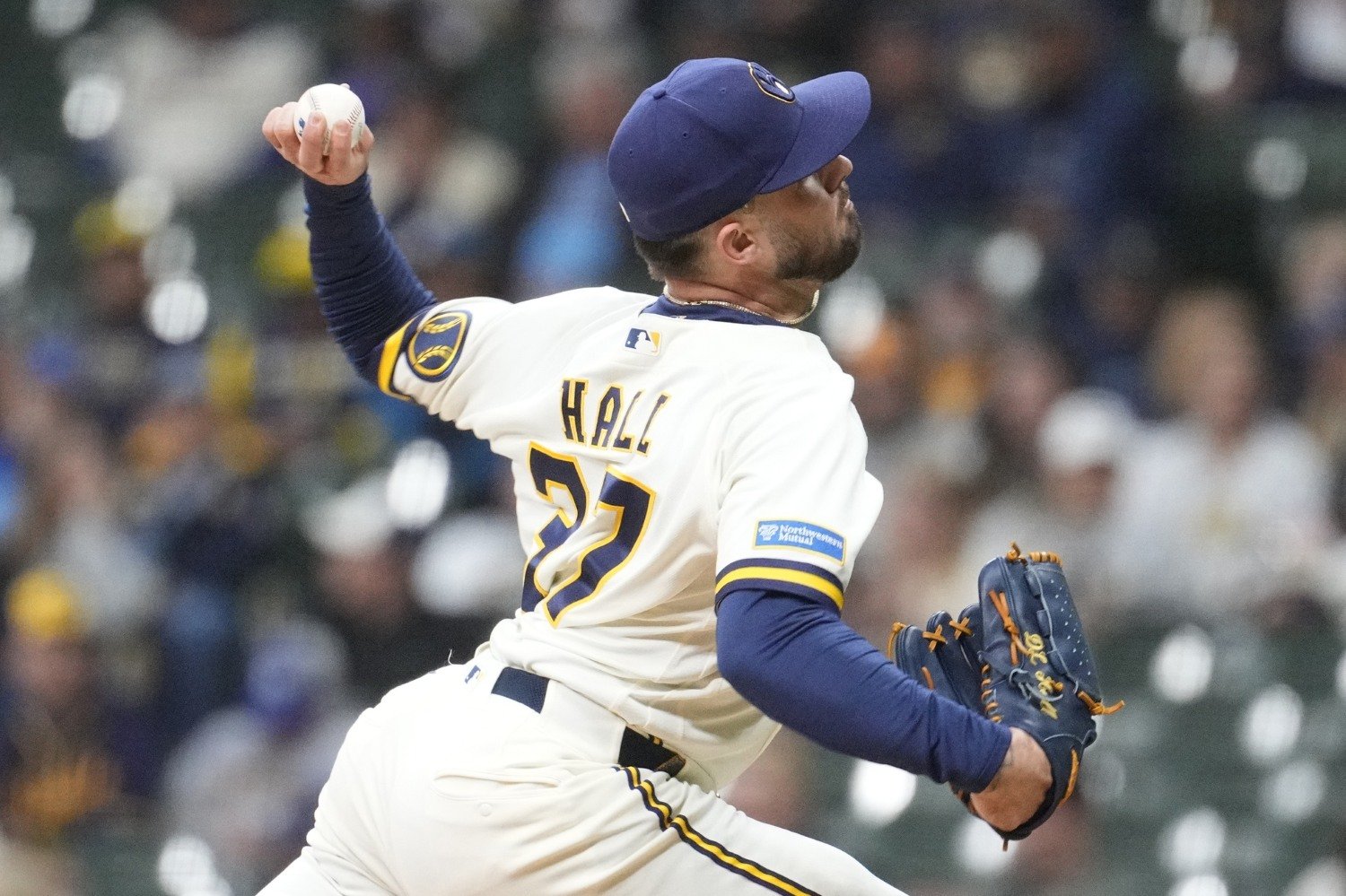 In a perfect world, the Brewers would suddenly start asking DL Hall to do an easier version of his job, and he would simply do it. Hall, 27, is in his third season with the Brewers, and he's enjoying the longest uninterrupted period of health and availability he's had during that span. Injury disruptions slowly took him out of the team's starting rotation plans, and he's become a versatile piece of their bullpen picture this spring. The Brewers have asked him to do everything from bridging gaps between short starts and the high-leverage arms in close midgame situations to sponging up innings in blowouts, and ultimately, he's succeeded in that work. He's even been used for one-batter matchup work a time or two. Now, all the team needs is for him to get three outs at a time, in the seventh or eighth inning. What Hall hasn't yet done, though, is consistently throw strikes with enough of his offerings to be reliable in that role. That was unfortunate when he was working as a roving long man, but now, it's starting to look more like a fatal flaw. Fellow left-handed reliever Ángel Zerpa will undergo Tommy John surgery next week, the Brewers announced Tuesday, making him the second southpaw reliever facing elbow woes. Jared Koenig is trying to rehab his own damaged ulnar collateral ligament, but it's not clear that he'll be back with the team this season, either. The Brewers don't need Hall just to keep them in games and lighten the load of other, better relievers anymore; they need him to be a sturdy setup man. Alternatively, of course, Shane Drohan could step up and claim the same mantle. Drohan, also 27, arrived this offseason in a way similar to the one in which Hall arrived before 2024, and might have a smoother path to a rotation spot—but so far, he's been needed mostly in relief. The two have sufficiently similar arsenals to make either a candidate to complement Aaron Ashby at the back end of the Brewers pen, but each also has the same issue: finding the zone. Hall's sinker and changeup can fill up the zone tolerably well, but his four-seamer, slider and cutter now seem entirely beyond his command. He's not around the zone with his sweeper, either, though he can at least induce some chases from lefties with it when he sets them up for that pitch with well-located sinkers. Drohan, by contrast, throws a four-seamer as his primary fastball, and his changeup is one of the pitches he simply can't command at a big-league level. But he can find the zone with his cutter and slider consistently enough to get by, if he can just pare down to those two pitches and the four-seamer. Right now, the Brewers should be asking both Hall (sinker, changeup, sweeper) and Drohan (fastball, cutter, slider) to streamline their arsenals and prepare for a shorter-burst, standard-issue high-leverage relief role. One of the two is likely to take well to it; the other can be reassigned to the longish, flexible role each has filled at times this year. One way or another, the team needs to replace the work it won't get from Zerpa the rest of the year, and it's not likely that either Koenig or the also-injured Rob Zastryzny is up to the task. Hall and Drohan have the stuff to be above-average one-inning relievers in the big leagues, especially if deployed against left-leaning pockets of opposing lineups. They haven't yet shown they can throw enough strikes to thrive, but that's partially because each has been developed and has prepared each day with one eye on an eventual return to the rotation or the knowledge that they might see a batter a second time or throw 50 pitches on a given day. In this hour of need, the team should see which of them can improve by getting rid of the extra arrows in their quiver and firing the ones with which they can hit the target most consistently.
 -
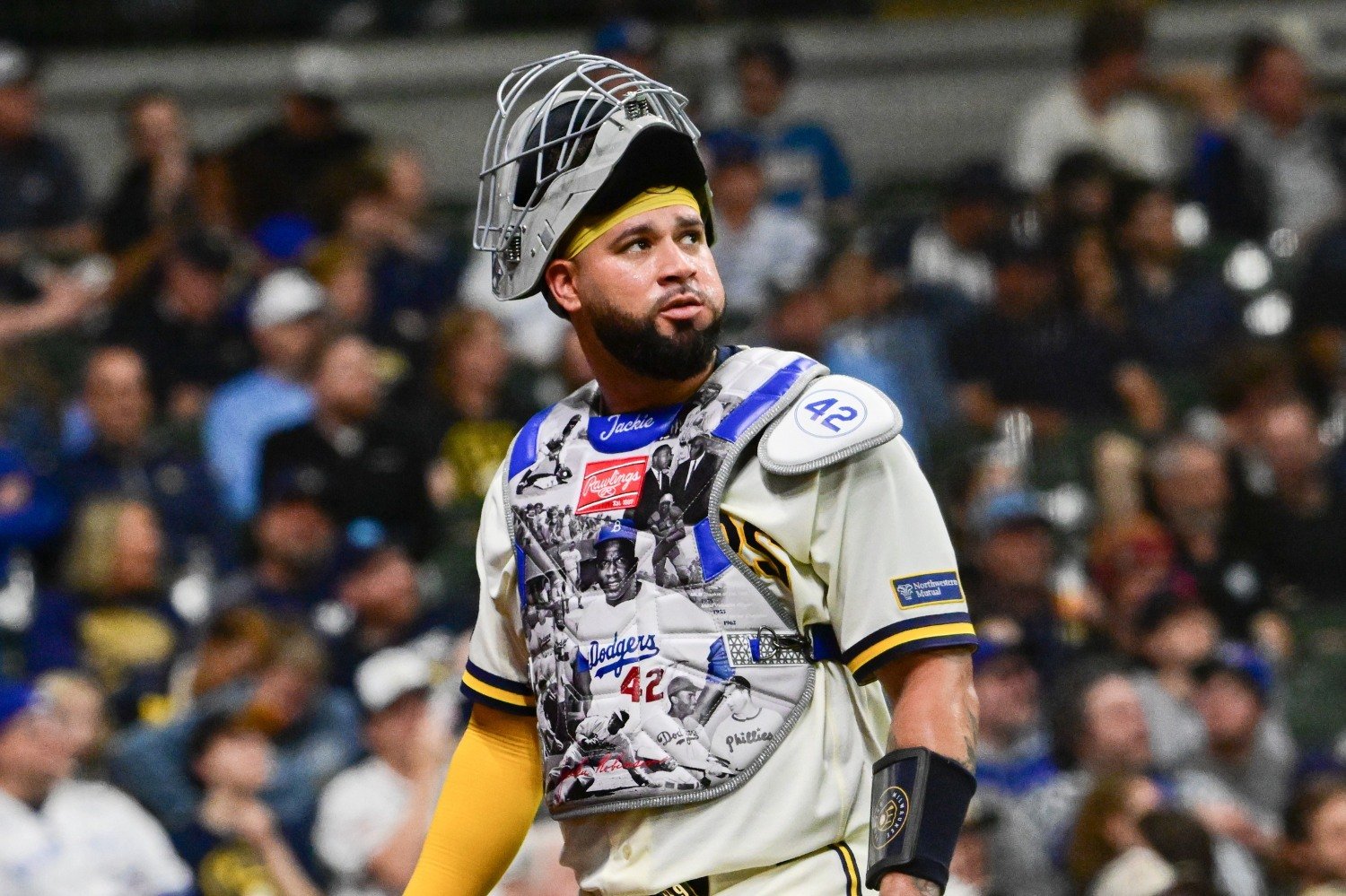 Gary Sánchez has challenged 14 called strikes this season. No other batter in the majors has challenged more than 11. Sánchez should probably challenge less often, based solely on the fact that he's only 6-for-14. He thinks he knows the outside edge of the strike zone, but he's wrong. Thirteen of the 14 challenges he's mounted came on pitches on that side of the zone. Sánchez, an extreme pull hitter trying to get a pitch up and on the inner half to generate damage, wants to stop pitchers from stealing strikes on him in a sector where he can't do much, anyway. That makes sense in a vacuum, but he's cost the Brewers one of their challenges several times. In fact, Sánchez has challenged 17.7% of all called strikes against him this season. That number is an outlier for any group; only Josh Naylor and Mark Vientos have higher challenge rates. However, it's especially notable given the subgroup to which Sánchez belongs, within the broader population of hitters: catchers. For as long as there has been a strike zone, catchers have tried to shape and expand it, and that has always been (in part) a political endeavor. Yes, there are vital physical aspects to pitch-framing, but catchers also work umpires with conversations between pitches and the long, slow development of relationships. That's not to say that umpires consciously favor catchers they like; it's just a reflection of reality. Good communication with the ump helps them understand what you're trying to do, and what you're not trying to do (i.e., bamboozle them). Listen to any color commentator over the last 40 years (many of them former catchers!), and you'll hear talk about a catcher being more deferential than most batters when they're at the plate. Why? Because they want that call for their pitcher, too. It shouldn't be a surprise, then, that catchers challenge pitches less often than any other position group under the ABS system. It's a noticeable gap, too. Here's the share of all initially called strikes challenged by hitters, split by defensive position. Catcher: 2.65% First Base: 4.54% Second Base: 3.34% Shortstop: 4.16% Third Base: 3.63% Outfield: 3.87% Designated Hitter: 4.19% It's not just blather from old, leathery baseball men anymore. Here is concrete evidence that when catchers take their turns in the batter's box, they're still politicking for their pitchers. They might see the ball and understand the edges of the zone a bit better than some of their counterparts at other positions, too, but inarguably, catchers are trading some potential offensive value at the margins for the odd call when they're working the zone themselves, behind the dish. Even Sánchez feels this pressure. Of those 14 challenges, three came when he was playing first base, and another nine came on days when he was serving as the Brewers' DH. Only twice has he challenged a call on a day when he was actually catching, and one of those came on a pitch that missed the zone by the width of a baseball—one egregious enough that Sánchez dared not even dream of getting the call himself on a consistent basis. QndSNnJfWGw0TUFRPT1fVlFnRUJseFJYbFlBV1FRRUFnQUhCQVpRQUZsV1ZsY0FCMTBCQVFNRVZBWUJCQVlI.mp4 That's a fascinating insight into the nature of this dynamic. If a player sometimes catches but is serving in a different capacity that day, what drives them to be more challenge-prone? Is it a greater sense of pressure to deliver value offensively? Is the understanding between catchers and umps deep and tangled enough that a batter-catcher knows their zone at the plate is truly tied to the one they'll get behind it, in a way that doesn't transfer to the same player on days when they're not the backstop? Either way, it's interesting that Sánchez is opting out of any efforts at diplomacy—but only when he's not the catcher for that day. Unwritten though they might be, rules are rules, and there are real, unwritten rules growing around ABS. For one, catchers have agreed not to waste the ump's time or challenge their acuity as eagerly when they're in the batter's box, instead of the catcher's box. Sánchez is defying those frameworks, but even he can't flout them outright—at least, not when it's his turn to catch.
 -
Image courtesy of © Benny Sieu-Imagn Images Gary Sánchez has challenged 14 called strikes this season. No other batter in the majors has challenged more than 11. Sánchez should probably challenge less often, based solely on the fact that he's only 6-for-14. He thinks he knows the outside edge of the strike zone, but he's wrong. Thirteen of the 14 challenges he's mounted came on pitches on that side of the zone. Sánchez, an extreme pull hitter trying to get a pitch up and on the inner half to generate damage, wants to stop pitchers from stealing strikes on him in a sector where he can't do much, anyway. That makes sense in a vacuum, but he's cost the Brewers one of their challenges several times. In fact, Sánchez has challenged 17.7% of all called strikes against him this season. That number is an outlier for any group; only Josh Naylor and Mark Vientos have higher challenge rates. However, it's especially notable given the subgroup to which Sánchez belongs, within the broader population of hitters: catchers. For as long as there has been a strike zone, catchers have tried to shape and expand it, and that has always been (in part) a political endeavor. Yes, there are vital physical aspects to pitch-framing, but catchers also work umpires with conversations between pitches and the long, slow development of relationships. That's not to say that umpires consciously favor catchers they like; it's just a reflection of reality. Good communication with the ump helps them understand what you're trying to do, and what you're not trying to do (i.e., bamboozle them). Listen to any color commentator over the last 40 years (many of them former catchers!), and you'll hear talk about a catcher being more deferential than most batters when they're at the plate. Why? Because they want that call for their pitcher, too. It shouldn't be a surprise, then, that catchers challenge pitches less often than any other position group under the ABS system. It's a noticeable gap, too. Here's the share of all initially called strikes challenged by hitters, split by defensive position. Catcher: 2.65% First Base: 4.54% Second Base: 3.34% Shortstop: 4.16% Third Base: 3.63% Outfield: 3.87% Designated Hitter: 4.19% It's not just blather from old, leathery baseball men anymore. Here is concrete evidence that when catchers take their turns in the batter's box, they're still politicking for their pitchers. They might see the ball and understand the edges of the zone a bit better than some of their counterparts at other positions, too, but inarguably, catchers are trading some potential offensive value at the margins for the odd call when they're working the zone themselves, behind the dish. Even Sánchez feels this pressure. Of those 14 challenges, three came when he was playing first base, and another nine came on days when he was serving as the Brewers' DH. Only twice has he challenged a call on a day when he was actually catching, and one of those came on a pitch that missed the zone by the width of a baseball—one egregious enough that Sánchez dared not even dream of getting the call himself on a consistent basis. QndSNnJfWGw0TUFRPT1fVlFnRUJseFJYbFlBV1FRRUFnQUhCQVpRQUZsV1ZsY0FCMTBCQVFNRVZBWUJCQVlI.mp4 That's a fascinating insight into the nature of this dynamic. If a player sometimes catches but is serving in a different capacity that day, what drives them to be more challenge-prone? Is it a greater sense of pressure to deliver value offensively? Is the understanding between catchers and umps deep and tangled enough that a batter-catcher knows their zone at the plate is truly tied to the one they'll get behind it, in a way that doesn't transfer to the same player on days when they're not the backstop? Either way, it's interesting that Sánchez is opting out of any efforts at diplomacy—but only when he's not the catcher for that day. Unwritten though they might be, rules are rules, and there are real, unwritten rules growing around ABS. For one, catchers have agreed not to waste the ump's time or challenge their acuity as eagerly when they're in the batter's box, instead of the catcher's box. Sánchez is defying those frameworks, but even he can't flout them outright—at least, not when it's his turn to catch. View full article
-
Image courtesy of © Jovanny Hernandez / Milwaukee Journal Sentinel / USA TODAY NETWORK via Imagn Images It's not yet clear whether Jackson Chourio will get back into the Brewers lineup Monday night against the Cardinals. He fouled a ball off his foot during a rehab start over the weekend and could be delayed another few days while he shakes off the soreness. However, all systems are go for Andrew Vaughn, who was sidelined by a broken hamate bone on Opening Day and has missed the last five-plus weeks. The Brewers will receive Vaughn gratefully into a lineup that needs more length. While Vaughn was on the shelf, many of the reps against left-handed pitchers went to Gary Sánchez. The team's backup catcher became its de facto short-side platoon first baseman over the first fortnight. He hasn't played first since April 11, after his defense there proved costly, but he's still been in the lineup often as the designated hitter. At the end of play on April 14, that was fine with everyone: he was batting .259/.412/.815. That was the day Sánchez hit his last home run, though, and in the three weeks since, he's batting .182/.333/.273. Having Vaughn take some playing time from Sánchez is one way the team can get its mojo back offensively. In selected matchups, Vaughn's at-bats could come at the expense of Jake Bauers, instead. Bauers didn't disappoint during his first month of everyday playing time, but nor did he seize the job in a way that precludes Vaughn shoving him to the bench on occasion over the next few weeks. Bauers is batting a respectable .243/.317/.423 on the season, and his whiff and strikeout rates are down. On the other hand, in a league walking more, he's walking less. He's gotten incrementally but importantly more aggressive early in counts, sometimes getting himself out because he's still trying to avoid getting into a two-strike situation. Bauers has strill been fairly productive, though, and on the right days, Vaughn could man first base while Bauers slides to the outfield. Presumably, Chourio will be back within a few days, if not Monday, so the team ought not to need Bauers out there very often. While they do, though, he can be an offensive upgrade in the corners. Ultimately, what the team needs is more length in its lineup. That trademark relentlessness that makes the Brewers great when they're going right has shown up only in flashes so far. They're getting a league-worst .239 slugging average from the bottom third of their order. Neither Vaughn nor Chourio can directly replace Joey Ortiz or David Hamilton, two of the key culprits in that lack of power from those spots, but they can lessen the team's need to use Blake Perkins. Even slightly more danger at the bottom of the order could restore the consistency the team has turned into so many wins over the last few years. Vaughn's return engenders that. Chourio's will do so, too. After weeks of waiting, Pat Murphy will have some good dilemmas when filling out his lineup card. View full article
-
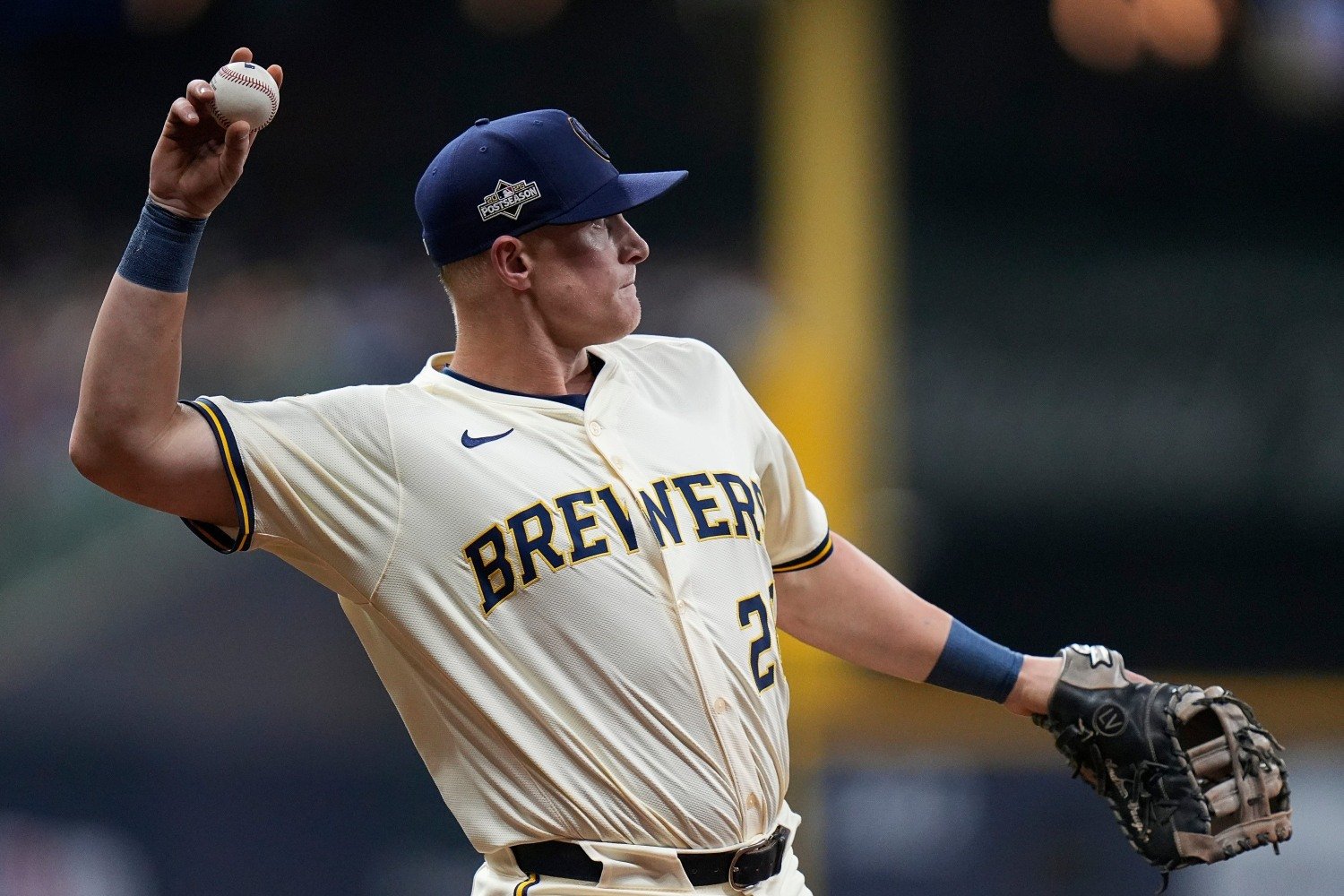 It's not yet clear whether Jackson Chourio will get back into the Brewers lineup Monday night against the Cardinals. He fouled a ball off his foot during a rehab start over the weekend and could be delayed another few days while he shakes off the soreness. However, all systems are go for Andrew Vaughn, who was sidelined by a broken hamate bone on Opening Day and has missed the last five-plus weeks. The Brewers will receive Vaughn gratefully into a lineup that needs more length. While Vaughn was on the shelf, many of the reps against left-handed pitchers went to Gary Sánchez. The team's backup catcher became its de facto short-side platoon first baseman over the first fortnight. He hasn't played first since April 11, after his defense there proved costly, but he's still been in the lineup often as the designated hitter. At the end of play on April 14, that was fine with everyone: he was batting .259/.412/.815. That was the day Sánchez hit his last home run, though, and in the three weeks since, he's batting .182/.333/.273. Having Vaughn take some playing time from Sánchez is one way the team can get its mojo back offensively. In selected matchups, Vaughn's at-bats could come at the expense of Jake Bauers, instead. Bauers didn't disappoint during his first month of everyday playing time, but nor did he seize the job in a way that precludes Vaughn shoving him to the bench on occasion over the next few weeks. Bauers is batting a respectable .243/.317/.423 on the season, and his whiff and strikeout rates are down. On the other hand, in a league walking more, he's walking less. He's gotten incrementally but importantly more aggressive early in counts, sometimes getting himself out because he's still trying to avoid getting into a two-strike situation. Bauers has strill been fairly productive, though, and on the right days, Vaughn could man first base while Bauers slides to the outfield. Presumably, Chourio will be back within a few days, if not Monday, so the team ought not to need Bauers out there very often. While they do, though, he can be an offensive upgrade in the corners. Ultimately, what the team needs is more length in its lineup. That trademark relentlessness that makes the Brewers great when they're going right has shown up only in flashes so far. They're getting a league-worst .239 slugging average from the bottom third of their order. Neither Vaughn nor Chourio can directly replace Joey Ortiz or David Hamilton, two of the key culprits in that lack of power from those spots, but they can lessen the team's need to use Blake Perkins. Even slightly more danger at the bottom of the order could restore the consistency the team has turned into so many wins over the last few years. Vaughn's return engenders that. Chourio's will do so, too. After weeks of waiting, Pat Murphy will have some good dilemmas when filling out his lineup card.
- 10 comments
-
- 1
-

-
- andrew vaughn
- jake bauers
- (and 1 more)
-
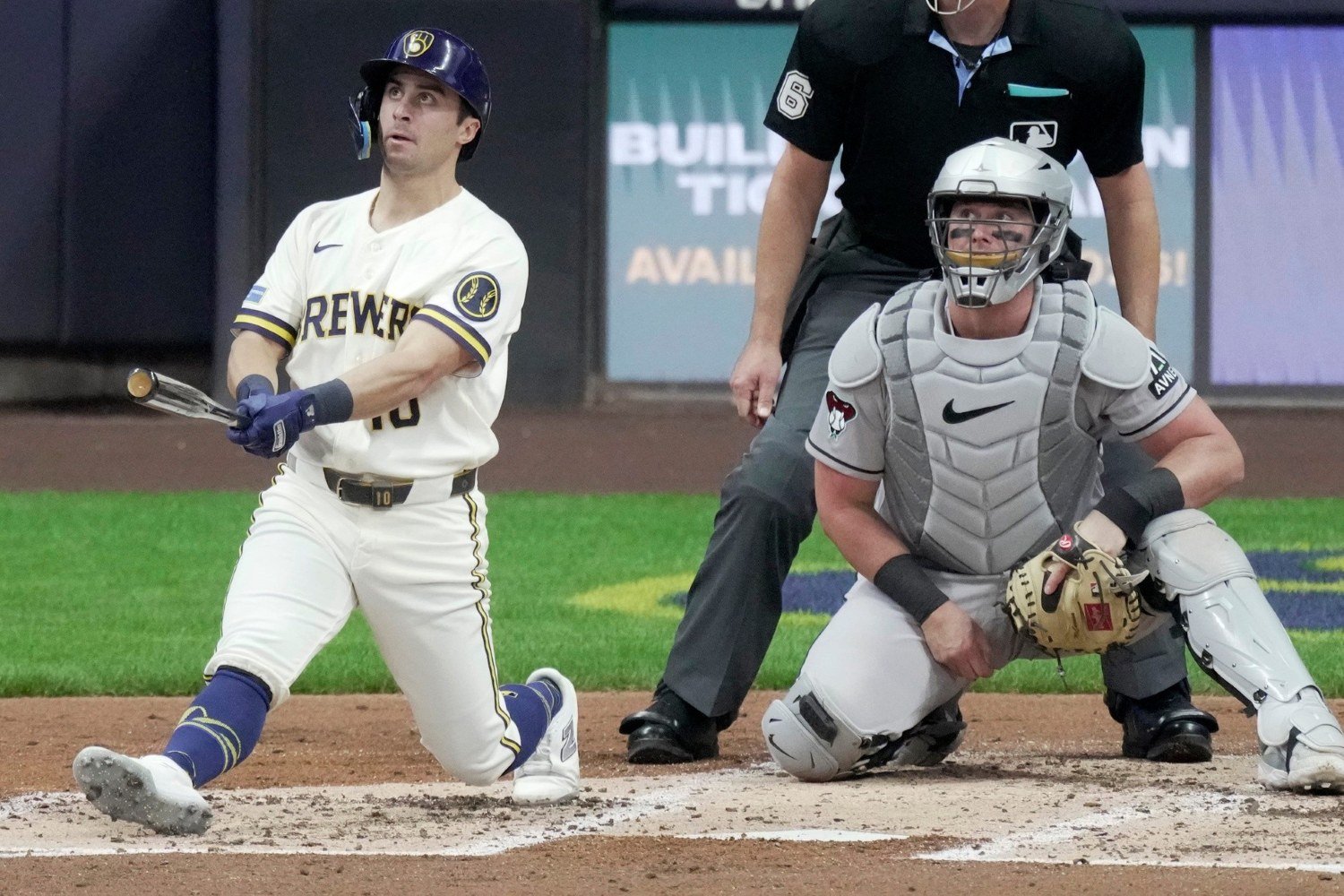 When Sal Frelick homered in his first plate appearance against a left-handed pitcher in the season-opening series against the White Sox, it was easy to dream a bit on another terrific season for the fourth-year right fielder. He had suddenly found his way from virtually no over-the-fence power in 2024 to hitting 12 bombs in 2025, and that was without putting a southpaw in his book at all. A version of Frelick who could maintain what he did so well throughout last year and tap into more thunder against lefties could have become a borderline All-Star—something like the best, long-forgotten version of Andrew Benintendi. So far, though, that dream hasn't been realized. Five weeks in, Frelick is batting .212/.317/.306, and the seeming magic of his game from the best stretches of the last two years—lots of infield hits, unexpected gap-splitters in the biggest possible moments, efficient basestealing—is missing. On one hand, that's very worrisome, because there was some reason to wonder whether that was inevitable. Frelick far outperformed his expected stats last year. The regression monster stood nearby all winter, sharpening its fangs conspicuously. Our Jack Stern wrote about the fear of its bite earlier this spring. Frelick's expected numbers this year are better than the actual results, but not by that much. Certainly, he's not doing what you'd hope to see him do, if you were making a case for some positive regression ahead and a major improvement. On the other hand, Frelick has made some improvements. He's swinging less this year, as a rational response to a shrinking strike zone, and as a result, his walk rate has spiked noticeably. Last year, he walked in 7.9% of his plate appearances. This season, that number is up to 12.5%, which is why he's staying afloat in the OBP department, despite his poor overall production. The power hasn't come. Even the batting average is lagging. He's getting on base at a viable rate, though, and his overall expected output is not much worse (.294 xwOBA) than it was last season (.299). If you believe he does have some real skill for outperforming his xwOBA, which seems fair, it's modestly encouraging that he's maintaining a similar overall process and walking more often. The chances of him getting back to an OBP around .350 seem relatively strong. So, which way should you lean? With reasonable arguments on both sides of the scale, which weighs more heavily? To answer that (although maybe not the way you expect), let's talk about his bat-tracking data, Frelick already had a low average bat speed, according to Statcast, but that number has come down even further this year. It's come down partly because of and in proportion to making contact slightly deeper in the hitting zone and with a slightly lower attack angle. However, it's also come down despite a second straight season of flattening his bat path. A flatter swing leaves less margin for error in terms of both timing and barrel accuracy. Frelick got significant mileage out of flicking line drives to center and left field, over the last two years, and the tilt in his swing helped him find the power for which he hit in 2025. This year, he's hitting more balls on the ground and more straight up in the air, with fewer in the sweet spot in between. That's a common symptom for those who afflict themselves with a flat swing. To visualize the problem, consider this homer from last season: QndhNEJfWGw0TUFRPT1fQVZSV1ZsY0ZWVlFBQUZCUkJ3QUhCVlZUQUZnR1ZBVUFBQUZUQndKVEJBWmRBUUJS.mp4 And compare it to this low lineout, on a similar pitch, this season. MTZOYjNfWGw0TUFRPT1fVXdZQ0FsTUVWd0FBQ0FSUlVBQUhCVmNFQUZsV1ZWVUFBMU1HQkZGVENGRlRDUU1G.mp4 On these two pitches, you can barely see a difference in swing plane in real time. If you freeze on the moment just before contact, though, the slight change gets easier to see. I've set those moments side-by-side below, and highlighted the bat to enhance its visibility. This also makes it easier to see why this matters. A bit less loft in the swing—a slightly flatter slash through the zone—is the difference between hitting the bottom half of the ball and hitting the top half of it. On both pitches, Frelick is a bit early, having timed his swing at first for a fastball and gotten a changeup, but last year, he was early in a good way. This year, that same imperfection of timing has resulted in less valuable contact. All this, though, can be fixed. The change in plane is relatively small; it comes from timing and swing decisions as much as it does from mechanics. The lost bat speed is half-illusory, and relatively minimal. Frelick just isn't on time very often, so far. He was late on the fastball and early on soft stuff for a solid fortnight, That brought his numbers to a nadir about 10 days ago, when his OPS for the year was under .550. Since then, he's batting .333 with one of his two homers, four walks and just one strikeout. Frelick might already be fixed, and if that's not fully true, he certainly looks to have gotten back on time. The rest will take care of itself over time. The Brewers have had to survive a lot of early injuries, and having Frelick struggle in the absence of Jackson Chourio and Andrew Vaughn has been especially damaging. Just as the return of those two players draws near, though, it seems like Frelick is warming up. As ugly as the numbers are, the upside is as high as ever. If nothing else, the small strike zone should keep him trending in the right direction.
 -
Image courtesy of © Mark Hoffman/Milwaukee Journal Sentinel / USA TODAY NETWORK via Imagn Images When Sal Frelick homered in his first plate appearance against a left-handed pitcher in the season-opening series against the White Sox, it was easy to dream a bit on another terrific season for the fourth-year right fielder. He had suddenly found his way from virtually no over-the-fence power in 2024 to hitting 12 bombs in 2025, and that was without putting a southpaw in his book at all. A version of Frelick who could maintain what he did so well throughout last year and tap into more thunder against lefties could have become a borderline All-Star—something like the best, long-forgotten version of Andrew Benintendi. So far, though, that dream hasn't been realized. Five weeks in, Frelick is batting .212/.317/.306, and the seeming magic of his game from the best stretches of the last two years—lots of infield hits, unexpected gap-splitters in the biggest possible moments, efficient basestealing—is missing. On one hand, that's very worrisome, because there was some reason to wonder whether that was inevitable. Frelick far outperformed his expected stats last year. The regression monster stood nearby all winter, sharpening its fangs conspicuously. Our Jack Stern wrote about the fear of its bite earlier this spring. Frelick's expected numbers this year are better than the actual results, but not by that much. Certainly, he's not doing what you'd hope to see him do, if you were making a case for some positive regression ahead and a major improvement. On the other hand, Frelick has made some improvements. He's swinging less this year, as a rational response to a shrinking strike zone, and as a result, his walk rate has spiked noticeably. Last year, he walked in 7.9% of his plate appearances. This season, that number is up to 12.5%, which is why he's staying afloat in the OBP department, despite his poor overall production. The power hasn't come. Even the batting average is lagging. He's getting on base at a viable rate, though, and his overall expected output is not much worse (.294 xwOBA) than it was last season (.299). If you believe he does have some real skill for outperforming his xwOBA, which seems fair, it's modestly encouraging that he's maintaining a similar overall process and walking more often. The chances of him getting back to an OBP around .350 seem relatively strong. So, which way should you lean? With reasonable arguments on both sides of the scale, which weighs more heavily? To answer that (although maybe not the way you expect), let's talk about his bat-tracking data, Frelick already had a low average bat speed, according to Statcast, but that number has come down even further this year. It's come down partly because of and in proportion to making contact slightly deeper in the hitting zone and with a slightly lower attack angle. However, it's also come down despite a second straight season of flattening his bat path. A flatter swing leaves less margin for error in terms of both timing and barrel accuracy. Frelick got significant mileage out of flicking line drives to center and left field, over the last two years, and the tilt in his swing helped him find the power for which he hit in 2025. This year, he's hitting more balls on the ground and more straight up in the air, with fewer in the sweet spot in between. That's a common symptom for those who afflict themselves with a flat swing. To visualize the problem, consider this homer from last season: QndhNEJfWGw0TUFRPT1fQVZSV1ZsY0ZWVlFBQUZCUkJ3QUhCVlZUQUZnR1ZBVUFBQUZUQndKVEJBWmRBUUJS.mp4 And compare it to this low lineout, on a similar pitch, this season. MTZOYjNfWGw0TUFRPT1fVXdZQ0FsTUVWd0FBQ0FSUlVBQUhCVmNFQUZsV1ZWVUFBMU1HQkZGVENGRlRDUU1G.mp4 On these two pitches, you can barely see a difference in swing plane in real time. If you freeze on the moment just before contact, though, the slight change gets easier to see. I've set those moments side-by-side below, and highlighted the bat to enhance its visibility. This also makes it easier to see why this matters. A bit less loft in the swing—a slightly flatter slash through the zone—is the difference between hitting the bottom half of the ball and hitting the top half of it. On both pitches, Frelick is a bit early, having timed his swing at first for a fastball and gotten a changeup, but last year, he was early in a good way. This year, that same imperfection of timing has resulted in less valuable contact. All this, though, can be fixed. The change in plane is relatively small; it comes from timing and swing decisions as much as it does from mechanics. The lost bat speed is half-illusory, and relatively minimal. Frelick just isn't on time very often, so far. He was late on the fastball and early on soft stuff for a solid fortnight, That brought his numbers to a nadir about 10 days ago, when his OPS for the year was under .550. Since then, he's batting .333 with one of his two homers, four walks and just one strikeout. Frelick might already be fixed, and if that's not fully true, he certainly looks to have gotten back on time. The rest will take care of itself over time. The Brewers have had to survive a lot of early injuries, and having Frelick struggle in the absence of Jackson Chourio and Andrew Vaughn has been especially damaging. Just as the return of those two players draws near, though, it seems like Frelick is warming up. As ugly as the numbers are, the upside is as high as ever. If nothing else, the small strike zone should keep him trending in the right direction. View full article
-
 Just under two weeks ago, I wrote about Chad Patrick, who has found ways to succeed this season by throwing a glove-side sinker. That's an unusual formula, because most pitches are targeted mostly to the side of the plate toward which they move, anyway. Good pitchers find a feel for throwing their pitches to multiple quadrants, but it's hard to consistently land a backdoor curveball or to move that sinker off an opposite-handed batter's front hip and find the inner edge of the zone, without having it drift into the nitro zone. Which direction you're most likely to miss matters. Which miss direction produces a better chance of avoiding damage and/or getting a strike matters. Most of the time, those indicators nudge a pitcher toward throwing (for instance) their sinker to the arm side of the plate (inside on a same-handed batter), and their cutter or breaking ball to the glove side (toward an opposite-handed batter). Patrick's glove-side sinker was proof of his willingness to find those locations, even though it's hard to do. It also helped us understand how he seemed to be getting such harmlesss contact, and therefore putting up a great ERA despite a too-low strikeout rate. Entering his start Tuesday night against the Diamondbacks, nothing has changed. Patrick is still running a strikeout rate straight out of the 1980s, but he has a 2.35 ERA in his 23 innings of work. Entering the season, most of the optimism surrounding Patrick centered on the notion that his new slurve would help him miss more bats. The swings and misses haven't come, but neither have the runs for opposing teams. The glove-side sinker gives us some insight on that, but it feels insufficient to explain it. Can looking at the other side of the dish bridge the gap? Patrick's bread-and-butter is his cutter, and this season, the reason he's getting outs is the way he's learned to bounce from one lane to the next with it. He's lost a few of the cutters he pulled too much last year, like this one: VndNUE1fWGw0TUFRPT1fQmxBRVhGTUVBbE1BREZZRFZnQUhWd0lBQUZnRlVRY0FVMTBCQlZZTkFBRUdVMVJR.mp4 With any pitch one throws with glove-side movement, it's natural to yank it occasionally. When Patrick's target with the pitch was already set toward that first-base side of home plate, it tended to show up in bounced cutters, or ones that forced a lefty batter to take evasive action or wear a bruise on the front of their thigh. When he tried to target the third-base edge with it, the result was often even worse: he would throw an accidental meatball. QXdhMWdfWGw0TUFRPT1fQmdVRlV3QU5Vd2NBV2dRREJRQUhBZ0FGQUFNRVVsY0FCQVlHQUZGVEJBRlZVbGRY.mp4 He got away with the pitch above, to Victor Caratini, but too many of the home runs Patrick gave up as the season wore on were mistakes like that one. Scroll back up and consider that pair of movement plots, though. This year, Patrick has eliminated some of those hard-sweeping cutters in favor of ones with only relative cut, for such a hard and riding pitch. He's developed a version of the pitch he can allow to slightly move to the arm side, while still looking to the hitter like his cutter. It's opened up the arm side of the plate for him with the cutter, marking a neat and confounding pair with his glove-side sinker skills. TUFYMmRfWGw0TUFRPT1fQlFGU0FGVUhWbFFBV1ZjSFVBQUhBMU1DQUFBRVd3TUFDMVFCVkZZSEFWWlZBQU5U.mp4 When he can hit the target that well on either side of the plate, the cutter becomes an out pitch—even, as above, occasionally a strikeout pitch. However, it can also be a sneakily valuable way to get back into at-bats. Here's Patrick working from behind in the count, with a pitch Andrés Giménez was never going to swing at. QndSNnJfWGw0TUFRPT1fQWxNQVVsY0JCd29BRFZJS1h3QUhBd0VGQUZrTlZBTUFBQWNEQkFNR0IxWlRBVkJm.mp4 It's possible to consistently generate a low BABIP and take the sting out of even modern lineups. To do it, though, you have to be able to move the ball east and west and get hitters into a defensive mode. Mixing an unusual set of glove-side sinkers with arm-side cutters has been the secret sauce for Patrick. That doesn't mean he can keep it up, for sure. To feel more confident about that, you'd want to see more strikeouts. However, while his run prevention continues to outpace his peripherals, this dynamic helps us understand how. Few pitchers are willing to make such a significant change to their go-to pitch. Patrick has been unusually flexible with his. He's changed the whole spin profile of his cutter this year, turning it from a pitch that had more glove-side spin to one that often has closer to pure backspin. He gets cut using his low arm angle, seam orientation and the position of his hand at release. Look at the distribution of his pitches by type based on initial spin direction (on the left) and on observed movement (right), and you can see a change in the starting point and in the diversity of directions the cutter can veer this year. Patrick's four-seamer plays better off this version of his cutter, because they look similar a hair longer and the four-seamer can seem to explode on hitters more than its sheer speed or movement would suggest. Again, though, the main benefit is that this tweak to his cutter allows Patrick to work both sides of the plate with it. He hasn't lost the glove side; he's just unlocked the arm side. He still won't live there with that offering. When he needs to go there, though, he can do so with much more confidence this year than last. That does make a real difference. Unlike most pitchers of this era, who live by the power and the sheer traits of their pitches and stick to a small target area for each offering, he's embracing the old-school notion of using the whole zone with his hard stuff. He had better miss more bats, if he wants to keep his ERA under 3.00. For now, though, this new wrinkle makes him a more complete and balanced pitcher, and a fun one to watch.
 -
Image courtesy of © Lon Horwedel-Imagn Images Just under two weeks ago, I wrote about Chad Patrick, who has found ways to succeed this season by throwing a glove-side sinker. That's an unusual formula, because most pitches are targeted mostly to the side of the plate toward which they move, anyway. Good pitchers find a feel for throwing their pitches to multiple quadrants, but it's hard to consistently land a backdoor curveball or to move that sinker off an opposite-handed batter's front hip and find the inner edge of the zone, without having it drift into the nitro zone. Which direction you're most likely to miss matters. Which miss direction produces a better chance of avoiding damage and/or getting a strike matters. Most of the time, those indicators nudge a pitcher toward throwing (for instance) their sinker to the arm side of the plate (inside on a same-handed batter), and their cutter or breaking ball to the glove side (toward an opposite-handed batter). Patrick's glove-side sinker was proof of his willingness to find those locations, even though it's hard to do. It also helped us understand how he seemed to be getting such harmlesss contact, and therefore putting up a great ERA despite a too-low strikeout rate. Entering his start Tuesday night against the Diamondbacks, nothing has changed. Patrick is still running a strikeout rate straight out of the 1980s, but he has a 2.35 ERA in his 23 innings of work. Entering the season, most of the optimism surrounding Patrick centered on the notion that his new slurve would help him miss more bats. The swings and misses haven't come, but neither have the runs for opposing teams. The glove-side sinker gives us some insight on that, but it feels insufficient to explain it. Can looking at the other side of the dish bridge the gap? Patrick's bread-and-butter is his cutter, and this season, the reason he's getting outs is the way he's learned to bounce from one lane to the next with it. He's lost a few of the cutters he pulled too much last year, like this one: VndNUE1fWGw0TUFRPT1fQmxBRVhGTUVBbE1BREZZRFZnQUhWd0lBQUZnRlVRY0FVMTBCQlZZTkFBRUdVMVJR.mp4 With any pitch one throws with glove-side movement, it's natural to yank it occasionally. When Patrick's target with the pitch was already set toward that first-base side of home plate, it tended to show up in bounced cutters, or ones that forced a lefty batter to take evasive action or wear a bruise on the front of their thigh. When he tried to target the third-base edge with it, the result was often even worse: he would throw an accidental meatball. QXdhMWdfWGw0TUFRPT1fQmdVRlV3QU5Vd2NBV2dRREJRQUhBZ0FGQUFNRVVsY0FCQVlHQUZGVEJBRlZVbGRY.mp4 He got away with the pitch above, to Victor Caratini, but too many of the home runs Patrick gave up as the season wore on were mistakes like that one. Scroll back up and consider that pair of movement plots, though. This year, Patrick has eliminated some of those hard-sweeping cutters in favor of ones with only relative cut, for such a hard and riding pitch. He's developed a version of the pitch he can allow to slightly move to the arm side, while still looking to the hitter like his cutter. It's opened up the arm side of the plate for him with the cutter, marking a neat and confounding pair with his glove-side sinker skills. TUFYMmRfWGw0TUFRPT1fQlFGU0FGVUhWbFFBV1ZjSFVBQUhBMU1DQUFBRVd3TUFDMVFCVkZZSEFWWlZBQU5U.mp4 When he can hit the target that well on either side of the plate, the cutter becomes an out pitch—even, as above, occasionally a strikeout pitch. However, it can also be a sneakily valuable way to get back into at-bats. Here's Patrick working from behind in the count, with a pitch Andrés Giménez was never going to swing at. QndSNnJfWGw0TUFRPT1fQWxNQVVsY0JCd29BRFZJS1h3QUhBd0VGQUZrTlZBTUFBQWNEQkFNR0IxWlRBVkJm.mp4 It's possible to consistently generate a low BABIP and take the sting out of even modern lineups. To do it, though, you have to be able to move the ball east and west and get hitters into a defensive mode. Mixing an unusual set of glove-side sinkers with arm-side cutters has been the secret sauce for Patrick. That doesn't mean he can keep it up, for sure. To feel more confident about that, you'd want to see more strikeouts. However, while his run prevention continues to outpace his peripherals, this dynamic helps us understand how. Few pitchers are willing to make such a significant change to their go-to pitch. Patrick has been unusually flexible with his. He's changed the whole spin profile of his cutter this year, turning it from a pitch that had more glove-side spin to one that often has closer to pure backspin. He gets cut using his low arm angle, seam orientation and the position of his hand at release. Look at the distribution of his pitches by type based on initial spin direction (on the left) and on observed movement (right), and you can see a change in the starting point and in the diversity of directions the cutter can veer this year. Patrick's four-seamer plays better off this version of his cutter, because they look similar a hair longer and the four-seamer can seem to explode on hitters more than its sheer speed or movement would suggest. Again, though, the main benefit is that this tweak to his cutter allows Patrick to work both sides of the plate with it. He hasn't lost the glove side; he's just unlocked the arm side. He still won't live there with that offering. When he needs to go there, though, he can do so with much more confidence this year than last. That does make a real difference. Unlike most pitchers of this era, who live by the power and the sheer traits of their pitches and stick to a small target area for each offering, he's embracing the old-school notion of using the whole zone with his hard stuff. He had better miss more bats, if he wants to keep his ERA under 3.00. For now, though, this new wrinkle makes him a more complete and balanced pitcher, and a fun one to watch. View full article
-
 The pitch-tracking era dates back to the installation of PITCHf/x cameras in every big-league stadium in 2008. It covers less than 20 years of baseball's long history, then, but given all we've learned about sports medicine and performance and all the changes in the game we've seen over that relatively brief span, you can pretty safely say that a velocity record for the pitch-tracking era is a velocity record for all of baseball history. No, Nolan Ryan didn't throw harder than Jacob deGrom. No, Bob Feller's fastball wasn't measured incorrectly. Everyone throws harder now than they did before. When I tell you, then, that Jacob Misiorowski's 21 pitches with a perceived velocity of 102 miles per hour or higher that resulted in non-contact strikes on Saturday is a record, there's no reasonable argument against it. Sure, we can't measure the speed of Ryan's or Kerry Wood's or even Robb Nen's best heaters precisely, but we can be sure they didn't throw as hard as Misiorowski does—and, in the case of Nen and similarly hard-throwing relievers, the sheer volume of Misiorowski's dominance this weekend is out of reach. If I stopped at telling you that that number is a record, though, I'd be underselling what Misiorowski really did to the Pirates. He threw 21 pitches with that perceived speed that went for either called strikes or whiffs; we're not even including foul balls here. The second-highest number of such pitches by any pitcher in a game for which we have the requisite data was by Jordan Hicks, three years ago, almost to the day. Hicks was working in long relief on Apr. 26, 2023, against the Rockies. He got three more called and swinging strikes at 102+ than anyone else had ever had, to that point—with nine. He had nine (9). Later that year, Ben Joyce of the Angels twice got as high as seven (7) such offerings. In 2025, Misiorowski had seven (7) in one start just after the All-Star break, against the Mariners, and he became the first person other than Hicks to get to eight (8) in September, also against the Pirates. Saturday was a whole other thing. Saturday was a massive achievement in power and endurance. Misiorowski blew Oneil Cruz away with a pitch at 102.7 MPH (which, given his near-elite extension, means the perceived speed was north of 104) in the first inning. TUFYMjFfWGw0TUFRPT1fQkZOVFV3QlZWMVFBWGxFS1ZBQUhCMVZRQUZoUkJnTUFVUUZSQ0ZGUUFGVURVd2RV (1).mp4 But we've seen him do that before. Often, especially early this year, Misiorowski would flash extraordinary velocity at the front end of starts, but see that speed tick down after the first inning and never tick back up. On Saturday, it was a very different story. Of the 21 pitches we're talking about, he had: 9 in the 1st inning (tying the previous record in one frame) 3 in the 2nd 2 in the 3rd 1 in the 5th 6 in the 6th He departed the mound by completing his ninth strikeout of the day with a 101.4-MPH (perceived speed: roughly 103.5) heater past Konnor Griffin, his second similarly ferocious pitch of the at-bat. TUFYMjFfWGw0TUFRPT1fRGdRREJRSUVWd01BV2dNRlZBQUhDQU5WQUZnSFZRTUFCUU1DQVFWUVVnSlFBVkVB.mp4 He'd already beaten Jake Mangum, earlier in the inning, with three straight high heaters, each faster than the last. You never, ever see this much velocity from a pitcher pacing themselves for a full-fledged start—except from Misiorowski. There have been 13 appearances in which a pitcher threw at least 50 pitches and had at least five of these non-contact strikes at 102+. deGrom had one, in 2021—cheating a little bit, because he just barely got to five such pitches and one of them came against opposing pitcher Merrill Kelly. The other 12 belong to Misiorowski. Ten of those 12 came last season, and he just barely got to five in his start against the Red Sox early in April. This was a transcendent moment. It was a pitcher already ahead of the pack by a great distance, pushing himself to a new level. Admittedly, part of this story is the Pirates. They're an extremely whiff-prone offense, especially when you take one of their best contact hitters (Mangum) and turn him into a whiff machine. That's part of the point, though. Misiorowski's sheer power was so great that Mangum, who has a delightful knack for opposite-field contact but one of the slowest swings in baseball, turned from a great contact hitter to a hopeless case. Seven of the nine hitters in the Pirates' order suffered at least one of these moments of total overwhelm. There are still rough edges Misiorowski needs to sand off, as he pursues the National League Cy Young Award. He can put his team in better positions to win games by being more consistent within a start. It's notable that the one truly bad inning he had on Saturday (the two-run top of the 4th) was the one wherein he failed to overpower any Pittsburgh batter the way he did in every other inning of the start. The Brewers need to continue working with him to find the best way to utilize his arsenal, especially to survive those innings when some weak contact produces hits or when his command wobbles. The stuff he showed Saturday, though, puts things neatly into perspective. Who is Misiorowski's comp? By whose yardstick can he measured? No one, and no one's. He's broken the scale. He's breaking the game. He just has to ensure that he can get all the way from the first pitch of outings to the last, without breaking in his own right.
 -
Image courtesy of © Jeff Hanisch-Imagn Images The pitch-tracking era dates back to the installation of PITCHf/x cameras in every big-league stadium in 2008. It covers less than 20 years of baseball's long history, then, but given all we've learned about sports medicine and performance and all the changes in the game we've seen over that relatively brief span, you can pretty safely say that a velocity record for the pitch-tracking era is a velocity record for all of baseball history. No, Nolan Ryan didn't throw harder than Jacob deGrom. No, Bob Feller's fastball wasn't measured incorrectly. Everyone throws harder now than they did before. When I tell you, then, that Jacob Misiorowski's 21 pitches with a perceived velocity of 102 miles per hour or higher that resulted in non-contact strikes on Saturday is a record, there's no reasonable argument against it. Sure, we can't measure the speed of Ryan's or Kerry Wood's or even Robb Nen's best heaters precisely, but we can be sure they didn't throw as hard as Misiorowski does—and, in the case of Nen and similarly hard-throwing relievers, the sheer volume of Misiorowski's dominance this weekend is out of reach. If I stopped at telling you that that number is a record, though, I'd be underselling what Misiorowski really did to the Pirates. He threw 21 pitches with that perceived speed that went for either called strikes or whiffs; we're not even including foul balls here. The second-highest number of such pitches by any pitcher in a game for which we have the requisite data was by Jordan Hicks, three years ago, almost to the day. Hicks was working in long relief on Apr. 26, 2023, against the Rockies. He got three more called and swinging strikes at 102+ than anyone else had ever had, to that point—with nine. He had nine (9). Later that year, Ben Joyce of the Angels twice got as high as seven (7) such offerings. In 2025, Misiorowski had seven (7) in one start just after the All-Star break, against the Mariners, and he became the first person other than Hicks to get to eight (8) in September, also against the Pirates. Saturday was a whole other thing. Saturday was a massive achievement in power and endurance. Misiorowski blew Oneil Cruz away with a pitch at 102.7 MPH (which, given his near-elite extension, means the perceived speed was north of 104) in the first inning. TUFYMjFfWGw0TUFRPT1fQkZOVFV3QlZWMVFBWGxFS1ZBQUhCMVZRQUZoUkJnTUFVUUZSQ0ZGUUFGVURVd2RV (1).mp4 But we've seen him do that before. Often, especially early this year, Misiorowski would flash extraordinary velocity at the front end of starts, but see that speed tick down after the first inning and never tick back up. On Saturday, it was a very different story. Of the 21 pitches we're talking about, he had: 9 in the 1st inning (tying the previous record in one frame) 3 in the 2nd 2 in the 3rd 1 in the 5th 6 in the 6th He departed the mound by completing his ninth strikeout of the day with a 101.4-MPH (perceived speed: roughly 103.5) heater past Konnor Griffin, his second similarly ferocious pitch of the at-bat. TUFYMjFfWGw0TUFRPT1fRGdRREJRSUVWd01BV2dNRlZBQUhDQU5WQUZnSFZRTUFCUU1DQVFWUVVnSlFBVkVB.mp4 He'd already beaten Jake Mangum, earlier in the inning, with three straight high heaters, each faster than the last. You never, ever see this much velocity from a pitcher pacing themselves for a full-fledged start—except from Misiorowski. There have been 13 appearances in which a pitcher threw at least 50 pitches and had at least five of these non-contact strikes at 102+. deGrom had one, in 2021—cheating a little bit, because he just barely got to five such pitches and one of them came against opposing pitcher Merrill Kelly. The other 12 belong to Misiorowski. Ten of those 12 came last season, and he just barely got to five in his start against the Red Sox early in April. This was a transcendent moment. It was a pitcher already ahead of the pack by a great distance, pushing himself to a new level. Admittedly, part of this story is the Pirates. They're an extremely whiff-prone offense, especially when you take one of their best contact hitters (Mangum) and turn him into a whiff machine. That's part of the point, though. Misiorowski's sheer power was so great that Mangum, who has a delightful knack for opposite-field contact but one of the slowest swings in baseball, turned from a great contact hitter to a hopeless case. Seven of the nine hitters in the Pirates' order suffered at least one of these moments of total overwhelm. There are still rough edges Misiorowski needs to sand off, as he pursues the National League Cy Young Award. He can put his team in better positions to win games by being more consistent within a start. It's notable that the one truly bad inning he had on Saturday (the two-run top of the 4th) was the one wherein he failed to overpower any Pittsburgh batter the way he did in every other inning of the start. The Brewers need to continue working with him to find the best way to utilize his arsenal, especially to survive those innings when some weak contact produces hits or when his command wobbles. The stuff he showed Saturday, though, puts things neatly into perspective. Who is Misiorowski's comp? By whose yardstick can he measured? No one, and no one's. He's broken the scale. He's breaking the game. He just has to ensure that he can get all the way from the first pitch of outings to the last, without breaking in his own right. View full article
-
I definitely think that's a piece of it. Wrote about something similar with Dansby Swanson yesterday, too. I don't think it's as much accepting that he's never going to hit there, though, as not having to worry about that high pitch as much because it's no longer being called a strike. Pitches 37-42 inches above the ground: 2023-25: Swing rate: 52.1%, -6.6 RV/100 / Take rate: 47.9%, -0.4 RV/100 2026: Swing rate: 32.6%, -10.1 RV/100 / Take rate: 67.4%, 2.7 RV/100 He can safely lay off that pitch that's right where his swing has the biggest hole now. Hugely valuable to him, specifically.
-
Image courtesy of © Sam Navarro-Imagn Images It's only been 72 plate appearances. On the other hand, Garrett Mitchell made his big-league debut 1,334 days ago, and even with the 72 plate appearances he has this season, he's only amassed a total of 515 in the regular season for the Brewers, so let's not look a gift 72 plate appearances in the mouth. We have to allow ourselves to be pleased that Mitchell isn't hurt, but we can be even more excited about this: In 72 plate appearances, Mitchell is batting .273/.437/.436. That's a strange-looking batting line, because it's still early and the season stays strange into May, no matter how early it begins these days. In fact, it's extra strange this year, because the ABS challenge system has altered the game, in obvious ways—the challenges themselves—and in subtler ones. It's one of the subtler but important impacts of the system's implementation that might just make Mitchell viable for the long haul, in multiple ways. Firstly, as you might guess from the huge gap between his batting average and his OBP, Mitchell is swinging rarely and walking often so far this season. He's only offered at 39.4% of the pitches he's seen, down from a career norm (to whatever extent he's been able to establish a norm, given all the injury disruptions to his career) over 44%. That's allowed him to walk 16 times in 72 trips, an extraordinary 22.2% clip that is (obviously) unsustainable. Even if he walks 13% or 15% of the time, though, he'll be a darn good player. The question is whether he can sustain that lower but still robust kind of rate, and the answer is affected by the presence of the ABS system. It's not just about the ability to challenge, though. Mitchell has only challenged once this year, and he lost that appeal. Instead, the effect here is the fact that the strike zone is smaller now. With the implementation of the computerized zone, there are (perhaps imperfect, but) objective upper and lower boundaries of the zone based on each player's height, rather than idiosyncrasies of their stance or the umpire's interpretation of the rule book's definitions of the hollow of the knee. Starting last year, the league informed umpires they would be graded on a stricter standard as ball-strike callers, and the shrinking of the margin for error produced a slightly smaller zone. This season, that's only been more true; it turns out that this way of structuring the zone compresses it vertically. The plate is still the same width, but the zone is shorter and blockier. That's true in theory; it wouldn't have to be true in practice. In practice, though, umpires are responding to the league's training and feedback by giving the smaller zone now prescribed by altered rules and the input of computers. Mitchell isn't alone in responding to this by swinging less often. Of the 199 batters who had a qualifying number of plate appearances last year and are qualifying so far this year, 123 have either kept their swing rates flat or reduced them. Only 43 batters have increased their swing rate by at least two percentage points; a whopping 86 have reduced it by at least that much. The percentage of pitches marked as being within the strike zone is down this spring. So is the rate at which pitches taken by the batter are called strikes. Throwing out all challenges by either side, the percentage of taken pitches called a strike so far this season is 30.1%. It was 31.7% in both 2023 and 2024, and 31.1% in 2025. That difference sounds small, but around the edges of the zone, it gets big in a hurry. The league, as a whole, is walking 9.9% of the time. The last time the global walk rate was this high in April was in 2009 (9.8%, essentially tied). Except for 2019, the league walked less than 9% of the time each April from 2011 through 2024. Now, it's nearly 10%. The arrival of ABS has made swinging a less valuable thing to do. That brings us back to Mitchell. There are two very good reasons why not swinging as much (and being rewarded for that patience) is good for Mitchell. The first, obviously, is that he whiffs at a calamitous rate, when he does swing. He's seen 325 pitches this year, and swung at 128 of them. Fifty-eight of those swings have resulted in whiffs—an almost unfathomable 45.3% rate. You can't swing and miss that much and be a good hitter, unless you do everything else well as an offensive player. That was obvious and ineluctable before the ABS change. Now, it still feels obvious, but maybe it's a bit more negotiable. If you minimize the number of times you swing and the league rewards that approach because of a small strike zone, that's one step in the direction of permitting production amid a choking cloud of swing-and-miss. Part of doing everything else well is having a swing that produces damage when one does make contact. The good news is, as we get a longer look at the healthy version of Mitchell and his swing, it's increasingly clear that he checks that box. His average bat speed of 76.4 MPH is borderline elite. Add to that one number the fact that he has a relatively short stroke with average-plus tilt and a deep contact point, and the company he keeps gets interesting. We've talked a lot about the interaction of those numbers recently, in the contexts of Brice Turang's successes and Joey Ortiz's failures, so hopefully, it's already becoming clear to you that having a fast, steep swing with a deep contact point is a good thing. If not, though, here's the list of players (besides Mitchell) who have average or better tilt and a contact point at least 1 inch closer to their body than the average, on swings that average 74 MPH or higher. Nick Kurtz Jo Adell Jake Bauers Luis Robert Jr. Mike Trout Shohei Ohtani Yes, this kind of swing usually leads to plenty of whiffs. Mitchell is at the extreme end, even in this cohort. But he also swings considerably faster than the older Trout and Ohtani, and his plate discipline (augmented this year, but always solid) is far better than that of Adell or Robert. He belongs to a group of hitters who blister the ball when they do put the bat on it. He's doing a better job of working uphill and lifting the ball this year. Yes, it's possible to be highly productive with an atrocious whiff rate, if you're a patient hitter in the ABS Era who can also generate elite power. The other reason why a lessened need to swing is good news for Mitchell might sound callous, but it's legitimate: fewer swings means less risk of an injury. Mitchell has twice wrecked his shoulder on wild slides into bases, but some of his injury issues throughout his career stemmed from the violence of his swing and the vulnerability of his hands early in the motion. Swinging less often and being less primed to swing means less chance of an oblique strain or a sports hernia injury. It means less chance of a broken hamate bone. It puts less strain on the back. We've talked endlessly about Mitchell's potential over the years, but also about all the things mitigating it. Would he ever make enough contact to access his talent in full? Could he stay on the field long enough to prove himself either capable or incapable of that? This season, the league is different, and the changes germane to Mitchell's game are all good news for him, on both fronts. That doesn't mean he'll keep hitting this way all season, or that this year will more than double the number of MLB plate appearances he's had in his career. The chances of that kind of thriving, healthy campaign are better than ever, though, because Mitchell is responding correctly to the environmental shifts around him—and because the talent unlocked by those shifts is so loud, in the first place. View full article
-
 It's only been 72 plate appearances. On the other hand, Garrett Mitchell made his big-league debut 1,334 days ago, and even with the 72 plate appearances he has this season, he's only amassed a total of 515 in the regular season for the Brewers, so let's not look a gift 72 plate appearances in the mouth. We have to allow ourselves to be pleased that Mitchell isn't hurt, but we can be even more excited about this: In 72 plate appearances, Mitchell is batting .273/.437/.436. That's a strange-looking batting line, because it's still early and the season stays strange into May, no matter how early it begins these days. In fact, it's extra strange this year, because the ABS challenge system has altered the game, in obvious ways—the challenges themselves—and in subtler ones. It's one of the subtler but important impacts of the system's implementation that might just make Mitchell viable for the long haul, in multiple ways. Firstly, as you might guess from the huge gap between his batting average and his OBP, Mitchell is swinging rarely and walking often so far this season. He's only offered at 39.4% of the pitches he's seen, down from a career norm (to whatever extent he's been able to establish a norm, given all the injury disruptions to his career) over 44%. That's allowed him to walk 16 times in 72 trips, an extraordinary 22.2% clip that is (obviously) unsustainable. Even if he walks 13% or 15% of the time, though, he'll be a darn good player. The question is whether he can sustain that lower but still robust kind of rate, and the answer is affected by the presence of the ABS system. It's not just about the ability to challenge, though. Mitchell has only challenged once this year, and he lost that appeal. Instead, the effect here is the fact that the strike zone is smaller now. With the implementation of the computerized zone, there are (perhaps imperfect, but) objective upper and lower boundaries of the zone based on each player's height, rather than idiosyncrasies of their stance or the umpire's interpretation of the rule book's definitions of the hollow of the knee. Starting last year, the league informed umpires they would be graded on a stricter standard as ball-strike callers, and the shrinking of the margin for error produced a slightly smaller zone. This season, that's only been more true; it turns out that this way of structuring the zone compresses it vertically. The plate is still the same width, but the zone is shorter and blockier. That's true in theory; it wouldn't have to be true in practice. In practice, though, umpires are responding to the league's training and feedback by giving the smaller zone now prescribed by altered rules and the input of computers. Mitchell isn't alone in responding to this by swinging less often. Of the 199 batters who had a qualifying number of plate appearances last year and are qualifying so far this year, 123 have either kept their swing rates flat or reduced them. Only 43 batters have increased their swing rate by at least two percentage points; a whopping 86 have reduced it by at least that much. The percentage of pitches marked as being within the strike zone is down this spring. So is the rate at which pitches taken by the batter are called strikes. Throwing out all challenges by either side, the percentage of taken pitches called a strike so far this season is 30.1%. It was 31.7% in both 2023 and 2024, and 31.1% in 2025. That difference sounds small, but around the edges of the zone, it gets big in a hurry. The league, as a whole, is walking 9.9% of the time. The last time the global walk rate was this high in April was in 2009 (9.8%, essentially tied). Except for 2019, the league walked less than 9% of the time each April from 2011 through 2024. Now, it's nearly 10%. The arrival of ABS has made swinging a less valuable thing to do. That brings us back to Mitchell. There are two very good reasons why not swinging as much (and being rewarded for that patience) is good for Mitchell. The first, obviously, is that he whiffs at a calamitous rate, when he does swing. He's seen 325 pitches this year, and swung at 128 of them. Fifty-eight of those swings have resulted in whiffs—an almost unfathomable 45.3% rate. You can't swing and miss that much and be a good hitter, unless you do everything else well as an offensive player. That was obvious and ineluctable before the ABS change. Now, it still feels obvious, but maybe it's a bit more negotiable. If you minimize the number of times you swing and the league rewards that approach because of a small strike zone, that's one step in the direction of permitting production amid a choking cloud of swing-and-miss. Part of doing everything else well is having a swing that produces damage when one does make contact. The good news is, as we get a longer look at the healthy version of Mitchell and his swing, it's increasingly clear that he checks that box. His average bat speed of 76.4 MPH is borderline elite. Add to that one number the fact that he has a relatively short stroke with average-plus tilt and a deep contact point, and the company he keeps gets interesting. We've talked a lot about the interaction of those numbers recently, in the contexts of Brice Turang's successes and Joey Ortiz's failures, so hopefully, it's already becoming clear to you that having a fast, steep swing with a deep contact point is a good thing. If not, though, here's the list of players (besides Mitchell) who have average or better tilt and a contact point at least 1 inch closer to their body than the average, on swings that average 74 MPH or higher. Nick Kurtz Jo Adell Jake Bauers Luis Robert Jr. Mike Trout Shohei Ohtani Yes, this kind of swing usually leads to plenty of whiffs. Mitchell is at the extreme end, even in this cohort. But he also swings considerably faster than the older Trout and Ohtani, and his plate discipline (augmented this year, but always solid) is far better than that of Adell or Robert. He belongs to a group of hitters who blister the ball when they do put the bat on it. He's doing a better job of working uphill and lifting the ball this year. Yes, it's possible to be highly productive with an atrocious whiff rate, if you're a patient hitter in the ABS Era who can also generate elite power. The other reason why a lessened need to swing is good news for Mitchell might sound callous, but it's legitimate: fewer swings means less risk of an injury. Mitchell has twice wrecked his shoulder on wild slides into bases, but some of his injury issues throughout his career stemmed from the violence of his swing and the vulnerability of his hands early in the motion. Swinging less often and being less primed to swing means less chance of an oblique strain or a sports hernia injury. It means less chance of a broken hamate bone. It puts less strain on the back. We've talked endlessly about Mitchell's potential over the years, but also about all the things mitigating it. Would he ever make enough contact to access his talent in full? Could he stay on the field long enough to prove himself either capable or incapable of that? This season, the league is different, and the changes germane to Mitchell's game are all good news for him, on both fronts. That doesn't mean he'll keep hitting this way all season, or that this year will more than double the number of MLB plate appearances he's had in his career. The chances of that kind of thriving, healthy campaign are better than ever, though, because Mitchell is responding correctly to the environmental shifts around him—and because the talent unlocked by those shifts is so loud, in the first place.
 -
You all should give Hamilton a little more time. I think you're gonna see him split a gap or two soon, and the numbers can come around in a hurry.