


Matthew Trueblood
-
Posts
1,922 -
Joined
-
Last visited
-
Days Won
10
Content Type
Profiles
Forums
Blogs
Events
News
2026 Milwaukee Brewers Top Prospects Ranking
Milwaukee Brewers Videos
2022 Milwaukee Brewers Draft Picks
Milwaukee Brewers Free Agent & Trade Rumors, Notes, & Tidbits
Guides & Resources
2023 Milwaukee Brewers Draft Picks
2024 Milwaukee Brewers Draft Picks
The Milwaukee Brewers Players Project
2025 Milwaukee Brewers Draft Pick Tracker
2026 Milwaukee Brewers Draft Tracker: Picks & Bonuses
Store
Downloads
Gallery
Everything posted by Matthew Trueblood
-
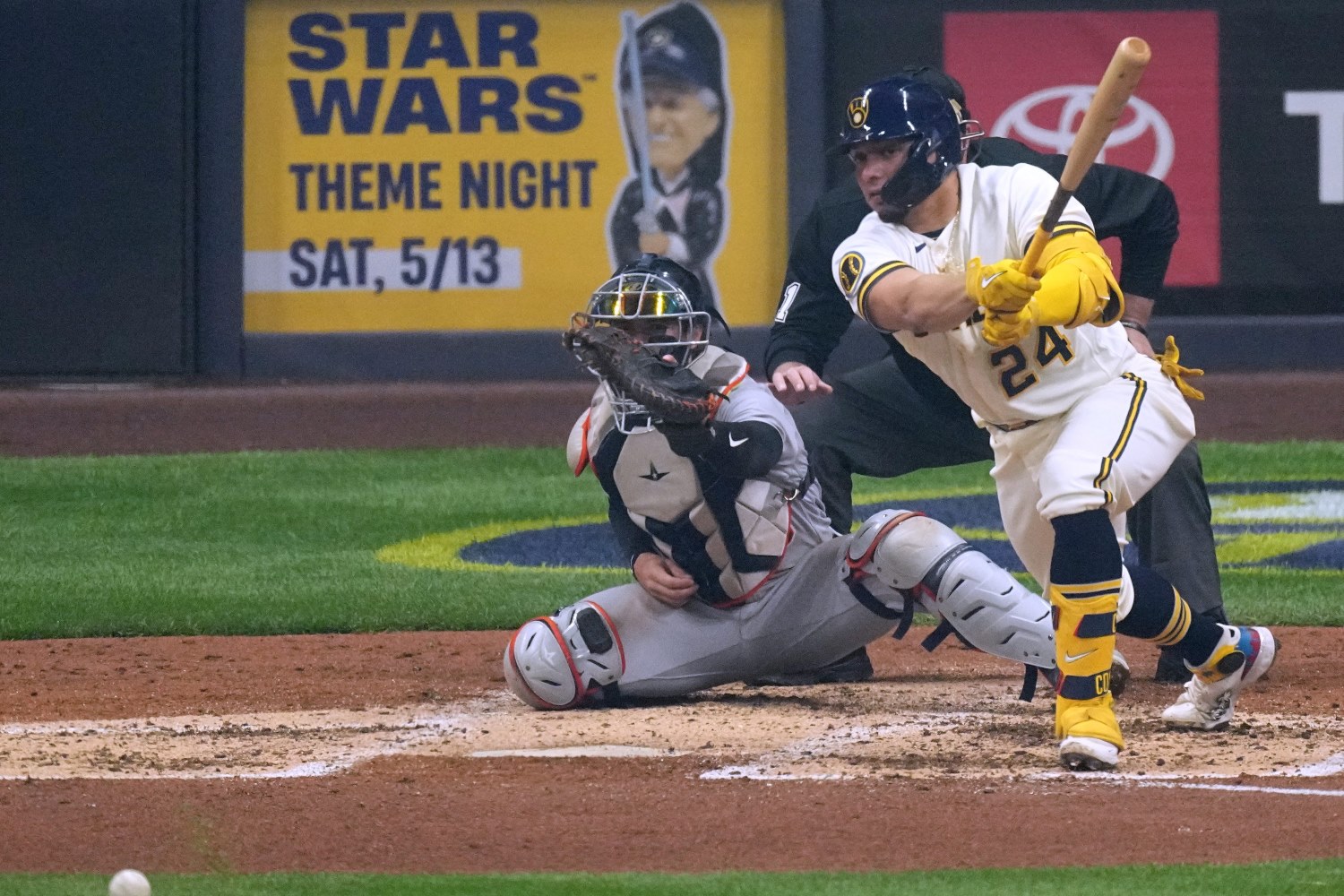 In the bottom of the eighth inning, with the Detroit Tigers leading 4-3, the Brewers mustered the smallest amount of opportunity that can credibly be called a rally. Luke Voit led off the frame with a double, and was replaced by pinch-runner Blake Perkins at second base. Willy Adames and Rowdy Tellez each put up a fight, but Tigers reliever Mason Englert struck them both out. That brought up William Contreras, who represented the go-ahead run, with two outs. The game hung very much in the balance. Tigers manager A.J. Hinch called upon Jason Foley to take over for Englert. Foley is a right-hander who throws as hard as 98 miles per hour at times, with a breaking ball that boasts impressive movement but seems to be beyond his real control. Hinch must have decided he wanted to bust Contreras inside, and that does seem to be sound advice for opponents so far this year. The Brewers' new catcher has done many things well, but he's not successfully pulling the ball or hitting the inside pitch yet. Contreras, to his credit, anticipated that plan. Here's where he set up for the 0-1 pitch from Foley, after fouling off an inside sinker for strike one. This is when the trouble started. See, Foley missed with the 0-1, low, but it was another sinker, and Contreras got too excited about what he had just figured out. Here's where he set up for the 1-1 offering. Contreras likes to extend his arms. He's not a great hitter when pitchers crowd him. He was clearly trying to create some extra space, inviting Foley to keep coming inside but leaving himself room to extend his arms on that kind of pitch. All sound logic! Clever, and potentially delightful, if it works. It needs to be subtle, but games have been won by hitters doing just this type of thing. Only, Contreras went way, way past subtlety. Here's where he was as a 2-2 slider (the only non-sinker he would see in the entire plate appearance) came in. Remember in the Clooney/Pitt version of Ocean's 11, when the plan the team had formed to blow the power to their target casino was foiled by an error on the part of some construction workers who did exactly what the crew had plotted? They accidentally exposed their own weaknesses, and that led them to close it. It's the same thing with this slider. Foley missed his target badly, but if he and catcher Jake Rogers had somehow failed to notice Contreras backing away from the plate, they couldn't possibly have done so after that pitch. Here's a ball a foot inside, that would still have ended up on the end of Contreras's bat if he had swung at it. Surely, then, it was time to give up the ghost and move back to Contreras's original position in the box--or at least to pretend to. One could always bail out with the front hip, get going early. He just had to at least invite Foley back into that area. You probably know where this is really going, though. I think Contreras would have had to tape two of his bats together, end-to-end, to reach this pitch. It's right down the middle. He should have swung, though, because he might have hit Hinch's cap in the Tigers dugout as he did, and maybe they would have called manager interference or something. It's a good thing Contreras has already made an All-Star team and looks like a long-term contributor to this team, because the row of seats he basically sat in to watch this pitch are pricey seats. I can, loosely, see what he was going for here. Until that last pitch, the Tigers pounded him with a truly shocking relentlessness, going with sinker after sinker inside. He even made decent contact on an aggressive swing on one of them, well off the plate, fouling the pitch away. I can say that. I can acknowledge some rational basis for some version of what happened. But this wasn't rational. This was baseball breaking for a minute. The Brewers blew their last real chance to win this game because their hitter tried to walk backward around the world and sneak over to first base without anyone noticing, six inches at a time. Blame Blake Perkins, maybe. He's been lousy so far, especially in the field, and bad stuff just seems to happen to the team whenever he gets involved. As soon as he took over at second base, maybe Brewers hitters started seeing a mysterious shimmer in the air all around second base, where whatever ghosts haunt Perkins lurk and drift, and none of them could focus. Maybe we should blame the hitting coaches. Did they show Contreras a heat map of Foley drilling the inside corner with sinkers on the dugout iPad while he warmed up? Did they remind him he could die if the ball hit him wrong and just scare him witless? In all likelihood, we'll never know. Here's all I will say, with confidence: It was a profoundly weird and frustrating way to lose a profoundly mundane and frustrating game.
 -
Tuesday night, the Brewers host the Tigers for the second contest in a three-game series. Unexpectedly, that game now feels like the biggest of the season to date, both because of the team's recent mini-skid and because of their pitching situation. Their starting pitcher for the game symbolizes both. Image courtesy of © Stephen Brashear-USA TODAY Sports It's been a difficult start to the season for Eric Lauer. Something isn't right. His velocity is down over two miles per hour, relative to 2022, and is currently the lowest of his career. Every pitch in his repertoire has been dinged. That's a worrying sign, for the obvious two reasons. Firstly, it implies that Lauer might not be fully healthy. That's not the only reason why a pitcher might lose power this way, but it's certainly the most salient. Given the long-term questions about the health of Brandon Woodruff. the team can ill afford to lose Lauer, too. Even now, their rotation is beginning to stretch a bit thin, and fifth starter Wade Miley is no paragon of durability. Lauer has to be part of the bridge between Corbin Burnes and Freddy Peralta starts, even if he's not going to approximate their performance. Secondly, of course, less velocity typically means less effectiveness. Lauer is walking hitters at virtually the same rate as he did over the past two seasons, but his strikeout rate has dropped by three percentage points. Opponents are whiffing less often on all five of his pitches, and hitting all five of them harder than they did last year. It's practically miraculous that Lauer has managed to muddle through with a 4.30 ERA to this point. Practically miraculous, perhaps, but not truly so. There's a real tweak at work, one that has helped Lauer avert total disaster in a moment of crisis. His fastball isn't fast enough, and it won't stay out of the middle of the plate. Opponents are spotting his slider and his curveball out of the hand. He has no feel for his changeup, and has virtually given up on it. Into the void left by all that derelict stuff, Lauer has stuffed a whole bunch of cutters. Against lefties, all the cutter has to do is play off his four-seamer. If he can get hitters not to obliterate that straight heat, he can then show them the cutter, looking enough like the fastball to induce a fastball-speed swing. That leads to some balls off the end of the bat, and explains why Lauer has gotten better results with that pitch than with his other principal weapons this year. He's also using the pitch more against righties, although less dramatically so. The slider really has gone missing for Lauer this year. He's tried to reshape it into something more akin to his curveball, but it's not working. What is working, though, is the cutter, which has lost more velocity than his fastball and now has greater vertical separation from that pitch, too. With the cutter, Lauer can get in on righties and prevent them from looking to extend their arms and do maximum damage on the four-seamer. It's far from a perfect plan, but it's kept him afloat during this brutal stretch. As long as he commands the pitch over the inner half, he can make it a key part of his attack. For the first time this season, the Brewers have lost two consecutive games. Going back to the start of this homestand, they've lost three out of four. They're still sporting a fantastic overall record, but the Pirates have kept pressure on them within the division, and the injury trouble the team has already encountered makes their success feel a bit fragile. On Tuesday, Lauer has to keep the anemic Detroit offense in check, so that the team can get off the schneid and back on track. Thereafter, the team needs to see him regain some his velocity and settle into the kind of tenuous but tenable rhythm he established in each of the last two seasons. View full article
-
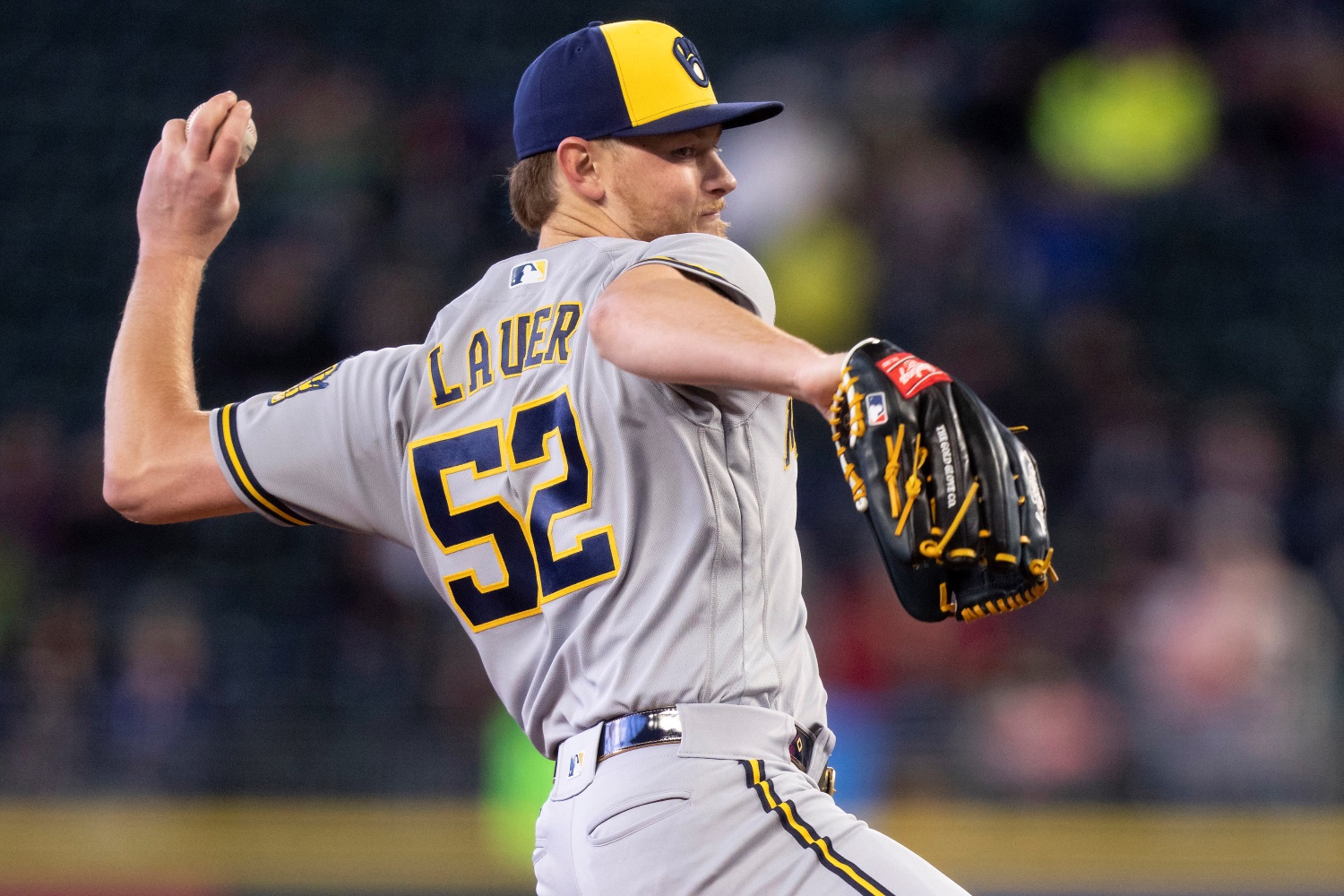 It's been a difficult start to the season for Eric Lauer. Something isn't right. His velocity is down over two miles per hour, relative to 2022, and is currently the lowest of his career. Every pitch in his repertoire has been dinged. That's a worrying sign, for the obvious two reasons. Firstly, it implies that Lauer might not be fully healthy. That's not the only reason why a pitcher might lose power this way, but it's certainly the most salient. Given the long-term questions about the health of Brandon Woodruff. the team can ill afford to lose Lauer, too. Even now, their rotation is beginning to stretch a bit thin, and fifth starter Wade Miley is no paragon of durability. Lauer has to be part of the bridge between Corbin Burnes and Freddy Peralta starts, even if he's not going to approximate their performance. Secondly, of course, less velocity typically means less effectiveness. Lauer is walking hitters at virtually the same rate as he did over the past two seasons, but his strikeout rate has dropped by three percentage points. Opponents are whiffing less often on all five of his pitches, and hitting all five of them harder than they did last year. It's practically miraculous that Lauer has managed to muddle through with a 4.30 ERA to this point. Practically miraculous, perhaps, but not truly so. There's a real tweak at work, one that has helped Lauer avert total disaster in a moment of crisis. His fastball isn't fast enough, and it won't stay out of the middle of the plate. Opponents are spotting his slider and his curveball out of the hand. He has no feel for his changeup, and has virtually given up on it. Into the void left by all that derelict stuff, Lauer has stuffed a whole bunch of cutters. Against lefties, all the cutter has to do is play off his four-seamer. If he can get hitters not to obliterate that straight heat, he can then show them the cutter, looking enough like the fastball to induce a fastball-speed swing. That leads to some balls off the end of the bat, and explains why Lauer has gotten better results with that pitch than with his other principal weapons this year. He's also using the pitch more against righties, although less dramatically so. The slider really has gone missing for Lauer this year. He's tried to reshape it into something more akin to his curveball, but it's not working. What is working, though, is the cutter, which has lost more velocity than his fastball and now has greater vertical separation from that pitch, too. With the cutter, Lauer can get in on righties and prevent them from looking to extend their arms and do maximum damage on the four-seamer. It's far from a perfect plan, but it's kept him afloat during this brutal stretch. As long as he commands the pitch over the inner half, he can make it a key part of his attack. For the first time this season, the Brewers have lost two consecutive games. Going back to the start of this homestand, they've lost three out of four. They're still sporting a fantastic overall record, but the Pirates have kept pressure on them within the division, and the injury trouble the team has already encountered makes their success feel a bit fragile. On Tuesday, Lauer has to keep the anemic Detroit offense in check, so that the team can get off the schneid and back on track. Thereafter, the team needs to see him regain some his velocity and settle into the kind of tenuous but tenable rhythm he established in each of the last two seasons.
 -
Of the new rules that have come into MLB this year, the pitch timer is by far the most visible. It's also (by a smaller distance, and with more room for debate) the most impactful. For the Brewers' relief ace, though, it's just been another dimension added to the chess game he plays with hitters. Image courtesy of © Steven Bisig-USA TODAY Sports Devin Williams will not be hurried. In the early going, he's in the 11th percentile of the league for pitcher pace. He's only had one ball assessed via pitch timer violation, but he flirts with it often. Notably, he came breathtakingly close to one a couple of times during his high-stress save against the Padres on Sunday. By every indication, though, he's unconcerned about it. He leaves the fretting over those seconds in which the timer approaches zero to others. He's using his full allotment of time, both to prepare his mind and body to execute the next pitch, and to make baserunners and batters nonplussed. In his book Music is History, Questlove wrote the following operational definition of "cool" in music: "Cool is staying just enough behind the beat to make an intelligent decision, without sweating the fact that you're slowing the pace for your own benefit." That's exactly what Williams is doing. Before this season, the game didn't have an urgent pace when a hurler like Williams entered. It often slowed way down, and both sides tended to be fine with that. Now, there are constraints on the work each side needs to do between pitches. The calling of pitches, the mental battles with opponents, and the physical recovery required to be ready for the next pitch all have to happen within 15 (if no one is on base) or 20 seconds. That could, in theory, make everyone rush to avoid the embarrassment and non-negotiable penalty of a timer violation. It applies a certain amount of pressure, to those who choose to see it that way. Williams rejects that pressure. So far, it's working gorgeously. In six innings of work, he's allowed only six baserunners, and he's fanned 11 batters. He's giving himself more time and more control over things by using the full clock, and if anyone else is worried about falling behind, that's their own problem. It will be interesting to see whether he adjusts, as the season rolls on, and occasionally speeds up his pace to throw hitters off. In the meantime, though, his appearances feel almost like an oasis of pre-timer baseball--in a good way. The timer is still there, ensuring that things don't grind to a stop the way they sometimes have over the last 15 years or so. The drama is occasionally heightened by the clock nearing zero. Williams seems effortlessly aware of it, though, and is only using the clock to guide and direct his preparation to unleash yet another pitch against which hitters will look helpless. View full article
-
Devin Williams Will Throw the Ball When He's Good and Ready
Matthew Trueblood posted an article in Brewers
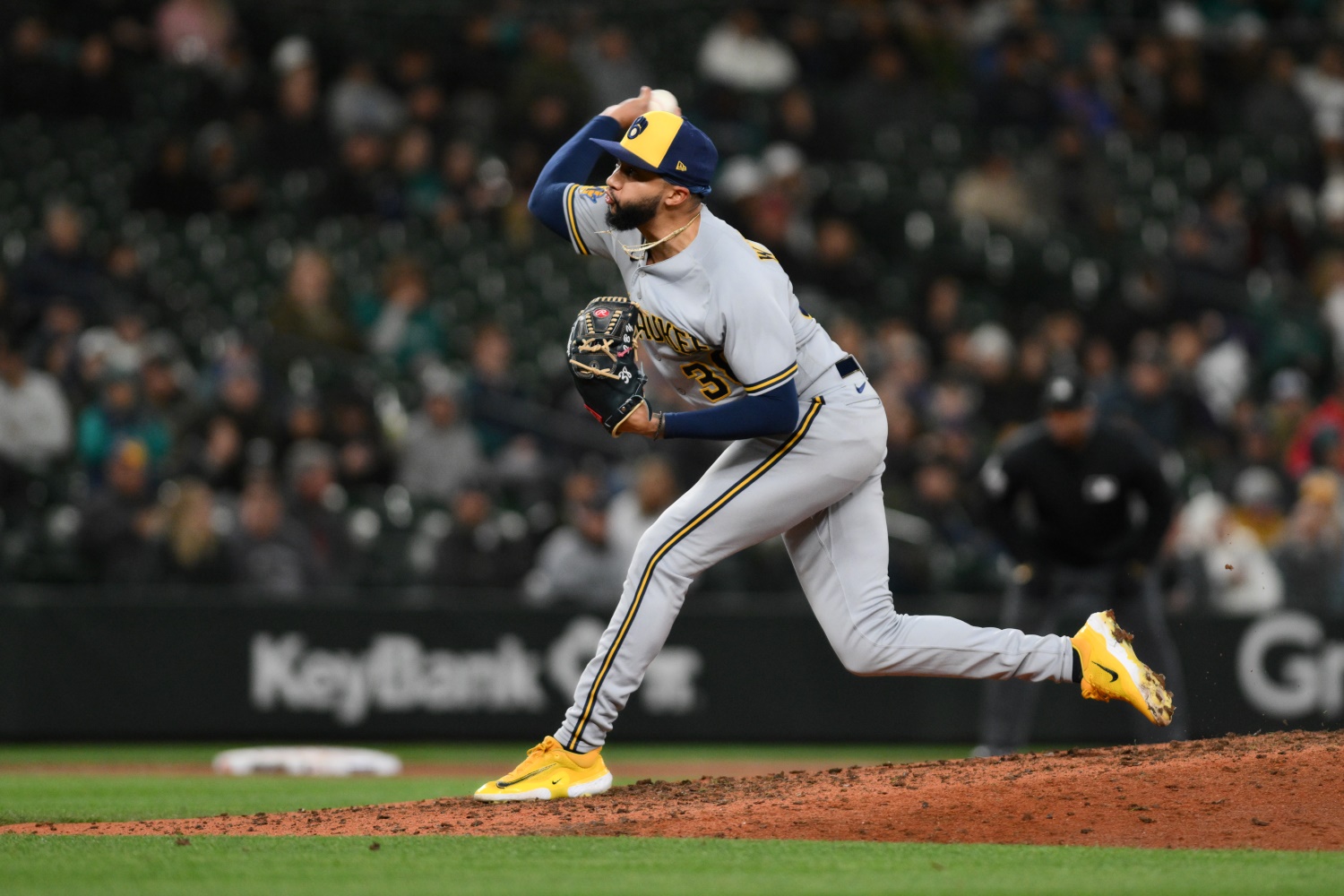 Devin Williams will not be hurried. In the early going, he's in the 11th percentile of the league for pitcher pace. He's only had one ball assessed via pitch timer violation, but he flirts with it often. Notably, he came breathtakingly close to one a couple of times during his high-stress save against the Padres on Sunday. By every indication, though, he's unconcerned about it. He leaves the fretting over those seconds in which the timer approaches zero to others. He's using his full allotment of time, both to prepare his mind and body to execute the next pitch, and to make baserunners and batters nonplussed. In his book Music is History, Questlove wrote the following operational definition of "cool" in music: "Cool is staying just enough behind the beat to make an intelligent decision, without sweating the fact that you're slowing the pace for your own benefit." That's exactly what Williams is doing. Before this season, the game didn't have an urgent pace when a hurler like Williams entered. It often slowed way down, and both sides tended to be fine with that. Now, there are constraints on the work each side needs to do between pitches. The calling of pitches, the mental battles with opponents, and the physical recovery required to be ready for the next pitch all have to happen within 15 (if no one is on base) or 20 seconds. That could, in theory, make everyone rush to avoid the embarrassment and non-negotiable penalty of a timer violation. It applies a certain amount of pressure, to those who choose to see it that way. Williams rejects that pressure. So far, it's working gorgeously. In six innings of work, he's allowed only six baserunners, and he's fanned 11 batters. He's giving himself more time and more control over things by using the full clock, and if anyone else is worried about falling behind, that's their own problem. It will be interesting to see whether he adjusts, as the season rolls on, and occasionally speeds up his pace to throw hitters off. In the meantime, though, his appearances feel almost like an oasis of pre-timer baseball--in a good way. The timer is still there, ensuring that things don't grind to a stop the way they sometimes have over the last 15 years or so. The drama is occasionally heightened by the clock nearing zero. Williams seems effortlessly aware of it, though, and is only using the clock to guide and direct his preparation to unleash yet another pitch against which hitters will look helpless.
 -
The Brewers just climbed to 13-5 on this young (but maturing) season. They've already ensured a winning record on a very tough 10-game road trip. It's all good news, as long as the team and their fans can stay standing long enough to enjoy it. Image courtesy of © Steven Bisig-USA TODAY Sports The Brewers needed a nice, easy game in the worst way Tuesday night. Their series in San Diego included two easygoing blowouts (one in each direction), but those were bookended by a pair of taut, hard-fought wins. That came after a three-gamer in Arizona that served as a clear early notice: the Diamondbacks will be pesky this year. Brandon Woodruff will be out for multiple months, and Corbin Burnes is now nursing a minor injury. The team needed a little bit of a tension-breaker. No dice. Baseball will, sometimes, sense your fatigue and your desperate need for a rest, and ruthlessly deny it. Even in April, the length and layers of the 162-game grind can occasionally rush up and elbow you into a wall, leaving your ribs sore and your ego bruised. The Brewers had to withstand some early damage in Tuesday night's game, as stopgap starter Colin Rea had an up-and-down outing. The Mariners looked stumped by Rea's stylish new sweeper the first time they saw him, but they took the measure of that pitch and its purveyor in a four-run third inning. It would have been understandable if everyone quietly, professionally switched things off for the night at that point. The score was just 4-3, but Rea was scuffling, and Craig Counsell felt little choice but to keep him out there to grind through some extra outs. With Woodruff and Burnes eating fewer innings than expected, the bullpen has borne a heavy load in the early going. Milwaukee's schedule has been unforgiving, anyway, with fewer off days and a tougher road trip than April typically includes. It would have been ok if this one had simply slipped away, one of those 54 pre-programmed losses a team has every year. No dice. The Brewers showed a resiliency and a hunger that have quickly become their signature, and they fought back, even on a night when everyone seemed a bit less than their very best. Rea got through the fifth without allowing any further runs, despite some loud contact. Willy Adames, whose at-bats have seemed more systematic and calculated this season, got a pitch up and away in the top of the sixth and drove it out of the park to right field, tying the score. Counsell, to his credit, never lets his team's heart go to waste. If they show him that they have the fight to win on a given night, he responds by pushing every button he believes will increase their chances of winning. So it was that Hoby Milner, making his ninth appearance already in the team's 18th game and working on a second consecutive night, got four outs for the Brewers. Joel Payamps and Matt Bush also came back on no rest, and Devin Williams--who threw 33 pitches Sunday and got warm Monday night before the Brewers' ninth-inning insurance runs allowed him to shut it down--worked the ninth with the score still tied. Payamps is up to eight appearances. Bryse Wilson, who navigated the tumultuous 10th and 11th, has thrown 11 innings already, all in relief. Just three weeks into the season, the heavy schedule and the Brewers' unusually rigid bullpen construction (with Wilson, Payamps, and Javy Guerra out of options, and Gus Varland unable to be sent down without being offered back to the Dodgers) have them dealing with much more in the way of fatigue and workload questions than a team would ordinarily be worried about by this stage of the season. Part of that, of course, is that they just keep winning, and that happened again Tuesday night. Unless a team is a historic juggernaut, winning comes with some costs. Close games pile up, and the pitchers used to secure victories in them, wear down. Position players get fewer breaks, too. In this case, that state of affairs is also complicated by the youthful exuberance of the Brewers' youngsters. Garrett Mitchell suffered a shoulder subluxation on a desperate (though successful) slide into third base in the top of the 10th. Mitchell wasn't able to throw at full strength on the game-tying sacrifice fly in the bottom half of that frame, and he left the game immediately thereafter. That emptied out the Brewers' bench. No one is getting off their feet, and no one is ever taking it easy out there. That's the magic of this team, really. They're admirably hard-charging, relentless, and eager. Counsell pushes for every win he can get, on the theory that he'll be able to work with or work around whatever ramifications there are for that urgency. If Williams, Bush, Milner, or Peter Strzelecki wears out or wears down, well, Counsell has been giving Payamps and Varland auditions in situations that allow him to gauge their fitness for high-leverage roles. If Mitchell has to go on the injured list (which seems likely), Sal Frelick could come up to replace him. The Brewers' success throughout Counsell's tenure has depended on that capacity for taking chances and deploying every available resource to win games. They're not going to change that approach now, and the individuals they've brought into the clubhouse clearly buy in to it. It's paying off beautifully in the early stages of 2023, but the bill for this success will come due as the spring leans toward summer. Third Bucket Record: 6-0 View full article
- 2 replies
-
- 2
-

-
- colin rea
- hoby milner
- (and 3 more)
-
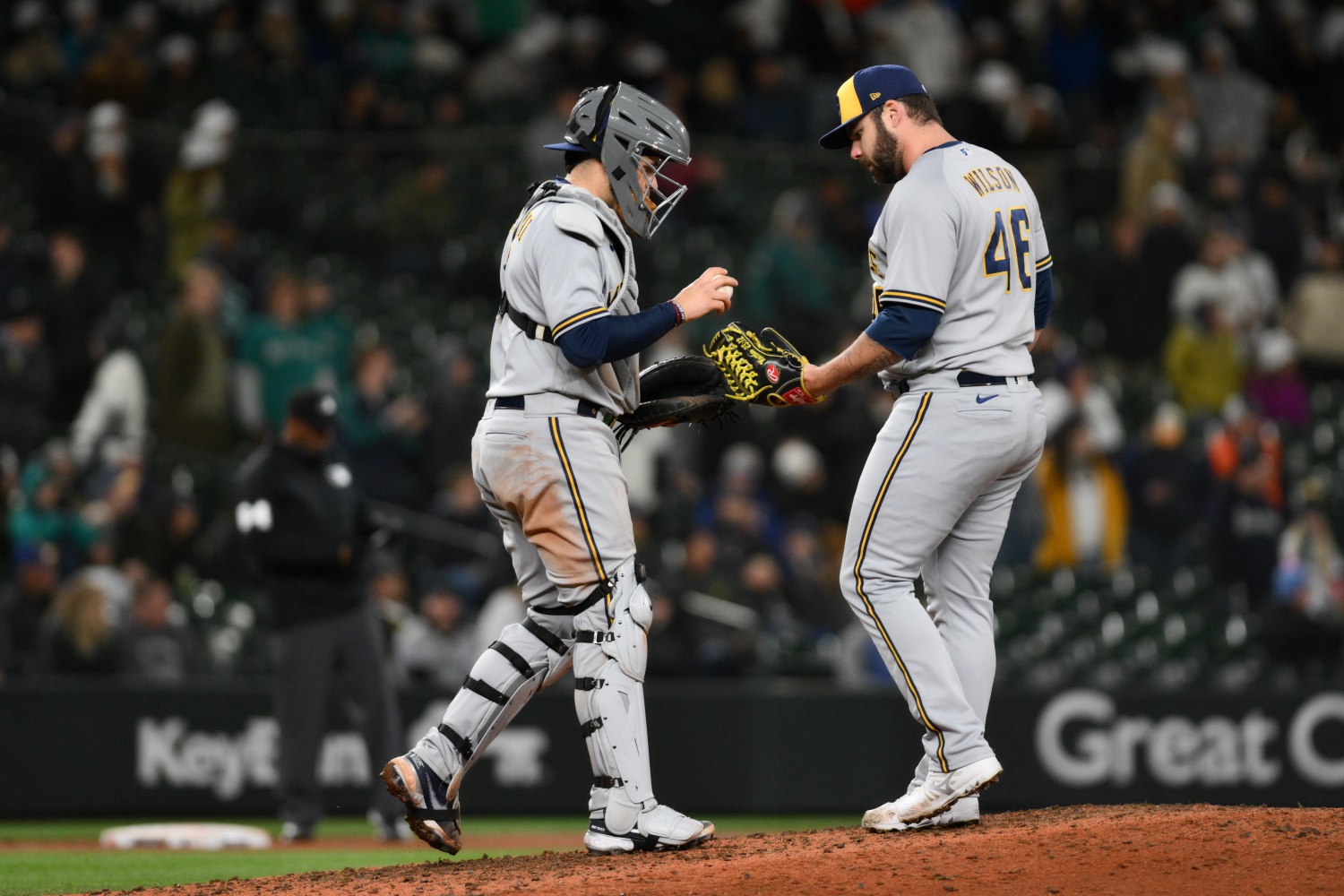 The Brewers needed a nice, easy game in the worst way Tuesday night. Their series in San Diego included two easygoing blowouts (one in each direction), but those were bookended by a pair of taut, hard-fought wins. That came after a three-gamer in Arizona that served as a clear early notice: the Diamondbacks will be pesky this year. Brandon Woodruff will be out for multiple months, and Corbin Burnes is now nursing a minor injury. The team needed a little bit of a tension-breaker. No dice. Baseball will, sometimes, sense your fatigue and your desperate need for a rest, and ruthlessly deny it. Even in April, the length and layers of the 162-game grind can occasionally rush up and elbow you into a wall, leaving your ribs sore and your ego bruised. The Brewers had to withstand some early damage in Tuesday night's game, as stopgap starter Colin Rea had an up-and-down outing. The Mariners looked stumped by Rea's stylish new sweeper the first time they saw him, but they took the measure of that pitch and its purveyor in a four-run third inning. It would have been understandable if everyone quietly, professionally switched things off for the night at that point. The score was just 4-3, but Rea was scuffling, and Craig Counsell felt little choice but to keep him out there to grind through some extra outs. With Woodruff and Burnes eating fewer innings than expected, the bullpen has borne a heavy load in the early going. Milwaukee's schedule has been unforgiving, anyway, with fewer off days and a tougher road trip than April typically includes. It would have been ok if this one had simply slipped away, one of those 54 pre-programmed losses a team has every year. No dice. The Brewers showed a resiliency and a hunger that have quickly become their signature, and they fought back, even on a night when everyone seemed a bit less than their very best. Rea got through the fifth without allowing any further runs, despite some loud contact. Willy Adames, whose at-bats have seemed more systematic and calculated this season, got a pitch up and away in the top of the sixth and drove it out of the park to right field, tying the score. Counsell, to his credit, never lets his team's heart go to waste. If they show him that they have the fight to win on a given night, he responds by pushing every button he believes will increase their chances of winning. So it was that Hoby Milner, making his ninth appearance already in the team's 18th game and working on a second consecutive night, got four outs for the Brewers. Joel Payamps and Matt Bush also came back on no rest, and Devin Williams--who threw 33 pitches Sunday and got warm Monday night before the Brewers' ninth-inning insurance runs allowed him to shut it down--worked the ninth with the score still tied. Payamps is up to eight appearances. Bryse Wilson, who navigated the tumultuous 10th and 11th, has thrown 11 innings already, all in relief. Just three weeks into the season, the heavy schedule and the Brewers' unusually rigid bullpen construction (with Wilson, Payamps, and Javy Guerra out of options, and Gus Varland unable to be sent down without being offered back to the Dodgers) have them dealing with much more in the way of fatigue and workload questions than a team would ordinarily be worried about by this stage of the season. Part of that, of course, is that they just keep winning, and that happened again Tuesday night. Unless a team is a historic juggernaut, winning comes with some costs. Close games pile up, and the pitchers used to secure victories in them, wear down. Position players get fewer breaks, too. In this case, that state of affairs is also complicated by the youthful exuberance of the Brewers' youngsters. Garrett Mitchell suffered a shoulder subluxation on a desperate (though successful) slide into third base in the top of the 10th. Mitchell wasn't able to throw at full strength on the game-tying sacrifice fly in the bottom half of that frame, and he left the game immediately thereafter. That emptied out the Brewers' bench. No one is getting off their feet, and no one is ever taking it easy out there. That's the magic of this team, really. They're admirably hard-charging, relentless, and eager. Counsell pushes for every win he can get, on the theory that he'll be able to work with or work around whatever ramifications there are for that urgency. If Williams, Bush, Milner, or Peter Strzelecki wears out or wears down, well, Counsell has been giving Payamps and Varland auditions in situations that allow him to gauge their fitness for high-leverage roles. If Mitchell has to go on the injured list (which seems likely), Sal Frelick could come up to replace him. The Brewers' success throughout Counsell's tenure has depended on that capacity for taking chances and deploying every available resource to win games. They're not going to change that approach now, and the individuals they've brought into the clubhouse clearly buy in to it. It's paying off beautifully in the early stages of 2023, but the bill for this success will come due as the spring leans toward summer. Third Bucket Record: 6-0
 -
Bryse Wilson has pitched primarily in low-leverage situations for the Brewers thus far in 2023, but he's already showing signs of being the team's next success story in pitching development. With Brandon Woodruff on the shelf for a prolonged period, the ways in which Wilson could have an impact have become more clear, and the stakes have been raised. Image courtesy of © Mike De Sisti / The Milwaukee Journal Sentinel / USA TODAY NETWORK Back in late February, I tagged Bryse Wilson as one potential X-factor for the 2023 Brewers. I wanted to capture the broader point that Chris Hook and the rest of the pitching instruction and support staff for the team are very good and versatile, but Wilson had specific indicators in his favor, too. Here's a snippet of what I wrote at that time. Lo, and behold: It's already clear that Wilson has both stuck with his higher arm slot, and swapped out his slider for a cutter. The cutter has been a go-to pitch for him so far, and it's working nicely. He's gotten whiffs on over a quarter of swings against it, and ground balls when batters do put it in play. It's also pretty clear that his four-seamer and curveball work better off one another from this altered slot, and he's achieved both the greater vertical movement and the higher whiff rate that I predicted with the curve in the early going. The samples here are minute, but in pitching, the little things all matter. That's not all that has changed, though. I also wrote about the fact that, just as he was raising his arm slot a bit, he slid across to the first-base side of the pitching rubber in his setup. The Brewers' advice to him, based on his new slot and new repertoire, has been to keep the mechanical change but return to the third-base side of the rubber, From there, Wilson's splitter (which has about six inches less armside run than does his straight change) works just fine, but the rest of his arsenal really plays up. His cutter can work across the plate, but is around the zone. He's much more able to consistently work left-handed batters away, but can steer his sinker in on righties. He's elevating his fastball and his sinker with more confidence, and while a high sinker might sound like a bad idea, it's exactly how Wilson's works best. That Wilson is also still using his full arsenal tells us he still wants to try his hand as a starter. With Woodruff sidelined, that opportunity is before him. The Brewers probably won't get another Eric Lauer-level breakout from Wilson, who (after all) cost much less to acquire and has a long track record of mixed results in MLB. He's been solid, though, thanks to the synthesis of some things under the guidance of Hook and company. He still has room to grow, and he's in the right place to do so. View full article
-
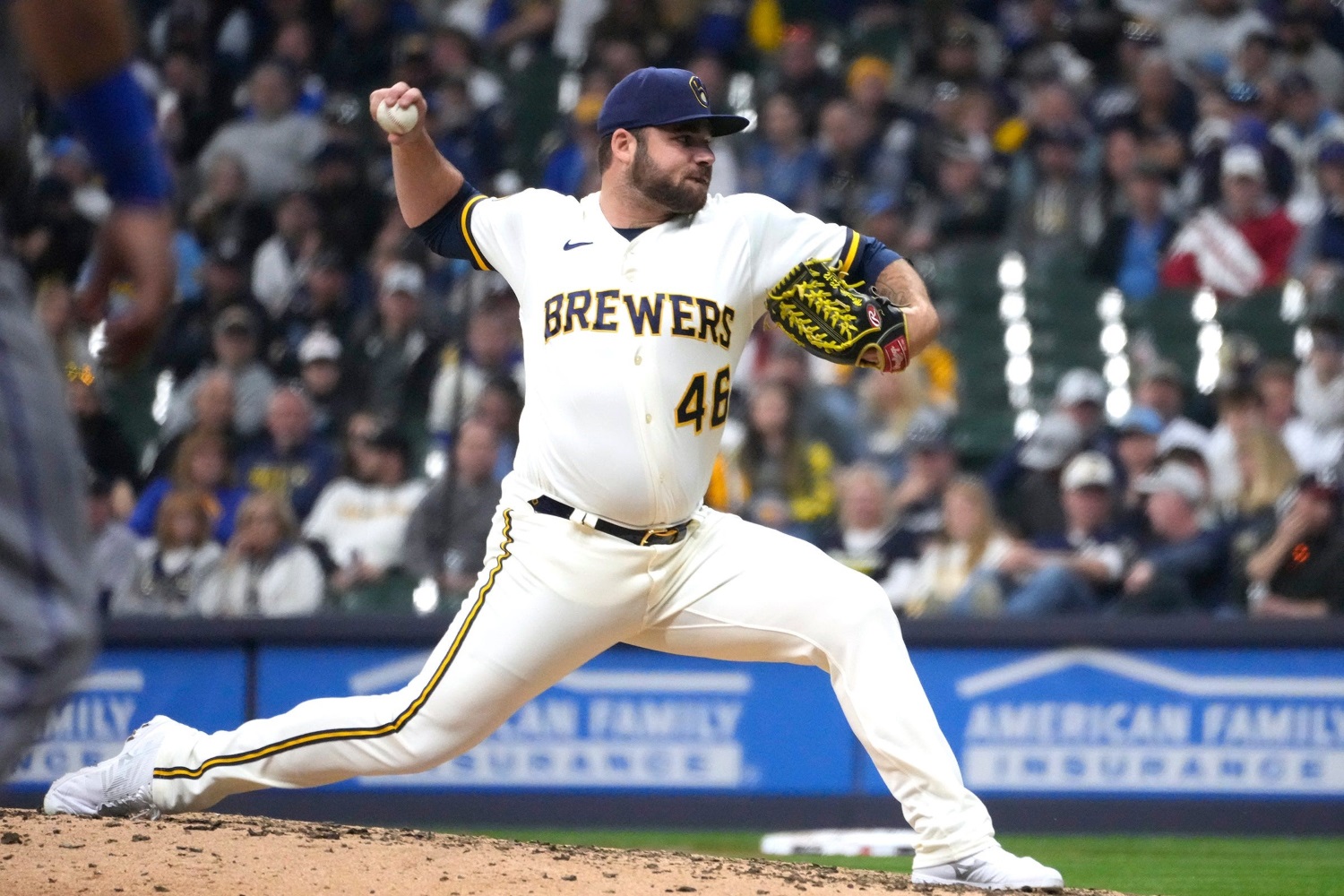 Back in late February, I tagged Bryse Wilson as one potential X-factor for the 2023 Brewers. I wanted to capture the broader point that Chris Hook and the rest of the pitching instruction and support staff for the team are very good and versatile, but Wilson had specific indicators in his favor, too. Here's a snippet of what I wrote at that time. Lo, and behold: It's already clear that Wilson has both stuck with his higher arm slot, and swapped out his slider for a cutter. The cutter has been a go-to pitch for him so far, and it's working nicely. He's gotten whiffs on over a quarter of swings against it, and ground balls when batters do put it in play. It's also pretty clear that his four-seamer and curveball work better off one another from this altered slot, and he's achieved both the greater vertical movement and the higher whiff rate that I predicted with the curve in the early going. The samples here are minute, but in pitching, the little things all matter. That's not all that has changed, though. I also wrote about the fact that, just as he was raising his arm slot a bit, he slid across to the first-base side of the pitching rubber in his setup. The Brewers' advice to him, based on his new slot and new repertoire, has been to keep the mechanical change but return to the third-base side of the rubber, From there, Wilson's splitter (which has about six inches less armside run than does his straight change) works just fine, but the rest of his arsenal really plays up. His cutter can work across the plate, but is around the zone. He's much more able to consistently work left-handed batters away, but can steer his sinker in on righties. He's elevating his fastball and his sinker with more confidence, and while a high sinker might sound like a bad idea, it's exactly how Wilson's works best. That Wilson is also still using his full arsenal tells us he still wants to try his hand as a starter. With Woodruff sidelined, that opportunity is before him. The Brewers probably won't get another Eric Lauer-level breakout from Wilson, who (after all) cost much less to acquire and has a long track record of mixed results in MLB. He's been solid, though, thanks to the synthesis of some things under the guidance of Hook and company. He still has room to grow, and he's in the right place to do so.
 -
Keller's a great name. I like that a lot. Obviously, there'd be some hesitation on one side or the other about an intradivisional trade, but it goes up near the top of the list for me.
- 8 replies
-
- 1
-
-
- brandon woodruff
- bryse wilson
- (and 3 more)
-
Over the last two days, the prognosis on Brandon Woodruff's shoulder has gotten markedly worse--or at least, we've become more aware of how serious the issue is. It's time to talk about how the team can survive a prolonged absence on the part of its co-ace. Image courtesy of © Jeff Hanisch-USA TODAY Sports At first, Brandon Woodruff hitting the injured list with shoulder inflammation seemed like just a passing cloud on a sunny day. Amid the Brewers' hot start and with both the player and team talking about the possibility that he would return at the end of a minimum-length stay on the sidelines, it felt more like a nuisance than a genuine threat. Suddenly, that cloud has taken on all the lugubriousness of a coal-black storm stack. Woodruff is dealing with a subscapular strain that could easily cost him the next two months. Bryse Wilson shouldn't be ignored, either. His four outings to open this season have covered nine total innings, and three of the four have involved multiple frames. In those three, he's thrown 49, 34, and 50 pitches, and he's using a sufficiently varied repertoire to make it easy to imagine him stretching back out to a starter's workload. It might mean a shorter start or two as he builds up from 50 pitches to full readiness for 80 or 90, but it's a change that could be made on the fly at this stage. Revert to the Six-Man Rotation Recall that, in 2021, the Brewers thrived with a six-man starting rotation, largely as an adaptation to the weirdness of playing a full season on the heels of the shortened pandemic year of 2020. They went back to the five-man plan in 2022, but it's not too late to flex back out to the longer loop this month. With Woodruff down, it becomes more important to preserve the health of Corbin Burnes, Freddy Peralta, Eric Lauer, and Wade Miley. The latter three of that quartet arguably stood to benefit from a six-man staff anyway, and Burnes alone provides only half the incentive to stick to five that Burnes and Woodruff offered when both were healthy. With those four and any two of the arms listed above, the team could run a perfectly respectable six-man circuit, and they'd still have good bullpen depth. If Wilson and/or Houser were slated to start, it would mean more arms (like Jake Cousins, Tyson Miller, Cam Robinson, Elvis Peguero, and the newly acquired Bennett Sousa) in the bullpen. Obviously, relying on any or all of those guys is not ideal, but nor is the fact of Woodruff's injury. Having a strong six starters and seven relief slots, with the ability to rotate pitchers through at least three of them pretty liberally, could be the best approach. Surplus and Need, Supply and Demand: Let's Make a Deal Of course, the juiciest conversation this situation opens up is one about the possibility of trading for an ace to replace the (temporarily) fallen one. This is where the Brewers' broader depth becomes a major asset to Matt Arnold. It's too early to hope to see immediate action, but if the prognosis on Woodruff still looks poor in a month (and if the team continues to play well in the meantime), there are plenty of interesting deals that the team might entertain. Could this be the year the Rockies finally realize they're bad, and trade Germán Márquez? Will the Giants, Red Sox, White Sox, or even Phillies listen to offers on their veteran arms if their rough starts don't smooth out? One way or another, the Marlins figure to be open to a trade for one of their young, controllable, high-upside starters by mid-summer, even if it be only as their best avenue to improving their lousy offense. The catch with any of those, of course, is that if the Brewers want to add a starter who moves the needle in what figures to be a push for the NL Central title and beyond, they're going to have to be willing to give up one of their young outfielders. It's almost impossible to imagine a pitcher good enough to tempt Arnold into surrendering Jackson Chourio, but Joey Wiemer, Garrett Mitchell, and Sal Frelick all have to be considered candidates, if the right deal materializes and the rest of the team's outfielders are playing as expected. Remember, the current outfield picture will only get more crowded as the season progresses, as long as Tyrone Taylor recovers as expected from his elbow injury. This much creativity and intrigue is usually reserved for conversations about a team around and after Memorial Day. Woodruff going down and the team starting so well have conspired to give us some fascinating things to ponder before Earth Day. For now, though, the best thing for which to hope is that Woodruff will recover quickly and be at full strength for the stretch drive--regardless of the size or the specific makeup of the rotation he would then re-join. View full article
-
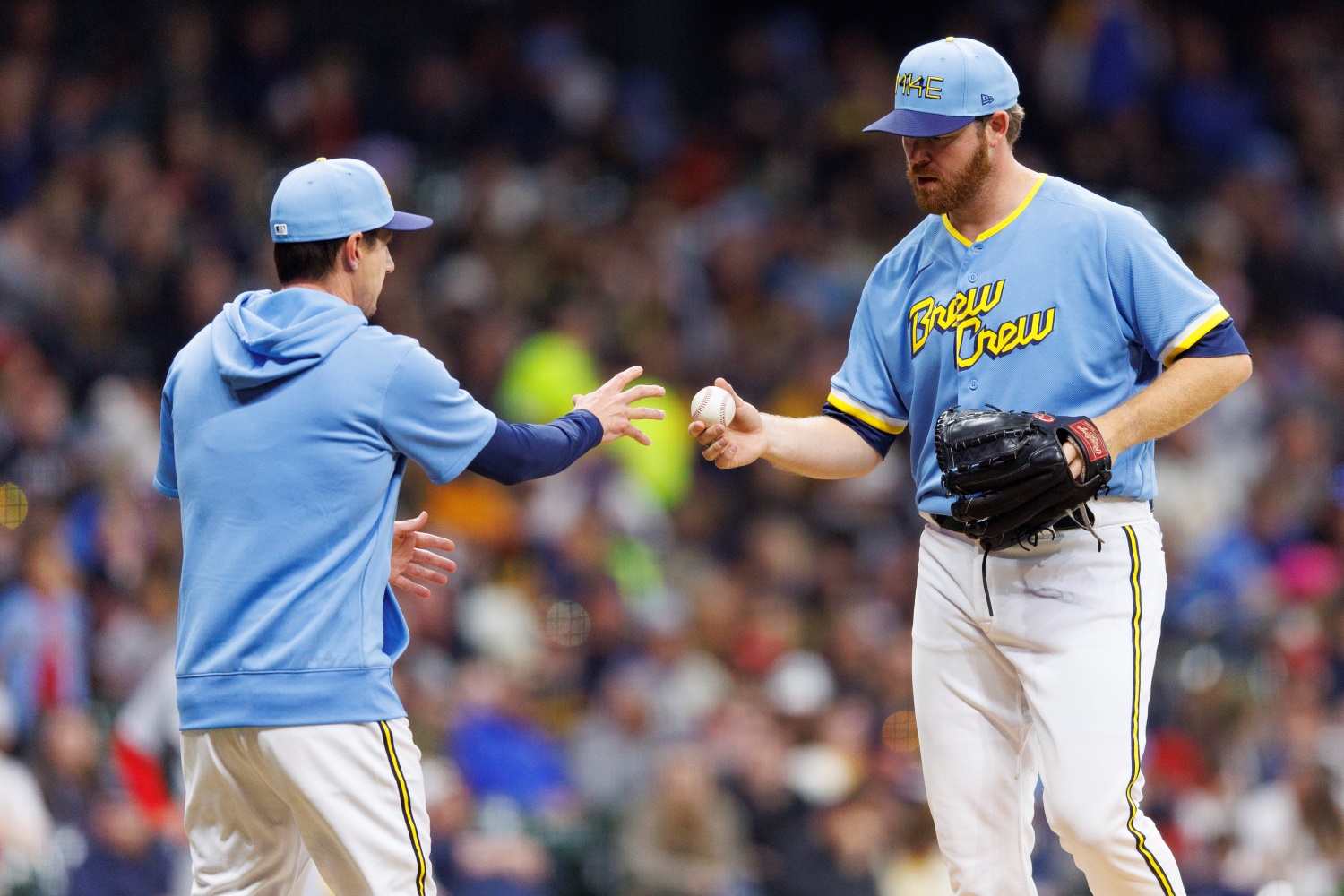 At first, Brandon Woodruff hitting the injured list with shoulder inflammation seemed like just a passing cloud on a sunny day. Amid the Brewers' hot start and with both the player and team talking about the possibility that he would return at the end of a minimum-length stay on the sidelines, it felt more like a nuisance than a genuine threat. Suddenly, that cloud has taken on all the lugubriousness of a coal-black storm stack. Woodruff is dealing with a subscapular strain that could easily cost him the next two months. Bryse Wilson shouldn't be ignored, either. His four outings to open this season have covered nine total innings, and three of the four have involved multiple frames. In those three, he's thrown 49, 34, and 50 pitches, and he's using a sufficiently varied repertoire to make it easy to imagine him stretching back out to a starter's workload. It might mean a shorter start or two as he builds up from 50 pitches to full readiness for 80 or 90, but it's a change that could be made on the fly at this stage. Revert to the Six-Man Rotation Recall that, in 2021, the Brewers thrived with a six-man starting rotation, largely as an adaptation to the weirdness of playing a full season on the heels of the shortened pandemic year of 2020. They went back to the five-man plan in 2022, but it's not too late to flex back out to the longer loop this month. With Woodruff down, it becomes more important to preserve the health of Corbin Burnes, Freddy Peralta, Eric Lauer, and Wade Miley. The latter three of that quartet arguably stood to benefit from a six-man staff anyway, and Burnes alone provides only half the incentive to stick to five that Burnes and Woodruff offered when both were healthy. With those four and any two of the arms listed above, the team could run a perfectly respectable six-man circuit, and they'd still have good bullpen depth. If Wilson and/or Houser were slated to start, it would mean more arms (like Jake Cousins, Tyson Miller, Cam Robinson, Elvis Peguero, and the newly acquired Bennett Sousa) in the bullpen. Obviously, relying on any or all of those guys is not ideal, but nor is the fact of Woodruff's injury. Having a strong six starters and seven relief slots, with the ability to rotate pitchers through at least three of them pretty liberally, could be the best approach. Surplus and Need, Supply and Demand: Let's Make a Deal Of course, the juiciest conversation this situation opens up is one about the possibility of trading for an ace to replace the (temporarily) fallen one. This is where the Brewers' broader depth becomes a major asset to Matt Arnold. It's too early to hope to see immediate action, but if the prognosis on Woodruff still looks poor in a month (and if the team continues to play well in the meantime), there are plenty of interesting deals that the team might entertain. Could this be the year the Rockies finally realize they're bad, and trade Germán Márquez? Will the Giants, Red Sox, White Sox, or even Phillies listen to offers on their veteran arms if their rough starts don't smooth out? One way or another, the Marlins figure to be open to a trade for one of their young, controllable, high-upside starters by mid-summer, even if it be only as their best avenue to improving their lousy offense. The catch with any of those, of course, is that if the Brewers want to add a starter who moves the needle in what figures to be a push for the NL Central title and beyond, they're going to have to be willing to give up one of their young outfielders. It's almost impossible to imagine a pitcher good enough to tempt Arnold into surrendering Jackson Chourio, but Joey Wiemer, Garrett Mitchell, and Sal Frelick all have to be considered candidates, if the right deal materializes and the rest of the team's outfielders are playing as expected. Remember, the current outfield picture will only get more crowded as the season progresses, as long as Tyrone Taylor recovers as expected from his elbow injury. This much creativity and intrigue is usually reserved for conversations about a team around and after Memorial Day. Woodruff going down and the team starting so well have conspired to give us some fascinating things to ponder before Earth Day. For now, though, the best thing for which to hope is that Woodruff will recover quickly and be at full strength for the stretch drive--regardless of the size or the specific makeup of the rotation he would then re-join.
 -
Great teams blow people out, but not even great teams blow people out every day. The Brewers are making a habit of doing the other thing great teams do: win games you have no business winning. Image courtesy of © Orlando Ramirez-USA TODAY Sports When the Brewers called upon their Nashville rotation to make a second consecutive start for the parent club on Thursday, it felt like the chances of winning that game were dim. This early in the season, it's unusual to play so many games without more time off, and giving an extra day between outings to the veterans in the team's rotation does fit with modern norms. Still, it was discouraging, because the team was going on the road against one of the acknowledged powerhouses of the National League, in the San Diego Padres. The change to the rotation actually makes the two sides more even throughout the series, as San Diego sent fourth starter Nick Martinez to the mound for the opener, but it felt certain that using journeyman Colin Rea would put the Crew at a disadvantage. Instead, Rea positively shoved. That was the first way the game tipped toward the Brewers. Rowdy Tellez's first-inning homer and Mike Brosseau's fifth-inning shot gave the team a two-run cushion into the late innings, thanks to Rea's yeomanlike preservation work. He developed a new sweeping slider this winter, and it appears to be a huge development for him, even if it turns him into more an adequate fill-in starter than a true mid-rotation stud. That's incredibly heads-up baseball. In that situation, it's almost always worth trying to cut down the lead runner. Adames had a couple of hiccups in his field awareness and internal clock calibration during the first week of the season, but he's now locked in again, and his aggressive style won the Brewers that game. It's not an overwhelmingly difficult play, physically, but it requires visualizing and preparing for the possibility of that play beforehand--without failing to be ready for all the other things a shortstop might need to do, if the ball is hit differently. The Brewers are, right now, a special team, playing an exceptional and impressive caliber of baseball. There's lurking fragility in places, but for now, they're humming along, and stealing this first game of a very tough series against a team with whom they might be directly competing for a playoff berth was another sign of their readiness for the long campaign ahead. Third Bucket Record: 4-0 View full article
-
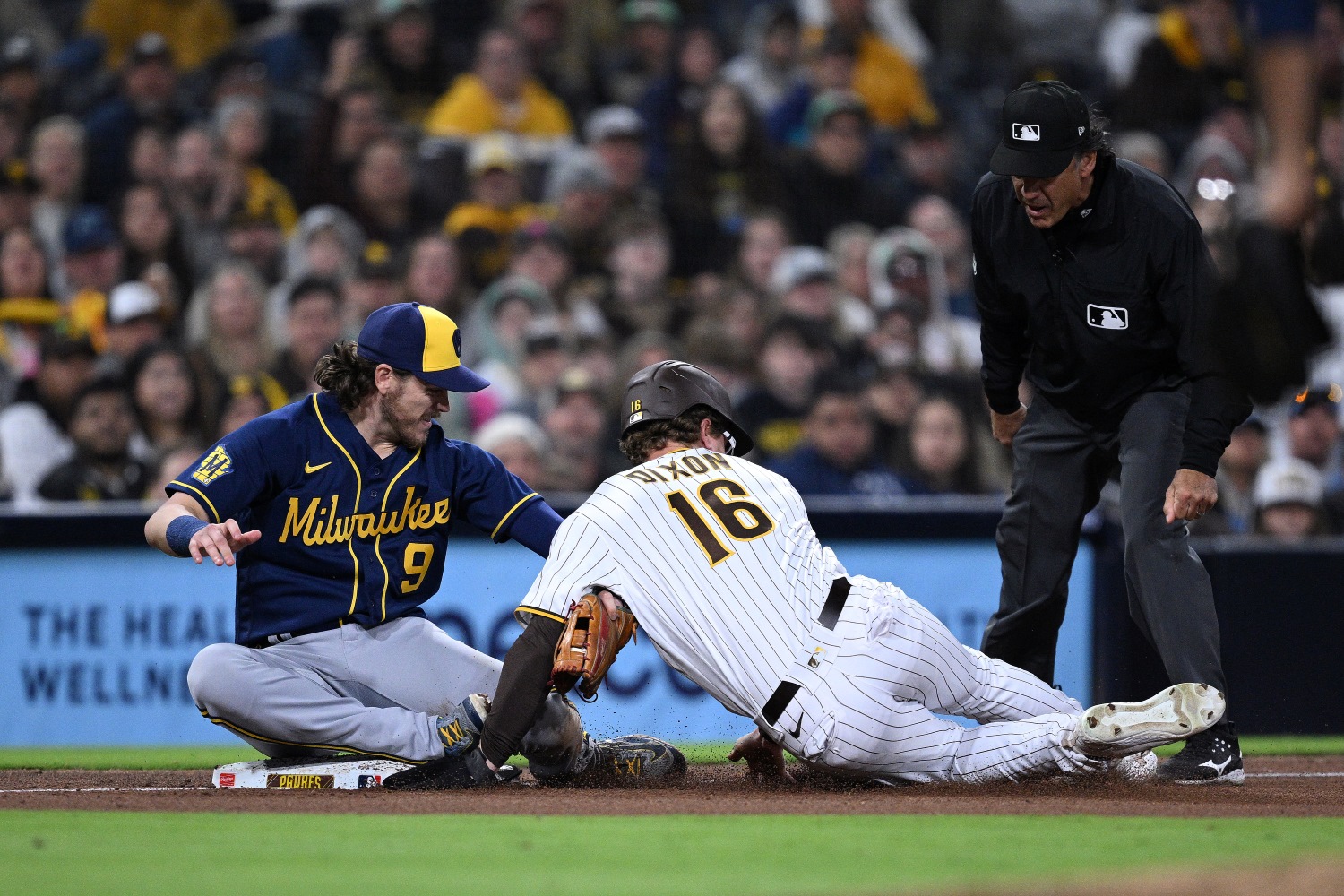 When the Brewers called upon their Nashville rotation to make a second consecutive start for the parent club on Thursday, it felt like the chances of winning that game were dim. This early in the season, it's unusual to play so many games without more time off, and giving an extra day between outings to the veterans in the team's rotation does fit with modern norms. Still, it was discouraging, because the team was going on the road against one of the acknowledged powerhouses of the National League, in the San Diego Padres. The change to the rotation actually makes the two sides more even throughout the series, as San Diego sent fourth starter Nick Martinez to the mound for the opener, but it felt certain that using journeyman Colin Rea would put the Crew at a disadvantage. Instead, Rea positively shoved. That was the first way the game tipped toward the Brewers. Rowdy Tellez's first-inning homer and Mike Brosseau's fifth-inning shot gave the team a two-run cushion into the late innings, thanks to Rea's yeomanlike preservation work. He developed a new sweeping slider this winter, and it appears to be a huge development for him, even if it turns him into more an adequate fill-in starter than a true mid-rotation stud. That's incredibly heads-up baseball. In that situation, it's almost always worth trying to cut down the lead runner. Adames had a couple of hiccups in his field awareness and internal clock calibration during the first week of the season, but he's now locked in again, and his aggressive style won the Brewers that game. It's not an overwhelmingly difficult play, physically, but it requires visualizing and preparing for the possibility of that play beforehand--without failing to be ready for all the other things a shortstop might need to do, if the ball is hit differently. The Brewers are, right now, a special team, playing an exceptional and impressive caliber of baseball. There's lurking fragility in places, but for now, they're humming along, and stealing this first game of a very tough series against a team with whom they might be directly competing for a playoff berth was another sign of their readiness for the long campaign ahead. Third Bucket Record: 4-0
- 1 comment
-
- 1
-
-
- colin rea
- christian yelich
- (and 3 more)
-
I think I agree with most of that. I certainly haven’t been a Cousins backer before now and am not morphing into one purely because he might give them more whiffs. my biggest worries are about Lauer and the middle relievers, but it’s not that hard to imagine a scenario where this problem plagues them for a good chunk of the season. Anyway, it’s interesting to follow, given the overall good vibes from the pitching staff.
-
Twelve games into a long season, it’s too early to draw any sweeping conclusions about the strengths and weaknesses of a team. So far, though, the Brewers have the fourth-lowest strikeout rate in MLB. Can they be a playoff team without missing bats? Image courtesy of © Benny Sieu-USA TODAY Sports Brewers ace Corbin Burnes broke out of his funk with eight dominant innings against the Diamondbacks this week. He struck out eight along the way, partially thanks to using his changeup more often than he ever had in an outing before. As much as anything, though, that outing was about generating weak contact and letting the Brewers play good defense behind him. Burnes got 16 swings and misses along the way, easily outstripping his total from the previous two starts combined, so he did dominate, but eight strikeouts in as many innings is not a huge total for the modern game. That’s a fair microcosm for the Brewers’ whole pitching staff, thus far. Only the Angels have allowed a lower Hard-Hit percentage than the Crew to start this season. Only the Mariners have allowed a lower Barrel percentage. Milwaukee has excelled on the mound, but they’ve done it by getting weak contact instead of by missing bats altogether. With the young, athletic defense the team can field behind its hurlers, there’s some reason to think they can keep doing so. On the other hand, big-league hitters are dangerous, and it’s very unlikely that the Brewers have so thoroughly hacked the system as to alter that fact. Only 5.2 percent of opponents’ batted balls have been Barrels (batted balls whose exit velocity and launch angle give them an expected batting average of at least .500 and an expected slugging average of at least 1.500) according to Statcast. Last year, the lowest rate in the league was 6.2 percent. Over the sample of a long season, a difference of one percentage point in that stat is something like 40 hits, most of which will be extra-base hits about which the defense can do virtually nothing. Tellingly, the three teams with lower strikeout rates than the Brewers’ so far are the Tigers, Athletics, and Nationals. Strikeout rate isn’t destiny, even in the modern game, but it’s not a good idea to put yourself in that company in 2023, regardless of the statistic in question. The Brewers are going to need to miss more bats in order to reach the postseason. Again, it’s very early. The Crew has only played four series, and their four opponents (Cubs, 22nd; Cardinals, 25th; Mets, 26th; Diamondbacks, 28th) are all among the bottom nine in team strikeout rate by hitters. Then again, for each of those clubs, the Brewers are roughly a quarter of the sample, so it’s hard to tease out cause and effect. Yesterday against Arizona, Janson Junk couldn’t sneak the ball past anyone, and neither could the relievers who took over for him. The Diamondbacks took 63 swings, and only whiffed twice: one on a Hoby Milner curveball, and one on a Gus Varland heater. The last time any team swung and missed fewer than three times in a game was 2015. That clearly says something about the Arizona batters, but it says something about the Brewers, too. While Junk pitched in Arizona, Robert Gasser racked up seven strikeouts for Triple-A Nashville. He might need to get a shot at Brandon Woodruff’s vacated rotation spot the next time around, if the team is still struggling this badly with generating whiffs. Jake Cousins has struck out six of his first 10 batters faced for Nashville; maybe it’s time to end the Joel Payamps experiment and recall Cousins. Obviously, strikeout rate can’t be the only criterion by which a team judges and selects its pitching staff. Cousins, who walks too many batters and sometimes finds opponents’ barrels with his nasty slider, is a perfect example of that. Still, an inability to get strikeouts in key spots will catch up to the team in the long run, so they need to be proactive about fixing the issue, even if that just means adjusting specific hurlers’ pitch mixing or sequencing. If they don’t, they won’t be able to sustain their early success preventing runs. View full article
-
The Brewers Pitching Staff Has a Major Strikeout Rate Problem
Matthew Trueblood posted an article in Brewers
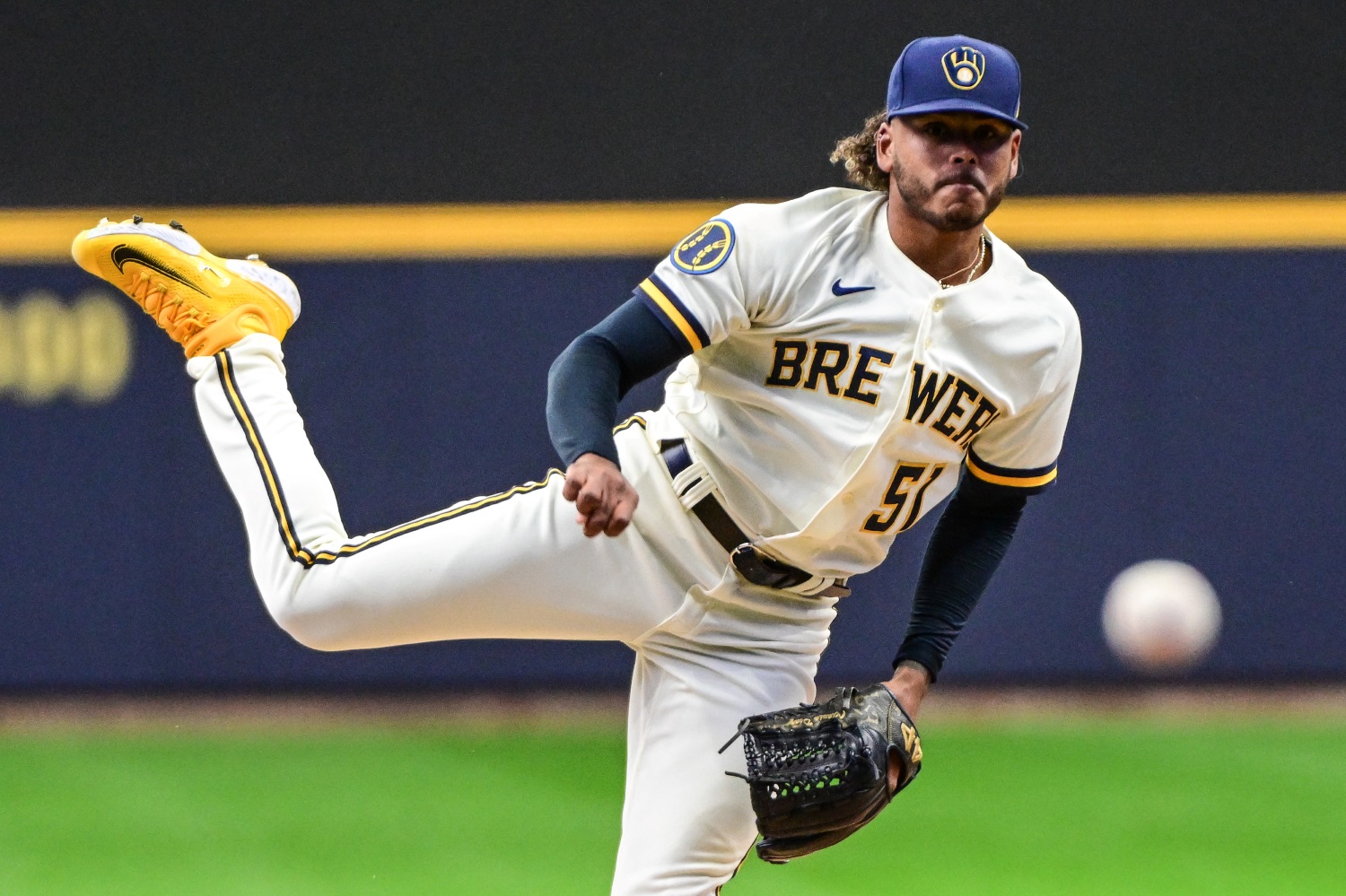 Brewers ace Corbin Burnes broke out of his funk with eight dominant innings against the Diamondbacks this week. He struck out eight along the way, partially thanks to using his changeup more often than he ever had in an outing before. As much as anything, though, that outing was about generating weak contact and letting the Brewers play good defense behind him. Burnes got 16 swings and misses along the way, easily outstripping his total from the previous two starts combined, so he did dominate, but eight strikeouts in as many innings is not a huge total for the modern game. That’s a fair microcosm for the Brewers’ whole pitching staff, thus far. Only the Angels have allowed a lower Hard-Hit percentage than the Crew to start this season. Only the Mariners have allowed a lower Barrel percentage. Milwaukee has excelled on the mound, but they’ve done it by getting weak contact instead of by missing bats altogether. With the young, athletic defense the team can field behind its hurlers, there’s some reason to think they can keep doing so. On the other hand, big-league hitters are dangerous, and it’s very unlikely that the Brewers have so thoroughly hacked the system as to alter that fact. Only 5.2 percent of opponents’ batted balls have been Barrels (batted balls whose exit velocity and launch angle give them an expected batting average of at least .500 and an expected slugging average of at least 1.500) according to Statcast. Last year, the lowest rate in the league was 6.2 percent. Over the sample of a long season, a difference of one percentage point in that stat is something like 40 hits, most of which will be extra-base hits about which the defense can do virtually nothing. Tellingly, the three teams with lower strikeout rates than the Brewers’ so far are the Tigers, Athletics, and Nationals. Strikeout rate isn’t destiny, even in the modern game, but it’s not a good idea to put yourself in that company in 2023, regardless of the statistic in question. The Brewers are going to need to miss more bats in order to reach the postseason. Again, it’s very early. The Crew has only played four series, and their four opponents (Cubs, 22nd; Cardinals, 25th; Mets, 26th; Diamondbacks, 28th) are all among the bottom nine in team strikeout rate by hitters. Then again, for each of those clubs, the Brewers are roughly a quarter of the sample, so it’s hard to tease out cause and effect. Yesterday against Arizona, Janson Junk couldn’t sneak the ball past anyone, and neither could the relievers who took over for him. The Diamondbacks took 63 swings, and only whiffed twice: one on a Hoby Milner curveball, and one on a Gus Varland heater. The last time any team swung and missed fewer than three times in a game was 2015. That clearly says something about the Arizona batters, but it says something about the Brewers, too. While Junk pitched in Arizona, Robert Gasser racked up seven strikeouts for Triple-A Nashville. He might need to get a shot at Brandon Woodruff’s vacated rotation spot the next time around, if the team is still struggling this badly with generating whiffs. Jake Cousins has struck out six of his first 10 batters faced for Nashville; maybe it’s time to end the Joel Payamps experiment and recall Cousins. Obviously, strikeout rate can’t be the only criterion by which a team judges and selects its pitching staff. Cousins, who walks too many batters and sometimes finds opponents’ barrels with his nasty slider, is a perfect example of that. Still, an inability to get strikeouts in key spots will catch up to the team in the long run, so they need to be proactive about fixing the issue, even if that just means adjusting specific hurlers’ pitch mixing or sequencing. If they don’t, they won’t be able to sustain their early success preventing runs.
 -
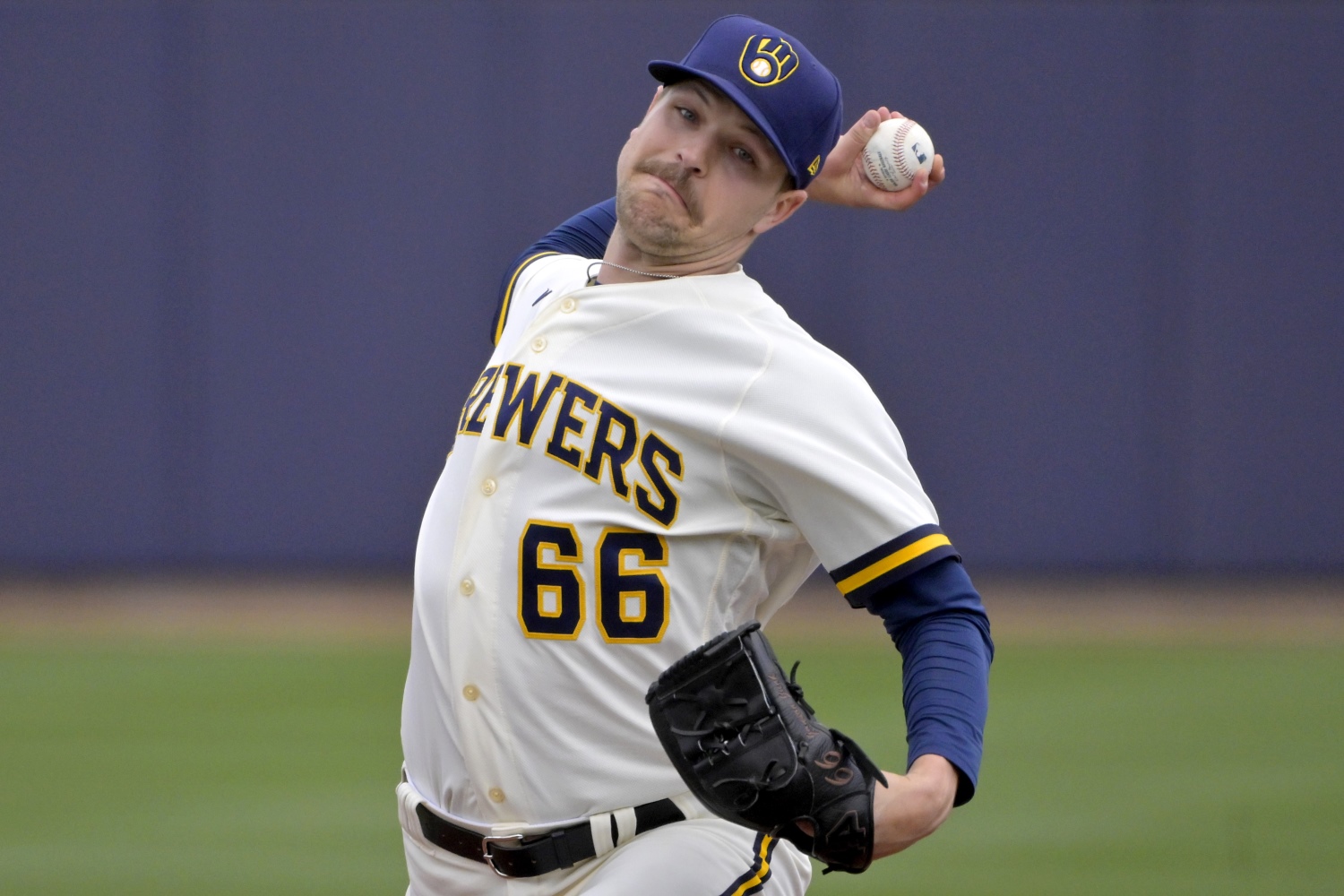 While Brandon Woodruff nurses shoulder inflammation that he insists is minor, it will be Janson Junk who comes up from Triple-A Nashville to take a couple of crucial starts. In a bit of serendipity, he was lined up for this anyway based on when he pitched in Nashville, but it also seems likely that he was first in line for a promotion like this. The Brewers got Junk as the headliner of a package of pitchers when they traded Hunter Renfroe to the Angels in the fall. The right-hander was a 22nd-round pick by the Yankees in 2017 out of Seattle University, and he made a fistful of big-league appearances with the Angels over the course of the last two seasons. In those looks, he showed a fastball with average velocity, but above-average carry; a naturally sweepy slider; a middling curveball; and a couple versions of a changeup, neither of which showed much refinement. The Brewers haven’t overhauled Junk’s mechanics or helped him totally reinvent himself. They have made a few adjustments, though, and his results in two appearances for Nashville so far (10 innings, one run, five hits, three walks, seven strikeouts) speak to the promise those tweaks hold. For one thing, Junk has added some vertical movement to that slider. The trend throughout baseball this year, of course, is toward the “sweeper,” a version of the slider that emphasizes lateral movement, but Junk already had that dimension. Getting more depth on the pitch should increase the rate at which he gets whiffs on it, if he can locate it appropriately. Funnily enough, though, Junk got a bunch of non-contact strikes--some in the form of whiffs, and others on called strikes--even when hitting the top of the zone with the slider during his stint in Nashville. Because his fastball has so much explosive, rising action up there, hitters were fooled even when he put a slider up in that same area. That's unlikely to be a recipe for success in the majors, but it bears watching. Beyond that, it seems (though the pitch-classification data now available to the public via Baseball Savant for Triple-A games is quite messy in the early going) that Junk has, ahem, junked his traditional changeup, and is now throwing solely a splitter as his offspeed pitch. He's getting a bit more depth on that, too, though again, we're battling some uncertainty based on obvious errors in pitch typing. He's also busted out a sinker with significant arm-side run, which would pair nicely with the slider against righties if he can get both pitches working on the same plane consistently. His curveball has good spin mirroring with the four-seamer, and might continue to be a weapon against lefties, although between the changed shape of his slider and the development of the splitter, the curve is becoming a bit redundant in his evolving repertoire. That Junk has seven games and roughly 25 innings of MLB experience already has to be of some comfort to the Brewers, too. He's not going to freak out upon taking the mound. Still, he's filling big shoes, at a pivotal time on the schedule. As Í detailed before the season began, the Brewers start this season with 19 crucial games, and so far, they've only played 11 of them. Junk will start the rubber game against a Diamondbacks team that looks poised to compete (perhaps directly with the Brewers) for a Wild Card berth, then (in all likelihood) in the opener of the team's series in Seattle next Monday, before making his Miller Park Brewers debut against the Red Sox the following Sunday. Those are three tough lineups and tough opponents, and the stakes are high. Meanwhile, Woodruff's status is of enormous concern, no matter what Junk is able to deliver. Without him, the Brewers are far more dependent upon not only Corbin Burnes and Freddy Peralta (which would be fine), but Eric Lauer and Wade Miley. They've dipped into their farm depth for starting help sooner than they would have liked. This injury, which is ostensibly unrelated to the Reynaud's Disease that sidetracked Woodruff for part of 2022, also muddies the water for his long-term outlook. It has to be harder today for the Brewers to talk themselves into a long-term commitment to the most promising extension candidate of their Big Three, even if this does turn out to be a minimum stay on the injured list. There's no good news, except to whatever extent one accepts that they really are just being abundantly cautious and now downplaying the fact that their co-ace has a barking shoulder--well, that, plus the fact that Junk is representative of an organization stocked with better high-level pitching depth than most clubs, and that the team might therefore weather a couple of short absences (or a sustained one) better than their rivals.
 -
Amid a thrilling and encouraging start to the season, the Brewers have experienced their first serious adversity. Brandon Woodruff was placed on the 15-day injured list with shoulder inflammation, creating a flurry of questions about the rotation going forward. For now, at least, the answer to one of those questions is: Janson Junk. Image courtesy of © Jayne Kamin-Oncea-USA TODAY Sports While Brandon Woodruff nurses shoulder inflammation that he insists is minor, it will be Janson Junk who comes up from Triple-A Nashville to take a couple of crucial starts. In a bit of serendipity, he was lined up for this anyway based on when he pitched in Nashville, but it also seems likely that he was first in line for a promotion like this. The Brewers got Junk as the headliner of a package of pitchers when they traded Hunter Renfroe to the Angels in the fall. The right-hander was a 22nd-round pick by the Yankees in 2017 out of Seattle University, and he made a fistful of big-league appearances with the Angels over the course of the last two seasons. In those looks, he showed a fastball with average velocity, but above-average carry; a naturally sweepy slider; a middling curveball; and a couple versions of a changeup, neither of which showed much refinement. The Brewers haven’t overhauled Junk’s mechanics or helped him totally reinvent himself. They have made a few adjustments, though, and his results in two appearances for Nashville so far (10 innings, one run, five hits, three walks, seven strikeouts) speak to the promise those tweaks hold. For one thing, Junk has added some vertical movement to that slider. The trend throughout baseball this year, of course, is toward the “sweeper,” a version of the slider that emphasizes lateral movement, but Junk already had that dimension. Getting more depth on the pitch should increase the rate at which he gets whiffs on it, if he can locate it appropriately. Funnily enough, though, Junk got a bunch of non-contact strikes--some in the form of whiffs, and others on called strikes--even when hitting the top of the zone with the slider during his stint in Nashville. Because his fastball has so much explosive, rising action up there, hitters were fooled even when he put a slider up in that same area. That's unlikely to be a recipe for success in the majors, but it bears watching. Beyond that, it seems (though the pitch-classification data now available to the public via Baseball Savant for Triple-A games is quite messy in the early going) that Junk has, ahem, junked his traditional changeup, and is now throwing solely a splitter as his offspeed pitch. He's getting a bit more depth on that, too, though again, we're battling some uncertainty based on obvious errors in pitch typing. He's also busted out a sinker with significant arm-side run, which would pair nicely with the slider against righties if he can get both pitches working on the same plane consistently. His curveball has good spin mirroring with the four-seamer, and might continue to be a weapon against lefties, although between the changed shape of his slider and the development of the splitter, the curve is becoming a bit redundant in his evolving repertoire. That Junk has seven games and roughly 25 innings of MLB experience already has to be of some comfort to the Brewers, too. He's not going to freak out upon taking the mound. Still, he's filling big shoes, at a pivotal time on the schedule. As Í detailed before the season began, the Brewers start this season with 19 crucial games, and so far, they've only played 11 of them. Junk will start the rubber game against a Diamondbacks team that looks poised to compete (perhaps directly with the Brewers) for a Wild Card berth, then (in all likelihood) in the opener of the team's series in Seattle next Monday, before making his Miller Park Brewers debut against the Red Sox the following Sunday. Those are three tough lineups and tough opponents, and the stakes are high. Meanwhile, Woodruff's status is of enormous concern, no matter what Junk is able to deliver. Without him, the Brewers are far more dependent upon not only Corbin Burnes and Freddy Peralta (which would be fine), but Eric Lauer and Wade Miley. They've dipped into their farm depth for starting help sooner than they would have liked. This injury, which is ostensibly unrelated to the Reynaud's Disease that sidetracked Woodruff for part of 2022, also muddies the water for his long-term outlook. It has to be harder today for the Brewers to talk themselves into a long-term commitment to the most promising extension candidate of their Big Three, even if this does turn out to be a minimum stay on the injured list. There's no good news, except to whatever extent one accepts that they really are just being abundantly cautious and now downplaying the fact that their co-ace has a barking shoulder--well, that, plus the fact that Junk is representative of an organization stocked with better high-level pitching depth than most clubs, and that the team might therefore weather a couple of short absences (or a sustained one) better than their rivals. View full article
-
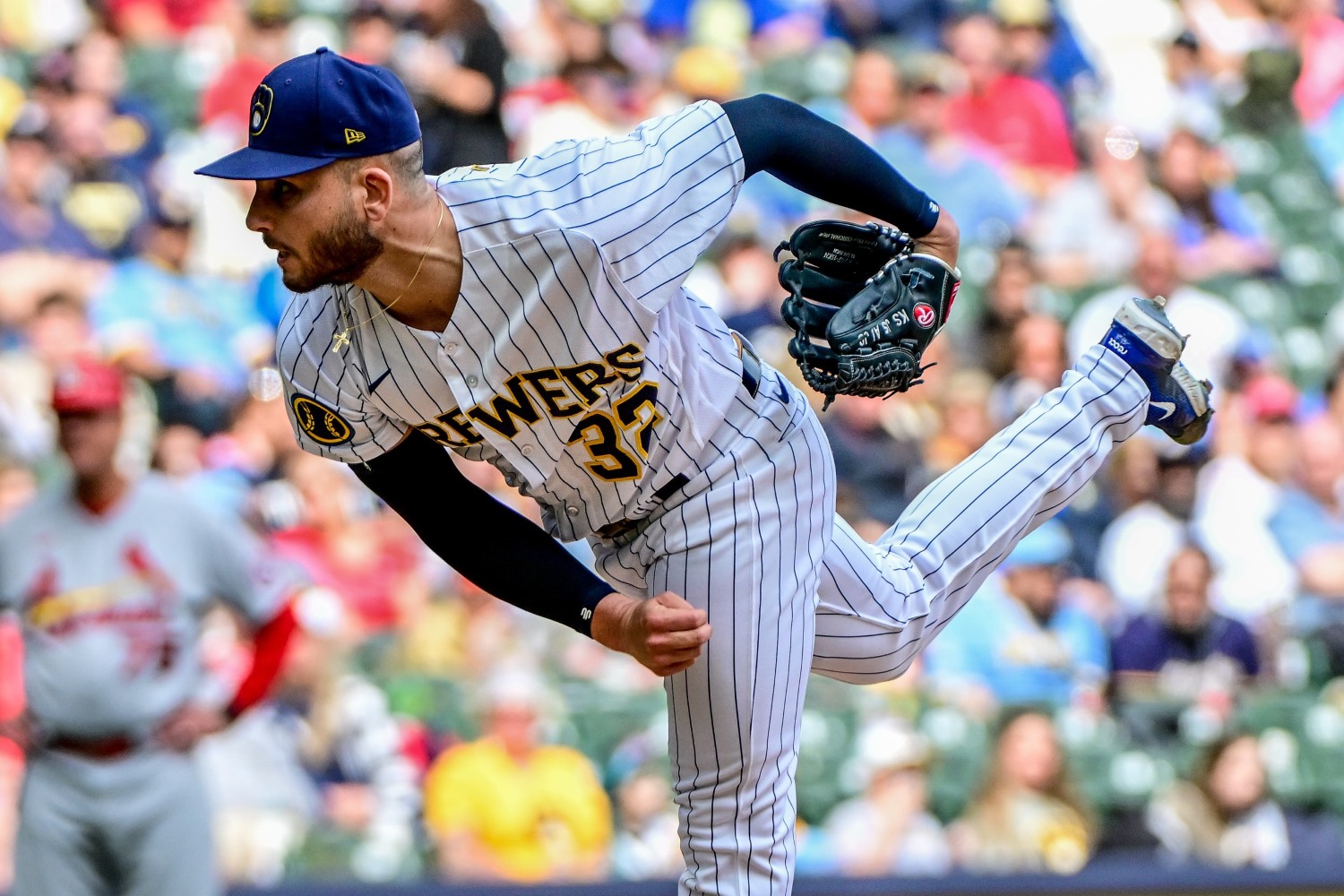 If it's true that MLB seasons are evenly divided into games that a team will inevitably win, those that a team will inevitably lose, and those that can be either won or lost, with the third bucket making the difference, then the Brewers are off to an even more promising start than their 7-2 record implies. Early in Sunday's game, Milwaukee built a narrow lead, but in the top of the seventh inning, that lead came under threat. Peter Strzelecki had entered to face the top of the Cardinals lineup in the frame, and although he got two quick outs, he then got into a sudden and dangerous jam. A walk to Brendan Donovan and a single by Paul Goldschmidt brought Nolan Arenado to the plate with two on and two out, and since the score was just 3-1, Arenado represented the go-ahead run. In that situation, a seemingly safe victory can become a loss in the crack of a bat. Strzelecki missed wide with a first-pitch fastball, and then missed even worse with another heater--this time, right down the middle of the plate. Arenado was caught off-guard, though, and took the very hittable strike to level the count 1-1. If the moment hadn't already felt vital and the advantage fragile, that pitch made it feel very much so. To salvage the situation, Strzelecki reached a bit deeper into his bag of tricks than is typical. A 1-1 count is often the one on which a plate appearance hinges. If you want to fool a hitter, you can't afford to wait and hope to make it happen with two strikes. That 1-1 pitch has to be the goods. Strzelecki threw Arenado a changeup. Arenado swung and missed, and he missed badly. It's hard to blame him. Conventional wisdom, in the voice of every color commentator in baseball history, implores pitchers not to get beaten on their third-best pitch, and there's no question that Strzelecki's best pitches are his fastball and slider. He hardly ever throws that change to righties, in particular. If you're Arenado, you have to sit on the fastball and keep the slider in the back of your head on 1-1. The changeup can't even be in your mind. That was what Strzelecki was counting on. As much as we (rightly) talk about pitchers using their best pitch more often and about the various adjustments to pitch mix hurlers can make in a macro sense, we should talk almost as much (but actually talk hardly at all) about getting lots of value from pitches that don't grade out as well or get used nearly as often. Frequencies don't matter as much as payoffs. If a pitcher puts in enough work on a pitch to have confidence in it at a moment like that one, they can throw it five percent of the time to a given handedness of batter (or even less, in theory) and still make it a difference-maker. Strzelecki got the whiff on Arenado because he was looking hard in or soft away, and got something soft inside. After that pitch (and one more outside fastball), Arenado was set up perfectly for the slider, and Strzelecki finally threw him one. He got the strikeout he deserved, and crisis was averted. Matt Bush put three runners on base with nobody out in the Cardinals' next turn, but that didn't inspire the same degree of nail-biting, because in the meantime, the Brewers had tacked on three insurance runs. They ran the Cardinals out of town four games back in the division and with just 10 more head-to-head contests to make up the gap. The relentlessness of the lineup and the consistency of the bullpen have been deeply impressive so far, but if it weren't for Strzelecki's gambit on that pitch to Arenado, we might feel very differently this morning. As I wrote before the season began, the Brewers have a tough and crucial early schedule. They're only halfway through the 19-game gauntlet, but the returns to this point are downright dazzling. Every game that could reasonably have broken their way so far has done so, and not through sheer luck or an opponent folding, but because the team has forced the issue on the bases, or because of their resiliency when something does go wrong, or because of a reliever who was willing to go an unorthodox route when the stakes were high. If they keep this up, they'll be back in the playoffs this year. Third Bucket Record: 3-0
 -
The Brewers finished a thrilling first homestand with a 6-1 win on Easter Sunday. While superficially easy, though, that win was hard-earned, and depended on a key reliever springing a trap at a quietly pivotal moment. Image courtesy of © Benny Sieu-USA TODAY Sports If it's true that MLB seasons are evenly divided into games that a team will inevitably win, those that a team will inevitably lose, and those that can be either won or lost, with the third bucket making the difference, then the Brewers are off to an even more promising start than their 7-2 record implies. Early in Sunday's game, Milwaukee built a narrow lead, but in the top of the seventh inning, that lead came under threat. Peter Strzelecki had entered to face the top of the Cardinals lineup in the frame, and although he got two quick outs, he then got into a sudden and dangerous jam. A walk to Brendan Donovan and a single by Paul Goldschmidt brought Nolan Arenado to the plate with two on and two out, and since the score was just 3-1, Arenado represented the go-ahead run. In that situation, a seemingly safe victory can become a loss in the crack of a bat. Strzelecki missed wide with a first-pitch fastball, and then missed even worse with another heater--this time, right down the middle of the plate. Arenado was caught off-guard, though, and took the very hittable strike to level the count 1-1. If the moment hadn't already felt vital and the advantage fragile, that pitch made it feel very much so. To salvage the situation, Strzelecki reached a bit deeper into his bag of tricks than is typical. A 1-1 count is often the one on which a plate appearance hinges. If you want to fool a hitter, you can't afford to wait and hope to make it happen with two strikes. That 1-1 pitch has to be the goods. Strzelecki threw Arenado a changeup. Arenado swung and missed, and he missed badly. It's hard to blame him. Conventional wisdom, in the voice of every color commentator in baseball history, implores pitchers not to get beaten on their third-best pitch, and there's no question that Strzelecki's best pitches are his fastball and slider. He hardly ever throws that change to righties, in particular. If you're Arenado, you have to sit on the fastball and keep the slider in the back of your head on 1-1. The changeup can't even be in your mind. That was what Strzelecki was counting on. As much as we (rightly) talk about pitchers using their best pitch more often and about the various adjustments to pitch mix hurlers can make in a macro sense, we should talk almost as much (but actually talk hardly at all) about getting lots of value from pitches that don't grade out as well or get used nearly as often. Frequencies don't matter as much as payoffs. If a pitcher puts in enough work on a pitch to have confidence in it at a moment like that one, they can throw it five percent of the time to a given handedness of batter (or even less, in theory) and still make it a difference-maker. Strzelecki got the whiff on Arenado because he was looking hard in or soft away, and got something soft inside. After that pitch (and one more outside fastball), Arenado was set up perfectly for the slider, and Strzelecki finally threw him one. He got the strikeout he deserved, and crisis was averted. Matt Bush put three runners on base with nobody out in the Cardinals' next turn, but that didn't inspire the same degree of nail-biting, because in the meantime, the Brewers had tacked on three insurance runs. They ran the Cardinals out of town four games back in the division and with just 10 more head-to-head contests to make up the gap. The relentlessness of the lineup and the consistency of the bullpen have been deeply impressive so far, but if it weren't for Strzelecki's gambit on that pitch to Arenado, we might feel very differently this morning. As I wrote before the season began, the Brewers have a tough and crucial early schedule. They're only halfway through the 19-game gauntlet, but the returns to this point are downright dazzling. Every game that could reasonably have broken their way so far has done so, and not through sheer luck or an opponent folding, but because the team has forced the issue on the bases, or because of their resiliency when something does go wrong, or because of a reliever who was willing to go an unorthodox route when the stakes were high. If they keep this up, they'll be back in the playoffs this year. Third Bucket Record: 3-0 View full article
-
How the Brewers Teach Power, and Why it Works So Well
Matthew Trueblood posted an article in Brewers
 It's been a brief tenure for Connor Dawson and Ozzie Timmons as the Milwaukee Brewers' hitting coaches, and it's too early to say that they'll be immune to the prevailing trend in MLB, which is toward very high turnover in that role. However, those two have done an excellent job of implementing and teaching the core principles to which the organization has cleaved for several seasons. They're finding power in unexpected places and generating more of it from the expected ones by doing some simple stuff well. A decade or two ago, it was common for teams to have instructional identities. Certain teams ardently taught a particular kind of pitch, or even pitching mechanics, and they didn't brook any dissent from players who didn't fit into their molds. One of the very welcome changes to player development over the last several years has been the end of that style of coaching. Players are now invited and encouraged to be themselves, and plans for their improvement are shaped around what both the player and the organization do well. Any organizational predilections have become guidelines, rather than rules. The Brewers' hitting instruction is a terrific example. They don't make everyone do things the same way. They do drill hard on good swing decisions, though, and especially on swing decisions that favor a hitter's power. Even before Dawson and Timmons arrived, but especially since the start of 2022, it's possible to watch a Brewers game and see how their hitters dismiss certain areas of the strike zone when the count, situation, or opponent dictates it, giving them a greater chance of taking a called strike but also a greater chance of hammering a mistake pitch if a pitcher throws one. Tightening players' zones and reducing chases has been a strength for Milwaukee going back at least half a decade. That can make the team a great landing place for players with good bat-to-ball skills, including some power, but with confused or underdeveloped approaches. The number and caliber of players who have come through Milwaukee recently and seen their power output and overall value rise are impressive, and they're a huge part of why this team has had a great run of contention. Milwaukee is also very good at a tidbit of mechanical instruction that helps hitters generate more power, though, and that deserves a little bit longer a look. Be it Willy Adames, Luis Urías, Mike Brosseau, or Owen Miller, guys tend to make a specific change when they come to Milwaukee: they get more upright in the batter's box. The clearest way to see this, though, is by looking at one of the team's internal projects, Tyrone Taylor. Here's a video of a hit Taylor collected in May 2021: c0e1278d-814d-47d5-8709-202a46331f9c.mp4 And here's one from the middle of last season: 43c24544-d3f5-4f0c-b325-47a672aa8c5f.mp4 Note the change in his setup. In the video from 2022, Taylor has his back much more straight at the plate. He's almost leaning backward. That sets him up to a couple of things differently than he did in the past. As he lifts his leg to begin his stride, he's almost forced to lean forward, which engages his core muscles and starts a sequence of movements that can generate a steeper bat path without losing bat speed. It's subtle, but that first forward movement and clenching of the big muscles throughout the torso can be key to creating power. As it happens, this setup change didn't work for Taylor in the long run, and he found his September success last year after changing things up. That's a story for another time, but it's a good reminder that Dawson and TImmons aren't being dogmatic. They're just trying things they know will work for most hitters, on most hitters. Seeing the way Taylor leans back above, you probably flash on Urías's distinctive lean in the box. It's born of the same cues. Miller has started to do a smaller version of the same thing already this year. That tilt in one plane of movement is one thing the staff is teaching well, and it's contributing to the power the team is generating. The other thing is harder to see from the predominant modern camera angles, but equally important: the Brewers are keeping their upper half back well as they gain ground on the pitcher with their legs, creating the torque and the lift that power requires. Take another look at Joey Wiemer's first hit in the majors: eda3c0e6-95e6-49d8-b1cd-17f3793f6dab.mp4 Wiemer takes a big stride. He closes the gap between himself and the pitcher and creates a lot of energy flowing into the path of the pitch. With his upper half, though, he stays back a moment, letting his hips bear much of the weight transfer and leaning slightly back to steepen the angle of his bat path, without dropping his back shoulder or hands and creating a swoop or slowdown in his swing. Interestingly, William Contreras has a new mechanical quirk this spring. Just before truly starting his swing, he lifts and steps away from home plate with his back foot, going from a neutral to a closed stance even as the pitcher is making his delivery. That's partially just about seeing the ball well, while still creating the torque and lift with which a closed stance can help, but it's also about rhythm. As Dawson and Timmons try to fix Contreras's launch-angle problem, they're having him try this as a way to both move his contact point further in front of his center of gravity and get his swing started sooner. Nolan Arenado famously taps his back foot as a way of starting the rocking motion that is a powerful swing. He comes forward, goes back, and then explodes forward again, and the back-foot tap lessens the risk that he gets "stuck" on his back side and is too slow in making that weight transfer. There's a little bit of that thought in Contreras's new move, too. The Brewers aren't likely to finish third in MLB in home runs again. They've already proved, though, that they can get more power from many players than other teams might, simply by offering unorthodox moves and concepts to players who need new ways to visualize the essentials of a power approach and swing. So far, it's working.
- 1 comment
-
- 1
-
-
- joey wiemer
- tyrone taylor
- (and 2 more)
-
Last year, only the Yankees and Braves hit more home runs than did the Brewers. Already this season, despite playing half their six games in frigid conditions at Wrigley Field, Milwaukee is ninth in MLB in slugging. How do the Brewers do it? Image courtesy of © Benny Sieu-USA TODAY Sports It's been a brief tenure for Connor Dawson and Ozzie Timmons as the Milwaukee Brewers' hitting coaches, and it's too early to say that they'll be immune to the prevailing trend in MLB, which is toward very high turnover in that role. However, those two have done an excellent job of implementing and teaching the core principles to which the organization has cleaved for several seasons. They're finding power in unexpected places and generating more of it from the expected ones by doing some simple stuff well. A decade or two ago, it was common for teams to have instructional identities. Certain teams ardently taught a particular kind of pitch, or even pitching mechanics, and they didn't brook any dissent from players who didn't fit into their molds. One of the very welcome changes to player development over the last several years has been the end of that style of coaching. Players are now invited and encouraged to be themselves, and plans for their improvement are shaped around what both the player and the organization do well. Any organizational predilections have become guidelines, rather than rules. The Brewers' hitting instruction is a terrific example. They don't make everyone do things the same way. They do drill hard on good swing decisions, though, and especially on swing decisions that favor a hitter's power. Even before Dawson and Timmons arrived, but especially since the start of 2022, it's possible to watch a Brewers game and see how their hitters dismiss certain areas of the strike zone when the count, situation, or opponent dictates it, giving them a greater chance of taking a called strike but also a greater chance of hammering a mistake pitch if a pitcher throws one. Tightening players' zones and reducing chases has been a strength for Milwaukee going back at least half a decade. That can make the team a great landing place for players with good bat-to-ball skills, including some power, but with confused or underdeveloped approaches. The number and caliber of players who have come through Milwaukee recently and seen their power output and overall value rise are impressive, and they're a huge part of why this team has had a great run of contention. Milwaukee is also very good at a tidbit of mechanical instruction that helps hitters generate more power, though, and that deserves a little bit longer a look. Be it Willy Adames, Luis Urías, Mike Brosseau, or Owen Miller, guys tend to make a specific change when they come to Milwaukee: they get more upright in the batter's box. The clearest way to see this, though, is by looking at one of the team's internal projects, Tyrone Taylor. Here's a video of a hit Taylor collected in May 2021: c0e1278d-814d-47d5-8709-202a46331f9c.mp4 And here's one from the middle of last season: 43c24544-d3f5-4f0c-b325-47a672aa8c5f.mp4 Note the change in his setup. In the video from 2022, Taylor has his back much more straight at the plate. He's almost leaning backward. That sets him up to a couple of things differently than he did in the past. As he lifts his leg to begin his stride, he's almost forced to lean forward, which engages his core muscles and starts a sequence of movements that can generate a steeper bat path without losing bat speed. It's subtle, but that first forward movement and clenching of the big muscles throughout the torso can be key to creating power. As it happens, this setup change didn't work for Taylor in the long run, and he found his September success last year after changing things up. That's a story for another time, but it's a good reminder that Dawson and TImmons aren't being dogmatic. They're just trying things they know will work for most hitters, on most hitters. Seeing the way Taylor leans back above, you probably flash on Urías's distinctive lean in the box. It's born of the same cues. Miller has started to do a smaller version of the same thing already this year. That tilt in one plane of movement is one thing the staff is teaching well, and it's contributing to the power the team is generating. The other thing is harder to see from the predominant modern camera angles, but equally important: the Brewers are keeping their upper half back well as they gain ground on the pitcher with their legs, creating the torque and the lift that power requires. Take another look at Joey Wiemer's first hit in the majors: eda3c0e6-95e6-49d8-b1cd-17f3793f6dab.mp4 Wiemer takes a big stride. He closes the gap between himself and the pitcher and creates a lot of energy flowing into the path of the pitch. With his upper half, though, he stays back a moment, letting his hips bear much of the weight transfer and leaning slightly back to steepen the angle of his bat path, without dropping his back shoulder or hands and creating a swoop or slowdown in his swing. Interestingly, William Contreras has a new mechanical quirk this spring. Just before truly starting his swing, he lifts and steps away from home plate with his back foot, going from a neutral to a closed stance even as the pitcher is making his delivery. That's partially just about seeing the ball well, while still creating the torque and lift with which a closed stance can help, but it's also about rhythm. As Dawson and Timmons try to fix Contreras's launch-angle problem, they're having him try this as a way to both move his contact point further in front of his center of gravity and get his swing started sooner. Nolan Arenado famously taps his back foot as a way of starting the rocking motion that is a powerful swing. He comes forward, goes back, and then explodes forward again, and the back-foot tap lessens the risk that he gets "stuck" on his back side and is too slow in making that weight transfer. There's a little bit of that thought in Contreras's new move, too. The Brewers aren't likely to finish third in MLB in home runs again. They've already proved, though, that they can get more power from many players than other teams might, simply by offering unorthodox moves and concepts to players who need new ways to visualize the essentials of a power approach and swing. So far, it's working. View full article
- 1 reply
-
- 1
-
-
- joey wiemer
- tyrone taylor
- (and 2 more)
-
The Third 54 Report: Resiliency and Youth Will Take You Far
Matthew Trueblood posted an article in Brewers
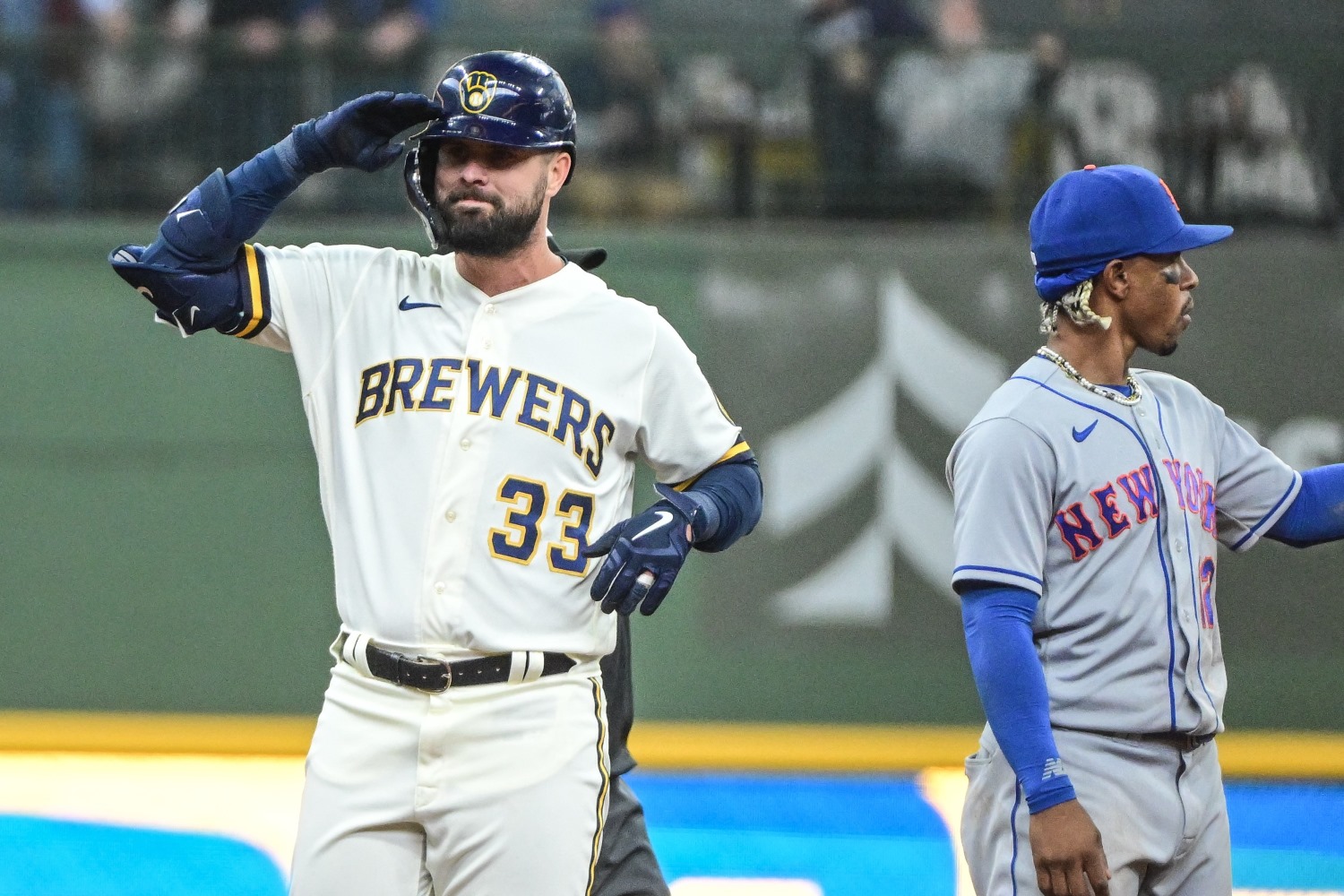 Going into the game, you wouldn’t have been inclined to call it a Bucket Three game. Corbin Burnes was going for the Crew, against fifth starter David Peterson of the Mets. That seems like such a mismatch that it should be an easy win for Milwaukee. As we know, though, that isn’t how baseball really works. Fifth Brewers starter Wade Miley got the win over future Hall of Famer Max Scherzer on Tuesday night. Moreover, the Mets’ lineup can be lethal. Still, when Joey Wiemer cracked his go-ahead three-run home run in the bottom of the second, it felt like a killing blow. Burnes was staked to a healthy lead, and a comeback from the Mets on getaway day seemed unlikely. The unlikely occurred, immediately. A Pete Alonso home run in the third tied it, and another in the fifth gave the Mets a 6-4 lead, sending Burnes to the showers with a season ERA of 9.64. That’s when this became a third-bucket game. When your ace is staked to an early lead, then gives it back and is chased after 13 outs, it’s a bitter and avoidable loss, if you lose. If you win, though, it’s especially sweet, and a chance to generate momentum by increasing the collective confidence of the club. Remember the premise of this series: Every team will win 54 games, and every team will lose 54. It’s what you do with the other 54 that matters. Winning games like this one, which falls squirrely into the third 54 and has extra emotion attached to it, can start to forge a truly special team. It made a huge difference that the team wasted no time in effecting its comeback. Christian Yelich’s leadoff walk is easy to overlook, because Peterson missed his spots badly on three of the pitches that led thereto, but Yelich was also patient on the two he threw just off the outside corner, even after one of them was called a strike. That walk pushed Peterson out of the game, and there was a subtle shift back toward the Brewers. Coming into a dirty inning, Drew Smith did a good job using the pitch clock to hold Yelich at bay as a would-be base thief, but he wasn’t fooling anyone. Sticking strictly to high fastballs, he did get William Contreras to fly out by slightly getting under the ball, but he hit it hard. So did Luke Voit, and his was on a line enough that Yelich scooted around to third. Brian Anderson didn’t make himself the hero this time, but his patience did help the team out a bit. He saw six pitches and worked a full count, giving Jesse Winker a long look at Smith from the on-deck circle. Winker fell behind 1-2, though, as Smith floated in a first-pitch changeup and got a foul ball from Winker on an outside fastball. On the fourth pitch, another changeup that ran off the plate away, Voit stole second, trying to draw a throw and get Yelich home with the fifth run. The Mets didn’t throw through, electing to worry about Winker instead. That seemed a strange choice. If Omar Narvaez had thrown through, Voit would have been out. Sure, Yelich might have scored first, but New York would have held the lead, and they’d have been just 12 outs from a win. That’s still a long journey, but as long as you have the lead, that’s the path the game is on. Instead, trying to keep the lead at two runs, Narvaez cost New York dearly. He failed to account for the possibility of what happened four pitches later: a double. Winker fought off a slider in the zone from Smith, having watched him use the same pitch to lock up Anderson for the previous strikeout. He laid off one more high fastball, and fouled off one that was too close to take, and then he got another changeup, left up over the plate, and crushed it into the gap in right-center field. If Voit is still on first base when Winker hits that ball, he might not score. It was a 3-2 count, so he would have been off with the pitch, giving him a chance, but Starling Marte also has a terrific arm, and he reached the ball quickly. Once Voit elected to try for the steal of a run, the Mets should have thrown through to take the out, and let the question of whether Yelich could get home before Francisco Lindor ran down Voit resolve itself as it might. That was the pivotal sequence of the game. The team aspect of it, the immediate response to adversity, and the fact that Milwaukee’s bullpen is better than New York’s made the game feel eminently winnable as soon as Voit crossed home. Indeed, the team’s top four relievers combined to get 14 outs and allowed just one baserunner, and then Garrett Mitchell stepped up in the bottom of the ninth and added to both his own legend and the good feelings around the whole young core of which he’s a part. The Brewers have had a near-magical start to 2023. This is their second notable comeback win, and they’re making Miller Park a very exciting atmosphere. Presumably, the park will be packed this weekend as they face the Cardinals, and another series win would put the team into the driver’s seat for the division title, even if the drive ahead remains unfathomably long. For now, they can savor a crucial and wonderful win. Third-Bucket Record: 2-0
 -
Wednesday afternoon’s game against the Mets was the second of this year that could have gone either way for the Milwaukee Brewers. It was a test of their resiliency and depth, and they passed it. Image courtesy of © Benny Sieu-USA TODAY Sports Going into the game, you wouldn’t have been inclined to call it a Bucket Three game. Corbin Burnes was going for the Crew, against fifth starter David Peterson of the Mets. That seems like such a mismatch that it should be an easy win for Milwaukee. As we know, though, that isn’t how baseball really works. Fifth Brewers starter Wade Miley got the win over future Hall of Famer Max Scherzer on Tuesday night. Moreover, the Mets’ lineup can be lethal. Still, when Joey Wiemer cracked his go-ahead three-run home run in the bottom of the second, it felt like a killing blow. Burnes was staked to a healthy lead, and a comeback from the Mets on getaway day seemed unlikely. The unlikely occurred, immediately. A Pete Alonso home run in the third tied it, and another in the fifth gave the Mets a 6-4 lead, sending Burnes to the showers with a season ERA of 9.64. That’s when this became a third-bucket game. When your ace is staked to an early lead, then gives it back and is chased after 13 outs, it’s a bitter and avoidable loss, if you lose. If you win, though, it’s especially sweet, and a chance to generate momentum by increasing the collective confidence of the club. Remember the premise of this series: Every team will win 54 games, and every team will lose 54. It’s what you do with the other 54 that matters. Winning games like this one, which falls squirrely into the third 54 and has extra emotion attached to it, can start to forge a truly special team. It made a huge difference that the team wasted no time in effecting its comeback. Christian Yelich’s leadoff walk is easy to overlook, because Peterson missed his spots badly on three of the pitches that led thereto, but Yelich was also patient on the two he threw just off the outside corner, even after one of them was called a strike. That walk pushed Peterson out of the game, and there was a subtle shift back toward the Brewers. Coming into a dirty inning, Drew Smith did a good job using the pitch clock to hold Yelich at bay as a would-be base thief, but he wasn’t fooling anyone. Sticking strictly to high fastballs, he did get William Contreras to fly out by slightly getting under the ball, but he hit it hard. So did Luke Voit, and his was on a line enough that Yelich scooted around to third. Brian Anderson didn’t make himself the hero this time, but his patience did help the team out a bit. He saw six pitches and worked a full count, giving Jesse Winker a long look at Smith from the on-deck circle. Winker fell behind 1-2, though, as Smith floated in a first-pitch changeup and got a foul ball from Winker on an outside fastball. On the fourth pitch, another changeup that ran off the plate away, Voit stole second, trying to draw a throw and get Yelich home with the fifth run. The Mets didn’t throw through, electing to worry about Winker instead. That seemed a strange choice. If Omar Narvaez had thrown through, Voit would have been out. Sure, Yelich might have scored first, but New York would have held the lead, and they’d have been just 12 outs from a win. That’s still a long journey, but as long as you have the lead, that’s the path the game is on. Instead, trying to keep the lead at two runs, Narvaez cost New York dearly. He failed to account for the possibility of what happened four pitches later: a double. Winker fought off a slider in the zone from Smith, having watched him use the same pitch to lock up Anderson for the previous strikeout. He laid off one more high fastball, and fouled off one that was too close to take, and then he got another changeup, left up over the plate, and crushed it into the gap in right-center field. If Voit is still on first base when Winker hits that ball, he might not score. It was a 3-2 count, so he would have been off with the pitch, giving him a chance, but Starling Marte also has a terrific arm, and he reached the ball quickly. Once Voit elected to try for the steal of a run, the Mets should have thrown through to take the out, and let the question of whether Yelich could get home before Francisco Lindor ran down Voit resolve itself as it might. That was the pivotal sequence of the game. The team aspect of it, the immediate response to adversity, and the fact that Milwaukee’s bullpen is better than New York’s made the game feel eminently winnable as soon as Voit crossed home. Indeed, the team’s top four relievers combined to get 14 outs and allowed just one baserunner, and then Garrett Mitchell stepped up in the bottom of the ninth and added to both his own legend and the good feelings around the whole young core of which he’s a part. The Brewers have had a near-magical start to 2023. This is their second notable comeback win, and they’re making Miller Park a very exciting atmosphere. Presumably, the park will be packed this weekend as they face the Cardinals, and another series win would put the team into the driver’s seat for the division title, even if the drive ahead remains unfathomably long. For now, they can savor a crucial and wonderful win. Third-Bucket Record: 2-0 View full article

