


Matthew Trueblood
-
Posts
1,922 -
Joined
-
Last visited
-
Days Won
10
Content Type
Profiles
Forums
Blogs
Events
News
2026 Milwaukee Brewers Top Prospects Ranking
Milwaukee Brewers Videos
2022 Milwaukee Brewers Draft Picks
Milwaukee Brewers Free Agent & Trade Rumors, Notes, & Tidbits
Guides & Resources
2023 Milwaukee Brewers Draft Picks
2024 Milwaukee Brewers Draft Picks
The Milwaukee Brewers Players Project
2025 Milwaukee Brewers Draft Pick Tracker
2026 Milwaukee Brewers Draft Tracker: Picks & Bonuses
Store
Downloads
Gallery
Everything posted by Matthew Trueblood
-
We've covered the whole field, now, in our positional preview of the 2023 Brewers. We'll round things out with right field, where a rookie could have an instant impact--if he gets the opportunity he's earned. Image courtesy of © Jeff Curry-USA TODAY Sports His name is everywhere, even though his real form is suddenly nowhere. Tyrone Taylor's absence from the outfield mix will be a conspicuous one as the season gets going. Without him, the Milwaukee outfield leans heavily toward left-handed hitters, and there's a risk of some serious defensive deficiency. Still, thanks to Sal Frelick, there's also an appealing upside. The Starter The new Collective Bargaining Agreement gives the Brewers an easier path to keeping Frelick on the Opening Day roster. It's not the kind of comprehensive or wholly rational incentive for which we might have hoped, but it's there. Because the relevant top prospect lists this winter included Frelick as one of the game's top 100, the Crew could get a bonus draft pick in 2024 if they carry Frelick all season and he gets sufficient support for the National League Rookie of the Year. There's a bit of a trap there. Every team who monkeys around with their top youngsters' service time and keeps them in the minor leagues to claim an extra year of team control does so at the risk of hurting their team during whatever period of time they go without a qualified big-leaguer. Under the new rule, the Brewers have a chance to chase a reward, but they risk losing the year of team control (in 2029) and getting nothing in return for it, if he's merely solid. In that case, though, and in this specific circumstance, the team would have a few ways to walk back their aggressive choice. If Frelick doesn't burst out of the gate, he'd be easy to send back to Triple-A Nashville when Taylor comes off the injured list. If he struggles mightily in an early look at big-league pitching, he could even be demoted in favor of more playing time for Tyler Naquin, Brian Anderson, or Owen Miller. Let's think more positively, though. The Brewers should carry Frelick all season, because it's unlikely that they'll find a better player to slot in consistently in right field until Taylor returns, and it's equally unlikely that they'll have a better, more well-rounded player to rotate through all three outfield spots and the designated hitter role once Taylor does come back. In 19 plate appearances with Team Italy in the World Baseball Classic's pool play, Frelick had seven hits (including three doubles), a walk, and zero strikeouts. In 11 trips to the plate in the Cactus League before that, he had five hits, including a double, and just one punchout. That only continues (and increases the impressiveness of) the trend he established last year, as he strikes out less and less as the level of his competition increases. That, surely, can't last, and Frelick's lack of significant power gives him little margin for error. To be a first-division regular, one who is pushing the Brewers materially closer to the playoffs, he probably needs to keep his strikeout rate south of 15 percent. In the modern game, where the average hitter fans 23 percent of the time and only the most elite contact guys get down near 10 percent, that's a tough limbo bar under which to duck. If anyone is up to that challenge, though, it might be Frelick. The Brewers should give him that chance, knowing that they have good fallback plans if he proves not to be ready to play above-average baseball right away. The Backups We talked plenty about Brian Anderson in the third base preview last week, but it's worth mentioning that he could easily be the primary right fielder against left-handed pitchers for the first month or so. He has a strong arm, and his power looks good enough this spring to make him a creditable corner outfielder. When Anderson is at third base, though, or at other times when he and Frelick are both unavailable, the duty is likely to fall to Naquin. Though he's never demonstrated the consistency or completeness of skill set to be an everyday star, Naquin has the power and baseline athleticism to be a fine fourth outfielder and platoon weapon. As ever, Craig Counsell will be asked to mix and match to some extent, and he's great at eliciting production in those situations. Summary and Projected Value The only thing that feels truly safe to say about right field for the Brewers this year is that they won't have any one player start there 130 or 140 times. Frelick, Taylor, Anderson, Naquin, and Wiemer will divvy up the playing time somehow, but whether it's Taylor and 70 starts or Frelick and 110 who leads the way can't be predicted well from here. FanGraphs sees all that volatility, and projects the team to fit into the lowest tercile of the league in WAR at the position. Baseball Prospectus is even more tepid, because PECOTA is lower on Frelick than are other projection systems. This is the second or third spot in the lineup, though, where the Brewers have the ability to far outdistance their statistical expectations, because they have such depth. Doing so will be a matter of playing the hot hand, without exposing themselves to the vagaries of guys who have clear areas of uncertainty and inconsistency. View full article
- 7 replies
-
- 2
-

-
- tyrone taylor
- sal frelick
- (and 3 more)
-
The Brewers have a number of intriguing young players vying for playing time in center field in 2023. That gives the position high upside, but the risk here is obvious. Image courtesy of © Mark J. Rebilas-USA TODAY Sports Not with a groan or a loud rip, but with a tweet, the Brewers' center field depth gave way before Cactus League games even began. Tyrone Taylor's elbow injury leaves the team almost wholly dependent upon Garrett Mitchell at that position throughout the early stages of the season, and as exciting as Mitchell's upside is, that's a bit nerve-wracking for a team that can only call this season a success if they reach the postseason. The Starter Mitchell is a baseball rat, blessed with tools that don't always come packaged with such dedication to the game itself. Grade him out on baseball's traditional five tools, and he's above-average in four: glove, speed, arm, and power. Even that undersells him. Mitchell is a burner, although we should expect to see him ratchet his topline speeds down slightly as the rookie turbo effect wears off. He might also hit the ball a bit less hard, when he gets all of one, for the same reason. In the exchange, though, he's likely to make more contact than he did in his brief stint with the parent club in 2022. Rookies who reach MLB have a tendency (one we can now document, thanks to Statcast) to play the game without holding anything in reserve. That means unexpectedly impressive sprint speeds and maximal exit velocities, relative to whatever reports we get on them in advance of their debuts, but it comes at a cost. Rookies haven't yet learned that playing at that speed will make one vulnerable in MLB--vulnerable to manipulation by the other team, vulnerable to sloppy mistakes, and vulnerable to injury. Once they settle in a bit, though, players with good feel for the game and the willingness to wade through the inevitable adversity find their way to a more tenable balance between aggression and caution. That doesn't always mean that they can fix their shortcomings. Mitchell has one loose comparator in former Cubs outfielder Brett Jackson, who came up in 2012 after being the team's top draft choice in 2009. Jackson, like Mitchell, was a left-hitting, unusually toolsy collegiate outfielder out of the Pac-12. In his 142 trips to the plate for the moribund baby bears in 2012, he struck out 41.6 percent of the time, and he never got another full-fledged shot in the majors. Last year, Mitchell struck out even more often than did Jackson in his audition. He's smart, but Jackson was smart. His defense gives him a higher theoretical floor than his whiff rate implies, but so did Jackson's. He's susceptible to the same failure to which Jackson succumbed. However, there are two key differences: Jackson whiffed on nearly 38 percent of his swings in that short stint in 2012. A decade later, Mitchell only missed on 31.5 percent of his swings. Foolishly, the Cubs spent the winter immediately after Jackson came up and scuffled so much trying desperately to rebuild him. It was a catastrophic failure, and he permanently lost touch with his natural talent. While the Brewers and Mitchell certainly want him to close some of the holes in his swing and approach in 2023, neither party made any attempt to overhaul him. Strikeouts will be the limiting factor in Mitchell's offensive production. They shouldn't be a crippling problem, though, and given the great glove work he can offer in an outfield that badly needs some stability and solidity in the middle, the Brewers can put up with quite a few of them before the juice is no longer worth the breeze. The Backups Were Taylor healthy, he would be not only Mitchell's backup, but a really nice shield against any platoon vulnerabilities the young left-handed hitter shows as he tries to matriculate into a regular big-league role. Since he isn't, the team will have to scramble a little bit. Sal Frelick has had the kind of spring that would force the team to seriously consider carrying him on the Opening Day roster, even if they were fully healthy. Since they aren't, he has an especially strong case for being included, and although he's nothing like the defender Mitchell can be, he has the speed and the other rudiments to acquit himself in center if his bat does what seems possible. Failing that, things really get dicey. Joey Wiemer is the kind of big, rangy athlete who can fake it for a long time in the cozy center fields of the NL Central, but he's a better fit for right field in even the medium term. Owen Miller has taken fairly well to center field in a couple of spring looks, but it's hard to imagine that the team wants him playing there with any regularity. Taylor's elbow is the key to everything, when it comes to maintaining a backstop for Mitchell. Summary and Projected Value The chasm between projection systems on Mitchell are as wide as you'll find. Dan Szymborski's ZiPS system pegs him as an essentially league-average hitter and estimates he could contribute 1.6 WAR in something considerably less than full playing time. Baseball Prospectus's PECOTA system has him as one of the worst hitters in baseball, and only expects 0.4 WARP from him. Whereas ZiPS would recommend starting Mitchell over Frelick based on equal offensive footing and Mitchell's superior glove, PECOTA would urge Frelick over Mitchell, because it much prefers Frelick's batting profile. In reality, of course, Frelick is as likely to spend significant time in right field, alongside Mitchell, as he is to usurp him. The real wild cards are Taylor's availability to spell and counterbalance each; Jackson Chourio's progress toward the majors; and the extent to which guys like Brian Anderson, Tyler Naquin, and Miller can keep the outfield functioning until Taylor, Chourio, or Wiemer can round it out more permanently. In the meantime, the high-wire act will have to do. View full article
-
Milwaukee Brewers 2023 Positional Previews: Center Field
Matthew Trueblood posted an article in Brewers
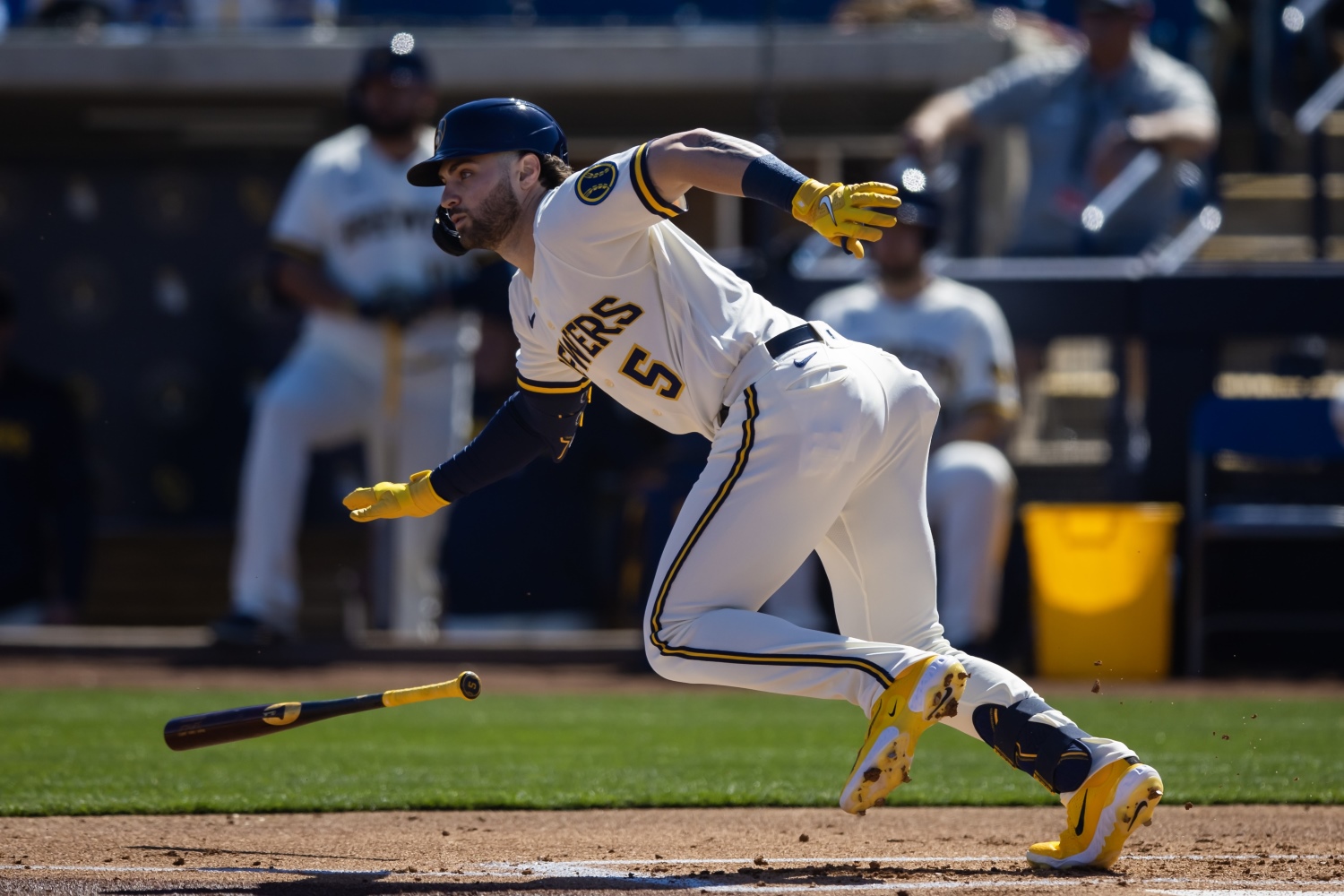 Not with a groan or a loud rip, but with a tweet, the Brewers' center field depth gave way before Cactus League games even began. Tyrone Taylor's elbow injury leaves the team almost wholly dependent upon Garrett Mitchell at that position throughout the early stages of the season, and as exciting as Mitchell's upside is, that's a bit nerve-wracking for a team that can only call this season a success if they reach the postseason. The Starter Mitchell is a baseball rat, blessed with tools that don't always come packaged with such dedication to the game itself. Grade him out on baseball's traditional five tools, and he's above-average in four: glove, speed, arm, and power. Even that undersells him. Mitchell is a burner, although we should expect to see him ratchet his topline speeds down slightly as the rookie turbo effect wears off. He might also hit the ball a bit less hard, when he gets all of one, for the same reason. In the exchange, though, he's likely to make more contact than he did in his brief stint with the parent club in 2022. Rookies who reach MLB have a tendency (one we can now document, thanks to Statcast) to play the game without holding anything in reserve. That means unexpectedly impressive sprint speeds and maximal exit velocities, relative to whatever reports we get on them in advance of their debuts, but it comes at a cost. Rookies haven't yet learned that playing at that speed will make one vulnerable in MLB--vulnerable to manipulation by the other team, vulnerable to sloppy mistakes, and vulnerable to injury. Once they settle in a bit, though, players with good feel for the game and the willingness to wade through the inevitable adversity find their way to a more tenable balance between aggression and caution. That doesn't always mean that they can fix their shortcomings. Mitchell has one loose comparator in former Cubs outfielder Brett Jackson, who came up in 2012 after being the team's top draft choice in 2009. Jackson, like Mitchell, was a left-hitting, unusually toolsy collegiate outfielder out of the Pac-12. In his 142 trips to the plate for the moribund baby bears in 2012, he struck out 41.6 percent of the time, and he never got another full-fledged shot in the majors. Last year, Mitchell struck out even more often than did Jackson in his audition. He's smart, but Jackson was smart. His defense gives him a higher theoretical floor than his whiff rate implies, but so did Jackson's. He's susceptible to the same failure to which Jackson succumbed. However, there are two key differences: Jackson whiffed on nearly 38 percent of his swings in that short stint in 2012. A decade later, Mitchell only missed on 31.5 percent of his swings. Foolishly, the Cubs spent the winter immediately after Jackson came up and scuffled so much trying desperately to rebuild him. It was a catastrophic failure, and he permanently lost touch with his natural talent. While the Brewers and Mitchell certainly want him to close some of the holes in his swing and approach in 2023, neither party made any attempt to overhaul him. Strikeouts will be the limiting factor in Mitchell's offensive production. They shouldn't be a crippling problem, though, and given the great glove work he can offer in an outfield that badly needs some stability and solidity in the middle, the Brewers can put up with quite a few of them before the juice is no longer worth the breeze. The Backups Were Taylor healthy, he would be not only Mitchell's backup, but a really nice shield against any platoon vulnerabilities the young left-handed hitter shows as he tries to matriculate into a regular big-league role. Since he isn't, the team will have to scramble a little bit. Sal Frelick has had the kind of spring that would force the team to seriously consider carrying him on the Opening Day roster, even if they were fully healthy. Since they aren't, he has an especially strong case for being included, and although he's nothing like the defender Mitchell can be, he has the speed and the other rudiments to acquit himself in center if his bat does what seems possible. Failing that, things really get dicey. Joey Wiemer is the kind of big, rangy athlete who can fake it for a long time in the cozy center fields of the NL Central, but he's a better fit for right field in even the medium term. Owen Miller has taken fairly well to center field in a couple of spring looks, but it's hard to imagine that the team wants him playing there with any regularity. Taylor's elbow is the key to everything, when it comes to maintaining a backstop for Mitchell. Summary and Projected Value The chasm between projection systems on Mitchell are as wide as you'll find. Dan Szymborski's ZiPS system pegs him as an essentially league-average hitter and estimates he could contribute 1.6 WAR in something considerably less than full playing time. Baseball Prospectus's PECOTA system has him as one of the worst hitters in baseball, and only expects 0.4 WARP from him. Whereas ZiPS would recommend starting Mitchell over Frelick based on equal offensive footing and Mitchell's superior glove, PECOTA would urge Frelick over Mitchell, because it much prefers Frelick's batting profile. In reality, of course, Frelick is as likely to spend significant time in right field, alongside Mitchell, as he is to usurp him. The real wild cards are Taylor's availability to spell and counterbalance each; Jackson Chourio's progress toward the majors; and the extent to which guys like Brian Anderson, Tyler Naquin, and Miller can keep the outfield functioning until Taylor, Chourio, or Wiemer can round it out more permanently. In the meantime, the high-wire act will have to do.
 -
Milwaukee Brewers 2023 Positional Previews: Left Field
Matthew Trueblood posted an article in Brewers
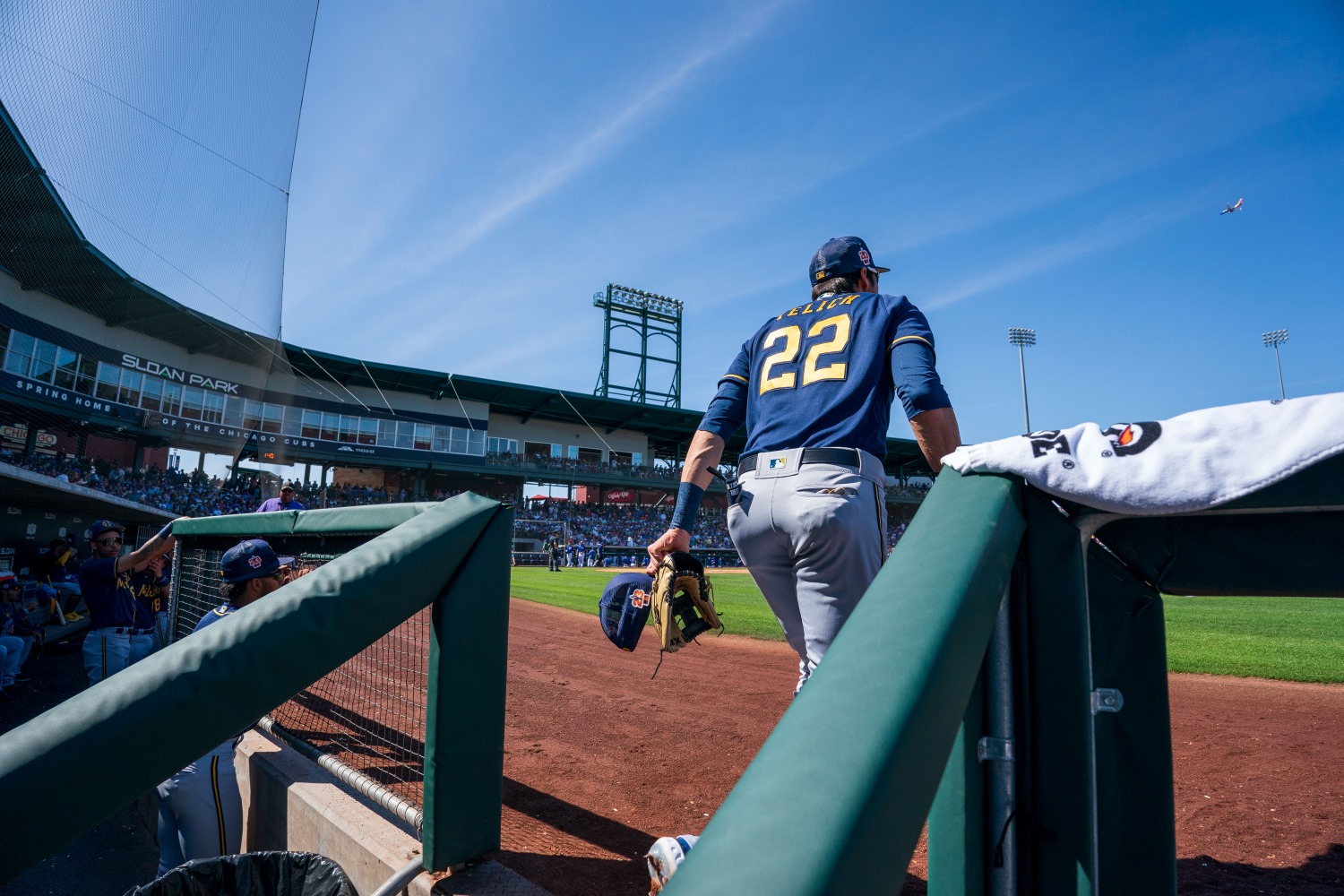 Only five players in MLB will take up a higher percentage of their team’s Opening Day payroll than will Christian Yelich: Cincinnati’s Joey Votto; Detroit’s Miguel Cabrera; Kansas City’s Salvador Perez; and both Stephen Strasburg and Patrick Corbin, for Washington. None of those teams are considered contenders in 2023. The Brewers are. That sets the stakes for left field very high. The Starter In early Cactus League action, Yelich has been dominant, with an OPS of 1.404 over his first six games. That’s good news, even if it’s largely typical of him. Yelich has been an excellent spring training hitter since 2017. Christian Yelich, Spring Training OPS, 2017-22 Season OPS 2017 1.084 2018 1.044 2019 1.292 2020 0.637 2021 1.357 2022 0.686 He’s been even more consistent than that suggests, if one gives him a pass for not hitting the ground running in the four meager games he played in 2020, before COVID-19 shut everything down. His only poor season in Arizona was last spring, and it’s good to see him back in rake mode this February and March. Still, we know better than to assume that that means Yelich will rebound to his MVP form. As many have observed, most of Yelich’s power has gone to the opposite field, and while all power is welcome, what everyone is really waiting to see is whether he can consistently turn on the ball, the way he did in 2018 and 2019. Maybe that’s an oversimplification, though. What set those peak years apart from the rest of Yelich’s career, in terms of batted-ball direction, was less the frequency with which he pulled the ball than the extent to which he drove it back up the middle of the diamond, using center field, rather than truly going the opposite way. Christian Yelich, Batted Ball Direction By Season, 2016-22 Season Pull % Center % Oppo % 2016 33 38.2 28.8 2017 27 44.2 28.9 2018 31.3 44.2 24.5 2019 35.8 40.6 23.3 2020 33.9 37.1 29 2021 33.9 36.3 29.8 2022 33.4 38.9 27.6 That nuance mirrors the facts of the case when it comes to trajectory off of Yelich’s bat. When he became a lethal slugger, it wasn’t by morphing into a fly-ball maven. He just hit slightly fewer ground balls. The implications of the two arcs are different, but they do point in a common direction. It’s the same problem I highlighted in identifying Yelich as an X-factor for the Brewers’ season recently: his power is still there, but he’s not getting out and making contact with the ball at a point that allows him to fully actualize it. Yelich hit another long drive in Sunday’s Cactus League game against the Cubs, though again, it was to left-center field, and this one died at the wall. He’s not quite showing, at least in spring ball, that elusive and extraordinary ability to get his bat up to full speed and hit the ball out in front of the plate, with both the physics and the geometry right, and without rolling over and hitting a ground ball instead. Still, his talent peeks through, and it tantalizes. Defensively, it’s much harder to see the upside. Yelich had a ball clank unprettily off his glove for a two-base error Sunday, a microcosm of the trouble that finds him more and more often over the last couple of years. According to Baseball Prospectus’s new fielding metrics, Yelich was three runs better than an average left fielder last year based on range alone, but gave two of those runs back with his weak arm. Baseball Info Solutions pegged him as one run better than even, based on range and positioning, but two runs worse with his arm, and another run was lost when they calculated the net effect of his good fielding plays and his misplays and errors. If he weren’t taking up so much of their payroll, and if the team hadn’t loaded up on guys whose only tenable position is the batter’s box this winter, he might be better off at designated hitter in the near future. The Backups The old maxim of outfield play says that fielders who can both run and throw well play center field, while those who can only throw play right and those who can only run play left. That’s far less true now, as the game has evolved to expect more athleticism from corner outfielders and the relative importance of speed and arm have evened out a bit in each corner. As such, almost any outfielder the team carries is a prospective backup or fill-in for Yelich. Tyrone Taylor was the Swiss Army knife of this outfield mix, as a right-handed batter with all of the tools to be a great defender. While he’s hurt, everything is a bit more up in the air, but he was likely slated for right field, anyway. Garrett Mitchell is very unlikely to play left for any significant period, since he’s quite likely to play center field every day. That leaves Blake Perkins, Tyler Naquin, Brian Anderson, and Keston Hiura as the men on the 40-man roster who have a chance to spend time in left field early on. Anderson, with his strong arm, will probably play right whenever he’s not at third base, but Naquin and Perkins are both solid left fielders who could be credible left-handed hitters, to boot. Neither will replace Yelich’s production, but keeping their highest-priced star fresh is a vital task for Craig Counsell and company, and the presence of some quality depth options makes that easier to do. Summary and Projected Value The projection systems have no mechanism by which to simply delete Yelich’s explosive seasons from their memories, so they’re persistently optimistic about him in a way that many Brewers fans (three years into the frustration of his regression, even if the level to which he’s regressed is theoretically fine) might find difficult to digest. Still, it’s comforting to be reminded how high a floor Yelich sets. According to PECOTA, the projection system from Baseball Prospectus, Yelich’s 30th-percentile projection–an outcome he should beat 70 percent of the time–would still be above-average offense and average defense, and a total value of roughly 3 wins above replacement. We can all envision scenarios in which he comes in below that, but perhaps in several of those, Jackson Chourio explodes onto the big-league scene by midseason and makes up the difference. Although it feels oddly fragile, the Brewers have every reason to expect left field to be a position of strength and upside for 2023.
 -
We’ve reached the outfield in our position-by-position preview of the 2023 Brewers. Let’s tackle left field, simultaneously the simplest and the most complex spot for the team in the coming year. Image courtesy of © Allan Henry-USA TODAY Sports Only five players in MLB will take up a higher percentage of their team’s Opening Day payroll than will Christian Yelich: Cincinnati’s Joey Votto; Detroit’s Miguel Cabrera; Kansas City’s Salvador Perez; and both Stephen Strasburg and Patrick Corbin, for Washington. None of those teams are considered contenders in 2023. The Brewers are. That sets the stakes for left field very high. The Starter In early Cactus League action, Yelich has been dominant, with an OPS of 1.404 over his first six games. That’s good news, even if it’s largely typical of him. Yelich has been an excellent spring training hitter since 2017. Christian Yelich, Spring Training OPS, 2017-22 Season OPS 2017 1.084 2018 1.044 2019 1.292 2020 0.637 2021 1.357 2022 0.686 He’s been even more consistent than that suggests, if one gives him a pass for not hitting the ground running in the four meager games he played in 2020, before COVID-19 shut everything down. His only poor season in Arizona was last spring, and it’s good to see him back in rake mode this February and March. Still, we know better than to assume that that means Yelich will rebound to his MVP form. As many have observed, most of Yelich’s power has gone to the opposite field, and while all power is welcome, what everyone is really waiting to see is whether he can consistently turn on the ball, the way he did in 2018 and 2019. Maybe that’s an oversimplification, though. What set those peak years apart from the rest of Yelich’s career, in terms of batted-ball direction, was less the frequency with which he pulled the ball than the extent to which he drove it back up the middle of the diamond, using center field, rather than truly going the opposite way. Christian Yelich, Batted Ball Direction By Season, 2016-22 Season Pull % Center % Oppo % 2016 33 38.2 28.8 2017 27 44.2 28.9 2018 31.3 44.2 24.5 2019 35.8 40.6 23.3 2020 33.9 37.1 29 2021 33.9 36.3 29.8 2022 33.4 38.9 27.6 That nuance mirrors the facts of the case when it comes to trajectory off of Yelich’s bat. When he became a lethal slugger, it wasn’t by morphing into a fly-ball maven. He just hit slightly fewer ground balls. The implications of the two arcs are different, but they do point in a common direction. It’s the same problem I highlighted in identifying Yelich as an X-factor for the Brewers’ season recently: his power is still there, but he’s not getting out and making contact with the ball at a point that allows him to fully actualize it. Yelich hit another long drive in Sunday’s Cactus League game against the Cubs, though again, it was to left-center field, and this one died at the wall. He’s not quite showing, at least in spring ball, that elusive and extraordinary ability to get his bat up to full speed and hit the ball out in front of the plate, with both the physics and the geometry right, and without rolling over and hitting a ground ball instead. Still, his talent peeks through, and it tantalizes. Defensively, it’s much harder to see the upside. Yelich had a ball clank unprettily off his glove for a two-base error Sunday, a microcosm of the trouble that finds him more and more often over the last couple of years. According to Baseball Prospectus’s new fielding metrics, Yelich was three runs better than an average left fielder last year based on range alone, but gave two of those runs back with his weak arm. Baseball Info Solutions pegged him as one run better than even, based on range and positioning, but two runs worse with his arm, and another run was lost when they calculated the net effect of his good fielding plays and his misplays and errors. If he weren’t taking up so much of their payroll, and if the team hadn’t loaded up on guys whose only tenable position is the batter’s box this winter, he might be better off at designated hitter in the near future. The Backups The old maxim of outfield play says that fielders who can both run and throw well play center field, while those who can only throw play right and those who can only run play left. That’s far less true now, as the game has evolved to expect more athleticism from corner outfielders and the relative importance of speed and arm have evened out a bit in each corner. As such, almost any outfielder the team carries is a prospective backup or fill-in for Yelich. Tyrone Taylor was the Swiss Army knife of this outfield mix, as a right-handed batter with all of the tools to be a great defender. While he’s hurt, everything is a bit more up in the air, but he was likely slated for right field, anyway. Garrett Mitchell is very unlikely to play left for any significant period, since he’s quite likely to play center field every day. That leaves Blake Perkins, Tyler Naquin, Brian Anderson, and Keston Hiura as the men on the 40-man roster who have a chance to spend time in left field early on. Anderson, with his strong arm, will probably play right whenever he’s not at third base, but Naquin and Perkins are both solid left fielders who could be credible left-handed hitters, to boot. Neither will replace Yelich’s production, but keeping their highest-priced star fresh is a vital task for Craig Counsell and company, and the presence of some quality depth options makes that easier to do. Summary and Projected Value The projection systems have no mechanism by which to simply delete Yelich’s explosive seasons from their memories, so they’re persistently optimistic about him in a way that many Brewers fans (three years into the frustration of his regression, even if the level to which he’s regressed is theoretically fine) might find difficult to digest. Still, it’s comforting to be reminded how high a floor Yelich sets. According to PECOTA, the projection system from Baseball Prospectus, Yelich’s 30th-percentile projection–an outcome he should beat 70 percent of the time–would still be above-average offense and average defense, and a total value of roughly 3 wins above replacement. We can all envision scenarios in which he comes in below that, but perhaps in several of those, Jackson Chourio explodes onto the big-league scene by midseason and makes up the difference. Although it feels oddly fragile, the Brewers have every reason to expect left field to be a position of strength and upside for 2023. View full article
- 2 replies
-
- 1
-
-
- opening day 2023
- christian yelich
- (and 2 more)
-
The Milwaukee Brewers’ delegation to the World Baseball Classic has already yielded some impressive performances, headlined by a prospect who made the most of a rare opportunity Saturday. Image courtesy of © Mark J. Rebilas-USA TODAY Sports Last year, Carlos F. Rodríguez pitched very well in the Brewers system. After being a sixth-round pick from a Florida junior college in 2021, he made the most of his first full season as a professional, moving up from Class-A Carolina to High-A Wisconsin and posting good numbers. He ranked 11th on our countdown of the top 20 Brewers prospects this spring, and FanGraphs has him 20th in the system. On Saturday, though, he got a chance to showcase his talent in a new and challenging way, and he more than met the moment. A Nicaragua native, Rodríguez not only got the invite to represent that country, but was handed the ball to start their first game of the tournament. Facing a Team Puerto Rico lineup stacked with good big-league hitters, Rodríguez threw four strong innings, allowing just one run on two hits and striking out three. More exciting (and more fun, for those who love either prospects or numbers) than the raw results, though, was the fact that Rodríguez’s performance was tracked by Statcast. That allows us to say, definitively, that he was throwing six different pitches on Saturday. While we saw Rodríguez pitch effectively with both a curveball and a slider last season, and while his changeup already had an above-average grade on FanGraphs’s scouting report for him, that cutter is a new and fascinating wrinkle. Its movement is tighter and later than that of his slider, and it’s also about five miles per hour firmer. Less surprising, but also notable, was the fact that Rodríguez utilized his sinker just as much as his four-seam fastball in the outing. He didn’t miss bats with the sinker, and a couple of batters did hit it hard, but they mostly pounded it into the ground. If he’s now a six-pitch guy, he’s increased his chances of sticking in the starting rotation as he rises through the minors, and he should be regarded a bit more highly. That doesn’t mean there won’t be things to work on. Though he showed a good plan of attack and got opponents to expand the zone by setting them up well at times, Rodríguez doesn’t yet have the command he’ll need to be a starter in MLB. Still, everything about this outing was encouraging. He handled a high-pressure atmosphere; kept his underdog team in the game; spun the ball well; and touched 95 miles per hour with his heat. If Nicaragua gets eliminated–as everyone still expects, especially after the rest of their pitchers gave up eight runs in five innings when Rodríguez departed–then the young right-handed can return to Brewers camp having done brilliantly in his lone opportunity. There were other Brewers active in the early games of the WBC, too, though. Sal Frelick, playing for Team Italy, is 4-for-14 through their first three games, including a pair of doubles, a pair of runs scored, a pair of RBIs, one walk (against zero strikeouts) and one stolen base. The setting and the pool in which Italy was placed are perfect for Frelick, and he’s put on a show, albeit for a team that will not advance out of pool play. In Team Panama’s victory over Frelick’s Italian team on Friday, Javy Guerra also made a statement, coming for a 20-pitch save in which he only threw fastballs; averaged 97.7 miles per hour on them; and touched 99.5. Team México is off to a less auspicious start, having lost a tremendously taut and exciting game to Team Colombia to begin their tournament. We saw launch angle problems from both Luis Urías and Rowdy Tellez in that contest, as Urías had two hard-hit ground balls that killed rallies for México, and Tellez had a couple of popouts. Even more painfully, Urías was charged with what became the decisive error in the 10th inning, on a very tough play at shortstop–a cue shot that took him to his right and took a bad hop. The lone bright spot for either player was a sixth-inning plate appearance by Tellez, who hung tough against a lefty with a runner on second and nobody out, ultimately hitting a check-swing ground ball on a 3-2 count that moved the go-ahead run into scoring position. (Alas, two batters later, it was Urías who hit into an inning-ending double play.) As I write this, Team Netherlands is beating Frelick, Brett Sullivan, and Italy 1-0. That’s the delightful nature of the World Baseball Classic; the action is nonstop. Sunday will bring more fun for Brewers fans, as México takes on Team USA (and Devin Williams) in the second game of pool play in Phoenix, while the Brewers who stayed home will play against the Cubs at Sloan Park in Mesa. View full article
- 4 replies
-
- 1
-
-
- carlos f rodriguez
- sal frelick
- (and 3 more)
-
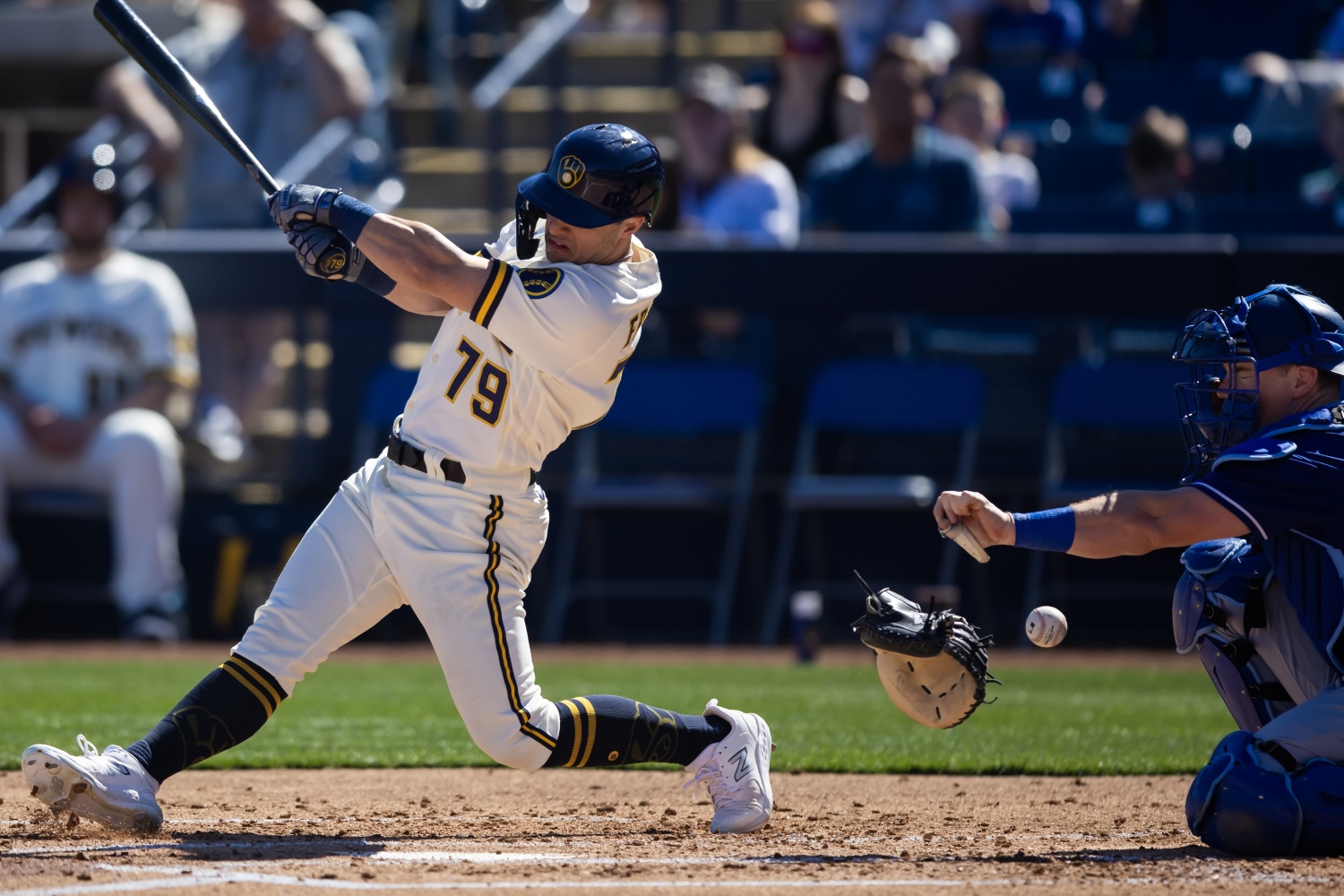 Last year, Carlos F. Rodríguez pitched very well in the Brewers system. After being a sixth-round pick from a Florida junior college in 2021, he made the most of his first full season as a professional, moving up from Class-A Carolina to High-A Wisconsin and posting good numbers. He ranked 11th on our countdown of the top 20 Brewers prospects this spring, and FanGraphs has him 20th in the system. On Saturday, though, he got a chance to showcase his talent in a new and challenging way, and he more than met the moment. A Nicaragua native, Rodríguez not only got the invite to represent that country, but was handed the ball to start their first game of the tournament. Facing a Team Puerto Rico lineup stacked with good big-league hitters, Rodríguez threw four strong innings, allowing just one run on two hits and striking out three. More exciting (and more fun, for those who love either prospects or numbers) than the raw results, though, was the fact that Rodríguez’s performance was tracked by Statcast. That allows us to say, definitively, that he was throwing six different pitches on Saturday. While we saw Rodríguez pitch effectively with both a curveball and a slider last season, and while his changeup already had an above-average grade on FanGraphs’s scouting report for him, that cutter is a new and fascinating wrinkle. Its movement is tighter and later than that of his slider, and it’s also about five miles per hour firmer. Less surprising, but also notable, was the fact that Rodríguez utilized his sinker just as much as his four-seam fastball in the outing. He didn’t miss bats with the sinker, and a couple of batters did hit it hard, but they mostly pounded it into the ground. If he’s now a six-pitch guy, he’s increased his chances of sticking in the starting rotation as he rises through the minors, and he should be regarded a bit more highly. That doesn’t mean there won’t be things to work on. Though he showed a good plan of attack and got opponents to expand the zone by setting them up well at times, Rodríguez doesn’t yet have the command he’ll need to be a starter in MLB. Still, everything about this outing was encouraging. He handled a high-pressure atmosphere; kept his underdog team in the game; spun the ball well; and touched 95 miles per hour with his heat. If Nicaragua gets eliminated–as everyone still expects, especially after the rest of their pitchers gave up eight runs in five innings when Rodríguez departed–then the young right-handed can return to Brewers camp having done brilliantly in his lone opportunity. There were other Brewers active in the early games of the WBC, too, though. Sal Frelick, playing for Team Italy, is 4-for-14 through their first three games, including a pair of doubles, a pair of runs scored, a pair of RBIs, one walk (against zero strikeouts) and one stolen base. The setting and the pool in which Italy was placed are perfect for Frelick, and he’s put on a show, albeit for a team that will not advance out of pool play. In Team Panama’s victory over Frelick’s Italian team on Friday, Javy Guerra also made a statement, coming for a 20-pitch save in which he only threw fastballs; averaged 97.7 miles per hour on them; and touched 99.5. Team México is off to a less auspicious start, having lost a tremendously taut and exciting game to Team Colombia to begin their tournament. We saw launch angle problems from both Luis Urías and Rowdy Tellez in that contest, as Urías had two hard-hit ground balls that killed rallies for México, and Tellez had a couple of popouts. Even more painfully, Urías was charged with what became the decisive error in the 10th inning, on a very tough play at shortstop–a cue shot that took him to his right and took a bad hop. The lone bright spot for either player was a sixth-inning plate appearance by Tellez, who hung tough against a lefty with a runner on second and nobody out, ultimately hitting a check-swing ground ball on a 3-2 count that moved the go-ahead run into scoring position. (Alas, two batters later, it was Urías who hit into an inning-ending double play.) As I write this, Team Netherlands is beating Frelick, Brett Sullivan, and Italy 1-0. That’s the delightful nature of the World Baseball Classic; the action is nonstop. Sunday will bring more fun for Brewers fans, as México takes on Team USA (and Devin Williams) in the second game of pool play in Phoenix, while the Brewers who stayed home will play against the Cubs at Sloan Park in Mesa.
- 4 comments
-
- 2
-
-
- carlos f rodriguez
- sal frelick
- (and 3 more)
-
Today, we finish out the week by completing a trip around the horn. Our position-by-position preview of the 2023 Brewers is headed for the hot corner. Image courtesy of © Matt Kartozian-USA TODAY Sports Though they don't directly or solely model themselves on the Tampa Bay Rays, the Brewers do emulate their small-market brethren in their approach to building a position player corps--especially on the infield. That means a lot of playing matchups, prioritizing depth over star power, and understanding the value of overlapping skill sets. Nowhere is that more clear, for this year's version of the team, than at third base. The Starter If there were any questions about Brian Anderson's status as a full-time regular coming into camp, he's done everything within his power to banish them from the minds of the Brewers and their fans. The only remaining question, spurred by Tyrone Taylor's balky elbow, is whether Anderson will spend a substantial share of his time in right field during the early going, rather than at his original defensive home. The reasons why one might have doubted his status as an everyday player a month ago are the same as the reasons why the Brewers were able to sign Anderson for just $3.5 million in free agency, after the Marlins non-tendered him early in the offseason: a woefully inconsistent and underwhelming pair of seasons at the plate. Injury had much to do with those struggles, but Anderson also needed to make some adjustments in his setup, in order to tap into the value of his good bat speed and feel for the barrel. Here's a video of Anderson getting beaten inside on a pitch last May: e3121c6c-1e16-41fb-8791-f7ded1a41385.mp4 Note that although he begins with a slight waggle, his hands reach a point of almost perfect stillness before the pitch is thrown, with the barrel of his bat almost perpendicular to the ground. He has a timing trigger, a pulldown to get his hands moving, but there's still a slight hitch, and that's one reason why he's late on the inside fastball. By the end of last season, Anderson had partially fixed that particular problem. He'd lowered the bat toward parallel with the ground and back over his shoulder, and was in motion before the pitch. He's carried that over this spring, and it seems to really help. Some hitters can start from a full stop (or nearly so) and still get the head of the bat into the zone on time, with good rhythm, but most can't, and Anderson appears to fall into that latter camp. Getting more rhythmic and being on time has helped, but Anderson is also crushing the ball this spring simply because he's healthier. Take a look at his home run off of Cubs starter Drew Smyly on Feb. 28. It certainly helps that Smyly doesn't throw overwhelmingly hard, and that he was trying to sneak a cutter past Anderson inside. What we see on that swing, though, is much better fundamental strength than Anderson was able to sustain last season. Bothered by a lingering left shoulder injury and a bulging disc in his back, Anderson was unable to stay as balanced, rotate as cleanly throughout his swing, or keep the bat moving at top speed through contact, the way he so often did early in his career. If he remains healthy and sticks with the altered setup that has unlocked his thump this spring, he'll be a fine hitter, be it at third base or in right field. Last year, his defense at third base took a turn for the worse. He still has a strong arm and good athleticism, though, and has shown the hands and feet of a perfectly competent infielder in the past. The adjustments he needs to make to shore up that side of his game are mostly mental, though it will certainly help if he can avoid further back trouble, too. The Backups Again, Urias is a fine fallback, but if he's playing second most of the time heading into the season, then Abraham Toro and Mike Brosseau will be the main guys behind Anderson. Since most of the team's other options for right field bat left-handed, it's easy to envision Anderson playing right against lefties until Taylor returns, and Toro (a switch-hitter) or Brosseau (a righty who handles lefties very well) being the third baseman for the day. Toro has played more second base recently, but came up as a well-regarded third baseman, including defensively. That he's getting an earlier, fuller taste of high-caliber pitching by playing for Team Canada in the World Baseball Classic can only help matters. The question with him, though, will be whether he can get back to hitting the ball hard at an acceptable rate. In the minors, he not only generated impressive traditional numbers, but caught teams' eyes with the subsurface data. That has not translated to the majors, despite his good contact rate and obvious athletic ability. It will be interesting to see whether the Brewers ask him to open the season in Nashville, in order to finish implementing any changes they have in mind to make him dangerous at the dish again. Summary and Projected Value As is true at second base, it feels very much like the Brewers will cobble together above-average production at third in 2023. They've put multiple useful players in place, and only outright disaster would make it a truly lousy position for them. Still, the certitude and star power provided by Willy Adames at shortstop is markedly absent here. In our entire circuit of the infield, one thing became clear: the team is overdue to produce a homegrown infielder of lasting quality. Hopefully, Brice Turang will end that drought this season, pushing Urías more prominently into this third-base picture and taking some pressure off of Matt Arnold to make nimble and aggressive choices in the free-agent and trade markets. In the meantime, though, that pressure remains. The team's success with developing outfielders recently has only made up for the dearth of infielders, and the many resources (Anderson's salary, the trade capital required to land Urías and Adames, and so on) that demanded. Baseball Prospectus's PECOTA projections peg Anderson as narrowly above-average at the plate, and Toro as equally below-average. If each plays the steady but unspectacular defense they've played in the past, that should translate to solid value at third. They only need a couple of wins above replacement at the spot, in the context of this roster. FanGraphs, ever the more dour prognosticators for this year's Crew, views Anderson as a lesser hitter than Toro, but still gives him more playing time. They also rank the Brewers 17th in projected production at third, despite having Urías (generally a projections darling) getting the majority of the time. Even if they are slightly below-average at third, the Brewers can win the NL Central in 2023. They just need two of their four options there to work out, in terms not only of playing to their established talent level, but of being available, rather than being pulled away to positions of more dire need or sidelined by injuries. View full article
-
Milwaukee Brewers 2023 Positional Previews: Third Base
Matthew Trueblood posted an article in Brewers
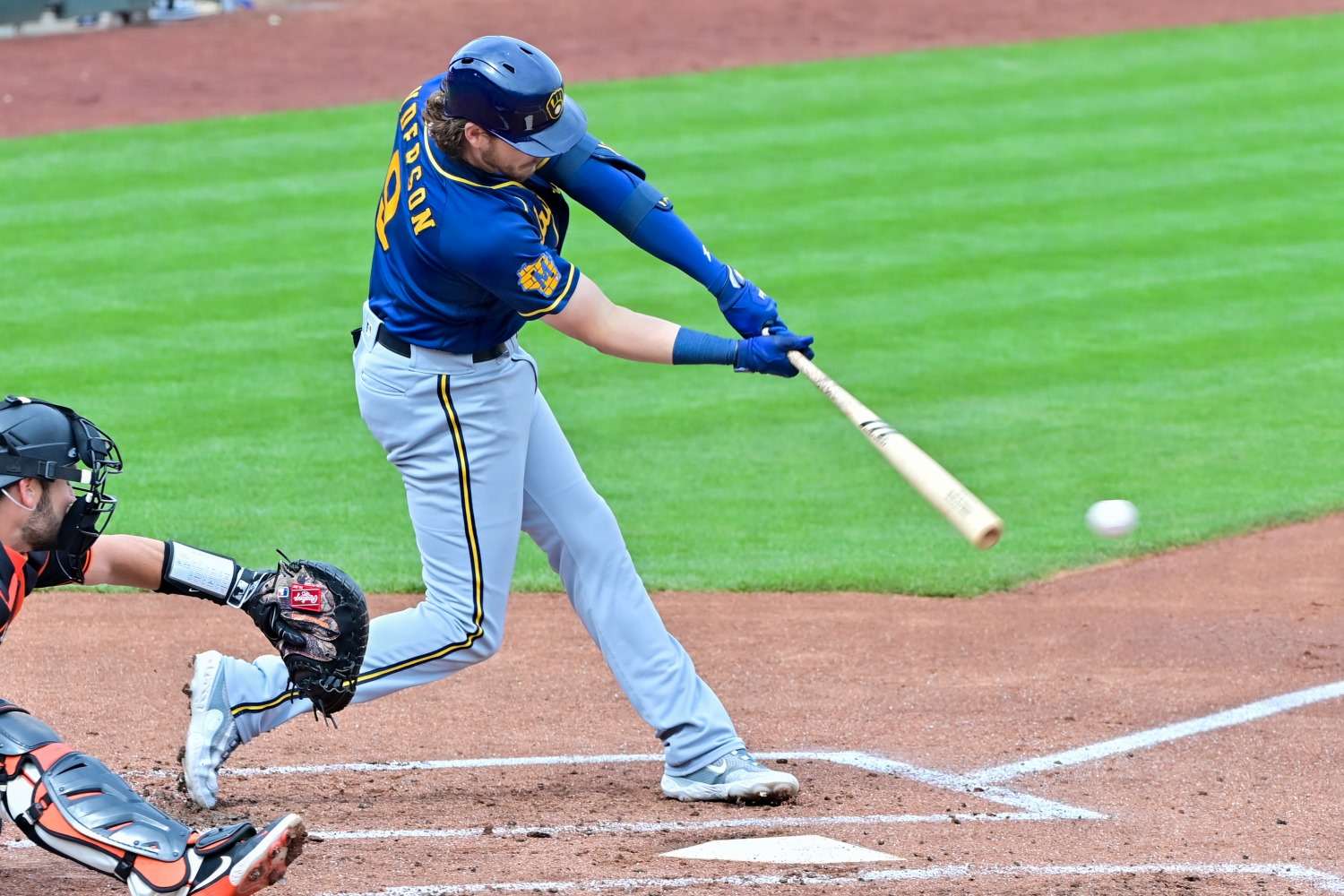 Though they don't directly or solely model themselves on the Tampa Bay Rays, the Brewers do emulate their small-market brethren in their approach to building a position player corps--especially on the infield. That means a lot of playing matchups, prioritizing depth over star power, and understanding the value of overlapping skill sets. Nowhere is that more clear, for this year's version of the team, than at third base. The Starter If there were any questions about Brian Anderson's status as a full-time regular coming into camp, he's done everything within his power to banish them from the minds of the Brewers and their fans. The only remaining question, spurred by Tyrone Taylor's balky elbow, is whether Anderson will spend a substantial share of his time in right field during the early going, rather than at his original defensive home. The reasons why one might have doubted his status as an everyday player a month ago are the same as the reasons why the Brewers were able to sign Anderson for just $3.5 million in free agency, after the Marlins non-tendered him early in the offseason: a woefully inconsistent and underwhelming pair of seasons at the plate. Injury had much to do with those struggles, but Anderson also needed to make some adjustments in his setup, in order to tap into the value of his good bat speed and feel for the barrel. Here's a video of Anderson getting beaten inside on a pitch last May: e3121c6c-1e16-41fb-8791-f7ded1a41385.mp4 Note that although he begins with a slight waggle, his hands reach a point of almost perfect stillness before the pitch is thrown, with the barrel of his bat almost perpendicular to the ground. He has a timing trigger, a pulldown to get his hands moving, but there's still a slight hitch, and that's one reason why he's late on the inside fastball. By the end of last season, Anderson had partially fixed that particular problem. He'd lowered the bat toward parallel with the ground and back over his shoulder, and was in motion before the pitch. He's carried that over this spring, and it seems to really help. Some hitters can start from a full stop (or nearly so) and still get the head of the bat into the zone on time, with good rhythm, but most can't, and Anderson appears to fall into that latter camp. Getting more rhythmic and being on time has helped, but Anderson is also crushing the ball this spring simply because he's healthier. Take a look at his home run off of Cubs starter Drew Smyly on Feb. 28. It certainly helps that Smyly doesn't throw overwhelmingly hard, and that he was trying to sneak a cutter past Anderson inside. What we see on that swing, though, is much better fundamental strength than Anderson was able to sustain last season. Bothered by a lingering left shoulder injury and a bulging disc in his back, Anderson was unable to stay as balanced, rotate as cleanly throughout his swing, or keep the bat moving at top speed through contact, the way he so often did early in his career. If he remains healthy and sticks with the altered setup that has unlocked his thump this spring, he'll be a fine hitter, be it at third base or in right field. Last year, his defense at third base took a turn for the worse. He still has a strong arm and good athleticism, though, and has shown the hands and feet of a perfectly competent infielder in the past. The adjustments he needs to make to shore up that side of his game are mostly mental, though it will certainly help if he can avoid further back trouble, too. The Backups Again, Urias is a fine fallback, but if he's playing second most of the time heading into the season, then Abraham Toro and Mike Brosseau will be the main guys behind Anderson. Since most of the team's other options for right field bat left-handed, it's easy to envision Anderson playing right against lefties until Taylor returns, and Toro (a switch-hitter) or Brosseau (a righty who handles lefties very well) being the third baseman for the day. Toro has played more second base recently, but came up as a well-regarded third baseman, including defensively. That he's getting an earlier, fuller taste of high-caliber pitching by playing for Team Canada in the World Baseball Classic can only help matters. The question with him, though, will be whether he can get back to hitting the ball hard at an acceptable rate. In the minors, he not only generated impressive traditional numbers, but caught teams' eyes with the subsurface data. That has not translated to the majors, despite his good contact rate and obvious athletic ability. It will be interesting to see whether the Brewers ask him to open the season in Nashville, in order to finish implementing any changes they have in mind to make him dangerous at the dish again. Summary and Projected Value As is true at second base, it feels very much like the Brewers will cobble together above-average production at third in 2023. They've put multiple useful players in place, and only outright disaster would make it a truly lousy position for them. Still, the certitude and star power provided by Willy Adames at shortstop is markedly absent here. In our entire circuit of the infield, one thing became clear: the team is overdue to produce a homegrown infielder of lasting quality. Hopefully, Brice Turang will end that drought this season, pushing Urías more prominently into this third-base picture and taking some pressure off of Matt Arnold to make nimble and aggressive choices in the free-agent and trade markets. In the meantime, though, that pressure remains. The team's success with developing outfielders recently has only made up for the dearth of infielders, and the many resources (Anderson's salary, the trade capital required to land Urías and Adames, and so on) that demanded. Baseball Prospectus's PECOTA projections peg Anderson as narrowly above-average at the plate, and Toro as equally below-average. If each plays the steady but unspectacular defense they've played in the past, that should translate to solid value at third. They only need a couple of wins above replacement at the spot, in the context of this roster. FanGraphs, ever the more dour prognosticators for this year's Crew, views Anderson as a lesser hitter than Toro, but still gives him more playing time. They also rank the Brewers 17th in projected production at third, despite having Urías (generally a projections darling) getting the majority of the time. Even if they are slightly below-average at third, the Brewers can win the NL Central in 2023. They just need two of their four options there to work out, in terms not only of playing to their established talent level, but of being available, rather than being pulled away to positions of more dire need or sidelined by injuries.
 -
The Brewers have questions, platoons, and guys competing with each other in camp at almost every position this spring. Shortstop, however, is a beacon of stability. Image courtesy of © Michael McLoone-USA TODAY Sports Almost since the moment the Brewers traded for him in 2021, Willy Adames has been an impact player. While his profile has the kinds of holes that tend to be obvious and oft-discussed, his strengths have come into focus over the last couple of years. That's made him a prime candidate for a contract extension, and it's also put to rest (at least in the short term) anyone's thoughts that Brice Turang would matriculate to the majors as a shortstop. This is one place where the Brewers have a clear and comfortable hierarchy of choices. The Starter Adames is a prototypical modern shortstop, with the power that has become so prized at what was once such a slap-hitter position. His approach and swing will always lead to strikeouts, and last year, he took a more aggressive tack, leading to a career-low 7.5-percent walk rate. That's nit ideal, of course, but he made that change for a reason. After struggling mightily against sliders in 2021, he was downright dangerous against them in 2022. The tradeoff of expanding the zone moderately more in order to hit the ball hard much more often on breaking stuff was, though fraught, a sound one. Source: Baseball Savant He's nearing a bit of an extreme in terms of batted-ball profile, with a career high in average launch angle and a career low in ground-ball rate last season. It will be interesting to see whether he's able to adjust back in the direction of making hard contact at lower angles, if that's what the pitches he sees dictate that he do, because the shift ban does open things up for him a bit. Adames faced shifts in 151 plate appearances last year. Funnily enough, though, the new rules might also work in Adames's favor in the field. Since those new rules demand more of shortstops in terms of sheer range, Adames could gain on his peers as much as anyone. As elucidated by Baseball Prospectus's new suite of defensive stats, he was one of the best defenders in baseball at the spot last year, but that was driven especially by his range, rather than exceptionally smooth hands or a strong arm. Highest Range Out Score, Shortstops, 2022 (min. 1,000 inn.) Name Innings DRP RDA Runs Range Out Score Fielded Plays Attempt Range BRR Arm Willy Adames 1199.7 11.9 12.4 4.4 453 16 -0.5 Dansby Swanson 1433 12.3 10.8 3.2 529 0 1.5 Ha-Seong Kim 1092 6.9 8 3.1 420 12 -1.1 Isiah Kiner-Falefa 1185 6.1 8.1 3 445 15 -2 Geraldo Perdomo 1160 6.2 6.4 2.3 438 8 -0.2 Source: Baseball Prospectus If things do pan out that way, Adames is only going to get harder to sign for the long term. That's why I recommended this weekend that the Brewers act now. Of course, while he's away from the club to play for the Dominican Republic in the World Baseball Classic, it's unlikely that an extension comes together, but hopefully there will be time for the sides to talk after the Classic winds down, and before Opening Day. The Backups Perhaps the strongest single argument for carrying Turang on the roster right from Opening Day this year is that if the team doesn't do so, they really won't have a credible backup shortstop. He was narrowly viable as a fill-in before shift restrictions, but Luis Urías is no shortstop under MLB's rules for 2023. Nor are Abraham Toro or Mike Brosseau, although Urías and Brosseau could stand there for a bit in a true emergency. Whether right away or later in the year, Turang will be the real insurance policy at short. He's gotten a bit thicker and stronger over the last year, but that hasn't interfered with his litheness or his quickness. Indeed, as the game is played today, he needed a little bit more strength, anyway. His long-term home is at second base, and he could even be the regular there immediately, but he's also perfectly well-qualified as an understudy to Adames. The real loss, if Adames should go down for any meaningful stretch, is the same one we saw last year: the lineup will hurt and hunger for power throughout any absence. Summary It would be great if the team had their star shortstop locked up for another 10 years, or if Turang were a more exciting, fully qualified replacement for him in the medium-term future. As it is, though, the Brewers are well-situated at shortstop, with the kind of dynamism most teams can only envy there. The stability Adames provides and his ability to fit comfortably into the heart of the order facilitates the team's emphasis on versatility and interchangeability almost everywhere else on the diamond. Projected Value According to FanGraphs, the Brewers rank eighth in projected WAR from shortstop, at 4.6. Adames, naturally, makes up the lion's share of that. At Baseball Prospectus, he's only projected to earn 3.1 WARP, but that has as much to do with the fact that Prospectus's value metrics (DRC for offense, DRP for defense, and WARP, overall) obey a stronger central tendency than do other similar projections as it has to do with any difference in real value. While there are superstars with more complete games and more subtle flaws, Adames is a star-caliber shortstop, and as long as he's healthy, the Brewers will be one of the best teams in the league at that position. View full article
-
Milwaukee Brewers 2023 Positional Previews: Shortstop
Matthew Trueblood posted an article in Brewers
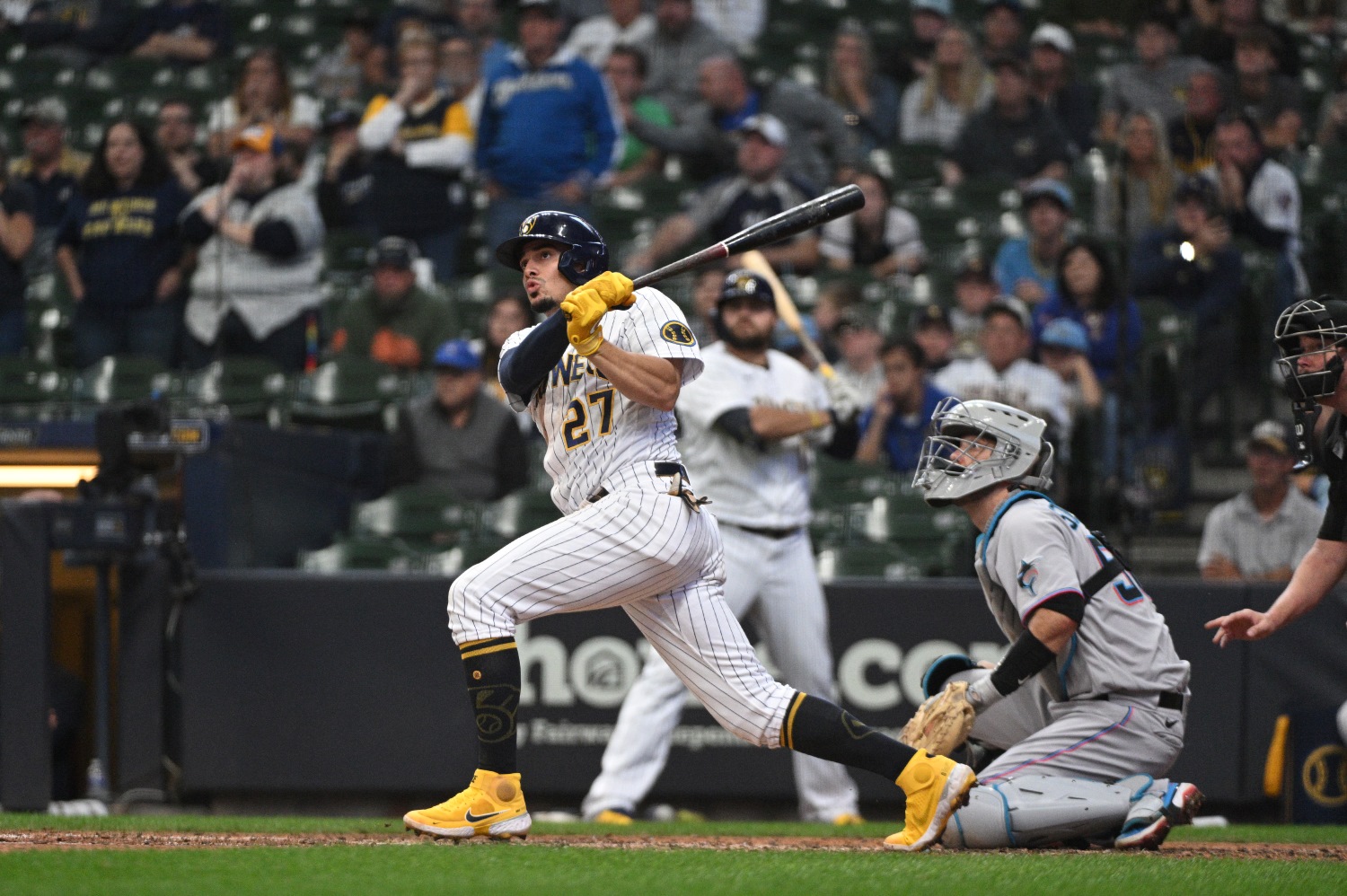 Almost since the moment the Brewers traded for him in 2021, Willy Adames has been an impact player. While his profile has the kinds of holes that tend to be obvious and oft-discussed, his strengths have come into focus over the last couple of years. That's made him a prime candidate for a contract extension, and it's also put to rest (at least in the short term) anyone's thoughts that Brice Turang would matriculate to the majors as a shortstop. This is one place where the Brewers have a clear and comfortable hierarchy of choices. The Starter Adames is a prototypical modern shortstop, with the power that has become so prized at what was once such a slap-hitter position. His approach and swing will always lead to strikeouts, and last year, he took a more aggressive tack, leading to a career-low 7.5-percent walk rate. That's nit ideal, of course, but he made that change for a reason. After struggling mightily against sliders in 2021, he was downright dangerous against them in 2022. The tradeoff of expanding the zone moderately more in order to hit the ball hard much more often on breaking stuff was, though fraught, a sound one. Source: Baseball Savant He's nearing a bit of an extreme in terms of batted-ball profile, with a career high in average launch angle and a career low in ground-ball rate last season. It will be interesting to see whether he's able to adjust back in the direction of making hard contact at lower angles, if that's what the pitches he sees dictate that he do, because the shift ban does open things up for him a bit. Adames faced shifts in 151 plate appearances last year. Funnily enough, though, the new rules might also work in Adames's favor in the field. Since those new rules demand more of shortstops in terms of sheer range, Adames could gain on his peers as much as anyone. As elucidated by Baseball Prospectus's new suite of defensive stats, he was one of the best defenders in baseball at the spot last year, but that was driven especially by his range, rather than exceptionally smooth hands or a strong arm. Highest Range Out Score, Shortstops, 2022 (min. 1,000 inn.) Name Innings DRP RDA Runs Range Out Score Fielded Plays Attempt Range BRR Arm Willy Adames 1199.7 11.9 12.4 4.4 453 16 -0.5 Dansby Swanson 1433 12.3 10.8 3.2 529 0 1.5 Ha-Seong Kim 1092 6.9 8 3.1 420 12 -1.1 Isiah Kiner-Falefa 1185 6.1 8.1 3 445 15 -2 Geraldo Perdomo 1160 6.2 6.4 2.3 438 8 -0.2 Source: Baseball Prospectus If things do pan out that way, Adames is only going to get harder to sign for the long term. That's why I recommended this weekend that the Brewers act now. Of course, while he's away from the club to play for the Dominican Republic in the World Baseball Classic, it's unlikely that an extension comes together, but hopefully there will be time for the sides to talk after the Classic winds down, and before Opening Day. The Backups Perhaps the strongest single argument for carrying Turang on the roster right from Opening Day this year is that if the team doesn't do so, they really won't have a credible backup shortstop. He was narrowly viable as a fill-in before shift restrictions, but Luis Urías is no shortstop under MLB's rules for 2023. Nor are Abraham Toro or Mike Brosseau, although Urías and Brosseau could stand there for a bit in a true emergency. Whether right away or later in the year, Turang will be the real insurance policy at short. He's gotten a bit thicker and stronger over the last year, but that hasn't interfered with his litheness or his quickness. Indeed, as the game is played today, he needed a little bit more strength, anyway. His long-term home is at second base, and he could even be the regular there immediately, but he's also perfectly well-qualified as an understudy to Adames. The real loss, if Adames should go down for any meaningful stretch, is the same one we saw last year: the lineup will hurt and hunger for power throughout any absence. Summary It would be great if the team had their star shortstop locked up for another 10 years, or if Turang were a more exciting, fully qualified replacement for him in the medium-term future. As it is, though, the Brewers are well-situated at shortstop, with the kind of dynamism most teams can only envy there. The stability Adames provides and his ability to fit comfortably into the heart of the order facilitates the team's emphasis on versatility and interchangeability almost everywhere else on the diamond. Projected Value According to FanGraphs, the Brewers rank eighth in projected WAR from shortstop, at 4.6. Adames, naturally, makes up the lion's share of that. At Baseball Prospectus, he's only projected to earn 3.1 WARP, but that has as much to do with the fact that Prospectus's value metrics (DRC for offense, DRP for defense, and WARP, overall) obey a stronger central tendency than do other similar projections as it has to do with any difference in real value. While there are superstars with more complete games and more subtle flaws, Adames is a star-caliber shortstop, and as long as he's healthy, the Brewers will be one of the best teams in the league at that position.
 -
As we continue to tour the diamond in the runup to Opening Day, second base now comes under the microscope. There are two very good options available, but choosing the right one won’t be easy for the Brewers. Image courtesy of © Mark J. Rebilas-USA TODAY Sports Last week at FanGraphs, Jay Jaffe wrote about the weakest position groups on each contending team in the National League. The Brewers showed up in that piece, because according to the FanGraphs second base depth charts, they’re worse off than all but five other teams at that position. The site ascribes most of the playing time for Milwaukee second sackers to Brice Turang, but he’s only projected to hit .236/.307/.341. In reality, though, things probably don’t depend as much on Turang as the projections think. The Starter Turang will have an impact on the 2023 Brewers, but the bet here is that the bulk of the playing time will actually go to Luis Urías. This spring, Urías has gotten considerable time at second base, and he’s looked better there than in past looks. With the new restrictions on defensive positioning, arm strength is a bit more important, and Urías would be stretched thin at third base under those constraints. At second, though, he’s an adequate defender, and his bat is more than adequate. Summary It would be easier to get a handle on who will open the season as the starter at second base if Urías and Toro weren’t departing to play for México and Canada, respectively, in the World Baseball Classic. As it is, Turang will have ample time to show the team what he can do, but he’ll probably spend much of his time at shortstop, anyway, because Willy Adames is also off to play for the Dominican Republic. Since Turang is a left-handed hitter, Urías is a right-handed one, and Toro is a switch-hitter, the most likely outcome here is that the team has three different guys play at least 30 games at the keystone in 2023. Under Craig Counsell, the Brewers have never minded implementing platoons or timeshares, and the emergence of Adames to stabilize one infield spot makes that easier. They have some power, some on-base skills, and some speed in their grab bag, so their situation is much less dire than the FanGraphs depth charts suggest. Projected Value Be it FanGraphs or Baseball Prospectus, though, the projection systems think little of Turang. PECOTA is even less friendly that FanGraphs’s numbers, and views Toro as a below-average hitter, too. Urías projects well, but again, where he delivers that value remains an open question. According to PECOTA, the five players discussed above will combine for 3.3 WARP in 2023. Over half of that is Urías alone, though, and he’s slated primarily for third base by BP, too. The team’s chance to get that kind of production from second base itself lies largely with Turang. Statistical systems were never going to love him, given how little power he showed until reaching Nashville last year. If his physical and mental changes yield consistent, translatable power gains, though, he’ll far outperform the projections. There’s just no way to know whether or not that will happen, in advance. View full article
-
Milwaukee Brewers 2023 Positional Previews: Second Base
Matthew Trueblood posted an article in Brewers
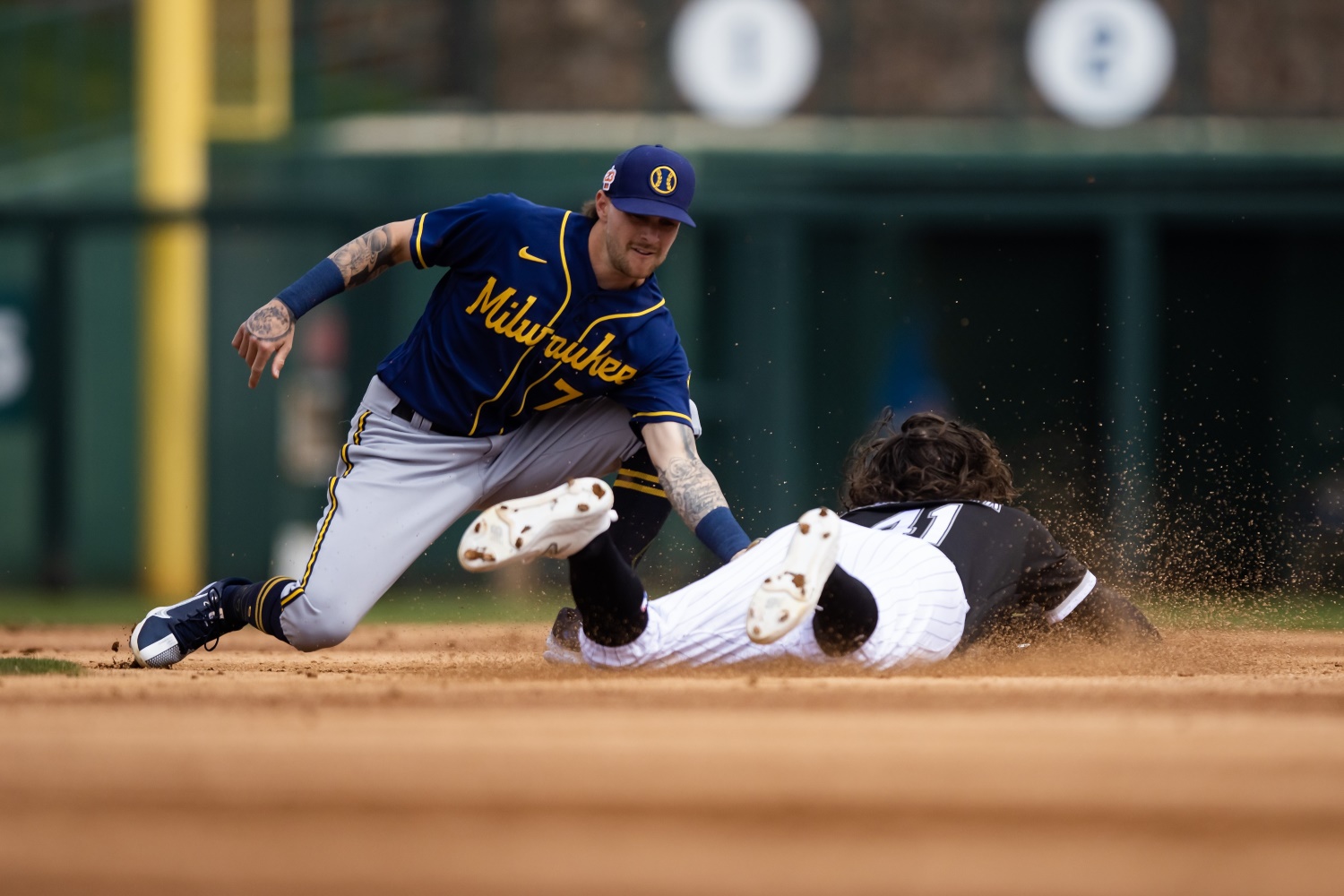 Last week at FanGraphs, Jay Jaffe wrote about the weakest position groups on each contending team in the National League. The Brewers showed up in that piece, because according to the FanGraphs second base depth charts, they’re worse off than all but five other teams at that position. The site ascribes most of the playing time for Milwaukee second sackers to Brice Turang, but he’s only projected to hit .236/.307/.341. In reality, though, things probably don’t depend as much on Turang as the projections think. The Starter Turang will have an impact on the 2023 Brewers, but the bet here is that the bulk of the playing time will actually go to Luis Urías. This spring, Urías has gotten considerable time at second base, and he’s looked better there than in past looks. With the new restrictions on defensive positioning, arm strength is a bit more important, and Urías would be stretched thin at third base under those constraints. At second, though, he’s an adequate defender, and his bat is more than adequate. Summary It would be easier to get a handle on who will open the season as the starter at second base if Urías and Toro weren’t departing to play for México and Canada, respectively, in the World Baseball Classic. As it is, Turang will have ample time to show the team what he can do, but he’ll probably spend much of his time at shortstop, anyway, because Willy Adames is also off to play for the Dominican Republic. Since Turang is a left-handed hitter, Urías is a right-handed one, and Toro is a switch-hitter, the most likely outcome here is that the team has three different guys play at least 30 games at the keystone in 2023. Under Craig Counsell, the Brewers have never minded implementing platoons or timeshares, and the emergence of Adames to stabilize one infield spot makes that easier. They have some power, some on-base skills, and some speed in their grab bag, so their situation is much less dire than the FanGraphs depth charts suggest. Projected Value Be it FanGraphs or Baseball Prospectus, though, the projection systems think little of Turang. PECOTA is even less friendly that FanGraphs’s numbers, and views Toro as a below-average hitter, too. Urías projects well, but again, where he delivers that value remains an open question. According to PECOTA, the five players discussed above will combine for 3.3 WARP in 2023. Over half of that is Urías alone, though, and he’s slated primarily for third base by BP, too. The team’s chance to get that kind of production from second base itself lies largely with Turang. Statistical systems were never going to love him, given how little power he showed until reaching Nashville last year. If his physical and mental changes yield consistent, translatable power gains, though, he’ll far outperform the projections. There’s just no way to know whether or not that will happen, in advance.
 -
In the second installment of our position-by-position preview of the 2023 Brewers, we migrate from behind the plate to first base. Led by the third straight successful veteran reclamation project at that position, Milwaukee appears set to enjoy solidly average or better production again this year. Image courtesy of © Mark J. Rebilas-USA TODAY Sports The great challenge of being a nimble team, committed to winning on a budget and reloading on the fly, lies in finding things the organization can do successfully several times in a row, rather than just getting it right once. The current Brewers regime has demonstrated that invaluable skill, by getting strong offense from Eric Thames and Jesús Aguilar as scrapheap pickups for first base, then pivoting to Rowdy Tellez when Aguilar faded and needed to be replaced. The Starter As daunting and discouraging as some fans might find his numbers against southpaws to be, Tellez is a perfectly adequate regular first baseman. In this roster setting, where he can be shielded somewhat from bad matchups and where his power can play up a bit thanks to the coziness of Miller Park, he has every chance to continue being even better than that. Tellez, who will turn 28 later this month, is also primed to get plenty of help from the new rules limiting defensive shifts. Tellez sported a .215 BABIP last year. That’s nearly unsustainable, even with the shift in place, except for extreme fly-ball hitters and those without the ability to hit it hard. Tellez is neither of those things. In the chart above, note not just the redness of the hexagons across the right side of the infield and into shallow right field (indicating how hard he hit the ball), but the size of them. He was frequently hitting it sharply into areas of the field that won’t be as well-defended in 2023. The Brewers’ offensive specialty is improving and drilling on swing decisions. They want their hitters to be patient, and not to miss their pitch when they get it. Tellez has become the perfect pupil for that approach, and he should see a better return on the investment he’s made in that regard this season. For a player with his power, he strikes out shockingly little. He also accepts his walks. He’s going to force opposing pitchers into the zone, and when they come in there, he’s going to do damage. That should only become more true now that he’ll face less optimal infield alignments. Surely, teams will try out the loophole version of the shift the Red Sox deployed against Twins slugger Joey Gallo over the weekend (as documented by our Caswell Dommisse) on Tellez. It absolutely will not work, though. Gallo strikes out about half again as much as does Tellez, which makes the gambit theoretically viable when he comes to bat. Tellez can too easily drive the ball to all sectors of the outfield, and if the outfield is really just two very deep guys and one quasi-infielder, all of those balls will fall in for hits. The Backup Mishmash Thanks to the minor-league deal to which they signed Luke Voit just after camps opened, the Brewers do have a prototypical backup first baseman in the organization. It’s not yet clear, though, whether they can retain him for long without adding him to the 40-man roster and making him part of the active roster. As I wrote when Voit first signed, the fit between him and Tellez is even better than it might superficially appear, and while he does have the nasty strikeout bug that Tellez has so far staved off, he can make up for it with his sheer power when he gets hot. The question will be whether the Brewers view Voit as a good enough complement (not only to Tellez, but to presumptive DH Jesse Winker) to justify jettisoning Keston Hiura. If so, Voit is the backup first baseman, and that’s that. If not, it could be that Tellez will be buttressed by a mélange of players with some mixture of offensive thump and defensive versatility, including not only Hiura, but Mike Brosseau or Victor Caratini. Brosseau, the best prospective lefty masher in that group, is the best fit for the job, but might be needed more at second and third base, depending upon how other injury and performance questions turn out. Summary and Projected Value I’m a firm believer that, while the concept of replacement level is very valuable in the team-building process, it runs into major limitations when it comes to evaluating specific players and positions. By turning Thames, Aguilar, and now Tellez into above-average hitters with playable gloves at below-average salaries, the Brewers have hewed to the only really important principle imparted by replacement level thinking when it comes to first base, which is this: it’s not that hard to find a good hitter who can handle first. No team with limited resources (however voluntary those limits might be) should plunge dozens of millions into that type of player. Instead of grading first basemen against the replacement level, then, we should grade them against average. Tellez and the Brewers rank 15th on FanGraphs’s depth chart projections at first base right now, so they have zero value above average, but zero is a fine number, given that they’re spending less than an average regular’s salary on the position. Tellez could break out this year, for all the reasons given above, but even if he doesn’t, he sets a high enough floor that the team can be pretty sure they won’t lose wins at the position this year. That’s valuable. That inches them toward the postseason. If they go no further than that, the first basemen have done their jobs, given the way this team is constructed. However, their inability to actively carry the team up the standings puts a bit more pressure on the other positions we’ll preview as the week goes on. View full article
-
Milwaukee Brewers 2023 Positional Previews: First Base
Matthew Trueblood posted an article in Brewers
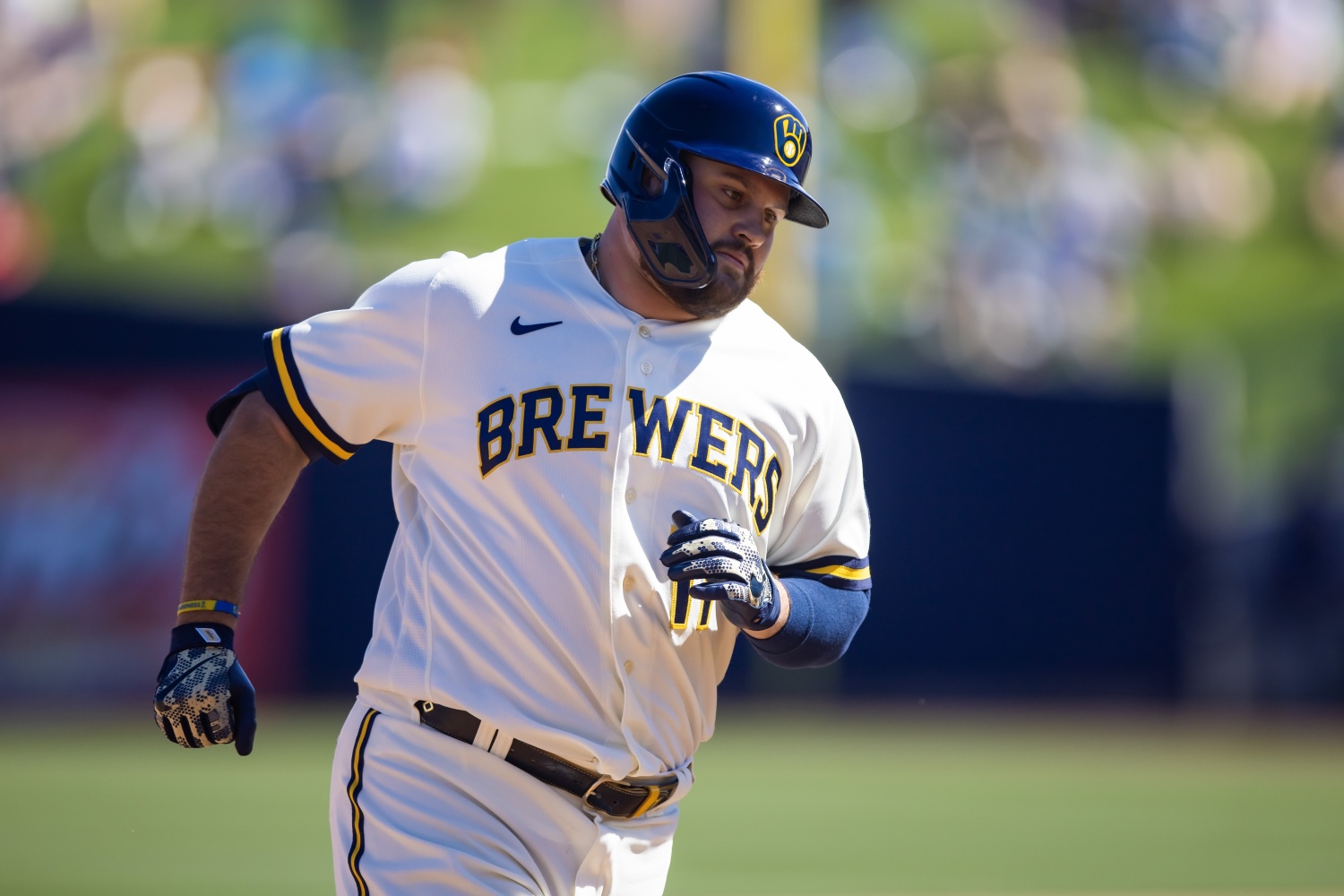 The great challenge of being a nimble team, committed to winning on a budget and reloading on the fly, lies in finding things the organization can do successfully several times in a row, rather than just getting it right once. The current Brewers regime has demonstrated that invaluable skill, by getting strong offense from Eric Thames and Jesús Aguilar as scrapheap pickups for first base, then pivoting to Rowdy Tellez when Aguilar faded and needed to be replaced. The Starter As daunting and discouraging as some fans might find his numbers against southpaws to be, Tellez is a perfectly adequate regular first baseman. In this roster setting, where he can be shielded somewhat from bad matchups and where his power can play up a bit thanks to the coziness of Miller Park, he has every chance to continue being even better than that. Tellez, who will turn 28 later this month, is also primed to get plenty of help from the new rules limiting defensive shifts. Tellez sported a .215 BABIP last year. That’s nearly unsustainable, even with the shift in place, except for extreme fly-ball hitters and those without the ability to hit it hard. Tellez is neither of those things. In the chart above, note not just the redness of the hexagons across the right side of the infield and into shallow right field (indicating how hard he hit the ball), but the size of them. He was frequently hitting it sharply into areas of the field that won’t be as well-defended in 2023. The Brewers’ offensive specialty is improving and drilling on swing decisions. They want their hitters to be patient, and not to miss their pitch when they get it. Tellez has become the perfect pupil for that approach, and he should see a better return on the investment he’s made in that regard this season. For a player with his power, he strikes out shockingly little. He also accepts his walks. He’s going to force opposing pitchers into the zone, and when they come in there, he’s going to do damage. That should only become more true now that he’ll face less optimal infield alignments. Surely, teams will try out the loophole version of the shift the Red Sox deployed against Twins slugger Joey Gallo over the weekend (as documented by our Caswell Dommisse) on Tellez. It absolutely will not work, though. Gallo strikes out about half again as much as does Tellez, which makes the gambit theoretically viable when he comes to bat. Tellez can too easily drive the ball to all sectors of the outfield, and if the outfield is really just two very deep guys and one quasi-infielder, all of those balls will fall in for hits. The Backup Mishmash Thanks to the minor-league deal to which they signed Luke Voit just after camps opened, the Brewers do have a prototypical backup first baseman in the organization. It’s not yet clear, though, whether they can retain him for long without adding him to the 40-man roster and making him part of the active roster. As I wrote when Voit first signed, the fit between him and Tellez is even better than it might superficially appear, and while he does have the nasty strikeout bug that Tellez has so far staved off, he can make up for it with his sheer power when he gets hot. The question will be whether the Brewers view Voit as a good enough complement (not only to Tellez, but to presumptive DH Jesse Winker) to justify jettisoning Keston Hiura. If so, Voit is the backup first baseman, and that’s that. If not, it could be that Tellez will be buttressed by a mélange of players with some mixture of offensive thump and defensive versatility, including not only Hiura, but Mike Brosseau or Victor Caratini. Brosseau, the best prospective lefty masher in that group, is the best fit for the job, but might be needed more at second and third base, depending upon how other injury and performance questions turn out. Summary and Projected Value I’m a firm believer that, while the concept of replacement level is very valuable in the team-building process, it runs into major limitations when it comes to evaluating specific players and positions. By turning Thames, Aguilar, and now Tellez into above-average hitters with playable gloves at below-average salaries, the Brewers have hewed to the only really important principle imparted by replacement level thinking when it comes to first base, which is this: it’s not that hard to find a good hitter who can handle first. No team with limited resources (however voluntary those limits might be) should plunge dozens of millions into that type of player. Instead of grading first basemen against the replacement level, then, we should grade them against average. Tellez and the Brewers rank 15th on FanGraphs’s depth chart projections at first base right now, so they have zero value above average, but zero is a fine number, given that they’re spending less than an average regular’s salary on the position. Tellez could break out this year, for all the reasons given above, but even if he doesn’t, he sets a high enough floor that the team can be pretty sure they won’t lose wins at the position this year. That’s valuable. That inches them toward the postseason. If they go no further than that, the first basemen have done their jobs, given the way this team is constructed. However, their inability to actively carry the team up the standings puts a bit more pressure on the other positions we’ll preview as the week goes on.
 -
Three and a half weeks out from Opening Day, we’re ready to start previewing the Brewers for 2023 on an in-depth, position-by-position basis. That begins today, with the high floor and exciting upside of the team’s catching corps. Image courtesy of © Michael McLoone-USA TODAY Sports With the acquisition of William Contreras, Matt Arnold filled the void left by the departing Omar Narvaez and then some. Last week, we broke down all of the work ahead for Contreras and the Brewers on being a better pitch framer and game manager, but that’s just about putting the finishing touches on an exciting profile. The Starter Obviously, if things go according to any of the team’s plans, Contreras will be the primary backstop in 2023. He’s 25 years old, now fully established as a big-leaguer, and they’ll want his bat in the lineup as often as possible. On the other hand, his career high in innings caught during any season was 799 in 2021, and that counts his time in the Venezuelan Winter League that year. If he goes past 100 starts at catcher, he’ll be in uncharted waters in terms of workload, and that could slow his bat down in September. Offensively, Contreras is delightfully dangerous, but it’ll be interesting to see to what extent he can manage his contact problems as he takes on a full-time role. Striking out 28.4 percent of the time, as he has done in MLB thus far, is fine if you’re a patient slugger who’s always hitting fly balls. If you’re pairing that figure with a 51.1-percent groundball rate, as Contreras has done, it’s much less tenable. Like his older brother, Contreras has a swing in which his hands get out away from his body early. That can help generate lots of bat speed and exit velocity, but it’s not good for maintaining a consistent bat path or making contact. As the Brewers know very well, Willson Contreras also gets eaten up on pitches inside, for this very reason. It’s something on which the team will have to work with William, in order to keep him producing the way he did in 2022. Summary Look for roughly a 60/40 division of labor from these two, at least during the early stages of the season. Catcher playing time is often a hot topic during spring training, especially in this era of teams trying harder to protect their guys from the vicissitudes of that position, but the reality is that the workloads of the starter and backup are rarely determined by some careful planning over the long run. Instead, injury and vagary tend to do the deciding. If Contreras’s defense doesn’t come along the way the team would like, or if Jesse Winker gets hurt and the team needs Contreras at designated hitter more often, then Caratini could start 80-plus games. On the other hand, if Caratini isn’t able to handle the increased prevalence of the running game or is having an especially brutal season at the plate, Contreras could be stretched further, to catch more like seven out of every 10 games. That the team has solid catching depth at Triple-A Nashville (not to mention fast-rising prospect Jeferson Quero, a little further down the ladder) makes all of that unpredictability a bit less scary. Projected Value As many have noted, PECOTA (Baseball Prospectus’s projection system) seems to hate Contreras this spring. As such, BP projects the team to get just 1.7 Wins Above Replacement Player (WARP) from their catchers this year. On the contrary, Dan Szymborski’s ZiPS system likes both Contreras and Caratini a good bit, and the Brewers project for 3.2 WAR from the position. The latter seems much more correct, but the former does remind us to be cautious with Contreras. Even in that case, though, the team would be getting roughly average production from a position where clubs sometimes get virtually nothing. View full article
- 5 replies
-
- 1
-
-
- william contreras
- victor caratini
- (and 1 more)
-
 With the acquisition of William Contreras, Matt Arnold filled the void left by the departing Omar Narvaez and then some. Last week, we broke down all of the work ahead for Contreras and the Brewers on being a better pitch framer and game manager, but that’s just about putting the finishing touches on an exciting profile. The Starter Obviously, if things go according to any of the team’s plans, Contreras will be the primary backstop in 2023. He’s 25 years old, now fully established as a big-leaguer, and they’ll want his bat in the lineup as often as possible. On the other hand, his career high in innings caught during any season was 799 in 2021, and that counts his time in the Venezuelan Winter League that year. If he goes past 100 starts at catcher, he’ll be in uncharted waters in terms of workload, and that could slow his bat down in September. Offensively, Contreras is delightfully dangerous, but it’ll be interesting to see to what extent he can manage his contact problems as he takes on a full-time role. Striking out 28.4 percent of the time, as he has done in MLB thus far, is fine if you’re a patient slugger who’s always hitting fly balls. If you’re pairing that figure with a 51.1-percent groundball rate, as Contreras has done, it’s much less tenable. Like his older brother, Contreras has a swing in which his hands get out away from his body early. That can help generate lots of bat speed and exit velocity, but it’s not good for maintaining a consistent bat path or making contact. As the Brewers know very well, Willson Contreras also gets eaten up on pitches inside, for this very reason. It’s something on which the team will have to work with William, in order to keep him producing the way he did in 2022. Summary Look for roughly a 60/40 division of labor from these two, at least during the early stages of the season. Catcher playing time is often a hot topic during spring training, especially in this era of teams trying harder to protect their guys from the vicissitudes of that position, but the reality is that the workloads of the starter and backup are rarely determined by some careful planning over the long run. Instead, injury and vagary tend to do the deciding. If Contreras’s defense doesn’t come along the way the team would like, or if Jesse Winker gets hurt and the team needs Contreras at designated hitter more often, then Caratini could start 80-plus games. On the other hand, if Caratini isn’t able to handle the increased prevalence of the running game or is having an especially brutal season at the plate, Contreras could be stretched further, to catch more like seven out of every 10 games. That the team has solid catching depth at Triple-A Nashville (not to mention fast-rising prospect Jeferson Quero, a little further down the ladder) makes all of that unpredictability a bit less scary. Projected Value As many have noted, PECOTA (Baseball Prospectus’s projection system) seems to hate Contreras this spring. As such, BP projects the team to get just 1.7 Wins Above Replacement Player (WARP) from their catchers this year. On the contrary, Dan Szymborski’s ZiPS system likes both Contreras and Caratini a good bit, and the Brewers project for 3.2 WAR from the position. The latter seems much more correct, but the former does remind us to be cautious with Contreras. Even in that case, though, the team would be getting roughly average production from a position where clubs sometimes get virtually nothing.
- 5 comments
-
- 1
-
-
- william contreras
- victor caratini
- (and 1 more)
-
Way back in November, the Brewers signed outfielder Blake Perkins to a split contract, after he'd become a minor-league free agent at the end of the 2022 season. After his Cactus League homer Saturday, and in light of the injuries plaguing the team's outfielders, he might make the club,. Image courtesy of © Rick Scuteri-USA TODAY Sports The definition of a minor-league journeyman, Blake Perkins is now on his fourth professional organization, all since being a second-round pick by the Nationals in 2015. He was traded to the Royals as part of a package for Kelvin Herrera in 2018, became a minor-league free agent for the first time after 2021, and signed with the Yankees. He first reached Double A in 2019, but scuffled there, played nowhere during the pandemic season of 2020, struggled again at Double A in 2021, and didn't make it to Triple A until the late stages of 2022. In his lone year with the Yankees, though, Perkins did discover something. His power shot up, thanks to a reengineered swing that yielded many more fly balls. Blake Perkins, Batted Ball Distribution, 2018-22 Season GB % LD % FB % 2018 48.4 17.3 34.3 2019 43.9 18.8 37.3 2021 48 20.9 31.1 2022 33.8 20.4 45.8 He showed off that newfound power with a homer in Saturday's rout of the Giants in Arizona. It was his first hit of the spring, and he's just 1-10 in the early going, but he also has three walks and just two strikeouts. The latter is characteristic of him: he's run high walk rates throughout most of his pro career. The Brewers love guys with a patient approach and good knowledge of the zone, and Perkins has that. Hitting the ball hard regularly will help him stay on fans' radar throughout the spring, but the reason he's an increasingly interesting candidate for the Opening Day roster is the same as the reason the Brewers gave him a 40-man roster spot when they signed him months ago: he can play solid defense at all three outfield positions. With Tyrone Taylor out for a while and Tyler Naquin scratched Saturday with a nagging shoulder issue, the path to the parent club is getting wider, especially for someone who can back up Garrett Mitchell in center field. Sal Frelick meets the criteria to some extent, but the World Baseball Classic might disrupt his audition too much to give the team sufficient confidence to bring him with them to open the season. More importantly, perhaps, Perkins could fit into the picture without requiring the team to clear a roster spot for him, as Frelick or Joey Wiemer each would. Split deals are a rarely-used tool in free agency, but they provide dual upside for the player. First, they usually involve a higher salary in the minors than a typical minor-league deal does, and indeed, Perkins's salary while in the minors on this one if a healthy $175,000. Just as importantly, though, they also give the player a better chance of spending significant time in the majors than a minor-league deal can, because of roster inertia. This spring camp has perfectly illustrated that principle for Perkins. As unexciting as he might seem, Perkins is the kind of complementary piece who can help a team win close games, with his solid glove and plus speed. His offensive emergence last year was encouraging, too, but even if he doesn't hit much, he could have good tactical value at the end of Milwaukee's bench. The odds that he gets to demonstrate that utility right out of the gate are steadily improving. View full article
-
 The definition of a minor-league journeyman, Blake Perkins is now on his fourth professional organization, all since being a second-round pick by the Nationals in 2015. He was traded to the Royals as part of a package for Kelvin Herrera in 2018, became a minor-league free agent for the first time after 2021, and signed with the Yankees. He first reached Double A in 2019, but scuffled there, played nowhere during the pandemic season of 2020, struggled again at Double A in 2021, and didn't make it to Triple A until the late stages of 2022. In his lone year with the Yankees, though, Perkins did discover something. His power shot up, thanks to a reengineered swing that yielded many more fly balls. Blake Perkins, Batted Ball Distribution, 2018-22 Season GB % LD % FB % 2018 48.4 17.3 34.3 2019 43.9 18.8 37.3 2021 48 20.9 31.1 2022 33.8 20.4 45.8 He showed off that newfound power with a homer in Saturday's rout of the Giants in Arizona. It was his first hit of the spring, and he's just 1-10 in the early going, but he also has three walks and just two strikeouts. The latter is characteristic of him: he's run high walk rates throughout most of his pro career. The Brewers love guys with a patient approach and good knowledge of the zone, and Perkins has that. Hitting the ball hard regularly will help him stay on fans' radar throughout the spring, but the reason he's an increasingly interesting candidate for the Opening Day roster is the same as the reason the Brewers gave him a 40-man roster spot when they signed him months ago: he can play solid defense at all three outfield positions. With Tyrone Taylor out for a while and Tyler Naquin scratched Saturday with a nagging shoulder issue, the path to the parent club is getting wider, especially for someone who can back up Garrett Mitchell in center field. Sal Frelick meets the criteria to some extent, but the World Baseball Classic might disrupt his audition too much to give the team sufficient confidence to bring him with them to open the season. More importantly, perhaps, Perkins could fit into the picture without requiring the team to clear a roster spot for him, as Frelick or Joey Wiemer each would. Split deals are a rarely-used tool in free agency, but they provide dual upside for the player. First, they usually involve a higher salary in the minors than a typical minor-league deal does, and indeed, Perkins's salary while in the minors on this one if a healthy $175,000. Just as importantly, though, they also give the player a better chance of spending significant time in the majors than a minor-league deal can, because of roster inertia. This spring camp has perfectly illustrated that principle for Perkins. As unexciting as he might seem, Perkins is the kind of complementary piece who can help a team win close games, with his solid glove and plus speed. His offensive emergence last year was encouraging, too, but even if he doesn't hit much, he could have good tactical value at the end of Milwaukee's bench. The odds that he gets to demonstrate that utility right out of the gate are steadily improving.
 -
 If there had been any lingering hope for a price drop on signing Willy Adames to a long-term deal, it disintegrated last week, when Manny Machado signed his 11-year, $350-million extension with the Padres. No, the Brewers aren’t using the Padres as their measuring stick, and no, Adames is not Machado, but remember, Adames had already been forthright and public about his awareness of big deals signed by free-agent infielders in recent years. There is a floor for Willy Adames, and it’s something akin to what the Cubs paid for Dansby Swanson this winter: $177 million over seven seasons, starting at age 29. That’s not to mention Adames, the person. He’s an extraordinary leader, an easy face for a franchise, and someone who can keep the clubhouse bilingual, communicative, and upbeat. He’s the guy for whom you overspend a bit, if it makes the difference between having him and not having him.
 -
We're inside four weeks from Opening Day, and the Brewers don't have a contract extension with either Brandon Woodruff or Willy Adames. That needs to change, and it needs to be an Adames deal that changes it, and it needs to happen now, to protect the fans from Matt Arnold and Matt Arnold from himself. Image courtesy of © Mark J. Rebilas-USA TODAY Sports If there had been any lingering hope for a price drop on signing Willy Adames to a long-term deal, it disintegrated last week, when Manny Machado signed his 11-year, $350-million extension with the Padres. No, the Brewers aren’t using the Padres as their measuring stick, and no, Adames is not Machado, but remember, Adames had already been forthright and public about his awareness of big deals signed by free-agent infielders in recent years. There is a floor for Willy Adames, and it’s something akin to what the Cubs paid for Dansby Swanson this winter: $177 million over seven seasons, starting at age 29. That’s not to mention Adames, the person. He’s an extraordinary leader, an easy face for a franchise, and someone who can keep the clubhouse bilingual, communicative, and upbeat. He’s the guy for whom you overspend a bit, if it makes the difference between having him and not having him. View full article
-
All week, we’ve been trying to look a bit past the end of the projection systems, to see what factors beyond the talent on the roster could shape the Brewers’ 2023 season. To close out the series, we need to talk about the men who have built that roster. Image courtesy of © Angela Peterson / USA TODAY NETWORK Obviously, Matt Arnold does not represent a radical departure from David Stearns, in terms of the philosophy he brings to running a big-league team. If anything, we can guess that something close to the opposite is true. A long-time lieutenant of Stearns, Arnold has so far acted much the same way Stearns usually did while he was making the big decisions. He’s been proactive, and even aggressive, but that aggressiveness has taken the form of opportunism, not splashy spending. As Stearns nearly always was, Arnold seems to be focused on market value, not on specific players to whom he forms unique attachments. Perhaps the key thing to keep in mind, though, is that Arnold’s accession to Stearns’ vacated job at the top of the baseball operations ladder was still a choice by Mark Attanasio. The owner had a chance to use Stearns’ step back as an occasion to change directions on a philosophical level, but he didn’t take it. Attanasio clearly likes the front office he assembled under Stearns. He likes that they’re flexible and responsive to his input, while maintaining an independent and consistent concept of how to build a winning club. An owner is something like the President, in this way. They have the power not only to directly intervene and redirect things, but (much more important, though slower and subtler) also to shift things indirectly, by choosing their intermediaries. One way owners like Attanasio, John Angelos, Bob Castellini, and even the Ricketts family can sidestep criticism of their lack of spending on payroll is by truthfully telling reporters that their top executives didn’t want to spend any more money, anyway. They talk about their front offices being focused on player development and scouting, and about wanting to win with homegrown talent, and it’s all true. It’s just that it’s a cloaked lie, because the reason that their front office tells them those things is that they purposefully hired people who would think and behave that way. That’s not an indictment of Attanasio. It’s just the way a simple, universal human principle–that we choose our own sources and thus the signals we receive–applies to the complex, unique situation that is the operation of a billion-dollar sports franchise. We have to keep it front and center in our minds so that we can properly grasp what Arnold is likely to do. He’s managing down, negotiating with Craig Cousnell, his players, and the fan base, but he’s also managing up, treating Attanasio as a client. All of that is why it’s so hard to predict the year ahead, under Arnold. How will he try to thread the needle of contending for a title while he has the star power of Corbin Burnes, Brandon Woodruff, and Willy Adames against the mandate to stay competitive in the long run? How will the countdown toward free agency for that trio shift the circumstances of his job, and will the magnitude of that shift be enough to push him in a different direction than Stearns would have taken? After the team missed the playoffs for the first time in five years, and with the team’s greatest postseason success receding toward the horizon in the rearview, how safe does Arnold feel if this season doesn’t go the way Attanasio expects it to? Does the team’s surfeit of MLB-ready young outfielders give Arnold a path to a big mid-season acquisition, or will they remain so wedded to their mantra of consistent competitiveness that they might try another buy-and-sell deadline, spinning off a Burnes in a big trade that kicks the can a year down the road? New leadership always introduces new questions. New leaders under quickly changing parameters make for an especially unpredictable environment. Arnold faces a set of new rules, a newly rebalanced schedule, an increasingly tough NL playoff picture, and that ticking clock on Burnes, Woodruff, and Adames. That makes the way he will handle the coming season an unusually high-stakes and volatile factor in predicting the outcome of the season, overall. It might be the biggest, even on a team with a bevy of such questions. View full article
- 1 reply
-
- 1
-
-
- matt arnold
- david stearns
- (and 2 more)
-
 Obviously, Matt Arnold does not represent a radical departure from David Stearns, in terms of the philosophy he brings to running a big-league team. If anything, we can guess that something close to the opposite is true. A long-time lieutenant of Stearns, Arnold has so far acted much the same way Stearns usually did while he was making the big decisions. He’s been proactive, and even aggressive, but that aggressiveness has taken the form of opportunism, not splashy spending. As Stearns nearly always was, Arnold seems to be focused on market value, not on specific players to whom he forms unique attachments. Perhaps the key thing to keep in mind, though, is that Arnold’s accession to Stearns’ vacated job at the top of the baseball operations ladder was still a choice by Mark Attanasio. The owner had a chance to use Stearns’ step back as an occasion to change directions on a philosophical level, but he didn’t take it. Attanasio clearly likes the front office he assembled under Stearns. He likes that they’re flexible and responsive to his input, while maintaining an independent and consistent concept of how to build a winning club. An owner is something like the President, in this way. They have the power not only to directly intervene and redirect things, but (much more important, though slower and subtler) also to shift things indirectly, by choosing their intermediaries. One way owners like Attanasio, John Angelos, Bob Castellini, and even the Ricketts family can sidestep criticism of their lack of spending on payroll is by truthfully telling reporters that their top executives didn’t want to spend any more money, anyway. They talk about their front offices being focused on player development and scouting, and about wanting to win with homegrown talent, and it’s all true. It’s just that it’s a cloaked lie, because the reason that their front office tells them those things is that they purposefully hired people who would think and behave that way. That’s not an indictment of Attanasio. It’s just the way a simple, universal human principle–that we choose our own sources and thus the signals we receive–applies to the complex, unique situation that is the operation of a billion-dollar sports franchise. We have to keep it front and center in our minds so that we can properly grasp what Arnold is likely to do. He’s managing down, negotiating with Craig Cousnell, his players, and the fan base, but he’s also managing up, treating Attanasio as a client. All of that is why it’s so hard to predict the year ahead, under Arnold. How will he try to thread the needle of contending for a title while he has the star power of Corbin Burnes, Brandon Woodruff, and Willy Adames against the mandate to stay competitive in the long run? How will the countdown toward free agency for that trio shift the circumstances of his job, and will the magnitude of that shift be enough to push him in a different direction than Stearns would have taken? After the team missed the playoffs for the first time in five years, and with the team’s greatest postseason success receding toward the horizon in the rearview, how safe does Arnold feel if this season doesn’t go the way Attanasio expects it to? Does the team’s surfeit of MLB-ready young outfielders give Arnold a path to a big mid-season acquisition, or will they remain so wedded to their mantra of consistent competitiveness that they might try another buy-and-sell deadline, spinning off a Burnes in a big trade that kicks the can a year down the road? New leadership always introduces new questions. New leaders under quickly changing parameters make for an especially unpredictable environment. Arnold faces a set of new rules, a newly rebalanced schedule, an increasingly tough NL playoff picture, and that ticking clock on Burnes, Woodruff, and Adames. That makes the way he will handle the coming season an unusually high-stakes and volatile factor in predicting the outcome of the season, overall. It might be the biggest, even on a team with a bevy of such questions.
 -
In a week of lousy injury news throughout the league, the Brewers caught a heavy blow Wednesday. Craig Counsell announced that Tyrone Taylor had to receive an injection in his injured elbow, and is likely to miss the first month of the season. How will the Brewers fill out their early-season roster without him? Image courtesy of © Mark J. Rebilas-USA TODAY Sports The timing of this injury is less than ideal for the Brewers, but with at-bats to spread among Jackson Chourio, Joey Wiemer, and Sal Frelick (in addition to their regular outfielders) this spring, they won't feel the sting as deeply as Tyrone Taylor himself. For him, the timing is downright cruel. He was penciled in as a regular for this team, flexing between center and right field, and his hot September was supported by some mechanical changes that augured well for his 2023 campaign. Now, he has to reset himself physically; hope his elbow recovers smoothly from here (no guarantee, that); and try to carry over those improvements once he re-joins the team. In the meantime, let's dig into the question of whom the Brewers will take north with them, now that Taylor can be crossed off the list of candidates. There are 13 position-player spots available come Opening Day, and a fistful of them are locked down already. Catchers William Contreras Victor Caratini Infielders Rowdy Tellez Luis Urias Willy Adames Brian Anderson Outfielders Christian Yelich Garrett Mitchell Jesse Winker That's nine guys, already. As we've highlighted over the last couple of weeks, though, there are plenty of open battles for the remaining spots. On the infield, there's Abraham Toro, Brice Turang, Mike Brosseau, Keston Hiura, and Luke Voit. In the outfield, there are prospects Wiemer and Frelick, plus Tyler Naquin. Those seven were in an even tighter battle when we all assumed Taylor would be taking up one outfield slot, but having just four roster spots for the group of them is a sufficient squeeze to make things interesting. First, let's tackle Turang. So far this spring, Urías has gotten most of his reps at second base, and Turang has played a lot of short. That would tend to indicate that the team envisions sending Turang back to Nashville for some seasoning come April. Even if that hadn't been the case, though, the Taylor injury would nudge them in that direction. The most natural and likely replacements for Taylor in terms of outfield defense are Naquin and Frelick, both of whom are left-handed hitters. Yelich, Mitchell, and Winker are lefties. Tellez is a lefty, and Caratini is a switch-hitter. Assuming one of Naquin or Frelick slides into the picture now, the team needs a right-handed bat more than another left-handed one. Anderson will probably slide to right field much more often than previously planned, in the short term, so third base now opens up somewhat. With Urías looking awfully good at second thus far, though, and with Toro more natural at the hot corner than Turang, it seems more likely that Toro gets the newly available regular gig. At that point, things start to fall into place better. Mike Brosseau's right-handed bat is more valuable than ever, and his defensive versatility and comfort in a backup role make him an easy call over stashing Turang on the bench. Spring looks could still determine the winner of the battled between Frelick and Naquin for the final outfield gig, Neither is on the 40-man roster, so there's no advantage there. Neither is a good defensive center fielder, which is where Wiemer could theoretically assert himself. On balance, though, based on his experience in center in the majors and his demonstrated ability to hit righties for power, I'm betting on Naquin getting the nod. Add these three to the previous nine, then. Infielders Mike Brosseau Abraham Toro Outfielders Tyler Naquin That only leaves one spot to assign, and the remaining candidates are Frelick, Voit, and Wiemer. The loss of Taylor's glove makes it tempting to carry one of the rookies and juggle playing time in the outfield and at DH as needed, but it's likely that Voit has an opt-out in his minor-league deal. At the moment, Voit seems like the best fit. He can provide some of the right-handed punch the team has been lacking, and he can complement both Tellez and Winker at first base and DH. None of that is set in stone, of course. The Brewers have an unusual amount of uncertainty for a team of their caliber this spring, and Taylor's injury has only raised that level. View full article
- 15 replies
-
- 1
-
-
- tyrone taylor
- brice turang
- (and 3 more)
-
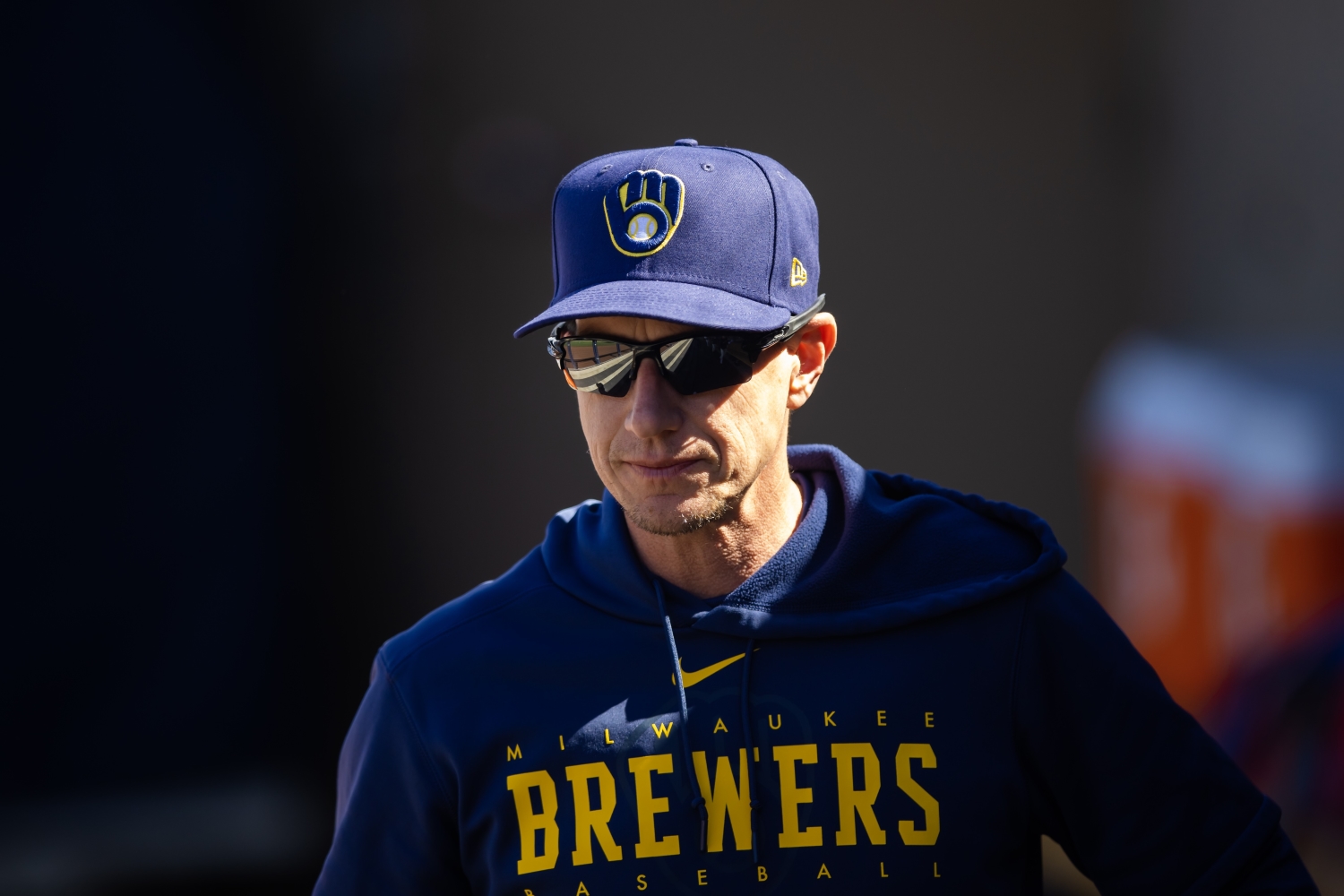 The timing of this injury is less than ideal for the Brewers, but with at-bats to spread among Jackson Chourio, Joey Wiemer, and Sal Frelick (in addition to their regular outfielders) this spring, they won't feel the sting as deeply as Tyrone Taylor himself. For him, the timing is downright cruel. He was penciled in as a regular for this team, flexing between center and right field, and his hot September was supported by some mechanical changes that augured well for his 2023 campaign. Now, he has to reset himself physically; hope his elbow recovers smoothly from here (no guarantee, that); and try to carry over those improvements once he re-joins the team. In the meantime, let's dig into the question of whom the Brewers will take north with them, now that Taylor can be crossed off the list of candidates. There are 13 position-player spots available come Opening Day, and a fistful of them are locked down already. Catchers William Contreras Victor Caratini Infielders Rowdy Tellez Luis Urias Willy Adames Brian Anderson Outfielders Christian Yelich Garrett Mitchell Jesse Winker That's nine guys, already. As we've highlighted over the last couple of weeks, though, there are plenty of open battles for the remaining spots. On the infield, there's Abraham Toro, Brice Turang, Mike Brosseau, Keston Hiura, and Luke Voit. In the outfield, there are prospects Wiemer and Frelick, plus Tyler Naquin. Those seven were in an even tighter battle when we all assumed Taylor would be taking up one outfield slot, but having just four roster spots for the group of them is a sufficient squeeze to make things interesting. First, let's tackle Turang. So far this spring, Urías has gotten most of his reps at second base, and Turang has played a lot of short. That would tend to indicate that the team envisions sending Turang back to Nashville for some seasoning come April. Even if that hadn't been the case, though, the Taylor injury would nudge them in that direction. The most natural and likely replacements for Taylor in terms of outfield defense are Naquin and Frelick, both of whom are left-handed hitters. Yelich, Mitchell, and Winker are lefties. Tellez is a lefty, and Caratini is a switch-hitter. Assuming one of Naquin or Frelick slides into the picture now, the team needs a right-handed bat more than another left-handed one. Anderson will probably slide to right field much more often than previously planned, in the short term, so third base now opens up somewhat. With Urías looking awfully good at second thus far, though, and with Toro more natural at the hot corner than Turang, it seems more likely that Toro gets the newly available regular gig. At that point, things start to fall into place better. Mike Brosseau's right-handed bat is more valuable than ever, and his defensive versatility and comfort in a backup role make him an easy call over stashing Turang on the bench. Spring looks could still determine the winner of the battled between Frelick and Naquin for the final outfield gig, Neither is on the 40-man roster, so there's no advantage there. Neither is a good defensive center fielder, which is where Wiemer could theoretically assert himself. On balance, though, based on his experience in center in the majors and his demonstrated ability to hit righties for power, I'm betting on Naquin getting the nod. Add these three to the previous nine, then. Infielders Mike Brosseau Abraham Toro Outfielders Tyler Naquin That only leaves one spot to assign, and the remaining candidates are Frelick, Voit, and Wiemer. The loss of Taylor's glove makes it tempting to carry one of the rookies and juggle playing time in the outfield and at DH as needed, but it's likely that Voit has an opt-out in his minor-league deal. At the moment, Voit seems like the best fit. He can provide some of the right-handed punch the team has been lacking, and he can complement both Tellez and Winker at first base and DH. None of that is set in stone, of course. The Brewers have an unusual amount of uncertainty for a team of their caliber this spring, and Taylor's injury has only raised that level.
- 15 comments
-
- 1
-
-
- tyrone taylor
- brice turang
- (and 3 more)
