


Matthew Trueblood
-
Posts
1,962 -
Joined
-
Last visited
-
Days Won
10
Content Type
Profiles
Forums
Blogs
Events
News
2026 Milwaukee Brewers Top Prospects Ranking
Milwaukee Brewers Videos
2022 Milwaukee Brewers Draft Picks
Milwaukee Brewers Free Agent & Trade Rumors, Notes, & Tidbits
Guides & Resources
2023 Milwaukee Brewers Draft Picks
2024 Milwaukee Brewers Draft Picks
The Milwaukee Brewers Players Project
2025 Milwaukee Brewers Draft Pick Tracker
2026 Milwaukee Brewers Draft Tracker: Picks & Bonuses
Store
Downloads
Gallery
Everything posted by Matthew Trueblood
-
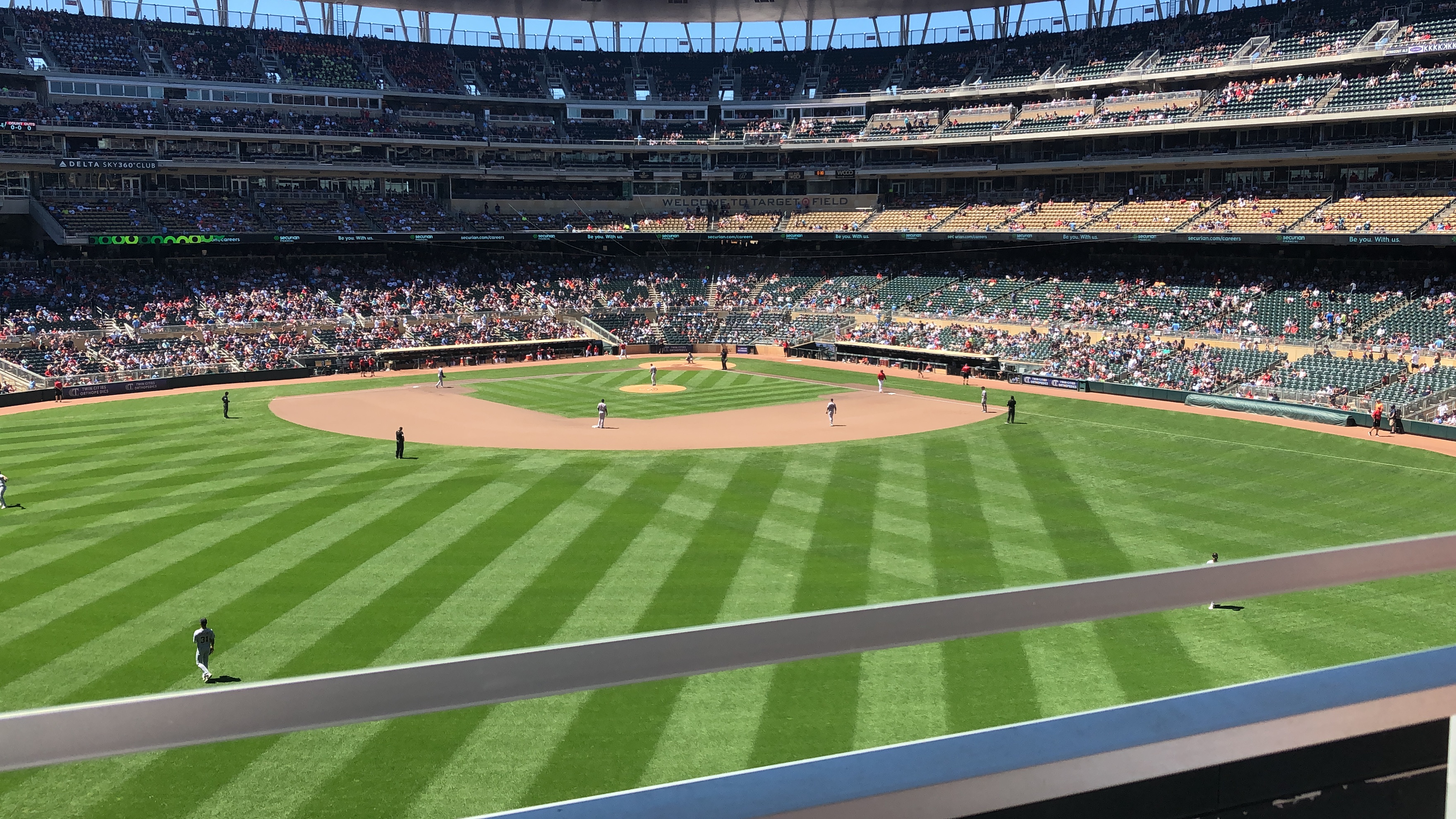
Here's something fun for a Saturday. The Brewers are on the road coming out of the All-Star break, with series against the Reds and Phillies. Care to play a little bit of Immaculate Grid? Image courtesy of Immaculate Grid If you're reading these words, your life has almost surely been touched already by Immaculate Grid, the collision of Wordle and Remember Some Guys that took Baseball Twitter by storm and has recently been bought by Baseball Reference. In case you've been under a rock, though, the game goes thusly: Players receive a 3x3 grid with teams and/or career or seasonal statistical achievements lining each side, and the challenge is to fill in the grid with players who fit both criteria for that square. We can do a different, but related, game right here, though. There have been 12 players who have played for the Brewers and each of their opponents on this road trip. It's like the Grid has become a Cube! How many of the 12 can you name? Below, I'll place the answers, plus some quick info on each player--including other teams for whom they played, for your future Grid-filling uses. I'm guessing a couple of those six would have stumped you. Here's the second half of the group, led off by a couple of guys you probably could guess, given some time to sit with it. There you have it. The Dirty Dozen, we could call these guys. I just made that up. What do you think? View full article
-
Want to Have Some Immaculate Grid-Style Brewers Fun?
Matthew Trueblood posted an article in Just For Fun
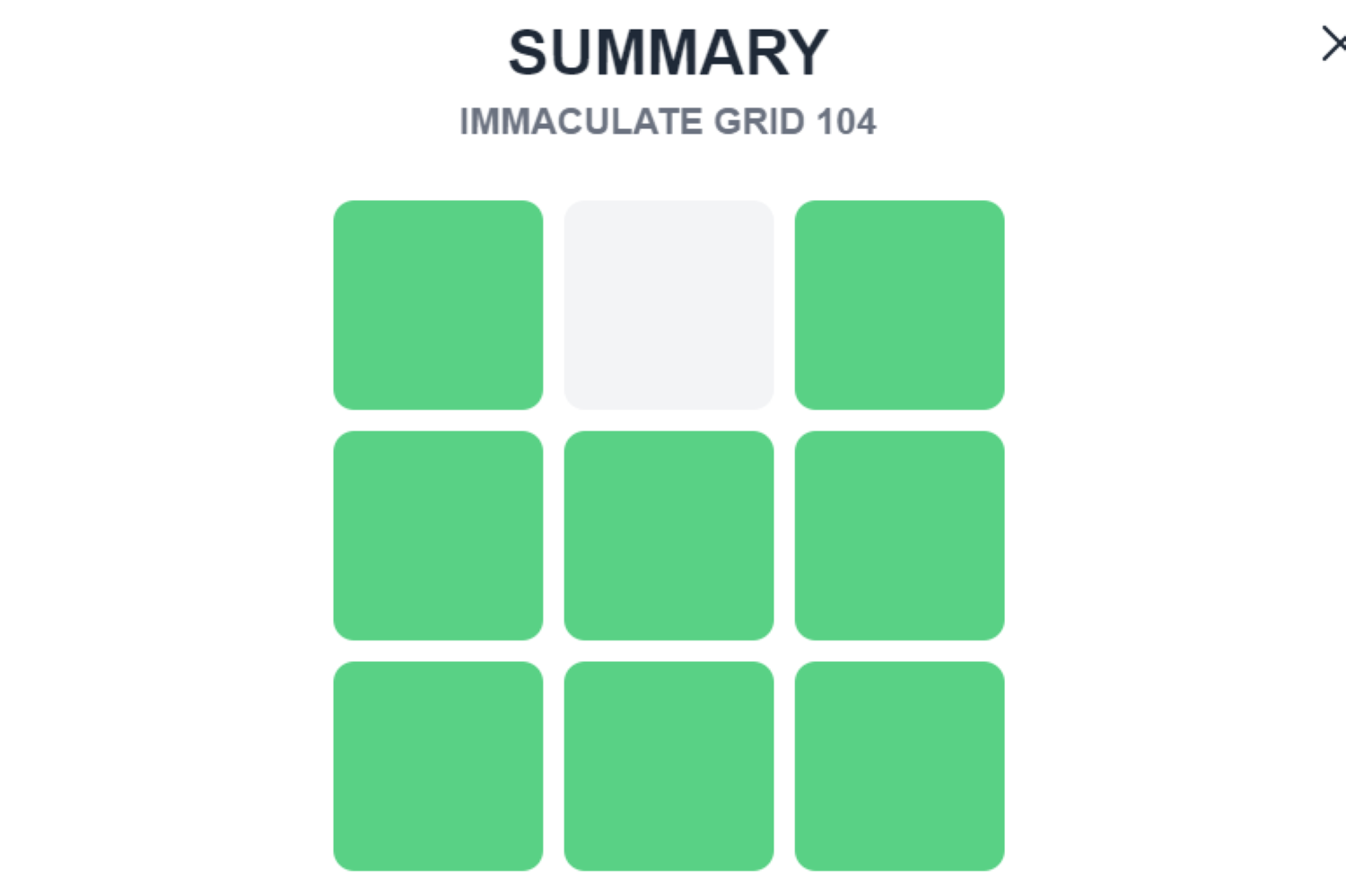 If you're reading these words, your life has almost surely been touched already by Immaculate Grid, the collision of Wordle and Remember Some Guys that took Baseball Twitter by storm and has recently been bought by Baseball Reference. In case you've been under a rock, though, the game goes thusly: Players receive a 3x3 grid with teams and/or career or seasonal statistical achievements lining each side, and the challenge is to fill in the grid with players who fit both criteria for that square. We can do a different, but related, game right here, though. There have been 12 players who have played for the Brewers and each of their opponents on this road trip. It's like the Grid has become a Cube! How many of the 12 can you name? Below, I'll place the answers, plus some quick info on each player--including other teams for whom they played, for your future Grid-filling uses. I'm guessing a couple of those six would have stumped you. Here's the second half of the group, led off by a couple of guys you probably could guess, given some time to sit with it. There you have it. The Dirty Dozen, we could call these guys. I just made that up. What do you think?
 -
As the Brewers emerge from the All-Star break, they have a tough schedule and an urgent need to pass the Reds and reclaim first place in the NL Central. It's been assumed that they would compress their starting rotation back to five pitchers after the break, but is that true? What's the best way for them to structure their pitching staff for the next few weeks? Image courtesy of © Charles LeClaire-USA TODAY Sports The number of variables involved in an effort to decide whether to use five or six in the rotation can be mind-boggling. Obviously, it's not ideal to lose a start or two by Corbin Burnes, who seems to be rounding back into Cy Young form just in time for the stretch run. On the other hand, keeping starters fresher both decreases the likelihood that they will get hurt and increases their ability to work a bit deeper into games. In a vacuum, and until the next round of expansion eventually stretches pitching staffs thinner again, there's a good argument that six-man rotations are the highest use of a 13-man pitching staff in modern MLB. We don't live in a vacuum, though, and the eccentricities of any particular situation usually weigh more heavily than a guiding principle. Let's talk, then, about the particulars of the Brewers' case. Firstly, as noted, Burnes seems to be thriving on the six-man schedule. At some point in the near future, the Brewers hope to get Brandon Woodruff back, and it makes all the sense in the world to give him an extra day's rest when possible. Wade Miley's not going to magically leave the lat, oblique, and other injuries he's had over the last couple of years behind without being given sufficient rest, so the six-man schedule would benefit him, too. The big questions are: How long will it turn out to be before Woodruff actually returns? In the meantime, can the Brewers really afford to give half their starts to Adrian Houser, Colin Rea, and Julio Teheran? Last week, Teheran was available out of the bullpen just before the break. He could be the clearest candidate for eviction from the rotation, since he's allowed 13 runs in 11 2/3 innings over his last two starts. On the other hand, he did get the team at least 17 outs in each of those contests. In fact, he's gone at least five innings in all eight of his starts as a member of the Crew. If you believe he's been figured out again by the league after these two discouraging outings, it makes sense to move on from him, but he probably isn't of much use in the bullpen. The argument for keeping him there is that he eats innings, and that in six of his eight outings, he's done so without allowing more than two runs. Rea would seem to be the other candidate to get the boot. Since he returned to the rotation May 14, Rea has made 10 starts, with a 4.58 ERA. He's striking out fewer than 20 percent of opposing batters. He's also walking very few batters and keeping the ball in the park, though, and although he can't claim all the credit for it, the Brewers are 7-3 in those 10 starts. Rea has kept the team in the game in all but one or two outings this year, though his pitch count rises and he is forced to depart early more often than Teheran. Before the season began, the plan was to have Houser working in relief. Between his own injuries and those suffered by some of the starters, he's ended up making nine starts, including two since his return from a bullpen assignment in late June. Those starts were superficially encouraging, with three runs allowed in 11 innings, but he put 18 runners on base and allowed two homers during those frames, so he probably got a bit lucky with the top-line results. Rea could be optioned to Triple-A Nashville, if needed, but the team has to keep both Teheran and Houser on their roster unless and until they're willing to lose them. Thus, it's Rea who's most likely to lose his place whenever Woodruff returns. Before then, however, it would be Houser who makes most sense to relegate to relief work. He's done it more effectively than either of the others, and his stuff has the best chance to play up in that role. It's a bit of an unsatisfying answer to the question of "Five or six?", but the answer to the Brewers' rotation dilemma is probably to use five and a half starters, and to flex the rotation as needed. After this series in Cincinnati, they have a day off before playing three games in Philadelphia. Using a strict six-man rotation, Burnes wouldn't pitch again until next Friday, at home against Atlanta. It's not the worst idea in the world to throw one's ace out there against that gauntlet of a lineup, but going a week between Burnes starts at this stage of the season seems excessive. The best thing could be to have Houser available in relief for the short term. Beginning with the Philadelphia series, though, the Crew does play nine straight games, and 22 games in 23 days. Even if Woodruff begins a rehab stint very soon, it's unlikely that he'll be back before the midpoint of that summer slog. It's more likely that he'll return only near the tail end of it, and thus, keeping all six of the incumbents starting (or starting-ready) makes sense for now. Houser has shown the versatility to go to the bullpen and return to the rotation without breaking down in either role. For now, cutting loose Teheran or farming out Rea would be premature, and the team should keep all six of their starters in a rough rotation. View full article
- 3 replies
-
- 1
-

-
- corbin burnes
- wade miley
- (and 3 more)
-
Will the Brewers Stick With a Six-Man Rotation? Should They?
Matthew Trueblood posted an article in Brewers
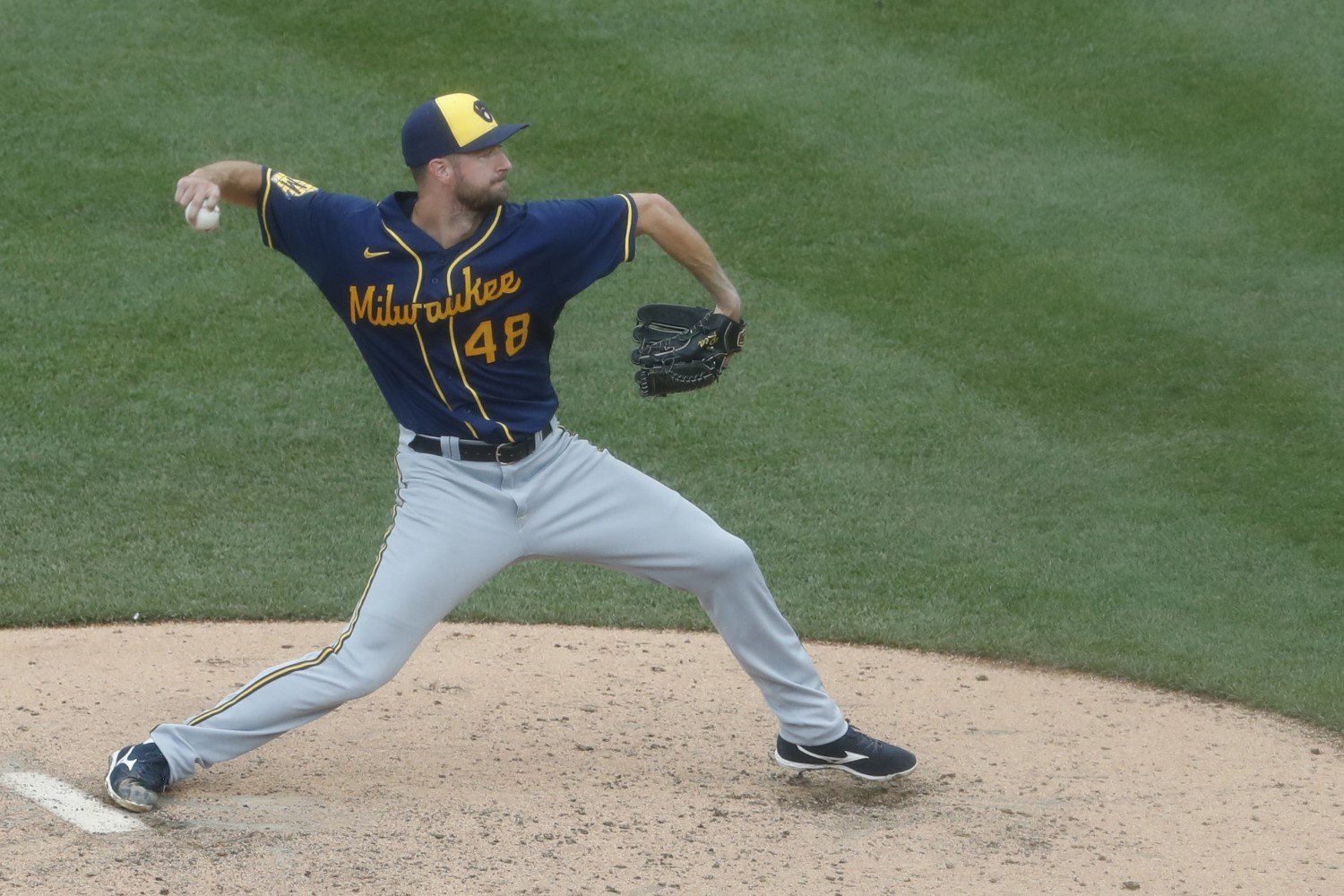 The number of variables involved in an effort to decide whether to use five or six in the rotation can be mind-boggling. Obviously, it's not ideal to lose a start or two by Corbin Burnes, who seems to be rounding back into Cy Young form just in time for the stretch run. On the other hand, keeping starters fresher both decreases the likelihood that they will get hurt and increases their ability to work a bit deeper into games. In a vacuum, and until the next round of expansion eventually stretches pitching staffs thinner again, there's a good argument that six-man rotations are the highest use of a 13-man pitching staff in modern MLB. We don't live in a vacuum, though, and the eccentricities of any particular situation usually weigh more heavily than a guiding principle. Let's talk, then, about the particulars of the Brewers' case. Firstly, as noted, Burnes seems to be thriving on the six-man schedule. At some point in the near future, the Brewers hope to get Brandon Woodruff back, and it makes all the sense in the world to give him an extra day's rest when possible. Wade Miley's not going to magically leave the lat, oblique, and other injuries he's had over the last couple of years behind without being given sufficient rest, so the six-man schedule would benefit him, too. The big questions are: How long will it turn out to be before Woodruff actually returns? In the meantime, can the Brewers really afford to give half their starts to Adrian Houser, Colin Rea, and Julio Teheran? Last week, Teheran was available out of the bullpen just before the break. He could be the clearest candidate for eviction from the rotation, since he's allowed 13 runs in 11 2/3 innings over his last two starts. On the other hand, he did get the team at least 17 outs in each of those contests. In fact, he's gone at least five innings in all eight of his starts as a member of the Crew. If you believe he's been figured out again by the league after these two discouraging outings, it makes sense to move on from him, but he probably isn't of much use in the bullpen. The argument for keeping him there is that he eats innings, and that in six of his eight outings, he's done so without allowing more than two runs. Rea would seem to be the other candidate to get the boot. Since he returned to the rotation May 14, Rea has made 10 starts, with a 4.58 ERA. He's striking out fewer than 20 percent of opposing batters. He's also walking very few batters and keeping the ball in the park, though, and although he can't claim all the credit for it, the Brewers are 7-3 in those 10 starts. Rea has kept the team in the game in all but one or two outings this year, though his pitch count rises and he is forced to depart early more often than Teheran. Before the season began, the plan was to have Houser working in relief. Between his own injuries and those suffered by some of the starters, he's ended up making nine starts, including two since his return from a bullpen assignment in late June. Those starts were superficially encouraging, with three runs allowed in 11 innings, but he put 18 runners on base and allowed two homers during those frames, so he probably got a bit lucky with the top-line results. Rea could be optioned to Triple-A Nashville, if needed, but the team has to keep both Teheran and Houser on their roster unless and until they're willing to lose them. Thus, it's Rea who's most likely to lose his place whenever Woodruff returns. Before then, however, it would be Houser who makes most sense to relegate to relief work. He's done it more effectively than either of the others, and his stuff has the best chance to play up in that role. It's a bit of an unsatisfying answer to the question of "Five or six?", but the answer to the Brewers' rotation dilemma is probably to use five and a half starters, and to flex the rotation as needed. After this series in Cincinnati, they have a day off before playing three games in Philadelphia. Using a strict six-man rotation, Burnes wouldn't pitch again until next Friday, at home against Atlanta. It's not the worst idea in the world to throw one's ace out there against that gauntlet of a lineup, but going a week between Burnes starts at this stage of the season seems excessive. The best thing could be to have Houser available in relief for the short term. Beginning with the Philadelphia series, though, the Crew does play nine straight games, and 22 games in 23 days. Even if Woodruff begins a rehab stint very soon, it's unlikely that he'll be back before the midpoint of that summer slog. It's more likely that he'll return only near the tail end of it, and thus, keeping all six of the incumbents starting (or starting-ready) makes sense for now. Houser has shown the versatility to go to the bullpen and return to the rotation without breaking down in either role. For now, cutting loose Teheran or farming out Rea would be premature, and the team should keep all six of their starters in a rough rotation.
 -
In baseball, it's rare for an individual player to take over a game, or to become (of necessity) the focus of an opposing team's gameplan. It's just not in the nature of the sport for anyone to consistently determine games on their own. As Reds rookie Elly De La Cruz tests that tenet, though, the Brewers have to treat him that way--because they still have seven games left with the division leaders this month. Image courtesy of © Michael McLoone-USA TODAY Sports It was breathtaking to watch Elly De La Cruz break open a taut, seesawing game Saturday afternoon--even if, for Brewers fans, that lost breath was by way of a gut punch. It all began when, with a runner on third and an 0-2 count against him, De La Cruz flared the go-ahead single into left field. The ball wasn't hit hard, but De La Cruz managed to get enough of it to dump it in front of Christian Yelich. It's notable, though, that the ball De La Cruz guided the other way was a hanging slider from Elvis Peguero--and a second one in a row, at that. We'll get back to the significance of that fact in a moment, but we have to talk about what happened next. De La Cruz stole second base with relative ease, but then, despite there already being two outs, he also stole third. It was the kind of rookie exuberance that borders on counterproductivity, because it gains the team relatively little, but risks ending the inning. In this case, though, Brian Anderson didn't even break to cover the bag, so William Contreras didn't even throw it down there. De La Cruz had his high-risk, low-reward steal at no real cost. Then, he showed what the real reward potential of that steal was, by taking off for the plate with a walking lead when Peguero turned his back. He stole home, electrifying his bench and the scattered Reds fans in attendance, and the game was virtually over at that moment. Stealing second was a perfectly ordinary play, made impressive only by his speed and length. It had the flavor of Lou Brock, who always saw stealing bases as an act belonging as much to the category of power as to small ball. Taking off for third was more of a Rickey Henderson move; it was brash and unapologetic. Seizing the momentum and the frustration of the moment for the Brewers and swiping home, though, was a page right out of Javier Baez's book. Several times over the last half-decade, Baez had come to Milwaukee with the Cubs and performed one of his infuriating baserunning magic tricks, with the Brewers permitting that by making bad mistakes or having momentary lapses of concentration. The most important lesson of Saturday's sequence is one the Crew had learned with regard to Baez, by the time he departed the division: you can't even let De La Cruz reach base, because if you do, problems ensue. Including Sunday's rubber game for the weekend series, the Brewers play the Reds seven more times before the end of this month. They open play after the All-Star break with a series at Great American Ballpark in Cincinnati, and then the Reds come back to Miller Park the week of July 24. The Brewers can't let De La Cruz break them down and beat them in those games, and that means getting him out at the plate. Happily, on that front, there's some good news. No one said it would be easy, of course. In his young big-league career, De La Cruz is hitting .328/.366/.533. The Brewers' task is to be the team against whom he endures a sustained slump, and based on his swings and his approach, here's how they can do it. The first challenge with De La Cruz is that he's a switch-hitter, so you have to know him as both a right-handed batter and a left-handed one to make much headway. What works for lefties against him will not necessarily work for righties. It's a challenge for switch-hitters themselves to keep two sets of swings and visual cues together, but to whatever extent they can do so, they get an advantage on their first couple of turns through the league, because pitchers will find their holes and weaknesses more slowly due to the slower exposure from each side. Let's talk about De La Cruz as a lefty batter, facing righty pitching, first. As you'd expect, he's taken more of his plate appearances from that side so far, so the samples of both numbers and video are a bit bigger. We have a fuller picture of what works and what doesn't. One thing to do with him from this side, to be sure, is to elevate the ball, but get it out away from him. That's counterintuitive. Most hitters prefer the ball up and away, or down and in. De La Cruz is so quick (and his swing, as we'll see soon, is so unusual) that those rules just don't apply. Within the zone, the only place to reliably get whiffs against him is on the outer edge, and at or above the belt. Why is that the case? It's thanks to a swing full of violence and danger, but also of movement, and one geared entirely toward pulling the ball. Here's an illustrative swing. On a high pitch that doesn't even touch 90 miles per hour, De La Cruz gets beaten. Watch his whole body throughout the swing. EDLC Can Be Beat Upstairs v R.mp4 Note the length of his stride. That's always one sign that a hitter wants to get a low pitch to drive. Because his hands (like the rest of his body) are so fast, he's able to use big, exaggerated movements that generate a lot of power, but if a pitcher can locate at the top of the zone, he's in trouble. His swing path and plane just don't align well with that pitch. Notice, too, the angles he creates. With such a slender frame, he's nonetheless generated some frightening power already. He does it by stretching the rubber band of his musculature exceptionally far, but in so doing, he does also leave himself lunging and lining up only to pull the ball with authority. Watch his back foot move away from home plate as he transfers his weight to the front foot. It's not an unheard-of move. Fernando Tatis, Jr. has sometimes done the same thing. It's about staying on the ball a bit longer, while still getting the bat head out and hitting the ball well in front of home plate. As a result of all that, though, De La Cruz can also be gotten out with well-located stuff low and away. In short: force him to use the opposite field, and he'll rarely hurt you. EDLC Whiffs Because Of Mvmt v R.mp4 Defensively, it's tough to set up for De La Cruz. His speed is an active and lethal element of his game, even before he safely reaches base. Routine ground balls can become infield hits if teams aren't sufficiently careful, or if an infielder just doesn't field the ball cleanly. However, there's a correct way to defend him, especially from the left side, coming into focus. Firstly, you have to fearlessly shade him to pull on the infield. He'll occasionally mishit and poke the ball down toward third base, but that's the price of doing business. The first baseman needs to be right on the line, because De La Cruz hits a lot of sharp grounders there, and if the ball gets into the corner, it's a triple every time. Besides, you want the first baseman to be sure of beating De La Cruz to the base every time, at the very least. The second baseman needs to shade toward the hole, too, just to cover the extra step's worth of range the first baseman gives up. De La Cruz often hits the ball right up the middle, too, so the shortstop needs to be pulled close to the bag there. The third baseman slides over and plays shallow, cutting off the ball hit toward the traditional shortstop spot as best he can, and the rest is up to God. In the outfield, a bold stratagem is in order: the right field should play pretty shallow. That, like the right way to attack De La Cruz pitching-wise, is wildly counterintuitive, given all the power he's shown, but that very power is the reason for it. If he pulls the ball in the air, it has a great chance to be a home run, anyway. The right fielder might as well come in and try to cut off ground balls that get through as soon as possible, so that De La Cruz can't stretch routine singles into doubles. The center fielder can shade toward right-center, because the left fielder will also shade toward center, so the ball hit deep to the gap in right-center will belong to the center fielder, anyway. The good news is that De La Cruz is, so far, a pretty extreme ground ball hitter. That means that his speed is often in play, but if the Brewers use what we can see in terms of how to tick up his strikeout rate (just under 30 percent, so far) and align their defense correctly, they can minimize damage against him reasonably well. From the right side, against southpaws like Sunday starter Wade Miley, De La Cruz is a slightly different hitter, but with many of the same vulnerabilities. He's still trying to pull everything, so the plan needs to be to frustrate that approach. The big thing from that side is that De La Cruz is not only looking for particular pitches, but guessing on them. His swing is ever-so-slightly stiffer from the right side, which means that he has to sit on something and hope the timing is right. When he guesses wrong, he can be easily tied up or wrong-footed. EDLC Tied Up Because Guessing v L.mp4 As many hitters with that type of approach do, De La Cruz hits a lot of grounders from the right side, too. Because of his signature footwork in the box, he also doesn't get an especially fast start out of the box from that side, so his speed can be neutralized a bit, as long as the infield is ready and sure-handed. It'll be important to play Brice Turang as close to second base as the rules permit against De La Cruz, because he'll need to be able to field the ball going away from first base and still get enough on a throw to beat the speedy runner. The other thing to do against De La Cruz, from either side, is to expand the zone often. He's not Baez, in that he's up there with an idea of the zone and will take walks when they're given to him, but he's far from being truly patient up there. On the contrary, he's chased pitches outside the zone more than 35 percent of the time this year. As most athletic freaks can, he can still hurt a pitcher on a pitch outside the zone, but well-executed stuff that looks like a strike but ends up as a ball will work most of the time. This might seem like an overlong post about a Reds hitter on a Brewers site. Worse, the advice offered here ultimately boils down to execution. After all, the hit that touched off De La Cruz's mad dash around the bases Saturday came on a really bad slider, left in the heart of the zone on 0-2. That he only fought it off the other way is a reminder that he's not, in a traditional way, a deadly force at the plate. Still, there's no hitter in baseball against whom back-to-back hangers in pitcher-friendly counts are going to be very successful. Nonetheless, there's value in this study, because it's so imperative that the Brewers stop De La Cruz from wreaking havoc in these seven remaining games. Yesterday's loss pushed the Brewers back to two games behind Cincinnati. These head-to-head games are huge. Yesterday, De La Cruz's plate appearances had an average Championship Leverage Index (an estimate of the relative importance of a plate appearance to a team's chances of winning the World Series, scaled such that 1.0 is average and 2.0 is twice as important) of 2.13, That figure could well rise even further in the next several contests. The Brewers need to execute well to get him out and win these games, but they also need a thoughtful and sound plan to execute well. View full article
-
- 1
-

-
- elly de la cruz
- wade miley
- (and 2 more)
-
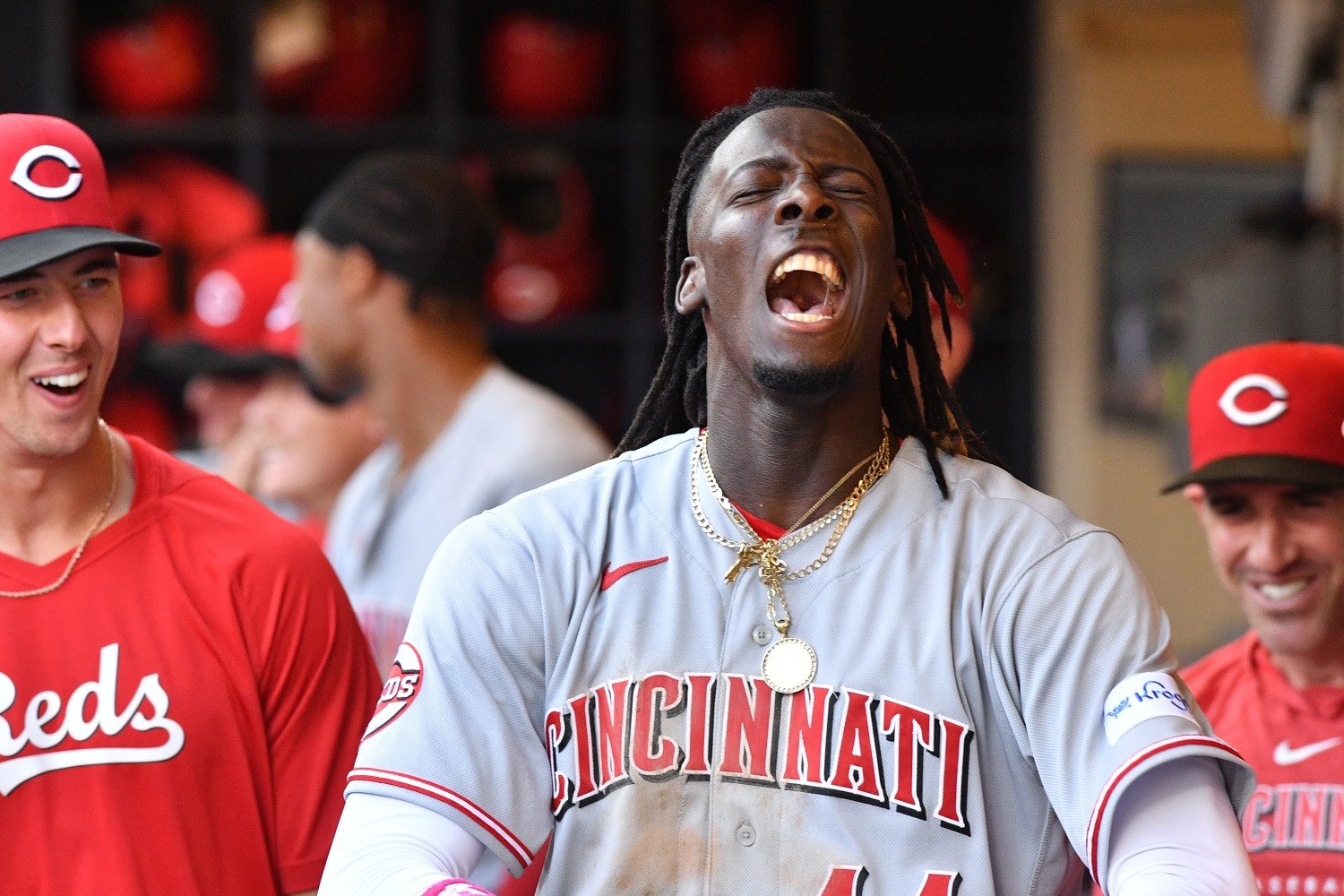 It was breathtaking to watch Elly De La Cruz break open a taut, seesawing game Saturday afternoon--even if, for Brewers fans, that lost breath was by way of a gut punch. It all began when, with a runner on third and an 0-2 count against him, De La Cruz flared the go-ahead single into left field. The ball wasn't hit hard, but De La Cruz managed to get enough of it to dump it in front of Christian Yelich. It's notable, though, that the ball De La Cruz guided the other way was a hanging slider from Elvis Peguero--and a second one in a row, at that. We'll get back to the significance of that fact in a moment, but we have to talk about what happened next. De La Cruz stole second base with relative ease, but then, despite there already being two outs, he also stole third. It was the kind of rookie exuberance that borders on counterproductivity, because it gains the team relatively little, but risks ending the inning. In this case, though, Brian Anderson didn't even break to cover the bag, so William Contreras didn't even throw it down there. De La Cruz had his high-risk, low-reward steal at no real cost. Then, he showed what the real reward potential of that steal was, by taking off for the plate with a walking lead when Peguero turned his back. He stole home, electrifying his bench and the scattered Reds fans in attendance, and the game was virtually over at that moment. Stealing second was a perfectly ordinary play, made impressive only by his speed and length. It had the flavor of Lou Brock, who always saw stealing bases as an act belonging as much to the category of power as to small ball. Taking off for third was more of a Rickey Henderson move; it was brash and unapologetic. Seizing the momentum and the frustration of the moment for the Brewers and swiping home, though, was a page right out of Javier Baez's book. Several times over the last half-decade, Baez had come to Milwaukee with the Cubs and performed one of his infuriating baserunning magic tricks, with the Brewers permitting that by making bad mistakes or having momentary lapses of concentration. The most important lesson of Saturday's sequence is one the Crew had learned with regard to Baez, by the time he departed the division: you can't even let De La Cruz reach base, because if you do, problems ensue. Including Sunday's rubber game for the weekend series, the Brewers play the Reds seven more times before the end of this month. They open play after the All-Star break with a series at Great American Ballpark in Cincinnati, and then the Reds come back to Miller Park the week of July 24. The Brewers can't let De La Cruz break them down and beat them in those games, and that means getting him out at the plate. Happily, on that front, there's some good news. No one said it would be easy, of course. In his young big-league career, De La Cruz is hitting .328/.366/.533. The Brewers' task is to be the team against whom he endures a sustained slump, and based on his swings and his approach, here's how they can do it. The first challenge with De La Cruz is that he's a switch-hitter, so you have to know him as both a right-handed batter and a left-handed one to make much headway. What works for lefties against him will not necessarily work for righties. It's a challenge for switch-hitters themselves to keep two sets of swings and visual cues together, but to whatever extent they can do so, they get an advantage on their first couple of turns through the league, because pitchers will find their holes and weaknesses more slowly due to the slower exposure from each side. Let's talk about De La Cruz as a lefty batter, facing righty pitching, first. As you'd expect, he's taken more of his plate appearances from that side so far, so the samples of both numbers and video are a bit bigger. We have a fuller picture of what works and what doesn't. One thing to do with him from this side, to be sure, is to elevate the ball, but get it out away from him. That's counterintuitive. Most hitters prefer the ball up and away, or down and in. De La Cruz is so quick (and his swing, as we'll see soon, is so unusual) that those rules just don't apply. Within the zone, the only place to reliably get whiffs against him is on the outer edge, and at or above the belt. Why is that the case? It's thanks to a swing full of violence and danger, but also of movement, and one geared entirely toward pulling the ball. Here's an illustrative swing. On a high pitch that doesn't even touch 90 miles per hour, De La Cruz gets beaten. Watch his whole body throughout the swing. EDLC Can Be Beat Upstairs v R.mp4 Note the length of his stride. That's always one sign that a hitter wants to get a low pitch to drive. Because his hands (like the rest of his body) are so fast, he's able to use big, exaggerated movements that generate a lot of power, but if a pitcher can locate at the top of the zone, he's in trouble. His swing path and plane just don't align well with that pitch. Notice, too, the angles he creates. With such a slender frame, he's nonetheless generated some frightening power already. He does it by stretching the rubber band of his musculature exceptionally far, but in so doing, he does also leave himself lunging and lining up only to pull the ball with authority. Watch his back foot move away from home plate as he transfers his weight to the front foot. It's not an unheard-of move. Fernando Tatis, Jr. has sometimes done the same thing. It's about staying on the ball a bit longer, while still getting the bat head out and hitting the ball well in front of home plate. As a result of all that, though, De La Cruz can also be gotten out with well-located stuff low and away. In short: force him to use the opposite field, and he'll rarely hurt you. EDLC Whiffs Because Of Mvmt v R.mp4 Defensively, it's tough to set up for De La Cruz. His speed is an active and lethal element of his game, even before he safely reaches base. Routine ground balls can become infield hits if teams aren't sufficiently careful, or if an infielder just doesn't field the ball cleanly. However, there's a correct way to defend him, especially from the left side, coming into focus. Firstly, you have to fearlessly shade him to pull on the infield. He'll occasionally mishit and poke the ball down toward third base, but that's the price of doing business. The first baseman needs to be right on the line, because De La Cruz hits a lot of sharp grounders there, and if the ball gets into the corner, it's a triple every time. Besides, you want the first baseman to be sure of beating De La Cruz to the base every time, at the very least. The second baseman needs to shade toward the hole, too, just to cover the extra step's worth of range the first baseman gives up. De La Cruz often hits the ball right up the middle, too, so the shortstop needs to be pulled close to the bag there. The third baseman slides over and plays shallow, cutting off the ball hit toward the traditional shortstop spot as best he can, and the rest is up to God. In the outfield, a bold stratagem is in order: the right field should play pretty shallow. That, like the right way to attack De La Cruz pitching-wise, is wildly counterintuitive, given all the power he's shown, but that very power is the reason for it. If he pulls the ball in the air, it has a great chance to be a home run, anyway. The right fielder might as well come in and try to cut off ground balls that get through as soon as possible, so that De La Cruz can't stretch routine singles into doubles. The center fielder can shade toward right-center, because the left fielder will also shade toward center, so the ball hit deep to the gap in right-center will belong to the center fielder, anyway. The good news is that De La Cruz is, so far, a pretty extreme ground ball hitter. That means that his speed is often in play, but if the Brewers use what we can see in terms of how to tick up his strikeout rate (just under 30 percent, so far) and align their defense correctly, they can minimize damage against him reasonably well. From the right side, against southpaws like Sunday starter Wade Miley, De La Cruz is a slightly different hitter, but with many of the same vulnerabilities. He's still trying to pull everything, so the plan needs to be to frustrate that approach. The big thing from that side is that De La Cruz is not only looking for particular pitches, but guessing on them. His swing is ever-so-slightly stiffer from the right side, which means that he has to sit on something and hope the timing is right. When he guesses wrong, he can be easily tied up or wrong-footed. EDLC Tied Up Because Guessing v L.mp4 As many hitters with that type of approach do, De La Cruz hits a lot of grounders from the right side, too. Because of his signature footwork in the box, he also doesn't get an especially fast start out of the box from that side, so his speed can be neutralized a bit, as long as the infield is ready and sure-handed. It'll be important to play Brice Turang as close to second base as the rules permit against De La Cruz, because he'll need to be able to field the ball going away from first base and still get enough on a throw to beat the speedy runner. The other thing to do against De La Cruz, from either side, is to expand the zone often. He's not Baez, in that he's up there with an idea of the zone and will take walks when they're given to him, but he's far from being truly patient up there. On the contrary, he's chased pitches outside the zone more than 35 percent of the time this year. As most athletic freaks can, he can still hurt a pitcher on a pitch outside the zone, but well-executed stuff that looks like a strike but ends up as a ball will work most of the time. This might seem like an overlong post about a Reds hitter on a Brewers site. Worse, the advice offered here ultimately boils down to execution. After all, the hit that touched off De La Cruz's mad dash around the bases Saturday came on a really bad slider, left in the heart of the zone on 0-2. That he only fought it off the other way is a reminder that he's not, in a traditional way, a deadly force at the plate. Still, there's no hitter in baseball against whom back-to-back hangers in pitcher-friendly counts are going to be very successful. Nonetheless, there's value in this study, because it's so imperative that the Brewers stop De La Cruz from wreaking havoc in these seven remaining games. Yesterday's loss pushed the Brewers back to two games behind Cincinnati. These head-to-head games are huge. Yesterday, De La Cruz's plate appearances had an average Championship Leverage Index (an estimate of the relative importance of a plate appearance to a team's chances of winning the World Series, scaled such that 1.0 is average and 2.0 is twice as important) of 2.13, That figure could well rise even further in the next several contests. The Brewers need to execute well to get him out and win these games, but they also need a thoughtful and sound plan to execute well.
 -
Four-game series of as much intensity as the one the Brewers just played against the visiting Cubs are rare. They can swing seasons and lodge themselves in the memories of fans of each side for years. The Crew pulled out a split, though, making it less likely that this particular one will be especially memorable. That's a good thing. Milwaukee only needed a split in those four games. Now, they need a series win, with the first-place Reds coming to town. Image courtesy of © Kayla Wolf-USA TODAY Sports In a series crowded with comebacks and dragging, at the end, as each team struggled to find the energy to finish off the fight, the Brewers could easily have won three out of four, but they could just as easily have lost that many. Craig Counsell leaned hard on both his starters (availing himself of the team's six-man rotation, and shielding his relievers) and his bullpen. With the bullpen shortened to seven arms, the latter group will be especially weary as they enter the final weekend before the All-Star break. Still, Counsell did brilliantly, as usual. He thrives when the challenge before him is to carefully husband limited player resources, and he navigated the contests--especially Monday's comeback win--expertly. Still, the series seemed to take every ounce of energy the Brewers had. That's troubling, because the Reds don't lack energy. To the contrary, ever since Elly De La Cruz came up, that roster has been like a live wire. It will be up to Counsell (and, of course, to his charges) to be ready to answer that crackling combination of talent and vibes. These two teams play each other six straight times, with four days between the two series for the All-Star break, and then they play another series back in Milwaukee July 23-25. Coming out flat even on Friday could set an unfortunate tone for a stretch that could determine the increasingly two-team NL Central race. Offensively, things are finally looking up. I think we can stop waiting for Christian Yelich to go back to pulling home runs. It's becoming clear that, to an unusual and abundantly valuable extent, Yelich is able to look for a certain pitch (especially hard stuff low and away) and drive it to the opposite field. He's showing patience and power, and he's not missing mistakes. He will not be 2019 Yelich again, but for all intents and purposes, Yelich is back. Willy Adames has pulled out of the slump into which he sagged for such a long time through the late spring. William Contreras is looking more consistently dangerous again, too, and showing the ability to pull the ball with authority while still keeping his bat in the hitting zone a long time. The pitching side of things is trickier. The workloads borne by the team's high-leverage relievers have (inevitably) ticked up recently, as the team has gotten back into the habit of building leads that they needed to protect. Counsell will be counting on some innings from Corbin Burnes Friday night, to set them up for the rest of the series, but if he can't get them, there will be further pressure on some of the middle relievers in the group. J.C. Mejia adds some impressive stuff to that group. He gave up the lead Thursday, when he was asked to pitch the eighth inning like a seasoned setup man and ultimately gave up the game-tying home run, but two weakly hit bloop singles were what allowed Yan Gomes even to come to the plate. Mejia has an incredibly heavy sinker. It drops as much as his slider does, something you see somewhat often from sidearmers and submariners, but rarely from guys like Mejia, who has a low slot but stays tall on the mound and gives hitters a look much different from most low-slot hurlers. Mejia might need to be optioned, or even designated for assignment, though, depending on what happens and whether the Brewers think they have enough fresh and available arms. That's the phase through which the team is passing right now. They're banged-up. They're tired. They're winning games again, but it's coming at a cost. In that sense, the break is coming at the perfect time. Before they can enjoy and make use of that down time, though, there's vital business to which to attend. The Cubs were a stout opponent, but the Brewers only needed to keep them at bay, and they managed that. Now, they face a team on whom they need to make up ground, and a split is not one of the possible outcomes. This series should be a blast, but it will be a stern test, too. View full article
-
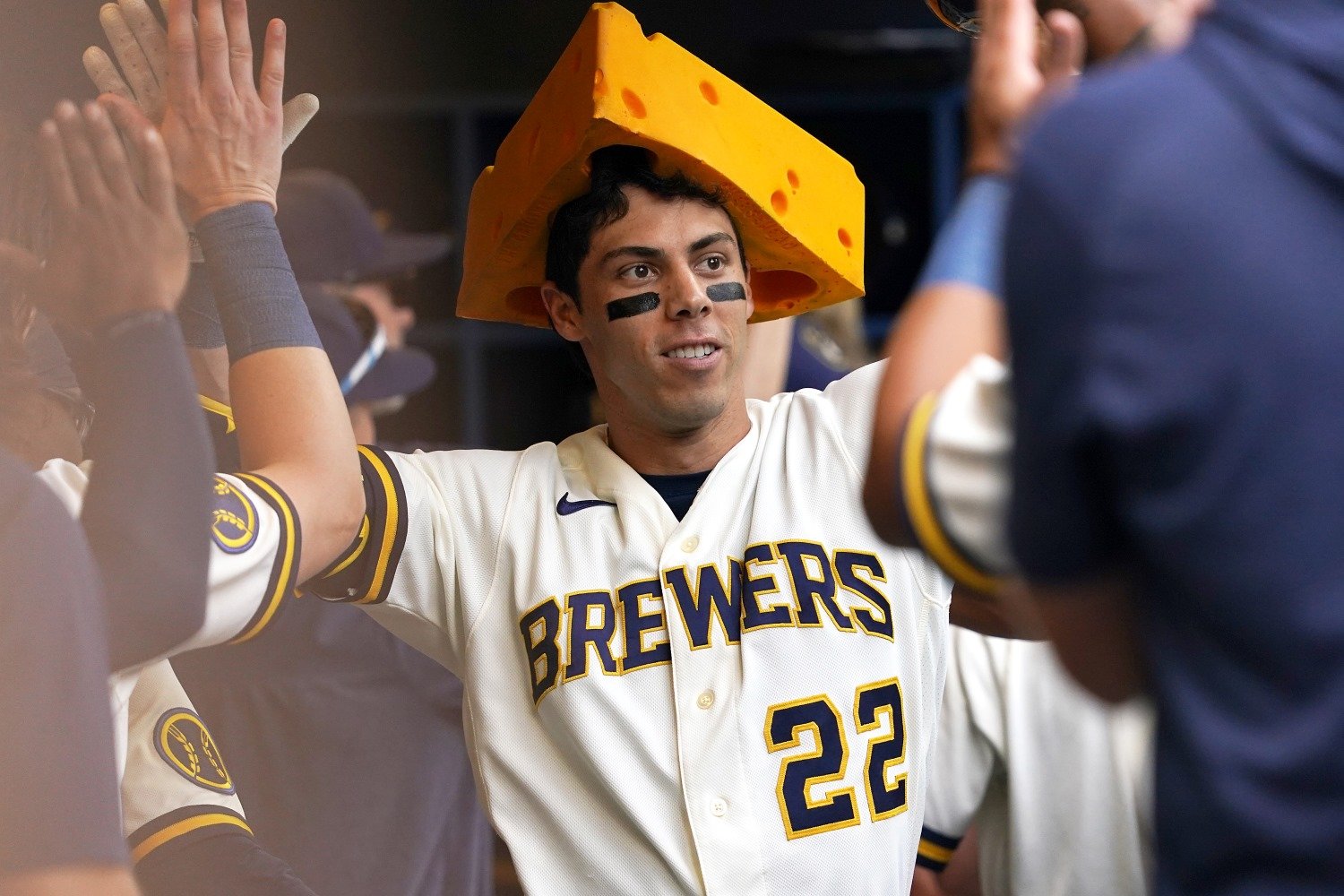 In a series crowded with comebacks and dragging, at the end, as each team struggled to find the energy to finish off the fight, the Brewers could easily have won three out of four, but they could just as easily have lost that many. Craig Counsell leaned hard on both his starters (availing himself of the team's six-man rotation, and shielding his relievers) and his bullpen. With the bullpen shortened to seven arms, the latter group will be especially weary as they enter the final weekend before the All-Star break. Still, Counsell did brilliantly, as usual. He thrives when the challenge before him is to carefully husband limited player resources, and he navigated the contests--especially Monday's comeback win--expertly. Still, the series seemed to take every ounce of energy the Brewers had. That's troubling, because the Reds don't lack energy. To the contrary, ever since Elly De La Cruz came up, that roster has been like a live wire. It will be up to Counsell (and, of course, to his charges) to be ready to answer that crackling combination of talent and vibes. These two teams play each other six straight times, with four days between the two series for the All-Star break, and then they play another series back in Milwaukee July 23-25. Coming out flat even on Friday could set an unfortunate tone for a stretch that could determine the increasingly two-team NL Central race. Offensively, things are finally looking up. I think we can stop waiting for Christian Yelich to go back to pulling home runs. It's becoming clear that, to an unusual and abundantly valuable extent, Yelich is able to look for a certain pitch (especially hard stuff low and away) and drive it to the opposite field. He's showing patience and power, and he's not missing mistakes. He will not be 2019 Yelich again, but for all intents and purposes, Yelich is back. Willy Adames has pulled out of the slump into which he sagged for such a long time through the late spring. William Contreras is looking more consistently dangerous again, too, and showing the ability to pull the ball with authority while still keeping his bat in the hitting zone a long time. The pitching side of things is trickier. The workloads borne by the team's high-leverage relievers have (inevitably) ticked up recently, as the team has gotten back into the habit of building leads that they needed to protect. Counsell will be counting on some innings from Corbin Burnes Friday night, to set them up for the rest of the series, but if he can't get them, there will be further pressure on some of the middle relievers in the group. J.C. Mejia adds some impressive stuff to that group. He gave up the lead Thursday, when he was asked to pitch the eighth inning like a seasoned setup man and ultimately gave up the game-tying home run, but two weakly hit bloop singles were what allowed Yan Gomes even to come to the plate. Mejia has an incredibly heavy sinker. It drops as much as his slider does, something you see somewhat often from sidearmers and submariners, but rarely from guys like Mejia, who has a low slot but stays tall on the mound and gives hitters a look much different from most low-slot hurlers. Mejia might need to be optioned, or even designated for assignment, though, depending on what happens and whether the Brewers think they have enough fresh and available arms. That's the phase through which the team is passing right now. They're banged-up. They're tired. They're winning games again, but it's coming at a cost. In that sense, the break is coming at the perfect time. Before they can enjoy and make use of that down time, though, there's vital business to which to attend. The Cubs were a stout opponent, but the Brewers only needed to keep them at bay, and they managed that. Now, they face a team on whom they need to make up ground, and a split is not one of the possible outcomes. This series should be a blast, but it will be a stern test, too.
 -
The Brewers are masters of details. Few teams pay as much attention to the small things, or get them right as readily. Sometimes, though, that fierce desire to gain every advantage turns counterproductive. Wednesday night's loss was a good example of that. Image courtesy of © Charles LeClaire-USA TODAY Sports The Brewers think, as they have with a few other teams this season, that the Cubs are out to steal and relay pitch locations to hitters when a runner reaches second base. That's a common concern, and far from a new one. In days blessedly now past, pitchers and catchers policed that effort by intimidating and menacing batters, runners, and opposing dugouts. As that's become increasingly taboo, they've adapted. Nowadays, catchers more often try to neutralize runners who would tip off hitters by delaying the setting of their target, or by setting a false one--a decoy. William Contreras tries hard at that particular aspect of pitcher support. He begrudges his opponents every inch of ground they gain against him and his hurlers, and he thwarts them as often as he can. Here's the problem: manipulating a target to fool runners is a subtle craft, and Contreras doesn't do subtle well. Instead, he lunges back and forth back there, wiggling and waving and opening and closing his mitt in all kinds of misleading places. Technically, he's having the desired effect. Runners can't tip a batter off with that much misdirection happening. There isn't even a code to crack, as there used to be with manual pitch calling. Opposing batters, including and especially the Cubs in the ninth inning Wednesday, can't figure out where the pitch is going to come in based on the way Contreras sets up. Unfortunately, Contreras's fidgety, paranoid style doesn't only affect opponents. Whether it's waiting until the last possible moment to set up to receive a pitch or making big, dramatic, distracting moves en route to his real spot, all that motion makes it harder for a pitcher to stay locked in on their actual target. Devin Williams was the partner and victim Wednesday night. He missed his spots several times, and while that's not unusual for pitchers with good stuff in this day and age, it's not entirely a coincidence, either. The new state of the art in pitch framing has this same problem. It encourages the catcher to drop their mitt nonchalantly as they await the ball, then move toward it and beat the ball to its spot. It's surprisingly effective, in terms of getting umpires to call strikes, but it forces the pitcher to pick out a different visual target. For some guys, that's no problem. Some pitchers have become comfortable using their backstop's shin guard or the bottom of their mask as an aiming rock. Overall, though, the trend has contributed to the tendency toward imprecision in pitching--toward needing to beat hitters with sheer stuff, because command is less fine and less consistent than needed otherwise. What Contreras is doing, however, creates even greater difficulties. If a catcher is bobbing and weaving to foil location-tipping, he's not even static enough to let the pitcher lock in on some body part as a target. Now, the hurler is working in abstractions, instead of tactical scoping and firing. It's an obstacle to maximizing the effectiveness of pitchers, and in the long run, that's a more important objective than heading off the opponent as they strive to gain an informational edge. That's just the visual, physical aspect of things, too. It doesn't speak to the psychological effect of seeing a catcher dancing like a spider with restless leg syndrome. It's possible the Cubs really do try to relay location to their hitters--maybe even more aggressively than other teams. It's something David Ross took pride in doing during his time as a player. Until Contreras can find a way to be more calm, more quiet, and more intentional in his countermoves, though, the Brewers would be better off letting that detail go, and focusing on the greater goals of executing great pitches and getting outs. View full article
-
William Contreras's Paranoia Hurts More Than It Helps
Matthew Trueblood posted an article in Brewers
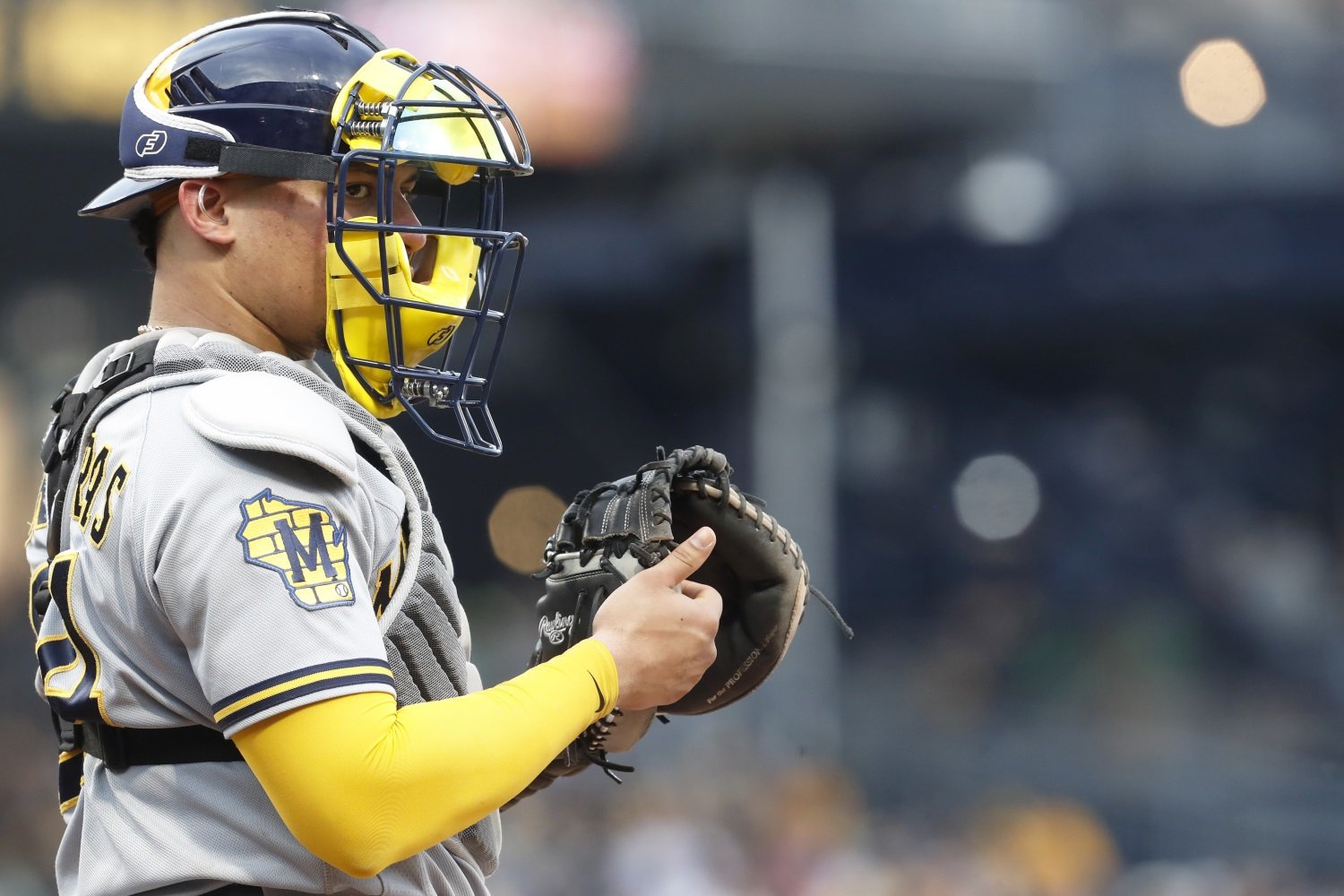 The Brewers think, as they have with a few other teams this season, that the Cubs are out to steal and relay pitch locations to hitters when a runner reaches second base. That's a common concern, and far from a new one. In days blessedly now past, pitchers and catchers policed that effort by intimidating and menacing batters, runners, and opposing dugouts. As that's become increasingly taboo, they've adapted. Nowadays, catchers more often try to neutralize runners who would tip off hitters by delaying the setting of their target, or by setting a false one--a decoy. William Contreras tries hard at that particular aspect of pitcher support. He begrudges his opponents every inch of ground they gain against him and his hurlers, and he thwarts them as often as he can. Here's the problem: manipulating a target to fool runners is a subtle craft, and Contreras doesn't do subtle well. Instead, he lunges back and forth back there, wiggling and waving and opening and closing his mitt in all kinds of misleading places. Technically, he's having the desired effect. Runners can't tip a batter off with that much misdirection happening. There isn't even a code to crack, as there used to be with manual pitch calling. Opposing batters, including and especially the Cubs in the ninth inning Wednesday, can't figure out where the pitch is going to come in based on the way Contreras sets up. Unfortunately, Contreras's fidgety, paranoid style doesn't only affect opponents. Whether it's waiting until the last possible moment to set up to receive a pitch or making big, dramatic, distracting moves en route to his real spot, all that motion makes it harder for a pitcher to stay locked in on their actual target. Devin Williams was the partner and victim Wednesday night. He missed his spots several times, and while that's not unusual for pitchers with good stuff in this day and age, it's not entirely a coincidence, either. The new state of the art in pitch framing has this same problem. It encourages the catcher to drop their mitt nonchalantly as they await the ball, then move toward it and beat the ball to its spot. It's surprisingly effective, in terms of getting umpires to call strikes, but it forces the pitcher to pick out a different visual target. For some guys, that's no problem. Some pitchers have become comfortable using their backstop's shin guard or the bottom of their mask as an aiming rock. Overall, though, the trend has contributed to the tendency toward imprecision in pitching--toward needing to beat hitters with sheer stuff, because command is less fine and less consistent than needed otherwise. What Contreras is doing, however, creates even greater difficulties. If a catcher is bobbing and weaving to foil location-tipping, he's not even static enough to let the pitcher lock in on some body part as a target. Now, the hurler is working in abstractions, instead of tactical scoping and firing. It's an obstacle to maximizing the effectiveness of pitchers, and in the long run, that's a more important objective than heading off the opponent as they strive to gain an informational edge. That's just the visual, physical aspect of things, too. It doesn't speak to the psychological effect of seeing a catcher dancing like a spider with restless leg syndrome. It's possible the Cubs really do try to relay location to their hitters--maybe even more aggressively than other teams. It's something David Ross took pride in doing during his time as a player. Until Contreras can find a way to be more calm, more quiet, and more intentional in his countermoves, though, the Brewers would be better off letting that detail go, and focusing on the greater goals of executing great pitches and getting outs.
 -
The full rosters for the 2023 All-Star Game were announced Sunday, and while the Brewers will have just one representative in Seattle for the occasion, he's likely to be the National League's closer--just as he was (at least sometimes) America's in the spring. Image courtesy of © Charles LeClaire-USA TODAY Sports It's slightly disappointing that the first-place Brewers didn't get more robust rewards in the construction of the NL All-Star team. Certainly, one could make a strong case that Christian Yelich was snubbed. However, Devin Williams is a second-time All-Star, and he's very deserving of the honor. His screwball continues to stymy opposing batters, and as a result, he's likely to rack up 30 or 40 saves in his first full season as the Crew's closer. Admittedly, Williams's 2023 has been a bit less sparkling than his 2022 campaign. He's striking out fewer hitters (although a 33.3-percent strikeout rate is still nothing to sneeze at), and his walk rate is starting to send up some red flags. Even so, opponents have an OPS scarcely over .500 against him. An increasing number of hitters have learned that they'll need to sit on his screwball in order to avoid flailing helplessly at it, but in doing so, they've only augmented his fastball. The heater is inducing whiffs on a league=leading 41.6 percent of swings. The slider he tentatively brought along to keep hitters from looking for just two offerings last year has not been much help this season. That could be something on which he needs to work during the second half, because without doubt, the Brewers will need Williams at full strength and effectiveness down the stretch. They're tied for first place, but their run differential belies that standing, and they need to keep winning close games in order to win the tight NL Central race. Hopefully, doing so will involve the reemergence of the struggling (and now demoted) Peter Strzelecki, as well as continued success from Joel Payamps, Elvis Peguero, and Bryse Wilson. Williams has never been as notable for his durability as for his excellence, and although Craig Counsell has done well to shield him from overuse (even, sometimes, at the cost of a win in the short term), there could be trouble if the Crew can't keep him fresh. All of those worries can wait. On Sunday, Williams only needed nine pitches to record a three-batter, one-strikeout, zero-drama save in Pittsburgh, securing a series win for the Brewers in a place that has been a house of horrors for them in July over the last half-decade. It's fitting and joyous that he was able to cap that day by celebrating a second straight trip to the All-Star Game. While he's far from an obvious extension candidate, the Brewers have to start pondering whether he's worth a long-term investment, as both a demonstration of their faith in him and a gesture of gratitude for the dominance he's given them in the late innings over several seasons. View full article
-
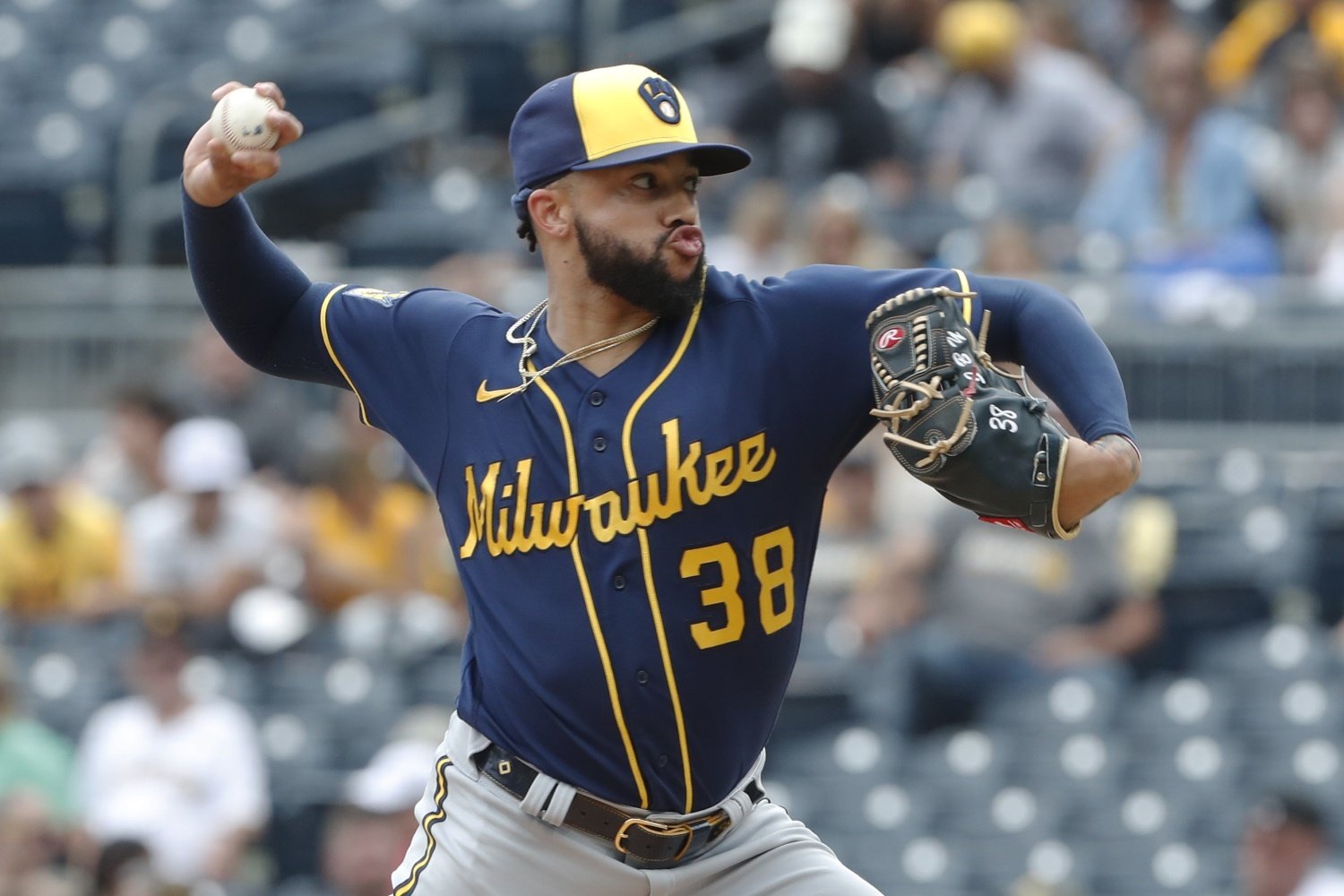 It's slightly disappointing that the first-place Brewers didn't get more robust rewards in the construction of the NL All-Star team. Certainly, one could make a strong case that Christian Yelich was snubbed. However, Devin Williams is a second-time All-Star, and he's very deserving of the honor. His screwball continues to stymy opposing batters, and as a result, he's likely to rack up 30 or 40 saves in his first full season as the Crew's closer. Admittedly, Williams's 2023 has been a bit less sparkling than his 2022 campaign. He's striking out fewer hitters (although a 33.3-percent strikeout rate is still nothing to sneeze at), and his walk rate is starting to send up some red flags. Even so, opponents have an OPS scarcely over .500 against him. An increasing number of hitters have learned that they'll need to sit on his screwball in order to avoid flailing helplessly at it, but in doing so, they've only augmented his fastball. The heater is inducing whiffs on a league=leading 41.6 percent of swings. The slider he tentatively brought along to keep hitters from looking for just two offerings last year has not been much help this season. That could be something on which he needs to work during the second half, because without doubt, the Brewers will need Williams at full strength and effectiveness down the stretch. They're tied for first place, but their run differential belies that standing, and they need to keep winning close games in order to win the tight NL Central race. Hopefully, doing so will involve the reemergence of the struggling (and now demoted) Peter Strzelecki, as well as continued success from Joel Payamps, Elvis Peguero, and Bryse Wilson. Williams has never been as notable for his durability as for his excellence, and although Craig Counsell has done well to shield him from overuse (even, sometimes, at the cost of a win in the short term), there could be trouble if the Crew can't keep him fresh. All of those worries can wait. On Sunday, Williams only needed nine pitches to record a three-batter, one-strikeout, zero-drama save in Pittsburgh, securing a series win for the Brewers in a place that has been a house of horrors for them in July over the last half-decade. It's fitting and joyous that he was able to cap that day by celebrating a second straight trip to the All-Star Game. While he's far from an obvious extension candidate, the Brewers have to start pondering whether he's worth a long-term investment, as both a demonstration of their faith in him and a gesture of gratitude for the dominance he's given them in the late innings over several seasons.
 -
On Thursday evening, Willy Adames went 0-4. He hit into a double play, and he struck out twice. The Brewers' first two runs (of only three) came on a homer by Victor Caratini. A day after Peter Strzelecki was demoted to Nashville, Elvis Peguero was asked to save them from a bases-loaded, one-out jam, and Devin Williams created another one two innings later. The Brewers won, anyway. Image courtesy of © Vincent Carchietta-USA TODAY Sports Most days, in the long season schedule MLB teams play, you can watch every pitch and every mound meeting and every check for sticky stuff on the pitcher's hands, and you can still see little that really changes your opinions or expectations of a team. Most games are ordinary, and the ones that aren't sometimes feel like empty calories: lots of drama, but relatively little substance. Thursday's win, even over a downtrodden and embroiled Mets team, was one of the special games that make things a bit more clear. In his first game back from the minor leagues, after the front office took a very bold step by swapping him with established veteran Luis Urias, Brice Turang made three crucial defensive plays. Adrian Houser, whom the team worked so hard this winter not to need to rely on as a starter, returned to the rotation with six sturdy innings of two-run ball, striking out five. Hoby Milner, Elvis Peguero, Joel Payamps, and Devin Williams survived another stern test, just after the front office made another bold swap by demoting Peter Strzelecki (who would have been part of that late-inning sequence just a couple of weeks ago). That game marked the halfway point of the Brewers season. They arrived at it by pulling into a tie for first place. They're only on pace for 86 wins, but that's 10 more than their run differential would lead us to expect. Players at the heart of their plans, like Willy Adames, Rowdy Tellez, Corbin Burnes, and Freddy Peralta, have been underwhelming or inconsistent, but guys like Peguero, Joey Wiemer, and Turang have stepped forward--no more consistent or excellent than the would-be stars, but more timely, and in ways that swing games unexpectedly in the team's favor. Some credit for that has to go to Craig Counsell. It remains worrisome that he and the Brewers haven't agreed on a contract extension to ensure he remains in their dugout beyond this autumn, but Counsell has put on another managerial clinic this season. He's winning by trusting young players, but not too much, and by being aggressive, but not too much so. It's not his finest work as their skipper, but only because he's set that bar quite high in previous seasons. Obviously, though, it goes further than Counsell, too. The front office, after all, makes the final call on things like the demotions of Urias and Strzelecki, and they're the ones who traded for Peguero and Payamps (among others) this winter. They're the ones who signed Wade Miley. They did a better job of anticipating the obstacles this team has faced, and of building bulwarks against them, than they've gotten credit for doing. That doesn't mean the team has found open seas, with smooth sailing ahead. They have plenty of talent, they're better-run than any other team in the NL Central, and they have a share of first place with 81 games left. Alas, just about anything can happen in 81 games. The failure to create a cushion for themselves in the first half, due to some of those talented players underperforming and some of them getting hurt, leaves the team vulnerable to the vagaries of small samples. Still, Thursday's win was one of those stolen victories that make you feel good about threading the needle. View full article
-
With Duct Tape and Baling Wire, the Brewers Win a Series in New York
Matthew Trueblood posted an article in Brewers
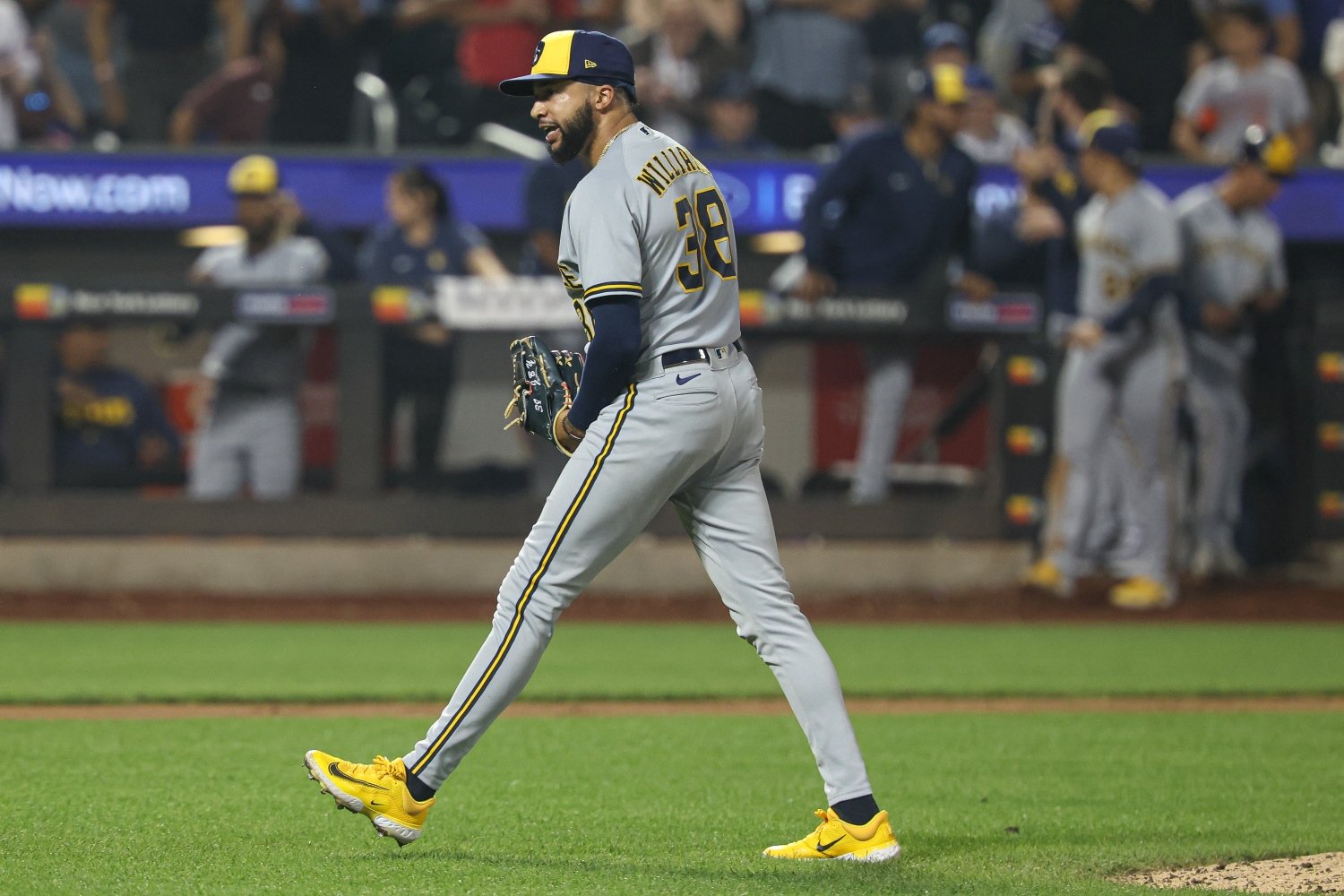 Most days, in the long season schedule MLB teams play, you can watch every pitch and every mound meeting and every check for sticky stuff on the pitcher's hands, and you can still see little that really changes your opinions or expectations of a team. Most games are ordinary, and the ones that aren't sometimes feel like empty calories: lots of drama, but relatively little substance. Thursday's win, even over a downtrodden and embroiled Mets team, was one of the special games that make things a bit more clear. In his first game back from the minor leagues, after the front office took a very bold step by swapping him with established veteran Luis Urias, Brice Turang made three crucial defensive plays. Adrian Houser, whom the team worked so hard this winter not to need to rely on as a starter, returned to the rotation with six sturdy innings of two-run ball, striking out five. Hoby Milner, Elvis Peguero, Joel Payamps, and Devin Williams survived another stern test, just after the front office made another bold swap by demoting Peter Strzelecki (who would have been part of that late-inning sequence just a couple of weeks ago). That game marked the halfway point of the Brewers season. They arrived at it by pulling into a tie for first place. They're only on pace for 86 wins, but that's 10 more than their run differential would lead us to expect. Players at the heart of their plans, like Willy Adames, Rowdy Tellez, Corbin Burnes, and Freddy Peralta, have been underwhelming or inconsistent, but guys like Peguero, Joey Wiemer, and Turang have stepped forward--no more consistent or excellent than the would-be stars, but more timely, and in ways that swing games unexpectedly in the team's favor. Some credit for that has to go to Craig Counsell. It remains worrisome that he and the Brewers haven't agreed on a contract extension to ensure he remains in their dugout beyond this autumn, but Counsell has put on another managerial clinic this season. He's winning by trusting young players, but not too much, and by being aggressive, but not too much so. It's not his finest work as their skipper, but only because he's set that bar quite high in previous seasons. Obviously, though, it goes further than Counsell, too. The front office, after all, makes the final call on things like the demotions of Urias and Strzelecki, and they're the ones who traded for Peguero and Payamps (among others) this winter. They're the ones who signed Wade Miley. They did a better job of anticipating the obstacles this team has faced, and of building bulwarks against them, than they've gotten credit for doing. That doesn't mean the team has found open seas, with smooth sailing ahead. They have plenty of talent, they're better-run than any other team in the NL Central, and they have a share of first place with 81 games left. Alas, just about anything can happen in 81 games. The failure to create a cushion for themselves in the first half, due to some of those talented players underperforming and some of them getting hurt, leaves the team vulnerable to the vagaries of small samples. Still, Thursday's win was one of those stolen victories that make you feel good about threading the needle.
 -
It's been a long journey through a dark valley, but Christian Yelich is back, baby. No, not that Christian Yelich. The MVP winner isn't coming back. That much is clear. As the memory of his knee injury fades and he puts his skill set back together, though, the Brewers' cornerstone has landed on something valuable and impressive--as long as he can keep it up in months and years ahead. Image courtesy of © Brad Penner-USA TODAY Sports No one ever should have asked or expected Christian Yelich to become a dead-pull hitter, or a launch angle guy. Even in 2018 and 2019, that wasn't truly what he was. He just got more comfortable with launching the ball to right field, for a time, the way a golfer with a brilliant short game will occasionally go on a prolonged hot streak with their woods. When that happens, a guy who's less than Tiger Woods-caliber can win a couple of majors and secure the futures of themselves and every family member they really like. Obviously, when he lost that magic, Yelich had a couple of tough seasons. Even at his worst, he was fairly productive, but given the share of their likely payrolls Milwaukee committed to him over the next several years, it was fair to be concerned about him being merely average. The only flaw in the (ultimately sound) decision to sign him to that deal was that it would only be a path to success for the team if he produced more than a couple of wins per year in value. Now, even that isn't a problem, because Yelich isn't having a pedestrian 2023. On the contrary, he's back to being an All-Star--just not in the same way he was early in his Brewers tenure, or in the way he emerged as that level of player with the Marlins before that. Now 31, Yelich is no more capable of being his 24-year-old self than he is of being his 27-year-old self. He's had to search and feel out a truly new way of doing things, and so far, he's doing it brilliantly. Yelich is hitting the ball markedly harder this season than he did in either 2021 or 2022. He's also generating a higher average launch angle, but that number is a little misleading. He's hitting as many ground balls as ever; he's happily trading full access to his loft and power for greater exit velocity. He's just getting a little more air under his lower-trajectory hits. Christian Yelich, Average Launch Angle by Batted Ball Type Batted Ball Type 2018-22 2023 Grounders -13.9 -12.6 Line Drives 15.5 16.1 Flies 35.1 34.9 In turn, he's doing that by utterly letting go of the idea that he needs to pull the ball. He's not only hitting to right field less often than he has since 2017, but going the other way more often than ever. His 34.9-percent rate of going to the opposite field with batted balls would be one of the 25 highest single-season figures of the Statcast Era (now going on a decade, and becoming a bit less of an ironic phrase). Two guys show up several times above him on the list, and they're the two we should use to think about the new Yelich: D.J. LeMahieu and Joe Mauer. Like Yelich, LeMahieu and Mauer were big guys, and they could hit it as hard as anyone. They just didn't, most of the time, and that was as much a choice (a conscious election not to chase power, but rather, to maximize batting average and OBP) as anything. We've seen LeMahieu age rather unevenly, but on the other hand, he was always less capable of jolting the ball than Yelich is, and his righthandedness made the profile a bit trickier. Mauer aged more gracefully, but lost his pop to injuries. Right now, Yelich is hitting like those guys, but he has better health (and the better athleticism that goes with it) and more power. The news isn't all good, of course. Yelich has had to trade some contact for hitting the ball hard so consistently, and if that trend continues or accelerates as he moves into his mid-30s, it will make this profile tough to sustain. That's a problem for another day, though--and hopefully, for another year. in 2023, Yelich is hitting .277/.372/.435, with good defense and great speed on the bases. He's found a way to blend his young self and the things he learned during a multiyear hot streak, to forge an iteration of himself that can be valuable even into his 30s. It's been fun to watch him, for the first time since that foul ball hit him in the knee. View full article
-
 No one ever should have asked or expected Christian Yelich to become a dead-pull hitter, or a launch angle guy. Even in 2018 and 2019, that wasn't truly what he was. He just got more comfortable with launching the ball to right field, for a time, the way a golfer with a brilliant short game will occasionally go on a prolonged hot streak with their woods. When that happens, a guy who's less than Tiger Woods-caliber can win a couple of majors and secure the futures of themselves and every family member they really like. Obviously, when he lost that magic, Yelich had a couple of tough seasons. Even at his worst, he was fairly productive, but given the share of their likely payrolls Milwaukee committed to him over the next several years, it was fair to be concerned about him being merely average. The only flaw in the (ultimately sound) decision to sign him to that deal was that it would only be a path to success for the team if he produced more than a couple of wins per year in value. Now, even that isn't a problem, because Yelich isn't having a pedestrian 2023. On the contrary, he's back to being an All-Star--just not in the same way he was early in his Brewers tenure, or in the way he emerged as that level of player with the Marlins before that. Now 31, Yelich is no more capable of being his 24-year-old self than he is of being his 27-year-old self. He's had to search and feel out a truly new way of doing things, and so far, he's doing it brilliantly. Yelich is hitting the ball markedly harder this season than he did in either 2021 or 2022. He's also generating a higher average launch angle, but that number is a little misleading. He's hitting as many ground balls as ever; he's happily trading full access to his loft and power for greater exit velocity. He's just getting a little more air under his lower-trajectory hits. Christian Yelich, Average Launch Angle by Batted Ball Type Batted Ball Type 2018-22 2023 Grounders -13.9 -12.6 Line Drives 15.5 16.1 Flies 35.1 34.9 In turn, he's doing that by utterly letting go of the idea that he needs to pull the ball. He's not only hitting to right field less often than he has since 2017, but going the other way more often than ever. His 34.9-percent rate of going to the opposite field with batted balls would be one of the 25 highest single-season figures of the Statcast Era (now going on a decade, and becoming a bit less of an ironic phrase). Two guys show up several times above him on the list, and they're the two we should use to think about the new Yelich: D.J. LeMahieu and Joe Mauer. Like Yelich, LeMahieu and Mauer were big guys, and they could hit it as hard as anyone. They just didn't, most of the time, and that was as much a choice (a conscious election not to chase power, but rather, to maximize batting average and OBP) as anything. We've seen LeMahieu age rather unevenly, but on the other hand, he was always less capable of jolting the ball than Yelich is, and his righthandedness made the profile a bit trickier. Mauer aged more gracefully, but lost his pop to injuries. Right now, Yelich is hitting like those guys, but he has better health (and the better athleticism that goes with it) and more power. The news isn't all good, of course. Yelich has had to trade some contact for hitting the ball hard so consistently, and if that trend continues or accelerates as he moves into his mid-30s, it will make this profile tough to sustain. That's a problem for another day, though--and hopefully, for another year. in 2023, Yelich is hitting .277/.372/.435, with good defense and great speed on the bases. He's found a way to blend his young self and the things he learned during a multiyear hot streak, to forge an iteration of himself that can be valuable even into his 30s. It's been fun to watch him, for the first time since that foul ball hit him in the knee.
 -
On Tuesday night, the Brewers try to make it back-to-back wins against the $350-million behemoth that is the New York Mets. That team is in disarray, but it's still difficult to show up in their house and take the first two of a four-game set as a team from one of the league's smallest markets. To do it, you need things like what Milwaukee has gotten from Julio Teheran this year. Image courtesy of © Michael McLoone-USA TODAY Sports Funnily enough, Plan A for Julio Teheran was to be part of another massively expensive team in 2023, albeit in a market that resembles Milwaukee more closely than New York. He signed a minor-league deal with the Padres in February, marking a return to affiliated baseball. He'd spent all of 2022 playing in independent ball, the Mexican League, and the Dominican Winter League, but never signing with any of the 30 MLB organizations. Teheran had an opt-out in his deal with the Padres, should he not be called up by early May. That time came, and he opted out, but he re-signed with them a couple days later. Another three weeks on, he still hadn't gotten a shot at the big-league rotation, and he opted out again. This time, as we know, the Brewers had a sudden and urgent need for a starter, so Teheran got an unexpected and semi-permanent opportunity. Just five weeks later, it's hard to imagine the Brewers rotation without Teheran. He could always backslide from here, and whenever Brandon Woodruff is able to return, things will get more crowded. In the meantime, though, Teheran is a mainstay. He's posted a 1.53 ERA through his first six starts, and although neither his sheer stuff nor his peripheral numbers suggest that he's actually metamorphosed into an ace, he's also not purely smoke and mirrors. A lot of things have changed, and Teheran has found the approach and repertoire that could give his career a second act of some length. Firstly, Teheran has added a cutter to his pitch mix this year. He actually did so during his stint in the San Diego system, but he's certainly sharpened the pitch and figured out the balancing act involved in his new arsenal with the Brewers. He's now throwing five different pitches against lefties, giving them a true kitchen-sink look against which it's hard to get aggressive. By and large, it's not a good idea to have a sinker leading your attack against opposite-handed batters, Teheran has gotten away with it, though, not only because having four other offerings he throws in even mixture keeps them from sitting on it, but because the pitch has gotten heavier this year. Its vertical movement is greater, which is always a plus against opposite-handed batters, but which especially accentuates its difference from his four-seamer and cutter. Against righties, he's equally comfortable using the new cutter as a changer of lanes and eye levels relative to the sinker and the four-seamer. For the first time in almost a decade, he's a four-pitch guy against same-handed batters. As a result of that increased unpredictability, Teheran is suddenly able to rear back and throw his four-seamer right past righties. Despite the fact that he averages just under 90 miles per hour with the heater, he's missing bats with it (in a tiny sample, we have to admit) at a career-best rate. Teheran only has 23 strikeouts in 35 innings this year. He's not going to become a strikeout machine. Still, missing bats is non-optional in today's game. Swings and misses might be too rare to yield many punchouts, but they get the batter one pitch closer thereto--and thus, one pitch more defensive, less powerful, and less effective. It's unlikely that Teheran can run even a 3.53 ERA the rest of the year, let alone a 1.53. He's already given the team as much as they could have hoped for, though, thanks to a new pitch, some small tweaks to their usage and shape, and the intelligence and poise that come with having been in MLB for a decade. View full article
-
A New Cutter, a Heavier Sinker, and a Brand-New Julio Teheran
Matthew Trueblood posted an article in Brewers
 Funnily enough, Plan A for Julio Teheran was to be part of another massively expensive team in 2023, albeit in a market that resembles Milwaukee more closely than New York. He signed a minor-league deal with the Padres in February, marking a return to affiliated baseball. He'd spent all of 2022 playing in independent ball, the Mexican League, and the Dominican Winter League, but never signing with any of the 30 MLB organizations. Teheran had an opt-out in his deal with the Padres, should he not be called up by early May. That time came, and he opted out, but he re-signed with them a couple days later. Another three weeks on, he still hadn't gotten a shot at the big-league rotation, and he opted out again. This time, as we know, the Brewers had a sudden and urgent need for a starter, so Teheran got an unexpected and semi-permanent opportunity. Just five weeks later, it's hard to imagine the Brewers rotation without Teheran. He could always backslide from here, and whenever Brandon Woodruff is able to return, things will get more crowded. In the meantime, though, Teheran is a mainstay. He's posted a 1.53 ERA through his first six starts, and although neither his sheer stuff nor his peripheral numbers suggest that he's actually metamorphosed into an ace, he's also not purely smoke and mirrors. A lot of things have changed, and Teheran has found the approach and repertoire that could give his career a second act of some length. Firstly, Teheran has added a cutter to his pitch mix this year. He actually did so during his stint in the San Diego system, but he's certainly sharpened the pitch and figured out the balancing act involved in his new arsenal with the Brewers. He's now throwing five different pitches against lefties, giving them a true kitchen-sink look against which it's hard to get aggressive. By and large, it's not a good idea to have a sinker leading your attack against opposite-handed batters, Teheran has gotten away with it, though, not only because having four other offerings he throws in even mixture keeps them from sitting on it, but because the pitch has gotten heavier this year. Its vertical movement is greater, which is always a plus against opposite-handed batters, but which especially accentuates its difference from his four-seamer and cutter. Against righties, he's equally comfortable using the new cutter as a changer of lanes and eye levels relative to the sinker and the four-seamer. For the first time in almost a decade, he's a four-pitch guy against same-handed batters. As a result of that increased unpredictability, Teheran is suddenly able to rear back and throw his four-seamer right past righties. Despite the fact that he averages just under 90 miles per hour with the heater, he's missing bats with it (in a tiny sample, we have to admit) at a career-best rate. Teheran only has 23 strikeouts in 35 innings this year. He's not going to become a strikeout machine. Still, missing bats is non-optional in today's game. Swings and misses might be too rare to yield many punchouts, but they get the batter one pitch closer thereto--and thus, one pitch more defensive, less powerful, and less effective. It's unlikely that Teheran can run even a 3.53 ERA the rest of the year, let alone a 1.53. He's already given the team as much as they could have hoped for, though, thanks to a new pitch, some small tweaks to their usage and shape, and the intelligence and poise that come with having been in MLB for a decade.
 -
The Brewers had one really good chance to put away the Guardians on Saturday, before Cleveland staged a small comeback and turned a 2-1 deficit into what turned out to be an ironclad 4-2 lead. The opportunity came in the top of the sixth inning, when back-to-back walks gave Brian Anderson a chance to break the game open. Alas, that at-bat went the way pretty much everything has for Anderson this month. Guardians starter Tanner Bibee, entrusted with the difficult situation even though he'd already faced Anderson twice in the game and was showing some signs of fatigue, calmly worked over the Brewers third baseman, earning a strikeout that halted the momentum of the inning before it could get away from the home team. Unfortunately, that didn't take a master stroke in the art of pitching. Right now, it's too easy to get Anderson out, as the two meaty sliders that escaped his slashing swing early in the count imply. Anderson is a low-ball hitter, and has always been vulnerable to the high fastball Bibee ultimately used to punch him out. When he's going well, though, he owns the lower half of the zone, and can afford to lay off the high heat. Right now, Anderson is (emphatically) not going well. In June, Anderson has 76 plate appearances, and he's batting .182/.290/.258. He's grounded into a double play more times (twice) than he's cleared the fences. He's taking a patient approach, but it seems to be as much about knowing that he can't hit most good pitches than it is about grinding out an at-bat and finding the one to drive. His strikeout rate is over 30 percent for the month. Nothing is going right. Again, it's not unusual to see Anderson swing through a high fastball. It's much more troubling, though, to see him be unable to mash breaking balls that hang significantly above the kneecap over the middle third of the plate, and that's what's played out this month. Anderson's swing just isn't right, and as a result, his power and his confidence are both missing. For the season, Anderson has both an average exit velocity and a hard-hit frequency lower than in any other season of his career. He's hitting half his batted balls on the ground, and has only pulled 29.2 percent of all his batted balls, another career-low figure. That's especially confusing. Usually, a hitter will see their pull rate rise with their groundball rate, because most ground balls are pulled. Indeed, Anderson is in the 25th percentile in the percentage of his grounders that go to the pull side, which is bad news for a right-handed batter and not the place to be in Year One of restrictions on defensive positioning in the infield. When he elevates the ball, though, his pull rate is even lower, and rests in the 5th percentile of the league. That's a huge problem. It was fun to see Anderson ram a few opposite-field home runs in the early going, but the reliable, lasting power in MLB lies to a hitter's pull field. That's why so many fans obsess over whether Christian Yelich can start using the right side of the diamond more consistently. It's also the foundational principle of some of the league's most successful offenses over the last decade. By contrast, the Brewers have the second-lowest pull rate on fly balls and line drives in MLB. Only the Marlins creep beneath them, and that has as much to do with the distortionary effects of Luis Arraez as with anything else. The Brewers don't give themselves enough opportunity to do real damage, and Anderson is an excellent example of that. His swing is broken, because it's only designed to drive low pitches to center and right field. He needs a new angle, a new club in his bag, and he's on the wrong team to help him find one. View full article
-
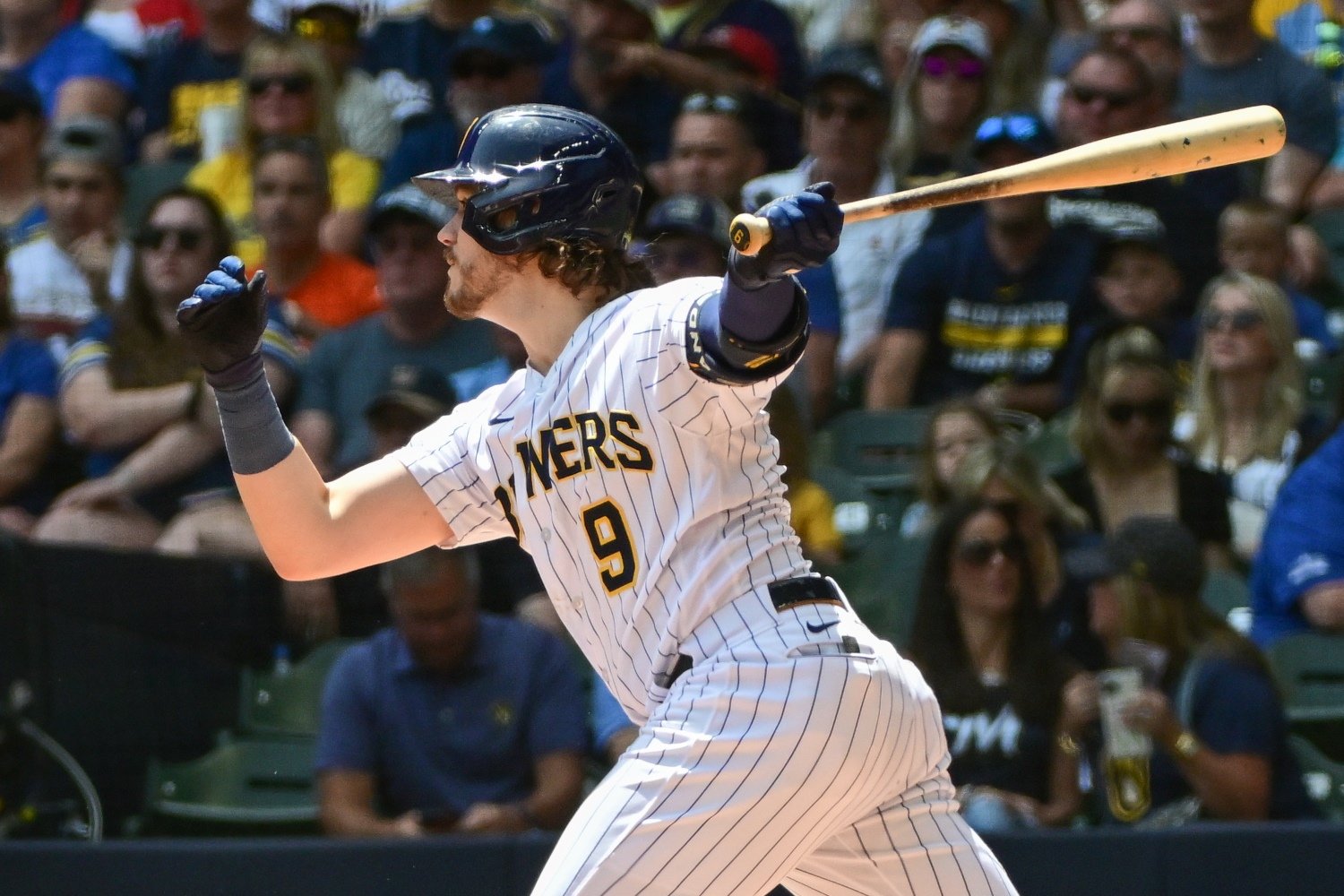 Guardians starter Tanner Bibee, entrusted with the difficult situation even though he'd already faced Anderson twice in the game and was showing some signs of fatigue, calmly worked over the Brewers third baseman, earning a strikeout that halted the momentum of the inning before it could get away from the home team. Unfortunately, that didn't take a master stroke in the art of pitching. Right now, it's too easy to get Anderson out, as the two meaty sliders that escaped his slashing swing early in the count imply. Anderson is a low-ball hitter, and has always been vulnerable to the high fastball Bibee ultimately used to punch him out. When he's going well, though, he owns the lower half of the zone, and can afford to lay off the high heat. Right now, Anderson is (emphatically) not going well. In June, Anderson has 76 plate appearances, and he's batting .182/.290/.258. He's grounded into a double play more times (twice) than he's cleared the fences. He's taking a patient approach, but it seems to be as much about knowing that he can't hit most good pitches than it is about grinding out an at-bat and finding the one to drive. His strikeout rate is over 30 percent for the month. Nothing is going right. Again, it's not unusual to see Anderson swing through a high fastball. It's much more troubling, though, to see him be unable to mash breaking balls that hang significantly above the kneecap over the middle third of the plate, and that's what's played out this month. Anderson's swing just isn't right, and as a result, his power and his confidence are both missing. For the season, Anderson has both an average exit velocity and a hard-hit frequency lower than in any other season of his career. He's hitting half his batted balls on the ground, and has only pulled 29.2 percent of all his batted balls, another career-low figure. That's especially confusing. Usually, a hitter will see their pull rate rise with their groundball rate, because most ground balls are pulled. Indeed, Anderson is in the 25th percentile in the percentage of his grounders that go to the pull side, which is bad news for a right-handed batter and not the place to be in Year One of restrictions on defensive positioning in the infield. When he elevates the ball, though, his pull rate is even lower, and rests in the 5th percentile of the league. That's a huge problem. It was fun to see Anderson ram a few opposite-field home runs in the early going, but the reliable, lasting power in MLB lies to a hitter's pull field. That's why so many fans obsess over whether Christian Yelich can start using the right side of the diamond more consistently. It's also the foundational principle of some of the league's most successful offenses over the last decade. By contrast, the Brewers have the second-lowest pull rate on fly balls and line drives in MLB. Only the Marlins creep beneath them, and that has as much to do with the distortionary effects of Luis Arraez as with anything else. The Brewers don't give themselves enough opportunity to do real damage, and Anderson is an excellent example of that. His swing is broken, because it's only designed to drive low pitches to center and right field. He needs a new angle, a new club in his bag, and he's on the wrong team to help him find one.
 -
 The Brewers have won each of Wade Miley's first two starts since returning from the injured list. The grizzled southpaw has yielded only five hits and two walks in 11 scoreless innings across the two outings. He's done it, mostly, the same way he's survived and thrived ever since adding a cutter and changing the course of his career, with this same Brewers team in 2018. The cutter is his biggest weapon, as it has been for years now. Yet, while shelved with a lat problem, Miley didn't just work to keep his existing arsenal sharp. Even at age 36, he relentlessly seeks the next innovation that will keep him ahead of opposing hitters, despite his underwhelming velocity. This time, that meant that the erstwhile Southeastern Louisiana hurler tuned in to watch flamethrowing LSU starter Paul Skenes pitch--and realized he could learn something from the student-athlete who will be picked somewhere in the top 5 in next month's Draft. No less an authority than Twitter denizen Pitching Ninja took note of Miley's devastating sinker, What he told the press after the game was, at least, a slight exaggeration. It's clear that Miley picked up the sinker more than a few days ago, because he also threw it four times in his previous outing--the one in which he returned from the IL, on June 17. It was easier to miss at that point, because all three swings against it led to balls in play--though all three were relatively soft contact, too. It's probably not quite true that Miley saw Skenes throw his sinker on TV five days ago and implemented it right away. It's more likely, for instance, that the soft-tossing lefty started tinkering with a sinker during his rehab assignment, and then merely spotted a slight grip variation while watching closely for sinkers sometime during the last fortnight. Even so, it's a delightful reminder of how eagerly and persistently Miley adjusts and improves. He's defied the typical aging curve of an injury-plagued lefty without a high-octane fastball already, and there's no imminent end in sight. The same spirit that let him buy into the concept of the cutter five years ago now has him tweaking and polishing things at the edges. A few sinkers per game sounds like nothing, but in reality, it can have a major impact on how hitters see and try to attack his repertoire. The pitch has velocity and movement that differentiate it from everything else he throws, especially because he's most comfortable attacking the glove side (inside on right-handed batters) with his four-seamer. The sinker is a pitch with which he can get inside on lefties, or try to induce a weak ground ball the other way from a righty. The more transparent circles on the right side, above, are the league-average movement ranges of each of those pitch types. Note that Miley's four-seamer, slider, and curve all move much more toward a righty batter than do the typical pitches of that type. For that reason, the sinker is especially helpful. His changeup moves similarly, but he'll mostly throw that pitch against righties, after setting them up inside with the four-seamer and cutter. Against lefties, he can slip in the sinker when he feels like batters are diving out too eagerly to chase what is largely a diet of stuff low and away from them. There are plenty of big-leaguers who, understandably, try not to take work home with them. After a long day at the ballpark, they don't want to watch baseball for fun. Plenty of players do seek out games like the College World Series, but even then, they mostly do so because of their rooting interests. Watching closely enough to pick up a subtlety in the sinker grip of a pitcher who uses the opposite hand and throws 10 miles per hour harder, and then having the audacity to utilize the same thing, speaks well of Miley, whose reputation as a teammate, craftsman, and competitor should lead everyone to expect that very type of behavior. Being a baseball rat pays off sometimes. For the Brewers, Miley's curiosity and dedication is paying off in a huge way, once again.
 -
Satchel Paige said, "Don't look back. Something might be gaining on you." It's not just an admonition against letting the past follow you to the present, though. It's also about the importance of continuing to move forward. Wade Miley isn't as sagacious as Paige, but he's always looking forward, and it's why he keeps getting better when he should be getting worse. Image courtesy of © Ken Blaze-USA TODAY Sports The Brewers have won each of Wade Miley's first two starts since returning from the injured list. The grizzled southpaw has yielded only five hits and two walks in 11 scoreless innings across the two outings. He's done it, mostly, the same way he's survived and thrived ever since adding a cutter and changing the course of his career, with this same Brewers team in 2018. The cutter is his biggest weapon, as it has been for years now. Yet, while shelved with a lat problem, Miley didn't just work to keep his existing arsenal sharp. Even at age 36, he relentlessly seeks the next innovation that will keep him ahead of opposing hitters, despite his underwhelming velocity. This time, that meant that the erstwhile Southeastern Louisiana hurler tuned in to watch flamethrowing LSU starter Paul Skenes pitch--and realized he could learn something from the student-athlete who will be picked somewhere in the top 5 in next month's Draft. No less an authority than Twitter denizen Pitching Ninja took note of Miley's devastating sinker, What he told the press after the game was, at least, a slight exaggeration. It's clear that Miley picked up the sinker more than a few days ago, because he also threw it four times in his previous outing--the one in which he returned from the IL, on June 17. It was easier to miss at that point, because all three swings against it led to balls in play--though all three were relatively soft contact, too. It's probably not quite true that Miley saw Skenes throw his sinker on TV five days ago and implemented it right away. It's more likely, for instance, that the soft-tossing lefty started tinkering with a sinker during his rehab assignment, and then merely spotted a slight grip variation while watching closely for sinkers sometime during the last fortnight. Even so, it's a delightful reminder of how eagerly and persistently Miley adjusts and improves. He's defied the typical aging curve of an injury-plagued lefty without a high-octane fastball already, and there's no imminent end in sight. The same spirit that let him buy into the concept of the cutter five years ago now has him tweaking and polishing things at the edges. A few sinkers per game sounds like nothing, but in reality, it can have a major impact on how hitters see and try to attack his repertoire. The pitch has velocity and movement that differentiate it from everything else he throws, especially because he's most comfortable attacking the glove side (inside on right-handed batters) with his four-seamer. The sinker is a pitch with which he can get inside on lefties, or try to induce a weak ground ball the other way from a righty. The more transparent circles on the right side, above, are the league-average movement ranges of each of those pitch types. Note that Miley's four-seamer, slider, and curve all move much more toward a righty batter than do the typical pitches of that type. For that reason, the sinker is especially helpful. His changeup moves similarly, but he'll mostly throw that pitch against righties, after setting them up inside with the four-seamer and cutter. Against lefties, he can slip in the sinker when he feels like batters are diving out too eagerly to chase what is largely a diet of stuff low and away from them. There are plenty of big-leaguers who, understandably, try not to take work home with them. After a long day at the ballpark, they don't want to watch baseball for fun. Plenty of players do seek out games like the College World Series, but even then, they mostly do so because of their rooting interests. Watching closely enough to pick up a subtlety in the sinker grip of a pitcher who uses the opposite hand and throws 10 miles per hour harder, and then having the audacity to utilize the same thing, speaks well of Miley, whose reputation as a teammate, craftsman, and competitor should lead everyone to expect that very type of behavior. Being a baseball rat pays off sometimes. For the Brewers, Miley's curiosity and dedication is paying off in a huge way, once again. View full article
-
How Bryse Wilson's Below-Average Cutter Has Been So Above-Average
Matthew Trueblood posted an article in Brewers
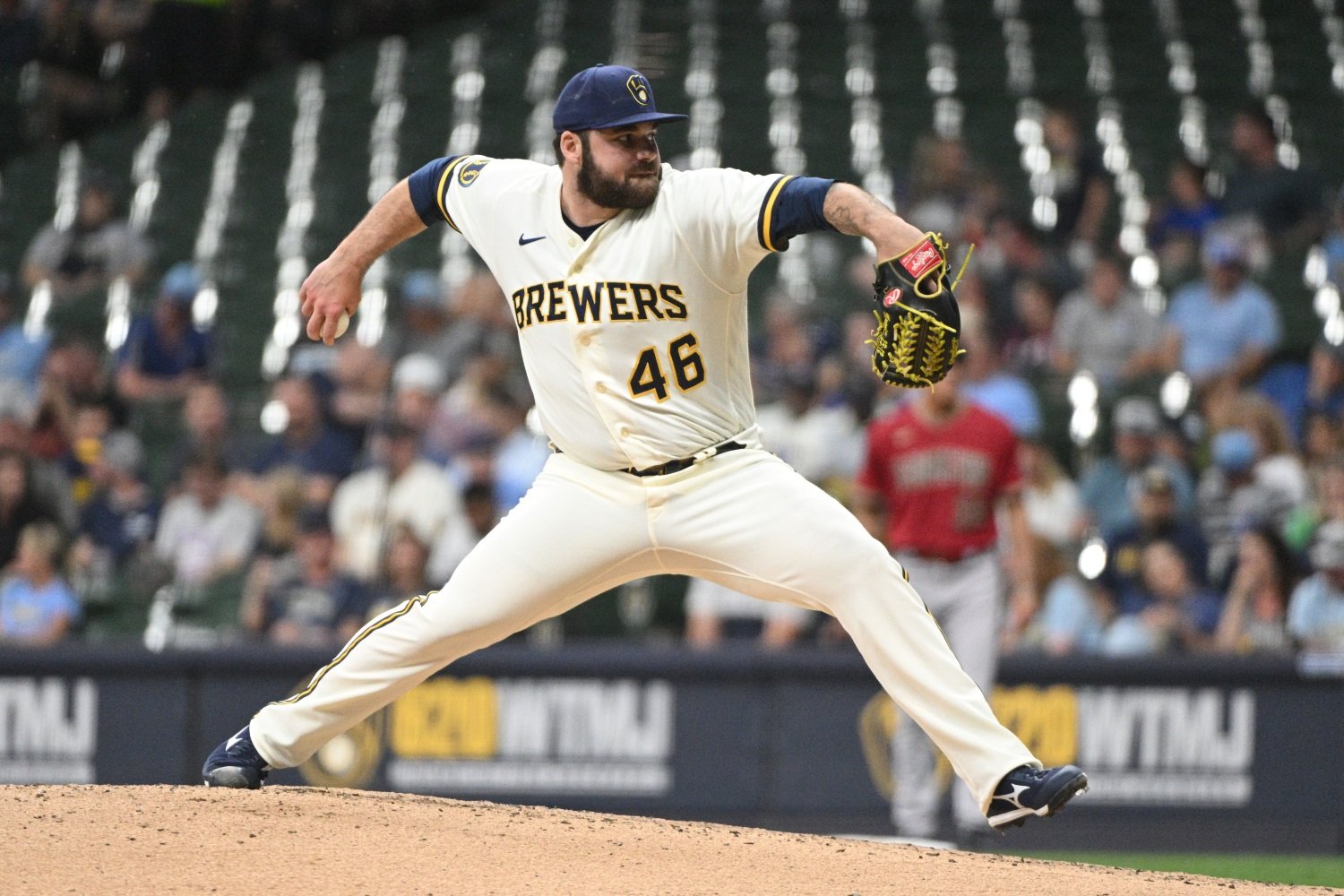 Is it possible to have both a below-average cutter and an above-average one? In this era of pitching analysis, it certainly is. Bryse Wilson is proof of the concept. Though he still hasn't found a pitch that allows him to rack up strikeouts, he's learned to manage contact in a more consistent way than he had in any of his previous big-league stints. It's the cutter that has fueled that success, but interestingly, it's hard to pinpoint what makes that offering special for Wilson. Of the 101 pitchers who have thrown at least 100 cutters this year, Wilson lies shockingly close to the average in velocity on the pitch, and in both horizontal and vertical movement. He gets an above-average number of whiffs per swing, but batters swing at the pitch at a below-average rate, so his actual whiff rate on it is average. When batters don't swing at the pitch, it's called a strike at exactly an average rate. That accretion of average attributes makes for a pitch cutting-edge pitching metrics find unimpressive. The Pitching+ suite of numbers uses release point, spin rate, movement, velocity, and location to evaluate pitchers' offerings, and it only rates Wilson's cutter as a 95 (where 100 is average, and higher is better). At the same time, opponents are only hitting .175 against the pitch. By linear weights, the cutter has been worth 3.9 runs above average for Wilson this year, good for 18th in all of baseball. That statistic is cumulative, too, so the fact that most of the pitchers above him have thrown more cutters than he has means he's had something more like a top-10 cutter in the league. Which thing is true? Frustratingly, it's both. Wilson has gotten lucky on the cutter this year. It's not yielding an exceptionally high groundball rate. The .182 BABIP hitters have racked up against it is unsustainable. The pitch modeling metrics are right, on that level. On the other hand, there are things that aren't yet worked into those models, and anyway, pitching is more than optimizing things to fit a model. Some of the things Wilson does well lie outside the vision of Pitching+ and similar tools. For one, Wilson uses a four-seam fastball and a sinker, in addition to the cutter. The three pitches have very similar spin axes and spin rates, which make them all look very similar to a batter out of his hand. Because of Wilson's grips and seam-shifted wake, though, they move differently. This is why the addition of the cutter has been so important for Wilson. He's still only striking out 19 percent of opposing hitters, which is well below the average rate for relievers in 2023, but the frequency of hard contact against him has ticked down this season. Hitters are squaring the ball up much less often, because that slight misidentification of pitches results in the ball crawling up toward the handle or running out to the end of the bat. Much of Wilson's value to the Brewers' bullpen lies in his versatility. He can (and often does) work multiple innings, and he comes back relatively well when called upon with limited rest. The team doesn't need him to come in with runners on base and get pivotal strikeouts, or to dominate the best hitters in the opposing lineup. They need him to eat innings and save other pitchers on the roster in medium-leverage spots, when there's a margin for error but a pitcher who will abuse that margin could cost them the game. He's a supplemental piece, but an important one. In that way, his role on the team is similar to the cutter's role in his arsenal. The odd paradox of that role--that it can be both very valuable, and expendable--also reflects the inability of metrics to agree on the value of the pitch.
 -
If Brewers fans were hoping for a full metamorphosis and breakout from reliever Bryse Wilson in 2023, they've been disappointed. Wilson isn't an out-of-nowhere relief ace. He still can't miss bats the way great relievers can. He's been solid, though, thanks to his ability to stay off the barrels of opposing hitters' bats. Image courtesy of © Michael McLoone-USA TODAY Sports Is it possible to have both a below-average cutter and an above-average one? In this era of pitching analysis, it certainly is. Bryse Wilson is proof of the concept. Though he still hasn't found a pitch that allows him to rack up strikeouts, he's learned to manage contact in a more consistent way than he had in any of his previous big-league stints. It's the cutter that has fueled that success, but interestingly, it's hard to pinpoint what makes that offering special for Wilson. Of the 101 pitchers who have thrown at least 100 cutters this year, Wilson lies shockingly close to the average in velocity on the pitch, and in both horizontal and vertical movement. He gets an above-average number of whiffs per swing, but batters swing at the pitch at a below-average rate, so his actual whiff rate on it is average. When batters don't swing at the pitch, it's called a strike at exactly an average rate. That accretion of average attributes makes for a pitch cutting-edge pitching metrics find unimpressive. The Pitching+ suite of numbers uses release point, spin rate, movement, velocity, and location to evaluate pitchers' offerings, and it only rates Wilson's cutter as a 95 (where 100 is average, and higher is better). At the same time, opponents are only hitting .175 against the pitch. By linear weights, the cutter has been worth 3.9 runs above average for Wilson this year, good for 18th in all of baseball. That statistic is cumulative, too, so the fact that most of the pitchers above him have thrown more cutters than he has means he's had something more like a top-10 cutter in the league. Which thing is true? Frustratingly, it's both. Wilson has gotten lucky on the cutter this year. It's not yielding an exceptionally high groundball rate. The .182 BABIP hitters have racked up against it is unsustainable. The pitch modeling metrics are right, on that level. On the other hand, there are things that aren't yet worked into those models, and anyway, pitching is more than optimizing things to fit a model. Some of the things Wilson does well lie outside the vision of Pitching+ and similar tools. For one, Wilson uses a four-seam fastball and a sinker, in addition to the cutter. The three pitches have very similar spin axes and spin rates, which make them all look very similar to a batter out of his hand. Because of Wilson's grips and seam-shifted wake, though, they move differently. This is why the addition of the cutter has been so important for Wilson. He's still only striking out 19 percent of opposing hitters, which is well below the average rate for relievers in 2023, but the frequency of hard contact against him has ticked down this season. Hitters are squaring the ball up much less often, because that slight misidentification of pitches results in the ball crawling up toward the handle or running out to the end of the bat. Much of Wilson's value to the Brewers' bullpen lies in his versatility. He can (and often does) work multiple innings, and he comes back relatively well when called upon with limited rest. The team doesn't need him to come in with runners on base and get pivotal strikeouts, or to dominate the best hitters in the opposing lineup. They need him to eat innings and save other pitchers on the roster in medium-leverage spots, when there's a margin for error but a pitcher who will abuse that margin could cost them the game. He's a supplemental piece, but an important one. In that way, his role on the team is similar to the cutter's role in his arsenal. The odd paradox of that role--that it can be both very valuable, and expendable--also reflects the inability of metrics to agree on the value of the pitch. View full article
-
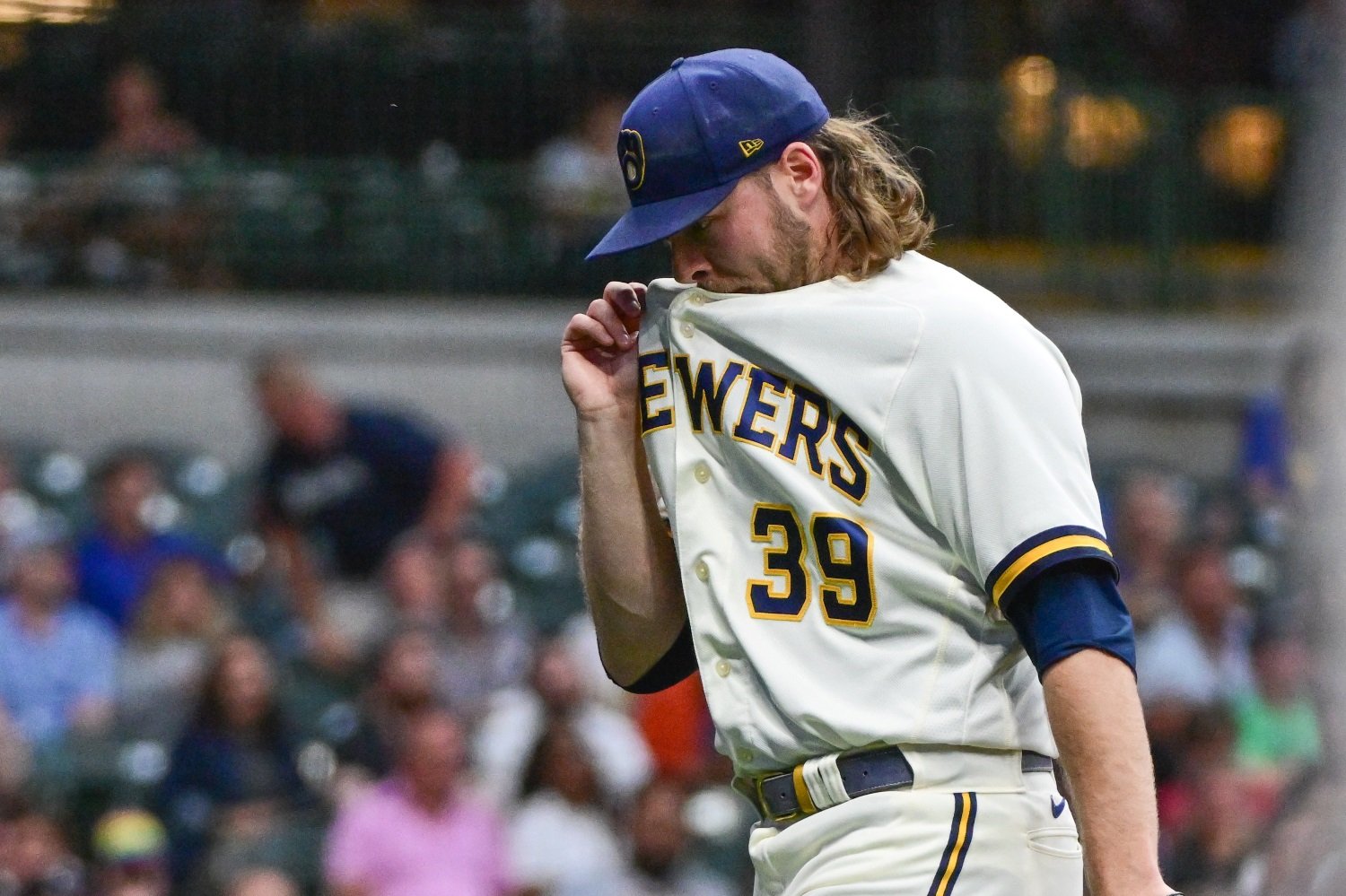 Tuesday isn't the first time the Brewers have woken up looking up at first place in the division since their Craigtember in April promotion. This time, though, it has a much greater sense of gravity and danger to it. The Pirates, who had briefly eclipsed them a couple other times this spring, are in freefall. The Cubs remain a few games back, stumbling in their own ways. The Reds, though, seem to be just hitting their stride, while the Crew are floundering. When the class of the National League for 2023 came to Miller Park Monday night, it was a chance to prove that the Brewers should be primarily identified as a first-place team, rather than as one who has been outscored on the season and can't hit its way around even the slightest misstep by its pitching staff. Instead, before the first out was recorded by Corbin Burnes, the rout was on. The Diamondbacks looked around, figured one turn-of-the-century retractable-roofed rectangle was as good as another, and made Milwaukee their home field for the night. It's true that the Brewers are getting healthy, now. They won't get Mitchell back at all in 2023, and Woodruff seems to be a month or more away, but the rest of the guys who were felled by injury as the team faded from its hot start--Urias, Jesse Winker, Wade Miley, Willy Adames, and Eric Lauer--are back, in various forms. It's just not nearly enough to make a difference. The team isn't in a death spiral, but their unproductive fishtailing continues. On a given night, everything depends on what their starting pitcher has, because they're hardly ever going to bowl an opponent over with their bats, and their defense is no longer the very best in baseball. On Monday, Corbin Burnes couldn't figure out how to finish off any of the Diamondbacks. He only induced six whiffs in an 86-pitch outing, and Arizona relentlessly chipped away at him. That's not all his fault. No team in baseball makes contact at a higher rate than Torey Lovullo's this year. They're the 2023 version of last year's Cleveland Guardians, only they have better power and (therefore) are even more dangerous. Still, Burnes was coming off an impressive and important start against the Orioles, in which he looked as though he was poised to turn a corner and become the workhorse with the sub-3.00 ERA that Brewers fans were able to enjoy for the last three years. Instead, faced with the inability to miss bats, he imploded, like a disguised cyborg on an old cartoon when confronted with a simple riddle. As much as the offense should be castigated for its utter unresponsiveness against the unimposing Merrill Kelly, it would be wrong to drop the blame for Monday night on them. Burnes left the team with no realistic chance to win before they were even able to Velcro their batting gloves. Then again, it's the inefficiency of the offense that helps make situations like the first inning snowball. Burnes tried to be too fine, knowing that even allowing two or three runs in the first frame was as likely to prove fatal to the team as the six Arizona eventually scored against him. That 14-5 start happened to a different team. This one bears little resemblance to it. That doesn't mean there aren't good things happening. Christian Yelich has been better during the team's bout of turbulence than he was during their halcyon start. William Contreras keeps hitting, however flawed his profile might be. Despite significant turnover, the bullpen has been what the team hoped it would be. Still, the 14-5 version of the Brewers--with optimism bubbling around Brice Turang, plenty of production from Willy Adames and Rowdy Tellez, and a hot start by Brian Anderson--was more complete than this one. Whatever advantage that start gave them remains, in some sense, because without it, they might be in as rough a shape as the Cubs, or even the Cardinals. It feels irrelevant now, though. They're back to Square One. Winning this year's NL Central will not merely be a slog through the mud. It might also be a Sisyphean rolling of a stone uphill. Every now and then, because they're broken and star-crossed and because the rest of the division is good enough to at least stay close, the Brewers are going to find that they've fallen right back to their starting point--that their progress has been erased, and have to get the stone moving again from the bottom of the hill. Inarguably, the Central is a messy, undignified race this year. Changes to the schedule have made the division look even weaker than it really is. The Cardinals' collapse has created a power vacuum, and no team has yet been equal to the task of filling it. The Brewers are still the best-equipped team to do that. It's just that they no longer have even the vestigial head start they'd enjoyed over the last few weeks.

