



Jamie Cameron
-
Posts
203 -
Joined
-
Last visited
Content Type
Profiles
Forums
Blogs
Events
News
2026 Milwaukee Brewers Top Prospects Ranking
Milwaukee Brewers Videos
2022 Milwaukee Brewers Draft Picks
Milwaukee Brewers Free Agent & Trade Rumors, Notes, & Tidbits
Guides & Resources
2023 Milwaukee Brewers Draft Picks
2024 Milwaukee Brewers Draft Picks
The Milwaukee Brewers Players Project
2025 Milwaukee Brewers Draft Pick Tracker
2026 Milwaukee Brewers Draft Tracker: Picks & Bonuses
Store
Downloads
Gallery
Everything posted by Jamie Cameron
-
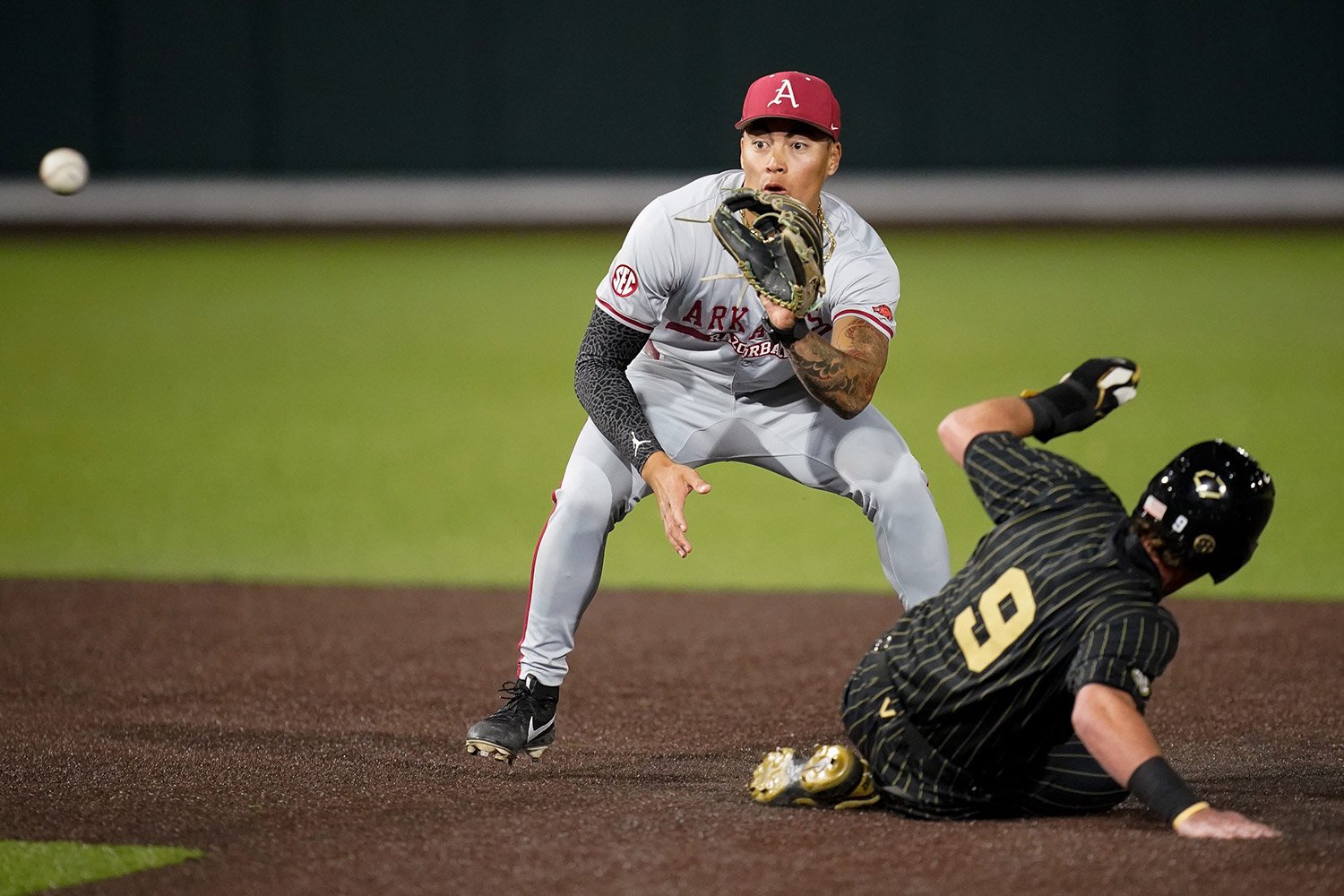 This draft cycle, we’re going to try something new. Every few weeks, I’ll be posting an article here listing out who the Brewers would select based on their position on the consensus draft board. As the consensus board is updated, the players in those spots will be adjusted, and I’ll post another update. This is not a mock draft. Rather, I’m hoping it’ll give readers an idea of the caliber of talent in each of the team’s first few picks. Additionally, it should help readers who want to dig into draft coverage a bit more get familiar with the class. Here would be the Brewers' first three picks by consensus draft ranking as of 05.16.25 1st Round (20th Overall): Wehiwa Aloy, SS, Arkansas Aloy came to Arkansas by way of Sacramento State, where he bagged WAC freshman of the year in 2023. He put together a strong first season for the Razorbacks, smacking 14 home runs on his way to an .841 OPS. He followed that up with an incandescent stretch on the Cape, clubbing eight home runs and posting a .994 OPS in 21 games for Yarmouth. Aloy has good bat speed and legit pop, especially to the pull side. He's typically been a hyper-aggressive hitter with some swing and miss in his profile. He is susceptible to spin and off-speed pitches in general, with a few holes in his swing. He's tamped down some of the noise in his operation in 2025. He sets up quietly at the plate, with a neutral stance and a toe-tap timing mechanism. The expansive chase rate is a concern, and he'll have to continue to sure up his defense to stick at shortstop as a pro. In 2025, he carried over his incredible Cape stretch into the college season, cutting into his strikeout rate and putting up massive slugging numbers (1.137 OPS, 141 wRC+), while showing much improved defense at shortstop. There’s some risk to mitigate with the hit tool, but Aloy is an electric talent and one of the higher upside options in this years college class. Free Agent Compensation (32nd Overall): Devin Taylor, OF, Indiana Taylor might be one of the few college bats in the '25 class who checks the hit/power combo satisfactorily, although I'd argue there's still some areas for improvement in the former. Taylor is a left-handed hitting corner outfield with an average arm and below average speed. In other words, that bat has to play. He put up monster numbers in his sophomore season for Indiana (20 HR, 1.109 OPS) and backed it up with a big Cape summer for Cotuit (5 HR, .907 OPS in 29 games). There's serious bat speed here from the left side. Taylor does damage consistently (106 mph EV90). He finds the barrel with consistency and is already effective in maximizing pulled fly balls. There is some swing-and-miss in zone (16% in 2024), however, Taylor doesn't chase a ton (24%) and his bat-to-ball skills translate well out of the strike zone. He'll have to continue to mash in 2025 (he has). Doing so will cement his name somewhere in the first forty picks. 2nd Round (59th Overall): Briggs McKenzie, LHP, Corinth-Holders HS, NC McKenzie is a 6’2", 185 pound lefty out of North Carolina currently committed to LSU. It’s a lean, projectable frame and a buttery smooth delivery that’s repeatable with good deception. His fastball has ticked up since last summer, sitting 90-92 mph and tickling 94 mph. He’s able to spot it consistently for strikes up in the zone with good carry. McKenzie shows an affinity for spin, he throws a curveball in the high 70s to low 80s with good depth, in addition to a mid-80s changeup. This is a classic projection lefty profile. A lean frame, solid but not yet overwhelming stuff, with pitchability and plenty of strikes. He’s an up arrow arm this spring and could make his way into the comp round, especially if he maintains his velocity gains, or even adds a tick more.
 -
Dickerson is my favorite player in the class relative to his current position on the board. It's a max EV of 117mph this year. I'm buying all of that stock. Lodise has cut his K% under the magical 20% line and added 100 points to his wRC+. Amazing season. He's a top 40 player now. Faurot still has a wide range of rankings. He's 133 on my board currently Williams I just wrote up. I don't love the swing but the ACC track record is really strong. He's a top 100 guy, for me. Neville is maybe most improved in college baseball. He still strikes out too much for me (in the B1G) but the production is undeniable. He's 42nd on the board but he'll keep climbing.
-
Image courtesy of © Andrew Nelles / The Tennessean / USA TODAY NETWORK via Imagn Images This draft cycle, we’re going to try something new. Every few weeks, I’ll be posting an article here listing out who the Brewers would select based on their position on the consensus draft board. As the consensus board is updated, the players in those spots will be adjusted, and I’ll post another update. This is not a mock draft. Rather, I’m hoping it’ll give readers an idea of the caliber of talent in each of the team’s first few picks. Additionally, it should help readers who want to dig into draft coverage a bit more get familiar with the class. Here would be the Brewers' first three picks by consensus draft ranking as of 05.16.25 1st Round (20th Overall): Wehiwa Aloy, SS, Arkansas Aloy came to Arkansas by way of Sacramento State, where he bagged WAC freshman of the year in 2023. He put together a strong first season for the Razorbacks, smacking 14 home runs on his way to an .841 OPS. He followed that up with an incandescent stretch on the Cape, clubbing eight home runs and posting a .994 OPS in 21 games for Yarmouth. Aloy has good bat speed and legit pop, especially to the pull side. He's typically been a hyper-aggressive hitter with some swing and miss in his profile. He is susceptible to spin and off-speed pitches in general, with a few holes in his swing. He's tamped down some of the noise in his operation in 2025. He sets up quietly at the plate, with a neutral stance and a toe-tap timing mechanism. The expansive chase rate is a concern, and he'll have to continue to sure up his defense to stick at shortstop as a pro. In 2025, he carried over his incredible Cape stretch into the college season, cutting into his strikeout rate and putting up massive slugging numbers (1.137 OPS, 141 wRC+), while showing much improved defense at shortstop. There’s some risk to mitigate with the hit tool, but Aloy is an electric talent and one of the higher upside options in this years college class. Free Agent Compensation (32nd Overall): Devin Taylor, OF, Indiana Taylor might be one of the few college bats in the '25 class who checks the hit/power combo satisfactorily, although I'd argue there's still some areas for improvement in the former. Taylor is a left-handed hitting corner outfield with an average arm and below average speed. In other words, that bat has to play. He put up monster numbers in his sophomore season for Indiana (20 HR, 1.109 OPS) and backed it up with a big Cape summer for Cotuit (5 HR, .907 OPS in 29 games). There's serious bat speed here from the left side. Taylor does damage consistently (106 mph EV90). He finds the barrel with consistency and is already effective in maximizing pulled fly balls. There is some swing-and-miss in zone (16% in 2024), however, Taylor doesn't chase a ton (24%) and his bat-to-ball skills translate well out of the strike zone. He'll have to continue to mash in 2025 (he has). Doing so will cement his name somewhere in the first forty picks. 2nd Round (59th Overall): Briggs McKenzie, LHP, Corinth-Holders HS, NC McKenzie is a 6’2", 185 pound lefty out of North Carolina currently committed to LSU. It’s a lean, projectable frame and a buttery smooth delivery that’s repeatable with good deception. His fastball has ticked up since last summer, sitting 90-92 mph and tickling 94 mph. He’s able to spot it consistently for strikes up in the zone with good carry. McKenzie shows an affinity for spin, he throws a curveball in the high 70s to low 80s with good depth, in addition to a mid-80s changeup. This is a classic projection lefty profile. A lean frame, solid but not yet overwhelming stuff, with pitchability and plenty of strikes. He’s an up arrow arm this spring and could make his way into the comp round, especially if he maintains his velocity gains, or even adds a tick more. View full article
-
 In episode 77 of Destination: The Show, Jeremy and Jamie start with a slew of injuries to notable Twins prospects, including Luke Keaschall, Walker Jenkins, and Charlee Soto. The guys then give an overview of the bonus pool system in MLB, detailing how the different rounds of the draft work. They go on to dig into the bonus pools of the Brewers, Twins, Red Sox, Cubs, and Padres. Finally, they spend some time reacting to the most recent BA staff draft, digging into whether the picks made might make sense for the Padres, Jays, Cubs, Brewers, and Twins. 0:00 Intro 5:55 Housekeeping 6:37 Twins Prospect Injuries 14:59 Draft Bonus Pools 17:55 Brewers Bonus Pool 20:40 Twins Bonus Pool 23:31 Red Sox Bonus Pool 27:10 Cubs Bonus Pool 30:02 Padres Bonus Pool 35:58 Bouncing around the first round You can support the show by downloading it from wherever you get your podcasts, including iTunes and Spotify. If you enjoy the content, consider leaving us a five-star rating and review in addition to sharing or retweeting DTS-related content. You can follow us on Twitter @DTS_POD1, @Jeremynygaard, @J_D_Cameron, and @TheodoreTollef1. We’re now on Bluesky @destinationtheshow.bsky.social. You can also find full episodes and clips of our shows on our YouTube page @DestinationTheShow.
 -
Image courtesy of Thieres Rabelo In episode 77 of Destination: The Show, Jeremy and Jamie start with a slew of injuries to notable Twins prospects, including Luke Keaschall, Walker Jenkins, and Charlee Soto. The guys then give an overview of the bonus pool system in MLB, detailing how the different rounds of the draft work. They go on to dig into the bonus pools of the Brewers, Twins, Red Sox, Cubs, and Padres. Finally, they spend some time reacting to the most recent BA staff draft, digging into whether the picks made might make sense for the Padres, Jays, Cubs, Brewers, and Twins. 0:00 Intro 5:55 Housekeeping 6:37 Twins Prospect Injuries 14:59 Draft Bonus Pools 17:55 Brewers Bonus Pool 20:40 Twins Bonus Pool 23:31 Red Sox Bonus Pool 27:10 Cubs Bonus Pool 30:02 Padres Bonus Pool 35:58 Bouncing around the first round You can support the show by downloading it from wherever you get your podcasts, including iTunes and Spotify. If you enjoy the content, consider leaving us a five-star rating and review in addition to sharing or retweeting DTS-related content. You can follow us on Twitter @DTS_POD1, @Jeremynygaard, @J_D_Cameron, and @TheodoreTollef1. We’re now on Bluesky @destinationtheshow.bsky.social. You can also find full episodes and clips of our shows on our YouTube page @DestinationTheShow. View full article
-
MLB Announces 2025 Draft, 2026 International Signing Period Bonus Pools
Jamie Cameron posted an article in Brewers
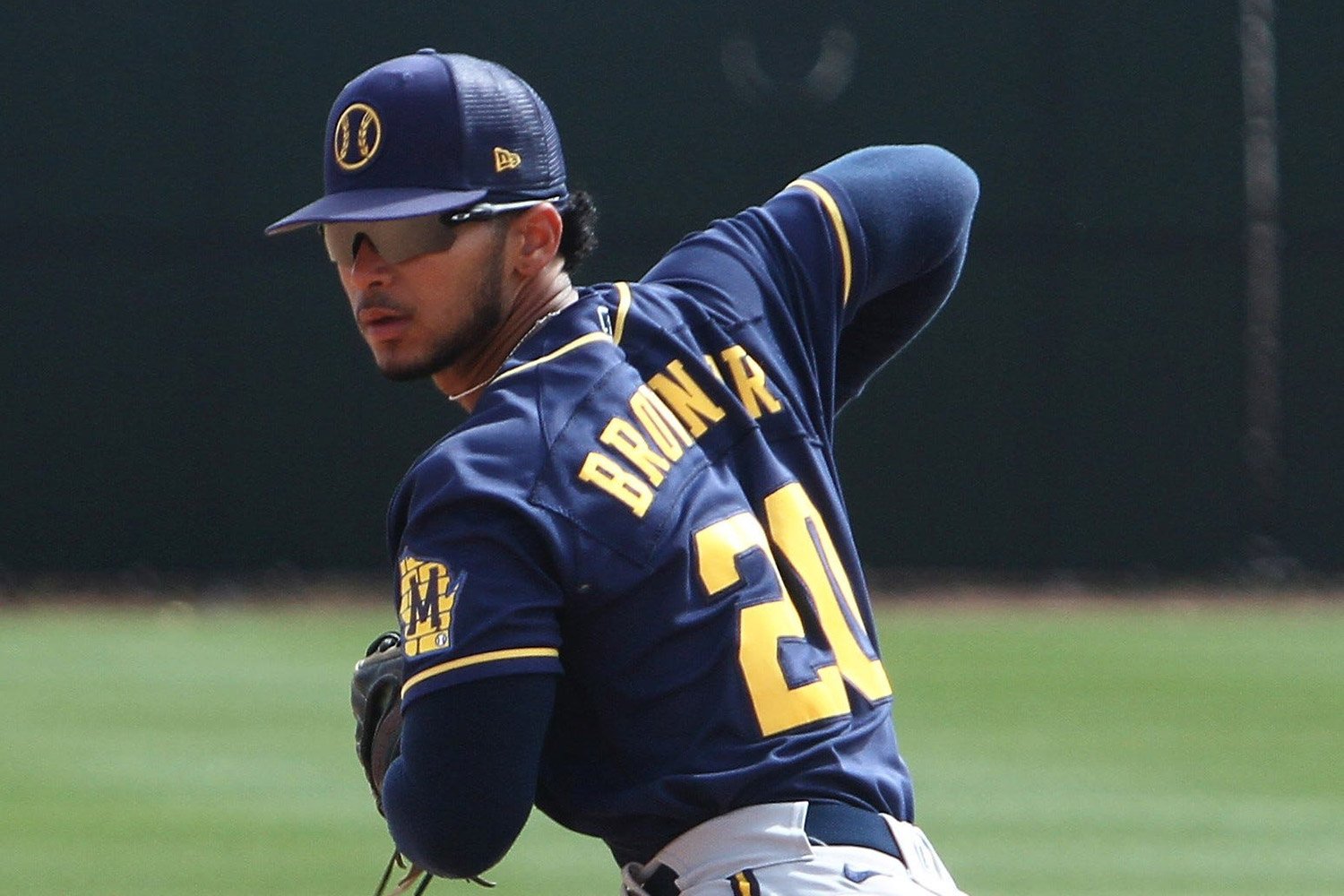 This week, MLB released bonus pool allocations and pick values for the 2025 MLB Draft. Additionally, MLB released international signing bonus pools for the 2026 signing period. Despite making the playoffs in 2024, the Brewers are well positioned in the 2025 MLB Draft. They have the 10th largest bonus pool overall, at $13,138,100. This is a function of several factors. They receive a compensation pick at 32nd overall for Willy Adames. They received an additional compensation pick at 68th overall for failing to sign Chris Levonas in 2024. The Brewers would have also had an additional pick in Comp Round A, but traded that pick (33rd overall) to the Red Sox as part of the Quinn Priester deal. The Brewers top 100 picks and slot values are as follows: Slot value for pick 20: $4,268,200 Slot value for pick 32: $2,970,900 Slot value for pick 59: $1,560,200 Slot value for pick 68: $1,254,400 Slot value for pick 94: $826,400 This combination of financial and pick flexibility puts the Brewers in a strong position ahead of a draft class shaping up to be uncertain in terms of top tier talent, but with plenty of depth through around 75 picks, with prep bats a demographic of strength. Reminders on Draft Financials Organizations are allowed to spend up to 5% more than their total pool without incurring a penalty, a choice many teams take advantage of. The Twins and the Rockies are the only MLB teams who have never spent any overage on their bonus pool. Any amount up to 5% over the pool is met with a 75% tax on the overage. If a team spends between 5-10% more than their pool, the penalty is 75% tax on the overage and loss of a future first rounder. Any team who exceeds their bonus pool by more than 10% up to 15% pays 100% tax on the overage and will lose a first and second round future pick. Any team who exceeds their bonus pool by more than 15% loses two future first round picks in addition to paying 100% tax on the overage. Rounds 11-20 work differently to the first half of the draft. These picks do not come with an assigned slot value. Teams can spend up to $150,000 per pick without that spending coming out of their bonus pool. If they spend over that amount, any overage will be deducted from their bonus pool. For example, an 11th round pick signing for $250,000 will result in $100,000 being subtracted from that teams’ bonus pool. MLB Announces 2026 International Bonus Pools MLB announced bonus pools for the 2026 international signing period today. The 2026 signing window opens on January 15th, 2026 and runs through December 15th, 2026. The Brewers are in a group of eight teams (which also includes the Reds) who have the joint second largest bonus pools. The Brewers can spend $7,357,100 in the 2026 international signing window.
 -
This week, MLB released bonus pool allocations and pick values for the 2025 MLB Draft. Additionally, MLB released international signing bonus pools for the 2026 signing period. Image courtesy of © Curt Hogg / Milwaukee Journal Sentinel / USA TODAY NETWORK This week, MLB released bonus pool allocations and pick values for the 2025 MLB Draft. Additionally, MLB released international signing bonus pools for the 2026 signing period. Despite making the playoffs in 2024, the Brewers are well positioned in the 2025 MLB Draft. They have the 10th largest bonus pool overall, at $13,138,100. This is a function of several factors. They receive a compensation pick at 32nd overall for Willy Adames. They received an additional compensation pick at 68th overall for failing to sign Chris Levonas in 2024. The Brewers would have also had an additional pick in Comp Round A, but traded that pick (33rd overall) to the Red Sox as part of the Quinn Priester deal. The Brewers top 100 picks and slot values are as follows: Slot value for pick 20: $4,268,200 Slot value for pick 32: $2,970,900 Slot value for pick 59: $1,560,200 Slot value for pick 68: $1,254,400 Slot value for pick 94: $826,400 This combination of financial and pick flexibility puts the Brewers in a strong position ahead of a draft class shaping up to be uncertain in terms of top tier talent, but with plenty of depth through around 75 picks, with prep bats a demographic of strength. Reminders on Draft Financials Organizations are allowed to spend up to 5% more than their total pool without incurring a penalty, a choice many teams take advantage of. The Twins and the Rockies are the only MLB teams who have never spent any overage on their bonus pool. Any amount up to 5% over the pool is met with a 75% tax on the overage. If a team spends between 5-10% more than their pool, the penalty is 75% tax on the overage and loss of a future first rounder. Any team who exceeds their bonus pool by more than 10% up to 15% pays 100% tax on the overage and will lose a first and second round future pick. Any team who exceeds their bonus pool by more than 15% loses two future first round picks in addition to paying 100% tax on the overage. Rounds 11-20 work differently to the first half of the draft. These picks do not come with an assigned slot value. Teams can spend up to $150,000 per pick without that spending coming out of their bonus pool. If they spend over that amount, any overage will be deducted from their bonus pool. For example, an 11th round pick signing for $250,000 will result in $100,000 being subtracted from that teams’ bonus pool. MLB Announces 2026 International Bonus Pools MLB announced bonus pools for the 2026 international signing period today. The 2026 signing window opens on January 15th, 2026 and runs through December 15th, 2026. The Brewers are in a group of eight teams (which also includes the Reds) who have the joint second largest bonus pools. The Brewers can spend $7,357,100 in the 2026 international signing window. View full article
- 1 reply
-
- 1
-

-
Destination: The Show, Episode 75. The Brewers Trade for Quinn Priester
Jamie Cameron posted an article in Podcasts
 In episode 75 of Destination: The Show, Jeremy and Jamie dig into the trade that brought Quinn Priester to the Brewers in exchange for Yophery Rodriguez, a PTBNL, and the 33rd pick in the 2025 MLB draft. The guys go on to dig into the hot starts of several Twins MiLB prospects. The talk velocity gains for Zebby Matthews and Andrew Morris before digging in on Charlee Soto, Dasan Hill, and improved plate discipline for Billy Amick. The guys then complete a 16 pick mini mock draft leveraging 2025 eligible prospects. With alternating picks, Jeremy and Jamie have to select a team of 8 players, with at least one pitcher and at least two prep picks. Weigh in on who selected the best squad. 0:00 Intro 1:20 Brewers Make Trade 8:57 Zebby and Morris and velo 16:23 Charlee Soto and Dasan Hill 21:15 Billy Amick and other notes 24:24 Mini Mock Draft - Jeremy and Jamie alternate taking picks, each making eight selection. They each have to take one pitcher (or more) and two or more prep players. 56:30 Listener Question You can support the show by downloading it from wherever you get your podcasts, including iTunes and Spotify. If you enjoy the content, consider leaving us a five-star rating and review in addition to sharing or retweeting DTS-related content. You can follow us on Twitter @DTS_POD1, @Jeremynygaard, @J_D_Cameron, and @TheodoreTollef1. We’re now on Bluesky @destinationtheshow.bsky.social. You can also find full episodes and clips of our shows on our YouTube page @DestinationTheShow.
 -
Draft tandem Jeremy Nygaard and JD Cameron team up for a podcast to discuss prospects on their way to the big leagues and the MLB draft, produced by Theo Tollefson. Image courtesy of Thieres Rabelo In episode 75 of Destination: The Show, Jeremy and Jamie dig into the trade that brought Quinn Priester to the Brewers in exchange for Yophery Rodriguez, a PTBNL, and the 33rd pick in the 2025 MLB draft. The guys go on to dig into the hot starts of several Twins MiLB prospects. The talk velocity gains for Zebby Matthews and Andrew Morris before digging in on Charlee Soto, Dasan Hill, and improved plate discipline for Billy Amick. The guys then complete a 16 pick mini mock draft leveraging 2025 eligible prospects. With alternating picks, Jeremy and Jamie have to select a team of 8 players, with at least one pitcher and at least two prep picks. Weigh in on who selected the best squad. 0:00 Intro 1:20 Brewers Make Trade 8:57 Zebby and Morris and velo 16:23 Charlee Soto and Dasan Hill 21:15 Billy Amick and other notes 24:24 Mini Mock Draft - Jeremy and Jamie alternate taking picks, each making eight selection. They each have to take one pitcher (or more) and two or more prep players. 56:30 Listener Question You can support the show by downloading it from wherever you get your podcasts, including iTunes and Spotify. If you enjoy the content, consider leaving us a five-star rating and review in addition to sharing or retweeting DTS-related content. You can follow us on Twitter @DTS_POD1, @Jeremynygaard, @J_D_Cameron, and @TheodoreTollef1. We’re now on Bluesky @destinationtheshow.bsky.social. You can also find full episodes and clips of our shows on our YouTube page @DestinationTheShow. View full article
-
 You won’t find Ernesto Martinez Jr. on top prospect lists. You might not even find him in organizational top-30 lists. He’s kind of old (turns 26 in June). He doesn't have a ton of positional defensive value (solely first base, except for 10 games in center field, since 2021). He’s also putting up metrics at Triple-A Nashville that warrant a full, Exorcist-style 360° turning of heads. Martinez has been in the Brewers organization since signing as an international free agent out of Cuba in 2017. To say it’s been a slow burn is underselling it. It took him a full six seasons to get regular playing time even at Double A, finally accruing a full season there in 2024. It was worth the wait. He put up a .284/.365/.466 line there, with 13 home runs and an approach underpinned by solid plate discipline and swing decisions. In This is Spinal Tap, guitarist Nigel Tufnel touts an amp that goes up to 11. "Well it’s one louder, isn’t it?" answers Tufnel, bemused at being asked a question of the difference between his amplifier and a standard model. To borrow parlance from the movie, in 2025, Martinez has turned it up to 11. Martinez is putting up top-of-the-scale power numbers, currently. He carried a 111-mph 90th-percentile exit velocity into game action on April 15th. That’s Aaron Judge territory. His average exit velocity of 97.5 mph would also be tippy-top of the scale in the big leagues, along with Judge and Shohei Ohtani. Insert your Star Wars prequel meme here; There’s some bat-to-ball skill issues right? RIGHT? Wrong. Through the first few weeks of Triple-A play, Martinez is running an overall contact rate of 77% (very good), with a preposterous 90% contact rate within the zone. That is a unicorn combination of outstanding contact with elite quality of contact. If there’s an Achilles heel, it might be passivity. Martinez' overall swing rate is down significantly. Additionally, he doesn't swing much in zone (around 15th percentile). One wonders if his outstanding bat-to-ball metrics will be eroded at the major league level by pitchers challenging him more in the strike zone. It’s hard to know exactly what to make of these numbers, in terms of both stickiness and general interpretation. After all, how often does a career organizational prospect go from essentially off the radar to producing numbers that would place him among the elite in MLB in a particular category, even over the course of a year and a half? I don’t know if I can think of a good example. It's also worth noting that when Martinez became a minor-league free agent (briefly) this fall, no team rushed in to offer him a big-league deal, or even a split contract. That would have been quite a gamble, even after his very strong second half last year in Biloxi, but the Brewers signed Blake Perkins to such a deal a few years ago. They do happen. They didn't materialize for Martinez; that's why he's still in the organization. Nevertheless, there’s enough of a track record of minor-league success (even without the accompanying recognition) that he warrants week-to-week scrutiny from anyone who enjoys prospecting. If Martinez keeps it turned up to 11, he’s going to find his way to Milwaukee in the not-too-distant future.
 -
The towering slugger was named International League Player of the Week for April 8th through 13th, after hitting .529 with a 1.501 OPS in a week-long slate against the Memphis Redbirds. What do his under-the-hood numbers say about his performance? Let’s dig in. Image courtesy of © Dave Kallmann / Milwaukee Journal Sentinel / USA TODAY NETWORK via Imagn Images You won’t find Ernesto Martinez Jr. on top prospect lists. You might not even find him in organizational top-30 lists. He’s kind of old (turns 26 in June). He doesn't have a ton of positional defensive value (solely first base, except for 10 games in center field, since 2021). He’s also putting up metrics at Triple-A Nashville that warrant a full, Exorcist-style 360° turning of heads. Martinez has been in the Brewers organization since signing as an international free agent out of Cuba in 2017. To say it’s been a slow burn is underselling it. It took him a full six seasons to get regular playing time even at Double A, finally accruing a full season there in 2024. It was worth the wait. He put up a .284/.365/.466 line there, with 13 home runs and an approach underpinned by solid plate discipline and swing decisions. In This is Spinal Tap, guitarist Nigel Tufnel touts an amp that goes up to 11. "Well it’s one louder, isn’t it?" answers Tufnel, bemused at being asked a question of the difference between his amplifier and a standard model. To borrow parlance from the movie, in 2025, Martinez has turned it up to 11. Martinez is putting up top-of-the-scale power numbers, currently. He carried a 111-mph 90th-percentile exit velocity into game action on April 15th. That’s Aaron Judge territory. His average exit velocity of 97.5 mph would also be tippy-top of the scale in the big leagues, along with Judge and Shohei Ohtani. Insert your Star Wars prequel meme here; There’s some bat-to-ball skill issues right? RIGHT? Wrong. Through the first few weeks of Triple-A play, Martinez is running an overall contact rate of 77% (very good), with a preposterous 90% contact rate within the zone. That is a unicorn combination of outstanding contact with elite quality of contact. If there’s an Achilles heel, it might be passivity. Martinez' overall swing rate is down significantly. Additionally, he doesn't swing much in zone (around 15th percentile). One wonders if his outstanding bat-to-ball metrics will be eroded at the major league level by pitchers challenging him more in the strike zone. It’s hard to know exactly what to make of these numbers, in terms of both stickiness and general interpretation. After all, how often does a career organizational prospect go from essentially off the radar to producing numbers that would place him among the elite in MLB in a particular category, even over the course of a year and a half? I don’t know if I can think of a good example. It's also worth noting that when Martinez became a minor-league free agent (briefly) this fall, no team rushed in to offer him a big-league deal, or even a split contract. That would have been quite a gamble, even after his very strong second half last year in Biloxi, but the Brewers signed Blake Perkins to such a deal a few years ago. They do happen. They didn't materialize for Martinez; that's why he's still in the organization. Nevertheless, there’s enough of a track record of minor-league success (even without the accompanying recognition) that he warrants week-to-week scrutiny from anyone who enjoys prospecting. If Martinez keeps it turned up to 11, he’s going to find his way to Milwaukee in the not-too-distant future. View full article
-
 In episode 70 of Destination: The Show, Jeremy, Jamie, and Theo dig into a slew of MLB preseason predictions. After breaking down a first look at left-handed pitcher Dasan Hill, the guys spend time predicting the winners of each MLB division, before predicting wild card winners and ultimate World Series Champions. The guys then jump into individual awards. They walk through MVP candidates, rookie of the year candidates, and Cy Young options in each league before making their picks. You can support the show by downloading it from wherever you get your podcasts, including iTunes and Spotify. If you enjoy the content, consider leaving us a five-star rating and review in addition to sharing or retweeting DTS-related content. You can follow us on Twitter @DTS_POD1, @Jeremynygaard, @J_D_Cameron, and @TheodoreTollef1. We’re now on Bluesky @destinationtheshow.bsky.social. You can also find full episodes and clips of our shows on our YouTube page @DestinationTheShow.
 -
Draft tandem Jeremy Nygaard and JD Cameron team up for a podcast to discuss prospects on their way to the big leagues and the MLB draft, produced by Theo Tollefson. Image courtesy of Thieres Rabelo In episode 70 of Destination: The Show, Jeremy, Jamie, and Theo dig into a slew of MLB preseason predictions. After breaking down a first look at left-handed pitcher Dasan Hill, the guys spend time predicting the winners of each MLB division, before predicting wild card winners and ultimate World Series Champions. The guys then jump into individual awards. They walk through MVP candidates, rookie of the year candidates, and Cy Young options in each league before making their picks. You can support the show by downloading it from wherever you get your podcasts, including iTunes and Spotify. If you enjoy the content, consider leaving us a five-star rating and review in addition to sharing or retweeting DTS-related content. You can follow us on Twitter @DTS_POD1, @Jeremynygaard, @J_D_Cameron, and @TheodoreTollef1. We’re now on Bluesky @destinationtheshow.bsky.social. You can also find full episodes and clips of our shows on our YouTube page @DestinationTheShow. View full article
-
 Draft Context, Scouting and Signing Blake Burke was 49th on the Brewer Fanatic consensus draft board entering the 2024 draft, occupying spots ranking from the low 30s to the mid-60s on most industry boards. The Brewers liked what they saw from Burke, selecting him with the 34th overall pick (in the competitive-balance segment after the first round) and signing him to an under-slot bonus of $2.1 million. Given his 2024 season, and how advanced Burke’s bat is, I found the pre-draft ranking discrepancy between his profile and other first base, power-oriented bats a little wide for my taste. Burke has legitimate bat speed that underpins an uppercut swing. It's all designed to lift the baseball. He has 70-grade raw power, and Burke put up gaudy exit velocities in 2024. His 110.5-mph 90th-percentile exit velocity was one of the very best in NCAA baseball, and he maxed out at 117 mph. He’s not pull-reliant, either. His 19% pulled fly ball rate was only in the 38th percentile in Div. I in 2024. Burke’s bat-to-ball skills are more advanced than you might suspect for a power-oriented bat. In 2024, there was some swing-and-miss in the strike zone (12.6%, right around average), but his overall contact rate of 83% was good for the 66th percentile, and he posted strong numbers outside the strike zone, too. The bugaboo in Burke’s offensive profile is an extreme chase rate. He’s an aggressive hitter (51% swing rate), but he’ll need to tamp down a chase rate which in 2024 was north of 33%, as pitchers in the upper levels of the minors will take advantage of his eagerness. 2024 Pro Debut: Strengths, Opportunities and Expectations for 2025 2024 Stats (NCAA): 72 games (323 PA), .379/.449/.702, 20 HR, 10.8 BB%, 14.9 K%, 147 wRC+ 2024 Stats (A+): 5 games (18 PA), .250/.333/.250, 11.1 BB%, 22.2 K%, 78 wRC+ There’s not much to say on Burke’s 2024 pro debut, as it was so brief that our sample size is unreasonably small. Burke had an incredibly long college baseball season in 2024, playing 72 games for the eventual national champion Tennessee Volunteers. With a full offseason under his belt, I’d expect him to start at High-A Wisconsin in 2025. The Brewers will be hoping he makes short work of Appleton and rises to the upper levels of the minors by the end of the season. He’s a bat-reliant corner profile who will need to mash to provide value, but the building blocks are firmly in place for this outcome. 2025 Brewers Prospect Preview: Braylon Payne
 -
2025 Brewers Prospect Preview: Blake Burke
Jamie Cameron posted a topic in Brewers Minor League Talk
Spring training is here! It’s time to get reacquainted with the Brewers' 2024 draft class, ahead of their first full season of professional baseball in 2025. Image courtesy of © Dave Kallmann / Milwaukee Journal Sentinel / USA TODAY NETWORK via Imagn Images Draft Context, Scouting and Signing Blake Burke was 49th on the Brewer Fanatic consensus draft board entering the 2024 draft, occupying spots ranking from the low 30s to the mid-60s on most industry boards. The Brewers liked what they saw from Burke, selecting him with the 34th overall pick (in the competitive-balance segment after the first round) and signing him to an under-slot bonus of $2.1 million. Given his 2024 season, and how advanced Burke’s bat is, I found the pre-draft ranking discrepancy between his profile and other first base, power-oriented bats a little wide for my taste. Burke has legitimate bat speed that underpins an uppercut swing. It's all designed to lift the baseball. He has 70-grade raw power, and Burke put up gaudy exit velocities in 2024. His 110.5-mph 90th-percentile exit velocity was one of the very best in NCAA baseball, and he maxed out at 117 mph. He’s not pull-reliant, either. His 19% pulled fly ball rate was only in the 38th percentile in Div. I in 2024. Burke’s bat-to-ball skills are more advanced than you might suspect for a power-oriented bat. In 2024, there was some swing-and-miss in the strike zone (12.6%, right around average), but his overall contact rate of 83% was good for the 66th percentile, and he posted strong numbers outside the strike zone, too. The bugaboo in Burke’s offensive profile is an extreme chase rate. He’s an aggressive hitter (51% swing rate), but he’ll need to tamp down a chase rate which in 2024 was north of 33%, as pitchers in the upper levels of the minors will take advantage of his eagerness. 2024 Pro Debut: Strengths, Opportunities and Expectations for 2025 2024 Stats (NCAA): 72 games (323 PA), .379/.449/.702, 20 HR, 10.8 BB%, 14.9 K%, 147 wRC+ 2024 Stats (A+): 5 games (18 PA), .250/.333/.250, 11.1 BB%, 22.2 K%, 78 wRC+ There’s not much to say on Burke’s 2024 pro debut, as it was so brief that our sample size is unreasonably small. Burke had an incredibly long college baseball season in 2024, playing 72 games for the eventual national champion Tennessee Volunteers. With a full offseason under his belt, I’d expect him to start at High-A Wisconsin in 2025. The Brewers will be hoping he makes short work of Appleton and rises to the upper levels of the minors by the end of the season. He’s a bat-reliant corner profile who will need to mash to provide value, but the building blocks are firmly in place for this outcome. 2025 Brewers Prospect Preview: Braylon Payne View full article -
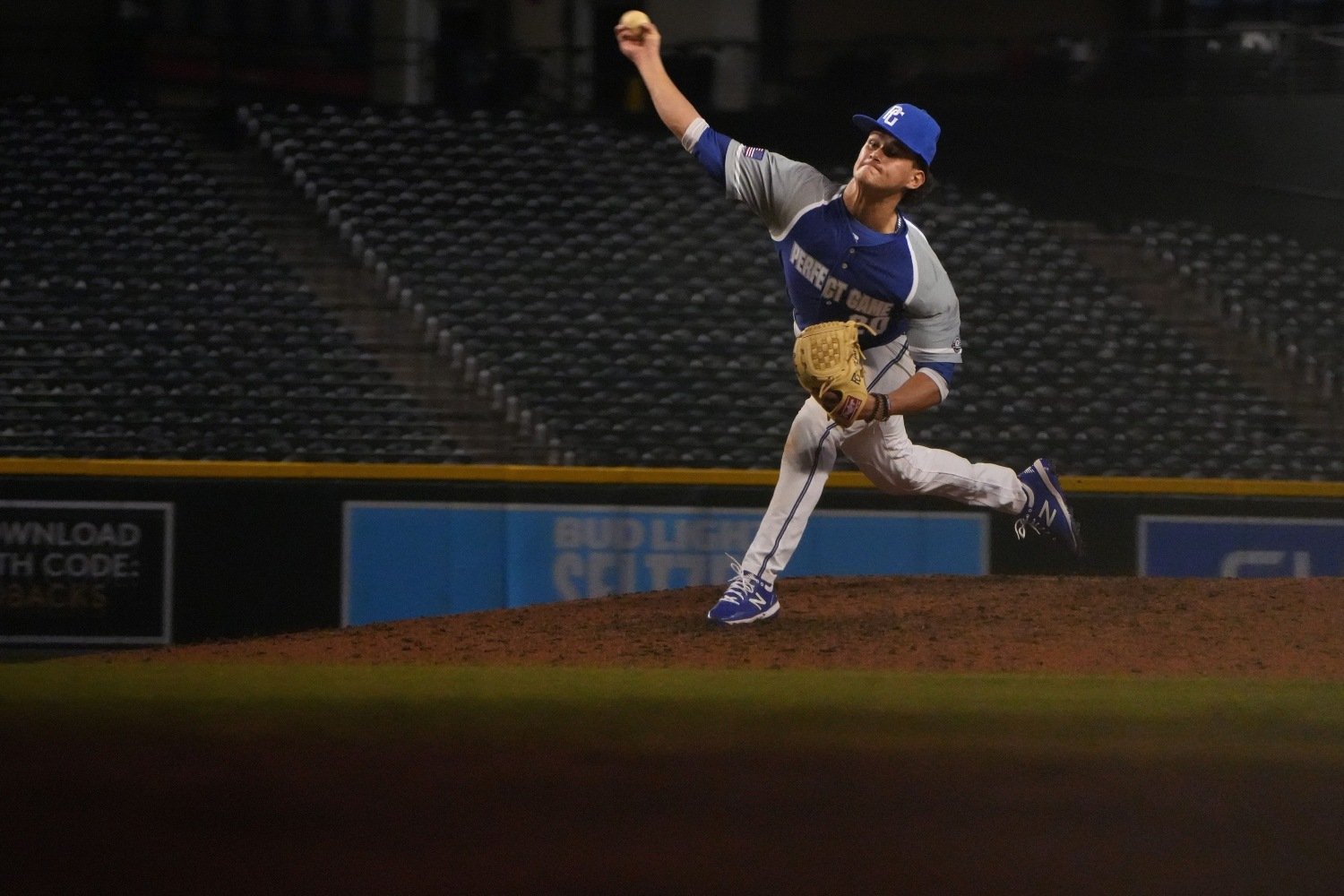 Josh Knoth will miss the entire 2025 season after undergoing Tommy John surgery, Curt Hogg of the Milwaukee Journal-Sentinel reported on Saturday. Knoth, a 19-year-old right-handed pitcher, was a cold-weather prep arm and pop-up prospect in the 2023 MLB Draft, wherein the Brewers selected him 33rd overall in Compensation Round A, signing him to a $2-million, underslot bonus. Knoth, out of New York, was an appealing arm to model-reliant teams in a loaded prep class. He was just 17 on draft day, one of the youngest pitchers taken after a spring season in which his stock shot up. He saw a velocity spike that added to already-good stuff, and his performance ticked up accordingly. Knoth notched a 19-strikeout perfect game to become one of the buzziest prospects on the board. Then undersized at 6-foot-1 and 190 pounds, Knoth stood out in pre-draft reports for his ability to spin the baseball. Scouts and data emphasized a fastball that sat 93-95 mph with solid shape, in addition to a pair of breaking balls routinely generating 3,000+ rpm of spin. Knoth’s changeup notably lagged behind his two breaking balls as a fringy pitch, but he received positive reviews for improved control leading up to the draft. Knoth debuted for Carolina in his age-18 season, and like many prep arms, he had ups and downs. A fairly unexciting 4.48 ERA was enhanced by better under-the-hood numbers. Knoth’s 3.57 xFIP and 26.6% strikeout rate were reasons for optimism over a 21-start, 81-inning debut season. Knoth didn’t show a great feel for the strike zone, and his 11.1% walk rate defied those optimistic takes on his control. Still, command questions aside, Knoth was at least par for the level, if not better in his first professional season. So where does this injury news leave him, with a less clear path forward? Certainly. Knoth’s profile was imbued with some reliever risk due to his undersized frame. Add in patchy control in his first professional season and a missed year due to injury, and it’s easy to travel down a rabbit hole of concern. Still, time is on his side. His comeback in 2026 will be important in ensuring he remains on track as a starter who could help the Brewers, but he'll throw competitive pitches again before he turns 21. That's reassuring, at a difficult moment like this.
 -
One of the Brewers' top pitching prospects will miss the entire 2025 season, after undergoing Tommy John surgery. How was the young righty's first full professional season? How does this news impact his future in the organization? Image courtesy of © Joe Rondone/The Republic / USA TODAY NETWORK Josh Knoth will miss the entire 2025 season after undergoing Tommy John surgery, Curt Hogg of the Milwaukee Journal-Sentinel reported on Saturday. Knoth, a 19-year-old right-handed pitcher, was a cold-weather prep arm and pop-up prospect in the 2023 MLB Draft, wherein the Brewers selected him 33rd overall in Compensation Round A, signing him to a $2-million, underslot bonus. Knoth, out of New York, was an appealing arm to model-reliant teams in a loaded prep class. He was just 17 on draft day, one of the youngest pitchers taken after a spring season in which his stock shot up. He saw a velocity spike that added to already-good stuff, and his performance ticked up accordingly. Knoth notched a 19-strikeout perfect game to become one of the buzziest prospects on the board. Then undersized at 6-foot-1 and 190 pounds, Knoth stood out in pre-draft reports for his ability to spin the baseball. Scouts and data emphasized a fastball that sat 93-95 mph with solid shape, in addition to a pair of breaking balls routinely generating 3,000+ rpm of spin. Knoth’s changeup notably lagged behind his two breaking balls as a fringy pitch, but he received positive reviews for improved control leading up to the draft. Knoth debuted for Carolina in his age-18 season, and like many prep arms, he had ups and downs. A fairly unexciting 4.48 ERA was enhanced by better under-the-hood numbers. Knoth’s 3.57 xFIP and 26.6% strikeout rate were reasons for optimism over a 21-start, 81-inning debut season. Knoth didn’t show a great feel for the strike zone, and his 11.1% walk rate defied those optimistic takes on his control. Still, command questions aside, Knoth was at least par for the level, if not better in his first professional season. So where does this injury news leave him, with a less clear path forward? Certainly. Knoth’s profile was imbued with some reliever risk due to his undersized frame. Add in patchy control in his first professional season and a missed year due to injury, and it’s easy to travel down a rabbit hole of concern. Still, time is on his side. His comeback in 2026 will be important in ensuring he remains on track as a starter who could help the Brewers, but he'll throw competitive pitches again before he turns 21. That's reassuring, at a difficult moment like this. View full article
-
2025 Brewers Prospect Preview: Braylon Payne
Jamie Cameron replied to Jamie Cameron's topic in Brewers Minor League Talk
I like the Crawford comp, too. I think the piece to add to the discussion is this: the draft scouting reports did not account for Payne's increased strength, bat speed, more impactful batted ball events. I think that will go down as a industry miss and it's the root of why some folks where surprised by the selection. -
Spring training is around the corner. It’s time to get reacquainted with the Brewers' 2024 MLB Draft class, ahead of their first full season of professional baseball in 2025. First up: their somewhat surprising first-round pick. Image courtesy of © Max Correa / The Milwaukee Journal Sentinel / USA TODAY NETWORK Draft Context, Scouting and Signing Braylon Payne was just 17 on Draft day, one of the youngest prospects in the entire class. That added to the appeal of an exciting profile. Payne is a left-handed-hitting outfielder who sets up in the box with a relaxed, quiet stance. It's a clean, compact swing with fast hands and good bat speed. A flattish bat path makes it a line-drive contact profile right now. Payne sprays the ball around the field effectively, though, and there's a good hit tool there when it's all said and done, given his good bat-to-ball skills. Payne is a menace on the base paths, with easy plus to double-plus speed which he uses aggressively in games already. Payne plays a good center field, leveraging his speed for now while he hones his route running. It should be a plus glove that can stick in center field, despite having only a fringe-average arm. If Payne can add some loft to his swing and continue to improve his bat speed, he could get to average power to round out a profile grounded in strong hit, speed, and defensive tools. We know that when the rest of the league zigs in the draft, the Brewers usually zag. They selected Payne with the 17th overall pick and signed him for $3,440,000 (slot $4,534,100). While the pick constituted the first real surprise of the first round, the Brewers being creative with their draft pool was expected. It followed a similar strategy to 2023, in which they signed several picks at underslot prices so they could target Eric Bitonti and Cooper Pratt with overslot deals in later rounds. 2024 Pro Debut: Strengths and Opportunities 2024 Stats (A): 4 games (19 PA), .438/.526/.625 (1.151), 2 XBH, 3 BB, 3 K, 4 SB While it’s hard to glean much from a short-lived debut, Payne displayed in four games a microcosm of the reasons the Brewers fell in love with his profile. He has advanced pitch recognition and swing decisions, particularly for a prospect his age (19.5% chase rate), although he does tend to chase at the top of the zone. In the spring before he was drafted, Payne showed more bat speed and impact than you might expect from a prospect his size and age, generating exit velocities north of 110 mph. There will likely be other wrinkles in his offensive profile to address with more playing time and experience. However, if you add increased impact and power to a prospect with excellent feel for the strike zone, you have a platform for value. Add in all that speed and potentially plus defense in center, well, it’s easy to get carried away. Expectations for 2025 Payne will probably start 2025 at Carolina. He has time on his side and will be one of the younger hitters at that league and level. The Brewers can afford to take their time with him and let their player-development staff go to work on his considerable collection of tools. Don’t be surprised if Payne’s performance forces the issue, though, and he picks up where he left off in 2024. He's a precocious talent who’s easy to dream on. View full article
-
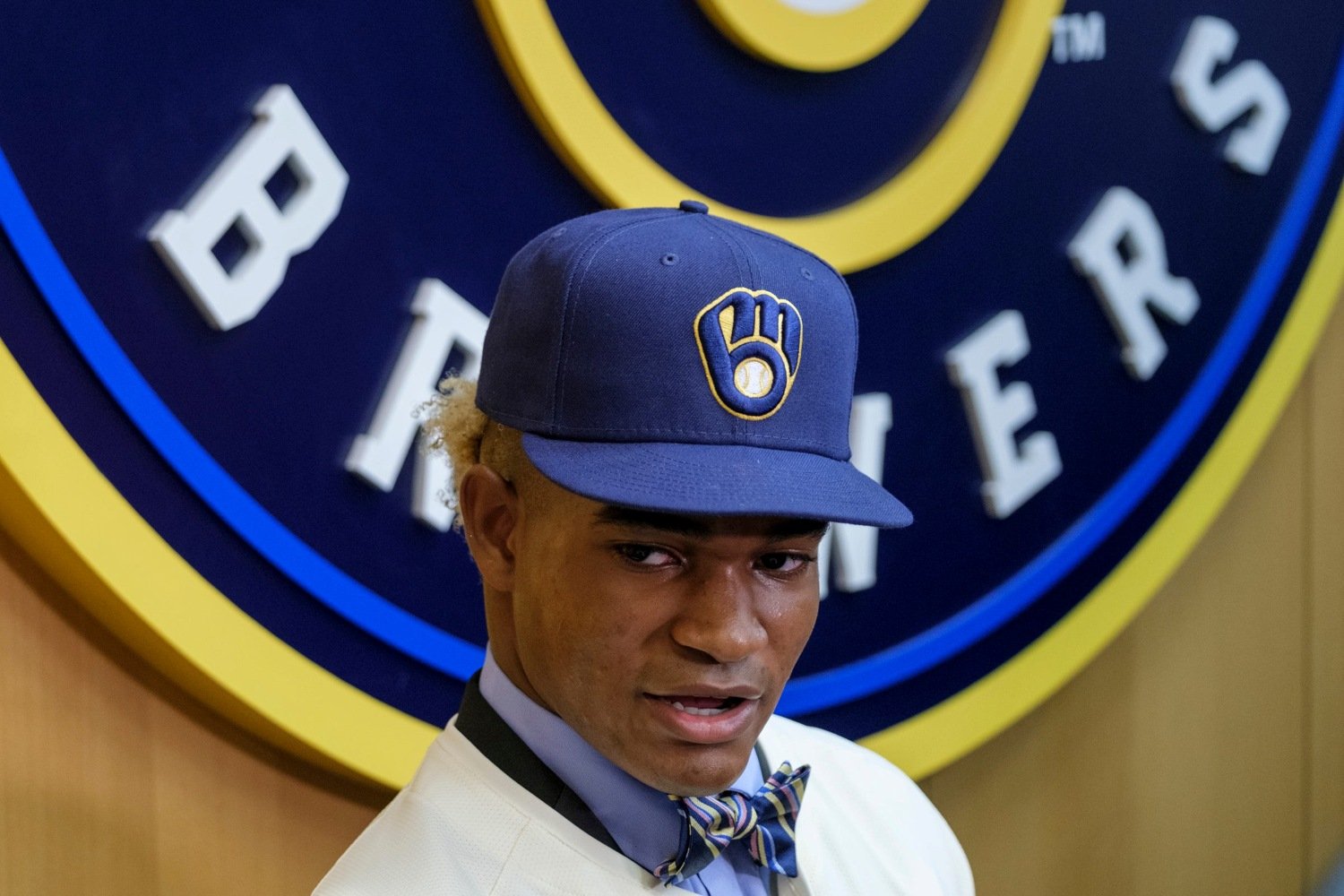 Draft Context, Scouting and Signing Braylon Payne was just 17 on Draft day, one of the youngest prospects in the entire class. That added to the appeal of an exciting profile. Payne is a left-handed-hitting outfielder who sets up in the box with a relaxed, quiet stance. It's a clean, compact swing with fast hands and good bat speed. A flattish bat path makes it a line-drive contact profile right now. Payne sprays the ball around the field effectively, though, and there's a good hit tool there when it's all said and done, given his good bat-to-ball skills. Payne is a menace on the base paths, with easy plus to double-plus speed which he uses aggressively in games already. Payne plays a good center field, leveraging his speed for now while he hones his route running. It should be a plus glove that can stick in center field, despite having only a fringe-average arm. If Payne can add some loft to his swing and continue to improve his bat speed, he could get to average power to round out a profile grounded in strong hit, speed, and defensive tools. We know that when the rest of the league zigs in the draft, the Brewers usually zag. They selected Payne with the 17th overall pick and signed him for $3,440,000 (slot $4,534,100). While the pick constituted the first real surprise of the first round, the Brewers being creative with their draft pool was expected. It followed a similar strategy to 2023, in which they signed several picks at underslot prices so they could target Eric Bitonti and Cooper Pratt with overslot deals in later rounds. 2024 Pro Debut: Strengths and Opportunities 2024 Stats (A): 4 games (19 PA), .438/.526/.625 (1.151), 2 XBH, 3 BB, 3 K, 4 SB While it’s hard to glean much from a short-lived debut, Payne displayed in four games a microcosm of the reasons the Brewers fell in love with his profile. He has advanced pitch recognition and swing decisions, particularly for a prospect his age (19.5% chase rate), although he does tend to chase at the top of the zone. In the spring before he was drafted, Payne showed more bat speed and impact than you might expect from a prospect his size and age, generating exit velocities north of 110 mph. There will likely be other wrinkles in his offensive profile to address with more playing time and experience. However, if you add increased impact and power to a prospect with excellent feel for the strike zone, you have a platform for value. Add in all that speed and potentially plus defense in center, well, it’s easy to get carried away. Expectations for 2025 Payne will probably start 2025 at Carolina. He has time on his side and will be one of the younger hitters at that league and level. The Brewers can afford to take their time with him and let their player-development staff go to work on his considerable collection of tools. Don’t be surprised if Payne’s performance forces the issue, though, and he picks up where he left off in 2024. He's a precocious talent who’s easy to dream on.
 -
Draft tandem Jeremy Nygaard and JD Cameron team up for a podcast to discuss prospects on their way to the big leagues and the MLB draft, produced by Theo Tollefson. Image courtesy of Thieres Rabelo In episode 67 of Destination: The Show, Jeremy and Jamie work through a busy week of news and notes from the offseason. They start with the Jays signing Max Scherzer, who will provide a boost to the back end of their rotation. How will he perform? Will he end the season in Toronto, or elsewhere? The guys then turn their attention to the Twins who made multiple moves this week after being frozen in carbonite for most of the offseason. Hear their thoughts on the Twins adding Danny Coulombe and Harrison Bader and asking what are the implications for other players on the fringes of the roster. The guys then jump into a round of FrankenProspect. The concept is simple; using the Brewers, Cubs, and Twins farm systems, draft tools to build the best hitter and pitcher possible. They take turns drafting hit, power, defense, arm, and run tools for hitters and fastball, changeup, slider, curveball and control tools for pitchers. Who came out on top? 0:00 Intro 4:00 Housekeeping 5:20 Moves in the MLB 11:00 Twins Sign Coloumbe 16:40 Twins Sign Bader 26:20 Build a Franken-Prospect You can support the show by downloading it from wherever you get your podcasts, including iTunes and Spotify. If you enjoy the content, consider leaving us a five-star rating and review in addition to sharing or retweeting DTS-related content. You can follow us on Twitter @DTS_POD1, @Jeremynygaard, @J_D_Cameron, and @TheodoreTollef1. We’re now on Bluesky @destinationtheshow.bsky.social. You can also find full episodes and clips of our shows on our YouTube page @DestinationTheShow. View full article
-
 In episode 67 of Destination: The Show, Jeremy and Jamie work through a busy week of news and notes from the offseason. They start with the Jays signing Max Scherzer, who will provide a boost to the back end of their rotation. How will he perform? Will he end the season in Toronto, or elsewhere? The guys then turn their attention to the Twins who made multiple moves this week after being frozen in carbonite for most of the offseason. Hear their thoughts on the Twins adding Danny Coulombe and Harrison Bader and asking what are the implications for other players on the fringes of the roster. The guys then jump into a round of FrankenProspect. The concept is simple; using the Brewers, Cubs, and Twins farm systems, draft tools to build the best hitter and pitcher possible. They take turns drafting hit, power, defense, arm, and run tools for hitters and fastball, changeup, slider, curveball and control tools for pitchers. Who came out on top? 0:00 Intro 4:00 Housekeeping 5:20 Moves in the MLB 11:00 Twins Sign Coloumbe 16:40 Twins Sign Bader 26:20 Build a Franken-Prospect You can support the show by downloading it from wherever you get your podcasts, including iTunes and Spotify. If you enjoy the content, consider leaving us a five-star rating and review in addition to sharing or retweeting DTS-related content. You can follow us on Twitter @DTS_POD1, @Jeremynygaard, @J_D_Cameron, and @TheodoreTollef1. We’re now on Bluesky @destinationtheshow.bsky.social. You can also find full episodes and clips of our shows on our YouTube page @DestinationTheShow.
 -
Destination: The Show. Episode 65. Brewers Top 10 Prospects
Jamie Cameron posted an article in Podcasts
 In episode 65 of Destination: The Show, Jeremy and Jamie work through news and notes from the offseason. They start by digging into the Jays signing Anthony Santander, asking if that is enough, or if more moves are on the way for Toronto. The guys dig into the Cubs missing out on Tanner Scott and whether that might be a blessing in disguise given the terms of his contract with the Dodgers. They provide updates on the Twins ownership situation with Justin Ishbia said to be a ‘very, very serious’ potential option. The guys then dig into dueling top ten Brewers prospect lists. Who do they have as number one on their list? Who rounds out the top ten after the four clear cut top prospects are ranked? Finally, they end with a mailbag question on Twins left-handed pitching prospect Michael Carpenter. 0:00 Intro 2:00 Baseball! 2:25 Roki Sasaki 5:25 Sasaki Fallout 8:04 Tanner Scott to the Dodgers 13:18 Twins Ownership Updates 16:15 Brewers Top 10 Prospects 1:03:15 Listener Question 1:07:30 Housekeeping You can support the show by downloading it from wherever you get your podcasts, including iTunes and Spotify. If you enjoy the content, consider leaving us a five-star rating and review in addition to sharing or retweeting DTS-related content. You can follow us on Twitter @DTS_POD1, @Jeremynygaard, @J_D_Cameron, and @TheodoreTollef1. We’re now on Bluesky @destinationtheshow.bsky.social. You can also find full episodes and clips of our shows on our YouTube page @DestinationTheShow.
 -
Draft tandem Jeremy Nygaard and JD Cameron team up for a podcast to discuss prospects on their way to the big leagues and the MLB draft, produced by Theo Tollefson. Image courtesy of Thieres Rabelo In episode 65 of Destination: The Show, Jeremy and Jamie work through news and notes from the offseason. They start by digging into the Jays signing Anthony Santander, asking if that is enough, or if more moves are on the way for Toronto. The guys dig into the Cubs missing out on Tanner Scott and whether that might be a blessing in disguise given the terms of his contract with the Dodgers. They provide updates on the Twins ownership situation with Justin Ishbia said to be a ‘very, very serious’ potential option. The guys then dig into dueling top ten Brewers prospect lists. Who do they have as number one on their list? Who rounds out the top ten after the four clear cut top prospects are ranked? Finally, they end with a mailbag question on Twins left-handed pitching prospect Michael Carpenter. 0:00 Intro 2:00 Baseball! 2:25 Roki Sasaki 5:25 Sasaki Fallout 8:04 Tanner Scott to the Dodgers 13:18 Twins Ownership Updates 16:15 Brewers Top 10 Prospects 1:03:15 Listener Question 1:07:30 Housekeeping You can support the show by downloading it from wherever you get your podcasts, including iTunes and Spotify. If you enjoy the content, consider leaving us a five-star rating and review in addition to sharing or retweeting DTS-related content. You can follow us on Twitter @DTS_POD1, @Jeremynygaard, @J_D_Cameron, and @TheodoreTollef1. We’re now on Bluesky @destinationtheshow.bsky.social. You can also find full episodes and clips of our shows on our YouTube page @DestinationTheShow. View full article
-
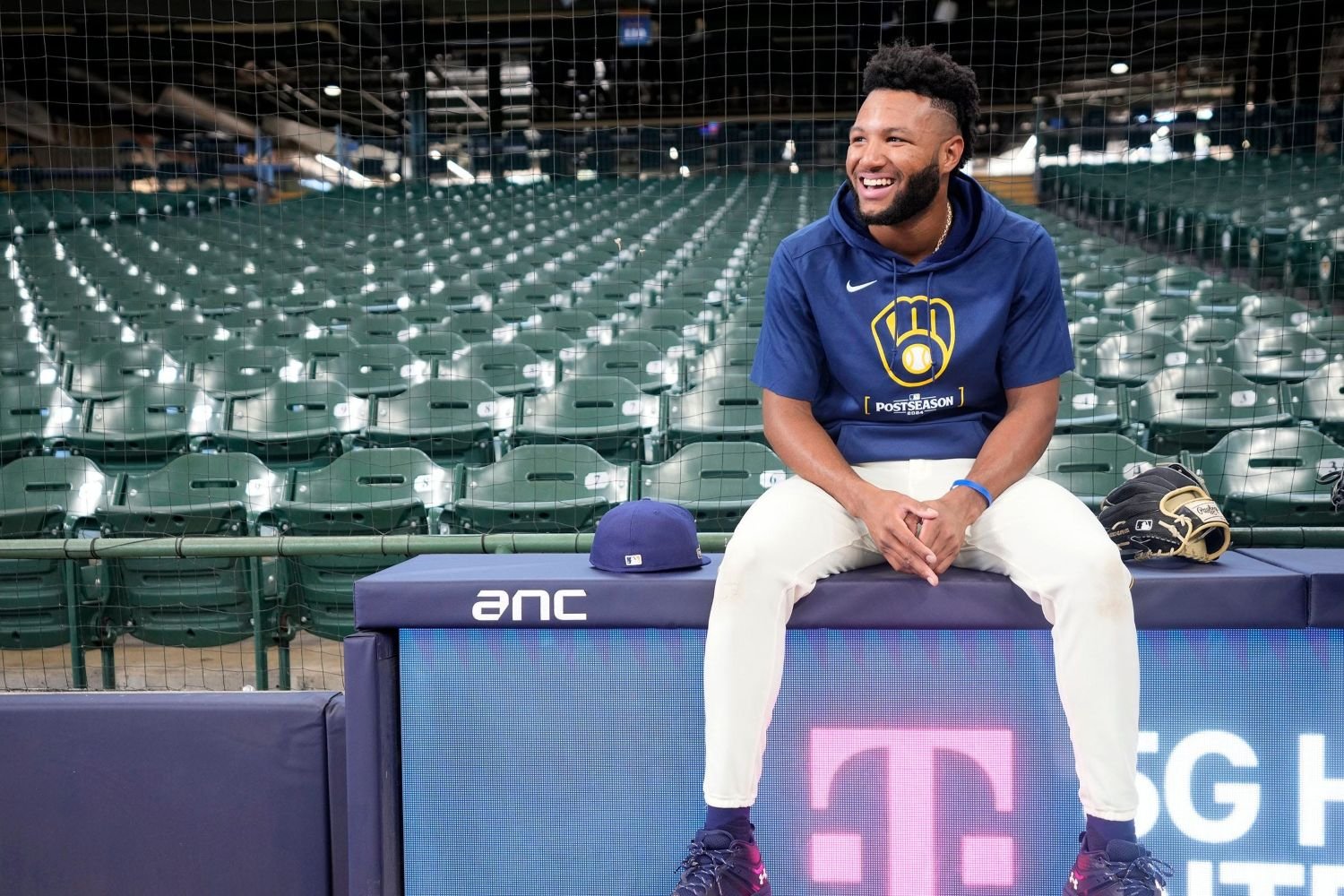 The offseason has been slow and cold for Brewers fans, but there are plenty of reasons to feel warm and fuzzy. The MLB.com executive survey anonymously polls front office execs, scouting directors and personnel, player development staff and analytics departments on a wide variety of topics, from pre-season awards favorites to which teams draft and develop talent most effectively. The survey received responses from all 30 MLB organizations, and it revealed a few truths about the Brewers. 1. The Brewers Maintain an Elite International Scouting Operation Unsurprisingly, the Brewers received strong marks for their international scouting operation, amassing 19.1% of the vote for best in baseball (third-best overall). Coming off an astounding rookie season, Jackson Chourio (3.9 fWAR) looks poised for mega-stardom. The Brewers system also boasts Jeferson Quero, Jesus Made, Yophery Rodriguez, Luis Lara, Luis Pena and so on. They have managed an impressively consistent run of international scouting success. They’ve shown not only an ability to identify talent, but the effectiveness of their player development staff in how those talents have consistently popped, improved, and progressed through their system. 2. The Brewers' Farm System is Headlined by Outstanding Depth I’d argue that at the time of this writing, the Brewers farm system leans towards depth over high-probability high-impact talent. That statement should come with caveats around Chourio’s graduation (I’d prefer to rank ‘pre-arb’ talent than prospect talent) and the likelihood of prospects continuing to pop. On the hitting side, Jesus Made and Braylon Payne each received votes for most likely ‘breakout prospect’ in 2025. Cooper Pratt received 4.2% of the vote for the best defensive prospect in baseball. While Brewers prospects didn’t get as much love for some of the major offensive categories (hit tool, usable power, overall hitter), it’s not difficult to fit potential jigsaw pieces into those slots this time next year. On the pitching side, Jacob Misiorowski received 15.2% of the vote (most) for best future closer and 15.2% of the vote (tied for second) for best fastball of any prospect. As a whole, the Crew were ranked third-best at acquiring prospects in trades, with 6.3% of the vote. 3. Drafting and Development are Cornerstones of Organizational Success What about domestic scouting? How about the Brewers' ability to develop their talent? They graded out well here, too. Milwaukee was voted as tied for the second-best drafting organization (10% of the vote) and received 16% of the vote (most) for the most underrated farm system in baseball. It’s easy to see why. The Brewers are flush with both close-to-ready talent (Tyler Black, Logan Henderson, Jacob Misiorowski) to high-upside prospects further away (Made, Eric Bitonti, Josh Knoth, Bryce Meccage). There’s good balance to the system, to boot—not surprising, for an organization who received votes for being the most effective developers of hitters and pitchers. How do we tie all of this together? By saying that the Brewers' combination of outstanding international scouting, consistently excellent drafting and player development make them the most underrated organization in baseball. It’s a strong statement, but one for which a legitimate claim can be made. Aside from the offseason lethargy, what do you make of the health of the Brewers organization? Who or what are you high or low on, entering 2025?


