



Steven
-
Posts
7 -
Joined
-
Last visited
Content Type
Profiles
Forums
Blogs
Events
News
2026 Milwaukee Brewers Top Prospects Ranking
Milwaukee Brewers Videos
2022 Milwaukee Brewers Draft Picks
Milwaukee Brewers Free Agent & Trade Rumors, Notes, & Tidbits
Guides & Resources
2023 Milwaukee Brewers Draft Picks
2024 Milwaukee Brewers Draft Picks
The Milwaukee Brewers Players Project
2025 Milwaukee Brewers Draft Pick Tracker
Store
Downloads
Gallery
Everything posted by Steven
-
The Brewers Have Yet Another League-Leading Prospect In Biloxi
Steven posted an article in Minor Leagues
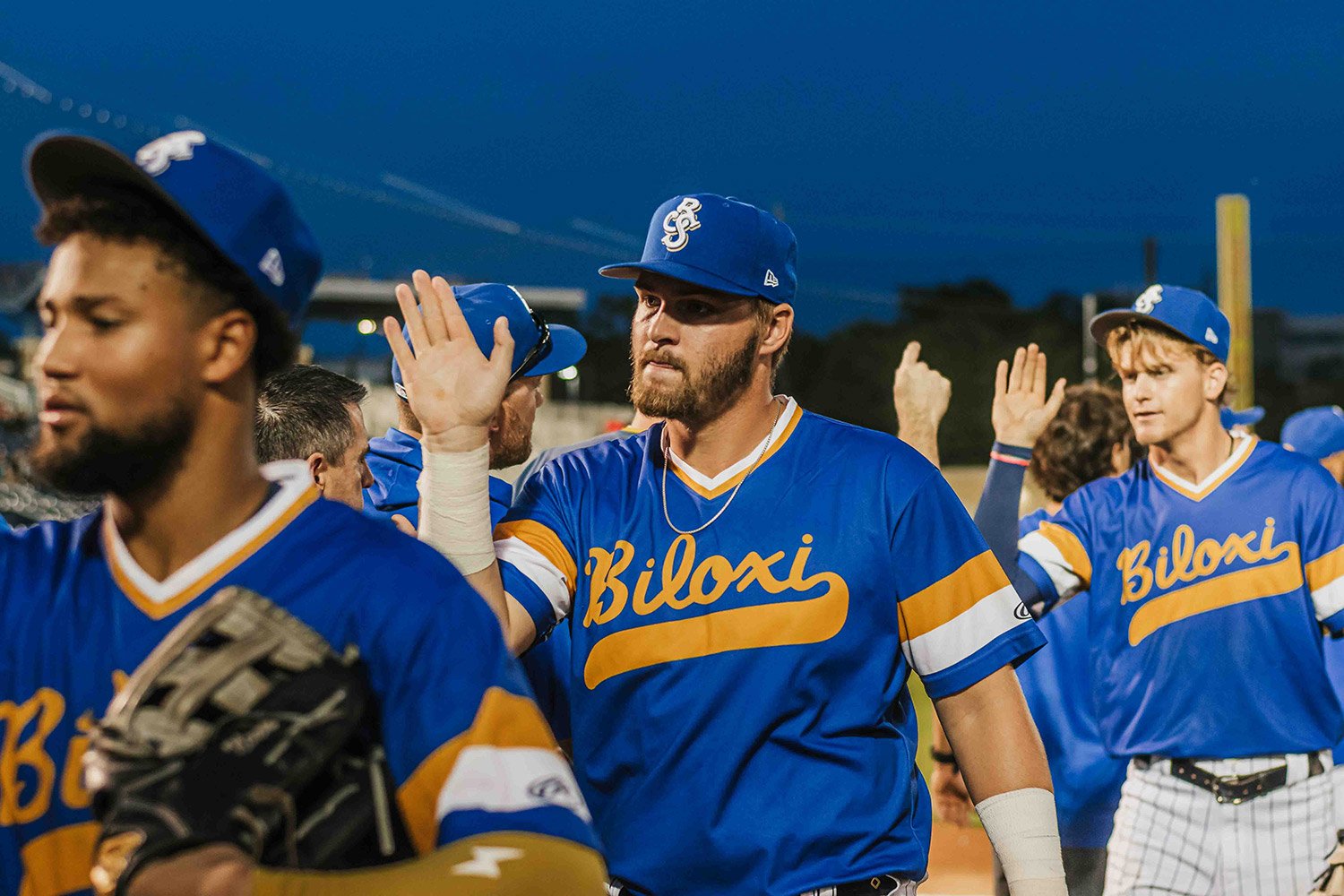 A couple of months ago, I wrote an article about Brewers prospects Luke Adams & Brock Wilken, who were, at that time, the top two hitters in the Double-A Southern League. Both hitters have since dealt with injuries, with their prolonged absences guaranteeing they remained at the top of the Southern League leaderboards. Since the writing of that article in June, a third corner infielder and Brewers prospect has joined them at the top of the league’s offensive standings. A 6’3” lefty, Blake Burke was drafted by the Brewers in the 1st round of the 2024 draft, at 34 overall. This was the Competitive Balance Round A pick the Brewers received in the Corbin Burnes trade. The first baseman was viewed at that time as an advanced college bat who chased too many pitches and lacked positional versatility. Burke then played just five minor league games in 2024, and he returned to High-A in 2025. Coming into the season, he ranked 29th in the MLB.com top 30 Brewers prospect list, surprisingly low for a highly-drafted prospect. Still, with just his bat to carry him in a stacked system, he also wasn’t likely to be among the team's most touted prospects. Additionally, in pre-draft coverage, Burke had been ranked closer to the 60th-best draft prospect by Baseball America & MLB.com, despite a strong college career. At the University of Tennessee, Burke mashed for his entire career, finishing with a slash of .332/.421/.652 with 50 HRs in 725 career PA, including hitting .379 with a 1.151 OPS in his final season. This season with High-A Wisconsin, Burke slashed .289/.380/.403 with five home runs in 408 PA, leading to his promotion to Double-A in early August. While not elite production, his was enough for a 124 wRC+ in the Midwest League, which, even a month later, ranks him 11th out of 56 qualified Midwest League hitters in that category. It wasn’t all positive for Burke, however, as he had the third-highest ground ball/fly ball ratio in the Midwest League at a 2:1 rate, which limited him to just a .114 ISO. Admittedly, these could be concerning marks for a first baseman if they continued. Burke’s bat had also begun to fade late in his time in High-A, and he earned just a .537 OPS in his final 20 games with the Timber Rattlers. Burke also owns a .372 BABIP this year. While his strong exit velocities must be playing a part, this is the second-highest BABIP in the system, and almost certainly is not a sustainable rate for the lumbering lefty. Still, Burke had shown significant promise, and backed by his experience in college ball, he was promoted to Biloxi. All he has done since then is crush the ball. After hitting five home runs in 408 High-A plate appearances, he has hit 10 in just 151 PAs in Double A. During that time, he has slashed .311/.391/.583, with both his .311 batting average and .583 SLG representing the top spot in the Southern League, albeit only if you drop the minimum PAs to just 150. For additional context, Burke went from a home park that suppresses home runs in High-A to one that allows them in bunches in Double A. In fact, data compiled by Baseball America shows the Timber Rattler’s stadium as the 9th-worst stadium in High-A for lefty HRs in 2022-23, while the stadium in Biloxi was third-best in AA with those same parameters. At the same time, both parks are fairly neutral on total hits, as the Shuckers stadium is very heavy on home runs but lighter on doubles, while the T-Rats’ stadium is the opposite. Even while admitting that Burke’s game is better suited for his home field in Biloxi than in Appleton, there is evidence that more has changed for the lefty than just the scenery. He has seriously cut back on his ground balls in Biloxi, posting a 43.2% GB rate after a 52.4% GB rate in High-A. While these are small samples in Double A, Burke now has over 550 PAs this season, and his wRC+ across both teams is now 140, the highest in the Brewers system among hitters with at least 350 PA. I said this about Wilken and Adams two months ago, but I suspect Burke will see his rank among Brewers prospects improve significantly going into 2026. FanGraphs (who released their list on May 15) similarly ranked Burke the Brewers' 32nd best prospect. Their scouting team gave Burke a 70 grade for raw power, but at that time, made note that Burke was “still piling up grounders at a clip well above 50%.” Now that Burke is elevating the ball, he faces stiff competition from his peers at the Double-A or Triple-A level. Going into 2026, the Brewers will now have three hitters with Double-A success who could end up as first basemen eventually, with the aforementioned Adams and Wilken rounding out the trio. This is a trio that, if you drop the minimum PAs to 150, owns the top three spots in wRC+ in the Southern League in 2025 out of 100 hitters, with Burke at #1, Adams at #2, and Wilken at #3. Given that none of the three played a full season in Double-A in 2025, it will be interesting to see where the Brewers place them to begin their 2026 campaigns.
 -
Image courtesy of Biloxi Shuckers A couple of months ago, I wrote an article about Brewers prospects Luke Adams & Brock Wilken, who were, at that time, the top two hitters in the Double-A Southern League. Both hitters have since dealt with injuries, with their prolonged absences guaranteeing they remained at the top of the Southern League leaderboards. Since the writing of that article in June, a third corner infielder and Brewers prospect has joined them at the top of the league’s offensive standings. A 6’3” lefty, Blake Burke was drafted by the Brewers in the 1st round of the 2024 draft, at 34 overall. This was the Competitive Balance Round A pick the Brewers received in the Corbin Burnes trade. The first baseman was viewed at that time as an advanced college bat who chased too many pitches and lacked positional versatility. Burke then played just five minor league games in 2024, and he returned to High-A in 2025. Coming into the season, he ranked 29th in the MLB.com top 30 Brewers prospect list, surprisingly low for a highly-drafted prospect. Still, with just his bat to carry him in a stacked system, he also wasn’t likely to be among the team's most touted prospects. Additionally, in pre-draft coverage, Burke had been ranked closer to the 60th-best draft prospect by Baseball America & MLB.com, despite a strong college career. At the University of Tennessee, Burke mashed for his entire career, finishing with a slash of .332/.421/.652 with 50 HRs in 725 career PA, including hitting .379 with a 1.151 OPS in his final season. This season with High-A Wisconsin, Burke slashed .289/.380/.403 with five home runs in 408 PA, leading to his promotion to Double-A in early August. While not elite production, his was enough for a 124 wRC+ in the Midwest League, which, even a month later, ranks him 11th out of 56 qualified Midwest League hitters in that category. It wasn’t all positive for Burke, however, as he had the third-highest ground ball/fly ball ratio in the Midwest League at a 2:1 rate, which limited him to just a .114 ISO. Admittedly, these could be concerning marks for a first baseman if they continued. Burke’s bat had also begun to fade late in his time in High-A, and he earned just a .537 OPS in his final 20 games with the Timber Rattlers. Burke also owns a .372 BABIP this year. While his strong exit velocities must be playing a part, this is the second-highest BABIP in the system, and almost certainly is not a sustainable rate for the lumbering lefty. Still, Burke had shown significant promise, and backed by his experience in college ball, he was promoted to Biloxi. All he has done since then is crush the ball. After hitting five home runs in 408 High-A plate appearances, he has hit 10 in just 151 PAs in Double A. During that time, he has slashed .311/.391/.583, with both his .311 batting average and .583 SLG representing the top spot in the Southern League, albeit only if you drop the minimum PAs to just 150. For additional context, Burke went from a home park that suppresses home runs in High-A to one that allows them in bunches in Double A. In fact, data compiled by Baseball America shows the Timber Rattler’s stadium as the 9th-worst stadium in High-A for lefty HRs in 2022-23, while the stadium in Biloxi was third-best in AA with those same parameters. At the same time, both parks are fairly neutral on total hits, as the Shuckers stadium is very heavy on home runs but lighter on doubles, while the T-Rats’ stadium is the opposite. Even while admitting that Burke’s game is better suited for his home field in Biloxi than in Appleton, there is evidence that more has changed for the lefty than just the scenery. He has seriously cut back on his ground balls in Biloxi, posting a 43.2% GB rate after a 52.4% GB rate in High-A. While these are small samples in Double A, Burke now has over 550 PAs this season, and his wRC+ across both teams is now 140, the highest in the Brewers system among hitters with at least 350 PA. I said this about Wilken and Adams two months ago, but I suspect Burke will see his rank among Brewers prospects improve significantly going into 2026. FanGraphs (who released their list on May 15) similarly ranked Burke the Brewers' 32nd best prospect. Their scouting team gave Burke a 70 grade for raw power, but at that time, made note that Burke was “still piling up grounders at a clip well above 50%.” Now that Burke is elevating the ball, he faces stiff competition from his peers at the Double-A or Triple-A level. Going into 2026, the Brewers will now have three hitters with Double-A success who could end up as first basemen eventually, with the aforementioned Adams and Wilken rounding out the trio. This is a trio that, if you drop the minimum PAs to 150, owns the top three spots in wRC+ in the Southern League in 2025 out of 100 hitters, with Burke at #1, Adams at #2, and Wilken at #3. Given that none of the three played a full season in Double-A in 2025, it will be interesting to see where the Brewers place them to begin their 2026 campaigns. View full article
-
The Brewers' Best-Hitting Prospect Isn't Who You Think
Steven replied to Steven's topic in Brewers Minor League Talk
It's fair to question this, for sure. There are so many factors here, including sharing infields with Made & Pena. However, like you pointed out, that doesn't explain why he can't get reps at 1B or LF. I would speculate that this is heavily related to missing 2 months with a back injury. In 24 games before he hit the IL, he DH'd just twice, both of those within 5 games of going on the IL. Since returning, he has DH'd 15 times, including 7 out of his last 11 games. At the very least, there's a correlation there. I would guess that they want to give him as many swings this season as possible, and that he is either dealing with aches & pains or they want to avoid that possibility at all costs. If that's correct, this would then not be a very good time to sprinkle in practice at new positions. -
Image courtesy of © Eric Hartline-Imagn Images It's widely agreed that the Milwaukee Brewers have the best farm system in baseball right now. When you have as many high-profile prospects as the Brewers do, you’re bound to have some players getting overshadowed. If you're a frequent reader of Brewer Fanatic, you may know him, but many have yet to become acquainted with Brewers farmhand and second baseman Josh Adamczewski. That may be because he’s the 13th-ranked Brewers prospect on MLB Pipeline, and he wasn’t on any sites’ radars until this season. Don’t get me wrong, it’s understandable that the 20-year-old was unranked in 2024, as he was a 15th-round high-school draft pick from the year before—who had zero hits in just seven at-bats in 2023. Since then, however, the lefty has gone 124-for-363 (.342) across Rookie ball, Low-A, and now High-A after his recent promotion. In 455 career plate appearances, Adamczewski has 33 doubles, 5 triples, and 8 home runs, with a .335/.447/.516 line. Since the start of 2024, Adamczewski owns the third-highest batting average in the minor leagues (min. 400 PA). For context, that’s third out of 1,518 players across all levels of the minors. Further, as of today, he is tops overall (out of that same field of 1,518) in OBP, and second in wRC+ at 169. Like most lefties, Adamczewski appears to be more comfortable hitting right-handed pitching. Since the start of 2024, against righties, the lefty has an OPS north of 1.000, with nearly as many walks (60) as total strikeouts (64). To be clear, Adamczewski is also hitting lefties in a (very) small sample this year, slashing .349/.417/.512 in just 48 trips, albeit with a much more typical 12 punchouts and just four walks. It likely hasn’t been the youngster’s dream season, however, as he was sidelined for two months with a back injury, and he rehabbed in rookie ball in early July. Upon his mid-July return to Low-A, Adamczewski slashed .359/.468/.603 across 95 PA, with more walks (15) than strikeouts (12). This brought his Low-A OPS to 1.027 on the year, in a league with an average OPS of .664. Naturally, Adamczewski was promoted at that point, heading to High-A Wisconsin just last week. There, he rejoined his similarly promoted (but more acclaimed) infield teammates, Luis Pena and Jesus Made. But why is Adamczewski so unheralded, versus those peers? For starters, it’s important to remember that the 15th-rounder had fewer than 200 PA after 2024. Additionally, he is viewed as a below-average defender at second base, the only defensive position he has manned thus far in his professional career. Still, in their writeup on the top 45 Brewers Prospects for 2025, Eric Longenhagen and James Fegan touted Adamczewski's exit velocity and bat speed, and called an "Eric Thames sort of offensive production" a “reasonable expectation" for Adamczewski. To save you a Google, Thames finished his career with a slash line of .241/.325/.467, with a 108 OPS+. That type of production, if he can stick at the keystone, would likely keep Adamczewski in the majors for a long time. If you're curious how a hitter with a .335 career batting average might be projected to hit .240 in the majors, Adamczewski does have an almost unbelievably high career batting average on balls in play or BABIP, at .413. Keeping in mind that Adamczewski still has fewer than 500 career PA, his BABIP should be expected to drop significantly as his career continues. After all, over the last 5 seasons, just the top 7% of hitters over that time even have a BABIP north of .330. Adamczewski additionally has around a 73% contact rate on swings in 2025, which is not quite to the level of elite contact you would expect from a player who may hit for a high average all the way up to the top flight. At the same time, the young lefty is just 20 years old, and can be expected to tap into more power as he grows. In fact, he has already tweaked his approach as a pro, with MLB.com reporting that for 2025, Adamczewski "lowered his hands in his stance some, allowing him to meet the ball on plane more easily." This has led to a huge drop in ground ball rate for the lefty, down to around 40% from nearly 52% last year. While the usual small sample size warnings apply, that is a massive shift in batted-ball profile, all while maintaining one of the highest averages in pro baseball. And while no prospect is a sure thing, it’s fair to expect Adamczewski's under-the-radar status to shatter soon. He's too talented a hitter not to talk about. All stats as of Aug. 25, 2025. View full article
-
 It's widely agreed that the Milwaukee Brewers have the best farm system in baseball right now. When you have as many high-profile prospects as the Brewers do, you’re bound to have some players getting overshadowed. If you're a frequent reader of Brewer Fanatic, you may know him, but many have yet to become acquainted with Brewers farmhand and second baseman Josh Adamczewski. That may be because he’s the 13th-ranked Brewers prospect on MLB Pipeline, and he wasn’t on any sites’ radars until this season. Don’t get me wrong, it’s understandable that the 20-year-old was unranked in 2024, as he was a 15th-round high-school draft pick from the year before—who had zero hits in just seven at-bats in 2023. Since then, however, the lefty has gone 124-for-363 (.342) across Rookie ball, Low-A, and now High-A after his recent promotion. In 455 career plate appearances, Adamczewski has 33 doubles, 5 triples, and 8 home runs, with a .335/.447/.516 line. Since the start of 2024, Adamczewski owns the third-highest batting average in the minor leagues (min. 400 PA). For context, that’s third out of 1,518 players across all levels of the minors. Further, as of today, he is tops overall (out of that same field of 1,518) in OBP, and second in wRC+ at 169. Like most lefties, Adamczewski appears to be more comfortable hitting right-handed pitching. Since the start of 2024, against righties, the lefty has an OPS north of 1.000, with nearly as many walks (60) as total strikeouts (64). To be clear, Adamczewski is also hitting lefties in a (very) small sample this year, slashing .349/.417/.512 in just 48 trips, albeit with a much more typical 12 punchouts and just four walks. It likely hasn’t been the youngster’s dream season, however, as he was sidelined for two months with a back injury, and he rehabbed in rookie ball in early July. Upon his mid-July return to Low-A, Adamczewski slashed .359/.468/.603 across 95 PA, with more walks (15) than strikeouts (12). This brought his Low-A OPS to 1.027 on the year, in a league with an average OPS of .664. Naturally, Adamczewski was promoted at that point, heading to High-A Wisconsin just last week. There, he rejoined his similarly promoted (but more acclaimed) infield teammates, Luis Pena and Jesus Made. But why is Adamczewski so unheralded, versus those peers? For starters, it’s important to remember that the 15th-rounder had fewer than 200 PA after 2024. Additionally, he is viewed as a below-average defender at second base, the only defensive position he has manned thus far in his professional career. Still, in their writeup on the top 45 Brewers Prospects for 2025, Eric Longenhagen and James Fegan touted Adamczewski's exit velocity and bat speed, and called an "Eric Thames sort of offensive production" a “reasonable expectation" for Adamczewski. To save you a Google, Thames finished his career with a slash line of .241/.325/.467, with a 108 OPS+. That type of production, if he can stick at the keystone, would likely keep Adamczewski in the majors for a long time. If you're curious how a hitter with a .335 career batting average might be projected to hit .240 in the majors, Adamczewski does have an almost unbelievably high career batting average on balls in play or BABIP, at .413. Keeping in mind that Adamczewski still has fewer than 500 career PA, his BABIP should be expected to drop significantly as his career continues. After all, over the last 5 seasons, just the top 7% of hitters over that time even have a BABIP north of .330. Adamczewski additionally has around a 73% contact rate on swings in 2025, which is not quite to the level of elite contact you would expect from a player who may hit for a high average all the way up to the top flight. At the same time, the young lefty is just 20 years old, and can be expected to tap into more power as he grows. In fact, he has already tweaked his approach as a pro, with MLB.com reporting that for 2025, Adamczewski "lowered his hands in his stance some, allowing him to meet the ball on plane more easily." This has led to a huge drop in ground ball rate for the lefty, down to around 40% from nearly 52% last year. While the usual small sample size warnings apply, that is a massive shift in batted-ball profile, all while maintaining one of the highest averages in pro baseball. And while no prospect is a sure thing, it’s fair to expect Adamczewski's under-the-radar status to shatter soon. He's too talented a hitter not to talk about. All stats as of Aug. 25, 2025.
 -
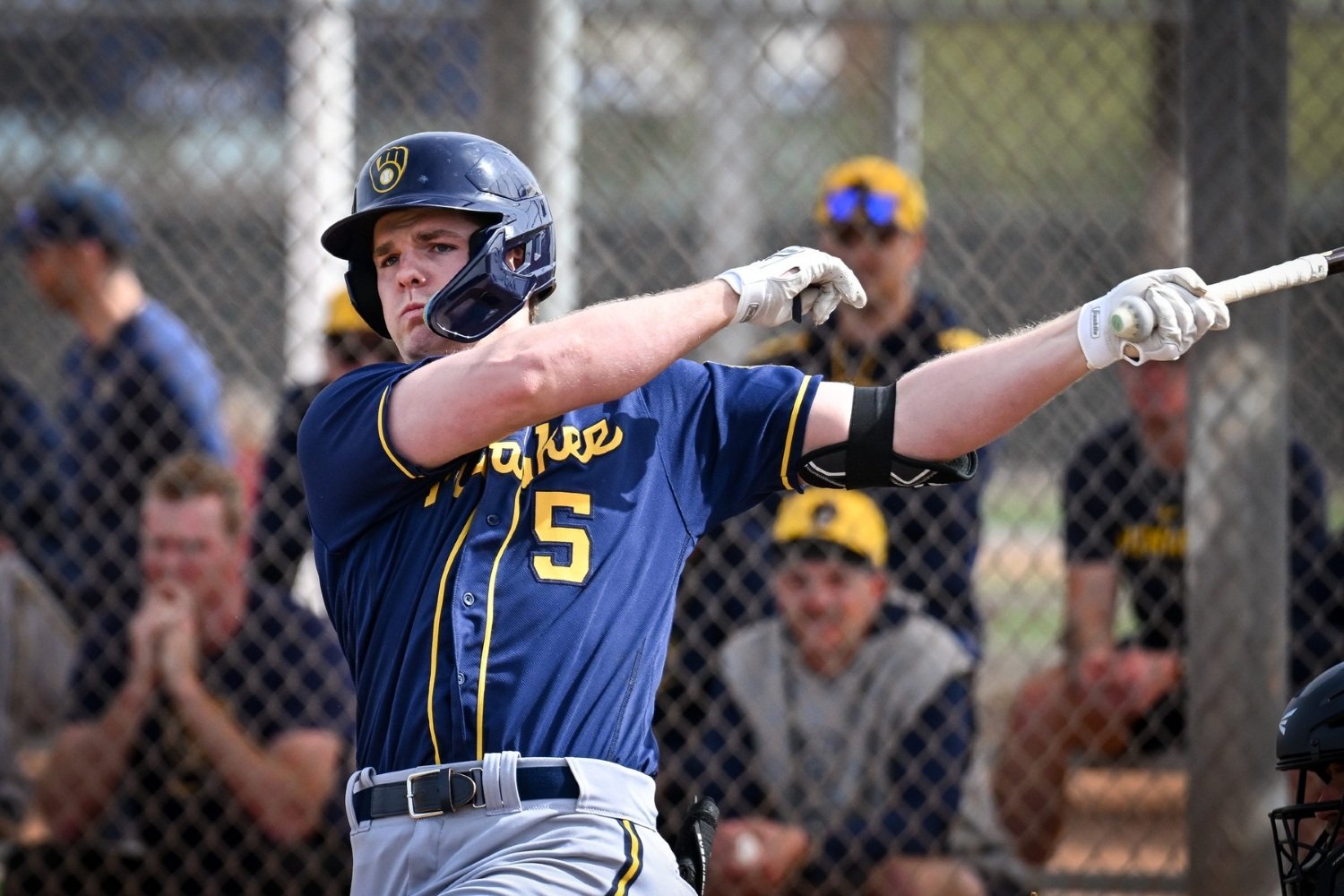 If you follow the Brewers farm system in 2025, you’ve likely heard about Luke Adams and Brock Wilken. You may have seen Spencer's article last week about Adams's swing change. They have the two highest OPSes in the Southern League. They also happen to play across from each other in the Biloxi Shucker's infield, with Wilken manning third base and Adams at first—when they're not hurt, which, alas, each of them are right now. Adams has a shoulder contusion after a collision at the plate, while Wilken has a knee injury on which he and the team are seeking multiple opinions. Still, their seasons to date merit a longer look. They were an easy choice of subject: two 6-foot-4 right-handed mashers, first and second in their league in OPS, homers, and walks. But they haven't just been superbly productive; they're oddly similar in style. These two are birds of a feather. Here’s where Wilken and Adams currently sit in a collection of stats in all Southern League history, dating back to 2007 (min. 250 PA), which includes 1,497 individual player seasons: wRC+: top 0.7% of all hitters ISO: top 4.3% of all hitters BB%: top 3.1% Pull%: top 1.3% of all hitters Just to make them even more alike, Wilken and Adams are also extremely reluctant to swing, with Wilken’s 34.5% swing rate and Adams’ 33.2% rate each among the lowest in Double A. These rates are roughly in line with Juan Soto's swing rate (34.2%), which is the lowest in the majors. The sluggers are also unique in that they have succeeded without hitting for average. Despite Wilken hitting .230 and Adams hitting .245, they rank 7th and 11th, respectively, in single-season wRC+ in the Southern League, dating back to 2007. Among the top 11 hitters by wRC+ in Southern League history, the Shuckers duo have the lowest batting averages by far, with Drew Lugbauer (who hit .279 in 2023) as the next-lowest. The remaining eight players, including names like Paul Goldschmidt (2011) and Kris Bryant (2014), all hit over .300. This stat does not come without a caveat, however: Offense has been down in the last two years in the Southern League, meaning Wilken's .230 batting average is actually slightly above average this year. Still, Wilken and Adams are arguably the greatest sub-.275 hitters in the last 20 years of Southern League baseball. And it goes beyond just Double-A ball. Since 2007, across all minor leagues, players have hit under .300 a whopping 18,457 times (min. 250 PA). Out of those 18,457 single seasons, Wilken and Adams both sit inside the top fifteen in wRC+. For players hitting under .300, that’s good for the top .08% of minor-league history. And if you drop the maximum batting average to .260, they are the top two players in minor-league history by wRC+, out of 10,000+ individual player-seasons. That was a whole lot of numbers, but what does this mean for their big-league aspirations? Well, there isn't an abundance of comps for players with this unique stat line. Most great hitters in the minors are also hitting for a high average, as many tear their way through the competition. Utilizing a few more broad parameters, I was able to find the following eventual big-league comps who, just like Wilken and Adams, had low averages (sub-.270), high walk rates (12%+), and high power (.450+ SLG) in High-A or Double-A in the last 15 years: Joey Gallo Bobby Dalbec Trent Grisham Miguel Sanó Will Benson Andy Pages Jack Suwinski JJ Bleday Chris Carter Abraham Toro Will Smith. There are more big-leaguers who fit these parameters, but these players are a solid representation of those who had low-average but very successful minor-league seasons. One thing you will notice, if you know these players, is that Will Smith is by far the best major-leaguer among them. In fact, he's a considerably better major-league hitter than he was in the minors. The Dodgers catcher is a bona fide star, with a career 128 wRC+ and .264 batting average, despite a .243 minor-league batting average. Mostly, though, this list of big leaguers is filled with “three-true-outcome” hitters, who walk, strike out, and hit home runs. With the exception of Smith and the young Pages, none have career batting averages over .230, and many have extreme strikeout rates. Perhaps most importantly, however, five of the 11 (Smith, Gallo, Carter, Pages, and Sanó) have career wRC+ figures of 108 or higher. Of course, there are many more minor-leaguers who hit sub-.270 with walks and power who never reached the majors, or had very short MLB careers. A lot of the names on that list were entirely unfamiliar to me. In the end, though, there is absolutely a precedent for players like Wilken and Adams to reach the show, and potentially experience long careers. Still, their success will almost certainly have to come in spite of their batting averages, rather than because of it.
 -
Image courtesy of © Dave Kallmann / Milwaukee Journal Sentinel / USA TODAY NETWORK via Imagn Images If you follow the Brewers farm system in 2025, you’ve likely heard about Luke Adams and Brock Wilken. You may have seen Spencer's article last week about Adams's swing change. They have the two highest OPSes in the Southern League. They also happen to play across from each other in the Biloxi Shucker's infield, with Wilken manning third base and Adams at first—when they're not hurt, which, alas, each of them are right now. Adams has a shoulder contusion after a collision at the plate, while Wilken has a knee injury on which he and the team are seeking multiple opinions. Still, their seasons to date merit a longer look. They were an easy choice of subject: two 6-foot-4 right-handed mashers, first and second in their league in OPS, homers, and walks. But they haven't just been superbly productive; they're oddly similar in style. These two are birds of a feather. Here’s where Wilken and Adams currently sit in a collection of stats in all Southern League history, dating back to 2007 (min. 250 PA), which includes 1,497 individual player seasons: wRC+: top 0.7% of all hitters ISO: top 4.3% of all hitters BB%: top 3.1% Pull%: top 1.3% of all hitters Just to make them even more alike, Wilken and Adams are also extremely reluctant to swing, with Wilken’s 34.5% swing rate and Adams’ 33.2% rate each among the lowest in Double A. These rates are roughly in line with Juan Soto's swing rate (34.2%), which is the lowest in the majors. The sluggers are also unique in that they have succeeded without hitting for average. Despite Wilken hitting .230 and Adams hitting .245, they rank 7th and 11th, respectively, in single-season wRC+ in the Southern League, dating back to 2007. Among the top 11 hitters by wRC+ in Southern League history, the Shuckers duo have the lowest batting averages by far, with Drew Lugbauer (who hit .279 in 2023) as the next-lowest. The remaining eight players, including names like Paul Goldschmidt (2011) and Kris Bryant (2014), all hit over .300. This stat does not come without a caveat, however: Offense has been down in the last two years in the Southern League, meaning Wilken's .230 batting average is actually slightly above average this year. Still, Wilken and Adams are arguably the greatest sub-.275 hitters in the last 20 years of Southern League baseball. And it goes beyond just Double-A ball. Since 2007, across all minor leagues, players have hit under .300 a whopping 18,457 times (min. 250 PA). Out of those 18,457 single seasons, Wilken and Adams both sit inside the top fifteen in wRC+. For players hitting under .300, that’s good for the top .08% of minor-league history. And if you drop the maximum batting average to .260, they are the top two players in minor-league history by wRC+, out of 10,000+ individual player-seasons. That was a whole lot of numbers, but what does this mean for their big-league aspirations? Well, there isn't an abundance of comps for players with this unique stat line. Most great hitters in the minors are also hitting for a high average, as many tear their way through the competition. Utilizing a few more broad parameters, I was able to find the following eventual big-league comps who, just like Wilken and Adams, had low averages (sub-.270), high walk rates (12%+), and high power (.450+ SLG) in High-A or Double-A in the last 15 years: Joey Gallo Bobby Dalbec Trent Grisham Miguel Sanó Will Benson Andy Pages Jack Suwinski JJ Bleday Chris Carter Abraham Toro Will Smith. There are more big-leaguers who fit these parameters, but these players are a solid representation of those who had low-average but very successful minor-league seasons. One thing you will notice, if you know these players, is that Will Smith is by far the best major-leaguer among them. In fact, he's a considerably better major-league hitter than he was in the minors. The Dodgers catcher is a bona fide star, with a career 128 wRC+ and .264 batting average, despite a .243 minor-league batting average. Mostly, though, this list of big leaguers is filled with “three-true-outcome” hitters, who walk, strike out, and hit home runs. With the exception of Smith and the young Pages, none have career batting averages over .230, and many have extreme strikeout rates. Perhaps most importantly, however, five of the 11 (Smith, Gallo, Carter, Pages, and Sanó) have career wRC+ figures of 108 or higher. Of course, there are many more minor-leaguers who hit sub-.270 with walks and power who never reached the majors, or had very short MLB careers. A lot of the names on that list were entirely unfamiliar to me. In the end, though, there is absolutely a precedent for players like Wilken and Adams to reach the show, and potentially experience long careers. Still, their success will almost certainly have to come in spite of their batting averages, rather than because of it. View full article


