



Ray Stuedemann
-
Posts
54 -
Joined
-
Last visited
Content Type
Profiles
Forums
Blogs
Events
News
2026 Milwaukee Brewers Top Prospects Ranking
Milwaukee Brewers Videos
2022 Milwaukee Brewers Draft Picks
Milwaukee Brewers Free Agent & Trade Rumors, Notes, & Tidbits
Guides & Resources
2023 Milwaukee Brewers Draft Picks
2024 Milwaukee Brewers Draft Picks
The Milwaukee Brewers Players Project
2025 Milwaukee Brewers Draft Pick Tracker
2026 Milwaukee Brewers Draft Tracker: Picks & Bonuses
Store
Downloads
Gallery
Everything posted by Ray Stuedemann
-
Image courtesy of © Jeff Hanisch-Imagn Images For much of his career, Gary Sánchez has lived on the edge of controlled chaos at the plate, pairing elite raw power with a tendency to chase pitches pitchers were more than happy to offer. This year, though, that balance looks noticeably different. Sánchez is swinging hard, and he’s swinging smarter, trimming his chase rate and showing a more disciplined approach that forces pitchers back into the zone. That shift matters even more for a Milwaukee Brewers lineup currently missing key bats like Christian Yelich, Jackson Chourio, and Andrew Vaughn. With less margin for error in the lineup, his improved swing decisions are helping stabilize an offense that needs production wherever it can find it. Sánchez was reunited with the Brew Crew in the middle of February, and the 33-year-old has been a much-needed bat during this early part of the season. Sánchez is hitting .236/.391/.582 with five homeruns entering Friday’s action, which is good for a batting run value of +7, in the 91st percentile of all MLB, and 25th overall. His slugging prowess at the plate is Sánchez’s calling card, but the unique surprise so far this year has been his patience. His chase percentage is in the 92nd percentile at 19.7%, while walking 20% of the time puts him in the 98th percentile for walk rate. That walk rate is currently the 8th-best in the league, with teammates Garrett Mitchell and Brice Turang joining him inside the top ten. This change in approach demonstrates extremely uncommon levels of discipline for Sánchez, even when going back all the way to his days with the Yankees. His two best seasons in the pinstripes saw him hit 33 home runs in 2017 and 34 home runs in 2019, earning an All-Star nod each year. However, in 2017, his chase percentage was in the 17th percentile, while his walk rate was in the 39th percentile. 2019 saw similar results, but with both slightly better; his chase percentage was in the 24th percentile, while his walk rate crept above league average into the 55th percentile. This may be a change he’s made in the latter half of his career, as Sánchez’s chase rate has gotten better each season since 2024, but then again, he only played 29 games last season with the Orioles and 89 the year prior in Milwaukee. Neither of those years was a great offensive year for Sánchez (94 OPS+ in 2024 and 100 OPS+ in 2025), so Milwaukee will gladly take the level he is producing at right now. Strikeouts will always be a factor in Sánchez’s game, and those too have been down. He is currently striking out 23.1% of the time, still not great, but below his 26.7% career average. Will that number tick back up? The answer is probably; Sánchez has still been whiffing around his career average. Still, it is easier to deal with a version of Gary Sánchez that strikes out while also walking as much as he currently does. His barrel percentage is something to keep an eye on as well. It is currently way higher (19.4%) than his career mark (14.3%), and even higher than his barrel percentage in both of his all-star seasons. Expect this to go down, at least slightly, but if his quality of contact remains this good, it will be close to a career year in terms of Sánchez’s advanced metrics. It will be intriguing to see if the man Yankees general manager Brian Cashman dubbed “The Kraken” is able to keep this up. Obviously, it isn’t likely, but then again, the Brewers have often worked their magic to get the best out of players, much to the dismay of Cubs fans. Regardless, Sánchez is providing good at-bats for a team that desperately needs them right now, with three of their best bats out for the foreseeable future. Once Yelich, Chourio, and Vaughn return, Sánchez will likely return to his backup catcher role, where he is still more suited in the long run. Even though his role will shift with the team’s health, fans should enjoy these current plate appearances from Sánchez. His “three true outcomes” approach may not be the most preferred, but it is entertaining to watch, and the Brewers need all the entertainment they can get from the lineups they are rolling out on a day-to-day basis. View full article
-
Image courtesy of © Michael McLoone-Imagn Images The Brewers continued in their ways this winter, when they traded erstwhile ace (and impending free agent) Freddy Peralta to the New York Mets in exchange for starter Brandon Sproat and shortstop Jett Williams. Williams ended up starting his season in Nashville, but Sproat earned a spot in the rotation—a chance to build on four solid starts with the Mets in 2025. He struggled in his first Brewers start against the Chicago White Sox, giving up 7 earned runs in only three innings. The next two appearances came out of the bullpen. First, he followed Logan Henderson against the Royals, giving up 4 earned runs in 3 2/3 innings. He then followed Kyle Harrison and Grant Anderson against Washington, throwing 3 2/3 innings again but only giving up one earned run. Sproat turned in his best start for the Brewers last week against the Blue Jays, pitching 6 2/3 innings, allowing 1 run on 4 hits and a walk while striking out 6. The strikeouts and walks are his Brewers bests so far this season, so what really changed between these appearances? Well, first and foremost, he threw strikes. When you have stuff as good as Sproat's, filling up the zone is always good advice, but Sproat didn't do it over his first few outings, topping out at a 52.3% zone rate. Against the Jays, that figure climbed to almost 59%, making life tougher on opposing batters by getting the hurler ahead in counts. This is an encouraging development, and hopefully, it'll be one that carries over to future starts. Sproat’s pitch usage has evolved across the early season, as well. His most common pitch across his first three outings was his sinker, but in his start against the Blue Jays, he utilized cutters (32%) and sweepers (20%) more often. His sinker was still a factor (17%), but not as frequently as in his first three starts. Additionally, Sproat only threw his sinker once against lefties versus Toronto, while throwing it 11 or more times to lefties in his previous three appearances. It’ll be interesting to see whether he's simply decided to junk the sinker to opposite-handed batters. The utilization of Sproat’s cutter is eminently notable. He used it sparingly against righties through the first two games, throwing only seven of them in total in those matchups. His appearance in relief against Washington saw a 50/50 split: he threw eight of them to both lefties and righties. Against Toronto, Sproat utilized it more against righties than lefties, 15 to 9, and if it continues to be the pitch he uses the most, the splits will likely remain the same going forward. One last thing to notice about Sproat’s strategy to attack hitters: his best Brewers start saw him eschew one of his best pitches. His changeup vanished into thin air against Toronto, after throwing that 17% of the time in his prior appearance against Washington. He utilized his changeup 14% of the time in his four starts with the Mets. Given this sudden change, it isn’t a stretch to imagine that the Brewers want him to use his other pitches before his changeup—although it might also be that they want him to gain a better feel for the changeup, making it more distinct from his sinker before reintroducing it. Thursday will be a good follow-up exam after Sproat passed the test of the defending American League champions. The Tigers are middle-of-the-road in walk and strikeout rate, so look for him to attack the zone boldly again. With a solid defense behind him, Sproat should be able to produce consistent starts all season like the one he did last Thursday. After all, the Brewers have always figured out the pitching, and while there may be bumps in the road, Sproat has all the tools to figure it out in Milwaukee. View full article
-
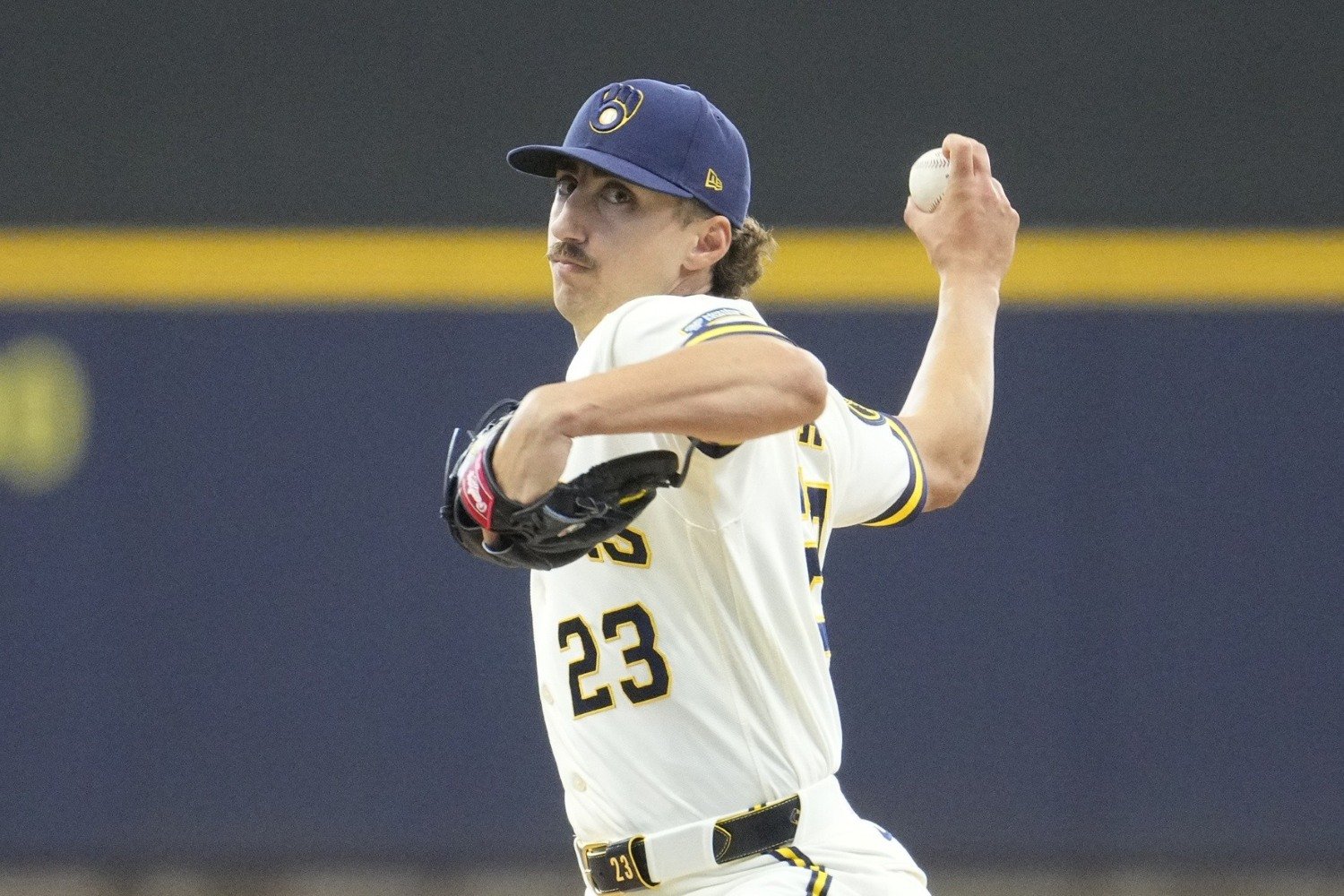 The Brewers continued in their ways this winter, when they traded erstwhile ace (and impending free agent) Freddy Peralta to the New York Mets in exchange for starter Brandon Sproat and shortstop Jett Williams. Williams ended up starting his season in Nashville, but Sproat earned a spot in the rotation—a chance to build on four solid starts with the Mets in 2025. He struggled in his first Brewers start against the Chicago White Sox, giving up 7 earned runs in only three innings. The next two appearances came out of the bullpen. First, he followed Logan Henderson against the Royals, giving up 4 earned runs in 3 2/3 innings. He then followed Kyle Harrison and Grant Anderson against Washington, throwing 3 2/3 innings again but only giving up one earned run. Sproat turned in his best start for the Brewers last week against the Blue Jays, pitching 6 2/3 innings, allowing 1 run on 4 hits and a walk while striking out 6. The strikeouts and walks are his Brewers bests so far this season, so what really changed between these appearances? Well, first and foremost, he threw strikes. When you have stuff as good as Sproat's, filling up the zone is always good advice, but Sproat didn't do it over his first few outings, topping out at a 52.3% zone rate. Against the Jays, that figure climbed to almost 59%, making life tougher on opposing batters by getting the hurler ahead in counts. This is an encouraging development, and hopefully, it'll be one that carries over to future starts. Sproat’s pitch usage has evolved across the early season, as well. His most common pitch across his first three outings was his sinker, but in his start against the Blue Jays, he utilized cutters (32%) and sweepers (20%) more often. His sinker was still a factor (17%), but not as frequently as in his first three starts. Additionally, Sproat only threw his sinker once against lefties versus Toronto, while throwing it 11 or more times to lefties in his previous three appearances. It’ll be interesting to see whether he's simply decided to junk the sinker to opposite-handed batters. The utilization of Sproat’s cutter is eminently notable. He used it sparingly against righties through the first two games, throwing only seven of them in total in those matchups. His appearance in relief against Washington saw a 50/50 split: he threw eight of them to both lefties and righties. Against Toronto, Sproat utilized it more against righties than lefties, 15 to 9, and if it continues to be the pitch he uses the most, the splits will likely remain the same going forward. One last thing to notice about Sproat’s strategy to attack hitters: his best Brewers start saw him eschew one of his best pitches. His changeup vanished into thin air against Toronto, after throwing that 17% of the time in his prior appearance against Washington. He utilized his changeup 14% of the time in his four starts with the Mets. Given this sudden change, it isn’t a stretch to imagine that the Brewers want him to use his other pitches before his changeup—although it might also be that they want him to gain a better feel for the changeup, making it more distinct from his sinker before reintroducing it. Thursday will be a good follow-up exam after Sproat passed the test of the defending American League champions. The Tigers are middle-of-the-road in walk and strikeout rate, so look for him to attack the zone boldly again. With a solid defense behind him, Sproat should be able to produce consistent starts all season like the one he did last Thursday. After all, the Brewers have always figured out the pitching, and while there may be bumps in the road, Sproat has all the tools to figure it out in Milwaukee.
 -
Is There A Solution To The Left Side Of The Infield Problem?
Ray Stuedemann posted an article in Brewers
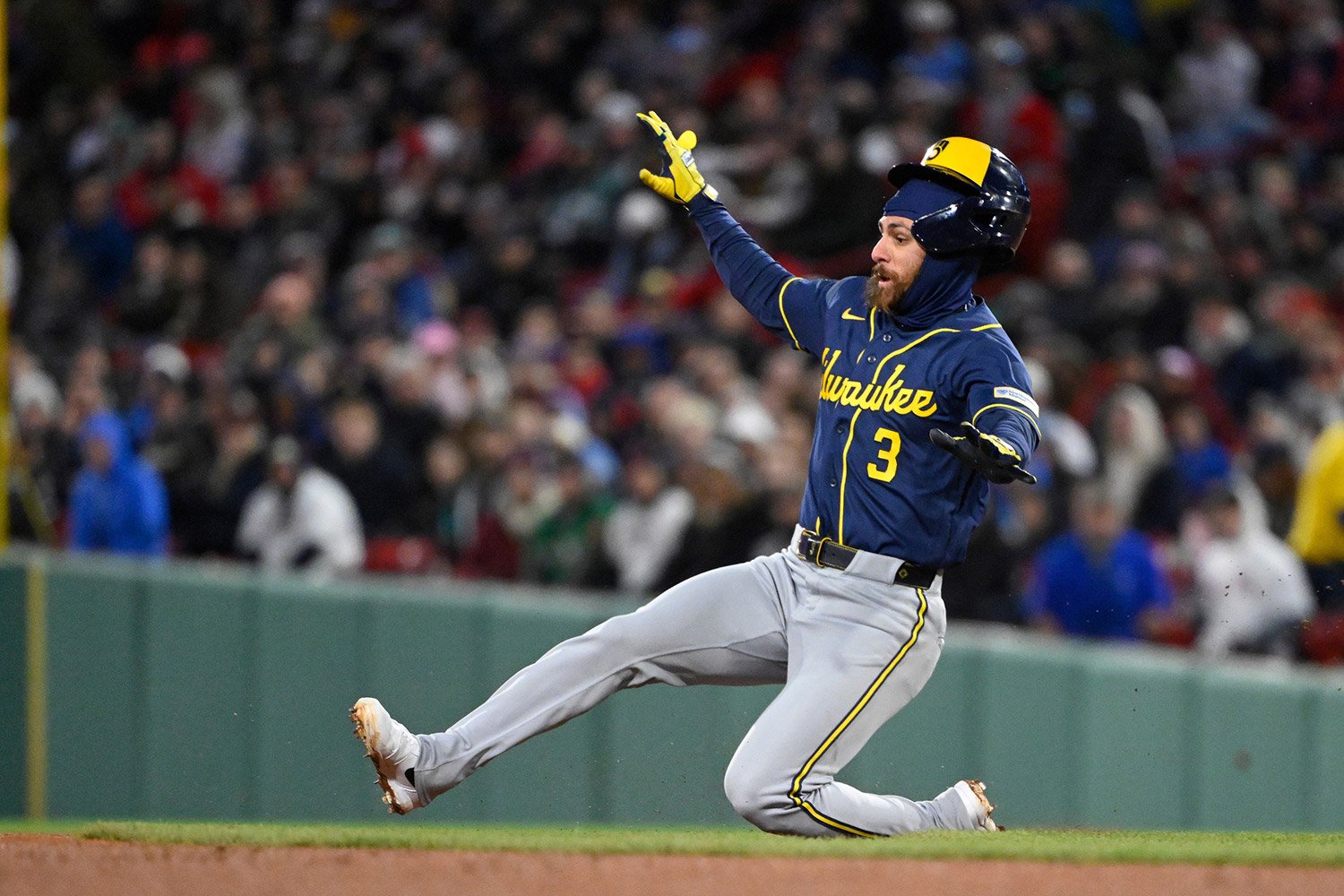 The Brewers' offense had a great start to the season despite being without Jackson Chourio and Andrew Vaughn since Opening Day, hitting .274/.379/.440 as a team, striking out 23.1% of the time, and walking at a rate of 13.9%. Their overall wOBA was at .368, good for third in the league during the stretch between Opening Day and April 6th. However, since then, the Brewers have hit .204/.304/.308, walking and striking out less than before, and their wOBA is .282. A big difference is in their BABIP: in the first stretch, the Brewers had a .352 BABIP, while this current stretch has them at .242. Regardless, the offense's sputtering wasn’t aided when Christian Yelich became sidelined with a left abductor injury on April 12th against the Nationals. This now leaves three big bats on the injured list, and it would be a good development for one of the weaker positional groups to start hitting in order for the Brewers to start scoring again. Joey Ortiz, Luis Rengifo, and David Hamilton have held down third base and shortstop so far this year, and it hasn’t been pretty to say the least. Hamilton currently leads the way out of those three in OPS, with Ortiz following and Rengifo ranking last among all Brewers batters so far this year. While Hamilton does have the highest OPS out of the three, that isn’t saying much at just .586. His advanced stats don’t show many signs of offensive improvement, as his xBA, xSLG, average exit velocity, and bat speed are all in the 7th percentile or less in MLB. One positive to be found with Hamilton’s approach is that he doesn’t whiff and strikeout, and walks a lot. His walk percentage is currently in the top 6% of all MLB players, and when he gets on, his speed is a factor, as he already has four stolen bases to his name so far. Hamilton’s defense is solid as well, with +1 OAA already this season, but unless significant offensive improvements happen, he probably should remain in a bench role. Ortiz is a whole other story. The 27-year-old has a slashline of .204/.250/.204 so far in 2026, striking out 13 times while only walking thrice. These marks are all significantly lower than his 2025 numbers, which saw him finish with a .593 OPS. Ortiz’s xSLG and average exit velocity are both in the 3rd percentile, but his xBA is .041 points higher than his actual number, while his bat speed is above league average. These indicate that there may be some luck involved, and that Ortiz could potentially find more offense at the plate, but it isn’t likely, especially given that he is hitting the ball on the ground 68.4% of the time, a league high, and up 22.9 percent from last year. Like Hamilton, Ortiz possesses speed, and the Brewers love his defense at short, but with how shorthanded the Brewers are on offense right now, time should be ticking for Ortiz to make an adjustment to get back to his offensive numbers in 2023. A free agent signing from the offseason, Rengifo was brought on to replace Caleb Durbin, who was traded to Boston before the season began. He enters Friday with a .125/.173/.208 slash line, good for the worst OPS on the team and a 9 OPS+. It is safe to say it hasn’t worked out so far, and his advanced stats don’t show too many signs for improvement, as his xSLG, average exit velocity, and bat speed are all below or at the 21st percentile. Rengifo has been solid defensively with +1 OAA and isn’t as fast as the other two guys, so he may be the first to go if changes are made. The primary issue is that with the struggles on the left side of the dirt, there aren’t a ton of current options as to who could provide offense. Jett Williams was acquired in the Freddy Peralta trade and could factor into the Brewers lineup later in the year, but he is currently struggling in Nashville, slashing .206/.342/.238 with one extra-base hit. A similar story can be told about Brock Wilken (.113/.254/.208), and recently extended Cooper Pratt (.186/.314/.209), and neither is likely ready to contribute for Milwaukee in the next few weeks. Other prospects like Jesus Made and Luis Pena are further down in the farm system, making it even more unrealistic for them to come up soon. As for the remaining internal options, there aren’t many, but Eddys Leonard could be an option if there isn’t an improvement. Leonard was signed to a minor league deal by the Brewers back in November, and while he hasn’t appeared in a major league game yet in his career, he has 40 career home runs at Triple-A and has started a total of 112 games at shortstop and third base at the Triple-A level as well. Leonard is currently slashing .245/.317/.491, but he would need to be added to the 40-man roster if he were to be called up. As for external options, trade rumors of Astros third baseman Isaac Paredes swirled after the Durbin trade, and he could still be on the market, given Houston's infield depth. Phillies third baseman Alec Bohm could also be an intriguing one-year option as he is an unrestricted free agent after this season, although Bohm has had a very poor beginning of 2026 as well. Nonetheless, the Brewers will need to find an answer soon. Having barely any offensive production from two infield spots will not end well, the longer it progresses, and given the injuries early in the season, it may not be long before desperation kicks in and changes are made.
- 15 comments
-
- 1
-

-
- joey ortiz
- luis rengifo
- (and 1 more)
-
Image courtesy of © Eric Canha-Imagn Images The Brewers' offense had a great start to the season despite being without Jackson Chourio and Andrew Vaughn since Opening Day, hitting .274/.379/.440 as a team, striking out 23.1% of the time, and walking at a rate of 13.9%. Their overall wOBA was at .368, good for third in the league during the stretch between Opening Day and April 6th. However, since then, the Brewers have hit .204/.304/.308, walking and striking out less than before, and their wOBA is .282. A big difference is in their BABIP: in the first stretch, the Brewers had a .352 BABIP, while this current stretch has them at .242. Regardless, the offense's sputtering wasn’t aided when Christian Yelich became sidelined with a left abductor injury on April 12th against the Nationals. This now leaves three big bats on the injured list, and it would be a good development for one of the weaker positional groups to start hitting in order for the Brewers to start scoring again. Joey Ortiz, Luis Rengifo, and David Hamilton have held down third base and shortstop so far this year, and it hasn’t been pretty to say the least. Hamilton currently leads the way out of those three in OPS, with Ortiz following and Rengifo ranking last among all Brewers batters so far this year. While Hamilton does have the highest OPS out of the three, that isn’t saying much at just .586. His advanced stats don’t show many signs of offensive improvement, as his xBA, xSLG, average exit velocity, and bat speed are all in the 7th percentile or less in MLB. One positive to be found with Hamilton’s approach is that he doesn’t whiff and strikeout, and walks a lot. His walk percentage is currently in the top 6% of all MLB players, and when he gets on, his speed is a factor, as he already has four stolen bases to his name so far. Hamilton’s defense is solid as well, with +1 OAA already this season, but unless significant offensive improvements happen, he probably should remain in a bench role. Ortiz is a whole other story. The 27-year-old has a slashline of .204/.250/.204 so far in 2026, striking out 13 times while only walking thrice. These marks are all significantly lower than his 2025 numbers, which saw him finish with a .593 OPS. Ortiz’s xSLG and average exit velocity are both in the 3rd percentile, but his xBA is .041 points higher than his actual number, while his bat speed is above league average. These indicate that there may be some luck involved, and that Ortiz could potentially find more offense at the plate, but it isn’t likely, especially given that he is hitting the ball on the ground 68.4% of the time, a league high, and up 22.9 percent from last year. Like Hamilton, Ortiz possesses speed, and the Brewers love his defense at short, but with how shorthanded the Brewers are on offense right now, time should be ticking for Ortiz to make an adjustment to get back to his offensive numbers in 2023. A free agent signing from the offseason, Rengifo was brought on to replace Caleb Durbin, who was traded to Boston before the season began. He enters Friday with a .125/.173/.208 slash line, good for the worst OPS on the team and a 9 OPS+. It is safe to say it hasn’t worked out so far, and his advanced stats don’t show too many signs for improvement, as his xSLG, average exit velocity, and bat speed are all below or at the 21st percentile. Rengifo has been solid defensively with +1 OAA and isn’t as fast as the other two guys, so he may be the first to go if changes are made. The primary issue is that with the struggles on the left side of the dirt, there aren’t a ton of current options as to who could provide offense. Jett Williams was acquired in the Freddy Peralta trade and could factor into the Brewers lineup later in the year, but he is currently struggling in Nashville, slashing .206/.342/.238 with one extra-base hit. A similar story can be told about Brock Wilken (.113/.254/.208), and recently extended Cooper Pratt (.186/.314/.209), and neither is likely ready to contribute for Milwaukee in the next few weeks. Other prospects like Jesus Made and Luis Pena are further down in the farm system, making it even more unrealistic for them to come up soon. As for the remaining internal options, there aren’t many, but Eddys Leonard could be an option if there isn’t an improvement. Leonard was signed to a minor league deal by the Brewers back in November, and while he hasn’t appeared in a major league game yet in his career, he has 40 career home runs at Triple-A and has started a total of 112 games at shortstop and third base at the Triple-A level as well. Leonard is currently slashing .245/.317/.491, but he would need to be added to the 40-man roster if he were to be called up. As for external options, trade rumors of Astros third baseman Isaac Paredes swirled after the Durbin trade, and he could still be on the market, given Houston's infield depth. Phillies third baseman Alec Bohm could also be an intriguing one-year option as he is an unrestricted free agent after this season, although Bohm has had a very poor beginning of 2026 as well. Nonetheless, the Brewers will need to find an answer soon. Having barely any offensive production from two infield spots will not end well, the longer it progresses, and given the injuries early in the season, it may not be long before desperation kicks in and changes are made. View full article
-
Image courtesy of © Dave Kallmann / Milwaukee Journal Sentinel / USA TODAY NETWORK via Imagn Images The Brewers have received a lot of national attention for their farm system, with top prospects Jesus Made, Luis Pena, Jett Williams, Cooper Pratt, Brandon Sproat and Andrew Fischer all ranking in the top 100 prospects, according to MLB.com. In addition to all the wealth the Brewers have at the top, their No. 12 prospect, Luis Lara, is having an extremely hot start to his season at Triple-A Nashville. Is it sustainable, and when could we see Lara in Milwaukee? Lara was signed by the Brewers for $1.1 million in 2022, and the native Venezuelan entered this year after spending the entirety of last season at Double-A Biloxi. In that pitcher-friendly environment, he hit .257/.369/.343, with 32 doubles, 3 triples, and 2 home runs in 612 plate appearances. Notably, Lara struck out only 99 times, while walking 86 times. His speed is also a factor: he stole 44 bases in 2025. He played in 136 games, 126 of them coming in center field, with the other 10 coming as the designated hitter. A switch-hitter, Lara has had fairly balanced splits in his brief pro career. Lacking power from both sides, he put up similar overall numbers at High-A Wisconsin in 2024, regardless of the handedness matchup. Last season, though, that changed. He hit .260/.382/.343 in 482 plate appearances as a lefty, while hitting .248/.323/.342 in 130 plate appearances as a righty. He generally shows better plate discipline from the left side, but pulls and lifts the ball more often when swinging right-handed. Unfortunately, he's always shown so little power on both sides of the plate that the more optimal contact profile from the right side didn't yield much value for him. He was much better, last season, as the more patient version of himself, batting lefty. This couldn’t have gotten off to a better start for the 21-year-old, though. Through his first 13 games with the Sounds, Lara hit .367/.456/.551 in 57 plate appearances. He's already matched his homer total from last year (2). He has 8 walks and 8 stolen bases, and has only struck out six times. His 90th-percentile exit velocity is 102.6 MPH, and while that's still a low number, it hints at a bit more pop than he's shown in the past. He's doing all of this at a young age, given that he's playing in the highest level of the minor leagues. How much thunder he can find in the stick will determine how far Lara goes in the majors. Just 5-foot-7, he doesn’t have the prototypical build of a power hitter—or any big-league hitter, for that matter. Brewers right fielder and sparkplug Sal Frelick is famously small, but he's two inches taller and 23 pounds heavier than Lara. Any player performing well in Triple-A at such a young age is close to the major leagues. Lara feels relatively far away, because the Brewers have so much outfield depth already on their 40-man roster, but with Jackson Chourio and Christian Yelich hurt, the door is open a crack. Lara has been an elite defender throighout his climb through the minors. He won a Minor League Gold Glove Award last year in the outfield. That, too, will be subject to testing and observation once he reaches the big leagues, where size can matter more even in the field, but if he keeps playing the way he has so far and playing time opens in center field this summer, Lara could arrive in the majors ahead of schedule. He's doing everything he can to position himself for that opportunity, at the very least. View full article
-
 The Brewers have received a lot of national attention for their farm system, with top prospects Jesus Made, Luis Pena, Jett Williams, Cooper Pratt, Brandon Sproat and Andrew Fischer all ranking in the top 100 prospects, according to MLB.com. In addition to all the wealth the Brewers have at the top, their No. 12 prospect, Luis Lara, is having an extremely hot start to his season at Triple-A Nashville. Is it sustainable, and when could we see Lara in Milwaukee? Lara was signed by the Brewers for $1.1 million in 2022, and the native Venezuelan entered this year after spending the entirety of last season at Double-A Biloxi. In that pitcher-friendly environment, he hit .257/.369/.343, with 32 doubles, 3 triples, and 2 home runs in 612 plate appearances. Notably, Lara struck out only 99 times, while walking 86 times. His speed is also a factor: he stole 44 bases in 2025. He played in 136 games, 126 of them coming in center field, with the other 10 coming as the designated hitter. A switch-hitter, Lara has had fairly balanced splits in his brief pro career. Lacking power from both sides, he put up similar overall numbers at High-A Wisconsin in 2024, regardless of the handedness matchup. Last season, though, that changed. He hit .260/.382/.343 in 482 plate appearances as a lefty, while hitting .248/.323/.342 in 130 plate appearances as a righty. He generally shows better plate discipline from the left side, but pulls and lifts the ball more often when swinging right-handed. Unfortunately, he's always shown so little power on both sides of the plate that the more optimal contact profile from the right side didn't yield much value for him. He was much better, last season, as the more patient version of himself, batting lefty. This couldn’t have gotten off to a better start for the 21-year-old, though. Through his first 13 games with the Sounds, Lara hit .367/.456/.551 in 57 plate appearances. He's already matched his homer total from last year (2). He has 8 walks and 8 stolen bases, and has only struck out six times. His 90th-percentile exit velocity is 102.6 MPH, and while that's still a low number, it hints at a bit more pop than he's shown in the past. He's doing all of this at a young age, given that he's playing in the highest level of the minor leagues. How much thunder he can find in the stick will determine how far Lara goes in the majors. Just 5-foot-7, he doesn’t have the prototypical build of a power hitter—or any big-league hitter, for that matter. Brewers right fielder and sparkplug Sal Frelick is famously small, but he's two inches taller and 23 pounds heavier than Lara. Any player performing well in Triple-A at such a young age is close to the major leagues. Lara feels relatively far away, because the Brewers have so much outfield depth already on their 40-man roster, but with Jackson Chourio and Christian Yelich hurt, the door is open a crack. Lara has been an elite defender throighout his climb through the minors. He won a Minor League Gold Glove Award last year in the outfield. That, too, will be subject to testing and observation once he reaches the big leagues, where size can matter more even in the field, but if he keeps playing the way he has so far and playing time opens in center field this summer, Lara could arrive in the majors ahead of schedule. He's doing everything he can to position himself for that opportunity, at the very least.
 -
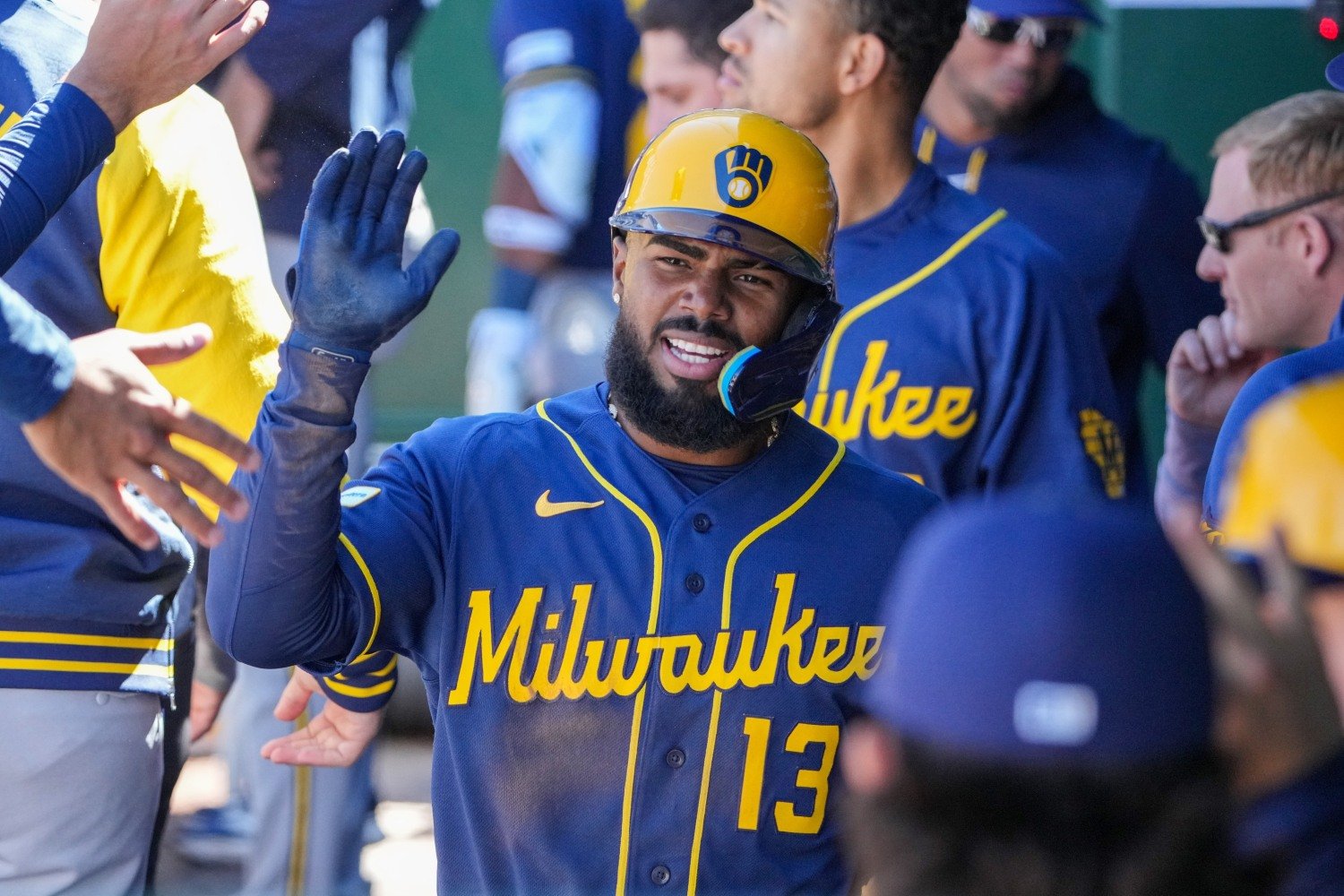 The Brewers didn’t make a lot of veteran additions to the major-league club during the offseason. One of the more surprising moves they did make was a trade with the Red Sox, sending starting third baseman Caleb Durbin to Boston. Andruw Monasterio and Anthony Seigler were also part of the deal, leaving many to wonder who the primary third baseman would be. That question was answered a few days after the trade was announced, with former Los Angeles Angels infielder Luis Rengifo signing a one-year deal with Milwaukee with a mutual option for 2027. Rengifo brought experience, with 199 career appearances at the hot corner and 567 2/3 innings there last year, and had been an above-average hitter from 2022-2024, before having a down year in 2025. Many assumed he would be the starting third baseman on Opening Day, given his significant previous playing time at the position. That wasn’t the case, though. David Hamilton, acquired in the Durbin trade, drew the start against the White Sox. Hamilton ended up going 1-2 with an RBI, two runs scored, and a walk, while Rengifo came in to pinch-hit for Joey Ortiz in the 6th inning and ended up going 0-2. Over the first six games, Rengifo looked rough. He only managed two singles and two walks over his first 15 trips to the plate. He broke through this weekend with three hits—all doubles—in Kansas City, but that still leaves his OPS at .628. His bat speed is unimpressive (especially from the left side) and he's hitting the ball on the ground too much. While his performance is not encouraging, let's look at the bright side for a second. He contributed to the Brewers’ remarkable 8th-inning comeback against the White Sox, taking a four-seam fastball from Seranthony Dominguez back up the middle past a diving Colson Montgomery to plate two runs and move the tying run to third base. Christian Yelich’s pinch-hit home run is the best moment of the Brewers’ season so far, so give Rengifo some props for getting the inning to that point. One of his doubles this weekend was in garbage time, but the other two were important, and required both solid contact and hustle out of the box. The stocky Rengifo doesn't run especially well, but he gets moving quickly and made second on two balls that other players with his speed might have allowed to become long singles. One ball didn't quite split the gap in left-center, but Rengifo took advantage of center fielder Kyle Isbel having to go a long way to cut it off there. MDRYNk5fWGw0TUFRPT1fQkZKV1ZnVUNBbFFBWFFGUlV3QUhCVk1FQUFBRFYxa0FCUVFCQndNRFV3TlZWRkZY.mp4 The other was hit down the line, but cut off well shy of the corner by left fielder Nick Loftin. Taking initiative (and benefiting from a momentary distraction, with Brice Turang heading for third and deciding not to head home), though, Rengifo just beat a good throw. Both Pat Murphy and the front office like hustle and smarts. They also like contact and plate discipline, which Rengifo has shown so far. Well-applied, those things can make up for a dearth of athleticism or power. It took a while, but Rengifo gave a glimpse of that over the weekend—perhaps just in time, with Hamilton's better defense and speed (plus the fact that he bats left-handed) threatening to marginalize Rengifo in short order. That's a question the Brewers will try to answer at the hot corner all year: can they unlock something within either Rengifo or Hamilton? Hamilton was picked by Murphy to take a “quantum leap”, while Milwaukee will try to reset Rengifo to his offensive output from his time with the Angels. The interesting thing to watch will be what the split is like going forward, which will probably continue to depend mostly on matchups—but which will certainly also be influenced by the two players' production. Rengifo showed up against the Royals, but the depth of this roster means you have to keep showing up to keep getting chances.
 -
Image courtesy of © Denny Medley-Imagn Images The Brewers didn’t make a lot of veteran additions to the major-league club during the offseason. One of the more surprising moves they did make was a trade with the Red Sox, sending starting third baseman Caleb Durbin to Boston. Andruw Monasterio and Anthony Seigler were also part of the deal, leaving many to wonder who the primary third baseman would be. That question was answered a few days after the trade was announced, with former Los Angeles Angels infielder Luis Rengifo signing a one-year deal with Milwaukee with a mutual option for 2027. Rengifo brought experience, with 199 career appearances at the hot corner and 567 2/3 innings there last year, and had been an above-average hitter from 2022-2024, before having a down year in 2025. Many assumed he would be the starting third baseman on Opening Day, given his significant previous playing time at the position. That wasn’t the case, though. David Hamilton, acquired in the Durbin trade, drew the start against the White Sox. Hamilton ended up going 1-2 with an RBI, two runs scored, and a walk, while Rengifo came in to pinch-hit for Joey Ortiz in the 6th inning and ended up going 0-2. Over the first six games, Rengifo looked rough. He only managed two singles and two walks over his first 15 trips to the plate. He broke through this weekend with three hits—all doubles—in Kansas City, but that still leaves his OPS at .628. His bat speed is unimpressive (especially from the left side) and he's hitting the ball on the ground too much. While his performance is not encouraging, let's look at the bright side for a second. He contributed to the Brewers’ remarkable 8th-inning comeback against the White Sox, taking a four-seam fastball from Seranthony Dominguez back up the middle past a diving Colson Montgomery to plate two runs and move the tying run to third base. Christian Yelich’s pinch-hit home run is the best moment of the Brewers’ season so far, so give Rengifo some props for getting the inning to that point. One of his doubles this weekend was in garbage time, but the other two were important, and required both solid contact and hustle out of the box. The stocky Rengifo doesn't run especially well, but he gets moving quickly and made second on two balls that other players with his speed might have allowed to become long singles. One ball didn't quite split the gap in left-center, but Rengifo took advantage of center fielder Kyle Isbel having to go a long way to cut it off there. MDRYNk5fWGw0TUFRPT1fQkZKV1ZnVUNBbFFBWFFGUlV3QUhCVk1FQUFBRFYxa0FCUVFCQndNRFV3TlZWRkZY.mp4 The other was hit down the line, but cut off well shy of the corner by left fielder Nick Loftin. Taking initiative (and benefiting from a momentary distraction, with Brice Turang heading for third and deciding not to head home), though, Rengifo just beat a good throw. Both Pat Murphy and the front office like hustle and smarts. They also like contact and plate discipline, which Rengifo has shown so far. Well-applied, those things can make up for a dearth of athleticism or power. It took a while, but Rengifo gave a glimpse of that over the weekend—perhaps just in time, with Hamilton's better defense and speed (plus the fact that he bats left-handed) threatening to marginalize Rengifo in short order. That's a question the Brewers will try to answer at the hot corner all year: can they unlock something within either Rengifo or Hamilton? Hamilton was picked by Murphy to take a “quantum leap”, while Milwaukee will try to reset Rengifo to his offensive output from his time with the Angels. The interesting thing to watch will be what the split is like going forward, which will probably continue to depend mostly on matchups—but which will certainly also be influenced by the two players' production. Rengifo showed up against the Royals, but the depth of this roster means you have to keep showing up to keep getting chances. View full article
-
Brice Turang is Off to an MVP-Level Start. Can He Keep it Up?
Ray Stuedemann posted an article in Brewers
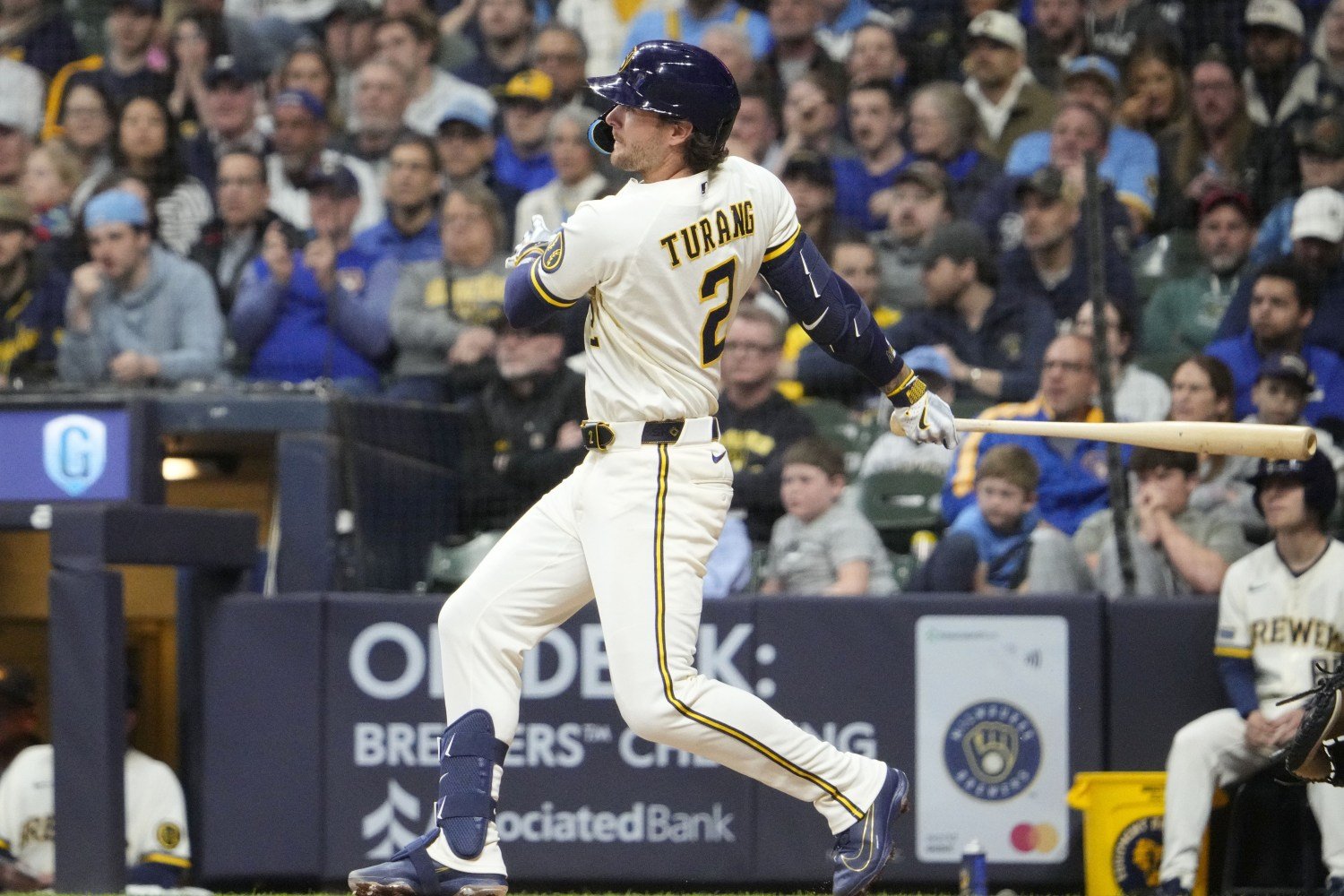 The Rays jumped out to a 2-0 lead in the third inning on Wednesday, when Yandy Diaz hit a 2-run home run to right field off Jacob Misiorowski. An answer wasn’t long in coming, though, as Brice Turang launched his first homer of the year after David Hamilton reached on an error. Turang finished the day 1-2 with 2 RBIs and a walk, bringing his overall line this year to .409/.500/.727 through six games. Additionally, as of Thursday, he leads the league in bWAR and doubles. It's an amazing start to the season, but how much of it is sustainable? First, let's honor just how much Turang has improved over his career in Milwaukee thus far. He made his debut in 2023, slashing .218/.285/.300 over 448 plate appearances, well below league average. He improved the following year, slashing .254/.316/.349 in 615 plate appearances, still below-average, but within shouting distance. Last year was his breakout. Turang hit 18 home runs, more than his previous two seasons combined, while slashing .288/.359/.435, achieving an above-average OPS+ (122) for the first time in his career and finishing 14th in MVP voting, just two spots behind teammate Christian Yelich. Turang has been one of the amazing developmental stories in baseball lately, and was one of the best overall players in MLB last year, but what is his ceiling? Is there still room for improvement with his offensive output, or will he sit at a similar level to what he produced in 2025? The 2026 season has just started, and the sample sizes are small, but there are a few key areas to keep an eye on. First, Turang’s bat speed isn’t great, but it's already improved a lot. He tapped into more bat speed as last season went along, and is back at his 2025 level (a couple ticks faster than in 2023 or 2024) to begin 2026. Because he's always had a plus feel for hitting, as he's begun to swing harder, he's also hit the ball harder. So far in 2026, Turang is hitting the ball even harder than in 2025, ranking in the 97th percentile of the league at 96.0 MPH. That number may not be sustainable, but it's a good initial sign for Turang to continue to produce extra-base hits. Turang is overperforming his expected numbers so far in 2026. His expected batting average is .316, while his expected slugging is .656, which is below his current number. Additionally, his wOBA (.527) is slightly higher than xwOBA (.455). Obviously, his numbers won’t be this high throughout the year, but it isn’t unrealistic to say that Turang could finish with an OPS above .800 and 20 home runs. Looking at the big picture, Turang will likely receive MVP votes once again, if he’s healthy and performs similarly to last year, but a win of that award would be extremely difficult in a league with Shohei Ohtani, Paul Skenes, Juan Soto, and other superstars. However, the better Turang does, the more he might feed into the club's long-term success. Given the Brewers’ spending habits, Turang isn’t likely to receive an extension like the one recently given by the rival Cubs to fellow second baseman Nico Hoerner. Top prospects Jesus Made and Jett Williams are pushing towards infield spots in the big leagues, while Cooper Pratt just signed an eight-year extension a few days ago. Turang won’t be a free agent until the 2030 season, but the Brewers could look to move him as early as this offseason, as their top prospects develop. However, if Turang were to take another leap this year and finish within the top 10 of MVP voting, it would take a rare and extraordinary return for them to move him. Only time will tell what Turang will do over a full season, but with such a great first week in the books, expectations are rightfully high.
 -
Image courtesy of © Michael McLoone-Imagn Images The Rays jumped out to a 2-0 lead in the third inning on Wednesday, when Yandy Diaz hit a 2-run home run to right field off Jacob Misiorowski. An answer wasn’t long in coming, though, as Brice Turang launched his first homer of the year after David Hamilton reached on an error. Turang finished the day 1-2 with 2 RBIs and a walk, bringing his overall line this year to .409/.500/.727 through six games. Additionally, as of Thursday, he leads the league in bWAR and doubles. It's an amazing start to the season, but how much of it is sustainable? First, let's honor just how much Turang has improved over his career in Milwaukee thus far. He made his debut in 2023, slashing .218/.285/.300 over 448 plate appearances, well below league average. He improved the following year, slashing .254/.316/.349 in 615 plate appearances, still below-average, but within shouting distance. Last year was his breakout. Turang hit 18 home runs, more than his previous two seasons combined, while slashing .288/.359/.435, achieving an above-average OPS+ (122) for the first time in his career and finishing 14th in MVP voting, just two spots behind teammate Christian Yelich. Turang has been one of the amazing developmental stories in baseball lately, and was one of the best overall players in MLB last year, but what is his ceiling? Is there still room for improvement with his offensive output, or will he sit at a similar level to what he produced in 2025? The 2026 season has just started, and the sample sizes are small, but there are a few key areas to keep an eye on. First, Turang’s bat speed isn’t great, but it's already improved a lot. He tapped into more bat speed as last season went along, and is back at his 2025 level (a couple ticks faster than in 2023 or 2024) to begin 2026. Because he's always had a plus feel for hitting, as he's begun to swing harder, he's also hit the ball harder. So far in 2026, Turang is hitting the ball even harder than in 2025, ranking in the 97th percentile of the league at 96.0 MPH. That number may not be sustainable, but it's a good initial sign for Turang to continue to produce extra-base hits. Turang is overperforming his expected numbers so far in 2026. His expected batting average is .316, while his expected slugging is .656, which is below his current number. Additionally, his wOBA (.527) is slightly higher than xwOBA (.455). Obviously, his numbers won’t be this high throughout the year, but it isn’t unrealistic to say that Turang could finish with an OPS above .800 and 20 home runs. Looking at the big picture, Turang will likely receive MVP votes once again, if he’s healthy and performs similarly to last year, but a win of that award would be extremely difficult in a league with Shohei Ohtani, Paul Skenes, Juan Soto, and other superstars. However, the better Turang does, the more he might feed into the club's long-term success. Given the Brewers’ spending habits, Turang isn’t likely to receive an extension like the one recently given by the rival Cubs to fellow second baseman Nico Hoerner. Top prospects Jesus Made and Jett Williams are pushing towards infield spots in the big leagues, while Cooper Pratt just signed an eight-year extension a few days ago. Turang won’t be a free agent until the 2030 season, but the Brewers could look to move him as early as this offseason, as their top prospects develop. However, if Turang were to take another leap this year and finish within the top 10 of MVP voting, it would take a rare and extraordinary return for them to move him. Only time will tell what Turang will do over a full season, but with such a great first week in the books, expectations are rightfully high. View full article
-
Image courtesy of © Benny Sieu-Imagn Images Center field was a strength for the Brewers in 2025, with Jackson Chourio and Blake Perkins patrolling the position for most of the year. However, after another year riddled with injuries, Garrett Mitchell is healthy(ish) and slated for that spot for the beginning of the 2026 season, with Chourio on the injured list and Perkins demoted to the fringes of the roster. Given Mitchell’s injury and production history, as well as how his bat looked during spring training, the Brewers will need suitable backup options in center field who should be able to provide value. Mitchell's Cactus League numbers were hideous, but spring training stats don't count, and he's looked fairly good since the year began. He's showing great patience and still has exceptional bat speed. He's changed his setup in the batter's box, spreading out more to shorten his stride and put himself in a better position to make contact and avoid chasing pitches he can't handle well. Nonetheless, Mitchell is whiffing often and striking out at a high rate. That threatens to make his profile collapse, as he gets greater exposure to the league. Fallback plans remain important. The Brewers have numerous capable center fielders on the roster, but with Chourio in left (once he returns from his injury) and Sal Frelick in right, the next man up after Mitchell would seemingly be Brandon Lockridge. Acquired in a trade with the Padres at the deadline last year that sent Nestor Cortes to San Diego, Lockridge was solid for the Brewers in the 20 games he appeared in, hitting .261/.308/.370. Lockridge’s defense and speed were exceptional, though, ending 2025 with 5 Outs Above Average, according to Statcast, and showcasing even better speed than Mitchell has. The bat is certainly a question, but due to some “swing-hauling” over the offseason, he took full advantage of his opportunities in Phoenix this spring. The former fifth-round pick fared better against lefties than against righties, but that seems to make his fit onto the roster work better—especially with both Chourio and Andrew Vaughn sidelined. With Mitchell as the left-handed hitting starting center fielder, Lockridge could provide value as a fill-in to give guys rest or a late-inning pinch-hitter for either Mitchell or Frelick if there is a southpaw on the mound. Pat Murphy seems to be excited about what Lockridge can do for the Brewers in 2026, and fans should be, as well. Besides Lockridge, the other immediate option would be Perkins, who has played in 242 games with the Brewers in multiple stints over the past three years. He hasn’t shown much with his bat, though, and doesn't seem to have the trust of the manager or the front office at the moment. The 29-year-old brought a career .232/.314/.348 line into 2026, and his skillset is like Lockridge's: defense and speed define his game. Mitchell will certainly have his work cut out for him this year, and will need to prove that he belongs (and can physically stay) in the everyday lineup. Lockridge has been trending up for a while now, and if he starts the season strongly, the pressure will only build for Mitchell. The bottom line is that whoever is in center will need to provide offensive value. All three names listed are capable defenders and possess great speed, so the true battle to watch as the season unfolds will be in the batter’s box. That also makes it worth mentioning one more player: Jett Williams. If neither Mitchell nor Lockridge establishes a sturdy claim to center by the middle of June or so, Williams could enter the equation in a hurry. He's as dynamic in terms of speed and glovework as the others, though he's spent more time on the infield and thus is much less experienced in the grass. Offensively, he might be the highest-ceiling player in the bunch, but he has to show he can hit in Triple-A, before the team will want to test whether he can do so in the big leagues. Depth is a strength of the organization. They're extremely unlikely, this year, to end up giving playing time to a player like Steward Berroa or Akil Baddoo in center field, which is a testament to the front office's planning and proactivity. Mitchell remains the de facto starter, but behind him, a growing number of qualified candidates are queuing for the chance to move into the lineup if he falters. View full article
-
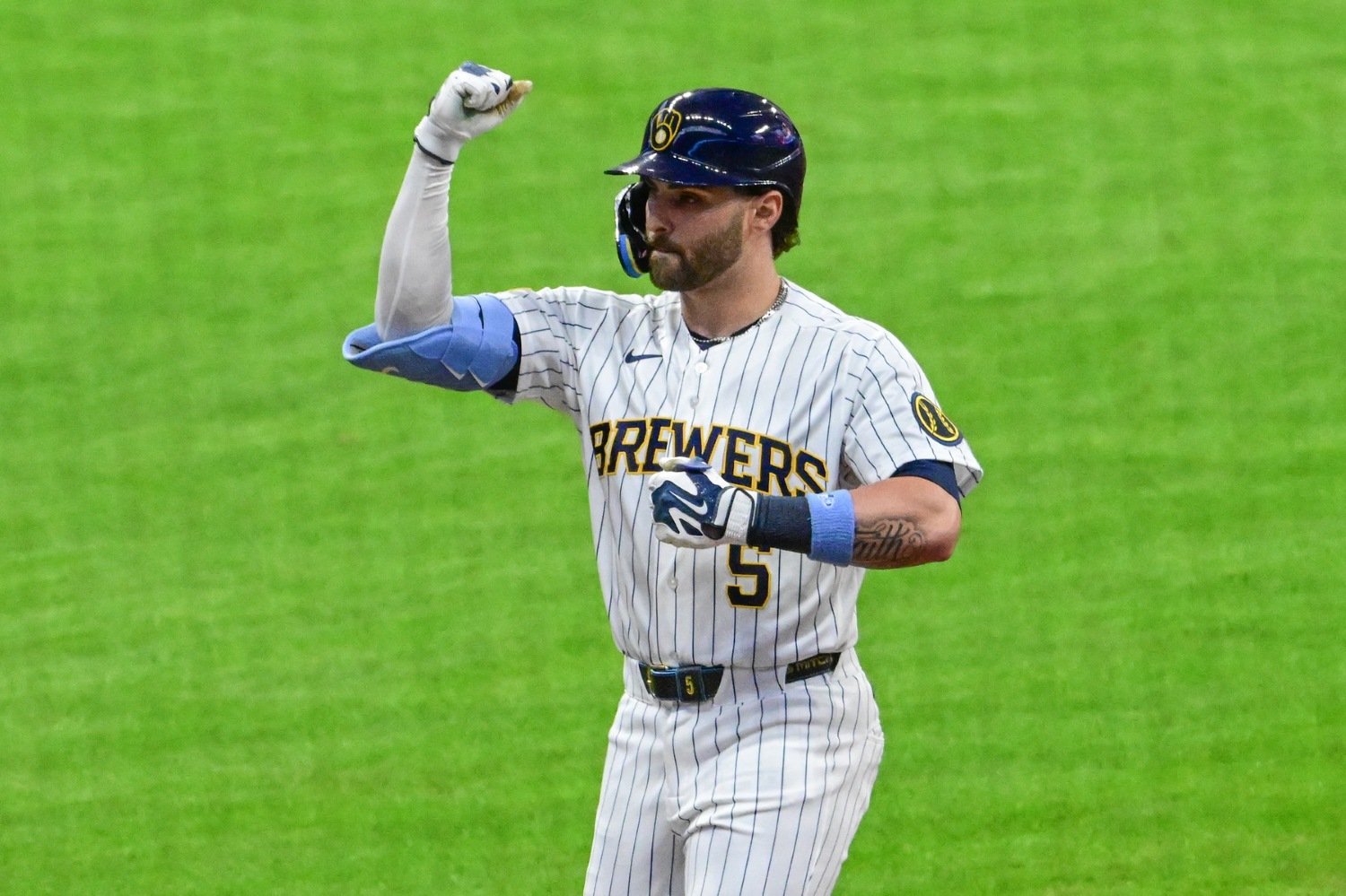 Center field was a strength for the Brewers in 2025, with Jackson Chourio and Blake Perkins patrolling the position for most of the year. However, after another year riddled with injuries, Garrett Mitchell is healthy(ish) and slated for that spot for the beginning of the 2026 season, with Chourio on the injured list and Perkins demoted to the fringes of the roster. Given Mitchell’s injury and production history, as well as how his bat looked during spring training, the Brewers will need suitable backup options in center field who should be able to provide value. Mitchell's Cactus League numbers were hideous, but spring training stats don't count, and he's looked fairly good since the year began. He's showing great patience and still has exceptional bat speed. He's changed his setup in the batter's box, spreading out more to shorten his stride and put himself in a better position to make contact and avoid chasing pitches he can't handle well. Nonetheless, Mitchell is whiffing often and striking out at a high rate. That threatens to make his profile collapse, as he gets greater exposure to the league. Fallback plans remain important. The Brewers have numerous capable center fielders on the roster, but with Chourio in left (once he returns from his injury) and Sal Frelick in right, the next man up after Mitchell would seemingly be Brandon Lockridge. Acquired in a trade with the Padres at the deadline last year that sent Nestor Cortes to San Diego, Lockridge was solid for the Brewers in the 20 games he appeared in, hitting .261/.308/.370. Lockridge’s defense and speed were exceptional, though, ending 2025 with 5 Outs Above Average, according to Statcast, and showcasing even better speed than Mitchell has. The bat is certainly a question, but due to some “swing-hauling” over the offseason, he took full advantage of his opportunities in Phoenix this spring. The former fifth-round pick fared better against lefties than against righties, but that seems to make his fit onto the roster work better—especially with both Chourio and Andrew Vaughn sidelined. With Mitchell as the left-handed hitting starting center fielder, Lockridge could provide value as a fill-in to give guys rest or a late-inning pinch-hitter for either Mitchell or Frelick if there is a southpaw on the mound. Pat Murphy seems to be excited about what Lockridge can do for the Brewers in 2026, and fans should be, as well. Besides Lockridge, the other immediate option would be Perkins, who has played in 242 games with the Brewers in multiple stints over the past three years. He hasn’t shown much with his bat, though, and doesn't seem to have the trust of the manager or the front office at the moment. The 29-year-old brought a career .232/.314/.348 line into 2026, and his skillset is like Lockridge's: defense and speed define his game. Mitchell will certainly have his work cut out for him this year, and will need to prove that he belongs (and can physically stay) in the everyday lineup. Lockridge has been trending up for a while now, and if he starts the season strongly, the pressure will only build for Mitchell. The bottom line is that whoever is in center will need to provide offensive value. All three names listed are capable defenders and possess great speed, so the true battle to watch as the season unfolds will be in the batter’s box. That also makes it worth mentioning one more player: Jett Williams. If neither Mitchell nor Lockridge establishes a sturdy claim to center by the middle of June or so, Williams could enter the equation in a hurry. He's as dynamic in terms of speed and glovework as the others, though he's spent more time on the infield and thus is much less experienced in the grass. Offensively, he might be the highest-ceiling player in the bunch, but he has to show he can hit in Triple-A, before the team will want to test whether he can do so in the big leagues. Depth is a strength of the organization. They're extremely unlikely, this year, to end up giving playing time to a player like Steward Berroa or Akil Baddoo in center field, which is a testament to the front office's planning and proactivity. Mitchell remains the de facto starter, but behind him, a growing number of qualified candidates are queuing for the chance to move into the lineup if he falters.
- 2 comments
-
- 2
-
-
- garrett mitchell
- brandon lockridge
- (and 2 more)
-
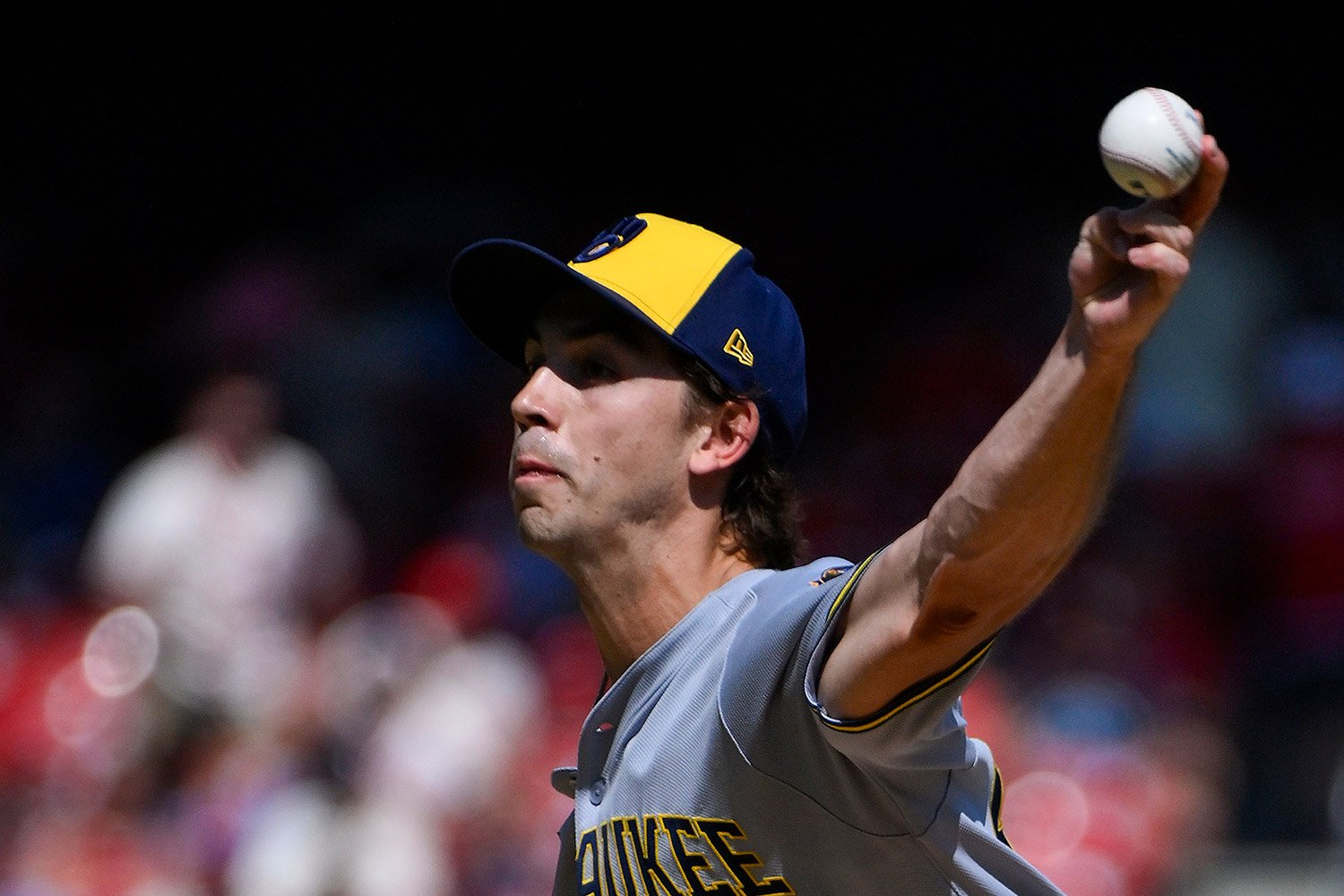 With the number of starters the Brewers had in camp with big league experience, it wasn’t a complete surprise when Robert Gasser was optioned to Nashville to begin the year. A former top ten prospect in the Padres system, Gasser came to Milwaukee and has only pitched in 31 1/3 innings in multiple stints with the big-league team since 2023. However, a new sinker grip, allowing Gasser’s sinker to move more traditionally, could be a game-changer for the 26-year-old to earn significant time in the rotation in 2026. This spring showed mixed results for Gasser. He made four starts this spring, ending with a 5.11 ERA and a 1.46 WHIP in only 12 1/3 innings pitched. His first appearance was solid, allowing no runs in one inning of work, but the next two starts were tough, allowing 3 runs in 2 2/3 innings against the Rockies and four runs, off three home runs, against the Reds six days later. The fourth and final start was the most important, though; Gasser threw 6 innings while striking out seven and only walking one. The key difference between Gasser’s results in the big leagues versus his last spring training start was the way he attacked hitters. In both 2024 and 2025, Gasser used primarily sweepers and sinkers against lefties, while attacking righties with all five pitches but mostly four seamers, sweepers, and sinkers. However, the start against the Padres yielded different results. Gasser threw 79 pitches total, utilizing 34% sinkers, 28% cutters, 23% sweepers, 13% changeups, and 3% four seamers. He only threw sinkers (38%), cutters (31%), and sweepers (31%) versus lefties, which is a big change from his past MLB experience. Against righties, Gasser again used sinkers primarily, while mixing all four of his other pitches as well. While this start was obviously promising, it wasn’t enough for Gasser to crack the Opening Day roster. Is Gasser's New Sinker Different Enough? However, it was enough for him to earn his second Opening Day nod in Norfolk against the Tides on Friday, after being in the Padres system back in 2022. Gasser continued his success from the end of spring training, throwing 5 2/3 scoreless frames while allowing two hits, walking three, and striking out 11, matching Misiorowski’s total from the Brewers’ Opening Day on Thursday. He threw 87 pitches, 58 of them for strikes. It's only one start, and according to Savant, Gasser threw only 26 sinkers, but there might be evidence that the pitch moves differently than it did in 2025 (Nashville 2025 sinker data shown alongside Gasser's Friday start). The same box is highlighted on both images to illustrate how the pitch is moving several inches more arm-side. Gasser's spin rate in the sinker in the Friday start (2,124 RPM) was virtually identical to his Nashville numbers in 2025 (2,120 RPM). His release velocity on Friday night (92.5 mph) was effectively the same as his release velocity in 2025 (92.8 mph). Opposing hitters didn't seem prepared for the pitch; on 26 sinkers thrown, Gasser received eight called strikes looking, and only one swinging strike. An additional four pitches were fouled off, and three were successfully put into play. What's Next For Gasser? Overall, Brewers fans can be ecstatic about this start from Gasser. Eleven (5 sweepers, 5 fastballs, 1 sinker) strikeouts matched his career high, and hopes for the number 71 overall draft pick in 2021 to contribute this year in Milwaukee have certainly increased. His ability to get groundball outs with his sinker, as well as strikeout hitters with his sweeper and fastball, should play well in the majors. However, it remains to be seen whether he can continue to have success against major league bats. As mentioned in the Rotation, Bullpen, or Nashville article focused on Gasser, published back in February, the data on the lefty starter is relatively incomplete. It is difficult to come up with a firm answer on whether this is for real, but we’ve frequently seen the Brewers produce pitchers at a premium. This could be another instance of that, but only time will tell as Gasser continues to push for sustained MLB time. What are your reactions to Gasser’s Opening Day start for Nashville? Do you think his recent success will continue? Feel free to comment below!
 -
Image courtesy of © Jeff Curry-Imagn Images With the number of starters the Brewers had in camp with big league experience, it wasn’t a complete surprise when Robert Gasser was optioned to Nashville to begin the year. A former top ten prospect in the Padres system, Gasser came to Milwaukee and has only pitched in 31 1/3 innings in multiple stints with the big-league team since 2023. However, a new sinker grip, allowing Gasser’s sinker to move more traditionally, could be a game-changer for the 26-year-old to earn significant time in the rotation in 2026. This spring showed mixed results for Gasser. He made four starts this spring, ending with a 5.11 ERA and a 1.46 WHIP in only 12 1/3 innings pitched. His first appearance was solid, allowing no runs in one inning of work, but the next two starts were tough, allowing 3 runs in 2 2/3 innings against the Rockies and four runs, off three home runs, against the Reds six days later. The fourth and final start was the most important, though; Gasser threw 6 innings while striking out seven and only walking one. The key difference between Gasser’s results in the big leagues versus his last spring training start was the way he attacked hitters. In both 2024 and 2025, Gasser used primarily sweepers and sinkers against lefties, while attacking righties with all five pitches but mostly four seamers, sweepers, and sinkers. However, the start against the Padres yielded different results. Gasser threw 79 pitches total, utilizing 34% sinkers, 28% cutters, 23% sweepers, 13% changeups, and 3% four seamers. He only threw sinkers (38%), cutters (31%), and sweepers (31%) versus lefties, which is a big change from his past MLB experience. Against righties, Gasser again used sinkers primarily, while mixing all four of his other pitches as well. While this start was obviously promising, it wasn’t enough for Gasser to crack the Opening Day roster. Is Gasser's New Sinker Different Enough? However, it was enough for him to earn his second Opening Day nod in Norfolk against the Tides on Friday, after being in the Padres system back in 2022. Gasser continued his success from the end of spring training, throwing 5 2/3 scoreless frames while allowing two hits, walking three, and striking out 11, matching Misiorowski’s total from the Brewers’ Opening Day on Thursday. He threw 87 pitches, 58 of them for strikes. It's only one start, and according to Savant, Gasser threw only 26 sinkers, but there might be evidence that the pitch moves differently than it did in 2025 (Nashville 2025 sinker data shown alongside Gasser's Friday start). The same box is highlighted on both images to illustrate how the pitch is moving several inches more arm-side. Gasser's spin rate in the sinker in the Friday start (2,124 RPM) was virtually identical to his Nashville numbers in 2025 (2,120 RPM). His release velocity on Friday night (92.5 mph) was effectively the same as his release velocity in 2025 (92.8 mph). Opposing hitters didn't seem prepared for the pitch; on 26 sinkers thrown, Gasser received eight called strikes looking, and only one swinging strike. An additional four pitches were fouled off, and three were successfully put into play. What's Next For Gasser? Overall, Brewers fans can be ecstatic about this start from Gasser. Eleven (5 sweepers, 5 fastballs, 1 sinker) strikeouts matched his career high, and hopes for the number 71 overall draft pick in 2021 to contribute this year in Milwaukee have certainly increased. His ability to get groundball outs with his sinker, as well as strikeout hitters with his sweeper and fastball, should play well in the majors. However, it remains to be seen whether he can continue to have success against major league bats. As mentioned in the Rotation, Bullpen, or Nashville article focused on Gasser, published back in February, the data on the lefty starter is relatively incomplete. It is difficult to come up with a firm answer on whether this is for real, but we’ve frequently seen the Brewers produce pitchers at a premium. This could be another instance of that, but only time will tell as Gasser continues to push for sustained MLB time. What are your reactions to Gasser’s Opening Day start for Nashville? Do you think his recent success will continue? Feel free to comment below! View full article
-
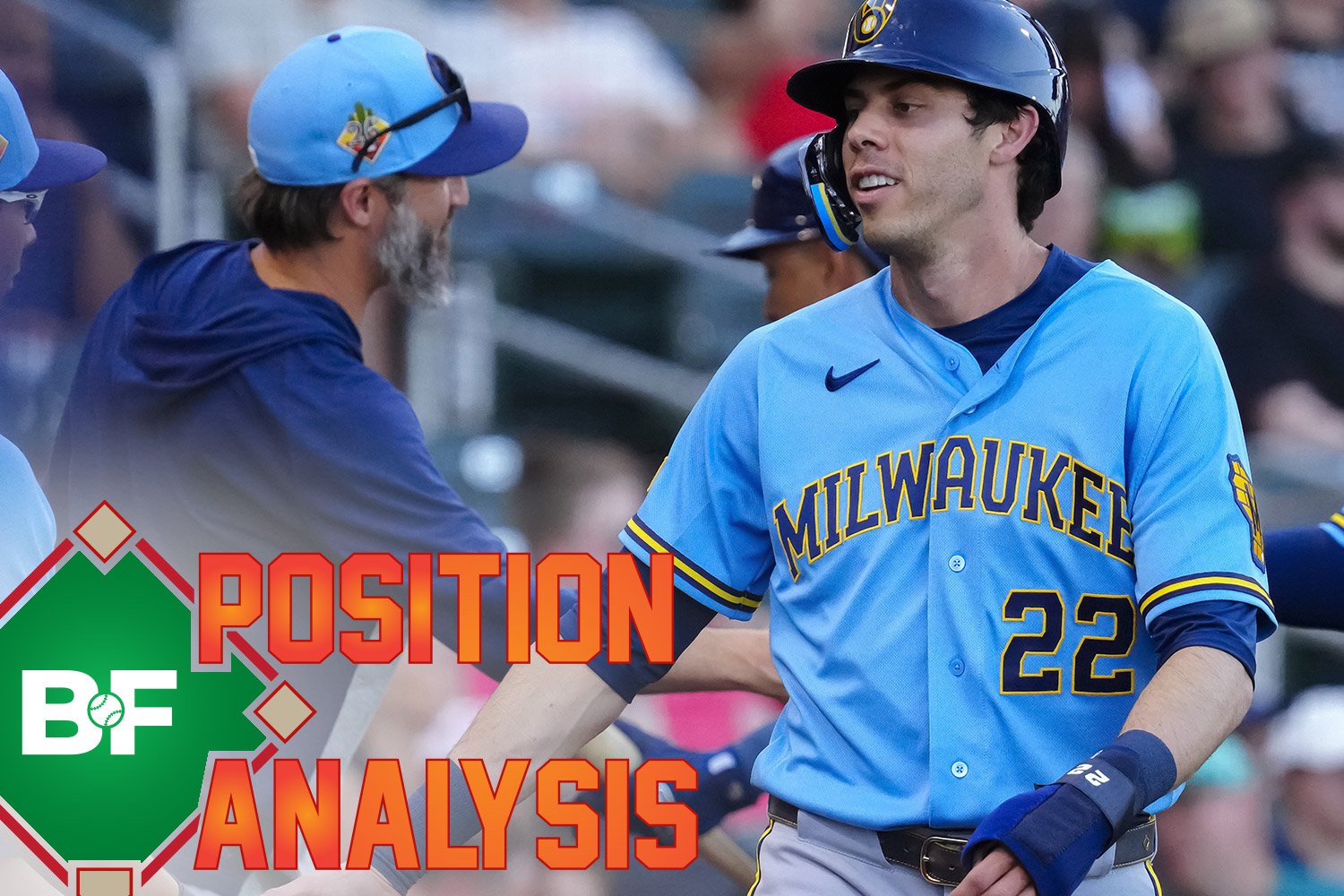 The Brewers didn’t use much variation at designated hitter in 2025, with only 12 players recording an appearance at DH. However, only two hitters had more than 20 appearances at the position, and both are still on the roster as Milwaukee heads towards Opening Day at American Family Field. Brewers Designated Hitters At A Glance Starter: Christian Yelich Backup: William Contreras Depth: Jake Bauers, Gary Sanchez Prospects: Luke Adams, Brock Wilken Brewers fWAR Ranking Last Year: 10th out of 30 Brewers fWAR Projection This Year: 9th out of 30 The Good Yelich still led the team in home runs in 2025 with 29, but the main positive was his health. The former MVP appeared in 150 games for the Brewers, which is his most since 2022. Yelich slashed .264/.343/.452 in 2025, and while his OPS was his lowest since 2022, Yelich is still the most dangerous bat in the Brewers lineup, day in and day out, even if he isn’t an MVP-caliber player anymore. The highest-paid player on the Brewers will look to continue his stretch of success with the club in 2026. William Contreras is the other hitter who got significant time at DH in 2025, starting 22 games. This lineup construction usually appeared when Contreras needed time off behind the plate, opting to keep his bat in the lineup to give Yelich a day off. Contreras slashed .260/.355/.399 in 2025, and his OPS was down overall from his past three seasons. However, the two-time all-star is a mainstay in the Brewers lineup, and he will look for a bounce-back year in 2026. Jake Bauers and Gary Sanchez are two bench bats that could provide value for the Brewers in 2026, and both should see appearances at DH during stretches this season, depending on matchups or injuries. Bauers appeared in seven games at DH for the Brewers this past season, slashing .235/.353/.399 in 85 total games. Sanchez returns to Milwaukee after his short stint with Baltimore in 2024, only appearing in 29 games for the Orioles. The Bad The main problem with this group would be health, primarily Christian Yelich. If Yelich isn’t in the lineup at DH for the majority of 2026, something has gone wrong with his health, and the Brewers will have a significantly worse lineup without him. Not to say that Contreras, Bauers, or Sanchez wouldn’t be adequate fill-ins, but much of the Brewers’ success relies on Yelich, his performance, and his leadership on and off the field. Contreras is an everyday contributor for the Brewers, but Bauers and Sanchez will contribute in a matchup-based role from their respective bench spots. Sanchez has more sustained major-league success than Bauers, and the team could look for an outside addition if this duo struggles. However, if Bauers and Sanchez were forced into a more significant role, the Brewers would be worse off for it, but the two of them could potentially form a serviceable duo at DH if Yelich goes down. The other thing Yelich contributes from the DH spot is competent base running, stealing 16 bases this past season. None of the backup options would be able to contribute to the ground game like Yelich can, even though he is a year older. However, this is mainly a secondary contribution from Yelich’s game, and Milwaukee will be able to find speed from Brice Turang, Sal Frelick, and Jackson Chourio, among others. The Bottom Line This may be the most boring position analysis for the Brewers this year, but it may be the most important. The designated hitter spot will primarily be split between two players, and both players' health will be crucial this year, especially Yelich’s. Additionally, while all of us truly believe in the coaching staff to produce sufficient pitching out of seemingly nowhere, Milwaukee traded away its ace, Freddy Peralta, to the Mets earlier in the offseason. Assuming the pitching will be worse, the Brewers will need to score more runs this year, period. This comes down not only to the younger players stepping up but also to Yelich continuing his consistent production for the Brewers in the designated hitter role, with Contreras still providing meaningful at-bats on days when he isn’t behind the plate.
 -
Image courtesy of © Patrick Breen/The Republic / USA TODAY NETWORK via Imagn Images The Brewers didn’t use much variation at designated hitter in 2025, with only 12 players recording an appearance at DH. However, only two hitters had more than 20 appearances at the position, and both are still on the roster as Milwaukee heads towards Opening Day at American Family Field. Brewers Designated Hitters At A Glance Starter: Christian Yelich Backup: William Contreras Depth: Jake Bauers, Gary Sanchez Prospects: Luke Adams, Brock Wilken Brewers fWAR Ranking Last Year: 10th out of 30 Brewers fWAR Projection This Year: 9th out of 30 The Good Yelich still led the team in home runs in 2025 with 29, but the main positive was his health. The former MVP appeared in 150 games for the Brewers, which is his most since 2022. Yelich slashed .264/.343/.452 in 2025, and while his OPS was his lowest since 2022, Yelich is still the most dangerous bat in the Brewers lineup, day in and day out, even if he isn’t an MVP-caliber player anymore. The highest-paid player on the Brewers will look to continue his stretch of success with the club in 2026. William Contreras is the other hitter who got significant time at DH in 2025, starting 22 games. This lineup construction usually appeared when Contreras needed time off behind the plate, opting to keep his bat in the lineup to give Yelich a day off. Contreras slashed .260/.355/.399 in 2025, and his OPS was down overall from his past three seasons. However, the two-time all-star is a mainstay in the Brewers lineup, and he will look for a bounce-back year in 2026. Jake Bauers and Gary Sanchez are two bench bats that could provide value for the Brewers in 2026, and both should see appearances at DH during stretches this season, depending on matchups or injuries. Bauers appeared in seven games at DH for the Brewers this past season, slashing .235/.353/.399 in 85 total games. Sanchez returns to Milwaukee after his short stint with Baltimore in 2024, only appearing in 29 games for the Orioles. The Bad The main problem with this group would be health, primarily Christian Yelich. If Yelich isn’t in the lineup at DH for the majority of 2026, something has gone wrong with his health, and the Brewers will have a significantly worse lineup without him. Not to say that Contreras, Bauers, or Sanchez wouldn’t be adequate fill-ins, but much of the Brewers’ success relies on Yelich, his performance, and his leadership on and off the field. Contreras is an everyday contributor for the Brewers, but Bauers and Sanchez will contribute in a matchup-based role from their respective bench spots. Sanchez has more sustained major-league success than Bauers, and the team could look for an outside addition if this duo struggles. However, if Bauers and Sanchez were forced into a more significant role, the Brewers would be worse off for it, but the two of them could potentially form a serviceable duo at DH if Yelich goes down. The other thing Yelich contributes from the DH spot is competent base running, stealing 16 bases this past season. None of the backup options would be able to contribute to the ground game like Yelich can, even though he is a year older. However, this is mainly a secondary contribution from Yelich’s game, and Milwaukee will be able to find speed from Brice Turang, Sal Frelick, and Jackson Chourio, among others. The Bottom Line This may be the most boring position analysis for the Brewers this year, but it may be the most important. The designated hitter spot will primarily be split between two players, and both players' health will be crucial this year, especially Yelich’s. Additionally, while all of us truly believe in the coaching staff to produce sufficient pitching out of seemingly nowhere, Milwaukee traded away its ace, Freddy Peralta, to the Mets earlier in the offseason. Assuming the pitching will be worse, the Brewers will need to score more runs this year, period. This comes down not only to the younger players stepping up but also to Yelich continuing his consistent production for the Brewers in the designated hitter role, with Contreras still providing meaningful at-bats on days when he isn’t behind the plate. View full article
-
Image courtesy of © Mark J. Rebilas-Imagn Images The surprising trade of Caleb Durbin and Andruw Monasterio to the Red Sox in early February cleared an unexpected hole on the diamond for the Brewers. Rumors of Isaac Paredes and CJ Abrams swirled around the internet, but all of fans’ questions were soon answered when the Brewers signed Luis Rengifo to a one-year deal to be the starter at the hot corner on Opening Day. BREWERS THIRD BASEMEN AT A GLANCE: Starter: Luis Rengifo Backup: David Hamilton Depth: Joey Ortiz, Eddys Leonard Prospects: Jett Williams, Brock Wilken Brewers fWAR Ranking Last Year: 20th out of 30 Brewers fWAR Projection This Year: 29th out of 30 THE GOOD Rengifo brings major-league experience to the position. He has played in parts of seven MLB seasons and owns a career .250/.307/.382 slash line. He's looking for a bit of a bounce-back year with the Crew, as his 2025 OPS was the lowest it has been since 2021. He doesn’t walk a lot—only 6.1% of the time in 2025—and doesn’t steal much, with only 10 stolen bases last year. However, when healthy, he's shown better speed utility than that. A returning piece from the Caleb Durbin trade, David Hamilton hasn’t had the previous offensive success that Rengifo has had. However, Pat Murphy and the coaching staff believe there's "a whole other level" to unlock for him. That remains to be seen, as Hamilton brings a career slash line of .222/.283/.359 to Milwaukee. However, he offers the consistent speed threat Rengifo likely can't. The Brewers have been known to find underwhelming hitters and make them serviceable, so don’t rule out offensive production from Hamilton. He's also the better defender of the two main options, despite spending most of his time on the middle infield. THE BAD Defensively, Rengifo doesn’t grade out well. He's neither big nor exceptionally quick, and his arm is just average. In 568 innings at third base last year, he posted -5 Defensive Runs Saved, according to Sports Info Solutions. Rengifo could end up being an adequate defender at the hot corner with the help of infield coach Matt Erickson, who helped develop Caleb Durbin into a capable glove, but that would be a big leap. Hamilton has already shown that moving to third will be no problem for him, but he lacks experience at the spot and won't get frequent enough reps there to get as comfortable as Durbin was by the end of last season. THE BOTTOM LINE Rengifo is a serviceable replacement for Durbin, but probably just a placeholder. The main thing the Brewers should focus on is finding the third baseman of the future, as many thought that could be Durbin himself. That player may be in the upper minors when the season begins, as Jett Williams and Brock Wilken could be pushing toward major-league at-bats soon. Williams, too, is better suited to other positions and has limited experience at third, while Wilken is close to being too big and burly for the spot. Each will put the good kind of pressure on Rengifo and Hamilton, though. Jesús Made, Cooper Pratt and Luis Peña all still want to prove themselves capable shortstops, but they, too, are candidates to be helpful at the hot corner—be that this year or next. While the Durbin trade left the team without as clear-cut an answer at the spot as they appeared to have, their organizational depth at third base is impressive. View full article
-
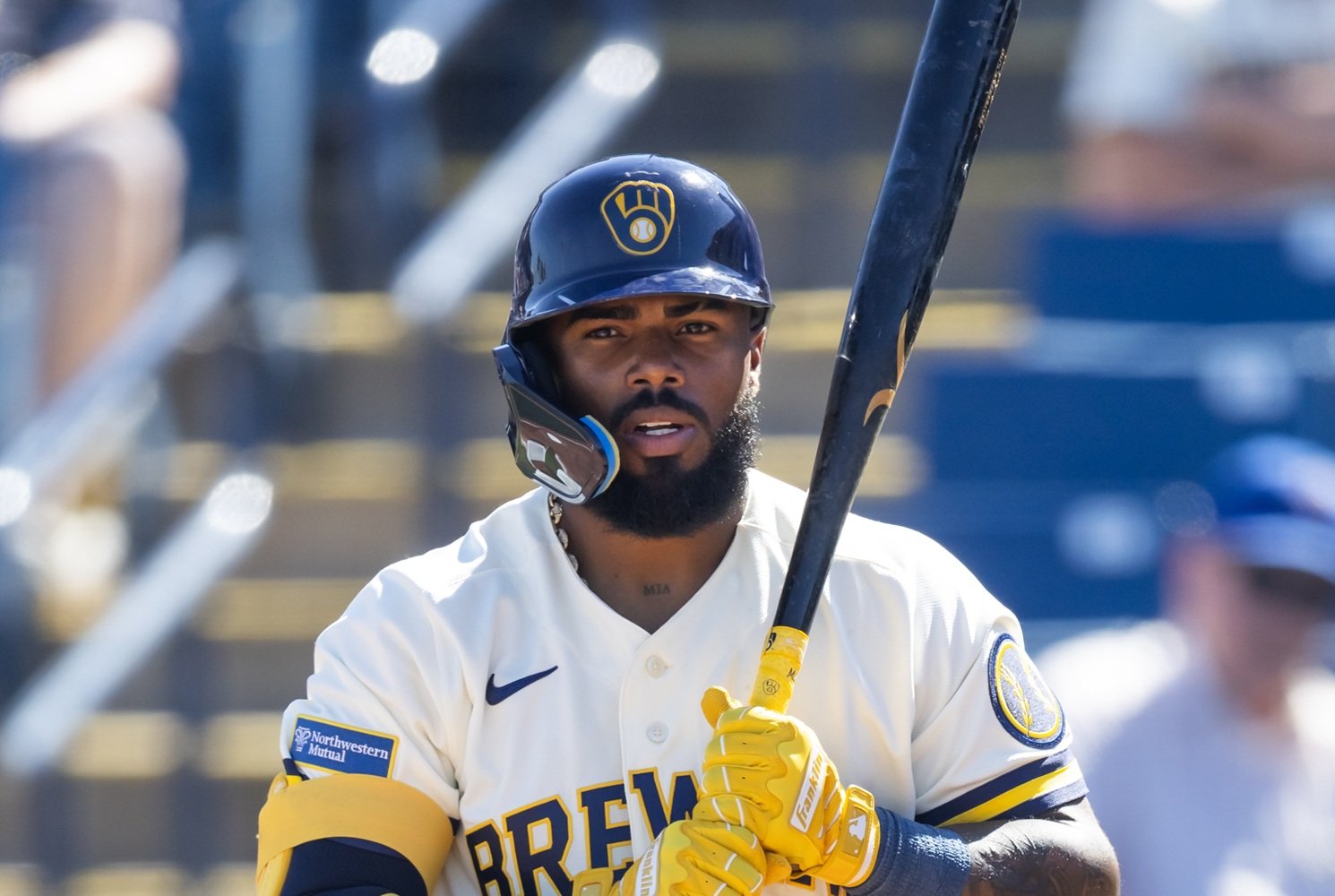 The surprising trade of Caleb Durbin and Andruw Monasterio to the Red Sox in early February cleared an unexpected hole on the diamond for the Brewers. Rumors of Isaac Paredes and CJ Abrams swirled around the internet, but all of fans’ questions were soon answered when the Brewers signed Luis Rengifo to a one-year deal to be the starter at the hot corner on Opening Day. BREWERS THIRD BASEMEN AT A GLANCE: Starter: Luis Rengifo Backup: David Hamilton Depth: Joey Ortiz, Eddys Leonard Prospects: Jett Williams, Brock Wilken Brewers fWAR Ranking Last Year: 20th out of 30 Brewers fWAR Projection This Year: 29th out of 30 THE GOOD Rengifo brings major-league experience to the position. He has played in parts of seven MLB seasons and owns a career .250/.307/.382 slash line. He's looking for a bit of a bounce-back year with the Crew, as his 2025 OPS was the lowest it has been since 2021. He doesn’t walk a lot—only 6.1% of the time in 2025—and doesn’t steal much, with only 10 stolen bases last year. However, when healthy, he's shown better speed utility than that. A returning piece from the Caleb Durbin trade, David Hamilton hasn’t had the previous offensive success that Rengifo has had. However, Pat Murphy and the coaching staff believe there's "a whole other level" to unlock for him. That remains to be seen, as Hamilton brings a career slash line of .222/.283/.359 to Milwaukee. However, he offers the consistent speed threat Rengifo likely can't. The Brewers have been known to find underwhelming hitters and make them serviceable, so don’t rule out offensive production from Hamilton. He's also the better defender of the two main options, despite spending most of his time on the middle infield. THE BAD Defensively, Rengifo doesn’t grade out well. He's neither big nor exceptionally quick, and his arm is just average. In 568 innings at third base last year, he posted -5 Defensive Runs Saved, according to Sports Info Solutions. Rengifo could end up being an adequate defender at the hot corner with the help of infield coach Matt Erickson, who helped develop Caleb Durbin into a capable glove, but that would be a big leap. Hamilton has already shown that moving to third will be no problem for him, but he lacks experience at the spot and won't get frequent enough reps there to get as comfortable as Durbin was by the end of last season. THE BOTTOM LINE Rengifo is a serviceable replacement for Durbin, but probably just a placeholder. The main thing the Brewers should focus on is finding the third baseman of the future, as many thought that could be Durbin himself. That player may be in the upper minors when the season begins, as Jett Williams and Brock Wilken could be pushing toward major-league at-bats soon. Williams, too, is better suited to other positions and has limited experience at third, while Wilken is close to being too big and burly for the spot. Each will put the good kind of pressure on Rengifo and Hamilton, though. Jesús Made, Cooper Pratt and Luis Peña all still want to prove themselves capable shortstops, but they, too, are candidates to be helpful at the hot corner—be that this year or next. While the Durbin trade left the team without as clear-cut an answer at the spot as they appeared to have, their organizational depth at third base is impressive.
 -
Image courtesy of © Michael McLoone-Imagn Images Since William Contreras came over in a three-team trade back in December 2022, catcher has been a stable position for the oft-churning Milwaukee Brewers. His health and production are critical to the Brewers’ success in 2026, and reuniting him with an old friend as a backup should provide a very capable duo behind the plate. BREWERS CATCHERS AT A GLANCE: Starter: William Contreras Backup: Gary Sánchez Depth: Reese McGuire* Prospects: Jeferson Quero, Marco Dinges *On a minor-league deal; may opt out if not added to active roster by a certain date Brewers fWAR Ranking Last Year: 6th out of 30 Brewers fWAR Projection This Year: 5th out of 30 THE GOOD A two-time All-Star with two Silver Sluggers in his cabinet, Contreras appeared in 150 games for the Brewers last year, hitting .260/.355/.399 with 17 home runs. Those numbers were down from the past three seasons, as his OPS was the lowest he's had with the Brewers. However, his production still wasn’t bad. Contreras was an above-average hitter, with an OPS+ of 111 (100 is average; higher is better). Much of the decreased production traces to a fractured left middle finger that he played through for much of the 2025 season. Defensively, Contreras was good in 2025. His throwing accuracy improved, and his framing and blocking were also above-average. Now, with the injury issues (hopefully) behind him, Contreras will look to get back to his previous level of offensive output. A fellow two-time All-Star (although those honors came in 2017 and 2019), Gary Sánchez returns to the Brewers after a year away in Baltimore. Like Contreras, Sánchez dealt with injuries last year. He was sidelined with wrist inflammation early in the season, and had a severe knee sprain that forced him onto the 60-day IL in early July. Sánchez is well past his peak offensively. He was just below average when last he played for the Crew, with a 94 OPS+ via a slash line of .220/.307/.392 and 11 home runs in 280 plate appearances. Defensively, Sánchez grades out considerably worse than Contreras, but he's playable there. He will provide most of his value with his bat in 2026 and will look to contribute on Contreras’s days off behind the plate—as well as in occasional spots in the designated hitter role. Reese McGuire is the third veteran catcher in the organization, and could see a role in 2026. I wrote about him potentially contributing in the home run column before the Brewers signed Sánchez, and that still could be an option if one of the two names above goes down with an injury—and if McGuire remains in the organization. McGuire had a career year in 2025 with the rival Cubs, hitting nine home runs in 44 games. However, McGuire has never played more than 89 games in a season, so don’t expect him to hit that number this year unless disaster strikes. The 31-year-old is adequate catching depth, and that's the role he could play in 2026 for the Brew Crew. THE BAD There aren’t a lot of downsides for this position group outside of injuries, but one thing to keep an eye on is opponents stealing bases. The Brewers have done a good job containing the running game (.49 stolen bases allowed per game in 2025, 2nd-fewest in MLB), and they will look to continue that in 2026. However, Contreras gave up a bit of sheer arm strength to be more accurate this season. If he continues to lose steam and an inexperienced pitching staff struggles to hold runners, they might lose that elite standing in steals prevention. THE BOTTOM LINE This position group has the highest-ranking fWAR projection of any department of the Brewers roster, for good reason. Contreras is a key cog in the Brewers’ winning machine. Keeping him on the field and healthy should be a priority. Looking ahead, he won’t be a free agent until after 2027, but developing a successor should be a priority. Jeferson Quero and Marco Dinges are both top-10 prospects in the Brewers’ farm system, according to MLB.com. However, short-term success relies purely on Contreras, and the most likely outcome is that he is one of the best catchers in MLB this season. All other considerations are mere emergency fallback plans. View full article
-
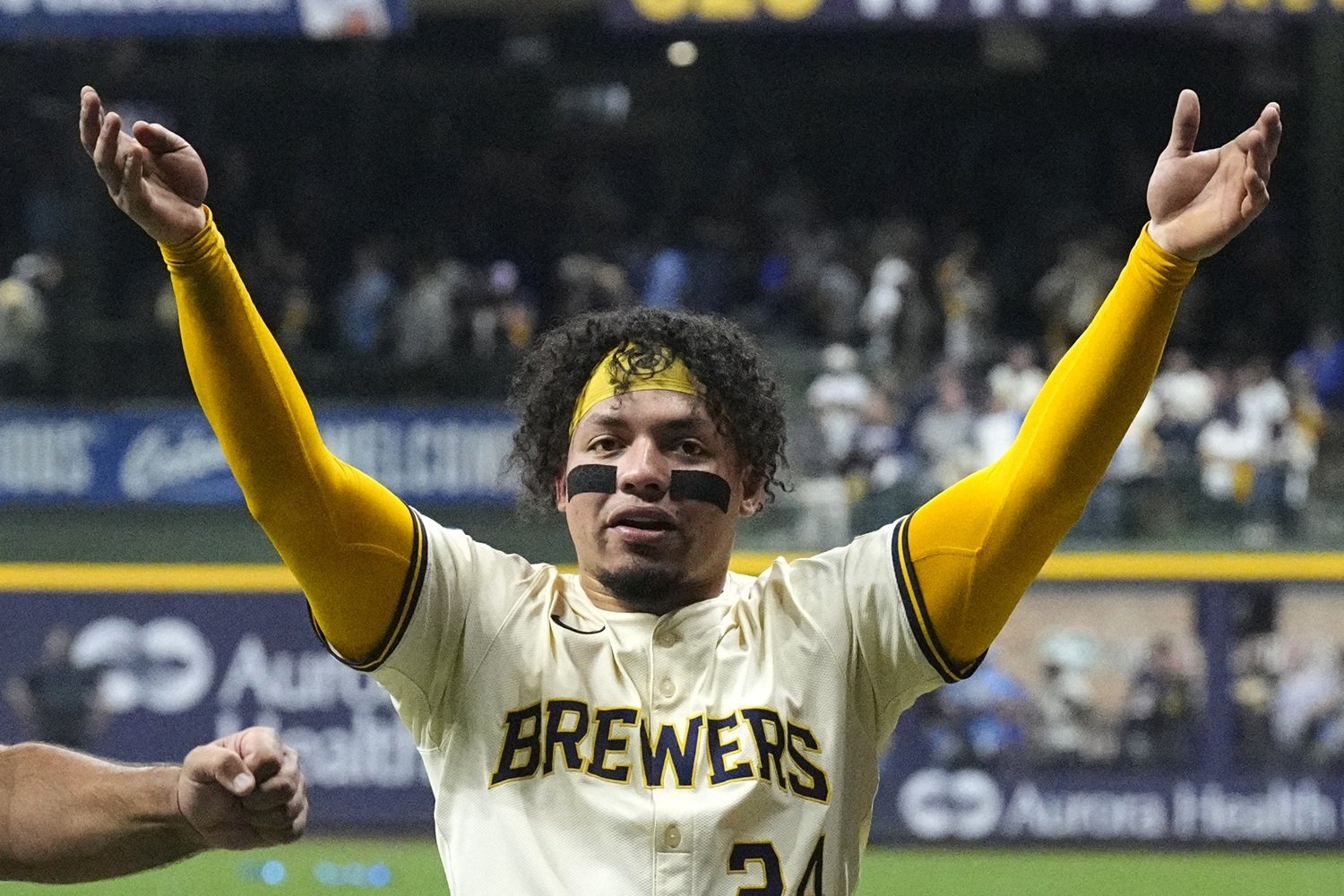 Since William Contreras came over in a three-team trade back in December 2022, catcher has been a stable position for the oft-churning Milwaukee Brewers. His health and production are critical to the Brewers’ success in 2026, and reuniting him with an old friend as a backup should provide a very capable duo behind the plate. BREWERS CATCHERS AT A GLANCE: Starter: William Contreras Backup: Gary Sánchez Depth: Reese McGuire* Prospects: Jeferson Quero, Marco Dinges *On a minor-league deal; may opt out if not added to active roster by a certain date Brewers fWAR Ranking Last Year: 6th out of 30 Brewers fWAR Projection This Year: 5th out of 30 THE GOOD A two-time All-Star with two Silver Sluggers in his cabinet, Contreras appeared in 150 games for the Brewers last year, hitting .260/.355/.399 with 17 home runs. Those numbers were down from the past three seasons, as his OPS was the lowest he's had with the Brewers. However, his production still wasn’t bad. Contreras was an above-average hitter, with an OPS+ of 111 (100 is average; higher is better). Much of the decreased production traces to a fractured left middle finger that he played through for much of the 2025 season. Defensively, Contreras was good in 2025. His throwing accuracy improved, and his framing and blocking were also above-average. Now, with the injury issues (hopefully) behind him, Contreras will look to get back to his previous level of offensive output. A fellow two-time All-Star (although those honors came in 2017 and 2019), Gary Sánchez returns to the Brewers after a year away in Baltimore. Like Contreras, Sánchez dealt with injuries last year. He was sidelined with wrist inflammation early in the season, and had a severe knee sprain that forced him onto the 60-day IL in early July. Sánchez is well past his peak offensively. He was just below average when last he played for the Crew, with a 94 OPS+ via a slash line of .220/.307/.392 and 11 home runs in 280 plate appearances. Defensively, Sánchez grades out considerably worse than Contreras, but he's playable there. He will provide most of his value with his bat in 2026 and will look to contribute on Contreras’s days off behind the plate—as well as in occasional spots in the designated hitter role. Reese McGuire is the third veteran catcher in the organization, and could see a role in 2026. I wrote about him potentially contributing in the home run column before the Brewers signed Sánchez, and that still could be an option if one of the two names above goes down with an injury—and if McGuire remains in the organization. McGuire had a career year in 2025 with the rival Cubs, hitting nine home runs in 44 games. However, McGuire has never played more than 89 games in a season, so don’t expect him to hit that number this year unless disaster strikes. The 31-year-old is adequate catching depth, and that's the role he could play in 2026 for the Brew Crew. THE BAD There aren’t a lot of downsides for this position group outside of injuries, but one thing to keep an eye on is opponents stealing bases. The Brewers have done a good job containing the running game (.49 stolen bases allowed per game in 2025, 2nd-fewest in MLB), and they will look to continue that in 2026. However, Contreras gave up a bit of sheer arm strength to be more accurate this season. If he continues to lose steam and an inexperienced pitching staff struggles to hold runners, they might lose that elite standing in steals prevention. THE BOTTOM LINE This position group has the highest-ranking fWAR projection of any department of the Brewers roster, for good reason. Contreras is a key cog in the Brewers’ winning machine. Keeping him on the field and healthy should be a priority. Looking ahead, he won’t be a free agent until after 2027, but developing a successor should be a priority. Jeferson Quero and Marco Dinges are both top-10 prospects in the Brewers’ farm system, according to MLB.com. However, short-term success relies purely on Contreras, and the most likely outcome is that he is one of the best catchers in MLB this season. All other considerations are mere emergency fallback plans.
 -
Sal Frelick Probably Won't Hit More Home Runs In 2026, And That's Okay
Ray Stuedemann posted an article in Brewers
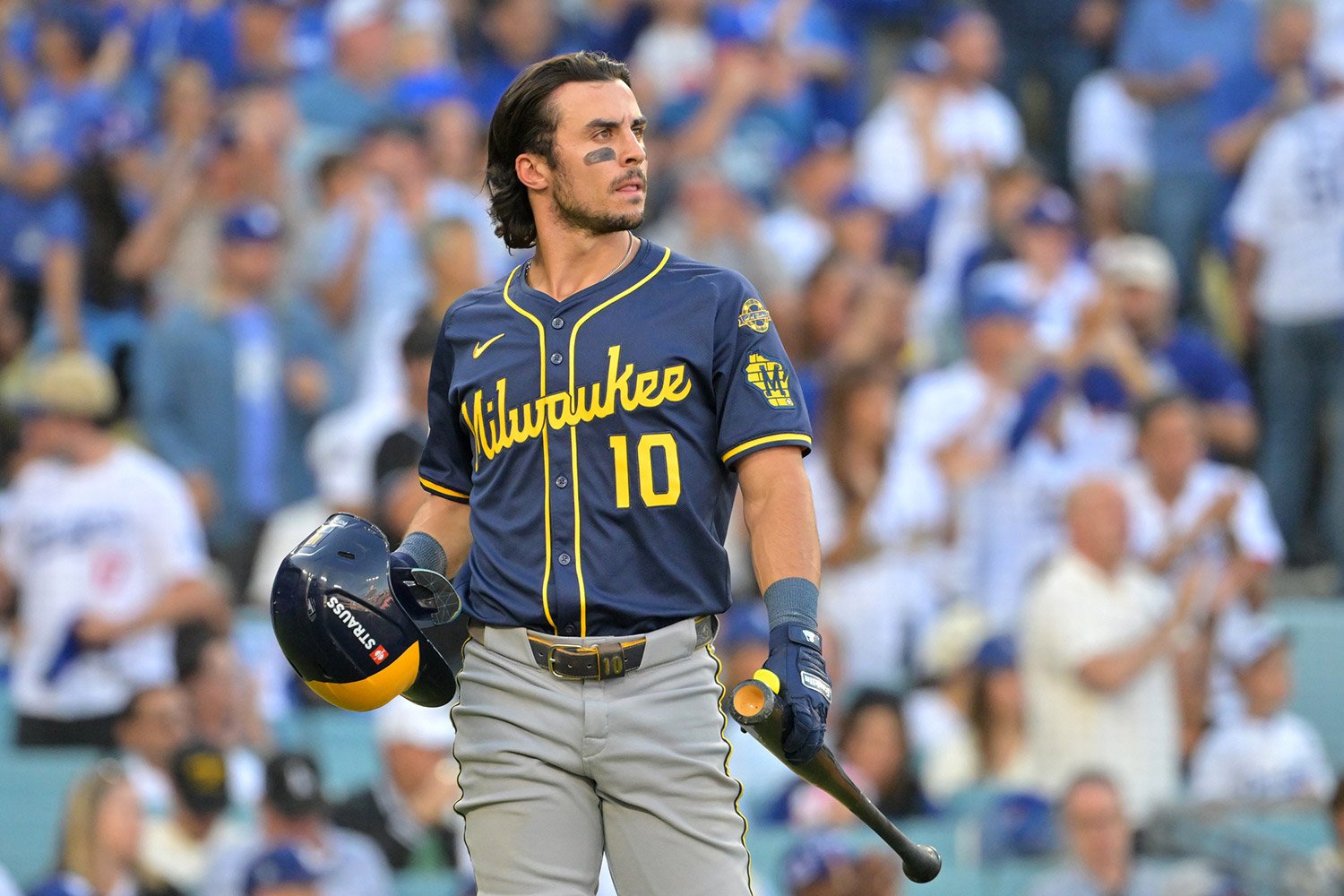 The Brewers had many surprise offensive contributors this past season, from Brice Turang's breakout to the trade and resurgence of Andrew Vaughn. Still, one of the more meaningful offensive performances came from the bat of Sal Frelick. The former first-round pick out of Boston College back in 2021 slashed .288/.351/.405 and hit 12 home runs in 528 at-bats for the Brewers this past year. While Frelick’s bat was above average this past season (111 OPS+), his offensive numbers took a big leap from his previous two years in MLB, and it is fair to question whether that production can sustain itself over time. Frelick primarily hit from the leadoff and fifth spots in the lineup in 2025, and those splits are a good starting point for analysis. In 57 games hitting leadoff Frelick hit .309/.369/.476, whereas hitting fifth, he hit .276/.340/.351 in 51 total games. The only other lineup spot he spent more than 10 games in was 19 total games in the six-hole, hitting .215/.271/.262. It's all small-sample variance, but Frelick performed well in the leadoff spot last season. This take is backed up by looking further into his splits, specifically against right-handed and left-handed pitchers. Frelick hit .282/.349/.433 against righties and .301/.357/.340 against lefties. These splits show that the 25-year-old can lead off consistently; he had an above-average on-base percentage against both righties and lefties in 2025, and that will be key to allowing the Brewers to score runs this season. However, Frelick’s power numbers can be cause for some concern. Yes, he hit 12 home runs this past season. Diving deeper into those statistics allows us a clearer look at just how much he has improved since his debut in 2023. Starting with the positives, Frelick improved on several key power statistics. He began pulling the ball in the air more, to 17.8% in 2025, up from 10.8% in 2023 and 14.0% in 2024. Still, Frelick was below average in Pull Air%, and a similar story can be told about other power statistics. His bat speed increased, but only from the 3rd to the 7th percentile. His Hard-Hit percentage increased as well, but only from the 1st percentile to the 4th percentile. Frelick’s exit velocity rose from 83.4 in 2024 to 85.5 in 2025, still in the bottom 5% of MLB. Finally, his xSLG increased .030 points in 2025, which is a significant increase, but his actual slugging increased .070. This difference is critical to projecting Frelick’s offensive output this year. In addition to the power-based statistics above, Frelick saw improvements in other offensive categories. His batting average has increased each year he has been in the league, from .246 in 2023 to .288 in 2025. However, Frelick’s expected batting average was significantly lower than his actual average at .255, so it is fair to expect regression. He struck out less in 2025, ranking in the top 8th percentile in MLB at 13.5%, and walked more, ranking in the 46th percentile at 7.9%. These statistics back what fans can expect from Frelick at the plate going into 2026; he will walk a league-average percent of the time, won’t strikeout often, and will hit at an above-average rate. This isn’t new news, and these three things should be true for the remainder of Frelick’s time with the Brewers, however long that may be. Along with this offensive output, Frelick can be relied upon in right field with Gold-Glove caliber defense and 87th percentile sprint speed. Still, the question remains whether he can provide the same level of power as in 2025, or even whether an increase in those numbers is possible. As of this moment, it doesn’t appear likely. Frelick will certainly provide value for the Brewers in 2026 (3.6 FanGraphs WAR in 2025, 4th on the team), and he should hit in the leadoff spot, as that is probably where he is best suited with the current lineup construction. Just don’t keep your expectations high for Frelick to hit the ball over the fence, and instead look for Christian Yelich, Jackson Chourio, and the first base platoon of Jake Bauers and Andrew Vaughn to provide most of the home runs for Milwaukee this year, with Brice Turang as a sneaky contender to overcome his home run total from 2025. What are your thoughts on Sal Frelick in 2026? Do you think he goes over or under his home run total from last season?
 -
Image courtesy of © Jayne Kamin-Oncea-Imagn Images The Brewers had many surprise offensive contributors this past season, from Brice Turang's breakout to the trade and resurgence of Andrew Vaughn. Still, one of the more meaningful offensive performances came from the bat of Sal Frelick. The former first-round pick out of Boston College back in 2021 slashed .288/.351/.405 and hit 12 home runs in 528 at-bats for the Brewers this past year. While Frelick’s bat was above average this past season (111 OPS+), his offensive numbers took a big leap from his previous two years in MLB, and it is fair to question whether that production can sustain itself over time. Frelick primarily hit from the leadoff and fifth spots in the lineup in 2025, and those splits are a good starting point for analysis. In 57 games hitting leadoff Frelick hit .309/.369/.476, whereas hitting fifth, he hit .276/.340/.351 in 51 total games. The only other lineup spot he spent more than 10 games in was 19 total games in the six-hole, hitting .215/.271/.262. It's all small-sample variance, but Frelick performed well in the leadoff spot last season. This take is backed up by looking further into his splits, specifically against right-handed and left-handed pitchers. Frelick hit .282/.349/.433 against righties and .301/.357/.340 against lefties. These splits show that the 25-year-old can lead off consistently; he had an above-average on-base percentage against both righties and lefties in 2025, and that will be key to allowing the Brewers to score runs this season. However, Frelick’s power numbers can be cause for some concern. Yes, he hit 12 home runs this past season. Diving deeper into those statistics allows us a clearer look at just how much he has improved since his debut in 2023. Starting with the positives, Frelick improved on several key power statistics. He began pulling the ball in the air more, to 17.8% in 2025, up from 10.8% in 2023 and 14.0% in 2024. Still, Frelick was below average in Pull Air%, and a similar story can be told about other power statistics. His bat speed increased, but only from the 3rd to the 7th percentile. His Hard-Hit percentage increased as well, but only from the 1st percentile to the 4th percentile. Frelick’s exit velocity rose from 83.4 in 2024 to 85.5 in 2025, still in the bottom 5% of MLB. Finally, his xSLG increased .030 points in 2025, which is a significant increase, but his actual slugging increased .070. This difference is critical to projecting Frelick’s offensive output this year. In addition to the power-based statistics above, Frelick saw improvements in other offensive categories. His batting average has increased each year he has been in the league, from .246 in 2023 to .288 in 2025. However, Frelick’s expected batting average was significantly lower than his actual average at .255, so it is fair to expect regression. He struck out less in 2025, ranking in the top 8th percentile in MLB at 13.5%, and walked more, ranking in the 46th percentile at 7.9%. These statistics back what fans can expect from Frelick at the plate going into 2026; he will walk a league-average percent of the time, won’t strikeout often, and will hit at an above-average rate. This isn’t new news, and these three things should be true for the remainder of Frelick’s time with the Brewers, however long that may be. Along with this offensive output, Frelick can be relied upon in right field with Gold-Glove caliber defense and 87th percentile sprint speed. Still, the question remains whether he can provide the same level of power as in 2025, or even whether an increase in those numbers is possible. As of this moment, it doesn’t appear likely. Frelick will certainly provide value for the Brewers in 2026 (3.6 FanGraphs WAR in 2025, 4th on the team), and he should hit in the leadoff spot, as that is probably where he is best suited with the current lineup construction. Just don’t keep your expectations high for Frelick to hit the ball over the fence, and instead look for Christian Yelich, Jackson Chourio, and the first base platoon of Jake Bauers and Andrew Vaughn to provide most of the home runs for Milwaukee this year, with Brice Turang as a sneaky contender to overcome his home run total from 2025. What are your thoughts on Sal Frelick in 2026? Do you think he goes over or under his home run total from last season? View full article
-
Image courtesy of © Dave Kallmann / Milwaukee Journal Sentinel / USA TODAY NETWORK via Imagn Images The Brewers have one of the deepest prospect pools in baseball and were ranked the number one farm system by ESPN at the end of January. These future members of the Brew Crew will once again get chances to showcase their skills in the third annual Spring Breakout Games, where each MLB club sends its top minor league prospects to compete against other future stars. The Brewers’ Spring Breakout Stars will get the chance to play two games this year: March 20th against the Mariners in Phoenix, Ariz., at 5:10 and March 22nd against the Athletics in Mesa, Ariz., at 4:05. Both games will be available to watch on MLB Network, with the March 22nd game also available on Amazon. Rosters were announced on Thursday, with an initial pool of 40 players. Game-day rosters are due March 18th, with anywhere from 23 to 27 players. This is a new change this year to address prospects playing in the World Baseball Classic, which runs until March 17th. The Brewers’ 40-player pool contains 23 of their top 30 prospects from the just-released MLB Pipeline rankings. These players range from being on the verge of making the big-league roster to just beginning their professional careers. Four shortstop prospects headline the group for Milwaukee. Jesús Made, Luis Peña, Jett Williams, and Cooper Pratt are the top four prospects in the Brewers’ system and are all skyrocketing towards the big leagues. Andrew Fischer is the next highest prospect on the list, coming in at number 6 for the Brewers. The Brewers’ first-round pick from last year will look to continue succeeding after a strong start with the Timber Rattlers in only 19 games last year. Jeferson Quero, the Brewers' No. 8 prospect, is one of three catchers selected to the roster as he looks to prove he can be a part of the team’s future behind the plate. Bishop Letson, the lone pitcher on this list in the Brewers’ top ten prospects, was very good for the Timber Rattlers last year but struggled in a lone game at Double-A Biloxi. The Brewers’ second-round pick in 2025 and No. 16 prospect in their farm system, JD Thompson, will look to turn heads as well. Here is the full 40-player Pool, with MLB Pipeline Ranking and Top 100 ranking if applicable: PITCHERS (20) Ryan Birchard, RHP, NR Jesús Broca, LHP, NR Will Childers, RHP, NR Coleman Crow, RHP, No. 27 Jaron DeBerry, RHP, NR Ethan Dorchies, RHP, No. 20 Brian Fitzpatrick, LHP, NR Michael Fowler, RHP, NR Tyson Hardin, RHP, No. 19 Blake Holub, RHP, NR Tate Kuehner, LHP, NR Bishop Letson, RHP, No. 9 Mark Manfredi, LHP, NR Bryce Meccage, RHP, No. 21 Jacob Morrison, RHP, NR Braylon Owens, RHP, NR J.D. Thompson, LHP, No. 16 Wande Torres, LHP, NR Brett Wichrowski, RHP, NR Craig Yoho, RHP, No. 29 CATCHERS (3) Marco Dinges, C, No. 10 Jeferson Quero, C, No. 8 Matt Wood, C, NR INFIELDERS (11) Luke Adams, 1B/3B, No. 13 Eric Bitonti, 1B, No. 26 Blake Burke, 1B, No. 18 Daniel Dickinson, 2B, No. 30 Brady Ebel, SS, No. 15 Andrew Fischer, 3B, No. 6 Jesús Made, SS/2B, No. 1/MLB No. 3 Luis Peña, INF, No. 2/MLB No. 26 Cooper Pratt, SS, No. 4/MLB No. 64 Brock Wilken, 3B, No. 22 Jett Williams, SS/2B, No. 3/MLB No. 51 OUTFIELDERS (6) Josh Adamczewski, OF, No. 11 José Anderson, OF, NR Handelfry Encarnacion, OF, NR Luis Lara, OF, No. 12 Braylon Payne, OF, No. 14 Josiah Ragsdale, OF, NR View full article
-
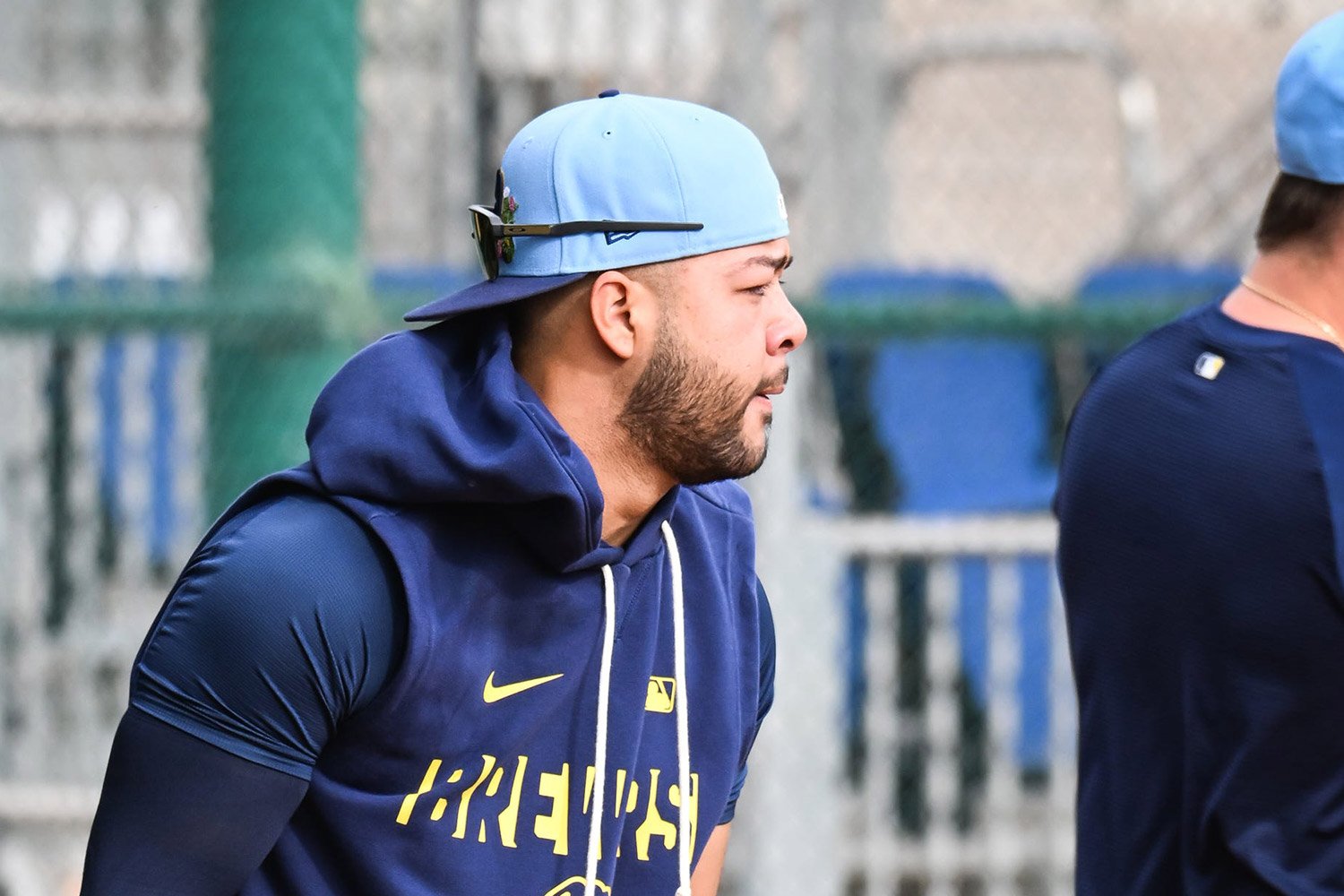 The Brewers have one of the deepest prospect pools in baseball and were ranked the number one farm system by ESPN at the end of January. These future members of the Brew Crew will once again get chances to showcase their skills in the third annual Spring Breakout Games, where each MLB club sends its top minor league prospects to compete against other future stars. The Brewers’ Spring Breakout Stars will get the chance to play two games this year: March 20th against the Mariners in Phoenix, Ariz., at 5:10 and March 22nd against the Athletics in Mesa, Ariz., at 4:05. Both games will be available to watch on MLB Network, with the March 22nd game also available on Amazon. Rosters were announced on Thursday, with an initial pool of 40 players. Game-day rosters are due March 18th, with anywhere from 23 to 27 players. This is a new change this year to address prospects playing in the World Baseball Classic, which runs until March 17th. The Brewers’ 40-player pool contains 23 of their top 30 prospects from the just-released MLB Pipeline rankings. These players range from being on the verge of making the big-league roster to just beginning their professional careers. Four shortstop prospects headline the group for Milwaukee. Jesús Made, Luis Peña, Jett Williams, and Cooper Pratt are the top four prospects in the Brewers’ system and are all skyrocketing towards the big leagues. Andrew Fischer is the next highest prospect on the list, coming in at number 6 for the Brewers. The Brewers’ first-round pick from last year will look to continue succeeding after a strong start with the Timber Rattlers in only 19 games last year. Jeferson Quero, the Brewers' No. 8 prospect, is one of three catchers selected to the roster as he looks to prove he can be a part of the team’s future behind the plate. Bishop Letson, the lone pitcher on this list in the Brewers’ top ten prospects, was very good for the Timber Rattlers last year but struggled in a lone game at Double-A Biloxi. The Brewers’ second-round pick in 2025 and No. 16 prospect in their farm system, JD Thompson, will look to turn heads as well. Here is the full 40-player Pool, with MLB Pipeline Ranking and Top 100 ranking if applicable: PITCHERS (20) Ryan Birchard, RHP, NR Jesús Broca, LHP, NR Will Childers, RHP, NR Coleman Crow, RHP, No. 27 Jaron DeBerry, RHP, NR Ethan Dorchies, RHP, No. 20 Brian Fitzpatrick, LHP, NR Michael Fowler, RHP, NR Tyson Hardin, RHP, No. 19 Blake Holub, RHP, NR Tate Kuehner, LHP, NR Bishop Letson, RHP, No. 9 Mark Manfredi, LHP, NR Bryce Meccage, RHP, No. 21 Jacob Morrison, RHP, NR Braylon Owens, RHP, NR J.D. Thompson, LHP, No. 16 Wande Torres, LHP, NR Brett Wichrowski, RHP, NR Craig Yoho, RHP, No. 29 CATCHERS (3) Marco Dinges, C, No. 10 Jeferson Quero, C, No. 8 Matt Wood, C, NR INFIELDERS (11) Luke Adams, 1B/3B, No. 13 Eric Bitonti, 1B, No. 26 Blake Burke, 1B, No. 18 Daniel Dickinson, 2B, No. 30 Brady Ebel, SS, No. 15 Andrew Fischer, 3B, No. 6 Jesús Made, SS/2B, No. 1/MLB No. 3 Luis Peña, INF, No. 2/MLB No. 26 Cooper Pratt, SS, No. 4/MLB No. 64 Brock Wilken, 3B, No. 22 Jett Williams, SS/2B, No. 3/MLB No. 51 OUTFIELDERS (6) Josh Adamczewski, OF, No. 11 José Anderson, OF, NR Handelfry Encarnacion, OF, NR Luis Lara, OF, No. 12 Braylon Payne, OF, No. 14 Josiah Ragsdale, OF, NR
