


Brewers Video
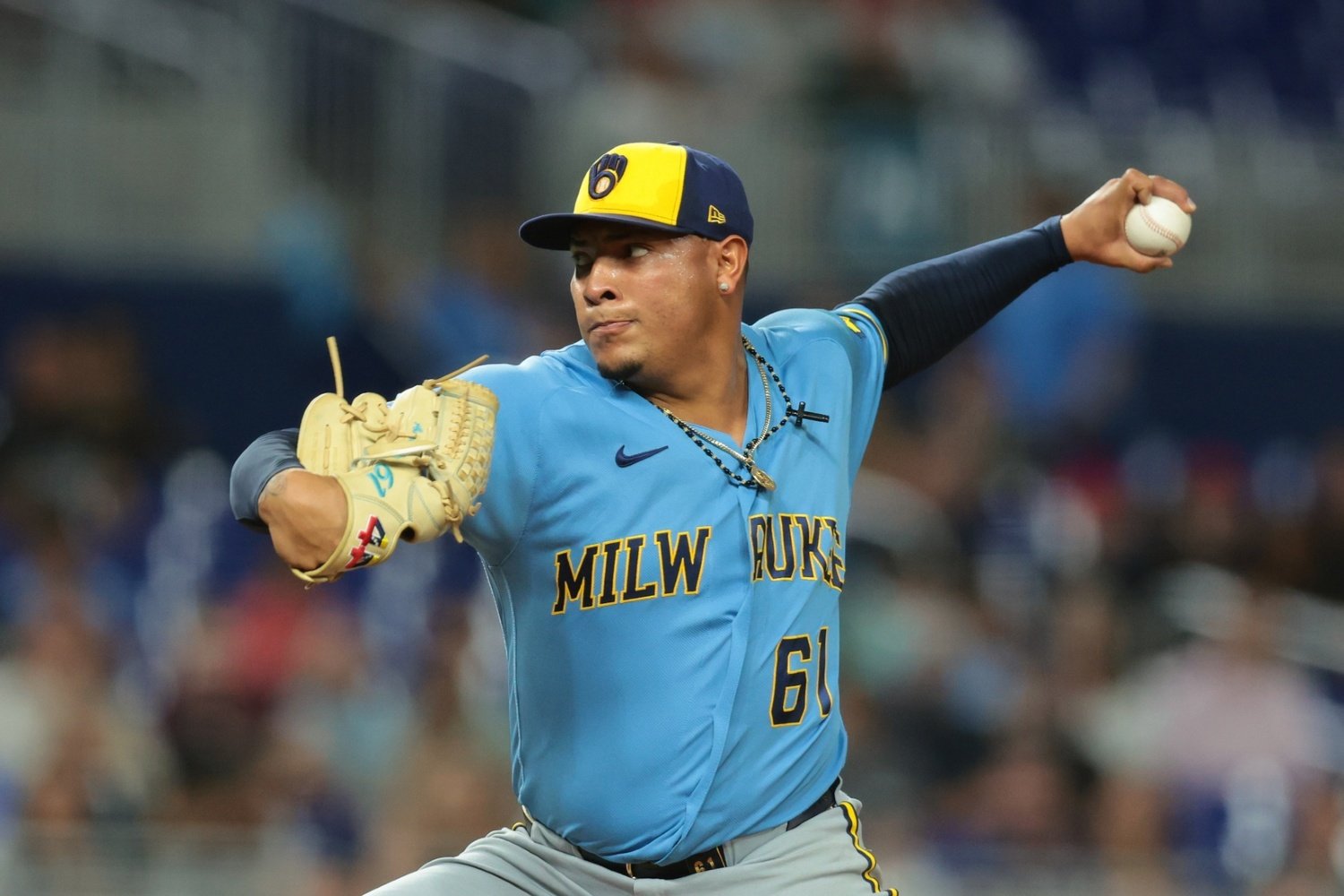
Ángel Zerpa's tenure with the Brewers has gotten off to a rocky start. The hard-throwing left-hander has picked up two holds and two saves in 10 appearances, but he's also blown two saves and struggled to a 5.73 ERA, 6.45 xERA, and 4.78 FIP, with as many walks (five) as strikeouts.
That's not what the Brewers envisioned when they acquired Zerpa from the Kansas City Royals over the offseason in exchange for Isaac Collins and Nick Mears. They believed—and still do—that he can be a dominant high-leverage reliever near the back of their bullpen. Zerpa's results in Kansas City never quite followed his great stuff, which is headlined by a power sinker that averages just 3.2 inches of induced vertical break with 17.3 inches of arm-side run.
"I think it's frustrating from our standpoint, because I think he's so much better than what he's shown so far," said pitching coordinator Jim Henderson, who specializes in working with the team's relievers. "I think that there's just so much more in there."
Because he left Brewers camp to pitch for Team Venezuela in the World Baseball Classic, Zerpa didn't get the amount of work with Henderson, Chris Hook, and the rest of the team's pitching coaches that they would have preferred. That's left them working things out on the fly in regular-season games.
The Brewers deployed Zerpa across multiple innings in three of his first seven outings, the last of which saw him surrender four runs when he returned for a second frame. His last three outings have each been one-inning engagements, as the team has reevaluated whether he's suited to handle multiple ups in an appearance. They also want to make his delivery simpler and more consistent. As the rare reliever who pitches out of the windup with the bases empty, Zerpa has more movement than usual in his delivery. Those tweaks are much easier to make in a preseason setting.
"I think we would have done those things in spring training, we just kind of missed those opportunities with the Classic," Henderson said. "So now we're just trying to attack those things, the simplified things, and get it more consistent for him."
While the Brewers have not gotten as far as they would have liked by now in facilitating a breakout, one of the adjustments they have made has Zerpa on the right track. At the time of the trade, it looked like they could unlock his upside by turning his slurve-like breaking ball into a harder and shorter slider that appeared more like a fastball out of his hand. They did exactly that.

"He's kind of a power guy," Henderson said, "so what can you do that can power this breaking ball in front? So we kind of settled on just wanting to throw it harder, maybe even just a little bit shorter, on the tip of the plate, and just match what he does intensity-wise [with the sinker] with a good breaking ball."
Because he doesn't have long fingers, all of Zerpa's pitches have lower-than-average spin rates. By trying to throw a bigger breaking ball, he was working against his capabilities.
"With guys trying to make bigger sweepers, if you don't have the fingers long enough, it kind of slips out on you, and I think that's kind of what was happening to him," Henderson said. "When he tried to make it big, he wasn't able to work in front of it or work around it as much as if somebody with a little longer fingers were."
Because he's no longer trying too hard to spin the ball for bigger movement, Zerpa is now throwing the slider from a lower arm angle, much closer to his sinker. His release points are now similar enough that hitters shouldn't see that slider pop out of his hand earlier than his heater, which seemed to be the case at times earlier in his career.
.jpeg.7b5d54289eb57a775cf6c41dcb104239.jpeg)
"It's not a big focus for us, but you can definitely tell that there's a little something there that's recognizable for the hitter when you see the slot change," Henderson said. "Just trying to have these two pitches funneled together is important."
Starting the sinker and slider from the same tunnel should lead to more swings and misses and chases outside the zone, two significant missing pieces that have kept Zerpa from putting everything together. Instead, his 17.3% whiff rate is nearly identical to last year, and his chase rate has decreased from 26.6% to 19.2%. That's because poor command has left those pitches in the middle of the zone, instead of where they play best at the bottom.

Even with too many pitches around the belt, Zerpa is still inducing ground balls at an elite 62.2% rate. The Brewers have tailored his side work toward getting the ball down more consistently. Zerpa no longer throws flat-ground pen sessions with a standing catch partner, which creates a higher target; all of his work is with catchers on a knee or in a squat, replicating where he needs to locate in games.
"It's a good sinker," Henderson said. "The results are actually still fine, even when it's elevated. Can't imagine what it's going to be when we get it to the lower third."
The ingredients in Zerpa's left arm are still there. In some ways, he's closer to that breakout than he was at the end of last year. For now, though, there's still work left to get everything into place.
"He pitched fantastic in the Classic," Henderson said. "I think that's always tough. You come off this high and this intensity, and then you come back down a little bit, even though it's in the big leagues, and then we ask him to go multiple [innings]. It's a lot to handle, and I just don't think we've got to the crispest version of him yet. So I'm looking forward to getting him in a consistent kind of role here and getting him going."
Do you approve of the job the Brewers' front office is doing?

Follow Brewer Fanatic For Milwaukee Brewers News & Analysis



-
 1
1


Recommended Comments
There are no comments to display.
Create an account or sign in to comment
You need to be a member in order to leave a comment
Create an account
Sign up for a new account in our community. It's easy!
Register a new accountSign in
Already have an account? Sign in here.
Sign In Now