


Brewers Video
The grind is going to affect you. There is no road from Game 1 to Game 162—let alone from Pitchers & Catchers to Parade Day—that avoids all the tolls and all the traffic jams that turn the dream job into a bit of a nightmare. There are going to be times when you’re hideously tired. There are going to be times when you’re either sidelined by an injury and fighting the mental battle of staying engaged with the game and your teammates, or playing through a nagging something and fighting the physical battle against the best competition on earth without being at your best. There are going to be times when off-field distraction or on-field frustration makes it impossible (or nearly so) to maintain the equanimity and the intensity that are required to succeed in this game.
At certain points in the season, you can see the league feel the grind almost in unison. They get grumpier; they get sloppier. Arguments with umpires and tensions between teams rise. I notice this most in early June (when the campaign has been going for a while but real clarity about how it’ll go remains stubbornly out of reach) and around this time of year, just after the trade deadline. Checkpoints and milestones make the grind bearable; being just on the other side of one and knowing it’s a long way to the next one makes for tough sledding.
Players might tell you they don’t pay much attention to trade rumors or care much what the front office does at the deadline, but they do pay attention, and they do care. Once the deadline passes, whether things went the way a given player wanted or not, they know that there’s no further transformation coming. Nothing is harder than living with yourself after you got what you wanted but didn’t feel the magical uplift you’d hoped for. We’re seeing some teams and players wear thin and start to strain over the last two weeks, as all of these effects have swirled together and the games and the miles traveled and the reps have piled up.
Let’s do a little thought exercise together. If you were running a baseball ops department, and you acknowledged all of the above, how would you go about ameliorating it—not avoiding the impacts, but mitigating them, and maybe turning some of them from negatives into positives? I propose that if you start by trying to answer that question when you start to see the impacts, you’re already too late. The grind is going to affect you. Knowing that, what if you made a plan that addressed that eventuality and worked against it, in advance?
This isn’t a problem unique to sports, so it’s not an area in which we have to wait and see what teams come up with. Without cleaving too closely to what could quickly become a fraught comparison, let’s look to another vocation in which big mental and physical hurdles are unavoidable and expected, and where lots of work has been done to move toward holistic handling of those issues: soldiers.
The history of our world’s understanding of war trauma is too long and complicated to rehash here. Suffice it to say that an honest and non-judgmental approach to mitigating the damage war trauma can do is a relatively new thing under the sun. Since roughly the Vietnam War era, though, we’ve made steady and significant—you can never say ‘sufficient’ with something like this—progress, as a society. Greater empathy greets people who deal with post-traumatic stress; a wider array of treatment and growth opportunities await them. Over the last 20 years or so, there’s also been more work aimed not at reacting to war trauma, but at preparing oneself for it and handling it as it happens.
“By 2008, soldiers received so-called Battlemind training before being deployed,” author Tom Roston wrote in his book The Writer’s Crusade: Kurt Vonnegut and the Many Lives of Slaughterhouse-Five. “Previously, the army only ran postdeployment health briefings.”
Roston’s book is all about the Vonnegut book named in its title, but any book about that book is also about the Western understanding of war trauma and the sea change therein, especially since the publication of Vonnegut’s opus. It therefore spends a long time talking about “fully integrative” approaches to handling trauma, including attacking that trauma before, during and after soldiers’ deployment.
The Battlemind training to which Roston referred there is no longer the state of the art, but it’s one tool in a box of them used by various branches of the military and non-governmental support organizations. It’s probably better rendered as BATTLEMIND, though, because it’s actually an acronym. BATTLEMIND stands for:
- Buddies: Connecting with fellow soldiers, rather than withdrawing
- Accountability
- Targeted Aggression, as opposed to inappropriate aggression
- Tactical Awareness, as opposed to hypervigilance
- Lethally Armed, responsible wielding of weaponry –
- Emotional Control, as opposed to anger or detachment
- Mission Operational Security, rather than secretiveness
- Individual Responsibility, rather than guilt
- Nondefensive driving, but not aggressive driving
- Discipline, not conflict
These seminars and workshops were intended to prepare soldiers to balance the responsibilities of non-combat deployment, combat, and civilian life, by highlighting key areas in which generalizing from one of those contexts to the others could be dangerous. Some of the items in that list make little sense to someone who has never been anywhere near a combat zone. For instance, why is driving worthy of its own entry? Ask anyone with experience in such a place, though, and it becomes clear. You really do have to drive differently—not defensively, not predictably, but also not hyperaggressively—in many places where soldiers must go. It’s not one of the differences every young person preparing for a first deployment anticipates, and by making them aware of it in advance (as well as checking in on that item while they were in the field and in postdeployment debriefs), the program’s creators hoped to make soldiers more effective both in combat-zone settings and at home, afterward.
It’s time for a crucial caveat: Plainly, being a ballplayer is not like being a soldier—not really. There is no meaningfully increased risk of death; nothing inherently and inescapably traumatic; and no more moral quandary in participating than in doing anything else for a living, really. Plenty of people will balk, with good reason, at any parallels drawn between one profession and the other. I don’t mean to imply that this model (again, at least partially abandoned by the army itself) is perfect for its own uses—let alone that it should be adapted to ballplayers and treated as a cure-all. However, I think an end-to-end plan to fight the grind could make more effective ballplayers, and perhaps turn the average ballplayer into a slightly more effective and upstanding person, to boot.
Let’s begin by making a couple of tweaks to the acronym, by swapping out the items that matter to the military but not to baseball. While a ball in the hand of a talented pitcher or a bat in the hands of any big, strong adult can be deadly weapons, let’s take out the ‘L’, for Lethally Armed. Players don’t need specific training for the storage and contextualized use of their equipment. As you’d guess, we’ll also cut out the ‘N’, because line drives are neither defensive nor aggressive. In their place, though, we’ll add an ‘R’ after the ‘E’, for Rest and Recovery. Players already get lots of information and resources for dealing with injuries and maintaining their energy, but that should be incorporated into this kind of training, and it should be proactive, rather than reactive. We’ll also replace the ‘N’, this time with the phrase “Nasty on diamond, not away from it”. The resulting acronym works nicely; it’s BATTERMIND now. (Sorry, pitchers.)
But what should this training look like? What form should it take; when should it begin; and how often should it take place? It would be ironic if training designed to moderate the effects of the grind actually added to them, by overloading players, so we’d better think this all the way through, even if it’s just a thought exercise. Here’s everything I’ve got.
Sessions
To do this right, you have to start by getting everyone together to introduce it. You hold a full-team meeting and seminar on what this training will be, early in spring training. Walking through each of the principles in a quick overview fashion, you give concrete examples and ask staff who had long playing careers to give brief statements on how their experience dovetails with a given principle. Be honest, right away, about how hard the long season is, but emphasize that this training is an opportunity to reduce the strain of it.
For most of the season, though, the work is done in smaller groups. The staff in charge of leading it schedules sessions so that they’re seeing every player on a biweekly basis, but not all of them at the same time. That creates opportunities for styles of learning and teaching beyond simple lecture. Some sessions become roundtable discussions; others are prescribed and structured exercises. At the end of the year.
Points of Emphasis
Let’s walk back through the items of the acronym, with a baseball-specific lens fitted to them:
-
Buddies: Soldiers become as much family to one another as friends, because of the bonding that takes place under the combination of such danger and constant proximity. Sport is one of the few areas of civilian life where a similar camaraderie develops between colleagues; these guys are together a lot and they have ample reason to think of things in terms of ‘us’ and ‘them’. However, the grind of the season (just like the grind of deployment) can make for a sense of loneliness that must be combatted. Players whose families are in another country or who can’t stay with them in the team’s home city during the season are especially prone to that, and smart phones have had the same isolating effects in clubhouses as in society as a whole. This element of the training should focus on encouraging genuine connection between teammates. A voluntary roommates program for road trips would be an interesting idea. Get-to-know-you things that ensure everyone on the team knows their teammates’ family and living situation and can check in with those who are at risk of being siloed are crucial.
-
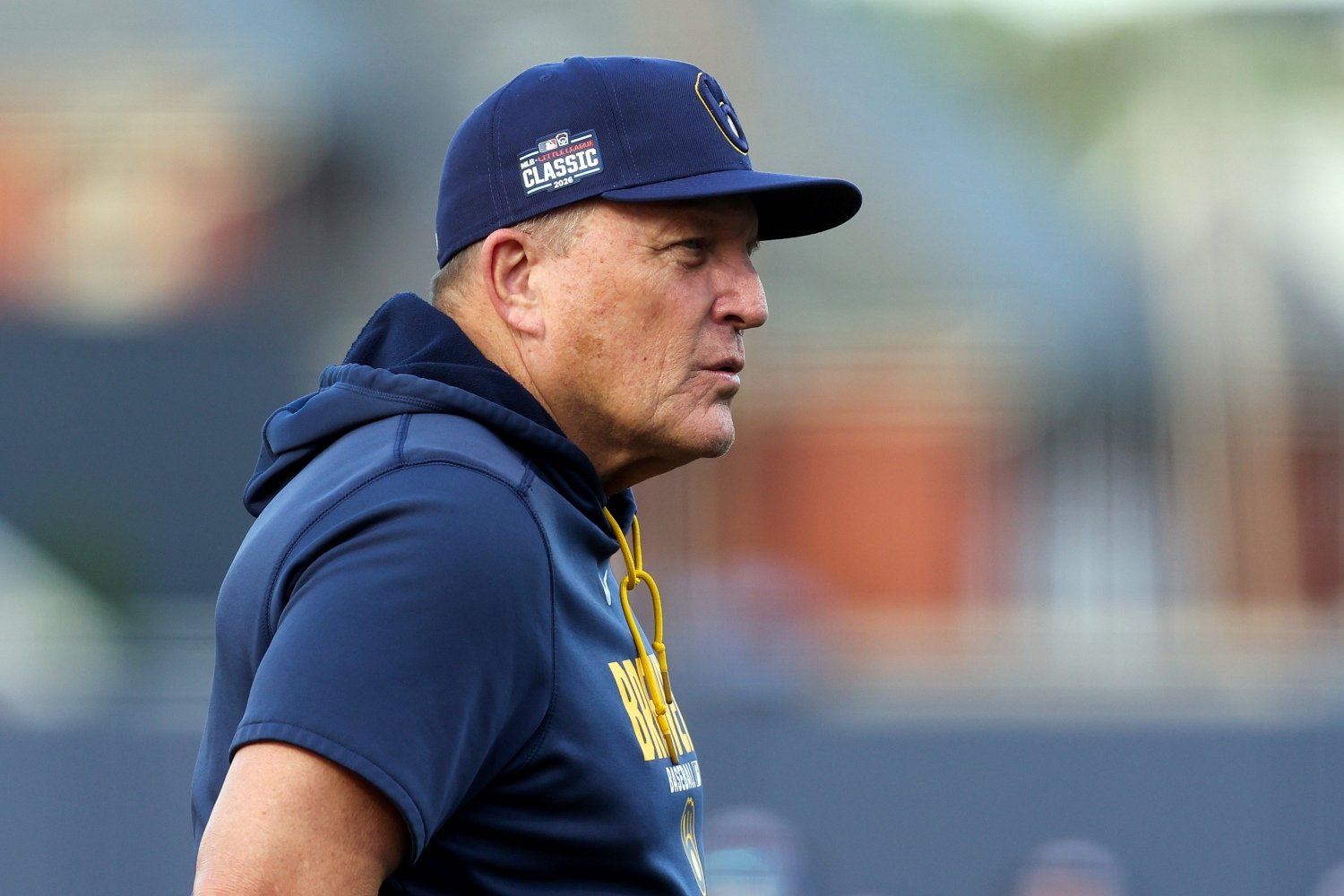
Accountability: This happens to be in the news right now, as the sports pundits babble over whether it was proper for Pat Murphy to remove Cooper Pratt from a game after he failed to put a bunt down in one at-bat and didn’t run hard out of the box on a shallow fly ball in the next. Because that form of accountability is visible and somewhat embarrassing for the player, it’s become a hot-button issue, but the truth beneath that debate is that taking a player out of one game is a very small punishment. As long as the team is supportive of any player it thus disciplines afterward, it’s not damaging, and it affirms the constancy of the team’s commitment to intensity and execution. That’s why the players on the team were so supportive of Murphy’s handling of the Pratt situation. Accountability means communicating in advance on what basis a player might suffer various consequences for actions, but more importantly, it’s about making all involved understand that they’re accountable to one another; it builds upon the interconnectedness that should be fostered by the Buddies piece.
-
Targeted Aggression: This is where the benefits of this kind of training begin to spread off the field and into the player’s real life, but it certainly still has value on the field. Do you remember the Bronx Zoo Yankees? The 1980s Cocaine Mets? The Late Carlos Zambrano Cubs? Those clubs all found some success that was fueled by the intensity and outright aggression of key figures, but they were also riven by those players’ irresponsible behavior both on and off the field. Being aggressive is important in baseball, and the tenacity that fuels that aggressiveness has to burn even between games; it’s usually not a switch that can be flipped on and off. However, a good training module on this subject should help players develop a dimmer instead of a simple switch. That reduces instances of inappropriate on-field outbursts or lapses in concentration that lead to losses. More importantly, though, it also reduces the likelihood of brawls between teammates in the clubhouse, shouting matches between manager and player, or—this, most important of all, to the person and the world if not to the team—violent or aggressive behavior toward loved ones or strangers when not at the ballpark.
-
Tactical Awareness: This one maps only imperfectly onto baseball. A soldier has to learn to be extremely aware of their environment, and that can transform into damaging hypervigilance once they’re back home and the danger becomes perceived, rather than real. It’s not the same in baseball. Players have to pay acute attention on the field, but not in a way that becomes counterproductive away from it. One key to this, however, would be helping players discern important information from noise, both on and off the field. Being aware of opponents talking or sending signals while filtering out crowd noise is important; ditto for hearing valid criticism when it comes in public but tuning out knuckleheads and people in your DMs shouting about their parlays.
-
Emotional Control: The balance between equanimity and intensity is always difficult to strike in baseball, be it within a game or over a month. It’s important to care about every outcome, but not to care so much that it destabilizes you in either the long or the short term. Giving players a wider variety of tools, from mindfulness meditation to testimonials and counseling by former players, could be a big help.
-
Rest and Recovery: Every player thinks they know a ton about how to preserve their energy, recover from workouts and be ready for the game each day. Every player has more to learn in this area. BATTERMIND training on this principle should focus on scheduling rest and off days farther in advance than players are comfortable with, to emphasize to them that it’s a long season and a long-term plan is needed.
-
Mission Operational Security: Teaching soldiers the distinction between preserving “opsec” and being overly secretive with loved ones is a vital part of preparing them for a return to civilian life. It’s easy to understand that loose lips sink ships; it’s harder to know which things have to be kept to oneself and which are safe to share. This problem has a clearer set of parallels to life as a ballplayer than you might think. Many players become unpopular with or distrustful of the media because they worry that they’ll say too much; that makes open clubhouse times a daily dose of discomfort and antipathy for them. Some also struggle to talk about their work with their families, the way we all need to do sometimes. There should be lots of training on how to say more to the media and to worry about that less, and on how to leave work at work even in this all-consuming career, so conversations can be freer at home.
-
Individual Responsibility: This overlaps with accountability, but it’s not the same thing. For soldiers, this is about learning not to be crushed by guilt, whether as a survivor of something that killed a friend or because of a real failure that put someone in danger. Baseball’s stakes are lower, but the risks take the same shape. Players often kick themselves for letting the team down after a loss; that’s ok. However, it’s important to take a balanced mental approach to such moments, and to remember that no one player’s performance will determine the fate of a team’s season. This is one place where this training might actually incorporate public-facing baseball stats in a productive way; there’s no greater cure for the solipsistic guilt of a morose player than to teach them about Win Probability Added and the concepts of value over replacement. Once you have a firm handle on those precepts, it’s impossible to ignore how diffuse the responsibility for wins and losses in this sport really is.
-
Nasty on Diamond, not Away From It: This is similar to the question of targeted aggression, but it’s more about mindset than behavior. High-level competitiveness is a prerequisite for success in the majors. It’s often self-defeating once you step outside the clubhouse, though. Teaching players to cultivate their competitiveness—that is, to grow it, but to do so in a confined space and keep it from taking over their whole personality or world—has to be a part of this kind of training.
-
Discipline: Like most military operations, ball clubs are hierarchical organizations. Players have to learn the importance of the chain of command and of when and how it’s appropriate to push for changes thereto. Often, it simply isn’t, and the challenge to the player is to accept something unpleasant in one isolated situation so as not to disrupt the cohesion of the team and its structure. Discussion about a change a player feels is necessary might need to wait longer than they’d like, and be done in a smaller setting than they initially prefer.
What soldiers face and what ballplayers face are not similar at all. In a sense, though, the paradoxes BATTLEMIND was most designed to address exist for all of us; they're like the day-to-day experiences of civilian workers, in macrocosm instead of microcosm. We all have to live in two worlds, or more. We all have to deal with stressors and compartmentalize traumas, although soldiers face greater and ghastlier versions of that challenge than most of us do. This program is an admirable effort to name and address the places where we feel torn between the two selves we need to be and the two constituencies we need to serve, and to make room for appropriate handling of stress and its scarier cousins.
Not all workplaces, unfortunately, feel the same responsibility or have the same capacity to engender real cohesion and to follow up assiduously to ensure the ongoing mental health of their employees as does the military—and even the military too often lets down those to whom it bears this responsibility, often because it has too little capacity. Baseball teams, however, are multi-billion-dollar organizations, with every incentive to do long-range work with their employees and almost endless capacity.
This is how a team might comprehensively plan to keep players more focused, more prepared and less weary by late August, beginning in early February. It needs to be a program implemented with the goal of supporting the whole person, understanding that some of the best benefits might accrue to the player and their family, rather than to the club. One reason the military has moved away from BATTLEMIND is that it was designed to make more effective soldiers in theater, rather than primarily to produce healthier citizens at home; it didn’t meet that standard. However, it might actually have done more for those who went through it after they did get home, so if a team is willing to stipulate that a happier and healthier player is more likely to play well in future seasons and to stick around, they should be willing to invest in the program even if it first benefits the person when they’re not at the park.
Do you approve of the job the Brewers' front office is doing?

Follow Brewer Fanatic For Milwaukee Brewers News & Analysis



-
 1
1


Recommended Comments
Create an account or sign in to comment
You need to be a member in order to leave a comment
Create an account
Sign up for a new account in our community. It's easy!
Register a new accountSign in
Already have an account? Sign in here.
Sign In Now