


Brewers Video
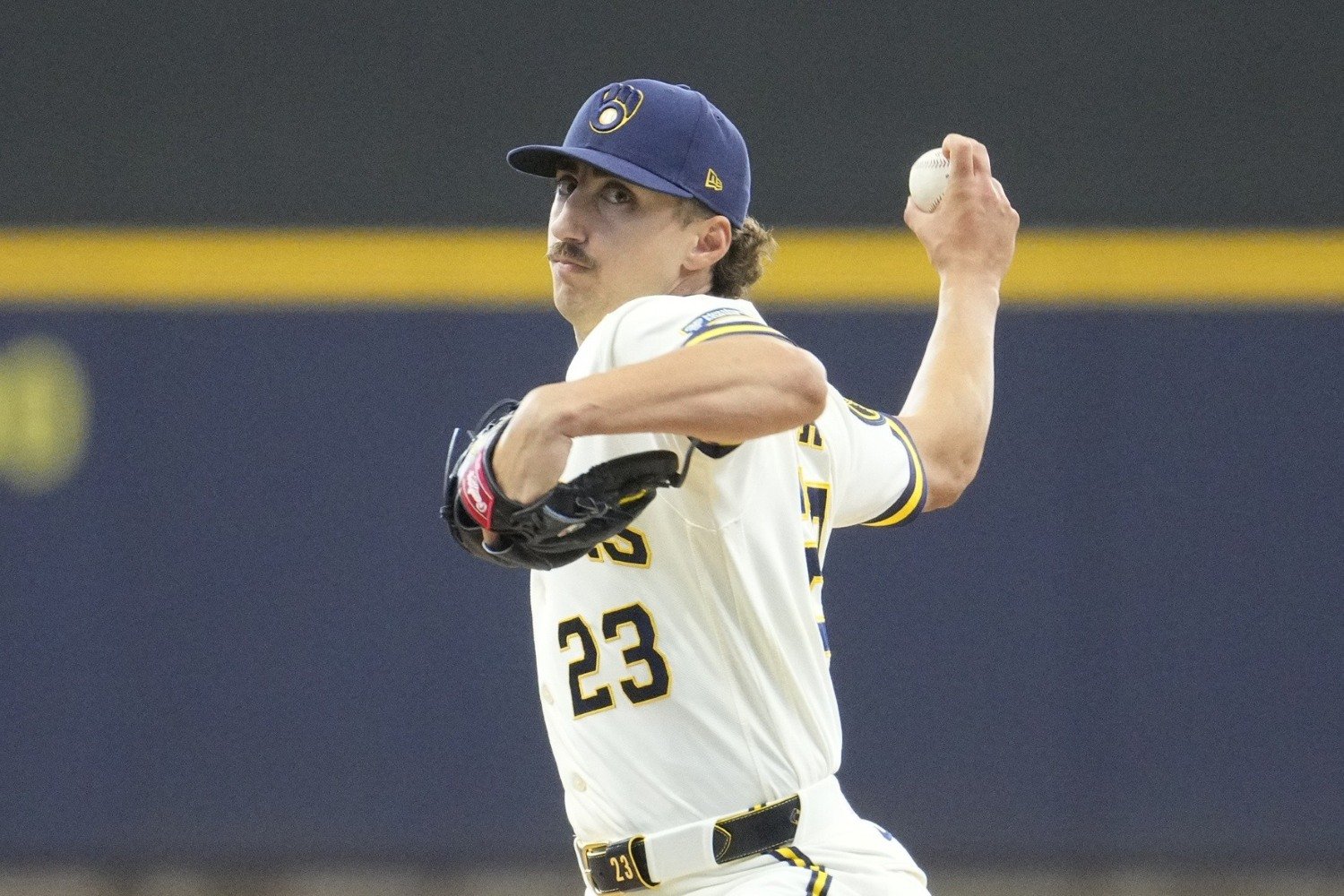
The Brewers continued in their ways this winter, when they traded erstwhile ace (and impending free agent) Freddy Peralta to the New York Mets in exchange for starter Brandon Sproat and shortstop Jett Williams. Williams ended up starting his season in Nashville, but Sproat earned a spot in the rotation—a chance to build on four solid starts with the Mets in 2025.
He struggled in his first Brewers start against the Chicago White Sox, giving up 7 earned runs in only three innings. The next two appearances came out of the bullpen. First, he followed Logan Henderson against the Royals, giving up 4 earned runs in 3 2/3 innings. He then followed Kyle Harrison and Grant Anderson against Washington, throwing 3 2/3 innings again but only giving up one earned run.
Sproat turned in his best start for the Brewers last week against the Blue Jays, pitching 6 2/3 innings, allowing 1 run on 4 hits and a walk while striking out 6. The strikeouts and walks are his Brewers bests so far this season, so what really changed between these appearances?
Well, first and foremost, he threw strikes. When you have stuff as good as Sproat's, filling up the zone is always good advice, but Sproat didn't do it over his first few outings, topping out at a 52.3% zone rate. Against the Jays, that figure climbed to almost 59%, making life tougher on opposing batters by getting the hurler ahead in counts. This is an encouraging development, and hopefully, it'll be one that carries over to future starts.
Sproat’s pitch usage has evolved across the early season, as well. His most common pitch across his first three outings was his sinker, but in his start against the Blue Jays, he utilized cutters (32%) and sweepers (20%) more often. His sinker was still a factor (17%), but not as frequently as in his first three starts. Additionally, Sproat only threw his sinker once against lefties versus Toronto, while throwing it 11 or more times to lefties in his previous three appearances. It’ll be interesting to see whether he's simply decided to junk the sinker to opposite-handed batters.
The utilization of Sproat’s cutter is eminently notable. He used it sparingly against righties through the first two games, throwing only seven of them in total in those matchups. His appearance in relief against Washington saw a 50/50 split: he threw eight of them to both lefties and righties. Against Toronto, Sproat utilized it more against righties than lefties, 15 to 9, and if it continues to be the pitch he uses the most, the splits will likely remain the same going forward.
One last thing to notice about Sproat’s strategy to attack hitters: his best Brewers start saw him eschew one of his best pitches. His changeup vanished into thin air against Toronto, after throwing that 17% of the time in his prior appearance against Washington. He utilized his changeup 14% of the time in his four starts with the Mets. Given this sudden change, it isn’t a stretch to imagine that the Brewers want him to use his other pitches before his changeup—although it might also be that they want him to gain a better feel for the changeup, making it more distinct from his sinker before reintroducing it.
Thursday will be a good follow-up exam after Sproat passed the test of the defending American League champions. The Tigers are middle-of-the-road in walk and strikeout rate, so look for him to attack the zone boldly again. With a solid defense behind him, Sproat should be able to produce consistent starts all season like the one he did last Thursday. After all, the Brewers have always figured out the pitching, and while there may be bumps in the road, Sproat has all the tools to figure it out in Milwaukee.
Which team do you dislike the most in the NL Central?

Follow Brewer Fanatic For Milwaukee Brewers News & Analysis



-
 1
1



Recommended Comments
There are no comments to display.
Create an account or sign in to comment
You need to be a member in order to leave a comment
Create an account
Sign up for a new account in our community. It's easy!
Register a new accountSign in
Already have an account? Sign in here.
Sign In Now