


Brewers Video
Brandon Sproat was a highly-touted prospect in the Mets organization for quite some time. He had lukewarm numbers across 121 innings in Triple-A last season, posting a 4.24 ERA and 4.18 FIP and causing his prospect ranking to dip from being No. 1 in the Mets system in 2025 to No. 5 in 2026. Nonetheless, the Brewers remained interested and acquired him as part of the Freddy Peralta trade.
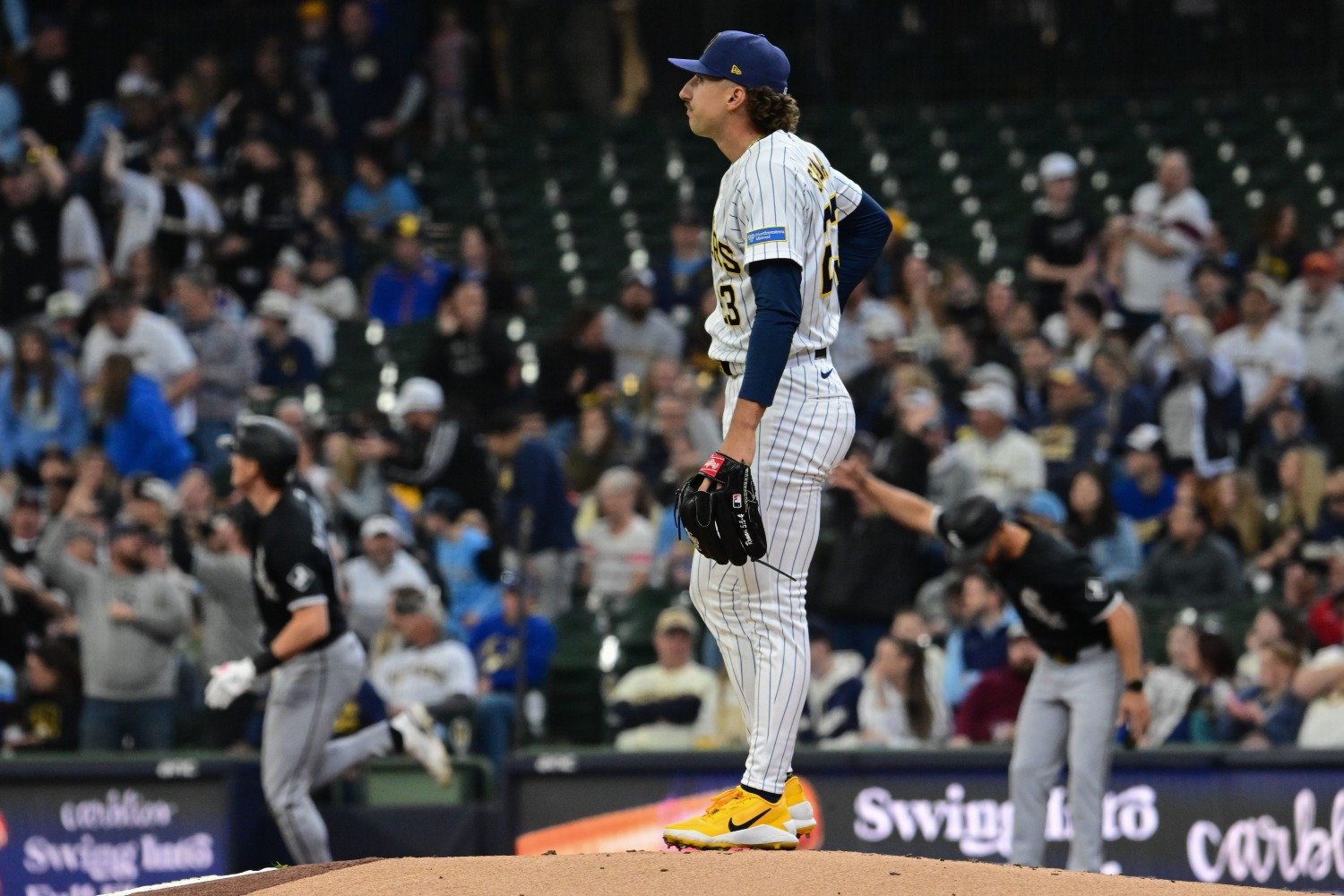
He made his Brewers debut Sunday, amid considerable hype, but he had a tough time of it. He needed 86 pitches to make it through just three innings of work, giving up six hits, four walks, and seven earned runs. Before that, the Brewers’ pitching staff had limited the White Sox to a total of just three runs in the first two games of the series. So what went wrong?
The biggest issue seemed to be command. Sproat had a hard time finding the zone consistently, and when he missed, he missed big. For the most part, opposing hitters were laying off pitches outside of the zone and punishing anything that ended up right down the middle, which was far too frequent a problem.
Every pitch had at least one glaring issue in this outing. The sweeper performed admirably on the surface, posting strong chase and whiff rates, but he did leave a few too many up in the zone. He got away with it for the most part, but also gave up a 403-foot home run to Everson Pereira.
The cutter really struggled to do much of anything. Fewer than half ended up in the zone, and the ones that did were simply too juicy for the White Sox lineup. After loading the bases in the first inning, a cutter located middle-middle was the pitch that ended up in the seats for a grand slam.
The curveball was simply all over the place, often starting way out of the zone and staying there. It didn’t generate a whiff because there was only one swing, a foul ball by Edgar Quero. Of the eight that landed outside of the zone, this was the only one tempting enough to chase; the rest were mostly waste pitches.
To Sproat’s credit, the sinker did seem effective, and also landed in the zone two-thirds of the time. It seemed like the pitch over which he had the most command, and although it did give up three hits, none were for extra bases. A few were arguably defensive miscues, more than truly earned hits.
Being a rookie starter is tough enough as it is, and the pressures of being a top prospect and newly acquired trade asset don’t exactly help. Throw in the implicit pressure of the home crowd being amped up for a potential sweep to kick off the season, and it’s easy to see why the 25-year-old Sproat may not have had the smoothest debut in the world. He was also working with rookie Jeferson Quero, who caught him in some bullpens this spring but never in game action. That could have contributed to some issues with pitch selection and/or receiving, which also cropped up.
Aside from the confounding variables, a sample of one outing simply isn’t enough data to make a decision on whether he’s deserving of staying in the big-league rotation. His numbers in spring training were far more encouraging, particularly his 28.3% strikeout rate and his 29.6% whiff rate.
It will take time for him to start looking like the prospect that has been promised. The Brewers don’t necessarily need him to be a front-line starter right away. However, command issues will continue to limit him if unaddressed, and moving forward, that should continue to be a priority for the young starter.
Do you approve of the job the Brewers' front office is doing?

Follow Brewer Fanatic For Milwaukee Brewers News & Analysis



-
 2
2



Recommended Comments
Create an account or sign in to comment
You need to be a member in order to leave a comment
Create an account
Sign up for a new account in our community. It's easy!
Register a new accountSign in
Already have an account? Sign in here.
Sign In Now