


Brewers Video
The Brewers added an intriguing arm to their bullpen mix on Thursday evening, acquiring right-hander Grant Anderson from the Texas Rangers for minor-league left-hander Mason Molina. Reliever Tyler Jay was designated for assignment to open a spot on the 40-man roster.
At first glance, Anderson's big-league resume is uninspiring. In 62 ⅓ innings, he has pitched to a 6.35 ERA and 5.91 FIP, allowing 2.31 home runs per nine innings. His 2024 numbers with Texas are even more ghastly: an 8.10 ERA and 7.59 FIP in 26 ⅔ innings. However, he's had some success at Triple-A, where he has posted a 3.87 ERA and 32.7% strikeout rate.
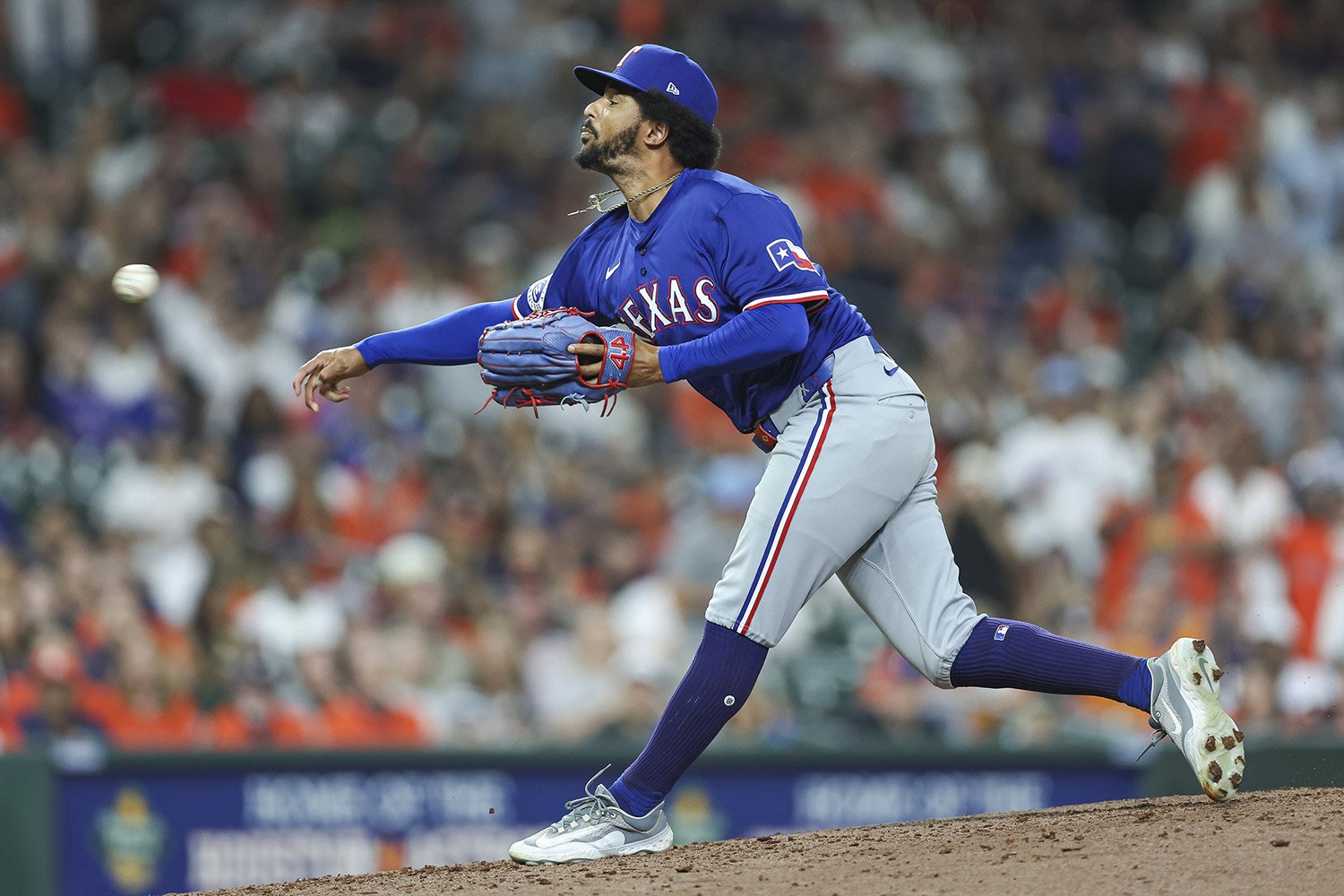
Funky left-handers Hoby Milner and Bryan Hudson broke out in Milwaukee in recent years, where the Brewers' pitching development brass helped them maximize the extreme angles they can create with their unique arm slots. They're taking on a similar project in Anderson, but from the right side. He mirrors Milner in many ways, starting with how he releases the baseball. Their arm angles both averaged -3 degrees last year.

As unorthodox as Milner's delivery is, Anderson's is even more chaotic. He seemingly has yet to find the best version that gives him the proper mix of deception, repeatability, and ability to execute pitches. As a rookie in 2023, he came set closed off from the hitter, twisted so far that his back was parallel with home plate, brought the baseball behind his head toward first base, and then slung it with a crossfire delivery.
Believing this delivery to be detrimental to finishing his pitches, Anderson came to Rangers camp last spring having toned things down dramatically. He started less closed off, truncated the twist with his leg kick, kept his throwing hand closer to his glove when he separated them, and rerouted his crossfire stride to be more direct to the plate.
The 27-year-old used these new mechanics in his first three big-league outings of the year before a demotion back to Triple-A, but the changes would be short-lived. By the time he resurfaced with the Rangers in late April, he had settled on a delivery somewhere between the previous two iterations. The twist was back, though slightly less extreme than before. The separation between his throwing and glove hands remained quieter.
With these mechanics, Anderson is closer to where he should be – his delivery is still funky but more restrained and repeatable. Still, it would not be surprising if Chris Hook identified and implemented additional tweaks to help him use his body most effectively. He lost a few inches of extension from 2023 to 2024, something the Brewers may seek to restore. They could also nudge him across the rubber toward third base, but his crossfire delivery might make it challenging to command his pitches from such an extreme angle.
Anderson's low-to-mid-90s velocity is notably higher than Milner's, but their pitch mixes are similar. From his sidearm slot, Anderson throws a heavy sinker and changeup, a four-seamer, and a mostly horizontal breaking ball.
The slider is his most oft-used pitch. It resembled a cutter in his debut season, but in 2024, Anderson fashioned it into more of a true slider with more sweeping action. He slashed its velocity from 85.3 to 82.2 mph and increased its horizontal break from 2.1 to 7 inches.
The sinker has plus movement, averaging -2.2 inches of induced vertical break and 17.2 inches of horizontal break. That makes it challenging to elevate; big-league opponents have managed a 47.5% hard hit rate against it, but an average launch angle of -1 degree and 4.9% barrel rate have kept them from driving it for extra-base hits.
As a sidearmer, Anderson does not create much carry from backspin on his four-seamer. The pitch averages just 10 inches of induced vertical break. However, that's three more inches than Milner's four-seamer, so Anderson creates greater separation between his two heaters.

The four-seamer also plays up at the top of the zone due to Anderson's low slot. This gives it an elite vertical approach angle of -3.7 degrees and creates an upshoot angle that leads hitters to swing under the ball. Anderson's four-seamer has induced whiffs on 36.4% of swings, but opponents crush it when they make contact, slugging .855 with a 51.4% hard hit rate, 25.7% barrel rate, and an average exit velocity of 93.7 mph. Ten of the 16 home runs he has allowed have come off a four-seamer.
As a Ranger, Anderson's pitch usage prevented him from maximizing his potential. He was two different pitchers based on batter handedness. Right-handers saw almost exclusively sliders and sinkers; left-handers saw high four-seamers, sliders, and changeups.

Given that his sinker and slider are his two best pitches and his four-seamer has been hit the hardest, it's unsurprising that Anderson has suffered from massive platoon splits. Righties have hit for a modest .668 OPS, but lefties have torched him for a 1.201 mark.
While Anderson's four-seamer can be deceptive, it's not nearly good enough to warrant a usage rate of over 50% against most hitters. Because it lacks remarkable velocity or movement, overexposure turns it into a batting practice pitch. Rooting his mix at the bottom of the zone makes those occasional sidearm four-seamers at the top challenging to hit.
Milner ran into similar problems in his first season as a Brewer. Using his four-seamer 52.9% of the time, it yielded a .719 slugging percentage. He fixed the issue by reintroducing his sinker and eventually mixing both fastballs to all hitters.


Milner's four-seamer induced significantly more whiffs after these changes, and opponents hit under .150 against it in each of the last two seasons. Anderson should follow a similar path. The Brewers will likely instruct him to live on sinkers and sliders at the bottom of the zone – against both righties and lefties – while sprinkling in timely four-seamers for swings and misses at the top of the zone. Expect Anderson to neutralize his platoon splits by properly mixing his top three pitches, no matter the matchup.
Anderson still has one minor-league option season remaining, so he may ride the 2025 bullpen shuttle instead of immediately becoming a mainstay. However, he has more upside than Jay. He's more deceptive and, with the right tweaks, can provide a productive mix of weak contact and strikeouts as a durable middle reliever.
The Brewers certainly see long-term value here. While Molina's shortcomings as a pitcher could raise hurdles in his development, he was Milwaukee's seventh-round pick in last year's draft. Matt Arnold parted with legitimate value to land Anderson, who could become his latest savvy bullpen pickup.
Do you approve of the job the Brewers' front office is doing?

Follow Brewer Fanatic For Milwaukee Brewers News & Analysis



-
 1
1
-
 1
1



Recommended Comments
There are no comments to display.
Create an account or sign in to comment
You need to be a member in order to leave a comment
Create an account
Sign up for a new account in our community. It's easy!
Register a new accountSign in
Already have an account? Sign in here.
Sign In Now